 New this week · Free UG Handout 02UPSC Mains Directive Words: 60 Meanings, Trends and PYQsTwo free PDFs: The Guide and the With PYQs edition.Read and download
Today’s Canvas
- Supreme Court orders release when detention exceeds 24 hours without magistrate productionGS II
- Centre considers committee to revisit UGC equity regulations following Supreme Court concernsGS II
- Centre amends immigration exemptions for specified foreign nationals and travellers from neighbouring countriesGS II
- Serious medical-device adverse events rise nearly threefold in India between 2020 and 2025GS II
- India rejects patent application for BPaL tuberculosis treatment combinationGS II
- Nepal Prime Minister Balendra Shah plans first bilateral visit to India from 22 NovemberGS II
- Jaishankar urges Commonwealth partners to diversify supply chains and strengthen connectivityGS II
- US midterm results reshape Congress and raise questions for India’s trade and technology interestsGS II
- Saudi Arabia issues warning for Yanbu oil hub amid continued Houthi attacksGS II
- Indians’ overseas investments in foreign stocks and debt may reach record levels in FY27GS III
- CMFRI documents 161 marine mammal strandings along India’s coast during 2024-25GS III
- Punjab stubble-burning enforcement renews debate over crop-residue management and air pollutionGS III
Polity, rights and governance
Supreme Court orders release when detention exceeds 24 hours without magistrate production
In short: The Supreme Court held that the constitutional 24-hour limit begins when liberty is first curtailed, not when formal arrest is recorded.
Why in news
On 5 November 2026, a Supreme Court Bench comprising Justices Ujjal Bhuyan and Atul S. Chandurkar directed the release of four accused persons in a drug-smuggling case. The Court found that the constitutional detention limit had been violated. The accused were detained around 2.30 pm on 29 September 2025 but were produced before a magistrate at 4.45 pm on 30 September. The ruling rejects any artificial distinction between detention and formal arrest for calculating the 24-hour deadline under Article 22(2).
Concept: Article 22(2) and safeguards against arbitrary detention
Article 22(2) of the Constitution requires every arrested and detained person to be produced before the nearest magistrate within 24 hours, excluding the time necessary for travel to court. Continued custody beyond that period requires judicial authorisation. Section 58 of the Bharatiya Nagarik Suraksha Sanhita, 2023, also restricts detention without a magistrate’s authority. These safeguards protect personal liberty under Article 21 and prevent investigating agencies from using delayed arrest records to avoid judicial scrutiny. Article 22 contains distinct exceptions for certain categories, including preventive detention.
Key facts for Prelims
- Article 21: Protection of life and personal liberty.
- Article 22(2): Magistrate production within 24 hours, excluding necessary journey time.
- Section 58, BNSS, 2023: Restriction on detention beyond 24 hours without magistrate authority.
- Bench: Justices Ujjal Bhuyan and Atul S. Chandurkar.
Mains analysis and way forward
Mains analysis
- Substantive liberty: Constitutional safeguards apply from the actual loss of freedom, not merely the completion of formal arrest paperwork.
- Judicial oversight: Magistrates must verify the actual time of detention before considering remand.
- Police accountability: Unexplained pre-arrest custody may violate constitutional protections.
- Rule of law: Investigation powers remain subject to enforceable constitutional limits.
Way forward
- Maintain accurate, verifiable detention and arrest records.
- Require magistrates to independently examine custody timelines and the reasonableness of detention.
- Strengthen training and accountability mechanisms for investigating officers.
Connect the dots: Article 21 + Article 22 + BNSS, 2023 + judicial protection against arbitrary State action.
Centre considers committee to revisit UGC equity regulations following Supreme Court concerns
In short: The Centre told the Supreme Court it was considering a committee to review the stayed UGC equity regulations of 2026.
Why in news
On 5 November 2026, Solicitor General Tushar Mehta informed the Supreme Court that the government was contemplating a committee to reconsider the University Grants Commission (Promotion of Equity in Higher Education Institutions) Regulations, 2026. The regulations were notified on 13 January and stayed by the Court on 29 January. A Bench led by Chief Justice Surya Kant raised concerns about ensuring protection for every student. Regulation 3(1)(c), defining caste-based discrimination with reference to SC, ST and OBC members, is central to the dispute.
Concept: Equality and anti-discrimination in higher education
Article 14 guarantees equality before the law and equal protection of the laws. Article 15 prohibits specified forms of discrimination, while Articles 15(4) and 15(5) permit certain special provisions for disadvantaged groups in education. The University Grants Commission regulates and coordinates standards in higher education under the UGC Act, 1956. Institutional equity mechanisms aim to prevent discrimination, establish complaint processes and provide remedies. The constitutional challenge involves whether regulatory definitions and their procedures adequately protect affected individuals while respecting substantive equality and constitutionally recognised safeguards.
Key facts for Prelims
- UGC established under the University Grants Commission Act, 1956.
- 2026 equity regulations notified: 13 January 2026.
- Supreme Court stay: 29 January 2026.
- Regulation 3(1)(c) addresses caste-based discrimination; the regulations also contain a broader definition of discrimination.
Mains analysis and way forward
Mains analysis
- Inclusive protection: Regulations must address discrimination effectively across higher education institutions.
- Substantive equality: Equal treatment does not automatically eliminate the need for specific protections for historically disadvantaged communities.
- Legal clarity: Definitions must align with institutional complaint mechanisms and constitutional principles.
- Institutional accountability: Protection depends on credible reporting, fair inquiries and effective remedies.
Way forward
- Undertake transparent consultation with students, educators, affected communities and legal experts.
- Clarify definitions and ensure accessible, impartial complaint procedures.
- Strengthen independent monitoring, safeguards against retaliation and institutional accountability.
Connect the dots: Articles 14 and 15 + social justice + inclusive education + accountability of statutory regulatory bodies.
Sources: The Indian Express, “Centre may set up panel to review UGC equity regulations, Supreme Court told”, 6 November 2026.; UGC Regulations Portal
Centre amends immigration exemptions for specified foreign nationals and travellers from neighbouring countries
In short: The Home Ministry has revised conditional passport and visa exemptions for specified foreign nationals and clarified cross-border travel requirements.

Why in news
The Ministry of Home Affairs issued the Immigration and Foreigners (Exemption) (Amendment) Order, 2026, on 4 November, which was published on 5 November. It provides conditional exemptions for specified foreign nationals, including Pakistani nationals who entered India by 31 December 2009 and face particular passport-renewal difficulties. It also covers members of six specified religious minorities from Afghanistan, Bangladesh and Pakistan who entered India by 31 December 2024 under the prescribed circumstances. The amendment additionally addresses travel documentation for India, Nepal and Bhutan.
Concept: Immigration and Foreigners Act, 2025
The Immigration and Foreigners Act, 2025 provides the legislative framework governing the entry, stay and exit of foreigners in India. Section 33 empowers the Central Government to make orders providing specified exemptions. Exemptions may differ across categories and remain subject to prescribed eligibility and security conditions. Immigration permission, refugee protection and citizenship are legally distinct matters. A passport or visa exemption does not automatically grant Indian citizenship. Administrative rules also need to balance border security, the circumstances of vulnerable residents and India’s established arrangements for cross-border movement with neighbouring countries.
Key facts for Prelims
- Legislation: Immigration and Foreigners Act, 2025.
- Relevant power: Section 33 of the Act.
- Amendment: Immigration and Foreigners (Exemption) (Amendment) Order, 2026.
- Specified religious communities: Hindu, Sikh, Buddhist, Jain, Parsi and Christian, subject to the order’s country, date and eligibility conditions.
Mains analysis and way forward
Mains analysis
- Humanitarian protection: Long-term residents and vulnerable communities may face genuine difficulties obtaining travel documents.
- Border security: Conditional exemptions preserve scope for identity verification and security scrutiny.
- Regional mobility: India maintains special cross-border movement arrangements with Nepal and Bhutan.
- Legal distinction: Immigration exemptions should not be confused with the grant of citizenship.
Way forward
- Publish accessible guidance explaining eligibility, identity requirements and relevant deadlines.
- Ensure consistent implementation by immigration and registration authorities.
- Provide transparent review procedures while maintaining appropriate security safeguards.
Connect the dots: Immigration governance + India-Nepal-Bhutan relations + humanitarian protection + citizenship law.
Sources: The Indian Express, “Home Ministry relaxes passport, visa rules for foreign nationals in India”, 6 November 2026.; Immigration and Foreigners (Exemption) (Amendment) Order, 2026, Gazette notification dated 5 November 2026.
Health and public policy
Serious medical-device adverse events rise nearly threefold in India between 2020 and 2025
In short: Newly disclosed Indian Pharmacopoeia Commission data show serious adverse-event reports rising from 808 in 2020 to 2,176 in 2025.

Why in news
On 6 November 2026, The Indian Express reported data obtained from the Indian Pharmacopoeia Commission (IPC) under the Right to Information Act. The IPC recorded 9,373 serious adverse events involving medical devices over six years, with annual reports rising from 808 in 2020 to 2,176 in 2025. The data were released on 27 October following a Central Information Commission order dated 10 September. Importantly, adverse-event reports do not, by themselves, establish that a medical device caused the reported harm.
Concept: Materiovigilance Programme of India (MvPI)
Materiovigilance is the systematic monitoring, collection and evaluation of adverse events associated with medical devices, such as implants, ventilators and diagnostic equipment. The Ministry of Health and Family Welfare launched the Materiovigilance Programme of India in July 2015. The Indian Pharmacopoeia Commission serves as its National Coordination Centre, while the Central Drugs Standard Control Organisation is India’s national medical-device regulator. The programme supports safety assessments, risk identification and regulatory recommendations. Medical devices are regulated under the Medical Devices Rules, 2017, using a risk-based classification system.
Key facts for Prelims
- IPC headquarters: Ghaziabad, Uttar Pradesh.
- MvPI launched: 6 July 2015; IPC became National Coordination Centre in 2018.
- Serious adverse-event reports: 808 in 2020 and 2,176 in 2025.
- IPC reported 14,584 medical-device adverse events during FY 2024-25, of which 22 cases were forwarded to CDSCO for necessary action.
Mains analysis and way forward
Mains analysis
- Patient safety: Device surveillance must continue after market approval because safety problems may emerge during clinical use.
- Regulatory accountability: Reporting systems need reliable investigation, classification and timely corrective action.
- Transparency: The IPC invoked commercial-confidence grounds under Section 8(1)(d) of the RTI Act to withhold certain manufacturer details.
- Interpretation: Increasing reports may reflect changes in reporting or actual incidents; a causal increase in device-related harm cannot be established from these figures alone.
Way forward
- Strengthen hospital reporting, event investigation and traceability of medical devices.
- Publish appropriately anonymised safety statistics and regulatory outcomes.
- Improve coordination between hospitals, manufacturers, IPC and CDSCO.
Connect the dots: GS II public health governance + GS III medical technology + transparency under the RTI Act.
Sources: The Indian Express, “Nearly 3-fold jump in serious adverse events caused by medical devices: New data”, 6 November 2026.; IPC, Materiovigilance Programme of India
India rejects patent application for BPaL tuberculosis treatment combination
In short: Rejection of a BPaL combination patent application removes one potential obstacle to competition in medicines for drug-resistant tuberculosis.

Why in news
The Indian Patent Office rejected TB Alliance’s application seeking patent protection for the combination of bedaquiline, pretomanid and linezolid, known as BPaL. The Indian Express explained the decision on 5 November 2026. The application faced two pre-grant oppositions in 2020. BPaL is a six-month, all-oral regimen for eligible patients with drug-resistant tuberculosis. The decision may allow greater competition, but lower prices are not guaranteed. India recorded a TB incidence rate of 187 per 100,000 population in 2024.
Concept: Section 3(d) of the Patents Act, 1970
Section 3(d) restricts patentability of a new form of a known substance unless it demonstrates enhancement of the substance’s known efficacy. It also addresses mere discoveries of new properties or uses of known substances. The provision is important in debates over pharmaceutical patent evergreening, where additional patents may extend market exclusivity without sufficient innovation. Separately, Section 25(1) permits pre-grant opposition to patent applications. Patent law seeks to balance genuine innovation with public access to medicines. Section 3(d) is relevant background, but its use as the specific legal ground for this rejection was not verified.
Key facts for Prelims
- BPaL: Bedaquiline + Pretomanid + Linezolid.
- BPaLM: The BPaL combination plus moxifloxacin.
- BPaL is a six-month, all-oral treatment regimen for eligible drug-resistant TB patients.
- Section 3(d): Patentability restrictions; Section 25(1): Pre-grant opposition.
Mains analysis and way forward
Mains analysis
- Access to medicines: Patent rejection may facilitate entry by additional pharmaceutical manufacturers.
- Innovation balance: Patent examination must recognise genuine advances without permitting unjustified exclusivity.
- Public procurement: Competition can support affordability, but procurement and quality assurance also determine access.
- Public health delivery: Medicine availability must be accompanied by timely diagnosis, treatment initiation and adherence support.
Way forward
- Promote quality-assured competition while maintaining rigorous drug standards.
- Improve public procurement, supply-chain reliability and patient access.
- Expand early detection and uninterrupted treatment under the National Tuberculosis Elimination Programme.
Connect the dots: Patents Act + access to medicines + public health + drug-resistant tuberculosis + SDG 3.
Sources: The Indian Express, “Explained: Why India’s rejection of a TB drug patent matters for patients”, 5 November 2026.; India Code, Patents Act, 1970
International relations
Nepal Prime Minister Balendra Shah plans first bilateral visit to India from 22 November
In short: Nepal’s Prime Minister Balendra Shah is scheduled to undertake a three-day official visit to India beginning 22 November 2026.

Why in news
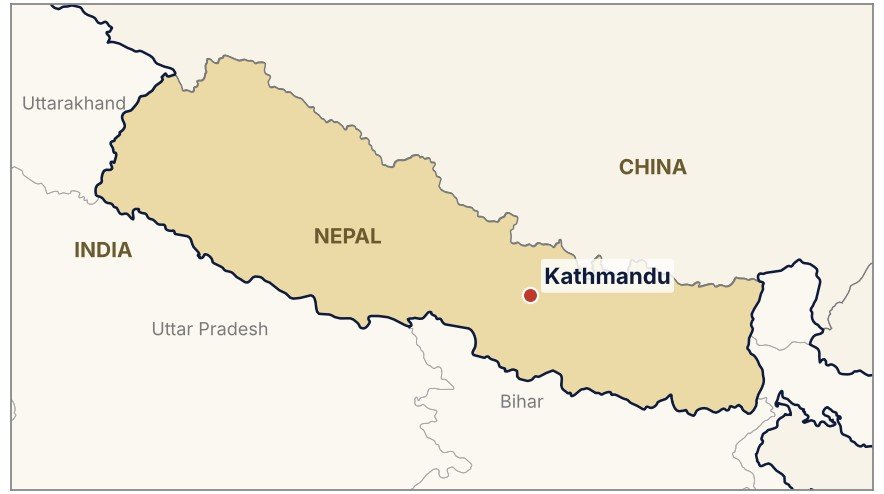
On 6 November 2026, The Indian Express reported that Nepal Prime Minister Balendra Shah would visit India from 22 November for three days. It would be his first bilateral visit since taking office in March. The development followed his meeting with Indian Foreign Secretary Vikram Misri in Kathmandu on 5 November. The two sides discussed bilateral cooperation in water resources, energy, trade, transit and aviation. Shah also acknowledged India’s response to the devastating flash floods that affected Nepal in August 2026.
Concept: India-Nepal bilateral relations
India and Nepal share a close relationship shaped by geography, historical connections, people-to-people movement and economic interdependence. The 1950 Treaty of Peace and Friendship is an important element of the bilateral framework. Cooperation includes cross-border infrastructure, electricity trade, transit facilities, disaster management and water resources. Nepal’s landlocked geography makes transport connectivity and access to seaports particularly significant. The Himalayan river systems also create opportunities for hydropower and challenges involving floods and water management. These relations are an important part of India’s Neighbourhood First policy.
Key facts for Prelims
- Nepal’s capital: Kathmandu.
- Prime Minister: Balendra Shah, who assumed office in March 2026.
- Scheduled India visit: 22-24 November 2026.
- Important bilateral treaty: India-Nepal Treaty of Peace and Friendship, 1950.
Mains analysis and way forward
Mains analysis
- Energy cooperation: Hydropower and electricity trade can support economic interdependence.
- Connectivity: Trade and transit arrangements are vital for landlocked Nepal.
- Water management: Shared river systems require coordination on floods, irrigation and hydropower.
- Regional diplomacy: Consistent engagement supports stability and mutual confidence in the Himalayan neighbourhood.
Way forward
- Prioritise implementation of existing connectivity and energy commitments.
- Strengthen early-warning systems and cooperation on Himalayan disaster risks.
- Encourage dialogue that respects sovereignty and addresses practical development priorities.
Connect the dots: Neighbourhood First + Himalayan geography + hydropower + regional connectivity + disaster management.
Jaishankar urges Commonwealth partners to diversify supply chains and strengthen connectivity
In short: External Affairs Minister S. Jaishankar called for trusted supply chains, stronger connectivity and greater capacity-building cooperation among Commonwealth members.

Why in news
External Affairs Minister S. Jaishankar addressed a Commonwealth heads of government and business leaders’ meeting in St John’s, Antigua and Barbuda, on 4 November 2026. He called on partners to reduce supply-chain risks through diversification, shorter and trusted networks, and stronger local distribution. He also highlighted digital technology, skills mobility and capacity building. For climate action, he identified the International Solar Alliance and Coalition for Disaster Resilient Infrastructure as potential platforms for cooperation. The Commonwealth currently comprises 56 independent countries.
Concept: Commonwealth of Nations and supply-chain resilience
The Commonwealth is a voluntary association of 56 independent and equal member countries. Its modern form emerged through the London Declaration of 1949. Members cooperate on development, governance, democracy and other shared priorities. In economic diplomacy, de-risking means reducing vulnerability to disruptions caused by excessive dependence on particular suppliers, markets or transport routes. Diversification spreads production and sourcing across several reliable partners. It need not mean ending trade with an existing partner. Connectivity infrastructure, transparent rules, logistics networks and trusted partnerships are central to resilient international supply chains.
Key facts for Prelims
- Commonwealth membership: 56 countries.
- Modern Commonwealth: Associated with the London Declaration, 1949.
- Commonwealth Heads of Government Meeting 2026: St John’s, Antigua and Barbuda.
- ISA: International Solar Alliance; CDRI: Coalition for Disaster Resilient Infrastructure.
Mains analysis and way forward
Mains analysis
- Economic security: Concentrated supply chains create vulnerabilities during geopolitical or logistical disruptions.
- South-South cooperation: Commonwealth partnerships provide opportunities for trade, capacity building and development.
- Digital governance: Digital technologies can improve administrative efficiency and cross-border commercial cooperation.
- Climate resilience: Small island and vulnerable member countries have significant adaptation and disaster-management needs.
Way forward
- Promote diversified supplier networks without creating unnecessary trade barriers.
- Invest in transport connectivity, logistics and skills partnerships.
- Use ISA, CDRI and disaster-response cooperation to support vulnerable members.
Connect the dots: Commonwealth diplomacy + resilient supply chains + globalisation + climate cooperation + India’s external economic relations.
Sources: Akashvani News, “EAM urges Commonwealth nations to diversify supply chains, strengthen connectivity”, 5 November 2026.; Commonwealth Secretariat
US midterm results reshape Congress and raise questions for India’s trade and technology interests
In short: Democratic victories in the US midterms could affect legislative priorities and oversight, with possible implications for India’s trade, technology and energy interests.
Why in news
The US held midterm elections on 3 November 2026. The Indian Express reported on 5 November that Democrats had regained control of both chambers of Congress. The reported political shift could affect President Donald Trump’s legislative agenda and strengthen congressional scrutiny of the administration. The report examined possible consequences for artificial intelligence investment, tariffs, immigration and oil markets. These consequences remain scenarios, not established policy changes. On 5 November, India’s Sensex and Nifty opened 2.17% and 1.74% higher, respectively, than their previous closing levels.
Concept: US midterm elections and separation of powers
The United States has a presidential system with separate executive, legislative and judicial branches. Congress consists of the House of Representatives and the Senate. All 435 voting House seats are contested every two years, while approximately one-third of the 100 Senate seats are contested in each regular election cycle. Midterm elections occur midway through a president’s four-year term. Congress exercises legislative, budgetary and oversight powers. A change in congressional control can alter legislative negotiations, committee leadership and scrutiny of executive decisions, although it does not automatically change existing tariffs or foreign policies.
Key facts for Prelims
- US Congress: House of Representatives and Senate.
- Voting membership: House, 435; Senate, 100.
- House terms: Two years; Senate terms: Six years.
- US midterm election date: 3 November 2026.
Mains analysis and way forward
Mains analysis
- Trade: Congressional pressure and electoral priorities may influence future US tariff negotiations, but outcomes remain uncertain.
- Technology: Changes in AI-related legislation, investment and immigration rules could affect Indian technology businesses.
- Energy: US policy toward Iran and Russia remains relevant to crude-oil prices and India’s energy security.
- Strategic relations: India-US cooperation extends across political parties and institutions rather than depending exclusively on the US presidency.
Way forward
- Maintain engagement with the US administration, Congress, states and business stakeholders.
- Diversify export markets and improve domestic technological capabilities.
- Monitor formal legislative and administrative decisions rather than treating political forecasts as enacted policy.
Connect the dots: US political institutions + India-US trade + artificial intelligence + skilled migration + energy security.
Saudi Arabia issues warning for Yanbu oil hub amid continued Houthi attacks
In short: Saudi Arabia warned of potential danger at Yanbu as regional attacks continued, highlighting risks to Red Sea infrastructure and shipping.

Why in news
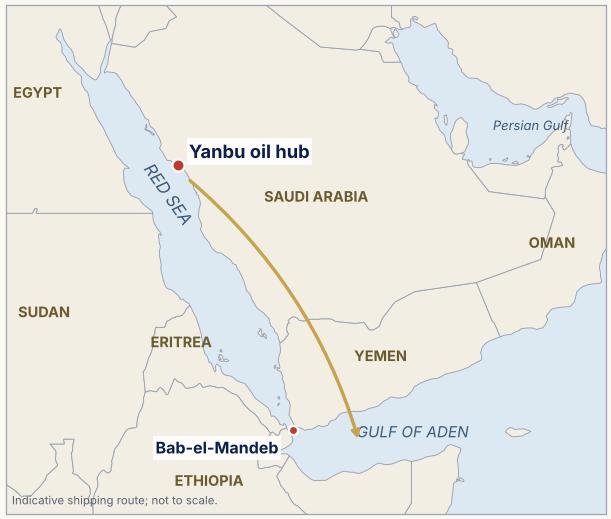
On 5 November 2026, Saudi Arabia issued alerts warning of potential danger in Yanbu, a major oil-export hub on its Red Sea coast, amid continuing attacks involving Yemen’s Houthis. Reuters reported that the Saudi-led coalition intercepted a missile directed towards Medina and that emergency alerts were issued for Sharurah, near the Yemeni border. The Houthis had not claimed responsibility for a Thursday attack at the time of reporting. A warning for Yanbu should not be treated as confirmation that its oil facilities were struck.
Concept: Bab el-Mandeb, Red Sea shipping and energy security
The Bab el-Mandeb Strait connects the Red Sea with the Gulf of Aden and, through it, the Arabian Sea. The Suez Canal connects the Red Sea to the Mediterranean Sea, forming an important maritime route between Asia and Europe. Disruption along this corridor can affect commercial shipping, insurance, freight costs and delivery schedules. Yanbu is located on Saudi Arabia’s Red Sea coast and serves as an oil-export hub. For India, maritime security in West Asia matters because imported energy, shipping routes and international price movements affect economic stability.
Key facts for Prelims
- Yanbu: Oil-export hub on Saudi Arabia’s Red Sea coast.
- Bab el-Mandeb: Connects the Red Sea and Gulf of Aden.
- Suez Canal: Connects the Mediterranean Sea and Red Sea.
- Houthis: Armed movement based in Yemen.
Mains analysis and way forward
Mains analysis
- Energy security: Threats to oil infrastructure can increase uncertainty in international energy markets.
- Shipping security: Risks to the Red Sea corridor may affect commercial route choices and maritime logistics.
- Regional instability: The conflict involving Yemen and Saudi Arabia has wider geopolitical implications.
- Indian interests: Trade flows, energy imports and maritime connectivity give India a significant stake in regional stability.
Way forward
- Maintain diversified crude-oil supply arrangements and appropriate strategic reserves.
- Strengthen maritime situational awareness and coordination for commercial shipping.
- Support diplomatic efforts to reduce escalation and protect civilian maritime infrastructure.
Connect the dots: West Asian geopolitics + Bab el-Mandeb + Suez Canal + maritime security + India’s energy import dependence.
Economy, environment and agriculture
Indians’ overseas investments in foreign stocks and debt may reach record levels in FY27
In short: RBI data show a sharp increase in residents’ overseas equity and debt investments through the Liberalised Remittance Scheme.

Why in news
The Indian Express reported on 6 November 2026 that investments in overseas equity and debt under the Reserve Bank of India’s Liberalised Remittance Scheme reached $1.73 billion during April-August 2026. This was more than twice the $823 million recorded in the corresponding period of 2025. For the full financial year 2025-26, such investments amounted to $2.65 billion. If the current pace continues, FY 2026-27 could cross $4 billion for the first time. The $4 billion figure is a projection, not a completed financial-year total.
Concept: Liberalised Remittance Scheme and outward portfolio investment
The Liberalised Remittance Scheme (LRS), introduced by the RBI in February 2004, allows resident individuals to remit foreign exchange for permitted transactions. Under the applicable RBI framework, the annual ceiling is USD 250,000 per resident individual, covering eligible current-account and capital-account transactions together. Permitted capital transactions can include overseas portfolio investment. Outward portfolio investment generally means investment in foreign securities without the characteristics of direct investment or control. Overseas Direct Investment follows a distinct regulatory classification. Outward investments can diversify financial exposure but also involve currency, market and regulatory risks.
Key facts for Prelims
- LRS introduced: 4 February 2004.
- Annual LRS ceiling: USD 250,000 per resident individual.
- Overseas equity and debt investment through LRS, April-August 2026: $1.73 billion.
- Corresponding April-August 2025 amount: $823 million.
Mains analysis and way forward
Mains analysis
- Portfolio diversification: Overseas securities allow investors to diversify beyond domestic financial markets.
- External-sector implications: Increased outward remittances contribute to foreign-exchange outflows.
- Exchange-rate risk: Overseas returns are influenced by both asset performance and exchange-rate movements.
- Financial regulation: Portfolio investment and direct investment must be distinguished when analysing external capital flows.
Way forward
- Strengthen investor awareness about currency, taxation and market risks.
- Improve disclosure and transparency in cross-border investment services.
- Monitor aggregate capital flows while maintaining a predictable FEMA regulatory framework.
Connect the dots: RBI + FEMA, 1999 + capital account + exchange rates + portfolio diversification + balance of payments.
Sources: The Indian Express, “Why Indians are investing billions abroad amid shaky domestic stock markets”, 6 November 2026.; RBI, Master Direction on Liberalised Remittance Scheme
CMFRI documents 161 marine mammal strandings along India’s coast during 2024-25
In short: A CMFRI study identifies coastal marine mammal stranding patterns and develops a GIS platform to support conservation and monitoring.

Why in news
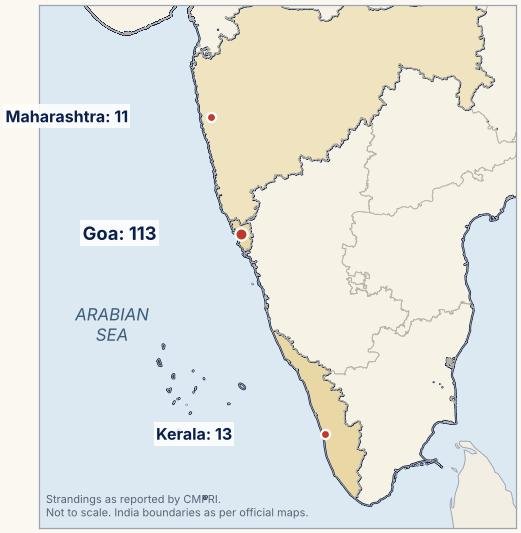
On 5 November 2026, the ICAR-Central Marine Fisheries Research Institute reported documenting 161 marine mammal stranding cases along the Indian coast during 2024-25. Goa recorded the highest number, at 113, followed by Kerala with 13 and Maharashtra with 11. The study recorded 82 humpback dolphin and 44 Indo-Pacific finless porpoise strandings. CMFRI also developed an interactive GIS platform integrating approximately 1,300 geographical records covering 32 marine mammal species. The findings were presented at an international symposium in Kochi.
Concept: Marine mammal strandings and the role of CMFRI
A marine mammal stranding occurs when an animal such as a dolphin, whale or porpoise becomes stranded on shore or is found dead along the coastline. Strandings can have different causes, including illness, entanglement, collisions and environmental disturbances. Individual cases require investigation before causes can be established. The Central Marine Fisheries Research Institute, based in Kochi and functioning under the Indian Council of Agricultural Research, conducts research on marine fisheries and associated ecosystems. Stranding networks, species identification and geographical information systems help document incidents, identify patterns and inform conservation responses.
Key facts for Prelims
- ICAR-CMFRI headquarters: Kochi, Kerala.
- Marine mammal strandings documented in 2024-25: 161.
- Highest reported state count: Goa, 113.
- Species recorded: Humpback dolphin (Sousa plumbea), 82 cases; Indo-Pacific finless porpoise (Neophocaena phocaenoides), 44 cases.
Mains analysis and way forward
Mains analysis
- Biodiversity monitoring: Stranding records provide information about marine mammal distribution and potential threats.
- Scientific uncertainty: Stranding numbers alone cannot determine causes or overall population trends.
- Geographic monitoring: GIS-based records can help identify priority locations for investigation.
- Institutional coordination: Researchers, coastal authorities, fishers and trained volunteers contribute to reporting and response.
Way forward
- Strengthen coastal stranding-reporting networks and rapid-response teams.
- Combine necropsy findings, species identification, field investigations and spatial data.
- Improve coordination among fisheries departments, conservation agencies and coastal communities.
Connect the dots: Marine biodiversity + GIS and remote sensing + coastal ecosystems + conservation governance + community participation.
Sources: PTI, “CMFRI maps marine mammal stranding hotspots along Indian coast”, 5 November 2026, published by The Week.; The Week
Punjab stubble-burning enforcement renews debate over crop-residue management and air pollution
In short: CAQM enforcement measures in Punjab have renewed attention to crop-residue burning, monitoring limitations and economically viable alternatives for farmers.
Why in news
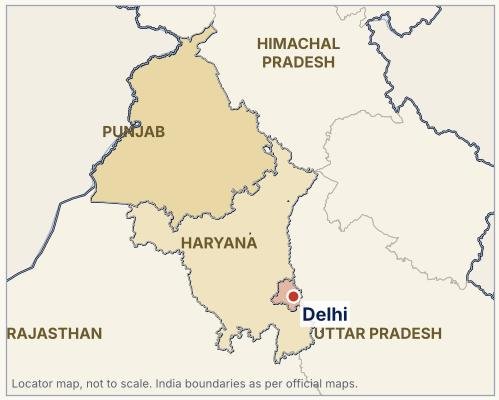
On 6 November 2026, The Indian Express discussed the Commission for Air Quality Management’s action against crop-residue burning in Punjab. The Commission had issued show-cause notices to officials in nine districts and warned officials in 12 districts about accountability for enforcement lapses. The report stated that penalties for crop-residue burning range from ₹5,000 to ₹30,000. It also cited research indicating that some burning has shifted towards later hours, potentially complicating satellite detection. These observations do not establish that stubble burning alone explains Delhi’s air pollution.
Concept: Crop-residue burning and regional air pollution
Crop-residue burning is the open-field burning of agricultural remains, particularly paddy straw after harvesting. In northwestern India, the short interval between paddy harvesting and wheat sowing can create pressure for rapid residue clearance. Burning releases particulate matter and other pollutants, contributing to regional air-quality problems. The Commission for Air Quality Management in NCR and Adjoining Areas Act, 2021 established CAQM to coordinate air-pollution management across the region. Residue-management approaches include in-situ incorporation into soil and ex-situ collection for uses such as biomass energy and industrial feedstock.
Key facts for Prelims
- CAQM: Commission for Air Quality Management in National Capital Region and Adjoining Areas.
- Statutory basis: CAQM Act, 2021.
- Paddy straw can be managed through in-situ and ex-situ methods.
- Air-quality monitoring involves satellite observations, ground verification and ambient pollution measurements.
Mains analysis and way forward
Mains analysis
- Agricultural economics: Farmers face costs associated with machinery, labour, residue removal and timely sowing.
- Environmental impact: Crop-residue burning contributes to air pollution but is not its only source.
- Monitoring challenges: Fixed satellite observation times may fail to capture some fires.
- Policy coordination: Sustainable solutions require cooperation across agriculture, environment, energy and state governments.
Way forward
- Improve access to affordable residue-management machinery through cooperative and shared-use systems.
- Develop reliable collection networks and commercial markets for agricultural biomass.
- Combine verified enforcement with farmer support, monitoring and long-term agricultural diversification.
Connect the dots: Air pollution + crop diversification + MSP-linked cropping incentives + sustainable agriculture + cooperative federalism.
Sources: The Indian Express editorial, “A new conversation is needed on stubble burning”, 6 November 2026.; The Indian Express
In brief
- Kotia Villages: Odisha-Andhra Pradesh Border Dispute: More than 800 voters from the disputed Kotia region crossed into Andhra Pradesh to participate in local-body elections on 5 November. Kotia is in Odisha’s Koraput district, and parts of the region are claimed by both states. (The Indian Express, 5 November 2026)
- Jammu and Kashmir Prison Security Modernisation: Officials discussed establishing dedicated Prison Intelligence Units and extending biometric systems across J&K prisons at a meeting chaired by Lieutenant Governor Manoj Sinha on 5 November. The proposals aim to improve intelligence sharing and prison security. (The Indian Express, 6 November 2026)
- Election Commission Restores It Oversight Arrangements: A new Election Commission work-allocation order reaffirmed oversight of Director General (IT) Seema Khanna through Senior Deputy Election Commissioner Pawan Kumar Sharma. The Commission said an earlier order removing that oversight had not been implemented. (The Indian Express, 6 November 2026)
- Hardeep Singh Puri Elected Unopposed to Rajya Sabha: Union Minister Hardeep Singh Puri was declared elected unopposed to the Rajya Sabha from Madhya Pradesh on 5 November after the nominations of two other candidates were rejected. Akashvani News (Akashvani News, 5 November 2026)
- Amish Shah Wins US House Seat: Indian-American physician Amish Shah won Arizona’s First Congressional District in the 3 November US midterm elections, becoming the first Indian-American elected to the US House from Arizona and the sixth Indian-American member elected to the House. (Associated Press, 5 November 2026. ; PTI, The Telegraph, 5 November 2026)
- Agnipath Scheme: Revised Retention Pathway: The Cabinet approved an additional two-year engagement option for the 75% of Agniveers not initially offered regular service. After this period, regular enrolment will depend on willingness and meeting selection criteria. (Ministry of Defence, PIB, 4 November 2026)
Prelims practice: 5 questions
Choose an option to see the answer and explanation. Your score appears when all five are answered.
Mains practice
GS II | Constitution | Fundamental Rights and Criminal Justice QUESTION “The constitutional guarantee against arbitrary detention must operate from the moment personal liberty is restricted, rather than from the formal recording of an arrest.” Examine the constitutional and statutory safeguards against arbitrary detention in India. Discuss how the recent Supreme Court ruling strengthens judicial oversight and accountability in criminal investigations.
Show the answer outline
INTRODUCTION
Article 21 protects personal liberty, while Article 22 establishes specific safeguards for arrested and detained persons. The Supreme Court’s November 2026 ruling reinforces these guarantees by identifying actual detention, rather than formal arrest, as the starting point for calculating the constitutional deadline.
BODY 1: CONSTITUTIONAL SAFEGUARDS
- Article 21 protects life and personal liberty through procedure established by law, interpreted to require fairness, justice and reasonableness.
- Article 22(1) provides safeguards concerning information about grounds of arrest and access to legal counsel.
- Article 22(2) requires production before a magistrate within 24 hours, excluding necessary travel time.
- Article 22(3) provides specified exceptions, including for preventive detention, which operates under separate constitutional safeguards.
BODY 2: STATUTORY AND JUDICIAL PROTECTIONS
- Section 58 of BNSS, 2023, restricts detention beyond 24 hours without judicial authority.
- The Supreme Court clarified that the actual time of detention is relevant to calculating this deadline.
- Magistrates must examine detention records, verify compliance and assess whether custody was reasonable.
- Unexplained detention cannot be legitimised merely by subsequently recording a formal arrest.
BODY 3: SIGNIFICANCE FOR CRIMINAL JUSTICE
- Prevents informal detention from being excluded from constitutional scrutiny.
- Strengthens judicial supervision of investigative powers.
- Reinforces the principle that personal liberty cannot depend exclusively on police documentation.
- Promotes procedural accountability and discourages arbitrary exercise of authority.
BODY 4: MEASURES TO STRENGTHEN COMPLIANCE
- Maintain accurate and auditable custody records.
- Ensure timely access to legal assistance and magistrates.
- Improve police training in constitutional arrest procedures.
- Establish effective mechanisms for reviewing allegations of illegal detention.
CONCLUSION
Effective criminal investigation and constitutional liberty are not competing objectives. Judicial supervision, accurate detention records and enforceable procedural safeguards are essential to ensuring that State power is exercised within the rule of law.
ONE TIP FOR MAINS
Distinguish the actual time of detention from the time recorded as formal arrest. Also distinguish the 24-hour requirement for magistrate production from detention subsequently authorised by a magistrate. This legal precision is central to the question.
CURRENT CANVAS | 6 NOVEMBER 2026
UPSC Gurus
Read. Understand. Connect. Apply.
Full daily current affairs, free at https://upscgurus.in/current-canvas/
Interview Edge: six free books
The DAF Decoder, Essential Qualities, Your Home State and District, 100 Answers Thought Through, The Interview Mind, and From Result to Board. Free download with a one-time sign-up.



Interview Edge Studio: free AI practice built around your own DAF · Interview Edge programme: DAF deep dive with Guranchal Ma’am and mock interviews with a panel of seasoned officers and academicians · DAF-II 2026 checklist
Current Canvas is prepared by the UPSC Gurus editorial desk. Every fact is checked against official releases and reliable reporting, with sources listed under each story. Editions are compiled each month into Current Canvas Monthly, a free magazine.
About images: photographs and illustrations in Current Canvas are AI-generated for illustration only. They are not news photographs of the events described.