 New this week · Free UG Handout 02UPSC Mains Directive Words: 60 Meanings, Trends and PYQsTwo free PDFs: The Guide and the With PYQs edition.Read and download
Today’s Canvas
- Kerala High Court strikes down 5 PM preference for producing arrested persons before MagistratesGS II
- Karnataka High Court quashes FIR over a reposted news item, issues guidelines on social media FIRsGS II
- Madras High Court: a mother may decide whether to continue a pregnancy with serious foetal abnormalityGS II
- Forest Rights Act review in Srinagar: 80.64% of about 54 lakh claims disposed, habitat rights recognised for only 11 of 75 PVTGsGS II
- Asian Para Games 2026: India’s record 114 medals, including 30 gold, draw the President’s praiseGS II
- MEA on LAC face-offs: border is disturbed when Chinese forces depart from patrolling patterns; talks continueGS II / GS III
- 12th BRICS Parliamentary Forum in New Delhi on 26 and 27 October: AI, resilience and global governance on the agendaGS II
- Gunmen kill at least seven at funeral in a Greek Orthodox church in Jordan; India condemns the attackGS II / GS III
- Defence Secretary cites surge in Indian ammunition exports to Europe; Bloomberg finds India second among suppliers to 13 Central and East European countriesGS III
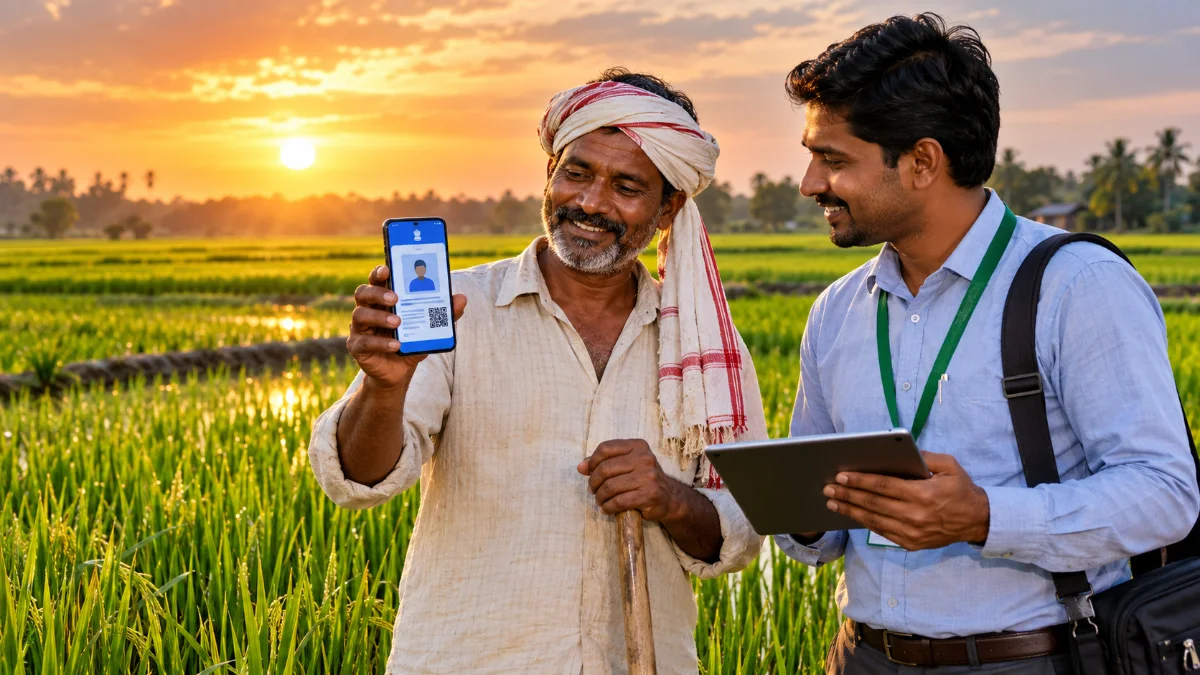
- Centre issues 11 crore Farmer IDs under AgriStack, five months ahead of the March 2027 targetGS III
- Jio Platforms IPO closes with 22.19 times subscription; listing set for 28 OctoberGS III
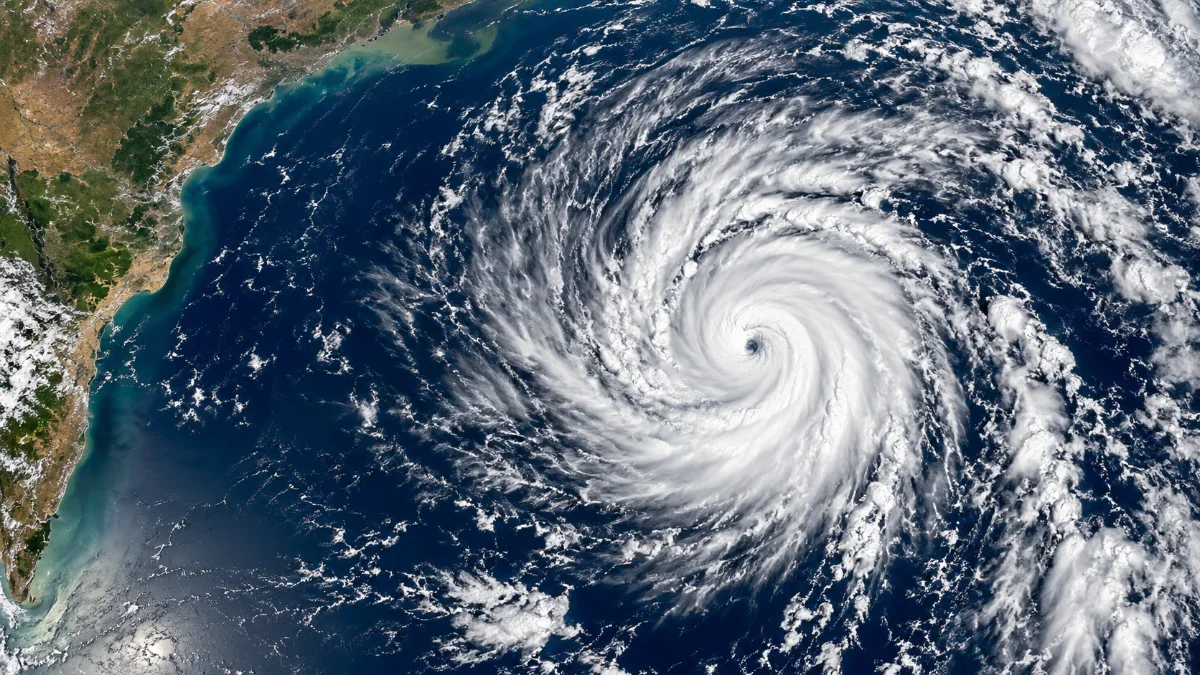
- IMD tracks Bay of Bengal system towards North Andhra and South Odisha coasts; heavy rain likely from 27 OctoberGS III
- Arunachal: protests against the proposed 11,200 MW Siang project turn violent; restrictions under Section 163 BNSS imposed in PasighatGS III
- CBD COP17 Yerevan: first global review of nature targets tests whether finance can match ambitionGS III
- Jitendra Singh inaugurates AATAL in Delhi: a laboratory to trace what is in the air, and where it comes fromGS III
Polity and governance
Kerala High Court strikes down 5 PM preference for producing arrested persons before Magistrates
In short: Kerala High Court holds that an executive protocol cannot soften the Article 22(2) duty to produce an arrested person promptly, not merely within 24 hours.
Why in news
On 23 October 2026, a Kerala High Court Division Bench of Justice Raja Vijayaraghavan V and Justice K.V. Jayakumar set aside parts of a State protocol that preferred production of arrested persons between 10 AM and 5 PM and allowed later production only in exceptional circumstances. The Court held that the 24-hour limit in Article 22(2) and Section 58 BNSS is an outer limit and does not permit agencies to wait until it is nearly exhausted. The requirement of prior intimation to the Magistrate for production after 5 PM was upheld.
Background
The guidelines came from a Government of Kerala order of 21 September 2023, issued after representations by the Association of Judicial Officers, to streamline medical examination and production of accused persons. The petitioner, Adv. P.S. Subeesh, challenged clauses 18 and 19 in WP(PIL) 165/2025. During the case, the State modified the clauses on 24 September 2026 to stress the 24-hour limit and to drop the investigating officer’s presence, but the Court found the structure still problematic. It reasoned that an officer arresting someone around or after 5 PM might hold the person until the next morning to avoid explaining exceptional circumstances, which could reduce access to legal help, the chance to challenge the arrest and the ability to oppose remand. The Court relied on Sheela Barse v. State of Maharashtra and Joginder Kumar v. State of U.P. on legal assistance and judicial scrutiny at remand.
Key facts for Prelims
- Article 22(2): an arrested person must be produced before the nearest Magistrate within 24 hours, excluding journey time; detention beyond that needs Magistrate authority.
- Section 57 BNSS: production without unnecessary delay; Section 58 BNSS: 24-hour outer limit (these replace the corresponding CrPC provisions).
- Article 22(1): right to be informed of grounds of arrest and to consult a legal practitioner of choice.
- Article 22(3): the protections of Article 22(1) and 22(2) do not apply to enemy aliens or to persons detained under preventive detention laws.
- Case: P.S. Subeesh v. State of Kerala, WP(PIL) 165/2025; the Court also cited Jaskaran Jeet Singh Deol v. State of Punjab (2026 INSC 1022) on strict observance of procedure for depriving liberty.
Mains analysis and way forward
Mains analysis
- Procedural safeguards as the substance of liberty: why the Court looked at how a protocol would work in practice, not only at its wording.
- Executive administrative circulars versus constitutional guarantees: an executive protocol cannot dilute Article 22(2) or statutory safeguards, directly or indirectly.
- Balancing the safety and orderly functioning of judicial officers with the arrested person’s right to early judicial scrutiny; the surviving prior-intimation rule shows one workable middle path.
- Link to remand practice: early production is the first check against arbitrary arrest, custodial abuse and unlawful detention.
Way forward
- States may adopt reasonable logistics, such as prior intimation or duty magistrates, provided these facilitate and never delay production.
- Judicial academies and police training can embed the distinction between the 24-hour outer limit and the duty of promptness.
- Remote production through video links and duty-roster magistrates after hours can make after-5 PM production routine and safe.
Connect the dots: Polity: Article 22, personal liberty (Article 21), BNSS arrest and remand procedure, role of the judiciary in protecting rights.
Sources: LiveLaw: Kerala High Court strikes down 5 PM cut-off for producing arrested persons, 23 Oct 2026; LiveLaw: High Courts Daily Highlights, 23 Oct 2026
Karnataka High Court quashes FIR over a reposted news item, issues guidelines on social media FIRs
In short: Karnataka High Court tells police to test whether the ingredients of an offence exist before registering FIRs over social media content and to avoid mechanical arrests.
Why in news
In Sandeep Kumar v. State of Karnataka (Criminal Petition No. 13010 of 2026), reported on 23 October 2026, Justice M Nagaprasanna quashed an FIR under Section 353(2) of the BNS against the administrator of an X account who had reposted a news report on a stalking incident in Puttur. The Court held that the post named no group and showed no intent to promote enmity. It issued six guidelines for police, to be circulated by the Director General and Inspector General of Police, Karnataka.
Background
The petitioner reposted a media report on six youths allegedly stalking a woman at knife point in Puttur in July 2026; one of the accused then complained of communal intent. Puttur Town Police registered the FIR, and the petitioner said seven FIRs were registered over the same incident against individuals and media outlets. The Court criticised successive FIRs on one incident without any preliminary inquiry. Section 353(2) BNS deals with statements promoting enmity, hatred or ill will between classes, and the Court, relying on Bilal Ahmed Kaloo and Javed Ahmad Hajam, held that mens rea and a link to specific groups are prerequisites. It also referred to Satender Kumar Antil, Nalla Balu and Arnesh Kumar v. State of Bihar on arrests.
Key facts for Prelims
- Section 353(2) BNS: statements creating or promoting enmity, hatred or ill will between classes; intent is a necessary ingredient.
- Section 35 BNSS: arrest without warrant, with a notice of appearance under Section 35(3) in lesser offences; Arnesh Kumar v. State of Bihar (2014) requires reasons before arrest.
- Section 173(3) BNSS: preliminary inquiry before registering an FIR in specified cases; it cannot be used to avoid registering a mandatory cognizable offence.
- Article 19(1)(a) guarantees free speech; Article 19(2) allows reasonable restrictions on grounds including public order.
- Guideline 2: no fresh FIR merely because a different complainant has come forward on the same incident or content.
Mains analysis and way forward
Mains analysis
- The tension between public order and free speech online: why penal provisions on enmity need a clear mens rea and identifiable target groups.
- Multiplicity of FIRs on one incident as a form of process-as-punishment, especially against intermediaries and media.
- Police accountability through judicial guidelines: the Court asked the DGP to sensitise all jurisdictional officers.
- Reposting and sharing: whether the law should distinguish authors, amplifiers and news reporters.
Way forward
- Standard operating procedures for social media complaints, with a legal screening step at the district level before registration.
- Regular training on Arnesh Kumar and Satender Kumar Antil principles to curb mechanical arrests.
- Complainants and platforms may be encouraged to use takedown and correction routes before criminal law is invoked.
Connect the dots: Polity: fundamental rights (Article 19), criminal law reforms (BNS, BNSS), judicial review, police reforms.
Sources: LiveLaw: Karnataka High Court quashes FIR against X account administrator over repost, issues guidelines, 23 Oct 2026; LiveLaw: High Courts Daily Highlights, 23 Oct 2026
Madras High Court: a mother may decide whether to continue a pregnancy with serious foetal abnormality
In short: Madras High Court permits termination where scans show substantial foetal abnormalities, stressing the mother’s right to decide and the child’s own right to a dignified life.
Why in news
In BT Pavithra Kumari v. The Secretary (WP No. 42910 of 2026), reported on 23 October 2026, Justice PT Asha of the Madras High Court allowed a woman to terminate a pregnancy after scans showed foetal ventriculomegaly. The hospital chairman had refused consent and asked for a genetic test. The Court said the mother has the right to decide whether to bring into the world a child who would not lead a normal life.
Background
The petitioner, married in December 2022 and already a mother of a son, was found to have mild foetal ventriculomegaly in a trimester scan, confirmed by a second opinion. The Court noted risks such as developmental and speech delays, learning difficulties, epilepsy and intellectual disability. It also weighed the child’s life after the parents’ lifetime, saying the unborn child too has a right to a dignified life, and relied on Supreme Court rulings recognising a woman’s right to choose. The Medical Termination of Pregnancy Act, 1971, as amended in 2021, caps termination at 20 weeks on one doctor’s opinion and 24 weeks for specified categories of women; beyond 24 weeks it permits termination only for substantial foetal abnormalities diagnosed by a Medical Board.
Key facts for Prelims
- MTP Act, 1971, amended in 2021: up to 20 weeks on one doctor’s opinion; up to 24 weeks for specified categories with two doctors; no gestational limit when a Medical Board finds substantial foetal abnormalities.
- Right to make reproductive choices is part of personal liberty under Article 21 (Suchita Srivastava v. Chandigarh Administration, 2009).
- The 2021 amendment replaced the term “married woman” with “woman or her partner” to cover unmarried women.
- Case: BT Pavithra Kumari v. The Secretary, WP No. 42910 of 2026, Madras High Court (Justice PT Asha).
Mains analysis and way forward
Mains analysis
- Bodily autonomy and dignity: Article 21 and the woman as the primary decision-maker.
- Ethical tension between autonomy, the interests of the unborn child and the role of medical boards; the Court framed both as bearing on dignity.
- Access to timely scans, genetic counselling and Medical Boards, which determines whether the legal right is real in practice.
Way forward
- Time-bound Medical Board decisions with clear protocols so that families are not compelled to litigate.
- Strengthen antenatal screening and counselling in public hospitals, especially at district level.
- Uniform guidance for hospitals on consent so that additional tests, such as genetic testing, do not become de facto barriers.
Connect the dots: Health: maternal health laws, MTP Act; Ethics: autonomy versus welfare of the unborn; Polity: Article 21 jurisprudence.
Sources: LiveLaw: Madras High Court permits termination on foetal abnormality, 23 Oct 2026; LiveLaw: High Courts Daily Highlights, 23 Oct 2026
Social justice
Forest Rights Act review in Srinagar: 80.64% of about 54 lakh claims disposed, habitat rights recognised for only 11 of 75 PVTGs
In short: At the third regional review on 23 October, the Tribal Affairs Ministry asked States for reasoned rejection orders, district action plans and habitat-rights roadmaps for PVTGs.
Why in news
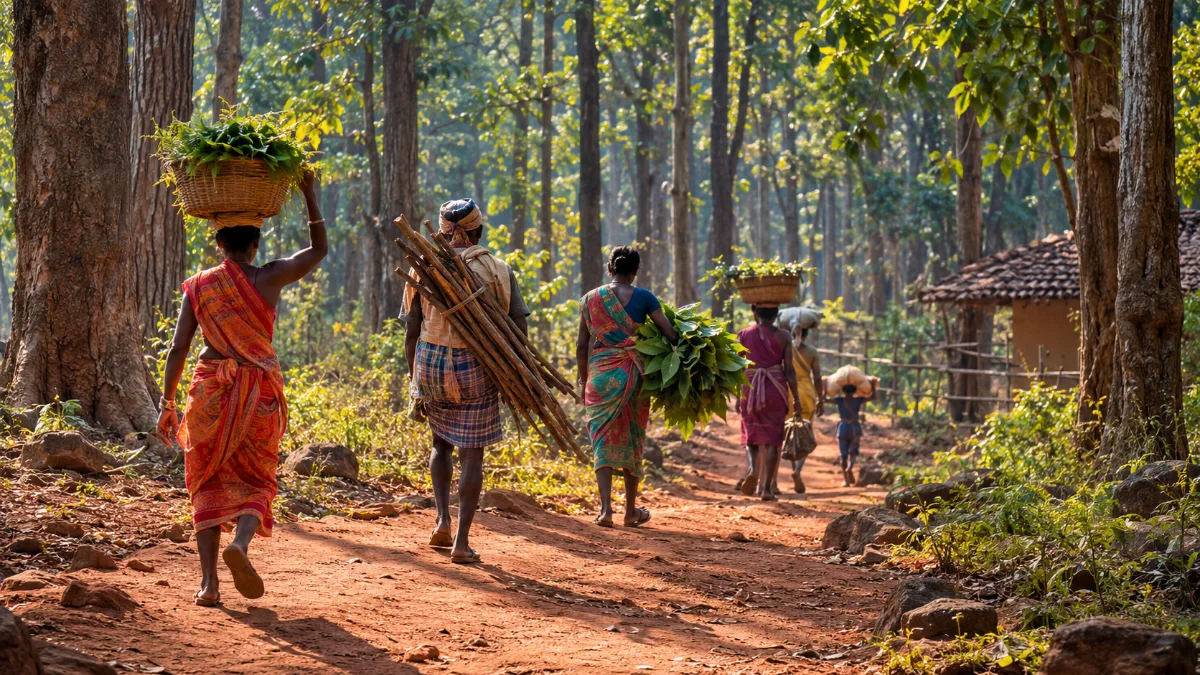
The Ministry of Tribal Affairs held the third and last regional review conference on the Forest Rights Act, 2006, in Srinagar on 23 October 2026, covering Maharashtra, Gujarat, Himachal Pradesh, Uttar Pradesh, Goa, Rajasthan and Jammu and Kashmir. Joint Secretary Anant Prakash Pandey said that, as of 31 August 2026, about 54 lakh claims had been received, of which 43.56 lakh (80.64 per cent) were disposed of, with 25.42 lakh titles distributed over nearly 238 lakh acres. He asked States for district-wise plans to clear 10.45 lakh pending claims and to review 18.13 lakh rejections.
Background
The Forest Rights Act recognises the rights of forest-dwelling Scheduled Tribes and other traditional forest dwellers over forest land and resources, including individual and community forest resource (CFR) rights, with the Gram Sabha playing the central role. Earlier regional reviews were held in Bengaluru on 10 September and Kolkata on 9 October. At Srinagar, the Ministry said habitat rights have been recognised for only 11 of the 75 Particularly Vulnerable Tribal Groups (PVTGs), and asked States to prepare PVTG-specific roadmaps. It also urged that every rejection carry a reasoned written order with the right of appeal preserved, that CFR management plans be aligned with Forest Department working plans as per a MoTA and MoEFCC communication of 27 July 2026, and that recognised rights be entered in revenue records so that holders can access schemes such as PM-KISAN. Financial support mentioned includes Rs 25 lakh per State for FRA mapping through Tribal Research Institutes and Rs 15 lakh per CFR management plan under DA-JGUA.
Key facts for Prelims
- Forest Rights Act, 2006 (Scheduled Tribes and Other Traditional Forest Dwellers (Recognition of Forest Rights) Act): recognises individual and community rights over forest land and resources; Gram Sabha initiates the process.
- Status on 31 August 2026: about 54 lakh claims received; 43.56 lakh (80.64 per cent) disposed of; 25.42 lakh titles; 18.13 lakh rejected; 10.45 lakh pending.
- Habitat rights recognised for only 11 of 75 Particularly Vulnerable Tribal Groups (PVTGs).
- Jammu and Kashmir: 48,287 claims, with 6,178 titles distributed, mostly community rights, as reported from the conference.
- Review series: Bengaluru (10 September), Kolkata (9 October), Srinagar (23 October 2026).
- DA-JGUA (Dharti Aaba Janjatiya Gram Utkarsh Abhiyan) provides Rs 15 lakh per CFR management plan and Rs 1 lakh for technical support, as outlined at the conference.
Mains analysis and way forward
Mains analysis
- A disposal rate above 80 per cent can mask quality problems: a large share of disposals are rejections, often without reasoned orders, which weakens trust in the process.
- Community and habitat rights are where the Act is least implemented, though they are central to the livelihoods and cultural survival of PVTGs and to community stewardship of forests.
- Alignment between the forest and tribal departments is a recurring gap; convergence of CFR management plans with working plans can reduce conflict between conservation and rights.
- Recording rights in revenue records turns a title into access: to schemes, credit and protection from arbitrary eviction.
Way forward
- Require reasoned orders, time-bound appeals and Gram Sabha participation at each stage, with quarterly review by State Level Monitoring Committees.
- Prioritise CFR recognition and PVTG habitat-rights roadmaps, with mapping support to Tribal Research Institutes and district administrations.
- Integrate State records with the National FRA Portal, train officials through capacity-building courses, and publish claim-wise data so that progress can be checked by communities.
Connect the dots: GS II: welfare schemes for Scheduled Tribes, vulnerable sections; GS I: tribal society; GS III: conservation and community participation in forest management.
Sources: India Education Diary: Third Regional Review Conference on Forest Rights Act Implementation held in Srinagar, 24 Oct 2026; The Kashmir Images: J&K review Forest Rights Act implementation at Srinagar conference, 23 Oct 2026
Asian Para Games 2026: India’s record 114 medals, including 30 gold, draw the President’s praise
In short: India ends the Asian Para Games in Aichi-Nagoya with its highest-ever tally of 114 medals, up from 108 at the 2023 Hangzhou edition.

Why in news
President Droupadi Murmu on 24 October 2026 congratulated the Indian para-athletes on a record haul of 114 medals, including 30 gold, at the Asian Para Games 2026. The Games were held at Aichi-Nagoya, Japan, from 18 to 24 October. She said the success should inspire young people to remain undaunted by constraints and to dream big.
Background
India sent a contingent of 281 members, including 168 athletes, to Aichi-Nagoya. The previous best was 108 medals at the 2023 Hangzhou edition. By 20 October India stood sixth in the medal table with 35 medals, including nine gold. Para-sport sits within the larger framework of disability inclusion in India, which rests on the Rights of Persons with Disabilities Act, 2016.
Key facts for Prelims
- Asian Para Games 2026: Aichi-Nagoya, Japan, 18 to 24 October 2026.
- India’s tally: 114 medals including 30 gold, against 108 at the 2023 Hangzhou edition.
- Rights of Persons with Disabilities Act, 2016: recognises 21 categories of disability and provides 4 per cent reservation in government posts for benchmark disabilities.
- Nodal body: Department of Empowerment of Persons with Disabilities under the Ministry of Social Justice and Empowerment; sports federation: Paralympic Committee of India.
Mains analysis and way forward
Mains analysis
- Para-sport as a lever of social inclusion: visibility, role models and changing attitudes toward disability.
- Gaps between medal success and daily access: accessible infrastructure, assistive devices, coaching in smaller towns and employment.
- The shift from welfare to a rights-based approach to disability, as embodied in the RPwD Act, 2016.
Way forward
- Expand accessible sports infrastructure and coaching at district level, with assistive technology support.
- Link sporting achievement to employment, education and scholarships so that success is sustained across careers.
- Public communication that presents para-athletes as athletes first, in language that is respectful and inclusive.
Connect the dots: Social Justice: vulnerable sections, disability policy; Governance: schemes for persons with disabilities; sports and national pride.
Sources: AIR News: President Murmu hails Indian para-athletes’ record 114-medal haul at Asian Para Games, 24 Oct 2026; AIR News: Asian Para Games 2026 to begin in Japan, 18 Oct 2026; Free Press Journal: Asian Para Games 2026 medal tally, 20 Oct 2026
International relations and security
MEA on LAC face-offs: border is disturbed when Chinese forces depart from patrolling patterns; talks continue
In short: After the ITBP chief said face-offs continue at several points in Arunachal Pradesh, the MEA said both sides use diplomatic and military mechanisms to avoid miscalculation.
Why in news
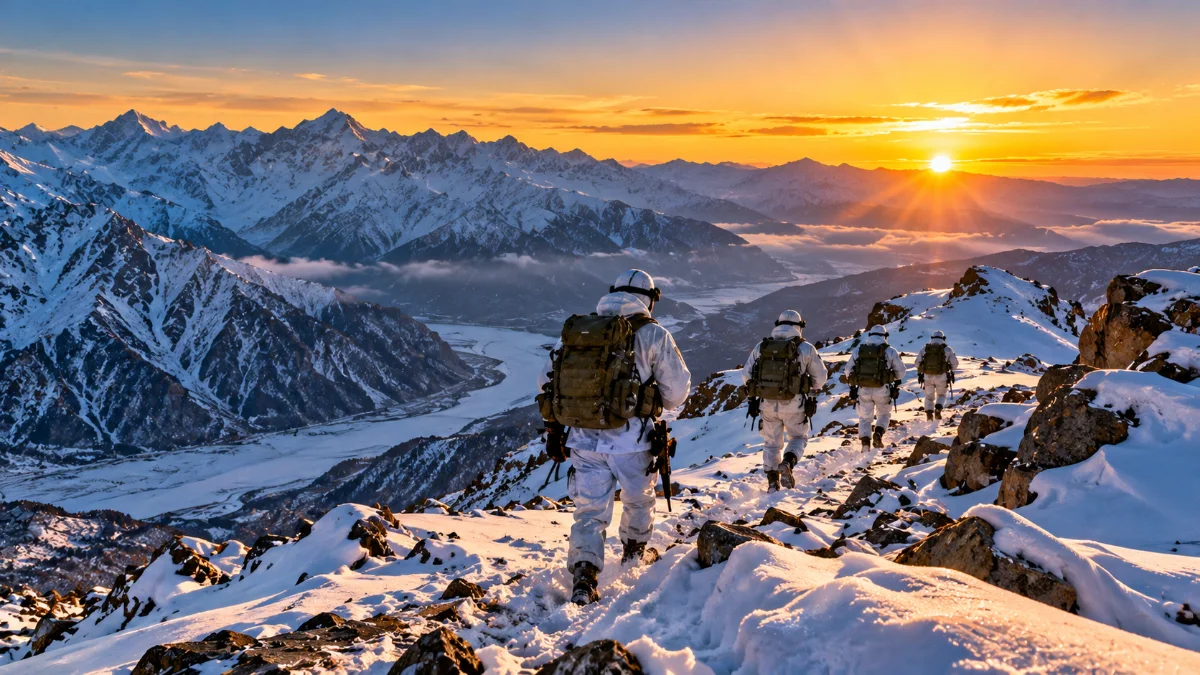
At the MEA briefing on 23 October 2026, spokesperson Randhir Jaiswal said the situation along the Line of Actual Control gets disturbed from time to time when Chinese forces depart from established patrolling patterns. He was responding to remarks by ITBP Director General Shatrujeet Kapur, who said on 22 October that face-offs had occurred at several locations in Arunachal Pradesh and were continuing. The MEA added that the two sides are using existing diplomatic and military mechanisms and have agreed to discuss ways of improving their understanding of the LAC in suitable areas.
Background
ITBP, raised on 24 October 1962 after the India-China war, has guarded the frontier with China since 2004; its Raising Day fell on 24 October. Reports say the most prominent standoff is at Asaphila in Upper Subansiri district, continuing since late July, though these details come from government sources quoted in the press and have not been officially confirmed. Three high-level contacts have followed since July: the 36th meeting of the Working Mechanism for Consultation and Coordination on 6 August, the 25th round of Special Representatives talks in Beijing on 26 August, and the first Corps Commander-level meeting in the Eastern Sector at Vacha-Damai on 6 September. Separately, on 13 October the MEA rejected China’s objection to India’s standard names for 28 places in Ladakh, saying Ladakh is an integral and inalienable part of India. The ITBP chief also said a full battalion of Shaurya commandos, a high-altitude force, would soon be in place, and that the force is expanding drone and counter-drone capability.
Key facts for Prelims
- Line of Actual Control (LAC): the de facto boundary with China; patrolling patterns along it are the point of friction the MEA cited.
- ITBP was raised on 24 October 1962 and is a Central Armed Police Force under the Ministry of Home Affairs; it has had border guarding duty along China since 2004.
- WMCC (Working Mechanism for Consultation and Coordination): its 36th meeting was held on 6 August 2026; Special Representatives held their 25th round in Beijing on 26 August 2026.
- First Corps Commander-level meeting in the Eastern Sector: Vacha-Damai, 6 September 2026.
- Survey of India map: Home Ministry announced standard names for 28 places in Ladakh on 2 October 2026; China objected on 13 October.
- Shaurya commandos: a newly raised ITBP high-altitude fighting force; a full battalion is planned.
Mains analysis and way forward
Mains analysis
- India-China ties are in a phase of managed recovery: official dialogue channels are active, but friction at the border shows that normalisation is conditional on stability on the ground.
- Multiple layers of engagement (WMCC, Special Representatives, Corps Commander talks) provide de-escalation channels, yet recurring face-offs suggest that patrolling understandings in the Eastern Sector may need further work.
- Capacity at the border is a diplomatic asset: drones, counter-drone systems and specialised forces strengthen deterrence while leaving room for dialogue.
Way forward
- Work towards written patrolling and communication protocols for the Eastern Sector, mirroring the confidence-building steps used elsewhere.
- Keep the diplomatic and military tracks moving together and keep the public informed through official channels.
- Continue modernising frontier forces and infrastructure, with equal attention to training and welfare in high-altitude posts.
Connect the dots: GS II: India and its neighbourhood, bilateral groupings; GS III: border management, role of CAPFs; History: 1962 war.
Sources: The Federal (PTI): MEA on LAC tensions when Chinese troops deviate from patrolling patterns, 23 Oct 2026; The Wire: Face-offs with Chinese troops under way at several points in Arunachal, says ITBP chief, Oct 2026; The Week: MEA says Ladakh integral, inalienable part of India, 13 Oct 2026; ANI: PM Modi greets ITBP Himveers on Raising Day, 24 Oct 2026
12th BRICS Parliamentary Forum in New Delhi on 26 and 27 October: AI, resilience and global governance on the agenda
In short: India hosts the 12th BRICS Parliamentary Forum on 26 and 27 October; Speaker Om Birla expects a consensus declaration, and the Prime Minister will meet delegation leaders.
Why in news
The 12th BRICS Parliamentary Forum will be held on 26 and 27 October 2026 in the Central Hall of Samvidhan Sadan in New Delhi, as announced by Lok Sabha Speaker Om Birla on 22 October. Prime Minister Narendra Modi will attend and meet the leaders of visiting delegations. On 24 October Mr Birla told the Russian agency TASS, ahead of a State Duma delegation’s visit, that India-Russia relations are “old and ancient and very strong”.
Background
The forum brings together presiding officers and parliamentarians from BRICS member and partner countries, along with Union ministers, the Rajya Sabha Deputy Chairman and presiding officers of State legislatures. Four sessions are planned, on institutional resilience, parliament and digital technologies including AI, parliamentary cooperation for a more representative global governance architecture, and a sustainable and inclusive future. Delegation secretaries are to meet on 25 October to finalise a joint statement, and Mr Birla hopes the forum adopts a consensus declaration. The Speakers of Saudi Arabia and Ethiopia will not participate. Mr Birla said artificial intelligence should be used with caution and that complete dependence on it is wrong, and noted that India has formed Parliamentary Friendship Groups with 64 countries.
Key facts for Prelims
- Dates and venue: 26 and 27 October 2026, Central Hall, Samvidhan Sadan (Parliament complex), New Delhi; chaired by Lok Sabha Speaker Om Birla.
- Theme centres on parliaments and people-centric development; reports vary slightly in wording between “fostering” and “strengthening”.
- Four sessions: Resilience, Innovation (digital technologies and AI), Cooperation (representative global governance), Sustainability.
- A separate meeting of chairpersons of international affairs committees will discuss parliamentary diplomacy and capacity building.
- India has formed Parliamentary Friendship Groups with 64 countries.
- Speakers of Saudi Arabia and Ethiopia will not attend, as reported on 22 October.
Mains analysis and way forward
Mains analysis
- Parliamentary diplomacy complements executive diplomacy: legislatures give foreign policy democratic legitimacy and keep channels open when governments differ.
- The AI and digital agenda reflects the Global South’s interest in shaping rules on technology rather than receiving them, and fits India’s emphasis on responsible and human-centred AI.
- BRICS now spans diverse political systems and interests; consensus declarations tend to be broad, so the real value lies in dialogue, capacity building and shared legislative practice.
Way forward
- Use the forum to share legislative frameworks on data protection, AI safety and digital public goods, building on India’s own experience.
- Keep outcomes practical: exchange programmes for parliamentary staff, joint research and follow-up committees rather than only declarations.
- Pair parliamentary dialogue with outreach to State legislatures and civil society so that the benefits reach citizens.
Connect the dots: GS II: Important international institutions and groupings (BRICS); Role of Parliament; GS III: AI and emerging technologies.
Sources: ThePrint (PTI): 12th BRICS Parliamentary Forum meet on Oct 26-27; PM Modi to attend, 22 Oct 2026; ETV Bharat: 12th BRICS Parliamentary Forum to be held in Delhi, 22 Oct 2026; TASS: India wants relations with Russia to be further strengthened, Lok Sabha speaker, 24 Oct 2026
Gunmen kill at least seven at funeral in a Greek Orthodox church in Jordan; India condemns the attack
In short: At least seven people were killed and about 40 wounded at a church funeral in Karak, Jordan, on 23 October, with later reports putting the toll higher; India said it stands firmly with Jordan against terrorism.
Why in news
Gunmen attacked a funeral procession at a Greek Orthodox church in Hamoud village, Karak governorate, Jordan, on Friday 23 October 2026, killing at least seven people, according to Jordan’s Public Security Directorate; the Health Minister put the number of wounded at about 40, and later reports on 24 October said the death toll had risen. The Ministry of External Affairs said India “unequivocally condemns the heinous attack” and stands firmly with the government and friendly people of Jordan, reaffirming its commitment to fight terrorism in all its forms; External Affairs Minister S. Jaishankar said he was deeply shocked.
Background
Security footage reported by Reuters showed armed men, whose identities were not confirmed, after an explosion was heard as the procession began; no group has claimed responsibility and a search for the attackers is under way. Jordan’s Interior Minister described it as terrorist and unprecedented, King Abdullah II vowed the harshest penalties for those responsible, and UN Secretary-General Antonio Guterres condemned the attack, as did the UAE. Karak is about 120 km south of Amman; Christians number about 300,000 of Jordan’s roughly 11.5 million people. Such attacks are extremely rare in Jordan; in 2016 ISIL-linked fighters held the Crusader-era Karak castle and killed 10 people before security forces ended the siege.
Key facts for Prelims
- Location: Hamoud village, Karak governorate, about 120 km south of Amman, Jordan; attack on 23 October 2026.
- Casualties: at least 7 killed (Public Security Directorate) and about 40 wounded (Health Minister); later reports said the toll rose.
- Jordan is a constitutional monarchy under King Abdullah II; Christians are about 300,000 of roughly 11.5 million people.
- Jordan’s role as custodian of Christian and Muslim holy sites in Jerusalem was cited by analysts as being affected by the attack.
- India’s statement: MEA condemned the attack and reaffirmed “strong commitment to the fight against terrorism in all its forms and manifestations”.
- Earlier attack in Karak: 2016, when ISIL-linked fighters killed 10 people including a Canadian tourist.
Mains analysis and way forward
Mains analysis
- Attacks on places of worship and funerals target social cohesion, not only lives; states respond best through impartial investigation and protection of minorities.
- India’s quick, consistent condemnation reflects its position that terrorism admits no justification, and supports its larger case for UN action on cross-border terrorism.
- Jordan is a stabilising state in a volatile West Asia, where the Gulf conflict and Gaza have raised tensions; a security shock there has wider regional implications.
Way forward
- Wait for the investigation before drawing conclusions on motive; avoid attributing the attack to any community or group without evidence.
- India can offer counter-terrorism cooperation, intelligence sharing and capacity building where Jordan seeks it, within existing frameworks.
- Strengthen international consensus against terrorism at the UN, including protection of places of worship.
Connect the dots: GS II: India and West Asia, effect of policies of other countries on India; GS III: terrorism and internal security.
Sources: Business Standard: India condemns attack on church in Jordan that killed 7, injured 34, 24 Oct 2026; Al Jazeera: At least seven killed after gunmen open fire at church in Jordan, 23 Oct 2026
Defence Secretary cites surge in Indian ammunition exports to Europe; Bloomberg finds India second among suppliers to 13 Central and East European countries
In short: Defence Secretary Rajesh Kumar Singh says European demand for ammunition and shells is driving Indian exports, after record exports of Rs 38,424 crore in FY26.
Why in news
Speaking at the KPMG Agrasar Bharat Manch 2026 event in New Delhi on 23 October 2026, Defence Secretary Rajesh Kumar Singh said India has quickly become the third-largest arms exporter to Europe, citing a Bloomberg report. The Bloomberg investigation (22 October) found India the second-largest supplier of shells, mortars, propellants and explosives to a group of 13 Central and East European countries, behind South Korea; the wider third-place claim is the Secretary’s, not an established ranking. He linked the rise to demand under the European “Rearm Europe” initiative, mostly for standard ammunition and artillery shells, along with a broader domestic manufacturing base. He also cautioned that the present surge in demand may not last indefinitely, so capacity and long-term partnerships matter.
Background
India’s defence exports rose to an all-time high of Rs 38,424 crore in 2025-26, up about 62.7 per cent from Rs 23,622 crore in 2024-25, according to the Ministry of Defence data reported in April 2026. Defence public sector undertakings exported Rs 21,071 crore (54.84 per cent) and private firms Rs 17,353 crore (45.16 per cent), and the number of exporting firms rose from 128 to 145. Exports go to more than 80 countries and span ammunition, fuses, the BrahMos missile, artillery guns, Dornier-228 aircraft, radars, Akash missiles, Pinaka rockets and armoured vehicles. Mr Singh said the industrial base has widened from about 16 public sector units to roughly 840 licensed large and medium companies and about 17,000 MSMEs, and that policy aims to keep about 75 per cent of annual capital procurement within India. On Europe, he said India hopes to join European procurement indirectly through joint ventures there, while European firms entering Indian programmes must meet Make in India localisation norms.
Key facts for Prelims
- Defence Secretary Rajesh Kumar Singh spoke on 23 October 2026; the “third-largest to Europe” ranking was cited from a Bloomberg report, not an official index.
- Defence exports in 2025-26: Rs 38,424 crore, a record, up about 62.7 per cent over Rs 23,622 crore in 2024-25; exporting firms rose from 128 to 145.
- DPSUs accounted for 54.84 per cent (Rs 21,071 crore) and the private sector for 45.16 per cent (Rs 17,353 crore) of FY26 exports.
- IDDM (Indian-Designed, Developed and Manufactured) equipment is prioritised in procurement; the stated aim is about 75 per cent of annual capital spending to stay in India.
- Rearm Europe is the European initiative to raise defence spending and production capacity; it is the demand driver Mr Singh cited.
- Localisation norms: Mr Singh said Europe asks for about 25 per cent, India a minimum of 50 per cent.
Mains analysis and way forward
Mains analysis
- Export growth supports strategic autonomy: a wider industrial base, private participation and dual-use manufacturing reduce import dependence and give India leverage with partners.
- The risk is concentration in a few product lines such as ammunition. Demand tied to a particular conflict or rearmament cycle can fall quickly, as the Defence Secretary himself cautioned.
- Selling to Europe and buying from Russia, France and Israel shows multi-alignment in practice; managing end-use assurances, quality standards and export controls becomes part of foreign policy.
Way forward
- Convert ammunition-led demand into longer cycles through joint ventures, co-development and platform exports with assured after-sales support.
- Strengthen export finance, certification to NATO-compatible standards and end-use monitoring, so that growth is credible as well as large.
- Keep investing in design and R&D under IDDM so that exports rise in value and technology content, not only volume.
Connect the dots: GS III Security: defence production, Make in India, DAP and IDDM; GS II International Relations: strategic autonomy and India-EU ties.
Sources: ANI: India became third-largest exporter of arms to Europe, Defence Secretary RK Singh, 23 Oct 2026; The News Mill: India becomes third-largest arms exporter to Europe amid rearmament, Oct 2026; Channeliam: India Becomes Europe’s 3rd-Largest Arms Exporter, 24 Oct 2026; Business Standard: India’s defence exports hit record Rs 38,424 crore in FY26, up 62.66%, Apr 2026
Economy and agriculture
Centre issues 11 crore Farmer IDs under AgriStack, five months ahead of the March 2027 target
In short: Agriculture Minister Shivraj Singh Chouhan announced on 24 October that the 11 crore Farmer ID target was met on the night of 23 October, ahead of schedule.
Why in news
Union Agriculture Minister Shivraj Singh Chouhan announced in a video message on Saturday, 24 October 2026, that 11 crore unique Farmer IDs (Kisan Pehchaan Patra) have been created under AgriStack, reaching the target on the night of 23 October. The goal set for March 2027 was therefore achieved about five months early. He said the ID is meant to ensure that benefits reach the right farmers on time and transparently, without repeated paperwork, and thanked Central and State staff and district administrations.
Background
AgriStack is the farmer-centric digital public infrastructure under the Digital Agriculture Mission, which the Union Cabinet approved on 2 September 2024 with an outlay of Rs 2,817 crore (central share Rs 1,940 crore). It rests on three registries: the Farmers’ Registry, geo-referenced village maps and the Crop Sown Registry, the last built through mobile-based digital crop surveys each season. The original plan was 6 crore IDs in 2024-25, 3 crore in 2025-26 and 2 crore in 2026-27, for a total of 11 crore, and 19 States had signed MoUs with the Agriculture Ministry. By 2 April 2026, 9.25 crore IDs had been created across 19 States. Reports on 24 October say that over 6 crore farmers have already received direct benefits through the ID-based system, and that States are working to bring tenant farmers and actual cultivators onto the platform.
Key facts for Prelims
- Farmer ID (Kisan Pehchaan Patra): a unique 11-digit digital identity for farmers, linked to land records, crops sown and schemes availed; part of AgriStack.
- AgriStack has three foundational registries: Farmers’ Registry, geo-referenced village maps registry and Crop Sown Registry.
- Digital Agriculture Mission: approved by the Union Cabinet on 2 September 2024; Rs 2,817 crore outlay; its digital public infrastructures include AgriStack, Krishi Decision Support System and Soil Profile Mapping.
- Announcement of 24 October 2026: 11 crore IDs reached on the night of 23 October, against the March 2027 target set by the Prime Minister.
- Intended uses: Kisan Credit Card and bank loans, PM Fasal Bima Yojana claims, disaster relief and MSP procurement, according to the Ministry statement as reported.
- Digital Crop Survey: seasonal, mobile-based crop recording by trained local youth and Krishi Sakhis, feeding the Crop Sown Registry.
Mains analysis and way forward
Mains analysis
- A single verified farmer identity can cut duplication, leakage and delay in credit, insurance and relief, which matters most for small and marginal farmers who face the highest transaction costs.
- Coverage so far is tied to land records; tenant farmers, sharecroppers and women cultivators without titles risk exclusion unless the registry is widened to actual cultivators, as States have now begun to attempt.
- Digital public infrastructure raises questions of data protection, consent and grievance redress; farmers need clarity on who can access the data and for what purpose.
- Registry accuracy is the real test: ID numbers matter less than whether land, crop and ownership records are current and whether benefits actually reach the right person.
Way forward
- Extend enrolment to tenant farmers and actual cultivators with simple verification, and keep offline and assisted options for farmers with limited connectivity.
- Put data-sharing rules, consent and a clear grievance mechanism in place, and publish periodic audits of registry quality.
- Link the ID to practical outcomes, such as quicker credit, insurance settlement and procurement payments, and track them publicly.
Connect the dots: GS III Agriculture: farm subsidies, direct benefit transfer, technology in agriculture; GS II Governance: e-governance, digital public infrastructure and delivery of schemes.
Sources: Telangana Today (IANS): India creates 11 crore Farmer IDs five months ahead of March 2027 deadline, 24 Oct 2026; Awaz The Voice: Centre issues 11 crore farmer IDs, beats March target, Oct 2026; PTI via The Week: Cabinet approves outlay of Rs 2,817 cr to support digital initiatives in agriculture sector, 2 Sep 2024; AIR News: Union Agriculture Minister says 9.25 crore farmer IDs created across 19 states, 2 Apr 2026
Jio Platforms IPO closes with 22.19 times subscription; listing set for 28 October
In short: India’s largest public offer, Rs 30,213 crore, closed on 23 October with demand reported at over 22 times the shares on offer; listing is on 28 October.
Why in news
The Rs 30,213 crore initial public offering of Jio Platforms closed on Friday, 23 October 2026, after three days of bidding. According to a report dated 23 October, the issue was subscribed 22.19 times (438.3 crore shares bid against 19.75 crore on offer), with qualified institutional buyers at 70.55 times, non-institutional investors at 14 times and retail investors at 2.72 times. The institutional portion had filled within minutes on 21 October, and the whole book within 100 minutes. Basis of allotment is expected on 26 October and listing on BSE and NSE on 28 October.
Background
The issue is entirely a fresh issue of up to 27 crore shares at a price band of Rs 1,065 to Rs 1,119, valuing the company at about USD 108 billion at the upper end. The previous largest Indian IPO was Hyundai Motor India’s Rs 27,870 crore offer of 2024, as cited by PTI. Anchor investors, 212 in number, were allotted shares worth about Rs 8,110 crore on 19 October at Rs 1,119; the anchor book drew over Rs 2.5 lakh crore in bids. Up to Rs 27,500 crore of the proceeds is meant to repay borrowings at Reliance Jio Infocomm, with the balance for capital expenditure. Bidding hours were extended to 7 pm on the final day.
Key facts for Prelims
- IPO: a company’s first sale of shares to the public; regulated by SEBI under its Issue of Capital and Disclosure Requirements (ICDR) Regulations. A fresh issue brings money to the company; an offer for sale (OFS) only transfers existing shares between holders.
- Anchor investors: large institutional investors who bid a day before the issue opens; their shares are subject to a lock-in. Jio’s anchor book: 212 investors, about Rs 8,110 crore.
- QIBs (qualified institutional buyers) include mutual funds, insurers and foreign portfolio investors; NIIs are high-value non-institutional investors; retail investors bid up to Rs 2 lakh.
- In a standard book-built issue the ICDR norms reserve not more than 50% for QIBs, not less than 15% for NIIs and not less than 35% for retail investors.
- Process after closing: basis of allotment (26 October), refunds and credit to demat accounts (27 October), listing (28 October).
Mains analysis and way forward
Mains analysis
- Mega IPOs deepen capital markets and give domestic savings a route into large technology and telecom businesses, reducing dependence on bank credit and on foreign capital.
- Debt reduction through fresh-issue proceeds strengthens corporate balance sheets, but retail participation at 2.72 times against institutional demand at over 70 times shows who drives price discovery.
- Record demand also raises questions of valuation discipline, over-subscription as a signal, and the role of SEBI in ensuring disclosures remain proportionate to the size of the issue.
Way forward
- Investor education on valuation, allotment odds and lock-in rules so that retail participation rests on information rather than listing-day expectations.
- Continued SEBI monitoring of disclosures, grey-market activity and post-listing price behaviour, with timely public communication.
Connect the dots: Primary vs secondary market; SEBI and market regulation; capital formation; corporate debt and financial stability (GS III).
Sources: The Tech Portal: Jio’s $3.2Bn IPO closes with over $77Bn in bids, 23 Oct 2026; DT Next (PTI): Jio Platforms IPO bids cross Rs 50,000 crore after record 100 minutes sellout, 21 Oct 2026; DT Next: Jio Platforms anchor book draws record Rs 2.5 lakh crore in bids, 20 Oct 2026; IPO Watch: Jio Platforms IPO (allotment and listing schedule)
Environment and disaster management
IMD tracks Bay of Bengal system towards North Andhra and South Odisha coasts; heavy rain likely from 27 October
In short: IMD expects the low-pressure area to become a cyclonic storm on 26 October and reach near the North Andhra Pradesh and South Odisha coast around 28 October.
Why in news
On 24 October 2026 the India Meteorological Department said a well-marked low-pressure area over the east-central Bay of Bengal is likely to become a depression on 24 October, a deep depression on 25 October and a cyclonic storm on the morning of 26 October. The system is expected to move west-northwestwards and reach near the North Andhra Pradesh and adjoining South Odisha coast around the early hours of 28 October, with extremely heavy rain (above 20 cm in 24 hours) over North Andhra Pradesh and Odisha that day. IMD Director General Mrutyunjay Mohapatra asked fishery, shipping, port and offshore agencies to begin preparatory action.
Background
IMD grades Bay of Bengal systems by sustained wind speed: a depression (31 to 49 km/h), a deep depression (50 to 61 km/h) and a cyclonic storm (62 to 88 km/h) are the first three stages. A system receives its name only at the cyclonic storm stage, from lists maintained under the WMO/ESCAP Panel on Tropical Cyclones; some media reports already refer to this system as Arnab, which is not an IMD designation at this stage. The north Indian Ocean has a second cyclone season after the monsoon, from October to December, when warm sea surface temperatures and weak vertical wind shear favour intensification. The Odisha government has set a zero-casualty target, cancelled the Dussehra leave of officials and placed NDRF, ODRAF and Fire Services teams on standby. The year also has a strong El Nino, which the UN has warned about, adding to uncertainty in regional rainfall.
Key facts for Prelims
- IMD, under the Ministry of Earth Sciences, is the nodal agency for cyclone warnings in India and the WMO Regional Specialised Meteorological Centre for the north Indian Ocean.
- Stages of a cyclonic disturbance in the north Indian Ocean: low-pressure area, depression, deep depression, cyclonic storm, severe cyclonic storm and onwards; naming begins at the cyclonic storm stage.
- NDRF is a specialised response force constituted under the Disaster Management Act, 2005; ODRAF is the Odisha State Disaster Rapid Action Force.
- IMD colour codes: green (no action), yellow (watch), orange (be prepared), red (take action).
- Odisha red alert for 27 October covers Puri, Ganjam and Gajapati districts, where rainfall could exceed 30 cm, according to a 23 October report.
- The post-monsoon (October to December) season is the second cyclone season for the Bay of Bengal.
Mains analysis and way forward
Mains analysis
- Odisha has moved from heavy casualties in the 1999 Super Cyclone to a zero-casualty approach: examine the role of early warning, shelters and community preparedness in this shift.
- Evaluate how coordinated forecasting by IMD, evacuation planning by states and standby of NDRF reflect the multi-hazard, multi-agency model of the Disaster Management Act, 2005.
- Discuss the challenges of compound risks when El Nino years, warm Bay of Bengal waters and heavy coastal rainfall combine, and how urban and coastal drainage must adapt.
Way forward
- Strengthen last-mile dissemination of warnings in local languages, with fishermen and coastal communities treated as priority groups.
- Invest in resilient coastal infrastructure, shelters with power backup and drinking water, and drainage that can handle extremely heavy rainfall.
- Use impact-based forecasting, which tells people what the weather will do rather than only what it will be, and review each event to improve the next response.
Connect the dots: Disaster Management: Disaster Management Act 2005, NDMA, NDRF, cyclone warning system. Geography: tropical cyclones, Bay of Bengal, El Nino, monsoon withdrawal and northeast monsoon.
Sources: ANI: IMD forecasts cyclonic storm over Bay of Bengal by Oct 26, projected to reach Andhra coast on Oct 28, 24 Oct 2026; The News Mill: IMD forecasts cyclone over Bay of Bengal, Andhra coast by October 28 (IMD Special Message No. 3), October 2026; Pragativadi: Odisha cyclone alert, deep depression to bring heavy rain from Oct 27-29, 23 Oct 2026; Kalinga TV: Odisha govt gears up for impending cyclone, cancels officials leaves, 23 Oct 2026
Arunachal: protests against the proposed 11,200 MW Siang project turn violent; restrictions under Section 163 BNSS imposed in Pasighat
In short: After a bandh on 23 October, violence in Pasighat led to restrictions on 24 October; Chief Minister Pema Khandu appealed for peace and offered talks on the Siang Upper Multipurpose Project.

Why in news
A 12-hour bandh on Friday, 23 October 2026, against the proposed Siang Upper Multipurpose Project (SUMP) was followed by violence in Pasighat, East Siang, which continued until about 3:30 am on Saturday, 24 October. Reports say an NHPC office and a police station were set on fire and the homes of three political leaders were vandalised. The East Siang administration imposed restrictions under Section 163 of the BNSS, 2023, from 5 pm on 24 October in Pasighat, Mebo and Ruksin, and Chief Minister Pema Khandu appealed for peace, saying “the government’s doors are always open” for dialogue.
Background
SUMP is a proposed 11,200 MW project on the Siang river with about 9.2 billion cubic metres of live storage; it is at the pre-feasibility stage, and would need Social and Environmental Impact Assessments and a Detailed Project Report before construction. The State government says its purpose is also to store and regulate water in the Siang basin, given China’s proposed mega project on the Yarlung Tsangpo upstream. Local groups, including the Adi community organisations that called the bandh, demand release of 10 arrested activists, reinstatement of suspended gaon buras (village headmen), a halt to pre-feasibility work and withdrawal of paramilitary forces. At Dite-Dime, police said 150 to 200 protesters tried to breach barricades and fired tear gas, and at least four women were reported injured; protesters and police have given differing accounts, and these details are as reported by the press. On 13 October the Chief Minister had reportedly promised to release detained youths, withdraw FIRs and scale down security deployment.
Key facts for Prelims
- Siang Upper Multipurpose Project (SUMP): proposed 11,200 MW on the Siang river (the Brahmaputra in Arunachal Pradesh); about 9.2 billion cubic metres of live storage; pre-feasibility stage.
- The Siang is the name of the Brahmaputra in Arunachal Pradesh; the Yarlung Tsangpo in Tibet becomes the Siang, then the Brahmaputra in Assam.
- Section 163 of the Bharatiya Nagarik Suraksha Sanhita, 2023 (successor to Section 144 CrPC) empowers a magistrate to issue orders in urgent cases of nuisance or apprehended danger.
- Restrictions in East Siang from 5 pm, 24 October 2026: gatherings of more than five people barred; weapons barred; written permission needed for processions and meetings.
- Bandh called on 23 October by Adi Bane Kebang United, SUMP Affected Area Youth Association, Siang Indigenous Farmers’ Forum Youth Wing and Adi Galo Welfare Society.
- Stages before construction of a large dam: pre-feasibility, Social Impact Assessment, Environmental Impact Assessment with public hearing, Detailed Project Report and clearances.
Mains analysis and way forward
Mains analysis
- Large dams in the Eastern Himalaya sit at the meeting point of energy security, strategic competition and local rights: the State argues that storage can hedge against upstream control, while communities fear displacement and loss of land, river and cultural ties.
- Strategic projects need social licence: consultation that begins after surveys and security deployment can deepen mistrust, particularly in areas protected by customary and constitutional safeguards for tribal communities.
- The ecological stakes are high: the region is seismically active and a biodiversity hotspot, and a very large dam changes sediment flow, fisheries and downstream flood patterns in Assam and Bangladesh.
- Law and order response and political dialogue need to move together; restrictions can restore calm, but a trusted process on information, assessments and compensation is what resolves the dispute.
Way forward
- Share pre-feasibility findings publicly and hold independent, community-inclusive social and environmental assessments before any decision to proceed.
- Honour the commitments made on release of detained youth and reduction of security presence, and hold structured talks with Gram Sabhas, headmen and civil society.
- Compare alternatives such as smaller storage, flood-management and water-security options, with transparent trade-offs and strict rehabilitation norms if the project advances.
Connect the dots: GS III: infrastructure, energy, environmental impact assessment, disaster management; GS I: Himalayan geography and rivers; GS II: India-China relations (Brahmaputra), Fifth/Sixth Schedule-type safeguards and tribal rights.
Sources: ETV Bharat: Arunachal CM Khandu appeals for peace after violence over Siang power project, restrictions imposed, 24 Oct 2026; ThePrint (PTI): Arunachal clashes mark bandh against Siang power project, at least 4 women injured, 23 Oct 2026; NE Now: Arunachal Siang dam protest turns violent, NHPC office torched after police crackdown, 23 Oct 2026; Down To Earth: Why Arunachal Pradesh is protesting a proposed 11,200 MW dam on the Siang river, 8 Oct 2026; Morung Express (IANS): Arunachal’s multipurpose project can help regulate downstream flows from China’s proposed mega dam, Dy CM, 5 Oct 2026
CBD COP17 Yerevan: first global review of nature targets tests whether finance can match ambition
In short: At the mid-point of COP17 (19 to 30 October), delegates are working on the first global review of the Kunming-Montreal Framework; resource mobilisation remains the hardest issue.
Why in news
A WWF update from Yerevan dated 23 October 2026, Day 4 of COP17, says negotiators are still seeking compromise on the first global review of the Kunming-Montreal Global Biodiversity Framework, and that resource mobilisation remains the most contentious element. The conference runs from 19 to 30 October with 196 Parties. The review will decide how firm the language will be on action after COP17, and how funds, capacity-building and technology reach developing countries.
Background
The Kunming-Montreal Global Biodiversity Framework, adopted in 2022, has 23 targets for 2030, including protecting 30 per cent of land and seas and mobilising at least USD 200 billion a year from all sources. According to GIZ, global protection stands at 18.4 per cent of land and 10 per cent of marine areas, and OECD estimates place current biodiversity funding at USD 78 to 91 billion a year. A pre-COP document reviewed by Carbon Brief notes that developing countries seek a separate financial mechanism under the Convention, while developed countries largely prefer the Global Environment Facility; this disagreement led to the suspension of COP16 in Cali in 2024, and a roadmap was agreed at the resumed session in Rome in 2025. WWF notes that the Global Biodiversity Framework Fund, set up at COP15, lacks significant funding. The conference is also the first CBD COP hosted by a former Soviet republic, Armenia.
Key facts for Prelims
- CBD COP17: Yerevan, Armenia, 19 to 30 October 2026; 196 Parties (195 states and the EU). The United States and the Holy See are not Parties.
- Kunming-Montreal Global Biodiversity Framework: 23 targets for 2030, including 30×30 (protect 30 per cent of land, inland waters, coasts and oceans) adopted at COP15 (Montreal, 2022).
- COP15 (2022) called for a dedicated fund; the Global Biodiversity Framework Fund was launched under the GEF at the Seventh GEF Assembly in Vancouver in August 2023.
- Cartagena Protocol deals with biosafety; Nagoya Protocol deals with access and benefit-sharing from genetic resources. Their Parties meet alongside the COP.
- Current global coverage of protected areas: about 18.4 per cent of land and 10 per cent of marine areas (as cited by GIZ).
- India is a Party to the CBD and enacted the Biological Diversity Act, 2002, with the National Biodiversity Authority as the regulator.
Mains analysis and way forward
Mains analysis
- Assess why biodiversity finance remains the central bottleneck in implementing the Kunming-Montreal Framework and what role the common but differentiated responsibilities principle should play.
- Compare the climate and biodiversity regimes: how should the UNFCCC and CBD processes be linked so that nature-based solutions are credible and not substitutes for emission cuts?
- Examine India’s position as a megadiverse country on 30×30, indigenous and community rights, and the need for domestic finance.
Way forward
- Agree a transparent, time-bound review with clear indicators, so that Parties can compare national progress.
- Resolve the financial mechanism question through a pathway that is accessible to developing countries and accountable to the COP.
- Align subsidies, agriculture and consumption patterns with nature targets, since agriculture and unsustainable consumption are among the slowest areas of progress according to the provisional review reported by GIZ.
Connect the dots: Environment: biodiversity conventions, CBD, Kunming-Montreal Framework, GEF. International Relations: climate and nature diplomacy, North-South finance. Polity: Biological Diversity Act 2002.
Sources: Pressenza (WWF): COP17 updates from the ground in Yerevan on Day 4 of nature talks, 23 Oct 2026; GIZ: UN Biodiversity Conference 2026, COP17 in a nutshell; Carbon Brief: Interactive, tracking negotiating texts at the COP17 biodiversity summit, 12 Oct 2026; Down To Earth: Yerevan Pathway, COP17 formally opens in Armenia
Science and technology
Jitendra Singh inaugurates AATAL in Delhi: a laboratory to trace what is in the air, and where it comes from
In short: A Rs 80 crore laboratory at IITM Delhi will identify the chemical make-up, sources and toxicity of air pollution, to inform GRAP decisions.
Why in news
On 24 October 2026, Union Minister of State for Science and Technology and Earth Sciences Dr Jitendra Singh inaugurated the Integrated Atmospheric Chemistry and Aerosol Toxicity Analysis Laboratory (AATAL) at the Delhi branch of the Indian Institute of Tropical Meteorology (IITM). Set up under Mission Mausam at a reported cost of Rs 80 crore, it combines atmospheric measurement, chemical analysis and source identification, so that authorities know the composition and sources of pollution, not only its level. It will support the Commission for Air Quality Management (CAQM) and other agencies in planning measures under the Graded Response Action Plan (GRAP).
Background
Most air-quality systems report concentrations such as PM2.5; source apportionment asks the harder question of how much comes from vehicles, industry, biomass and crop-residue burning, construction and road dust, or transport from neighbouring regions. AATAL is linked to IITM’s AIRWISE system, which is reported to give forecasts at 400-metre resolution for the next 72 hours, with four-day outlooks. It also assesses aerosol toxicity, meaning the likely health effect of different particles, including metals and other toxic elements. The launch comes ahead of the winter pollution season in the Delhi-NCR, when GRAP stages are invoked. IITM is an autonomous institute under the Ministry of Earth Sciences; GRAP is implemented under directions of CAQM.
Key facts for Prelims
- AATAL: Integrated Atmospheric Chemistry and Aerosol Toxicity Analysis Laboratory, inaugurated at IITM Delhi branch on 24 October 2026.
- Mission Mausam is the Government of India initiative to improve weather and climate science, observation and forecasting.
- IITM (Indian Institute of Tropical Meteorology) is an autonomous institute under the Ministry of Earth Sciences.
- CAQM is the statutory Commission for Air Quality Management in the National Capital Region and Adjoining Areas; GRAP is the staged emergency action plan used in Delhi-NCR.
- PM2.5 refers to particulate matter of diameter 2.5 micrometres or less, which can enter deep into the lungs and bloodstream.
- Source apportionment is the scientific estimate of the share of each source in observed pollution.
Mains analysis and way forward
Mains analysis
- Distinguish between air-quality monitoring and source apportionment, and explain why policy that targets specific sources is more effective than blanket restrictions.
- Examine how toxicity-based assessment can change air-quality governance from concentration limits to health-based standards.
- Discuss how scientific institutions, a statutory regulator (CAQM) and state governments need to coordinate for an airshed-level problem such as Delhi-NCR pollution.
Way forward
- Publish source-apportionment findings openly and regularly, so that GRAP triggers and interventions are evidence-based and understood by citizens.
- Extend similar laboratory and modelling capacity to other cities under the National Clean Air Programme, with common protocols.
- Link health data with exposure data, so that policy is judged by outcomes for people, not only by index values.
Connect the dots: Environment: air pollution, PM2.5, NCAP, CAQM. Science and Technology: atmospheric chemistry, aerosols, forecasting models. Governance: airshed approach, evidence-based regulation.
Sources: The Week: Ahead of annual smog season, Delhi NCR gets new air pollution analysis facility, 24 Oct 2026; India Education Diary: Dr Jitendra Singh inaugurates air pollution analysis facility for Delhi NCR, 24 Oct 2026
In brief
- Personality and history: 75 years since India’s first general election began: Voting in the first general election began on 25 October 1951 in the Chini area of Himachal Pradesh, which voted early because of heavy winter snowfall; the election ran in 68 phases until 21 February 1952 with about 173 million electors for 489 seats. Sukumar Sen was the first Chief Election Commissioner.
- Delhi High Court dismisses AISA leader’s plea against peace bond notice: On 23 October 2026, Justice Subramonium Prasad dismissed Neha Bora’s challenge to a Rs 10,000 peace bond notice issued under Sections 126, 130 and 135(3) BNSS, citing adequate safeguards; the Special Executive Magistrate must give her all materials before passing any order.
- PM to address 139th Mann Ki Baat on 25 October: The Prime Minister’s monthly radio programme will air at 11 AM on Sunday, 25 October 2026, on Akashvani and Doordarshan, with regional language broadcasts after the Hindi broadcast.
- Sajjan Singh Yadav appointed Chief Secretary of Jammu and Kashmir: The Ministry of Home Affairs on 24 October 2026 appointed 1995-batch AGMUT cadre IAS officer Sajjan Singh Yadav, effective 1 November or the date he assumes charge, whichever is later.
- 8th All India Conference of Government Railway Police Chiefs: Organised by the Railway Protection Force in New Delhi, it focused on coordination among RPF, GRP and State Police; GRP personnel have been integrated with the RailMadad platform and crowd plans for Diwali and Chhath were discussed.
- Kerala High Court: State liable for harm by wild animals: On 23 October 2026, the Kerala High Court held that the State can be liable for harm caused by wild animals even if it does not own or control them.
- Jio IPO: what follows closing: Basis of allotment is scheduled for 26 October, refunds and demat credit on 27 October, and listing on BSE and NSE on 28 October 2026 (IPO Watch schedule; listing date also in The Tech Portal report of 23 October).
- ITBP Raising Day, 24 October: The Indo-Tibetan Border Police was raised on 24 October 1962 after the India-China war to guard the frontier with China. Prime Minister Modi and Home Minister Amit Shah greeted the force on its Raising Day on 24 October 2026.
- Goyal in the Netherlands, 24 to 27 October: After Berlin, Commerce Minister Piyush Goyal begins the Netherlands leg of his visit on 24 October: meetings in The Hague with Dutch ministers, a visit to the Port of Rotterdam on 25 October and the India-Netherlands Business Forum on 26 October, as scheduled by the Commerce Ministry.
- Ongoing: AUSTRAHIND 2026 in Thiruvananthapuram: The fifth edition of the India-Australia army exercise began on 19 October and runs to 1 November, with about 120 personnel from each side and New Zealand observers for the first time; its theme is joint sub-conventional operations in island and coastal environments.
- INS Trishul in Lisbon: The Navy’s INS Trishul completed a port call at Lisbon on 21 October 2026 as part of an overseas deployment, with talks between its Commanding Officer and the Commander of the Portuguese Navy to improve interoperability.
- Odisha issues red alert for 27 October: A 23 October report says Puri, Ganjam and Gajapati districts are under a red alert for 27 October, with rainfall that could exceed 30 cm; fishermen in deep waters have been told to return to shore.
- Armenia’s environmental record under scrutiny: An Al Jazeera opinion piece of 24 October cites Yale’s 2026 Environmental Performance Index, which ranks Armenia 75th of 177 countries; the COP17 host is the first former Soviet republic to host a CBD COP.
- Finance gap for nature: GIZ cites OECD estimates of USD 78 to 91 billion a year in current biodiversity funding against the Kunming-Montreal goal of at least USD 200 billion a year.
Prelims practice: 5 questions
Choose an option to see the answer and explanation. Your score appears when all five are answered.
Mains practice
Nearly two decades after the Forest Rights Act, 2006, habitat rights have been recognised for only a few Particularly Vulnerable Tribal Groups. Examine the reasons for slow implementation of community and habitat rights, and suggest measures to make the Act effective.
Show the answer outline
Introduction (about 30 words)
- Begin with the October 2026 Srinagar review: about 54 lakh claims received and 80.64 per cent disposed of, but habitat rights recognised for only 11 of 75 PVTGs.
Reasons for slow implementation
- Weak capacity and awareness in Gram Sabhas and Forest Rights Committees; claims filed and processed through forest bureaucracies.
- High rejection rates and poor documentation, with limited reasons given and weak appeal processes.
- Community and habitat rights treated as secondary to individual titles; overlapping laws on conservation and diversion.
- PVTGs are small, dispersed and often unaware of habitat rights; inter-State spread of habitats complicates recognition.
Measures
- Mission-mode recognition of habitat rights with anthropologists, PVTG representatives and State Tribal Research Institutes.
- Review of rejected claims with written reasons; digitised claim tracking open to Gram Sabhas.
- Convergence with PM-JANMAN and Van Dhan for livelihoods once rights are recognised.
- Coordination between Tribal Affairs and Environment ministries so conservation and rights move together.
Conclusion (about 30 words)
- Recognising community and habitat rights completes the Act’s promise of correcting historical injustice, and makes forest communities partners in conservation.
Tip: Use the latest figures, separate individual from community and habitat rights, and keep the measures institution-specific.
Current Canvas is prepared by the UPSC Gurus editorial desk. Every fact is checked against official releases and reliable reporting, with sources listed under each story. Editions are compiled each month into Current Canvas Monthly, a free magazine.
About images: photographs and illustrations in Current Canvas are AI-generated for illustration only. They are not news photographs of the events described.