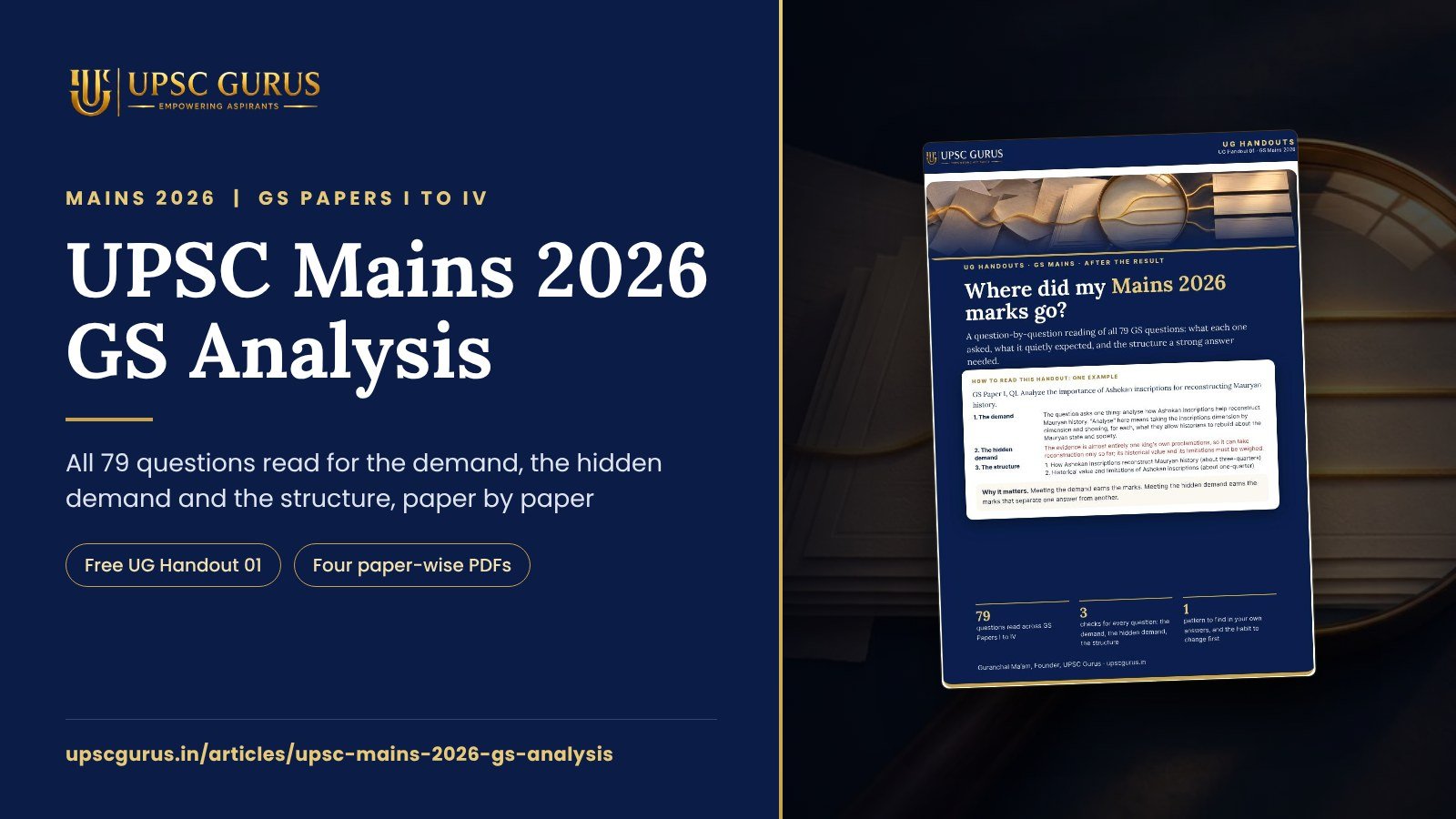
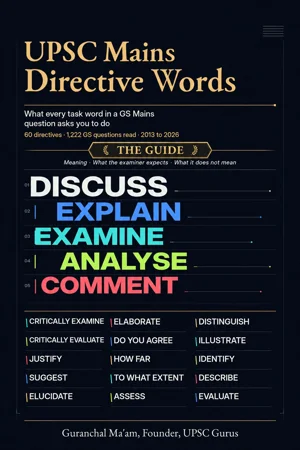
 New this week · Free UG Handout 02UPSC Mains Directive Words: 60 Meanings, Trends and PYQsTwo free PDFs: The Guide and the With PYQs edition.Read and download
Today’s Canvas
This Sunday edition opens with the 2026 Global Hunger Index, which places India 100th of 122 countries, and reads it alongside the data behind it. The Supreme Court has recognised children’s access to the internet as part of their rights, while ordering stronger safeguards. The Navy has commissioned INS Samarthak, the first of its class of indigenous multi-purpose vessels, and a global stocktake of nature targets sets the scene for the biodiversity conference in Yerevan. The Supreme Court has taken up a challenge to the police power in Section 172 of the BNSS and pressed for cadre review in the Central Armed Police Forces. We also look at the 2026 State of the Climate Report and the next steps for Gaganyaan.
About 24 minutes to read the key points; Mains analysis opens under each story.
- Global Hunger Index 2026: India ranks 100th of 122 countries, in the serious categoryGS II
- Supreme Court: children have a right to internet access, blanket bans are not the answer, stronger safeguards orderedGS II
- INS Samarthak commissioned at Karwar: first of its class of indigenous multi-purpose vessels joins the NavyGS III
- First global stocktake of nature targets: world off track ahead of CBD COP17 in YerevanGS III
- Supreme Court issues notice on challenge to Section 172 BNSS, the police power to enforce directionsGS II
- Supreme Court seeks original files on CAPF cadre review, declines interim bar on IPS deputationGS II
- Forex reserves fall $8.58 billion to $726.03 billion, the fifth straight weekly declineGS III
- IPCC session in Addis Ababa suspended without agreement on timeline for Seventh Assessment ReportGS III
- 2026 State of the Climate Report: seven of 16 vital signs at record extremesGS III
- ISRO completes crew module and service module separation tests for Gaganyaan G1GS III
- PM-SETU committee approves Rs 1,194.92 crore for five ITI clusters in Maharashtra, Odisha and Jammu and KashmirGS III
- PM-AJAY: 18,093 villages declared Adarsh Grams and 785 student hostels completed, says Social Justice MinistryGS II
- Himachal Pradesh pilots automated glacial lake early warning system at Geepang Gath lakeGS I
- High Court allows Punjab’s plea against denial of political clearance for Chief Minister’s France visitGS II
- MEA rejects US Congresswoman’s remarks on electoral rolls as “unwarranted and uninformed”GS II
- India ranks 100th of 122 countries in the 2026 Global Hunger Index, with a score of 24.1 in the serious category.
- The Supreme Court recognised children’s access to the internet under Articles 19(1)(a) and 21, and called for stronger online safeguards.
- The Navy commissioned INS Samarthak at Karwar on 16 October, the first of its class of indigenous multi-purpose vessels, built by L&T.
- A UN stocktake finds the world off track on most 2030 nature targets ahead of CBD COP17 in Yerevan from 19 October.
- The Supreme Court issued notice on a challenge to Section 172 of the Bharatiya Nagarik Suraksha Sanhita.
- Forex reserves fell $8.58 billion to $726.03 billion in the week ended 9 October, a fifth weekly decline.
- ISRO has completed crew module and service module separation tests for the uncrewed Gaganyaan G1 mission.
Reports and indices
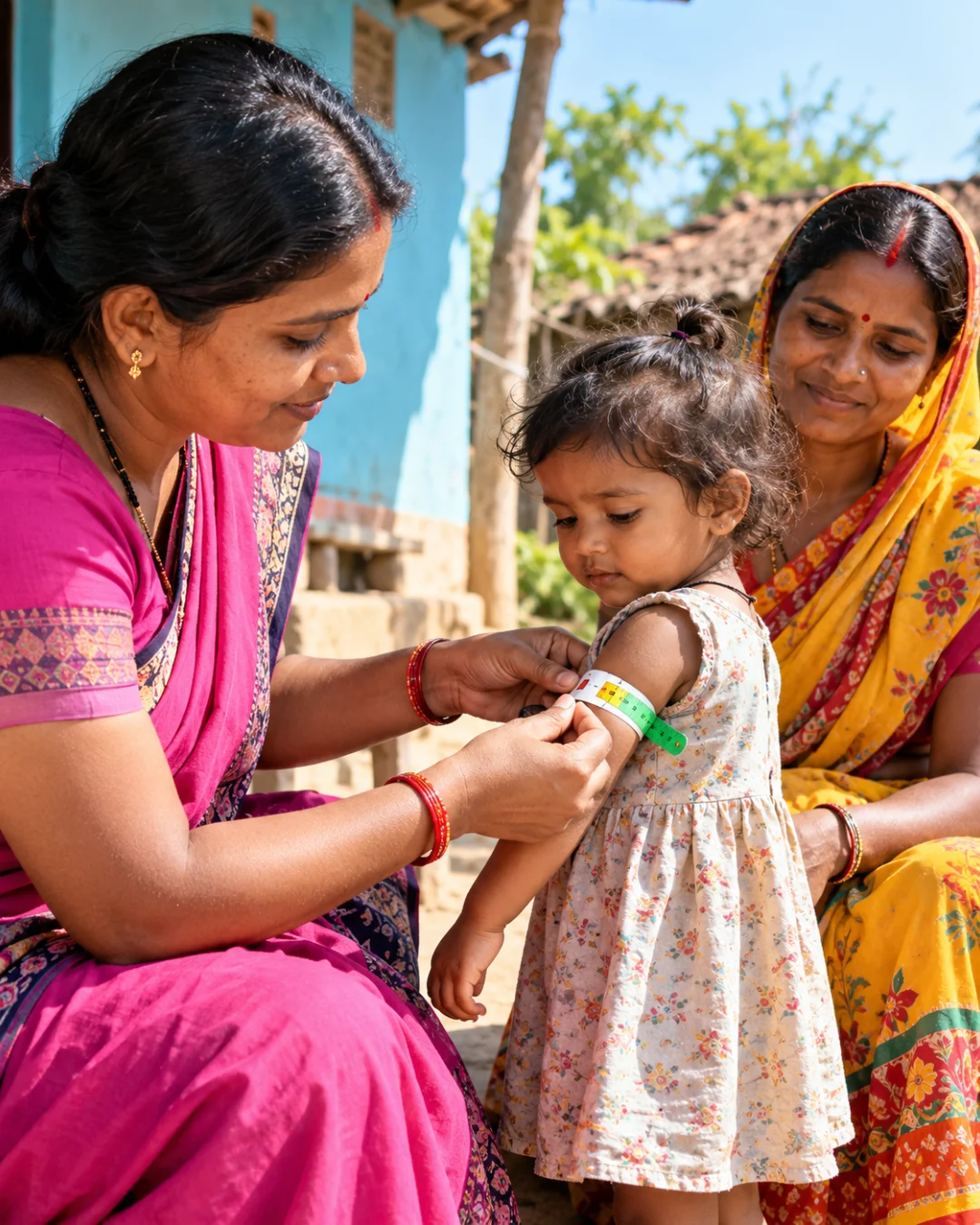
Global Hunger Index 2026: India ranks 100th of 122 countries, in the serious category
In short: India scores 24.1 on the 2026 Global Hunger Index; stunting and undernourishment ease, but child wasting rises to 19.0 per cent.
Why in news
The 2026 Global Hunger Index, titled No Security Without Food Security, was published in October 2026 by Welthungerhilfe and Helvetas with the Institute for International Law of Peace and Armed Conflict (IFHV). India ranks 100th among 122 ranked countries, tied with Ethiopia, with a score of 24.1. The report places India in the serious category, where it has been since 2012.
Background
The index combines four indicators on a 100-point scale: undernourishment and child mortality (one-third weight each) and child stunting and child wasting (one-sixth each). India’s score has eased from 25.8 in 2018. For 2026 the report records undernourishment at 9.8 per cent (from 10.5), stunting at 29.3 per cent (now moved from the very high to the high band), child mortality at 2.7 per cent and child wasting at 19.0 per cent (from 16.9), the highest rate in the region. The global score is 18.1, in the moderate band, and the South Asia score is 23.5.
Key facts for Prelims
- GHI indicators and weights: undernourishment 1/3, child mortality 1/3, child stunting 1/6, child wasting 1/6.
- Severity bands: low (up to 9.9), moderate (10.0 to 19.9), serious (20.0 to 34.9), alarming (35.0 to 49.9), extremely alarming (50.0 and above).
- India 2026: rank 100 of 122, score 24.1 (serious); global score 18.1; South Asia 23.5.
- Child wasting means low weight for height among children under five; stunting means low height for age.
- Highest 2026 scores: Somalia 47.0, Democratic Republic of the Congo 39.5, Chad 38.0, Madagascar 36.5.
Mains analysis and way forward
Mains analysis
- Mixed trends: undernourishment and stunting are improving, while wasting has risen, pointing to gaps in the quality and diversity of diets and in early-childhood care.
- Food and nutrition security are linked to security policy; conflict, climate shocks and price volatility affect access to food well beyond conflict zones.
- The index is a composite of four indicators and relies on estimates from several agencies, so it is best read alongside national data such as NFHS and Poshan Tracker.
- Programmes such as the National Food Security Act, PM Poshan and Saksham Anganwadi and Poshan 2.0 address supply; outcomes depend on dietary diversity, sanitation, health services and women’s nutrition.
Way forward
- Focus on early detection and community management of acute malnutrition, with convergence across health, nutrition, water and sanitation.
- Strengthen dietary diversity through pulses, millets, eggs and fortified foods in Anganwadi and school meals, with local procurement.
- Use district-level data to target the blocks where wasting is highest.
Connect the dots: GS II: Welfare schemes for vulnerable sections; Poverty and hunger. GS III: Food security. Reports and indices.
Sources: 2026 Global Hunger Index report (PDF); Careers360: Global Hunger Index 2026, India ranks 100th, 14 October 2026; OdishaBytes: India ranks 100th on Global Hunger Index 2026, 15 October 2026
2026 State of the Climate Report: seven of 16 vital signs at record extremes
In short: The seventh annual report finds CO2 above 428 ppm and warming rate nearly doubled, while renewables overtook coal in electricity in 2025.
Why in news
The 2026 State of the Climate Report, published in the journal BioScience and reported on 14 October 2026, tracks 16 planetary vital signs. Seven of them, including sea level, ocean heat content, glacier thickness, Greenland ice mass and the concentrations of carbon dioxide, methane and nitrous oxide, reached record extremes. It is the seventh annual edition and is led by researchers including William Ripple of Oregon State University.
Background
Carbon dioxide passed 428 parts per million in May 2026, about 50 per cent above pre-industrial levels. The warming rate has roughly doubled, from about 0.19 degrees Celsius per decade between 1970 and 2010 to about 0.36 degrees per decade since 2010. Sea level stands more than 7 cm above the 1993 mean. Global oil, coal and gas consumption rose 0.9 per cent in 2025, yet renewables surpassed coal in global electricity generation that year. Separately, UNEP’s Limiting Overshoot report of 2 September 2026 said the world is likely to cross 1.5 degrees Celsius within the next few years, with the most optimistic scenario peaking at 1.8 degrees.
Key facts for Prelims
- The report is published in BioScience (an academic journal), not by the UN; it is an independent scientific assessment.
- Atmospheric CO2 above 428 ppm in May 2026, roughly 50 per cent above pre-industrial levels.
- Paris Agreement goal: limit warming to well below 2 degrees Celsius, pursuing 1.5 degrees.
- UNEP Limiting Overshoot report (2 September 2026): overshoot, peak and decline pathway; most optimistic peak 1.8 degrees Celsius.
- Tipping points named by UNEP: ice sheet destabilisation, Amazon degradation and disruption of the Atlantic Meridional Overturning Circulation.
Mains analysis and way forward
Mains analysis
- Rising emissions alongside record renewables show a two-speed transition: clean growth is real but not yet displacing fossil demand.
- An accelerating warming rate raises the importance of adaptation and loss-and-damage finance, especially for coastal and Himalayan regions of India.
- Overshoot pathways depend on carbon dioxide removal, which must complement and not replace emission cuts.
Way forward
- Pair near-term cuts in methane and fossil fuel use with scaled-up renewable and storage capacity.
- Invest in early warning, resilient infrastructure and climate-sensitive planning so adaptation keeps pace with extremes.
Connect the dots: Climate change science; Paris Agreement and NDCs; tipping points; renewable energy transition; sea level rise.
Sources: Eos: 2026 State of the Climate Report shows a planet reaching its limits, 14 Oct 2026; UNEP: World set to cross 1.5 degrees Celsius, Limiting Overshoot press release, 2 Sep 2026
Polity and governance
Supreme Court issues notice on challenge to Section 172 BNSS, the police power to enforce directions
In short: The Court has issued notice on petitions questioning Section 172 of the BNSS, which allows police to detain people who disregard lawful directions.
Why in news
On 15 October 2026 a Supreme Court bench of Chief Justice Surya Kant and Justice Joymalya Bagchi issued notice on a petition (Samriddhi Das v. Union of India) challenging the constitutional validity of Section 172 of the Bharatiya Nagarik Suraksha Sanhita (BNSS), during hearings on restrictions on protests in Delhi. The notice is returnable on 19 November 2026 and is limited to Section 172. On the same day the Court declined to entertain a challenge to Section 163 BNSS (prohibitory orders), reasoning that it corresponds to Section 144 of the Code of Criminal Procedure, which the Court has already upheld in Babulal Parate v. State of Maharashtra (1961). The Court also directed agencies to preserve CCTV footage of the protests and allowed private parties to submit videos as evidence.
Background
Section 172 requires people to comply with lawful police directions issued under the BNSS chapter on preventive action, and allows a police officer to detain or remove anyone who disregards them. The detained person must be taken before a Magistrate or, in petty cases, released within 24 hours. The petition argues that the provision rests on subjective satisfaction, uses undefined terms such as lawful directions and petty cases, and violates Articles 14, 19(1)(a), 19(1)(b), 19(1)(d) and 21. In the alternative it seeks that the provision be read down to require recorded reasons and judicial review. The Court also issued notice on the denotification of Jantar Mantar as a protest site.
Key facts for Prelims
- BNSS replaced the Code of Criminal Procedure, 1973; Section 172 corresponds to preventive police powers in Chapter XII.
- Section 163 BNSS (prohibitory orders) corresponds to Section 144 CrPC, upheld in Babulal Parate v. State of Maharashtra (1961).
- Article 19(1)(a) and (b): freedom of speech and expression, and the right to assemble peacefully and without arms; Article 19(3) permits reasonable restrictions.
- Article 21 guarantees life and personal liberty; Article 22 gives protection against arrest and detention.
- Reading down means interpreting a provision narrowly so as to uphold its validity within constitutional limits.
Mains analysis and way forward
Mains analysis
- Preventive powers must be balanced against the right to peaceful protest; proportionality and procedural safeguards are the tests courts apply.
- Vague terms in a penal or detention provision invite arbitrary enforcement, which is a concern under Article 14.
- Preserving footage supports transparency and accountability in policing of public gatherings.
Way forward
- Frame clear guidelines on the scope of lawful directions and recording of reasons for detention.
- Provide designated, accessible protest sites with predictable procedures for permission.
Connect the dots: GS II: Fundamental rights, police reforms, judiciary. GS III: Internal security and public order.
Sources: LiveLaw: Delhi protest, Supreme Court refuses to examine challenge to Section 163 BNSS, issues notice on plea challenging Section 172 BNSS, October 2026; Business Today: Delhi protests, Supreme Court directs agencies to preserve CCTV footage, 15 October 2026; LiveLaw: Section 172 BNSS unconstitutional, plea in Supreme Court, 14 October 2026
Supreme Court seeks original files on CAPF cadre review, declines interim bar on IPS deputation
In short: The Court asks the Home Ministry for original cadre review files and lists the contempt case for 27 October, while declining an interim ban on IPS deputation.
Why in news
On 15 October 2026 a Supreme Court bench of Justices Manoj Mishra and Ujjal Bhuyan directed the Union Home Ministry to produce original cadre review files for five Central Armed Police Forces (CAPFs). The Court said the new Central Armed Police Force (General Administration) Act, 2026 does not affect its earlier direction to review the cadres, and it declined an interim ban on IPS deputation, noting that this could create an administrative vacuum. The matter returns on 27 October 2026.
Background
In its judgment of 23 May 2025 (Sanjay Prakash v. Union of India), the Court asked for the cadre review, pending since 2021, to be completed within six months and for IPS deputation posts up to the Senior Administrative Grade to be reduced progressively over two years. CAPF officers have filed contempt proceedings against the Union Home Secretary, arguing that review proposals were sought only in December 2025 and February 2026. The Centre says the review is lengthy and began soon after the judgment. The new Act, in force from 8 October 2026, provides that 50 per cent of Inspector General posts, at least 67 per cent of Additional Director General posts, and all Special Director General and Director General posts are filled through IPS deputation.
Key facts for Prelims
- CAPFs under the Ministry of Home Affairs include the BSF, CRPF, CISF, ITBP and SSB.
- Contempt of court is defined under the Contempt of Courts Act, 1971; Article 129 makes the Supreme Court a court of record.
- Deputation means temporary posting of an officer from a parent cadre (here the IPS) to another organisation.
- Cadre review is the periodic assessment of the structure and strength of a service to align it with its needs and promotions.
Mains analysis and way forward
Mains analysis
- The case shows the tension between the career progression of the Group-A officers of the forces and the all-India service character of senior leadership.
- Legislation enacted after a judgment raises the question of how far Parliament can remove the basis of a judicial direction, which courts examine case by case.
- Judicial monitoring of compliance, through original records and contempt jurisdiction, supports accountability in administrative decisions.
Way forward
- Complete the cadre review on a published timeline with clear criteria for deputation posts.
- Balance operational leadership experience with career growth for cadre officers through transparent norms.
Connect the dots: GS II: Executive and judiciary, separation of powers, civil services. GS III: Internal security, central armed police forces.
Sources: Deccan Chronicle: SC seeks MHA files on CAPF cadre review, 15 October 2026; LiveLaw: Supreme Court seeks explanation from Union for deputing IPS officers in CAPFs, 6 September 2026
High Court allows Punjab’s plea against denial of political clearance for Chief Minister’s France visit
In short: On 16 October the Court allowed the State’s petition; the Union had cited security concerns, and the detailed order is awaited.
Why in news
On 16 October 2026 the Punjab and Haryana High Court (Justice Tribhuvan Dahiya) allowed the Punjab Government’s petition against the denial by the Ministry of External Affairs of political clearance for Chief Minister Bhagwant Mann’s proposed visit to France from 15 to 21 October. Punjab said the application was rejected without reasons. In court the Union cited security concerns and the absence of a formal invitation. The detailed order is awaited, and this note does not say whether the visit took place.
Background
Punjab says the application was marked denied on the ministry’s e-Pol Clearance portal without reasons or a hearing, and that it applied 36 days before departure. The visit was meant to promote farm and cooperative produce, including a MARKFED stall at SIAL Paris 2026. The State argues that no Act of Parliament provides for political clearance, which rests only on office memoranda, and that the refusal turns a coordination mechanism into a veto over its executive functions, citing federalism, Article 162 and Article 21. The Union, represented by Additional Solicitor General Satya Pal Jain, referred to inputs on security threats to the Chief Minister and said that without a formal invitation the host country could not make security arrangements. Punjab says a formal invitation had been received.
Key facts for Prelims
- Article 162 extends the executive power of a State to matters on which its legislature can make laws.
- Entry 10 of the Union List (foreign affairs) and Article 253 are the usual references on international relations.
- S R Bommai v. Union of India (1994) held federalism to be part of the basic structure.
- MARKFED is Punjab’s State Cooperative Supply and Marketing Federation.
Mains analysis and way forward
Mains analysis
- Political clearance is an administrative practice, not a statute, so questions arise on reasons, hearing, time limits and review.
- Cooperative federalism requires coordination on foreign engagement by States, especially for trade and investment promotion.
- Foreign policy and security remain Union concerns, and courts examine such considerations with restraint while expecting reasoned decisions.
Way forward
- Issue transparent norms with timelines and reasons for decisions on State requests.
- Create a consultative channel between the Ministry of External Affairs and States for economic diplomacy.
Connect the dots: GS II: Federalism, Centre-State relations, executive powers. GS II: International relations and role of States.
Sources: LiveLaw: High Court sets aside Centre’s denial of political clearance for Punjab CM Bhagwant Mann’s France visit, 16 October 2026; LiveLaw: Punjab Govt moves High Court against Centre’s denial of political clearance for CM Mann’s France visit, 15 October 2026
Social justice
Supreme Court: children have a right to internet access, blanket bans are not the answer, stronger safeguards ordered
In short: The Court holds that access to the internet is part of Articles 21 and 19(1)(a) for children too, and directs systems to detect and remove child sexual exploitation material.
Why in news
In Just Rights for Children Alliance v. S. Harish, a Supreme Court bench of Justices J B Pardiwala and K V Chandran observed on 15 October 2026 that the right to access and use the internet is a fundamental right under Article 21 read with Article 19(1)(a), and that it extends to children of every age. The Court declined to endorse blanket age-based bans on children’s use of the internet or social media, and directed the Union to put stronger safeguards in place against online child sexual exploitation and abuse material (CSEAM). The detailed order was reported on 17 October.
Background
The Court gave four reasons against blanket bans: age verification would require sensitive data on every user, bans have not been shown to work because children move to less regulated platforms, children harmed online may stay silent for fear of punishment, and bans would not stop such material from circulating. It said protective measures must be directed at the harmful material and those responsible for it, not at children, while allowing measures such as parental consent, a child mode with private-by-default accounts and limits on contact from unknown adults. Its directions include a national hash and URL database to detect and remove CSEAM, an SOP for significant social media intermediaries, removal and reporting timelines, easy reporting options and monthly compliance reports, and age-appropriate sex education and digital safety in the school curriculum. The Union is to file a compliance affidavit before the next hearing on 10 December 2026. The bench relied on Pragya Prasun v. Union of India (2025), which treated digital access as part of the right to life.
Key facts for Prelims
- Article 21 (life and personal liberty) and Article 19(1)(a) (freedom of speech and expression): the Court reads access to the internet within both.
- Anuradha Bhasin v. Union of India (2020): free speech and trade over the internet are protected under Articles 19(1)(a) and 19(1)(g).
- The Protection of Children from Sexual Offences (POCSO) Act, 2012 and its Rules govern reporting of such material; the Court’s 2024 judgment in the same case held that platforms failing to report it lose safe-harbour protection under Section 79 of the IT Act.
- Perceptual hash-matching identifies known illegal images by digital fingerprint, so that they can be removed without human viewing of each copy.
- Helplines to be displayed in schools: 1098 (Childline) and 1930.
Mains analysis and way forward
Mains analysis
- Rights and protection are complementary: the Court treats safety and freedom of children as compatible, and places the burden of regulation on platforms and offenders, not on children.
- Blanket age-based bans raise privacy and surveillance concerns through mass age verification, and may push children to less safe spaces.
- Digital access is linked to education and information, especially for children in remote areas, so restrictions bear on equity as well as safety.
Way forward
- Frame the national database and SOP with independent audit, data minimisation and clear grievance redress.
- Pair platform duties with digital literacy, counselling and reporting support in schools and homes.
Connect the dots: GS II: Fundamental rights, child rights, POCSO Act, role of the judiciary. GS III: Cyber security and the regulation of online platforms.
PM-AJAY: 18,093 villages declared Adarsh Grams and 785 student hostels completed, says Social Justice Ministry
In short: The centrally funded scheme for Scheduled Castes works through three components: model villages, grants-in-aid for projects, and hostels.
Why in news
The Ministry of Social Justice and Empowerment reported in an update carried on 17 October 2026 that 18,093 villages had been declared Adarsh Grams under the Pradhan Mantri Anusuchit Jaati Abhyuday Yojana (PM-AJAY) as of 8 September 2026, and that 785 student hostels had been completed as of September 2026. It also reported 46,944 development works completed and 27,032 village development plans prepared under the Adarsh Gram component.
Background
PM-AJAY, in operation from 2021-22, merged three earlier schemes: the Pradhan Mantri Adarsh Gram Yojana, Special Central Assistance to the Scheduled Castes Sub Plan and the Babu Jagjivan Ram Chhatrawas Yojana. Its three components are the development of Scheduled Caste-dominated villages into Adarsh Grams, grants-in-aid for state and district socio-economic projects, and the construction and repair of hostels. The scheme is fully centrally funded, and States and Union Territories may add their own resources. About Rs 1,730 crore was released to States under grants-in-aid from 2021-22 to 2025-26, supporting skilling and livelihood opportunities for over 2.5 lakh individual and group beneficiaries. For 2026-27, Rs 61.46 crore is allocated for two hostel projects to house 264 students.
Key facts for Prelims
- PM-AJAY: Ministry of Social Justice and Empowerment; three components: Adarsh Gram, grants-in-aid, hostels.
- It merged PMAGY, SCA to SCSP and BJRCY from 2021-22.
- Article 46 (Directive Principle) directs the State to promote the educational and economic interests of Scheduled Castes and protect them from social injustice.
- Figures reported: 18,093 Adarsh Grams (as of 8 September 2026); 785 hostels completed; about Rs 1,730 crore released as grants-in-aid.
Mains analysis and way forward
Mains analysis
- Area-based convergence in Adarsh Grams aims to close gaps in infrastructure and services in villages with a large Scheduled Caste population.
- Hostels and grants-in-aid link housing and livelihoods to education and skilling, which are the main routes to mobility.
- Outcomes depend on the quality of village plans and utilisation of funds, so independent evaluation and outcome data matter alongside output counts.
Way forward
- Publish outcome indicators, such as enrolment, retention and income gains, alongside the numbers of villages and hostels.
- Strengthen convergence with State schemes and local bodies in planning and maintenance.
Connect the dots: GS II: Welfare schemes for vulnerable sections, Scheduled Castes, Article 46, centrally sponsored and central sector schemes.
Sources: PIB: Pradhan Mantri Anusuchit Jaati Abhyuday Yojna (PM-AJAY); ThePrint (PTI): PM-AJAY, 18,093 villages declared Adarsh Grams, 785 student hostels completed, 17 October 2026
Economy and skilling
Forex reserves fall $8.58 billion to $726.03 billion, the fifth straight weekly decline
In short: Reserves are $59.7 billion below the 4 September record; foreign currency assets account for most of the latest fall.
Why in news
India’s foreign exchange reserves fell by $8.578 billion to $726.027 billion in the week ended 9 October 2026, the fifth consecutive weekly decline, according to RBI data released on 16 October. The previous week’s level was $734.606 billion, and the record was $785.706 billion on 4 September.
Background
Foreign currency assets, the largest component, fell $7.142 billion to $597.605 billion; gold fell $1.319 billion to $105.094 billion; SDRs fell $109 million to $18.548 billion; and the IMF reserve position fell $10 million to $4.78 billion. Reports attribute the fall to RBI dollar sales to stabilise the rupee, elevated crude oil prices, outflows by foreign portfolio investors and strong demand for dollars. An economist estimated RBI sales at about $9.8 billion in the week, with a small valuation gain partly offsetting the decline. The rupee closed at 94.96 per dollar on 9 October, its strongest close since 8 September. On 10 October the RBI announced steps including a dollar window for state-owned oil marketing companies and tighter rules on foreign exchange derivatives.
Key facts for Prelims
- Components of forex reserves: foreign currency assets, gold, SDRs and the reserve position in the IMF.
- Foreign currency assets include the effect of appreciation or depreciation of non-dollar currencies held in reserves.
- The RBI publishes weekly data in its Weekly Statistical Supplement.
- SDR: Special Drawing Rights, an international reserve asset created by the IMF.
Mains analysis and way forward
Mains analysis
- Reserves act as a buffer against external shocks, and intervention smooths rupee volatility rather than targeting a level.
- The fall reflects dollar sales, oil import demand and portfolio outflows, while valuation changes can move the total in either direction.
- Persistent outflows and high crude prices increase the importance of the current account and stable inflows.
Way forward
- Maintain adequate reserve cover while allowing exchange rate flexibility.
- Encourage stable long-term inflows and reduce import dependence in energy.
Connect the dots: GS III: Indian economy, external sector, monetary policy, balance of payments.
Sources: PTI via ThePrint: India’s forex reserves decline by USD 8.578 bln to USD 726 bln, 16 October 2026; Business Standard: India’s forex reserves fall for fifth straight week to $726 billion, 16 October 2026; Free Press Journal: India’s forex reserves fall $8.6 billion to $726 billion as RBI defends rupee
PM-SETU committee approves Rs 1,194.92 crore for five ITI clusters in Maharashtra, Odisha and Jammu and Kashmir
In short: Cumulative investment approved under the ITI upgradation scheme reaches Rs 3,687 crore, using a hub and spoke model with industry partners.
Why in news
The National Steering Committee for PM-SETU (Pradhan Mantri Skilling and Employability Transformation through Upgraded ITIs), at its sixth meeting on 16 October 2026 chaired by Debashree Mukherjee, Secretary, Ministry of Skill Development and Entrepreneurship, approved five Strategic Investment Plans worth Rs 1,194.92 crore. They cover ITI clusters in Maharashtra (Pune and Chhatrapati Sambhajinagar), Odisha (Kataka) and Jammu and Kashmir (Jammu and Srinagar). Cumulative investment approved under the scheme is now Rs 3,687 crore.
Background
PM-SETU, unveiled by the Prime Minister in 2025, aims to upgrade 1,000 government Industrial Training Institutes with an outlay of Rs 60,000 crore, through 200 hub ITIs and 800 spoke ITIs. Each cluster has a central ITI as hub and other institutes as spokes, and an industry partner helps manage it; here the partners include Tata Steel Foundation, BVG India, Belrise Industries, Eagle Infra India and Inderdeep Infra India. The scheme upgrades training infrastructure, introduces industry-aligned courses, strengthens instructors, builds ties with employers and seeks better employment outcomes. Under the trainer component, 3,744 trainers had been trained through National Skill Training Institutes as of October 2026. The Secretary encouraged clusters to seek ISO certification and to include at least one WorldSkills-aligned trade.
Key facts for Prelims
- PM-SETU: Pradhan Mantri Skilling and Employability Transformation through Upgraded ITIs; Ministry of Skill Development and Entrepreneurship.
- Hub and spoke model: a central hub ITI supports spoke institutes with equipment, courses and trainers.
- Scheme scale as reported: 1,000 ITIs, 200 hubs and 800 spokes, Rs 60,000 crore outlay.
- ITIs offer craftsmen training under the Craftsmen Training Scheme and are affiliated to the National Council for Vocational Training.
- Cumulative approved investment: Rs 3,687 crore; this round: Rs 1,194.92 crore across five plans.
Mains analysis and way forward
Mains analysis
- Industry-managed clusters aim to align training with demand, which addresses the gap between skills taught and skills employers need.
- Regional spread across Maharashtra, Odisha and Jammu and Kashmir shows an attempt to widen access beyond industrial hubs.
- Outcomes depend on trainer quality, placement results and the durability of industry partnerships, so tracking employment outcomes is essential.
Way forward
- Publish cluster-wise placement and wage outcomes to guide course design.
- Expand trainer development and apprenticeship links so that upgraded infrastructure translates into jobs.
Connect the dots: GS III: Employment, skill development, human capital. GS II: Government schemes and their implementation.
Sources: Indian Masterminds: PM-SETU approves Rs 1,194.92 crore for five ITI clusters in Maharashtra, Odisha and J&K, 17 October 2026; Punjab Kesari (English): Centre okays Rs 1,195 crore plan to upgrade ITI clusters in three states; Careers360: PM-SETU to transform 1,000 ITIs, October 2025
International relations
MEA rejects US Congresswoman’s remarks on electoral rolls as “unwarranted and uninformed”
In short: India told a US legislator that comments on its electoral rolls interfere in the electoral practices of a fellow democracy.
Why in news
At its weekly briefing in New Delhi on 16 October 2026, the Ministry of External Affairs spokesperson Randhir Jaiswal described remarks by US Congresswoman Pramila Jayapal on India’s electoral process as “unwarranted and uninformed”. He said they amounted to interfering in the electoral practices of a fellow democracy. On 15 October, India’s Ambassador to the US, Vinay Mohan Kwatra, had called the remarks unacceptable interference in India’s internal affairs.
Background
Ms Jayapal claimed on X that about 13 crore (130 million) names had been deleted from voting rolls; this is her claim, attributed to her, and was not verified in the reports. The Election Commission of India is conducting a Special Intensive Revision of electoral rolls in phases. The Commission has said that lists of absent, shifted, deceased and duplicate voters were publicly displayed and shared with political parties, and that people whose names were deleted can apply for re-enrolment at any time. The revision is also under challenge in the Supreme Court, which has issued notice to the Commission. The episode shows how domestic institutional processes now draw foreign legislative comment.
Key facts for Prelims
- Article 324 vests superintendence, direction and control of elections in the Election Commission of India.
- Special Intensive Revision (SIR): a door-to-door revision of electoral rolls conducted by the Election Commission in phases.
- The principle of non-interference in internal affairs flows from state sovereignty and is reflected in Article 2(7) of the UN Charter.
- The Executive of a foreign state speaks through its government; remarks by individual legislators do not constitute official US policy, though they can shape the bilateral mood.
Mains analysis and way forward
Mains analysis
- Distinguishing legitimate democratic dialogue from interference: India’s position is that electoral management is a sovereign constitutional function, subject to domestic judicial review.
- Legislative voices abroad, including from the Indian diaspora, add a soft-power and perception dimension to bilateral ties during sensitive trade and strategic talks.
- Transparency in rolls revision, public display of lists and re-enrolment avenues strengthen the credibility of the answer India gives.
Way forward
- Keep the rejection factual and calm, and continue outreach to legislators through the embassy so that information on the process reaches them directly.
- Let the Election Commission and the Supreme Court address concerns on the process, while diplomacy protects the broader partnership.
Connect the dots: Sovereignty and non-interference; Election Commission and electoral reforms; India-US relations; diaspora and soft power.
Sources: ANI: MEA condemns US Congresswoman’s comments on India’s electoral process, 16 Oct 2026
Security
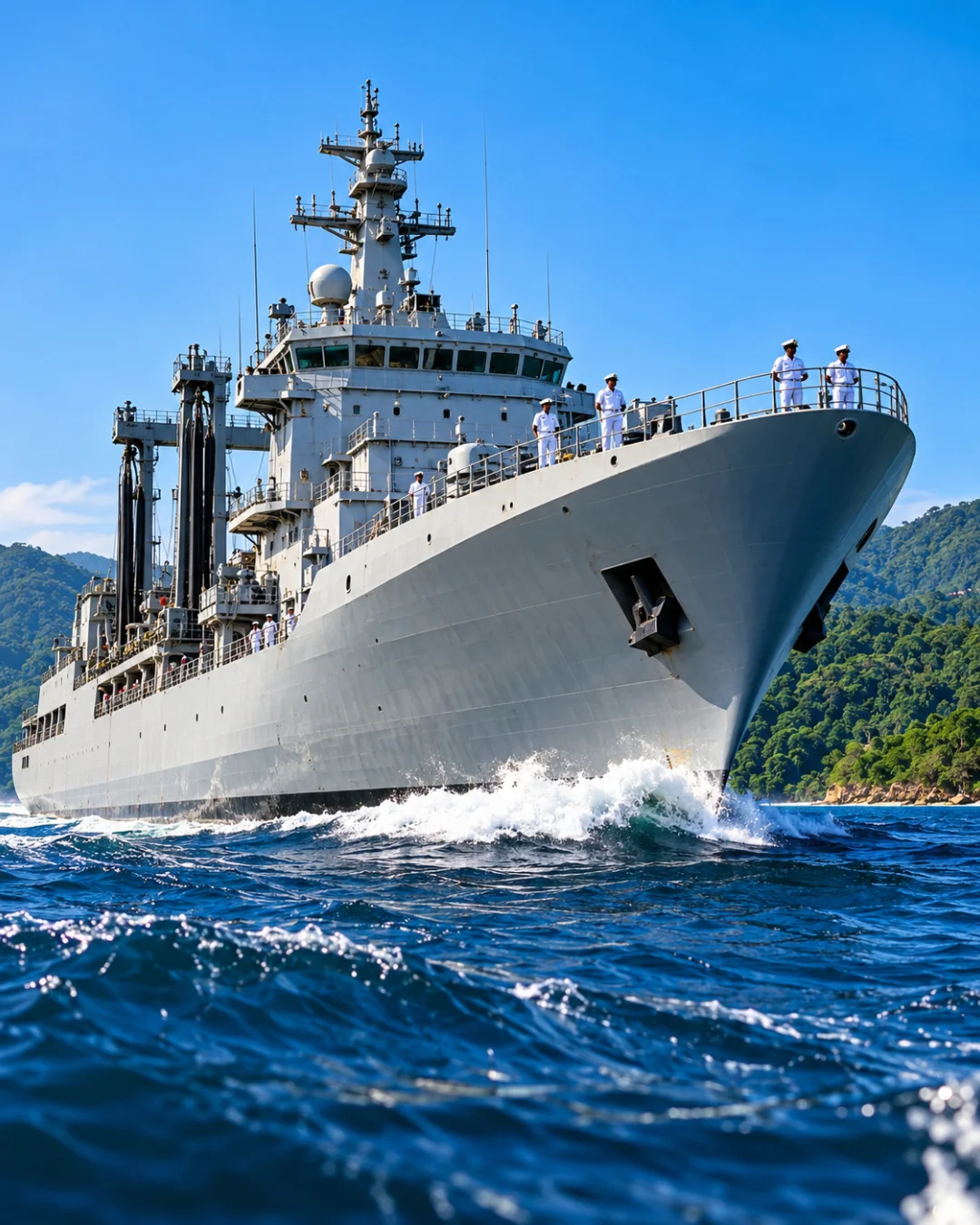
INS Samarthak commissioned at Karwar: first of its class of indigenous multi-purpose vessels joins the Navy
In short: The Navy has inducted INS Samarthak, a multi-purpose vessel built by a private shipyard with over 75 per cent indigenous equipment.
Why in news
The Indian Navy commissioned INS Samarthak at Naval Base Karwar, Karnataka, on 16 October 2026. Vice President C P Radhakrishnan presided, and Chief of Naval Staff Admiral Krishna Swaminathan was present. Built by Larsen and Toubro, it is the first of its class of indigenous multi-purpose vessels and is reported to have over 75 per cent indigenous equipment.
Background
A multi-purpose vessel is designed as a versatile platform rather than a frontline combatant. Its primary role is maritime surveillance and patrol, with additional roles in low-intensity maritime operations, target deployment and weapon trials, and as a mothership for unmanned and autonomous systems. It can also support humanitarian assistance and disaster relief, limited hospital ship conversion and salvage. Reports describe it as the Navy’s first multi-purpose vessel built by a private shipyard, and the Ministry of Defence presents it as a milestone in defence self-reliance. The ship’s crest shows an Indian elephant rising from the waves.
Key facts for Prelims
- INS Samarthak: first of its class of indigenous multi-purpose vessels; the name means The Proponent; builder Larsen and Toubro (private sector); commissioned 16 October 2026 at Naval Base Karwar.
- Karwar is the base of Project Seabird, on the Karnataka coast, and falls under the Western Naval Command.
- Indigenous equipment is reported at over 75 per cent, in line with the Make in India and Atmanirbhar Bharat push in defence.
- Roles include surveillance, patrol, trials of indigenous sensors and weapons, a mothership for unmanned systems, and humanitarian assistance and disaster relief (HADR).
- Motto, as reported: “Victory is Our Sole Aim” (Vijayarthama Eknishtatha).
Mains analysis and way forward
Mains analysis
- Private shipyards in warship building widen capacity beyond public-sector yards and can shorten delivery timelines through competition.
- Multi-purpose platforms free frontline combatants from routine surveillance, trials and HADR tasks, improving fleet utilisation.
- Indigenous content of over 75 per cent still leaves dependence on imported subsystems; depth of the supplier base matters for resilience.
Way forward
- Sustain steady orders so that private yards and domestic suppliers can plan investment in skills and facilities.
- Raise indigenous content in sensors, engines and weapons through long-term technology partnerships with DRDO and industry.
Connect the dots: Maritime security; Make in India in defence; Indian Ocean Region; HADR role of the armed forces; defence procurement.
Sources: PIB: Indian Navy commissions INS Samarthak, the first indigenous multi-purpose vessel, 16 Oct 2026; English Punjab Kesari (IANS): INS Samarthak commissioned into Indian Navy at Karwar, 16 Oct 2026; News Today: Navy inducts indigenous multi-purpose vessel Samarthak, 17 Oct 2026; ANI: Samarthak, Indian Navy’s multi-purpose vessel, to be commissioned, 16 Oct 2026; OrissaPOST: Made in India warship Samarthak set for commissioning on October 16
Science and technology
ISRO completes crew module and service module separation tests for Gaganyaan G1
In short: A key safety step before re-entry has been validated on the ground, ahead of the first uncrewed Gaganyaan flight targeted within 2026.
Why in news
ISRO announced on 16 October 2026 that it has successfully completed a series of Crew Module to Service Module separation tests for the Gaganyaan programme at the Vikram Sarabhai Space Centre, Thiruvananthapuram. The tests are a prerequisite for G1, the first uncrewed mission, which is targeted for launch within 2026, as reported.
Background
ISRO built a test setup simulating the integrated crew and service module assembly with extensive instrumentation. The tests replicated the separation scenario, including severing several umbilical connections between the modules. They validated the design of the separation systems and the shock survivability of subsystems such as avionics, inertial navigation, the heat shields’ thermal protection, the deployable umbilical shield and pyrotechnic devices. Earlier qualification work in 2026 covered the uprighting system, umbilical connect and disconnect mechanisms and apex cover separation loads. The eventual crewed mission is planned to carry three crew to a 400 km orbit for three days before splashdown in Indian waters, on the human-rated LVM3.
Key facts for Prelims
- Gaganyaan: India’s human spaceflight programme; planned crewed mission with three crew, 400 km low Earth orbit, three days.
- Launch vehicle: human-rated LVM3 (HRLV).
- Crew Module (CM) returns to Earth; Service Module (SM) provides propulsion and support and is separated before re-entry.
- G1 is the first uncrewed flight; more uncrewed flights are planned before the maiden crewed mission.
- Tests were conducted at the Vikram Sarabhai Space Centre (VSSC), Thiruvananthapuram.
Mains analysis and way forward
Mains analysis
- Human-rating demands redundancy and ground qualification at every stage, which explains the phased series of uncrewed missions.
- Gaganyaan builds indigenous capability in life support, re-entry and recovery that has spin-offs for industry and science.
- Strategic and soft-power gains accompany a space programme that increasingly involves private industry.
Way forward
- Complete the planned uncrewed flights and publish clear safety milestones before crew selection for flight.
- Deepen industry participation in subsystems and strengthen recovery capacity with the Navy and other agencies.
Connect the dots: Indian space programme; human spaceflight; launch vehicles; re-entry and recovery technology.
Environment and disaster management

First global stocktake of nature targets: world off track ahead of CBD COP17 in Yerevan
In short: The UN report projects that full delivery of current pledges would protect 27 per cent of land and 12 per cent of oceans by 2030, short of the 30 by 30 goal.
Why in news
UN Secretary-General Antonio Guterres launched the first State of Biodiversity Action report, prepared with UNEP and the Convention on Biological Diversity (CBD), in Yerevan, Armenia, on 15 October 2026, ahead of COP17 (19 to 30 October). The report projects that if current government commitments are delivered in full, 27 per cent of land and inland waters and 12 per cent of oceans would be protected by 2030, short of the 30 per cent goal. Mr Guterres also said, as reported on 16 October, that subsidising fossil fuels is “subsidising suicide”.
Background
The Kunming-Montreal Global Biodiversity Framework, adopted in 2022, has 23 targets for 2030, including protecting 30 per cent of land and sea. The CBD release says over 70 per cent of the 196 Parties have submitted national reports and nearly 90 per cent have set national biodiversity targets. UNEP Executive Director Inger Andersen said the Framework calls for US$200 billion a year from all sources and that for every US$1 spent protecting nature, about US$30 still goes to harming it. Countries also pledged in 2022 to cut harmful subsidies by US$500 billion a year by 2030; an estimated US$2.6 trillion a year in public subsidies still harms nature and climate, according to the reports. COP17 will hold the first global review of the Framework, alongside the Cartagena and Nagoya Protocol meetings.
Key facts for Prelims
- Kunming-Montreal Global Biodiversity Framework (2022): 23 targets for 2030, including Target 3, the 30 by 30 goal.
- COP17 of the Convention on Biological Diversity: Yerevan, Armenia, 19 to 30 October 2026; first global review of the Framework.
- Cartagena Protocol concerns biosafety (living modified organisms); Nagoya Protocol concerns access and benefit sharing of genetic resources.
- National Biodiversity Strategies and Action Plans (NBSAPs) are the instruments through which parties implement the Convention; in India, the Biological Diversity Act, 2002 gives effect to it.
- Finance goal in the Framework: US$200 billion a year from all sources by 2030, and cutting harmful subsidies by US$500 billion a year.
Mains analysis and way forward
Mains analysis
- The gap between ambition and delivery: projections show only 27 per cent of land and 12 per cent of oceans protected even if pledges are delivered, so implementation and finance, not new targets, are the main challenge.
- Perverse subsidies in agriculture, fisheries and fossil fuels work against conservation, linking biodiversity to climate and fiscal policy.
- Climate overshoot beyond 1.5 degrees Celsius multiplies the stress on ecosystems, showing why biodiversity and climate agendas must move together.
Way forward
- Reform harmful subsidies and redirect savings to conservation, restoration and community-led stewardship.
- Mobilise predictable public and private finance, with transparent monitoring of national targets through the Framework’s review process.
Connect the dots: Convention on Biological Diversity; Biological Diversity Act, 2002; protected areas and 30 by 30; climate-biodiversity linkages; environmental finance.
Sources: CBD: Press release on the State of Biodiversity Action report, 15 Oct 2026; UNEP: ED press statement on launch of State of Biodiversity Action report, 15 Oct 2026; CBD: Media advisory on global biodiversity report launch, Oct 2026; Euronews: Subsidising suicide, UN chief urges governments to stop propping up polluting fossil fuels, 16 Oct 2026; FPWC: COP17 dates confirmed, 19 to 30 October 2026, Yerevan
IPCC session in Addis Ababa suspended without agreement on timeline for Seventh Assessment Report
In short: Governments could not settle when the next climate science assessment will appear; India is among those seeking more time.
Why in news
The Intergovernmental Panel on Climate Change (IPCC) suspended its 65th session in Addis Ababa on 16 October 2026 without agreement among its member states on when to publish the Seventh Assessment Report (AR7). The IPCC said discussions on the timeline and its budget remain open and will resume at the earliest opportunity, without giving a date. A coalition of 30 countries sought quick action, while India, Kenya, Saudi Arabia, Russia and China pressed for more time, as reported by Reuters.
Background
Reuters reports that the deadlock over the timeline has lasted nearly three years, and that the session ran past its planned end, with many delegations from least-developed countries and small island states having to leave. Countries seeking more time say it would let scientists from less-resourced countries contribute meaningfully. The coalition seeking early action fears the reports may not be ready for the Global Stocktake of the Paris Agreement in November 2028. The IPCC was established in 1988 by the World Meteorological Organization (WMO) and the United Nations Environment Programme (UNEP), has 195 member states, and has produced assessment reports roughly every five to seven years; the Sixth cycle ran from 2021 to 2023, with reports from three Working Groups and a Synthesis Report.
Key facts for Prelims
- IPCC: intergovernmental body of the WMO and UNEP, set up in 1988; 195 member states; it assesses climate science and does not conduct its own research.
- Assessment cycle: First Assessment Report 1990, AR5 2013-14, AR6 2021-23; AR7 is the next cycle.
- Working Groups: I the physical science basis; II impacts, adaptation and vulnerability; III mitigation.
- Reports are approved line by line by all member governments, which gives them policy authority.
- The Global Stocktake under the Paris Agreement is a periodic review of collective progress; the next concludes in 2028.
Mains analysis and way forward
Mains analysis
- Timing matters: if AR7 findings arrive after the 2028 Global Stocktake, countries would decide next steps without the latest consensus assessment.
- The dispute reflects an equity question: developing countries ask for time and capacity for their scientists to take part, while others stress urgency.
- Science-policy credibility rests on every member approving the reports, so process disputes carry weight for global climate governance.
Way forward
- Agree a timeline that balances the 2028 Stocktake with support for authors and reviewers from developing countries.
- Resume the session at the earliest, with funding for participation and for the IPCC budget.
Connect the dots: Climate change governance; IPCC and Assessment Reports; Paris Agreement and Global Stocktake; developing countries and capacity building.
Sources: Reuters via ThePrint: Top global climate science body suspends meeting without deal on major review timeline, 16 Oct 2026; Climate Action Network: IPCC AR7 session suspended, 16 Oct 2026; IPCC: About the IPCC and assessment reports
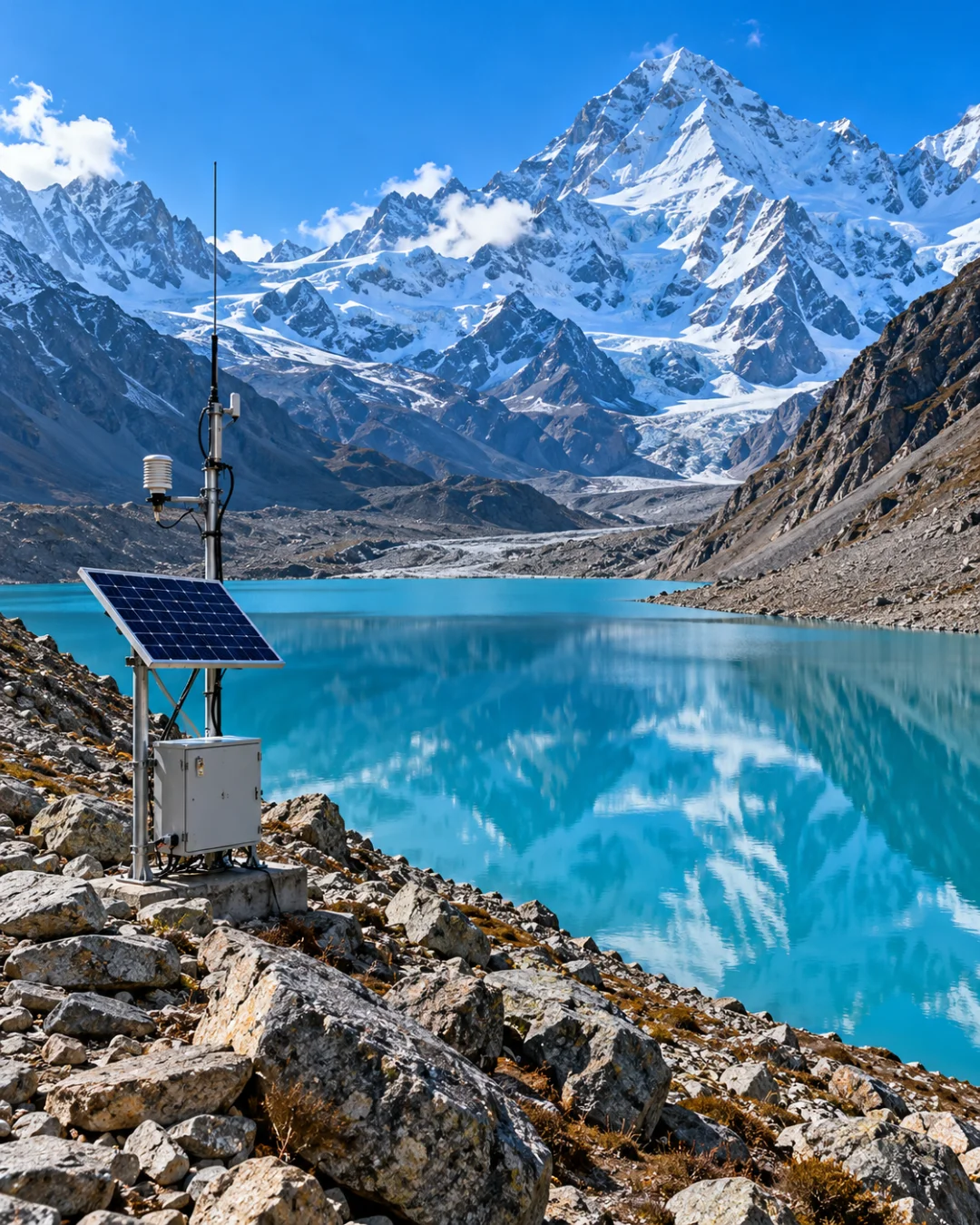
Himachal Pradesh pilots automated glacial lake early warning system at Geepang Gath lake
In short: A buoy, weather station and glacier cameras linked to supercomputer analytics can send mobile alerts in 1 to 5 minutes.
Why in news
Himachal Pradesh’s Special Secretary for Disaster Management, Dr Pushpendra Rana, said on 16 October 2026 that an early warning system at Geepang Gath glacial lake, at about 4,100 m, should shorten response times and save lives. The state has also submitted a loss assessment of about Rs 3,525 crore for this year to the Centre and asked for quick release of funds.
Background
The system has three linked parts: a floating buoy that reports every 10 minutes and within 30 seconds in an emergency, an automatic weather station recording 14 environmental parameters, and a glacier vision unit with two cameras. A supercomputer-based analytics platform connects them, and mobile alerts can reach authorities within 1 to 5 minutes. It was developed with scientists of C-DAC Pune, with support from the State Disaster Management Authority, the Ministry of Home Affairs and the National Disaster Management Authority (NDMA). The state is working on four lakes where high-risk glacial lake outburst floods (GLOFs) are possible. A Supreme Court-empowered committee is also visiting the state to examine how conservation can be balanced with development.
Key facts for Prelims
- GLOF: Glacial Lake Outburst Flood, a sudden release of water from a lake dammed by moraine or ice.
- NDMA identifies and prioritises high-risk glacial lakes in the Himalayan region; early warning systems are among the recommended mitigation measures.
- Geepang Gath lake (Himachal Pradesh) is at about 4,100 m; the system is described as the first of its kind in India for its integration and automation.
- Components: buoy, automatic weather station (14 parameters), glacier vision unit with two cameras, supercomputer-based analytics.
- Inter-Ministerial Central Team (IMCT) assesses state disaster losses before central assistance is considered.
Mains analysis and way forward
Mains analysis
- Himalayan warming is expanding glacial lakes, so GLOF risk threatens hydropower, roads and settlements downstream.
- Technology-based early warning reduces lead-time losses but needs local communication, drills and last-mile alert delivery to save lives.
- Balancing tourism, infrastructure and carrying capacity in fragile mountain regions is a policy challenge now before a Supreme Court-empowered committee.
Way forward
- Scale monitored systems to all high-risk lakes, with maintenance funding and community training.
- Integrate hazard maps into land-use planning and hydropower siting, and speed up post-disaster fund release.
Connect the dots: Himalayan geography; glaciers and glacial lakes; disaster management cycle; early warning systems; NDMA.
Sources: ANI: Himachal hopes advanced GLOF early warning system will save lives, 16 Oct 2026
In brief
- Personality in the news: Mother Teresa: On 17 October 1979, Mother Teresa was awarded the Nobel Peace Prize for her humanitarian work among the poor of Calcutta, where she began work in the slums after receiving permission in 1948.
- Supreme Court on Sringeri counting video: In a hearing reported on 14 October 2026, the Supreme Court did not accept the Election Commission’s claim that it could not trace the 2023 Sringeri Assembly vote-counting video, according to Bar and Bench.
- CAPF Act in force: The Central Armed Police Force (General Administration) Act, 2026 has been in force from 8 October 2026, as reported by Deccan Chronicle on 15 October.
- Defence production and exports: Defence Minister Rajnath Singh said at the National Defence Conclave on 15 October 2026 that 159 of 175 ammunition variants are now made domestically and that 75 per cent of the modernisation budget is earmarked for Indian industry.
- INS Samarthak crest and motto: The crest of INS Samarthak, commissioned on 16 October 2026, shows an Indian elephant rising from the waves; the reported motto is “Victory is Our Sole Aim”.
- COP31 hosts and fossil fuel output: A Global Witness report, using Rystad data and cited on 16 October 2026, says COP31 hosts Turkiye and Australia are expanding fossil fuel production; EU finance ministers have called for phasing out fossil fuel subsidies at COP31 in November.
- Pre-COP17 and Protocol meetings: CBD COP17 (19 to 30 October 2026, Yerevan) will meet alongside the 12th Meeting of the Parties to the Cartagena Protocol on Biosafety and the 6th to the Nagoya Protocol on access and benefit sharing.
- Himachal committee on conservation and development: A Supreme Court-empowered committee is visiting Himachal Pradesh to examine how ecological conservation can be balanced with development, covering disasters, carrying capacity, tourism pressure and landslides, as reported on 16 October 2026.
Prelims practice: 5 questions
Choose an option to see the answer and explanation. Your score appears when all five are answered.
Mains practice
Composite indices such as the Global Hunger Index draw attention to hunger, but their methods are often debated. Examine what India’s 2026 score reveals about undernutrition, and suggest measures to address child wasting and stunting.
Show the answer outline
Introduction (about 30 words)
- The 2026 Global Hunger Index places India 100th of 122 countries with a score of 24.1, in the serious category, while showing gains in undernourishment and stunting.
What the index measures
- Four indicators: undernourishment and child mortality (one-third weight each), child stunting and child wasting (one-sixth each).
- Three of the four indicators relate to children under five, which is the basis of the Government’s long-standing objection that the index does not measure hunger in the whole population.
What India’s numbers show
- Undernourishment has eased and stunting has moved down a band, but child wasting has risen to 19.0 per cent, the highest in the region.
- Wasting reflects acute undernutrition, maternal health, sanitation and disease burden, not food availability alone.
Measures
- Strengthen maternal and first-1,000-days nutrition through Poshan 2.0, anganwadi services and growth monitoring.
- Diet diversity: millets, pulses, eggs and fortified foods through the PDS and PM POSHAN.
- WASH, immunisation and treatment of severe acute malnutrition at community level.
- Use national data (NFHS, Poshan Tracker) to target the districts with the highest wasting.
Conclusion (about 30 words)
- Debates on method should not obscure the signal on child wasting; convergent action on food, health, water and women’s education turns calorie security into nutrition security.
Tip: Give the index’s four indicators and weights, state India’s objection to the method fairly, and spend most words on measures for child wasting.
Current Canvas is prepared by the UPSC Gurus editorial desk. Every fact is checked against official releases and reliable reporting, with sources listed under each story. Editions are compiled each month into Current Canvas Monthly, a free magazine.
About images: photographs and illustrations in Current Canvas are AI-generated for illustration only. They are not news photographs of the events described.