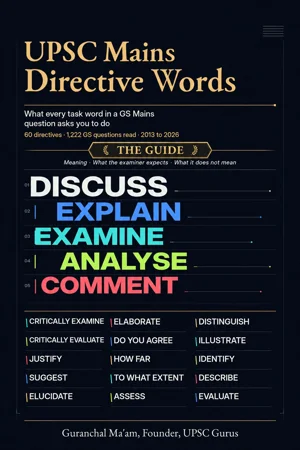
 New this week · Free UG Handout 02UPSC Mains Directive Words: 60 Meanings, Trends and PYQsTwo free PDFs: The Guide and the With PYQs edition.Read and download
Today’s Canvas
Today’s edition opens with a Supreme Court ruling on whether conversion can carry backward class status into a notified community, and with India’s exports to the United States crossing about $51 billion in the first half of the year. The Election Commission has ordered a Special Summary Revision of rolls in 17 States and Union Territories, US Secretary of State Rubio begins a visit that includes India, and the Centre has launched a National Strategic Trade Command Centre. Kerala has begun a state-level Red List of Ecosystems assessment, and DRDO has tested quantum key distribution on a military network.
About 23 minutes to read the key points; Mains analysis opens under each story.
- Supreme Court: conversion alone does not confer membership of a notified backward class Muslim communityGS II
- India’s merchandise exports to the US reach about $51 billion in April to September 2026GS III
- ECI directs 17 States and Union Territories to hold Special Summary Revision of rolls with 1 January 2027 as qualifying dateGS II
- Rubio to attend C5+1 ministerial in Samarkand, then visit Mumbai and Jamnagar, from 17 to 22 OctoberGS II
- Goyal launches National Strategic Trade Command Centre to bring trade data onto one dashboardGS III
- Kerala launches what is reported as India’s first state-level Red List assessment of ecosystemsGS III
- DRDO tests quantum key distribution on an operational military network at ChandipurGS III
- Supreme Court asks National Judicial Academy to frame protocol for magistrates’ inquiry into rescued adult womenGS II
- Jaishankar in Abu Dhabi: talks with UAE Deputy PM and address at Raisina Middle East amid West Asia conflictGS II
- Skyroot Aerospace wins Reflect Orbital contract for two launches, on Vikram-1 and Vikram-1UGS III
- CBIC chairman explains next-generation GST reforms at taxpayers’ meet in HyderabadGS III
- Northeast monsoon sets in over south peninsula on 15 October as southwest monsoon withdraws from entire country; strong El Nino persistsGS I
- Rajnath Singh at Defence Conclave in New Delhi: “smart power” and five-dimensional threats to securityGS III
- Canada’s trade mission to India secures about CA$300 million through over 30 partnershipsGS II
- Madras High Court: citizens’ rights cannot be left to police discretion, remarks in RSS route march caseGS II
- The Supreme Court held that conversion alone does not make a person a member of a notified backward class Muslim community in Tamil Nadu.
- India’s merchandise exports to the US were about $51 billion in April to September 2026, against $45.73 billion a year earlier.
- The Election Commission directed 17 States and UTs to hold a Special Summary Revision of rolls with 1 January 2027 as the qualifying date.
- US Secretary of State Marco Rubio travels to Samarkand for the C5+1 ministerial and then to Mumbai and Jamnagar.
- Kerala has begun a state-level assessment using the IUCN Red List of Ecosystems framework, reported as the first in India.
- DRDO tested quantum key distribution on an operational military network at Chandipur.
Polity and governance
Supreme Court: conversion alone does not confer membership of a notified backward class Muslim community
In short: The Court held that conversion alone does not automatically confer membership of a notified backward class Muslim community, and that pre-conversion status cannot simply be carried over, upholding the Madras High Court.
Why in news
On 15 October 2026 a bench of Justices Prashant Kumar Mishra and Shree Chandrashekhar dismissed Tamil Nadu’s appeal in The Secretary to Government v Sameer Ahamed. The State had issued a Government Order of 9 March 2024 allowing certain converts to Islam to be treated as members of seven notified Backward Class (Muslim) communities. The Court agreed with the Madras High Court that the order rested on presumption and could not stand.
Background
Sameer Ahamed converted from Hinduism to Islam in 2015 and applied for a community certificate as Muslim Lebbai, which the Tahsildar rejected. The Court reasoned that the seven communities are not theological denominations like Sunni or Shia, so a declaration of conversion cannot prove membership of a socially defined class. It noted that the Government Order treated disadvantage suffered in one religion as proof of membership in a class in another. The Court also held that a person professing a religion other than Hinduism, Sikhism or Buddhism cannot be deemed a Scheduled Caste member under the Constitution (Scheduled Castes) Order, and cited its own 2026 ruling in Chinthada Anand v State of Andhra Pradesh. In a case of reconversion to Hinduism, entitlement depends on a fact-specific test of whether the original caste identity has genuinely revived.
Key facts for Prelims
- Article 341 empowers the President to specify Scheduled Castes; the Constitution (Scheduled Castes) Order, 1950 limits SC status to Hindus, later extended to Sikhs and Buddhists.
- Article 16(4) permits reservation in public employment for backward classes inadequately represented in State services.
- Seven notified Muslim communities in Tamil Nadu named in the judgment include Labbais (with Rowthar and Marakayar), Mapilla, Sheik and Syed.
- The Court held that a private religious body cannot conclusively determine a person’s backward class entitlement.
- In reconversion cases, entitlement is decided through a fact-specific assessment, not by declaration alone.
Mains analysis and way forward
Mains analysis
- Distinguish between caste as a Hindu social-order marker and disadvantage as a social fact: should the Constitution Order tie SC status to religion, and how does this ruling sit with Article 25?
- Separate the SC list (Article 341, religion-linked) from State backward class lists (Article 15(4) and 16(4), identity-linked): the Court insists that membership must be proved, not presumed.
- Administrative design matters: Government Orders that widen eligibility without data on each group risk judicial invalidation.
Way forward
- States may commission evidence-based backwardness studies for each community before listing it, instead of relying on religion-wide presumptions.
- Parliament and the Government may consider the long-pending debate on religion-neutral SC status with data from the Census and expert commissions.
Connect the dots: Syllabus: GS II (Constitutional provisions on reservation, Articles 15, 16, 341, 342, 342A; welfare of vulnerable sections); GS I (caste and social empowerment).
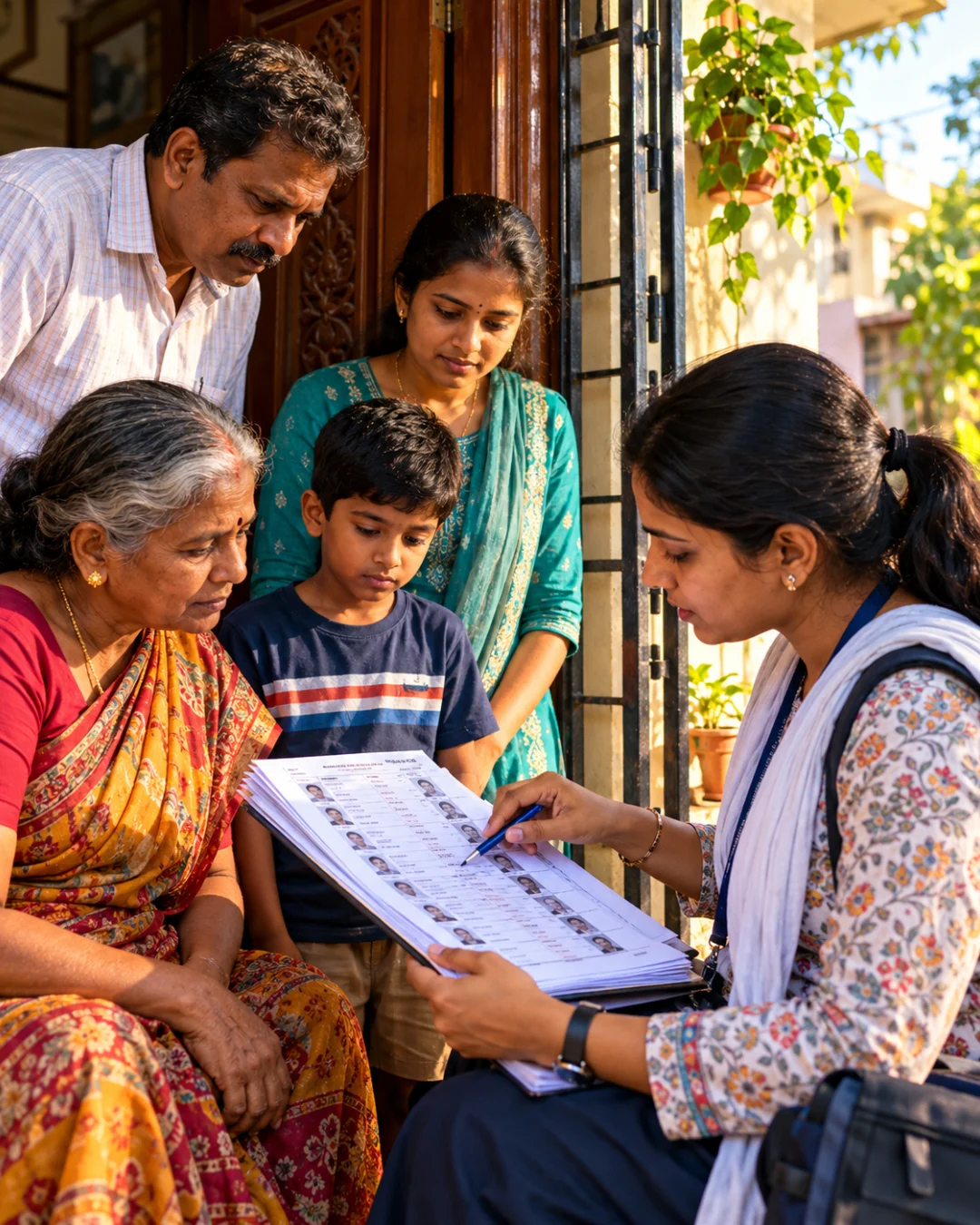
ECI directs 17 States and Union Territories to hold Special Summary Revision of rolls with 1 January 2027 as qualifying date
In short: The Election Commission has ordered a summary revision, with draft rolls on 12 November and final rolls on 4 January 2027, to enrol left-out, young and first-time electors across 17 States and UTs.
Why in news
The Election Commission of India, in a directive reported on 16 October 2026, asked 17 States and Union Territories to conduct a Special Summary Revision (SSR) of electoral rolls with 1 January 2027 as the qualifying date. The report says there will be no house-to-house visits by Booth Level Officers to electors; district-level help desks will assist enrolment, especially of migrants and vulnerable or marginalised groups. The published timetable is: polling-station rationalisation by 2 November 2026, draft rolls on 12 November, claims and objections till 11 December, disposal by 28 December, and final rolls on 4 January 2027.
Background
The 17 are Andaman and Nicobar Islands, Assam, Bihar, Chhattisgarh, Goa, Gujarat, Kerala, Lakshadweep, Madhya Pradesh, Manipur, Puducherry, Punjab, Rajasthan, Tamil Nadu, Uttar Pradesh, Uttarakhand and West Bengal. Advance applications can be made by those who turn 18 on 1 January, 1 April, 1 July or 1 October 2027. Schedules for places where the Special Intensive Revision (SIR) is ongoing or recently completed will be announced later, while Himachal Pradesh, Jammu and Kashmir and Ladakh have not started SIR and their schedule will follow in due course. Each Electoral Registration Officer must ensure that no eligible citizen is left out and no ineligible person is included. The Supreme Court is currently examining petitions on SIR.
Key facts for Prelims
- Article 324 vests superintendence, direction and control of elections and electoral rolls in the Election Commission.
- Summary revision (a lighter exercise) differs from Special Intensive Revision (a fuller re-verification of rolls).
- Four qualifying dates a year (1 January, 1 April, 1 July, 1 October) allow advance applications for those turning 18.
- Form 6 is used for new registration of electors.
- Electoral Registration Officers (EROs) are appointed for each assembly constituency under the Representation of the People Act, 1950.
Mains analysis and way forward
Mains analysis
- Compare summary revision and intensive revision on inclusion, exclusion risk and administrative burden: which suits which context?
- Help desks without door-to-door visits shift effort to citizens; outreach to migrants and marginalised groups becomes the test of inclusiveness.
- Advance applications by four qualifying dates reduce the lag between turning 18 and being enrolled, which matters for first-time voters.
Way forward
- Publish district-wise help-desk details early, with awareness campaigns in local languages, so that the claims and objections window to 11 December is widely used.
- Use data matching with life-event records to flag likely omissions, while keeping transparent objection and appeal routes.
Connect the dots: Syllabus: GS II (Representation of People Act, Election Commission, electoral reforms); Article 324 to 329.
Sources: News On AIR: ECI directs 17 States and UTs to conduct Special Summary Revision of electoral rolls, 16 October 2026; Daily Pioneer: ECI directs 17 States, UTs to undertake Special Summary Revision of electoral rolls (timetable)
Madras High Court: citizens’ rights cannot be left to police discretion, remarks in RSS route march case
In short: In oral observations at a hearing, the High Court objected to refusal of a route march permit on the ground that a mosque lies on the route; the matter is adjourned and no written order or final ruling is reported.
Why in news
On 15 October 2026 Justice V Lakshminarayanan of the Madras High Court heard VG Jegadeesan v The State, a petition by the RSS North Tamil Nadu State Secretary seeking permission for route marches followed by public meetings on 18 October, 25 October and 1 November 2026. The Court orally observed that police cannot refuse permission only because a mosque lies on the route and that citizens’ rights cannot be subject to police discretion. It directed the petitioner to file an affidavit and undertaking, and asked the Advocate General to obtain instructions from the DGP; the hearing was adjourned to the next day.
Background
The State had said permission was refused because the venues were not notified for such gatherings. The Court recalled that Justice G Jayachandran had earlier issued detailed guidelines for RSS route marches and had rejected reasons such as the presence of mosques or churches, traffic congestion and a different ideology. These are oral remarks and passages from interim proceedings, so the outcome of the hearing is awaited.
Key facts for Prelims
- Article 19(1)(a) and 19(1)(b) guarantee freedom of speech and the right to assemble peacefully and without arms.
- Article 19(3) allows reasonable restrictions on assembly in the interests of public order, sovereignty and integrity of India.
- Police permission regimes for processions rest on State police Acts and, in some cases, orders under Section 163 of the Bharatiya Nagarik Suraksha Sanhita, 2023.
- A writ petition under Article 226 lets a High Court issue directions for enforcement of fundamental rights.
- The Court noted earlier guidelines for route marches issued by another judge of the same High Court.
Mains analysis and way forward
Mains analysis
- Public order and the right to assemble: reasonable restrictions must be proportionate and reasoned, not based on stereotypes about communities.
- Delegating assembly decisions wholly to the police risks arbitrariness; judicial guidelines and published criteria can reduce litigation.
- The case illustrates the role of High Courts under Article 226 in balancing fundamental rights and law and order.
Way forward
- States may notify standard conditions and time-bound decisions on procession permits, with written reasons open to review.
- Neutral treatment across organisations and processions, with community consultation to maintain harmony.
Connect the dots: Syllabus: GS II (Fundamental rights, Article 19, Article 226, role of judiciary); GS III (Law and order management).
Sources: LiveLaw: Madras High Court on RSS route march, citizens’ right cannot be surrendered to police, 15 October 2026; DT Next: Madras HC questions repeated denial of permission for RSS marches in TN, updated 14 October 2026
Economy
India’s merchandise exports to the US reach about $51 billion in April to September 2026
In short: Exports to the US rose from $45.73 billion a year earlier, helped by electronics, petroleum products and engineering goods, despite tariff-related disruption.
Why in news
Commerce Ministry data, reported on 16 October 2026, show India’s merchandise exports to the United States at about $51 billion in April to September 2026. Reported more precisely, exports were $50.81 billion against $45.73 billion in the same period last year, a rise of about 11.1 per cent. Commerce Secretary Rajesh Agarwal said negotiations for the proposed India-US trade agreement are moving in the right direction.
Background
Growth came from higher shipments of electronic goods, petroleum products, engineering goods, chemicals and agricultural products, the report says. Overall merchandise exports in September 2026 were $44.40 billion against $36.08 billion a year earlier, with imports at $74.61 billion. For April to September 2026-27 the report gives total exports (merchandise and services) of an estimated $476.20 billion, up 13.84 per cent, and imports of $551.13 billion, up 15.68 per cent. The US trade deal was covered earlier as being in legal drafting; the new element is the half-year export figure to the US.
Key facts for Prelims
- India’s foreign trade statistics are released by the Ministry of Commerce and Industry, with data compiled by DGCI&S.
- Merchandise trade covers goods, while services are reported separately (RBI and Commerce Ministry estimates).
- Trade deficit is the gap between imports and exports of goods.
- The US has been one of India’s largest export destinations.
- Bilateral trade agreements are negotiated in tranches; the first phase is under legal drafting.
Mains analysis and way forward
Mains analysis
- Export resilience: despite tariffs, diversified product baskets (electronics, engineering, chemicals) help hold market share.
- Concentration risk: a large share of exports to a single market raises exposure to policy shifts, which diversification and trade agreements can address.
- Link between trade negotiations and export growth in sectors such as electronics and engineering goods.
Way forward
- Pursue trade agreements with multiple partners alongside the US deal to widen market access.
- Support exporters with logistics, quality standards and market intelligence, especially MSMEs.
Connect the dots: Syllabus: GS III (External sector, balance of trade, export promotion); GS II (Bilateral groupings and agreements).
Sources: News On AIR: India’s merchandise exports to US touch 51 billion dollars during April to September 2026, 16 October 2026; On the Dot: India’s exports to US rise 11.1% to $50.81 billion, 16 October 2026
Goyal launches National Strategic Trade Command Centre to bring trade data onto one dashboard
In short: The centre gives senior officials a consolidated view of trade performance, export schemes and regulatory approvals for evidence-based decisions.
Why in news
Commerce and Industry Minister Piyush Goyal launched the National Strategic Trade Command Centre (NSTCC) at Vanijya Bhawan, New Delhi, on 15 October 2026. The centre uses integrated data analytics to improve monitoring, analysis and governance of India’s international trade. Goyal asked the Inter-Ministerial Committee to meet regularly and to clear pending applications quickly.
Background
NSTCC brings together dashboards for key functions of the Directorate General of Foreign Trade (DGFT) and related areas, including the Importer Exporter Code, Advance Authorisation, Export Promotion Capital Goods, Certificate of Origin, SCOMET, and restricted imports and exports. It gives policymakers one view of trade performance, export promotion schemes, regulatory approvals and operational indicators. Goyal described it as supporting data-driven, evidence-based trade decisions. The report gives no figures on backlog or application volumes.
Key facts for Prelims
- DGFT is the Commerce Ministry office that administers the Foreign Trade (Development and Regulation) Act, 1992 and the Foreign Trade Policy.
- Importer Exporter Code (IEC) is a unique code needed for most import and export transactions.
- SCOMET stands for Special Chemicals, Organisms, Materials, Equipment and Technologies, items with dual-use or strategic relevance.
- Advance Authorisation allows duty-free import of inputs used in export products; EPCG allows import of capital goods at concessional duty against export obligations.
- A Certificate of Origin certifies the country where goods were made, used for preferential tariffs under trade agreements.
Mains analysis and way forward
Mains analysis
- Data integration improves state capacity: a single dashboard can shorten approvals, spot bottlenecks and support policy design.
- Ease of doing business for exporters depends on both back-end analytics and predictable, time-bound processing of applications.
- Trade governance gains importance at a time when India is negotiating several trade agreements and facing a changing external environment.
Way forward
- Publish service-level timelines and aggregate dashboard indicators for exporters, with appropriate data protection.
- Link the centre with customs, GST and port data for end-to-end tracking of consignments.
Connect the dots: Syllabus: GS III (Indian economy, external sector, export promotion, e-governance); GS II (Government policies and institutions).
Sources: News On AIR: Govt launches National Strategic Trade Command Centre, reported 16 October 2026; DD India: Piyush Goyal launches National Strategic Trade Command Centre, 15 October 2026
CBIC chairman explains next-generation GST reforms at taxpayers’ meet in Hyderabad
In short: Officials explained automated refunds, the Council’s recommended changes to arrest and prosecution provisions, which need legal amendment, and a proposed centralised GST administration.
Why in news
CBIC Chairman Vivek Chaturvedi and Member (GST) Sanjay Mangal met about 250 trade and industry representatives in Hyderabad on Thursday 15 October 2026 (reported on 16 October) to explain next-generation GST reforms. They stressed ease of compliance for honest taxpayers, automated refunds and fewer manual interventions. They also sought feedback on a proposed centralised GST administration for taxpayers under Central Government jurisdiction.
Background
The 57th GST Council (8 October 2026) recommended withdrawing arrest powers by omitting Section 69 of the CGST Act, 2017, and raising the prosecution threshold from Rs 1 crore to Rs 5 crore, with fines, imprisonment or both left to judicial discretion. These recommendations need amendment of the law and are not yet in force. It also recommended that no show-cause notice be issued where the tax involved is less than Rs 10,000, with pending cases below that threshold to be decided as if the threshold applied, once it is in force. The CBIC officials presented the intended framework as one where late filing, errors or late payment attract recovery, interest and a proportionate penalty rather than arrest, while serious offences such as fraudulent credit claims remain prosecutable. Participants welcomed the changes as steps towards trust-based tax administration and better cash flow. The 57th GST Council was covered in an earlier edition.
Key facts for Prelims
- The Central Board of Indirect Taxes and Customs (CBIC) is the apex body for customs, central excise and central GST policy under the Department of Revenue.
- The GST Council, constituted under Article 279A, is chaired by the Union Finance Minister and includes State finance ministers.
- Prosecution threshold under the Council recommendation: Rs 5 crore, up from Rs 1 crore; Section 69 of the CGST Act (power to arrest) is proposed to be omitted. Both need legislative amendment.
- Recommended measure: no show-cause notice where the tax involved is less than Rs 10,000; pending cases below the threshold to be decided as if it applied, once in force.
- Proposed centralised GST administration applies to taxpayers under Central Government jurisdiction.
Mains analysis and way forward
Mains analysis
- Decriminalisation and trust-based compliance: the proposed removal of arrest power and higher thresholds would reduce harassment risk but must retain deterrence against genuine evasion.
- Automated refunds help working capital of exporters and MSMEs and reduce discretion.
- Centralised administration may cut duplication between Centre and States but touches cooperative federalism, so consultation matters.
Way forward
- Notify clear rules and standard notice formats quickly, with taxpayer education in regional languages.
- Keep risk-based, data-driven enforcement for large evasion cases while protecting honest taxpayers.
Connect the dots: Syllabus: GS III (Taxation, tax reforms, GST); GS II (Federal structure, GST Council, Article 279A).
Sources: IANS Live: Top CBIC officials clarify next-gen GST reforms at taxpayers’ meet, 16 October 2026; LiveLaw: GST Council recommends dropping arrest powers, raising prosecution threshold to Rs 5 crore
Canada’s trade mission to India secures about CA$300 million through over 30 partnerships
In short: Canadian trade minister Maninder Sidhu said the largest Canadian mission in 30 years produced deals across aerospace, energy, cleantech and autos; CEPA could be finalised by November.
Why in news
Canada’s Minister of International Trade, Maninder Sidhu, announced on 16 October 2026 that the Team Canada trade mission to India, scheduled for 12 to 17 October with stops in Mumbai and Bengaluru, had produced over 30 commercial partnerships worth close to CA$300 million (IANS). About 300 business delegates from 150 organisations took part; Sidhu wrapped up his Karnataka leg on 16 October. Indian High Commissioner to Canada Dinesh K Patnaik said the fourth negotiating round on the Comprehensive Economic Partnership Agreement (CEPA) had finished and the agreement could be finalised by November.
Background
Sidhu called it the largest such mission in 30 years, since Jean Chretien’s time as prime minister. The mission followed Commerce Minister Piyush Goyal’s visit to Canada in May, which brought India’s largest-ever delegation. Both sides aim to conclude CEPA before Prime Minister Modi’s proposed December visit to Canada; Modi and Prime Minister Mark Carney had committed to finishing talks within a year of launch. The agreement is expected to lower tariff and non-tariff barriers, ease compliance, raise investment and allow freer movement of people, goods and capital.
Key facts for Prelims
- A Comprehensive Economic Partnership Agreement (CEPA) covers trade in goods, services, investment and other economic cooperation.
- India and Canada are negotiating a CEPA; the fourth negotiating round has concluded.
- The Team Canada mission was scheduled for 12 to 17 October 2026, covering Mumbai and Bengaluru, with deals in aerospace, energy, cleantech and autos.
- Roughly 300 Canadian business delegates from 150 organisations took part.
- PM Modi’s proposed visit to Canada in December 2026 is the target for concluding talks (confirmed in a call with Carney, covered earlier).
Mains analysis and way forward
Mains analysis
- Economic diplomacy: business missions and negotiation rounds reinforce each other in building trade partnerships.
- CEPA design should balance tariff cuts with services, mobility and investment provisions, where Canada and India have complementary strengths.
- Diversification of partners reduces dependence on a few large markets.
Way forward
- Sequence CEPA talks to protect sensitive sectors and phase tariff cuts, with sector consultation.
- Convert announced partnerships into investments through regular follow-up and single-window facilitation.
Connect the dots: Syllabus: GS II (Bilateral relations, India and its partners); GS III (Foreign investment, trade agreements).
Sources: IANS Live: Canada trade mission secures $300 million via 30 partnerships in India, 16 October 2026; Trade Commissioner Service, Government of Canada: Team Canada Trade Mission to India
International relations
Rubio to attend C5+1 ministerial in Samarkand, then visit Mumbai and Jamnagar, from 17 to 22 October
In short: US Secretary of State Marco Rubio travels to Uzbekistan and India from 17 October, pairing a Central Asia connectivity agenda with energy talks in India.
Why in news
The US State Department announced on 13 October 2026 that Secretary of State Marco Rubio will visit Uzbekistan and India from 17 to 22 October. In Samarkand he will attend a C5+1 ministerial with Kazakhstan, Kyrgyzstan, Tajikistan, Turkmenistan and Uzbekistan and lead a delegation of more than 200 business leaders. In India he will visit Mumbai and Jamnagar for talks on the strategic partnership, regional issues and energy cooperation.
Background
C5+1 is a dialogue format between the United States and the five Central Asian republics, in existence since 2015, covering regional security and economic cooperation. AFP reports that the C5+1 ministerial is on 19 and 20 October and that the agenda stresses connectivity and energy security, with Washington saying the conflicts involving Iran and Ukraine are disrupting supply routes. Sergio Gor, the US ambassador to India and special envoy for Central and South Asia, had previewed these themes. This is Rubio’s second official visit to India, after a May trip to Delhi and Kolkata. Mumbai and Jamnagar are industrial and port hubs, which fits the energy and investment focus.
Key facts for Prelims
- C5+1: US dialogue format with Kazakhstan, Kyrgyzstan, Tajikistan, Turkmenistan and Uzbekistan, in existence since 2015.
- Samarkand, Uzbekistan hosts the 2026 C5+1 ministerial (19 and 20 October, per AFP).
- Central Asia is a landlocked region; connectivity routes and energy transit are central to its external partnerships.
- Jamnagar in Gujarat and Mumbai in Maharashtra are the Indian stops announced for energy and business meetings.
- Sergio Gor: US ambassador to India and special envoy for Central and South Asia.
Mains analysis and way forward
Mains analysis
- The US is linking Central Asia and India in one trip, signalling a wider Eurasian connectivity and energy outlook in which India is a partner rather than a bystander.
- Energy cooperation gains weight at a time when Gulf disruptions are raising import costs; diversified supply sources serve India’s energy security.
- India’s own Central Asia engagement (the Connect Central Asia policy and connectivity projects) can complement, not compete with, such partnerships if India keeps strategic autonomy.
- A visit with business delegations indicates that economic content now matters as much as security dialogue in India-US relations.
Way forward
- India can pursue parallel, issue-based energy and connectivity partnerships with several countries while protecting autonomy.
- Concrete outcomes (investment, supply contracts, technology) should be tracked after the visit rather than judged by announcements.
- India may use its India-Central Asia Dialogue mechanisms to align the new US interest with regional priorities.
Connect the dots: GS II: India and its neighbourhood and extended neighbourhood; bilateral groupings; Central Asia; energy security. Geography: Central Asian republics on the map.
Sources: Kun.uz: US Secretary of State Marco Rubio to visit Uzbekistan this week, 14 October 2026; Gulf News (AFP): US top diplomat Rubio departs this weekend for India, Central Asia, 14 October 2026; Connaissance des Energies (AFP): Diplomatie et affaires pour Rubio en Asie centrale et du Sud, 14 October 2026; DeshGujarat: US Secretary of State Marco Rubio to visit Jamnagar, 14 October 2026
Jaishankar in Abu Dhabi: talks with UAE Deputy PM and address at Raisina Middle East amid West Asia conflict
In short: EAM Jaishankar reviewed the India-UAE Comprehensive Strategic Partnership on 15 October and told the Raisina Middle East forum the global order is changing faster.
Why in news
External Affairs Minister S. Jaishankar met UAE Deputy Prime Minister and Foreign Minister Sheikh Abdullah bin Zayed Al Nahyan in Abu Dhabi on 15 October 2026, calling the talks “warm and productive”. He was in the UAE for the second Raisina Middle East forum, where he spoke at a session titled “The World Ahead: Power, Purpose & Possibility”. The visit began on 14 October amid heightened security concerns across West Asia.
Background
The India-UAE relationship is framed as a Comprehensive Strategic Partnership. At the forum Jaishankar said the global order is changing faster, countries are seeking new partnerships suited to their circumstances, greater strategic awareness is needed beyond traditional comfort zones, and multilateral institutions need urgent reform. The visit follows reported Houthi attacks on Saudi Arabia, including an incident on 10 October at King Khalid International Airport in Riyadh; the Indian Embassy confirmed the death of an Indian national. On 14 October Jaishankar also met Georgia’s Foreign Minister on the sidelines.
Key facts for Prelims
- Raisina Middle East: forum held in Abu Dhabi; the 2026 meeting is the second edition (the first was held in January 2025 during an EAM visit).
- India-UAE ties are designated a Comprehensive Strategic Partnership.
- UAE Deputy Prime Minister and Foreign Minister: Sheikh Abdullah bin Zayed Al Nahyan.
- Georgia’s Foreign Minister Maka Botchorishvili met Jaishankar on 14 October on the sidelines of the UAE visit.
- Houthi attacks on Saudi Arabia, including the 10 October Riyadh airport incident, form the security backdrop of the visit.
Mains analysis and way forward
Mains analysis
- West Asia is vital to India for energy, remittances and a large diaspora; instability in the Gulf directly affects India’s economy and the safety of its citizens.
- The minister’s call for hedged, issue-based partnerships reflects the multi-alignment approach in a fragmented order.
- The UAE is among India’s closest Gulf partners; sustained high-level contact helps protect trade, investment and energy flows during a regional crisis.
- The call for multilateral reform links to India’s long-standing demand for a reformed UN Security Council.
Way forward
- Maintain regular political dialogue with Gulf partners and keep contingency plans for the diaspora ready.
- Deepen energy, food and supply-chain cooperation with the UAE to cushion regional shocks.
- Use forums such as Raisina Middle East to shape the regional security conversation while staying neutral in West Asian rivalries.
Connect the dots: GS II: India and West Asia; Indian diaspora; bilateral, regional and global groupings; effect of policies of other countries on India.
Sources: Organiser: EAM Jaishankar meets UAE Deputy PM Al-Nahyan, 15 October 2026; Dynamite News: Jaishankar in UAE amid West Asia tensions, 15 October 2026; The Tribune: Jaishankar embarks on UAE visit, January 2025 (first Raisina Middle East)
Security
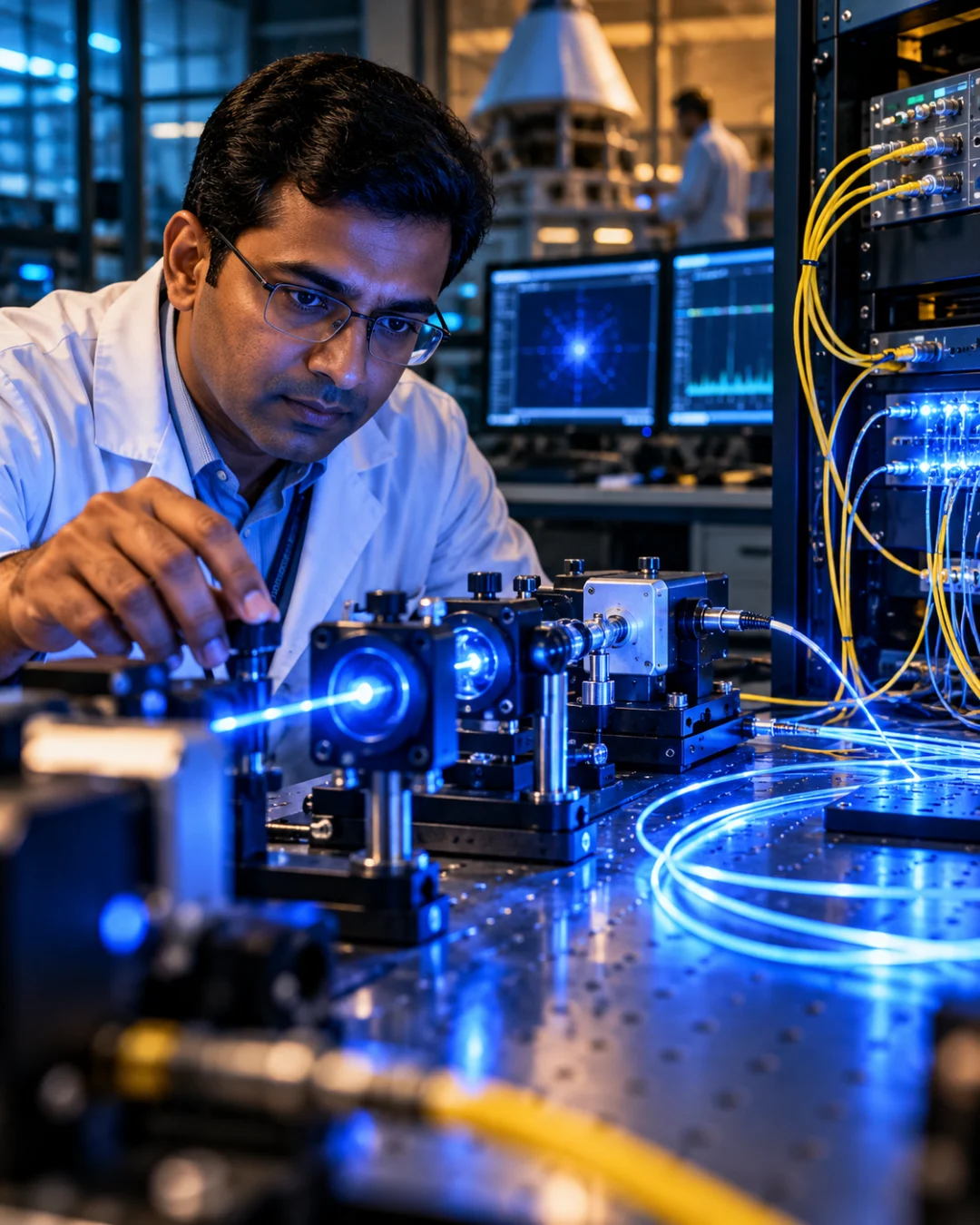
DRDO tests quantum key distribution on an operational military network at Chandipur
In short: DRDO configured a quantum key distribution platform on a live military network at its Chandipur range to protect trial data, announced on 14 October.
Why in news
The Defence Research and Development Organisation (DRDO) said on 14 October 2026 that it configured and tested a Quantum Key Distribution (QKD) platform on a real, operational military communication network. The system protects real-time telemetry and sensor data from artillery and armoured weapon trials that move between centres at the Proof and Experimental Establishment, Chandipur, Odisha. DRDO says the system detects interference with the key exchange.
Background
QKD uses quantum properties to share encryption keys so that interference with the key exchange is detected; this does not by itself make a whole network unconditionally secure, since implementation and wider network safeguards still matter. DRDO designed and developed the system under its Microelectronic Devices, Computational Systems and Cyber Security cluster, with Taqbit Labs as production partner. In July 2026 it completed military field trials of a scalable, fibre-based QKD system, and in May 2025 it set up a Quantum Research Centre in Delhi. The article does not state distances covered by the Chandipur trial.
Key facts for Prelims
- QKD: a method of distributing cryptographic keys using quantum mechanics, so that eavesdropping disturbs the signal and is detected.
- Trial site: Proof and Experimental Establishment (PXE), Chandipur, Odisha, a DRDO test range.
- Production partner: Taqbit Labs; developer: DRDO’s Microelectronic Devices, Computational Systems and Cyber Security cluster.
- DRDO field trials of fibre-based QKD were completed in July 2026; a Quantum Research Centre was set up in Delhi in May 2025.
- Related: ESTIC 2026 (27 to 29 October, Bharat Mandapam) lists quantum communication among its technical sessions.
Mains analysis and way forward
Mains analysis
- Quantum-secure links address the threat that future quantum computers pose to conventional encryption, making them strategic for military communication.
- Testing on an operational network rather than a laboratory bench moves the technology toward deployment readiness.
- Industry production partnership reflects the shift from DRDO-only development to technology transfer and manufacture.
- Challenges include range limits, cost, integration with legacy systems and the need for standards and trained manpower.
Way forward
- Scale trials across longer distances and diverse links, including satellite-based QKD in the long term.
- Support domestic firms and academic centres through the National Quantum Mission ecosystem.
- Develop standards and certification so that civilian critical infrastructure can adopt tested solutions.
Connect the dots: GS III: science and technology developments and applications; achievements of Indians in science and technology; cyber security; defence indigenisation.
Sources: The Tribune: DRDO tests quantum-secured communication system on operational military network, 14 October 2026; DD India: PM Modi to inaugurate ESTIC 2026 in Delhi on 27 October
Rajnath Singh at Defence Conclave in New Delhi: “smart power” and five-dimensional threats to security
In short: Defence Minister Rajnath Singh on 15 October spoke of hybrid and cyber threats, “smart power” and a growing defence industrial base at a Delhi conclave.
Why in news
Defence Minister Rajnath Singh addressed a Defence Conclave in New Delhi on 15 October 2026. He described a “5D security threat” of disinformation, destabilisation, disruption, deception and destruction, and called for “smart power” that combines precision weapons, loitering munitions, human intelligence and artificial intelligence with affordable technology. He also said India remains committed to peace and dialogue while being ready to defend its sovereignty and interests.
Background
The remarks, as reported, pointed to lone-wolf attacks, so-called white-collar terrorism, and hybrid, high-tech and cyber warfare as emerging challenges, and cited Operation Sindoor, the Balakot strikes and surgical strikes as examples of a changed counter-terrorism approach. On industry, the Ministry of Defence reported record defence production of Rs 1.78 lakh crore in 2025-26, up 15.6% from Rs 1.54 lakh crore, with the private sector contributing about 24%. Defence exports reached a record Rs 38,424 crore in the same year.
Key facts for Prelims
- Defence production in 2025-26: record Rs 1.78 lakh crore, up 15.6% (Ministry of Defence, 17 June 2026).
- Private sector share of production: about 24% in 2025-26, up from 22% a year earlier.
- Defence exports in 2025-26: record Rs 38,424 crore.
- Rajnath Singh’s “5D” threats: disinformation, destabilisation, disruption, deception, destruction.
- Loitering munitions: unmanned systems that loiter over an area and strike a target; India recently received 450 Nagastra-1R units in one batch (reported 16 October).
Mains analysis and way forward
Mains analysis
- Threats are now hybrid: cyber attacks, disinformation and radicalisation sit alongside conventional terrorism, requiring whole-of-government responses.
- Rising private participation and exports show that the self-reliance drive is maturing, though critical engines, sensors and materials remain import-dependent.
- Linking precision weapons with low-cost systems reflects lessons from recent conflicts where cost-exchange ratios matter.
- Strategic messaging of resolve with restraint aims at deterrence without closing the door to dialogue.
Way forward
- Strengthen cyber and information-security capacity, including civil-military coordination and public awareness.
- Invest in critical technologies and testing infrastructure to reduce residual import dependence.
- Keep procurement timelines predictable so that private firms can plan long-term investment.
Connect the dots: GS III: linkages between development and spread of extremism; role of external state and non-state actors; cyber security; indigenisation of defence technology.
Sources: Tripura Star News: Rajnath Singh calls for smart power approach, 15 October 2026; Defence Watch: India’s commitment to peace should not be mistaken for weakness, Rajnath Singh, 15 October 2026; Indian Masterminds: Rajnath Singh Pakistan terror warning at Defence Conclave, 15 October 2026; Ministry of Defence (Rajnath Singh site): Defence production soars to a record Rs 1.78 lakh crore in 2025-26, 17 June 2026
Science and technology

Skyroot Aerospace wins Reflect Orbital contract for two launches, on Vikram-1 and Vikram-1U
In short: Skyroot, whose Vikram-1 made India’s first private orbital flight in July 2026, signed a US customer for two launches announced on 14 October.
Why in news
Hyderabad-based Skyroot Aerospace has won a contract from US-based Reflect Orbital for two launches, announced by Reflect Orbital on 14 October 2026. The first launch is to fly on Vikram-1 and the second on the in-development, upgraded Vikram-1U. Reflect Orbital proposes to place “space mirrors” in orbit to reflect sunlight to Earth, aimed at boosting solar power and helping in night-time emergencies; orbital mirrors are a proposed capability, not yet operational. The deal follows the maiden flight of Skyroot’s Vikram-1 rocket in July 2026.
Background
Vikram-1 lifted off on 18 July 2026 from Satish Dhawan Space Centre, Sriharikota, in what is reported as India’s first privately developed orbital launch, succeeding on its first orbital attempt. Skyroot’s founders, Pawan Kumar Chandana and Naga Bharath Daka, are former ISRO scientists. On 6 August 2026 Skyroot also finalised a multi-launch agreement with Thiruvananthapuram-based HEX20 for three dedicated Vikram launches, with missions slated to begin in the fourth quarter of 2027. The reports do not state launch dates or the mirror count for the Reflect Orbital contract.
Key facts for Prelims
- Vikram-1: Skyroot Aerospace’s orbital launch vehicle; maiden flight on 18 July 2026 from Sriharikota into low Earth orbit.
- Reflect Orbital: US company planning orbiting mirrors to reflect sunlight to Earth; two launches contracted with Skyroot (announced 14 October 2026), the first on Vikram-1 and the second on the in-development Vikram-1U; orbital mirrors are a proposed capability.
- HEX20 (Thiruvananthapuram) signed for three Vikram launches on 6 August 2026; missions to begin in Q4 2027.
- Skyroot is a Hyderabad-based private space start-up founded by former ISRO scientists.
- Low Earth orbit: a near-Earth orbital regime commonly used for Earth observation and small-satellite constellations.
Mains analysis and way forward
Mains analysis
- Winning foreign commercial contracts shows that India’s private launch sector is moving from demonstration to a commercial export of services.
- Small-satellite launchers fill a niche between ISRO’s larger vehicles and global demand for dedicated, flexible launches.
- The mirror concept raises regulatory and scientific questions about sunlight reflection, night-sky brightness and space traffic, which international bodies are yet to settle.
- The sector’s growth depends on launch cadence, reliability and supportive regulation and infrastructure.
Way forward
- Maintain a steady launch cadence and reliability record, since repeat customers value predictability.
- Keep ISRO facilities and technical support accessible to private firms on transparent terms.
- Engage in international discussions on space-based reflectors and sustainable orbital use.
Connect the dots: GS III: achievements in space; indigenisation of technology; role of the private sector in space; space debris and sustainability of outer space.
Sources: Payload: Reflect Orbital buys two Skyroot Aerospace launches, 14 October 2026; NewsBytes: Skyroot Aerospace wins Reflect Orbital contract to launch space mirrors; GKToday: Skyroot signs multi-launch deal after Vikram-1 success; Runtime Wire: Skyroot Vikram-1 reaches orbit on debut, 19 July 2026
Social justice
Supreme Court asks National Judicial Academy to frame protocol for magistrates’ inquiry into rescued adult women
In short: A threshold inquiry by the Magistrate is mandatory even if a rescued adult says her work is voluntary; the NJA will prepare uniform guidelines.
Why in news
By an order dated 13 October 2026, reported on 15 October, a bench of Justices J B Pardiwala and R Mahadevan asked the National Judicial Academy to prepare a protocol for magistrates conducting the inquiry under Section 17 of the Immoral Traffic (Prevention) Act, 1956. The order was passed in Prajwala v Union of India while monitoring a Victim Protection Plan laid down in the Court’s judgment of 29 May 2026. The next hearing is on 14 December 2026.
Background
The Court said the Magistrate must, under all circumstances, conduct the threshold inquiry even if the rescued adult says her work is voluntary, so that the next course of action can be decided. The protocol is to weigh the victim’s consent and views on long-term safe custody, her statement and the social worker’s assessment, any threat, coercion or undue influence, and the risk of re-trafficking after release. The May 2026 judgment had held that victims are not offenders, that a victim who does not consent to long-term safe custody must not be placed in it, and that departing from her wishes must be exceptional. The NGO Prajwala may assist the NJA and the Union must file a fresh status report. The Prajwala litigation dates back to W.P.(C) No. 56 of 2004.
Key facts for Prelims
- Immoral Traffic (Prevention) Act, 1956 (ITPA): Section 17 deals with intermediate custody and inquiry for persons removed under Section 15 or rescued under Section 16, not only girls.
- Section 17(2) allows the Magistrate to inquire into the accuracy of the information received and the person’s age, character and background; an appeal against a final order under Section 17(4) lies to the Court of Session under Section 17(6).
- The National Judicial Academy (NJA) is the judicial training institute for judges, located in Bhopal.
- Article 23 of the Constitution prohibits traffic in human beings and forced labour.
- The Court sets uniform protection norms across India; the Union Government must file a fresh status report.
Mains analysis and way forward
Mains analysis
- Balance autonomy and protection: the Court insists on a threshold inquiry yet treats the victim’s consent as central to custody decisions.
- Rehabilitation outcomes depend on trained magistrates, social workers and shelter systems, not only on rescue operations.
- A single national protocol can reduce variation across districts and the risk of re-trafficking after release.
Way forward
- Institutionalise joint training of magistrates, police and social workers using the NJA protocol, with periodic review.
- Link rescue to time-bound livelihood, health and legal-aid support so that consent to leave custody is informed.
Connect the dots: Syllabus: GS II (Vulnerable sections, women and child protection, role of NGOs and judiciary); GS I (Social issues); Article 23 and Article 21.
Sources: LiveLaw: Supreme Court asks NJA to frame guidelines for magistrates’ inquiry into adult rescued women under ITPA, 15 October 2026; Advocatekhoj: Immoral Traffic (Prevention) Act, 1956, Section 17 (text)
Geography and environment

Kerala launches what is reported as India’s first state-level Red List assessment of ecosystems
In short: The Kerala State Biodiversity Board launched a one-year project to assess ecosystem collapse risk across all 14 districts using the IUCN framework.
Why in news
The Kerala State Biodiversity Board launched, at Kollam, what is reported as India’s first state-level Red List Assessment of Ecosystems, on 14 October 2026. It will assess the risk of ecosystem collapse in all 14 districts, from high-altitude summits to coastal areas. The one-year project is expected to produce a Risk Register, an Ecosystem Typology Atlas and eco-restoration priority maps.
Background
The Board funds the project, run jointly by the Kerala Forest Research Institute and the Centre for Ecology, Taxonomy, Conservation and Climate Change at MES Asmabi College, with Dr Amitha Bachan K.H. and Dr Deepu Sivadas leading it. The IUCN Red List of Ecosystems applies five criteria: decrease in distribution, restricted distribution, environmental degradation, disruption of biotic processes, and quantitative estimates of collapse risk. News reports note a focus on Myristica swamps and coastal mangroves and say tropical riparian evergreen forests of the southern Western Ghats have lost 83% of their extent over the past century. The number of ecosystems to be assessed has not been stated.
Key facts for Prelims
- IUCN Red List of Ecosystems: global standard to assess risk of ecosystem collapse using five criteria (A to E).
- Categories include Collapsed, Critically Endangered, Endangered, Vulnerable, Near Threatened, Least Concern, Data Deficient and Not Evaluated.
- Kerala State Biodiversity Board is the funding body; implementation with Kerala Forest Research Institute and MES Asmabi College.
- Outputs: Risk Register, Ecosystem Typology Atlas, ecorestoration priority maps.
- Reported focus ecosystems: Myristica swamps and coastal mangroves; tropical riparian evergreen forests of the southern Western Ghats said to have lost 83% of their extent in a century.
Mains analysis and way forward
Mains analysis
- Species lists protect individual organisms, but ecosystem-level assessments capture the services (water, carbon, flood control) that landscapes provide.
- A district-wise risk register can inform land-use planning, climate adaptation and the siting of restoration projects.
- Kerala’s experience with floods and landslides gives practical urgency to identifying fragile ecosystems.
- Challenges include baseline data gaps, capacity for remote sensing and field validation, and aligning findings with development decisions.
Way forward
- Other states can adopt the framework, with a national standard protocol for comparability.
- Integrate results into biodiversity management committees and People’s Biodiversity Registers.
- Link restoration priorities to national targets under the Kunming-Montreal framework and state climate plans.
Connect the dots: GS III: conservation, environmental pollution and degradation; biodiversity; ecosystem services; Biological Diversity Act, 2002.
Sources: GKToday: Kerala launches India’s first ecosystem Red List assessment, 14 October 2026; NewsBytes: Kerala launches India’s first statewide ecosystem red list assessment, 14 October 2026; IUCN Red List of Ecosystems: official site (categories and criteria)
Northeast monsoon sets in over south peninsula on 15 October as southwest monsoon withdraws from entire country; strong El Nino persists
In short: IMD announced on 15 October that northeast monsoon rainfall has commenced over the south peninsula and that the southwest monsoon has withdrawn from the entire country, under a strong El Nino.
Why in news
The India Meteorological Department confirmed on 15 October 2026 that northeast monsoon rainfall activity has commenced over Tamil Nadu, Puducherry and Karaikal, coastal Andhra Pradesh, Rayalaseema, south interior Karnataka, and Kerala and Mahe, and that the southwest monsoon has withdrawn from the entire country. Its bulletin of 14 October had forecast a wet spell with isolated heavy falls over many parts of the region from 14 to 19 October.
Background
IMD’s seasonal outlook of 1 October gives normal rainfall (88 to 112% of the Long Period Average, about 334.13 mm) over South Peninsular India for October to December, with south Kerala and Tamil Nadu likely to get normal to above-normal rain and most other subdivisions below normal. It notes strong El Nino conditions that models expect to strengthen through 2026 and persist into early 2027, with a neutral Indian Ocean Dipole. IMD Director General Mrutyunjay Mohapatra said El Nino does not generally have a major negative effect on this monsoon and that fewer, weaker cyclones are expected. Nationally, October rainfall is forecast below 85% of the LPA.
Key facts for Prelims
- Northeast monsoon (October to December): the main rainy season for Tamil Nadu, Puducherry, coastal Andhra Pradesh, Rayalaseema, Kerala and south interior Karnataka.
- In 2026 IMD declared the northeast monsoon onset and the complete withdrawal of the southwest monsoon on the same day, 15 October.
- IMD outlook: normal rainfall (88 to 112% of LPA) for South Peninsular India in October to December 2026; LPA about 334.13 mm.
- El Nino: warming of the central and eastern equatorial Pacific; strong conditions present in 2026 and expected to strengthen.
- Indian Ocean Dipole: neutral phase forecast during the northeast monsoon season.
- Cyclones in El Nino years are expected to be fewer and weaker, per IMD.
Mains analysis and way forward
Mains analysis
- Unlike the southwest monsoon, the northeast monsoon often benefits from El Nino, which is why forecasts for Tamil Nadu and south Kerala differ from the national pattern.
- Below-normal October rain nationally and above-normal temperatures raise concerns for water storage, rabi sowing and winter crops.
- Chennai-type urban flooding shows the need for drainage, wetland protection and early-warning systems alongside forecasts.
- The seasonal outlook carries uncertainty at sub-regional level, so district and village-scale advisories matter.
Way forward
- Use impact-based forecasts to prepare cities and reservoirs rather than relying on seasonal averages.
- Restore urban wetlands and drainage in flood-prone coastal cities.
- Link advisories with farmers’ sowing decisions for the rabi season.
Connect the dots: GS I: salient features of physical geography; monsoon mechanism; El Nino and IOD; GS III: disaster management; agriculture.
Sources: India Meteorological Department: Press Release, 15 October 2026 (onset and withdrawal); India Meteorological Department: Press Release, 14 October 2026; India Meteorological Department: Outlook for the NE Monsoon 2026 over South Peninsular India, 1 October 2026; India Meteorological Department: Press Release on October to December outlook, 30 September 2026; DT Next: Northeast monsoon may begin between 15 and 21 October, 1 October 2026; UNI: Weather, northeast monsoon, 14 October 2026
In brief
- Personality in the news: Sir Syed Ahmad Khan: Born in Delhi on 17 October 1817 (209th birth anniversary), the educator and reformer founded the Muhammadan Anglo-Oriental collegiate school at Aligarh on 24 May 1875; it became a college in 1877 and Aligarh Muslim University in 1920. He also wrote Asar-us-Sanadid on Delhi’s monuments (1847) and moved the Scientific Society to Aligarh in 1864.
- L Murugan resignation accepted: President Droupadi Murmu accepted, on the Prime Minister’s advice and with immediate effect, the resignation of L Murugan from the Union Council of Ministers; Rashtrapati Bhawan cited clause (2) of Article 75 (News On AIR, 15 October 2026). Murugan, a Minister of State for Information and Broadcasting and Parliamentary Affairs, said he wished to work full time for his party in Tamil Nadu.
- NEET-PG 2026 answer key plea: A Supreme Court bench of Justices P S Narasimha and Alok Aradhe issued notices to the Centre and the National Medical Commission on a plea seeking greater transparency in the answer key and response-disclosure process for NEET-PG 2026, held on 30 August (reported 16 October 2026).
- National Conference on e-Governance Reforms: A two-day conference began at Dharamshala, Himachal Pradesh, on 16 October 2026, with the National e-Governance Awards theme “Digital Transformation and Innovation through Artificial Intelligence and Emerging Technologies”.
- IRCTC signs MoU with Quality Council of India: IRCTC and QCI signed an MoU on 16 October 2026 for independent, technology-driven audits of mobile and static catering units, with unannounced inspections against FSSAI rules.
- India-Arab trade could touch $500 billion: Waiel Awwad of the India and Arab Countries Chamber of Commerce, Industry and Agriculture said India-Arab trade, already above $150 billion, could rise to $500 billion over the next 10 to 20 years; the India-Arab Business Conclave is set for 18 and 19 December in New Delhi (IANS, 16 October 2026).
- Punjab assured of power and coal: Union Power Minister Manohar Lal Khattar assured Punjab Chief Minister Bhagwant Singh Mann of adequate electricity and coal; Mann said Punjab supplies 180 LMT of rice to the Central Pool this year (News On AIR, 16 October 2026).
- NSG Raising Day: Home Minister Amit Shah extended greetings to personnel of the National Security Guard on its Raising Day, 16 October 2026, crediting the force with neutralising terror threats (News On AIR).
- Cambrian Patrol 2026: The Indian Army’s Assam Regiment won a gold medal at Exercise Cambrian Patrol in Wales, held from 2 to 12 October 2026; more than 100 teams took part and 10 earned gold (The Week, 13 October).
- Jaishankar meets Georgian counterpart: On 14 October 2026, on the sidelines of his UAE visit, External Affairs Minister Jaishankar met Georgia’s Foreign Minister Maka Botchorishvili to discuss trade, tourism, education, connectivity, culture and people-to-people ties.
- Gulf security: call for joint action: On 12 October 2026 UAE presidential adviser Anwar Gargash called for reviving joint Gulf action on defence and security, saying Gulf security is interconnected (Dynamite News, 15 October).
- Samsung and IISc open quantum research lab: Samsung Semiconductor India Research and the Indian Institute of Science inaugurated a Quantum Research Lab on the IISc campus in Bengaluru on 15 October 2026 to build capabilities in quantum technologies and advanced semiconductors (DIGITIMES, 16 October).
- ESTIC 2026 from 27 October: The Emerging Science, Technology and Innovation Conclave will be held at Bharat Mandapam, New Delhi from 27 to 29 October 2026, to be inaugurated by the Prime Minister, with 12 technical sessions including quantum communication, semiconductors and space science.
- October rainfall below normal: IMD’s 30 September outlook expects October 2026 rainfall below 85% of the Long Period Average (about 75.4 mm) for the country, with above-normal maximum temperatures over most areas.
Prelims practice: 5 questions
Choose an option to see the answer and explanation. Your score appears when all five are answered.
Mains practice
The Constitution links Scheduled Caste status to religion, while backward class lists are drawn up by States on the basis of social and educational backwardness. In the light of a recent Supreme Court ruling, examine how the law treats religious conversion in determining eligibility for reservation.
Show the answer outline
Introduction (about 30 words)
- On 15 October 2026 the Supreme Court held that conversion to Islam does not by itself make a person a member of a notified backward class Muslim community in Tamil Nadu.
Constitutional framework
- Article 341 and the Constitution (Scheduled Castes) Order, 1950: SC status is limited to persons professing Hinduism, Sikhism or Buddhism.
- Articles 15(4) and 16(4): States identify socially and educationally backward classes on the basis of evidence.
What the ruling settles
- Membership of a notified backward class must be proved as a social fact; a declaration of conversion is not enough.
- A Government Order that presumes membership for converts cannot stand.
- On reconversion, entitlement depends on a fact-specific test of whether the original caste identity has revived.
The wider debate
- Whether disadvantage linked to caste continues after conversion, and whether SC status should be religion-neutral.
- The balance between Article 25 (freedom of religion) and the design of reservation.
Way forward
- Community-wise, evidence-based studies before listing groups.
- Use Census and commission data to inform any change in the SC framework.
Conclusion (about 30 words)
- Reservation rests on proof of backwardness; the ruling asks States to build eligibility on evidence, while the larger question of religion-neutral SC status remains for policy.
Tip: Anchor the answer in Article 341 and the 1950 Order, contrast it with Articles 15(4) and 16(4), and keep the conversion debate balanced.
Current Canvas is prepared by the UPSC Gurus editorial desk. Every fact is checked against official releases and reliable reporting, with sources listed under each story. Editions are compiled each month into Current Canvas Monthly, a free magazine.
About images: photographs and illustrations in Current Canvas are AI-generated for illustration only. They are not news photographs of the events described.