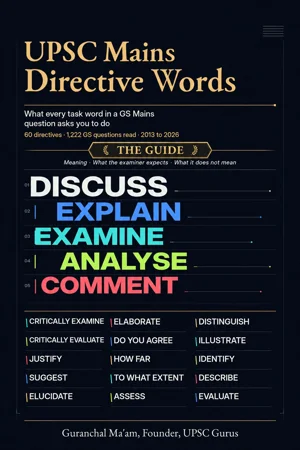
 New this week · Free UG Handout 02UPSC Mains Directive Words: 60 Meanings, Trends and PYQsTwo free PDFs: The Guide and the With PYQs edition.Read and download
Today’s Canvas
- ECI tells Supreme Court all SIR decisions were unanimous, Form 6 not amended; defends 16.10 lakh appeals in West BengalGS II
- Counting on 27 October for 28 Legislative Council seats in four States; EC voids poll at three Agra booths, suspends six officialsGS II
- Supreme Court: a cooperative society member can obtain records the Registrar can access, subject to RTI exemptionsGS II
- “Six years erased”: Supreme Court orders Rs 6 lakh compensation to man acquitted after six years as an undertrialGS IV
- BRICS Parliamentary Forum ends with unanimous New Delhi Joint Declaration; chairship for 2027 passes to ChinaGS II
- India and Canada hold first Migration and Mobility Dialogue in New Delhi; students and skilled workers on the agendaGS II
- India renews call for UN Security Council reform; says the veto must not serve narrow political interestsGS II
- DAC clears capital acquisition proposals worth about Rs 2.12 lakh crore; 82% to be sourced from Indian industryGS III
- MoSPI redesigns informal enterprise survey: women entrepreneurs’ constraints to be captured for the first time in ASUSE 2027-28GS III
- Goyal meets Dutch ministers and co-chairs India-Netherlands Business Forum in The Hague on FTA opportunitiesGS II and III
- Jio Platforms lists on 28 October after India’s largest IPO; allotment finalisedGS III
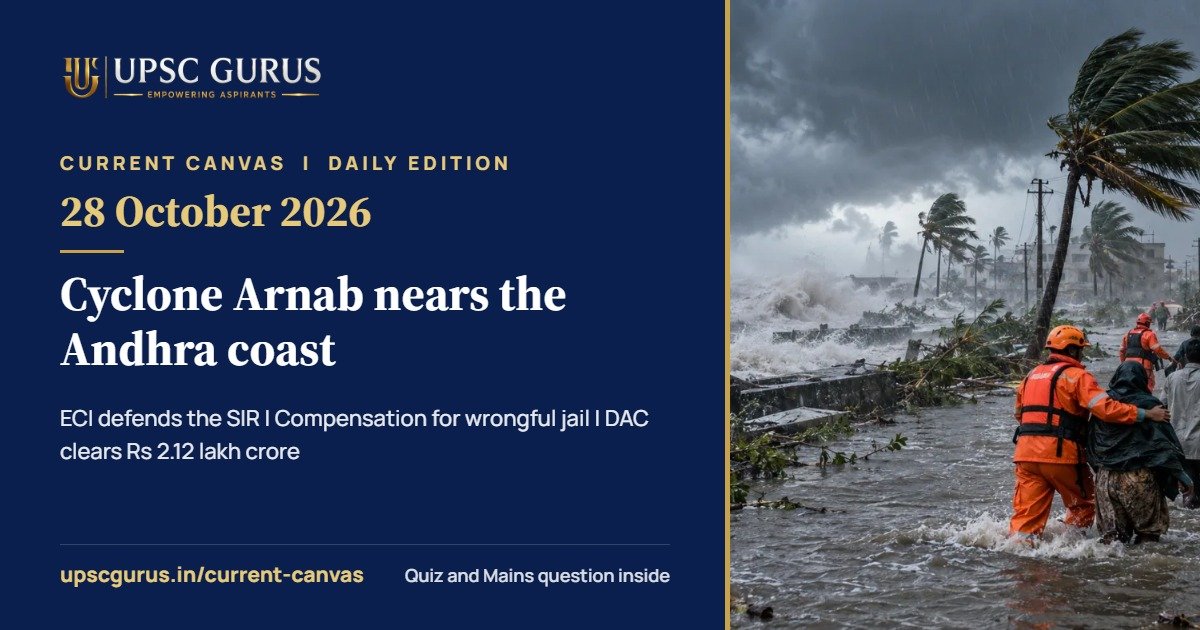
- Cyclone Arnab nears Andhra coast for landfall on 28 October forenoon; nearly 89,000 people moved to relief campsGS III
- COP17 finance day brings new pledges for nature; ministers begin high-level talks in Yerevan as Bhupender Yadav arrivesGS III
- WMO Greenhouse Gas Bulletin: carbon dioxide reaches a record 426.8 ppm in 2025; methane and nitrous oxide also at new highsGS III
- ESTIC 2026 opens at Bharat Mandapam: 12 frontier-technology themes, 150 deep-tech startups and a new Global Connect eventGS III
Polity and governance
ECI tells Supreme Court all SIR decisions were unanimous, Form 6 not amended; defends 16.10 lakh appeals in West Bengal
In short: In a 248-page counter-affidavit, the Commission rejected claims that the CEC acted alone and said only the Centre can amend Form 6.
Why in news
On 26 October 2026, the Election Commission of India filed a 248-page counter-affidavit in Rakesh Kumar Singh v. Union of India, a petition alleging that Chief Election Commissioner Gyanesh Kumar took Special Intensive Revision (SIR) decisions despite objections from Election Commissioners Sukhbir Singh Sandhu and Vivek Joshi. The Commission said its three SIR orders, of 24 June 2025, 27 October 2025 and 14 May 2026, were all taken unanimously under Article 324, and that a Commissioner’s note or query during file processing is not by itself a decision of the Commission. The matter was listed on 27 October before a Bench of Chief Justice Surya Kant and Justices Joymalya Bagchi and V Mohana.
Background
The petition, based on a newspaper report that 14 SIR decisions were taken despite recorded objections, also seeks suspension of the CEC; on 5 October the Court issued notice but refused an ex parte order to suspend him. The Commission argued that the plea to bar the CEC is not maintainable because, under Article 324(5), he can be removed only in the manner and on the grounds of a Supreme Court judge, and that Section 18 of the 2023 Act on Election Commissioners requires unanimity where practicable and a majority otherwise. On Form 6, it said only the Central Government can amend forms under the Registration of Electors Rules, 1960; the SIR declaration, which maps applicants to earlier rolls, is a separate document, and from 21 October the online process has been split into two parts to avoid confusion. It said the 16.10 lakh appeals against inclusions in West Bengal were filed by officers of the State Chief Electoral Officer’s office as authorities under the Representation of the People Act, 1950, citing the Court’s April 2026 orders in Mostari Banu v. Election Commission of India.
Key facts for Prelims
- Article 324(5): the Chief Election Commissioner can be removed only in like manner and on like grounds as a judge of the Supreme Court.
- Chief Election Commissioner and Other Election Commissioners (Appointment, Conditions of Service and Term of Office) Act, 2023: Section 18 provides for business to be transacted unanimously as far as possible, otherwise by majority.
- Registration of Electors Rules, 1960: framed by the Central Government; Form 6 is the application for inclusion of a name in the roll.
- Electoral Registration Officer (ERO): the ECI says no name can be added to or deleted from the roll on ECINet except by an order of the competent ERO.
- The ECI says a committee of experts from IIT Madras and IISc Bengaluru has been set up to review the ECINet platform.
Mains analysis and way forward
Mains analysis
- A multi-member Commission was designed to spread judgement and guard against unilateral action; how disagreement is recorded and resolved goes to the heart of its institutional credibility.
- The security of tenure in Article 324(5) protects the Commission’s independence, but independence also rests on transparent internal procedures that can withstand scrutiny.
- Large-scale appeals against inclusions and exclusions show that roll revision has become quasi-judicial in character, which makes clear reasons and fair hearing essential.
- Clarifying that unmapped voters will not ordinarily need to appear in person reduces the burden on electors and supports inclusion.
Way forward
- Rules or guidelines could set out how dissent within the Commission is recorded and disclosed, as with multi-member regulators.
- Publishing standard operating procedures for SIR, including the declaration and document collection by Booth Level Officers, would build trust.
- An independent audit of ECINet and its access controls, with a public summary, would reassure voters on data integrity.
Connect the dots: GS II: Election Commission, constitutional bodies, Representation of the People Acts, judicial review of electoral administration.
Sources: LiveLaw: All SIR decisions unanimously taken; Form 6 not amended, ECI tells Supreme Court, 26 Oct 2026; LiveLaw: ECI cites Supreme Court orders to justify filing of 16.10 lakh appeals against voter inclusions in West Bengal SIR, 26 Oct 2026; News On AIR: EC defends SIR of electoral rolls before Supreme Court, 27 Oct 2026; ThePrint (PTI): EC defends SIR in SC, says Form 6 unchanged, 26 Oct 2026
Counting on 27 October for 28 Legislative Council seats in four States; EC voids poll at three Agra booths, suspends six officials
In short: Graduates and teachers elected members to the Councils of Uttar Pradesh, Bihar, Maharashtra and Karnataka; booth capturing allegations led to a re-poll in Agra.
Why in news
Votes for 28 Legislative Council seats, 14 from graduates’ and 14 from teachers’ constituencies in Uttar Pradesh (11), Bihar (8), Maharashtra (5) and Karnataka (4), polled on 23 October 2026, were scheduled to be counted on 27 October. On 26 October the Election Commission directed the suspension of six officials, including two sector magistrates, over laxity in supervision in the Agra Division Teachers’ constituency, where voting at three polling stations was declared void under Section 58A(2)(a) of the Representation of the People Act, 1951, after allegations of booth capturing. The re-poll there was held peacefully on 26 October.
Background
The Commission also ordered disciplinary proceedings against two presiding officers, three polling officers, five head constables and 11 constables at the affected booths. In Bihar, provisional turnout was 43.87 per cent in the four graduates’ seats (4,92,594 electors) and 74.55 per cent in the four teachers’ seats (40,253 electors), with 150 candidates in all. Under Article 171, about one-twelfth of a Council is elected by graduates of at least three years’ standing residing in the State, and one-twelfth by teachers with at least three years’ service in institutions not lower than secondary school. A Council cannot exceed one-third of the Assembly’s strength and cannot have fewer than 40 members.
Key facts for Prelims
- Article 169: Parliament may create or abolish a Legislative Council if the State Assembly passes a resolution by a special majority.
- Article 171(3): one-third elected by local authorities, one-twelfth by graduates, one-twelfth by teachers, one-third by MLAs from among non-members, the rest nominated by the Governor.
- Teachers’ electorate: persons engaged for at least three years in teaching in institutions not lower in standard than a secondary school.
- Six States have Legislative Councils: Andhra Pradesh, Bihar, Karnataka, Maharashtra, Telangana and Uttar Pradesh.
- Section 58A, RP Act, 1951: allows the poll at a station to be declared void or countermanded on account of booth capturing; Section 135A makes booth capturing an offence.
Mains analysis and way forward
Mains analysis
- Graduates’ and teachers’ constituencies bring expertise and an educated electorate into legislation, a key argument for second chambers in States.
- Low turnout among graduates, against high turnout among teachers, raises questions about enrolment and awareness among graduate electors.
- Booth capturing allegations even in small, specialised electorates show that the integrity of the poll depends on firm supervision by field officials.
- Critics see Councils as costly and as a route for those who lose direct elections; supporters value revision of hasty legislation and continuity as a permanent House.
Way forward
- Periodic fresh enrolment drives for graduate electors, with online verification, could raise participation.
- Prompt accountability for supervisory lapses, as in Agra, deters malpractice; webcasting of all polling stations could add assurance.
- A national policy on Councils, as several committees have suggested, would end ad hoc creation and abolition.
Connect the dots: GS II: State legislature, bicameralism, Election Commission, Representation of the People Act, electoral reforms.
Sources: ThePrint (PTI): UP Legislative Council polls, EC directs suspension of 6 officials over serious lapses, 26 Oct 2026; Oneindia: MLC Elections 2026, BJP faces SP in UP, Congress takes on BJP-JD(S) in Karnataka, 23 Oct 2026; ThePrint (PTI): Bihar MLC polls end largely peacefully; turnout 43.87 pc in graduates’, 74.55 pc in teachers’ seats, 23 Oct 2026; Constitution of India, Article 171 (bare text, AdvocateKhoj)
Supreme Court: a cooperative society member can obtain records the Registrar can access, subject to RTI exemptions
In short: Information a public authority can access under any law is “information” under the RTI Act, so a member can obtain it through the Registrar.
Why in news
On 26 October 2026, a Bench of Justices J B Pardiwala and K Vinod Chandran dismissed an appeal by the Muppathadam Service Co-operative Bank, Kerala, and directed the Registrar of Cooperative Societies to obtain two documents from the bank within two weeks and supply them to a member who had sought them under the Right to Information Act. The Court held that under Section 2(f), information relating to a private body that a public authority can access under another law is covered, even if the Registrar does not yet hold it or has not begun an inquiry.
Background
The bank argued that it was not a public authority and that the Registrar could access its records under the Kerala Co-operative Societies Act, 1969 only after deciding to hold an inquiry; the State Information Commission and the Kerala High Court had ruled for the member. The Court relied on the Registrar’s supervisory and inspection powers, including over the society’s books, and rejected the bank’s claims of commercial confidence under Section 8(1)(d), noting the bid was over, and of personal information under Section 8(1)(j), since a member was seeking the society’s information. It added that an unconnected third party would not have a general right to such documents. In Thalappalam Service Co-operative Bank v. State of Kerala (2013), the Court had held that cooperative societies are not public authorities under Section 2(h) unless owned, controlled or substantially financed by the government.
Key facts for Prelims
- RTI Act, 2005, Section 2(f): “information” includes information relating to any private body which can be accessed by a public authority under any other law.
- Section 2(h): defines public authority; Thalappalam (2013) held that mere regulation or supervision by statute does not make a cooperative society a public authority.
- Section 8(1)(d): exempts commercial confidence, trade secrets and intellectual property whose disclosure would harm competitive position, unless larger public interest warrants disclosure.
- Section 8(1)(j): exempts personal information with no relationship to public activity or interest, or which would cause unwarranted invasion of privacy.
- Constitution (97th Amendment) Act, 2011: made forming cooperative societies a right under Article 19(1)(c), added Article 43B and Part IXB.
Mains analysis and way forward
Mains analysis
- The ruling widens practical access without turning private bodies into public authorities: the route runs through the regulator’s statutory powers.
- Members are stakeholders in a cooperative; transparency towards them strengthens democratic control and guards against mismanagement of shared funds.
- Limiting the right to connected members balances transparency with the privacy and autonomy of private bodies.
- Registrars may now need systems to call for and supply records promptly, which has administrative cost but improves accountability.
Way forward
- States could issue guidelines for Registrars on handling Section 2(f) requests within the RTI timelines.
- Cooperatives can disclose routine documents such as tenders, audit reports and contract awards proactively to members.
- Information Commissions can use the ruling to frame consistent orders on access to regulated private bodies.
Connect the dots: GS II: transparency and accountability, RTI Act, cooperative societies, regulatory bodies. GS IV: probity and access to information.
Sources: LiveLaw: Cooperative society cannot deny RTI information to member as ‘personal’ if Registrar can access such records, 26 Oct 2026; Columbia Global Freedom of Expression: Thalappalam Ser. Coop. Bank Ltd. v. State of Kerala (2013)
Ethics
“Six years erased”: Supreme Court orders Rs 6 lakh compensation to man acquitted after six years as an undertrial
In short: Calling the investigation slipshod, the Court said an innocent accused is a victim of the system and deserves reparation from the State.

Why in news
On 26 October 2026, in Arun alias Deepak v. State of U.P., a Bench of Justices J B Pardiwala and K Vinod Chandran ordered Uttar Pradesh to pay Rs 6 lakh within a month, failing which 18 per cent annual interest applies, to a man acquitted of kidnapping and murder after nearly six years in custody since 14 November 2019. Describing the case as a travesty of justice built on surmise and conjecture, the Court sent its judgment to the Director General of Police and the Home Secretary of Uttar Pradesh and said the State Police should train officers in investigation.
Background
The man was not named in the 2019 FIR from Agra district or in the complainant’s statement, and was implicated later on CCTV footage and a co-accused’s alleged confession. CCTV footage and call records were not supported by the certificate required under Section 65B of the Evidence Act, and no witness spoke of his identification. In March 2026 the Supreme Court had directed the trial court to finish the trial within three months in view of his long custody, and the trial ended in acquittal. The Law Commission, in a report submitted on 30 August 2018 under Justice B S Chauhan, had recommended a legal framework for compensation for wrongful prosecution, decided by special courts in each district.
Key facts for Prelims
- Article 21: no person shall be deprived of life or personal liberty except according to procedure established by law; courts have awarded public-law compensation for its violation.
- Presumption of innocence: an undertrial is presumed innocent until proven guilty.
- Section 65B, Indian Evidence Act, 1872: certificate required for admissibility of electronic records such as CCTV footage and call detail records.
- Law Commission report on wrongful prosecution (30 August 2018, Chair Justice B S Chauhan): special courts in each district, monetary and non-monetary compensation, and removal of disqualifications.
- Case: Arun alias Deepak v. State of U.P., 2026 LiveLaw (SC) 1083; compensation Rs 6 lakh, payable within one month.
Mains analysis and way forward
Mains analysis
- Liberty lost to a careless investigation is a moral as well as a legal wrong; the State’s duty of care extends to the accused, not only the victim.
- The Court’s view of investigators as stakeholders in justice for both sides reflects the ethic of impartiality expected of seasoned officers.
- Case-by-case compensation through constitutional courts is uneven; most wrongly detained persons cannot reach the Supreme Court.
- Long undertrial detention reflects delays in trial and weak scientific investigation, which together erode public trust in the system.
Way forward
- A statutory scheme for compensation and rehabilitation of the wrongly prosecuted, on the lines of the Law Commission’s report, would make redress a right rather than a discretion.
- Investigation training on electronic evidence and forensic standards, with separation of investigation from law and order duties, can prevent such cases.
- Periodic review of long-pending undertrial cases by Undertrial Review Committees can catch weak prosecutions early.
Connect the dots: GS IV: accountability, empathy, impartiality in public service. GS II: criminal justice reforms, police reforms, fundamental rights.
Sources: LiveLaw: ‘UP Police need education in investigation’, Supreme Court orders Rs 6 lakh compensation to man acquitted after 6 years in jail, 26 Oct 2026; PRS Legislative Research: Report summary, Wrongful Prosecution (Miscarriage of Justice): Legal Remedies
International relations and security
BRICS Parliamentary Forum ends with unanimous New Delhi Joint Declaration; chairship for 2027 passes to China
In short: The declaration condemns all acts of terrorism and frames parliaments’ role around resilience, innovation, cooperation and sustainability.
Why in news
The 12th BRICS Parliamentary Forum concluded in New Delhi on 27 October with the unanimous adoption of a Joint Declaration, moved by Lok Sabha Speaker Om Birla. The declaration strongly condemned all acts of terrorism and called for coordinated, concrete action against terrorists and terrorist organisations. Mr Birla then handed the forum’s chairship for 2027 to China.
Background
The two-day forum, held under India’s BRICS chairship in 2026, opened on 26 October under the theme “Fostering Parliaments for People-Centric Development”. The declaration is organised around four themes: Resilience, Innovation, Cooperation and Sustainability. In his closing remarks Mr Birla called for dialogue rather than conflict, peace rather than war and cooperation rather than competition, and said the aspirations of the Global South must receive due weight in global decision-making. He also said artificial intelligence should be guided by ethics, transparency, accountability and human welfare.
Key facts for Prelims
- 12th BRICS Parliamentary Forum: New Delhi, 26-27 October 2026; chaired by Lok Sabha Speaker Om Birla
- Theme: Fostering Parliaments for People-Centric Development
- Joint Declaration adopted unanimously on 27 October; four themes: Resilience, Innovation, Cooperation, Sustainability
- Forum chairship for 2027 handed over to China
- India holds the BRICS chairship in 2026; China follows in 2027
Mains analysis and way forward
Mains analysis
- A unanimous text that condemns all acts of terrorism reflects India’s long-standing push for zero tolerance in multilateral forums.
- Parliamentary forums help turn summit commitments into laws, budgets and oversight, giving BRICS a democratic dimension beyond executive diplomacy.
- The stress on ethical AI shows legislatures in the Global South seeking a common voice in shaping norms for emerging technologies.
- The handover to China means continuity of the agenda depends on how the next chair carries forward themes India placed at the centre.
Way forward
- Set up a follow-up mechanism so that each parliament reports on action taken on the declaration before the 2027 forum.
- Build on the AI theme with exchanges on legislative oversight of digital technologies among member and partner parliaments.
Connect the dots: Syllabus link: GS II India and international groupings, parliamentary diplomacy, terrorism in multilateral forums.
Sources: News On AIR: 12th BRICS Parliamentary Forum concludes with unanimous Joint Declaration, 27 Oct 2026
India and Canada hold first Migration and Mobility Dialogue in New Delhi; students and skilled workers on the agenda
In short: The two sides signed the dialogue’s Terms of Reference and agreed to meet next in Canada.
Why in news
India and Canada held the inaugural meeting of their Migration and Mobility Dialogue in New Delhi on 26 October. It was co-chaired by Sripriya Ranganathan, Secretary (Consular, Passport, Visa and Overseas Indian Affairs) in the Ministry of External Affairs, and Ted Gallivan, Canada’s Deputy Minister of Immigration, Refugees and Citizenship. Both sides signed the Terms of Reference for the dialogue.
Background
The talks covered the mobility of students, skilled workers, professionals and business visitors, and cooperation on migration management. The two sides reaffirmed that people are the main link between India and Canada, and the next round will be held in Canada. Canada is home to a large Indian diaspora and is a major destination for Indian students. Relations had been strained after 2023, and the two countries restored High Commissioners in 2025; a structured dialogue on mobility is part of the effort to rebuild ties.
Key facts for Prelims
- India-Canada Migration and Mobility Dialogue: inaugural meeting in New Delhi, 26 October 2026
- Co-chairs: Sripriya Ranganathan (Secretary, CPV and OIA, MEA) and Ted Gallivan (Deputy Minister, Immigration, Refugees and Citizenship Canada)
- Terms of Reference for the dialogue signed; next meeting in Canada
- Agenda: students, skilled workers, professionals, business visitors, and migration management
- Canada’s High Commissioner to India: Christopher Cooter
Mains analysis and way forward
Mains analysis
- Mobility agreements give students and workers predictable, legal pathways and help reduce irregular migration and fraud by agents.
- A dedicated dialogue separates people-to-people issues from political differences, which helps stabilise the relationship.
- For India, skilled mobility supports remittances and global careers, while Canada gains workers for an ageing labour market.
- Student welfare, including housing, fair recruitment and recognition of qualifications, needs attention alongside visa numbers.
Way forward
- Work towards recognition of skills and qualifications so that migrants can work in jobs matching their training.
- Share information to curb fraudulent recruiters and fake admission offers.
- Use the dialogue as a building block for wider trade and economic engagement.
Connect the dots: Syllabus link: GS II India and its neighbourhood and beyond, Indian diaspora, migration and mobility partnerships.
Sources: News On AIR: India and Canada launch inaugural Migration and Mobility Dialogue in New Delhi, 26 Oct 2026; News On AIR: India, Canada discuss cooperation in skilled workforce mobility, mining and energy, 19 Sep 2026
India renews call for UN Security Council reform; says the veto must not serve narrow political interests
In short: India’s Permanent Representative P Harish said the veto carries great responsibility and should be used with restraint on matters of peace and security.
Why in news
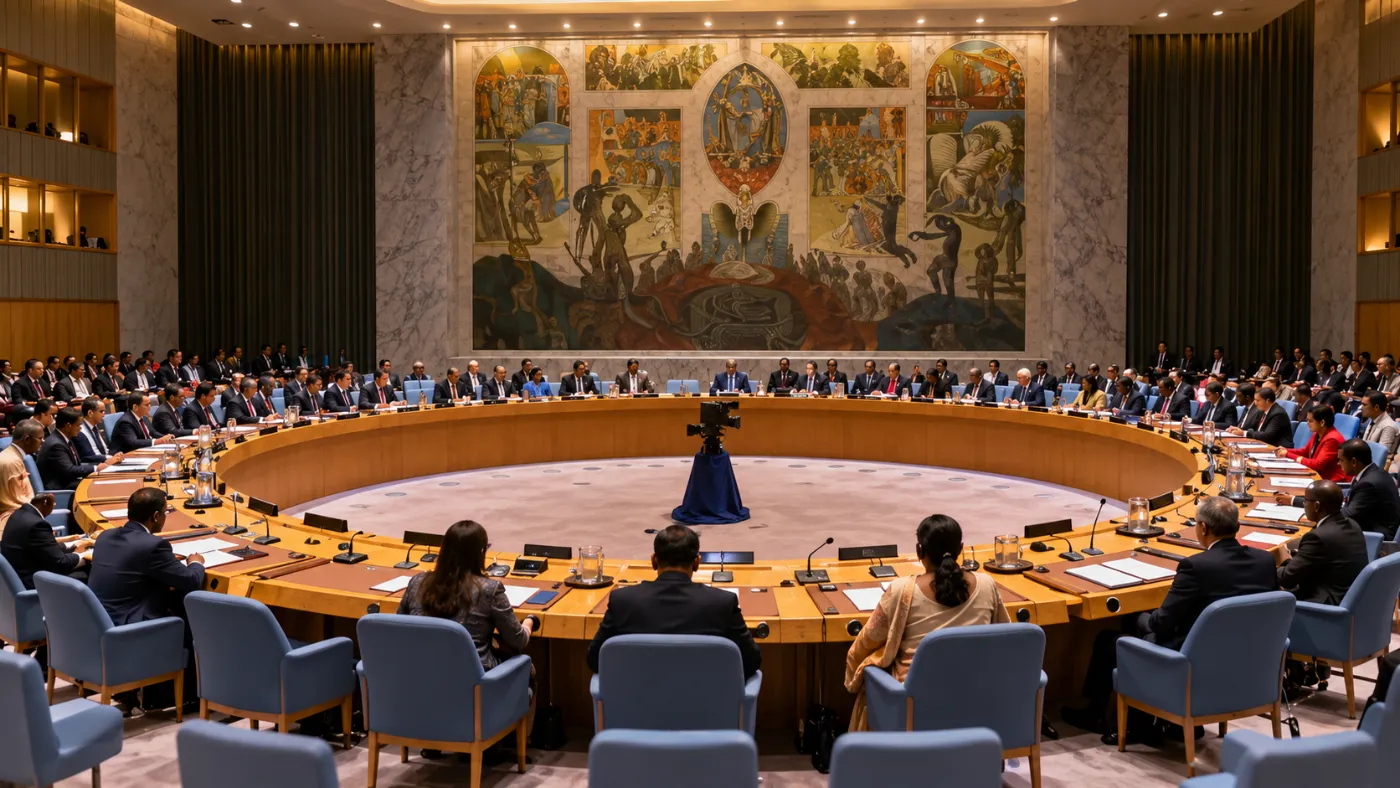
In a statement at the United Nations reported on 27 October, India restated its long-standing call for comprehensive reform of the UN Security Council. Its Permanent Representative, Parvathaneni Harish, said the veto held by the five permanent members should not be used for narrow political interests, and that it carries significant responsibility and must be exercised with restraint, especially on international peace and security.
Background
The five permanent members (China, France, Russia, the UK and the US) hold the veto under Article 27(3) of the UN Charter. In November 2024, Mr Harish told the General Assembly that the veto had been used nearly 200 times in eight decades, that this ran against the sovereign equality of states, and that India supports the common African position; as long as the veto exists, he said, it should be extended to all permanent members as a matter of fairness. Since resolution 76/262 of 26 April 2022, the General Assembly holds a debate whenever a veto is cast, as it did on 1 October 2025 after a US veto on a draft resolution on the Middle East.
Key facts for Prelims
- UNSC: 15 members; five permanent members with veto power; 10 non-permanent members elected for two-year terms
- Veto: Article 27(3) of the UN Charter (substantive decisions need the concurring votes of the permanent members)
- General Assembly resolution 76/262 (26 April 2022), the “veto initiative”: the Assembly meets to debate each use of the veto
- India’s Permanent Representative to the UN: Parvathaneni Harish
- G4 (India, Brazil, Germany, Japan) seek permanent seats; reform is negotiated in the Intergovernmental Negotiations (IGN)
Mains analysis and way forward
Mains analysis
- Frequent vetoes on major crises have weakened the Council’s credibility and pushed debate towards the General Assembly.
- India’s case rests on its population, economy, peacekeeping record and the under-representation of Africa, Asia and Latin America.
- Reform is hard because amending the Charter needs a two-thirds majority including all five permanent members.
- Calling for restraint in using the veto, while seeking a seat, lets India argue for accountability without rejecting the Council itself.
Way forward
- Build coalitions with the African Union and the L.69 group of developing countries for a text-based negotiation.
- Support transparency steps, such as explanations for vetoes, that are possible without amending the Charter.
Connect the dots: Syllabus link: GS II important international institutions, their structure and mandate; India and the UN.
Sources: News On AIR: India reiterates demand for UN Security Council reforms, 27 Oct 2026; News On AIR: India’s UN representative Parvathaneni Harish criticises the use of veto power, 21 Nov 2024; UN, Office of the President of the General Assembly: Summary of the 15th plenary meeting of the 80th session, Use of the veto, 1 Oct 2025
DAC clears capital acquisition proposals worth about Rs 2.12 lakh crore; 82% to be sourced from Indian industry
In short: Drones, counter-drone systems, air defence, guns, helicopters and naval decoys lead the Acceptance of Necessity granted on 26 October.

Why in news
On 26 October, the Defence Acquisition Council (DAC), chaired by Defence Minister Rajnath Singh, granted Acceptance of Necessity (AoN) to capital acquisition proposals worth about Rs 2.12 lakh crore for the armed forces. According to the Ministry of Defence, about 82% of the procurement will come from Indian industry.
Background
For the Army, the approvals cover high mobility vehicles, self-propelled tracked gun systems, gun shot response systems, very short-range air defence systems, platform-based counter-drone systems, surveillance UAVs, integrated surveillance and strike systems and long-range kamikaze drone systems. Light Multi Role Helicopters were cleared for both the Army and the Air Force. The Navy gets Active Offboard Decoy Systems and other indigenously designed and built platforms, while the Air Force list includes special utility helicopters, air defence systems, weapons and mobile X-band Doppler weather radars. The previous large tranche, on 7 September 2026, was about Rs 1.10 lakh crore, with about 98% from Indian industry.
Key facts for Prelims
- Defence Acquisition Council: apex body for capital procurement, chaired by the Defence Minister
- Acceptance of Necessity (AoN): first, in-principle approval in the procurement cycle; contracts follow after trials and negotiation
- Total cleared on 26 October 2026: about Rs 2.12 lakh crore; about 82% from Indian industry
- Army items include very short-range air defence, counter-drone systems and long-range kamikaze drone systems
- Navy: Active Offboard Decoy Systems, which lure incoming anti-ship missiles away from the ship
- Previous DAC tranche: about Rs 1.10 lakh crore on 7 September 2026, about 98% from Indian industry
Mains analysis and way forward
Mains analysis
- The weight given to drones, counter-drone systems and short-range air defence reflects the lessons of recent conflicts, where cheap aerial threats have reshaped the battlefield.
- A high indigenous share builds the domestic industrial base, but timelines depend on how fast AoNs turn into signed contracts and delivered systems.
- Weather radars and surveillance-strike networks show that modern capability is about sensors and data as much as weapons platforms.
- Large capital approvals must be matched by budget allocation over several years, which calls for careful prioritisation within the defence budget.
Way forward
- Track and publish the conversion of AoN into contracts and deliveries to keep accountability for time and cost.
- Support MSMEs and start-ups in the drone and counter-drone supply chain with testing ranges and assured orders.
- Plan joint procurement across the services wherever needs overlap, as with the Light Multi Role Helicopters.
Connect the dots: Syllabus link: GS III defence procurement, indigenisation of technology, challenges of drones to security.
Sources: DD India: DAC clears defence acquisition proposals worth Rs 2.12 lakh crore; 82% procurement from Indian industry, 26 Oct 2026; ThePrint: Defence Minister Rajnath Singh clears capital acquisition proposals worth Rs 1.10 lakh crore, 7 Sep 2026
Economy
MoSPI redesigns informal enterprise survey: women entrepreneurs’ constraints to be captured for the first time in ASUSE 2027-28
In short: The survey of unincorporated non-farm enterprises will also move to an April-March cycle and add questions on investment, electricity sources and handloom units.
Why in news
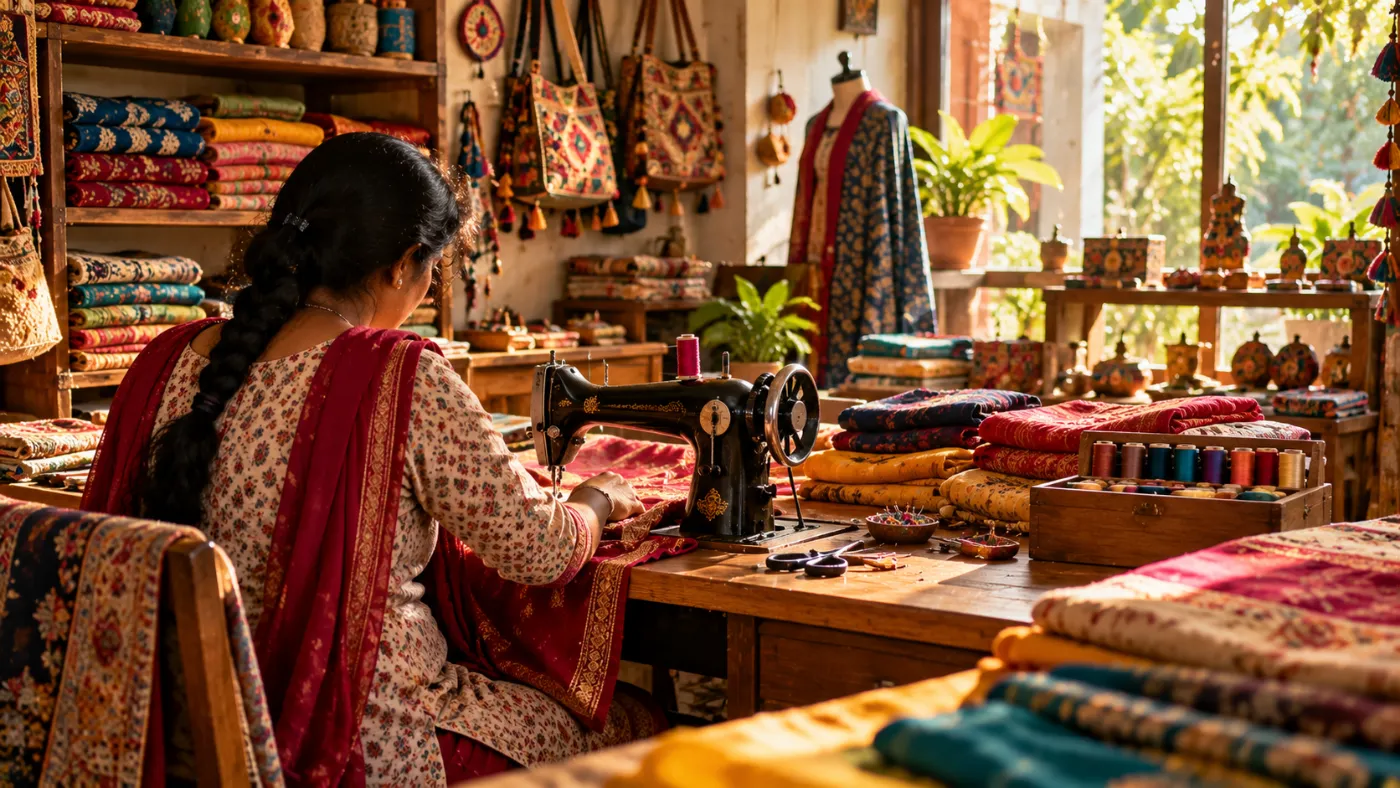
On 26 October 2026, the Ministry of Statistics and Programme Implementation (MoSPI) released the draft questionnaire for the Annual Survey of Unincorporated Sector Enterprises (ASUSE) 2027-28 for public comment. For the first time, the survey will ask about gender-specific constraints faced by women entrepreneurs in running and managing their establishments. Feedback is invited until 15 November 2026.
Background
ASUSE, conducted by the National Statistics Office since 2021-22, measures the economic and operational characteristics of unincorporated non-agricultural establishments in manufacturing, trade and other services. The latest round, ASUSE 2025 (January to December 2025), estimated about 7.92 crore establishments employing about 12.8 crore workers, with gross value added of Rs 19.93 lakh crore at current prices. It found 27.0 per cent of proprietary establishments were owned by women, up from 26.2 per cent in 2023-24, and 39.4 per cent of establishments used the internet, up from 26.7 per cent. From 2027-28, the reference period shifts from the calendar year to the financial year (April 2027 to March 2028), aligning ASUSE with the Annual Survey of Industries and the Annual Survey of Incorporated Services Sector Enterprises; the January to March 2027 quarter will be covered with the existing ASUSE 2026 questionnaire so that quarterly data has no gap.
Key facts for Prelims
- ASUSE covers unincorporated non-agricultural establishments (manufacturing, trade and other services); it is conducted by the National Statistics Office under MoSPI.
- ASUSE 2025 (calendar year 2025): about 7.92 crore establishments, about 12.8 crore workers, GVA of about Rs 19.93 lakh crore at current prices.
- Women owned 27.0% of proprietary establishments in ASUSE 2025, up from 26.2% in 2023-24.
- New in ASUSE 2027-28: women entrepreneurs’ constraints, sources of electricity, fixed-asset investment over a longer reference period, and identification of handloom, power-loom and handicraft units (at the Ministry of Textiles’ request).
- The Annual Survey of Industries (ASI) covers the organised (registered) manufacturing sector; ASUSE covers the unincorporated sector.
Mains analysis and way forward
Mains analysis
- Women own about a quarter of proprietary informal enterprises, yet little official data exists on why their units stay small; constraint-level data can guide credit, skilling and market-access policy.
- Aligning ASUSE with the financial year improves its use in national accounts, including GDP estimates for the informal sector, which is often measured through proxies.
- Questions on investment and electricity sources help track formalisation, technology adoption and energy transition among small firms.
- Open consultation on a questionnaire strengthens the credibility and user relevance of official statistics.
Way forward
- Design the women’s module with simple, comparable items (credit, mobility, care burden, digital access) so results can be tracked over time.
- Release unit-level data and State-wise estimates promptly to support State MSME and livelihood policy.
- Link findings with schemes such as Mudra and the MSME credit guarantee framework to test what reaches women-led units.
Connect the dots: Informal sector and employment; MSMEs; women’s economic empowerment; national accounts and official statistics.
Sources: News On AIR: MoSPI proposes tracking challenges faced by women entrepreneurs in ASUSE 2027-28, 26 Oct 2026; Business Standard: ASUSE to track hurdles faced by women entrepreneurs, shift to FY cycle, 26 Oct 2026; Business Today: Five key changes in Annual Survey of Unincorporated Enterprises from FY28, 26 Oct 2026; ANI: Govt proposes first-ever survey of challenges faced by women entrepreneurs, 26 Oct 2026; MoSPI: Factsheet, ASUSE 2025
Goyal meets Dutch ministers and co-chairs India-Netherlands Business Forum in The Hague on FTA opportunities
In short: The Commerce Minister pitched the Netherlands as India’s gateway to European markets as both sides look to use the India-EU FTA.
Why in news
On 26 October 2026, Commerce and Industry Minister Piyush Goyal met the Netherlands’ Minister for Foreign Trade and Development Cooperation, Sjoerd Sjoerdsma, and Minister of Economic Affairs and Climate, Heleen Herbert, in The Hague. Goyal and Sjoerdsma co-chaired the India-Netherlands Business Forum, attended by about 200 Indian and Dutch business participants, which focused on opportunities under the India-EU Free Trade Agreement. Goyal also met CEOs of Dutch firms in semiconductors, electronics, logistics, energy and retail, and joined a roundtable with CXOs of 15 Dutch companies.
Background
The visit (24 to 27 October) followed a leg in Germany and a tour of the Port of Rotterdam on 25 October. Goyal also met Arthur van Dijk, the King’s Commissioner of North Holland, and members of the Dutch House of Representatives Committee on Foreign Trade and Development Cooperation and the Senate Committee on European Affairs. Speaking to the media, he cited growing momentum after ties were raised to a Strategic Partnership and the India-EU FTA was concluded, describing the Netherlands as a gateway to European markets. The engagements were described as building partnerships; no specific agreements or investment figures were announced.
Key facts for Prelims
- India and the Netherlands upgraded ties to a Strategic Partnership in May 2026, with a Roadmap for 2026-2030.
- Business Forum, The Hague, 26 October 2026: co-chaired by Piyush Goyal and Sjoerd Sjoerdsma; about 200 participants.
- Dutch interlocutors: Sjoerd Sjoerdsma (Foreign Trade and Development Cooperation), Heleen Herbert (Economic Affairs and Climate), Arthur van Dijk (King’s Commissioner, North Holland).
- The Port of Rotterdam is Europe’s largest port; Goyal toured it on 25 October 2026.
- Trade policy is a competence of the European Union, so market access for India in the Netherlands is set through the India-EU FTA, not a bilateral trade pact.
Mains analysis and way forward
Mains analysis
- A free trade agreement creates access on paper; business forums, logistics partnerships and standards cooperation turn it into trade flows.
- The Netherlands’ role as a logistics and distribution hub can help Indian exporters, especially MSMEs, reach the wider EU market.
- Engagement with parliamentary committees matters because trade agreements need political support for ratification and implementation in Europe.
- Sector focus on semiconductors, energy and logistics links trade diplomacy with India’s manufacturing and supply-chain goals.
Way forward
- Set up sector desks to help Indian exporters meet EU product standards and sustainability rules.
- Track follow-up on CEO meetings through investment facilitation cells with clear timelines.
- Prepare industry, especially MSMEs, for the implementation phase of the India-EU FTA.
Connect the dots: India-EU relations; free trade agreements; export promotion; logistics and supply chains.
Sources: PIB (Ministry of Commerce and Industry): Piyush Goyal holds high-level meetings in the Netherlands to strengthen bilateral trade and investment ties, 27 Oct 2026; Logistics Insider: Piyush Goyal Netherlands visit: FTA, supply chains in focus, 27 Oct 2026; The Samikhsya: India-Netherlands trade: Goyal holds high level talks to boost investment, 26 Oct 2026; DD India: Piyush Goyal to visit Germany, Netherlands to boost trade, investment and industrial cooperation, Oct 2026
Jio Platforms lists on 28 October after India’s largest IPO; allotment finalised
In short: The Rs 30,213 crore issue, entirely fresh capital, drew 22.19 times subscription; proceeds will mainly repay a subsidiary’s borrowings.
Why in news
Jio Platforms’ shares are set to list on the NSE and BSE at 10 am on 28 October 2026, after allotment was finalised; share credits to demat accounts and refunds were scheduled for 27 October. The Rs 30,213 crore initial public offering, priced in a band of Rs 1,065 to Rs 1,119 a share, was subscribed 22.19 times overall. At the upper end it surpasses Hyundai Motor India’s issue of about Rs 27,800 crore (October 2024) as India’s largest IPO.
Background
The IPO, open from 21 to 23 October, was entirely a fresh issue of up to 27 crore shares, with no offer for sale by existing shareholders. About Rs 27,500 crore of the proceeds will be used to prepay borrowings of a material subsidiary, which the company says will make it net-debt-free. Reliance Industries’ stake falls from 66.43 per cent to about 64.5 per cent, while Meta’s affiliate holds 9.98 per cent and Google 7.73 per cent. For 2025-26, Jio Platforms reported revenue of about Rs 1.47 lakh crore and a net profit of Rs 30,049 crore, with 533 million customers; the issue was valued at about 34 times earnings at the top of the band. Qualified institutional buyers subscribed about 70.55 times, non-institutional investors about 14 times and retail investors about 2.72 times.
Key facts for Prelims
- IPO size Rs 30,213 crore; price band Rs 1,065 to Rs 1,119; entirely fresh issue (no OFS); lot size 12 shares.
- Subscription: 22.19 times overall; QIBs about 70.55 times; NIIs about 14 times; retail about 2.72 times.
- Book allocation of the net issue: 50% QIBs, 15% non-institutional investors, 35% retail investors; reservations of Rs 2,500 crore for RIL shareholders and Rs 500 crore for employees.
- Previous largest Indian IPO: Hyundai Motor India (October 2024).
- Offer for sale (OFS) proceeds go to selling shareholders; fresh issue proceeds go to the company.
- IPOs are governed by the SEBI (Issue of Capital and Disclosure Requirements) Regulations, 2018.
Mains analysis and way forward
Mains analysis
- Large domestic listings deepen Indian capital markets and let household savers own a stake in digital infrastructure firms.
- Using a fresh issue to retire debt strengthens the balance sheet, but leaves less for new capex; investors weigh both.
- Strong QIB demand set against modest retail uptake shows how institutional money drives mega-issues, and why retail investors need clear disclosure and risk awareness.
- Telecom is critical digital infrastructure; listing brings greater disclosure and market scrutiny to a dominant player.
Way forward
- Keep investor education focused on long-term value rather than listing-day gains.
- Ensure promoters meet minimum public shareholding norms over time to improve free float and price discovery.
- Use the momentum to bring more infrastructure and public sector firms to the market with strong governance.
Connect the dots: Capital markets and SEBI; mobilisation of resources; investment models; telecom and digital infrastructure.
Sources: Upstox: Jio Platforms IPO listing date: key things retail investors should know before debut on NSE, BSE, 27 Oct 2026; Business Standard: Jio Platforms set to bring India’s biggest IPO on Oct 21, seeks Rs 30,213 cr, 15 Oct 2026; Business Standard: Jio’s Rs 30,213-cr IPO priced at 34x earnings, below Bharti Airtel’s 39x, 15 Oct 2026
Environment and disaster management
Cyclone Arnab nears Andhra coast for landfall on 28 October forenoon; nearly 89,000 people moved to relief camps
In short: Arnab strengthened into a severe cyclonic storm and is forecast to cross between Bapatla and Visakhapatnam; Andhra Pradesh and Odisha have stepped up evacuations.
Why in news
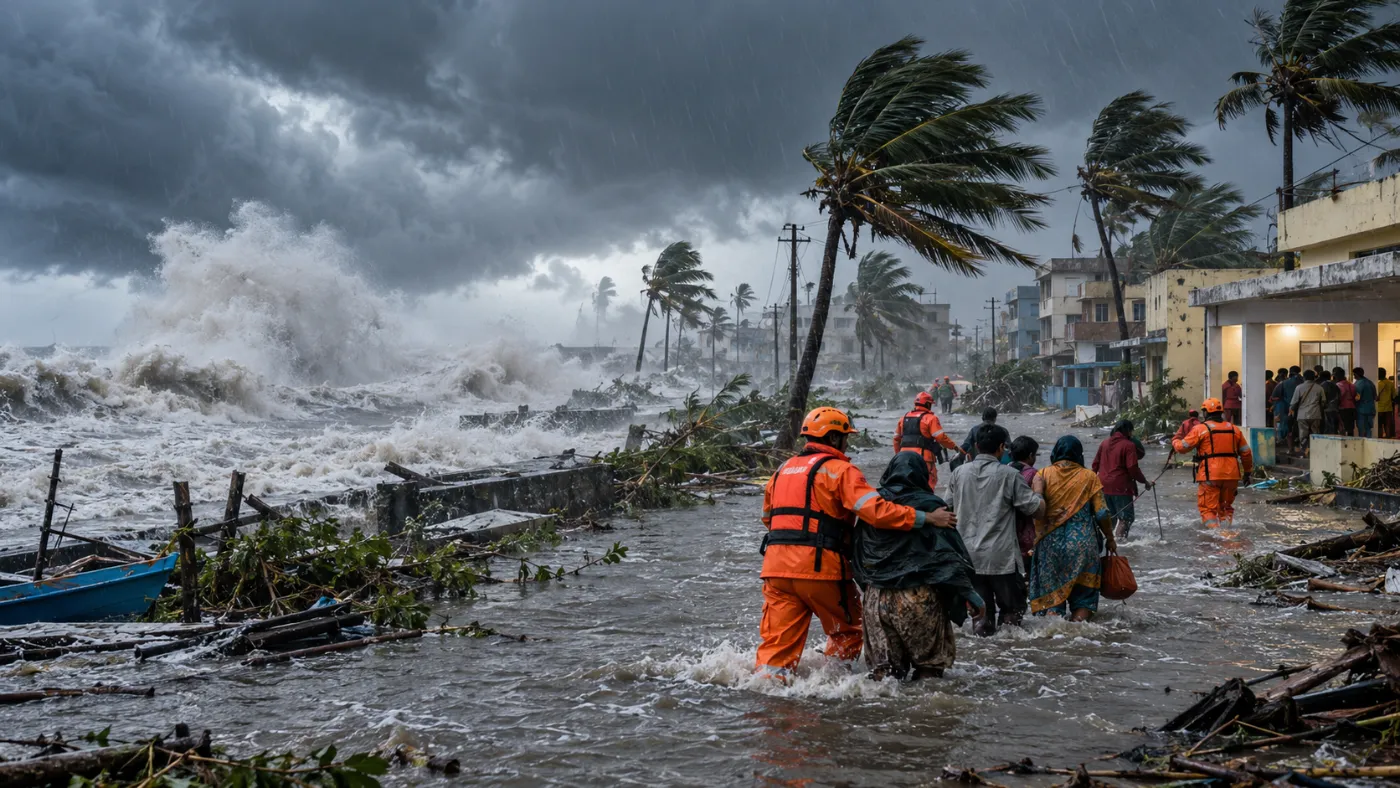
By the early hours of 27 October, Cyclone Arnab had intensified into a severe cyclonic storm over the west-central Bay of Bengal and was forecast to strengthen into a very severe cyclonic storm. It lay about 300 km south-southeast of Visakhapatnam, 360 km east-southeast of Kakinada and 380 km south of Gopalpur, moving west-northwest at about 25 km/h, and is expected to cross the Andhra Pradesh and Yanam coasts between Bapatla and Visakhapatnam by the forenoon of 28 October with winds of 115 to 125 km/h, gusting to 140 km/h. Andhra Pradesh has moved nearly 89,000 people from six coastal belts to 101 relief camps.
Background
IMD has issued a red alert for 11 Andhra Pradesh districts: Eluru, NTR, Krishna, Konaseema, Kakinada, East Godavari, West Godavari, Guntur, Alluri Sitharama Raju, Anakapalli and Visakhapatnam. Fifteen NDRF teams are deployed at vulnerable locations, including two at Yanam, all 130 residents of Hope Island off Kakinada have been shifted to the mainland, at least 53 trains have been cancelled for 27 and 28 October, and the State has released Rs 27 crore to 20 districts. The Union government has placed Andhra Pradesh, Odisha, Telangana, Chhattisgarh and Puducherry on alert. In Odisha, Chief Minister Mohan Charan Majhi has deputed eight ministers to oversee preparedness, people in thatched houses and low-lying areas are being moved to shelters, and pregnant women are being shifted to health centres in advance.
Key facts for Prelims
- IMD scale: cyclonic storm 34 to 47 knots; severe cyclonic storm 48 to 63; very severe cyclonic storm 64 to 89; extremely severe 90 to 119; super cyclonic storm 120 knots and above.
- IMD, New Delhi is the WMO Regional Specialised Meteorological Centre (RSMC) for tropical cyclones over the north Indian Ocean.
- Yanam, on the landfall stretch, is an enclave of the Union Territory of Puducherry within Andhra Pradesh.
- Gopalpur is a port town in Ganjam district, Odisha; Kakinada lies on the Godavari delta coast of Andhra Pradesh.
- NDRF is constituted under Section 44 of the Disaster Management Act, 2005; ODRAF is Odisha’s state disaster rapid action force.
Mains analysis and way forward
Mains analysis
- Pre-emptive evacuation to relief camps a day before landfall is central to India’s approach of reducing loss of life from cyclones on the east coast.
- Interior districts such as NTR, Eluru and Alluri Sitharama Raju are on red alert, a reminder that rain-driven floods and landslides can follow a storm far from the coast.
- Stocking 25,000 electric poles in advance, as Andhra Pradesh’s Energy Department has done, shows that quick restoration of power and communication is now part of preparedness, not an afterthought.
- Fishers, island residents and daily-wage workers bear repeated income losses during warnings; relief should cover livelihoods as well as lives.
Way forward
- Keep people in shelters until the all-clear and ensure food, water, sanitation and medical care, especially for pregnant women, children and older persons.
- Coordinate reservoir releases with rainfall forecasts and begin damage assessment immediately after landfall so that relief and crop insurance claims move fast.
Connect the dots: Syllabus links: GS I Geography (tropical cyclones, Bay of Bengal, east coast deltas); GS III Disaster Management (Disaster Management Act, 2005, NDRF, early warning, evacuation, resilient infrastructure).
Sources: The News Minute: Cyclone Arnab to cross Andhra coast on Oct 28, over 89,000 people evacuated, 27 Oct 2026; Pratidin Time: Cyclone Arnab: Odisha, Andhra Pradesh begin evacuations ahead of landfall, 27 Oct 2026; All India Radio News: Cyclone Arnab intensified into severe cyclonic storm over Bay of Bengal, 27 Oct 2026
COP17 finance day brings new pledges for nature; ministers begin high-level talks in Yerevan as Bhupender Yadav arrives
In short: Fresh money for the Global Biodiversity Framework Fund and GEF on 26 October set the stage for two days of ministerial bargaining on who pays for nature.

Why in news
On 26 October, finance day at CBD COP17 in Yerevan, five contributors (Germany, Iceland, Monaco, Quebec and Berlin) pledged about $60.22 million for the Global Biodiversity Framework Fund (GBFF), including Germany’s additional EUR 50 million before the end of 2026, and Spain and Uzbekistan announced EUR 50 million and $4.5 million towards the Global Environment Facility’s ninth replenishment. A Species Recovery Alliance of nine philanthropies, with over $500 million for five years, had been announced earlier at the conference, on 16 October. The COP17 President, Armenia’s Environment Minister Hambardzum Matevosyan, said more than $1.8 billion had been mobilised from all sources. Union Environment Minister Bhupender Yadav reached Yerevan on 27 October for the high-level segment, which brings together about 140 ministers and deputy ministers on 27 and 28 October.
Background
The GBFF, set up under the Global Environment Facility (GEF) in August 2023, now has $446 million in commitments from 14 national and two sub-national governments and has programmed $362.1 million to 82 projects in 87 countries, including 47 Small Island Developing States and Least Developed Countries. For the GEF-9 period (July 2026 to June 2030), Spain pledged EUR 50 million, Uzbekistan made its first contribution of $4.5 million and the UK reaffirmed GBP 330 million, taking total GEF-9 pledges close to $4.4 billion. Yet CBD Executive Secretary Astrid Schomaker noted that the world still spends about 30 dollars financing the destruction of nature for every dollar spent restoring it. Parties remain divided on who should contribute, on phasing out harmful subsidies and on the Cali Fund; the conference closes on 30 October with decisions on a proposed Yerevan Pathway to speed up implementation until 2030.
Key facts for Prelims
- CBD COP17: Yerevan, Armenia, 19 to 30 October 2026; high-level segment on 27 and 28 October.
- Global Biodiversity Framework Fund: launched in August 2023 under the GEF to finance the Kunming-Montreal Global Biodiversity Framework.
- Global Environment Facility: financial mechanism for several conventions, including the CBD, UNFCCC, UNCCD, the Stockholm Convention and the Minamata Convention; funds are replenished in four-year cycles (GEF-9: July 2026 to June 2030).
- Kunming-Montreal Framework finance goals: $200 billion a year from all sources by 2030, with international flows to developing countries of $30 billion a year by 2030.
- Cali Fund: voluntary contributions from commercial users of digital sequence information on genetic resources.
Mains analysis and way forward
Mains analysis
- Public pledges remain small against the $200 billion a year goal; philanthropy and nature bonds are growing, but they cannot replace predictable public finance for developing countries.
- A 30 to 1 ratio between spending that harms nature and spending that restores it shows that reforming harmful incentives may matter more than new funds.
- For India, the task is to defend differentiated responsibility in the donor-base debate while showcasing domestic action and access and benefit-sharing experience, which Yadav has said India will present.
- Small island and least developed countries form a large share of GBFF recipients; simpler access procedures would help money reach communities faster.
Way forward
- Turn pledges into disbursements on a clear timeline and report them transparently.
- Agree a phased, safeguarded plan to redirect harmful subsidies, with protection for farmers and fishers.
- Make the Cali Fund work by settling which commercial users of genetic data should pay.
Connect the dots: Syllabus links: GS III Environment (CBD, Kunming-Montreal Framework, GEF, biodiversity finance); GS II International Relations (multilateral negotiations, India’s positions).
Sources: CBD Secretariat: COP17 press release on finance day, 26 Oct 2026; Global Environment Facility: UN Biodiversity Conference gets finance boost with $500 million in additional pledges to the GEF and GBFF, 26 Oct 2026; IANS: Union Minister Bhupender Yadav arrives in Armenia to attend CBD COP17, 27 Oct 2026
WMO Greenhouse Gas Bulletin: carbon dioxide reaches a record 426.8 ppm in 2025; methane and nitrous oxide also at new highs
In short: All three main greenhouse gases hit new records in 2025, though the annual rise in carbon dioxide was slightly smaller than the 2023-24 surge.
Why in news
The World Meteorological Organization’s annual Greenhouse Gas Bulletin, reported on 27 October, says global average carbon dioxide concentration reached 426.8 parts per million (ppm) in 2025, 153% of the pre-industrial (1750) level, after rising by 2.8 ppm over 2024. Methane reached 1,948 parts per billion (267% of pre-industrial) and nitrous oxide 339.1 ppb (126% of pre-industrial). WMO Deputy Secretary-General Ko Barrett summed it up as “Another year, another new record.”
Background
The annual rise of 2.8 ppm was above the decadal average but slightly below the 2023-24 surge; WMO scientist Oksana Tarasova linked the smaller rise to the recovery of land carbon sinks and lower wildfire emissions after the 2023-24 El Nino, while stressing that it is still a substantial addition from fossil fuel burning. The growth rate of carbon dioxide has roughly tripled, from about 0.8 ppm a year in the 1960s to an average of 2.4 ppm a year in 2011-2020. Citing NOAA data, the bulletin notes that the warming effect of long-lived greenhouse gases rose by 56% between 1990 and 2025, with carbon dioxide accounting for about 81% of that increase.
Key facts for Prelims
- Greenhouse Gas Bulletin: annual WMO publication based on the Global Atmosphere Watch network; it reports concentrations (what remains in the air), not emissions.
- 2025 levels: CO2 426.8 ppm (153% of 1750 level); methane 1,948 ppb (267%); nitrous oxide 339.1 ppb (126%).
- Carbon dioxide is the largest contributor to the warming effect (radiative forcing) of long-lived greenhouse gases; methane is the second.
- Sulphur hexafluoride (SF6), used in electrical switchgear, has a 100-year global warming potential of about 24,300 times that of CO2, as cited in the bulletin.
- Pre-industrial baseline used by WMO: the year 1750.
Mains analysis and way forward
Mains analysis
- Concentrations keep rising even when annual growth slows, because carbon dioxide stays in the atmosphere for centuries; only deep emission cuts can stabilise them.
- Natural sinks on land and in oceans absorb part of human emissions, but their strength varies with El Nino, drought and fires, as the 2023-24 surge showed; relying on them is risky as warming continues.
- Methane at 267% of pre-industrial levels makes cuts in livestock, paddy, landfill and fossil fuel leaks a fast lever for slowing near-term warming.
- For India, with high exposure to heatwaves and erratic monsoons, the bulletin strengthens the case for both mitigation and urgent investment in adaptation.
Way forward
- Expand greenhouse gas monitoring, including India’s own ground stations and satellites, to track emissions and sinks independently.
- Prioritise methane reduction through better rice cultivation practices, cattle feed improvement and capture of landfill and coal mine gas.
Connect the dots: Syllabus links: GS I Geography (atmosphere, greenhouse effect, El Nino); GS III Environment (climate change, mitigation, international reports).
Sources: RevoScience: Greenhouse gas levels hit record high in 2025, WMO says, 27 Oct 2026; Prashant News: Greenhouse gas levels once again reach record high (WMO bulletin figures), Oct 2026
Science and technology
ESTIC 2026 opens at Bharat Mandapam: 12 frontier-technology themes, 150 deep-tech startups and a new Global Connect event
In short: The three-day conclave seeks to link laboratories, industry and startups across 12 frontier areas, a year after India launched its Rs 1 lakh crore RDI scheme.
Why in news
The Emerging Science, Technology and Innovation Conclave (ESTIC) 2026 opened on 27 October at Bharat Mandapam, New Delhi, with Prime Minister Narendra Modi scheduled to inaugurate it at 5:30 pm. The conclave, running until 29 October on the theme “Creative Minds, Catalyzing Science, Empowering Technologies”, features about 150 deep-tech startup stalls and a new Global Connect Networking Event with more than 300 invited participants from India and abroad.
Background
ESTIC 2026 is organised by CSIR under the guidance of the Office of the Principal Scientific Adviser, with CSIR-NIIST, Thiruvananthapuram as the nodal laboratory. Its 12 thematic areas are advanced manufacturing, energy technologies, synthetic biology, ocean and maritime technologies, quantum communication, semiconductors, agri-tech, generative and autonomous AI, robotics, advanced healthcare, immersive technologies and space science. Nobel laureates Joachim Frank, Sir Richard J Roberts and Kostya Novoselov are among the speakers. At ESTIC 2025 (3 to 5 November 2025), the Prime Minister launched the Research, Development and Innovation (RDI) scheme with a Rs 1 lakh crore outlay over six years, offering long-term loans at zero or low interest, equity and contributions to a Deep-Tech Fund of Funds, rather than grants, to draw private investment into research.
Key facts for Prelims
- ESTIC 2026: 27 to 29 October, Bharat Mandapam, New Delhi; organised by CSIR under the guidance of the Office of the Principal Scientific Adviser.
- RDI scheme: Rs 1 lakh crore over six years, Rs 20,000 crore for 2025-26; long-term low or zero interest loans and equity, not grants.
- Speakers include Joachim Frank (Chemistry Nobel 2017, cryo-electron microscopy), Richard J Roberts (Medicine Nobel 1993, split genes) and Kostya Novoselov (Physics Nobel 2010, graphene).
- India has over 2.3 lakh startups, the world’s third-largest ecosystem, as stated by the Science and Technology Ministry.
- CSIR-NIIST: National Institute for Interdisciplinary Science and Technology, Thiruvananthapuram.
Mains analysis and way forward
Mains analysis
- India’s research spending has long been dominated by government; the RDI scheme’s loan and equity model is an attempt to make private firms carry more of the risk and reward of research.
- Bringing 12 frontier areas under one roof helps policymakers see where laboratory work is ready for industry and where gaps remain, especially in semiconductors and quantum technologies.
- Union Minister Jitendra Singh has said that 50 to 60% of startups now come from beyond the metros; regional access to labs, mentors and finance will decide whether that spread lasts.
- Conclaves create value only if they lead to follow-up projects and partnerships, a concern the Science Ministry itself raised when it said ESTIC should not become an isolated annual event.
Way forward
- Publish a tracker of collaborations and funding decisions that come out of each ESTIC edition.
- Speed up disbursal under the RDI scheme and create shared testing facilities for deep-tech startups outside large cities.
Connect the dots: Syllabus links: GS III Science and Technology (research ecosystem, emerging technologies, startups, indigenisation of technology); GS III Economy (innovation and growth).
Sources: PIB: ESTIC-2026 to be held from 27 to 29 October 2026 at Bharat Mandapam with inauguration by PM (curtain raiser), 10 Sep 2026; ANI: PM Modi to inaugurate three-day ESTIC 2026 conclave today, 27 Oct 2026; ETV Bharat: PM Modi inaugurates ESTIC 2025, launches Rs 1 lakh crore RDI fund, 3 Nov 2025
In brief
- Personality and history: Jahangir, died 28 October 1627: The Mughal emperor Jahangir, born Prince Salim at Fatehpur Sikri on 31 August 1569, died on 28 October 1627 on the way to Lahore, after ruling from 1605. His reign is remembered for his unmatched patronage of painting, under which Mughal painting reached a high level of elegance, and for the political influence of his wife Nur Jahan from 1611.
- Collegium recommends four High Court Chief Justices: After its meeting on 26 October 2026, the Supreme Court Collegium recommended four High Court judges for appointment as Chief Justices, including Justice P Sam Koshy of the Telangana High Court for the Delhi High Court, Justice Tapabrata Chakraborty of the Calcutta High Court for the Telangana High Court and Justice Sudhir Singh of the Patna High Court for the Uttarakhand High Court. It also recommended seven advocates for the Madhya Pradesh High Court and two names for the Bombay High Court.
- Explainer: what is a kalandra?: A kalandra, a term used in police practice in Delhi, Haryana, Punjab and Uttar Pradesh, is a police report to an Executive Magistrate seeking preventive action such as a bond to keep the peace; unlike an FIR, it does not allege an offence. Under Section 126 of the Bharatiya Nagarik Suraksha Sanhita (formerly Section 107 CrPC), a magistrate may ask a person to show cause why a bond for up to one year should not be executed, as reported on 26 October 2026 after detentions linked to protests at Jantar Mantar.
- President pays tribute to K R Narayanan: President Droupadi Murmu paid floral tributes to former President K R Narayanan on his birth anniversary at Rashtrapati Bhavan on 27 October 2026.
- Supreme Court hears publishers on data protection law: On 27 October 2026, the Supreme Court heard petitions by news publishers challenging provisions of the Digital Personal Data Protection framework that, they argue, could restrict journalistic reporting and the protection of confidential sources. Further hearing is due next month.
- Supreme Court quashes 38-year-old land acquisition: On 26 October 2026, the Supreme Court quashed the acquisition of about 59 acres near Bengaluru for a cooperative housing society, stressing that compulsory acquisition must serve a genuine public purpose.
- FPIs pull out Rs 48,056 crore in October: Foreign portfolio investors withdrew a net Rs 48,056 crore from Indian equities in October up to 25 October 2026, selling Rs 53,337 crore through exchanges while investing Rs 5,281 crore in the primary market, amid high crude prices and geopolitical tensions, depository data showed.
- Israel votes for its 26th Knesset: Israel voted on 27 October, with polling scheduled to close at 10 pm Israel time (after 1 am IST on 28 October) and exit polls expected after that; 36 parties contested the 120-seat Knesset and about 7.3 million people were eligible to vote. Results and exit polls were not available when this edition closed; Iran said the outcome makes no difference to it.
- Background: “Owned by India” in defence: At a KPMG India fireside chat in New Delhi on 23 October, reported on 26 October, Defence Secretary Rajesh Kumar Singh spoke of moving from “Made in India” to “Owned by India”, with Indian ownership of design, source code and intellectual property. Figures cited include defence production of Rs 1.78 lakh crore in 2025-26, up 15.6%, and record exports of Rs 38,424 crore.
- BRICS forum: Birla on AI: Closing the BRICS Parliamentary Forum on 27 October, Lok Sabha Speaker Om Birla said artificial intelligence must be guided by ethics, transparency, accountability and human welfare.
- Delhi air stays moderate: Delhi’s AQI was 167 (moderate) at 7 am on 27 October, but 15 of 59 monitoring stations were in the poor category, led by CRRI Mathura Road (253) and Jahangirpuri (251); GRAP Stage I has been in force across Delhi-NCR since 21 October (Business Standard, 27 October).
- Foam on the Yamuna: Toxic white foam was seen again on the Yamuna near Kalindi Kunj on 26 October; foam forms when water carrying surfactants from sewage and industrial effluents churns as it falls at the Okhla barrage, and the Delhi Jal Board is likely to spray defoaming agents before Chhath (Republic, 26 October; Daily Jagran, 24 October).
- Arnab rain beyond the coast: IMD has forecast heavy rain in West Bengal from 28 to 30 October, with a landslide warning for Darjeeling, and an orange alert for several eastern Uttar Pradesh districts on 29 October (Pratidin Time, 27 October).
Prelims practice: 5 questions
Choose an option to see the answer and explanation. Your score appears when all five are answered.
Mains practice
Long pre-trial detention followed by acquittal raises the question of who compensates the wrongly prosecuted. Examine the need for a statutory framework for compensating victims of wrongful prosecution in India.
Show the answer outline
Introduction (about 30 words)
- Begin with the Supreme Court’s order of 26 October 2026: Rs 6 lakh compensation to a man acquitted after about six years as an undertrial in Uttar Pradesh.
Why the need arises
- Undertrials form a large majority of India’s prison population; long detention before acquittal costs liberty, livelihood and reputation.
- Article 21 protects personal liberty; courts have read in a right to speedy trial and awarded compensation under Articles 32 and 226.
- Today relief depends on case-by-case court orders, so it is uneven and slow.
Existing pieces
- Constitutional tort remedies through writ courts; State victim compensation schemes (mainly for victims of crime, not of wrongful prosecution).
- The Law Commission’s 2018 report on wrongful prosecution recommended a statutory scheme with special courts in each district.
Elements of a framework
- A clear legal definition of wrongful prosecution and a time-bound claims process.
- Monetary and non-monetary relief: rehabilitation, counselling, skilling, clearing of records.
- Accountability for malicious or negligent investigation, without discouraging honest policing.
- Bail reform and periodic review of undertrial detention to prevent the harm in the first place.
Conclusion (about 30 words)
- Justice is not complete at acquittal; a statutory remedy would turn the courts’ occasional mercy into a citizen’s assured right.
Tip: Distinguish compensation to victims of crime from compensation for wrongful prosecution, and back each element with a reform.
Current Canvas is prepared by the UPSC Gurus editorial desk. Every fact is checked against official releases and reliable reporting, with sources listed under each story. Editions are compiled each month into Current Canvas Monthly, a free magazine.
About images: photographs and illustrations in Current Canvas are AI-generated for illustration only. They are not news photographs of the events described.