 New this week · Free UG Handout 02UPSC Mains Directive Words: 60 Meanings, Trends and PYQsTwo free PDFs: The Guide and the With PYQs edition.Read and download
Today’s Canvas
- President Murmu attends Muria Darbar at Bastar Dussehra, urges tribal communities to educate children and keep traditionsGS II
- Nasha Mukt Bharat Abhiyaan has reached over 35 crore people, says Social Justice MinistryGS II
- Goyal at Berlin Global Dialogue: CBAM, steel duties and an India-EU FTA by early 2027GS II
- India and Uzbekistan hold 10th Joint Working Group on Counter Terrorism in New DelhiGS II
- European Parliament awards 2026 Sakharov Prize to the International Criminal Court and its officialsGS II
- Rajnath Singh releases Land Warfare Doctrine at Army Commanders’ Conference in New DelhiGS III
- Home Ministry to pilot Civil Defence Network: Army to train 600 master trainers in 12 States and UTsGS III
- Follow-up: China’s export licensing for tunnel boring machines from 18 November puts India’s underground projects on watchGS III
- In focus: World Bank Group’s first digital strategy: connectivity, affordability, services and AI readinessGS III
- Report in focus: Global Innovation Index 2026: India holds 38th rank among 139 economies, leading its income groupGS III
- Low-pressure area forms over Bay of Bengal; IMD expects a cyclonic storm by 26 OctoberGS I
- Magnitude 7 earthquake in Nagqu, Tibet, kills at least 16 and collapses more than 300 homesGS I
- COP17 Yerevan: first global review of nature targets and the Cali Fund top the talks before the ministerial segmentGS III
- Curtain-raiser: ESTIC 2026 from 27 October: ISRO to showcase heavy-lift rocket model and human spaceflight roadmapGS III
- PM Modi at Chinmaya Mission 75th anniversary: calls for unity, self-reliance and a developed India by 2047GS I
Polity and governance
President Murmu attends Muria Darbar at Bastar Dussehra, urges tribal communities to educate children and keep traditions
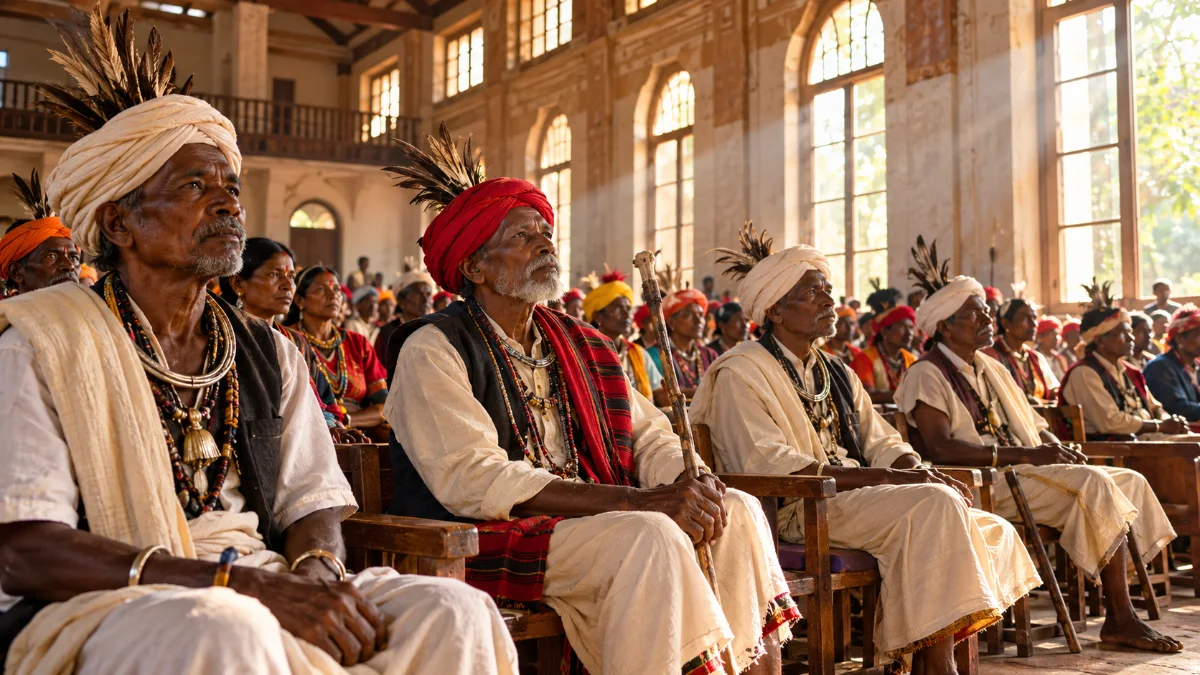
In short: At Jagdalpur on 23 October, the President joined the Muria Darbar, a centuries-old Bastar forum where tribal heads meet the administration.
Why in news
On 23 October 2026, President Droupadi Murmu attended the Muria Darbar at Jagdalpur, Chhattisgarh, which closes Bastar Dussehra. Speaking in the presence of Governor Ramen Deka and Chief Minister Vishnu Deo Sai, she described herself as “the daughter of a Majhi” and said traditional village systems led by the Majhi and Pargana can settle family and land disputes without long legal processes. She urged communities to educate their children and said “change your thinking with time, but do not change your traditions”.
Background
Bastar Dussehra is reported to run for about 75 days and is centred on the goddess Danteshwari, not on Lord Ram; it has no Ravan effigy burning. In the princely state of Bastar, the ruler held a darbar after the festival, where village Manjhis and Mukhiyas placed local grievances before him. After 1947 the forum continued, with elected representatives, ministers and district officials listening to tribal heads in place of the ruler. Members of the former royal family still attend. The President was also in Raipur on 22 October, where she released a Rs 200 commemorative coin for Mata Sahib Hasi Devi.
Key facts for Prelims
- Muria Darbar: held at Jagdalpur at the close of Bastar Dussehra; central participants are the Manjhis and Chalkis, heads of tribal groups.
- Bastar Dussehra honours Maa Danteshwari, the presiding deity of tribal Bastar; there is no Ravan dahan.
- Fifth Schedule (Article 244(1)) governs administration of Scheduled Areas; PESA, 1996 extends Panchayat provisions to them and recognises the Gram Sabha’s role in customary dispute resolution.
- Article 46 directs the State to promote the educational and economic interests of Scheduled Tribes.
- Governor of Chhattisgarh: Ramen Deka; Chief Minister: Vishnu Deo Sai.
Mains analysis and way forward
Mains analysis
- Traditional institutions such as the Majhi and Pargana systems offer accessible, low-cost dispute resolution; assess their strengths and how they sit alongside constitutional courts.
- Examine how customary tribal assemblies can complement democratic decentralisation under PESA and the Fifth Schedule.
- The President’s message links preservation of tradition with education; discuss how schooling and cultural continuity can be pursued together in Scheduled Areas.
- Festivals like Bastar Dussehra act as civic spaces where the State listens to communities; discuss their value for inclusive governance.
Way forward
- Strengthen Gram Sabhas and recognise customary bodies within PESA rules, while ensuring constitutional rights, especially of women, are upheld.
- Pair cultural support for tribal festivals with schooling, health and livelihood outreach so grievances raised at the Darbar are followed up.
Connect the dots: Polity: Fifth Schedule, PESA 1996, Article 46. Culture: tribal festivals and customary institutions.
Sources: ANI: President Murmu urges Bastar tribals to preserve traditions, educate children at Muria Darbar, 23 Oct 2026; Deccan Chronicle: Murmu to attend famed Muria Durbar; Punjab Kesari (IANS): President Murmu to visit Jagdalpur for Muria Darbar; AIR News: listing of 23 Oct 2026 national items
Social justice
Nasha Mukt Bharat Abhiyaan has reached over 35 crore people, says Social Justice Ministry
In short: The Social Justice Ministry reports over 35 crore people reached under the drug demand reduction campaign, including 13.94 crore youth and 10.86 crore women.
Why in news
The Ministry of Social Justice and Empowerment said on 22 October 2026 that the Nasha Mukt Bharat Abhiyaan has reached more than 35 crore people, including 13.94 crore youth and 10.86 crore women, and has engaged over 32 lakh educational institutions. The figures were widely reported late on 22 October and carried by AIR News on its national listing. The campaign is tied to the Viksit Bharat 2047 vision of a healthy and aware citizenry.
Background
The Abhiyaan was launched on 15 August 2020 under the National Action Plan for Drug Demand Reduction, first covering 272 vulnerable districts before going nationwide. It covers prevention, assessment, treatment, rehabilitation, aftercare, public information and community awareness, with volunteers called Nasha Mukti Mitras. In September 2026 the ministry had reported 34.54 crore people reached and over 1.67 lakh Nasha Mukti Mitras. Union Home Minister Amit Shah has set a target of eliminating the drug trade by 31 December 2029.
Key facts for Prelims
- Nasha Mukt Bharat Abhiyaan: launched 15 August 2020 by the Ministry of Social Justice and Empowerment; started with 272 vulnerable districts.
- Framework: National Action Plan for Drug Demand Reduction.
- Reach reported on 22 October 2026: over 35 crore people; 13.94 crore youth; 10.86 crore women; over 32 lakh educational institutions.
- Volunteers are called Nasha Mukti Mitras.
- Government target: eliminate the drug trade by 31 December 2029 (Home Minister).
Mains analysis and way forward
Mains analysis
- Drug abuse is a public health and social issue; discuss why demand reduction through awareness, treatment and rehabilitation is as important as supply-side enforcement.
- Reach figures show scale but not outcomes; suggest indicators to assess whether the Abhiyaan changes behaviour.
- Examine the role of schools, Panchayati Raj Institutions and community volunteers in preventing substance abuse among youth.
Way forward
- Pair awareness drives with expanded, accessible treatment and aftercare centres, and track outcome indicators alongside outreach counts.
- Integrate the campaign with mental health services such as Tele MANAS and school counselling.
Connect the dots: Social Justice: vulnerable groups, health and welfare schemes. Polity: Article 47, directive on improvement of public health and prohibition of intoxicating drinks and drugs.
Sources: Economic Times via inkl (PTI): Nasha Mukt Bharat Abhiyaan, 35 crore people reached so far, 22 Oct 2026; AIR News: Naya Bharat Nasha Mukt Bharat campaign reached over 34.54 crore, 14 Sep 2026; AIR News: listing of 22 and 23 Oct 2026 national items
International relations
Goyal at Berlin Global Dialogue: CBAM, steel duties and an India-EU FTA by early 2027
In short: Speaking in Berlin on 22 and 23 October, Commerce Minister Piyush Goyal flagged CBAM and steel duties as cost risks and projected India-EU FTA operation in early 2027.
Why in news
Commerce and Industry Minister Piyush Goyal, on a visit to Germany and the Netherlands from 22 to 27 October 2026 with about 100 Indian businesses and startups, spoke at the Berlin Global Dialogue. He cautioned that the EU’s Carbon Border Adjustment Mechanism (CBAM) combined with a 50 per cent duty on steel imports beyond the EU’s tariff-rate quotas (in force since 1 July 2026) could raise living costs and hurt competitiveness. He said the India-EU FTA is expected to be signed before the end of 2026 and operationalised probably in the first quarter of 2027.
Background
The India-EU FTA was announced on 27 January, and CBAM has been described as the longest-standing sticking point in the talks. Under the deal, the two sides are to build India’s CBAM verification capacity, including recognition of Indian verification agencies, so that exporters do not depend on a limited pool of overseas verifiers. India is also developing its Carbon Credit Trading Scheme and discussing carbon pricing with the EU. Goyal said India-Germany trade, about 31 billion euros now, could grow to 310 billion euros if both sides build on complementary strengths, without giving a timeline. German Economy Minister Katherina Reiche called for less red tape and said bilateral trade could double.
Key facts for Prelims
- Carbon Border Adjustment Mechanism (CBAM): the EU’s carbon price on imports of carbon-intensive goods such as steel, aluminium and cement.
- Goyal’s visit: Germany and the Netherlands, 22 to 27 October 2026, with about 100 businesses and startups.
- India-Germany bilateral trade is about 31 billion euros, per Goyal’s remarks.
- India-EU FTA: announced on 27 January; signing expected before end 2026; operation projected in the first quarter of 2027, a ministerial projection and not a fixed date.
- India’s Carbon Credit Trading Scheme is being developed alongside discussions on carbon pricing with the EU.
- Areas discussed with Germany: AI, semiconductors, advanced manufacturing, critical minerals, green hydrogen, renewables, energy storage and resilient supply chains.
Mains analysis and way forward
Mains analysis
- CBAM and climate justice: the principle of common but differentiated responsibilities versus unilateral carbon-pricing at borders.
- Trade and climate linkage: how carbon border measures can reshape export competitiveness for steel, aluminium and fertiliser exporters.
- Strategic dimension of the India-EU FTA: diversification of markets and supply chains, and balancing market access with regulatory autonomy.
- Building domestic capacity in carbon measurement, reporting and verification as a prerequisite for access to green markets.
Way forward
- Operationalise mutual recognition of Indian verification agencies and a clear CBAM compliance roadmap for exporters, especially MSMEs.
- Advance domestic carbon pricing so that carbon costs are retained within India and can be credited in trade settlements.
- Pursue a balanced agreement that pairs market access with technology and green finance cooperation.
Connect the dots: GS II: bilateral and regional groupings, effect of policies of developed countries on India; GS III: trade, climate change, energy transition.
Sources: Telangana Today (IANS): Piyush Goyal warns Europe on CBAM, 50 pc steel duty, 23 Oct 2026; Business Standard: India-EU FTA may be operational in January-March, says Piyush Goyal, 22 Oct 2026; AIR News: Commerce Minister Piyush Goyal to visit Germany and the Netherlands, 21 Oct 2026
India and Uzbekistan hold 10th Joint Working Group on Counter Terrorism in New Delhi
In short: India and Uzbekistan agreed to deepen information sharing, capacity building and multilateral cooperation against terrorism at the tenth JWG meeting in New Delhi.
Why in news
India and Uzbekistan held the tenth meeting of their Joint Working Group on Counter Terrorism in New Delhi, reported on 22 and 23 October 2026. It was co-chaired by Dr Suhel Ajaz Khan, Additional Secretary (Counter Terrorism), MEA, and Pirimkulov Gulomjon Shodmonkulovich of Uzbekistan’s Foreign Ministry. The sides agreed to cooperate on threats to national and regional security and to strengthen the framework of the Joint Working Group.
Background
They discussed extremism and radicalisation, terrorism financing, terrorists’ use of technology, and links between transnational organised crime and terrorism. Bilateral measures include information sharing, capacity building and exchange of best practices, and both sides reaffirmed cooperation at the United Nations, SCO-RATS and the Eurasian Group on Combating Money Laundering and Financing of Terrorism. The next meeting will be held in Uzbekistan on a mutually convenient date. The meeting follows Prime Minister Modi’s state visit to Uzbekistan on 29 and 30 August 2026, where both sides pledged zero tolerance to terrorism and noted the joint exercise Dustlik held in Namangan in April 2026. Relations were recently upgraded to a Comprehensive Strategic Partnership.
Key facts for Prelims
- Joint Working Group on Counter Terrorism: 10th meeting held in New Delhi; the next will be in Uzbekistan.
- SCO-RATS: the Regional Anti-Terrorist Structure of the Shanghai Cooperation Organisation.
- EAG: Eurasian Group on Combating Money Laundering and Financing of Terrorism, a FATF-style regional body.
- Exercise Dustlik: India-Uzbekistan joint military exercise, held in Uzbekistan’s Namangan Region in April 2026.
- India-Uzbekistan relations: Comprehensive Strategic Partnership; Modi’s state visit 29 to 30 August 2026.
Mains analysis and way forward
Mains analysis
- India’s Central Asia outreach: counter-terrorism is a core pillar given concerns over radicalisation and instability in the wider region.
- Multilateral platforms such as the SCO and EAG allow India to build consensus on terror financing and cross-border terrorism.
- Technology-enabled terrorism and organised-crime linkages require intelligence sharing and cyber cooperation.
- Connectivity constraints remain a challenge for translating political goodwill into economic and security depth.
Way forward
- Convert JWG discussions into concrete training, intelligence-sharing and law-enforcement exchanges with timelines.
- Coordinate positions at SCO-RATS and EAG, and align counter-terrorism work with the wider strategic partnership.
- Deepen people-to-people and economic links so that security cooperation rests on a broad base.
Connect the dots: GS II: India and its neighbourhood, bilateral groupings; GS III: terrorism financing, internal security.
Sources: The Indian Awaaz: India and Uzbekistan to strengthen cooperation against terrorism, 23 Oct 2026; Revoi: India, Uzbekistan agree to strengthen counter-terrorism cooperation, 23 Oct 2026; ANI: Uzbekistan backs India’s permanent UNSC bid; joint statement, 30 Aug 2026
European Parliament awards 2026 Sakharov Prize to the International Criminal Court and its officials
In short: Announced on 22 October, the prize honours the ICC and its officials amid US sanctions; India, like the United States, is not a party to the Rome Statute.
Why in news
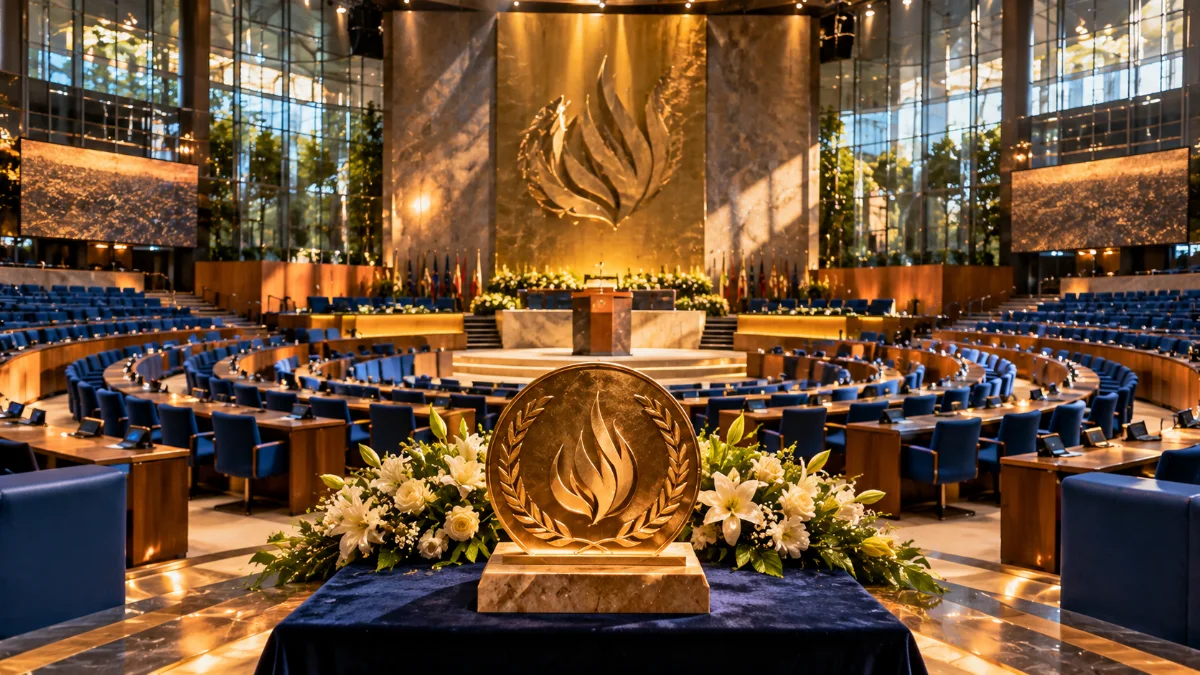
On 22 October 2026, European Parliament President Roberta Metsola announced that the 2026 Sakharov Prize for Freedom of Thought goes to the International Criminal Court and its officials, following a decision of the Conference of Presidents. She said the prize recognises the Court’s work in upholding international law and justice. Jailed Tanzanian opposition figure Tundu Lissu and Iranian activists Taraneh and Romina Rahimi were also recognised, and the award ceremony will be held in Strasbourg during the December plenary session.
Background
The ICC, based in The Hague, tries individuals for genocide, war crimes, crimes against humanity and aggression under the Rome Statute adopted in 1998. It has no police force and relies on member states to arrest suspects. In 2024 it issued arrest warrants for Israeli Prime Minister Benjamin Netanyahu and other leaders, and the United States responded by sanctioning the Court’s judges; the ICC has called the latest sanctions an “assault on the rule of law”. The Court was shortlisted for the prize on 19 October 2026, nominated by the Socialists and Democrats group. India did not join the Rome Statute; India’s stated concerns include the Security Council’s power to refer situations to the Court or defer investigations, the Court’s relationship with national jurisdiction, the absence of terrorism as a separate crime, and the failure to list the use of nuclear weapons explicitly as a war crime. The United States is also not a member.
Key facts for Prelims
- Sakharov Prize for Freedom of Thought: awarded annually by the European Parliament; 2026 laureates: the International Criminal Court and its officials.
- Announced by European Parliament President Roberta Metsola on 22 October 2026; the ceremony is in Strasbourg in December.
- ICC: seat at The Hague; jurisdiction over genocide, war crimes, crimes against humanity and aggression; founded under the Rome Statute (1998).
- ICC is distinct from the International Court of Justice (ICJ), the UN’s principal judicial organ that settles disputes between states; the ICC tries individuals.
- India and the United States are not parties to the Rome Statute.
Mains analysis and way forward
Mains analysis
- India stays outside the Rome Statute; evaluate the concerns about sovereignty, the role of the Security Council and the treatment of terrorism, and weigh them against the benefits of joining.
- Discuss how sanctions on ICC officials affect the credibility of international criminal justice and what this means for a rules-based order.
- Distinguish the ICC from the ICJ and from ad hoc tribunals, and assess the challenge of enforcing warrants without an independent police force.
Way forward
- India can continue to support accountability for serious crimes through the UN system and bilateral cooperation, while working to include terrorism in international criminal law discussions.
- States should protect judicial independence of international courts and uphold their obligation to cooperate with lawful warrants.
Connect the dots: International Relations: international institutions, UN system, human rights. Polity: treaty-making and sovereignty.
Sources: European Parliament President’s page: The 2026 Sakharov Prize has been awarded to the International Criminal Court and its officials; EUobserver: International Criminal Court shortlisted for EU award as MEPs urge protection for its judges against Trump sanctions; Deccan Chronicle: 125 nations observe July 17 as World Day for International Justice; UN Treaty Collection: Rome Statute of the International Criminal Court
Security and defence
Rajnath Singh releases Land Warfare Doctrine at Army Commanders’ Conference in New Delhi
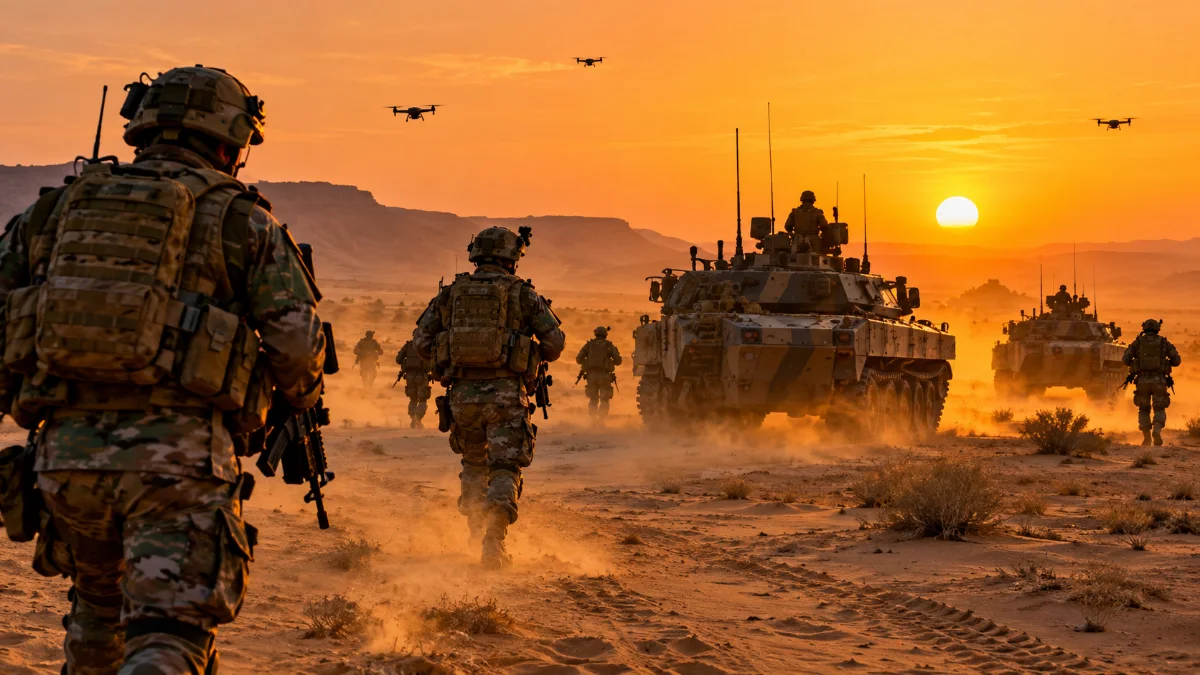
In short: The Defence Minister released the Army’s Land Warfare Doctrine on 23 October, setting an overarching framework for the changing character of warfare.
Why in news
Defence Minister Rajnath Singh released the Land Warfare Doctrine on 23 October 2026, the last day of the three-day Army Commanders’ Conference in New Delhi. The Defence Ministry describes it as an overarching framework to prepare the Army for the changing nature of warfare and future conflicts. He also felicitated Army personnel who served in United Nations peacekeeping missions.
Background
The Army Commanders’ Conference is the Army’s biannual apex-level forum, held from 21 to 23 October 2026 under Chief of the Army Staff General Dhiraj Seth. This edition discussed the security environment, operational preparedness, capability development and force modernisation, and identified future thrust areas. Reports link the doctrine’s timing to the lessons of Operation Sindoor in May 2025, in which drones played a major role. The Chief of Defence Staff, the Chief of the Naval Staff and the Secretary, MeitY addressed the conference on security issues, reflecting the stress on inter-service synergy and digital transformation. The text of the doctrine has not been published in the sources reviewed, so its specific provisions are not covered here.
Key facts for Prelims
- Army Commanders’ Conference: biannual apex-level forum of the Indian Army, chaired by the Chief of the Army Staff; held 21 to 23 October 2026 in New Delhi.
- Land Warfare Doctrine: released by the Defence Minister on 23 October 2026 as an overarching framework for the Army on the changing character of warfare.
- A military doctrine states how a force intends to fight and prepare; it sits below national security policy and above operational plans.
- Awards presented at the conference included Green Military Stations and Aviation Flight Safety.
- Operation Sindoor (May 2025) is cited in reports as having shown the growing role of drones in conflict.
Mains analysis and way forward
Mains analysis
- Doctrine as a bridge between strategy and force structure: how a published doctrine shapes training, procurement and joint planning.
- Changing character of warfare: drones, cyber, information and cross-domain operations require adaptation across the Army, Navy and Air Force.
- Jointness: how Army doctrine can align with integrated theatre commands and joint doctrines under the Chief of Defence Staff.
- Technology and talent: the presence of the MeitY Secretary at the conference points to the digital dimension of modern military capability.
Way forward
- Publish an unclassified summary so that the strategic community and students of security can engage with the ideas.
- Align the doctrine with Air and Naval doctrines through joint exercises and a regular review cycle.
- Back doctrinal intent with indigenous procurement, training and drone and counter-drone capability.
Connect the dots: GS III: Internal security and defence, challenges to internal and external security, role of technology; GS II: civil-military relations and defence reforms.
Sources: ETV Bharat: Army Commanders’ Conference begins, Rajnath Singh to release Land Warfare Doctrine, 21 Oct 2026; The Statesman: Army Commanders’ Conference begins in Delhi, 21 Oct 2026; The Tribune: Indian Army to get new land warfare doctrine, 21 Oct 2026; Revoi: Defence Minister Rajnath Singh releases Land Warfare Doctrine, 23 Oct 2026
Home Ministry to pilot Civil Defence Network: Army to train 600 master trainers in 12 States and UTs
In short: The Home Ministry will train 600 Civil Defence Master Trainers through the Army in a first-phase pilot, following the PM’s Independence Day call for a modern network.
Why in news
The Union Home Ministry announced on 23 October 2026 a first-of-its-kind pilot to build a Civil Defence Network. The Indian Army, with the Directorate General of Fire Services, Civil Defence and Home Guards, will give three-day training to 600 Master Trainers, 50 each from 12 States and Union Territories. First-phase training is to be completed by the second week of November 2026.
Background
Prime Minister Narendra Modi announced a vibrant Civil Defence network and a modern volunteer force in his Independence Day address on 15 August 2026. India already has a statutory Civil Defence organisation under the Civil Defence Act, 1968. After Operation Sindoor in May 2025, mock drills were held in 244 districts on 7 May 2025, and 2,818 volunteers were deployed in Jammu and Kashmir. The curriculum covers threat awareness, protection and emergency response, and communication and coordination.
Key facts for Prelims
- Pilot States and UTs: Jammu and Kashmir, Punjab, Rajasthan, Gujarat, Delhi, Meghalaya, Sikkim, Assam, Uttar Pradesh, Kerala, Karnataka and Tamil Nadu.
- Phase one: 600 Master Trainers (50 per State or UT), three days of training each.
- Training agencies: Indian Army and the DG Fire Services, Civil Defence and Home Guards.
- Civil Defence Act, 1968 provides the statutory basis; Home Guards were raised in 1946.
- Mock drills on 7 May 2025 covered 244 districts.
Mains analysis and way forward
Mains analysis
- Modern threats such as drones, cyber attacks and hostile strikes on civilian infrastructure make community-level preparedness a part of national security; discuss.
- Compare the roles of Civil Defence, Home Guards, NCC and disaster response forces and suggest how they can complement each other.
- A train-the-trainer model can scale quickly; examine its advantages and limits.
Way forward
- Link the new network with NDMA and State disaster management plans to avoid duplication and ensure common standards.
- Review the Civil Defence Act, 1968 and volunteer incentives so that training is followed by regular drills and clear roles.
Connect the dots: Internal security: role of civilians in national security; Disaster management: community preparedness.
Sources: Revoi (AIR report): Home Ministry to launch pilot initiative to establish vibrant Civil Defence Network, 23 Oct 2026; Business Standard: PM Modi wants to set up a Civil Defence volunteer force, 15 Aug 2026; AIR News: listing of 23 Oct 2026 national items
Economy
Follow-up: China’s export licensing for tunnel boring machines from 18 November puts India’s underground projects on watch
In short: China will require licences to export tunnel boring machines and some dredging equipment from 18 November, a supply-chain test for India’s metro and tunnel projects.
Why in news
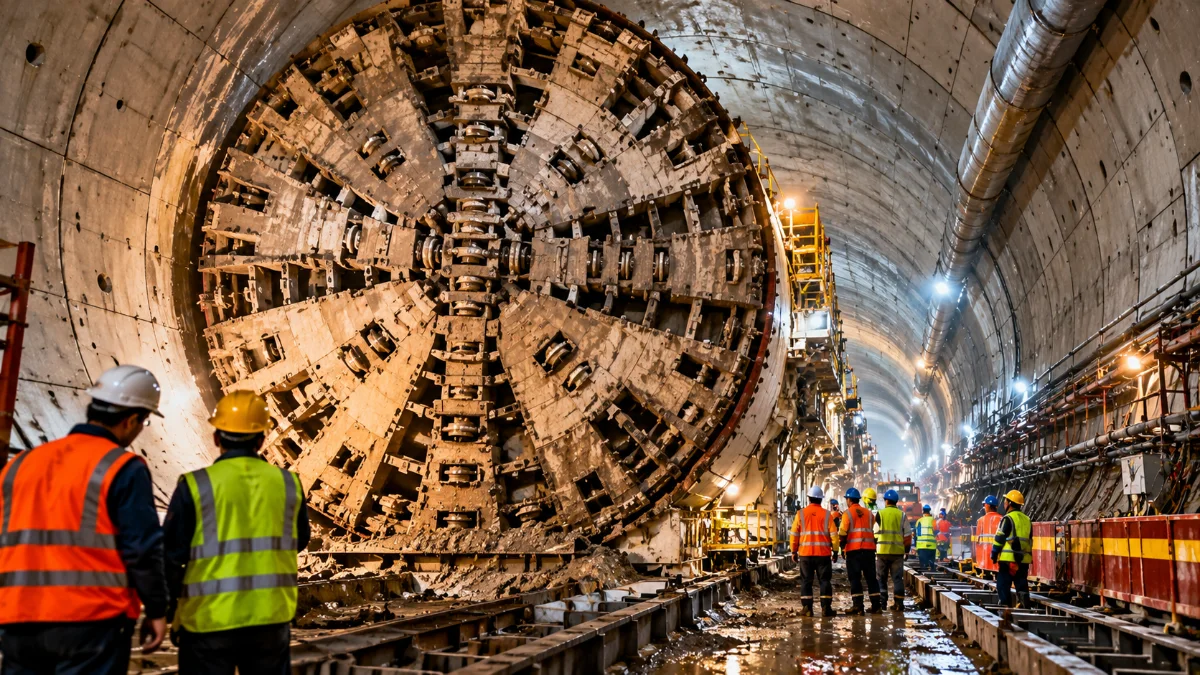
China’s Ministry of Commerce announced on 19 October 2026 that tunnel boring machines (TBMs) will need export licences under its Export Control Law and dual-use item rules, effective 18 November. The list also covers walking excavators, plateau-type wet shotcrete machines and parts of dredgers such as slurry pumps, dragheads and cutterheads. Exporters must declare dual-use control codes accurately, and customs can hold shipments until verification is complete. India relies heavily on imported TBMs for metro rail, road tunnels and other underground works.
Background
China stated that the measures aim at safeguarding national security and interests. Reports note that India has faced delays in Chinese customs clearance of TBMs earlier: in September 2025 Germany’s Ambassador Philipp Ackermann said Chinese customs had blocked at least three TBMs made by Herrenknecht for Indian projects, and the company is now setting up production in India. In 2024 Commerce Minister Piyush Goyal had raised the issue with Germany’s Vice Chancellor. The reports do not name specific Indian projects that will be affected, and say the curbs could affect metro systems, high-speed rail and tunnels including in border areas.
Key facts for Prelims
- Tunnel boring machine: a machine that excavates circular tunnels through rock or soil, used in metro rail and road tunnels.
- Dual-use items: goods with both civilian and military applications, regulated under export control regimes.
- Export licensing is a non-tariff measure: it restricts trade through permissions rather than duties.
- Controlled dredger items include cutterheads for cutter suction dredgers (outer cutter ring at least 2.1 m) and slurry pumps with inlet diameter of at least 0.55 m.
- Effective date of the Chinese controls: 18 November 2026.
Mains analysis and way forward
Mains analysis
- Dependence on a single supplier for specialised capital equipment is a supply-chain vulnerability for infrastructure programmes such as metro expansion and border connectivity.
- Export controls justified on security grounds are increasingly used as instruments of economic statecraft; discuss implications for WTO-based trade norms.
- Domestic manufacturing of heavy equipment depends on component ecosystems, skills and assured demand; assess Make in India for capital goods.
- Examine the effect of equipment delays on project timelines, cost overruns and public finances.
Way forward
- Build domestic and partner-country manufacturing capacity for TBMs and dredging equipment, including joint ventures, with predictable demand from public projects.
- Diversify sourcing across countries, keep strategic stocks of critical spares, and use diplomatic channels for licensing clarity.
Connect the dots: GS III: Infrastructure, industrial policy and Make in India; GS II: India-China relations; supply-chain resilience.
Sources: Business Today: China announces export controls on tunnel boring machines, 19 Oct 2026; Devdiscourse (Reuters): China commerce ministry announces export controls for tunnel boring machines, 19 Oct 2026; OneIndia: China tightens export curbs on tunnel boring machines, 20 Oct 2026
In focus: World Bank Group’s first digital strategy: connectivity, affordability, services and AI readiness
In short: The World Bank Group’s first digital strategy rests on four pillars and targets jobs for 1.2 billion young people expected to reach working age in developing countries.
Why in news
The World Bank Group launched its first comprehensive digital strategy on 20 October 2026, announced in Seoul, to help developing economies expand connectivity, improve access to technology and create jobs. President Ajay Banga described it as bringing the Group’s financing, policy advice, private investment and guarantees together. More than 2 billion people were offline in 2025.
Background
Internet use is 23 per cent in low-income countries against 94 per cent in high-income countries. Over the next 10 to 15 years 1.2 billion young people will reach working age in developing countries, which are projected to create about 420 million jobs. The four pillars are reliable connectivity (including international cables and national networks), affordable devices and data, digital services and skills (digital ID, payments, secure data-sharing), and readiness for AI, including computing access and small AI tools. Privacy, cybersecurity and fraud protection apply across all four. The Group also announced an AI Infrastructure and Readiness Initiative offering shared, pay-as-you-go GPU computing, initially in Africa and Latin America.
Key facts for Prelims
- The World Bank Group comprises the IBRD, IDA, IFC, MIGA and ICSID; Ajay Banga is its President.
- Four pillars: connectivity; affordable devices and data; digital services and skills; AI readiness.
- Digital public infrastructure includes digital ID, payments and secure data exchange.
- AI Infrastructure and Readiness Initiative: shared GPU computing as an alternative to standalone national data centres.
- Offline population in 2025: more than 2 billion; internet use 23 per cent (low income) versus 94 per cent (high income).
Mains analysis and way forward
Mains analysis
- The digital divide is a development issue: connectivity, device affordability and skills must advance together, as the four-pillar approach implies.
- Shared compute for AI could help low-income countries avoid heavy capital costs; discuss data sovereignty and dependence on global technology firms.
- India’s digital public infrastructure offers a reference model for digital ID and payments; examine the lessons and the risks of exclusion and privacy.
- Link digital strategy to employment: assess the sectors named (infrastructure and energy, agribusiness, healthcare, tourism, manufacturing).
Way forward
- Combine public investment in last-mile connectivity with affordable devices, local-language services and digital skills training.
- Embed privacy, cybersecurity and grievance redress in every digital service to build trust.
Connect the dots: GS III: Digital economy, technology and employment; GS II: International institutions and development cooperation.
Sources: AIR News: World Bank Group launches first digital strategy, 20 Oct 2026; Engineering News: World Bank launches digital strategy to boost access, jobs, 20 Oct 2026
Report in focus: Global Innovation Index 2026: India holds 38th rank among 139 economies, leading its income group
In short: WIPO’s 19th Global Innovation Index places India 38th of 139 economies, first among lower middle-income economies and in Central and Southern Asia.
Why in news
The World Intellectual Property Organization (WIPO) released the Global Innovation Index 2026 on 29 September 2026, covering 139 economies. Switzerland ranks first, followed by Sweden and the United States. India is 38th, first among 36 lower middle-income economies and first among 11 economies of Central and Southern Asia. The index is an annual benchmark for innovation policy, and its figures are cited in current debates on research and development.
Background
India ranks 49th on innovation inputs and 25th on innovation outputs, and has been an innovation overperformer relative to its development level for 16 consecutive years, along with Viet Nam. It ranks first in ICT services exports, third in domestic market scale and fourth in late-stage venture capital deals. Weaknesses include tertiary inbound mobility (115th), applied tariff rate (110th) and net FDI inflows as a share of GDP (108th). Four Indian clusters are in the global top 100: Bengaluru (25th), Delhi (27th), Mumbai (43rd) and Chennai (79th). The 2026 special theme is science-based startups: more than 30,000 deep-science startups have been created since 2000, together valued at about USD 7.6 trillion.
Key facts for Prelims
- Global Innovation Index: published annually by WIPO, a specialised agency of the United Nations; the 2026 edition is the 19th.
- The index scores economies on innovation inputs and outputs; the overall score is the average of the two sub-indices.
- India 2026: 38th overall, 49th in inputs, 25th in outputs.
- Top three in 2026: Switzerland, Sweden, United States; China is 10th.
- Four Indian innovation clusters in the top 100: Bengaluru, Delhi, Mumbai and Chennai.
Mains analysis and way forward
Mains analysis
- India outperforms on outputs relative to inputs; discuss what this says about the efficiency of its innovation ecosystem and where institutions and finance remain weak.
- Low ranks on FDI inflow and tariff rate indicators point to the need for investment-friendly and predictable trade policy.
- Deep-science startups need patient capital and research-industry links; evaluate the role of the Anusandhan National Research Foundation and the R&D schemes in this context.
- Assess the value and limits of composite indices: methodology, data gaps and the risk of policy being driven by rankings alone.
Way forward
- Raise gross expenditure on R&D and encourage private sector R&D through stable incentives and public procurement.
- Strengthen university-industry links, intellectual property facilitation and late-stage funding for deep-science ventures.
Connect the dots: GS III: Science and technology, indigenisation of technology, intellectual property rights; Reports and Indices.
Sources: WIPO: Global Innovation Index 2026, India profile; WIPO press release: Global Innovation Index 2026, 29 Sep 2026; WIPO: GII 2026 results
Environment and disaster management
Low-pressure area forms over Bay of Bengal; IMD expects a cyclonic storm by 26 October
In short: IMD says the system could become a depression on 24 October and a cyclonic storm by 26 October, moving towards north Andhra Pradesh and south Odisha.
Why in news
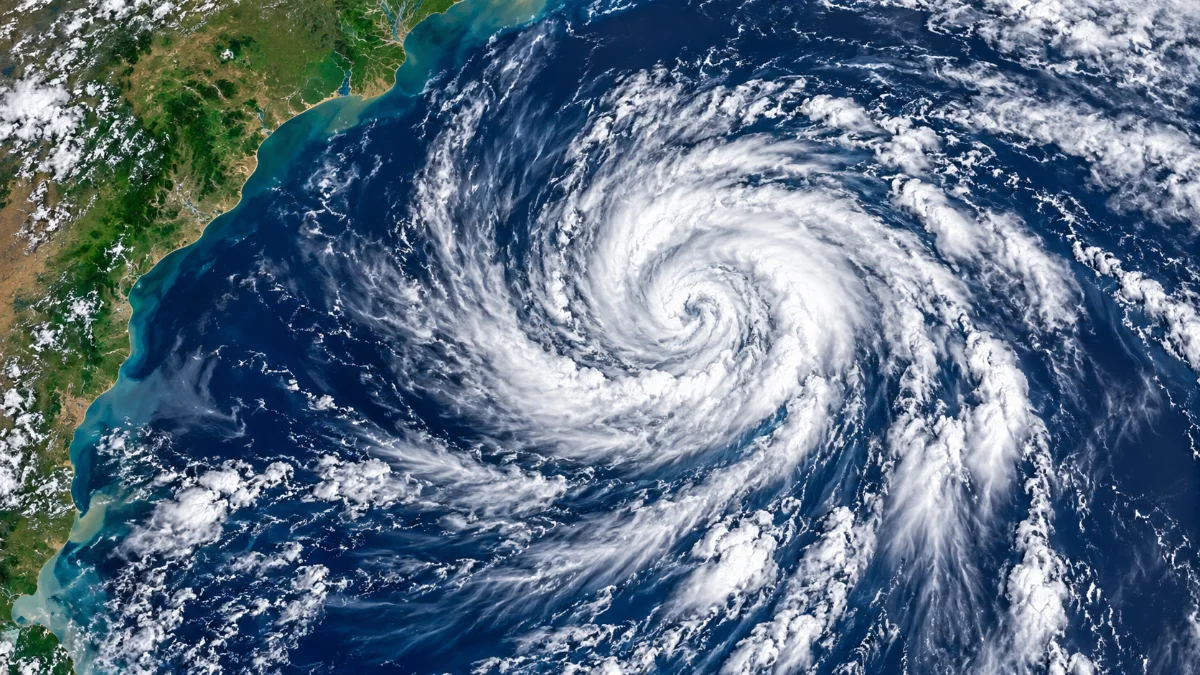
The India Meteorological Department said a low-pressure area formed at 5:30 am on Friday, 23 October 2026, over the east-central and adjoining south-east Bay of Bengal. It is forecast to become a depression on 24 October, a deep depression on 25 October and a cyclonic storm over the west-central Bay by the morning of 26 October, then move towards the north Andhra Pradesh and south Odisha coasts. Fishermen have been advised not to venture into the affected sea areas, and Odisha has begun preparations.
Background
The northeast monsoon, which set in over the south peninsula on 15 October, is the main rainy season for Tamil Nadu and neighbouring coasts, and October to December is the principal cyclone season in the Bay of Bengal. The present system developed under an upper-air cyclonic circulation that had moved from the Gulf of Thailand region into the Andaman Sea. IMD grades such systems by sustained wind speed: a depression has winds of about 31 to 49 km/h, a cyclonic storm about 62 to 88 km/h. Track and landfall projections vary between reports, so official bulletins remain the guide.
Key facts for Prelims
- IMD ladder of intensity: low-pressure area, depression, deep depression, cyclonic storm, severe cyclonic storm, very severe, extremely severe and super cyclonic storm.
- India Meteorological Department functions as the Regional Specialised Meteorological Centre (RSMC) for tropical cyclones over the North Indian Ocean, and names storms from the agreed list of the WMO/ESCAP Panel on Tropical Cyclones.
- Expected winds: 35 to 45 km/h gusting to 55 km/h on 23 October, rising to gale force of 70 to 80 km/h gusting to 90 km/h from 26 October over the west-central Bay (ETV Bharat citing IMD).
- Sea condition forecast: rough to very rough over the central and south-east Bay from 24 October; high to very high over the west-central Bay from 26 to 28 October.
- Advisory period for shipping, ports and offshore operators to review preparedness: 23 to 29 October.
- Cyclone-prone coasts: the east coast, especially Odisha and Andhra Pradesh, is more exposed than the west coast.
Mains analysis and way forward
Mains analysis
- Early warning and anticipatory action: lead time of three to five days lets States evacuate coastal populations; discuss how this has reduced cyclone mortality in recent decades.
- Why the Bay of Bengal is more cyclone-prone than the Arabian Sea: shallow, warm and low-salinity surface waters, funnel-shaped coast and the funnelling of storm surges.
- Compound hazards: heavy northeast monsoon rain over Tamil Nadu and a cyclone along the Andhra-Odisha coast stretch relief and logistics at the same time.
- Fishers and coastal communities remain the most exposed group; last-mile communication in regional languages and livelihood protection are central.
Way forward
- Pre-position NDRF and SDRF teams, shelters and power restoration crews along the projected track, and revise plans as bulletins update.
- Strengthen last-mile alerts, including cell broadcast and community radio, and ensure fishing boats return to harbour in time.
- Invest in resilient power, telecom and embankment infrastructure so that recovery is faster after landfall.
Connect the dots: GS I: cyclones, monsoon, ocean-atmosphere interactions. GS III: Disaster management, early warning, NDMA guidelines on cyclones.
Sources: Deccan Chronicle (PTI): Bay of Bengal low-pressure system likely to become cyclone by 26 October, 23 Oct 2026; ETV Bharat: Cyclone warning, low pressure over Bay of Bengal likely to intensify into cyclonic storm by 26 October, 23 Oct 2026; Kalinga TV: Low pressure forms over Bay of Bengal, 23 Oct 2026
Magnitude 7 earthquake in Nagqu, Tibet, kills at least 16 and collapses more than 300 homes
In short: A shallow magnitude 7 quake struck Nagqu in northern Tibet on 22 October night; it revives questions on Himalayan seismicity and India’s seismic zoning.
Why in news
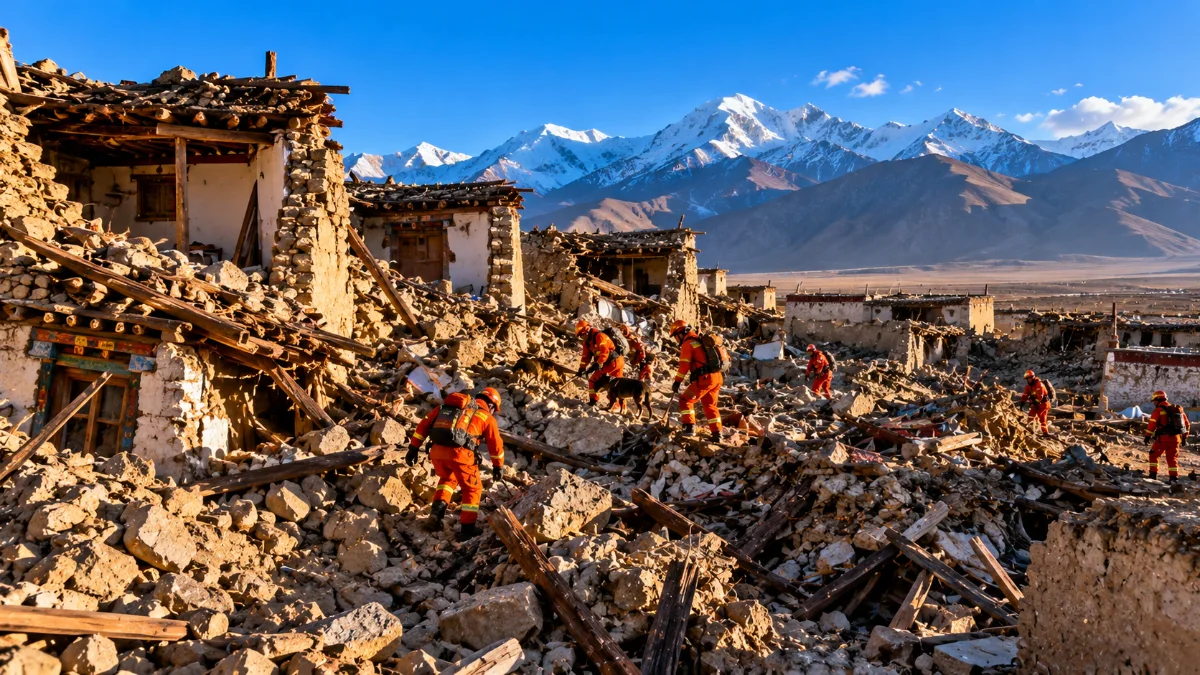
A magnitude 7 earthquake struck Nagqu in northern Tibet at about 10:33 pm China time on 22 October 2026 (about 8:03 pm IST), according to Xinhua as reported by ABC News and The Tribune. At least 16 people were killed, reports put the injured between about 54 and 65, and at least 339 homes collapsed, per the Nagqu media office. The quake was shallow, at about 10 km depth, and was described as the strongest to hit China since January 2024. The reports reviewed do not mention any impact in India.
Background
The epicentre lay in a sparsely populated, high-altitude county of Nagqu, about 400 km from Lhasa, where the average elevation is about 4,864 metres. The Tibetan plateau is prone to strong earthquakes because the Indian and Eurasian plates meet here; in January 2025 a magnitude 7.1 quake near Dingri in Tibet killed 126 people. On 23 October the regional disaster committee activated a Level III emergency response, President Xi Jinping ordered all-out search and rescue, and relief supplies included 1,000 prefabricated houses and over 3,200 tents. India’s own standard for earthquake-resistant design is IS 1893 (Part 1). A 2025 revision of this code, which added a new Zone VI covering the entire Himalayan belt and the Andaman and Nicobar Islands, was withdrawn by the Bureau of Indian Standards in 2026, and the 2016 zoning of Zones II to V applies. About 61 per cent of India’s land area is prone to moderate to strong shaking.
Key facts for Prelims
- Nagqu (Naqu) is a prefecture-level city in the Tibet Autonomous Region; the quake was shallow (about 10 km), which raises surface shaking.
- Tibetan plateau seismicity is driven by the collision of the Indian and Eurasian plates; the Himalayan belt is among the most seismically active zones of the world.
- Earthquake magnitude is measured on a logarithmic scale; intensity (damage at a place) is a separate measure.
- BIS seismic zoning under IS 1893:2016 has four zones, II to V, with Zone V the most severe; the 2025 revision with a new Zone VI was withdrawn.
- In January 2025, a magnitude 7.1 earthquake near Dingri, Tibet, killed 126 people.
Mains analysis and way forward
Mains analysis
- Explain why the Himalayan arc is highly vulnerable to earthquakes, linking plate tectonics to the recurrence of large events across the Tibetan plateau and the Himalaya.
- The withdrawal of the 2025 seismic code shows the tension between scientific hazard mapping and economic or regulatory concerns; discuss with reference to India’s building safety.
- Remote high-altitude regions pose special difficulties for search and rescue; examine what India can learn for hill States from such events.
- Assess the role of building codes, retrofitting and community drills in reducing earthquake losses in Indian Himalayan towns.
Way forward
- Enforce earthquake-resistant building codes through trained engineers and local bodies, and retrofit schools, hospitals and lifeline structures in the higher seismic zones.
- Strengthen early warning, seismic monitoring and regular mock drills with NDMA and State disaster management authorities, with special attention to high-altitude and border districts.
Connect the dots: Geography: plate tectonics, earthquakes, Himalayas. Disaster management: NDMA, building codes, community preparedness.
Sources: ABC News (Australia): Magnitude-7 earthquake hits China’s Tibet region, killing 16, 23 Oct 2026; The Tribune: Powerful earthquake in China’s Tibet kills 16, damages hundreds of houses; Outlook India: Tibet earthquake, 16 killed, 54 injured as 339 homes collapse in Nagqu; ETV Bharat: A bold policy reversed, the withdrawal of India’s 2025 seismic code; PBS NewsHour: Tibet earthquake kills at least 126 people (January 2025)
COP17 Yerevan: first global review of nature targets and the Cali Fund top the talks before the ministerial segment
In short: With no decisions adopted on day one, delegates at the biodiversity COP17 work through finance, review and protected-area texts ahead of ministers on 27 and 28 October.
Why in news
The 17th Conference of the Parties to the Convention on Biological Diversity opened formally in Yerevan on 19 October 2026 and runs to 30 October, with a ministerial high-level segment on 27 and 28 October. According to the Earth Negotiations Bulletin, no decisions were adopted on the first day; contact groups on resource mobilisation, the global review, protected areas and synthetic biology began work. Armenia’s Environment Minister Hambardzum Matevosyan presides, The Yerevan Declaration was adopted at the leaders’ summit on 16 October; the negotiations now focus on the Yerevan Pathway to speed up implementation of the Global Biodiversity Framework.
Background
COP17 is the halfway checkpoint for the Kunming-Montreal Global Biodiversity Framework, which has 23 targets for 2030. A UN report released on 15 October found that fewer than half of the assessed targets are on track. The framework seeks USD 200 billion a year from all sources by 2030, including USD 30 billion a year in international flows to developing countries; Greenpeace noted that the earlier goal of USD 20 billion a year by 2025 has not been met. The Cali Fund, which receives contributions from users of digital sequence information on genetic resources, remains nearly empty, and groups differ on whether contributions should stay voluntary. The Cartagena and Nagoya Protocol meetings are being held alongside.
Key facts for Prelims
- Convention on Biological Diversity: adopted at the 1992 Earth Summit in Rio de Janeiro; entered into force in 1993; India is a Party.
- Kunming-Montreal Global Biodiversity Framework (2022): 23 targets for 2030, including 30 by 30 (effective conservation of 30 per cent of land and sea) and restoration of at least 30 per cent of degraded ecosystems.
- Target 19: mobilise at least USD 200 billion per year by 2030 from all sources, including USD 30 billion per year of international finance to developing countries.
- Cartagena Protocol: biosafety and living modified organisms. Nagoya Protocol: access to genetic resources and fair sharing of benefits. Both are being met alongside COP17 (CP-MOP 12 and NP-MOP 6).
- Cali Fund: set up at COP16 (Cali, Colombia) to share benefits from digital sequence information on genetic resources.
- COP18 host: three Parties have offered, and consultations are under way (ENB).
Mains analysis and way forward
Mains analysis
- Finance is the fault line: developing countries want developed countries to meet commitments and a permanent financial mechanism, while donors seek wider contributions including from large emerging economies and private capital.
- Digital sequence information: the debate over voluntary versus predictable contributions to the Cali Fund tests the principle of equitable benefit sharing, an area where India’s Biological Diversity Act, 2002 offers a model.
- Review and accountability: the first global report on collective progress shows a gap between targets and delivery; national plans (NBSAPs) and monitoring indicators decide whether COP17 produces action.
- Indigenous peoples and local communities need recognition of rights and direct funding for community-led conservation, a theme echoed across observer groups.
Way forward
- Agree a clear roadmap for scaling finance, with transparent reporting and reform of harmful subsidies.
- Operationalise the Cali Fund with a predictable contribution formula and a share reaching local communities.
- Align national biodiversity plans with climate and land-use policies so that 30 by 30 means effective protection, not only lines on maps.
Connect the dots: GS III: Conservation, environmental pollution and degradation, biodiversity, international conventions. GS II: International institutions and agreements affecting India.
Sources: Earth Negotiations Bulletin: COP17 daily report, 19 Oct 2026 (published 20 Oct); Kuwait Times (AP): Nearly 200 nations kick off biodiversity summit in Yerevan, Oct 2026; Armenpress: What to expect at COP17 in Yerevan, key events and priorities, Oct 2026; Down To Earth: Yerevan Pathway, COP17 formally opens in Armenia, Oct 2026; Armenpress: Greenpeace priorities at COP17, 20 Oct 2026
Science and technology
Curtain-raiser: ESTIC 2026 from 27 October: ISRO to showcase heavy-lift rocket model and human spaceflight roadmap
In short: ISRO Chairman V Narayanan says the New Delhi conclave will pool scientific effort for Viksit Bharat 2047 and present a space-sector vision document.
Why in news
The Emerging Science, Technology and Innovation Conclave (ESTIC) 2026 will be held in New Delhi from 27 to 29 October 2026. Speaking in Bengaluru on 21 October, ISRO Chairman V Narayanan said the conclave will discuss integrating scientific effort towards a developed India by 2047. ISRO will exhibit a model of a planned heavy-lift rocket able to place more than 30,000 kg in low Earth orbit, and a vision document for the space sector will be presented.
Background
The conclave brings together research bodies, industry and government to discuss emerging technologies. Human spaceflight is a major theme: the Gaganyaan programme aims at an Indian crewed flight, and the Bharatiya Antariksh Station is the planned national space station. The exhibition will also feature the Chandrayaan-4 and 5 missions, and the Chairman said India’s crewed lunar ambition is to be met by 2040. Earlier this month ISRO completed crew module and service module separation tests for the uncrewed Gaganyaan G1 flight.
Key facts for Prelims
- ESTIC stands for Emerging Science, Technology and Innovation Conclave; 2026 edition: 27 to 29 October, New Delhi.
- Heavy-lift rocket planned by ISRO: capacity of more than 30,000 kg to low Earth orbit (model to be displayed).
- Gaganyaan: India’s human spaceflight programme; the uncrewed G1 mission precedes crewed flights.
- Bharatiya Antariksh Station: India’s planned space station, under the Department of Space.
- Low Earth orbit: roughly 160 to 2,000 km above Earth; used for Earth observation and crewed stations.
Mains analysis and way forward
Mains analysis
- Launch capacity is a strategic enabler: a heavier launcher lowers costs for space station modules, deep-space missions and larger communication satellites.
- Coordinating science, industry and the armed forces through forums such as ESTIC supports technology self-reliance and translation of research into products.
- Human spaceflight has spin-offs in life support, materials, medicine and robotics, but demands sustained funding and safety culture.
- The private space sector, through IN-SPACe, is widening participation; clear regulation and demand from public missions will decide its depth.
Way forward
- Publish clear timelines for the heavy-lift vehicle and station modules, with milestones that can be tracked.
- Deepen ISRO-industry-academia partnerships, including long-term procurement from Indian start-ups.
- Build a pipeline of space scientists and engineers through fellowships and shared testing facilities.
Connect the dots: GS III: Achievements of Indians in science and technology, space technology, indigenisation of technology. Linked to Gaganyaan and launch vehicle topics.
Art and culture
PM Modi at Chinmaya Mission 75th anniversary: calls for unity, self-reliance and a developed India by 2047
In short: Addressing the Chinmaya Amrit Mahotsav Global Sammelan, the PM linked a Vedanta-rooted mission’s 75 years with social cohesion and Viksit Bharat 2047.
Why in news
On 23 October 2026, Prime Minister Narendra Modi addressed the Chinmaya Amrit Mahotsav Global Sammelan at Bharat Mandapam, New Delhi. The three-day summit (23 to 25 October) marks 75 years of the Chinmaya Mission and is expected to draw about 9,000 participants. Mr Modi said “new distortions have emerged in society”, urged citizens to come together against divisive forces and spread awareness of self-reliance, and noted that more than 650 stolen ancient idols have returned to India over 12 years.
Background
The Chinmaya Mission was founded in 1951 by Swami Chinmayananda, who popularised the teachings of the Bhagavad Gita, Upanishads and Vedanta through the Gita Jnana Yajna. A commemorative coin was released in 2015 for his birth centenary. At the summit the PM praised the Mission’s youth wing, whose members travelled about 40,000 km over roughly 300 days and reached more than one lakh young people. He also said the National Education Policy brings together Indian knowledge traditions, mother-tongue education and modern science. The Mission’s centenary in 2047 coincides with 100 years of Indian independence.
Key facts for Prelims
- Chinmaya Mission: founded 1951 by Swami Chinmayananda; the 75th anniversary summit is held at Bharat Mandapam, New Delhi, 23 to 25 October 2026.
- Gita Jnana Yajna: discourse-based method used to spread the teachings of the Gita, Upanishads and Vedanta.
- Vedanta: philosophical school drawing on the Upanishads, Brahma Sutras and the Bhagavad Gita (Prasthanatrayi).
- More than 650 stolen ancient idols have been returned to India over 12 years, according to the PM.
- National Education Policy 2020 emphasises Indian knowledge systems and mother-tongue instruction.
Mains analysis and way forward
Mains analysis
- Spiritual and cultural organisations have long run schools, relief work and youth programmes; assess their role in social cohesion and nation-building.
- Discuss how civil society can support the goal of Viksit Bharat 2047 while respecting India’s plural traditions.
- Repatriation of antiquities is part of cultural diplomacy and heritage protection; evaluate its significance.
Way forward
- Encourage partnerships between civil society, schools and local bodies for values education, youth service and heritage awareness.
- Strengthen provenance research and international cooperation so that repatriated antiquities are documented and displayed responsibly.
Connect the dots: Culture: Vedanta, Bhakti and reform movements, modern spiritual missions. Polity: civil society, NEP 2020.
Sources: The Statesman: PM Modi warns of new distortions in society, calls for united fight against divisive forces, 23 Oct 2026; Free Press Journal (ANI): PM Modi at Chinmaya Amrit Mahotsav, 23 Oct 2026; AIR News: listing of 23 Oct 2026 national items
In brief
- Rs 200 coin for Mata Sahib Hasi Devi: On 22 October 2026 at Raipur, President Murmu released a Rs 200 commemorative coin marking the 200th birth anniversary of Mata Sahib Hasi Devi, the fifth spiritual head of Shadani Darbar.
- Delhi HC upholds cash for school uniforms: Reported on 23 October 2026: the Delhi High Court dismissed a review plea and held that the Delhi Government’s policy of financial assistance instead of supplying uniforms to EWS students under the RTE Act is not arbitrary.
- Sheetal Devi and Toman Kumar win para archery gold: On 22 October 2026 at the Asian Para Games, India won the compound mixed team archery gold, beating Indonesia 151-148 in the final.
- Curtain-raiser: UN Day, 24 October: The United Nations officially came into existence on 24 October 1945, when the Charter entered into force after ratification by a majority of signatories including the five permanent members of the Security Council; the day is observed as UN Day.
- Army honours UN peacekeepers: At the Army Commanders’ Conference on 23 October 2026, the Defence Minister felicitated three Indian Army personnel for service in United Nations peacekeeping missions.
- Berlin: Goyal and Reiche on cooperation: On 23 October 2026, Commerce Minister Goyal and German Economy Minister Katherina Reiche discussed cooperation in AI, semiconductors, critical minerals, green hydrogen and energy storage.
- Background: COP18 host consultations: The Earth Negotiations Bulletin reported that three Parties have offered to host COP18 of the Convention on Biological Diversity, with consultations under way after the opening day of COP17 on 19 October 2026.
- 12th BRICS Parliamentary Forum, New Delhi, 26 and 27 October: Lok Sabha Speaker Om Birla announced on 22 October 2026 that India will host the forum at the Central Hall of Samvidhan Sadan; the theme is strengthening parliaments for people-centric development, and the Prime Minister is to meet the visiting Speakers after the inaugural session.
Prelims practice: 5 questions
Choose an option to see the answer and explanation. Your score appears when all five are answered.
Mains practice
Traditional tribal institutions such as the Majhi and Pargana systems continue to resolve disputes in Scheduled Areas. Discuss how such customary institutions can be strengthened within the framework of the Fifth Schedule and PESA, 1996, without compromising constitutional rights.
Show the answer outline
Introduction (about 25 words)
- Begin with the President’s remarks at the Muria Darbar, Jagdalpur, on 23 October 2026 on Majhi and Pargana systems settling disputes without long legal processes.
Strengths of customary institutions
- Accessible, low-cost and quick justice in the community’s own language and idiom.
- Legitimacy rooted in tradition, which helps compliance and social harmony.
- Recognition in PESA, 1996, which empowers the Gram Sabha to safeguard customary modes of dispute resolution.
Concerns
- Unequal voice for women and younger members in some traditional bodies.
- Possible conflict with fundamental rights and statutory law.
- Weak record-keeping and appeal mechanisms.
Strengthening within the constitutional framework
- Frame and implement State PESA rules that define the role of customary bodies alongside Gram Sabhas.
- Ensure representation of women and a route of appeal to formal courts.
- Use Governors’ powers under the Fifth Schedule and Tribes Advisory Councils to monitor outcomes.
Conclusion (about 25 words)
- Customary institutions can complement constitutional justice when they are inclusive and accountable, keeping tradition and rights in step.
Tip: Show balance: value of tradition, limits on rights, and practical steps through PESA and the Fifth Schedule.
Current Canvas is prepared by the UPSC Gurus editorial desk. Every fact is checked against official releases and reliable reporting, with sources listed under each story. Editions are compiled each month into Current Canvas Monthly, a free magazine.
About images: photographs and illustrations in Current Canvas are AI-generated for illustration only. They are not news photographs of the events described.