
 New this week · Free UG Handout 02UPSC Mains Directive Words: 60 Meanings, Trends and PYQsTwo free PDFs: The Guide and the With PYQs edition.Read and download
Today’s Canvas
- NCSK data: 31 sewer and septic tank deaths in 2026 so far; compensation fully paid in only nine casesGS II
- Jaishankar and Rubio hold talks in Mumbai; Rubio calls India-US trade deal “as close as you can be” without signingGS II
- Rajnath Singh at SCO heads of government meet: ecosystem of terrorism must be collectively dismantled, no double standardsGS II
- Iran’s IRGC says its mines halted two tankers in Strait of Hormuz; claim not independently verifiedGS II
- India-New Zealand FTA enters into force on 20 October 2026 with duty-free access for all Indian exportsGS II
- MNRE Secretary: India could add over 5 GW of agrivoltaic capacity in 3 to 4 yearsGS III
- RBI SAMVAD 2026: central banks discuss financial stability, AI risks and payments in New DelhiGS III
- CPI(M) asks President to seek withdrawal of Census (Amendment) Rules, 2026 on enumerator eligibilityGS II
- Delhi SIR: only 1,238 of about 4.5 lakh Form 6 applications processed; High Court leaves open the Form 6 versus Form 8 questionGS II
- MeitY asks Meta to ensure recommendation systems do not expose users to a limited set of narrativesGS II
- Police Commemoration Day, 21 October: remembering the ten policemen killed at Hot Springs, Ladakh, in 1959GS III
- Japan launches MMX probe to bring back first samples from Mars’s moon PhobosGS III
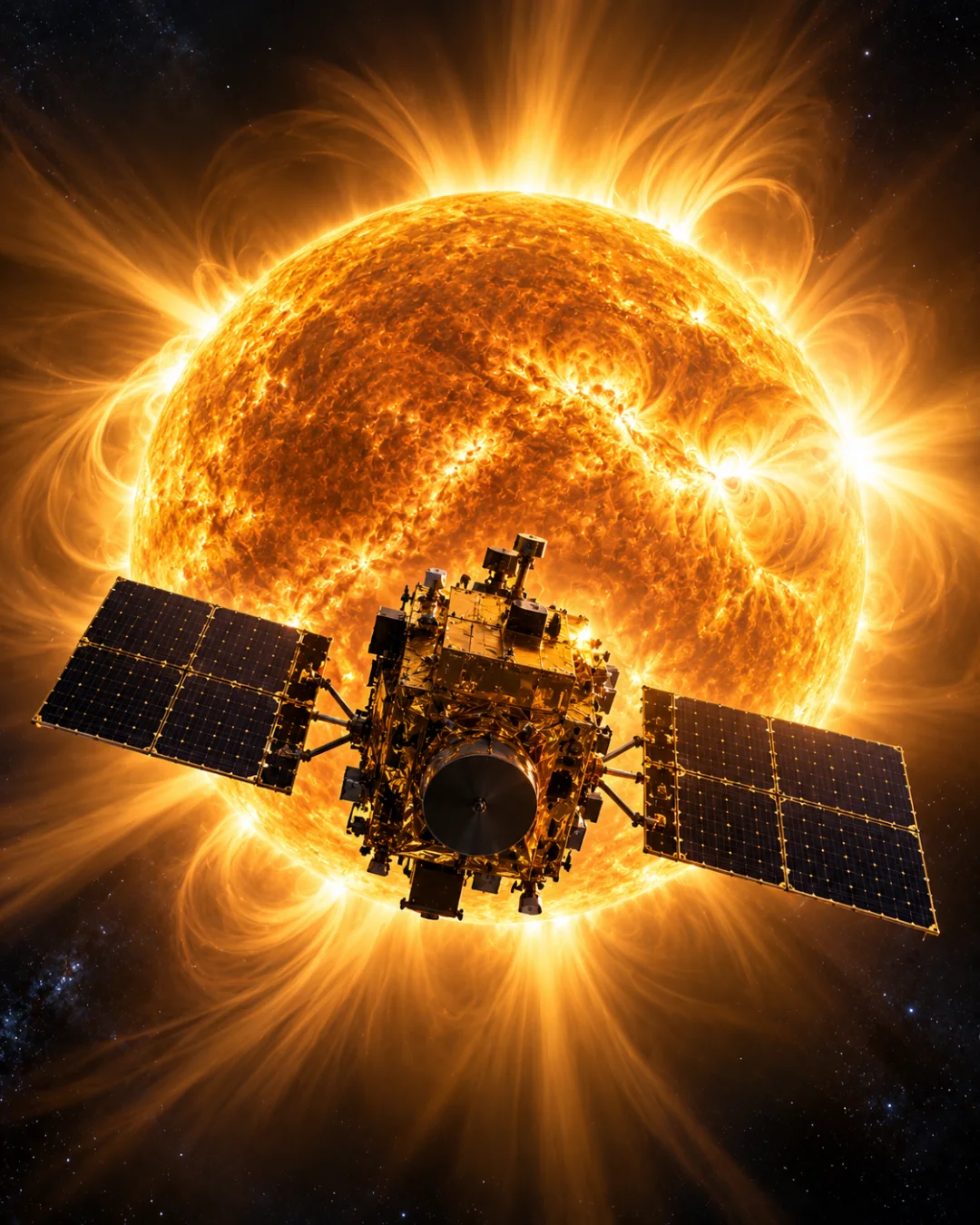
- Aditya-L1 VELC generates Doppler velocity images of the solar coronaGS III
- Indian scientists identify Mars-like geological sites in Tamil Nadu, compared with Chile’s Atacama DesertGS III
- Stanford study: bleached corals recover within seven weeks after touching healthy clones in laboratoryGS III
- NCSK data record 31 sewer and septic tank deaths in 2026 so far, with compensation fully paid in only nine cases.
- Ahead of talks with Jaishankar in Mumbai on 20 October, Rubio said the India-US trade deal was very close; no agreement was signed.
- At the SCO heads of government meeting in Dushanbe, Rajnath Singh said the ecosystem of terrorism must be collectively dismantled.
- The India-New Zealand FTA came into force on 20 October 2026, with duty-free access for all Indian exports.
- MNRE says India’s agrivoltaic capacity could exceed 5 GW in three to four years.
- Police Commemoration Day on 21 October remembers the ten policemen killed at Hot Springs, Ladakh, in 1959.
- Japan launched the MMX probe on 20 October to bring back the first samples from Mars’s moon Phobos.
- Scientists generated Doppler velocity images of the solar corona using the VELC payload on Aditya-L1.
Social justice
NCSK data: 31 sewer and septic tank deaths in 2026 so far; compensation fully paid in only nine cases
In short: National Commission for Safai Karamcharis data reported on 20 October 2026 show 31 hazardous-cleaning deaths this year, with compensation fully paid in nine, which points to a delivery gap.

Why in news
Data of the National Commission for Safai Karamcharis (NCSK), reported on 20 October 2026, record 31 deaths during sewer and septic tank cleaning in 2026 so far, with compensation fully paid in 9 cases. Haryana (8), Maharashtra (6) and Delhi (6) report the most deaths this year. For 2016 to 2026 the NCSK lists 773 deaths and full compensation in 677 cases. The Commission says its figures are dynamic and may be revised, and that it has no statutory mandate to maintain a comprehensive database of such deaths.
Background
The Prohibition of Employment as Manual Scavengers and their Rehabilitation Act, 2013 bans manual scavenging and the hazardous cleaning of sewers and septic tanks without protective equipment. The Government told the Lok Sabha, citing NCSK data, that 498 workers died during sewer and septic tank cleaning between 1 January 2019 and 30 June 2026, while reporting no deaths from manual scavenging, which it classifies separately. Following a Supreme Court judgment in October 2023, compensation for such deaths rose from Rs 10 lakh to Rs 30 lakh. Of the 498 cases, one report counts 345 as paid the full Rs 10 lakh, 75 the full Rs 30 lakh, 22 partly paid and 56 unconfirmed. The NAMASTE scheme, launched in July 2023, has validated 89,915 sewer and septic tank workers for safety training, protective equipment and health insurance. The Supreme Court has also issued notices to the Chief Secretaries of five States on why contempt action should not follow, given deaths despite its 2023 directions.
Key facts for Prelims
- Prohibition of Employment as Manual Scavengers and their Rehabilitation Act, 2013: bans manual scavenging and hazardous manual cleaning of sewers and septic tanks.
- National Commission for Safai Karamcharis (NCSK): the body whose data record these deaths; it states it has no statutory mandate to maintain a comprehensive database of them.
- NAMASTE scheme (launched July 2023): safety training, protective equipment, health insurance and capital subsidy for sanitation machinery; 89,915 workers validated.
- Supreme Court, October 2023: compensation for sewer and septic tank deaths raised from Rs 10 lakh to Rs 30 lakh.
- The Government classifies deaths in sewers and septic tanks under hazardous cleaning, separate from manual scavenging as defined in the 2013 Act.
Mains analysis and way forward
Mains analysis
- The gap between deaths recorded and compensation paid shows that a legal entitlement does not translate into relief unless an accountable authority is responsible for each claim.
- The distinction between manual scavenging and hazardous cleaning shapes official counts; the practical risk to workers is similar, so policy should focus on outcomes for workers.
- The deaths fall on workers from marginalised communities, which links the issue to Articles 17, 21 and the idea of dignity of labour.
- Mechanisation, contractor accountability and a single reliable database are needed, since the NCSK itself notes the limits of its data.
Way forward
- Fix responsibility on the local body or contractor that engaged the worker, with time-bound payment of compensation and public tracking of each case.
- Make mechanisation and protective equipment a condition of sanitation contracts, and provide a statutory database and a dedicated portal for such deaths.
- Pair NAMASTE with alternative livelihoods and skilling so that workers can move to safer work.
Connect the dots: GS II: Welfare schemes for vulnerable sections, statutory bodies; GS I: Social empowerment; GS IV: Human dignity.
Sources: Free Press Journal: 31 sewer and septic tank cleaning deaths reported in 2026, compensation fully paid in only 9 cases, NCSK data, 20 October 2026; Business Standard: Sanitation workers, sewer and septic tank cleaning deaths since 2019, 5 August 2026; Outlook India: India’s sewer death crisis, why fatalities do not count as manual scavenging, 5 August 2026
International relations
Jaishankar and Rubio hold talks in Mumbai; Rubio calls India-US trade deal “as close as you can be” without signing
In short: Ahead of his talks with Jaishankar in Mumbai on 20 October, Rubio said the trade deal was very close, with only a few issues left; no agreement was signed.

Why in news
US Secretary of State Marco Rubio and External Affairs Minister S Jaishankar held talks in Mumbai on 20 October 2026, at the Taj Mahal Palace Hotel. Ahead of the meeting, Rubio said, “We’re very, very close. I would say we’re about as close as you can be without having executed the agreement”, and put the timeline at “a matter of weeks, not months”. Jaishankar said the two sides discussed trade, energy, technology, defence and regional developments. No agreement was signed during the visit.
Background
Washington imposed tariffs of up to 50 per cent on most Indian goods in August 2025; a February 2026 framework cut the rate to 18 per cent, but negotiations later stalled, and Finance Minister Nirmala Sitharaman said earlier this month they had “plateaued”. Commerce Minister Piyush Goyal has said the first tranche of a deal is in its final stages. On oil, Rubio said India had made “substantial progress” in diversifying supplies but that the change takes time; reports cite Kpler data showing India’s Russian crude imports fell about 29 per cent between July and September. Rubio also said Reliance’s Jamnagar complex could refine more Venezuelan heavy crude, while noting that US sanctions could be an obstacle. A State Department readout, as reported, said Rubio welcomed progress in bilateral defence and civil nuclear cooperation and urged India to consider more American technology and defence systems.
Key facts for Prelims
- Tariff trajectory: up to 50 per cent (August 2025), then an 18 per cent framework (February 2026), as reported by AP and PTI
- Jamnagar (Gujarat): Reliance Industries refinery complex; Rubio’s visit and business meetings there were scheduled for 21 October
- Venezuela produces heavy crude, which needs refineries configured for complex processing
- Comprehensive Global Strategic Partnership: the label India and the US use for their relationship
- No trade agreement was signed on 20 October; the talks covered trade, energy, technology and defence
Mains analysis and way forward
Mains analysis
- Energy diversification is being linked to trade diplomacy: India is balancing affordable supplies, including Russian crude, against US expectations and sanctions exposure.
- A first-tranche trade deal would reduce tariff uncertainty for exporters, but the final tariff rate relative to competitors such as Vietnam remains the key variable for India.
- Defence, civil nuclear and technology cooperation give the relationship depth beyond trade, which helps to absorb differences on individual issues.
Way forward
- Keep a diversified energy basket with long-term contracts, strategic reserves and domestic capacity, so that no single supplier or sanctions regime dictates choices.
- Conclude the first tranche on terms that protect sensitive sectors, and treat technology and defence as separate, mutually reinforcing tracks.
Connect the dots: GS II: India and its bilateral relations; effect of policies of developed countries on India. GS III: energy security; trade policy.
Sources: AP via Arab News: Rubio and India’s foreign minister hold talks in Mumbai as both sides aim to finalize a trade deal, 20 Oct 2026; AP via ABC News: Rubio and Jaishankar hold talks in Mumbai as US and India aim to finalize trade deal, 20 Oct 2026; The Wire: Rubio pushes US energy sales to India, says trade deal is close during India visit
Rajnath Singh at SCO heads of government meet: ecosystem of terrorism must be collectively dismantled, no double standards
In short: At the 25th SCO Council of Heads of Government in Dushanbe on 20 October, India urged collective action against terror networks and backed a 2026-2030 trade action plan.

Why in news
Defence Minister Rajnath Singh represented India at the 25th meeting of the Shanghai Cooperation Organisation (SCO) Council of Heads of Government in Dushanbe, Tajikistan, on Tuesday, 20 October 2026. He said the “ecosystem of terrorism” must be firmly and collectively dismantled, that terrorism cannot be justified, and that there can be no double standards. Pakistan’s Deputy Prime Minister and Foreign Minister Ishaq Dar attended the meeting.
Background
The SCO, founded in 2001, has ten members including India (member since 2017), China, Russia, Pakistan and Iran. Its Council of Heads of State is the top body, while the Council of Heads of Government (prime ministers) meets annually and focuses on trade, economic and budgetary matters. The Regional Anti-Terrorist Structure (RATS), based in Tashkent, is the permanent SCO body for security cooperation against terrorism, separatism and extremism. At the meeting, Singh also backed the 2026-2030 Action Plan of the Programme for Multilateral Trade and Economic Cooperation, welcomed the decisions to establish the Universal Centre in Tashkent and the Anti-Drug Centre in Dushanbe as permanent SCO bodies, and said connectivity projects must respect the sovereignty and territorial integrity of all countries.
Key facts for Prelims
- SCO: permanent intergovernmental organisation founded in 2001; Secretariat in Beijing; RATS in Tashkent
- Council of Heads of State (top decision-making body) versus Council of Heads of Government (economic and budgetary matters); the 25th CHG meeting was held in Dushanbe on 20 October 2026
- India became a full SCO member in 2017, along with Pakistan
- RATS: Regional Anti-Terrorist Structure, headquartered in Tashkent, Uzbekistan
- Connectivity projects cited by Singh: International North-South Transport Corridor and Chabahar Port
- Dushanbe is the capital of Tajikistan and the designated seat of the SCO Anti-Drug Centre
Mains analysis and way forward
Mains analysis
- Terrorism is a point of convergence and friction within the SCO: members share the concern, but differing definitions and political positions make consensus language hard to agree.
- India uses the platform to link security with development, arguing that terrorism deters investment, trade and opportunities for the youth.
- India’s emphasis on sovereignty and territorial integrity in connectivity projects reflects its distinct position within a grouping where Chinese initiatives carry weight.
Way forward
- Continue to press for agreed definitions, terror-financing curbs and information-sharing through RATS, while using economic tracks to keep engagement constructive.
- Advance connectivity through corridors that India can shape, such as INSTC and Chabahar, alongside bilateral outreach to Central Asian members.
Connect the dots: GS II: groupings and agreements involving India; India and its neighbourhood. GS III: linkages of organised crime with terrorism; internal security.
Sources: Daily Excelsior: Ecosystem of terrorism must be firmly and collectively dismantled, Rajnath Singh at SCO meet, 20 Oct 2026; Newstrack: No double standards on terrorism, Rajnath Singh at SCO in Ishaq Dar’s presence; The Hindu: Ecosystem of terrorism must be firmly and collectively dismantled, Rajnath Singh at SCO meet, 20 Oct 2026
Iran’s IRGC says its mines halted two tankers in Strait of Hormuz; claim not independently verified
In short: The Revolutionary Guards said on 20 October that mines set ablaze and stopped two tankers at an “illegal crossing point”; no independent confirmation was reported.
Why in news
Iran’s Islamic Revolutionary Guard Corps (IRGC) said on Tuesday, 20 October 2026, in a statement on its Sepah News website, that naval mines planted by its Navy “set ablaze and halted” two tankers trying to cross the Strait of Hormuz at an “illegal crossing point” in the southern part of the strait. AFP reported that no tanker names, flags or owners were given and that the claim was not independently verified. Arab News reported that the IRGC separately said a third tanker, carrying over two million barrels of crude, exploded after hitting a mine south of the strait.
Background
The Arab News report places the incidents in a war that began on 28 February 2026, when the US and Israel attacked Iran. Iran has tried to blockade the strait and requires ships to obtain its authorisation to cross, while the US has imposed a counter-blockade on Iranian ports and ships. In peacetime the strait carried about one-fifth of the world’s oil supplies. The report adds that attacks on ships have risen as Washington seeks to escort more vessels, and that Iran’s armed forces chief of staff, Ali Abdollahi, said on 20 October that Iran would counter expensive US equipment with cheap but effective weapons. No US response to the 20 October claim was reported.
Key facts for Prelims
- Strait of Hormuz: narrow waterway between Iran and Oman connecting the Persian Gulf to the Gulf of Oman and the Arabian Sea
- In peacetime about one-fifth of the world’s oil supplies passed through the strait (Arab News)
- IRGC: Iran’s Islamic Revolutionary Guard Corps, with its own Navy; its statements are published through Sepah News
- The IRGC claim of 20 October was not independently verified and no names of the tankers were given
- UNCLOS (1982) provides for transit passage through straits used for international navigation
Mains analysis and way forward
Mains analysis
- A chokepoint carrying about a fifth of world oil makes any disruption a global energy-security issue, with direct effects on import-dependent economies such as India.
- Mines and counter-blockades shift risk onto commercial shipping, raising insurance and freight costs even when few ships are hit.
- Unverified claims from parties to a conflict need caution; reliable maritime-security reporting depends on neutral and multilateral monitoring.
Way forward
- Support diplomacy and de-escalation that restore freedom of navigation under international law, while continuing naval presence to protect Indian-flagged vessels and seafarers.
- Reduce exposure through diversified crude and gas sources, strategic petroleum reserves and routes that bypass the strait.
Connect the dots: GS II: West Asia and India; international groupings. GS III: energy security; maritime security. Static: UNCLOS and straits used for international navigation.
Sources: AFP via Al Arabiya: Iran’s IRGC says mines halted two tankers crossing Strait of Hormuz, 20 Oct 2026; Arab News: Iran Guards say three tankers hit mines crossing Hormuz strait, 20 Oct 2026
Economy
India-New Zealand FTA enters into force on 20 October 2026 with duty-free access for all Indian exports
In short: The India-New Zealand free trade agreement, signed on 27 April 2026, took effect on 20 October 2026, giving 100 per cent of Indian exports duty-free access to New Zealand.

Why in news
The India-New Zealand Free Trade Agreement came into force on 20 October 2026, after both sides completed internal procedures; Commerce and Industry Minister Piyush Goyal had announced the date on 21 September. The agreement was signed in New Delhi on 27 April 2026, after about nine months of negotiations. All Indian exports to New Zealand, across all tariff lines, get duty-free access, whereas some products earlier faced New Zealand tariffs of up to 10 per cent. New Zealand has committed to facilitate USD 20 billion of investment into India over 15 years.
Background
Goyal said the goal is to double bilateral trade in goods and services to about Rs 35,000 crore in four to five years. Bilateral merchandise trade was about USD 1.3 billion in 2024-25, and Indian merchandise exports rose 32 per cent to USD 711 million. Indian gains are expected in textiles and apparel, leather and footwear, engineering goods, pharmaceuticals, agriculture and processed foods, while New Zealand gains better access for wood, wool, sheep meat and raw hides. A Temporary Employment Entry pathway provides a quota of 5,000 visas at any one time for qualified Indian workers in sectors such as IT, engineering, construction, education and healthcare. India has kept several farm products out of tariff concessions, namely onions, chana, peas, corn, almonds and vegetable or microbial fats and oils, and manages apples and kiwifruit through tariff rate quotas, minimum import prices and seasonal import windows. A bilateral safeguard mechanism remains available for 14 years after duties on a product are eliminated or reduced. The reports consulted do not state how dairy is treated.
Key facts for Prelims
- The agreement was signed on 27 April 2026 and entered into force on 20 October 2026.
- India gets duty-free access for 100 per cent of its exports to New Zealand across all tariff lines.
- New Zealand has committed to facilitate USD 20 billion of investment into India over 15 years.
- Temporary Employment Entry pathway: a quota of 5,000 visas at any one time for qualified Indian workers.
- Sensitive Indian farm products excluded from concessions include onions, chana, peas, corn, almonds and vegetable or microbial fats and oils.
- A bilateral safeguard mechanism is available for 14 years after duties on a product are eliminated or reduced.
Mains analysis and way forward
Mains analysis
- Duty-free access for labour-intensive goods such as textiles, leather and gems supports employment, but New Zealand is a small market, so the larger gains lie in services, mobility and investment.
- Protection for farm products and tariff rate quotas for apples and kiwifruit show the balance between market access and the interests of Indian farmers.
- FTAs are being used to diversify trade partners at a time of global uncertainty, but utilisation depends on exporters meeting rules of origin and standards.
Way forward
- Run outreach for MSME exporters on rules of origin, certification and the use of the new tariff preferences.
- Monitor import surges in sensitive products through the safeguard mechanism and publish periodic utilisation data.
Connect the dots: GS II: Bilateral groupings and agreements; GS III: External sector, trade policy, effects of liberalisation.
Sources: Maritime Gateway: India-New Zealand FTA kicks in from October 20 with duty-free access for all Indian exports; FreshPlaza: India-New Zealand FTA sets import quotas for apples and kiwifruit; AIR News: India-New Zealand Free Trade Agreement finalised, comes into force on Oct 20, Piyush Goyal, 21 September 2026
MNRE Secretary: India could add over 5 GW of agrivoltaic capacity in 3 to 4 years
In short: MNRE Secretary Santosh Kumar Sarangi said on 19 October 2026 that agrivoltaic capacity should be upwards of 5 GW in 3 to 4 years, depending on State feed-in tariffs.
Why in news
Speaking at a press conference in New Delhi on 19 October 2026, ahead of the Agrivoltaics World Conference 2026 (21 to 23 October), Ministry of New and Renewable Energy (MNRE) Secretary Santosh Kumar Sarangi said agrivoltaic capacity “should be upwards of 5 gigawatts over the next 3 to 4 years”. He estimated the theoretical potential at 1 to 2 terawatts but said it is too early to project deployment at that scale. Deployment depends on States notifying a feed-in tariff and creating conditions for investment.
Background
Agrivoltaics combines solar generation with crop cultivation on the same land. Sarangi said 85 per cent of current solar deployment is confined to five States, and that agrivoltaics could extend solar to States with less non-agricultural land, naming Madhya Pradesh, Odisha, Chhattisgarh, West Bengal and Uttar Pradesh. A report of 20 October says agrivoltaic projects cost roughly 25 to 30 per cent more than conventional ground-mounted solar because of elevated structures, with tariffs of Rs 3.20 to 3.30 per kWh against Rs 2.80 to 3.00 for decentralised solar under PM-KUSUM. MNRE is considering financial support and has not decided whether it will come under PM-KUSUM or a separate scheme; trials with the Indian Agricultural Research Institute showed encouraging results for fruits and leafy vegetables but not for rice or sugarcane. In March 2026, Union Minister Pralhad Joshi said PM-KUSUM 2.0 would include a dedicated 10 GW agri-PV component.
Key facts for Prelims
- Agrivoltaics: co-locating solar panels with crops on the same land.
- MNRE Secretary: more than 5 GW of agrivoltaic capacity expected in 3 to 4 years; theoretical potential 1 to 2 TW.
- About 85 per cent of India’s current solar deployment is in five States.
- Agrivoltaic projects cost about 25 to 30 per cent more than conventional ground-mounted plants.
- PM-KUSUM (Pradhan Mantri Kisan Urja Suraksha evam Utthan Mahabhiyan) supports solar pumps and decentralised solar for farmers.
- Agrivoltaics World Conference 2026: 21 to 23 October, New Delhi.
Mains analysis and way forward
Mains analysis
- Agrivoltaics addresses the land constraint that slows large solar projects by letting farmers earn from both power and crops.
- Higher costs and crop suitability mean that targeted incentives and state-level tariffs are needed; results from trials show it will not suit every crop.
- It can spread renewable capacity beyond the five leading States and add to farm income, which links energy transition with rural livelihoods.
Way forward
- Notify State feed-in tariffs and a clear central support scheme, with discoms engaged on power purchase.
- Expand field trials across agro-climatic zones and crops before large-scale rollout.
Connect the dots: GS III: Renewable energy, infrastructure, farm income; GS III: Land use and agriculture.
Sources: ANI: India could add over 5 GW of agrivoltaic capacity in 3-4 years, MNRE Secretary, 19 October 2026; TaiyangNews: India weighs agrivoltaics incentives, eyes 5 GW in 4 years, 20 October 2026; Energetica India: Govt to launch PM-KUSUM 2.0 with 10 GW agri-PV component, MNRE Minister, March 2026
RBI SAMVAD 2026: central banks discuss financial stability, AI risks and payments in New Delhi
In short: The RBI’s two-day international seminar for central banks, held on 19 and 20 October 2026, flagged AI-linked vulnerabilities and called financial stability a policy goal in itself.
Why in news
The Reserve Bank of India held SAMVAD 2026, a two-day international seminar for central banks, in New Delhi on 19 and 20 October 2026. Governor Sanjay Malhotra gave the welcome address and Finance Minister Nirmala Sitharaman the keynote. Deputy Governor Poonam Gupta said financial stability is now a policy objective in its own right, with focus shifting from individual institutions to the whole system, including non-banks. Anuradha Thakur, Secretary, Department of Economic Affairs, said India faces the global scenario “from a position of macroeconomic stability”.
Background
Topics included monetary policy, artificial intelligence in finance, financial inclusion, financial stability and payment systems. Former RBI Governor Shaktikanta Das warned of vulnerabilities linked to AI, including untested valuations and uncertain profitability, and said prolonged conflicts and fragmentation are tightening financial conditions and raising sovereign debt stress. Panellists said crises are now coming faster and with greater intensity, and pointed to climate change, non-bank intermediaries, fintechs, gaps in data sharing and AI agents as risks. Chief Economic Adviser V Anantha Nageswaran said wider access to financial services can itself support income growth. On payments, speakers stressed access, affordability, security, interoperability and common cross-border standards.
Key facts for Prelims
- SAMVAD 2026: RBI international seminar for central banks, New Delhi, 19 and 20 October 2026.
- RBI Deputy Governor Poonam Gupta: financial stability is a policy objective in its own right.
- Financial stability now covers non-bank financial intermediaries, not only banks.
- India follows flexible inflation targeting, anchored by the RBI Act amendment of 2016.
- Payments themes: access, affordability, security, speed, convenience and interoperability.
Mains analysis and way forward
Mains analysis
- Because AI, fintech and non-bank lenders connect markets across borders, supervision has to move from institution-level to system-wide monitoring.
- Geopolitical fragmentation and sovereign debt stress make buffers and credible fiscal and monetary frameworks important for emerging economies.
- In financial inclusion, the policy emphasis is shifting from opening accounts to effective use and resilience of households.
Way forward
- Strengthen data sharing among regulators and monitor AI use in credit, trading and risk models.
- Pursue common cross-border payment standards, with safeguards against financial crime.
Connect the dots: GS III: Banking, monetary policy, financial inclusion, technology in finance.
Sources: The Hans India (IANS): RBI’s Samvad 2026 kicks off, 19 October 2026; The Tribune (ANI): AI, geopolitical tensions pose growing risks to financial stability, experts at RBI SAMVAD 2026, 20 October 2026; The Hans India (IANS): India’s economy resilient despite global uncertainties, top official, 20 October 2026
Polity and governance
CPI(M) asks President to seek withdrawal of Census (Amendment) Rules, 2026 on enumerator eligibility
In short: The Home Ministry widened the list of persons who can be census enumerators on 16 October 2026; CPI(M) has asked the President to intervene, citing impartiality and privacy.
Why in news
The Ministry of Home Affairs notified the Census (Amendment) Rules, 2026 on 16 October 2026 under the Census Act, 1948. They add teachers of government, aided and unaided private institutions, clerks and officials of governments, public sector undertakings, statutory bodies, banks and companies, and any other suitable person considered by a State or Union Territory. On 20 October 2026, CPI(M) general secretary M A Baby wrote to President Droupadi Murmu seeking withdrawal of the amendments. The party says that wide discretion without clear criteria could allow arbitrary appointments, and that data privacy concerns arise from the questionnaire. The report mentions no Government response.
Background
The Census is conducted under the Census Act, 1948 and the Census Rules, 1990. Census 2027 is the first since 2011, and the questionnaire for its second phase was notified on 14 August 2026. CPI(M) says it seeks details such as parents’ religion, bank account, Aadhaar and other identity documents, passport information and mobile numbers. The party had earlier, on 24 August 2026, submitted a memorandum to the Registrar General and Census Commissioner asking for safeguards against linking census data with other databases. The Government has not responded in the reports seen, and these are the party’s views, not findings.
Key facts for Prelims
- Census Act, 1948 and Census Rules, 1990 govern the conduct of the Census; the Census (Amendment) Rules, 2026 were notified on 16 October 2026.
- Enumerators now include teachers of aided and unaided private institutions, and clerks and officials of banks, companies, trusts and statutory bodies.
- State governments and Union Territory administrations may appoint any person they consider suitable.
- The Census falls in the Union List (Entry 69, Seventh Schedule).
- The questionnaire for the second phase of Census 2027 was notified on 14 August 2026.
Mains analysis and way forward
Mains analysis
- A wider enumerator pool helps deliver a very large exercise on time, but selection criteria, training and accountability determine the quality of data.
- Confidentiality is vital for public trust; the Census Act has provisions on secrecy of records, so the debate is about safeguards in design and use of data.
- Concerns about citizenship, delimitation and entitlements show that census questions can become political; transparency in purpose reduces suspicion.
Way forward
- Publish clear selection and training norms for enumerators, with oversight at district level.
- Explain publicly the purpose, storage and limits on use of each data item, and engage Opposition parties and experts in consultation.
Connect the dots: GS II: Statutory instruments, Union-State functions, government policies and data; GS I: Population and society.
Sources: The Tribune: CPI(M) seeks President Murmu’s intervention to withdraw Census Rules amendments, 20 October 2026; AIR News: Home Ministry issues Gazette notification regarding Census (Amendment) Rules, 2026, 16 October 2026; UNI: CPI(M) flags Census 2027 data, citizenship and delimitation concerns, 24 August 2026
Delhi SIR: only 1,238 of about 4.5 lakh Form 6 applications processed; High Court leaves open the Form 6 versus Form 8 question
In short: A report of 20 October 2026 says about 0.27 per cent of Delhi’s Form 6 applications have been processed, while the Delhi High Court did not decide whether SIR-deleted voters must reapply as new voters.
Why in news
NewsBytes reported on 20 October 2026 that about 4.5 lakh people have applied through Form 6 to join Delhi’s voter list and that only 1,238 applications, about 0.27 per cent, have been processed in six weeks, with the deadline said to be 10 days away. It attributes the backlog to booth-level officers handling other duties. On 19 October 2026, ThePrint reported that the Delhi High Court (Justices Dinesh Mehta and Aditi Choudhary) closed a petition by two persons deleted in the Special Intensive Revision, who had been told to apply on Form 6. The Court said their concern of a false declaration was misplaced, but did not rule on whether the Election Commission can require previously enrolled voters to return as new voters.
Background
Form 6 is the application for inclusion in the electoral roll, titled “Application Form for New Voters”. Form 8 covers shifting of residence, correction of entries and replacement of voter ID, and seeks deletion from the old address and transfer to the new one. After the SIR, 47.56 lakh electors, or 32.78 per cent of Delhi’s electorate, were left out of the draft roll: 43.32 lakh were classed as permanently shifted or absent and 1.41 lakh as duplicates, the rest as deceased. The petitioners wanted their entries restored and then moved to the current address through Form 8. In Goa, 97 electors excluded for logical discrepancies were later restored through Form 6, and the question is pending before the Bombay High Court at Goa. Delhi’s SIR has been covered earlier in this series and has drawn protests from the Opposition.
Key facts for Prelims
- Form 6: application for inclusion in the electoral roll by new voters; Form 8: shifting of residence, correction of entries, replacement of EPIC.
- Article 324 vests superintendence, direction and control of elections in the Election Commission of India.
- The Representation of the People Act, 1950 governs preparation and revision of electoral rolls.
- In the Delhi draft roll after SIR, 47.56 lakh electors (32.78 per cent) were excluded.
- The Delhi High Court closed the writ petition on the basis of the remedy offered and left the wider question open.
Mains analysis and way forward
Mains analysis
- A voter who was on the roll and is deleted for non-enumeration is in a different position from a first-time applicant; the choice of form affects both dignity and the burden of proof.
- Slow disposal of applications close to the deadline can exclude eligible citizens, so capacity at the field level is as important as the legal design.
- Courts have often resolved SIR disputes on narrow facts, which leaves systemic questions for the Election Commission and the Supreme Court.
Way forward
- Publish daily disposal figures and ensure time-bound decisions, with reasons for any rejection.
- Clarify by notification whether SIR-deleted voters may use a restoration route, and extend the deadline where backlogs are shown.
Connect the dots: GS II: Representation of the People Act, election machinery, electoral reforms; GS II: Judiciary and executive.
Sources: NewsBytes: Only 1,238 of 4.5L Form 6 processed for Delhi roll, 20 October 2026; ThePrint: EC tells 2 SIR-deleted voters to use new voter Form 6, Delhi HC backs EC, leaves larger question open, 19 October 2026
MeitY asks Meta to ensure recommendation systems do not expose users to a limited set of narratives
In short: An advisory dated 10 October, reported on 19 October, asks Meta to diversify what its systems recommend; critics say it has no statutory basis.
Why in news
The Ministry of Electronics and Information Technology (MeitY) issued an advisory to Meta on 10 October 2026, reported by PTI on 19 October. It asks Meta to ensure that its recommendation systems on Facebook and Instagram avoid “disproportionate exposure of users to a single or limited set of narratives” and offer diverse, credible information. Meta was asked to act “with immediate effect” and report the actions taken. The advisory does not name a specific incident, though it came amid protests in Delhi.
Background
The advisory also asks Meta to stop misleading or out-of-context content from being repeatedly recommended, to add context to visuals of public events, and to cooperate with law enforcement within IT Rules timelines. MeitY cited the Information Technology Act, 2000 and the IT Rules, 2021, under which intermediaries must observe due diligence. ThePrint reports that neither contains provisions specifically on recommendation systems. The Internet Freedom Foundation says the advisory is not legally binding and has asked for it to be withdrawn; MeitY says it respects lawful expression. A separate advisory of 8 October went to all platforms. Meta had not publicly responded in the reports reviewed.
Key facts for Prelims
- Intermediary: entity that hosts or transmits third-party content; Section 79 of the IT Act gives conditional safe harbour
- IT Rules, 2021: due diligence obligations for intermediaries, including grievance redressal
- Section 69A, IT Act: blocking of information on specified grounds through reasoned orders
- Algorithmic amplification: the extent to which ranking systems promote some content over other content
- Filter bubble: narrowing of the information a user sees as systems personalise recommendations
- An advisory is guidance; it is not a statute or a blocking order
Mains analysis and way forward
Mains analysis
- The advisory targets a real concern, that personalised feeds can narrow exposure, but it asks platforms to judge what is “credible” and “disproportionate” without statutory criteria.
- Regulating amplification through advisories raises questions of legal basis, proportionality and free speech under Article 19(1)(a), with restrictions needing to meet Article 19(2).
- Platforms also hold power over public discourse, which supports transparency and accountability, but through clear, published, reviewable norms.
Way forward
- Anchor algorithmic accountability in law or published rules, with transparency reports, audit access and appeal, rather than informal advisories.
- Pair diversity-of-exposure goals with safeguards against over-removal, so that lawful speech is protected.
Connect the dots: GS II: government policies and interventions; regulatory institutions. GS III: role of media and social networking sites in internal security.
Sources: The Tribune (PTI): Govt asks Meta to ensure its recommendation systems do not expose users to limited set of narratives; ThePrint: In advisory to Meta on 10 Oct, MeitY asked it to flag misleading claims, 19 Oct 2026; MediaNama: MeitY asks Meta to stop its algorithms from pushing a limited set of narratives; The Hindu: Government asks Meta to ensure its recommendation systems do not expose users to limited set of narratives
Internal security and history
Police Commemoration Day, 21 October: remembering the ten policemen killed at Hot Springs, Ladakh, in 1959
In short: Observed every 21 October, Police Commemoration Day honours police personnel who died on duty, starting with the Hot Springs ambush of 1959; the National Police Memorial was inaugurated in 2018.
Why in news
Police Commemoration Day is observed on 21 October each year in memory of police personnel who laid down their lives on duty. It marks 21 October 1959, when ten policemen died in an ambush by Chinese troops at Hot Springs in Ladakh. A wreath-laying and a joint parade of the Central Armed Police Forces and Delhi Police are held at the National Police Memorial in New Delhi, and States hold their own ceremonies.
Background
The day has been marked every year since 1959. The National Police Memorial at Chanakyapuri, New Delhi, was inaugurated by Prime Minister Narendra Modi in 2018, on Police Commemoration Day. Police is a State subject under the Seventh Schedule, while the Central Armed Police Forces work under the Ministry of Home Affairs, so the day honours personnel of both kinds of forces. In recent years, Union Ministers and Chief Ministers have attended ceremonies and paid floral tributes at the memorial and at State police headquarters.
Key facts for Prelims
- Police Commemoration Day: 21 October, in memory of the ten policemen killed at Hot Springs, Ladakh, on 21 October 1959.
- Hot Springs is in eastern Ladakh; the 1959 ambush took place before the 1962 Sino-Indian war.
- National Police Memorial: at Chanakyapuri, New Delhi; inaugurated in 2018.
- Police and public order are State subjects (List II, Seventh Schedule); the Central Armed Police Forces come under the Ministry of Home Affairs.
- A joint parade of the Central Armed Police Forces and Delhi Police is part of the ceremony at the memorial.
Mains analysis and way forward
Mains analysis
- The day shows that police work in internal security, border areas and public order carries risk, and the State owes the families dignity and support.
- The 1959 incident is a reminder that police forces were also exposed on the border before the 1962 war, which links policing and border management.
- Respect for martyrs has to be matched with better training, equipment, welfare and working hours for rank-and-file personnel.
Way forward
- Strengthen welfare for families of fallen personnel, including pension, housing and education support, with timely delivery by States and the Centre.
- Continue police reforms on training, equipment and fixed tenures as discussed in the Prakash Singh case.
Connect the dots: GS III: Internal security, role of security forces; GS I: Post-independence history; GS II: Police reforms.
Sources: UNI: Police Commemoration Day, Rajnath to pay tribute at National Police Memorial on 21 October; Organiser: Police Commemoration Day 2025, honouring India’s brave martyrs, 21 October 2025
Science, technology and environment
Japan launches MMX probe to bring back first samples from Mars’s moon Phobos
In short: JAXA’s H3 rocket lifted off on 20 October and placed the Martian Moons eXploration spacecraft in its planned orbit; sample return is due in 2031.

Why in news
Japan’s space agency JAXA launched the Martian Moons eXploration (MMX) spacecraft on H3 flight No. 10 from the Tanegashima Space Center at 04:41:03 JST on 20 October 2026. JAXA reported that the rocket flew as planned and that the spacecraft separated about 71 minutes after liftoff and was placed in its predetermined orbit. MMX aims to be the first mission to collect a sample from Phobos, the larger of Mars’s two moons, and return it to Earth.
Background
ESA, which is a partner in the mission, says MMX will travel for about a year, enter Mars orbit around August 2027 and move to a Phobos quasi-satellite orbit from September 2027. Sample collection on Phobos is planned for 2030 and the return capsule is due back in 2031 with at least 10 grams of material, landing in Australia. MMX is led by JAXA with NASA, CNES, DLR and ESA, and carries 11 instruments across the main spacecraft and the Idefix rover. Scientists still debate whether Phobos (about 27 km at its widest) and Deimos (about 15 km) are captured asteroids or formed after a giant impact on Mars; samples may settle the question.
Key facts for Prelims
- MMX (Martian Moons eXploration): JAXA mission to Phobos and Deimos; launched 20 October 2026 on H3 flight No. 10 from Tanegashima, Japan
- Phobos and Deimos: the two moons of Mars; MMX targets a sample from Phobos, with at least 10 grams due back on Earth in 2031
- Idefix: a rover of about 25 kg built by DLR (Germany) and CNES (France), to operate for about 100 days on Phobos
- Partners: JAXA leads; NASA, CNES, DLR and ESA contribute
- Origin debate: captured asteroids versus formation from debris of a giant impact on Mars
Mains analysis and way forward
Mains analysis
- Sample-return missions let laboratories on Earth apply instruments and repeated tests that no spacecraft can carry, which is why they deliver lasting scientific returns.
- MMX shows the value of shared mission architecture: Japan builds and launches, while Germany, France, the US and Europe contribute rovers, instruments and operations.
- For India, which has Mars Orbiter Mission experience and plans deep-space missions, such missions illustrate the benefit of international partnerships in planetary science.
Way forward
- Build partnerships and laboratory capacity so that Indian scientists can take part in analysis of returned extraterrestrial samples.
- Sustain a steady cadence of planetary missions, so that skills in navigation, landing and sample handling are retained.
Connect the dots: GS III: achievements of Indians in science and technology; awareness in space. Static: Mars Orbiter Mission, planetary science, sample-return missions.
Sources: JAXA: Launch result of H3 Launch Vehicle No. 10 with MMX, 20 Oct 2026; ESA: Mars moon lander set to launch on 19 October; DLR: Off to the moons of Mars, MMX mission and Idefix rover ready for launch, 1 Sep 2026
Aditya-L1 VELC generates Doppler velocity images of the solar corona
In short: Scientists produced Doppler velocity images of the corona from the VELC payload on Aditya-L1, a step towards tracking coronal mass ejections that could affect Earth.
Why in news
The Indian Institute of Astrophysics (IIA) reported on 20 October 2026 that Doppler velocity images of the Sun’s corona have been generated using data from the Visible Emission Line Coronagraph (VELC) on Aditya-L1. Shifts in the wavelength of light show whether hot plasma is moving towards or away from the observer, which can help track coronal mass ejections (CMEs) that may affect Earth. The software was developed by Dr V Muthupriyal and her team, and the processing details were published in the Astrophysical Journal after peer review; processed images will be shared with the scientific community.
Background
Aditya-L1, India’s first dedicated solar mission, was launched by PSLV-C57 on 2 September 2023 and placed in a halo orbit around the Sun-Earth Lagrange Point L1 on 6 January 2024, about 1.5 million km from Earth. VELC was developed by IIA, Bengaluru, with ISRO, and observes the corona from 1.05 to 1.5 solar radii, using the 5303 Angstrom green coronal line emitted by highly ionised iron. Earlier VELC results, published in The Astrophysical Journal Letters, covered the CME of 16 July 2024. In 2026, VELC and ESA’s Proba-3 coronagraph jointly observed CMEs of 14 and 16 September 2025.
Key facts for Prelims
- Aditya-L1: India’s first space-based solar observatory, launched 2 September 2023 on PSLV-C57
- Halo orbit around Sun-Earth L1 from 6 January 2024; about 1.5 million km from Earth
- VELC: Visible Emission Line Coronagraph, built by IIA Bengaluru with ISRO; observes the 5303 Angstrom line
- Doppler effect: shift in observed wavelength due to relative motion; blueshift means motion towards, redshift away
- Coronal mass ejection: large expulsion of plasma and magnetic field from the corona; can cause geomagnetic storms
- Corona: outer atmosphere of the Sun, far hotter than the surface
Mains analysis and way forward
Mains analysis
- Velocity information along the Sun-Earth line, which imaging alone cannot give, improves understanding of how CMEs propagate towards Earth and supports space-weather forecasting.
- Space weather affects satellites, power grids and communications, so solar observation has direct economic and strategic value.
- Aditya-L1 shows indigenous instruments and software maturing, with data sharing and international collaboration such as Proba-3 adding scientific reach.
Way forward
- Release processed data openly and build forecasting models combining Aditya-L1 data with other missions.
- Strengthen national space-weather services, including protocols for satellite operators and grid managers.
Connect the dots: GS III: achievements of Indians in science and technology; space; awareness in space technology.
Sources: NewsBytes: Aditya-L1 captures Doppler velocity images of the Sun’s corona, 20 Oct 2026; ISRO: First joint view by coronagraphs on Aditya-L1 and Proba-3; ISRO: Aditya-L1’s observations of a coronal mass ejection; The Hindu: Aditya-L1 generates Doppler velocity images of the solar corona, 20 Oct 2026
Indian scientists identify Mars-like geological sites in Tamil Nadu, compared with Chile’s Atacama Desert
In short: University of Kerala researchers used Raman spectroscopy to study water-formed minerals at Neyveli and Tiruchirappalli, sites useful for understanding past water on Mars.
Why in news
A University of Kerala team led by Dr Sajin Kumar K.S., Project Coordinator of the DST-FIST programme in the Department of Geology, identified Martian analogue sites at Neyveli and the Tiruchirappalli Badlands in Tamil Nadu, compared with the Atacama Desert in Chile. The findings were announced on 16 October 2026 and reported in the press this week. The work, supported by the Department of Science and Technology (DST) through its FIST programme, appears in two papers in the Journal of Geophysical Research: Planets.
Background
An analogue site is a place on Earth whose geology or environment resembles that of another planet, so that instruments and ideas can be tested on it. Orbital observations alone cannot fully fix the mineral composition of Mars, so such sites and high-precision instruments are needed to confirm mineral identities. The team used a laser Raman spectrometer, supported by DST-FIST, to identify minerals from their spectral signatures. At Neyveli the mineral is melanterite, an iron sulphate that forms under temporary wet, acidic, oxidising conditions through the oxidation of sulphide minerals. In the Tiruchirappalli Badlands, a semi-arid region, and in the Atacama Desert, the mineral is gypsum, which records past water activity and can preserve potential biosignatures. India’s Mars Orbiter Mission was launched on 5 November 2013 and entered Mars orbit on 24 September 2014.
Key facts for Prelims
- Analogue site: a place on Earth that resembles the geology or environment of another planet
- Hydrous sulphates contain water in their crystal structure and record water-rock interactions
- Melanterite: iron sulphate formed under temporary wet, acidic, oxidising conditions; found at Neyveli, Tamil Nadu
- Gypsum: calcium sulphate that forms in water and can preserve biosignatures; found in the Tiruchirappalli Badlands and the Atacama Desert, Chile
- DST-FIST: Fund for Improvement of S&T Infrastructure in Universities and Higher Educational Institutions; supported the laser Raman spectrometer
- Mars Orbiter Mission: launched 5 November 2013; entered Mars orbit 24 September 2014
Mains analysis and way forward
Mains analysis
- Orbital data show where minerals may lie, but ground-level analogues allow confirmation of mineral identity, and Raman spectroscopy offers a non-destructive way to do so.
- Water-formed minerals such as gypsum can preserve biosignatures, so analogue studies help decide which Martian environments are most worth targeting for evidence of ancient life.
- The work shows that university departments, backed by DST-FIST infrastructure, can contribute to planetary science alongside ISRO’s mission-led efforts.
Way forward
- Expand work to rare analogue sites in extreme environments, as the team plans, and build shared spectral reference libraries for future Mars missions.
- Strengthen FIST-supported laboratories and link them with space agencies and international collaborations on planetary science.
Connect the dots: GS III: achievements of Indians in science and technology; space technology; indigenisation of research. Geography: minerals and weathering in semi-arid regions.
Stanford study: bleached corals recover within seven weeks after touching healthy clones in laboratory
In short: A Science Advances study reports that bleached coral fragments touching a healthy clone regained their algae in seven weeks; it is a lab result, not yet field-proven.
Why in news
Stanford University researchers reported in Science Advances, in mid-October 2026, that bleached corals can recover quickly when placed in contact with a healthy clone. In a test of 10 pairs of fragments, all five bleached fragments kept in contact recovered within seven weeks, while the five kept a few millimetres apart died. The healthy and bleached tissues fused, forming small channels through which beneficial algae and nutrients passed. Lead author Danny Collins said, “While bleached corals may be dying, they are not dead yet.”
Background
Coral bleaching occurs when stressed corals lose the symbiotic algae that give them colour and food. Euronews reported that beneficial algae moved into the bleached corals within three days and, in the second week, multiplied about 10 times faster than in wild corals. The researchers caution that tissues fuse only between genetically identical corals, so each damaged coral would need a healthy clone, which is impractical for whole reefs; the method helps recovery but does not protect against rising temperatures. Field tests are planned in Hawaii and Palau. The Global Coral Reef Monitoring Network reports that reefs have lost nearly 10 per cent of living coral over four decades, with global bleaching events now roughly every five to six years.
Key facts for Prelims
- Coral bleaching: loss of symbiotic algae (zooxanthellae) under heat stress, leaving corals pale and at risk of starvation
- The study: Science Advances, Stanford researchers; lead author Danny Collins, with Steve Palumbi
- Result: 5 of 5 bleached fragments in contact recovered in about seven weeks; 5 of 5 separated fragments died
- Global Coral Reef Monitoring Network (GCRMN): reports nearly 10 per cent loss of living coral over four decades
- India’s main coral reef areas: Gulf of Mannar, Gulf of Kutch, Lakshadweep, and Andaman and Nicobar Islands
Mains analysis and way forward
Mains analysis
- Restoration science offers recovery tools, but the root driver of bleaching, ocean warming, can only be addressed through emissions reduction and adaptation.
- Findings from a small laboratory trial of 10 pairs need field validation before they inform management; the researchers themselves say the method is not ready for use on reefs.
- Understanding algal symbiosis could support assisted-recovery programmes such as algae transfer, which are less demanding than cloning coral.
Way forward
- Combine emissions cuts and local stress reduction (pollution, destructive fishing, tourism pressure) with piloted restoration at monitored reef sites.
- Fund monitoring of Indian reefs and field trials, so that international findings are tested under local conditions.
Connect the dots: GS III: conservation, environmental pollution and degradation; climate change impacts. Static: coral reefs of India, marine ecosystems.
Sources: Euronews: They’re not dead yet: bleached corals recover in record time after touching healthy clones, 15 Oct 2026; KQED: Stanford scientists find new way to revive bleached coral, 14 Oct 2026
In brief
- Personality in the news: Alfred Nobel: Alfred Nobel, the Swedish chemist and inventor, was born on 21 October 1833 in Stockholm and died on 10 December 1896 in San Remo, Italy. He patented dynamite in 1867, and the Nobel Prizes, established under his will, were first awarded in 1901 (nobelprize.org).
- History in the news: Azad Hind Government, 21 October 1943: On 21 October 1943, Subhas Chandra Bose formed the Provisional Government of Azad Hind at Cathay Hall in Singapore, with the Indian National Army as its army; it pledged religious liberty and equal rights to all citizens (DailyO, historical account).
- Newsprint makers seek PM’s intervention on coal: The Indian Newsprint Manufacturers Association wrote to the Prime Minister over irregular coal dispatches under fuel supply agreements and asked for implementation of a CCEA recommendation of a 75:25 split between power and non-power sectors; it alleges over 95 per cent of coal goes to power plants (Business Standard, 20 October 2026).
- Agrivoltaics World Conference 2026: The Agrivoltaics World Conference 2026 is scheduled for 21 to 23 October in New Delhi, according to MNRE Secretary Santosh Kumar Sarangi (ANI, 19 October 2026).
- Apples and kiwifruit under the India-New Zealand FTA: Market access for New Zealand apples and kiwifruit will be managed through tariff rate quotas, minimum import prices and seasonal import windows (FreshPlaza).
- Rubio at Jamnagar: After the Mumbai talks, Rubio was scheduled to visit the Reliance Industries refinery complex at Jamnagar, Gujarat, and meet business leaders on Wednesday, 21 October (AP, 20 October).
- India’s Russian crude imports: Kpler data cited by The Wire show India’s Russian crude imports fell about 29 per cent between July and September 2026, though India remained the largest seaborne buyer of Russian crude in September.
- Iran on cheap weapons: Iran’s armed forces chief of staff, Ali Abdollahi, said on 20 October that Iran would counter expensive US equipment with cheap but effective weapons (Arab News, 20 October).
- US sanctions waiver on Russia: Rubio defended President Trump’s national security waiver on Russia-linked sanctions on 20 October, saying sanctions can spill over onto third countries, and added that a trade deal could help resolve tensions (The Wire).
- Idefix rover on Phobos: The German-French Idefix rover aboard MMX weighs about 25 kg and is planned to operate for about 100 days on Phobos, helping to choose the sample site; DLR built its chassis and locomotion system and CNES supplied its computer, power and communications (DLR, 1 September 2026).
- MMX sample return: The MMX return capsule is due back on Earth in 2031 with at least 10 grams of Phobos material, to land in Australia before transfer to Japan (ESA).
- Coral reef losses: The Global Coral Reef Monitoring Network reports that reefs have lost nearly 10 per cent of their living coral over four decades, and that global bleaching now occurs roughly every five to six years (Euronews, 15 October 2026).
Prelims practice: 5 questions
Choose an option to see the answer and explanation. Your score appears when all five are answered.
Mains practice
Despite a statutory ban and Supreme Court directions, deaths during sewer and septic tank cleaning continue in India. Examine the reasons and suggest measures to end hazardous manual cleaning.
Show the answer outline
Introduction (about 30 words)
- NCSK data show 31 such deaths in 2026 so far, with compensation fully paid in only nine, though the 2013 Act bans hazardous cleaning without safety gear.
Reasons
- Weak enforcement of the Prohibition of Employment as Manual Scavengers and their Rehabilitation Act, 2013; contractors evade liability.
- Inadequate mechanisation and safety equipment in urban local bodies; informal and contract labour.
- Caste-based occupational segregation and social stigma; poor data and under-reporting; delays in compensation.
Measures
- Full mechanisation under NAMASTE; machines and trained sanitation response units in every ULB.
- Strict liability on employers and contractors; time-bound compensation as directed by the Supreme Court (Rs 30 lakh).
- Rehabilitation, skilling and alternative livelihoods; health insurance; community monitoring and social audit.
Conclusion (about 30 words)
- Ending these deaths needs technology, accountability and dignity together, so that sanitation work is safe work and no worker enters a sewer by hand.
Tip: Begin with the latest data, link causes to both enforcement and social structure, and end with the dignity of sanitation workers.
Current Canvas is prepared by the UPSC Gurus editorial desk. Every fact is checked against official releases and reliable reporting, with sources listed under each story. Editions are compiled each month into Current Canvas Monthly, a free magazine.
About images: photographs and illustrations in Current Canvas are AI-generated for illustration only. They are not news photographs of the events described.