 New this week · Free UG Handout 02UPSC Mains Directive Words: 60 Meanings, Trends and PYQsTwo free PDFs: The Guide and the With PYQs edition.Read and download
Today’s Canvas
- Dussehra on 20 October 2026: Ramlila, a UNESCO-listed tradition, and the festival’s regional formsGS I
- 20 October 1962: the Sino-Indian war began on two fronts, Aksai Chin and NEFAGS I
- Jaishankar to hold talks with Rubio in Mumbai on 20 October as US Secretary of State skips New DelhiGS II
- Putin reportedly proposes summit with Trump and Xi on Ukraine; Kremlin says no clear understanding yetGS II
- WFP ends monthly aid to 500,000 people in Gaza on funding shortfall; 1.1 million still to be assistedGS II
- PLFS: unemployment rate steady at 5.0 per cent in September 2026; urban female participation risesGS III
- Net direct tax collections rise 13.21 per cent to Rs 13.38 lakh crore till 14 October, led by corporate taxGS III
- India’s crude oil import bill rises 47 per cent to USD 15.4 billion in September as volumes grow 7 per centGS III
- CBD COP17 opens in Yerevan: Guterres urges an end to fossil fuel subsidies as world is off track on nature targetsGS III
- Pumped storage hydropower: 10 plants with 7,425.6 MW operate, 11 more with 15,870 MW under constructionGS III
- Conventional water treatment does not remove PFAS, the persistent “forever chemicals”, studies showGS III
- MoRTH draft proposes BS-VII emission norms in three phases from April 2029GS III
- Delhi SIR: about 20 lakh of nearly 33 lakh flagged entries resolved; claims and objections open until 30 OctoberGS II
- Dussehra falls on 20 October 2026; Ramlila has been on UNESCO’s Representative List of Intangible Cultural Heritage since 2008.
- The Sino-Indian war began on 20 October 1962 on two fronts, Aksai Chin and NEFA; China declared a ceasefire on 21 November.
- Jaishankar and US Secretary of State Rubio are scheduled to hold talks in Mumbai on 20 October.
- The PLFS unemployment rate was steady at 5.0 per cent in September 2026.
- Net direct tax collections rose 13.21 per cent to Rs 13.38 lakh crore till 14 October.
- CBD COP17 opened in Yerevan on 19 October, the first global review of the Kunming-Montreal framework.
- CEA data show 7,425.6 MW of pumped storage in operation and 15,870 MW under construction.
Art and culture

Dussehra on 20 October 2026: Ramlila, a UNESCO-listed tradition, and the festival’s regional forms
In short: Dussehra falls on Tuesday, 20 October 2026, ending Navratri and Durga Puja; Ramlila, its dramatic tradition, has been on UNESCO’s Representative List since 2008.
Why in news
Dussehra is observed on Tuesday, 20 October 2026, a day after Maha Navami. The festival commemorates Lord Rama’s victory over Ravana and closes the nine days of Navratri and Durga Puja. In many places the day is marked by Ravan Dahan at dusk, when effigies of Ravana, Meghnath and Kumbhakarna are burned. In Bengal, Vijaya Dashami and the immersion of Goddess Durga’s idols fall a day later this year, on Wednesday, 21 October.
Background
Ramlila, the staged retelling of the Ramayana through singing, narration, recitation and dialogue, was inscribed in 2008 on UNESCO’s Representative List of the Intangible Cultural Heritage of Humanity, having been proclaimed a Masterpiece in 2005. UNESCO notes that performances follow the Ramacharitmanas of Tulsidas, a 16th-century Hindi version of the epic, and usually run for 10 to 12 days, though the Ramnagar performance can last about a month. It describes the most representative performances as those in Ayodhya, Ramnagar, Benares, Vrindavan, Almora, Sattna and Madhubani. Villagers take part in making masks, costumes, effigies and lighting, so the tradition also sustains local crafts. Mysuru Dasara celebrates the victory of Goddess Chamundeswari over the demon Mahishasura, with a procession of decorated elephants at Amba Vilas Palace, and Kullu Dussehra is held at Dhalpur Maidan.
Key facts for Prelims
- Ramlila was inscribed on the UNESCO Representative List of the Intangible Cultural Heritage of Humanity in 2008 (third session of the Committee).
- The Ramlila texts follow the Ramacharitmanas of Tulsidas, a 16th-century Hindi version of the Ramayana.
- Intangible cultural heritage is protected under the UNESCO Convention for the Safeguarding of the Intangible Cultural Heritage, 2003.
- Mysuru Dasara honours Goddess Chamundeswari’s victory over Mahishasura; the Amba Vilas Palace is the venue of the main events.
- Kullu Dussehra is held at Dhalpur Maidan, Kullu, Himachal Pradesh.
Mains analysis and way forward
Mains analysis
- A single festival carries several regional narratives, such as Rama and Ravana in the north and the Goddess and Mahishasura in Mysuru and Bengal, which shows how Indian tradition accommodates plurality within a shared calendar.
- Ramlila depends on community participation, from actors to artisans; UNESCO has noted that television is drawing audiences away, so patronage and local involvement are needed to keep it alive.
- Festivals also bring crowds and a large informal economy of craftspeople, which links cultural policy with safety planning and livelihoods.
Way forward
- Document and support Ramlila troupes and allied craft communities through State cultural departments and the Sangeet Natak Akademi.
- Plan festival venues with crowd and safety standards so that heritage events remain open to all.
Connect the dots: GS I: Indian culture, performing arts, festivals and intangible heritage; UNESCO lists.
Sources: UNESCO: Ramlila, the traditional performance of the Ramayana; Incredible India (Ministry of Tourism): Dussehra, celebrating the victory of good over evil
History
20 October 1962: the Sino-Indian war began on two fronts, Aksai Chin and NEFA
In short: Sixty-four years ago, on 20 October 1962, Chinese forces advanced in Aksai Chin and the North East Frontier Agency at the same time; China declared a ceasefire on 21 November.
Why in news
On 20 October 1962 Chinese forces moved into Aksai Chin and the North East Frontier Agency (NEFA) at the same time, opening the Sino-Indian war. In the east, Chinese forces crossed the Namka Chu river and overran Indian positions. The fighting was at altitudes of about 14,000 feet. China declared a unilateral ceasefire on 21 November 1962, after about a month of fighting.
Background
The war grew out of two disputed sectors: Aksai Chin in the west, a mountain area connecting Tibet to Xinjiang, where China had built a highway that led India to send patrols and set up outposts, and NEFA in the east. Historians cite among reasons for the ceasefire that Beijing had reached its aims in Aksai Chin, faced logistical limits in the Himalayan winter and wished to avoid prolonged international criticism, as the Cuban Missile Crisis unfolded at the same time. India and China did not sign a formal boundary agreement afterwards, and the Line of Actual Control remains undefined in parts. Later tensions occurred at Sumdorong Chu in 1986-87, Doklam in 2017 and the Galwan Valley in 2020. The anniversary is observed in India as a reminder of defence preparedness and the importance of border infrastructure.
Key facts for Prelims
- The Sino-Indian war lasted from 20 October to 21 November 1962 and ended with a unilateral Chinese ceasefire.
- The two theatres were Aksai Chin (western sector) and NEFA (eastern sector).
- Namka Chu is a river in the eastern sector where fighting took place in October 1962.
- The Line of Actual Control (LAC) is the de facto boundary between India and China; it has not been jointly delineated in all sectors.
- Later standoffs: Sumdorong Chu (1986-87), Doklam (2017), Galwan Valley (2020).
Mains analysis and way forward
Mains analysis
- The war reshaped India’s defence policy, with higher defence spending, modernisation of the armed forces and a focus on border roads and infrastructure.
- The absence of an agreed boundary has meant recurring friction, which is why confidence-building measures and diplomatic channels continue to matter.
- Trade ties have grown despite the boundary question, as seen in a goods trade deficit with China that Finance Minister Nirmala Sitharaman said on 16 October 2026 had crossed USD 100 billion this year, so security and economic concerns are closely linked.
Way forward
- Continue talks on boundary management and de-escalation while investing in border infrastructure and surveillance.
- Reduce strategic dependence in critical sectors through diversification, and pursue trade on terms that address market access concerns.
Connect the dots: GS I: Post-independence consolidation; GS II: India and its neighbours; GS III: Border management.
Sources: ADST (Association for Diplomatic Studies and Training): Trouble in the mountains, the Sino-Indian war 1962; The Model Diplomat: Sino-Indian War 1962; ThePrint: Finance Minister Sitharaman says trade barriers the biggest hurdle in India-China ties, 16 October 2026
International relations
Jaishankar to hold talks with Rubio in Mumbai on 20 October as US Secretary of State skips New Delhi
In short: US Secretary of State Marco Rubio, on a tour of Uzbekistan and India from 17 to 22 October, is scheduled to meet External Affairs Minister Jaishankar in Mumbai on 20 October.
Why in news
The Ministry of External Affairs said on 16 October that External Affairs Minister S Jaishankar will hold talks with US Secretary of State Marco Rubio in Mumbai on 20 October 2026. MEA spokesperson Randhir Jaiswal said the talks will cover energy, trade, investment, defence, and critical and emerging technologies, besides regional and global developments. The US State Department says Rubio will visit Mumbai and Jamnagar, meet officials and business leaders, and discuss energy cooperation. The outcome of the talks is not yet known.
Background
Rubio is on a tour of Uzbekistan and India from 17 to 22 October; in Samarkand he takes part in the C5+1 Ministerial, which brings the United States together with Kazakhstan, Kyrgyzstan, Tajikistan, Turkmenistan and Uzbekistan. This is his second visit to India since May, when he attended the Quad Foreign Ministers’ Meeting in New Delhi. Jamnagar hosts Reliance Industries’ refinery, described as the world’s largest single-site refinery. After the talks Jaishankar will be guest of honour at the US Consulate’s celebration in Mumbai of the 250th anniversary of American independence. Asked about holding talks outside the capital, Jaiswal cited earlier visits by the Spanish Prime Minister to Vadodara and the German Chancellor to Ahmedabad, and the SCO foreign ministers’ meeting in Goa.
Key facts for Prelims
- Comprehensive Global Strategic Partnership: the framework the MEA uses for India-US relations
- C5+1: a US diplomatic format with Kazakhstan, Kyrgyzstan, Tajikistan, Turkmenistan and Uzbekistan; Samarkand is in Uzbekistan
- Jamnagar (Gujarat): site of the Reliance refinery, described as the world’s largest single-site refinery
- Quad Foreign Ministers’ Meeting was held in New Delhi in May 2026
- The US marks 250 years of independence in 2026 (Declaration of Independence, 1776)
Mains analysis and way forward
Mains analysis
- Energy is at the front of the agenda: with Gulf supply disrupted, diversifying crude and gas sources serves India’s energy security and its balance of payments.
- Hosting a bilateral meeting outside the capital reflects a wider diplomatic practice of showcasing states and commercial centres; it does not by itself alter the substance of talks.
- The India-US agenda spans trade, defence and technology; progress on each depends on sequencing and on managing differences through dialogue.
Way forward
- Pursue a diversified energy basket, combining long-term contracts, strategic reserves and domestic capacity, rather than reliance on one supplier.
- Keep trade, technology and defence tracks on separate but coordinated channels so that progress in one is not held up by another.
Connect the dots: GS II: India and its bilateral relations, effect of policies of developed countries on India. GS III: energy security.
Sources: ThePrint: Jaishankar to host Rubio in Mumbai, 16 Oct 2026; Business Today: Jaishankar, Rubio to hold talks in Mumbai on October 20, 16 Oct 2026; ANI via Devdiscourse: EAM Jaishankar to host counterparts from UAE, US in Mumbai, 16 Oct 2026; DT Next: Rubio to travel to Uzbekistan, India from Oct 17-22
Putin reportedly proposes summit with Trump and Xi on Ukraine; Kremlin says no clear understanding yet
In short: The Wall Street Journal reported on 18 October that Putin floated a three-way summit on Ukraine; the Kremlin calls it only a hypothetical possibility.
Why in news
The Wall Street Journal reported on Sunday, 18 October 2026, that Russian President Vladimir Putin proposed a summit with US President Donald Trump and China’s Xi Jinping to discuss ending the Ukraine war, raising the idea in a 9 October phone call with Trump. The Kremlin reportedly suggested holding it on the sidelines of the APEC summit in Shenzhen on 18 and 19 November. Kremlin spokesman Dmitry Peskov said there is “no clear understanding yet regarding the meeting itself or its potential agenda”. US Secretary of State Marco Rubio said, “There’s been talks of a meeting. I don’t know whether it’s been finalized.”
Background
The 9 October call, according to the report, also produced a deal under which the US will buy Russian diesel, and Trump signed an order easing key sanctions on Moscow. Ukrainian President Volodymyr Zelenskyy has criticised the diesel deal and the sanctions waiver, warning that they could embolden Putin and prolong the war. A senior US official told the WSJ that Trump had not agreed to a summit but could be receptive. The Kremlin had earlier said, after an 8 September call, that a trilateral meeting with Xi at the November APEC summit had been discussed. Rubio added that the president “has been clear” that he wants the war to end and warned of “the very real risk of escalation”.
Key facts for Prelims
- APEC (Asia-Pacific Economic Cooperation): regional economic forum dating to the 1980s; members include Russia, China and the United States
- APEC 2026 summit: Shenzhen, China, 18 to 19 November
- The report is attributed to the Wall Street Journal, citing people familiar with the talks; no summit has been agreed
- Peskov is the Kremlin spokesman; Rubio is US Secretary of State
- The proposed summit would involve the US, Russia and China; India is not named as a participant
Mains analysis and way forward
Mains analysis
- Great-power summitry without Ukraine at the table raises questions of legitimacy: durable settlements generally need the consent of the affected state.
- Sanctions relief and energy purchases are being linked to diplomacy, which changes the incentives for Moscow and the unity of Western policy.
- For India, a negotiated end to the war would ease pressure on energy and fertiliser prices and reduce sanctions risks to trade with Russia.
Way forward
- Support inclusive negotiations in which Ukraine and its European partners participate, in line with the principle that settlements are best reached through dialogue.
- Prepare contingencies for energy and trade partnerships under shifting sanctions regimes.
Connect the dots: GS II: effect of policies of developed countries on India; bilateral, regional and global groupings; important international institutions. APEC in static IR.
Sources: Reuters via Korea Times: Putin proposes summit with Trump and Xi to discuss Ukraine deal, WSJ says, 19 Oct 2026; Reuters via TimesLIVE, 19 Oct 2026; The News International: Putin proposes Trump-Xi summit on Ukraine deal, Rubio shares US stance, 19 Oct 2026; Korea Times: Putin, Trump discussed idea of trilateral summit with Xi: Kremlin, 9 Sep 2026
WFP ends monthly aid to 500,000 people in Gaza on funding shortfall; 1.1 million still to be assisted
In short: The UN World Food Programme announced on 19 October that funding gaps, not access, force it to cut half a million people from Gaza assistance.
Why in news
The UN World Food Programme (WFP) announced on 19 October 2026 that it is ending monthly assistance to about 500,000 people in Gaza because of a funding shortfall. WFP country director Shaun Hughes said, “that’s not because we don’t have humanitarian access to deliver food; that’s because we don’t have funding.” After the cut, about 1.1 million Palestinians, roughly half of Gaza’s population, will still receive food or cash each month, in smaller amounts.
Background
WFP says about 1.4 million people, two-thirds of Gaza’s population, remain acutely food insecure. A famine was classified in Gaza in August 2025; the classification was lifted in December, two months after a US-brokered ceasefire, and WFP had since been reaching 1.5 to 1.8 million people monthly. Food-parcel recipients will now receive one parcel instead of two, and 75,000 families on cash assistance will see monthly payments fall from 1,250 to 750 shekels. WFP needs about $450 million over the next six months for Gaza and the West Bank and has received about half its usual funding in 2026; in September it halved its West Bank caseload from 400,000 to 200,000. WFP links the drop partly to reductions in US aid.
Key facts for Prelims
- World Food Programme (WFP): UN agency headquartered in Rome; awarded the Nobel Peace Prize in 2020
- Integrated Food Security Phase Classification (IPC): system used to classify famine; Gaza famine classified in August 2025 and lifted in December
- Gaza ceasefire: US-brokered, in October 2025
- WFP funding is voluntary, drawn from governments and other donors
- SDG 2: Zero Hunger
Mains analysis and way forward
Mains analysis
- Humanitarian operations depend on voluntary contributions, so donor retrenchment can reduce assistance even when access is available.
- Food insecurity in conflict settings is shaped by both access and financing; the cut comes as winter approaches and needs may rise.
- Declining aid budgets across major donors raise questions about the sustainability of the multilateral humanitarian system.
Way forward
- Broaden the donor base and seek multi-year, predictable contributions for humanitarian agencies.
- Pair emergency food aid with steps to restore markets, cash systems and livelihoods so that dependence on aid gradually falls.
Connect the dots: GS II: important international institutions; effect of policies of developed countries. GS III: food security.
Sources: AFP via Arab News: World Food Programme says ending aid for half million in Gaza due to funding shortfall, 19 Oct 2026; AFP via Dawn: UN agency slashes Gaza food aid over funding, warns needs persist, 19 Oct 2026
Economy
PLFS: unemployment rate steady at 5.0 per cent in September 2026; urban female participation rises
In short: MoSPI’s monthly Periodic Labour Force Survey bulletin for September 2026 shows the unemployment rate at 5.0 per cent, unchanged from August.
Why in news
The Ministry of Statistics and Programme Implementation released the monthly PLFS bulletin for September 2026 on 15 October 2026. The unemployment rate (current weekly status, persons aged 15 years and above) was 5.0 per cent, unchanged from August. Rural unemployment rose from 4.1 to 4.2 per cent and urban from 6.8 to 6.9 per cent. The overall labour force participation rate (LFPR) was 55.5 per cent, against 55.6 per cent in August.
Background
The Periodic Labour Force Survey, run by the National Statistics Office, measures employment and unemployment through household surveys. The bulletin gives key indicators: the unemployment rate (share of the labour force that is unemployed), the LFPR (share of the population aged 15 and above that is working or seeking work) and the worker population ratio (WPR, the share of the population that is employed). In September 2026 the WPR was 52.7 per cent, against 52.8 per cent in August. Female LFPR was 34.6 per cent (34.8 in August), with rural female LFPR at 38.9 per cent and urban female LFPR at 25.9 per cent, up from 25.4 per cent. Male unemployment was 4.9 per cent and female unemployment 5.2 per cent (5.1 in August).
Key facts for Prelims
- PLFS is conducted by the National Statistics Office (NSO) under MoSPI.
- Current weekly status (CWS) classifies a person by activity during the seven days before the survey.
- Unemployment rate = unemployed persons as a percentage of the labour force.
- LFPR = persons in the labour force (employed or seeking work) as a percentage of the population.
- WPR = employed persons as a percentage of the population.
Mains analysis and way forward
Mains analysis
- A stable unemployment rate does not describe job quality; the share of regular wage work, earnings and underemployment need to be read with the headline figure.
- Urban unemployment (6.9 per cent) remains well above rural (4.2 per cent), reflecting the difference in the structure of work in cities and villages.
- Female participation is lower in urban areas (25.9 per cent) than in rural areas (38.9 per cent); the small rise in the urban figure shows why services, safe transport and care support matter for women’s work.
Way forward
- Pair monthly indicators with quarterly and annual PLFS data on wages and type of employment to track job quality.
- Expand skilling and childcare and transport support in cities so that more women can enter and stay in the workforce.
Connect the dots: GS III: Employment, inclusive growth, data and indicators. GS I: Women and society.
Sources: MoSPI: Monthly Press Note, PLFS September 2026 (released 15 October 2026)
Net direct tax collections rise 13.21 per cent to Rs 13.38 lakh crore till 14 October, led by corporate tax
In short: Net direct tax collections for 1 April to 14 October 2026 reached about Rs 13.38 lakh crore, with corporate tax growing faster than non-corporate tax.
Why in news
Net direct tax collections for the period 1 April to 14 October 2026 (FY27) rose 13.21 per cent to about Rs 13.38 lakh crore, a report of 15 October 2026 said. Gross collections rose 15 per cent to Rs 16.03 lakh crore, and refunds of Rs 2.65 lakh crore were 24.22 per cent higher than a year earlier. Net corporate tax grew 20.58 per cent to over Rs 5.99 lakh crore, while net non-corporate tax (individuals, firms and HUFs) grew 5.83 per cent to about Rs 6.92 lakh crore.
Background
Direct taxes are collected by the Central Board of Direct Taxes (CBDT) under the Department of Revenue, Ministry of Finance, and include corporation tax and personal income tax. Net collections are gross collections minus refunds, which is why faster refunds slow growth in the net figure. Securities transaction tax (STT) rose 52 per cent to Rs 46,840 crore in this period. Direct tax data are watched for what they show about corporate profits, household incomes and compliance, and for the Union government’s progress against its budget estimates. The report did not give advance tax or budget estimate figures, so this story does not either.
Key facts for Prelims
- CBDT is a statutory authority under the Central Board of Revenue Act, 1963, and works under the Department of Revenue.
- Direct taxes include corporation tax and personal income tax; STT is also counted within direct taxes.
- Net direct tax collection = gross collection minus refunds.
- Period covered: 1 April to 14 October 2026; net Rs 13.38 lakh crore (up 13.21%), gross Rs 16.03 lakh crore (up 15%).
- Securities transaction tax: Rs 46,840 crore, up 52%.
Mains analysis and way forward
Mains analysis
- Corporate tax growth of 20.58 per cent against 5.83 per cent for non-corporate tax points to stronger corporate earnings and shows the uneven pace across taxpayer groups.
- Refunds growing faster than gross collections (24.22 per cent against 15 per cent) reduce net growth; quicker refunds improve taxpayer confidence and liquidity.
- A strong rise in STT reflects higher market activity, which can vary with market conditions and is a less stable source of revenue.
Way forward
- Broaden the base through better data matching and compliance so that growth does not depend on a few segments.
- Keep refund processing predictable, and publish the break-up of collections regularly for transparent fiscal tracking.
Connect the dots: GS III: Government budgeting, mobilisation of resources, tax reforms.
Sources: ThePrint (PTI): Net direct tax collection grows 13 pc to Rs 13.38 lakh cr till Oct 14, 15 October 2026; DT Next: Net direct tax collection grows 13 pc to Rs 13.38 lakh crore till Oct 14
India’s crude oil import bill rises 47 per cent to USD 15.4 billion in September as volumes grow 7 per cent
In short: Crude imports rose 7 per cent to 21.7 million tonnes in September 2026, but the bill climbed 47 per cent on higher prices linked to West Asia tensions.
Why in news
India’s crude oil imports in September 2026 rose 7 per cent year on year to 21.7 million metric tonnes, and the import bill rose 47 per cent to USD 15.4 billion, according to a report of 16 October 2026. The report attributed the sharp rise in the bill to higher costs amid West Asia tensions. LNG imports fell 8.5 per cent, though their bill held at USD 1.2 billion. The net oil and gas import bill widened by nearly 40 per cent to USD 13.4 billion.
Background
India imports most of the crude oil it uses, so the import bill responds strongly to global prices and the rupee. The International Energy Agency said in its October report, covered in this series on 16 October, that the Gulf conflict has kept crude above USD 100. Finance Minister Nirmala Sitharaman said on 16 October that imported crude and fertiliser create a vulnerability, calling the import bill big and growing, and linked it to pressure on the rupee. The Reserve Bank of India has sold dollars and created a foreign-exchange facility for state oil companies, as reported. Petroleum product exports fell 24.2 per cent by volume in September, but earnings from them rose 20 per cent to USD 4.8 billion. The report did not name its data source, and this story does not claim figures on the share of any supplier country.
Key facts for Prelims
- India meets a large share of its crude requirement through imports, so prices and exchange rate changes feed into the current account deficit and inflation.
- September 2026: crude imports 21.7 million tonnes (up 7%); bill USD 15.4 billion (up 47%).
- Net oil and gas import bill: USD 13.4 billion, up nearly 40%.
- The Petroleum Planning and Analysis Cell (PPAC) under the Ministry of Petroleum and Natural Gas publishes oil and gas data for India.
- LNG (liquefied natural gas) imports fell 8.5% in September, but the bill remained USD 1.2 billion.
Mains analysis and way forward
Mains analysis
- When prices rise faster than volumes, the import bill grows even if consumption is stable, which strains the trade balance and the rupee.
- Energy security needs diversified sources, strategic reserves, efficiency and domestic alternatives such as ethanol blending, electric mobility and renewables.
- Higher crude prices pass through to transport costs and inflation, which complicates monetary policy as the central bank also manages exchange rate pressure.
Way forward
- Diversify crude sources and build commercial and strategic storage to cushion price spikes.
- Accelerate efficiency, public transport and electrification to reduce oil dependence over time.
Connect the dots: GS III: Energy security, external sector, inflation; GS II: India and West Asia.
Sources: NewsBytes: India’s September crude oil import bill rises 47% to $15.4bn, 16 October 2026; ThePrint: Finance Minister Sitharaman says trade barriers the biggest hurdle in India-China ties, 16 October 2026
Environment and energy

CBD COP17 opens in Yerevan: Guterres urges an end to fossil fuel subsidies as world is off track on nature targets
In short: The UN biodiversity conference began in Yerevan on 19 October to review the Kunming-Montreal framework at the halfway point to 2030.
Why in news
The seventeenth Conference of the Parties (COP17) to the Convention on Biological Diversity runs from 19 to 30 October 2026 in Yerevan, Armenia. It is the first global review of collective progress on the Kunming-Montreal Global Biodiversity Framework (KMGBF), and countries will negotiate a “Yerevan Pathway” to speed up action. Speaking in Yerevan on 16 October, UN Secretary-General Antonio Guterres said, “Subsidising fossil fuels is subsidising suicide” and urged governments to end such subsidies and use the savings for people and planet.
Background
A UN report released on 15 October found the world is off track for the 2030 targets: current government pledges would protect 27 per cent of land and inland waters and 12 per cent of oceans, short of the 30 by 30 goal. In 2022 countries pledged to cut harmful subsidies by $500 billion a year by 2030, but little progress has been made; the UN estimates $2.6 trillion a year in public subsidies harm nature and the climate. For every dollar spent protecting or restoring nature, about $30 still goes to activities that degrade it. COP17 runs alongside the 12th meeting of the Cartagena Protocol on Biosafety and the 6th meeting of the Nagoya Protocol.
Key facts for Prelims
- Convention on Biological Diversity (CBD): adopted at the 1992 Rio Earth Summit; COP17 is its seventeenth Conference of the Parties
- Kunming-Montreal Global Biodiversity Framework (KMGBF): includes the 30 by 30 target to protect 30 per cent of land and oceans by 2030
- Cartagena Protocol: biosafety, on living modified organisms; Nagoya Protocol: access and benefit sharing for genetic resources
- COP17 venue and dates: Yerevan, Armenia, 19 to 30 October 2026
- Pledged harmful-subsidy reform: $500 billion a year by 2030 (agreed in 2022)
Mains analysis and way forward
Mains analysis
- The gap between targets and pledges (27 per cent of land and 12 per cent of oceans against 30 per cent) shows that implementation and finance, not ambition alone, are the bottleneck.
- Subsidies that degrade nature, including for fossil fuels, work against both climate and biodiversity goals; redirecting them is a shared lever.
- India’s experience with access and benefit sharing under the Biological Diversity Act, 2002 and its Ramsar and protected-area expansion can inform the review.
Way forward
- Link biodiversity finance to subsidy reform, so that savings from harmful subsidies fund conservation and restoration.
- Strengthen national reporting and monitoring so that the review of the framework rests on comparable data.
Connect the dots: GS III: conservation, environmental pollution and degradation; international conventions. Static: CBD, Cartagena and Nagoya Protocols, Biological Diversity Act 2002.
Sources: UNEP: CBD COP17 overview; Euronews: Subsidising suicide, UN chief urges governments to stop propping up polluting fossil fuels, 16 Oct 2026
Pumped storage hydropower: 10 plants with 7,425.6 MW operate, 11 more with 15,870 MW under construction
In short: CEA data show India has 7,425.6 MW of pumped storage in operation and 15,870 MW being built, as grids absorb more variable solar and wind power.
Why in news
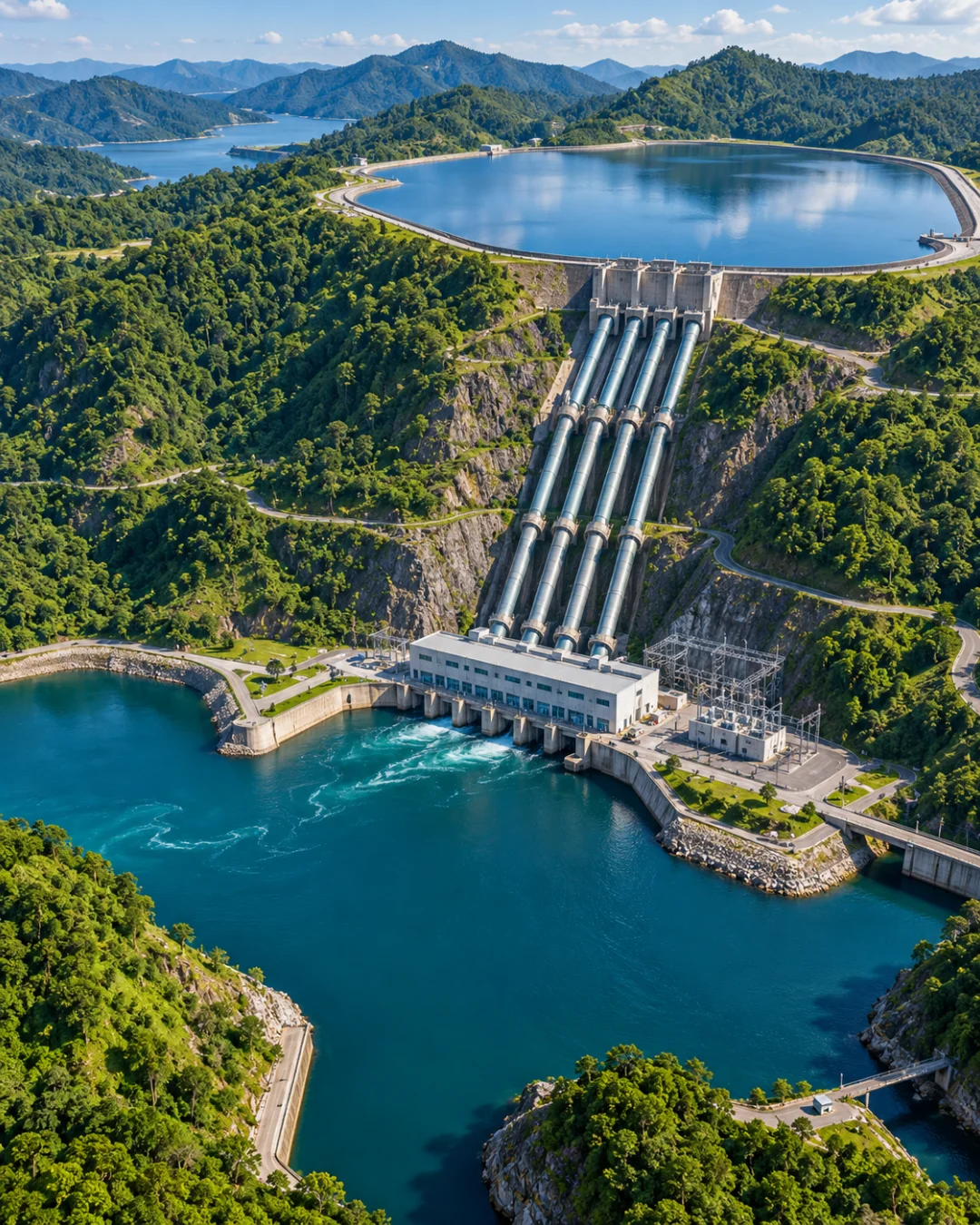
The Central Electricity Authority’s status document on pumped storage development lists 10 operational plants with a combined 7,425.6 MW and 11 projects with 15,870 MW under construction. The Ministry of Power told the Rajya Sabha in July 2026 that six more projects totalling 8,140 MW have CEA concurrence and await construction. Pumped storage stores energy by pumping water to an upper reservoir when power is cheap and releasing it through turbines at peak demand, supporting the grid as solar and wind grow.
Background
Of the operational capacity, eight on-stream plants account for 4,846 MW and two off-stream plants (Pinnapuram in Andhra Pradesh, 1,680 MW, and Purulia in West Bengal, 900 MW) for 2,580 MW. Of the capacity under construction, 3 on-stream projects have 3,850 MW and 8 off-stream projects have 12,020 MW. The largest operating plants include Sardar Sarovar (1,200 MW), Tehri (1,000 MW) and Srisailam Left Bank (900 MW). A CEA roadmap towards 100 GW of pumped storage by 2035-36 projects installed capacity of about 87 GW by 2033-34, with average annual additions of about 9 GW. An IIT Roorkee study released in April 2026 identified policy and clearance bottlenecks, financing constraints, land and geological complexities and limited private participation as challenges.
Key facts for Prelims
- Pumped storage project (PSP): a hydroelectric system that stores energy using two reservoirs at different heights
- On-stream PSPs use an existing river reservoir; off-stream PSPs use closed-loop reservoirs away from rivers
- Operating examples: Tehri (Uttarakhand, 1,000 MW), Sardar Sarovar (Gujarat, 1,200 MW), Purulia (West Bengal, 900 MW), Kadamparai (Tamil Nadu, 400 MW)
- Central Electricity Authority (CEA): statutory body under the Electricity Act, 2003, attached to the Ministry of Power
- India’s Net Zero target year: 2070
Mains analysis and way forward
Mains analysis
- Variable solar and wind need long-duration storage; pumped storage offers large, mature and long-lived capacity compared with batteries for multi-hour balancing.
- Land, geology, environmental clearances and financing have slowed development despite a large identified potential.
- Off-stream closed-loop designs reduce river impacts but still require careful siting, water sourcing and forest and community safeguards.
Way forward
- Streamline appraisal and clearances through coordinated approvals, with clear environmental and social safeguards.
- Create revenue models that value storage services, such as capacity payments, to attract private investment.
Connect the dots: GS III: infrastructure, energy; renewable energy and grid integration. Links to India’s Net Zero 2070 and non-fossil capacity targets.
Sources: CEA: Status of PSP Development in India; NBM&CW: 11 Pumped Storage Projects with 15,870 MW Capacity Under Construction, Centre Informs, 21 Jul 2026; Mercom India: CEA Highlights Pumped Storage as Base Load, 29 Jan 2026; PIB: IIT Roorkee Study Charts Way Forward for Pumped Storage Hydropower, 13 Apr 2026
Conventional water treatment does not remove PFAS, the persistent “forever chemicals”, studies show
In short: A report of 14 October, reviewing several studies, says conventional treatment generally does not remove PFAS; an IIT Madras study in Chennai found levels 5 to 103 per cent higher after treatment.
Why in news
A report published on 14 October 2026 reviewing several studies says conventional water treatment in India generally does not remove PFAS, the per- and polyfluoroalkyl substances known as “forever chemicals”. PFAS have been found in Gujarat and Tamil Nadu, and India is revising its drinking water rules, with a working group reviewing PFAS limits and testing methods. Earlier IIT Madras research in Chennai found that treated water sometimes contained more PFAS than untreated water.
Background
The IIT Madras study by G Koulini and Indumathi M Nambi, published in Environmental Sciences Europe in 2024, measured eight PFAS in 14 Chennai water samples. Concentrations ranged from 0.10 to 136.27 ng/L, and levels of the target PFAS rose by 5 to 103 per cent between raw water entering a treatment plant and treated water leaving it. The authors say conventional treatment does not remove these chemicals and advanced polishing steps are needed. They suspect industrial emissions, untreated domestic wastewater and open dump sites as sources, and describe the risk from drinking water as low to moderate, with children at higher risk.
Key facts for Prelims
- PFAS: a large family of synthetic chemicals that resist breaking down in the environment, hence “forever chemicals”
- Common uses cited: non-stick cookware, food packaging, firefighting foam, waterproof materials and cosmetics
- The Chennai study measured eight PFAS and found linear PFBS and PFOA in all 14 samples
- The Chennai study concludes that conventional treatment does not remove PFAS and that advanced polishing steps are needed
- Stockholm Convention on Persistent Organic Pollutants: global treaty on chemicals that persist in the environment
Mains analysis and way forward
Mains analysis
- PFAS illustrate the regulatory gap for emerging contaminants: monitoring capacity and drinking water standards lag behind chemical use.
- Because PFAS are persistent, prevention at source, through restrictions on uses and controls on wastewater and dump sites, matters as much as treatment.
- Testing is itself a challenge, as sample contamination during collection and analysis can distort results.
Way forward
- Set national PFAS guideline values and testing protocols, and expand accredited laboratory capacity.
- Pilot advanced treatment at vulnerable sources and phase down non-essential PFAS uses, with industry disclosure.
Connect the dots: GS III: environmental pollution and degradation. GS II: health and water. Links to the Stockholm Convention and the Jal Jeevan Mission water quality agenda.
Sources: NewsBytes: Study shows India’s water treatment plants cannot remove PFAS, 14 Oct 2026; Koulini and Nambi: Occurrence of forever chemicals in Chennai waters, India, Environmental Sciences Europe, 2024
MoRTH draft proposes BS-VII emission norms in three phases from April 2029
In short: A draft notification of the Road Transport Ministry proposes Bharat Stage VII standards in phases from April 2029, starting with cars and SUVs; it is a draft and not yet in force.
Why in news
The Ministry of Road Transport and Highways (MoRTH) has issued a draft gazette notification, dated 12 October and reported on 14 and 15 October 2026, that proposes Bharat Stage VII (BS-VII) emission norms in three phases over six years. Phase one begins in April 2029 with passenger vehicles such as cars and SUVs, and the final phase, for heavy commercial vehicles, buses and construction equipment, is set for April 2035. The norms would not affect vehicles already on the road, including BS-VI vehicles. MoRTH plans category-specific notifications on testing and compliance after discussions with stakeholders.
Background
BS-VI norms have applied since April 2020, when India skipped BS-V and moved from BS-IV to BS-VI, and they need low-sulphur fuel. According to a report on the draft, the main tailpipe limits for carbon monoxide, nitrogen oxides and exhaust particulate matter remain unchanged from BS-VI, but the particle measurement threshold would fall from 23 nanometres to 10 nanometres to capture finer particles. The draft also proposes real-world driving emissions testing, lifetime performance monitoring, criteria for tyre and brake wear particles, minimum durability metrics for electric vehicle batteries and market surveillance through independent testing of in-use vehicles. The long-term schedule is meant to align India with the European Euro 7 framework. Automakers have warned that compliance spending could affect product launches and EV development. Reports differ on the date of the second phase, so it is not stated here.
Key facts for Prelims
- Bharat Stage norms are emission standards for motor vehicles set by the Union government; MoRTH notifies them under the Motor Vehicles Act, 1988 and Central Motor Vehicles Rules, 1989.
- India moved directly from BS-IV to BS-VI in April 2020, skipping BS-V.
- The BS-VII draft proposes a finer particle measurement threshold of 10 nanometres, against 23 nanometres.
- The draft covers real-driving emissions, tyre and brake wear particles and battery durability for electric vehicles.
- Phases: April 2029 (passenger vehicles) to April 2035 (heavy commercial vehicles, buses, construction equipment).
Mains analysis and way forward
Mains analysis
- Vehicle emissions are one of several sources of urban air pollution; regulating tyre and brake wear and in-use performance extends the focus beyond the tailpipe, which will matter as electric vehicles grow.
- Standards raise costs and technology demands; a long phase-in gives manufacturers time, but price and affordability for buyers need monitoring.
- Fuel quality, inspection and maintenance and fleet renewal must keep pace, since new norms apply only to new vehicles.
Way forward
- Finalise the norms after wide consultation with manufacturers, health experts and State transport departments.
- Strengthen in-use testing and market surveillance so that emission performance holds over the vehicle’s life.
Connect the dots: GS III: Environmental pollution and degradation; conservation; transport and automobile sector.
Sources: ThePrint (PTI): Govt to roll out BS-VII emission norms for new cars and SUVs from April 2029, 14 October 2026; Business Today: BS-VII emission standards, government proposes three-phase rollout starting from April 2029, 15 October 2026
Polity
Delhi SIR: about 20 lakh of nearly 33 lakh flagged entries resolved; claims and objections open until 30 October
In short: Delhi’s Chief Electoral Officer says no eligible voter will be excluded; claims and objections run to 30 October, and the final roll follows after disposal of applications.
Why in news
Delhi’s Chief Electoral Officer said, in a report of 13 October 2026, that about 20 lakh of nearly 33 lakh entries flagged for logical discrepancies or unmapped records have been resolved in the ongoing Special Intensive Revision (SIR). The officer said no eligible voter will be excluded from the list. Residents can approach 14,947 Booth Level Officers, 902 Assistant Electoral Registration Officers, 70 Electoral Registration Officers and 13 District Electoral Officers. Dates reported in this article: draft roll on 31 August, claims and objections until 30 October, disposal of applications by 30 November, and final roll on 4 December. Some earlier reports gave different dates for the final roll, so the schedule should be checked against the Election Commission’s notice.
Background
The Election Commission of India (ECI) prepares and revises electoral rolls under Article 324 of the Constitution and the Representation of the People Act, 1950. Article 326 provides for elections on the basis of adult suffrage, with the voting age of 18. Form 6 is used by those whose names are missing and by new voters who turn 18 on or before 1 October; Form 8 is for corrections and change of address. The article reported 2,12,400 Form 6 and 2,60,768 Form 8 applications in Delhi as of 30 August. Civil society groups and a local audit reported in September that some voters were wrongly marked in the ASDD list, and the Supreme Court has issued notice on petitions about the exercise, as covered in this series on 16 October.
Key facts for Prelims
- Article 324: superintendence, direction and control of elections vests in the Election Commission.
- Article 326: elections to the Lok Sabha and Assemblies are on the basis of adult suffrage (age 18 since the 61st Amendment, 1988).
- The Representation of the People Act, 1950 governs the preparation and revision of electoral rolls.
- Form 6: new voters and those whose names are missing; Form 8: correction of entries and change of address.
- Booth Level Officers are the field-level link between the ECI and voters.
Mains analysis and way forward
Mains analysis
- Accurate rolls are the base of free and fair elections, but a large-scale revision carries the risk of exclusion of eligible persons, especially migrants and those who change address often.
- Transparency in publishing lists of deleted names and reasons, and an easy path to claims, protect the right to vote even though it is a statutory right.
- The scale of the task, with lakhs of entries flagged, shows the importance of field verification, training of officials and public information in the local language.
Way forward
- Publish ward-wise lists of deletions with reasons and run camps for claims, including for persons displaced by demolitions.
- Allow independent audits of sample booths and use their findings to improve the final roll.
Connect the dots: GS II: Representation of the People Act, election machinery, Election Commission; electoral reforms.
Sources: Deccan Chronicle: Delhi SIR, 20 lakh voter list discrepancies resolved, says CEO, 13 October 2026; NewsBytes: Audit finds Delhi voters wrongly marked dead in ASDD list, 9 September 2026
In brief
- Personality in the news: James Chadwick: The British physicist James Chadwick was born on 20 October 1891 in Bollington, Cheshire, near Manchester. He received the 1935 Nobel Prize in Physics “for the discovery of the neutron”, while at Liverpool University, and died on 24 July 1974 in Cambridge (nobelprize.org).
- Mysuru Dasara and Kullu Dussehra: Incredible India notes that Mysuru Dasara celebrates Goddess Chamundeswari’s victory over Mahishasura, with a procession of decorated elephants at Amba Vilas Palace, while Kullu Dussehra is held at Dhalpur Maidan.
- NHRC Human Rights Quiz 2026: The National Human Rights Commission, with MyGov, launched an online Human Rights Quiz on 1 September 2026, open to Indians aged 14 and above, ahead of its 33rd Foundation Day; entries closed on 10 October 2026.
- Sitharaman: non-tariff barriers biggest hurdle in India-China trade: Speaking to the Atlantic Council on the sidelines of the IMF meetings in Bangkok on 16 October 2026, Finance Minister Nirmala Sitharaman said non-tariff barriers are the biggest hurdle in trade with China, with which India’s trade deficit has crossed USD 100 billion this year; she also said terms of the ASEAN trade agreement need revision (ThePrint, 16 October 2026).
- 61st CIML meeting of the OIML: The International Organisation of Legal Metrology (OIML) lists the 61st meeting of its International Committee of Legal Metrology (CIML) for 26 to 28 October 2026, with invitation from CIML President Dr Bobjoseph Mathew.
- Securities transaction tax up 52 per cent: Securities transaction tax collections rose 52 per cent to Rs 46,840 crore in the period 1 April to 14 October 2026 (ThePrint, 15 October 2026).
- Net oil and gas import bill: India’s net oil and gas import bill widened by nearly 40 per cent to USD 13.4 billion in September 2026, while LNG imports fell 8.5 per cent (NewsBytes, 16 October 2026).
- UAE Foreign Minister in Mumbai: UAE Deputy Prime Minister and Foreign Minister Sheikh Abdullah bin Zayed Al Nahyan is on an official visit to Mumbai on 19 and 20 October, hosted by Jaishankar; talks are to review the India-UAE Comprehensive Strategic Partnership across energy, trade, investment, fintech, defence and connectivity (MEA briefing, 16 October).
- APEC 2026 in Shenzhen: The 2026 APEC leaders’ summit is scheduled for 18 and 19 November in Shenzhen, China; the Kremlin is reported to have suggested it as the venue for any Putin-Trump-Xi meeting (Reuters, 19 October).
- WFP funding appeal: WFP says it needs about $450 million over the next six months for Gaza and the West Bank and has received about half its usual funding for the Palestinian territories in 2026 (AFP, 19 October).
- Yerevan Platform at COP17: UNEP plans to launch the Yerevan Platform on Mountain and Freshwater Ecosystems on 26 October, and on 29 October to release its first Restoration Progress Report and, separately, recognise five new UN World Restoration Flagships, during COP17 (UNEP).
- CEA roadmap for pumped storage: The CEA roadmap to 100 GW of hydro pumped storage by 2035-36 projects capacity of about 87 GW by 2033-34, with average additions of about 9 GW a year (Mercom India, 29 January 2026).
- Hydropower: IIT Roorkee options: The IIT Roorkee report of April 2026 studied next-generation pumped storage options, including sea-based systems along India’s western coast and abandoned mines for decentralised storage (PIB, 13 April 2026).
Prelims practice: 5 questions
Choose an option to see the answer and explanation. Your score appears when all five are answered.
Mains practice
Pumped storage hydropower is often described as the ‘water battery’ of a renewable-heavy grid. Explain its role in India’s energy transition and discuss the challenges in scaling it up.
Show the answer outline
Introduction (about 30 words)
- Pumped storage moves water to an upper reservoir when power is cheap and releases it through turbines at peak demand; India runs 7,425.6 MW and is building 15,870 MW more (CEA).
Role in the energy transition
- Balances variable solar and wind: absorbs surplus daytime solar, supplies evening peaks.
- Grid services: frequency control, spinning reserve, black-start capability, inertia.
- Long life (50 years or more) and large storage durations compared with batteries; supports the 500 GW non-fossil target.
Challenges
- High upfront cost and long gestation; land acquisition and forest clearances.
- Site-specific geology and water availability; environmental and rehabilitation concerns.
- Market design: limited tariff signals for storage and ancillary services; competition from falling battery costs.
Way forward
- Implement CEA and Ministry of Power guidelines on pumped storage; faster clearances for off-river (closed-loop) projects.
- Use existing reservoirs and abandoned mines; storage-linked tenders and time-of-day tariffs.
- Complement with batteries for short-duration needs.
Conclusion (about 30 words)
- A mix of pumped storage and batteries can make round-the-clock clean power possible; policy certainty on tariffs and clearances will decide the pace.
Tip: Define the mechanism in one line, link it to grid balancing for renewables, and keep challenges and solutions in matching pairs.
Current Canvas is prepared by the UPSC Gurus editorial desk. Every fact is checked against official releases and reliable reporting, with sources listed under each story. Editions are compiled each month into Current Canvas Monthly, a free magazine.
About images: photographs and illustrations in Current Canvas are AI-generated for illustration only. They are not news photographs of the events described.