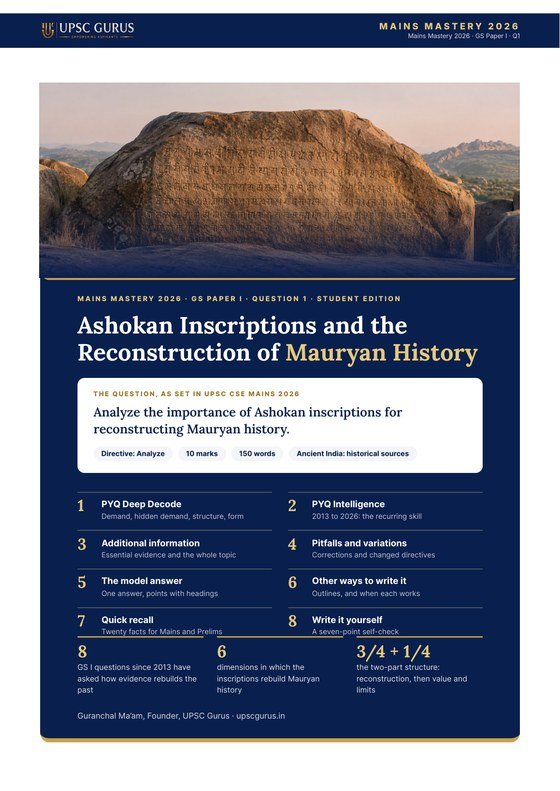
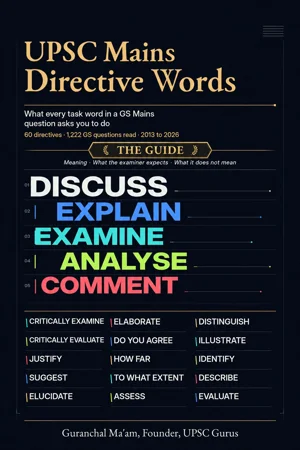
 New this week · Free UG Handout 02UPSC Mains Directive Words: 60 Meanings, Trends and PYQsTwo free PDFs: The Guide and the With PYQs edition.Read and download
Today’s Canvas
- COP31 ends without agreement on an overarching cover decision after a dispute over fossil fuel languageGS III and GS II
- India a swing vote as the IMO meets on a net-zero framework for global shippingGS III and GS II
- Parliament’s Public Accounts Committee faults the Green India Mission for falling far short of its targetsGS III
- India and the EU likely to sign their free trade agreement on 16 DecemberGS II and GS III
- Nepal’s Prime Minister Balendra Shah in New Delhi on his first official visit to IndiaGS II
- India and China hold a second round of Corps Commander-level talks on the LAC in Arunachal PradeshGS III and GS II
- Myanmar calls ASEAN’s review of its peace plan “unfair and imbalanced”GS II
- Centre-Ladakh talks to resume after hill council elections, with elected members joining the Leh and Kargil bodiesGS II
- Uttar Pradesh’s 18th Assembly has met for only 84 days so far, raising concerns about legislative oversightGS II
- Navi Pillay’s Nobel Peace Prize revives the case for India to make genocide and crimes against humanity offences in its own lawGS II and GS IV
- Nine core industries grow 10.9% in October 2026, helped largely by a low baseGS III
- FSSAI sanctions prosecution of Bisleri International after packaged drinking water samples are declared unsafeGS II and GS III
Environment and ecology
COP31 ends without agreement on an overarching cover decision after a dispute over fossil fuel language
In short: COP31 concluded without consensus on an overarching cover decision after disagreements over fossil fuel language; other negotiated decisions and voluntary initiatives were not cancelled.
Why in news
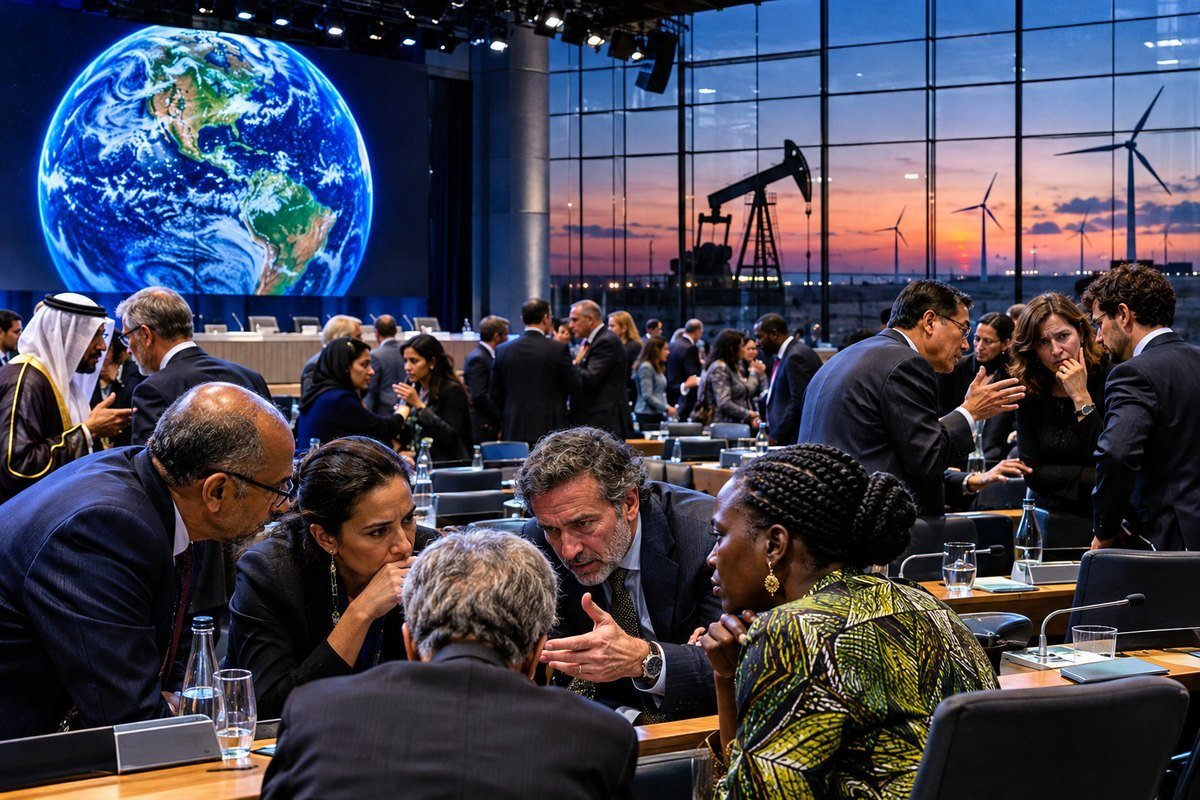
The 31st Conference of the Parties (COP31) to the UN Framework Convention on Climate Change, held in Antalya, Türkiye, concluded on 22 November 2026, more than two days beyond its scheduled close, without consensus on an overarching cover decision on future climate action. The European Union, reportedly backed by about 130 parties including Panama and island nations, objected to the “cover text” proposed by the COP31 President, Türkiye’s Environment Minister Murat Kurum, because it did not name coal, oil or gas. Petro-States such as Saudi Arabia oppose language on fossil fuels. The disputed draft only indirectly recalled the 2023 agreement on transitioning away from fossil fuels and kept a push for carbon capture. Separately, the COP31 presidency promoted a voluntary electrification pledge to raise electricity’s share of global final energy consumption to 35% by 2035. The failure of the cover decision does not cancel the Paris Agreement, earlier COP decisions or separate voluntary commitments. Other points of friction were attempts by Saudi Arabia, India and Kenya to delay the next major reports of the Intergovernmental Panel on Climate Change (IPCC), the omission of a proposed US$120 billion adaptation finance target from the draft, and concern that warming will cross 1.5°C within a few years. Australia led the negotiations under the arrangement by which Türkiye hosted the COP.
Concept: How decisions are made at a COP
The UNFCCC (1992) has never adopted rules on voting, so decisions at a COP are taken by consensus: in practice, one or a few determined parties can block a decision. A “cover decision” is an overarching political text that sums up what a COP has agreed. The Paris Agreement (2015) aims to hold warming well below 2°C and pursue efforts to limit it to 1.5°C above pre-industrial levels. Every five years a Global Stocktake assesses collective progress; the first, at COP28 in Dubai (2023), called for “transitioning away from fossil fuels in energy systems”. The second stocktake concludes in 2028, which is why the timing of IPCC reports matters. India argues for climate justice and the principle of Common But Differentiated Responsibilities and Respective Capabilities (CBDR-RC).
Key facts for Prelims
- The UNFCCC was adopted in 1992 and entered into force in 1994; the Paris Agreement was adopted at COP21 in 2015.
- COP decisions are taken by consensus because the UNFCCC has no adopted voting rules.
- The first Global Stocktake under the Paris Agreement concluded at COP28, Dubai (2023); the next is due in 2028.
- The IPCC was set up in 1988 by the World Meteorological Organization and the UN Environment Programme.
- COP31 was held in Antalya, Türkiye, with Türkiye hosting and Australia leading the negotiations.
- Failure to adopt a cover decision does not cancel the Paris Agreement or earlier COP decisions.
Mains analysis and way forward
Mains analysis
- Consensus gives every country a voice but lets a few parties block outcomes, which weakens ambition on fossil fuels.
- Divisions now cut across the old North-South line: the EU and small island States on one side, petro-States on the other, and large developing economies in between.
- Electrification without a requirement for renewable power can lock in coal and gas generation.
- The omission of a proposed US$120 billion adaptation finance target from the cover draft shows continuing disagreement over predictable support for climate-vulnerable countries.
- For India, the challenge is to protect its development space and CBDR-RC while not being seen as blocking climate science.
Way forward
- Pursue coalitions of willing countries on specific sectors (power, methane, shipping) alongside the UN process.
- Make finance for adaptation and loss and damage predictable, so developing countries can accept stronger mitigation language.
- India should push a just transition backed by technology and finance, and keep IPCC science timely for the 2028 stocktake.
Connect the dots: GS III: climate change, energy transition; GS II: international institutions and groupings; Essay: global commons and collective action.
Sources: The Hindu: COP31 talks fail as EU, others reject any climate deal without language on a fossil fuel phase-out, 22 November 2026; The Hindu: EU will ‘not endorse’ climate deal, throwing COP31 outcome into doubt, 22 November 2026
India a swing vote as the IMO meets on a net-zero framework for global shipping
In short: The IMO has resumed technical negotiations on shipping decarbonisation ahead of a possible December adoption session, and India’s position could influence whether a compromise emerges.
Why in news
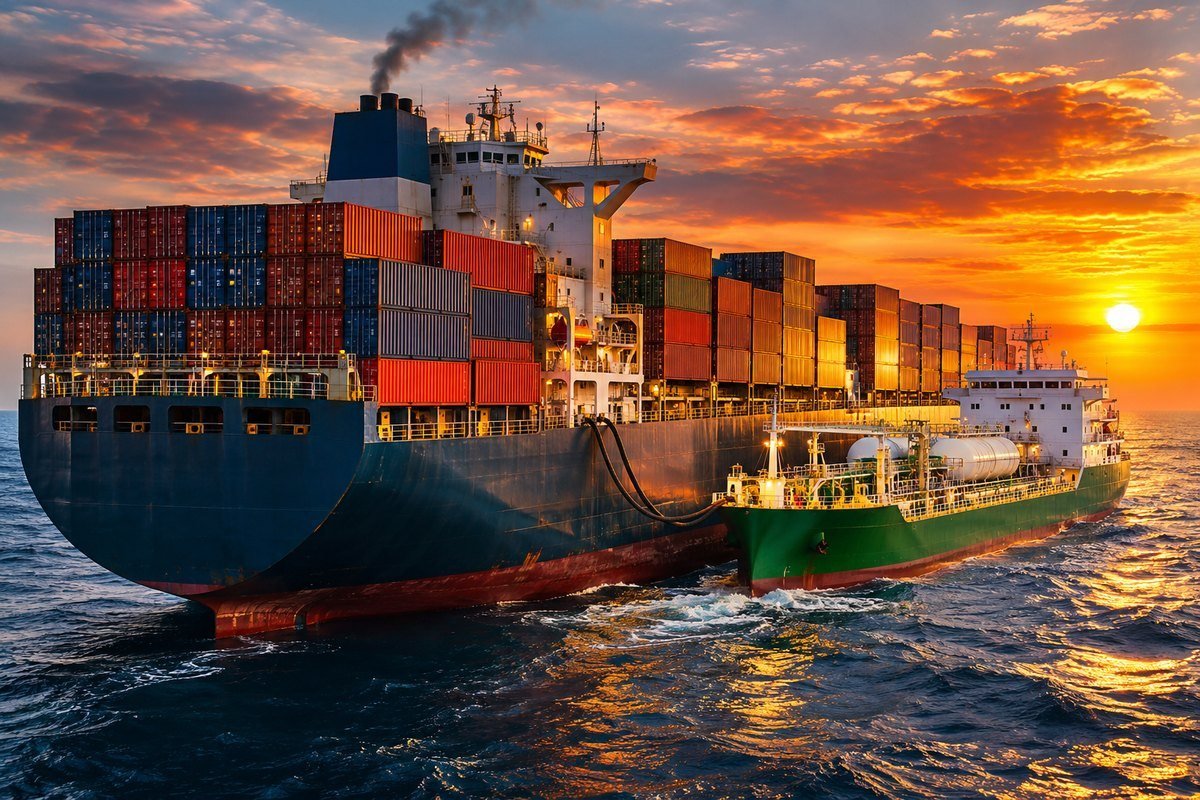
The International Maritime Organization’s (IMO) intersessional working group meets in London from 23 to 27 November 2026, and its Marine Environment Protection Committee from 30 November to 3 December, with the adjourned extraordinary session on adopting the Net-Zero Framework tentatively scheduled to resume on 4 December, subject to confirmation. In April 2025, the IMO’s Marine Environment Protection Committee approved by a simple majority a Net-Zero Framework, but in October 2025 the United States, supported by some fossil fuel producers such as Saudi Arabia, pushed through a one-year adjournment of the vote, threatening measures such as blocking vessels from US ports. India voted for that adjournment. It has not yet decided its position this time, and much will depend on the technical and financial details worked out in preparatory meetings. Officials and experts say India’s stand will rest on climate justice and CBDR-RC, and on its interest as a fossil fuel importer in affordable alternatives.
Concept: The IMO and the Net-Zero Framework
The IMO is the UN’s specialised agency for the safety and security of shipping and the prevention of pollution from ships; it is headquartered in London. Pollution from ships is covered by the MARPOL Convention, whose Annex VI deals with air pollution and energy efficiency. In 2023 the IMO adopted a revised strategy to reach net-zero greenhouse gas emissions from international shipping by or around 2050. The Net-Zero Framework approved in 2025 would add two tools under MARPOL Annex VI: a global fuel standard that steadily lowers the greenhouse gas intensity of ship fuel, and a pricing mechanism under which ships that miss targets pay, with the money going to an IMO Net-Zero Fund. International shipping is not covered by countries’ Paris Agreement targets, which is why the IMO sets its own rules. “Approval” of draft amendments by the committee is different from their formal “adoption” by the parties, after which they enter into force on a set date unless enough parties object.
Key facts for Prelims
- The IMO is a specialised agency of the UN headquartered in London.
- MARPOL Annex VI regulates air pollution and greenhouse gas emissions from ships.
- The IMO’s 2023 strategy targets net-zero emissions from international shipping by or around 2050.
- The Net-Zero Framework combines a global fuel standard with an emissions pricing mechanism and a Net-Zero Fund.
- India’s National Centre of Excellence in Green Ports and Shipping is a joint initiative of the Ministry of Ports, Shipping and Waterways and TERI.
Mains analysis and way forward
Mains analysis
- A global rule avoids a patchwork of regional measures such as the EU’s inclusion of shipping in its emissions trading system.
- A carbon price on ship fuel can raise freight costs for developing countries that depend on distant markets.
- India’s Maritime India Vision and green hydrogen ambitions could benefit if green fuels and bunkering hubs develop.
- Unilateral pressure on a multilateral vote raises questions about the independence of UN bodies.
Way forward
- India should seek that revenue from the Net-Zero Fund supports developing countries’ ports, fleets and fuel supply.
- Build domestic green methanol and ammonia supply and green corridors to turn the rule into an opportunity.
- Coordinate with other developing countries for transition support and fair treatment of distant economies.
Connect the dots: GS III: climate change, infrastructure (ports, shipping); GS II: international institutions; Prelims: MARPOL, IMO.
Sources: The Hindu: India a swing vote at IMO meeting on shipping decarbonisation, 22 November 2026
Parliament’s Public Accounts Committee faults the Green India Mission for falling far short of its targets
In short: The Green India Mission relied on money from other schemes that never fully came, so its forest-cover and forest-quality targets fell short by over 90%, and the PAC has asked the Environment Ministry for an implementation timetable.
Why in news
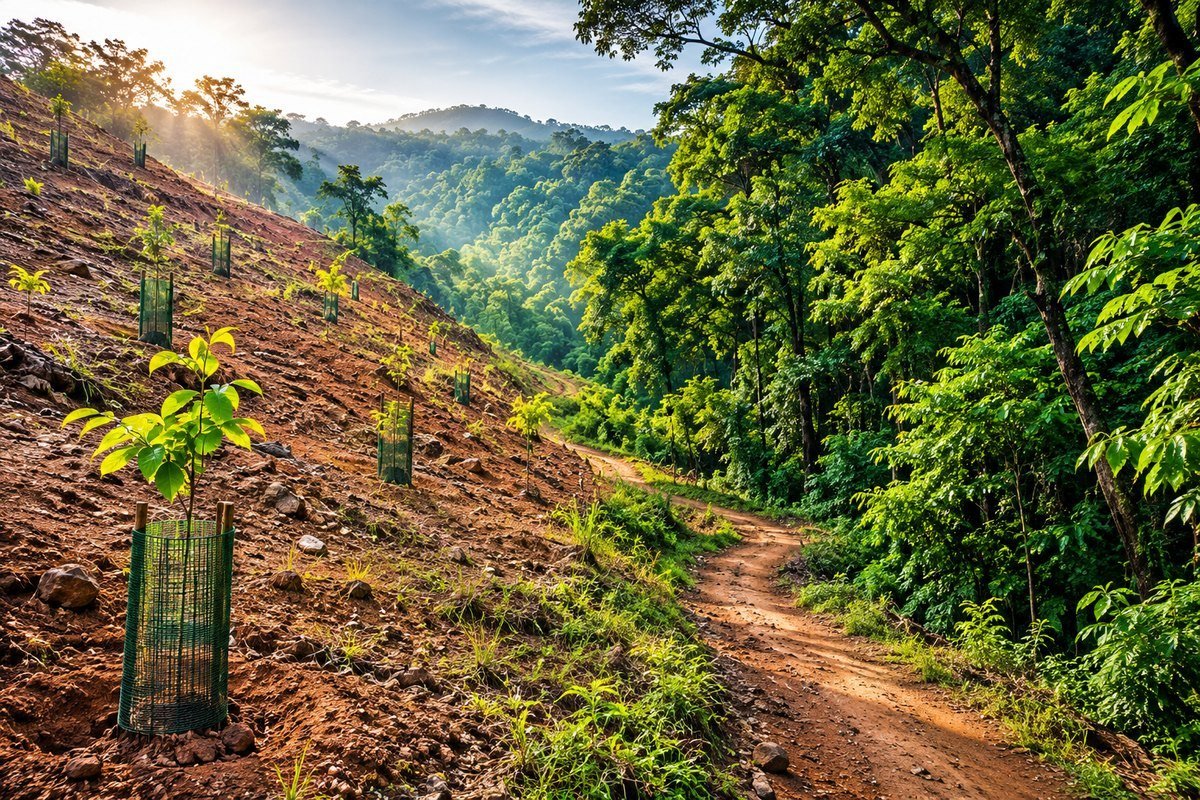
On 19 November 2026, following a report of the Comptroller and Auditor General (CAG), Parliament’s Public Accounts Committee (PAC) criticised the Environment Ministry over the poor performance of the National Mission for a Green India and for not yet issuing implementation guidelines for its revised form. The Hindu’s editorial of 23 November notes that in 2014 the Union Cabinet approved ₹13,000 crore to improve forest quality and expand forest cover on 1.4 million hectares (mha) each by 2018, with 81.5% of the money to come from the Compensatory Afforestation Fund (CAMPA), the National Afforestation Programme and MGNREGS funds. Against the 2014 targets, forest-quality work fell short by 91.8% and forest-cover work by 97.5%. The revised Mission (2025) aims to improve 25 mha by 2030 with ₹12,190 crore, but 24 mha of this is to come through other schemes.
Concept: The Green India Mission and the PAC
The Green India Mission is one of the eight national missions under the National Action Plan on Climate Change (2008). Its original ten-year vision was to increase forest and tree cover on 5 mha, improve the quality of forest cover on another 5 mha, improve forest-based livelihoods for about 3 million households and increase carbon sequestration. It supports India’s Nationally Determined Contribution target of creating an additional carbon sink of 2.5 to 3 billion tonnes of CO2 equivalent through forest and tree cover by 2030. The Public Accounts Committee examines the CAG’s audit reports on Union government spending; it has 22 members (15 from the Lok Sabha and 7 from the Rajya Sabha), and by convention its chairperson is from the Opposition.
Key facts for Prelims
- The Green India Mission is one of the eight missions under the National Action Plan on Climate Change (2008).
- India’s NDC includes an additional carbon sink of 2.5 to 3 billion tonnes of CO2 equivalent by 2030 through forest and tree cover.
- Compensatory afforestation funds are governed by the Compensatory Afforestation Fund Act, 2016 (CAMPA).
- The CAG is provided for under Articles 148 to 151 of the Constitution.
- The Public Accounts Committee has 22 members: 15 from the Lok Sabha and 7 from the Rajya Sabha.
Mains analysis and way forward
Mains analysis
- Designing a mission around funds it does not control leaves no one accountable for results.
- Counting outputs of other schemes as mission achievements inflates progress on paper.
- Changes in rural employment funding shift more cost to States and can reduce the labour available for plantation work.
- Plantation targets alone do not ensure better forest quality, biodiversity or livelihoods for forest communities.
- Area planted is not the same as independently verified survival, canopy density, biodiversity and carbon outcomes.
Way forward
- Give the Mission an assured budget and clear division of responsibility with CAMPA and rural schemes.
- Issue guidelines quickly and track outcomes (survival rates, canopy density, carbon) through independent monitoring.
- Involve gram sabhas and Joint Forest Management committees in planning and benefit sharing.
Connect the dots: GS III: conservation, climate commitments; GS II: parliamentary committees and accountability; Essay: forests and development.
Sources: The Hindu: Paper tiger: On the Green India Mission (editorial), 23 November 2026
International relations
India and the EU likely to sign their free trade agreement on 16 December
In short: The India-EU free trade agreement, concluded in January 2026 after nearly two decades of talks, is expected to be signed in December 2026 and could enter into force in 2027, subject to the required approvals.
Why in news
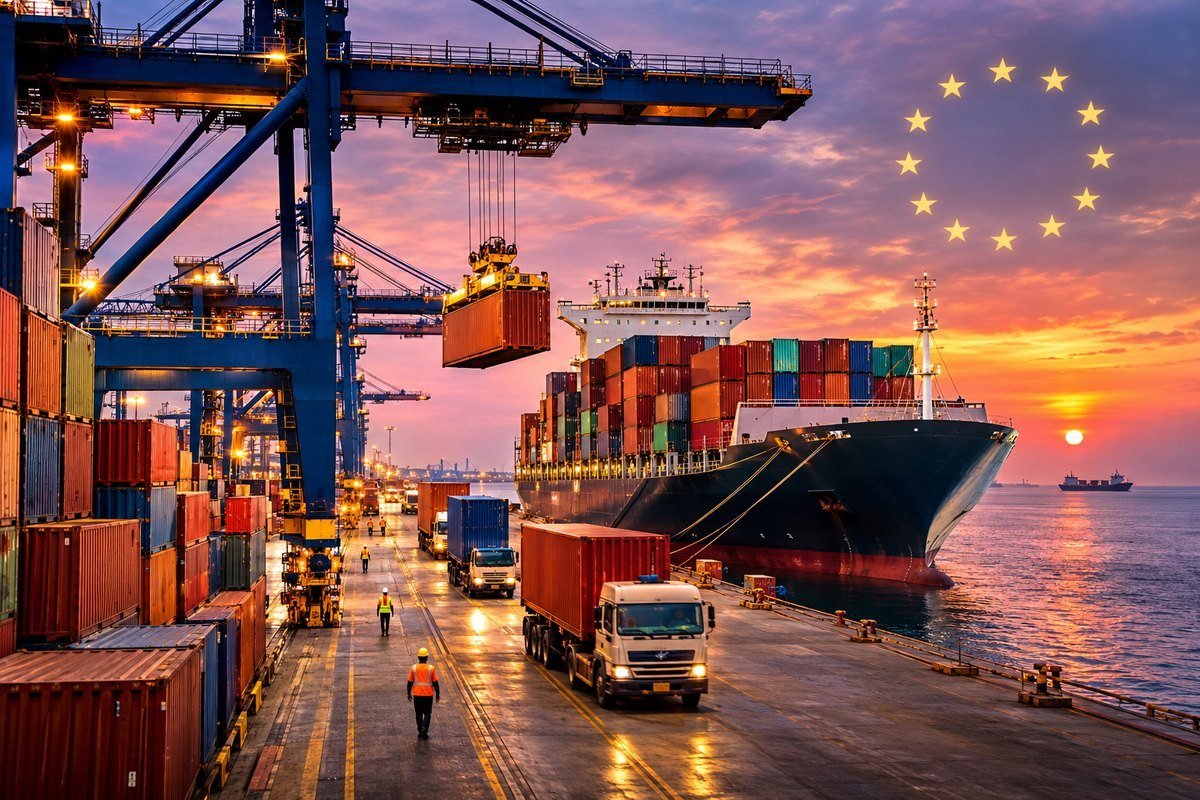
India and the 27-member European Union are likely to sign their Free Trade Agreement (FTA) on 16 December 2026, an official said on 22 November. The two sides concluded negotiations on 27 January 2026. The EU’s Ambassador to India has said the FTA will be signed during Prime Minister Narendra Modi’s visit to Brussels and will come into force next year. The European Commission has submitted proposals to the Council of the EU for authorisation to sign and conclude the agreement, along with the legal text and tariff schedules. According to India’s Department of Commerce, the agreement gives preferential access to about 97% of EU tariff lines, covering 99.5% of India’s export value, with immediate duty elimination on lines covering 90.7% of India’s exports; imports of EU luxury cars and wines into India will become cheaper. Together, India and the EU make up about a quarter of global GDP and a market of about 2 billion people.
Concept: How an EU trade agreement comes into force
In the EU, trade policy is an exclusive competence of the Union: the European Commission negotiates, the Council of the EU (representing member governments) authorises signature and conclusion, and the European Parliament must give its consent before the agreement is concluded. India-EU FTA talks began in 2007 as the Broad-based Trade and Investment Agreement, were suspended in 2013 and relaunched in 2022, together with separate talks on investment protection and geographical indications. The EU is India’s largest trading partner in goods among blocs. Issues that remained sensitive include the EU’s Carbon Border Adjustment Mechanism (CBAM), which charges for the carbon content of certain imports such as steel and aluminium.
Key facts for Prelims
- India-EU FTA talks began in 2007, were suspended in 2013 and relaunched in 2022; negotiations concluded on 27 January 2026.
- In the EU, trade agreements need the Council’s authorisation and the European Parliament’s consent.
- The EU’s Carbon Border Adjustment Mechanism covers imports such as iron and steel, aluminium, cement, fertilisers, electricity and hydrogen.
- The EU has 27 member States.
- India’s Trade and Economic Partnership Agreement with the EFTA countries came into force on 1 October 2025.
Mains analysis and way forward
Mains analysis
- Duty-free access can boost labour-intensive exports such as textiles, leather, gems and jewellery, and marine products.
- Lower tariffs on cars, wines and machinery will increase competition for some Indian industries.
- Non-tariff measures such as CBAM, deforestation rules and standards can limit the real gains.
- The deal diversifies India’s trade at a time of uncertain tariffs from other major partners.
Way forward
- Prepare exporters, especially MSMEs, to meet EU standards and use the tariff preferences.
- Negotiate practical arrangements on CBAM, such as recognition of Indian carbon pricing.
- Use the review mechanisms in the agreement to protect sensitive sectors and address problems quickly.
Connect the dots: GS II: India’s bilateral relations and relations with major international groupings; GS III: international trade, external sector and industrial competitiveness; Essay: globalisation and trade.
Sources: The Hindu: India-EU trade pact likely to be signed on December 16, 22 November 2026
Nepal’s Prime Minister Balendra Shah in New Delhi on his first official visit to India
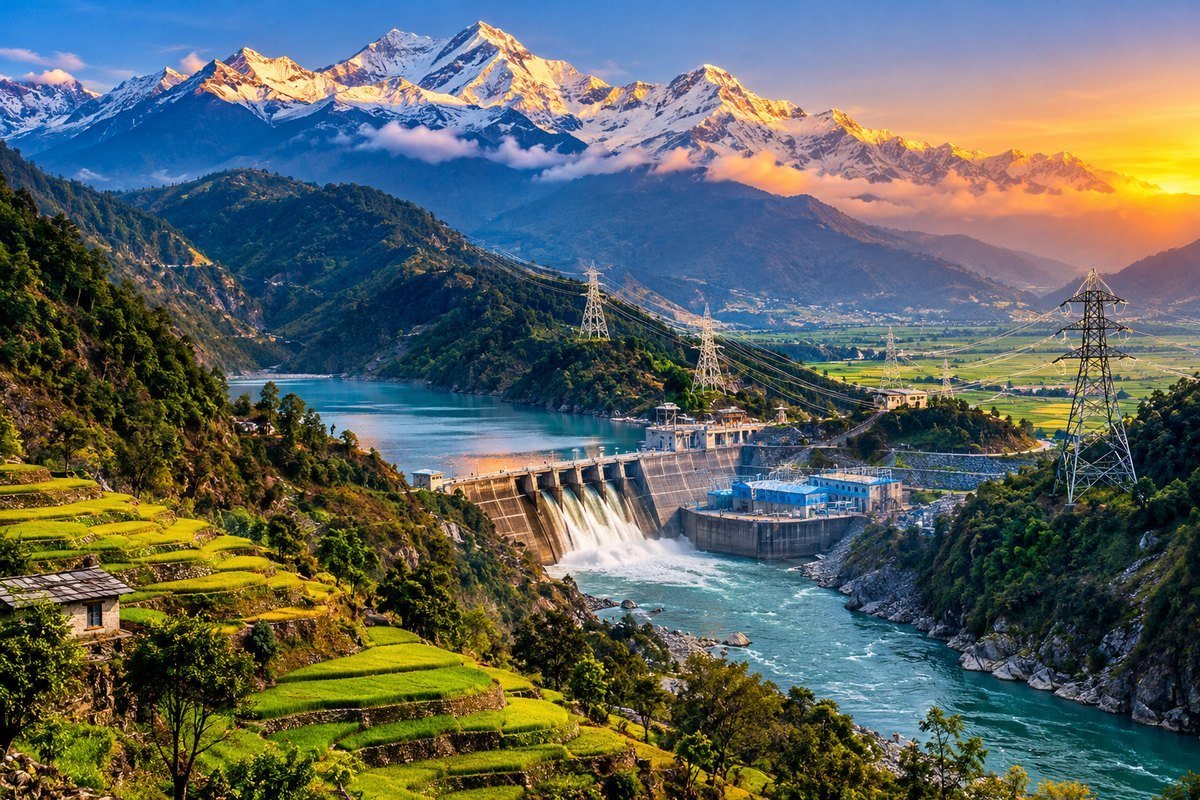
In short: The visit is expected to set the political direction of India-Nepal relations for the coming years, with talks between the two Prime Ministers and the inauguration of projects.
Why in news
Nepal’s Prime Minister Balendra Shah arrived in New Delhi on 22 November 2026 on his first official visit to India. He is scheduled to hold talks with Prime Minister Narendra Modi on 23 November and to inaugurate several projects. Sources said the talks would give “political direction” to bilateral relations for the coming years.
Concept: India-Nepal relations: the building blocks
India and Nepal share an open border of about 1,751 km touching five Indian States: Uttarakhand, Uttar Pradesh, Bihar, West Bengal and Sikkim. Under Articles 6 and 7 of the 1950 Treaty of Peace and Friendship, each country gives the other’s citizens reciprocal privileges in residence, ownership of property, trade, movement and economic activity. Cooperation covers hydropower and power trade, cross-border rail and roads, petroleum pipelines and integrated check posts. Nepal’s Gorkha soldiers serve in the Indian Army. Irritants include the boundary dispute over Kalapani, Lipulekh and Limpiyadhura, shown in Nepal’s 2020 political map, and Nepalese calls to review the 1950 Treaty. India’s approach falls under its Neighbourhood First policy.
Key facts for Prelims
- India and Nepal share an open border of about 1,751 km with five Indian States.
- The India-Nepal Treaty of Peace and Friendship was signed in 1950.
- The Mahakali Treaty (1996) covers the integrated development of the Mahakali river, including the Pancheshwar project.
- Kalapani, Lipulekh and Limpiyadhura are the areas shown as Nepal’s in its 2020 map.
- The Motihari-Amlekhgunj pipeline is South Asia’s first cross-border petroleum products pipeline.
Mains analysis and way forward
Mains analysis
- A new leadership in Kathmandu is an opportunity to reset ties on development partnership and connectivity.
- Power trade can make hydropower a shared economic asset for both countries.
- Boundary questions and perceptions of interference need careful handling.
- China’s growing presence in Nepal adds a strategic dimension to India’s engagement.
Way forward
- Complete pending projects on time to build trust.
- Expand power trade, digital payments and people-to-people links.
- Address the boundary issue through dialogue at the established bilateral mechanisms.
Connect the dots: GS II: India and its neighbourhood; GS III: energy cooperation, border management; Prelims: India-Nepal border States and treaties.
Myanmar calls ASEAN’s review of its peace plan “unfair and imbalanced”
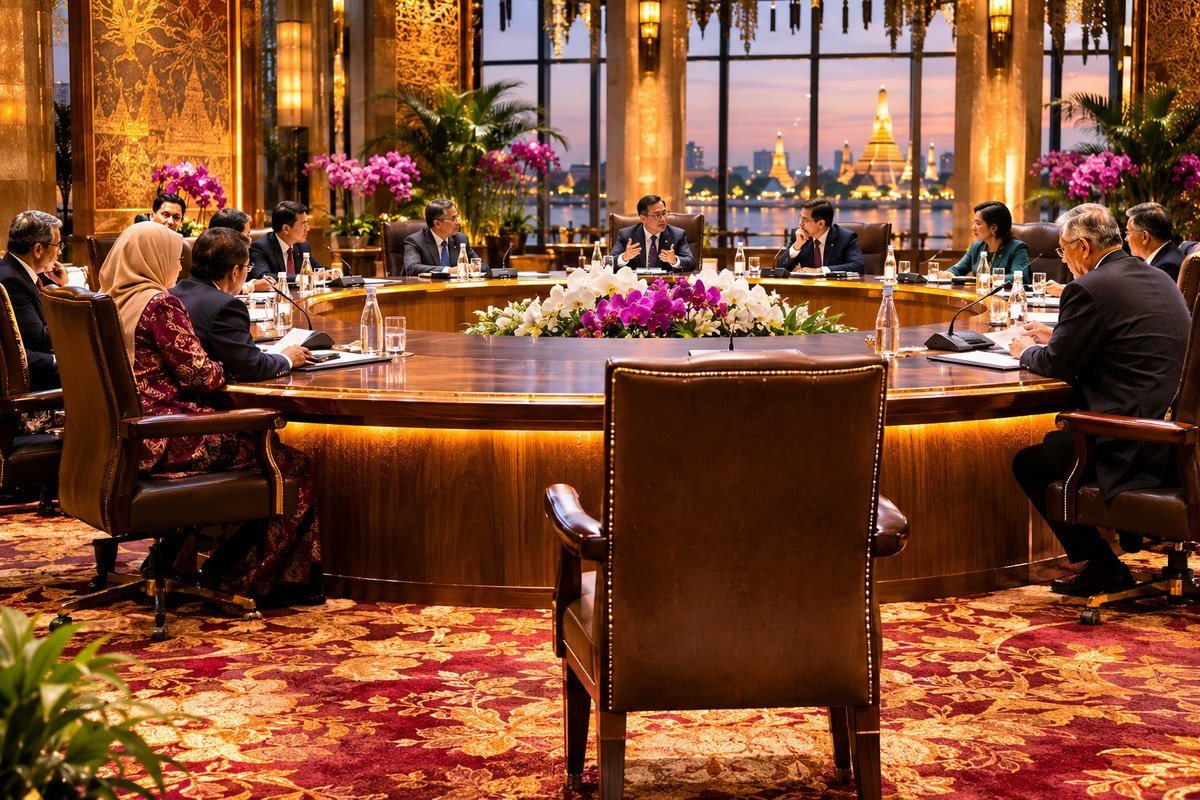
In short: ASEAN has again found little progress on its 2021 peace plan for Myanmar and kept Myanmar’s leadership out of its summits; Myanmar says the bloc is ignoring its views.
Why in news
In a statement on 21 November 2026, Myanmar’s Ministry of Foreign Affairs said the review and recommendations adopted at the ASEAN Summit in Manila on 15 November 2026 were “unfair and imbalanced”. ASEAN leaders had expressed concern over insufficient progress on the Five-Point Consensus and extended the restriction under which Myanmar can be represented at summits only by a non-political representative, such as a career diplomat. Myanmar said this was discriminatory and inconsistent with the ASEAN Charter, and claimed there were no political prisoners in the country. The statement came a week after the International Court of Justice (ICJ) found Myanmar responsible for genocide against the Rohingya during the 2017 military operations in northern Rakhine State.
Concept: ASEAN’s Five-Point Consensus
The Myanmar military seized power from the elected government in February 2021, leading to protests, a crackdown and armed resistance. In April 2021, ASEAN leaders agreed on a Five-Point Consensus: an immediate end to violence, dialogue among all parties, a special envoy of the ASEAN Chair to facilitate mediation, humanitarian assistance through the ASEAN Coordinating Centre for Humanitarian Assistance on disaster management (AHA Centre), and a visit by the envoy to meet all parties. ASEAN works by consultation and consensus and by the principle of non-interference, set out in its Charter (2007). The Rohingya genocide case was filed at the ICJ by The Gambia in 2019 under the Genocide Convention.
Key facts for Prelims
- ASEAN’s Five-Point Consensus on Myanmar was agreed in April 2021.
- The AHA Centre is ASEAN’s coordinating centre for humanitarian assistance on disaster management.
- The ASEAN Charter was adopted in 2007 and entered into force in 2008.
- The Gambia filed the Rohingya genocide case against Myanmar at the ICJ in 2019.
- India shares a border of about 1,643 km with Myanmar, touching Arunachal Pradesh, Nagaland, Manipur and Mizoram.
Mains analysis and way forward
Mains analysis
- The case shows the limits of ASEAN’s consensus and non-interference model in a member’s internal conflict.
- The consensus has been hard to implement because ASEAN has no enforcement tools, works by consensus and non-interference, and the military regime has not allowed the envoy to meet all parties.
- The ICJ ruling adds legal pressure and affects how other countries engage with Myanmar.
- Instability in Myanmar affects India’s northeast through refugee flows, arms and drug trafficking.
- India’s projects such as the Kaladan Multi-Modal Transit Transport Project and the India-Myanmar-Thailand Trilateral Highway depend on stability.
Way forward
- India should support ASEAN-led efforts while keeping working ties with all stakeholders in Myanmar.
- Strengthen border management and humanitarian support for affected communities.
- Back an inclusive political process and safe, voluntary return of the Rohingya.
Connect the dots: GS II: regional groupings, India’s neighbourhood; GS III: security in the northeast; GS IV: human rights.
Security
India and China hold a second round of Corps Commander-level talks on the LAC in Arunachal Pradesh
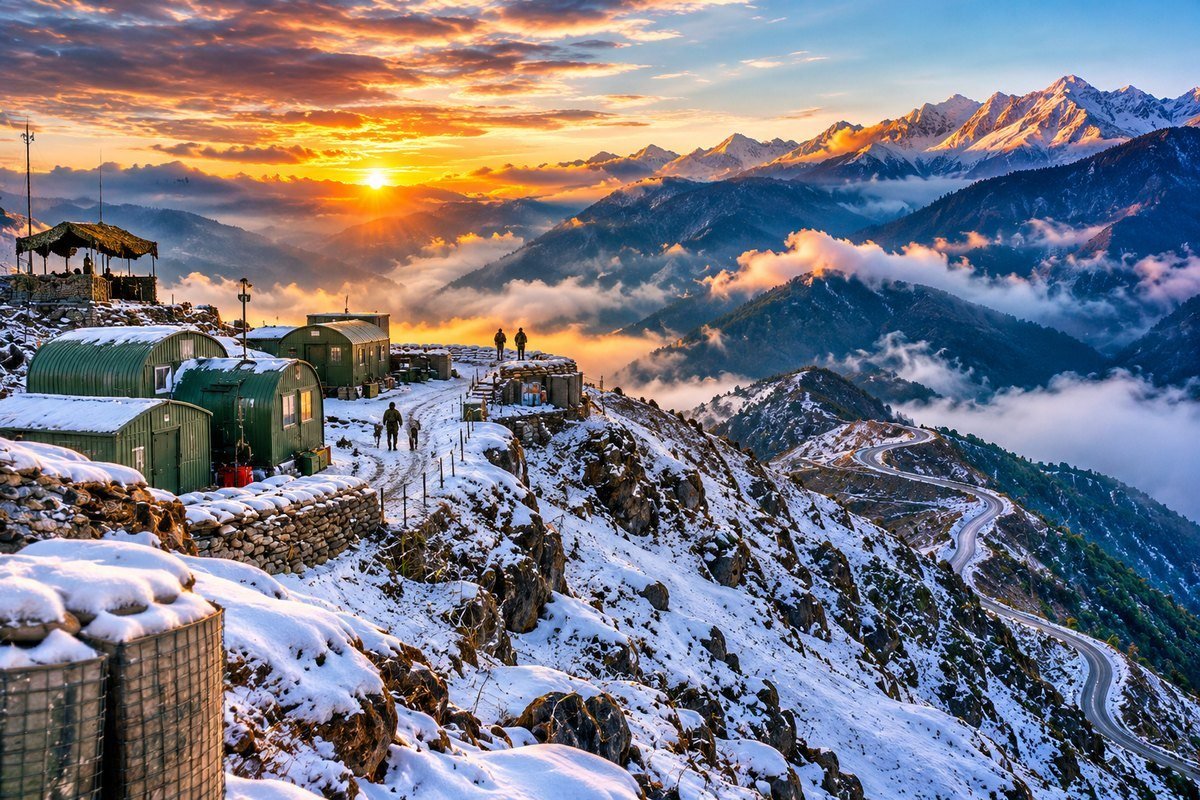
In short: The two armies discussed measures to prevent face-offs along the Line of Actual Control in the eastern sector before the harsh winter, but it is not yet clear whether these will be applied on the ground.
Why in news
India and China have concluded a second round of Corps Commander-level talks aimed at easing tensions along the Line of Actual Control (LAC) in Arunachal Pradesh and putting in place measures to prevent friction between troops before winter. According to Ministry of Defence sources, the talks began on 8 November 2026 and continued for nearly 10 days with a short break. They focused on engagement protocols and on preventing face-offs. The talks were described as cordial.
Concept: The LAC and India-China border mechanisms
The India-China boundary is not demarcated. India states that its border with China is about 3,488 km long. The LAC is not a mutually agreed or fully delineated line, and the two sides differ in their perceptions of its alignment. It is commonly discussed in the western sector (Ladakh), the middle sector (Himachal Pradesh and Uttarakhand) and the eastern sector (Sikkim and Arunachal Pradesh). In the east India follows the McMahon Line, drawn at the Simla Conference of 1914, which China does not accept; China claims Arunachal Pradesh. Confidence-building agreements include those of 1993, 1996, 2005, 2012 (setting up the Working Mechanism for Consultation and Coordination) and 2013. Military talks between Corps Commanders handle local disengagement and patrolling, while political talks are held through the Special Representatives and the WMCC. In October 2024, India and China reached an understanding on patrolling in Depsang and Demchok in eastern Ladakh.
Key facts for Prelims
- India officially reports a border of about 3,488 km with China; the LAC has no mutually accepted alignment and is discussed in western, middle and eastern sectors.
- The McMahon Line was drawn at the Simla Conference of 1914.
- The Working Mechanism for Consultation and Coordination on India-China border affairs was set up in 2012.
- The 1993 Agreement on maintaining peace and tranquillity along the LAC was the first major border confidence-building agreement.
- India and China reached a patrolling understanding for Depsang and Demchok in October 2024.
Mains analysis and way forward
Mains analysis
- Clear protocols at the local level reduce the risk that small incidents escalate.
- Talks in the eastern sector show that friction points exist beyond Ladakh.
- Winter deployments at high altitude are costly, so stable arrangements matter for both sides.
- Military confidence-building must be matched by political trust and progress on the boundary question.
Way forward
- Agree on written, verifiable protocols and hotlines for local commanders.
- Continue to build border roads, tunnels and communication in Arunachal Pradesh.
- Use the Special Representatives mechanism to move towards a long-term boundary settlement.
Connect the dots: GS III: security challenges in border areas; GS II: India-China relations; Prelims: LAC sectors, Simla Conference.
Polity and governance
Centre-Ladakh talks to resume after hill council elections, with elected members joining the Leh and Kargil bodies
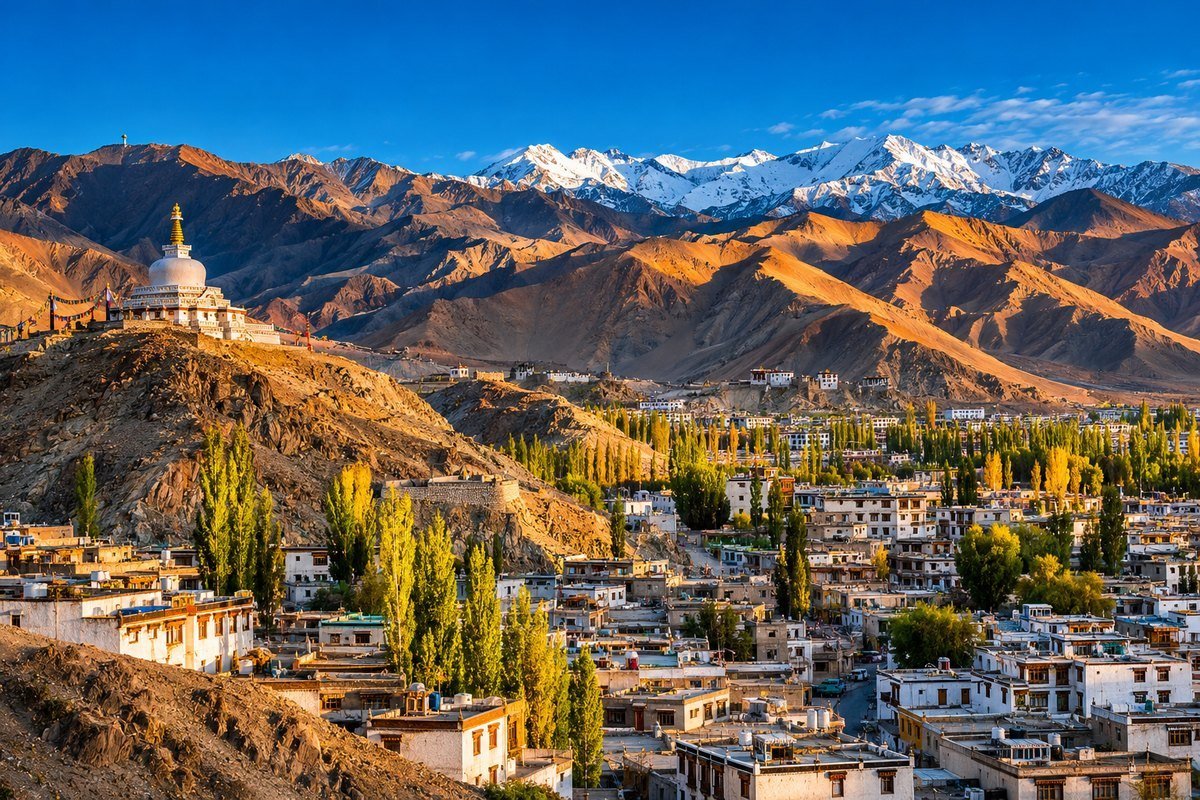
In short: Ladakh’s administration says the talks on the region’s future will include newly elected councillors as well as the Leh Apex Body and the Kargil Democratic Alliance, which have led the demands.
Why in news
Ladakh’s Chief Secretary Ashish Kundra said on 22 November 2026 that talks between the Centre and Ladakh will resume after the hill council elections and “will include elected members as well as the Leh Apex Body (LAB), and the Kargil Democratic Alliance (KDA)”. He said this would not end the existing dialogue with the LAB and the KDA, but elected members represent the people and should be involved in discussions on Ladakh’s future. The statement was meant to address concerns among civil society bodies.
Concept: Ladakh as a Union Territory and the demands on the table
Under the Jammu and Kashmir Reorganisation Act, 2019, Ladakh became a Union Territory without a legislature on 31 October 2019, administered by a Lieutenant Governor. Ladakh has Autonomous Hill Development Councils in Leh and Kargil: the Leh council was established in 1995 and the Kargil council in 2003, and both operate under the Ladakh Autonomous Hill Development Councils Act, 1997. The LAB and the KDA have demanded statehood, inclusion in the Sixth Schedule (which provides autonomous district councils for tribal areas in Assam, Meghalaya, Tripura and Mizoram), a separate public service commission and two Lok Sabha seats. The Ministry of Home Affairs set up a High-Powered Committee for talks in 2023. Tensions rose after violence in Leh in September 2025.
Key facts for Prelims
- Ladakh became a Union Territory without a legislature on 31 October 2019.
- The Sixth Schedule applies to tribal areas in Assam, Meghalaya, Tripura and Mizoram (Articles 244(2) and 275(1)).
- Ladakh has two Autonomous Hill Development Councils, in Leh and Kargil.
- Article 239 provides for the administration of Union Territories through an administrator appointed by the President.
- Ladakh currently has one Lok Sabha seat.
Mains analysis and way forward
Mains analysis
- Including elected councillors adds democratic legitimacy to the talks.
- Civil society bodies fear that broadening the table may dilute their core demands.
- Ladakh’s fragile ecology, tribal majority and strategic location along two borders make the design of safeguards important.
- Lack of a legislature leaves limited avenues for local voices in law-making.
- Extending Sixth Schedule protections to Ladakh would need a constitutional amendment.
Way forward
- Hold the hill council elections early and resume talks on a fixed timetable.
- Consider safeguards for land, jobs and culture through Article 371-type provisions or Sixth Schedule-like powers.
- Keep dialogue open with all groups to rebuild trust after the 2025 violence.
Connect the dots: GS II: Union Territories, federalism, Schedules of the Constitution; GS III: border areas; Essay: identity and development.
Uttar Pradesh’s 18th Assembly has met for only 84 days so far, raising concerns about legislative oversight
In short: The current Uttar Pradesh Assembly has met for only 84 days since 2022, and experts warn that so few sittings weaken legislative oversight of the government.
Why in news
According to The Hindu’s report of 23 November 2026, the 18th Uttar Pradesh Legislative Assembly, formed in 2022, has met for only 84 days so far. With the Assembly approaching the end of its five-year term and elections due early next year, Opposition parties and constitutional experts said infrequent sittings reduce opportunities for legislative scrutiny, debate and the raising of constituency issues, pointing to an unhealthy concentration of power in the executive. The Assembly’s term is due to expire on 22 May 2027, unless dissolved earlier.
Concept: How often must a legislature meet?
Article 174 of the Constitution requires the Governor to summon the State legislature so that six months do not pass between its last sitting in one session and its first sitting in the next. This sets a minimum of two sessions a year, but no minimum number of sitting days. The National Commission to Review the Working of the Constitution (2002) recommended a minimum of 50 sitting days a year for State legislatures with fewer than 70 members and 90 days for the others, and 120 days for the Lok Sabha and 100 for the Rajya Sabha. Fewer sittings usually mean Bills passed with little debate, short Question Hours and little scrutiny of the Budget. Uttar Pradesh has the largest Legislative Assembly in India, with 403 elected members.
Key facts for Prelims
- Article 174 requires that six months must not pass between two sessions of a State legislature.
- The Governor summons and prorogues the State legislature on the advice of the Council of Ministers.
- The NCRWC (2002) recommended at least 90 sitting days a year for State legislatures with 70 or more members.
- The Uttar Pradesh Legislative Assembly has 403 elected members; Uttar Pradesh also has a Legislative Council.
- Article 85 is the corresponding provision for Parliament.
Mains analysis and way forward
Mains analysis
- Legislatures hold the executive to account through questions, debates and committees; fewer sittings weaken this.
- Bills passed with little discussion are more likely to have gaps and to be challenged in courts.
- The pattern is common across many States, not unique to Uttar Pradesh.
- Departmentally related committees are weak or absent in many State legislatures.
Way forward
- Fix a minimum number of sitting days by law or by the Assembly’s rules.
- Strengthen committees and make referral of Bills to them routine.
- Publish an annual calendar of sittings at the start of each year.
Connect the dots: GS II: State legislature, Parliament and State legislatures (functioning, powers); Essay: accountability in democracy.
Navi Pillay’s Nobel Peace Prize revives the case for India to make genocide and crimes against humanity offences in its own law
In short: India has ratified the Genocide and Geneva Conventions but has no domestic law that defines genocide or crimes against humanity, and a lead article argues that this gap protects perpetrators.
Why in news
A lead article in The Hindu on 23 November 2026 notes that Judge Navanethem “Navi” Pillay was announced as the 2026 Nobel Peace Prize laureate on 9 October 2026, while at Courtroom 600 in Nuremberg, the birthplace of international criminal justice. She dedicated the award to “the survivors of international crimes”. The article argues that India should domesticate international criminal law. India has ratified the 1948 Genocide Convention and the 1949 Geneva Conventions and has voted for Security Council resolutions treating internal crises as threats to international peace. The authors argue that accountability for mass atrocity crimes is therefore not an “internal affair”, and that not criminalising these crimes at home protects only the perpetrators.
Concept: International crimes and Indian law
The four “core” international crimes are genocide, crimes against humanity, war crimes and the crime of aggression. The International Criminal Court (ICC) in The Hague, established under the Rome Statute (adopted 1998, in force 2002), prosecutes individuals for crimes within its jurisdiction. Jurisdiction generally requires a connection to a State Party, acceptance by a non-party State, or a UN Security Council referral. Under the principle of complementarity, the ICC generally acts only when national authorities are unwilling or unable genuinely to investigate or prosecute. India is not a party to the Rome Statute. India ratified the Genocide Convention in 1959 and the Geneva Conventions in 1950, and passed the Geneva Conventions Act, 1960 for grave breaches in international armed conflict; but Indian criminal law, including the Bharatiya Nyaya Sanhita, 2023, does not define genocide or crimes against humanity. India signed the UN Convention against Torture in 1997 but has not ratified it. Navi Pillay, from South Africa, was President of the International Criminal Tribunal for Rwanda, a judge of the ICC and UN High Commissioner for Human Rights (2008-2014).
Key facts for Prelims
- The Rome Statute of the ICC was adopted in 1998 and entered into force in 2002; India is not a party.
- The ICC is in The Hague and works on the principle of complementarity with national courts.
- India ratified the Genocide Convention (1948) in 1959.
- The Geneva Conventions Act, 1960 gives effect to the four Geneva Conventions of 1949 in India.
- India signed the UN Convention against Torture in 1997 but has not ratified it.
- The ICJ decides disputes between States, while the ICC tries individuals.
Mains analysis and way forward
Mains analysis
- A domestic law would let Indian courts try the gravest crimes themselves, strengthening sovereignty rather than weakening it.
- It would close the gap between India’s treaty commitments and its criminal law.
- Concerns about misuse, and about outside interference, explain India’s caution on the ICC.
- Ethically, the duty to prevent mass atrocities rests on every State and its officials.
Way forward
- Enact a law defining genocide and crimes against humanity, with safeguards against misuse.
- Ratify the Convention against Torture and pass a domestic anti-torture law, as the Law Commission recommended in 2017.
- Train police, prosecutors and judges in international criminal law.
Connect the dots: GS II: international treaties, judiciary; GS IV: human rights, accountability; Essay: justice and impunity.
Sources: The Hindu: A louder gavel to bridge India’s justice deficit (lead article), 23 November 2026
Economy
Nine core industries grow 10.9% in October 2026, helped largely by a low base
In short: The jump in core sector output mainly reflects very weak growth a year earlier, while crude oil and natural gas output kept shrinking for the 22nd and 28th month in a row.
Why in news
The revised Index of Core Industries, covering nine industries, grew 10.9% year-on-year in October 2026, compared with 0.8% in October 2025. The provisional figures released on 20 November showed iron ore up 26.4%, coal 23.1%, electricity 21.6%, cement 15.4% and steel 7.3%, while crude oil contracted 4.1% (its 22nd straight month of decline), natural gas 7.6% (a series-worst and its 28th straight month) and fertilisers 12.2%. The Hindu’s editorial of 23 November argues that the low base explains much of the headline growth, that construction-linked sectors show genuine growth from public infrastructure spending, and that the Petroleum Ministry should explain why domestic oil and gas output keeps falling, since this raises fuel imports and inflation.
Concept: The revised Index of Core Industries and the base effect
The Office of the Economic Adviser in the Department for Promotion of Industry and Internal Trade (DPIIT) releases the Index of Core Industries monthly. In July 2026 its base year was revised from 2011-12 to 2022-23 and iron ore was added as the ninth industry. The index now covers coal, crude oil, natural gas, refinery products, fertilisers, steel, cement, electricity and iron ore, which together account for about 32.9% of the weight of the revised Index of Industrial Production (IIP), down from about 40% in the old series. Electricity has the highest weight in the core index (about 31%), followed by refinery products (about 22.6%) and steel (about 17.6%). Growth compares a month with the same month a year earlier, so weak output a year ago (a low base) makes current growth look unusually high; the shifting dates of festivals add to the distortion.
Key facts for Prelims
- The revised Index of Core Industries has nine industries, including iron ore, with base year 2022-23.
- These industries account for about 32.9% of the weight of the revised IIP.
- Electricity has the highest weight in the revised core index, followed by refinery products and steel.
- The index is released by the Office of the Economic Adviser, DPIIT; its revised back-series starts in April 2023.
- The IIP is released by the National Statistics Office under the Ministry of Statistics and Programme Implementation.
Mains analysis and way forward
Mains analysis
- Headline growth figures can mislead without adjusting for base effects and festival timing.
- Government infrastructure spending is driving steel and cement demand, while private investment remains cautious.
- Falling domestic oil and gas output raises the import bill and exposes India to global price shocks.
- Public sector oil companies need accountability for declining production from ageing fields.
Way forward
- Report multi-year comparisons and seasonally adjusted data alongside headline numbers.
- Speed up exploration under the Open Acreage Licensing Policy and improve recovery from existing fields.
- Reduce fuel import dependence through renewables, electrification of transport and biofuels.
Connect the dots: GS III: growth and industrial indicators, energy security, infrastructure; Prelims: core sector composition.
Sources: The Hindu: Core accountability: On core sector performance (editorial), 23 November 2026
Health and social justice
FSSAI sanctions prosecution of Bisleri International after packaged drinking water samples are declared unsafe
In short: The food regulator found a packaged drinking water sample unsafe for bromate and, on appeal, for polynuclear aromatic hydrocarbons, and has also acted against several other food businesses.
Why in news
On 22 November 2026, the Food Safety and Standards Authority of India (FSSAI) said it had sanctioned prosecution against Bisleri International Pvt Ltd under the Food Safety and Standards Act, 2006. A regulatory sample of packaged drinking water (other than mineral water) collected from the company’s premises was found non-compliant with the prescribed bromate limits and declared unsafe. On the company’s appeal, the referral food laboratory also declared it unsafe, due to the detection of polynuclear aromatic hydrocarbons (PAHs). FSSAI also sanctioned prosecution against a few other companies, suspended two licences and ordered a recall of chocolate-filled cookies made by one firm. It has stepped up enforcement against food businesses and e-commerce companies this year.
Concept: FSSAI and the safety of packaged water
FSSAI is a statutory body set up under the Food Safety and Standards Act, 2006, under the Ministry of Health and Family Welfare. It sets science-based standards for food and regulates its manufacture, storage, distribution, sale and import. Food that is found “unsafe” can lead to prosecution under the Act, with penalties that rise with the harm caused. Mandatory BIS certification is no longer required for packaged drinking water and mineral water; FSSAI introduced a testing scheme for them from 1 January 2026, and they remain subject to food-safety standards and inspection. Bromate can form when water containing bromide is disinfected with ozone, and is considered a possible human carcinogen; PAHs are a group of chemicals formed by incomplete burning of organic matter, some of which are carcinogenic. If a food business disagrees with a result, a sample can be sent to a referral food laboratory.
Key facts for Prelims
- FSSAI was set up under the Food Safety and Standards Act, 2006 and works under the Ministry of Health and Family Welfare.
- Mandatory BIS certification is no longer required for packaged drinking water and mineral water; FSSAI’s testing scheme applies from 1 January 2026.
- Bromate can form when bromide-containing water is treated with ozone.
- Polynuclear aromatic hydrocarbons are formed by incomplete combustion of organic material.
- Under the FSS Act, a food business operator can appeal and have a sample tested at a referral food laboratory.
Mains analysis and way forward
Mains analysis
- Regular sampling and public naming of violators increase deterrence.
- Shortages of food safety officers and accredited labs limit enforcement in many States.
- Growing e-commerce sales make it harder to trace unsafe products.
- Safe drinking water is part of the right to life under Article 21, which raises the stakes for regulators.
- A sanction for prosecution by the regulator is not a finding of guilt; that is for the court to decide.
Way forward
- Expand testing capacity and mobile labs, especially in smaller towns.
- Make test results and recalls easy for consumers to find.
- Hold online platforms responsible for checking food sellers’ licences.
Connect the dots: GS II: health, regulatory bodies; GS III: food processing, consumer safety; Prelims: FSSAI, contaminants.
In brief
- SCO forum adopts the Indraprastha Communiqué: The SCO Civilisational Dialogue Forum at the Purana Qila, New Delhi, adopted an outcome document, the Indraprastha Communiqué, on 22 November 2026, recognising culture as a bridge of friendship and an important dimension of cooperation among member countries. Pakistan was represented by its Climate Change Minister.
- SEBI proposal on foreign portfolio investor disclosures: In a discussion paper of 20 November 2026, SEBI proposed removing the additional, granular disclosure norms for certain foreign portfolio investors (FPIs) about who ultimately owns them. SEBI noted that FPIs pulled out more than ₹5.61 lakh crore from Indian equities between October 2024 and October 2026. The Opposition said the change could open the door to opaque offshore ownership.
- India and France: six decades in space: An article on 23 November 2026 marks over 60 years of India-France space cooperation, from the Thumba Equatorial Rocket Launching Station near Thiruvananthapuram, where India launched its first sounding rocket in 1963, to Kourou in French Guiana, from where Ariane rockets have launched many Indian satellites. India’s APPLE satellite went up on an Ariane flight in 1981.
- Drone strikes in Khartoum: Drone strikes hit homes and UN premises in Sudan’s capital Khartoum (reported 22 November 2026). Sudan’s war between the army and the Rapid Support Forces began in April 2023.
- COP31 host and negotiator: COP31 followed an unusual arrangement: Türkiye hosted the conference in Antalya, while Australia led the negotiations; a pre-COP meeting was held in the Pacific.
Prelims practice: 5 questions
Choose an option to see the answer and explanation. Your score appears when all five are answered.
Mains practice
COP31’s failure to adopt an overarching cover decision highlights both the strengths and the limitations of consensus-based climate negotiations. Discuss, and suggest how India should position itself in future negotiations.
Show the answer outline
Introduction (about 30 words)
- COP31 in Antalya concluded on 22 November 2026 without agreement on an overarching cover decision after disagreement over fossil fuel language, illustrating both the inclusiveness and the limits of consensus-based negotiations.
Strengths of consensus
- Every country, however small, has a voice and a veto, which builds legitimacy.
- Agreed outcomes, such as the Paris Agreement and the COP28 Global Stocktake, carry wide ownership.
- Protects developing countries from decisions imposed by a majority of richer nations.
Limits of consensus
- A few parties can block action or water down language, as on fossil fuels.
- Leads to vague, lowest-common-denominator texts and late-night deadlock.
- Protracted deadlock can weaken ambition and leave proposals unresolved, as with the omission of a proposed US$120 billion adaptation finance target from the draft.
How India should position itself
- Defend CBDR-RC and climate justice, tied to clear demands on finance and technology.
- Support timely IPCC science for the 2028 Global Stocktake to avoid being seen as blocking.
- Lead in coalitions on solar, green hydrogen and resilient infrastructure (ISA, CDRI).
- Present its own transition plan to shape, not just react to, the agenda.
Conclusion (about 30 words)
- Consensus remains the basis of legitimacy; India can make it work by linking ambition to justice and by building coalitions that move faster where agreement exists.
Tip: Use COP31 (Antalya, November 2026), the IMO shipping vote (December 2026) and the Green India Mission audit as current examples in answers on climate diplomacy and India’s climate commitments.
Your next step, whichever stage you are at.
Open Library · All programmes · WhatsApp +91 81220 02172
Current Canvas is prepared by the UPSC Gurus editorial desk. Every fact is checked against official releases and reliable reporting, with sources listed under each story. Editions are compiled each month into Current Canvas Monthly, a free magazine.
About images: photographs and illustrations in Current Canvas are AI-generated for illustration only. They are not news photographs of the events described.
Your first Mentor’s Desk call is free
One free conversation per aspirant about where you are in your preparation, with an honest suggestion of the right next step.
Know more and bookHave a question? Get in touch
For questions about a programme, its fees, batch dates, payment or access. Message us on WhatsApp and our team will reply. Asking a question is not a booking, and you can ask as often as you need.
Get in touch on WhatsApp