 New this week · Free UG Handout 02UPSC Mains Directive Words: 60 Meanings, Trends and PYQsTwo free PDFs: The Guide and the With PYQs edition.Read and download
Today’s Canvas
- Homebuyers Propose Major RERA Reforms Ten Years After Its EnactmentGS II
- Government Seeks Better Data on Women’s Unpaid Domestic and Care WorkGS II
- Supreme Court Pauses Central Secretariat Library Relocation Over Preservation ConcernsGS I
- El Niño and Rising Food Prices Renew Concerns About India’s Inflation OutlookGS III
- Karnataka’s E20 Petrol Allegations Renew Debate Over Fuel Quality and TestingGS III
- Mumbai-Goa Highway Investigation Reveals Cost Escalation and Unfinished SectionsGS III
- Supreme Court Seeks Accountability for Yamuna Pollution and Protection of FloodplainsGS III
- IMD Forecasts Cyclone Akvan’s Landfall Along Andhra Pradesh Coast on 20 NovemberGS III
- Maharashtra Halts Tarali Pumped Storage Work Amid Disputed Wildlife Clearances and Cost FiguresGS III
- WHO Report Shows India’s TB Mortality Declining but Elimination Target UnmetGS II
- India-ASEAN Summit Highlights Maritime Cooperation and Indo-Pacific PartnershipsGS II
- China Announces Trilateral Summit with United States and Russia in ShenzhenGS II
- India Prohibits Lithium-Ion Battery Black Mass Exports to Strengthen Domestic Mineral RecoveryGS III
- AI Data Centre Expansion Raises Concerns About Electricity, Water and Local Environmental ImpactsGS III
Polity, governance and society
Homebuyers Propose Major RERA Reforms Ten Years After Its Enactment
In short: Homebuyers have proposed stronger national oversight, wider exit rights and automatic compensation under the Real Estate Regulation Act.
Why in news
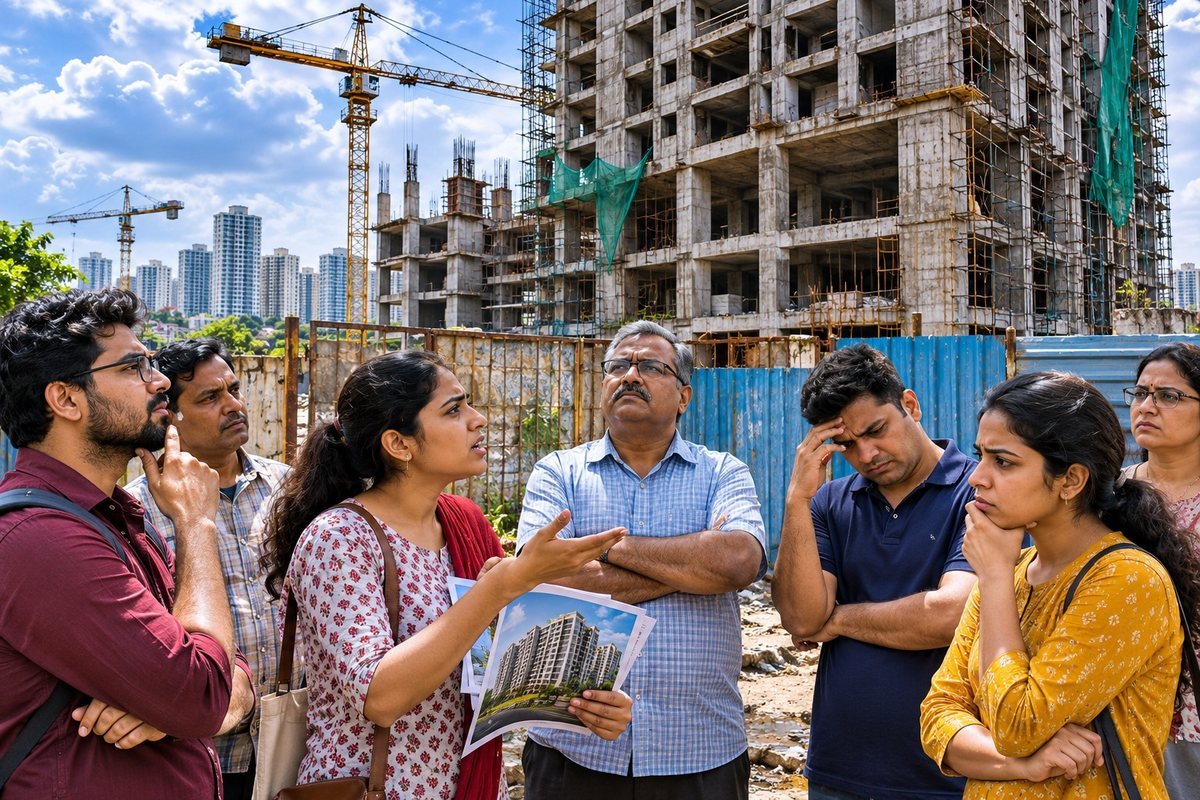
On 16 November 2026, The Indian Express examined reform proposals submitted by the Forum for People’s Collective Efforts (FPCE). The organisation wrote to Prime Minister Narendra Modi on 26 October, arguing that RERA had not fully achieved its objectives. Cabinet Secretary T V Somanathan acknowledged the suggestions on 2 November, and Cabinet Secretariat officials met FPCE representatives on 12 November. The proposals include a national appellate tribunal, stronger sale agreements, wider cancellation rights and automatic compensation. None of these changes has been enacted through this process.
Concept: Real Estate Regulation and Consumer Protection
The Real Estate (Regulation and Development) Act, 2016 seeks to protect homebuyers and improve transparency in property transactions. It requires registration of applicable projects and agents, disclosure of project details and compliance with statutory obligations. Section 4(2)(l)(D) requires promoters to deposit 70% of amounts realised from allottees for a project into a separate scheduled-bank account for land and construction costs, with regulated withdrawals. State-level regulatory authorities supervise implementation, while appellate tribunals hear appeals. Section 18 provides specified remedies for delayed possession and other failures. A national appellate tribunal is currently a reform proposal.
Key facts for Prelims
- RERA received presidential assent on 25 March 2016.
- Major provisions came into effect in phases on 1 May 2016 and 1 May 2017.
- Section 4(2)(l)(D) provides for the 70% separate-account requirement.
- Section 18 concerns return of amounts and compensation in specified circumstances.
Mains analysis and way forward
Mains analysis
- Different interpretations of the same central law across states may weaken uniform consumer protection.
- Compensation requiring individual litigation can impose substantial burdens on homebuyers.
- Stronger contracts and predictable exit rights could improve trust, but must balance buyer and developer obligations.
- A national appellate institution could improve consistency, although accessibility and case-disposal capacity would remain important.
Way forward
- Examine proposals through consultation with homebuyers, states, developers and regulators.
- Publish state-wise data on complaints, orders, compensation and actual enforcement.
- Strengthen project-account monitoring and accessible dispute resolution.
Connect the dots: Consumer rights, urbanisation, regulatory institutions, cooperative federalism and access to justice.
Sources: The Indian Express, “RERA at 10: How real estate body can protect homebuyers’ rights better”, 16 November 2026. India Code, Real Estate (Regulation and Development) Act, 2016.
Government Seeks Better Data on Women’s Unpaid Domestic and Care Work
In short: Proposed labour-survey questions could show more clearly how household responsibilities affect women’s access to paid employment.

Why in news
On 16 November 2026, The Indian Express reported that MoSPI had proposed additional questions for the Periodic Labour Force Survey during the preceding month. The questions would examine unpaid household activities, willingness to undertake paid work and reasons for not seeking employment. Existing survey responses showed that 44.4% of women not looking for work in the relevant 2025 data cited childcare or personal commitments in homemaking as their main reason. Experts cautioned that more detailed evidence is needed to establish how care duties directly influence employment decisions.
Concept: Unpaid Care Work and Labour Force Participation
Unpaid domestic work includes cooking, cleaning and household maintenance. Unpaid care work includes looking after children, older persons and other household members without wages. These activities support economic and social life but are often poorly reflected in conventional employment measures. Labour Force Participation Rate (LFPR) measures the proportion of the population that is employed or unemployed but seeking or available for work. The Time Use Survey records how people spend their time, including paid and unpaid activities. Labour-force and time-use data together can help explain constraints affecting participation in paid employment.
Key facts for Prelims
- PLFS is conducted by the National Statistical Office under MoSPI.
- India conducted nationwide Time Use Surveys in 2019 and 2024.
- In 2024, 41% of women aged 15-59 participated in household caregiving, compared with 21.4% of men.
- Among caregiving participants aged 15-59, women spent about 140 minutes daily, compared with 74 minutes for men.
Mains analysis and way forward
Mains analysis
- Unpaid care responsibilities may restrict the time available for paid employment.
- Employment policies must distinguish unwillingness to work from structural barriers to participation.
- Childcare, eldercare, transport and safe workplaces can influence women’s employment decisions.
- Better survey design can reveal inequalities across regions, age groups and household circumstances.
Way forward
- Improve survey questions while recognising the economic and social value of unpaid work.
- Expand affordable childcare and community-based care services.
- Use disaggregated evidence to design employment policies rather than relying on assumptions.
Connect the dots: Gender equality, labour statistics, social infrastructure, demographic change and inclusive growth.
Sources: The Indian Express, “Could data help decode women’s low workforce participation? Why the govt thinks so”, 16 November 2026. MoSPI, “Time Use Survey 2024”, 25 February 2025.
Supreme Court Pauses Central Secretariat Library Relocation Over Preservation Concerns
In short: The Supreme Court has asked the Centre to pause moving library books while it examines temporary and permanent relocation arrangements.

Why in news
On 16 November 2026, the Supreme Court asked the Centre to pause plans to shift books from the Central Secretariat Library in Shastri Bhawan, New Delhi, until the next hearing on 20 November. The approximately 135-year-old library holds more than 8.5 lakh books. The Centre’s affidavit proposes temporary accommodation in Netaji Nagar with capacity for approximately 6.25 lakh books, followed by permanent accommodation in Kartavya Bhavan-4, targeted for completion in December 2028. The Court sought closer examination of the arrangements under the Central Vista redevelopment.
Concept: Documentary Heritage and Conservation
Documentary heritage includes books, manuscripts, maps, gazetteers, official records and other materials preserving historical knowledge. Conservation protects these materials from physical deterioration, environmental damage and loss. Effective relocation requires accurate inventories, secure handling, suitable storage, conservation facilities and continued public access. Digitisation can improve accessibility, but it cannot replace the preservation of all original documents. Article 51A(f) of the Constitution places a fundamental duty on citizens to value and preserve India’s composite cultural heritage. This principle helps explain the public importance of protecting institutions that preserve collective memory.
Key facts for Prelims
- Central Secretariat Library is located in Shastri Bhawan, New Delhi.
- The reported collection exceeds 8.5 lakh books.
- Temporary accommodation is proposed at Netaji Nagar, followed by Kartavya Bhavan-4.
- Article 51A(f) concerns preservation of India’s composite cultural heritage.
Mains analysis and way forward
Mains analysis
- Urban redevelopment should protect public cultural institutions alongside modern infrastructure.
- Temporary storage can create conservation risks when capacity is smaller than the collection.
- Public access, cataloguing and environmental controls are essential for continuity.
- Judicial oversight can require better planning and disclosure without replacing specialist conservation assessments.
Way forward
- Prepare a verified catalogue and phased relocation plan.
- Secure adequate space, conservation facilities and continued access to collections.
- Obtain independent expert assessment before shifting rare and vulnerable materials.
Connect the dots: Cultural heritage, fundamental duties, urban redevelopment and institutional accountability.
Sources: The Indian Express, “‘Show some respect to books’: Court to Centre on plan to move heritage library”, 16 November 2026. India Code, Constitution of India, Article 51A(f).
Economy
El Niño and Rising Food Prices Renew Concerns About India’s Inflation Outlook
In short: Weak monsoon rainfall and rising food inflation have increased concern about agricultural supplies and household purchasing power.

Why in news
A 16 November 2026 Indian Express analysis examined the risk of continued food-price pressure following a weak southwest monsoon. India received approximately 12.6% less rainfall than its long-period average during June-September 2026. MoSPI’s 12 November release reported provisional October headline CPI inflation of 6.09%, compared with 5.54% in September. Consumer Food Price Index inflation rose from 7.74% in September to 8.94% in October. The analysis noted substantial cereal stocks as a possible buffer against supply disruptions. Further inflation remains a risk, not an established outcome.
Concept: Supply-Side Inflation and Monetary Policy
Inflation is a sustained increase in the general price level. The Consumer Price Index measures price changes in a basket of household goods and services. The Consumer Food Price Index focuses on food. Supply-side inflation can arise from crop failures, transport disruptions and production-cost increases. El Niño involves unusually warm waters in the central and eastern equatorial Pacific and can influence India’s monsoon. The RBI targets headline CPI inflation at 4%, within a 2%-6% tolerance band for April 2026 to March 2031. Interest-rate policy affects demand, while food-supply measures address specific shortages.
Key facts for Prelims
- October 2026 headline CPI inflation: 6.09%, provisional.
- October 2026 food inflation: 8.94%, provisional.
- The CPI release uses the base year 2024=100.
- RBI’s inflation target for April 2026 to March 2031 is 4%, with a tolerance band of 2%-6%.
Mains analysis and way forward
Mains analysis
- Monsoon deficits can affect crop production, irrigation requirements and market supplies.
- Food inflation disproportionately affects households spending a larger share of their income on food.
- Government buffer stocks can moderate cereal-market pressures but may not resolve shortages of pulses, vegetables or edible oils.
- Supply shocks complicate monetary policy because higher interest rates cannot directly produce more food.
Way forward
- Monitor crop arrivals, sowing, rainfall and food stocks through reliable official data.
- Improve storage, supply chains and market interventions where justified.
- Strengthen agricultural resilience through diversification and efficient water management.
Connect the dots: ENSO, Indian monsoon, agricultural productivity, inflation targeting and food security.
Sources: The Indian Express, “Why food inflation could be Modi government’s biggest economic and political challenge in 2027”, 16 November 2026. MoSPI, “Consumer Price Index for October 2026”, 12 November 2026. RBI, Monetary Policy Report, April 2026.
Karnataka’s E20 Petrol Allegations Renew Debate Over Fuel Quality and Testing
In short: Karnataka alleges excessive ethanol content in some petrol samples, while public oil companies dispute the findings and testing procedures.
Why in news
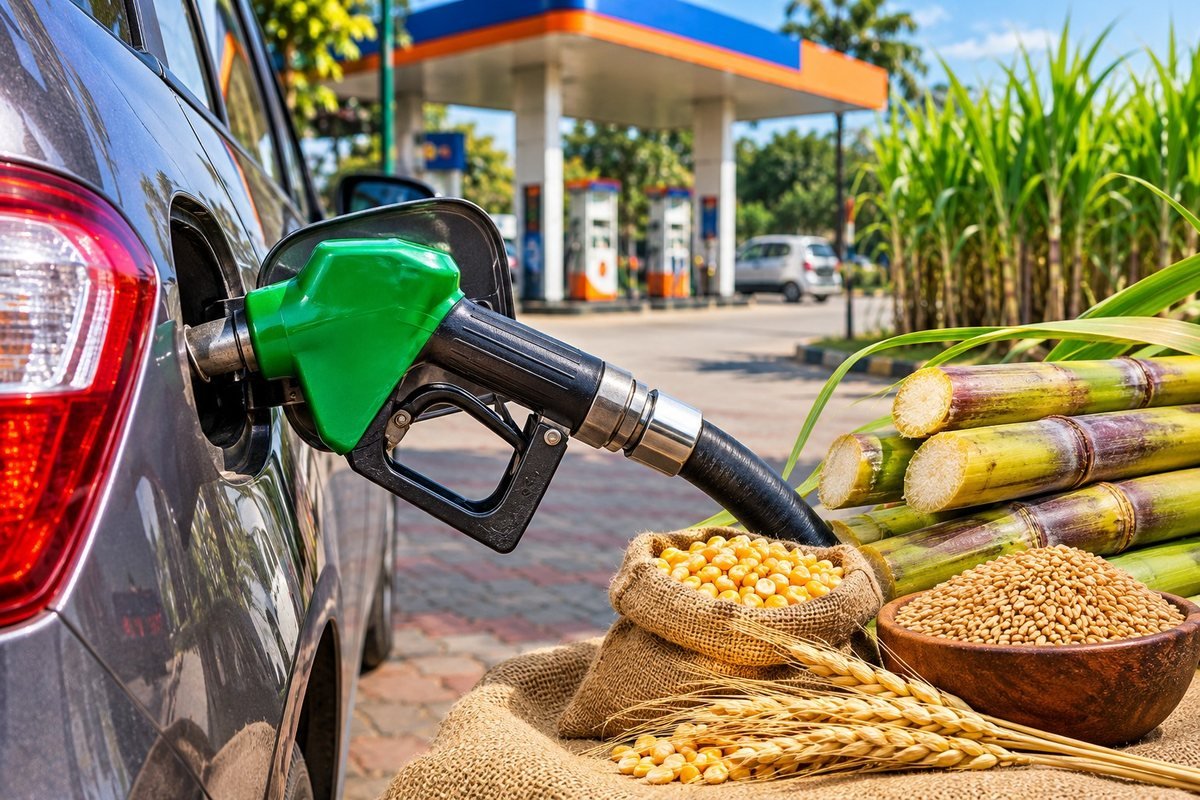
On 16 November 2026, The Indian Express examined a dispute following Karnataka’s announcement on 6 November of test results for 63 petrol samples collected from seven districts. The state alleged that several exceeded 20% ethanol and some contained more than 30%. Indian Oil, Bharat Petroleum and Hindustan Petroleum rejected the findings and questioned the sampling methods. They cited a separate monitoring exercise in which 893 samples from 27 states and UTs met a reported 19%-21% ethanol range. Independent resolution of the conflicting findings remains necessary.
Concept: Ethanol Blending and Biofuel Policy
Ethanol is an alcohol produced from suitable biological feedstocks and used as a petrol-blending component. E20 denotes a fuel blend containing approximately 20% ethanol and 80% petrol by volume. Ethanol blending can reduce petroleum dependence and create demand for agricultural feedstocks. However, its environmental and economic benefits depend on feedstock selection, farming practices, processing efficiency and fuel distribution. Vehicle compatibility and fuel-quality standards also matter. Laboratory results must be interpreted using prescribed methods, representative sampling and reliable documentation. A disputed test result does not independently establish widespread fuel adulteration.
Key facts for Prelims
- E20 denotes approximately 20% ethanol and 80% petrol.
- BIS stands for Bureau of Indian Standards.
- The relevant fuel-quality specification cited by oil companies is IS 17021.
- Karnataka tested 63 samples; oil companies cited monitoring involving 893 samples.
Mains analysis and way forward
Mains analysis
- Ethanol blending supports energy diversification but requires resource-efficient feedstocks.
- Consumers need trustworthy information about fuel composition and vehicle compatibility.
- Conflicting test results highlight gaps in technical coordination and public communication.
- Centre-state disputes over fuel quality should be resolved through transparent scientific procedures.
Way forward
- Conduct jointly verifiable independent tests using prescribed methods.
- Make fuel-quality findings and testing procedures accessible to consumers.
- Monitor the effects of biofuel expansion on water, agriculture and transport costs.
Connect the dots: Biofuel policy, energy imports, federalism, agricultural sustainability and consumer rights.
Environment, health and infrastructure
Mumbai-Goa Highway Investigation Reveals Cost Escalation and Unfinished Sections
In short: An investigation found that approximately 8 km of work remains unfinished across five stretches of the Mumbai-Goa highway.
Why in news
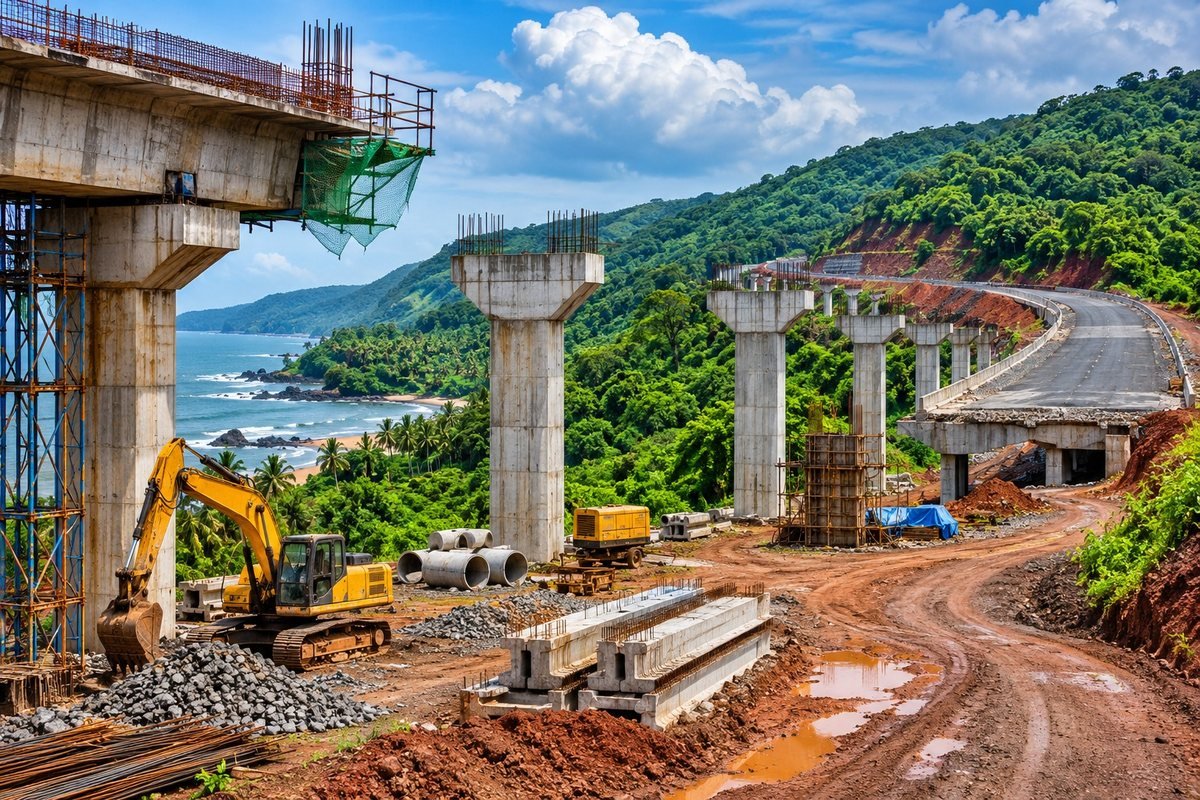
On 16 November 2026, The Indian Express published an investigation into delays on the 592-km Mumbai-Goa highway. Around 8 km of work remains incomplete across five stretches in the approximately 472-km Maharashtra section. The investigation estimated cost overruns exceeding Rs 2,000 crore across the delayed stretches. The Maharashtra section’s overall estimated cost has also risen from Rs 12,532 crore to more than Rs 18,100 crore. Road Transport and Highways Secretary V Umashankar stated that the remaining work was expected to be completed by April 2027.
Concept: Infrastructure Project Delays and Contract Management
Infrastructure projects require coordinated land acquisition, environmental permissions, financing, engineering design, procurement and construction. Delays may occur when any of these stages is incomplete or poorly coordinated. Contracts commonly use milestones, performance guarantees and monitoring arrangements to establish responsibilities. However, delays can result from several causes, including land disputes, changes in project scope, contractor finances and litigation. A project’s financial and economic benefits depend on operational connectivity, not merely the proportion of physical construction completed. Transparent reporting helps identify responsibility and control further expenditure.
Key facts for Prelims
- The Mumbai-Goa highway forms part of National Highway 66.
- The reported Mumbai-Goa highway length is approximately 592 km.
- The Maharashtra section covers approximately 472 km.
- NH-66 connects India’s western coastal corridor, extending from the Panvel region towards Kanyakumari.
Mains analysis and way forward
Mains analysis
- Small unfinished sections can prevent full utilisation of otherwise substantially completed highways.
- Weak preparation before contract awards can create later land, clearance and utility-shifting problems.
- Contractor financial distress may require termination and re-awarding, increasing delays.
- Cost escalation reduces the efficiency of public investment and may delay regional economic benefits.
Way forward
- Complete major pre-construction requirements before awarding contracts.
- Publish package-wise physical progress, expenditure and revised deadlines.
- Strengthen independent monitoring, contract enforcement and early identification of financial risks.
Connect the dots: Public procurement, infrastructure investment, fiscal efficiency, regional connectivity and administrative accountability.
Supreme Court Seeks Accountability for Yamuna Pollution and Protection of Floodplains
In short: The Supreme Court has sought stronger sewage-treatment monitoring, floodplain protection and a method for assessing pollution-related penalties.
Why in news
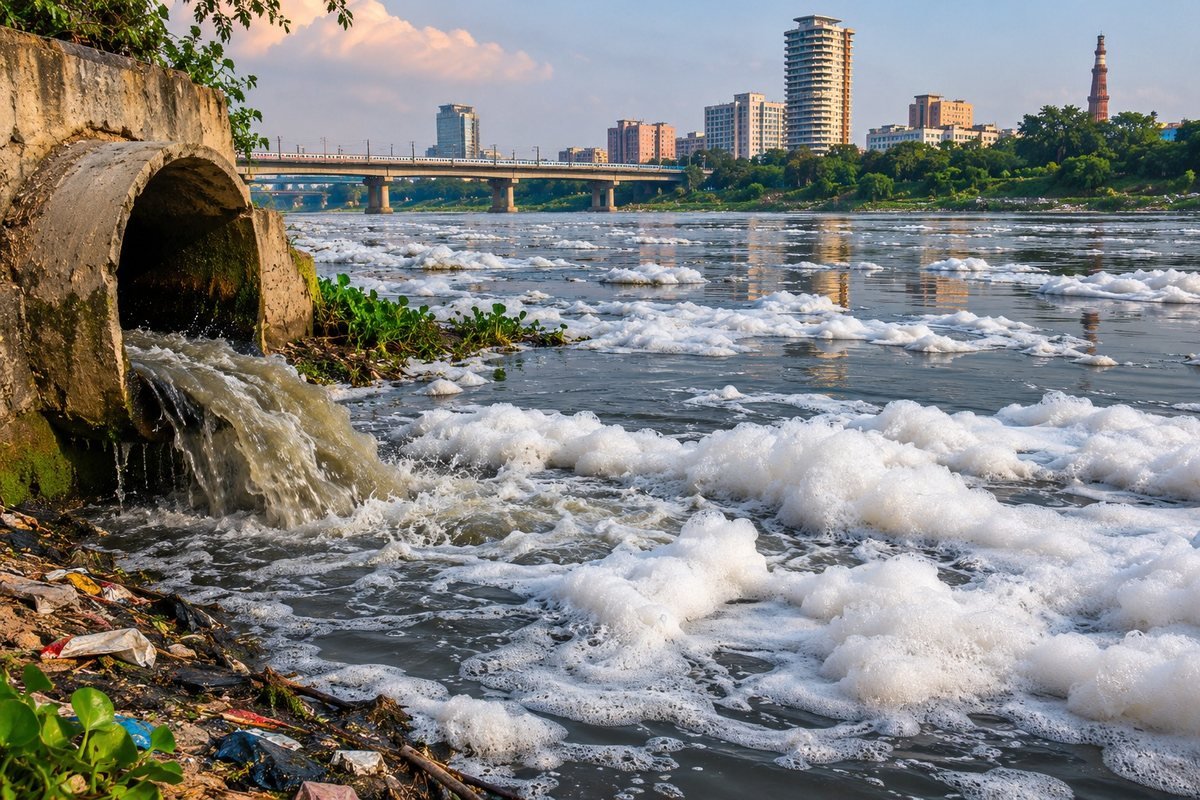
On 16 November 2026, The Indian Express reported a Supreme Court order dated 4 November addressing Yamuna pollution. The Court referred to 520 drains discharging wastewater into the river. A proposed Yamuna Action Plan identifies domestic sewage as the largest pollution source and includes 125 new sewage treatment plants and 12 common effluent treatment plants. The Court highlighted inconsistencies in treatment-plant compliance reports, called for protection of Delhi’s Zone O floodplain and asked the Central Pollution Control Board to develop a formula for environmental compensation.
Concept: River Pollution and the Polluter Pays Principle
River pollution results from untreated sewage, industrial effluents, agricultural runoff and waste disposal. Water-quality monitoring uses indicators such as Biochemical Oxygen Demand, Chemical Oxygen Demand and faecal coliform. Higher BOD generally indicates greater biodegradable organic pollution. Faecal coliform indicates contamination associated with human or animal waste. The polluter pays principle requires those responsible for pollution to bear appropriate environmental costs. Effective river protection also requires treatment infrastructure, floodplain conservation and coordination between jurisdictions. A river basin functions as one interconnected ecological system even when it crosses several administrative boundaries.
Key facts for Prelims
- The Yamuna is a major tributary of the Ganga.
- The Court referred to 520 drains discharging wastewater into the river.
- The proposed action plan includes 125 new STPs and 12 CETPs.
- Article 51A(g) concerns the duty to protect and improve the natural environment, including rivers.
Mains analysis and way forward
Mains analysis
- River pollution demonstrates the consequences of fragmented urban and inter-state governance.
- Construction of treatment plants does not guarantee compliance with discharge standards.
- The Court noted differences between the action plan’s claims and CPCB findings about sewage-treatment performance.
- Floodplain conservation must be accompanied by lawful rehabilitation where vulnerable settlements are affected.
Way forward
- Introduce transparent water-quality monitoring at jurisdictional entry and exit points.
- Conduct independent inspections and publish treatment-plant performance data.
- Protect floodplains, improve sewerage networks and implement evidence-based environmental compensation.
Connect the dots: Federalism, urban governance, environmental justice, public health and judicial oversight.
Sources: The Indian Express, “Supreme Court calls for encroachment-free Yamuna floodplain, penalties on states over pollution”, 16 November 2026. India Code, Constitution of India, Article 51A(g).
IMD Forecasts Cyclone Akvan’s Landfall Along Andhra Pradesh Coast on 20 November
In short: IMD forecasts Cyclone Akvan to intensify into a very severe cyclonic storm before crossing the Andhra Pradesh-Yanam coast.
Why in news
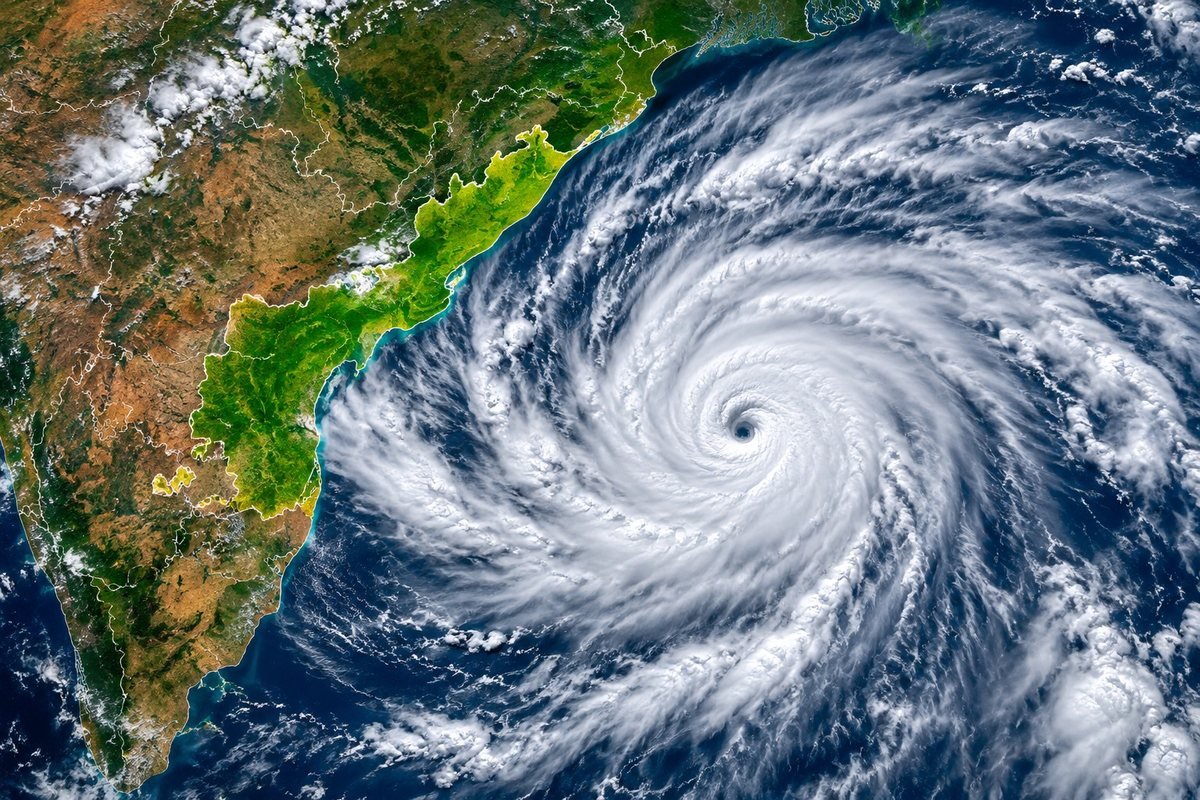
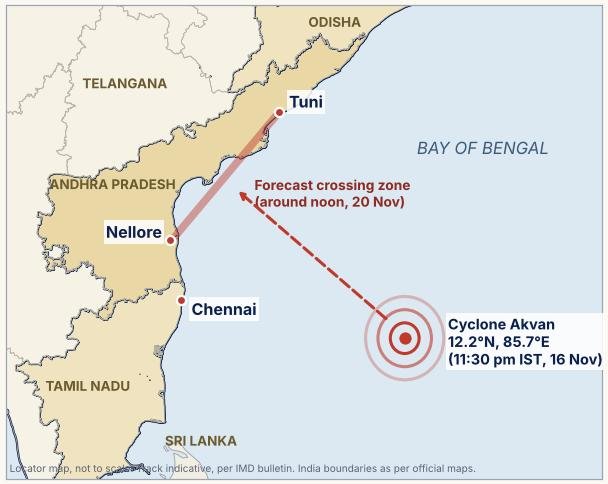
The Indian Express reported IMD’s Cyclone Akvan forecast on 17 November 2026. IMD National Bulletin No. 11, issued at 2:45 am IST on 17 November, located the storm at 12.2°N, 85.7°E at 11:30 pm IST on 16 November, approximately 610 km east of Chennai. IMD forecast intensification into a very severe cyclonic storm around the morning of 19 November. The storm was expected to cross the Andhra Pradesh-Yanam coast between Nellore and Tuni around noon on 20 November, with sustained winds of 120-130 km/h, gusting to 145 km/h.
Concept: Tropical Cyclones and Disaster Preparedness
Tropical cyclones are organised low-pressure systems that develop over warm tropical oceans. Their formation depends on warm seawater, atmospheric moisture, instability, suitable circulation and relatively low vertical wind shear. The Coriolis effect helps organise rotation away from the equator. IMD classifies cyclonic systems according to maximum sustained surface wind speed. A very severe cyclonic storm has sustained winds of 118-166 km/h. Cyclone impacts include damaging winds, heavy rainfall, flooding and storm surge. Disaster preparedness therefore requires forecasts, local vulnerability assessment, early communication, evacuation planning and resilient essential infrastructure.
Key facts for Prelims
- Cyclone Akvan developed over the Bay of Bengal in November 2026.
- The name Akvan was proposed by Iran.
- IMD located the storm at 12.2°N and 85.7°E at 11:30 pm IST on 16 November.
- Forecast landfall: Between Nellore and Tuni, along Andhra Pradesh and Yanam coasts, around noon on 20 November.
Mains analysis and way forward
Mains analysis
- Early warning is effective only when translated into timely local preparedness.
- Coastal communities face differentiated risks depending on housing, infrastructure and livelihoods.
- Cyclone rainfall and flooding may affect areas beyond the immediate landfall zone.
- Changing storm tracks and intensities require repeated forecast updates and flexible response plans.
Way forward
- Follow updated IMD bulletins and state disaster-management advisories.
- Review evacuation facilities, coastal communication systems and essential-service continuity.
- Coordinate preparedness across affected districts and neighbouring states.
Connect the dots: Tropical meteorology, coastal geography, disaster risk reduction and climate resilience.
Sources: The Indian Express, “Cyclone Akvan likely to intensify into ‘very severe’ storm, hit Andhra coast on November 20: IMD”, 17 November 2026. India Meteorological Department, National Bulletin No. 11, issued 17 November 2026.
Maharashtra Halts Tarali Pumped Storage Work Amid Disputed Wildlife Clearances and Cost Figures
In short: Maharashtra’s Forest Department ordered work stopped at Tarali, while the developer disputes allegations concerning permissions and project costs.
Why in news
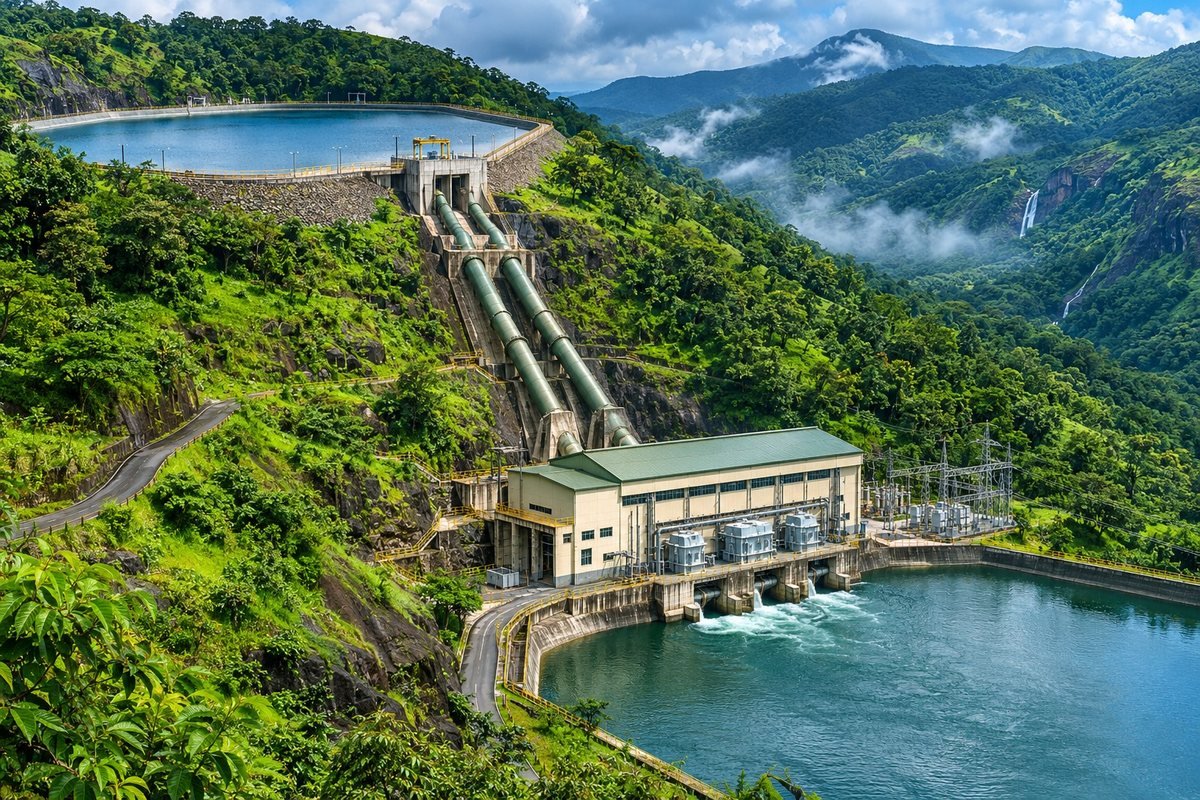
On 16 November 2026, The Indian Express reported that Maharashtra’s Forest Department had ordered work stopped at Adani Green Energy’s 1,500 MW Tarali project in Satara district on 13 November, alleging missing National Board for Wildlife approval. The environmental-clearance documents showed a project cost of Rs 5,675 crore, while a September 2026 affidavit gave Rs 56.75 crore. The corresponding 4% conservation contributions would be Rs 227 crore and Rs 2.275 crore. The company said the lower figure represented survey and investigation costs, not a reduction intended to diminish statutory obligations.
Concept: Pumped Storage Hydropower and Wildlife Regulation
Pumped storage hydropower stores energy by pumping water to an upper reservoir when electricity is available and releasing it through turbines when generation is needed. It can support electricity systems with substantial solar and wind generation. However, its environmental implications depend on location, construction and operation. The National Board for Wildlife is a statutory body under the Wild Life (Protection) Act, 1972, chaired by the Prime Minister. Wildlife-related clearances may be required depending on the applicable legal framework and project location. Environmental clearance, wildlife approval and consent to establish serve different regulatory purposes.
Key facts for Prelims
- Tarali is a proposed 1,500 MW pumped storage project in Patan taluka, Satara district, Maharashtra.
- The original cost figure in environmental-clearance documents was Rs 5,675 crore.
- The later affidavit contained the figure Rs 56.75 crore.
- The respective 4% conservation contributions would be Rs 227 crore and Rs 2.275 crore.
Mains analysis and way forward
Mains analysis
- Energy-storage infrastructure must be developed without disregarding biodiversity protection.
- Regulatory scrutiny must distinguish environmental clearance from other applicable permissions.
- Project-cost reporting can materially influence financial obligations linked to conservation.
- Allegations about approvals and costs require examination of official documents and the developer’s explanation, not premature conclusions.
Way forward
- Establish the exact scope and legal status of all applicable permissions.
- Independently examine project-cost documentation and conservation-contribution calculations.
- Publish reasoned regulatory findings before determining further action.
Connect the dots: Renewable-energy storage, Western Ghats biodiversity, statutory approvals and corporate accountability.
WHO Report Shows India’s TB Mortality Declining but Elimination Target Unmet
In short: India’s reported tuberculosis mortality has declined and rapid testing has expanded, but its 2025 elimination goal was not achieved.
Why in news
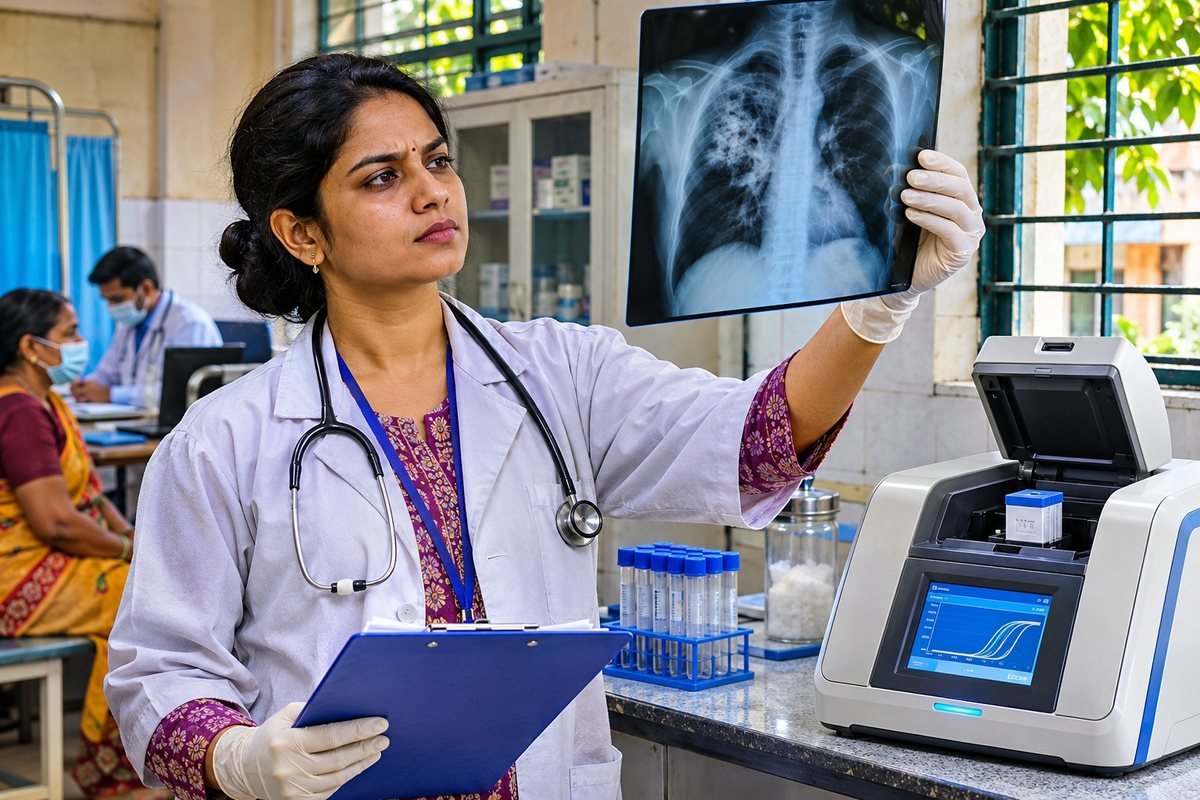
On 16 November 2026, The Indian Express reviewed India’s tuberculosis progress after WHO published its Global Tuberculosis Report 2026 on 12 November. The report indicated a 38% reduction in India’s TB mortality since 2015, compared with the WHO’s 2025 milestone of a 75% reduction. Rapid diagnostic testing accounted for 46% of diagnosed cases in 2025, up from 38% in 2024. India’s latest incidence estimates remained under review because of newly available district-level surveillance data, with updated estimates expected in early 2027.
Concept: Tuberculosis Incidence, Mortality and Elimination
Tuberculosis is an infectious disease caused by bacteria of the Mycobacterium tuberculosis complex. It most commonly affects the lungs and spreads through airborne particles released by people with infectious pulmonary TB. Incidence measures new cases occurring during a defined period, while prevalence measures existing cases. Mortality measures deaths. Molecular diagnostic tests can detect infection and certain drug-resistance patterns rapidly. WHO’s End TB Strategy uses 2015 as its baseline and establishes milestones for reducing deaths and incidence. Progress must be judged using comparable estimates, surveillance quality, treatment outcomes and other public-health indicators.
Key facts for Prelims
- WHO released the Global Tuberculosis Report 2026 on 12 November 2026.
- WHO estimated that 10.6 million people developed TB worldwide in 2025.
- Estimated global TB deaths in 2025 were 1.13 million.
- WHO’s 2025 End TB milestones required a 75% reduction in deaths and a 50% reduction in incidence compared with 2015.
Mains analysis and way forward
Mains analysis
- Declining mortality indicates progress but does not establish that TB has been eliminated.
- Expanded rapid diagnostics can improve detection and support earlier treatment.
- Pending incidence estimates complicate assessment of the current disease burden.
- Nutrition, living conditions, healthcare access and continuity of treatment remain important.
Way forward
- Expand timely molecular diagnosis and effective treatment, including drug-resistant TB care.
- Strengthen surveillance and complete the assessment of India’s latest incidence estimates.
- Integrate nutrition and social support with clinical treatment and follow-up.
Connect the dots: Infectious diseases, social determinants of health, public expenditure and SDG 3.
Sources: The Indian Express, “India missed its 2025 TB target. How much progress has it made?”, updated 16 November 2026. World Health Organization, “Global tuberculosis report 2026”, 12 November 2026.
International relations
India-ASEAN Summit Highlights Maritime Cooperation and Indo-Pacific Partnerships
In short: India’s engagement with ASEAN focuses on maritime security, economic cooperation and development partnerships amid changing regional strategic conditions.

Why in news
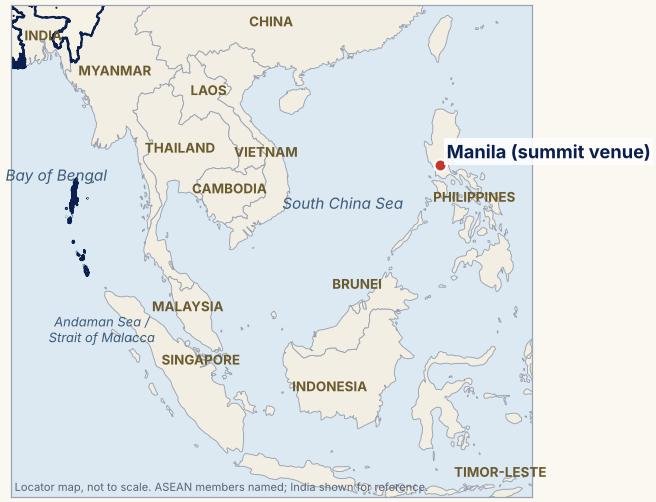
On 16 November 2026, The Indian Express reported Prime Minister Narendra Modi’s scheduled participation in the ASEAN-India Summit and East Asia Summit during a 16-17 November visit to Manila. The principal agenda covered maritime security, economic cooperation and development partnerships. The Philippines chairs ASEAN in 2026, designated the ASEAN-India Year of Maritime Cooperation. A Quad leaders’ meeting was also being planned on the sidelines. The report described it as a proposed meeting, not an event already completed.
Concept: ASEAN, East Asia Summit and the Quad
The Association of Southeast Asian Nations was established in Bangkok on 8 August 1967. It promotes regional cooperation and now has 11 members following Timor-Leste’s admission on 26 October 2025. The East Asia Summit is an ASEAN-led leaders’ forum comprising these 11 states and eight additional participating countries, including India. It therefore has 19 participants. The Quad comprises India, Australia, Japan and the United States. These mechanisms differ in membership and institutional structure. ASEAN-led forums emphasise regional dialogue, while the Quad promotes cooperation on selected Indo-Pacific priorities.
Key facts for Prelims
- ASEAN was established on 8 August 1967 through the Bangkok Declaration.
- Timor-Leste became ASEAN’s 11th member on 26 October 2025.
- The East Asia Summit has 19 participants: 11 ASEAN states and eight additional countries.
- Quad members are India, Australia, Japan and the United States.
Mains analysis and way forward
Mains analysis
- ASEAN centrality provides an established framework for India’s engagement with Southeast Asia.
- Maritime cooperation supports navigation, disaster response, connectivity and the blue economy.
- The Quad offers a separate mechanism for practical regional cooperation.
- India’s diplomatic approach must balance economic opportunities, regional stability and strategic autonomy.
Way forward
- Strengthen maritime safety, disaster preparedness and resilient connectivity with ASEAN.
- Expand development partnerships, digital cooperation and capacity-building initiatives.
- Support ASEAN-led dialogue and respect for international maritime law.
Connect the dots: Act East Policy, Indo-Pacific strategy, regional institutions and maritime security.
Sources: The Indian Express, “PM Modi heads to ASEAN meet today, focus on trade, maritime security”, 16 November 2026. ASEAN Secretariat, “About ASEAN”. ASEAN Secretariat, “EAS Participating Countries”.
China Announces Trilateral Summit with United States and Russia in Shenzhen
In short: China’s Foreign Ministry has confirmed a planned 19 November meeting involving the presidents of China, Russia and the United States.

Why in news
On 16 November 2026, China’s Foreign Ministry announced that President Xi Jinping would meet Russian President Vladimir Putin and US President Donald Trump in Shenzhen on 19 November. The Indian Express also explicitly reported the proposed trilateral meeting in its 16 November international-relations analysis. The analysis compared it with a separate Quad leaders’ meeting scheduled in Manila on 17 November and examined the changing pattern of great-power diplomacy. The Chinese announcement confirmed the planned summit’s participants, date and location but did not announce an agreed agenda or outcomes.
Concept: Multilateralism, Minilateralism and Great-Power Diplomacy
Multilateral diplomacy involves several countries negotiating or cooperating through institutions and established arrangements. Minilateralism involves smaller groups organised around particular interests or objectives. A trilateral meeting among China, Russia and the United States is a diplomatic format involving three major powers, not a new universal international organisation. APEC, established in 1989, is a separate economic forum with 21 member economies. India is not an APEC member. Major-power consultations may help manage strategic competition, but their legitimacy and effectiveness depend partly on how they respect international law and the interests of affected countries.
Key facts for Prelims
- The proposed China-Russia-US meeting is scheduled for 19 November 2026.
- Its announced location is Shenzhen, China.
- APEC was established in 1989.
- APEC has 21 member economies; India is not a member.
Mains analysis and way forward
Mains analysis
- Direct communication among major powers may reduce misunderstandings and strategic escalation.
- Smaller diplomatic formats can support negotiations but cannot replace inclusive institutions.
- Agreements affecting other countries raise questions about representation and sovereignty.
- India must protect strategic autonomy while maintaining constructive relations with different powers.
Way forward
- Support diplomatic dialogue consistent with the UN Charter and international law.
- Strengthen India’s participation in inclusive international forums.
- Assess summit outcomes through verified agreements and implementation rather than speculation.
Connect the dots: Strategic autonomy, great-power competition, global governance and international institutions.
Sources: The Indian Express, “How 2 major summits this week point to balance & bargain strategy in big-power diplomacy”, 16 November 2026. Ministry of Foreign Affairs, China, “Xi Jinping to Hold the China-Russia-U.S. Summit with President Vladimir Putin and President Donald J. Trump”, 16 November 2026. APEC Secretariat, “Frequently Asked Questions”.
Science and technology
India Prohibits Lithium-Ion Battery Black Mass Exports to Strengthen Domestic Mineral Recovery
In short: The export prohibition aims to retain battery-recycling material for domestic processing and recovery of valuable critical minerals.
Why in news
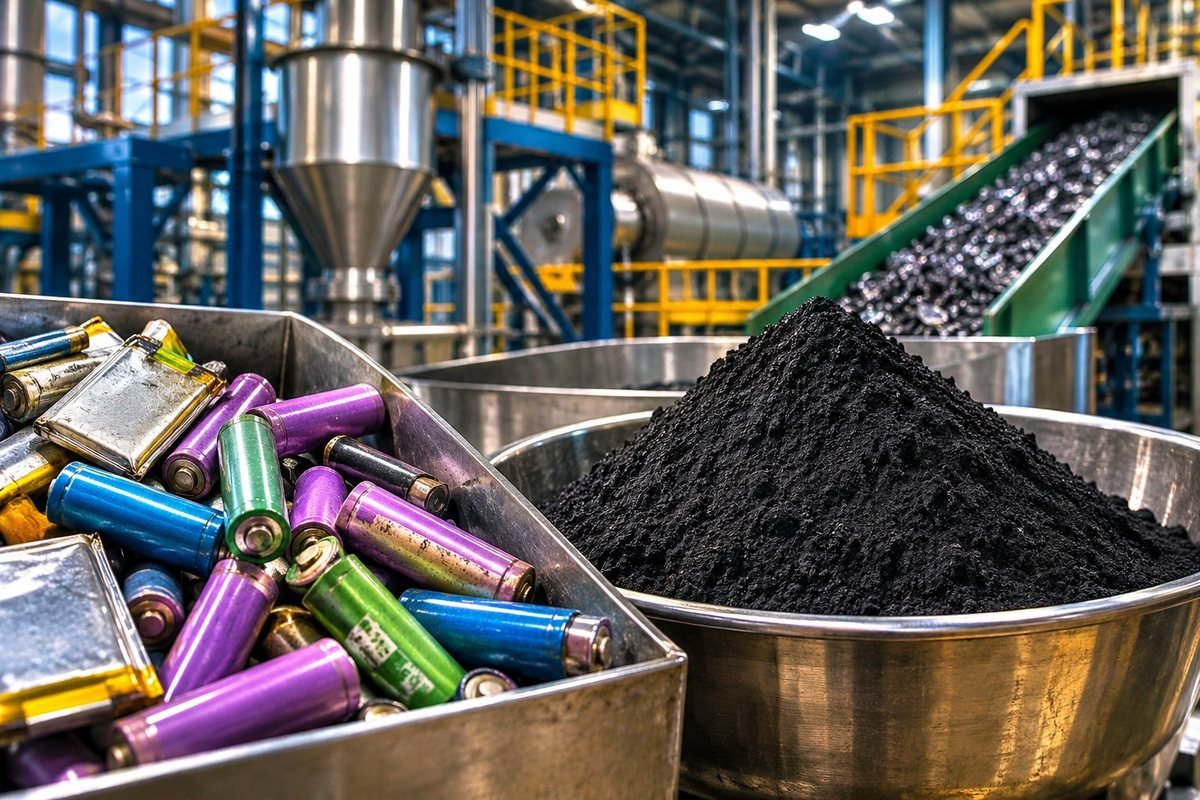
On 16 November 2026, The Indian Express explained India’s prohibition on lithium-ion battery black mass exports. DGFT Notification No. 49/2026-27, dated 10 November, changed the export policy for the notified item under ITC(HS) Code 85491400 from Free to Prohibited with immediate effect and until further orders. PIB stated on 11 November that domestic recycling and refining capacity was underutilised because of inadequate feedstock. The restriction seeks to retain recoverable lithium, cobalt, nickel and manganese within India’s domestic processing ecosystem.
Concept: Critical Minerals and the Circular Economy
Critical minerals are economically and strategically important materials whose supply may face significant disruption risks. Lithium, cobalt, nickel and other minerals are used in batteries, electronics, electric vehicles and energy-storage systems. A circular economy seeks to extend material use through repair, reuse, recycling and recovery. Lithium-ion battery recycling includes collection, safe handling, dismantling or shredding, separation and further chemical processing. Black mass is an intermediate powdery material produced during recycling, not a finished battery product. Recovering minerals domestically can reduce dependence on primary extraction and imported processed materials.
Key facts for Prelims
- DGFT Notification No. 49/2026-27 was issued on 10 November 2026.
- The notified ITC(HS) code is 85491400.
- The export policy changed from Free to Prohibited, subject to applicable transitional provisions.
- Black mass can contain recoverable lithium, cobalt, nickel and manganese.
Mains analysis and way forward
Mains analysis
- Domestic recycling can strengthen supply security for electric mobility and energy storage.
- Retaining feedstock may improve utilisation of India’s recycling and refining infrastructure.
- Export restrictions must be evaluated alongside domestic technological and processing capacity.
- Recycling itself requires safeguards against hazardous waste, contamination and unsafe working conditions.
Way forward
- Strengthen organised battery-waste collection and environmentally sound recycling.
- Invest in mineral recovery, refining and industrial skills.
- Monitor the export restriction’s effects on feedstock availability, investment and trade.
Connect the dots: Critical minerals, electric vehicles, circular economy, industrial policy and environmental sustainability.
Sources: The Indian Express, “Knowledge Nugget | From battery waste to critical minerals: Why India has banned black mass exports”, 16 November 2026. Press Information Bureau, “DGFT prohibits export of Lithium-Ion Battery Black Mass to strengthen domestic recycling and critical mineral recovery”, 11 November 2026.
AI Data Centre Expansion Raises Concerns About Electricity, Water and Local Environmental Impacts
In short: Growing AI computing demand is increasing scrutiny of data centres’ resource requirements and their effects on surrounding communities.
Why in news
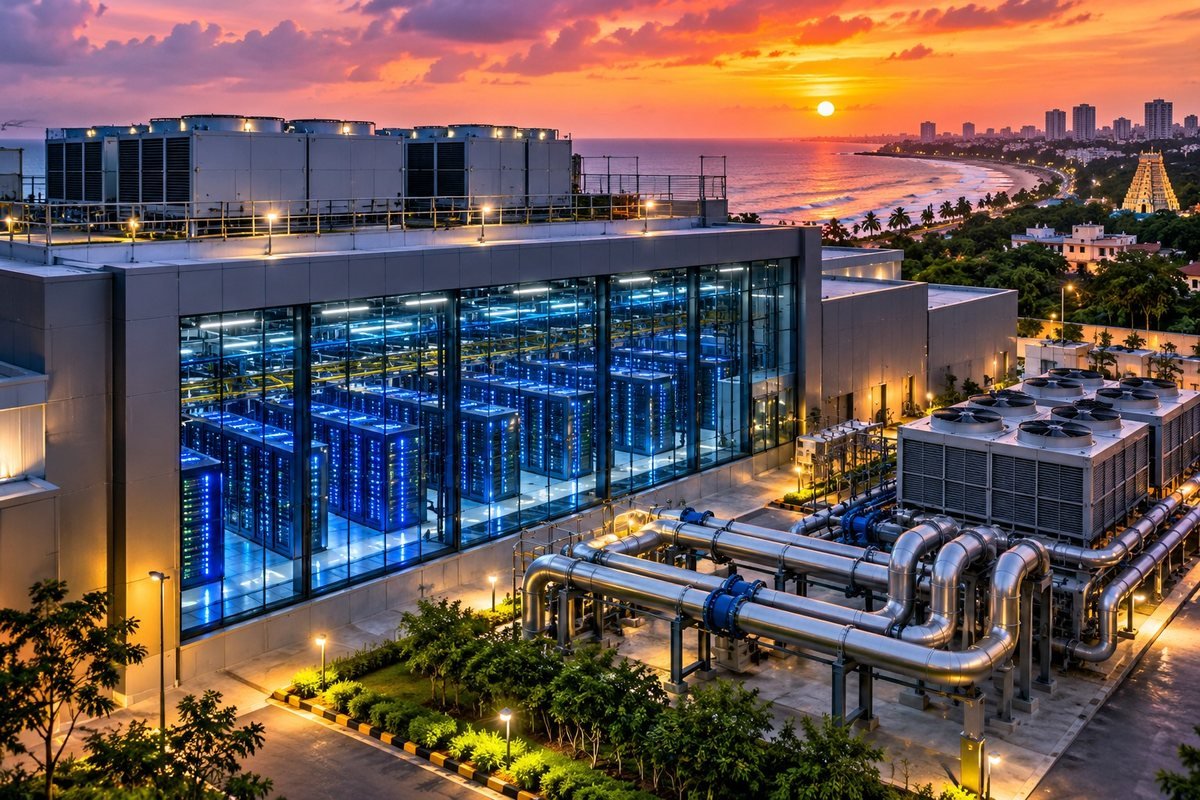
On 16 November 2026, The Indian Express examined growing international opposition to large AI data centres. The report discussed the proposed $15 billion AI data-centre campus in Visakhapatnam announced by Google and Adani Enterprises in October 2026. Legal challenges have questioned aspects of the project’s environmental approval process and land allocation. These proceedings do not establish that wrongdoing has occurred. The article also examined concerns about electricity consumption, cooling-related water requirements and whether the economic benefits of such infrastructure adequately justify its local environmental costs.
Concept: AI Data Centres and Resource Sustainability
A data centre houses servers, processors, networking equipment and storage infrastructure used for digital computing. Modern AI applications can require graphics processing units and other specialised hardware for training and operating models. These systems consume electricity and produce heat, making cooling essential. Water use depends on cooling technology, climate and site design. Data centres can support cloud services, AI research and digital economic activity, but their resource demands must be considered alongside household and industrial needs. Efficient hardware, suitable cooling, renewable electricity and transparent environmental assessment can help manage these competing requirements.
Key facts for Prelims
- GPU stands for Graphics Processing Unit.
- AI data centres require computing, storage, networking, power and cooling infrastructure.
- The reported Visakhapatnam AI-campus proposal involves an announced investment of $15 billion.
- Different cooling technologies can produce different electricity and water-use requirements.
Mains analysis and way forward
Mains analysis
- AI infrastructure supports technological development but can increase demand on electricity and water systems.
- The local environmental costs of large facilities may be different from the wider economic benefits.
- Data sovereignty is relevant because the location of infrastructure can affect applicable legal jurisdiction.
- Public consultation and credible environmental assessment help strengthen institutional trust.
Way forward
- Assess electricity, water, land and cooling requirements before major approvals.
- Encourage energy-efficient computing and resource-use reporting.
- Ensure transparent environmental compliance and meaningful engagement with affected communities.
Connect the dots: Artificial intelligence, digital sovereignty, energy security, water management and sustainable development.
In brief
- Gujarat, MP and Maharashtra water understanding: Union Jal Shakti Minister C R Patil said Gujarat, Madhya Pradesh and Maharashtra had reached an understanding involving water and electricity supplies. A formal agreement was still expected. He also reported settlement of a longstanding financial dispute involving four states. Source
- RBI and upper-layer NBFC rules for Tata Sons: The RBI reportedly reiterated in a 16 November letter that Tata Sons must comply with applicable Upper-Layer NBFC requirements, including listing. The matter highlights the regulation of large, systemically important non-bank financial institutions. Source
- Microsoft cloud outage and digital dependence: A Microsoft 365 disruption beginning on 12 November affected email and related services across multiple countries. The incident illustrates the operational risks created when institutions depend on shared cloud infrastructure. Source
- Restricted AI chips in Chinese AI models: Researchers reported numerical patterns in six Chinese AI models suggesting training with restricted Nvidia Blackwell processors. The findings raise questions about semiconductor export controls but do not establish how the chips were accessed or whether export laws were violated. Source
- Uttar Pradesh rules on bread labelling: Uttar Pradesh’s Food Safety and Drug Administration issued instructions against misleading bakery-product descriptions. Its reported rules require whole wheat bread to contain at least 75% whole wheat flour of the total flour used. Source
- Climate adaptation finance ahead of COP31: An Indian Express opinion article argued that climate adaptation requires greater public grant finance instead of excessive dependence on repayable loans. This is the author’s policy recommendation, not an agreed outcome of COP31. Source
Prelims practice: 5 questions
Choose an option to see the answer and explanation. Your score appears when all five are answered.
Mains practice
GS III | Environment | Pollution and conservation “River pollution in India is as much a problem of governance and accountability as it is of environmental degradation.” Examine this statement with reference to monitoring, inter-state coordination and ecological restoration.
Show the answer outline
INTRODUCTION
Rivers provide essential ecological, economic and social services. However, persistent pollution reflects not only inadequate treatment infrastructure but also weaknesses in regulation, accountability and coordination. The Supreme Court’s recent Yamuna directions illustrate these challenges.
RIVER POLLUTION AS A GOVERNANCE PROBLEM
- Untreated domestic sewage and industrial effluents contribute to declining water quality.
- Infrastructure expenditure does not automatically ensure effective treatment.
- Fragmented institutional responsibilities can weaken enforcement and accountability.
INTER-STATE COORDINATION
- Rivers cross administrative boundaries, making upstream and downstream actions interdependent.
- Common monitoring indicators are necessary to identify pollution and responsibility.
- Basin-level planning can support coordinated pollution control and ecological management.
MONITORING AND ENFORCEMENT
- Use indicators such as BOD, COD, faecal coliform and total suspended solids.
- Verify treatment-plant compliance through independent inspections and transparent reporting.
- Apply environmental compensation through lawful, evidence-based procedures.
ECOLOGICAL RESTORATION AND SOCIAL JUSTICE
- Protect floodplains, wetlands and natural drainage systems.
- Improve sewage networks and treatment capacity together.
- Ensure lawful and humane rehabilitation where action affects vulnerable settlements.
CONCLUSION
Effective river restoration requires a shift from measuring expenditure and infrastructure creation to measuring water quality, compliance and ecological recovery. Clear responsibilities, reliable data and coordinated action are essential.
TIP
Structure the answer around three questions: Who is responsible for preventing pollution? How is compliance measured? What evidence demonstrates ecological improvement? Use the Yamuna case as a contemporary illustration.
Your next step, whichever stage you are at.
Open Library · All programmes · WhatsApp +91 81220 02172
Current Canvas is prepared by the UPSC Gurus editorial desk. Every fact is checked against official releases and reliable reporting, with sources listed under each story. Editions are compiled each month into Current Canvas Monthly, a free magazine.
About images: photographs and illustrations in Current Canvas are AI-generated for illustration only. They are not news photographs of the events described.
Your first Mentor’s Desk call is free
One free conversation per aspirant about where you are in your preparation, with an honest suggestion of the right next step.
Know more and bookHave a question? Get in touch
For questions about a programme, its fees, batch dates, payment or access. Message us on WhatsApp and our team will reply. Asking a question is not a booking, and you can ask as often as you need.
Get in touch on WhatsApp