
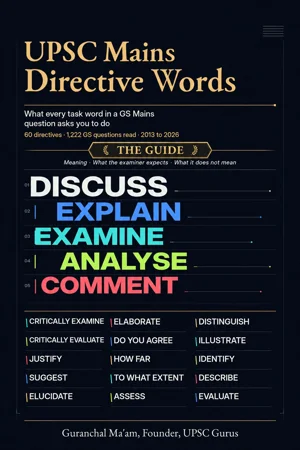
 New this week · Free UG Handout 02UPSC Mains Directive Words: 60 Meanings, Trends and PYQsTwo free PDFs: The Guide and the With PYQs edition.Read and download
Today’s Canvas
Today’s edition is about rules and the evidence behind them. A Nobel Prize honours a lifetime in international law, two courts ask that reservation rest on sound data, and regulators tighten the rules on medicine advertising, bank reserves and bond disclosures. Further afield, the World Meteorological Organization reports an El Nino that is strengthening fast, with lessons for India’s farms and water planning. Each story is checked against official releases and reliable reporting, and linked to the syllabus so that the news becomes understanding.
- Nobel Peace Prize 2026 awarded to South African jurist Navi Pillay for promoting peace and international lawGS II
- EAM Jaishankar’s Ghana, Cote d’Ivoire and Ethiopia tour deepens India-Africa partnershipGS II
- US suspends eight IT firms, including Infosys, TCS and Wipro, from green-card labour certification programmeGS II
- MP High Court strikes down 27% OBC quota; Supreme Court upholds quashing of Andhra 34% BC local-body quotaGS II
- Supreme Court issues preventive directions on patrolling, driver verification and SOS protocols for women’s safety in DelhiGS I
- Health Ministry proposes prior approval for prescription-drug ads by pharmacies, wholesalers and distributorsGS II
- RBI raises daily minimum CRR maintenance for banks from 90% to 99% from fortnight beginning 16 OctoberGS III
- India’s forex reserves fall for a fourth straight week, down USD 12.95 billion to USD 734.6 billionGS III
- SEBI mandates colour-coded ‘Credit Risk-o-Meter’ for debt securities and online bond platformsGS III
- 15th AITIGA Joint Committee in Jakarta sets time-bound deliverables for ASEAN-India goods pact reviewGS III
- Government approves 30% trade-margin cap on non-scheduled anti-cancer medicines; implementing notification awaitedGS III and GS II
- Coal supply to power plants rises 36 per cent from September low; stock rebuilding yet to beginGS III
- WMO: El Nino strengthening, Nino 3.4 anomaly forecast near +3.7 C for Oct-Dec 2026, a record if realisedGS I and GS III
- National Biodiversity Authority receives Rs 9.68 crore under benefit-sharing in April-September 2026GS III
- Supreme Court pulls up ASI, MCD over neglected Lodhi-era monuments in Delhi; top officials summonedGS I
- Navi Pillay of South Africa won the 2026 Nobel Peace Prize “for her efforts to promote peace and international law”.
- The Madhya Pradesh High Court struck down the rise in OBC reservation from 14% to 27%; the Supreme Court upheld the quashing of a 34% BC quota in Andhra Pradesh local bodies.
- RBI raised the daily minimum CRR maintenance for banks from 90% to 99% from the fortnight beginning 16 October.
- WMO said El Nino is strengthening rapidly and may reach a record Nino 3.4 anomaly of about +3.7 C in October-December.
- The Government approved a 30% trade-margin cap on non-scheduled anti-cancer medicines; the list and NPPA notification are awaited.
- The Supreme Court summoned senior officials over neglected Lodhi-era tombs in Delhi.
International relations
Nobel Peace Prize 2026 awarded to South African jurist Navi Pillay for promoting peace and international law
Why in news
On 9 October 2026, the Norwegian Nobel Committee in Oslo awarded the 2026 Nobel Peace Prize to Navanethem “Navi” Pillay of South Africa “for her efforts to promote peace and international law”. Pillay is a former judge of the International Criminal Tribunal for Rwanda and the International Criminal Court and a former UN High Commissioner for Human Rights. The prize carries 12 million Swedish kronor.
Background
Born on 23 September 1941 in Clairwood, Durban, Pillay is a South African of Indian Tamil origin who became the first woman to start a law practice in Natal Province in 1967. She served as a judge of the International Criminal Tribunal for Rwanda (ICTR) from 1995 and as its President from 1999 to 2003, where the Akayesu judgment established that rape and sexual assault could constitute acts of genocide. She was a judge of the International Criminal Court (ICC) from 2003 to 2008 and then UN High Commissioner for Human Rights from 1 September 2008, with her mandate renewed for two years in 2012. She later chaired the UN Commission of Inquiry on the Occupied Palestinian Territory and currently serves as an ad hoc judge of the International Court of Justice (ICJ) in The Gambia v. Myanmar case. Al Jazeera reported 287 candidates were nominated for the 2026 prize.
Key facts for Prelims
- Nobel Peace Prize is decided by the Norwegian Nobel Committee and announced in Oslo; the ceremony is held in Oslo on 10 December.
- Laureate 2026: Navanethem “Navi” Pillay (South Africa); motivation “for her efforts to promote peace and international law”.
- ICTR (set up by the UN Security Council for Rwanda, 1994) – Pillay was judge from 1995 and President 1999-2003; Akayesu case recognised rape as an act of genocide.
- ICC (Rome Statute, seat The Hague) – Pillay was judge 2003-2008; India is not a party to the Rome Statute.
- ICJ is the principal judicial organ of the UN; an ad hoc judge may sit in a specific case. Pillay sits as ad hoc judge in The Gambia v. Myanmar (Rohingya genocide case).
- Prize amount 2026: 12 million Swedish kronor.
Mains analysis and way forward
Mains analysis
- The award signals institutional support for international criminal justice at a time when, in the committee’s words, international law “is an absolute necessity” amid more wars and conflicts.
- Pillay’s jurisprudence on sexual violence as genocide reshaped gender justice in international humanitarian law, relevant to debates on accountability in conflicts worldwide.
- The prize to a judge rather than a statesperson highlights rule-based order and judicial institutions (ICJ, ICC, UN human rights machinery) as pillars of peace.
- For India, a Global South voice of Indian origin winning the prize resonates with India’s call for reformed multilateralism, though India stays outside the Rome Statute and is cautious about supranational jurisdiction.
- Critics and supporters alike read the award as a statement on the authority of international courts, showing that international law remains politically contested even as it is upheld.
Way forward
- Strengthen compliance with ICJ orders and UN human rights mechanisms through consistent state practice.
- Reform of the UN Security Council and multilateral institutions to improve legitimacy and enforcement of international law.
- Support capacity building of national courts so that complementarity reduces dependence on international tribunals.
Connect the dots: Links to GS II international institutions (UN, ICJ, ICC), human rights, and international humanitarian law; GS IV ethics of justice and courage.
Sources: Al Jazeera: 2026 Nobel Peace Prize awarded to Navi Pillay, 9 Oct 2026; CBS News: Nobel Peace Prize 2026 awarded to Navanethem “Navi” Pillay, 9 Oct 2026; South African History Online: Navanethem (Navi) Pillay biography
EAM Jaishankar’s Ghana, Cote d’Ivoire and Ethiopia tour deepens India-Africa partnership
Why in news
External Affairs Minister S. Jaishankar is on a five-day visit (6-10 October 2026) to Ghana, Cote d’Ivoire and Ethiopia. On 9 October in Addis Ababa he held talks with Ethiopian Foreign Minister Gedion Timothewos on education, culture, trade, investment, digitalisation and the India-African Union partnership, and a Regional Heads of Mission conference is scheduled there.
Background
In Accra on 6 October, Jaishankar called on President John Dramani Mahama and met Foreign Minister Samuel Okudzeto Ablakwa; he also received Ghana’s Instrument of Acceptance for the International Big Cat Alliance (IBCA). The visit follows Prime Minister Modi’s July 2025 visit to Ghana, the first by an Indian Prime Minister in three decades. In Abidjan, he met Minister of State for Foreign Affairs Niale Kaba, called on President Alassane Ouattara and met Vice Prime Minister Tene Birahima Ouattara, with talks covering defence, counter-terrorism, trade and investment. India and Ethiopia elevated ties to a Strategic Partnership during PM Modi’s visit to Addis Ababa in December 2025. The MEA said the tour reflects India’s commitment to deepening its partnership with Africa and solidarity with the Global South.
Key facts for Prelims
- Tour dates: 6-10 October 2026; countries: Ghana (Accra), Cote d’Ivoire (Abidjan), Ethiopia (Addis Ababa).
- Ghana deposited its Instrument of Acceptance for the International Big Cat Alliance (IBCA), launched by India for the conservation of seven big cat species.
- India-Ethiopia ties were elevated to a Strategic Partnership in December 2025; Addis Ababa hosts the headquarters of the African Union.
- ITEC (Indian Technical and Economic Cooperation) programme: India’s flagship capacity-building initiative; Jaishankar met ITEC alumni in Ghana.
- Ethiopia joined BRICS as a member in 2024.
Mains analysis and way forward
Mains analysis
- Africa is central to India’s Global South diplomacy; the African Union’s G20 membership (2023) under India’s presidency gives continuity to this outreach.
- Ghana and Cote d’Ivoire are key West African partners for trade, pharmaceuticals, agriculture and critical minerals, while Ethiopia anchors India’s Horn of Africa engagement.
- Defence and counter-terrorism cooperation with West African states addresses Sahel-linked security concerns and opens markets for Indian defence exports.
- India’s demand-driven, people-centric model, which Jaishankar said will be “driven by the priorities of Cote d’Ivoire”, contrasts with debt-heavy financing models.
- A Regional Heads of Mission conference in Addis Ababa signals an effort to sharpen India’s diplomatic footprint across the region.
- The visit coincides with renewed Ethiopia-Eritrea tensions (see In brief), a reminder that Horn of Africa stability matters for Red Sea shipping and Indian interests.
Way forward
- Convene the long-pending India-Africa Forum Summit to institutionalise engagement.
- Expand lines of credit, digital public infrastructure partnerships and pharmaceutical manufacturing in Africa.
- Deepen maritime and counter-terrorism cooperation through training and joint exercises.
Connect the dots: Links to GS II India and its neighbourhood/extended neighbourhood, South-South cooperation, and groupings such as BRICS and the African Union.
Sources: News On AIR: EAM S Jaishankar visits Ghana, Cote d’Ivoire and Ethiopia, 6 Oct 2026; IANS: EAM Jaishankar, Ethiopian counterpart discuss ways to expand and strengthen ties, 9 Oct 2026; The Tribune (ANI): Jaishankar discusses trade, investment, healthcare with Cote d’Ivoire counterpart, Oct 2026; Siasat: India, Ethiopia seek to boost strategic ties during Jaishankar’s visit, 9 Oct 2026; ThePrint (PTI): Jaishankar meets Ghana’s President, discuss bilateral ties, Oct 2026; News On AIR: PM Modi holds talks with Ethiopian PM Abiy Ahmed Ali, 17 Dec 2025
US suspends eight IT firms, including Infosys, TCS and Wipro, from green-card labour certification programme
Why in news
On 8 October 2026, US Labor Secretary Keith Sonderling suspended eight firms, Cognizant, Infosys, TCS, Wipro, HCL, Capgemini, Microsoft and Adobe, from the Permanent Labor Certification (PERM) programme. The Department of Labor said it “will not accept any new or process any pending” applications involving these companies.
Background
PERM labour certification is generally the first step for employers sponsoring an employment-based green card; it requires recruitment efforts and proof that hiring a foreign worker will not adversely affect wages and conditions of similarly employed US workers. Sonderling said the named companies had received more than 230,000 H-1B approvals and over 100,000 permanent labour certifications since 2009, and the administration alleged they displaced American workers; these allegations have not been adjudicated. The suspension does not automatically cancel existing H-1B status or green cards already issued, but filing delays can affect priority dates for Indian nationals already facing long backlogs.
Key facts for Prelims
- PERM: Permanent Labor Certification, administered by the US Department of Labor; a step before an employment-based green card.
- H-1B: US non-immigrant visa for specialty occupations; a separate process from PERM.
- Firms suspended: Cognizant, Infosys, TCS, Wipro, HCL, Capgemini, Microsoft, Adobe.
- Announced on 8 October 2026 by US Labor Secretary Keith Sonderling.
Mains analysis and way forward
Mains analysis
- Indian IT services firms and Indian professionals are the largest users of US skilled-worker pathways, so the move directly affects remittances, careers and the diaspora.
- It reflects rising protectionism in labour mobility, which may push firms towards more local hiring, nearshoring and Global Capability Centres in India.
- The action is based on allegations; due process and transparent findings matter for predictability in India-US economic ties.
- Mobility of professionals is a pillar of India-US trade negotiations and the broader strategic partnership, making diplomatic engagement important.
- Long green-card backlogs for Indian nationals mean even short suspensions can have prolonged effects for individual workers and families.
Way forward
- Raise mobility of professionals and the social security totalisation issue in India-US trade and strategic dialogues.
- Indian IT firms can diversify markets and strengthen compliance and local hiring in the US.
- Expand domestic opportunities through GCCs and skilling so talent has strong options at home.
Connect the dots: Links to GS II effect of policies of developed countries on India’s interests and the Indian diaspora; GS III services exports.
Sources: The Tribune: US suspends Indian IT firms from green-card programme, 8 Oct 2026; Outlook India: US Suspends Green Card Filings By Indian IT Firms: What It Means For H-1B Workers, 9 Oct 2026
Polity, governance and society
MP High Court strikes down 27% OBC quota; Supreme Court upholds quashing of Andhra 34% BC local-body quota
Why in news
On 9 October 2026, a Division Bench of the Madhya Pradesh High Court (Justices Anand Pathak and Vinay Saraf) struck down the 2019 amendment that raised OBC reservation from 14% to 27%, restoring 14%. The same day, a Supreme Court bench of Justices Dipankar Datta and Sheel Nagu dismissed Andhra Pradesh’s appeal against a High Court order quashing 34% Backward Class reservation in local body elections. In both cases the courts found that the extent of reservation had not been justified with adequate, contemporaneous data; the 50% ceiling formed part of that reasoning.
Background
Madhya Pradesh raised OBC reservation through Ordinance No. 2 of 2019 (8 March 2019), followed by the Madhya Pradesh Lok Seva (Scheduled Castes, Scheduled Tribes and Other Backward Classes Reservation) Amendment Act, 2019; the lead case was Ashita Dubey and Others v. State of Madhya Pradesh. The High Court, which had reserved judgment on 5 August 2026, found data on higher education and public services showed adequate OBC representation for Article 16(4) and that no extraordinary conditions justified crossing 50%, relying on Indra Sawhney v. Union of India (1992) and Jaishri Laxmanrao Patil. OBC appointments under the enhanced quota up to 29 September 2022 are protected and will be adjusted over the next three recruitment drives; the 13% held-back posts are to be filled from the unreserved list. In Andhra Pradesh, the High Court had quashed GO No. 105 and 1065 because the 34% BC quota pushed total reservation beyond 50% without adequate empirical data; Justice Datta called it a “very reasonable approach by the High Court”.
Key facts for Prelims
- Article 15(4) and 16(4): enabling provisions for reservation for socially and educationally backward classes in education and public employment.
- Indra Sawhney v. Union of India (1992): reservation should ordinarily not exceed 50% except in extraordinary situations; creamy layer for OBCs.
- Jaishri Laxmanrao Patil (2021): Maratha quota struck down for breaching the 50% ceiling without exceptional circumstances.
- Articles 243D(6) and 243T(6) allow states to reserve seats for backward classes in panchayats and municipalities.
- MP case: Ashita Dubey v. State of MP (WP 5901/2019); OBC quota restored to 14% from 27%.
- AP case: State of Andhra Pradesh v. Thandava Yogesh; GO No. 105 and 1065 on 34% BC quota quashed.
- Local-body OBC reservation must meet the “triple test” (Vikas Kishanrao Gawali, 2021): a dedicated commission, quantified proportion based on its findings, and a total within 50%.
Mains analysis and way forward
Mains analysis
- The rulings reaffirm that the extent of reservation must rest on quantifiable, contemporaneous data; as the MP bench said, the case was “not about grant of reservation but extent of reservation”.
- States see enhanced OBC quotas as a tool of social justice reflecting population share, while courts insist on representation data and the 50% rule, creating a recurring federal-judicial tension.
- Protecting appointments made in good faith up to a cut-off date balances the rights of candidates with constitutional limits.
- For local bodies, the requirement of a dedicated commission and empirical inquiry before fixing backward class quotas is central to timely elections and political representation.
- The rulings do not question affirmative action itself; they ask that its extent rest on evidence, linking the debate to caste surveys, OBC sub-categorisation and the EWS judgment, which upheld a quota beyond 50%.
Way forward
- States may build robust, periodically updated data on backwardness and representation through dedicated commissions before revising quotas.
- A national framework for caste and representation data would make reservation decisions more evidence-based and less litigation-prone.
- Complement reservation with expansion of quality education, skilling and jobs so that equality of opportunity widens for all.
Connect the dots: Links to GS II fundamental rights (Articles 14-16), local self-government (73rd/74th Amendments), and social justice for backward classes.
Sources: LawBeat: Madhya Pradesh HC Strikes Down 27% OBC Reservation, Restores 14% Quota, 9 Oct 2026; The Hans India (IANS): MP High Court strikes down 27 pc OBC quota, restores 14 pc reservation, 9 Oct 2026; LiveLaw: Supreme Court Dismisses Andhra Pradesh Govt Plea Against HC Quashing 34% Backward Class Quota In Local Body Elections, 9 Oct 2026
Supreme Court issues preventive directions on patrolling, driver verification and SOS protocols for women’s safety in Delhi
Why in news
In a suo motu case on recent sexual offences in Delhi-NCR, a Supreme Court bench of Justices JB Pardiwala and K Vinod Chandran issued detailed directions in an order dated 5 October 2026, made public on 8 October. These include enhanced beat patrolling near educational institutions, strict verification of drivers of buses, cabs and app-based vehicles with names and photos displayed, and action against unauthorised liquor outlets.
Background
The Court took cognisance after reports including the alleged sexual assault of a minor in a moving sleeper bus that travelled over 47 km from Greater Noida to Delhi without interception. Applying the “Broken Windows” theory, it said visible deficiencies such as poor lighting, CCTV gaps and weak patrolling signal neglect, while cautioning that preventive policing must not become arbitrary. Amicus Curiae Liz Mathew cited a 2020 CAG audit showing about 39% shortfall in police staff for duties such as beat patrol and investigation. The Court sought reports on control rooms, Shishtachar Squads, Operation Nirbheek and the Nazuk scheme, and asked the Delhi High Court Registrar General for data on Fast Track and POCSO courts by 6 November 2026. The Chief Secretary and Police Commissioner “shall be made personally answerable” for non-compliance; the next hearing is on 16 November 2026.
Key facts for Prelims
- Case: In Re: Recent Rape Incidents in Delhi NCR (suo motu), Supreme Court, order dated 5 October 2026.
- Broken Windows theory: visible signs of disorder encourage further crime; proposed by James Q. Wilson and George Kelling (1982).
- Police and public order are State List subjects (Seventh Schedule, List II, Entries 1 and 2); in Delhi, police is under the Union government.
- Fast Track Special Courts for rape and POCSO cases are a centrally sponsored scheme; POCSO Act, 2012 protects children from sexual offences.
- S Rajaseekaran v Union of India: Supreme Court directions on road safety, including vehicle tracking.
Mains analysis and way forward
Mains analysis
- The order shifts focus from new protocols to measurable, verifiable action on the ground, a key governance lesson for women’s safety.
- Police staffing shortfalls and fragmented grievance platforms weaken prevention; digital tools such as QR-based patrol tracking can improve accountability.
- Safety in public transport and the gig-mobility sector needs regulation that covers sub-letting and unregistered vehicles.
- Balancing preventive policing with civil liberties is essential so that measures do not lead to harassment or profiling.
- Women’s safety shapes female labour force participation and access to education, making it a development issue beyond law and order.
Way forward
- Fill police vacancies, raise women’s representation in the force and institutionalise community policing.
- Integrate SOS, vehicle tracking and CCTV with a single, well-publicised emergency response system.
- Fast-track trials through adequately staffed special courts and victim-protection measures.
Connect the dots: Links to GS I women’s issues and urbanisation; GS II police reforms, judiciary and vulnerable sections.

Health Ministry proposes prior approval for prescription-drug ads by pharmacies, wholesalers and distributors
Why in news
The Union Ministry of Health and Family Welfare has published draft rules, notified in the Gazette on 28 September 2026 and explained in a release on 9 October, to extend curbs on advertising of Schedule H, H1 and X drugs from manufacturers to retail pharmacies, wholesalers and other licensed sellers and distributors. Such entities would need prior sanction of the Central Government before advertising these medicines. These are draft rules; stakeholders have 30 days from the date copies of the Gazette are made available to send objections and suggestions.
Background
The draft amends the Drugs Rules, 1945 by proposing a new sub-rule (22) to Rule 65, which governs conditions of sale licences. Today, the prior-approval requirement explicitly applies only to manufacturers. The proposal follows recommendations of the 93rd Drugs Technical Advisory Board (DTAB) meeting held on 16 February 2026. It comes amid concern over the promotion and online sale of GLP-1 receptor agonists used for diabetes and weight management; in March 2026 the CDSCO inspected 49 entities and on 10 March issued an advisory against surrogate advertising of GLP-1 medicines. In September 2026, the Ministry also proposed mandatory CCTV at medical stores with recordings kept for three months.
Key facts for Prelims
- Drugs and Cosmetics Act, 1940 and Drugs Rules, 1945 regulate manufacture, sale and distribution of drugs; Rule 65 sets conditions of sale licences.
- Schedule H: over 500 prescription-only medicines, including common antibiotics.
- Schedule H1: about 46 medicines (certain third and fourth generation antibiotics, anti-TB drugs); red-bordered Rx label; sale records kept for at least three years.
- Schedule X: certain narcotic and psychotropic drugs with stricter controls.
- DTAB is the highest statutory technical advisory body under the Drugs and Cosmetics Act; CDSCO is the national drug regulator headed by the DCGI.
Mains analysis and way forward
Mains analysis
- Closing the regulatory gap across the supply chain can reduce self-medication and irrational use of antibiotics, a key driver of antimicrobial resistance.
- Online pharmacies, influencers and “disease awareness” campaigns have blurred the line between information and promotion, making supply-chain-wide rules timely.
- Small retailers may face compliance costs and uncertainty about what counts as an advertisement; clear definitions will be essential.
- The move complements the Supreme Court’s recent push for regulating pharmaceutical marketing practices, pointing to a broader shift from voluntary codes to binding rules.
- Effective enforcement depends on state drug controllers, whose staffing and capacity vary widely.
Way forward
- Define “advertisement” clearly, including digital and influencer content, with graded penalties.
- Strengthen state drug control departments and use digital tracking of prescription-drug sales.
- Pair restrictions with public awareness on safe use of antibiotics and weight-loss drugs.
Connect the dots: Links to GS II health governance and regulatory bodies; GS III antimicrobial resistance and pharmaceuticals.
Sources: Business Standard: Health Ministry proposes tighter rules for ads promoting prescription drugs, 9 Oct 2026; Daijiworld (IANS): Centre proposes curbs on prescription drug ads amid scrutiny of weight-loss medicines, 9 Oct 2026
Economy
RBI raises daily minimum CRR maintenance for banks from 90% to 99% from fortnight beginning 16 October
Why in news
On 9 October 2026, the Reserve Bank of India raised the minimum daily Cash Reserve Ratio (CRR) maintenance requirement for scheduled banks from 90% to 99% of the prescribed CRR, effective from the reporting fortnight beginning 16 October 2026. The prescribed CRR rate (3%) is unchanged, and the move follows a review of prevailing liquidity conditions.
Background
Under Section 42(1) of the RBI Act, 1934, banks keep a prescribed share of their net demand and time liabilities as cash balances with the RBI; the CRR is maintained as a fortnightly average, with a daily floor that gives banks day-to-day flexibility. A higher daily floor reduces the scope for banks to run down reserves on some days and lend surplus funds into the overnight market, which tends to keep the call rate closer to the policy corridor. Banking system liquidity has been in large surplus, linked partly to about USD 133 billion of foreign currency deposits mobilised between 8 June and 31 August 2026 and swapped with the RBI. In September 2026 the RBI sold Rs 1 lakh crore of government securities through open market operations in three tranches (Rs 50,000 crore, Rs 25,000 crore and Rs 25,000 crore); on 6 October the net liquidity surplus was still about Rs 4.98 lakh crore. On 7 October Governor Sanjay Malhotra said surplus liquidity was not expected to last long and described a CRR hike as one of the least preferred tools.
Key facts for Prelims
- CRR: share of NDTL held as cash with RBI under Section 42(1) of the RBI Act, 1934; no interest is paid on it.
- Prescribed CRR remains 3%; only the daily minimum rises from 90% to 99% of the requirement, from the fortnight beginning 16 Oct 2026.
- Fortnightly average maintenance continues; the daily floor limits day-to-day drawdown.
- Precedent: in September 2013 the RBI lowered the daily minimum from 99% to 95% from the fortnight beginning 21 Sep 2013.
- OMO sale = RBI sells G-secs to absorb rupee liquidity; Rs 1 lakh crore sold in three tranches in September 2026.
- Other absorption tools: variable rate reverse repo (VRRR), sell-buy forex swaps, Standing Deposit Facility.
Mains analysis and way forward
Mains analysis
- Policy transmission: with a large surplus, the weighted average call rate tends to drift below the repo rate; a tighter daily CRR floor helps align overnight rates with the policy stance after the October repo hike.
- Calibrated choice: the measure tightens reserve management without raising the CRR rate itself, consistent with the Governor’s view that a CRR hike is a less preferred tool.
- Bank operations: banks lose some intra-fortnight flexibility, which may raise treasury management costs; economists also see possible support for rupee stability.
- Source of surplus: foreign currency deposit inflows swapped with the RBI created rupee liquidity, illustrating how external sector operations feed domestic money markets.
- Toolkit mix: OMOs, VRRR, swaps and reserve requirements differ in durability and cost; RBI and analysts expect much of the surplus to ease as currency demand and balance of payments flows evolve in H2 FY27.
Way forward
- Communicate the liquidity framework clearly so that markets read operational measures separately from the policy rate signal.
- Review the daily floor periodically as surplus liquidity declines, to avoid unintended tightness during seasonal demand.
- Continue using a mix of durable (OMO) and fine-tuning (VRRR, swaps) tools matched to the expected persistence of the surplus.
Connect the dots: Links to GS III monetary policy instruments (CRR, SLR, OMO, LAF corridor), RBI Act, 1934, and inflation-growth trade-offs.
Sources: The Tribune (ANI): RBI raises banks’ daily minimum CRR maintenance requirement to 99% from 90%, 9 Oct 2026; Reuters via TradingView: India’s RBI tightens daily cash reserve rules for banks, 9 Oct 2026; NewsBytes: RBI raises CRR daily maintenance to 99% amid USD 133bn inflows, 9 Oct 2026; Business Standard: Surplus liquidity unlikely to persist beyond current financial year, 7 Oct 2026; Business Standard: RBI sells Rs 25K cr G-secs in second OMO tranche, 21 Sep 2026; RBI: OMO sale of Government of India securities (Rs 25,000 crore on 28 Sep), 23 Sep 2026; RBI: Change in daily minimum cash reserve maintenance requirement, 20 Sep 2013
India’s forex reserves fall for a fourth straight week, down USD 12.95 billion to USD 734.6 billion
Why in news
Data released by the Reserve Bank of India on 9 October 2026 show that foreign exchange reserves fell by USD 12.952 billion to USD 734.606 billion in the week ended 2 October 2026. This was the fourth consecutive weekly decline and leaves reserves about USD 51.1 billion below the record high of USD 785.706 billion reached in the week ended 4 September.
Background
In the previous week (ended 25 September), reserves had fallen by USD 18.343 billion to USD 747.557 billion, described by Business Standard as the biggest weekly decline on record. Business Standard reports that the RBI has been intervening in the spot and forward markets to contain excessive volatility in the rupee amid higher crude oil prices. The September peak was linked to inflows through special discount swaps for deposits of non-resident Indians, through which banks raised a record USD 133 billion. The decline comes in the same week that the RBI raised the repo rate by 25 basis points (7 October), signalling a tighter monetary stance.
Key facts for Prelims
- Week ended 2 October 2026: total reserves USD 734.606 billion (down USD 12.952 billion).
- Foreign Currency Assets (largest component): USD 604.747 billion, down USD 10.664 billion.
- Gold reserves: USD 106.413 billion, down USD 2.288 billion; Special Drawing Rights: USD 18.656 billion, up USD 15 million.
- Reserve Tranche Position with the IMF: USD 4.789 billion, down USD 15 million.
- All-time high: USD 785.706 billion in the week ended 4 September 2026.
- Four components of India’s forex reserves: FCA, gold, SDRs and Reserve Tranche Position in the IMF.
Mains analysis and way forward
Mains analysis
- Reserves act as the first line of defence: drawing them down to smooth rupee volatility is their intended use, but the pace of decline needs watching alongside import cover.
- Valuation effects matter: FCA are expressed in US dollars, so movements in the euro, pound and yen alter reported levels even without RBI intervention.
- Oil price sensitivity: higher crude prices widen the import bill and raise demand for dollars, linking energy security directly to external stability.
- Swap-driven inflows (such as the deposit swaps that lifted reserves to a record in September) are temporary and carry future obligations, so headline peaks should be read with care.
- Policy coordination: a repo hike, forward-market intervention and reserve use together form a calibrated response to imported inflation and currency pressure.
- Weekly changes in reserves reflect both RBI transactions and valuation effects (currency and gold price movements), so a fall should not be read entirely as dollar sales.
Way forward
- Build durable non-debt inflows through FDI, services exports and stable portfolio flows rather than relying on episodic swap windows.
- Reduce oil import vulnerability through renewables, strategic reserves and diversified suppliers.
- Continue transparent communication on intervention to anchor market expectations.
Connect the dots: Links to GS III: balance of payments, exchange rate management, monetary policy, RBI functions.
Sources: Business Standard: India’s forex reserves drop for fourth week, down $12.95 bn to $734.6 bn, 9 Oct 2026; Daily Jagran: India’s foreign exchange reserves slide further, down USD 51 billion from record high, 9 Oct 2026; News On AIR: 25-basis-point repo rate hike unlikely to impact economic expansion, says RBI Governor, 7 Oct 2026
SEBI mandates colour-coded ‘Credit Risk-o-Meter’ for debt securities and online bond platforms
Why in news
Through a circular dated 7 October 2026, the Securities and Exchange Board of India (SEBI) made a colour-coded Credit Risk-o-Meter a mandatory disclosure for debt securities. Issuers and Online Bond Platform Providers (OBPPs) must display it in offer documents and advertisements; the provisions take effect 45 days from the circular.
Background
The meter translates credit ratings issued by Credit Rating Agencies into six colour-coded bands, from “lowest credit risk” (AAA / A1+, Irish Green) to “high to very high risk of default” (B-range to D, Red). Where a security is rated by more than one agency, the meter shows the lowest rating. It applies to listed and proposed-to-be-listed non-convertible securities, commercial papers, securitised debt instruments, security receipts and market-linked debentures, whether issued publicly or by private placement. SEBI had proposed the framework in a consultation paper dated 13 August 2026, noting that retail investors may find rating symbols hard to read. A similar risk-o-meter already exists for mutual fund schemes.
Key facts for Prelims
- SEBI circular dated 7 October 2026 introduces the Credit Risk-o-Meter; effective 45 days from issue.
- Six risk bands; highest-safety band corresponds to AAA (long term) and A1+ (short term).
- Multiple ratings: the meter reflects the lowest rating.
- Must appear in offer documents, abridged prospectuses, private placement memorandums, advertisements and OBPP web/mobile platforms.
- Online Bond Platform Providers (OBPPs) are SEBI-regulated platforms that sell bonds to investors.
- Consultation paper: 13 August 2026 (Department of Debt and Hybrid Securities).
Mains analysis and way forward
Mains analysis
- Behavioural finance: a simple visual cue reduces information asymmetry for retail investors entering the corporate bond market through online platforms.
- Deepening the bond market: clearer risk communication can build trust and broaden the investor base beyond institutions.
- Limits: the meter is only as good as the underlying ratings; past episodes of sudden downgrades show the need for strong oversight of rating agencies.
- Lowest-rating rule is a conservative, investor-protective choice that discourages rating shopping.
- Complements SEBI’s broader push on disclosure standards and mis-selling prevention on digital platforms.
Way forward
- Pair the meter with investor education on what credit ratings do and do not capture (for example, liquidity and interest-rate risk).
- Strengthen accountability and timeliness of rating agencies.
- Periodically review whether the bands help investors make better choices.
Connect the dots: Links to GS III: capital markets, financial inclusion, regulatory bodies (SEBI), investor protection.
Sources: ETV Bharat: SEBI introduces colour-coded Credit Risk-o-Meter for debt securities, 8 Oct 2026; News On AIR: SEBI introduces ‘Credit Risk-o-Meter’ to help investors assess debt security risks, 8 Oct 2026; TaxGuru: SEBI mandates Credit Risk-o-Meter for debt securities (circular dated 7 Oct 2026); Corplaw Updates: SEBI consultation paper on Credit Risk-o-Meter, 13 Aug 2026
15th AITIGA Joint Committee in Jakarta sets time-bound deliverables for ASEAN-India goods pact review
Why in news
The 15th meeting of the ASEAN-India Trade in Goods Agreement (AITIGA) Joint Committee was held from 6 to 9 October 2026 at the ASEAN Secretariat, Jakarta, in hybrid format. Co-chaired by Nitin Kumar Yadav, Additional Secretary, Department of Commerce, and Mastura Ahmad Mustafa of Malaysia’s Ministry of Investment, Trade and Industry, it directed all sub-committees to expedite pending chapters with time-bound deliverables.
Background
AITIGA, the India-ASEAN free trade agreement in goods, was signed in 2009; both sides are now reviewing it to modernise the pact. Three of the eight Joint Committee sub-committees met alongside: Legal and Institutional Issues, National Treatment on Market Access, and Rules of Origin. India-ASEAN bilateral trade stood at about USD 128 billion in 2025-26. The next Joint Committee meeting is scheduled for January 2027 in India, in hybrid mode.
Key facts for Prelims
- AITIGA = ASEAN-India Trade in Goods Agreement, signed in 2009.
- 15th AITIGA Joint Committee: 6-9 October 2026, ASEAN Secretariat, Jakarta.
- ASEAN members: Brunei, Cambodia, Indonesia, Lao PDR, Malaysia, Myanmar, Philippines, Singapore, Thailand, Viet Nam.
- Rules of Origin: criteria deciding which goods qualify for preferential tariffs, key to preventing trade deflection.
- Next meeting: January 2027, India.
Mains analysis and way forward
Mains analysis
- Trade deficit concerns: India seeks better market access and tighter rules of origin to prevent routing of third-country goods.
- Act East Policy: a modernised AITIGA can deepen supply-chain integration with South-East Asia.
- Non-tariff barriers and standards often matter more than tariffs; the market-access sub-committee addresses this.
- Balancing interests: ASEAN members seek stability and predictability, while India seeks a more balanced outcome.
- Lessons for future FTAs: periodic review clauses help keep agreements aligned with changing trade patterns.
Way forward
- Conclude the review with clear rules of origin, safeguard mechanisms and NTB resolution.
- Use the agreement to boost Indian services, MSME and value-chain participation in ASEAN.
- Keep industry consultations active to ensure outcomes reflect sectoral needs.
Connect the dots: Links to GS III: trade agreements, external sector; GS II: India-ASEAN relations, Act East Policy.
Sources: Revoi.in (citing PIB): 15th Meeting of AITIGA Joint Committee held during 6-9 October 2026, 9 Oct 2026; The Tribune (ANI): India, ASEAN push to expedite pending chapters in trade pact review, next meeting in January, 9 Oct 2026; The Pioneer: India, ASEAN review progress on FTA as bilateral trade hits $128 billion, 9 Jul 2026
Government approves 30% trade-margin cap on non-scheduled anti-cancer medicines; implementing notification awaited
Why in news
On 8 October 2026, the Department of Pharmaceuticals (Ministry of Chemicals and Fertilizers) announced the Government’s approval to cap trade margins on the supply and sale of non-scheduled anti-cancer medicines at 30 per cent of the Maximum Retail Price. The list of medicines is yet to be finalised by an expert committee under DGHS, after which the NPPA will notify it. The Government projects MRP reductions of up to 70 per cent and patient savings of about Rs 2,500 crore a year.
Background
Scheduled essential cancer medicines already have government-fixed ceiling prices; this measure extends price protection to non-scheduled medicines. According to The Tribune, NPPA analysis found an average trade mark-up of about 170 per cent on these drugs, and about 110 anti-cancer drugs, including 35 patented medicines, will see lower prices. An expert committee under the Directorate General of Health Services will finalise the list, after which the National Pharmaceutical Pricing Authority (NPPA) will notify it; manufacturers must maintain current production levels. In February 2019, NPPA capped trade margins on 42 non-scheduled anti-cancer drugs (526 brands) under Paragraph 19 of the Drugs (Prices Control) Order, 2013, cutting MRPs by up to 91 per cent.
Key facts for Prelims
- Trade margin cap: 30 per cent of MRP for non-scheduled anti-cancer drugs (approved October 2026).
- Projected (not yet realised): MRP cuts of up to 70 per cent and savings of about Rs 2,500 crore a year.
- The National Pharmaceutical Pricing Authority (NPPA) will issue the notification after an expert committee under DGHS finalises the list.
- 2019 pilot: 42 drugs, 526 brands, MRPs cut by up to 91 per cent, under Para 19 of DPCO 2013.
- Cancer incidence in India cited by the ministry: about 60 per lakh population.
Mains analysis and way forward
Mains analysis
- Trade margin rationalisation targets distribution mark-ups rather than manufacturer prices, protecting patients without directly hurting production incentives.
- Out-of-pocket expenditure on cancer care is high; lowering drug costs supports Universal Health Coverage goals.
- Risks: possible supply disruption or shifts in product mix, hence the requirement to maintain production levels and monitor availability.
- Inclusion of patented and imported drugs extends affordability to newer therapies, though it may affect launch decisions by global firms.
- Evidence from the 2019 pilot (annual savings of about Rs 984 crore) supports scaling the approach.
Way forward
- Monitor availability through NPPA’s pharmaceutical data systems and act quickly on shortages.
- Combine price measures with expanded Jan Aushadhi outlets and insurance cover for cancer care.
- Periodically review margin caps based on market data and patient outcomes.
Connect the dots: Links to GS III: price regulation and markets; GS II: health, issues relating to access to medicines.
Sources: News On AIR: Government caps margins on non-scheduled anti-cancer drugs at 30% of MRP, 9 Oct 2026; The Tribune: Centre to cap trade margins at 30% for non-scheduled anti-cancer drugs, 9 Oct 2026; PharmaTutor: Government approves 30% trade margin cap on non-scheduled cancer drugs, 9 Oct 2026
Energy and infrastructure

Coal supply to power plants rises 36 per cent from September low; stock rebuilding yet to begin
Why in news
The Ministry of Coal said on 9 October 2026 that daily coal supplies to the power sector have risen about 36 per cent from the September low. The average daily stock drawdown at domestic coal-based plants fell from 0.243 million tonnes per day in September to 0.116 million tonnes per day in October, though the ministry noted that stock rebuilding is yet to commence.
Background
Rail loading averaged more than 465 rakes a day in October, with the 470-rake target met on three consecutive days; road and other modes also improved. Stocks had come under pressure in September: according to Business Standard, plants with critical coal stocks rose from 45 on 1 September to 82 on 27 September, while total stocks fell from 28.6 million tonnes (49 per cent of the normative requirement) to 21.8 million tonnes (37 per cent). Coal Minister G Kishan Reddy attributed earlier problems to monsoon-related disruptions and higher demand, and denied any shortage in production. The ministry describes the “critical stock” tag as an early-warning mechanism for plants below the prescribed normative stock, not a sign of imminent shutdown.
Key facts for Prelims
- Daily drawdown: 0.243 MT/day (September) to 0.116 MT/day (October 2026).
- Rail loading target: 470 rakes per day; October average over 465 rakes.
- Critical stock plants: 82 on 27 September 2026 (45 on 1 September).
- Total plant stocks on 27 September: 21.8 MT, 37 per cent of normative requirement.
- Coordinating ministries: Coal, Railways and Power.
Mains analysis and way forward
Mains analysis
- Coal still anchors India’s baseload power, so supply logistics (rakes, evacuation, road links) are as important as mining output.
- Seasonal vulnerability: monsoon disruption in mining and transport recurs each year, calling for pre-monsoon stock building.
- Imported coal mandates raise costs and foreign exchange outgo, linking energy security to the external sector.
- Demand growth and peak-load management require storage, grid flexibility and faster renewable integration alongside thermal capacity.
- Early-warning stock classifications help, but transparent data and timely action prevent crises from building up.
Way forward
- Build stocks ahead of winter and summer peaks, with dedicated freight corridors and first-mile connectivity projects.
- Expand battery and pumped storage to reduce peak dependence on thermal plants.
- Strengthen inter-ministerial coordination with clear stock-building targets.
Connect the dots: Links to GS III: infrastructure (energy, railways), energy security, mineral resources.
Sources: PSU Watch: Coal supplies to power sector rise 36% from September low; stocks still declining, 9 Oct 2026; Free Press Journal: India’s coal supply to power plants rises 36% in October, 9 Oct 2026; Indian Masterminds: Coal supply to power plants rises 36% from September low, 9 Oct 2026; Business Standard: No coal shortage, says Reddy; plants with critical stocks rise to 82, 28 Sep 2026
Geography and environment

WMO: El Nino strengthening, Nino 3.4 anomaly forecast near +3.7 C for Oct-Dec 2026, a record if realised
Why in news
On 8 October 2026, the World Meteorological Organization (WMO) said El Nino is “firmly established and strengthening rapidly”, with a near-100% likelihood of persisting through February 2027 and a peak expected around December. The Nino 3.4 sea-surface temperature anomaly, which rose from +1.6 C in June to +2.5 C in August, is forecast to average about +3.7 C in October-December 2026, above the previous record of +2.6 C (November 2015-January 2016).
Background
El Nino is the warm phase of the El Nino-Southern Oscillation (ENSO), which typically recurs every two to seven years and shifts rainfall and temperature patterns far from the tropical Pacific. NOAA’s Climate Prediction Center identifies El Nino conditions when the one-month sea-surface temperature anomaly in the Nino-3.4 region (5 N-5 S, 120 W-170 W) is +0.5 C or more, alongside a matching atmospheric response. WMO’s September 2026 update had already given near-100% odds of the event lasting till February 2027 and a model peak of about +3.6 C. India’s June-September 2026 monsoon ended at 87% of the long period average, a deficit of about 12.6% and the lowest since 2015, according to IMD. The October update was based on a consensus of 13 national and international forecasting centres.
Key facts for Prelims
- Nino 3.4 region: 5 N-5 S, 120 W-170 W in the equatorial Pacific; El Nino threshold is a +0.5 C anomaly (NOAA CPC).
- WMO (8 Oct 2026): Oct-Dec 2026 Nino 3.4 anomaly forecast at about +3.7 C; previous record +2.6 C in Nov 2015-Jan 2016.
- Persistence through February 2027 rated near 100%; peak expected around December 2026.
- Positive Indian Ocean Dipole (IOD) expected to peak in October, with an Oct-Dec anomaly of about +0.5 C, then decline.
- NOAA CPC (8 Oct 2026) gave an 83% chance that the three-month relative index reaches at least +2.5 C in Oct-Dec.
- IMD: 2026 southwest monsoon ended at 87% of LPA; October-December rainfall likely below normal over most of India.
Mains analysis and way forward
Mains analysis
- Agriculture and food: WMO flags drier-than-normal conditions over the Indian subcontinent for Oct-Dec; this matters for rabi sowing, soil moisture and reservoir storage after a monsoon at 87% of LPA.
- Interplay of ocean drivers: a positive IOD can partly offset El Nino effects on South Asia, but WMO expects it to fade after October, so the net regional outcome depends on several ocean basins.
- Global heat: El Nino releases heat already stored in the ocean; August 2026 was the hottest August on record, raising the likelihood of heat extremes into 2027.
- Forecasting capacity: near-certain multi-centre consensus months ahead shows the value of seasonal prediction for anticipatory action, crop planning and water budgeting.
- Macroeconomic links: weaker kharif and rabi prospects can affect food inflation, rural incomes and monetary policy choices.
Way forward
- Use district-level contingency crop plans, timely seed and fodder supply, and water-budgeting for rabi based on IMD outlooks.
- Strengthen heat action plans, drought monitoring and early warnings for all, linked to social protection.
- Invest in long-term resilience: micro-irrigation, drought-tolerant varieties and better reservoir management.
Connect the dots: Links to GS I climatology (ENSO, IOD, Walker circulation, Indian monsoon) and GS III disaster management and agriculture.
Sources: SCIMEX (WMO release): Sea surface temperatures suggest El Nino is strengthening, 8 Oct 2026; The Star (Reuters): UN weather body says El Nino set to intensify and last until February 2027, 8 Oct 2026; The Nation (Anadolu): El Nino forecast to reach record strength, 8 Oct 2026; SBS News: WMO says El Nino expected to grow stronger ahead of December peak, 8 Oct 2026; The Watchers: NOAA gives El Nino an 83% chance of reaching historic strength, 8 Oct 2026; NOAA CPC: ENSO Alert System definitions; Business Standard: 2026 monsoon ends with nearly 13% rain deficit, worst since 2015, 30 Sep 2026; Down To Earth: El Nino strengthened rapidly, may intensify further, 3 Sep 2026
National Biodiversity Authority receives Rs 9.68 crore under benefit-sharing in April-September 2026
Why in news
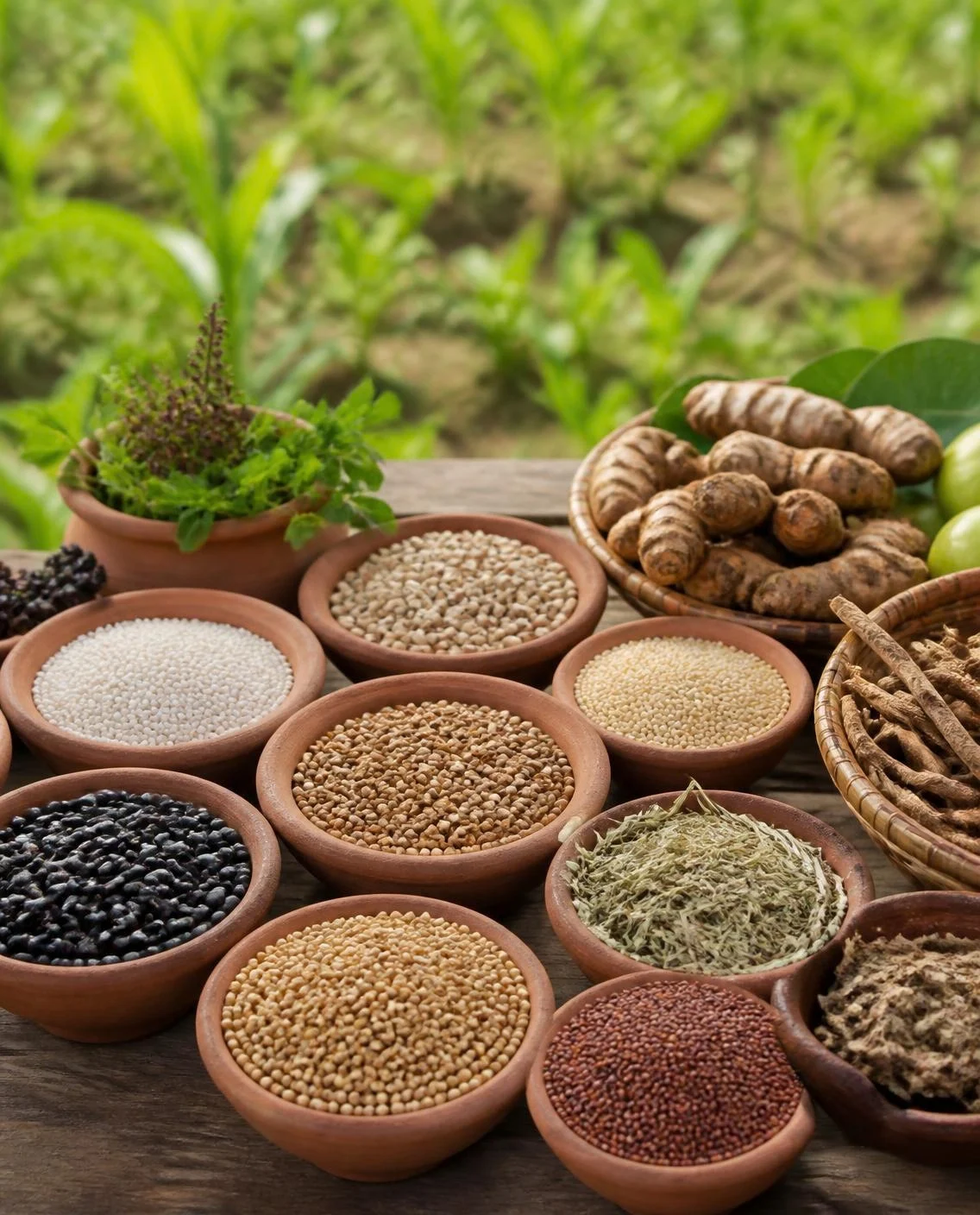
The National Biodiversity Authority (NBA), under the Ministry of Environment, Forest and Climate Change, received Rs 9.68 crore from users of India’s biological resources between April and September 2026, according to a PIB release of 8 October 2026. Of this, about Rs 9.56 crore came from access to biological resources, led by the agri-seed sector (Rs 7.16 crore), food and beverages (Rs 1.59 crore) and animal husbandry (Rs 62.01 lakh), with about Rs 11.24 lakh linked to intellectual property rights.
Background
Since 2008, the NBA has realised about Rs 278 crore through the Access and Benefit Sharing (ABS) framework and disbursed more than Rs 200 crore for conservation and for benefits to communities, farmers and institutions. Resources accessed in this period include crops such as chickpea, flaxseed and brinjal, medicinal plants such as ashwagandha and moringa, livestock genetic material (Mithun, Murrah buffalo) and red sanders wood. Under the ABS Regulations notified on 29 April 2025, following the 2023 amendment of the Biological Diversity Act, users with annual turnover below Rs 5 crore are exempt, and Biodiversity Management Committees receive 85-90 per cent of monetary benefits. In September 2026, the NBA sanctioned Rs 8.23 crore to 27 State Biodiversity Boards and five UT Biodiversity Councils, linked to bitter gourd, okra, chilli and onion.
Key facts for Prelims
- NBA is a statutory body under the Biological Diversity Act, 2002 (amended 2023), under MoEFCC.
- ABS receipts April-September 2026: Rs 9.68 crore; agri-seed Rs 7.16 crore was the largest share.
- Cumulative ABS realised since 2008: about Rs 278 crore; over Rs 200 crore disbursed.
- ABS Regulations 2025 (notified 29 April 2025): turnover slabs of 0.2, 0.4 and 0.6 per cent; up to 5 per cent for high-value resources such as red sanders, sandalwood and agarwood.
- Funds are used under Section 32(2) of the Biological Diversity Act, 2002.
- Target 13 of the Kunming-Montreal Global Biodiversity Framework deals with fair and equitable benefit-sharing.
Mains analysis and way forward
Mains analysis
- Benefit-sharing recognises communities and farmers as custodians of genetic resources, operationalising the principle of fair and equitable sharing.
- Seed-sector dominance shows how crop genetic diversity underpins commercial agriculture and why local landraces need protection.
- Concerns: low absolute collections relative to the size of bio-based industries, and gaps in compliance and tracking of foreign and domestic users.
- Reaching the last mile: effective Biodiversity Management Committees and People’s Biodiversity Registers are needed so funds reach actual knowledge holders.
- Balancing ease of doing business with conservation: turnover exemptions reduce burden on small users but may narrow the revenue base.
Way forward
- Digitise ABS tracking and link it with patent and product approval systems.
- Build capacity of BMCs to document resources and use funds for local conservation.
- Raise awareness among industry of ABS obligations to improve voluntary compliance.
Connect the dots: Links to GS III: biodiversity conservation, environmental governance; Prelims: Biological Diversity Act, Kunming-Montreal GBF targets.
Sources: News On AIR: NBA receives Rs 9.68 crore under benefit-sharing framework in six months, 9 Oct 2026; Observer Voice: India’s Biodiversity Authority secures Rs 9.68 crore from biological resources, 9 Oct 2026; DD India: NBA crosses Rs 200 crore milestone in ABS disbursements, 6 Sep 2026; Mongabay India: New regulations define access-benefit sharing from biological resources, Jun 2025
Art and culture
Supreme Court pulls up ASI, MCD over neglected Lodhi-era monuments in Delhi; top officials summoned
Why in news
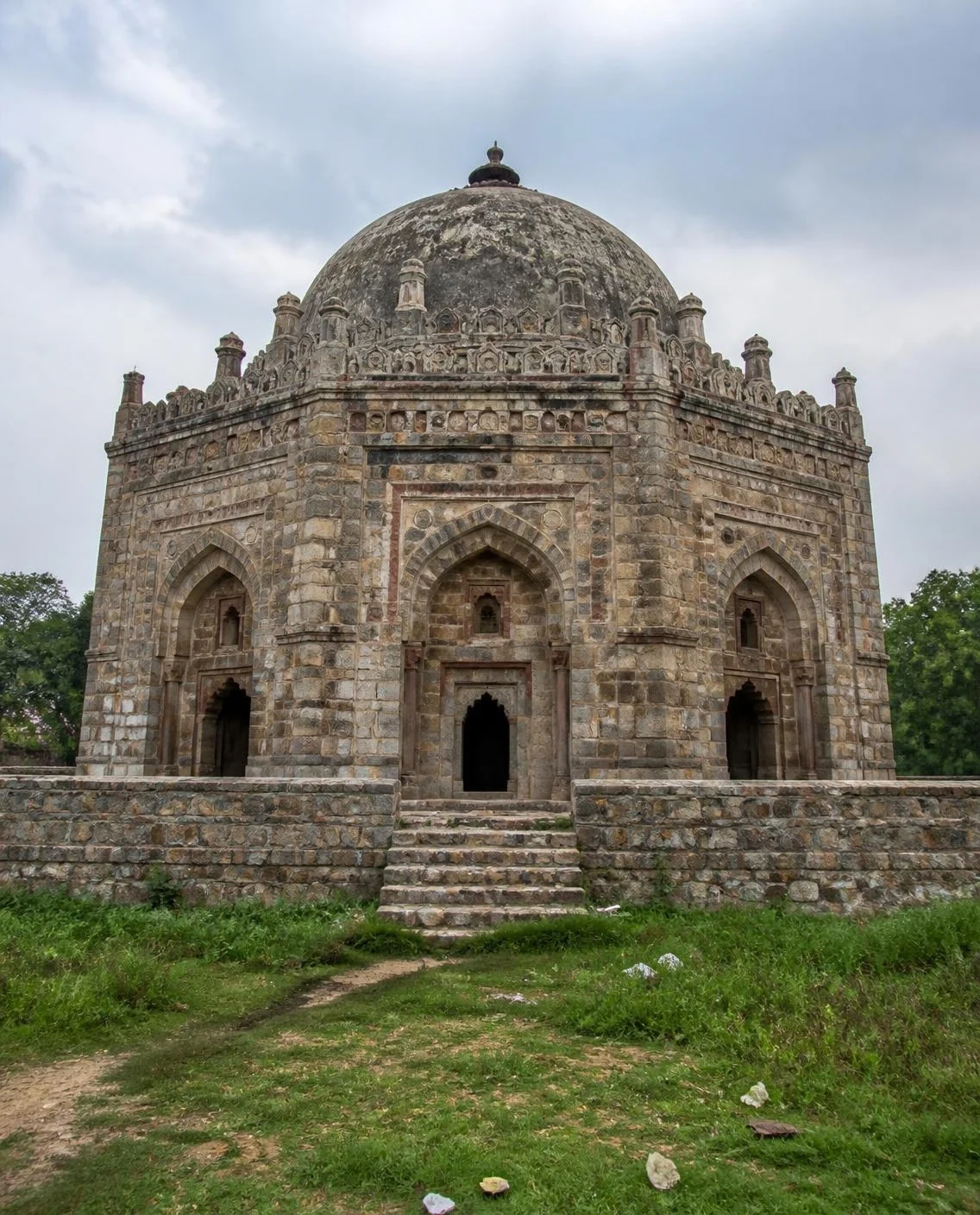
On 7 October 2026 (reported 8 October), a Supreme Court bench of Justices Ahsanuddin Amanullah and N. Kotiswar Singh criticised the Archaeological Survey of India and Delhi civic bodies after reports that Lodhi-era tombs at Zamroodpur were used as a cow shed and dumping ground. The Court observed that the ASI “has totally lost their credibility” and directed senior officials, including the Culture Secretary and DG of ASI, to appear in person on 16 October 2026.
Background
The case, Rajeev Suri v. Archaeological Survey of India, began with preservation of the Lodhi-era Shaikh Ali “Gumti” and was widened to all such monuments in Delhi. Court commissioner and Senior Advocate Gopal Sankaranarayanan placed media reports contradicting earlier affidavits of the MCD and ASI that the sites were well maintained. Separately from the Lodhi-era tombs, the Court noted that the 13th-century Lal Mahal in Nizamuddin, mentioned in Ibn Battuta’s writings, had been partly demolished and encroached, and asked why it had not been notified as protected. It found “an absolute lack of cohesion” among agencies on ownership and status, and sought a status report on ownership and settlement and a fresh affidavit on the Delhi Golf Club issue.
Key facts for Prelims
- ASI functions under the Ministry of Culture; it protects monuments of national importance under the Ancient Monuments and Archaeological Sites and Remains (AMASR) Act, 1958.
- Article 49 (DPSP): State to protect monuments and places of artistic or historic interest of national importance; Article 51A(f): duty to value and preserve the rich heritage of our composite culture.
- Lodhi dynasty (1451-1526) was the last dynasty of the Delhi Sultanate; known for octagonal and square tombs and gumbad architecture.
- Ibn Battuta, Moroccan traveller, visited Delhi during the reign of Muhammad bin Tughlaq and wrote the Rihla.
- Officials summoned for 16 October 2026: Secretary, Ministry of Culture; DG, ASI; Commissioner, MCD; NDMC; Vice Chairman, DDA; DG, CPWD; Secretary, Department of Archaeology, NCT Delhi.
Mains analysis and way forward
Mains analysis
- Overlapping jurisdictions of ASI, state archaeology departments, MCD, NDMC and DDA dilute accountability for unprotected but historically significant structures.
- Large numbers of unlisted monuments sit on private or encroached land, exposing gaps in survey, notification and documentation.
- Heritage neglect weakens cultural tourism, urban identity and the educational value of the built past.
- Judicial oversight can catalyse action, but long-term conservation needs institutional capacity, funding and community involvement rather than court monitoring alone.
- Adaptive reuse and heritage-sensitive urban planning can reconcile city growth with conservation.
Way forward
- Prepare a unified digital inventory of all monuments in Delhi with clear custodianship.
- Strengthen state-level protection laws and fast-track notification of significant unprotected structures.
- Involve local communities, universities and CSR under schemes such as Adopt a Heritage for upkeep.
Connect the dots: Links to GS I Indian architecture (Delhi Sultanate) and heritage conservation; GS II role of judiciary and inter-agency coordination.
In brief
- World Mental Health Day: On 9 October 2026, WHO published “Supporting the transition to community-based mental health and social care”, ahead of World Mental Health Day on 10 October, whose 2026 theme announced by the World Federation for Mental Health is “Lived Experiences Heard: Real Voices, Real Change”.
- WorldSkills 2026: On 9 October 2026, the Prime Minister interacted with members of Team India from the 48th WorldSkills Competition held in Shanghai (22-27 September 2026), where India’s largest-ever 70-member contingent finished 10th with 6 silver medals and 20 Medallions for Excellence.
- Ethiopia writes to UN Security Council on Eritrea: In a letter to the UN Security Council shared on 9 October 2026, Ethiopia said Eritrean forces had entered parts of northern Ethiopia and invoked its right to self-defence. Eritrea’s information minister Yemane Gebremeskel had earlier described incursion reports as part of an Ethiopian plan to justify war, and on 9 October blamed Ethiopia for an “unprovoked war”; the extent of any deployment has not been independently verified.
- Project Seabird, Karwar: On 8 October 2026, CDS General N S Raja Subramani inaugurated residential and utility infrastructure for naval personnel at Naval Base Karwar, Karnataka, under Project Seabird Phase IIA, including two towers of 60 dwelling units each and accommodation for 156 Defence Security Corps personnel.
- Silkworm seed facility at Jorhat: On 8 October 2026, MoS for Textiles Pabitra Margherita inaugurated a grainage building and cold storage at the Central Silk Board Silkworm Seed Production Centre, Rowriah, Jorhat (Assam), built under the North-East Region Textile Promotion Scheme. It can produce 30 lakh mulberry hybrid disease-free layings (DFLs) a year and preserve up to 1 crore DFLs.
- TRAI draft DRM audit manual: On 9 October 2026, TRAI released the draft Digital Rights Management (DRM)-based Digital Addressable Systems Audit Manual, 2026 for stakeholder comments. It sets audit procedures, mainly for IPTV platforms, to check compliance with Schedule X of the 2017 Interconnection (Addressable Systems) Regulations.
- World Bank India Development Update: Released on 6 October 2026, the World Bank’s India Development Update raised its FY27 growth projection for India to 7.1 per cent from 6.6 per cent in April, and discussed opportunities from artificial intelligence.
- NHRC 33rd Foundation Day: The National Human Rights Commission, set up under the Protection of Human Rights Act, 1993, will mark its 33rd Foundation Day on 12 October 2026, PIB announced on 9 October.
- Coming up: BRICS Theatre Festival: The Ministry of Culture, with the National School of Drama as nodal agency, will host the BRICS Theatre Festival in New Delhi from 12 to 14 October 2026 under India’s BRICS Presidency, on the theme “Shared Stories, Shared Futures”.
Prelims practice: 5 questions
Choose an option to see the answer and explanation. Your score appears when all five are answered.
Mains practice
Affirmative action in India seeks to address historical disadvantage, but its implementation must satisfy constitutional requirements and evidentiary standards. Examine the challenges of designing reservation policies that are both socially just and constitutionally sustainable.
Show the answer outline
Introduction (about 30 words)
- Affirmative action is an instrument of substantive equality; constitutional safeguards also require that its extent be reasoned and based on evidence.
Constitutional framework
- Articles 14, 15(4) and 16(4): equality and enabling provisions.
- Articles 243D and 243T: reservation in panchayats and municipalities.
- Indra Sawhney (1992) on the 50% norm; Vikas Kishanrao Gawali (2021) on the triple test for local bodies.
Why affirmative action matters
- Addresses structural and historical disadvantage.
- Improves representation in public institutions and local government.
- Turns formal equality into real opportunity.
Challenges in design
- Credible, current data on backwardness and representation.
- Fixing the extent of reservation within the legal framework.
- Dedicated commissions and the triple test before local-body elections.
- Avoiding over-inclusion and ensuring benefits reach the most disadvantaged.
- Recent examples: the Madhya Pradesh OBC ruling and the Andhra Pradesh local-body ruling of 9 October 2026.
Way forward
- Regular, transparent empirical assessments by independent commissions.
- Periodic review of representation and outcomes.
- Complementary investment in education, skills and health.
- Clear reasons for policy decisions, open to judicial review.
Conclusion (about 30 words)
- Sustainable affirmative action combines a commitment to social justice with reliable evidence, so that inclusion is both fair and durable.
Tip: Use the two rulings in today’s edition as current examples, and keep a balance between the aims of social justice and the limits set by the Constitution.
Current Canvas is prepared by the UPSC Gurus editorial desk. Every fact is checked against official releases and reliable reporting, with sources listed under each story. Editions are compiled each month into Current Canvas Monthly, a free magazine.
About images: photographs and illustrations in Current Canvas are AI-generated for illustration only. They are not news photographs of the events described.