 New this week · Free UG Handout 02UPSC Mains Directive Words: 60 Meanings, Trends and PYQsTwo free PDFs: The Guide and the With PYQs edition.Read and download
Today’s Canvas
The news of 1 October is about institutions renewing themselves. The Union Public Service Commission marked a hundred years by asking how it can recruit faster and assess motivation, not just knowledge. An 1891 banking evidence law gave way to a digital one, and the Chief Justice set out how courts can use AI without surrendering judgment. Odisha and Chhattisgarh showed that even old river disputes can move through patient dialogue backed by data.
About 17 minutes to read the key points; Mains analysis opens under each story.
- UPSC turns 100: PM calls for time-bound recruitment and a citizen-first civil serviceGS II
- G20 trade ministers adopt a statement on weaponisation of food; India says food must never be a pressure toolGS II
- Amit Shah chairs Odisha-Chhattisgarh meeting on Mahanadi waters; States signal progress towards settlementGS II
- GOBARdhan compressed biogas scheme launched with Rs 23,731 crore outlay and a nearly tenfold output goalGS III
- Gross GST collections rise 14.7% to Rs 2.04 lakh crore in September; import-linked revenue up nearly 26%GS III
- Registration of Births and Deaths (Amendment) Act, 2026 in force: stricter checks for late registrationGS II
- Bankers’ Books Evidence Act, 2026 comes into force, replacing an 1891 law with technology-neutral rulesGS II
- CJI at Asian constitutional courts’ meet: technology must widen access to justice; AI cannot replace judgesGS III
- Rajnath Singh launches digital finance systems at Defence Accounts Department’s 279th Annual DayGS III
- Tamil Nadu’s first barrier-free tolling goes live at Paranur as NHAI expands multi-lane free flowGS III
- September power deficit highest for the month in nearly a decade as hydropower falls and demand stays highGS III
- International Day of Older Persons marked with 2026 theme on rethinking systems for longer livesGS I
- UPSC completed 100 years on 1 October; the PM called for time certainty in exams and citizen-first selection.
- G20 trade ministers adopted a consensus statement against using food as a coercive trade weapon.
- GOBARdhan (Rs 23,731 crore, 2026-27 to 2035-36) was launched to raise compressed biogas output nearly tenfold.
- Gross GST rose 14.7% to Rs 2.04 lakh crore in September, with import-linked revenue up 25.9%.
- The Bankers’ Books Evidence Act, 2026 came into force, recognising cloud and digital bank records as evidence.
- Odisha and Chhattisgarh moved closer to a negotiated Mahanadi water settlement at a meeting chaired by Amit Shah.
Polity and governance
UPSC turns 100: PM calls for time-bound recruitment and a citizen-first civil service
In short: At the UPSC centenary on 1 October, the PM urged shorter exam cycles and selection that tests motivation; a coin, stamp and book were released.
Why in news
On 1 October 2026, Prime Minister Narendra Modi addressed the UPSC Centenary Celebrations at Bharat Mandapam, New Delhi, closing a year of commemoration that began on 1 October 2025. A commemorative coin, a stamp and the book “100 Landmark Judgements – Shaping the Policies of UPSC and Public Service Commissions in India” were released. The PM called for “time certainty” in examinations and for recruitment that assesses why a candidate wants to serve, guided by “Nation First” and “Citizen First”.
Background
India’s first Public Service Commission was set up on 1 October 1926 with Sir Ross Barker as Chairman, after the Lee Commission (1924) recommended a statutory body. It became the Federal Public Service Commission in 1937 and the Union Public Service Commission on 26 January 1950. Applications across all UPSC examinations and recruitment (not only the Civil Services Examination) rose from 42,727 in 1950-51 to 45,10,044 in 2022-23, and examination centres from 8 in 1950 to 86 in 2026. In CSE 2025, 299 of 958 recommended candidates were women, against 3 of 83 in 1952. UPSC Chairman Dr Ajay Kumar described the Commission’s fairness and security measures, which include AI to flag duplicate applications, OCR-based checks of uploaded documents and face authentication at examination centres.
Key facts for Prelims
- Public Service Commissions: Part XIV of the Constitution, Articles 315 to 323.
- First Public Service Commission: 1 October 1926, Chairman Sir Ross Barker; renamed Federal PSC in 1937; became UPSC on 26 January 1950 (first Chairman R.N. Banerjee).
- The ICS examination was first held in India at Allahabad in 1922; Satyendranath Tagore was the first Indian to enter the ICS, in 1863.
- The D.S. Kothari Committee (1976) proposed a three-stage examination; the Preliminary, Main and Interview structure began in 1979; CSAT was introduced in 2011.
- AI-enabled facial authentication covered about 5.50 lakh candidates in the Civil Services Preliminary Examination 2026.
Mains analysis and way forward
Mains analysis
- Time certainty as an equity reform: long recruitment cycles raise costs of preparation, housing and travel, which weigh most on candidates from modest backgrounds.
- From knowledge to motivation: assessing problem-solving, foresight and public-service motivation responds to new administrative challenges such as deepfakes, algorithmic bias and climate justice.
- Integrity through technology: AI-based duplicate detection, OCR-based document checks and face authentication strengthen fairness, but need clear data-protection and grievance safeguards.
- Institutional independence: the Commission’s credibility rests on the constitutional protections of Articles 315 to 323, which insulate merit-based selection from executive pressure.
Way forward
- Publish a fixed annual calendar with outer time limits for results, and share good practices with State Public Service Commissions through regular national conferences.
- Pilot validated tools for assessing aptitude and public-service values alongside written tests, with transparency on how they are scored.
- Link selection to lifelong capacity building through Mission Karmayogi and the iGOT platform, as suggested at the centenary.
Connect the dots: Links to Part XIV (Articles 315-323), constitutional bodies, civil services reforms, ethics of public service (GS IV) and modern Indian history of the services.
Sources: News On AIR: India’s 21st-century work culture rooted in Pro-People, Pro-Active and Good Governance: PM Modi, 1 Oct 2026; UNI: At UPSC centenary, Modi calls for Nation First, Citizen First approach, 1 Oct 2026; Careers India: UPSC Completes 100 Years, 1 Oct 2026; Indian Masterminds: UPSC Turns 100: PM Modi Calls for Recruitment Reforms, 1 Oct 2026; Indian Masterminds: UPSC@100: From 1926 to 2026
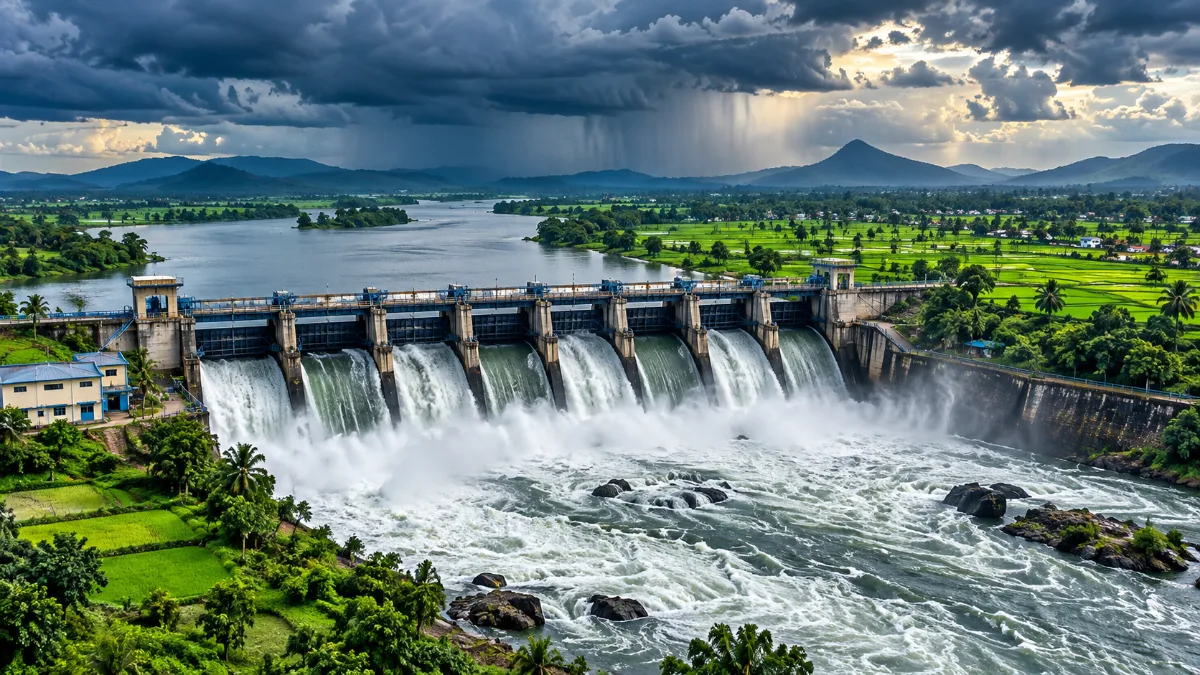
Amit Shah chairs Odisha-Chhattisgarh meeting on Mahanadi waters; States signal progress towards settlement
In short: At a high-level meeting on 1 October, both Chief Ministers backed a negotiated, technically grounded framework for sharing Mahanadi waters.
Why in news
On 1 October 2026, Union Home and Cooperation Minister Amit Shah chaired a meeting at Kartavya Bhawan, New Delhi, with Odisha Chief Minister Mohan Charan Majhi and Chhattisgarh Chief Minister Vishnu Deo Sai on the long-pending Mahanadi water dispute. Union Jal Shakti Minister C.R. Patil and the Chairman of the Central Water Commission (CWC) attended. No final settlement was announced, but both States agreed to continue talks towards an amicable, equitable and sustainable framework.
Background
Odisha, the lower riparian State, says upstream projects in Chhattisgarh reduce flows during the non-monsoon season; Chhattisgarh, where the river originates, says it needs its share for irrigation, industry and domestic use. Odisha sought a tribunal in November 2016, and the Mahanadi Water Disputes Tribunal was constituted in March 2018. In July 2026, at a meeting chaired by the Jal Shakti Minister, the States agreed to continue technical talks and share water-requirement data with the CWC, and an expanded technical committee headed by the CWC Chairman began work; both States gave the CWC written assurance that they would accept its decision in the larger interest of both. After the 1 October meeting, Majhi called the talks cordial and expected a final framework soon, while Sai sought a “win-win” solution based on scientific assessment.
Key facts for Prelims
- Article 262: Parliament may by law provide for adjudication of disputes on inter-State rivers and may bar the jurisdiction of courts.
- Inter-State River Water Disputes Act, 1956 provides for tribunals to adjudicate such disputes.
- Mahanadi Water Disputes Tribunal: constituted in March 2018 on Odisha’s request of November 2016.
- The Mahanadi rises in Chhattisgarh and flows through Odisha into the Bay of Bengal; the Hirakud dam is on the Mahanadi in Odisha.
- Central Water Commission: the national technical body under the Ministry of Jal Shakti.
Mains analysis and way forward
Mains analysis
- Negotiation alongside adjudication: a tribunal pending since 2018 shows the limits of litigation alone; political dialogue backed by technical data can narrow differences faster.
- Upper versus lower riparian concerns: lean-season flows, Hirakud reservoir operations, irrigation and tribal-area development must all be balanced.
- Role of data: agreed hydrological data and an expert technical committee give both States a common factual basis, reducing mistrust.
- Cooperative federalism: the Centre acting as facilitator, rather than arbiter, is a model for other long-running disputes.
Way forward
- Agree on a joint basin-level hydrological database and real-time flow monitoring shared by both States.
- Frame a basin plan covering lean-season releases, flood management and ecological flows.
- Place any settlement before the tribunal so that it carries legal finality.
Connect the dots: Links to Article 262, inter-State relations and cooperative federalism, river systems of peninsular India, and water resource management.
Sources: News On AIR: Mahanadi water dispute: Amit Shah chairs meeting with CMs of Chhattisgarh and Odisha, 1 Oct 2026; Organiser: Mahanadi water dispute: Amit Shah chairs high-level meeting, 2 Oct 2026
Registration of Births and Deaths (Amendment) Act, 2026 in force: stricter checks for late registration
In short: From 1 October, births or deaths reported more than two years late can be registered only on a Judicial Magistrate’s order.
Why in news
The Registration of Births and Deaths (Amendment) Act, 2026 (12 of 2026) came into force on 1 October 2026 under a gazette notification issued by the Office of the Registrar General of India on 16 September 2026. It amends Section 13(3) of the Registration of Births and Deaths Act, 1969 and inserts a new sub-section (3A) to make delayed registration more stringent.
Background
The Lok Sabha passed the Bill on 31 July 2026 and the Rajya Sabha on 4 August 2026. A birth or death reported after one year but within two years can now be registered only on an order of a District Magistrate, Sub-Divisional Magistrate or an Executive Magistrate authorised by the District Magistrate, having jurisdiction where the event occurred, after verifying the event and on payment of a prescribed fee. If reported after more than two years, an order of a Judicial Magistrate of the first class with jurisdiction is required, again after verification and payment of the prescribed fee. The government says the change will encourage timely reporting. The previous amendment to the 1969 Act came into force on 1 October 2023.
Key facts for Prelims
- Parent law: Registration of Births and Deaths Act, 1969; amended in 2023 and again by Act 12 of 2026.
- Delay of 1 to 2 years: order of DM, SDM or an Executive Magistrate authorised by the DM.
- Delay beyond 2 years: order of a Judicial Magistrate of the first class.
- The Registrar General of India, under the Ministry of Home Affairs, notified commencement on 16 September 2026.
- A birth or death certificate is admissible in evidence to prove the birth or death of a person.
Mains analysis and way forward
Mains analysis
- Integrity of records: tighter scrutiny of late entries reduces the risk of fraudulent birth or death records being used for identity, inheritance or benefits.
- Access concerns: families in remote areas, migrants and the poor are more likely to register late, so a judicial requirement may add cost and delay for them.
- Data for governance: timely civil registration supports vital statistics, health planning and electoral and welfare databases.
- Balance needed: stricter rules work best when registration at the point of birth or death is easy and universal.
Way forward
- Push institutional and digital registration at hospitals and through frontline health workers so that delays become rare.
- Run special drives and legal aid support for genuine late cases, especially among vulnerable groups.
- Publish clear fee schedules and time limits for magistrates’ decisions on delayed registration.
Connect the dots: Links to governance and transparency, vital statistics, identity documents and welfare targeting, and inclusion of vulnerable sections.
Sources: News On AIR: Registration of Births and Deaths (Amendment) Act comes into force today, 1 Oct 2026; Deccan Chronicle: Births and Deaths Amendment Act comes into force, stricter norms for late registration, 1 Oct 2026; ThePrint (PTI): Registration of Births and Deaths (Amendment) Act to come into force on Oct 1
Bankers’ Books Evidence Act, 2026 comes into force, replacing an 1891 law with technology-neutral rules
In short: From 1 October, certified copies of bank records, including electronic, digital or cloud records, are admissible as evidence under a simplified certification system.
Why in news
The Bankers’ Books Evidence Act, 2026 came into force on 1 October 2026, replacing the Bankers’ Books Evidence Act, 1891. It received the President’s assent on 13 August 2026. The Act recognises banking records in physical, electronic, digital, virtual and cloud-based form, and makes an electronic or digital record of a banker’s book admissible, valid and legally enforceable as evidence.
Background
The 1891 law was framed for paper ledgers. Banking now runs on core banking systems, digital payments and cloud storage, so courts, tax authorities and investigators rely heavily on electronically stored bank records. The new Act takes a technology-neutral approach and allows records to be certified in a simplified, standardised way using manual, digital or electronic signatures. It forms part of a wider modernisation of evidence law, which saw the Bharatiya Sakshya Adhiniyam, 2023 replace the Indian Evidence Act, 1872 from 1 July 2024.
Key facts for Prelims
- Bankers’ Books Evidence Act, 2026: assent 13 August 2026; in force 1 October 2026; replaces the Act of 1891.
- Technology-neutral: covers physical, electronic, digital, virtual and cloud-based records.
- Certification of copies may use manual, digital or electronic signatures.
- Bharatiya Sakshya Adhiniyam, 2023 replaced the Indian Evidence Act, 1872 with effect from 1 July 2024.
- “Evidence and oaths” is in the Concurrent List; “Banking” is in the Union List.
Mains analysis and way forward
Mains analysis
- Ease of justice: standardised certification can reduce disputes over the authenticity of bank records and speed up recovery, fraud and tax cases.
- Cyber fraud investigation: quick, admissible access to transaction trails helps police and courts in financial crime cases.
- Safeguards needed: integrity of cloud-stored data, audit trails and protection of customer data under the Digital Personal Data Protection Act, 2023 must be ensured.
- Legal coherence: the new law aligns banking evidence with the broader shift to digital evidence in the Bharatiya Sakshya Adhiniyam.
Way forward
- Issue clear operational guidance to banks on certification formats, hash values and audit logs.
- Train judicial officers, prosecutors and bank staff on handling digital banking evidence.
- Review implementation after a year to identify gaps, including for cooperative and smaller banks.
Connect the dots: Links to judicial reforms, digital governance, banking regulation and criminal law reforms (BNS, BNSS, BSA).
Sources: News On AIR: Bankers’ Books Evidence Act, 2026 to come into force today, 1 Oct 2026
International relations
G20 trade ministers adopt a statement on weaponisation of food; India says food must never be a pressure tool
In short: On 1 October in Milwaukee, G20 trade ministers reached consensus on a statement against using food as a coercive trade weapon.
Why in news
At the G20 Trade Ministers’ Meeting in Milwaukee, Wisconsin (30 September to 1 October 2026), under the US G20 Presidency, ministers on 1 October reached consensus on the “G20 Statement on the Weaponization of Food through Coercive Trade Actions” and agreed to continue cooperating on the subject. Commerce and Industry Minister Piyush Goyal said “food must never be used as an instrument of pressure against any country” and warned that today’s fertiliser shortage could become tomorrow’s food crisis.
Background
Goyal thanked the US Presidency for placing food at the centre of the discussions and said ensuring food security and creating opportunities for farmers are central to India’s policy. He noted that countries of the Global South are among the worst affected by the food, fuel and fertiliser crises caused by global conflicts. Earlier that day, G20 trade ministers and US Trade Representative Jamieson Greer visited a Rockwell Automation facility in Mequon, Wisconsin, and Goyal held bilateral meetings on the sidelines. The US is hosting the G20 Leaders’ Summit on 14-15 December 2026 in Miami, and India has backed the UK’s Presidency in 2027.
Key facts for Prelims
- G20 Presidency 2026: United States; 2027: United Kingdom.
- Outcome document of 1 October 2026: “G20 Statement on the Weaponization of Food through Coercive Trade Actions” (adopted by consensus).
- Venue: Milwaukee, Wisconsin; Leaders’ Summit: 14-15 December 2026, Miami, Florida.
- G20 members: 19 countries plus the European Union and the African Union (the AU became a permanent member at the 2023 New Delhi Summit).
- India’s domestic food security framework rests on the National Food Security Act, 2013.
Mains analysis and way forward
Mains analysis
- Food as a security issue: the statement recognises that trade coercion in food, fuel and fertiliser can turn economic disputes into humanitarian crises for import-dependent countries.
- Global South voice: India’s emphasis on fertiliser supply links the agenda to farm input costs and yields, a concern shared by many developing economies.
- Policy space: India has consistently held that legitimate domestic measures to protect food security, such as public stockholding, should be distinguished from coercive actions against other countries.
- Consensus value: agreement among diverse G20 economies at a time of trade friction shows that food security remains an area where cooperation is possible.
Way forward
- Build on the statement with practical tools such as early warning on fertiliser and grain supply and transparency on export measures.
- Carry the consensus into WTO negotiations on agriculture, including a permanent solution on public stockholding for food security.
- Expand South-South cooperation on fertiliser production, storage and resilient seed systems.
Connect the dots: Links to G20 and multilateral groupings, WTO and agriculture, food security and the National Food Security Act, and India’s Global South diplomacy.
Sources: News On AIR: Food Must Never Be Used as Instrument of Pressure Against Any Country: Piyush Goyal, 1 Oct 2026; Outlook Business: Goyal to visit US for G20 trade ministers meet; Swarajya: At G20 trade ministers meet in US, Piyush Goyal calls for WTO-compliant approach, 2 Oct 2026
Economy
Gross GST collections rise 14.7% to Rs 2.04 lakh crore in September; import-linked revenue up nearly 26%
In short: September GST data released on 1 October show strong growth led by imports, while domestic collections grew more slowly.
Why in news
Data released on 1 October 2026 show gross GST collections of Rs 2,03,521 crore in September 2026, up 14.7% year on year. Net collections after refunds were about Rs 1.77 lakh crore, up 18.1%, as refunds fell 3% to Rs 27,001 crore.
Background
Gross domestic revenue rose 10.1% to Rs 1,37,996 crore, while GST on imports rose 25.9% to Rs 65,525 crore from Rs 52,031 crore. For April to September 2026, gross collections reached Rs 12.46 lakh crore, up 11.6%; import-linked revenue grew 27.1% to Rs 3.72 lakh crore while domestic revenue grew 6.1% to Rs 8.74 lakh crore. Among States, domestic collections grew 15% in Maharashtra (Rs 29,986 crore), 16% in Karnataka, 17% in Gujarat and 88% in Assam, while Tamil Nadu, Uttarakhand and Jammu and Kashmir recorded declines.
Key facts for Prelims
- September 2026 components: CGST Rs 37,762 crore; SGST Rs 45,363 crore; IGST Rs 1,20,396 crore.
- Article 269A provides for levy and collection of IGST on supplies in the course of inter-State trade or commerce; the IGST Act also covers imports.
- GST Council: Article 279A, inserted by the Constitution (One Hundred and First Amendment) Act, 2016.
- GST was rolled out on 1 July 2017.
- April-September 2026 gross collections: Rs 12.46 lakh crore, up 11.6% from Rs 11.17 lakh crore.
Mains analysis and way forward
Mains analysis
- Composition of growth: import-linked GST grew about four times faster than domestic GST in the first half, so headline numbers partly reflect import values rather than domestic consumption alone.
- Net versus gross: lower refunds lifted net revenue growth to 18.1%; sustained refund timeliness matters for exporters’ working capital.
- Regional divergence: strong growth in Maharashtra, Karnataka, Gujarat and Assam alongside declines in some States has implications for State finances.
- Revenue buoyancy: higher collections give fiscal space, but domestic demand indicators should be read alongside them.
Way forward
- Track domestic and import-linked revenue separately when assessing consumption trends.
- Keep refund processing fast and data-driven so that compliance gains do not slow exporters.
- Study State-level declines to identify sectoral or administrative causes and address them through the GST Council framework.
Connect the dots: Links to indirect taxes, cooperative fiscal federalism, the GST Council (Article 279A) and Centre-State finances.
Sources: News On AIR: GST collections cross Rs 2 lakh crore again, rise 14.7% in September, 1 Oct 2026; Swarajya: GST revenue crosses Rs 2 lakh crore with 14.7% growth, 1 Oct 2026; IANS via NewKerala: Gross GST collection rises 14.7 pc, 1 Oct 2026
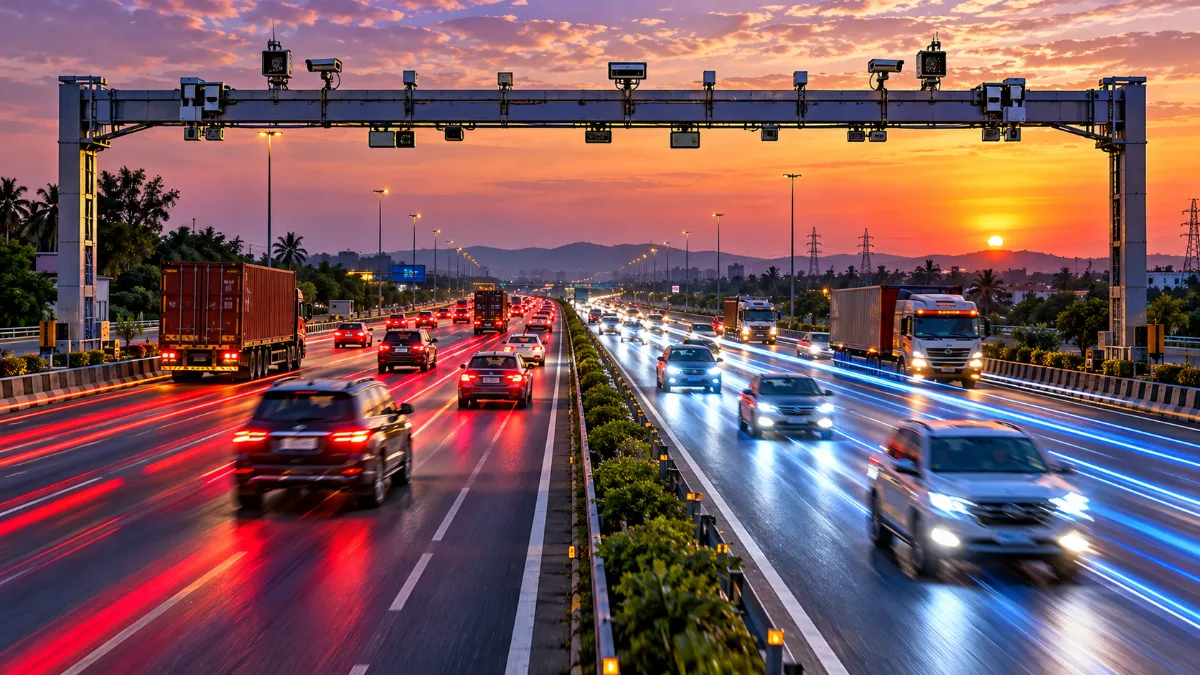
Tamil Nadu’s first barrier-free tolling goes live at Paranur as NHAI expands multi-lane free flow
In short: From 1 October, vehicles pass Paranur toll plaza without stopping as FASTag readers and AI cameras collect tolls automatically.
Why in news
From zero hours on 1 October 2026, the National Highways Authority of India (NHAI) began Multi-Lane Free Flow (MLFF) tolling at the Paranur toll plaza on the Tambaram-Tindivanam section near Chengalpattu, making it Tamil Nadu’s first barrierless toll plaza. High-performance RFID readers detect FASTags while AI-enabled Automatic Number Plate Recognition (ANPR) cameras capture registration numbers, and the toll is deducted from the linked account.
Background
India’s first MLFF plaza is at Chorayasi on the Surat-Bharuch section of NH-48 in Gujarat, where about 41,500 vehicles passed on its opening day. Other MLFF plazas include Mundka-Bakkarwala on Urban Extension Road-II in Delhi-NCR, Shahjahanpur, Daulatpura and Manoharpura on the Delhi-Jaipur section of NH-48, and Gharaunda on the Panipat-Jalandhar section of NH-44. NHAI plans barrier-free tolling at around 25 fee plazas this financial year, with Nemili and Chennasamudram on NH-48 in Tamil Nadu next. Users without a functional FASTag or sufficient balance may receive an electronic notice.
Key facts for Prelims
- MLFF: barrierless tolling where vehicles need not stop or slow down.
- FASTag uses RFID; ANPR cameras complement it by reading number plates, helping when tag detection fails and in enforcement; vehicles must still keep to safe speed limits.
- India’s first MLFF plaza: Chorayasi, NH-48 (Surat-Bharuch), Gujarat.
- On access-controlled highways, tolls can be based on distance travelled using entry and exit data.
- NHAI was constituted under the National Highways Authority of India Act, 1988.
Mains analysis and way forward
Mains analysis
- Efficiency gains: removing queues cuts travel time, fuel use and emissions, and improves freight reliability on busy corridors.
- Revenue integrity: dual detection through FASTag and ANPR reduces leakage and supports distance-based tolling.
- Enforcement and fairness: recovering dues from vehicles with faulty tags or low balance needs a clear, citizen-friendly e-notice and appeal process.
- Data governance: large-scale capture of number plates requires purpose limitation, retention limits and security under data protection law.
Way forward
- Publish standard operating procedures for e-notices, disputes and refunds before wider rollout.
- Integrate MLFF data with vehicle registration databases securely and audit system accuracy regularly.
- Run awareness drives on FASTag maintenance, especially for commercial and rural users.
Connect the dots: Links to infrastructure, logistics efficiency, digital public infrastructure, e-governance and data privacy.
Sources: Swarajya: Tamil Nadu gets its first barrierless tolling system at Paranur toll plaza, 1 Oct 2026; DT Next: Paranur toll plaza to go barrier-free from October 1; PSU Watch: NHAI rolls out Tamil Nadu’s first barrierless multi-lane free-flow tolling system, 1 Oct 2026
September power deficit highest for the month in nearly a decade as hydropower falls and demand stays high
In short: An analysis of grid data published on 1 October shows evening shortfalls above 2 GW on most September days as hydropower slumped.
Why in news
A Bloomberg analysis of Grid Controller of India data, published on 1 October 2026, found that September 2026 recorded the highest power deficit for the month in nearly a decade, with the combined energy shortage the worst for September since 2017. Note that peak deficit (GW) and total energy shortage (million kWh) are different measures; Reuters separately reported an energy shortfall of about 560 million kWh. Evening peak shortfalls exceeded 2 GW on more than half the days, occasionally crossed 6 GW, and peaked at 7.7 GW on a single day.
Background
Hydropower generation fell nearly 16% year on year in September, its fifth straight monthly decline, after a monsoon about 13% below normal. Hot weather kept demand high, particularly in the evening when solar output fades. Coal inventories at power plants reached their lowest level in nearly three years, with about 40% of the 191 plants surveyed holding less than a quarter of their required stocks and plants averaging roughly a week of reserves.
Key facts for Prelims
- Grid Controller of India (Grid-India) operates the national and regional load despatch centres.
- Evening peak: the period when solar generation drops while household demand rises, making it the hardest hour to balance.
- September 2026: largest daily deficit 7.7 GW; hydropower generation down nearly 16% year on year.
- Hydropower depends on reservoir inflows and is therefore sensitive to monsoon rainfall.
Mains analysis and way forward
Mains analysis
- Weather-energy link: a weak monsoon cut hydropower and raised cooling demand at the same time, showing how climate variability now shapes energy security.
- Evening peak problem: rapid growth in solar capacity eases daytime supply but leaves evening gaps unless storage and flexible generation grow alongside it.
- Fuel logistics: low plant-level stocks reduce the buffer against demand spikes and transport disruptions.
- Planning lesson: resource adequacy needs to account for low-rainfall years, not only average years.
Way forward
- Accelerate battery and pumped storage to shift solar energy into the evening peak.
- Strengthen demand response and time-of-day tariffs to flatten peaks.
- Build seasonal stocking norms and inter-regional transmission so surplus regions can support deficit ones.
Connect the dots: Links to infrastructure (energy), renewable integration, climate variability and the monsoon, and energy security.
Environment
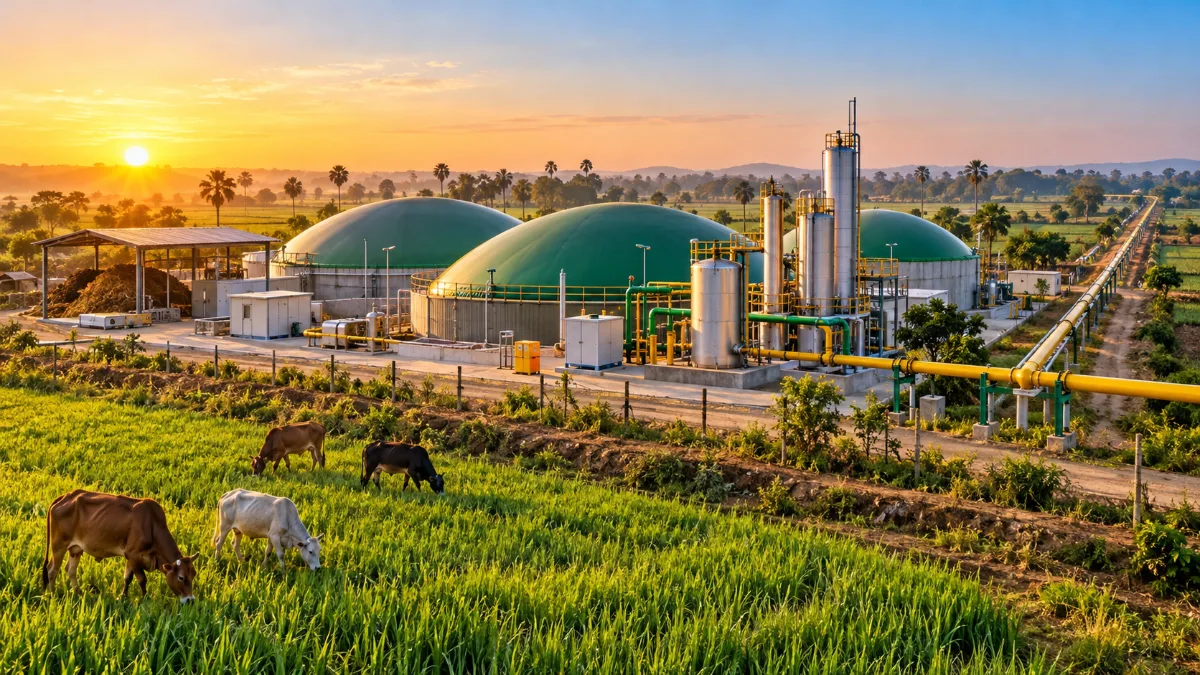
GOBARdhan compressed biogas scheme launched with Rs 23,731 crore outlay and a nearly tenfold output goal
In short: Launched on 1 October, GOBARdhan offers assured offtake, a fixed CBG price and capital support to turn organic waste into clean gas.
Why in news
On 1 October 2026, Union Minister of Petroleum and Natural Gas Hardeep Singh Puri launched the GOBARdhan Central Sector Scheme along with a Unified GOBARdhan Portal and a GOBARdhan Handbook. Approved by the Union Cabinet on 6 August 2026, the scheme has an outlay of Rs 23,731 crore for FY 2026-27 to FY 2035-36 and aims to raise domestic compressed biogas (CBG) production nearly tenfold.
Background
As of 6 August 2026, 1,908 plants were registered on the GOBARdhan Unified Registration Portal, 217 were commissioned with output of 0.4 MMSCMD, and 339 were under construction. The scheme brings earlier initiatives, including SATAT, onto one national platform under the Ministry of Petroleum and Natural Gas. Over ten years it projects forex savings of over Rs 40,000 crore, displacement of 10 million tonnes of fossil fuel, a cut of over 40 million tonnes of CO2, more than 1.5 lakh jobs and 250 million tonnes of organic manure. Petroleum Secretary Neeraj Mittal noted that India meets nearly half its natural gas needs through imports.
Key facts for Prelims
- Six components: assured CBG offtake, administered pricing, capital assistance, pipeline infrastructure, credit guarantee and a CBG Ecosystem Challenge Fund.
- CBG Obligation on City Gas Distribution entities (CNG transport and PNG domestic): 3% in 2026-27, 4% in 2027-28, 5% from 2028-29.
- Administered CBG price: Rs 2,110 per MMBTU (about Rs 105 per kg), with a minimum ten-year horizon.
- Capital assistance up to Rs 2 crore per tonne per day of capacity for greenfield projects; credit guarantee covering up to 85% of eligible outstanding debt at default, subject to limits, for eligible MSME projects.
- Pipeline support: up to 80% of eligible capex for cluster-to-trunk pipelines and up to 50% for standalone plants connecting to CGD networks.
Mains analysis and way forward
Mains analysis
- Energy security: replacing imported gas with domestic CBG reduces exposure to price shocks, a live concern when about half of gas demand is imported.
- Waste to wealth: cattle dung, crop residue and municipal organic waste become revenue streams, with potential to reduce open burning and methane emissions.
- Farm linkages: fermented organic manure from plants can improve soil carbon, supporting the “Annadata to Urjadata” vision of farmers as energy partners.
- Bottlenecks the scheme targets: earlier, uncertain offtake, volatile prices, costly feedstock aggregation and weak pipeline connectivity held back plants; only 217 of 1,908 registered plants were running in August 2026.
Way forward
- Prioritise district-level feedstock mapping and aggregation through farmer producer organisations and cooperatives so plants run at capacity.
- Create a steady market for fermented organic manure by linking it to fertiliser distribution and soil health programmes.
- Monitor plant-level performance on the unified portal and release support against verified output.
Connect the dots: Links to renewable energy, circular economy, Swachh Bharat waste management, natural gas policy, climate mitigation (methane) and farm incomes.
Sources: PIB: GOBARdhan: Fuelling Clean Energy and Rural Growth, 6 Aug 2026; Swarajya: India launches Rs 23,731 crore GOBARdhan scheme, 1 Oct 2026; Kashmir Despatch: Union Minister Hardeep Singh Puri launches GOBARdhan Scheme, 1 Oct 2026; Rural Voice: Cabinet approves Rs 23,731 crore GOBARdhan scheme, 6 Aug 2026
Science and technology

CJI at Asian constitutional courts’ meet: technology must widen access to justice; AI cannot replace judges
In short: Speaking in Samarkand on 1 October, the CJI said AI may assist research and court processes, but judicial decisions must remain with judges.
Why in news
On 1 October 2026, Chief Justice of India Surya Kant addressed the opening session and plenary of the Seventh Congress of the Association of Asian Constitutional Courts and Equivalent Institutions (AACC) in Samarkand, Uzbekistan. He said technology must make justice more accessible, transparent and responsive while protecting constitutional values, and that AI must never replace judicial acumen or decision-making.
Background
The CJI said the Supreme Court treats digitisation as an opportunity to re-engineer judicial processes around citizens rather than as mere computerisation. The eCourts Mission Mode Project, which began in 2007 (Phase I ran from 2011 to 2015), expanded e-filing, virtual hearings, digital case management and live-streaming. Between March 2020 and June 2024, the Supreme Court alone held more than 7.5 lakh hearings by video conference. The AI-assisted tool SUVAS has translated more than 83,000 judgments into 18 Indian languages, and the Supreme Court AI Committee released Draft Regulations (not yet final) for Use of Artificial Intelligence in Courts in June 2026, the CJI said.
Key facts for Prelims
- SUVAS: AI-assisted translation tool for judgments (83,000+ judgments into 18 Indian languages).
- Su-Sahayak: AI-powered chatbot for case status, cause lists, orders, judgments and e-services guidance.
- One Case, One Data: integrates case information across levels of the judiciary.
- eCourts Mission Mode Project: began in 2007; Phase I ran 2011-2015.
- Constitutional anchors cited: Article 14 (equality), Article 21 (liberty), Article 32 (constitutional remedies), Article 39A (free legal aid).
Mains analysis and way forward
Mains analysis
- Access to justice: translation, e-filing and virtual hearings lower barriers of language, distance and cost, advancing Article 39A.
- Human primacy: limiting AI to research and process support protects reasoned adjudication and accountability.
- Risks flagged: the digital divide, data security and algorithmic accountability are shared concerns for constitutional courts across Asia.
- Institutional design: draft AI regulations give a rule-based framework instead of ad hoc adoption of tools.
Way forward
- Finalise AI regulations with standards on disclosure, human verification of outputs and audit of tools.
- Pair digital services with e-Seva and legal aid centres so litigants without devices or skills are not left behind.
- Use forums such as the AACC for shared standards on data protection and ethics in judicial technology.
Connect the dots: Links to AI governance, e-governance, judicial reforms and pendency, access to justice (Article 39A) and ethics of technology use.
Security and defence
Rajnath Singh launches digital finance systems at Defence Accounts Department’s 279th Annual Day
In short: On 1 October, the Defence Minister unveiled three IT initiatives and called for “any time review” of defence spending using real-time data.
Why in news
On 1 October 2026, Defence Minister Rajnath Singh addressed the 279th Annual Day of the Defence Accounts Department (DAD) at DRDO Bhawan, New Delhi, and launched three initiatives: integration of the Indian Army Financial Information System (IAFIS) with DAD’s SAKSHAM platform, a Treasury Single Account on the Payment Routing and Integrated System Management (PRISM) platform, and a revamped National Compilation System for the Ministry of Defence.
Background
The Minister said the synergy seen among the three Services should extend to the financial framework, with integrated systems allowing real-time monitoring of budgets and spending. He urged a shift from “annual review” to “any time review” and called for “maximum digitisation, maximum automation and maximum transparency”. He noted that expenditure booking reached about 100% in the last financial year. The SAKSHAM-IAFIS link enables electronic exchange of budget, sanction and bill data, a step towards paperless bill processing; the Treasury Single Account, linked to the RBI’s e-Kuber system, releases funds to autonomous bodies just when needed.
Key facts for Prelims
- Defence Accounts Department: 279th Annual Day on 1 October 2026.
- SAKSHAM: DAD’s bill audit and payment system, now integrated with the Indian Army Financial Information System.
- PRISM: Payment Routing and Integrated System Management platform, hosting the defence Treasury Single Account linked to RBI e-Kuber.
- National Compilation System: single source for accounting and compiling all defence expenditure.
Mains analysis and way forward
Mains analysis
- Jointness in finance: integrated financial data across the Services complements operational jointness and supports better prioritisation of scarce resources.
- Efficiency: just-in-time release of funds reduces idle balances and improves cash management.
- Accountability: real-time visibility of sanctions, bills and balances strengthens audit and reduces delays in payments to vendors and personnel.
- Risks: integrated defence financial systems need strong cyber security and data protection.
Way forward
- Extend integration to the Navy and Air Force systems on common data standards.
- Build cyber security audits and redundancy into all defence finance platforms.
- Train finance and Service personnel together to use real-time dashboards for decisions.
Connect the dots: Links to defence management and reforms, jointness among the armed forces, public financial management and cyber security.
Sources: News On AIR: Defence Minister Rajnath Singh emphasises integrated financial systems for defence management, 1 Oct 2026; The Week: How 3 new initiatives will change defence finances, 1 Oct 2026; UNI: Rajnath launches digital initiatives at DAD Annual Day, 1 Oct 2026
Society
International Day of Older Persons marked with 2026 theme on rethinking systems for longer lives
In short: Observed on 1 October, this year’s theme asks how societies can make added years of life healthy, productive and dignified.
Why in news
The International Day of Older Persons was observed on 1 October 2026 with the theme “The Age of Longevity: Rethinking Systems for Longer Lives”. In New Delhi, the Rashtrapati Bhavan Cultural Centre held lectures and street plays on the health and well-being of older persons. UN Secretary-General Antonio Guterres described elders as leaders and caregivers who play a vital role in families, communities and economies.
Background
The theme calls on governments, civil society, the private sector, researchers and older persons themselves to ensure that longer lives are healthy, productive, dignified and equitable. The UN General Assembly designated 1 October as the International Day of Older Persons in 1990, and it was first observed in 1991. In India, Article 41 directs the State to make effective provision for public assistance in old age, and the Maintenance and Welfare of Parents and Senior Citizens Act, 2007 provides a legal right to maintenance through tribunals. Ayushman Bharat PM-JAY was extended in 2024 to all citizens aged 70 and above regardless of income.
Key facts for Prelims
- 2026 theme: “The Age of Longevity: Rethinking Systems for Longer Lives”.
- Article 41 (Directive Principles): public assistance in cases of old age, sickness and disablement, within the limits of economic capacity.
- Maintenance and Welfare of Parents and Senior Citizens Act, 2007: maintenance tribunals and protection of life and property of senior citizens.
- Indira Gandhi National Old Age Pension Scheme operates under the National Social Assistance Programme.
- Elderline 14567: national helpline for senior citizens.
Mains analysis and way forward
Mains analysis
- Health systems: rising chronic disease and disability call for geriatric care, home-based care and affordable long-term care.
- Income security: many older persons, especially women and informal workers, lack pensions, making social assistance and savings schemes important.
- Care economy: smaller families and migration reduce family-based care, so community and institutional care need regulation and support.
- Dignity and inclusion: digital literacy, accessible public spaces and protection from abuse and fraud help older persons participate fully.
Way forward
- Integrate geriatric services into primary health care and expand trained caregivers.
- Widen pension coverage and simplify access to schemes through single-window enrolment.
- Promote age-friendly cities and intergenerational programmes that value the experience of older persons.
Connect the dots: Links to population and associated issues (GS I), vulnerable sections and welfare schemes (GS II), DPSP (Article 41) and compassion and care in ethics (GS IV).
In brief
- Personality in the news: Captain Smit Machchhar: The Indian captain of Flydubai flight FZ1073 from Dubai to Tel Aviv was attacked and injured on 30 September 2026 by his co-pilot, who, according to reports, allegedly tried to crash the aircraft; passengers and crew subdued the attacker and the plane landed safely at Tabuk, Saudi Arabia. On 1 October, President Droupadi Murmu praised his courage and presence of mind, and India’s Ambassador to the UAE said he was stable and recovering.
- UAE orders probe into Flydubai incident: On 1 October 2026, UAE Attorney-General Hamad Saif Al Shamsi ordered a team of public prosecutors to investigate the incident, including any possible terror links. The UAE said it has jurisdiction because the Boeing 737 is UAE-registered and flies its flag.
- US widens Operation Economic Outcast: On 1 October 2026, the US Treasury announced sanctions targeting Iranian automotive, rail, manufacturing and steel networks and moved against the A7 shadow-banking network, expanding “Operation Economic Outcast”, which was launched in August.
- ICAR and FCI to test alternatives to chemical fumigation: Under an MoU signed on 30 September and announced on 1 October 2026, ICAR-CIPHET, Ludhiana and the Food Corporation of India will trial nitrogen gas, carbon dioxide and a combined carbon dioxide and phosphine treatment to control storage pests in wheat and rice. Pest resistance frequencies of 72 to 100% have been reported in key States; one trial will be held with the Central Warehousing Corporation.
- Sugar stock limits tightened for the festive season: On 1 October 2026, the Centre cut the period for which sugar dealers may hold stock to 15 days from receipt (from 30 days) and capped holdings at 1,000 quintals (2,000 quintals in Kolkata and its extended metropolitan area and in Assam), effective 15 October to 30 November 2026, to curb hoarding. According to the Centre, retail sugar prices were down about 15% and ex-mill prices about 28%.
- Iraq marks Sovereignty Day after coalition exit: The Pentagon said the US and coalition partners formally concluded Operation Inherent Resolve in Iraq on 30 September 2026 after leaving Erbil Air Base in the Kurdistan region; the coalition mission continues in Syria, headquartered in Jordan. Iraq, which had designated 1 October as Sovereignty Day by a directive of 23 September, marked a shift to an Iraqi-led security effort.
- BharatNet expansion in Maharashtra: An agreement between Digital Bharat Nidhi and the Maharashtra government for the amended BharatNet programme, with an estimated outlay of Rs 10,520 crore covering 28,237 gram panchayats, was announced on 1 October 2026.
- Nalanda University and CSIR-TKDL: Nalanda University and CSIR’s Traditional Knowledge Digital Library announced a collaboration on 1 October 2026 to document and research traditional knowledge, which also helps protect it against wrongful patents.
- Goa and the Solid Waste Management Rules, 2026: A government briefing on 1 October 2026 set out Goa’s implementation of the Solid Waste Management Rules, 2026, including four-stream segregation at source and compliance by bulk waste generators.
Prelims practice: 5 questions
Choose an option to see the answer and explanation. Your score appears when all five are answered.
Mains practice
As the Union Public Service Commission completes a hundred years, examine how constitutional safeguards, procedural reforms and technology can together strengthen the credibility and responsiveness of public service recruitment in India.
Show the answer outline
Introduction (about 30 words)
- Open with the centenary: the first Public Service Commission was set up on 1 October 1926; applications across all UPSC examinations rose from 42,727 in 1950-51 to over 45 lakh in 2022-23.
- State that credibility rests on independence, fairness and timeliness.
Constitutional safeguards
- Article 316: appointment and tenure; Article 317: removal and suspension only on specified grounds and procedures (the mechanism differs by ground); Article 319: bar on further office; Article 322: expenses charged on the Consolidated Fund of India.
- Article 320: consultative role in recruitment and disciplinary matters; Article 323: annual report to the President, laid before Parliament with an explanatory memorandum.
- Independence protects merit from patronage and builds public trust.
Procedural reforms
- Time certainty: shorter, predictable cycles reduce costs for candidates from modest backgrounds.
- Assessing motivation, problem-solving and foresight alongside knowledge, as proposed at the centenary (ideas, not yet adopted criteria).
- Transparent evaluation criteria, accessible facilities, predictable calendars and effective grievance redress.
- Inclusion: women formed 299 of 958 recommended candidates in CSE 2025, against 3 of 83 in 1952.
Role of technology
- AI to flag duplicate applications, OCR-based document checks and face authentication (about 5.50 lakh candidates in Prelims 2026).
- Safeguards: accuracy audits, bias testing, reasonable accommodation, data minimisation and human review of automated decisions.
Challenges
- Litigation and delays, uneven capacity across State Public Service Commissions, and the need to keep tests relevant to new governance problems.
Conclusion (about 30 words)
- A future-ready commission combines constitutional independence with speed and fairness; linking selection to lifelong learning through Mission Karmayogi can carry “Citizen First” from examination hall to field.
Tip: Use the centenary data on applications and women’s representation as evidence, and pair the constitutional Articles with one technology example to show both safeguard and reform.
Current Canvas is prepared by the UPSC Gurus editorial desk. Every fact is checked against official releases and reliable reporting, with sources listed under each story. Editions are compiled each month into Current Canvas Monthly, a free magazine.
About images: photographs and illustrations in Current Canvas are AI-generated for illustration only. They are not news photographs of the events described.
Your first Mentor’s Desk call is free
One free conversation per aspirant about where you are in your preparation, with an honest suggestion of the right next step.
Know more and bookHave a question? Get in touch
For questions about a programme, its fees, batch dates, payment or access. Message us on WhatsApp and our team will reply. Asking a question is not a booking, and you can ask as often as you need.
Get in touch on WhatsApp