 New this week · Free UG Handout 02UPSC Mains Directive Words: 60 Meanings, Trends and PYQsTwo free PDFs: The Guide and the With PYQs edition.Read and download
Today’s Canvas
- Punjab Civil Services recruitment stayed after candidates challenge eligibility changes and result transparencyGS II
- UNFPA report links young people’s family aspirations with economic insecurityGS I
- Supreme Court grants interim custody to German mother, prioritising child’s welfareGS II
- Centre reviews PC&PNDT Act enforcement as sex ratio at birth remains a concernGS II
- Measuring unpaid care work could improve understanding of women’s employment choicesGS I
- EPFO Board approves easier provident fund withdrawals and voluntary retirement payoutsGS III
- Prime Minister urges industry to share tax benefits through higher wages and better productsGS III
- Foreign portfolio investors purchase record $11.3 billion of Indian equities in November so farGS III
- Environment Ministry panel recommends assessment terms for limestone mines near Great Indian Bustard habitatGS III
- Yamuna restoration debate emphasises basin-wide responsibility and effective sewage treatmentGS III
- Falling coal stocks raise concerns about electricity supply ahead of summer 2027GS III
- India and Japan sign Letter of Intent for Japanese live-fire training at Indian rangesGS II
- US, China and Russia issue Shenzhen declaration after trilateral summitGS II
- Java4Shell vulnerability prompts urgent cybersecurity advisories and software updatesGS III
Polity, governance, society and social justice
Punjab Civil Services recruitment stayed after candidates challenge eligibility changes and result transparency
In short: The Punjab and Haryana High Court has stayed a recruitment process after candidates alleged changes to eligibility rules and irregularities in selection.

Why in news
On 19 November 2026, the Punjab and Haryana High Court stayed the Punjab Civil Services recruitment process involving 322 posts. A petition by 26 candidates alleged that the Punjab Public Service Commission changed eligibility conditions after its 3 January 2025 advertisement. The petitioners also questioned age relaxations, applications under multiple categories, the non-disclosure of marks and cut-offs, and patterns in results from certain centres. They sought cancellation of the 4 November 2026 results and an independent investigation. The Court said a detailed order would follow.
Concept: Constitutional independence and accountability of Public Service Commissions
Articles 315 to 323 of the Constitution establish the framework for Union and State Public Service Commissions. Article 315 provides for these commissions, while Article 320 deals with their functions, including conducting examinations for public-service appointments. The Governor appoints the Chairman and members of a State Public Service Commission under Article 316. Constitutional safeguards help protect recruitment from political interference. However, independence does not remove accountability. Recruitment procedures must respect equality before the law, equal opportunity in public employment and applicable service rules.
Key facts for Prelims
- Article 315 provides for Union and State Public Service Commissions.
- Article 316 deals with appointment and tenure of commission members.
- Article 317 provides safeguards concerning removal and suspension of members.
- Article 323 requires commission reports to be submitted to the President or Governor, as applicable.
Mains analysis and way forward
Mains analysis
- Changing eligibility conditions after recruitment begins can undermine fairness and legitimate expectations.
- Public confidence depends on consistent evaluation rules and transparent communication of selection criteria.
- Judicial review provides oversight without replacing the commission’s constitutional functions.
- Allegations concerning recruitment irregularities require evidence-based examination and due process.
Way forward
- Publish complete eligibility conditions, evaluation procedures and disclosure rules before examinations.
- Maintain secure, auditable examination records and accessible grievance mechanisms.
- Ensure timely publication of reasoned decisions, subject to applicable legal requirements.
Connect the dots: Articles 14 and 16 | Constitutional bodies | Equality of opportunity | Administrative ethics.
Sources: The Indian Express, “Rules changed, marks hidden: Court puts Punjab Civil Services recruitment on hold”, 19 November 2026. Official reference: Constitution of India, Articles 315-323.
UNFPA report links young people’s family aspirations with economic insecurity
In short: A new UNFPA report finds that financial insecurity is preventing many young adults from achieving their preferred family goals.

Why in news
On 19 November 2026, the United Nations Population Fund released its State of World Population Report 2026, titled “Succeeding Generations: Empowering Young People to Chart the Future”. The report drew on a survey of more than 100,000 young adults across 73 countries. Financial insecurity emerged as a major barrier to family formation. Among respondents, 57% identified it as an obstacle to finding a partner, while 72% cited it as a barrier to having children. The report also highlighted youth employment insecurity and limited representation in political decision-making.
Concept: Demographic transition and reproductive agency
Demographic transition describes the long-term movement from high birth and death rates towards lower rates as societies develop. Fertility decisions are influenced by education, employment, housing, health and social expectations. Reproductive agency means having the freedom and practical ability to make informed decisions about whether, when and how many children to have. It does not mean encouraging either higher or lower fertility. Population policies should therefore focus on enabling informed choices and improving living conditions rather than treating a particular fertility rate as the only desirable outcome.
Key facts for Prelims
- UNFPA stands for United Nations Population Fund.
- UNFPA is a United Nations agency concerned with sexual and reproductive health and related population issues.
- The State of World Population Report is published by UNFPA.
- Demographic transition involves changes in mortality and fertility patterns over time.
Mains analysis and way forward
Mains analysis
- Economic insecurity may delay marriage and parenthood even when people wish to form families.
- Employment quality, stable earnings and housing affordability influence demographic choices.
- Population policy must distinguish voluntary reproductive decisions from economic constraints.
- Limited youth participation in policymaking can weaken the responsiveness of institutions to younger generations.
Way forward
- Strengthen quality employment, affordable housing and social protection for young adults.
- Improve access to reproductive healthcare, childcare and family-support services.
- Include young people meaningfully in designing policies that affect their futures.
Connect the dots: Demographic transition | Youth unemployment | Women’s empowerment | Human development | Reproductive rights.
Supreme Court grants interim custody to German mother, prioritising child’s welfare
In short: The Supreme Court granted interim custody of a four-year-old child to his mother after examining parental care arrangements and the child’s welfare.

Why in news
On 19 November 2026, the Supreme Court granted interim custody of a four-year-old boy to his German mother and permitted her to take him to Singapore. The child’s parents, who were never married, disputed custody. The Court considered their proposed care arrangements, interactions with the family and a psychological assessment by NIMHANS. It found that both parents were capable of caring for the child but considered the mother’s interim arrangements more suitable. The decision remains subject to the pending guardianship proceedings before the Patiala House Court in Delhi.
Concept: Best interests of the child
Article 3 of the UN Convention on the Rights of the Child requires the child’s best interests to be a primary consideration in decisions concerning children. This principle guides courts and public authorities in matters affecting children’s welfare. In custody proceedings, relevant considerations may include emotional security, health, education, continuity of care and relationships with parents. The principle does not create an automatic preference for either parent. An interim custody order provides a temporary arrangement and does not necessarily determine the final guardianship decision.
Key facts for Prelims
- The UN Convention on the Rights of the Child was adopted in 1989.
- India ratified the Convention in 1992.
- Article 3 concerns the best interests of the child.
- NIMHANS is located in Bengaluru, Karnataka.
Mains analysis and way forward
Mains analysis
- Custody decisions require individual assessment rather than assumptions based on gender or nationality.
- Psychological assessments can assist courts in understanding children’s developmental needs.
- Parental employment should be assessed alongside actual caregiving arrangements.
- International relocation creates practical challenges concerning continued parental contact and enforcement of custody arrangements.
Way forward
- Ensure timely, child-sensitive guardianship proceedings.
- Use qualified professional assessments where necessary.
- Protect meaningful parental contact when consistent with the child’s welfare.
Connect the dots: Child rights | Family law | Judicial discretion | International conventions | Ethics of care.
Sources: The Indian Express, “Supreme Court grants interim custody of 4-year-old boy to German mother”, 20 November 2026. Official reference: UNICEF, Convention on the Rights of the Child, Article 3.
Centre reviews PC&PNDT Act enforcement as sex ratio at birth remains a concern
In short: The Union Health Ministry has called for stronger implementation of the law against sex selection, including action on unlawful online advertisements.
Why in news
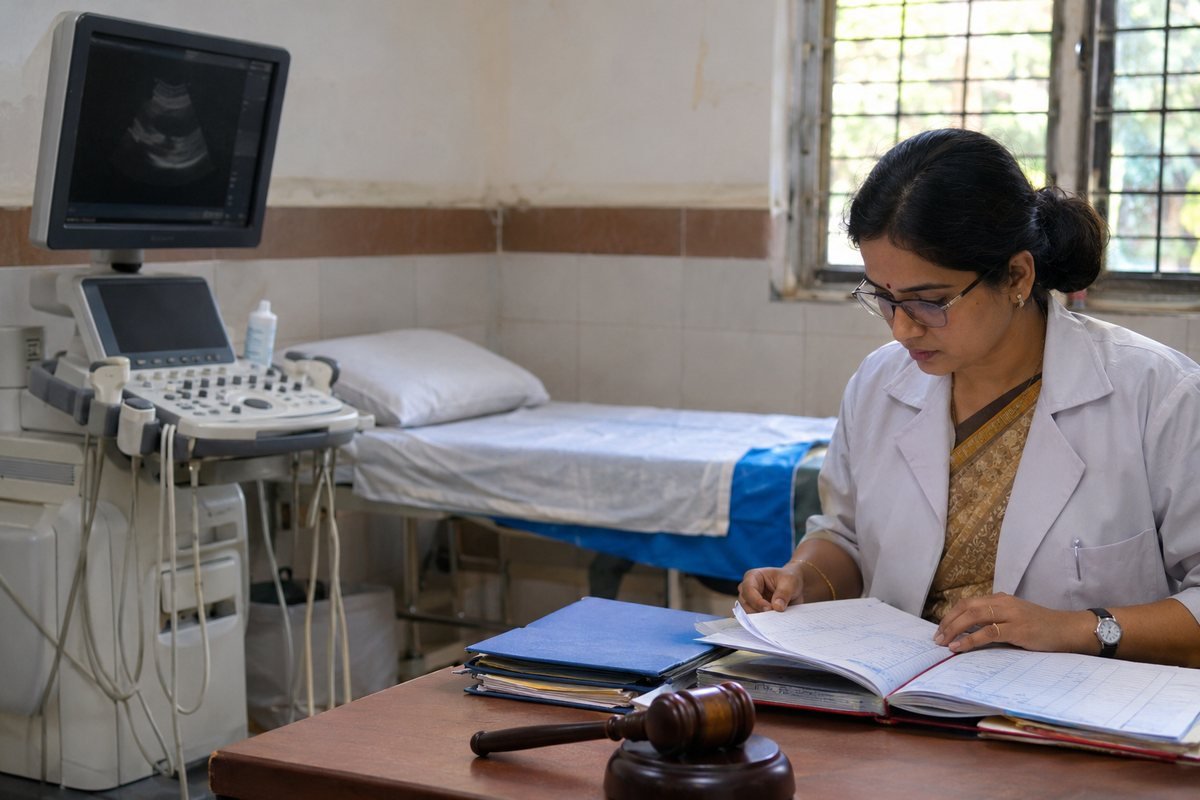
On 19 November 2026, Union Health Minister J. P. Nadda chaired the 32nd meeting of the Central Supervisory Board under the PC&PNDT Act, 1994. The meeting discussed inspections, digital processes, regulatory capacity and coordination between governments. The Ministry’s official release cited a national sex ratio at birth of 918 girls per 1,000 boys in the SRS 2024 report. The Indian Express also reported the identification of the National Institute of Health and Family Welfare as a nodal agency for monitoring online advertisements promoting sex selection.
Concept: PC&PNDT Act, 1994
The Pre-conception and Pre-natal Diagnostic Techniques (Prohibition of Sex Selection) Act regulates specified diagnostic facilities and prohibits sex selection before and after conception. It addresses misuse of technologies that can identify foetal sex. Prenatal diagnostic procedures remain permissible for specified medical purposes under legal conditions. The Act requires registration of covered facilities and compliance with prescribed procedures and records. Section 22 prohibits advertisements concerning sex determination and sex selection, including advertisements through the internet. Enforcement is carried out through designated authorities and statutory procedures.
Key facts for Prelims
- The PC&PNDT Act was enacted in 1994 and subsequently amended.
- Section 22 addresses advertisements relating to sex determination and sex selection.
- The Act provides for a Central Supervisory Board.
- Sex ratio at birth is expressed as female live births per 1,000 male live births.
Mains analysis and way forward
Mains analysis
- Gender-biased sex selection reflects wider discrimination and son preference.
- Online advertisements create enforcement challenges beyond physical diagnostic facilities.
- Effective implementation requires trained authorities, inspections and accurate records.
- Enforcement must protect legitimate medical services while acting against violations.
Way forward
- Strengthen evidence-based inspections and prompt investigation of credible violations.
- Improve mechanisms for identifying unlawful online advertisements.
- Combine legal enforcement with education, community participation and gender-equality initiatives.
Connect the dots: Gender discrimination | Public health | Digital governance | PC&PNDT Act | SDG 5.
Sources: The Indian Express, “Nadda pushes technology for healthcare, warns against misuse for sex selection”, 20 November 2026. Ministry of Health and Family Welfare, PIB, “32nd Meeting of Central Supervisory Board Reviews Implementation of PC&PNDT Act, 1994”, 19 November 2026. Official legislation: India Code, PC&PNDT Act, 1994.
Measuring unpaid care work could improve understanding of women’s employment choices
In short: An analysis highlights why employment surveys need better information on unpaid domestic responsibilities and their effects on women’s work choices.
Why in news
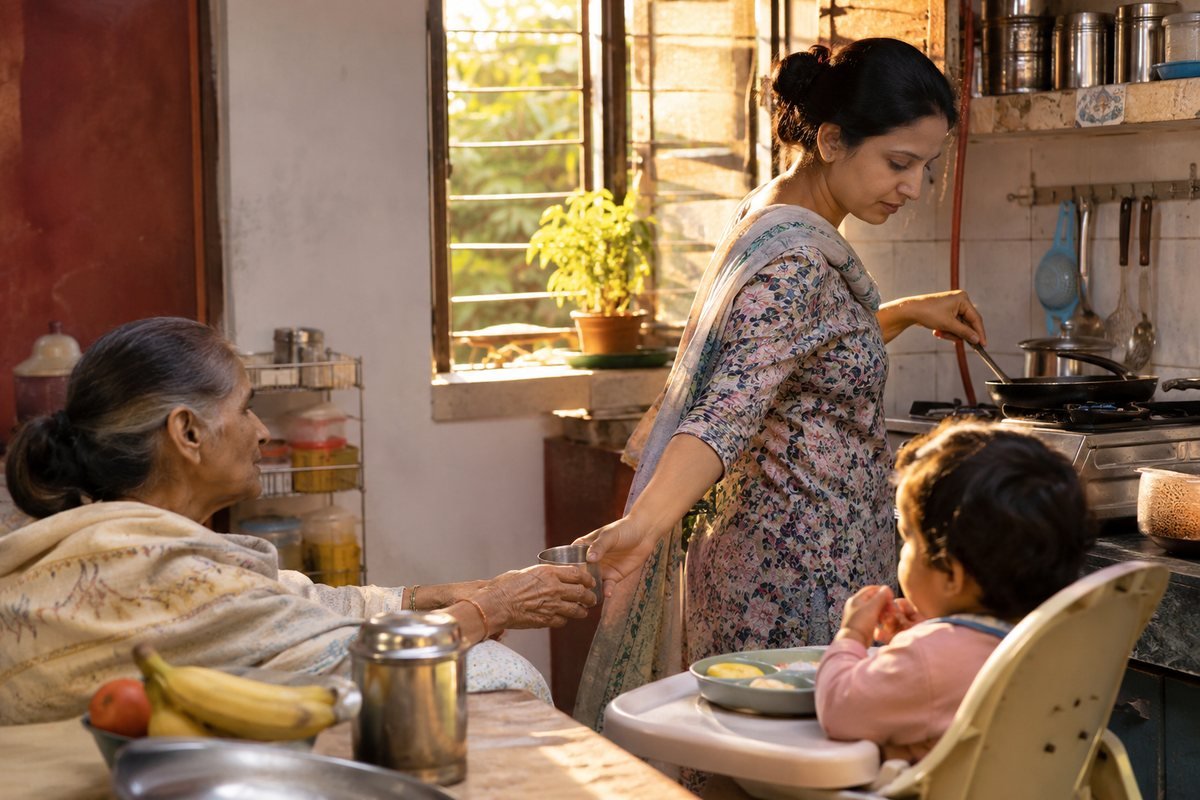
An Indian Express opinion article on 19 November 2026 examined limitations in existing surveys of women’s work. It argued that labour-force data and time-use data cannot easily be combined because their definitions and purposes differ. The article discussed MoSPI’s initiative to add questions on unpaid work to the Periodic Labour Force Survey. Official Time Use Survey 2024 data provide relevant context: female participants in unpaid domestic services spent an average of 289 minutes daily, compared with 88 minutes for male participants.
Concept: Time Use Survey and labour-force measurement
A Time Use Survey measures how individuals distribute time among paid work, unpaid household services, care activities and other uses. India’s National Statistics Office conducted national Time Use Surveys in 2019 and 2024. The Periodic Labour Force Survey, by contrast, focuses on employment, unemployment and labour-force participation. These surveys use different definitions and methods, so their findings cannot automatically be treated as directly comparable. Combining relevant information could help researchers examine how care responsibilities affect employment choices, hours worked and the types of jobs people accept.
Key facts for Prelims
- MoSPI is the Ministry of Statistics and Programme Implementation.
- The National Statistics Office conducted the Time Use Surveys of 2019 and 2024.
- The 2024 Time Use Survey covered persons aged six years and above.
- Among participants in unpaid domestic services, the 2024 average was 289 minutes for females and 88 minutes for males per day.
Mains analysis and way forward
Mains analysis
- Unpaid care responsibilities can limit women’s available time for education and paid employment.
- Labour statistics alone do not fully capture the interaction between paid and unpaid activities.
- Flexible employment may improve access to work but can also involve lower earnings and weaker security.
- Better integrated evidence can support policies addressing childcare, employment conditions and gender pay gaps.
Way forward
- Strengthen measurement of unpaid work within employment-related surveys.
- Improve access to childcare, eldercare and transport.
- Use gender-disaggregated data to evaluate employment and social protection policies.
Connect the dots: Gender roles | Labour-force participation | Care economy | Social infrastructure | Inclusive growth.
Sources: The Indian Express, Neetha N., “The importance of measuring women’s unpaid work”, 19 November 2026. MoSPI, Time Use Survey 2024, official fact sheet.
Economy
EPFO Board approves easier provident fund withdrawals and voluntary retirement payouts
In short: The EPFO Board has approved changes to provident fund withdrawals and a voluntary plan for periodic retirement payments, subject to required implementation steps.

Why in news
On 19 November 2026, the Employees’ Provident Fund Organisation’s Central Board of Trustees, chaired by Union Labour Minister Mansukh Mandaviya, approved significant changes. The waiting period for final PF settlement after unemployment was reduced from 12 months to two months, reversing an October 2025 decision. The minimum retained PF balance was reduced from 25% to 10%. The Board also approved a voluntary Systematic Withdrawal Plan allowing periodic retirement payouts. The plan requires legal vetting, amendments and notification. The waiting period for final pension withdrawal remains 36 months.
Concept: Provident fund, pension and retirement security
The Employees’ Provident Funds and Miscellaneous Provisions Act, 1952 provides the statutory framework for social security arrangements covering eligible employees. The Employees’ Provident Fund is a contributory savings arrangement, while the Employees’ Pension Scheme provides pension benefits under separate rules. Provident fund savings help workers meet retirement needs and certain permitted expenses. Withdrawal rules balance two objectives: providing liquidity during financial difficulty and preserving long-term savings. A systematic withdrawal arrangement allows eligible retirees to receive money periodically rather than necessarily withdrawing the entire accumulated balance immediately.
Key facts for Prelims
- EPFO functions under the Ministry of Labour and Employment.
- The governing legislation is the Employees’ Provident Funds and Miscellaneous Provisions Act, 1952.
- The Central Board of Trustees is EPFO’s apex governing body.
- The waiting period for final pension withdrawal remains 36 months, distinct from the revised PF withdrawal provision.
Mains analysis and way forward
Mains analysis
- Earlier access to savings can support workers facing unemployment and income disruption.
- Lower minimum-balance requirements increase flexibility but may reduce retirement savings.
- Periodic payouts can provide an alternative to withdrawing the entire provident fund corpus at retirement.
- Implementation requires clear rules, transparent communication and protection against unsuitable withdrawal decisions.
Way forward
- Notify the amended provisions after completing the required legal process.
- Provide clear guidance on eligibility, withdrawal choices and their financial consequences.
- Expand financial literacy and assess the effects of greater flexibility on retirement security.
Connect the dots: Social security | Labour welfare | Financial inclusion | Retirement income | Informal-sector protection.
Prime Minister urges industry to share tax benefits through higher wages and better products
In short: The Prime Minister questioned whether tax concessions and other policy benefits were translating into improved wages, employment and product quality.

Why in news
At the FICCI Annual General Meeting and Annual Convention in New Delhi on 19 November 2026, Prime Minister Narendra Modi questioned industry leaders about employment generation and wages. He argued that businesses were not adequately passing on benefits from government measures, including corporate tax reductions. He also criticised the quality of some goods sold in the domestic market and urged companies to invest more, improve standards and compete internationally. These were assessments expressed by the Prime Minister, not conclusions of a new official wage or manufacturing survey.
Concept: Corporate taxation and inclusive growth
Corporate income tax is levied on the taxable income of companies. India introduced an optional concessional corporate tax regime under Section 115BAA in 2019, providing a base rate of 22% for eligible domestic companies subject to conditions. Lower taxation may improve post-tax profits and encourage investment. However, the resulting benefits do not automatically reach workers through higher wages. Labour demand, productivity, competition, investment decisions and market conditions influence wage outcomes. Inclusive growth requires examining not only production and profits but also employment, real earnings and living standards.
Key facts for Prelims
- Corporation tax is a direct tax.
- Section 115BAA provides an optional concessional tax regime for eligible domestic companies.
- The base rate under Section 115BAA is 22%, subject to applicable surcharge and cess.
- Real wages measure purchasing power after accounting for changes in prices.
Mains analysis and way forward
Mains analysis
- Tax concessions should be evaluated against investment, employment and productivity outcomes.
- Higher corporate profits do not necessarily produce proportionate increases in employee earnings.
- Domestic product quality affects consumers, export competitiveness and confidence in manufacturing.
- Rising nominal wages may not improve living standards if inflation reduces purchasing power.
Way forward
- Improve public data on employment, productivity and real wages.
- Encourage investment in skills, technology and product-quality systems.
- Evaluate industrial incentives using measurable outcomes rather than expenditure or tax concessions alone.
Connect the dots: Tax policy | Wage growth | Labour productivity | Manufacturing competitiveness | Inclusive development.
Sources: The Indian Express, “Tax cuts not reaching staff: PM Modi pulls up India Inc over salaries, sub-par goods”, 19 November 2026. Income Tax Department, Section 115BAA.
Foreign portfolio investors purchase record $11.3 billion of Indian equities in November so far
In short: Foreign portfolio investors returned as major net buyers in November, although sustained inflows remain dependent on market and global conditions.

Why in news
On 19 November 2026, The Indian Express reported that foreign portfolio investors had made net purchases of approximately $11.3 billion in Indian equities during November up to the reporting date. The figure was described as a record monthly inflow, although November had not ended. The reported buying followed more than two months of selling. The report also linked the return of foreign investors with a recovery in the Nifty 50 and Sensex. Analysts cited improving corporate earnings and changing global conditions but cautioned that inflows might not be sustained.
Concept: Foreign Portfolio Investment and capital flows
Foreign Portfolio Investment involves investment by non-residents in financial assets such as equities and debt securities. Unlike Foreign Direct Investment, portfolio investment generally does not involve acquiring lasting managerial influence over an enterprise. Foreign investors assess expected returns, interest rates, exchange-rate movements and risks before allocating funds. Large inflows may support financial-market liquidity and demand for domestic assets. However, portfolio investments can be withdrawn relatively quickly. Sudden changes in capital flows may therefore increase exchange-rate and market volatility, making financial stability an important policy concern.
Key facts for Prelims
- SEBI regulates foreign portfolio investors within India’s securities-market framework.
- FPI and FDI are distinct categories of foreign investment.
- The Sensex is associated with the BSE, while the Nifty 50 is associated with the NSE.
- Net foreign investment flows account for both purchases and sales.
Mains analysis and way forward
Mains analysis
- Portfolio inflows can improve market liquidity but remain sensitive to external risks.
- Changes in global interest rates and risk perceptions influence investment decisions.
- A stock-market recovery does not automatically establish an improvement in household welfare or employment.
- Strong domestic savings and sound macroeconomic fundamentals can improve resilience against volatile foreign flows.
Way forward
- Maintain transparent capital-market regulation and reliable financial disclosures.
- Strengthen domestic institutional investment and long-term financial savings.
- Monitor sustained capital-flow trends rather than drawing conclusions from short periods of market recovery.
Connect the dots: Balance of payments | Capital flows | Exchange rates | Monetary policy | Financial stability.
Environment and infrastructure
Environment Ministry panel recommends assessment terms for limestone mines near Great Indian Bustard habitat
In short: An expert panel has recommended Terms of Reference for two proposed limestone mines near important Great Indian Bustard habitat in Rajasthan.
Why in news
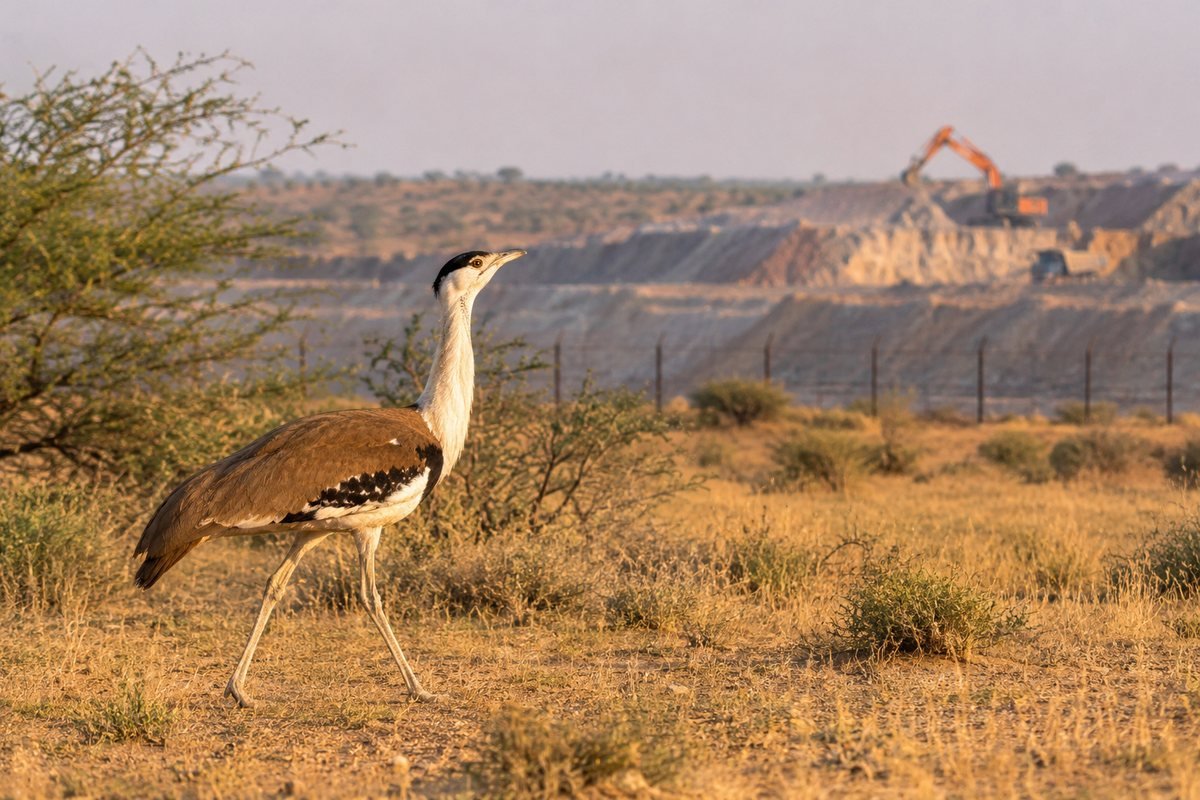
On 20 November 2026, The Indian Express reported that the Environment Ministry’s Expert Appraisal Committee had recommended Terms of Reference for two proposed limestone mines in Jaisalmer. The recommendations followed meetings held from 2 to 4 November. The Joga-IV block covers 368 hectares and lies approximately 3.8 km from the Great Indian Bustard priority area. Joga-II covers 376 hectares and lies approximately 5.7 km away. The committee raised concerns about transport routes, disturbance and habitat protection. These are preliminary appraisal recommendations, not final environmental clearances.
Concept: Environmental Impact Assessment and Terms of Reference
Environmental Impact Assessment examines the likely environmental consequences of a proposed project before approval. India’s EIA Notification, 2006 establishes procedures for obtaining prior environmental clearance for specified activities. Terms of Reference identify the studies, environmental data and potential impacts that must be addressed in an assessment. These may include effects on water, air, wildlife, local communities and surrounding ecosystems. Expert Appraisal Committees review relevant material and make recommendations to the competent authority. Receiving Terms of Reference permits the assessment process to proceed but does not itself authorise mining operations.

Key facts for Prelims
- The Great Indian Bustard’s scientific name is Ardeotis nigriceps.
- It is classified as Critically Endangered on the IUCN Red List.
- It is protected under Schedule I of the Wildlife (Protection) Act, 1972.
- Desert National Park, associated with bustard conservation, is located in Rajasthan.
Mains analysis and way forward
Mains analysis
- Mining near sensitive grasslands can affect wildlife even when project boundaries fall outside priority conservation areas.
- Transport-related dust, noise and road development can disturb feeding, breeding and movement habitats.
- Environmental appraisal should assess cumulative effects from multiple nearby projects.
- Mineral development must be evaluated alongside biodiversity conservation and long-term ecological costs.
Way forward
- Conduct field surveys covering bustard presence, nesting, feeding habitats and transport corridors.
- Avoid road alignments that disturb sensitive grassland patches.
- Require measurable mitigation, transparent assessment and appropriate monitoring before any final clearance decision.
Connect the dots: EIA Notification 2006 | Biodiversity | Grassland ecology | Sustainable mining | Precautionary principle.
Yamuna restoration debate emphasises basin-wide responsibility and effective sewage treatment
In short: An editorial examines the Supreme Court’s emphasis on coordinated river management, pollution control and rehabilitation in Yamuna restoration.
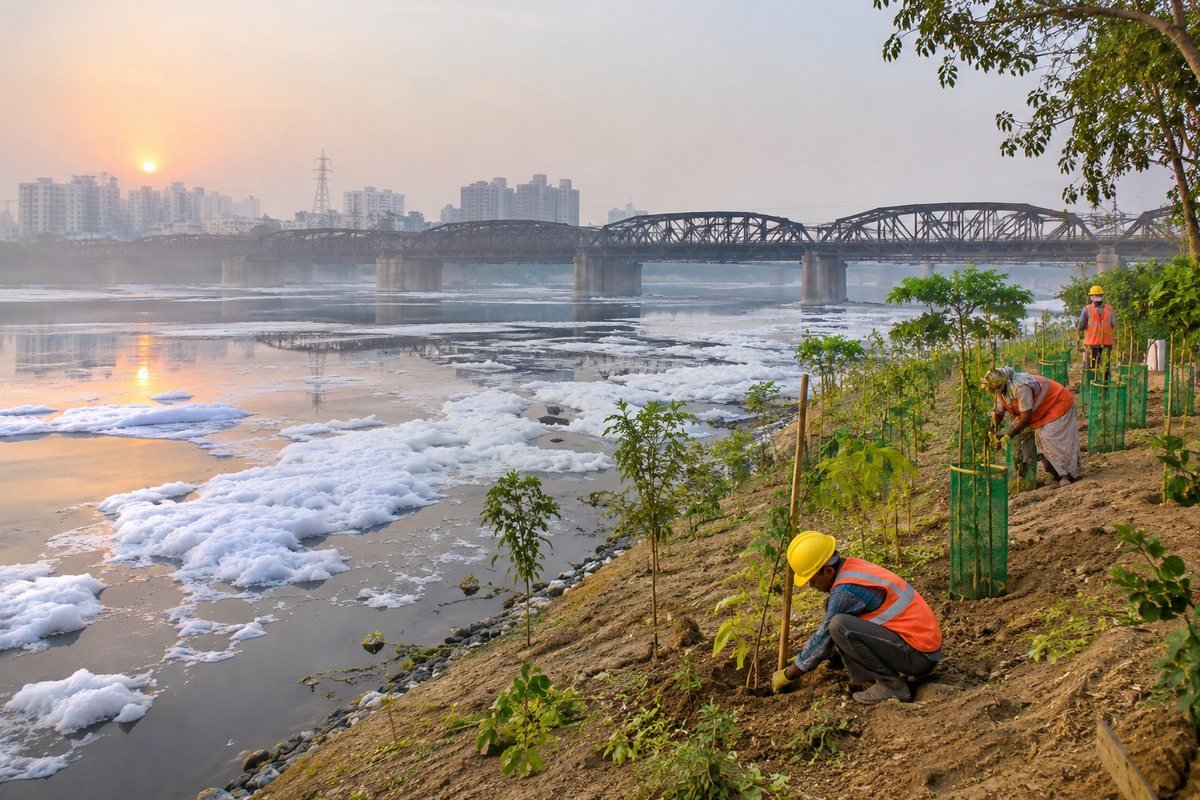
Why in news
An Indian Express editorial dated 19 November 2026 examined a Supreme Court ruling concerning restoration of the Yamuna. The editorial reported that the Court sought greater accountability from states and Union Territories sharing the river basin. It also discussed directions concerning pollution liability and the role of the Central Pollution Control Board. The editorial highlighted shortcomings in sewage treatment, floodplain encroachment and inadequate flows. It argued that ecological restoration must be linked with housing and rehabilitation rather than treated as a standalone river-cleaning exercise.
Concept: River-basin management and environmental flows
A river basin is the geographical area drained by a river and its tributaries. River-basin management considers upstream and downstream interactions involving water quantity, water quality, land use and ecosystems. Environmental flows refer to the quantity, timing and quality of water needed to sustain freshwater ecosystems and associated benefits. Floodplains provide space for floodwaters, support groundwater recharge and maintain ecological processes. River restoration therefore requires more than constructing sewage treatment plants. It also involves functioning sewerage networks, adequate flows, protection of floodplains and coordination across administrative boundaries.
Key facts for Prelims
- The Yamuna originates in the Yamunotri region of Uttarakhand.
- It is a major right-bank tributary of the Ganga.
- The Yamuna joins the Ganga at Prayagraj.
- The Central Pollution Control Board was established under the Water (Prevention and Control of Pollution) Act, 1974.
Mains analysis and way forward
Mains analysis
- Pollution originating in different jurisdictions requires coordinated basin-level governance.
- Sewage treatment capacity is useful only when plants operate effectively and wastewater reaches them.
- Reduced river flows and encroached floodplains weaken ecological functions.
- Restoration measures involving settlements must address rehabilitation and human dignity.
Way forward
- Establish clear basin-wide responsibilities, reporting and pollution-monitoring mechanisms.
- Improve sewage collection, treatment performance and reuse of treated wastewater.
- Protect floodplains while ensuring lawful and humane rehabilitation where displacement is necessary.
Connect the dots: Water pollution | Cooperative federalism | Environmental flows | Urban housing | Right to life.
Falling coal stocks raise concerns about electricity supply ahead of summer 2027
In short: States are seeking additional electricity as declining coal inventories and concerns over available thermal power increase pressure on supply planning.

Why in news
On 19 November 2026, The Indian Express reported concerns about electricity availability in the months ahead. Coal stocks at domestic coal-based power plants stood at 20.79 million tonnes on 15 November, compared with approximately 55 million tonnes in early April. States including Tamil Nadu, Kerala, Rajasthan and Gujarat were seeking additional power through short-term tenders. Prices in some tenders reached Rs 19-20 per unit. Officials were also discussing expanding coal-storage capacity from approximately 80 million tonnes to 160 million tonnes. The expansion remained under discussion.
Concept: Electricity reliability, dispatchable power and fuel security
Electricity systems must continuously balance generation and consumption. Dispatchable power sources can adjust output according to system requirements, subject to technical and operational constraints. Coal-based thermal plants provide controllable generation but depend on adequate fuel inventories and transport. Solar generation varies with sunlight, creating a need for other supply sources, storage and demand management during non-solar hours. Electricity distribution companies purchase power through contractual arrangements and electricity markets. Reliable supply requires coordination among generation, fuel logistics, transmission networks, storage, market design and distribution-company finances.
Key facts for Prelims
- The Central Electricity Authority functions under the Ministry of Power.
- The Central Electricity Regulatory Commission regulates specified aspects of interstate electricity markets.
- India’s High Price Day-Ahead Market is a specialised electricity-market segment.
- Coal inventories provide a fuel buffer for thermal generation during disruptions or high demand.
Mains analysis and way forward
Mains analysis
- Declining coal stocks can reduce electricity-system resilience even where installed generation capacity exists.
- High-priced short-term procurement may increase financial pressure on distribution companies.
- Peak demand and falling solar output create requirements for dispatchable generation and storage.
- Long-term energy planning must consider capacity adequacy, fuel security, grid flexibility and affordability together.
Way forward
- Improve coal-stock planning, logistics and seasonal electricity-demand forecasting.
- Strengthen distribution-company finances and transparent procurement practices.
- Expand energy storage, flexible generation, transmission capacity and demand-response systems.
Connect the dots: Energy security | Coal logistics | DISCOM finances | Renewable integration | Infrastructure resilience.
International relations and security
India and Japan sign Letter of Intent for Japanese live-fire training at Indian ranges
In short: India and Japan have agreed to pursue arrangements enabling Japanese forces to conduct live-fire training at Indian firing ranges.

Why in news
On 19 November 2026, India and Japan held their fourth Foreign and Defence Ministers’ 2+2 Dialogue in Tokyo. The two countries signed a Letter of Intent concerning the use of Indian firing ranges by Japan’s Self-Defence Forces. The proposed arrangement includes live-fire training involving surface-to-ship missiles and would represent the first such use of Indian ranges by Japanese forces. Both sides agreed to accelerate coordination for implementation. The previous ministerial 2+2 dialogue was held in New Delhi on 20 August 2024.
Concept: The 2+2 Dialogue and bilateral defence cooperation
A 2+2 Dialogue brings together the foreign and defence ministers of two countries to coordinate diplomatic, strategic and security priorities. India uses this mechanism with selected partners, including Japan. Defence cooperation can include military exercises, training, technology collaboration, maritime security and information sharing. Such cooperation can improve familiarity between armed forces and strengthen institutional relationships. However, participation in joint exercises or shared training arrangements does not automatically create a mutual defence obligation. The legal and operational implications depend on the specific agreements concluded by the participating governments.
Key facts for Prelims
- The India-Japan 2+2 Dialogue involves the foreign and defence ministers of both countries.
- Japan’s armed services are formally known as the Self-Defence Forces.
- India and Japan are members of the Quad alongside Australia and the United States.
- A Letter of Intent expresses a proposed course of cooperation but does not, by itself, establish a military alliance.
Mains analysis and way forward
Mains analysis
- Shared training facilities can strengthen operational familiarity and defence cooperation.
- India-Japan security ties form part of their wider Indo-Pacific engagement.
- Defence collaboration complements economic, technological and diplomatic relations.
- Training arrangements require careful attention to implementation, logistics and agreed operational procedures.
Way forward
- Develop clear training protocols and implementation arrangements.
- Expand maritime-domain awareness, disaster response and appropriate technology cooperation.
- Maintain regular strategic dialogue and coordination on regional security concerns.
Connect the dots: Act East Policy | Quad | Indo-Pacific | Maritime security | Defence diplomacy.
Sources: The Indian Express, “Japan forces to conduct drills at Indian firing ranges for first time”, 20 November 2026. Official reference: Japan Ministry of Defence, Joint Press Release, November 2026.
US, China and Russia issue Shenzhen declaration after trilateral summit
In short: The three leaders announced broad commitments on UN reform, energy supplies and nuclear risks but no major breakthrough on ongoing conflicts.
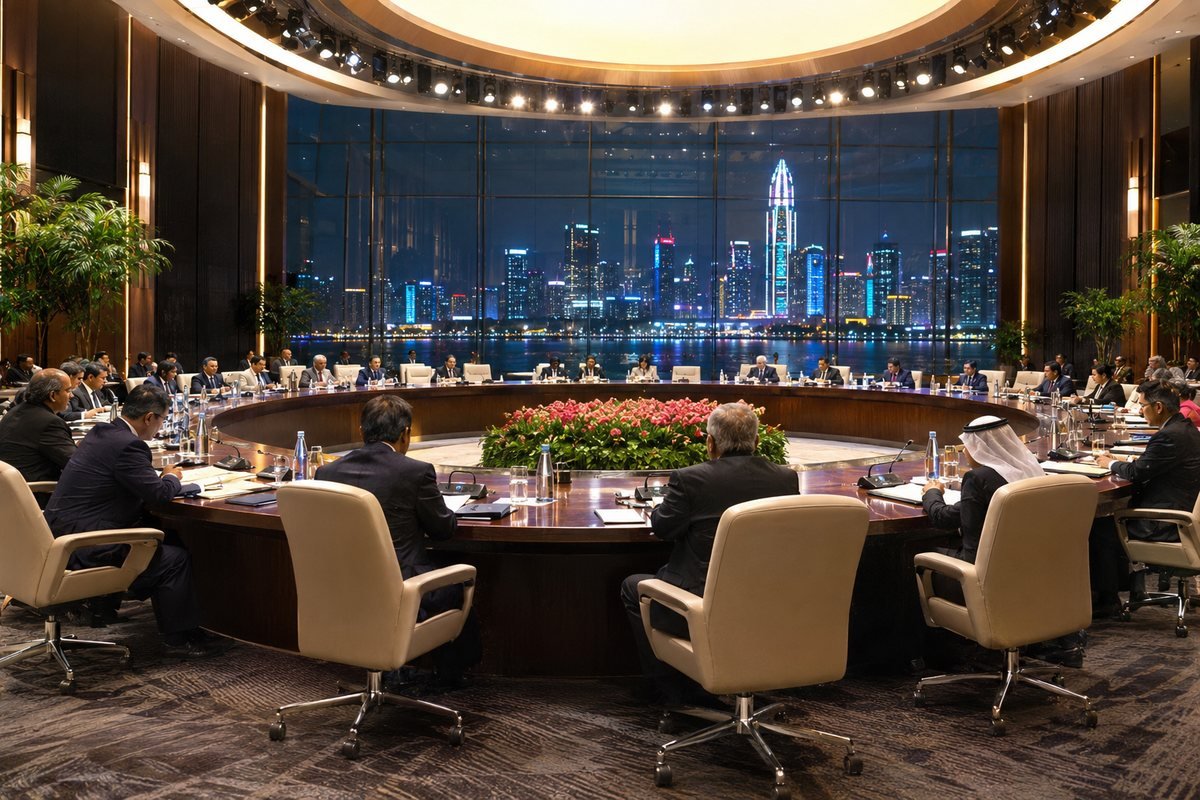
Why in news
On 19 November 2026, US President Donald Trump, Chinese President Xi Jinping and Russian President Vladimir Putin met in Shenzhen, China, on the sidelines of the APEC summit. The leaders issued a four-point declaration addressing United Nations reform, petroleum supplies, international criminal jurisdiction and nuclear risks. The Indian Express reported that the meeting produced limited concrete progress on major conflicts and arms control. The declaration expressed diplomatic commitments but did not establish a new international organisation, military alliance or comprehensive arms-control treaty.
Concept: Great-power diplomacy and the international order
Great-power diplomacy refers to negotiations among states possessing substantial military, economic and political influence. Such interactions can shape international institutions, security arrangements and global economic rules. Historical meetings, including the Yalta Conference of 1945, are associated with major-power discussions about international settlements. Contemporary global governance also depends on the United Nations, international law and participation by other sovereign states. India’s strategic autonomy seeks to preserve independent decision-making while engaging multiple partners. Great-power cooperation may create diplomatic opportunities but can also raise concerns about the interests of smaller countries.
Key facts for Prelims
- APEC stands for Asia-Pacific Economic Cooperation.
- APEC is a regional economic cooperation forum, not a military alliance.
- The United States, Russia and China are permanent members of the UN Security Council.
- The other two permanent members are France and the United Kingdom.
Mains analysis and way forward
Mains analysis
- Dialogue between major powers can help manage tensions but does not guarantee resolution of conflicts.
- Broad declarations differ from legally binding treaties with detailed implementation commitments.
- Exclusive great-power bargaining may raise concerns about representation of smaller states.
- India must assess changing international relationships while maintaining independent foreign-policy choices.
Way forward
- Support inclusive and effective multilateral institutions.
- Advocate meaningful UN reform that reflects contemporary international realities.
- Maintain diversified diplomatic and economic partnerships while protecting strategic autonomy.
Connect the dots: Multipolarity | UN reform | Strategic autonomy | Balance of power | International institutions.
Science and technology
Java4Shell vulnerability prompts urgent cybersecurity advisories and software updates
In short: A serious vulnerability affecting certain Java runtime environments has prompted vendors and cybersecurity authorities to recommend immediate security updates.

Why in news
On 19 November 2026, The Indian Express examined Java4Shell, identified as CVE-2026-114938 and publicly disclosed on 17 November. Researchers reported that the vulnerability could enable memory corruption and potentially remote code execution under specific conditions. It affects vulnerable Java runtimes using an optimised Base64 decoder on x86-64 processors supporting AVX-512 VBMI. Oracle and OpenJDK released fixes. CERT-In and other cybersecurity authorities issued advisories. Security researchers reported proof-of-concept demonstrations, but the advisories checked did not establish widespread exploitation in real-world attacks.
Concept: Software vulnerabilities and responsible patch management
A software vulnerability is a weakness that may allow unintended access, information exposure or disruption. Remote code execution occurs when an attacker can cause unauthorised code to run on another system. A zero-day vulnerability is a flaw exploited or exposed before a protective fix is available, though not every newly disclosed vulnerability is necessarily a zero-day attack. Security patches correct identified weaknesses. Effective patch management requires knowing which software versions are installed, checking whether systems are affected, testing updates and deploying fixes. Monitoring, backups and access controls provide additional protection.
Key facts for Prelims
- CVE stands for Common Vulnerabilities and Exposures.
- Java is a widely used programming language and software platform.
- OpenJDK is an open-source implementation of the Java platform.
- CERT-In is India’s national agency for responding to specified cybersecurity incidents.
Mains analysis and way forward
Mains analysis
- Vulnerabilities in widely used software components can affect multiple sectors and organisations.
- Dependence on common digital infrastructure creates shared cybersecurity risks.
- AI-assisted security research can improve vulnerability discovery and defensive capabilities.
- Responsible disclosure and prompt patching are essential for reducing exploitation risks.
Way forward
- Maintain inventories of software versions and dependencies.
- Apply verified vendor patches after appropriate testing.
- Strengthen vulnerability monitoring, responsible disclosure and incident-response preparedness.
Connect the dots: Cybersecurity | Digital public infrastructure | AI governance | Critical information infrastructure | National security.
Sources: The Indian Express, “Why a new security flaw in Java has triggered urgent security advisories worldwide”, 19 November 2026. Microsoft Security, “Addressing Java4Shell CVE-2026-114938: upgrade guidance and Azure WAF mitigations”, 17 November 2026. Oracle, Critical Security Patch Update Advisory, November 2026.
In brief
- Processed-food expenditure rises in rural and urban households: The draft India Clean Food Report 2026, discussed at IIM Ahmedabad, found that the share of household budgets devoted to processed foods increased from 4.19% to 9.84% in rural India between 1999-2000 and 2023-24. The comparable urban increase was from 6.35% to 11.09%. UPSC lens: Household consumption, nutrition and food regulation. Source
- South Western Railway revises procedures for group ticket bookings: South Western Railway revised bulk-ticket booking procedures, including removal of the earlier cap on berths under the updated group-reservation arrangements. UPSC lens: Administrative simplification and public-service delivery. Source
- Nvidia halts AI chip shipments to China amid export-control tensions: Nvidia said it had stopped shipping GPUs to China, including some products previously approved for export. The development reflects continuing tensions over advanced computing technology. UPSC lens: Semiconductor supply chains, export controls and technological sovereignty. Source
- Bihar reiterates protocol for inviting elected representatives to government functions: The Bihar government directed officials to invite local MPs and MLAs to official functions and reinforced procedures concerning inaugurations and foundation-laying ceremonies. UPSC lens: Legislative-executive relations and administrative accountability. Source
- Kerala High Court declines relief in mining-clearance dispute: The Kerala High Court refused to interfere with the suspension of environmental clearance for a quarry operator in a case involving excessive mineral extraction and illegal granite storage. UPSC lens: Environmental compliance, regulation of mining and judicial oversight. Source
- Delhi court sets aside municipal election over non-disclosure of conviction: A Delhi court set aside a municipal councillor’s election after finding that a criminal conviction had not been disclosed in the election affidavit. UPSC lens: Electoral transparency, candidate disclosures and voters’ right to information. Source
Prelims practice: 5 questions
Choose an option to see the answer and explanation. Your score appears when all five are answered.
Mains practice
GS III | Infrastructure | Energy security and the power sector “India’s electricity security depends not merely on installed generation capacity, but also on fuel availability, flexible power markets and efficient distribution.” Discuss the challenges to reliable electricity supply in India and suggest measures for building a resilient and sustainable power system.
Show the answer outline
INTRODUCTION
Reliable electricity supply requires more than sufficient installed generation capacity. It depends on fuel availability, dependable generation, transmission infrastructure, demand forecasting, financially viable distribution companies and grid flexibility.
Recent concerns about declining coal inventories and high short-term power procurement prices illustrate the importance of coordinated electricity-system planning.
STRUCTURAL CHALLENGES
- Coal-based generation depends on adequate fuel inventories and reliable transportation.
- Peak electricity demand can exceed available supply during certain periods.
- Variable renewable generation creates a need for storage and flexible backup resources.
- Transmission constraints may prevent electricity from reaching areas where demand is high.
FINANCIAL AND MARKET CHALLENGES
- Distribution companies face losses, payment delays and difficulties in recovering costs.
- High short-term procurement prices increase pressure on utility finances.
- Differences between forecast and actual demand can create expensive last-minute purchases.
- Poorly designed procurement arrangements may increase costs and uncertainty.
INTEGRATED ENERGY PLANNING
- Improve seasonal electricity-demand forecasting and fuel-stock management.
- Coordinate generation planning with transmission development and storage requirements.
- Strengthen cooperation among generators, grid operators and distribution companies.
- Improve monitoring of generation availability, coal inventories and system reliability.
MEASURES FOR A RESILIENT AND SUSTAINABLE SYSTEM
- Expand grid-scale batteries, pumped-storage hydropower and other suitable flexibility resources.
- Improve distribution-company efficiency, billing and financial accountability.
- Encourage demand response, energy efficiency and transparent electricity markets.
- Diversify energy sources while maintaining reliable and affordable supply during the transition.
CONCLUSION
Electricity security is a system-wide challenge involving generation, fuel logistics, markets and distribution. India needs coordinated planning, financial reform and greater grid flexibility to ensure affordable, reliable and environmentally sustainable electricity.
TIP
Distinguish installed capacity from dependable supply, and use the fall in coal stocks (about 55 mt in April to 20.79 mt on 15 November 2026) as evidence of fuel-security risk, not of a nationwide crisis.
Your next step, whichever stage you are at.
Open Library · All programmes · WhatsApp +91 81220 02172
Current Canvas is prepared by the UPSC Gurus editorial desk. Every fact is checked against official releases and reliable reporting, with sources listed under each story. Editions are compiled each month into Current Canvas Monthly, a free magazine.
About images: photographs and illustrations in Current Canvas are AI-generated for illustration only. They are not news photographs of the events described.
Your first Mentor’s Desk call is free
One free conversation per aspirant about where you are in your preparation, with an honest suggestion of the right next step.
Know more and bookHave a question? Get in touch
For questions about a programme, its fees, batch dates, payment or access. Message us on WhatsApp and our team will reply. Asking a question is not a booking, and you can ask as often as you need.
Get in touch on WhatsApp