
 New this week · Free UG Handout 02UPSC Mains Directive Words: 60 Meanings, Trends and PYQsTwo free PDFs: The Guide and the With PYQs edition.Read and download
Today’s Canvas
This edition is about building capacity for difficult seasons. A deficient, El Nino-affected monsoon has ended, and the Cabinet has answered with rabi prices that favour pulses and oilseeds and with a large plan to carry and store clean power. Courts asked for evidence over sentiment, on firecrackers and on bail. Abroad, a long military mission in Iraq closed. Each story is checked against official releases and reliable reporting and linked to the syllabus.
About 18 minutes to read the key points; Mains analysis opens under each story.
- Cabinet raises MSP for six rabi crops for 2027-28; safflower up Rs 675, wheat up Rs 25 to Rs 2,610GS III
- Cabinet approves Rs 1.86 lakh crore PM-DHARA for intra-state green transmission and 50 GWh battery storageGS III
- Modi and Trump review trade, defence, energy and critical technology ties in phone call amid trade talksGS II
- Monsoon 2026 ends at 87.4% of normal; East and Northeast India record lowest rainfall since 1901GS I and GS III
- US concludes Operation Inherent Resolve in Iraq as coalition forces leave Erbil Air BaseGS II
- Supreme Court rules out total firecracker ban, accepts regulated new-generation joint crackers subject to conditionsGS II and GS III
- Government notifies CAFE-3 fuel economy norms for passenger cars from April 2027, tightening the benchmark by about 16.7%GS III
- Environment Ministry issues guidelines for National Coastal Mission 2.0 with Rs 767 crore outlay till 2030-31GS III
- Fiscal deficit reaches Rs 7.10 lakh crore, 41.9% of FY27 target, by August; small savings rates unchangedGS III
- India’s external debt rises to US$ 778.2 billion at end-June 2026; debt-to-GDP ratio eases to 20.8%GS III
- Supreme Court special bench clubs CAPF contempt pleas with challenge to new CAPF law; hearing on 15 OctoberGS II
- Judges must not impose personal views on morality while deciding bail or criminal trials: Supreme CourtGS IV and GS II
- Apple Pay launches in India with Axis Bank cards; card-based tap-to-pay will sit alongside UPIGS III
- Rabi MSPs for 2027-28 rise most for safflower (Rs 675) and least for wheat (Rs 25, to Rs 2,610).
- PM-DHARA commits Rs 1,86,405 crore to intra-state green transmission and 50 GWh of battery storage by 2032-33.
- The 2026 monsoon ended at 87.4% of LPA; East and Northeast India recorded their lowest rainfall since 1901.
- The US concluded Operation Inherent Resolve in Iraq as coalition forces left Erbil Air Base.
- The Supreme Court ruled out a total firecracker ban and accepted regulated joint crackers; it lists the matter on 15 October.
- The fiscal deficit reached 41.9% of the FY27 target by August; small savings rates were left unchanged.
- New CAFE-3 norms tighten passenger car fuel economy by about 16.7% from 2027-28 to 2031-32.
Agriculture and economy
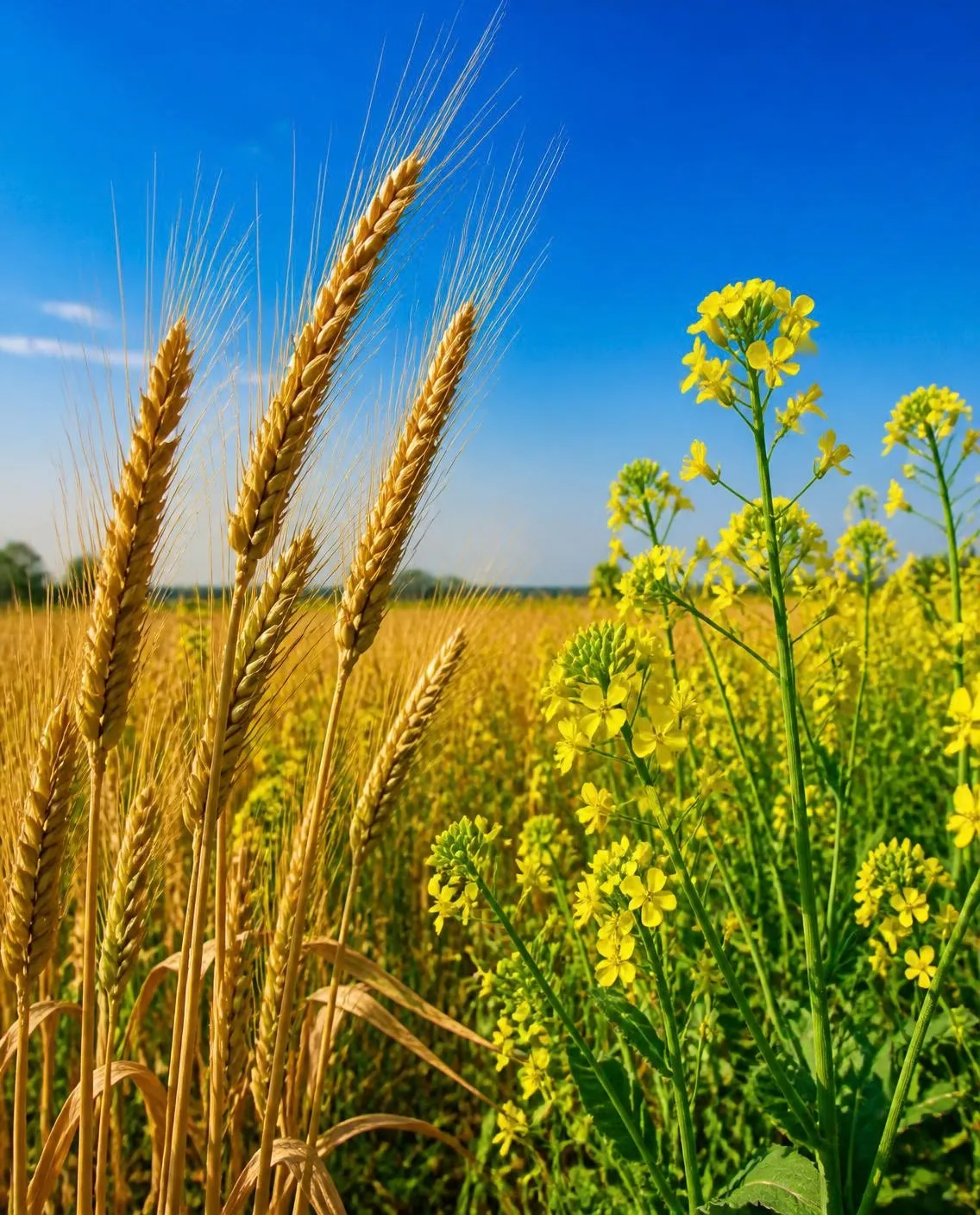
Cabinet raises MSP for six rabi crops for 2027-28; safflower up Rs 675, wheat up Rs 25 to Rs 2,610
In short: The rabi MSP round favours oilseeds and pulses over wheat, using price signals to nudge crop diversification.
Why in news
On 30 September 2026, the Cabinet Committee on Economic Affairs, chaired by the Prime Minister, approved higher Minimum Support Prices (MSPs) for all six mandated rabi crops for Rabi Marketing Season 2027-28. Safflower received the largest increase (Rs 675 per quintal, to Rs 7,215), while wheat rose by only Rs 25 (about 0.97%) to Rs 2,610 per quintal. According to a PTI report of the ministerial briefing, the estimated MSP payout is Rs 90,962 crore for a projected 324 lakh tonnes.
Background
The increases follow the Union Budget 2018-19 commitment to fix MSP at least 1.5 times the all-India weighted average cost of production (the A2+FL cost, which covers paid-out costs and imputed family labour, not the comprehensive C2 cost). The margin over cost is highest for wheat (106% over a cost of Rs 1,264 per quintal), followed by rapeseed and mustard (96%) and lentil (92%). The government says the pricing is meant to promote pulses and oilseeds over cereals. The MSPs were set on the recommendation of the Commission for Agricultural Costs and Prices (CACP). Wheat sowing usually begins in October, and the agriculture ministry has set a wheat production target of 121 million tonnes for 2026-27.
Key facts for Prelims
- Rabi MSPs 2027-28 (Rs per quintal): wheat 2,610; barley 2,286; gram 5,958; lentil (masur) 7,390; rapeseed and mustard 6,613; safflower 7,215.
- Largest absolute increase: safflower (Rs 675, about 10.3%); then rapeseed and mustard (Rs 413) and lentil (Rs 390). Smallest: wheat (Rs 25).
- Margin over projected cost: wheat 106%, rapeseed and mustard 96%, lentil 92%, gram 59%, barley 58%, safflower 50%.
- CACP recommends MSPs; the Cabinet Committee on Economic Affairs (CCEA) approves them.
- Benchmark: MSP at least 1.5 times the all-India weighted average cost of production (Union Budget 2018-19); the cost used is A2+FL, not C2.
Mains analysis and way forward
Mains analysis
- Price signals for diversification: larger increases for oilseeds and pulses support the goal of reducing edible oil and pulse imports, but MSP works only where procurement is assured.
- The near-flat wheat increase is likely to reflect comfortable stocks and fiscal prudence; with wheat already at more than double its cost, a larger rise could deepen the cereal bias in north-west India.
- Procurement asymmetry: wheat and paddy enjoy assured open-ended procurement, while pulses and oilseeds depend on schemes such as PM-AASHA, so announced MSPs often do not reach farmers in mandis.
- Climate risk (analysis): a strong El Nino and a deficient 2026 monsoon raise the stakes for rabi sowing, soil moisture and reservoir levels.
Way forward
- Strengthen procurement of pulses and oilseeds through assured purchase, better storage and wider awareness among farmers.
- Combine MSP with water-efficient crop incentives and state-level diversification plans in irrigated cereal belts.
- Improve transparency of cost estimates and publish procurement reach by crop and state.
Connect the dots: Links to GS III: MSP, CACP, food security, procurement, crop diversification, edible oil self-reliance.
Sources: Business Today: Cabinet clears Rs 2.79 lakh crore package: Rabi MSP hike, PM DHARA and Delhi traffic system, 30 Sep 2026; DeshGujarat: Union Cabinet approves hike in MSP for all Rabi crops for 2027-28 marketing season, 30 Sep 2026; The Federal (PTI): Cabinet approves Rs 25 hike in wheat MSP to Rs 2,610 per quintal, 30 Sep 2026; News On AIR: Union Cabinet hikes minimum support prices for rabi crops for 2027-28 marketing season, 1 Oct 2026
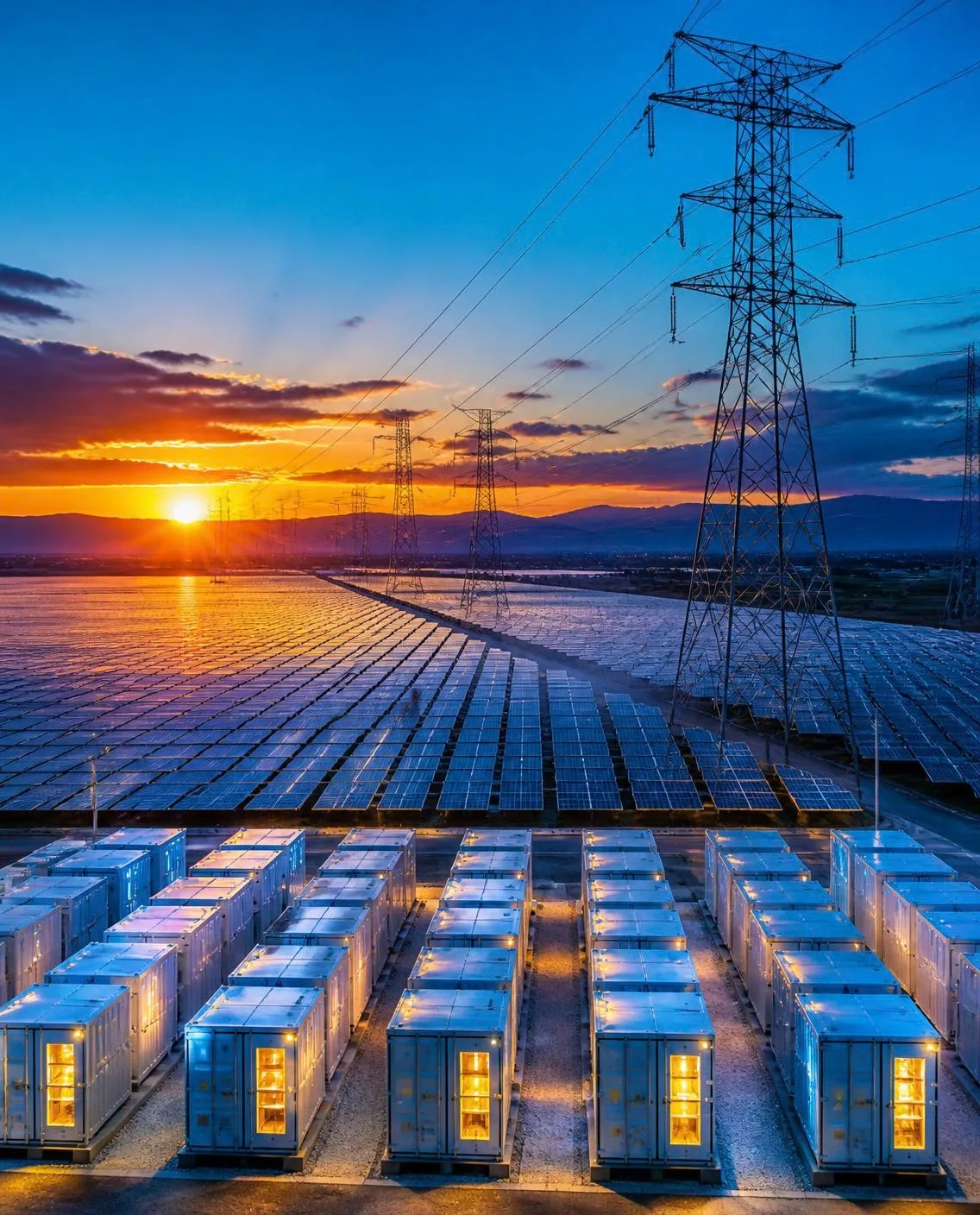
Cabinet approves Rs 1.86 lakh crore PM-DHARA for intra-state green transmission and 50 GWh battery storage
In short: India shifts focus from adding renewable capacity to moving and storing it, targeting 135 GW evacuation and 50 GWh storage by 2032-33.
Why in news
On 30 September 2026, the Union Cabinet approved Green Energy Corridor Phase-III (PM-DHARA: PM-Developing Harmonized and Accelerated Renewable-energy Access) with a total outlay of Rs 1,86,405 crore. It combines Rs 1,36,378 crore for intra-state transmission systems under Green Energy Corridor Phase-III with Rs 50,000 crore for 50 GWh of Battery Energy Storage Systems (BESS). Central financial assistance is Rs 54,082 crore, and the target is completion by FY 2032-33.
Background
The scheme aims to evacuate up to 135 GW of renewable energy across states and Union Territories. BESS will be placed at generator or developer ends or at other locations important for grid flexibility, to manage intermittency, congestion, peak-hour curtailment and demand in non-solar hours. Greenfield intra-state projects will be awarded through Tariff Based Competitive Bidding (TBCB), with Transmission Service Providers working on a Build-Own-Operate-Maintain model, while brownfield upgrades will be on a cost-plus basis. State Transmission Utilities are the overall implementing agencies. The government links the scheme to its target of 900 GW of non-fossil installed capacity by 2035. The same Cabinet meeting also cleared an Intelligent Traffic Management System for Delhi, taking the day’s three approvals to Rs 2,79,157 crore.
Key facts for Prelims
- PM-DHARA: PM-Developing Harmonized and Accelerated Renewable-energy Access.
- Outlay Rs 1,86,405 crore = Rs 1,36,378 crore (intra-state transmission, Green Energy Corridor Phase-III) + Rs 50,000 crore (50 GWh BESS).
- Central financial assistance: Rs 54,082 crore; completion by FY 2032-33; evacuation of up to 135 GW renewable energy.
- Implementing agencies: State Transmission Utilities; greenfield via TBCB, brownfield on cost-plus basis.
- Linked target (government goal): 900 GW non-fossil installed capacity by 2035.
Mains analysis and way forward
Mains analysis
- Grid, not generation, is the new bottleneck: solar-heavy capacity peaks at midday, so without transmission and storage, renewable power is curtailed and evening demand is met by coal.
- Central support offsets intra-state transmission charges that would otherwise raise consumer tariffs, easing the burden on financially stressed state utilities.
- BESS at scale can provide peak shifting, frequency support and deferral of new lines, while creating a domestic market for battery manufacturing.
- Risks: right-of-way delays, land and forest clearances, capacity of State Transmission Utilities, and dependence on imported cells and critical minerals.
Way forward
- Pair the scheme with time-of-day tariffs and ancillary services markets so that storage earns from the value it provides.
- Build cell manufacturing and recycling capacity to reduce import dependence for batteries.
- Track progress through a public dashboard of lines commissioned, storage installed and curtailment avoided.
Connect the dots: Links to GS III: energy security, renewable integration, infrastructure financing, PPP models, climate commitments.
Sources: PMIndia: Cabinet approves PM-DHARA scheme for intra-state transmission with BESS, 30 Sep 2026; DD India: Cabinet approves Rs 1.86 lakh crore PM-DHARA scheme for green energy transmission, 30 Sep 2026; Business Today: Cabinet clears Rs 2.79 lakh crore package, 30 Sep 2026
Fiscal deficit reaches Rs 7.10 lakh crore, 41.9% of FY27 target, by August; small savings rates unchanged
In short: Deficit spending is running ahead of last year, while the government holds small savings rates steady for October-December.
Why in news
Data from the Controller General of Accounts released on 30 September 2026 show the Centre’s fiscal deficit for April-August 2026 at Rs 7,10,249 crore, or 41.9% of the Budget Estimate for 2026-27, compared with 38.1% in the same period of 2025-26. The same day, the Ministry of Finance kept interest rates on small savings schemes unchanged for October-December 2026, with PPF at 7.1% and Sukanya Samriddhi and Senior Citizens Savings Scheme at 8.2%.
Background
The fiscal deficit target for 2026-27 is 4.3% of GDP, or Rs 16.96 lakh crore. By the end of July, the deficit stood at Rs 4,55,144 crore (26.8% of the target), implying a deficit of about Rs 2.55 lakh crore in August alone. Small savings rates are reviewed every quarter and are meant to be linked to yields on government securities of comparable maturity. Other rates for the quarter: National Savings Certificate 7.7%, Kisan Vikas Patra 7.5%, Post Office Monthly Income Scheme 7.4%, five-year Recurring Deposit 6.7% and Post Office Savings Account 4%.
Key facts for Prelims
- Fiscal deficit = total expenditure minus total receipts excluding borrowings.
- April-August 2026: Rs 7,10,249 crore = 41.9% of BE (38.1% a year earlier). FY27 target: 4.3% of GDP (Rs 16.96 lakh crore).
- Controller General of Accounts (CGA) is under the Department of Expenditure, Ministry of Finance.
- Small savings rates (Oct-Dec 2026): SSY and SCSS 8.2%; NSC 7.7%; KVP 7.5%; POMIS 7.4%; PPF 7.1%; savings account 4%.
- FRBM Act, 2003 provides the statutory framework for fiscal targets.
Mains analysis and way forward
Mains analysis
- A higher share of the target used by August is not by itself proof of fiscal deterioration: it can reflect front-loaded capital spending, the timing of receipts or tax devolution; composition matters more than headline pace.
- External pressures, including higher crude prices and a strong dollar, raise the cost of subsidies and borrowing, testing the 4.3% target.
- Unchanged small savings rates protect household savers but may keep administered rates above market-linked levels, affecting monetary transmission.
- Fiscal credibility supports sovereign ratings and keeps government borrowing costs in check.
Way forward
- Protect capital expenditure while rationalising revenue spending and subsidies.
- Improve tax buoyancy through compliance and base widening.
- Apply the small savings formula transparently to maintain credibility of rate setting.
Connect the dots: Links to GS III: government budgeting, fiscal policy, FRBM, savings and monetary transmission.
Sources: UNI: India’s fiscal deficit touches Rs 7.1 lakh cr in first five months: CGA, 30 Sep 2026; Daily Excelsior (PTI): Centre’s FY27 fiscal deficit touches 26.8 pc of full-year target at end July; Business Today: Small savings scheme interest rates unchanged for Q3 FY27, 30 Sep 2026
India’s external debt rises to US$ 778.2 billion at end-June 2026; debt-to-GDP ratio eases to 20.8%
In short: External debt grew by US$ 15.4 billion in the quarter, but stays moderate relative to GDP, with most of it long-term.
Why in news
On 30 September 2026, the Reserve Bank of India released data showing India’s external debt at US$ 778.2 billion at end-June 2026, up US$ 15.4 billion over end-March 2026. The external debt-to-GDP ratio eased to 20.8% from 20.9%. Excluding a valuation gain of US$ 0.9 billion from dollar appreciation, debt would have risen by US$ 16.4 billion.
Background
Long-term debt (original maturity above one year) stood at US$ 624.7 billion, up US$ 11.2 billion. Short-term debt was 19.7% of total external debt (19.6% at end-March), and its ratio to foreign exchange reserves rose to 23.0% from 21.6%. US dollar-denominated debt formed 54.8% of the total. By borrower, general government held 22.4% (US$ 174.3 billion), non-financial corporations 36.1%, deposit-taking corporations other than the central bank 26.2% and other financial corporations 10.2%. Loans were the largest instrument at 34.3%, and the debt service ratio was unchanged at 5.6% of current receipts.
Key facts for Prelims
- External debt end-June 2026: US$ 778.2 billion (+US$ 15.4 billion over end-March 2026).
- External debt-to-GDP: 20.8% (20.9% at end-March 2026).
- Short-term debt: 19.7% of total; 23.0% of forex reserves.
- US dollar-denominated share: 54.8%; general government share: 22.4%.
- Debt service ratio: 5.6% of current receipts. Data compiled and released quarterly by the RBI.
Mains analysis and way forward
Mains analysis
- A ratio near 21% of GDP and a large long-term share point to manageable external debt by emerging-market standards.
- A rising ratio of short-term debt to reserves deserves watching, as it measures exposure to sudden rollover pressure.
- Heavy dollar denomination exposes borrowers to exchange-rate risk when the rupee weakens.
- Corporate and bank borrowing dominate, so hedging practices and prudential limits matter as much as government debt.
Way forward
- Encourage rupee-denominated borrowing and better hedging by corporates.
- Keep adequate forex reserves and monitor short-term debt closely.
- Attract stable, long-term capital such as FDI over volatile debt flows.
Connect the dots: Links to GS III: balance of payments, external sector vulnerability, forex reserves, exchange rate management.
Sources: RBI: India’s External Debt as at end-June 2026, 30 Sep 2026
International relations
Modi and Trump review trade, defence, energy and critical technology ties in phone call amid trade talks
In short: Leader-level contact keeps the India-US trade deal and technology partnership on track while negotiations continue.
Why in news
On 30 September 2026, Prime Minister Narendra Modi and US President Donald Trump spoke by telephone and reviewed bilateral cooperation in trade, defence, energy and critical technologies. Modi described it as a “productive conversation” and said the two leaders agreed to maintain close engagement to take the Comprehensive Global Strategic Partnership forward. They also exchanged views on regional and international issues, including efforts to advance global peace and security.
Background
India and the US are still negotiating a trade agreement. At their meeting on the sidelines of the G7 Summit in Evian, France, on 17 June 2026, the two leaders noted “significant progress” towards an interim Bilateral Trade Agreement (BTA) and directed officials to reach a “balanced, mutually beneficial, and commercially meaningful agreement at the earliest”. They also reviewed progress under the India-US COMPACT framework covering defence, strategic technologies, energy and trade. The call came against the backdrop of the West Asia conflict, which has affected energy markets.
Key facts for Prelims
- India-US relationship status: Comprehensive Global Strategic Partnership.
- Interim Bilateral Trade Agreement (BTA) under negotiation; progress noted at G7 Summit, Evian (France), 17 June 2026.
- COMPACT framework: India-US cooperation spanning defence, strategic technologies, energy and trade.
- Areas reviewed on 30 Sep 2026: trade, defence, energy, critical technologies.
Mains analysis and way forward
Mains analysis
- Trade first: an interim BTA would reduce tariff uncertainty for Indian exporters and anchor supply-chain relocation, but sensitive areas such as agriculture and dairy need careful handling.
- Defence and technology cooperation have become the most stable pillars of the relationship, cushioning periodic trade frictions.
- Energy: US crude and LNG offer diversification at a time when West Asian supply routes are disrupted.
- Strategic autonomy: India deepens ties with the US while keeping partnerships with Russia, the EU and the Global South, a balance tested by tariff and sanctions politics.
Way forward
- Conclude an interim BTA with phased market access and safeguards for small farmers.
- Institutionalise technology cooperation through joint R and D, standards and trusted supply chains.
- Keep regular leader and ministerial dialogue to manage differences before they escalate.
Connect the dots: Links to GS II: bilateral relations, effect of policies of developed countries on India, trade agreements, Indian diaspora.
Sources: News On AIR: PM Modi, US President Trump discuss bilateral cooperation in trade, defence, energy over phone, 30 Sep 2026; Business Today: PM Modi speaks to Trump amid India-US trade talks, 30 Sep 2026
US concludes Operation Inherent Resolve in Iraq as coalition forces leave Erbil Air Base
In short: The end of the US-led coalition military mission in Iraq tests Iraqi sovereignty amid a wider West Asian war, though IS remnants and some cooperation remain.
Why in news
On 30 September 2026, the United States said it had formally concluded Operation Inherent Resolve in Iraq, its military mission against the Islamic State (IS), after coalition forces and equipment left Erbil Air Base in the Kurdistan Region. The Pentagon described the departure as the conclusion of the military mission against IS in Iraq; it does not mark the end of IS as a threat or of all security cooperation. Iraqi Prime Minister Ali al-Zaidi said, “A new phase has begun, defined by Iraq’s sovereignty.”
Background
The US invaded Iraq in 2003, withdrew its troops in 2011, and returned with a smaller US-led coalition mission against IS. In September 2024, Washington and Baghdad agreed in a joint statement to wind down the coalition mission, and the latest withdrawal from federal Iraq began in October 2025, leaving a small presence in the Kurdistan Region. Erbil hosted most of the roughly 1,500 US and coalition personnel supporting counter-IS operations. US bases in Kurdistan came under repeated attack after the US and Israel launched their war on Iran on 28 February 2026, and Kurdish authorities have voiced concern about air defence after the departure.
Key facts for Prelims
- Operation Inherent Resolve: US-led military mission against the Islamic State (IS/ISIS) in Iraq.
- Erbil: capital of the Kurdistan Region of Iraq; Erbil Air Base was the last site of the withdrawal.
- US-Iraq joint statement of September 2024 set out the wind-down of the coalition mission.
- Timeline: 2003 invasion (Operation Iraqi Freedom); 2011 withdrawal; 30 September 2026 conclusion of the mission in Iraq.
- Iraq borders Iran, Turkey, Syria, Jordan, Saudi Arabia and Kuwait.
Mains analysis and way forward
Mains analysis
- Sovereignty versus security: Baghdad gains full control over its territory, but the Kurdistan Region fears exposure to drone and missile attacks without air defences.
- Power vacuum risk: militias aligned with Iran may gain influence, while IS remnants could exploit gaps in border and desert areas.
- For India, stability in Iraq matters for crude oil supplies, the safety of Indian workers and the security of Gulf shipping lanes.
- The withdrawal reflects a broader US recalibration in West Asia, with regional states expected to carry more of the security burden.
Way forward
- India should keep consular and evacuation plans ready for nationals in the region.
- Diversify crude sourcing and build strategic petroleum reserves to cushion supply shocks.
- Support Iraqi state capacity through development partnerships, training and trade.
Connect the dots: Links to GS II: West Asia, India and its extended neighbourhood, energy security, terrorism and international security.
Sources: Ahram Online: US-led coalition formally ends 12-year mission in Iraq, 30 Sep 2026; WCAX (Gray DC): US military withdraws from Iraq, ending years-long mission, 30 Sep 2026
Geography and environment
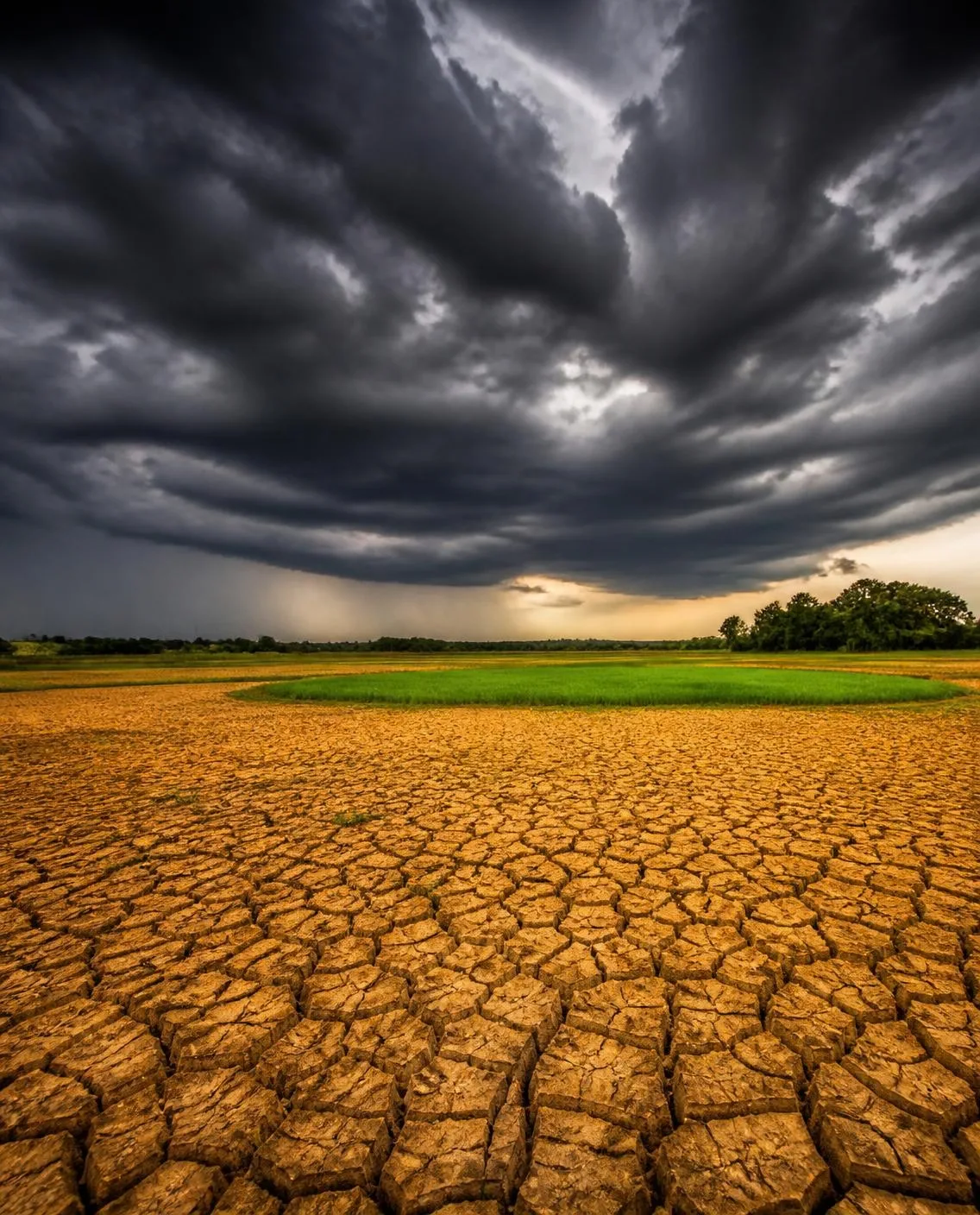
Monsoon 2026 ends at 87.4% of normal; East and Northeast India record lowest rainfall since 1901
In short: A deficient, El Nino-hit monsoon leaves an uneven map: Odisha in excess, the east, northeast and south sharply short.
Why in news
On 30 September 2026, the India Meteorological Department (IMD) released the salient features of the 2026 southwest monsoon. All-India rainfall for June to September was 759.4 mm, or 87.4% of the Long Period Average (LPA) of 868.6 mm (a deficit of about 12.6%), the fourth lowest since 2001 and the 13th lowest since 1901. IMD also forecast below-normal rainfall and above-normal maximum temperatures over most parts of the country in October.
Background
Monthly rainfall was 65% of LPA in June, 101% in July, 84% in August and 92% in September. Regionally, East and Northeast India received 74% of LPA (the lowest since 1901), South Peninsula 76%, Northwest India 94% and Central India 97%. Of 36 meteorological subdivisions, 18 were normal, 17 deficient and only Odisha recorded excess rainfall. A weak El Nino that developed in June strengthened into a strong El Nino by the end of the season, while the Indian Ocean Dipole remained neutral. The monsoon reached Kerala on 4 June (normal 1 June), covered the whole country on 9 July and began withdrawing from west Rajasthan on 19 September. For October to December, IMD expects normal rainfall over south peninsular India and below-normal rainfall over most other parts.
Key facts for Prelims
- 2026 season: 759.4 mm = 87.4% of LPA (LPA 868.6 mm), a deficit of about 12.6%; 13th lowest since 1901.
- Regional: East and NE 74% (lowest since 1901); South Peninsula 76%; Northwest 94%; Central 97%.
- Subdivisions (36): 18 normal, 17 deficient, 1 excess (Odisha).
- Onset over Kerala 4 June 2026 (normal 1 June); withdrawal began 19 September from west Rajasthan.
- Northeast monsoon (October to December) brings much of the annual rainfall to Tamil Nadu and adjoining south peninsular areas.
Mains analysis and way forward
Mains analysis
- El Nino link: the warming of the central and eastern Pacific was one important factor weakening monsoon circulation, alongside other drivers, a reminder that ENSO forecasts must feed early into agricultural and water planning.
- Spatial unevenness matters more than the national average: deficits in the east, northeast and south hit rain-fed paddy, reservoirs and hydropower.
- Rabi implications: lower soil moisture and reservoir storage may affect sowing and raise demand for groundwater and power.
- Forecast performance: the season came in below IMD’s updated forecast, pointing to the need for better extended-range prediction.
Way forward
- Prepare district contingency crop plans and timely drought assessment using the drought management manual and satellite-based indicators.
- Promote micro-irrigation, water budgeting and short-duration crop varieties in deficient regions.
- Invest in high-resolution forecasting and impact-based early warnings.
Connect the dots: Links to GS I: Indian monsoon, ENSO and IOD; GS III: drought management, agriculture and water resources.
Sources: IMD: Salient features of southwest monsoon 2026, 30 Sep 2026; News On AIR: IMD forecasts normal post-monsoon rainfall over south peninsular India, 30 Sep 2026
Supreme Court rules out total firecracker ban, accepts regulated new-generation joint crackers subject to conditions
In short: The Court seeks a middle path: specified times and specified crackers, with health safeguards decided on testing evidence.
Why in news
On 30 September 2026, a Supreme Court bench of Justices M.M. Sundresh and Prasanna B. Varale, hearing Arjun Gopal v. Union of India, said it would not agree to a total ban on firecrackers. Justice Sundresh said the Court needed “a solution whereby we can give specified time and we can specify what are the crackers to be used”. The bench accepted the Union Government’s suggestions on specified new-generation joint (series) crackers, subject to conditions such as limits on shell size, number of shells and the gap between bursts.
Background
The Arjun Gopal petition was filed in 2015 on behalf of three infants over the health hazards of firecrackers. The Supreme Court had banned joint crackers in 2018. The proposed conditions follow recommendations of CSIR-NEERI and the Ministry of Environment, Forest and Climate Change. On the use of barium in second-generation green crackers, testing is to be completed on or before 14 October 2026 in Delhi, Bhopal, Kolkata and Chennai, and the matter is listed on 15 October 2026. The Court did not pass any order on Delhi-NCR, where overlapping issues are being heard in M.C. Mehta v. Union of India.
Key facts for Prelims
- Case: Arjun Gopal v. Union of India (2015 writ petition on firecracker pollution).
- Joint or series crackers (ladis) were banned by the Supreme Court in 2018.
- CSIR-NEERI (Nagpur) developed green cracker formulations and is evaluating barium-containing formulations.
- Barium compounds give green colour in fireworks but are toxic; testing sites: Delhi, Bhopal, Kolkata, Chennai.
- Barium testing to finish by 14 October 2026; listed on 15 October 2026. Delhi-NCR issues are linked to M.C. Mehta v. Union of India.
Mains analysis and way forward
Mains analysis
- Balancing rights: the right to health and a clean environment under Article 21 must be balanced with cultural practice and livelihoods in the firecracker industry.
- Evidence-based regulation: the Court is relying on scientific testing by CSIR-NEERI rather than blanket prohibitions.
- Enforcement gap: petitioners pointed out that time limits are rarely enforced, which weakens even well-designed rules.
- Overlapping proceedings show the need for coordinated judicial and executive approaches to air quality in the NCR.
Way forward
- Publish clear specifications, labelling and QR-coded certification for permitted crackers.
- Strengthen local enforcement of time windows and noise limits, with community awareness.
- Support workers in clusters such as Sivakasi in shifting to cleaner formulations.
Connect the dots: Links to GS III: air pollution, environmental governance; GS II: judicial activism, Article 21.
Government notifies CAFE-3 fuel economy norms for passenger cars from April 2027, tightening the benchmark by about 16.7%
In short: Carmakers must cut fleet-average fuel use year by year till 2031-32, with extra credit for electric, hybrid and flex-fuel vehicles.
Why in news
On 30 September 2026, the Ministry of Power notified new Corporate Average Fuel Economy (CAFE) norms for passenger vehicles, applicable from 1 April 2027 to 31 March 2032. The fleet-average fuel consumption benchmark tightens from 3.996 litres per 100 km in 2027-28 to 3.3273 litres per 100 km in 2031-32, an improvement of about 16.7% over five years.
Background
CAFE norms set a limit on the average fuel consumption, and hence carbon dioxide emissions, of all the cars a manufacturer sells in a year, rather than for each model. The new norms cover passenger cars, including hatchbacks, sedans, SUVs and MPVs, seating up to eight passengers besides the driver, manufactured or imported for sale in India. The reference weight has been raised from 1,082 kg to 1,229 kg. Battery electric vehicles, range-extended EVs, plug-in hybrids, strong hybrids and flex-fuel vehicles earn super credits. A concession proposed in the draft for lightweight petrol cars under 909 kg was dropped in the final norms.
Key facts for Prelims
- CAFE: Corporate Average Fuel Economy; fleet-average target for each manufacturer, not for each model.
- CAFE-3 period: 1 April 2027 to 31 March 2032; benchmark 3.996 to 3.3273 litres per 100 km (about 16.7% tighter).
- Reference weight raised from 1,082 kg to 1,229 kg.
- Super credits (multipliers) for BEVs, range-extended EVs, plug-in hybrids, strong hybrids and flex-fuel vehicles.
- Notified by the Ministry of Power; the Bureau of Energy Efficiency (BEE), set up under the Energy Conservation Act, 2001, runs the credit buyout mechanism.
Mains analysis and way forward
Mains analysis
- Transport fuel is a large share of India’s crude imports, so efficiency norms support energy security and the current account.
- Fleet averaging lets manufacturers balance larger vehicles with cleaner ones, nudging investment in EVs, hybrids and flex-fuel models.
- A credit trading and buyout system adds flexibility but needs transparent accounting so that targets are not diluted.
- Dropping the small-car concession treats all segments alike, though some manufacturers argued it would help affordable cars.
Way forward
- Publish manufacturer-wise compliance data each year to build public trust.
- Align CAFE with charging infrastructure, ethanol supply and battery manufacturing policies.
- Review super credits periodically so that they reward real-world emission cuts.
Connect the dots: Links to GS III: energy efficiency, air pollution, climate commitments (NDC), automobile industry and EV policy.
Sources: OrissaPOST (PTI): Govt notifies new CAFE-3 norms for passenger vehicles, 30 Sep 2026; News On AIR: Govt notifies new Corporate Average Fuel Economy norms for passenger vehicles, 30 Sep 2026

Environment Ministry issues guidelines for National Coastal Mission 2.0 with Rs 767 crore outlay till 2030-31
In short: NCM 2.0 brings coastal resilience, restoration and blue-economy goals under one whole-of-government framework.
Why in news
On 30 September 2026, Union Environment Minister Bhupender Yadav launched the guidelines for implementing the National Coastal Mission (NCM) 2.0 in New Delhi. NCM 2.0 is a Central Sector Scheme with an approved outlay of Rs 767 crore, to be implemented till 2030-31 across nine coastal states and four Union Territories. Its stated aim is to strengthen the resilience and sustainability of coastal regions and unlock the potential of the blue economy.
Background
The mission covers vulnerability assessments, ecosystem restoration, pollution management, biodiversity conservation, sustainable tourism, spatial planning, research and capacity building. The guidelines promote a whole-of-government approach and seek to streamline processes, clarify institutional roles and strengthen monitoring. NCM 2.0 builds on the earlier phase of the mission, which covered mangroves, coral reefs, coastal and marine research and beach development.
Key facts for Prelims
- NCM 2.0: Central Sector Scheme; outlay Rs 767 crore; period 2025-26 to 2030-31.
- Coverage: 9 coastal states (Gujarat, Maharashtra, Goa, Karnataka, Kerala, Tamil Nadu, Andhra Pradesh, Odisha, West Bengal) and 4 UTs (Dadra and Nagar Haveli and Daman and Diu, Puducherry, Andaman and Nicobar Islands, Lakshadweep).
- Coastal Regulation Zone (CRZ) rules are notified under the Environment (Protection) Act, 1986.
Mains analysis and way forward
Mains analysis
- Coasts face compound risks: erosion, sea-level rise, cyclones, pollution and pressure from ports, tourism and urbanisation.
- Nature-based solutions such as mangroves, dunes and coral reefs reduce storm surge and erosion and can often complement or cost less than hard sea walls.
- Fragmented governance across ministries, states and local bodies has weakened coastal management; a single framework can improve coordination.
- Fisher communities depend on healthy coastal ecosystems, so restoration must protect livelihoods and traditional rights.
Way forward
- Base plans on shoreline change maps and multi-hazard vulnerability assessments for every coastal district.
- Involve coastal panchayats and fisher cooperatives in restoration and monitoring.
- Integrate the mission with CRZ planning, disaster management plans and blue-economy policy.
Connect the dots: Links to GS III: conservation, coastal ecosystems, climate adaptation, disaster management, blue economy; GS I: coastal landforms.
Sources: News On AIR: Environment Minister Bhupender Yadav launches guidelines for National Coastal Mission 2.0, 30 Sep 2026; Manorama Yearbook: National Coastal Mission explained, 3 Oct 2026
Polity, governance and ethics
Supreme Court special bench clubs CAPF contempt pleas with challenge to new CAPF law; hearing on 15 October
In short: The case tests how far Parliament can legislate around a court judgment and how courts manage their own listing.
Why in news
On 30 September 2026, a special bench of Justices Manoj Misra and Ujjal Bhuyan heard contempt petitions alleging non-compliance with the Supreme Court’s May 2025 judgment in Sanjay Prakash v. Union of India on Central Armed Police Forces (CAPF) cadres. The bench criticised the way the matter had been removed from the list of another bench without informing the petitioners; Additional Solicitor General Aishwarya Bhati, who had mentioned the matter before the Chief Justice, apologised. The bench clubbed the contempt pleas with writ petitions challenging the CAPF law and listed them on 15 October 2026.
Background
The judgment of 23 May 2025, written by Justice Bhuyan, dealt with CAPF officers getting the benefits of Organised Group A Services and a gradual reduction in deputation of IPS officers to the CAPFs. Justice Bhuyan’s bench had earlier asked the Home Ministry to explain the deputation of 46 IPS officers to the CAPFs after the judgment. According to the petitioners, as reported by LiveLaw, the CAPF (General Administration) Act, 2026 nullifies the judgment; its validity is under challenge and has not been decided. The bench will examine whether any directions of the 2025 judgment are independent of the Act and whether they were complied with; the Registry’s explanation on the listing has been kept in a sealed cover.
Key facts for Prelims
- CAPFs under the Ministry of Home Affairs include CRPF, BSF, CISF, ITBP and SSB.
- Contempt of court: Article 129 (Supreme Court as court of record) and the Contempt of Courts Act, 1971.
- Case: Mahendra Singh Deo v. Govind Mohan, contempt petition arising from Sanjay Prakash v. Union of India (23 May 2025).
- The Chief Justice is the master of the roster and allocates cases to benches.
- Legislature may remove the basis of a judgment by amending the law, but cannot simply overrule a judicial decision.
Mains analysis and way forward
Mains analysis
- Legislative override: Parliament may cure the basis of a judgment, but a law that directly sets aside a verdict without changing its legal foundation can violate separation of powers.
- Service equity: CAPF officers seek career progression comparable to other Group A services, while the Union defends IPS leadership for command and coordination.
- Transparency in listing: removing a listed matter without notice to parties affects confidence in the administrative side of the judiciary.
- Compliance with court orders by the executive is central to the rule of law.
Way forward
- Address CAPF cadre stagnation through timely cadre reviews and promotions.
- Adopt transparent, rule-based listing procedures with notice to all parties.
- Resolve the constitutional challenge expeditiously to give certainty to the forces.
Connect the dots: Links to GS II: separation of powers, judiciary, contempt, security forces and their mandate.
Sources: LiveLaw: Supreme Court special bench criticises manner of CAPF contempt case listing; Centre says request was made before CJI, 30 Sep 2026; LiveLaw: CAPF contempt matter shifted to special bench of Justice Misra, Justice Bhuyan, 30 Sep 2026
Judges must not impose personal views on morality while deciding bail or criminal trials: Supreme Court
In short: Bail decisions must rest on law and facts, not on a judge’s personal value judgments about a family’s morals.
Why in news
In an order dated 23 September 2026 and reported on 30 September 2026, a Supreme Court bench of Justices Ujjal Bhuyan and Atul S. Chandurkar, in Kanha alias Kanhaiya Singh v. State of Madhya Pradesh, held that “courts should refrain from imposing the personal views or value judgment of the Presiding Judge on morality”. It set aside the Madhya Pradesh High Court’s order denying bail and granted bail, which is not a finding on guilt, which had referred to the “morals” of the victim’s family and possible effects on social order. The appellant had been in custody since September 2025.
Background
The FIR invoked provisions of the Bharatiya Nyaya Sanhita, 2023, the POCSO Act, 2012, and the SC/ST (Prevention of Atrocities) Act, 1989. The appellant denied the allegations and claimed the case arose from his relationship with the prosecutrix. Noting that he had already undergone more than one year of incarceration and that the trial would take time, the Court held that a case for bail was made out. The ruling restates a settled principle that personal liberty under Article 21 can be curtailed only on legally relevant grounds.
Key facts for Prelims
- Case: Kanha @ Kanhaiya Singh v. State of Madhya Pradesh, 2026 LiveLaw (SC) 1003; bench: Justices Ujjal Bhuyan and Atul S. Chandurkar.
- Bail provisions now sit in the Bharatiya Nagarik Suraksha Sanhita (BNSS), 2023, which replaced the CrPC.
- Article 21: no person shall be deprived of life or personal liberty except according to procedure established by law.
- Relevant bail factors: nature of accusation, likelihood of absconding or tampering with evidence, period of custody and length of trial.
Mains analysis and way forward
Mains analysis
- Judicial impartiality is an ethical duty: personal moral views introduce bias and make outcomes depend on the judge rather than the law.
- Constitutional morality, not popular or personal morality, is the standard for courts, as the Supreme Court has emphasised in several rights cases.
- Long pre-trial custody turns process into punishment; undertrials form a large share of India’s prison population.
- Victims’ interests are protected through conditions, witness protection and speedy trial, not by moralising.
Way forward
- Strengthen judicial training on gender sensitisation and bias-free reasoning.
- Encourage structured bail orders that record legally relevant factors.
- Expand fast-track handling of cases where accused persons have spent long periods in custody.
Connect the dots: Links to GS IV: impartiality, objectivity, ethics in public institutions; GS II: judiciary and fundamental rights.
Science and technology
Apple Pay launches in India with Axis Bank cards; card-based tap-to-pay will sit alongside UPI
In short: Contactless card payments arrive on Apple devices, but UPI’s account-to-account model remains dominant in India.
Why in news
On 30 September 2026, Apple launched Apple Pay in India, about 12 years after its global debut. Axis Bank is the launch bank, with eligible Axis Bank-issued Visa and Mastercard credit cards that can be added to Apple Wallet; RuPay cards and UPI are not supported at launch. Users pay by tapping an iPhone or Apple Watch on an NFC terminal (cards can also be added on iPad for in-app and online payments) and authenticating with Face ID, Touch ID or a passcode, and can also pay online and in apps.
Background
Payment partners at launch include BillDesk, Cashfree, JusPay, Mswipe, Paytm, PayU, Pine Labs, Razorpay and Worldline. Apple is in talks with HDFC Bank and ICICI Bank. According to NPCI data cited by Business Today, UPI processed a record 24.51 billion transactions worth Rs 29.82 lakh crore in August 2026, an average of about Rs 1,217 per payment. Analysts expect Apple Pay to complement rather than replace UPI because it is card-based, while UPI moves money directly between bank accounts.
Key facts for Prelims
- NFC (Near Field Communication): short-range wireless technology used for contactless tap-to-pay.
- Tokenisation replaces actual card details with a unique token, so the merchant never stores the card number.
- UPI is operated by the National Payments Corporation of India (NPCI), an initiative of the RBI and the Indian Banks’ Association.
- August 2026 UPI: 24.51 billion transactions worth Rs 29.82 lakh crore.
- RuPay is India’s domestic card network run by NPCI.
Mains analysis and way forward
Mains analysis
- Competition and choice: global wallets add security features and convenience, but India’s public digital infrastructure gives UPI scale advantages and near-zero cost to users.
- Security: device-level biometrics and tokenisation reduce some kinds of card fraud, though they do not eliminate fraud such as social engineering scams.
- Inclusion gap: card-based wallets on premium devices reach a small segment; interoperable public rails remain key for mass inclusion.
- Data and sovereignty: payment data localisation rules and RBI oversight apply to all players, shaping how global firms operate.
Way forward
- Encourage interoperability, including RuPay support, so that consumers are not locked into closed ecosystems.
- Keep strengthening fraud monitoring and user awareness across all payment modes.
- Promote NFC acceptance infrastructure among small merchants alongside QR codes.
Connect the dots: Links to GS III: digital payments, IT in banking, cyber security, financial inclusion.
Sources: Business Today: Apple Pay is finally in India, but can it challenge UPI?, 30 Sep 2026
In brief
- Delhi Intelligent Traffic Management System: On 30 September 2026, the Union Cabinet approved an Intelligent Traffic Management System for Delhi Police at an estimated cost of Rs 1,789.52 crore inclusive of taxes, covering 42 corridors, to use technology-based tools to monitor and manage traffic across the capital.
- Legislative privileges reference: On 30 September 2026, journalist Ajit Anjum sought to intervene in the Supreme Court’s seven-judge reference on legislative privileges, arguing that privileges under Articles 105 and 194 are not unlimited and asking for reconsideration of the Pandit M.S.M. Sharma judgment; the bench is to begin hearing on 6 October 2026.
- Compromise decree without necessary party is a nullity: In a judgment dated 28 September 2026 and reported on 30 September, a Supreme Court bench of Justices Vikram Nath and Sandeep Mehta held in Geeta Bai v. K. Arjun Singh that a compromise decree in a coparcenary partition suit passed without impleading a necessary party is “a nullity in the eyes of law”, and that the omitted party may seek recall despite Order XXIII Rule 3A of the CPC; the matter was remitted to the High Court.
- Five-day banking week panel: The Indian Banks’ Association constituted a high-level committee on 29 September 2026, chaired by Bank of India MD and CEO Rajneesh Karnatak and including bank union representatives, to examine the unions’ demand for a five-day week with all Saturdays closed.
- Wheat production target: Alongside the rabi MSP decision of 30 September 2026, PTI reported that the agriculture ministry has set a wheat production target of 121 million tonnes for the 2026-27 crop year (July-June); wheat sowing usually begins in October.
- Personality in the news: Justice Ujjal Bhuyan: Justice Ujjal Bhuyan of the Supreme Court was on the bench whose bail ruling against judges imposing personal moral views was reported on 30 September 2026, and on 30 September he sat on a special bench hearing contempt pleas arising from his own May 2025 judgment in Sanjay Prakash v. Union of India on the career progression of CAPF officers.
Prelims practice: 5 questions
Choose an option to see the answer and explanation. Your score appears when all five are answered.
Mains practice
Transmission infrastructure and energy storage are increasingly important to India’s renewable-energy transition. Discuss the challenges of integrating variable renewable energy into the electricity grid, with reference to the Green Energy Corridor Phase-III (PM-DHARA) scheme.
Show the answer outline
Introduction (about 30 words)
- Define variable renewable energy (solar and wind output that changes with weather and time of day), then cite the 30 September 2026 approval of Green Energy Corridor Phase-III (PM-DHARA): Rs 1,86,405 crore for intra-state transmission and 50 GWh of storage, to evacuate up to 135 GW of renewable energy by 2032-33.
Challenges of integrating variable renewable energy
- Solar output peaks at midday while demand peaks in the evening, causing curtailment and reliance on coal after sunset.
- Intra-state networks lag behind inter-state corridors; state utilities lack finances to build ahead of demand.
- Right-of-way, land and forest clearances delay lines more than solar parks.
How Green Energy Corridor Phase-III (PM-DHARA) responds
- Green Energy Corridor Phase-III for intra-state systems; central assistance of Rs 54,082 crore to keep tariffs affordable.
- 50 GWh BESS for peak shifting, congestion management and non-solar hour supply.
- TBCB for greenfield projects to bring competition and private capital.
Remaining challenges
- Import dependence for battery cells and critical minerals.
- Weak finances of distribution companies and limited market signals for storage.
- Capacity of State Transmission Utilities to plan and execute.
Measures for grid integration
- Time-of-day tariffs, ancillary services and capacity markets that reward flexibility.
- Domestic cell manufacturing and recycling; pumped storage alongside batteries.
- Better forecasting, regional balancing and demand response.
Conclusion (about 30 words)
- A clean grid needs wires and storage as much as panels; timely execution of PM-DHARA can help India move towards its 900 GW non-fossil target for 2035.
Tip: Quote the PM-DHARA figures (135 GW, 50 GWh, FY 2032-33) and add the new CAFE norms to show that demand-side efficiency also eases the grid and import burden.
Current Canvas is prepared by the UPSC Gurus editorial desk. Every fact is checked against official releases and reliable reporting, with sources listed under each story. Editions are compiled each month into Current Canvas Monthly, a free magazine.
About images: photographs and illustrations in Current Canvas are AI-generated for illustration only. They are not news photographs of the events described.
Your first Mentor’s Desk call is free
One free conversation per aspirant about where you are in your preparation, with an honest suggestion of the right next step.
Know more and bookHave a question? Get in touch
For questions about a programme, its fees, batch dates, payment or access. Message us on WhatsApp and our team will reply. Asking a question is not a booking, and you can ask as often as you need.
Get in touch on WhatsApp