 New this week · Free UG Handout 02UPSC Mains Directive Words: 60 Meanings, Trends and PYQsTwo free PDFs: The Guide and the With PYQs edition.Read and download
Today’s Canvas
Monday’s news was largely about institutions and the evidence they rest on. The Supreme Court asked how a multi-member Election Commission should decide, and let the Calcutta High Court weigh the Great Nicobar petitions. A Nobel Prize honoured basic research on an alga that became a key tool for studying the brain, and India’s first travel survey showed how people actually move. Careful evidence, collegial process and patient research run through all of these stories.
About 15 minutes to read the key points; Mains analysis opens under each story.
- Medicine Nobel 2026 honours light-gated ion channels and optogenetics, a tool to switch neurons with lightGS III
- India and Switzerland sign mobility and young professionals pacts during President Parmelin’s State visitGS II
- Supreme Court declines interim suspension of CEC, seeks responses on pleas over Commission’s decision-makingGS II
- Supreme Court declines Centre’s plea, leaves Great Nicobar project PILs to Calcutta High CourtGS III
- Centre notifies three High Court Chief Justices as Supreme Court judges, a week after Collegium recommendationGS II
- First National Household Travel Survey: two-wheelers lead work commutes, buses dominate overnight tripsGS III
- Indian-born cheetah gives birth to five cubs at Kuno, starting a Botswana lineage; national count reaches 60GS III
- First international cargo voyage from Upper Assam since Independence sails on the Brahmaputra to DhakaGS I
- TDB commits Rs 130 crore from RDI Fund for an indigenous AI vision chip under Project VeerAIGS III
- India and Japan release Operational Manual for Joint Crediting Mechanism under Paris Agreement Article 6.2GS III
- Optogenetics, which uses light to switch defined neurons on or off, won the 2026 Medicine Nobel.
- India and Switzerland signed a mobility MoU and a young professionals pact (300 a year, expandable to 500).
- The Supreme Court refused to suspend the CEC but said the Election Commission must decide unanimously or by majority.
- Great Nicobar PILs will be heard by the Calcutta High Court on 25 and 26 November; the project is not stayed.
- India has 60 cheetahs, 41 born in India, after a Botswana-lineage litter at Kuno.
- A 540-tonne methanol cargo sailed from Bogibeel to Dhaka, the first from Upper Assam since Independence.
Science and technology
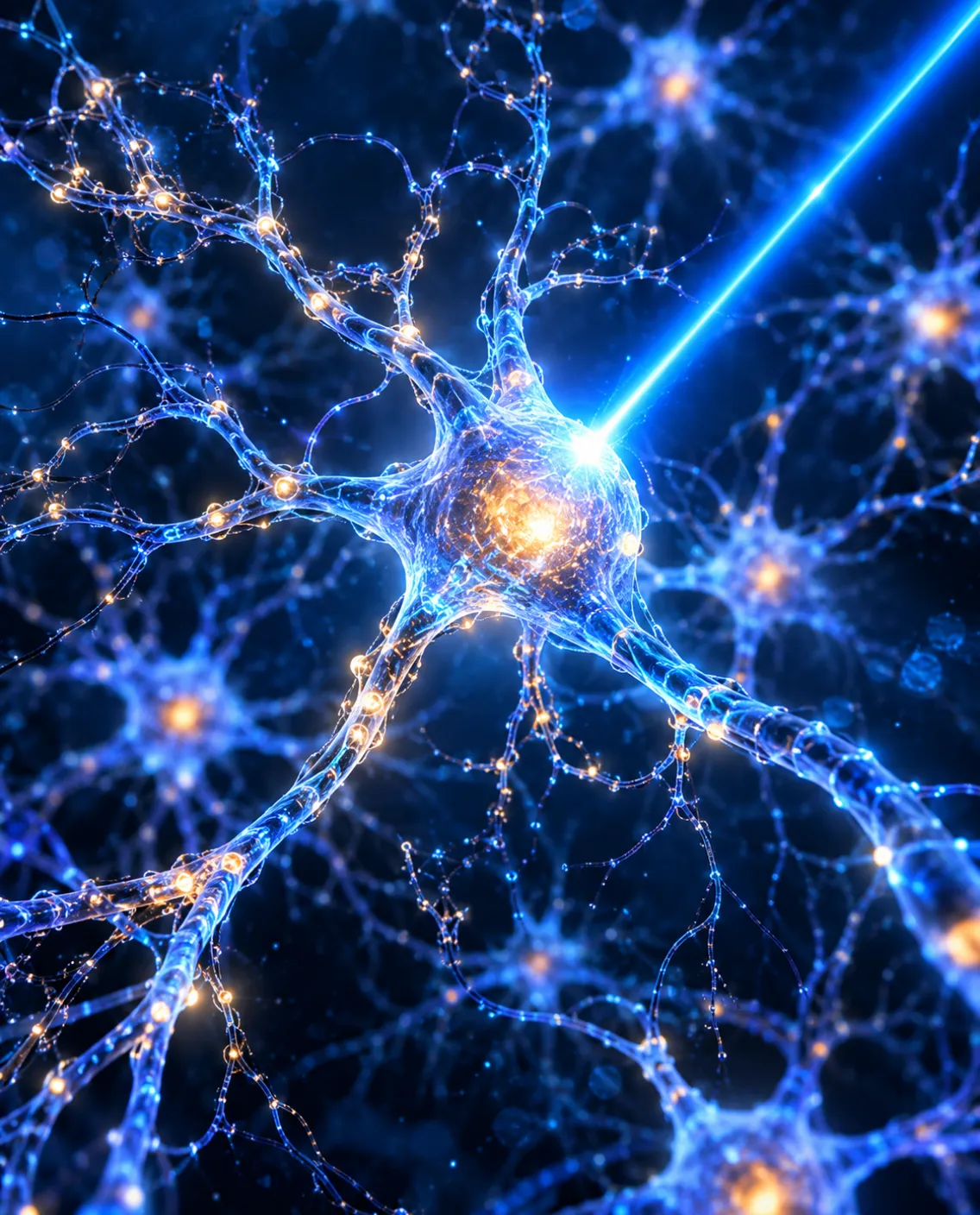
Medicine Nobel 2026 honours light-gated ion channels and optogenetics, a tool to switch neurons with light
In short: Deisseroth, Hegemann and Nagel win the 2026 Medicine Nobel for channelrhodopsin and optogenetics, which let scientists control nerve cells with light.
Why in news
On 5 October 2026, the Nobel Assembly at Karolinska Institutet awarded the 2026 Nobel Prize in Physiology or Medicine to Karl Deisseroth (Stanford University, USA), Peter Hegemann (Humboldt University of Berlin) and Georg Nagel (University of Wuerzburg) “for their discoveries concerning light-gated ion channels and optogenetics”. The three share 12 million Swedish kronor equally.
Background
Hegemann and Nagel discovered channelrhodopsin, a light-sensitive protein on the surface of Chlamydomonas, a single-celled alga that swims towards light. When blue light falls on the protein, it opens a channel through which charged ions flow into the cell and generate an electrical signal. In 2005, a team in Deisseroth’s laboratory, with Edward Boyden as first author and Nagel among the co-authors, introduced the channelrhodopsin gene into rat nerve cells and triggered nerve signals with flashes of blue light, with millisecond precision; the method was later shown to work in the brains of living mice. The Nobel Committee noted that optogenetics brought far greater cell-type specificity and timing precision to testing causal links between particular nerve cells and functions, and shows how nerve cells shape memories, feelings and behaviour in the living brain.
Key facts for Prelims
- Optogenetics: inserting the gene for a light-sensitive protein into chosen cells, then using light to activate or, with other light-sensitive proteins, inhibit those cells.
- Channelrhodopsin comes from Chlamydomonas, a single-celled green alga; blue light opens it and lets charged ions into the cell.
- The 2005 Nature Neuroscience paper (Boyden, Zhang, Bamberg, Nagel and Deisseroth) first showed channelrhodopsin driving mammalian neurons with millisecond precision.
- The Medicine prize is decided by the Nobel Assembly at Karolinska Institutet, Stockholm; the 2026 award is 12 million Swedish kronor.
- Laureates: Karl Deisseroth (USA), Peter Hegemann and Georg Nagel (Germany).
Mains analysis and way forward
Mains analysis
- From correlation to causation: earlier tools such as electrical stimulation were far less specific; optogenetics lets researchers activate or silence defined cell types with millisecond timing and test what they actually do.
- Value of curiosity-driven research: a protein that helps an alga swim towards light became a central tool of modern neuroscience, a strong case for long-horizon funding of basic science.
- Health relevance: the technique is used to study circuits linked to neurological and psychiatric disorders; optogenetic therapy has given partial visual function to a patient with retinitis pigmentosa in an early human study, and clinical uses for vision are being explored.
- Ethical questions: precise control of brain activity raises issues of consent, safety and the boundaries of neuro-intervention that regulators will have to address as clinical uses grow.
Way forward
- Sustain public funding for fundamental biology alongside mission-mode research, since breakthroughs often come from unexpected organisms.
- Build interdisciplinary training that combines biology, optics, engineering and computation.
- Develop ethics and regulatory frameworks for neurotechnology before clinical applications scale up.
Connect the dots: Links to GS III biotechnology, genetic engineering, and science policy; GS IV ethics of emerging technologies.
Sources: Down To Earth: 2026 Medicine Nobel awarded for discoveries concerning light-gated ion channels and optogenetics, 5 Oct 2026; Business Today: Nobel Prize in Medicine 2026 goes to Deisseroth, Hegemann and Nagel, 5 Oct 2026; AP via GPB: Nobel medicine prize goes to 3 scientists for research into brain activity, 5 Oct 2026; GEN: 2026 Nobel Prize for Physiology and Medicine goes to optogenetics, 5 Oct 2026
TDB commits Rs 130 crore from RDI Fund for an indigenous AI vision chip under Project VeerAI
In short: Bengaluru’s BigEndian Semiconductors gets Rs 130 crore to take a camera-focused AI chip from prototype to commercial readiness.
Why in news
On 5 October 2026, the Ministry of Science and Technology said the Technology Development Board (TDB) had signed a funding agreement to support BigEndian Semiconductors, Bengaluru, with Rs 130 crore from the Research Development and Innovation (RDI) Fund as Optional Convertible Debt. The project, VeerAI, costs Rs 260 crore in total.
Background
VeerAI aims to take a camera-focused AI Vision System-on-Chip from Technology Readiness Level 5 to 9, that is, from an advanced prototype to commercial readiness. The chip integrates AI processing with security, privacy and connectivity features for edge data processing. It will first target CCTV and surveillance in India and other countries of the Global South, with later use planned in defence, automotive, industrial automation and healthcare. TDB Secretary Rajesh Kumar Pathak said the RDI Fund is designed for technologies that need substantial investment to move from advanced development to deployment.
Key facts for Prelims
- Technology Development Board: statutory body under the Department of Science and Technology, set up under the Technology Development Board Act, 1995.
- Support: Rs 130 crore as Optional Convertible Debt; total project cost Rs 260 crore.
- System-on-Chip (SoC): integrates processor, memory interfaces and specialised blocks on one chip; an AI vision SoC processes camera data on the device (edge AI).
- Technology Readiness Levels run from 1 (basic principles) to 9 (proven in operational use).
Mains analysis and way forward
Mains analysis
- From design to product: India has strong chip design talent; patient capital to cross the late-stage “valley of death” is what turns designs into Indian-owned products.
- Security and trust: surveillance hardware handles sensitive data, so domestically designed, secure chips reduce dependence on imported components.
- Edge AI: on-device processing cuts bandwidth needs and can improve privacy compared with sending video to the cloud.
- Governance questions: wider surveillance capability must be matched by data protection, purpose limitation and oversight.
Way forward
- Pair funding with assured early demand, for example through public procurement of trusted CCTV systems.
- Build testing, packaging and certification capacity so that start-ups can move quickly to market.
- Embed privacy-by-design standards in public surveillance deployments.
Connect the dots: Links to GS III indigenisation of technology, semiconductors, AI, and internal security and privacy.
Sources: PSU Connect: TDB signs Rs 130 crore deal with BigEndian for indigenous AI vision SoC, 5 Oct 2026; IANS via NewKerala: Govt extends Rs 130 crore support to BigEndian’s indigenous AI chip, Oct 2026; Indian Defence News: TDB-DST signs agreement with BigEndian Semiconductors, Oct 2026
International relations
India and Switzerland sign mobility and young professionals pacts during President Parmelin’s State visit
In short: Five outcomes, led by a Migration and Mobility Partnership, widen India-Switzerland ties beyond trade as TEPA completes its first year.
Why in news
On 5 October 2026, Prime Minister Narendra Modi and Swiss President Guy Parmelin held talks at Hyderabad House, New Delhi. The two sides concluded five outcomes, including an MoU on a Migration and Mobility Partnership and an Agreement on the Exchange of Young Professionals that allows 300 persons from each country every year, which can rise to 500. The outcomes are MoUs and agreements; the mobility partnership also covers return and readmission, and the visit included research cooperation through the Swiss National Science Foundation (SNSF) and the Indo-Swiss Academia-Industry Training programme.
Background
Parmelin is on his first State visit to India (5 to 7 October), his second visit to New Delhi in 2026 after the AI Impact Summit in February. The visit marks the first anniversary of the India-EFTA Trade and Economic Partnership Agreement (TEPA), which entered into force on 1 October 2025 and covers Switzerland, Iceland, Liechtenstein and Norway. TEPA is India’s first free trade agreement with a European economic bloc and carries a collective EFTA commitment to aim for 100 billion dollars of investment in India and one million direct jobs over 15 years. The Ministry of External Affairs describes Switzerland as India’s largest trade and investment partner among EFTA states. Diplomatic relations rest on a Treaty of Friendship signed in New Delhi on 14 August 1948.
Key facts for Prelims
- EFTA members: Switzerland, Norway, Iceland and Liechtenstein; India-EFTA TEPA entered into force on 1 October 2025.
- TEPA: collective EFTA target of 100 billion dollars of investment and one million direct jobs in India over 15 years.
- Mobility MoU: multiple-entry visas of up to five years with stays of up to six months per visit, and renewable one-year student permits.
- Young Professionals Agreement: 300 participants per country per year, expandable to 500.
- Other outcomes cover transport, mobility and infrastructure (including electric vehicles, ropeways and tunnels), scientific research, and innovation and entrepreneurship.
- India-Switzerland Treaty of Friendship: 14 August 1948.
Mains analysis and way forward
Mains analysis
- People-to-people pillar: legal pathways for students, researchers and young professionals turn a trade-centred relationship into a talent partnership, and include cooperation against irregular migration and trafficking.
- TEPA as a test case: the investment-and-jobs commitment is unusual in India’s trade agreements; a dedicated group to resolve trade and investment concerns signals attention to implementation.
- Technology and infrastructure: Swiss expertise in tunnelling, ropeways and precision manufacturing fits India’s mountain connectivity and urban mobility needs.
- Strategic widening: both sides identified opportunities in military exchanges, defence production and nuclear energy cooperation, and discussed the conflicts in Ukraine and West Asia.
Way forward
- Operationalise the mobility MoU quickly with simple visa procedures and mutual recognition of skills.
- Track TEPA investment flows publicly so that the 15-year commitment builds confidence on both sides.
- Use joint research calls in health, clean energy and space to link Indian start-ups with Swiss institutions.
Connect the dots: Links to GS II bilateral relations, India and Europe, free trade agreements, and diaspora and migration.
Sources: Deccan Chronicle: India, Switzerland sign five pacts to deepen ties, 5 Oct 2026; UNI: India, Switzerland deepen partnership with pact on mobility, young professionals, 5 Oct 2026; IANS via NewKerala: PM Modi, Swiss President Guy Parmelin hold bilateral talks, 5 Oct 2026; IANS via NewKerala: Swiss President Guy Parmelin to pay State visit to India, 1 Oct 2026
Polity and governance
Supreme Court declines interim suspension of CEC, seeks responses on pleas over Commission’s decision-making
In short: The Court refused to suspend the Chief Election Commissioner but issued notice, observing that the Commission must decide unanimously or by majority.
Why in news
On 5 October 2026, a Bench of Chief Justice Surya Kant and Justices Joymalya Bagchi and V Mohana declined to pass an interim order suspending Chief Election Commissioner Gyanesh Kumar. It issued notice to the Union government, the Election Commission, the CEC and Election Commissioners Sukhbir Singh Sandhu and Vivek Joshi on petitions in which the petitioners allege that about 14 decisions linked to the Special Intensive Revision (SIR) of electoral rolls were taken in the Commission’s name despite objections recorded by the two Commissioners between October 2025 and August 2026.
Background
The petitioners, represented by senior advocate Vikas Singh, sought the CEC’s suspension and a ruling on whether the CEC can exercise the Commission’s powers without the approval of the other two Commissioners. The Bench said it would first examine the responses of the Commission and the Union government. In oral observations, which are not orders, the Bench said the Commission is expected to decide unanimously and, failing that, by majority, and indicated that decisions could be recalled if they were taken without the required agreement. Section 18 of the Chief Election Commissioner and Other Election Commissioners Act, 2023 provides that the Commission may regulate its business unanimously (Section 18(1)) and that business shall, as far as possible, be transacted unanimously, and otherwise by majority (Section 18(2)). Article 324 vests the superintendence, direction and control of elections in the Election Commission, which has functioned as a multi-member body since 1993.
Key facts for Prelims
- Article 324: superintendence, direction and control of elections to Parliament, State Legislatures and the offices of President and Vice-President vests in the Election Commission.
- Article 324(5): the CEC can be removed only in the manner and on the grounds of a Supreme Court judge.
- T.N. Seshan v Union of India (1995): the Supreme Court upheld the multi-member Commission and decision-making by majority.
- The Chief Election Commissioner and Other Election Commissioners (Appointment, Conditions of Service and Term of Office) Act, 2023 governs appointments and the transaction of business.
- Bench on 5 October 2026: CJI Surya Kant, Justice Joymalya Bagchi, Justice V Mohana.
Mains analysis and way forward
Mains analysis
- Collegial functioning as a safeguard: a multi-member Commission is meant to temper individual discretion; recorded dissent is an internal check only if it shapes outcomes.
- Judicial restraint at the interim stage: the Court avoided suspending a constitutional functionary without hearing the Commission, while signalling that decisions taken outside the collegial rule are open to recall.
- Public trust in electoral rolls: the SIR affects who can vote; transparency about how the Commission decides is part of its legitimacy.
- Balancing independence and accountability: insulation of the Commission from the executive must be matched by internal checks and openness to judicial review.
Way forward
- Publish clear internal procedures, including how dissent is recorded and disclosed, for decisions of the full Commission.
- Ensure SIR decisions carry written reasons and public communication so voters can understand and contest them.
- Allow the Court to settle the legal question of collegial decision-making quickly, giving certainty before major electoral exercises.
Connect the dots: Links to Article 324, constitutional bodies, electoral reforms, and judicial review.
Centre notifies three High Court Chief Justices as Supreme Court judges, a week after Collegium recommendation
In short: Justices Sunita Agarwal, D.K. Upadhyaya and Aparesh Kumar Singh were notified as Supreme Court judges on 5 October, seven days after the Collegium’s recommendation.
Why in news
On 5 October 2026, the Department of Justice notified the appointment of Justice Sunita Agarwal (Chief Justice, Gujarat High Court), Justice Devendra Kumar Upadhyaya (Chief Justice, Delhi High Court) and Justice Aparesh Kumar Singh (Chief Justice, Telangana High Court) as Supreme Court judges under Article 124(2). The Collegium had recommended them on 28 September; the appointments were notified on 5 October and the judges took oath on 6 October. The figure of 38 is the sanctioned strength; the working strength depends on vacancies at any time.
Background
Law Minister Arjun Ram Meghwal said the President made the appointments after consultation with Chief Justice of India Surya Kant. The Supreme Court (Number of Judges) Amendment Ordinance, 2026, promulgated on 16 May 2026 under Article 123, raised the number of judges other than the CJI from 33 to 37, taking the total sanctioned strength from 34 to 38, to address the growing workload. With Justice Agarwal’s appointment, the Court has three women judges. Justices Agarwal and Upadhyaya come from the Allahabad High Court and Justice Singh from the Jharkhand High Court.
Key facts for Prelims
- Article 124(2): every Supreme Court judge is appointed by the President after consultation with such judges as the President deems necessary; judges hold office until 65.
- Article 124(1) lets Parliament prescribe the number of judges; this is done through the Supreme Court (Number of Judges) Act, 1956.
- Ordinance of 16 May 2026 (Article 123): judges other than the CJI raised from 33 to 37; total strength 38.
- Collegium system: evolved through the Second Judges case (1993) and Third Judges case (1998); the NJAC was struck down in 2015.
- Retirement: Justice Upadhyaya on 15 June 2030, Justice Singh on 6 July 2030, Justice Agarwal on 29 April 2031.
Mains analysis and way forward
Mains analysis
- Speed of appointments: a one-week gap between recommendation and notification shows that delays are not inherent to the Collegium system and depend on executive-judiciary coordination.
- Strength and pendency: more judges help only if vacancies are filled promptly and supported by court infrastructure and staff.
- Diversity: representation of women, regions and the Bar in the Supreme Court remains a recurring concern in debates on the Collegium.
- Transparency: publishing reasons for recommendations and timelines would strengthen trust in a system often criticised as opaque.
Way forward
- Finalise a time-bound Memorandum of Procedure with clear stages for recommendation and notification.
- Plan for vacancies in advance using known retirement dates.
- Make diversity an explicit consideration while keeping merit and seniority central.
Connect the dots: Links to Articles 123 and 124, judicial appointments, the Collegium and NJAC debate, and pendency.
Sources: The Law Advice: Centre notifies appointment of Justices Sunita Agarwal, D.K. Upadhyaya and Aparesh Kumar Singh, 5 Oct 2026; Bar and Bench: Central government notifies appointment of 3 new Supreme Court judges, 5 Oct 2026; Supreme Court Observer: Supreme Court judge appointments, October 2026; SCC Online: Supreme Court judges increase ordinance 2026 explained, 18 May 2026; IANS via NewKerala: Centre clears elevation of three High Court Chief Justices, 5 Oct 2026
Environment and ecology
Supreme Court declines Centre’s plea, leaves Great Nicobar project PILs to Calcutta High Court
In short: The Supreme Court left the High Court’s ruling on maintainability of Great Nicobar PILs intact; hearings are set for 25 and 26 November.
Why in news
On 5 October 2026, a Bench of CJI Surya Kant and Justices Joymalya Bagchi and V Mohana refused to entertain the Centre’s challenge to a Calcutta High Court order of 6 May 2026 that upheld the maintainability of public interest litigations against the Great Nicobar Island project. It asked the High Court to hear all pending petitions on the dates already fixed, 25 and 26 November. The project itself was not stayed.
Background
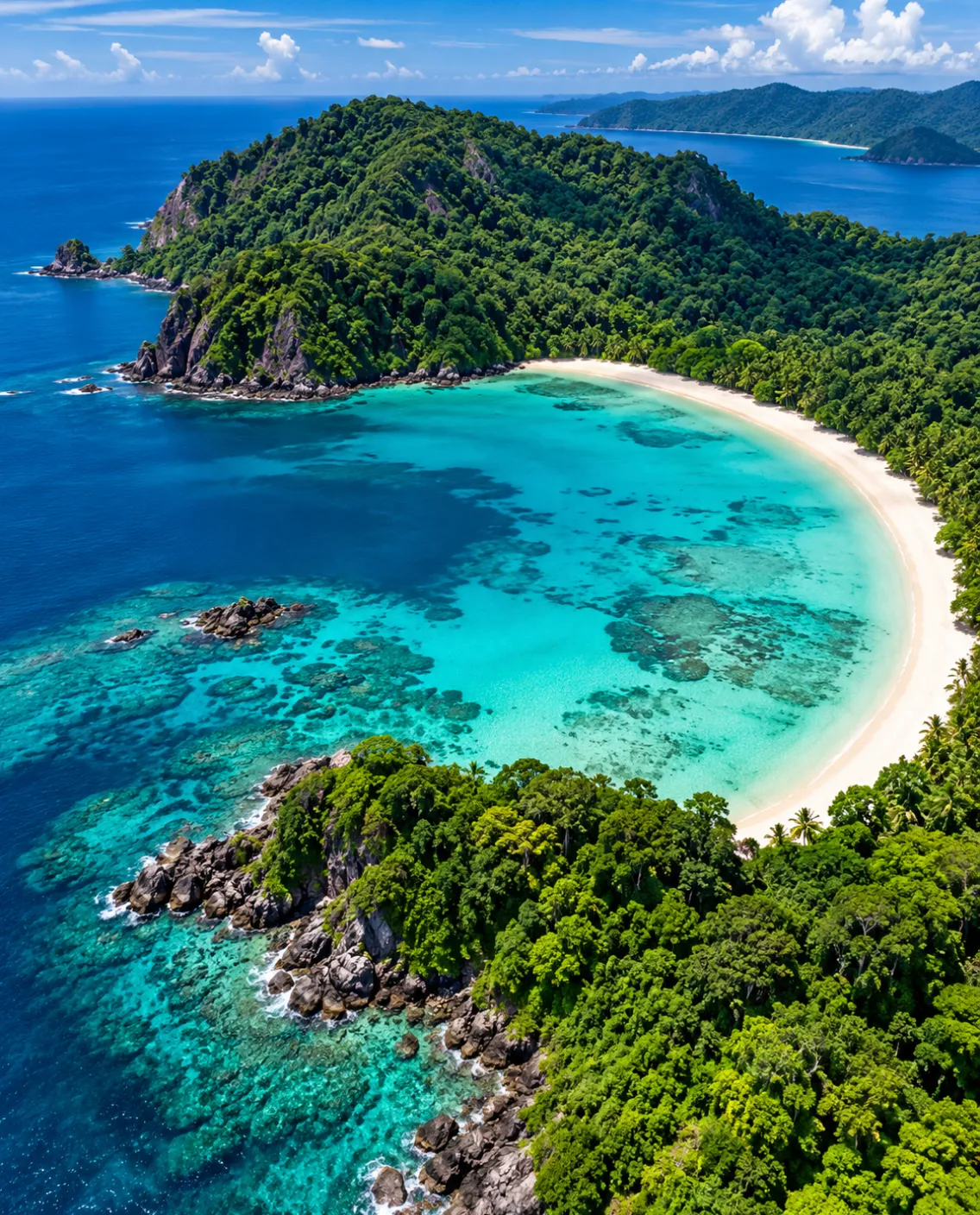
Attorney General R Venkataramani described the matter as one of great national importance and objected to petitions filed years after the environmental clearance. The PILs allege violations of the Forest Rights Act, 2006 in obtaining consent and a reduction of eco-sensitive buffer zones around national parks; the High Court had rejected the Centre’s objection to a petitioner’s standing, saying there could be no thumb rule on locus standi in PILs. In an oral observation during the hearing, Justice Bagchi remarked that preservation of culture is a constitutionally protected fundamental right; the Supreme Court did not rule on the project’s environmental clearances or on tribal consent. The project includes a 14.2 million TEU international container transshipment terminal at Galathea Bay, a greenfield international airport, a 450 MVA gas and solar power plant and a township; official estimates earlier put the cost at about Rs 72,000 crore, while the Opposition says it has risen to Rs 92,000 crore.
Key facts for Prelims
- Galathea Bay, Great Nicobar: proposed site of the international container transshipment terminal.
- Forest Rights Act, 2006: recognises rights of forest-dwelling Scheduled Tribes and other traditional forest dwellers; the Gram Sabha has a central role.
- The Shompen of Great Nicobar are a Particularly Vulnerable Tribal Group (PVTG).
- Article 29(1): any section of citizens with a distinct language, script or culture has the right to conserve it.
- The environmental clearance has also been challenged before the National Green Tribunal.
Mains analysis and way forward
Mains analysis
- Strategic and economic case: a transshipment hub near the East-West shipping route could reduce India’s reliance on foreign transshipment ports and strengthen presence in the Indian Ocean.
- Ecological concerns: critics point to forest loss, coral colonies and fragile coastal habitats on an island of high endemism.
- Tribal rights and consent: the core legal question is whether forest rights processes and Gram Sabha consent were followed, which bears on the Shompen and Nicobarese.
- Forum and procedure: by letting the High Court decide, the Supreme Court preserved the normal hierarchy of courts while asking for an early hearing.
Way forward
- Place environmental and social impact studies and consent records in the public domain to reduce disputes.
- Make independent monitoring of mitigation measures, including for coral and turtle habitats, a condition of each phase.
- Ensure meaningful participation of island communities, with special safeguards for the Shompen.
Connect the dots: Links to EIA, Forest Rights Act, PVTGs, island development, and the Indian Ocean strategy.
Sources: Deccan Chronicle: SC dismisses Centre’s plea against maintainability of PILs in HC in Great Nicobar project, 5 Oct 2026; ThePrint (PTI): Congress reacts after SC rejects Centre’s plea on Nicobar petitions in HC, 5 Oct 2026; Asianet Newsable (ANI): Jairam Ramesh on Great Nicobar project, Oct 2026
Indian-born cheetah gives birth to five cubs at Kuno, starting a Botswana lineage; national count reaches 60
In short: KJP21’s litter, sired by a Botswana male, takes India’s cheetah population to 60, of which 41 were born in India.
Why in news
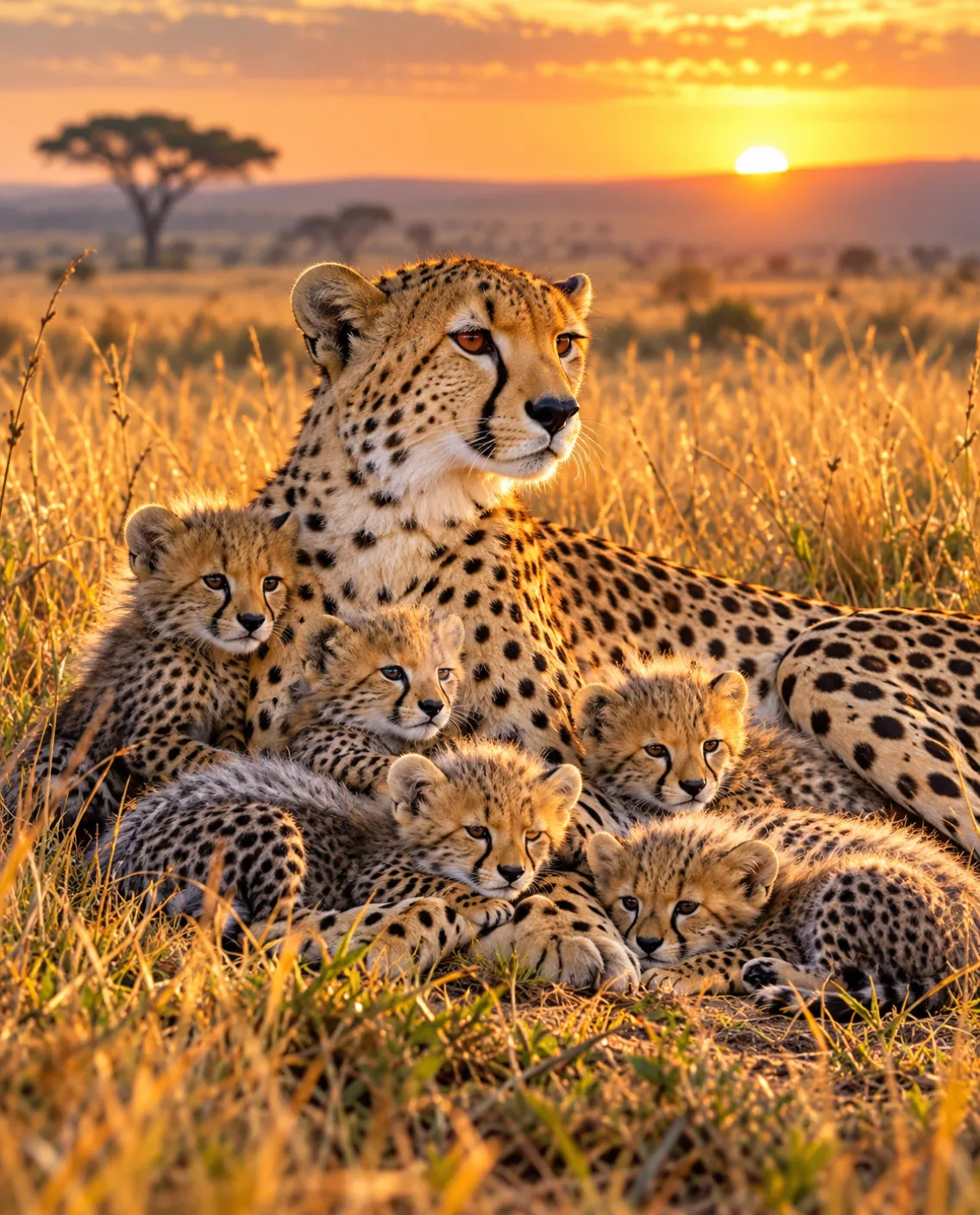
On 5 October 2026, Union Environment Minister Bhupender Yadav and Madhya Pradesh Chief Minister Mohan Yadav announced that KJP21, an Indian-born female, had given birth to five cubs at Kuno National Park, Sheopur district. The father is a male brought from Botswana, so the litter begins a Botswana lineage in India. The national count is now 60, including 41 born in India.
Background
KJP21 is the third Indian-born female to give birth, after Mukhi and KGP12. The cheetah was declared extinct in India in 1952; reintroduction under Project Cheetah began in September 2022 with eight animals from Namibia, followed by 12 from South Africa in February 2023 and nine from Botswana in February 2026. Several translocated animals and cubs have died over the years, from causes officially reported to include septicaemia, injuries and drowning. The animals are spread across Kuno and Gandhi Sagar Wildlife Sanctuary in Madhya Pradesh, and official plans envisage a connected population of 60 to 70 cheetahs in the landscape.
Key facts for Prelims
- Cheetah declared extinct in India in 1952; Project Cheetah began on 17 September 2022 at Kuno National Park.
- Founders: 8 from Namibia (September 2022), 12 from South Africa (February 2023), 9 from Botswana (February 2026).
- Second site: Gandhi Sagar Wildlife Sanctuary, Madhya Pradesh.
- The cheetah (Acinonyx jubatus) is listed globally as Vulnerable on the IUCN Red List (the Asiatic subspecies is Critically Endangered).
- Count on 5 October 2026: 60 cheetahs, 41 of them born in India.
Mains analysis and way forward
Mains analysis
- Genetic diversity: a new founder line from Botswana widens the gene pool, important for a small population started from a few dozen animals.
- Second-generation breeding: births to Indian-born females indicate adaptation to local conditions, a key test for any reintroduction.
- Persistent risks: adult deaths, the loss of KGP12’s first wild-born litter in 2026 and possible predation by leopards show the fragility of the project.
- Landscape question: a viable population needs connected habitat beyond fenced enclosures, prey base and coexistence with local communities.
Way forward
- Publish regular, independent assessments of survival and health outcomes.
- Secure corridors between Kuno and Gandhi Sagar and strengthen prey populations.
- Involve local communities through livelihood benefits and quick compensation for livestock losses.
Connect the dots: Links to species reintroduction, protected areas, conservation genetics, and human-wildlife coexistence.
Sources: News On AIR: Cheetah population in India rises to 60 with birth of five cubs at Kuno, 5 Oct 2026; ThePrint (PTI): Indian-born cheetah gives birth to 5 cubs in MP’s Kuno, 5 Oct 2026; Open: Five new cubs, 60 cheetahs, what Kuno’s latest litter means, 5 Oct 2026
India and Japan release Operational Manual for Joint Crediting Mechanism under Paris Agreement Article 6.2
In short: A detailed rulebook now guides India-Japan carbon credit projects, from project idea to issuance and authorisation of credits.
Why in news
On 5 October 2026, the Government made public the Operational Manual for the India-Japan Joint Crediting Mechanism (JCM), launched in New Delhi on 30 September by Japan’s Ambassador Keiichi Ono and Tanmay Kumar, then Secretary of the Ministry of Environment, Forest and Climate Change. The manual sets out procedures for the full project cycle, from submission of a Project Idea Note to the issuance and authorisation of JCM credits.
Background
The JCM is a bilateral cooperative approach under Article 6.2 of the Paris Agreement that supports deployment of advanced low-carbon technologies in India, with credits issued after verified emission reductions. India and Japan signed the Memorandum of Cooperation on the JCM on 7 August 2025, and the Rules of Implementation were adopted on 8 June 2026. According to Carbon Pulse, the manual provides for project-specific allocation of credits linked to each party’s financial and technological contributions and to the carbon revenue a project needs to be viable. India also runs a domestic Carbon Credit Trading Scheme.
Key facts for Prelims
- Article 6.2 of the Paris Agreement: countries may cooperate voluntarily and transfer mitigation outcomes (ITMOs) towards their NDCs, with corresponding adjustments to avoid double counting.
- Article 6.4 creates a centralised UN-supervised crediting mechanism; Article 6.8 covers non-market approaches.
- JCM is Japan’s bilateral crediting instrument; the India-Japan Memorandum of Cooperation was signed on 7 August 2025; Rules of Implementation adopted on 8 June 2026.
- Manual covers the project cycle: Project Idea Note, methodology, validation, verification, issuance and authorisation.
Mains analysis and way forward
Mains analysis
- Technology and finance: the JCM can bring Japanese capital and low-carbon technology into Indian projects that may not be viable on their own.
- NDC trade-off: credits transferred abroad with corresponding adjustments cannot also count towards India’s own targets, so authorisation needs care.
- Integrity: robust baselines, additionality and third-party verification are essential to avoid weak credits.
- Market building: clear procedures help Indian developers and strengthen India’s place in Article 6 cooperation.
Way forward
- Authorise transfers selectively, keeping low-cost mitigation for India’s own NDC.
- Publish project-level data and registry entries to build trust.
- Align JCM rules with India’s Carbon Credit Trading Scheme to avoid overlap and double counting.
Connect the dots: Links to climate change negotiations, the Paris Agreement, carbon markets, and India-Japan relations.
Sources: ABS News Service via World Trade Scanner: India and Japan launch Operational Manual for the Joint Crediting Mechanism, 6 Oct 2026; Carbon Pulse: India, Japan unveil JCM manual, 7 Oct 2026
Economy, society and geography
First National Household Travel Survey: two-wheelers lead work commutes, buses dominate overnight trips
In short: India’s first all-India travel survey finds 42.6% of workers commute by two-wheeler and an average monthly commuting cost of Rs 785 for those travelling to a fixed workplace.
Why in news
On 5 October 2026, the National Statistics Office (NSO) under the Ministry of Statistics and Programme Implementation released findings of India’s first all-India Household Travel Survey, covering July 2025 to June 2026. Two-wheelers were the leading mode for workers travelling to a fixed workplace, at 42.6%.
Background
The survey covered 14,274 villages, 10,377 urban blocks, about 4.92 lakh households and over 20.34 lakh persons, and trips shorter than 1 km were excluded. Walking was the second most common work mode at 28.3%, and 61.9% of male workers made work trips against 41.9% of female workers. Among students, 37.0% walked, 29.5% took a bus and 15.8% cycled. Workers commuting to a fixed workplace spent an average of Rs 785 a month on commuting (Rs 1,044 urban, Rs 612 rural), and 83.4% of them reached work within 30 minutes; among students, 87.6% reached their place of study within 30 minutes. Mode shares are reported separately for work, study and overnight trips, so they should not be compared directly. For overnight trips, buses (55.8%) and rail (17.7%) together accounted for 73.5%, and 70.2% of such trips were for social, communication or religious purposes.
Key facts for Prelims
- Conducted by the NSO, Ministry of Statistics and Programme Implementation; period July 2025 to June 2026.
- Sample: about 4.92 lakh households and over 20.34 lakh persons.
- Work trips: two-wheelers 42.6% (52.3% in urban areas), walking 28.3%; average journey 25 minutes.
- Students: walking 37.0%, bus 29.5%, bicycle 15.8%; average journey 23 minutes.
- Overnight trips: bus 55.8%, intercity rail 17.7%, car 15.1%.
Mains analysis and way forward
Mains analysis
- Evidence for planning: for the first time, national data on how people actually travel can guide investment in buses, metro feeders, footpaths and cycling lanes.
- Dependence on two-wheelers: high two-wheeler use reflects gaps in affordable public transport and has implications for road safety, congestion and emissions.
- Gender gap in mobility: the difference between male and female work-trip rates points to barriers such as safety, cost and care responsibilities that affect women’s labour force participation.
- Walking and cycling matter: large shares of students and workers walk or cycle, so safe non-motorised infrastructure is a question of equity as well as sustainability.
Way forward
- Use survey results to update city mobility plans and prioritise bus fleets and last-mile links.
- Invest in safe footpaths, cycle tracks and well-lit stops, with a gender lens in design.
- Repeat the survey at regular intervals and release unit-level data for research.
Connect the dots: Links to urbanisation, National Urban Transport Policy, women’s work participation, and official statistics.
Sources: News On AIR: NSO conducts India’s first-ever household travel survey, 5 Oct 2026; The Policy Edge: Two-wheelers lead work trips while buses carry most overnight travel, MoSPI survey finds, Oct 2026
First international cargo voyage from Upper Assam since Independence sails on the Brahmaputra to Dhaka
In short: A barge carrying 540 tonnes of Assam-made methanol left Bogibeel for Bangladesh, reviving a river trade route disrupted by Partition.
Why in news
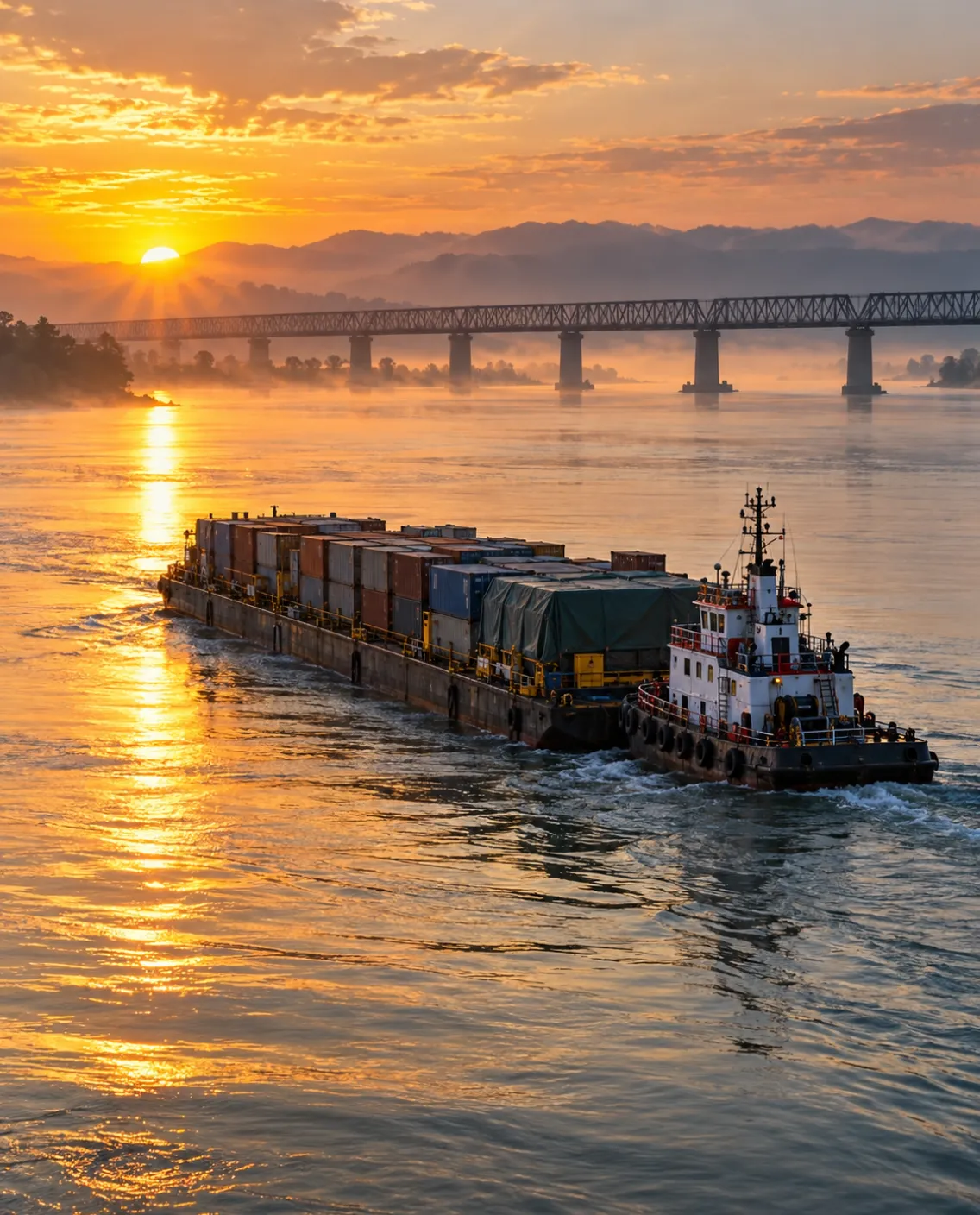
On 5 October 2026, Union Ports, Shipping and Waterways Minister Sarbananda Sonowal flagged off the vessel DLB Patkai, pushed by the tug Kushal Konwar, from the Bogibeel Terminal in Dibrugarh with 540 tonnes of methanol for Pangaon Port near Dhaka. Assam Chief Minister Himanta Biswa Sarma joined virtually.
Background
The methanol is produced by Assam Petro-Chemicals Ltd at Namrup. The route runs about 768 km along National Waterway-2 on the Brahmaputra to the India-Bangladesh border and then along the Indo-Bangladesh Protocol Route, about 1,300 km in all. Newly set up customs and immigration facilities at Bogibeel and Dhubri made the voyage possible. Steamers reached Dibrugarh from Calcutta by 1856 and ran daily by 1913, but Partition in 1947 disrupted the route. According to the Ministry, cargo on national waterways rose from 18 million tonnes in 2013-14 to 218 million tonnes in 2025-26.
Key facts for Prelims
- National Waterway-2: the Brahmaputra from Sadiya to Dhubri (891 km), declared in 1988.
- Protocol on Inland Water Transit and Trade between India and Bangladesh: first signed in 1972.
- Inland Waterways Authority of India (IWAI) was set up in 1986; the National Waterways Act, 2016 took the number of national waterways to 111.
- Bogibeel, near Dibrugarh, is also the site of India’s longest rail-cum-road bridge over the Brahmaputra.
- Cargo: methanol from Assam Petro-Chemicals Ltd, Namrup; destination Pangaon Port, Dhaka.
Mains analysis and way forward
Mains analysis
- Restoring historical geography: the voyage revives the river link that tied Assam’s tea and timber trade to the Bay of Bengal before 1947.
- Logistics for the North-East: waterways offer a cheaper, lower-emission alternative to road transport through the narrow Siliguri corridor.
- Regional connectivity: the Protocol route links India’s Act East aims with Bangladesh’s ports and can extend to Bhutan and Nepal.
- Constraints: shifting channels, low winter draft, siltation and limited night navigation on the Brahmaputra affect reliability.
Way forward
- Maintain assured depth through regular dredging and river information systems.
- Secure steady return cargo so that voyages are commercially viable.
- Simplify customs and documentation at terminals to make river trade time-competitive.
Connect the dots: Links to drainage systems, transport geography, India-Bangladesh relations, and development of the North-East.
Sources: Telangana Today: Assam revives Dibrugarh river route with first Bangladesh cargo shipment, 5 Oct 2026; The Pioneer: Dibrugarh sends first international cargo shipment to Bangladesh since Independence, 5 Oct 2026; News On AIR: Sonowal to flag off first international cargo voyage from Dibrugarh today, 5 Oct 2026
In brief
- India-US trade talks at a plateau: On 5 October 2026, Finance Minister Nirmala Sitharaman said that, in her view, India-US trade negotiations may have reached a plateau where further concessions are difficult, though talks are ongoing; she noted that the bilateral trade balance favours India and that tariffs have become a tool to address imbalances.
- India Chem 2026 curtain-raiser: On 5 October 2026, Minister of State Anupriya Patel launched the curtain-raiser for the 14th edition of India Chem; the main event is scheduled separately, in Mumbai from 22 to 24 October by the Department of Chemicals and Petrochemicals with FICCI, with focus on agrochemicals, petrochemicals and specialty chemicals.
- World Habitat Day: Observed on the first Monday of October, which fell on 5 October in 2026, with the theme Adequate Housing for All; the Ministry of Housing and Urban Affairs marked it by presenting PMAY-Urban Awards 2026 to States, Union Territories and urban local bodies and launching a new PMAY-U mobile app.
- Adi Rangotsav in Khatima: On 5 October 2026, the Adi Rangotsav tribal festival was held in Khatima, Uttarakhand, showcasing the culture of the Tharu, Boksa, Jaunsari and Raji communities; about Rs 10 crore was announced for the Eklavya Model Residential School at Khatima.
- Gaganyaan testing progress: An official of the ISRO Propulsion Complex said about 95% of the initial-phase tests for the Gaganyaan human spaceflight programme have been completed.
- Personality in the news: Guy Parmelin: The President of the Swiss Confederation began his first State visit to India on 5 October 2026, his second visit to New Delhi this year after the AI Impact Summit in February; his visit marks the first anniversary of the India-EFTA TEPA, which entered into force on 1 October 2025.
Prelims practice: 5 questions
Choose an option to see the answer and explanation. Your score appears when all five are answered.
Mains practice
The independence of the Election Commission of India depends as much on how it functions internally as on its insulation from the executive. Discuss in the light of recent developments.
Show the answer outline
Introduction (about 30 words)
- Article 324 vests superintendence, direction and control of elections in the ECI.
- On 5 October 2026 the Supreme Court issued notice on pleas that decisions were taken despite objections of two Election Commissioners.
External independence
- Security of tenure of the CEC under Article 324(5).
- Appointment process under the 2023 Act and debates on its composition.
- Financial and administrative autonomy.
Internal functioning as a safeguard
- Multi-member Commission since 1993; T.N. Seshan (1995) upheld decision by majority.
- Recorded dissent and its treatment; the 2019 debate on recording dissent in Model Code decisions.
- Section 18 of the 2023 Act: business transacted unanimously as far as possible, otherwise by majority; the Court’s oral observation echoed this.
Why it matters
- Electoral roll revisions such as the SIR affect the right to vote.
- Public trust depends on visible fairness and reasons for decisions.
- Judicial review as a check, used with restraint at the interim stage.
Way forward
- Written internal procedures for full-Commission decisions and disclosure of dissent.
- Reasoned, published orders on major exercises.
- Broad-based consultation on appointments.
Conclusion (about 30 words)
- An Election Commission that decides collectively, transparently and with reasons strengthens both its independence and the confidence of every voter.
Tip: Use the 5 October hearing as a current example, and pair it with T.N. Seshan (1995) to show that collegial decision-making is a settled principle rather than a new demand.
Current Canvas is prepared by the UPSC Gurus editorial desk. Every fact is checked against official releases and reliable reporting, with sources listed under each story. Editions are compiled each month into Current Canvas Monthly, a free magazine.
About images: photographs and illustrations in Current Canvas are AI-generated for illustration only. They are not news photographs of the events described.
Your first Mentor’s Desk call is free
One free conversation per aspirant about where you are in your preparation, with an honest suggestion of the right next step.
Know more and bookHave a question? Get in touch
For questions about a programme, its fees, batch dates, payment or access. Message us on WhatsApp and our team will reply. Asking a question is not a booking, and you can ask as often as you need.
Get in touch on WhatsApp