 New this week · Free UG Handout 02UPSC Mains Directive Words: 60 Meanings, Trends and PYQsTwo free PDFs: The Guide and the With PYQs edition.Read and download
Today’s Canvas
- Parliament’s Monsoon session stays unprorogued for a record 100 daysGS II
- India hosts the SCO Civilisational Dialogue Forum at Purana Qila; a Pakistani minister attendsGS II and GS I
- First US-China-Russia summit in Shenzhen pledges dialogue on nuclear risksGS II
- Indian team in Dhaka as the 30-year Ganga Water Treaty nears the end of its term on 12 DecemberGS II
- UN talks agree to develop rules on “killer robots” within two yearsGS II and GS III
- COP31 in Antalya runs into overtime without a final textGS III
- Delhi-NCR States told to make 2027 air pollution plans, with district plans for the first timeGS III
- Concerns over the 11,200 MW Siang dam will be addressed through dialogue, says Amit ShahGS III and GS I
- EPFO board approves a Systematic Withdrawal Plan so retirees can draw PF savings in instalmentsGS III and GS II
- Pune start-up builds a prototype rubidium atomic clock amid export curbsGS III
- One crore HPV vaccine doses given to 14-year-old girls in nine monthsGS II
- Teenager in Kerala develops kidney disease after using a mercury-laced fairness cream bought onlineGS II and GS III
Polity and governance
Parliament’s Monsoon session stays unprorogued for a record 100 days
In short: Both Houses were adjourned in August but not formally closed, keeping open the option of a quick special sitting for the delimitation amendment.
Why in news
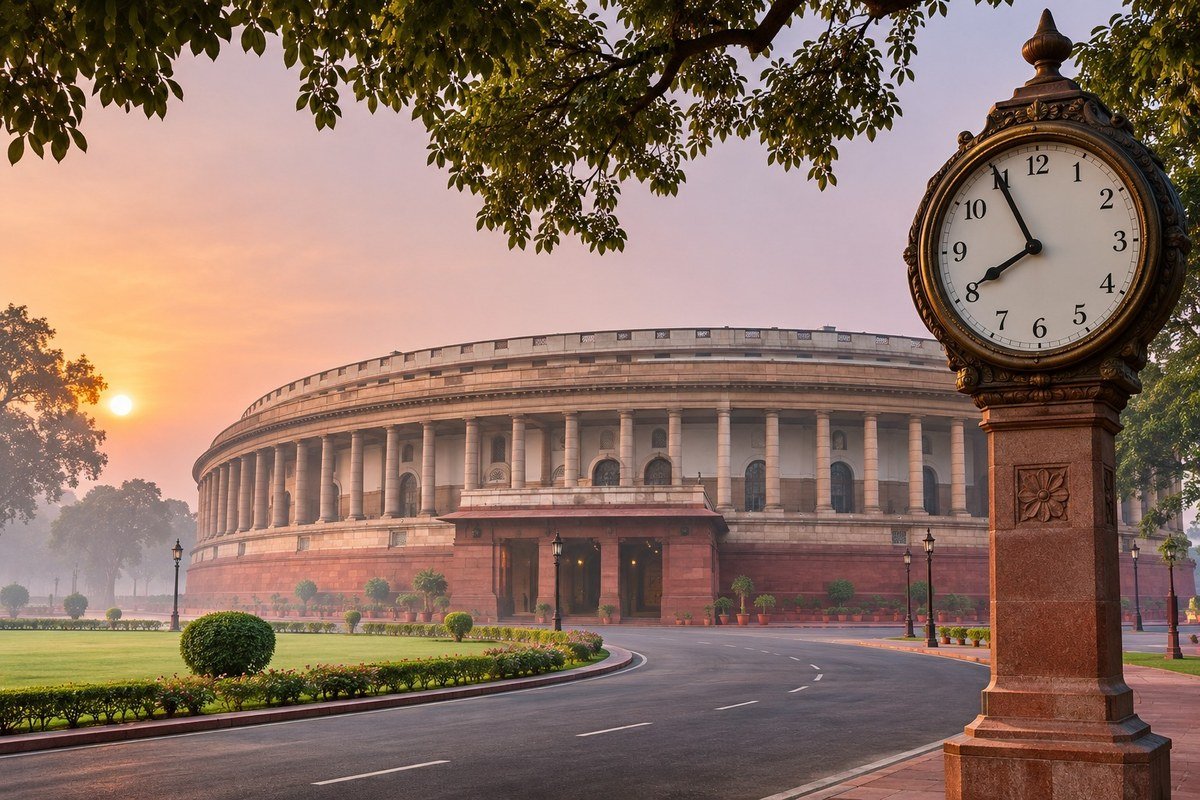
Both Houses of Parliament were adjourned sine die on 13 August 2026, but as of 21 November 2026 neither has been prorogued, a record 100 days (the earlier record was 87 days in 2008). The government is considering a special or extended sitting, for which it does not need to summon a fresh session, to pass a Constitution amendment to increase the Lok Sabha’s strength from 543 to a maximum of 850 through delimitation, so that 33% reservation for women can be implemented before the 2029 general election. An earlier Bill was defeated on 17 April 2026. The Opposition has demanded an all-party meeting and wants the Lok Sabha’s strength frozen at 543 for 25 years.
Concept: Adjournment, adjournment sine die and prorogation
An adjournment suspends a sitting for a specified time. Adjournment sine die ends a sitting without fixing a date to meet again; it is done by the presiding officer. Prorogation formally ends a session and is ordered by the President under Article 85 on the advice of the government. Article 85 also requires that six months must not pass between two sessions. A House adjourned sine die but not prorogued can be reconvened by its presiding officer under the rules of procedure, without a fresh presidential summons; a new session follows the summoning procedure under Article 85, with advance notice to members. The Constitution sets no deadline for prorogation after adjournment sine die. A Constitution amendment needs a special majority in each House under Article 368, and there is no joint sitting for such a Bill.
Key facts for Prelims
- Article 85: the President summons and prorogues the Houses; the gap between two sessions cannot exceed six months.
- Adjournment sine die is done by the Speaker or Chairman; prorogation is done by the President.
- Prorogation does not dissolve the Lok Sabha; dissolution ends the House itself.
- Article 82 governs readjustment of Lok Sabha seats after a census; the 84th Amendment extended the freeze on inter-State seat allocation until the relevant figures of the first census after 2026 are published.
- The 106th Amendment Act, 2023 provides one-third reservation for women in the Lok Sabha, State Assemblies and the Delhi Assembly; under Article 334A it takes effect after a delimitation based on the first census taken after the amendment.
Mains analysis and way forward
Mains analysis
- Keeping a session open gives the government flexibility, but long non-prorogation can blur the line between sessions and reduce predictability.
- Delimitation raises a federal question: population-based seats may reward States with faster population growth and penalise those that controlled it.
- Linking women’s reservation to delimitation delays a reform that has broad support.
- A Constitution amendment of this scale needs a special majority under Article 368 and wide consultation, as it changes the balance of representation; the 850-seat figure is a proposal, not the present constitutional limit.
Way forward
- Hold an all-party meeting and publish the proposed formula before any special sitting.
- Consider options such as protecting States’ existing shares while increasing total seats.
- Fix a predictable parliamentary calendar, as recommended by several reform committees.
Connect the dots: GS II: Parliament (sessions, functioning), federalism, women’s representation; Essay: democracy and representation.
Sources: The Hindu: Parliament’s Monsoon session remains unprorogued for 100 days, 21 November 2026; The Hindu: PM, HM still searching for two-thirds majority for delimitation bill, says Congress, 21 November 2026
International relations
India hosts the SCO Civilisational Dialogue Forum at Purana Qila; a Pakistani minister attends
In short: India is using its cultural heritage as a diplomatic platform within the SCO, and the forum brought a Pakistani minister to India for the first time since the 2025 Pahalgam attack.
Why in news
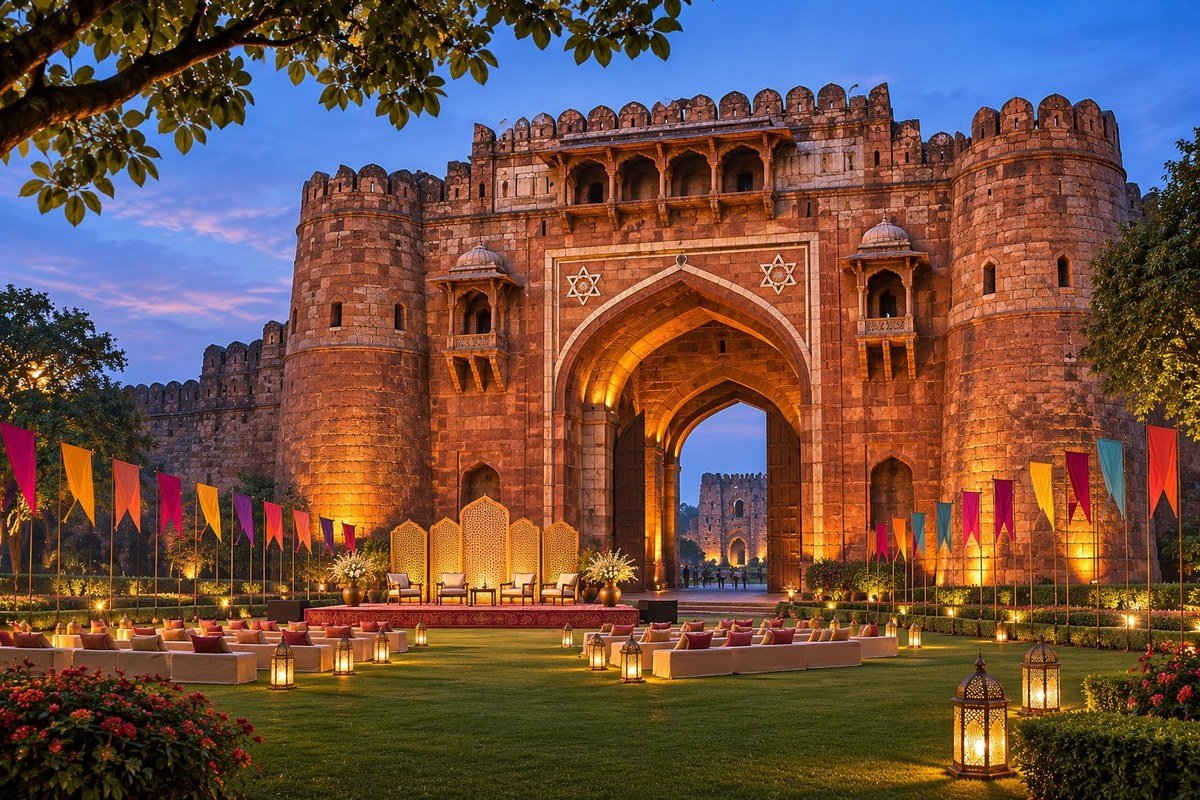
India is hosting the three-day Shanghai Cooperation Organisation (SCO) Civilisational Dialogue Forum at the Purana Qila in New Delhi from 20 to 22 November 2026, organised by the Ministry of Culture and the Ministry of External Affairs. Prime Minister Narendra Modi inaugurated it on 20 November. Pakistan’s Climate Change Minister Musadik Malik accepted India’s invitation and attended, his first visit to India amid strained ties since the 2025 Pahalgam attack. He said he had come for discussions in a “multilateral context”. Kashmir’s chief cleric Mirwaiz Umar Farooq called it a “positive step”.
Concept: The SCO, and why culture is part of diplomacy
The Shanghai Cooperation Organisation grew out of the “Shanghai Five” (1996) and was founded in 2001 in Shanghai. India and Pakistan became full members in 2017; Iran (2023) and Belarus (2024) took membership to ten. Its official languages are Russian and Chinese. Its permanent bodies include the Secretariat in Beijing and the Regional Anti-Terrorist Structure (RATS) in Tashkent. Alongside security and economic cooperation, the SCO promotes cultural and people-to-people ties. Using shared heritage to build trust is a form of soft power: the forum’s exhibition “Astitva” traces Delhi’s archaeology from about 1200 BCE to 1200 CE.
Key facts for Prelims
- The Purana Qila is a centrally protected monument in Delhi, on the site traditionally linked to Indraprastha.
- Humayun founded his city Dinpanah at the site; the surviving fort complex was substantially built under Sher Shah Suri, and excavations show occupation going back much earlier.
- Humayun’s Tomb, near the Purana Qila, is a UNESCO World Heritage Site and the first garden-tomb on the Indian subcontinent.
- The SCO was founded in 2001; India and Pakistan became full members in 2017, Iran in 2023 and Belarus in 2024, making ten members.
- The SCO’s Regional Anti-Terrorist Structure (RATS) is based in Tashkent, Uzbekistan.
Mains analysis and way forward
Mains analysis
- Multilateral forums allow contact between India and Pakistan without either side changing its bilateral position.
- Cultural diplomacy presents India as a civilisational state with a long, layered and shared history.
- Heritage sites as diplomatic venues add value to conservation and to tourism.
- Limits: a cultural meeting cannot by itself resolve core security concerns such as cross-border terrorism.
Way forward
- Use SCO platforms for people-to-people links: scholars, museums, students and archaeologists.
- Keep a clear line between multilateral engagement and bilateral conditions on terrorism.
- Build joint heritage research with Central Asian partners on shared histories.
Connect the dots: GS II: regional groupings and India’s neighbourhood; GS I: Indian art and culture, medieval architecture; Essay: culture as a bridge between nations.
Sources: The Hindu: “Two rulers, one fort”: Pakistan Minister invokes Humayun, Sher Shah at SCO Civilisational Forum, 22 November 2026; The Hindu: Mirwaiz Umar Farooq hails Pakistan accepting India’s SCO invite, 21 November 2026
First US-China-Russia summit in Shenzhen pledges dialogue on nuclear risks
In short: The leaders of the United States, China and Russia held their first trilateral summit and agreed to pursue dialogue on nuclear risks and non-proliferation, without committing to a specific arms-reduction treaty.

Why in news
On 19 November 2026, US President Donald Trump, Chinese President Xi Jinping and Russian President Vladimir Putin met in Shenzhen, China, the first trilateral summit of the three countries, and issued a joint declaration. They reaffirmed that “a nuclear war cannot be won and must never be fought”, committed to dialogue on reducing nuclear risks and preventing nuclear proliferation, and called for reform of the United Nations. The declaration contained no agreed warhead-reduction targets, verification arrangements or timetable, and no settlement of the Ukraine war. The Hindu’s editorial (21 November) said the summit produced no breakthrough and no road map.
Concept: Why arms control now needs three parties
Strategic nuclear arms control during and after the Cold War was largely bilateral, between the US and the Soviet Union or Russia. New START, signed in 2010 and in force from 2011, limited each side to 1,550 deployed strategic nuclear warheads, along with limits on delivery systems. It expired on 5 February 2026 without a successor. China’s growing arsenal is outside these treaties, which is why the US wants China included in any new framework. The phrase “a nuclear war cannot be won and must never be fought” goes back to the 1985 Reagan-Gorbachev summit and was reaffirmed by the five nuclear-weapon States in January 2022.
Key facts for Prelims
- New START (2010) limited the US and Russia to 1,550 deployed strategic warheads each; it expired on 5 February 2026.
- The Yalta Conference (February 1945) brought together Stalin, Roosevelt and Churchill to plan post-war Europe.
- The five nuclear-weapon States recognised by the NPT are the US, Russia, the UK, France and China.
- India, Pakistan, Israel and North Korea possess nuclear weapons outside the NPT’s recognised category; India is not a party to the NPT.
- Shenzhen (Guangdong) was one of China’s first four Special Economic Zones in 1980, with Zhuhai, Shantou and Xiamen.
Mains analysis and way forward
Mains analysis
- Great-power talks can bring stability and predictability, which matters while two of the three are involved in wars.
- A “concert of powers” deciding global rules among themselves can sideline middle powers such as India, Brazil and South Africa.
- Without verification and a road map, declarations risk remaining symbolic.
- For India, closer US-Russia-China engagement affects its strategic autonomy and its balancing between partners.
Way forward
- Set a clear, phased agenda for arms talks with verification measures.
- Make UN reform inclusive: India should press for a seat at the table on any reform of global institutions.
- India should deepen ties with all three while keeping its own nuclear doctrine of no first use and credible minimum deterrence.
Connect the dots: GS II: effect of policies of developed countries on India’s interests, global groupings; GS III: security; Essay: power and order in a changing world.
Sources: The Hindu: Three to tango: On Trump, Xi, Putin trilateral summit (editorial), 21 November 2026; The Hindu: The Shenzhen trilateral: The unlikely trio, 22 November 2026
Indian team in Dhaka as the 30-year Ganga Water Treaty nears the end of its term on 12 December
In short: The India-Bangladesh Ganga water-sharing treaty of 1996 ends in three weeks, and the two sides are meeting to discuss what comes next.
Why in news
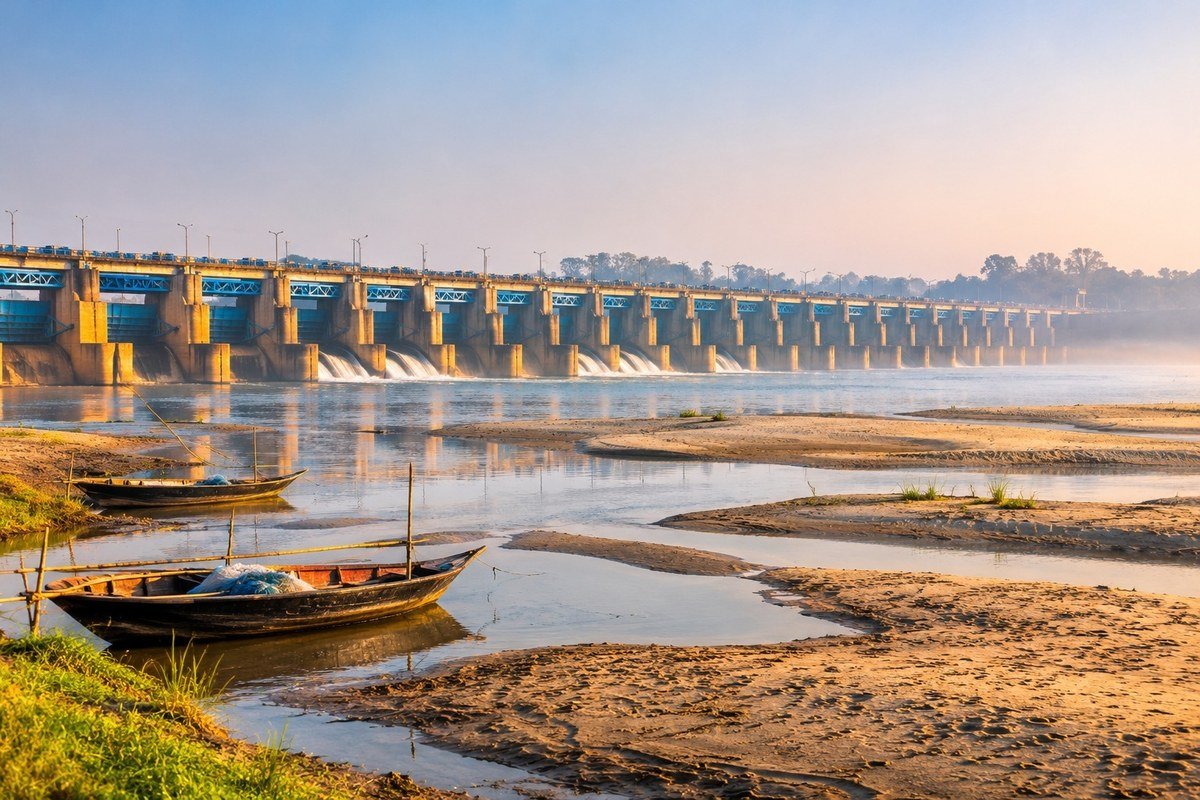
An Indian delegation led by Sharad Chandra, head of the Indian side of the India-Bangladesh Joint Rivers Commission (JRC), has reached Dhaka for a meeting of the Joint Committee under the JRC framework on 22 and 23 November 2026. The talks come before the Ganga Water Treaty, signed on 12 December 1996 for 30 years, completes its term on 12 December 2026. Under Article XII, the treaty is renewable by mutual consent; renewal is not automatic.
Concept: The Ganga Water Treaty and the Farakka Barrage
India built the Farakka Barrage on the Ganga in West Bengal (commissioned in 1975) to divert water into the Bhagirathi-Hooghly and keep the Kolkata port navigable. Bangladesh, the lower riparian country, objected that this reduced flows in the dry season. The Ganga Water Treaty shares lean-season flows at Farakka from 1 January to 31 May, using ten-day periods. The Joint Rivers Commission, set up in 1972, is the bilateral forum for shared rivers; India and Bangladesh share 54 transboundary rivers.
Key facts for Prelims
- The Ganga Water Treaty was signed on 12 December 1996 for a period of 30 years.
- It shares lean-season flows (1 January to 31 May) at the Farakka Barrage.
- The Farakka Barrage is in Murshidabad district, West Bengal.
- Under Annex I, flows of 70,000 cusecs or less are shared equally; between 11 March and 10 May each side is guaranteed 35,000 cusecs in alternate groups of three ten-day periods; if flows fall below 50,000 cusecs, Article II provides for immediate consultations.
- The treaty is renewable by mutual consent (Article XII); the Teesta still has no water-sharing agreement.
- India and Bangladesh share 54 transboundary rivers; the India-Bangladesh Joint Rivers Commission was set up in 1972.
Mains analysis and way forward
Mains analysis
- Renewal is a test of India’s neighbourhood policy and its standing as an upper riparian that respects lower riparian needs.
- Climate change and falling dry-season flows make a fixed formula harder to honour.
- West Bengal’s concerns over water for Kolkata port and irrigation give the issue a federal dimension.
- A smooth renewal could open the way for agreements on the Teesta and other rivers.
Way forward
- Renew the treaty with a review clause and joint flow monitoring.
- Consult West Bengal early to build domestic consensus.
- Move towards basin-level cooperation on floods, sediment and navigation, not only sharing volumes.
Connect the dots: GS II: India and its neighbourhood, bilateral agreements; GS I: river systems; GS III: water resources and disaster management.
Sources: The Hindu: Indian team reaches Dhaka ahead of Ganga Water Treaty’s expiry, 21 November 2026
UN talks agree to develop rules on “killer robots” within two years
In short: States agreed to keep negotiating rules for weapons that can select and attack targets on their own, but did not commit to a legally binding treaty.

Why in news
Talks among the States parties to the Convention on Certain Conventional Weapons (CCW), held in Geneva from 16 to 21 November 2026, ended with a pledge to develop new rules on lethal autonomous weapons systems (LAWS) within two years, by 2028. About 100 countries wanted legally binding rules quickly, but major arms producers including the US, Russia and Israel opposed this, so the outcome left open whether future rules will be binding. The UN Secretary-General, the Pope and the Red Cross have called for strong, binding rules.
Concept: What are LAWS, and what is the CCW?
Lethal autonomous weapons systems can identify, select and engage targets with little or no human control; they differ from remotely controlled weapons, where a human decides each attack. Concerns include accountability for unlawful killings, compliance with international humanitarian law (distinction, proportionality, precaution) and the risk of rapid escalation. The CCW was adopted in Geneva in 1980 and entered into force in 1983. Its protocols address particular weapons, such as non-detectable fragments, mines and booby traps, incendiary weapons, blinding laser weapons and explosive remnants of war. The separate 1997 Ottawa Convention prohibits anti-personnel mines for its States parties; India is a party to the CCW but not to the Ottawa Convention. The CCW works by consensus, so any one State can block an outcome. A Group of Governmental Experts has examined LAWS under the CCW since 2017.
Key facts for Prelims
- The CCW was adopted in 1980 and entered into force in 1983; it has protocols on specific weapons.
- CCW decisions are taken by consensus of its States parties.
- India is a party to the CCW.
- International humanitarian law rests on distinction, proportionality and precaution in attack.
- The International Committee of the Red Cross is based in Geneva.
Mains analysis and way forward
Mains analysis
- Without binding rules, technology may outpace law, with civilians bearing the risk.
- The consensus rule protects major powers’ interests but can stall progress for a decade or more.
- India’s interest: maintain meaningful human control while not giving up defence technology development.
- Ethics: delegating life-and-death decisions to machines raises questions of responsibility and human dignity.
Way forward
- Agree on a common definition and a requirement of meaningful human control.
- Pair prohibitions on fully autonomous lethal targeting with regulation of other systems.
- Set up national legal and technical reviews of new weapons, drawing on the approach of Article 36 of Additional Protocol I to the Geneva Conventions (India has not ratified that Protocol, so this would be a national safeguard).
Connect the dots: GS II: international treaties; GS III: defence technology, AI; GS IV: ethics of technology and accountability.
Sources: The Hindu: States agree to UN talks aiming to regulate “killer robots” by 2028, 21 November 2026
Environment and ecology
COP31 in Antalya runs into overtime without a final text
In short: The climate summit missed its scheduled end because developed and developing countries still disagree on phasing out fossil fuels and on climate finance.
Why in news
The 31st Conference of the Parties (COP31) to the UN climate convention, being held at Antalya, Türkiye, was expected to end on 20 November 2026. As of the evening of 21 November, countries had neither agreed on a final text nor held the closing plenary. Every clause must be agreed by all countries. The Hindu reported that the main divide was between a bloc of European countries and developing countries over a timeline to phase out fossil fuels and over how the trillions of dollars needed for the transition and for adaptation will be raised; positions also differ across several negotiating groups.
Concept: Why COP decisions take so long
Decisions under the UN Framework Convention on Climate Change are taken by consensus, so a single country can hold out. COP28 (Dubai, 2023) called for “transitioning away from fossil fuels in energy systems”. At COP29 (Baku, 2024), countries agreed a New Collective Quantified Goal of at least US$300 billion a year by 2035 for developing countries, with developed countries taking the lead, and called on all actors to scale up finance from public and private sources to at least US$1.3 trillion a year by 2035. Developing countries stress “common but differentiated responsibilities”. Mitigation finance, adaptation finance and loss-and-damage funding are related but separate issues.
Key facts for Prelims
- The UNFCCC was adopted in New York on 9 May 1992, opened for signature at the Rio Earth Summit in June 1992 and entered into force in 1994.
- COP31 is being held in Antalya, Türkiye.
- The Paris Agreement (2015) aims to keep warming well below 2 degrees Celsius and pursue 1.5 degrees.
- The New Collective Quantified Goal on climate finance was agreed at COP29 in Baku.
- COP decisions are adopted by consensus.
Mains analysis and way forward
Mains analysis
- Delays reflect a trust deficit over finance promises not kept in the past.
- A firm fossil-fuel phase-out date is harder for developing countries still expanding energy access.
- Adaptation finance remains far below need for vulnerable countries.
- India’s position: equity, climate finance and technology transfer, with its own net-zero target of 2070.
Way forward
- Link any phase-out timeline to predictable finance and technology support.
- Separate adaptation finance from mitigation finance with clear targets.
- Strengthen transparency so that pledges can be tracked.
Connect the dots: GS III: climate change, international environmental agreements; GS II: global groupings; Essay: climate justice.
Sources: The Hindu: COP31 extends into overtime in Turkiye meeting, 21 November 2026
Delhi-NCR States told to make 2027 air pollution plans, with district plans for the first time
In short: The air quality body wants a 15 to 20% cut in pollution and has asked States to name the officials responsible for meeting targets.
Why in news
On 21 November 2026, the Commission for Air Quality Management in NCR and Adjoining Areas (CAQM) directed Delhi and the NCR State governments to prepare Annual Action Plans for 2027 aimed at reducing annual average air pollution levels by 15 to 20% compared with 2026, using indicators such as AQI, PM2.5 and PM10. For the first time, District-Level Action Plans are to be part of the State plans, and the officials responsible for meeting targets will be identified by name and designation to fix accountability.
Concept: What the CAQM is and how it works
The CAQM is a statutory body set up under the Commission for Air Quality Management in National Capital Region and Adjoining Areas Act, 2021 (it first came through an ordinance in 2020). It covers Delhi and the NCR areas of Haryana, Rajasthan and Uttar Pradesh, along with Punjab as an adjoining area. It can issue binding directions and replaced the earlier Environment Pollution (Prevention and Control) Authority. It enforces the Graded Response Action Plan (GRAP), which triggers measures as air quality worsens. Air pollution in the region comes from vehicles, industry, dust from construction and roads, waste burning and seasonal crop-residue burning.
Key facts for Prelims
- The CAQM was set up under the CAQM Act, 2021.
- It replaced the Environment Pollution (Prevention and Control) Authority (EPCA).
- The Graded Response Action Plan (GRAP) has four stages based on the Air Quality Index.
- The National Clean Air Programme (2019) targets up to a 40% reduction in annual average PM10 by 2025-26 from the 2017-18 baseline (revised target), or meeting the national standard, in covered cities.
- PM2.5 refers to particles with a diameter of 2.5 micrometres or less.
Mains analysis and way forward
Mains analysis
- District plans bring pollution control closer to the sources, such as local dust, waste burning and traffic.
- Naming responsible officials improves accountability, a long-standing gap in air quality governance.
- Air pollution is an airshed problem crossing State borders; plans must be coordinated, not separate.
- Year-round source control (dust, vehicles, industry, waste) matters more than emergency GRAP restrictions, which only respond to bad air days; success depends on funding, monitoring and coordination.
Way forward
- Publish district targets and monthly progress openly.
- Fund local bodies for dust control, waste management and public transport.
- Move from seasonal emergency measures to year-round source reduction.
Connect the dots: GS III: environmental pollution and degradation; GS II: statutory bodies, governance and accountability.
Sources: The Hindu: CAQM asks Delhi, NCR States to prepare 2027 air pollution action plans, 22 November 2026
Concerns over the 11,200 MW Siang dam will be addressed through dialogue, says Amit Shah
In short: India’s largest proposed hydropower project faces local opposition in the Siang valley, even as it is seen as a strategic response to China’s dam on the same river.
Why in news
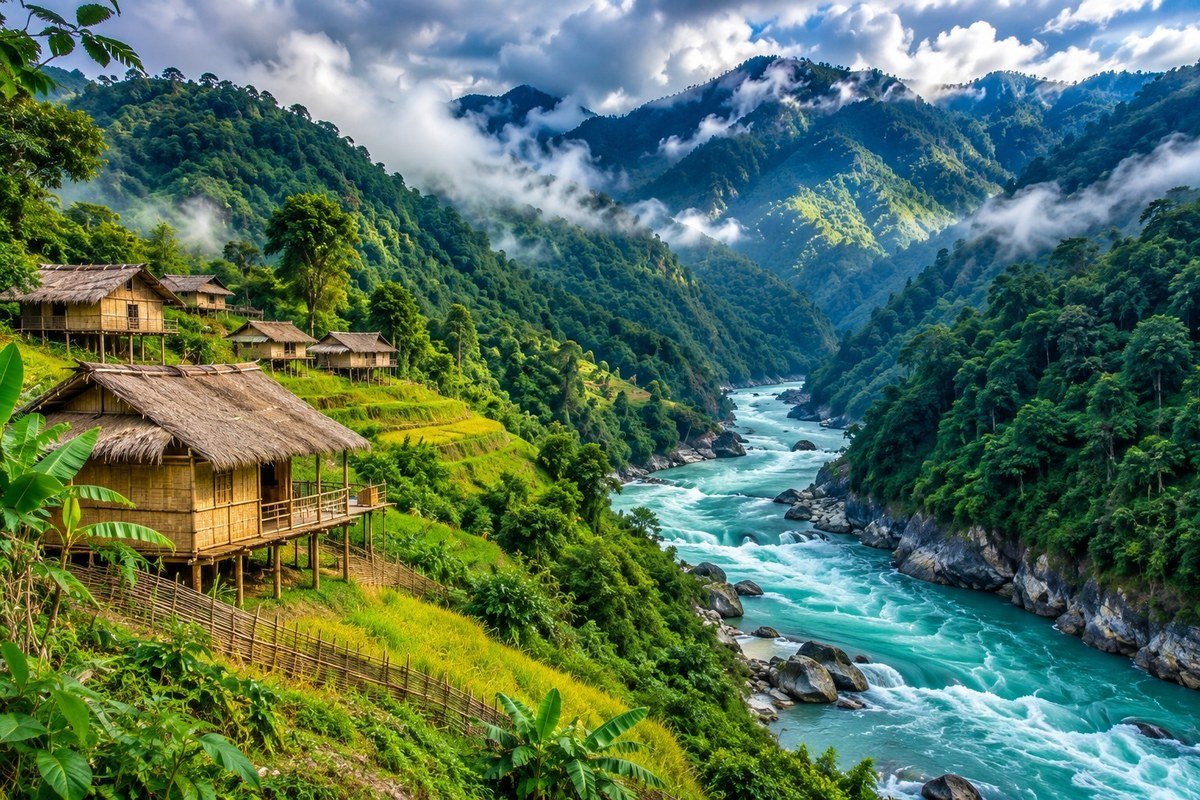
On 21 November 2026, Union Home Minister Amit Shah said the concerns of local communities over the proposed 11,200 megawatt Siang Upper Multipurpose Project (SUMP) in Arunachal Pradesh would be addressed through dialogue, and that the culture, traditions and religious beliefs of the people of the Siang valley would be respected.
Concept: The Siang, the Brahmaputra and the strategic logic of the dam
The Brahmaputra’s main upper course is called the Siang (or Dihang) in Arunachal Pradesh. The river rises in Tibet as the Yarlung Tsangpo, enters India in Arunachal, and becomes the Brahmaputra in Assam after it is joined by the Dibang and Lohit. China has approved a very large hydropower project on the lower Yarlung Tsangpo, close to the Indian border. India sees the SUMP, with a large storage reservoir, as a way to buffer sudden releases or reduced flows and to protect downstream areas from floods. Local Adi communities fear loss of land, villages and forests, and the region is seismically active.
Key facts for Prelims
- The Brahmaputra is called the Yarlung Tsangpo in Tibet, the Siang in Arunachal Pradesh and the Jamuna in Bangladesh.
- The Siang joins the Dibang and Lohit near Sadiya in Assam to form the Brahmaputra.
- The proposed Siang Upper Multipurpose Project has a planned capacity of 11,200 MW.
- The Adi are a major community of the Siang valley in Arunachal Pradesh.
- The north-eastern region lies in Seismic Zone V, the highest earthquake-risk zone.
Mains analysis and way forward
Mains analysis
- Strategic water security: storage can reduce the risk from upstream dams in China.
- Development: clean power and flood moderation for Assam and Arunachal.
- Rights and ecology: displacement, forest loss, biodiversity, customary land use and the cultural rights of Adi communities call for impact assessments, forest-rights safeguards and meaningful consultation with community institutions.
- Safety: large dams in a high-seismic, landslide-prone Himalayan zone need very careful assessment.
Way forward
- Hold transparent consultations with gram sabhas and community institutions.
- Make environmental and seismic studies public before decisions.
- Seek a water-data sharing arrangement with China on the Brahmaputra; storage, operating rules and data sharing decide whether a reservoir can really buffer upstream changes.
Connect the dots: GS III: infrastructure, energy, environment impact assessment, internal security; GS I: drainage systems; GS II: India-China relations.
Sources: The Hindu: Siang mega dam issue will be addressed through dialogue: Amit Shah, 21 November 2026
Economy
EPFO board approves a Systematic Withdrawal Plan so retirees can draw PF savings in instalments
In short: Retiring members could take their provident fund in periodic instalments instead of a lump sum, with the remaining balance continuing to earn returns; the plan still needs scheme amendments and Ministry approval.
Why in news
On 19 November 2026, the Central Board of Trustees (CBT) of the Employees’ Provident Fund Organisation (EPFO) approved a proposal to introduce a voluntary Systematic Withdrawal Plan (SWP) for retiring EPF members. At present a retiring member usually withdraws the whole provident fund as a lump sum. The proposed facility would allow periodic withdrawals (The Hindu lists monthly, quarterly, half-yearly or annual options), while the remaining balance continues to earn returns. About 6.32 lakh members aged above 55 with balances above Rs 5 lakh have been identified as the initial potential beneficiaries. It also proposes voluntary extra contributions and third-party micro-contributions. The SWP is not yet in force: the scheme amendments must be notified after Ministry approval.
Concept: EPFO and why old-age income matters
The EPFO is a statutory social security organisation under the Ministry of Labour and Employment. Its framework is now governed by the Code on Social Security, 2020, which subsumed the Employees’ Provident Funds and Miscellaneous Provisions Act, 1952. It administers the Employees’ Provident Funds Scheme, the Employees’ Pension Scheme and the Employees’ Deposit-Linked Insurance Scheme, whose 2026 versions replaced the earlier schemes of 1952, 1995 and 1976. The Central Board of Trustees, chaired by the Union Labour Minister, is its apex decision-making body. India’s population is ageing, and a lump sum withdrawn at retirement can be spent quickly or invested poorly, leaving people without a steady income in old age.
Key facts for Prelims
- The EPFO works under the Ministry of Labour and Employment; its framework is now the Code on Social Security, 2020, which subsumed the EPF and MP Act, 1952.
- The Central Board of Trustees is chaired by the Union Minister of Labour and Employment.
- EPFO’s three schemes are EPF, EPS and EDLI; their current 2026 versions replaced the schemes of 1952, 1995 and 1976.
- Under the proposed SWP, the remaining balance continues to earn returns; the facility needs notification before it can be used.
- About 6.32 lakh members above 55 with balances over Rs 5 lakh are the initial potential beneficiaries.
Mains analysis and way forward
Mains analysis
- A regular income stream improves old-age financial security and reduces the risk of savings being spent early.
- Phased withdrawals can encourage longer-term retirement planning among EPF-covered workers; extending social security to informal and gig workers needs separate coverage mechanisms.
- Voluntary and micro-contributions could help members build a larger retirement corpus.
- Design issues: tax treatment, ease of switching options and digital access for older members.
Way forward
- Keep the plan voluntary and simple, with clear tax rules.
- Offer default options and financial literacy support at retirement.
- Integrate with the new social security framework for gig and platform workers.
Connect the dots: GS III: inclusive growth, social security; GS II: welfare schemes for vulnerable sections (the elderly).
Science and technology
Pune start-up builds a prototype rubidium atomic clock amid export curbs
In short: An indigenous atomic clock matters because precise timing underpins navigation satellites, telecom networks, power grids and banking, and access to imported clocks is being restricted.

Why in news
Pune-based deep-tech start-up QuPrayog Private Limited has developed a laboratory-scale Rubidium-87 atomic clock prototype using Coherent Population Trapping (CPT) technology, in a seven-month effort, The Hindu reported on 21 November 2026. The prototype has reached Technology Readiness Level (TRL) 4, and the company aims to build a miniature, integrated product before the end of 2027. The development comes amid growing export controls on high-performance atomic clock technology.
Concept: How an atomic clock keeps time
An atomic clock measures time using an exceptionally stable atomic transition frequency. The SI second is defined by exactly 9,192,631,770 periods of the radiation from the ground-state hyperfine transition of the caesium-133 atom. Rubidium clocks use a different atomic reference. In Coherent Population Trapping (CPT), carefully controlled laser fields put atoms into a state that stops absorbing light at a precise frequency, allowing compact, low-power clocks. Navigation systems such as India’s NavIC depend on accurate onboard clocks; failures of imported clocks on some NavIC satellites showed the need for indigenous capability. Technology Readiness Levels run from 1 (basic principles) to 9 (proven in operation); TRL 4 means validation in a laboratory, far from qualification for use in space.
Key facts for Prelims
- The SI second is defined by 9,192,631,770 periods of the hyperfine transition of caesium-133.
- QuPrayog’s prototype uses Rubidium-87 and Coherent Population Trapping.
- Technology Readiness Levels range from 1 to 9; TRL 4 is laboratory validation.
- NavIC (Navigation with Indian Constellation) is India’s regional navigation satellite system, developed by ISRO.
- Atomic clocks are critical for satellite navigation, telecom networks and power grid synchronisation.
Mains analysis and way forward
Mains analysis
- Precision timing is critical infrastructure; dependence on imports is a strategic vulnerability.
- Start-ups can complement ISRO and DRDO in deep-tech areas under the National Quantum Mission.
- Moving from TRL 4 to a deployable product needs patient capital and testing facilities.
- Export controls show that technology access is now part of geopolitics.
Way forward
- Provide public procurement and testing support for indigenous clocks.
- Link start-ups with ISRO, the National Physical Laboratory and the defence sector.
- Build a domestic supply chain for lasers, vapour cells and electronics.
Connect the dots: GS III: indigenisation of technology, space and quantum technology, critical infrastructure security.
Health and social justice
One crore HPV vaccine doses given to 14-year-old girls in nine months
In short: India’s cervical cancer prevention campaign has covered about 87% of its annual target cohort since February 2026.
Why in news
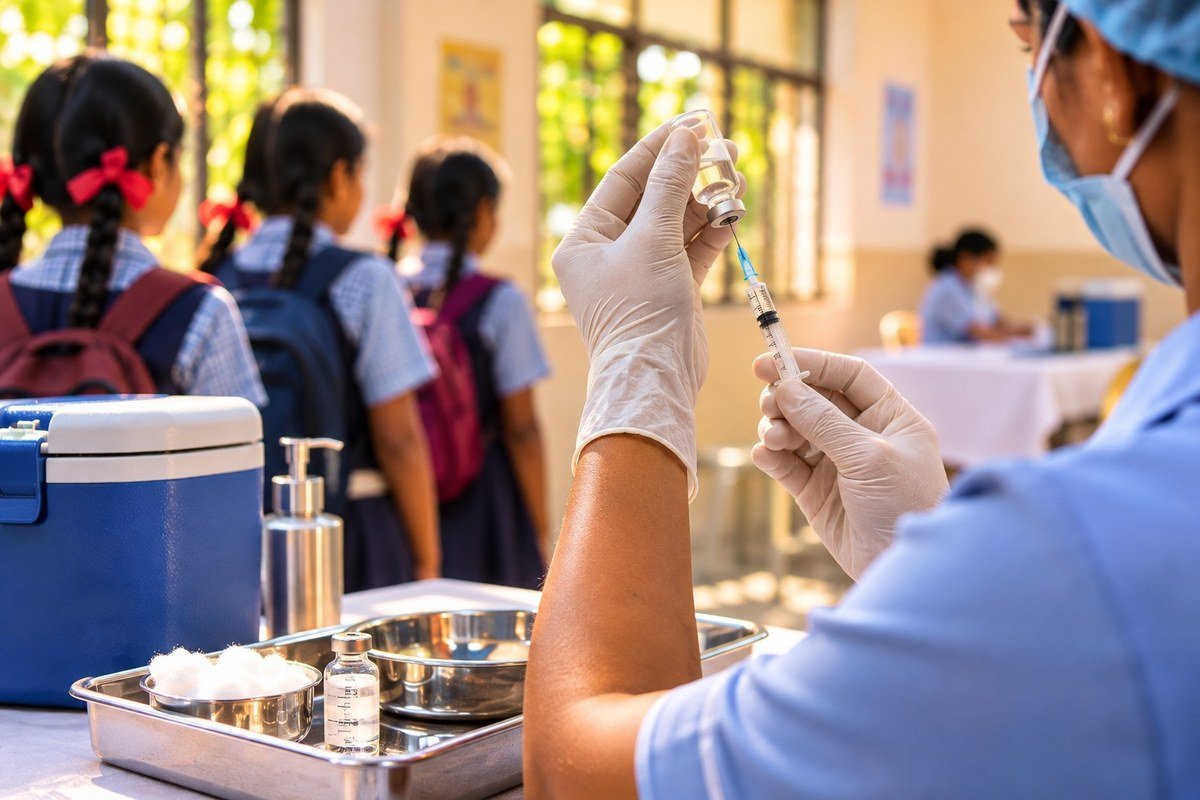
The Union Health Ministry said on 21 November 2026 that more than one crore doses of the human papillomavirus (HPV) vaccine had been given in less than nine months, covering nearly 87% of the annual target cohort of 14-year-old girls under the national cervical cancer prevention campaign launched in February 2026. Uttar Pradesh leads with over 29.33 lakh girls vaccinated, followed by Bihar (13.70 lakh) and Gujarat (7.75 lakh). Six States, Gujarat, Uttar Pradesh, Andhra Pradesh, Mizoram, Madhya Pradesh and Bihar, have reached 100% of their identified targets.
Concept: HPV and cervical cancer
Persistent infection with high-risk types of human papillomavirus causes almost all cases of cervical cancer. Cervical cancer is among the most common cancers in Indian women and is largely preventable through vaccination before exposure, together with screening. The World Health Organization’s 2030 elimination targets are “90-70-90”: 90% of girls fully vaccinated by age 15, 70% of women screened with a high-performance test by ages 35 and 45, and 90% of women with precancer or cancer treated. India announced its indigenous quadrivalent HPV vaccine, Cervavac, in 2022; the national campaign launched on 28 February 2026 uses Gardasil-4 in a free, voluntary, single-dose schedule for 14-year-old girls, with parental consent.
Key facts for Prelims
- Almost all cervical cancer cases are linked to persistent high-risk HPV infection.
- WHO’s 2030 targets (90-70-90): 90% of girls vaccinated by 15, 70% of women screened by 35 and 45, 90% of those with disease treated.
- The national campaign (launched 28 February 2026) uses a single dose of Gardasil-4; India’s indigenous vaccine Cervavac was announced in 2022.
- The campaign targets 14-year-old girls; Uttar Pradesh has vaccinated the largest number.
- Six States have achieved 100% coverage of their identified target populations.
Mains analysis and way forward
Mains analysis
- School-age vaccination is one of the most cost-effective cancer prevention tools.
- High coverage shows the strength of India’s immunisation system built under the Universal Immunisation Programme.
- Vaccination must be paired with screening for older women who were not vaccinated.
- Countering vaccine hesitancy needs trusted community voices, such as ASHAs and teachers.
Way forward
- Close gaps in States below target with school and community drives.
- Expand screening at Ayushman Arogya Mandirs.
- Track long-term outcomes through a digital registry.
Connect the dots: GS II: health, welfare of women and children; GS III: science and technology in health.
Sources: The Hindu: HPV vaccination: one crore doses administered in nine months, 21 November 2026
Teenager in Kerala develops kidney disease after using a mercury-laced fairness cream bought online
In short: The case shows the risk of unregulated cosmetics sold through social media, and the State child rights body has taken it up on its own.

Why in news
Doctors in Malappuram, Kerala, said on 21 November 2026 that a 17-year-old girl developed membranous nephropathy, a serious kidney condition, after using a fairness cream for about a year. She bought it online after seeing promotional videos by Instagram influencers. Tests found mercury levels of about 12,500 parts per million in the cream, against India’s limit of not more than one ppm for unintentional mercury contamination in ordinary cosmetics. The Kerala State Commission for Protection of Child Rights has registered a suo motu case, and the family plans to approach the consumer court.
Concept: Mercury in cosmetics: Indian rules and the Minamata Convention
Mercury compounds have been used in some skin-lightening products because they interfere with melanin formation, but mercury damages the kidneys, nervous system and other organs. In India, cosmetics are regulated under the Drugs and Cosmetics Act, 1940 and the Cosmetics Rules, 2020, enforced by the Central Drugs Standard Control Organisation and State drug controllers. For ordinary finished cosmetics, unintentional mercury contamination must not exceed 1 ppm; this is not permission to add mercury deliberately. The Minamata Convention on Mercury was adopted in 2013 and India ratified it in 2018. Its original Annex A covered cosmetics with more than 1 ppm mercury; its fifth Conference of the Parties (COP-5) removed that threshold, making the ban on deliberately added mercury explicit. The amendment entered into force for most Parties on 25 April 2025; because India made a declaration under Article 30(5), it applies to India only after separate acceptance. Influencer promotion is covered by consumer protection guidelines on endorsements and misleading advertisements.
Key facts for Prelims
- The Minamata Convention on Mercury was adopted in 2013; India ratified it in 2018.
- Cosmetics in India are regulated under the Drugs and Cosmetics Act, 1940 and the Cosmetics Rules, 2020.
- India’s limit: not more than 1 ppm of unintentional mercury in ordinary finished cosmetics; Minamata’s COP-5 removed the 1 ppm threshold for mercury-added cosmetics, and its application to India depends on India’s acceptance.
- State Commissions for Protection of Child Rights are set up under the CPCR Act, 2005.
- The Central Consumer Protection Authority acts against misleading advertisements under the Consumer Protection Act, 2019.
Mains analysis and way forward
Mains analysis
- Online and social media sales make it easy for unsafe products to bypass regulators.
- Influencers promoting products without disclosure or verification raise questions of accountability.
- The demand for fairness products reflects social bias based on skin colour.
- Regulatory capacity of State drug controllers is limited compared with the scale of e-commerce.
Way forward
- Test and recall unsafe cosmetics sold online; make platforms responsible for sellers.
- Enforce endorsement rules for influencers, with penalties.
- Run awareness campaigns on skin health and challenge colour-based stereotypes.
Connect the dots: GS II: health, consumer protection, child rights; GS III: environmental pollutants (mercury); GS IV: ethics in advertising; Essay: beauty standards and society.
Sources: The Hindu: Keralam girl develops kidney ailment after using fairness cream promoted on social media, 21 November 2026; The Hindu: Kidney ailment from using face cream: child rights panel registers case, 21 November 2026
In brief
- Manipur hooch tragedy: The death toll from spurious liquor in Manipur’s Chandel district rose to 16 by 21 November 2026; six people from Kakching district were arrested for stocking and selling it. Methanol in illicit liquor causes blindness and death.
- 75,000 more medical seats by 2029: Union Health Minister J.P. Nadda said on 21 November 2026, at the JIPMER convocation in Puducherry, that about 75,000 medical seats will be added over the next three years while maintaining academic standards.
- Drone attack on a Russian cargo ship in the Gulf of Finland: A cargo ship bound for Russia’s Baltic exclave of Kaliningrad was hit by drones in international waters on 21 November 2026 and drifted into Finnish waters; Finland reimposed temporary air and sea restrictions. Kaliningrad lies between Poland and Lithuania.
- Sri Lanka’s organised crime Bill cleared by its Supreme Court: Sri Lanka’s Supreme Court determined that the Prevention of Organised Crimes Bill is not inconsistent with the Constitution and can be passed by a simple majority if Clause 6 is deleted (announced 21 November 2026). Rights groups have criticised its broad definition of organised crime and police powers.
- Agniveer data breach: A 14-year-old from Haryana was apprehended by the Delhi Police for allegedly hacking a test website for former Agniveers and offering the data of about 4,000 of them on the dark web (reported 21 November 2026). The Agnipath scheme was launched in June 2022.
- Uttar Pradesh partners WorldFish for aquaculture: Uttar Pradesh signed a three-year agreement with WorldFish, an international non-profit research body, to set up a project office in Gorakhpur for better fish seed, hatcheries and farmer training (20 November 2026).
- Metal prices and US interest rates: Gold, copper and aluminium fell to at least seven-month lows in the week ending 21 November 2026 on expectations of higher US interest rates. Higher yields make non-interest-bearing assets such as gold less attractive, while industrial metals also reflect expectations of global manufacturing demand.
- Iran-US talks stalled: Talks between Iran and the US have stalled over Iran’s enriched uranium stockpile, with mediators including Qatar and Pakistan warning of renewed conflict; Iran said it remains open to diplomacy (reported 21 November 2026).
Prelims practice: 5 questions
Choose an option to see the answer and explanation. Your score appears when all five are answered.
Mains practice
The post-2026 delimitation of Lok Sabha seats raises a tension between broadly equal population-based representation and the federal interests of States with different demographic trajectories. Examine this tension and suggest ways to reconcile electoral equality with fairness to States.
Show the answer outline
Introduction (about 30 words)
- Article 82 provides for readjustment after each census. The inter-State allocation of Lok Sabha seats is still based on the 1971 Census, while constituency boundaries were generally redrawn on 2001 Census figures (with exceptions such as Jammu and Kashmir). Post-2026 readjustment raises questions of equality and federal fairness.
Why readjustment is needed
- Large differences in the population of constituencies across States weaken the equal value of votes.
- Article 334A links women’s reservation to a delimitation after publication of the relevant figures of the first census taken after the 106th Amendment.
- Representation should reflect present population, not that of 1971.
Federal concerns
- States that stabilised population (mostly in the south) may lose relative share.
- Risk of a perceived north-south divide and distrust in the Union.
- Changes in seat shares affect fiscal and political bargaining.
- Lack of consultation, as shown by the demand for an all-party meeting.
Ways to reconcile
- Expand the Lok Sabha to reduce pressure on States’ existing seat numbers, recognising that relative shares may still change.
- Evaluate alternative allocation formulas that weigh representation against population stabilisation, within Article 81 or through amendment.
- Keep constituency populations broadly equal within States through transparent delimitation.
- Strengthen the Rajya Sabha as a forum for federal representation.
- Build consensus through an all-party meeting, parliamentary debate and an independent Delimitation Commission with State participation.
Conclusion (about 30 words)
- Delimitation must balance the equal democratic value of votes with the federal compact; constitutional clarity, transparent data and genuine consultation can produce a settlement that States accept as fair.
Tip: Use the record 100-day gap without prorogation (21 November 2026) and the proposed 850-seat Lok Sabha as current examples in answers on Parliament, federalism and women’s representation.
Your next step, whichever stage you are at.
Open Library · All programmes · WhatsApp +91 81220 02172
Current Canvas is prepared by the UPSC Gurus editorial desk. Every fact is checked against official releases and reliable reporting, with sources listed under each story. Editions are compiled each month into Current Canvas Monthly, a free magazine.
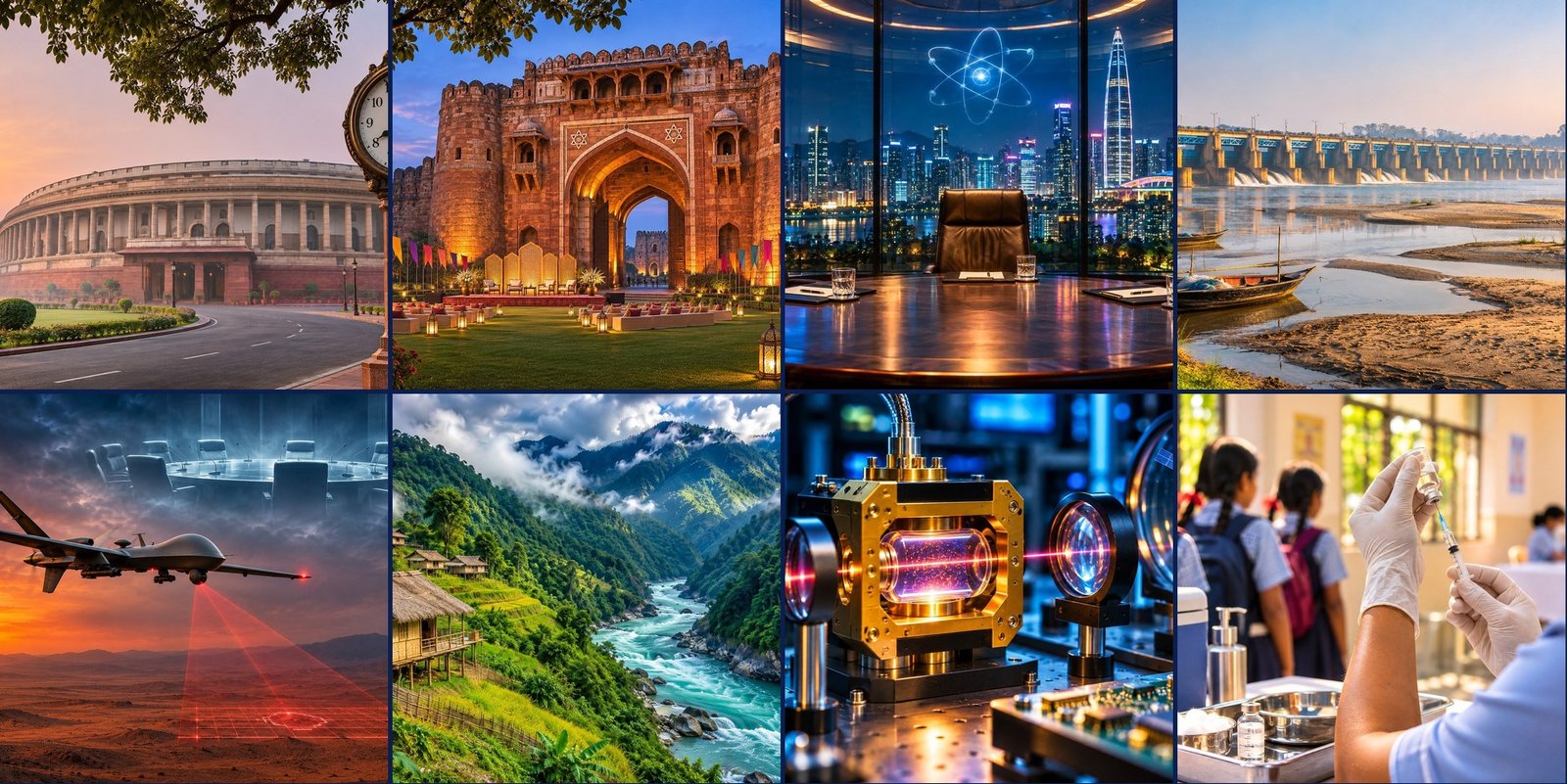
About images: photographs and illustrations in Current Canvas are AI-generated for illustration only. They are not news photographs of the events described.
Your first Mentor’s Desk call is free
One free conversation per aspirant about where you are in your preparation, with an honest suggestion of the right next step.
Know more and bookHave a question? Get in touch
For questions about a programme, its fees, batch dates, payment or access. Message us on WhatsApp and our team will reply. Asking a question is not a booking, and you can ask as often as you need.
Get in touch on WhatsApp