 New this week · Free UG Handout 02UPSC Mains Directive Words: 60 Meanings, Trends and PYQsTwo free PDFs: The Guide and the With PYQs edition.Read and download
Today’s Canvas
- Supreme Court dismisses Tamil Nadu’s plea on Cauvery water shortfall from KarnatakaGS II
- International Court of Justice rules that Myanmar committed genocide against the RohingyaGS II
- Estonia to suspend road border crossings with Russia from 1 December, with a review after six monthsGS II
- COP31 reaches its final day as the draft cover text drops fossil-fuel phase-out languageGS III
- Cheetah from Botswana gives birth to four cubs at Kuno, taking India’s cheetah population to 62GS III
- Accident insurance announced for 10,000 temporary forest personnel in seven StatesGS III
- Core sector growth rises to a series-high of 10.9% in October 2026GS III
- Sixteenth round of commercial coal mine auctions draws 83 bids for 17 blocksGS III
- Health Ministry proposes treating all antimicrobials as “new drugs” for stricter approvalGS II
- National Medical Commission asks government medical colleges to join PM-RAHAT cashless accident careGS II
Polity and governance
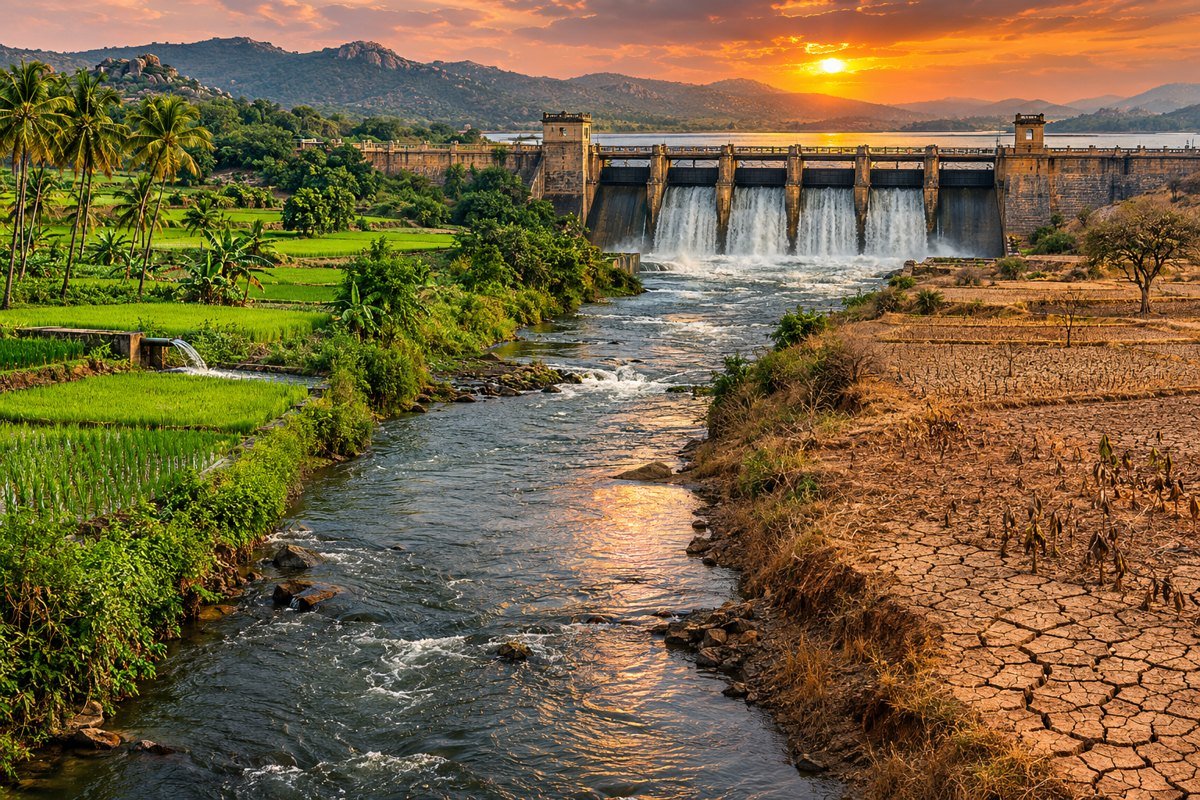
Supreme Court dismisses Tamil Nadu’s plea on Cauvery water shortfall from Karnataka
In short: The Court did not accept Tamil Nadu’s demand that Karnataka make good a shortfall in releases on a pro rata basis in a deficit year.
Why in news
On 20 November 2026, the Supreme Court dismissed a plea by Tamil Nadu claiming that Karnataka must make good a shortfall of Cauvery water, first put at 16.01 tmcft and later revised to 11.719 tmcft, on a pro rata basis during the 2026-27 irrigation year. Tamil Nadu accused Karnataka of withholding water. Karnataka argued that there is no scientific formula for sharing distress in a pro rata manner. Karnataka’s Chief Minister said the verdict reflected the shortage on the ground in his State.
Concept: How Cauvery water is shared today
Article 262 of the Constitution allows Parliament to provide for the adjudication of inter-State river disputes and to bar other courts from them; the Inter-State River Water Disputes Act, 1956 sets up tribunals. The Cauvery Water Disputes Tribunal gave its final award in 2007. In February 2018, the Supreme Court modified it, fixing Karnataka’s release to Tamil Nadu at the inter-State border point of Biligundlu at 177.25 tmcft in a normal year. The Cauvery Water Management Authority and the Cauvery Water Regulation Committee were created in 2018 to implement the award. In deficit years, how the shortfall is shared (“distress sharing”) remains the most contested question.
Key facts for Prelims
- Article 262: adjudication of disputes relating to waters of inter-State rivers.
- Inter-State River Water Disputes Act, 1956 provides for tribunals; tribunal awards have the force of a Supreme Court decree.
- Supreme Court’s Cauvery judgment: February 2018; Biligundlu is the measuring point on the Karnataka-Tamil Nadu border.
- Cauvery Water Management Authority (CWMA) and Cauvery Water Regulation Committee (CWRC) were constituted in 2018.
- The Cauvery rises at Talakaveri in Kodagu district, Karnataka, and flows into the Bay of Bengal.
Mains analysis and way forward
Mains analysis
- The absence of an agreed, operational distress-sharing formula makes it difficult for the States to determine obligations in a deficient monsoon year; the Supreme Court’s dismissal of Tamil Nadu’s plea does not by itself establish a formula for future distress years.
- Recurring litigation raises questions about the capacity of existing institutions to resolve disagreements through transparent data and timely technical decisions; a stronger role for the CWMA and CWRC, with inter-State cooperation, could reduce repeated judicial intervention.
- Drinking water needs of growing cities such as Bengaluru and Chennai add pressure beyond irrigation.
Way forward
- Develop a transparent, science-based distress-sharing formula through the CWMA.
- Improve real-time flow data and basin-wide water accounting.
- Pair demand management (micro-irrigation, crop choice) with storage and recharge.
Connect the dots: GS II: federalism and inter-State relations; GS I: rivers of peninsular India; GS III: water resources and irrigation.
Sources: The Hindu: Cauvery verdict is a reflection of the ground reality in Karnataka, 20 November 2026
International relations
International Court of Justice rules that Myanmar committed genocide against the Rohingya
In short: For the first time, the UN’s top court has held a State responsible for committing genocide, but it has no power of its own to enforce the ruling.
Why in news
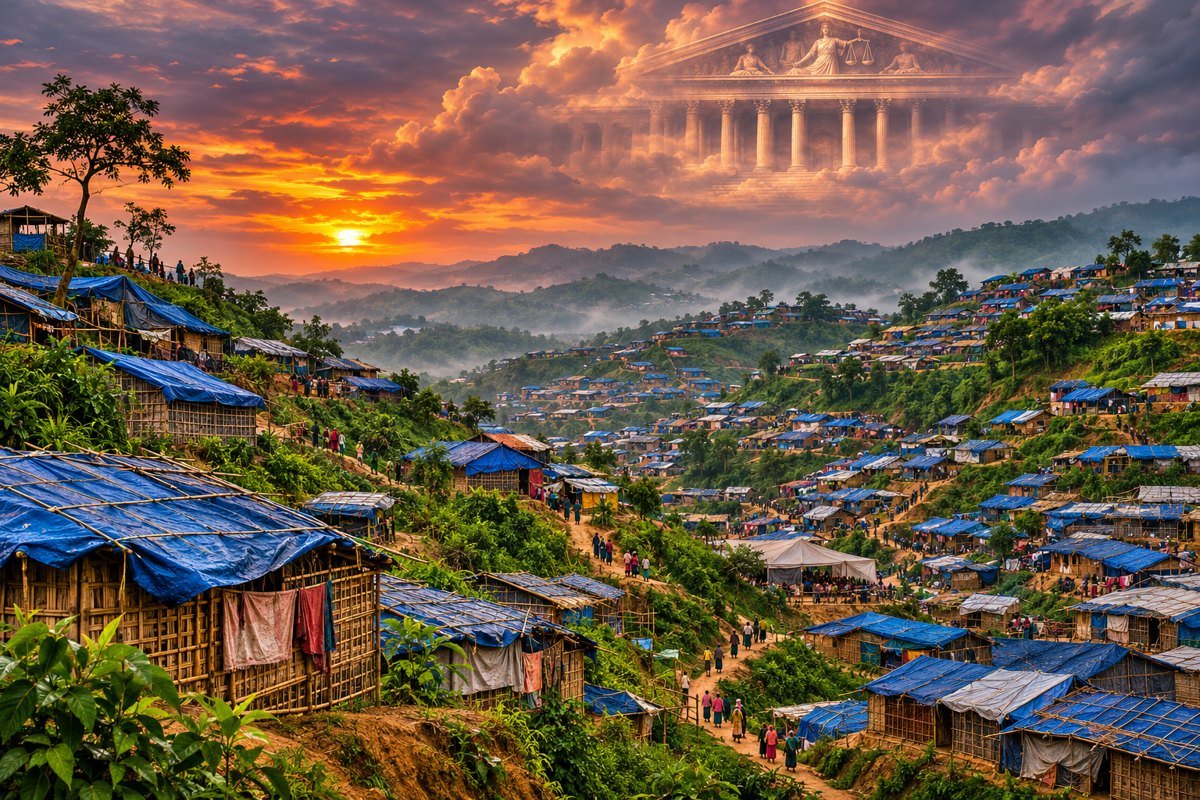
On 19 November 2026, the International Court of Justice (ICJ) at The Hague ruled in The Gambia v. Myanmar that Myanmar committed genocide against the Rohingya during the 2017 military “clearance operations”. The Court found that Myanmar’s forces killed about 10,000 Rohingya, carried out mass executions, widespread sexual violence and the burning of hundreds of villages. By a vote of nine to six, the Court held Myanmar responsible for genocide under the 1948 Genocide Convention. It directed Myanmar to investigate suspected perpetrators and prosecute and punish them where warranted, prevent recurrence, enable safe, voluntary and dignified return, and provide restitution and compensation; the amount and modalities of compensation will be addressed in a later phase. Myanmar rejected the judgment as unfair, drawing attention to the divided vote.
Concept: How the ICJ works, and why enforcement is the hard part
The ICJ is the principal judicial organ of the United Nations, with 15 judges elected for nine-year terms. It decides disputes between States and does not conduct criminal trials of individuals; criminal responsibility for international crimes may be decided by national courts or by the International Criminal Court where it has jurisdiction. The Gambia filed this case in November 2019 under the 1948 Genocide Convention, which allows any State party to bring a dispute about its interpretation or application. Genocide requires proof of intent to destroy a group “in whole or in part”. Under Article 60 of the ICJ Statute, judgments are final and without appeal. Article 94 of the UN Charter requires UN members to comply with ICJ decisions in cases to which they are parties; if a party fails to comply, the other party may approach the Security Council, which can consider appropriate measures. Implementation also depends on diplomatic engagement, national action and international cooperation.
Key facts for Prelims
- The ICJ sits at The Hague (Netherlands) and has 15 judges elected by the UN General Assembly and the Security Council.
- The Genocide Convention was adopted by the UN General Assembly in 1948; India is a party.
- The case was filed by The Gambia in 2019; this is the first time the ICJ has found a State responsible for committing genocide (in 2007, in Bosnia v. Serbia, it recognised genocide at Srebrenica but did not find Serbia responsible for committing it).
- Article 60 of the ICJ Statute: judgments are final and without appeal. Article 94 of the UN Charter: members undertake to comply with ICJ decisions; non-compliance can be referred to the Security Council.
- About 1.2 million Rohingya refugees live in Bangladesh, mostly in camps in Cox’s Bazar district.
Mains analysis and way forward
Mains analysis
- The ruling strengthens international law by showing that a State, not only individuals, can be held responsible for genocide.
- It also exposes the limits of international adjudication: the Security Council is one enforcement avenue, where vetoes can block action, so implementation also depends on diplomacy and national action.
- For South Asia, the ruling raises questions about the repatriation, protection and status of Rohingya refugees in Bangladesh and India.
Way forward
- Pursue safe, voluntary and dignified repatriation with international monitoring.
- Support accountability through domestic courts and cooperation with international mechanisms.
- Share the humanitarian burden on Bangladesh through regional and international assistance.
Connect the dots: GS II: international institutions, India and its neighbourhood, refugees and human rights; GS IV: justice and accountability.
Sources: The Hindu: Rohingya in Bangladesh welcome UN court’s genocide verdict, 20 November 2026; The Hindu: Myanmar calls ICJ ruling on genocide unfair, 20 November 2026
Estonia to suspend road border crossings with Russia from 1 December, with a review after six months
In short: Citing alleged hostile activity by Russian intelligence services, Estonia will suspend road crossings with Russia from 1 December, with a review after six months.
Why in news
On 20 November 2026, Estonia announced that road border crossings with Russia would be suspended from 1 December, with the measure to be reviewed after six months. Estonia attributed the decision to national-security concerns, alleging hostile activity by Russian intelligence services, including intimidation and recruitment attempts at the checkpoints. These are the Estonian government’s allegations; Russia has disputed Estonia’s approach and said it would respond with political and diplomatic measures. Rail freight continues under existing restrictions.
Concept: The Baltic frontier of NATO and the EU
Estonia, Latvia and Lithuania, the Baltic States, regained independence from the Soviet Union in 1991 and joined both NATO and the European Union in 2004. They border Russia and are seen as NATO’s most exposed members. Finland, which joined NATO in 2023, has kept its border crossings with Russia closed since 2023. Many people in the region have family across the border, so closures have social as well as security effects.
Key facts for Prelims
- Estonia, Latvia and Lithuania joined NATO and the EU in 2004.
- Finland joined NATO in 2023 and Sweden in 2024.
- Narva, a majority Russian-speaking city in Estonia, lies on the border with Russia.
- Article 5 of the North Atlantic Treaty commits members to collective defence.
Mains analysis and way forward
Mains analysis
- “Hybrid” threats such as sabotage and recruitment blur the line between peace and conflict.
- Border closures can raise security but also deepen division and hardship for divided families.
Way forward
- For India: track European security shifts, as they shape energy markets and great-power relations.
Connect the dots: GS II: effect of policies of developed countries on India; global security groupings.
Sources: The Hindu: Estonia to close border with Russia, 20 November 2026
Environment and ecology
COP31 reaches its final day as the draft cover text drops fossil-fuel phase-out language
In short: The latest draft removed both the fossil-fuel phase-out wording sought by many countries and a firm adaptation-finance figure sought by developing countries.

Why in news
COP31, the UN climate summit in Türkiye, entered its scheduled final day on 20 November 2026 with unresolved disagreements over fossil fuels and climate finance. A revised Presidency draft released on 19 November removed earlier references to phasing out fossil fuels and net-zero dates. It also omitted a proposed target of US$120 billion a year by 2035 for adaptation finance. These changes reflected continuing differences among negotiating groups, and the draft was not a final agreement. The United States sent no official federal delegation for the second consecutive year, although American subnational representatives attended. Climate Action Tracker’s November 2026 assessment projected about 2.7 degrees Celsius of warming by 2100 under current policies, or 2.6 degrees if governments achieved their 2030 and 2035 targets.
Concept: What a COP “cover text” is
The Conference of the Parties (COP) is the supreme decision-making body of the UN Framework Convention on Climate Change (UNFCCC), adopted in 1992. A cover text is an overarching political decision that frames the outcome of a summit rather than settling one agenda item; it is usually agreed last and, like every COP decision, needs consensus. The 2015 Paris Agreement aims to hold warming well below 2 degrees Celsius and pursue efforts to limit it to 1.5 degrees. COP28 (2023) agreed on “transitioning away from fossil fuels in energy systems”, which is why the wording on fossil fuels is closely watched at each summit.
Key facts for Prelims
- UNFCCC: adopted in 1992 at the Rio Earth Summit; the COP meets every year.
- Paris Agreement (2015): well below 2 degrees Celsius, pursuing 1.5 degrees; countries submit Nationally Determined Contributions (NDCs).
- COP decisions are adopted by consensus.
- COP28 in Dubai (2023) called for transitioning away from fossil fuels in energy systems.
- Climate Action Tracker is an independent scientific analysis of government climate action.
Mains analysis and way forward
Mains analysis
- Weak fossil-fuel language reflects the pull between energy-security concerns and climate ambition.
- Removing a firm adaptation-finance figure deepens developing countries’ concern about predictability of finance.
- The absence of an official United States delegation limits its participation in negotiations, while the engagement of other governments and non-State actors shows that international climate action extends beyond national delegations.
Way forward
- Link ambition to finance: credible, predictable adaptation and transition finance.
- India can push for equity and common but differentiated responsibilities while scaling clean energy at home.
- Strengthen tracking of NDC implementation, not only pledges.
Connect the dots: GS III: climate change, environmental conventions; GS II: multilateral negotiations; Essay: development and climate.
Sources: The Hindu: COP 31, nations still seeking deeper fossil fuel cuts as summit enters final day, 20 November 2026; The Hindu: Draft of COP31 cover text drops references to fossil fuel phase-out, 19 November 2026
Cheetah from Botswana gives birth to four cubs at Kuno, taking India’s cheetah population to 62
In short: It is the first birth in India by a cheetah brought from Botswana, and only the second recorded birth in the wild since 2022.
Why in news
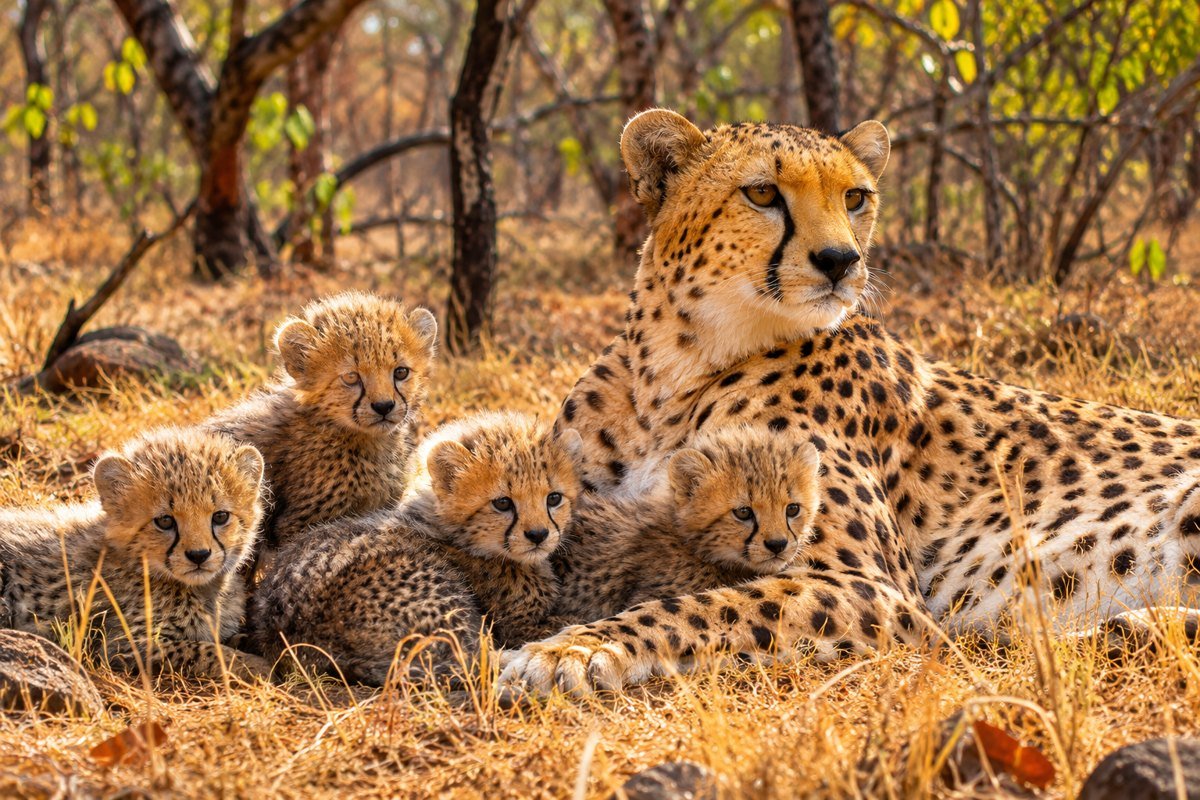
On 20 November 2026, KOMG 3, a two-and-a-half-year-old female cheetah brought from Botswana, gave birth to four cubs in the wild at Kuno National Park in Madhya Pradesh, the Union Environment Minister said. She had spent more than four months in the wild. With these cubs, India’s cheetah population has risen to 62, including 43 born in India.
Concept: Why reintroducing a species is so difficult
The cheetah was declared extinct in India in 1952. Project Cheetah began on 17 September 2022, when cheetahs from Namibia were released at Kuno; more were brought from South Africa in 2023. Reintroduction means returning a species to an area where it once lived. Success depends on enough suitable habitat and prey, low conflict with people, genetic diversity, and animals that breed in the wild rather than only in enclosures. That is why a birth in the wild, by a free-ranging female, matters more than births in bomas (enclosures).
Key facts for Prelims
- The cheetah was declared extinct in India in 1952.
- Project Cheetah started on 17 September 2022 at Kuno National Park, Madhya Pradesh.
- Cheetahs have been brought from Namibia, South Africa and Botswana.
- The cheetah (Acinonyx jubatus) is listed as Vulnerable on the IUCN Red List.
- The project is implemented by the National Tiger Conservation Authority with the Madhya Pradesh Forest Department.
Mains analysis and way forward
Mains analysis
- Reproduction by a free-ranging female is an encouraging conservation indicator, but long-term success also depends on cub survival, dispersal, sufficient prey, genetic diversity and viable populations over successive generations.
- Long-term viability needs more connected habitat, prey recovery and a second population site.
- Transparent reporting of mortality and health data builds public trust in the project.
Way forward
- Expand habitat and corridors beyond Kuno with community support.
- Keep genetic diversity through planned imports and careful breeding management.
- Invest in frontline staff, veterinarians and monitoring.
Connect the dots: GS III: conservation, wildlife reintroduction; Prelims: species and protected areas.
Sources: The Hindu: Cheetah brought from Botswana gives birth to four cubs at Kuno, 20 November 2026
Accident insurance announced for 10,000 temporary forest personnel in seven States
In short: Daily-wage forest watchers do many of the same risky duties as permanent staff but usually lack their insurance cover.
Why in news
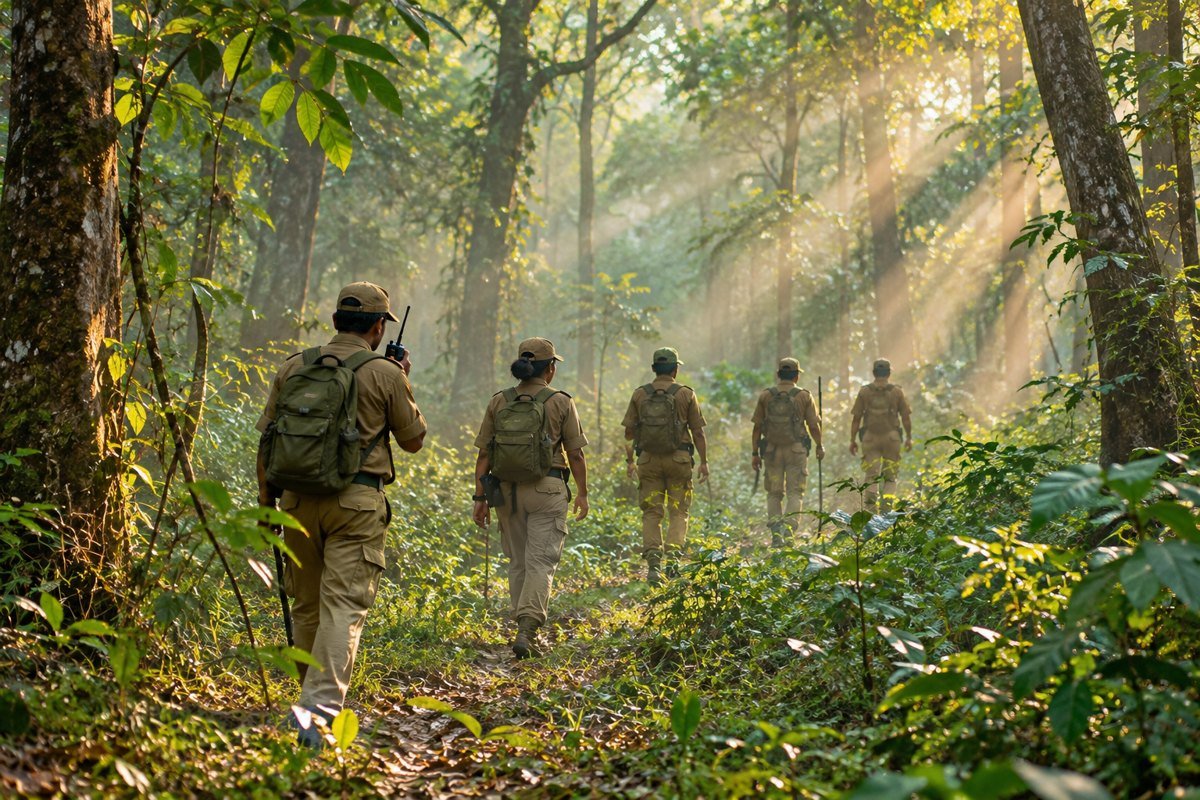
On 19 November 2026, Britain’s Prince William announced a five-year accident insurance programme for 10,000 temporary and non-permanent frontline forest personnel in Madhya Pradesh, Karnataka, Assam, Uttarakhand, Maharashtra, Kerala and Rajasthan. Beginning in December 2026, it will cover death and serious injury from wild animal attacks, snakebite, drowning, floods, landslides, electrocution, burns, travel accidents and duty-related assaults. The insurance provides 24-hour personal accident cover, on and off duty. It is being implemented through conservation and insurance partners, not as a universal government scheme for all Indian forest personnel.
Concept: The invisible backbone of conservation
Protected areas depend on frontline staff, including forest guards and watchers who patrol on foot, fight fires and handle human-wildlife conflict. Many are hired on daily wages and do not receive the benefits of permanent government employees. Reporting attributed to the International Ranger Federation recorded 31 forest field personnel deaths on duty in India in 2021, eight of them in homicides. Their safety and welfare directly affect how well forests and wildlife are protected.
Key facts for Prelims
- The programme covers seven States: Madhya Pradesh, Karnataka, Assam, Uttarakhand, Maharashtra, Kerala and Rajasthan.
- It covers 10,000 temporary and non-permanent frontline forest personnel for five years from December 2026.
- Reporting attributed to the International Ranger Federation put on-duty deaths of forest field personnel in India at 31 in 2021.
- Wildlife (Protection) Act, 1972 is the main law for protecting wildlife in India.
Mains analysis and way forward
Mains analysis
- Welfare of frontline staff is a governance issue, not charity: conservation outcomes depend on them.
- Contractual employment creates unequal risk and benefit within the same workforce.
- International partnerships can fill gaps but cannot replace State responsibility.
Way forward
- Extend insurance and health cover to all frontline staff through State schemes.
- Regularise long-serving watchers and provide training and equipment.
Connect the dots: GS III: conservation and protected areas; GS II: welfare of informal workers; GS IV: dignity of labour.
Economy
Core sector growth rises to a series-high of 10.9% in October 2026
In short: Electricity, coal, cement and iron ore production drove growth, helped by a low base from October last year.
Why in news
The Ministry of Commerce and Industry reported on 20 November 2026 that the Index of Core Industries grew 10.9% year-on-year in October 2026, compared with the revised September growth rate of 8.2%. Iron ore, coal, electricity and cement recorded particularly strong growth, and a low base added to the jump. The revised index, introduced in July 2026 with base year 2022-23, covers nine industries after the inclusion of iron ore. Its back-series is available from April 2023.
Concept: What the core sector tells us
The Index of Core Industries measures output in key infrastructure sectors. It is released every month by the Office of the Economic Adviser in the Department for Promotion of Industry and Internal Trade (DPIIT), ahead of the Index of Industrial Production (IIP), so it is read as an early signal of industrial activity. A “base effect” means growth looks high when the same month last year was weak. The revised series, with base year 2022-23 and a back-series from April 2023, limits long comparisons with the old series.
Key facts for Prelims
- The Index of Core Industries is published monthly by the Office of Economic Adviser, Department for Promotion of Industry and Internal Trade (DPIIT), Ministry of Commerce and Industry.
- The revised index contains nine industries: coal, crude oil, natural gas, refinery products, fertilisers, steel, cement, electricity and iron ore. Its base year is 2022-23.
- Core industries form a large part of the IIP, so they are an early indicator of industrial output.
- A low base effect raises the growth rate when last year’s figure was weak.
Mains analysis and way forward
Mains analysis
- Strong core output signals public infrastructure spending feeding through to industry.
- Base effects can exaggerate growth; month-on-month trends and levels give a truer picture.
- Sustained growth needs private investment and demand, not only public capital expenditure.
Way forward
- Read core data alongside IIP, credit growth and capacity utilisation.
- Keep the new series transparent with back-series and clear methodology notes.
Connect the dots: GS III: growth, industrial policy and infrastructure; Prelims: economic indicators.
Sources: The Hindu: Core sector growth at series-high of 10.9% in October 2026, 20 November 2026
Sixteenth round of commercial coal mine auctions draws 83 bids for 17 blocks
In short: Twenty first-time bidders are seeking to enter commercial coal mining, a sign of continuing interest in the sector.
Why in news
On 20 November 2026, the Ministry of Coal announced that the 16th round of commercial coal mine auctions had received 83 bids for 17 blocks. A separate second attempt to auction one block from the 15th round received two bids. Across the two auction processes, 26 coal blocks were offered and 85 bids were received for 18 blocks. The process attracted 20 first-time bidders.
Concept: Commercial coal mining in India
Coal mining was nationalised in the early 1970s. After the Supreme Court cancelled coal block allocations in 2014, the Coal Mines (Special Provisions) Act, 2015 introduced transparent auctions. In 2020, auctions were opened to commercial mining, allowing companies to sell coal in the market without any restriction on end use, on a revenue-sharing basis. Auctions are run online, and revenue goes to the coal-bearing States.
Key facts for Prelims
- Coal Mines (Special Provisions) Act, 2015 followed the Supreme Court’s 2014 cancellation of coal block allocations.
- Commercial coal mining auctions were launched in 2020 on a revenue-sharing model.
- Auction revenue from coal blocks accrues to the coal-bearing State governments.
- Coal India Limited remains the largest coal producer in India.
Mains analysis and way forward
Mains analysis
- More bidders can raise domestic output and reduce import dependence for power and steel.
- Mining must balance energy security with forest rights, displacement and environmental safeguards.
- Coal expansion must be planned alongside India’s long-term transition goals.
Way forward
- Speed up clearances while strictly enforcing environmental and rehabilitation norms.
- Plan a just transition for coal-dependent districts.
Connect the dots: GS III: energy security, mining and environment; GS II: Centre-State revenue sharing.
Sources: The Hindu: Coal auction rounds attract 85 bids; 20 first-time players enter sector, 20 November 2026
Health and social justice
Health Ministry proposes treating all antimicrobials as “new drugs” for stricter approval
In short: The draft amendment would require central permission, with supporting data, before State manufacturing licences are granted for antimicrobial products.
Why in news
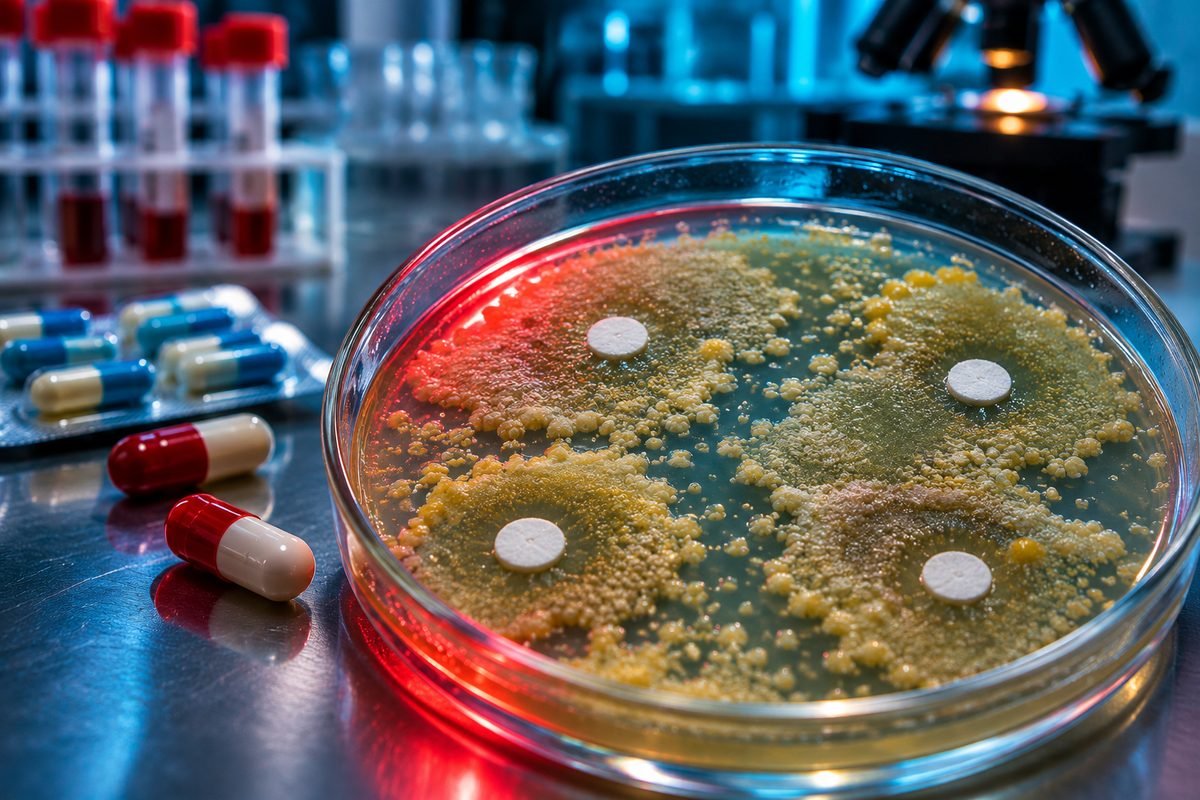
On 19 November 2026, the Union Health Ministry announced a draft amendment to the New Drugs and Clinical Trials Rules, 2019, proposing that antimicrobials be brought within the definition of a “new drug”. The aim is to strengthen scrutiny of quality, safety and efficacy, including bioavailability, bioequivalence and stability data. Manufacturers would need permission from the Central Licensing Authority before seeking a manufacturing licence from the State authority. Separately, the Ministry proposed amendments to the Drugs Rules, 1945, creating distinct licensing for wholesale distribution of bulk drugs. Both drafts are open for stakeholder comments. Karnataka also launched its State Action Plan for Containment of Antimicrobial Resistance on 19 November.
Concept: Antimicrobial resistance (AMR)
AMR occurs when bacteria, viruses, fungi and parasites stop responding to medicines, making infections harder to treat. Misuse and overuse of antibiotics in people, animals and agriculture speed it up. A “new drug” under Indian rules needs approval from the Central Licensing Authority, the Drugs Controller General of India, with supporting data, rather than only a State licence. India launched its first National Action Plan on AMR in 2017. The current National Action Plan on AMR 2.0 covers 2025-2029 and follows a One Health approach linking human, animal and environmental health.
Key facts for Prelims
- New Drugs and Clinical Trials Rules, 2019 are framed under the Drugs and Cosmetics Act, 1940.
- The Drugs Controller General of India heads the Central Drugs Standard Control Organisation (CDSCO).
- India’s first National Action Plan on AMR was launched in 2017; NAP-AMR 2.0 covers 2025-2029.
- Bioequivalence studies check that a generic drug acts in the body like the reference drug.
- One Health: an approach linking human, animal and environmental health.
Mains analysis and way forward
Mains analysis
- Tighter approval can curb poor-quality and irrational antimicrobial combinations.
- Regulation must be matched by stewardship in hospitals, prescription audits and limits on over-the-counter sales.
- Access must not suffer: stricter rules should not create shortages of essential antibiotics.
Way forward
- Strengthen State drug regulators and laboratory capacity.
- Expand surveillance of resistance in hospitals, farms and the environment.
- Public awareness against self-medication with antibiotics.
Connect the dots: GS II: health regulation; GS III: biotechnology and food security (antibiotics in livestock).
Sources: The Hindu: Health Ministry proposes to include antimicrobials in New Drug definition, 19 November 2026; The Hindu: Karnataka launches State action plan for containment of AMR, 19 November 2026
National Medical Commission asks government medical colleges to join PM-RAHAT cashless accident care
In short: Bringing government teaching hospitals into the scheme would widen cashless treatment for road accident victims in the “golden hour”.
Why in news
The National Medical Commission (NMC) has asked all government medical colleges and their attached hospitals to onboard the Prime Minister’s Road Accident Victims’ Hospitalisation and Assured Treatment (PM-RAHAT) scheme, The Hindu reported on 19 November 2026. The request came from the Union Health Ministry after a 24 September meeting of the steering committee monitoring the scheme, chaired by the Secretary of the Ministry of Road Transport and Highways.
Concept: The golden hour and cashless treatment
The “golden hour” is the first hour after a serious injury, when timely treatment most improves the chance of survival. Section 162 of the Motor Vehicles Act, 1988 (inserted in 2019) requires a scheme for cashless treatment of road accident victims during the golden hour. Delays often happen when hospitals ask for payment or police formalities first. A cashless scheme lets hospitals treat first and claim later. PM-RAHAT, launched on 13 February 2026, provides cashless treatment of up to Rs 1.5 lakh per eligible road accident victim for a maximum of seven days from the accident, at designated hospitals; the golden hour is central to its purpose, but coverage is not limited to the first hour. India records more than 1.5 lakh road accident deaths a year, among the highest in the world.
Key facts for Prelims
- PM-RAHAT: cashless treatment up to Rs 1.5 lakh per eligible victim, for up to seven days from the accident, at designated hospitals.
- Claims run through a digital system linking the National Health Authority’s Transaction Management System with the police’s electronic Detailed Accident Report platform; reimbursement comes from the Motor Vehicle Accident Fund.
- Section 162 of the Motor Vehicles Act, 1988 provides for cashless treatment during the golden hour.
- The National Medical Commission was set up under the NMC Act, 2019, replacing the Medical Council of India.
- The Ministry of Road Transport and Highways leads road safety policy.
- Good Samaritans who help accident victims are protected from harassment under the Motor Vehicles Act.
Mains analysis and way forward
Mains analysis
- Government medical colleges are often the nearest trauma centres, so their participation is central to coverage.
- Cashless care needs quick claim settlement so that hospitals are not deterred.
- Treatment is only one part; road design, enforcement and ambulances complete the chain.
Way forward
- Map trauma-care capacity along highways and fill gaps.
- Make claims fully digital and time-bound.
- Train first responders and promote Good Samaritan protection.
Connect the dots: GS II: health, government schemes; GS III: infrastructure and road safety; GS IV: duty of care.
Sources: The Hindu: NMC asks government medical colleges to onboard PM-RAHAT scheme, 19 November 2026
In brief
- Two new freshwater fish species in the Western Ghats: Researchers at the Kerala University of Fisheries and Ocean Studies described two new loach species from the Periyar-Cardamom Hills. Mesonoemacheilus mannanorum, named after the Mannan community, lives in streams inside the Periyar Tiger Reserve; Mesonoemacheilus sabariensis is found near Angamoozhi in the Pamba river system (reported 21 November 2026).
- China’s LineShine stays top of the supercomputer list: The TOP500 list released at the SC26 conference on 16 November 2026 kept China’s LineShine at number one. The top 10 were unchanged from June and only 27 new systems entered the list, the fewest ever.
- Indonesia’s fire emissions third highest on record: The EU’s Copernicus Atmosphere Monitoring Service said on 19 November 2026 that fires in Indonesia released nearly 200 million tonnes of carbon by 15 November, driven by El Nino-linked drought and peatland drainage.
- OPEC’s share of India’s crude imports falls: Provisional PPAC data showed OPEC’s share of India’s crude imports at 27.4% in April-October 2026, down from 38.5% a year earlier, as India diversified suppliers amid disruptions in West Asia (reported 19 November 2026).
- Biodiesel blending far below target: State-owned oil marketing companies achieved only 0.08% biodiesel blending in the first half of 2026-27, against an indicative target of 5% by 2030, citing shortage of feedstock such as non-edible oils and used cooking oil (reported 19 November 2026).
- Pakistan minister in Delhi for SCO forum: Pakistan’s Climate Change Minister arrived in New Delhi on 20 November 2026 to attend the Shanghai Cooperation Organisation’s Civilisational Dialogue Forum, a cultural meeting of the grouping.
- Personality in the news: Rosalind Franklin: New research examining laboratory notebooks and historical records shows that Franklin and Raymond Gosling deliberately produced “Photograph 51” in May 1952 as a higher-quality repeat of the earlier Photograph 49. Franklin had already used the earlier image to calculate features of DNA’s helical structure. The findings challenge the view that she failed to understand the importance of her own X-ray evidence (reported 19 November 2026).
Prelims practice: 5 questions
Choose an option to see the answer and explanation. Your score appears when all five are answered.
Mains practice
Inter-State river water disputes in India keep returning to the courts despite tribunals and implementing authorities. Examine the reasons, with reference to the Cauvery, and suggest how distress-year sharing can be made more predictable.
Show the answer outline
Introduction (about 30 words)
- Article 262 and the 1956 Act created a tribunal route; the Cauvery award (2007), modified by the Supreme Court (2018), is still contested in deficit years, as the 20 November 2026 plea shows.
Why disputes keep returning
- No agreed distress-sharing formula for weak monsoon years. Distinguish allocation from distress management: a normal-year allocation fixes the entitlement; a distress mechanism decides how scarcity is shared.
- Questions about the capacity of implementing bodies to settle disagreements through transparent data and timely technical decisions.
- Rising urban drinking-water demand alongside irrigation.
- Political pressures within States make compromise costly.
Consequences
- Repeated litigation delays decisions.
- Uncertainty for farmers and cities.
- Strain on cooperative federalism.
Way forward
- A transparent, science-based distress formula within the CWMA.
- Real-time flow and reservoir data in the public domain.
- Basin-level planning: demand management, recharge, crop choice.
- Strengthen time-bound dispute resolution and preventive mediation, with the CWMA and CWRC supported by independently verifiable basin data.
Conclusion (about 30 words)
- Predictable rules agreed in normal years, backed by shared data and trusted institutions, can keep distress years from turning into legal battles.
Tip: Use the 20 November 2026 Cauvery verdict as a current example in answers on federalism, water governance and dispute resolution.
Your next step, whichever stage you are at.
Open Library · All programmes · WhatsApp +91 81220 02172
Current Canvas is prepared by the UPSC Gurus editorial desk. Every fact is checked against official releases and reliable reporting, with sources listed under each story. Editions are compiled each month into Current Canvas Monthly, a free magazine.
About images: photographs and illustrations in Current Canvas are AI-generated for illustration only. They are not news photographs of the events described.
Your first Mentor’s Desk call is free
One free conversation per aspirant about where you are in your preparation, with an honest suggestion of the right next step.
Know more and bookHave a question? Get in touch
For questions about a programme, its fees, batch dates, payment or access. Message us on WhatsApp and our team will reply. Asking a question is not a booking, and you can ask as often as you need.
Get in touch on WhatsApp