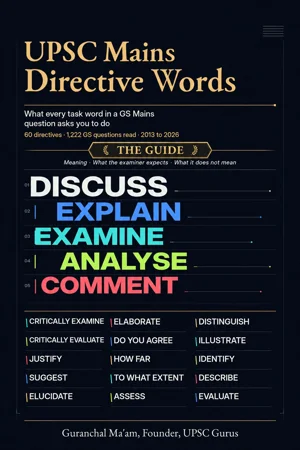
 New this week · Free UG Handout 02UPSC Mains Directive Words: 60 Meanings, Trends and PYQsTwo free PDFs: The Guide and the With PYQs edition.Read and download
Today’s Canvas
- Supreme Court clarifies OBC creamy layer rules, easing the way for children of government teachersGS II
- Gokul Dairy row puts the autonomy of cooperatives in focusGS II
- India cuts visa categories from 13 to nine and simplifies application formsGS II
- Cabinet approves the Rs 3,230 crore Yuge Yugeen Bharat Museum in North and South BlockGS I
- India bans export of lithium-ion battery black mass to build domestic recycling of critical mineralsGS III
- Swachh Survekshan 2025-26: Navi Mumbai leads the Super Swachh LeagueGS II
- Deadline to clear India’s legacy landfills pushed to December 2027GS III
- COP31 leaders urge climate action as the Himalayan agenda faces a setbackGS III
- Credit Guarantee Fund for Micro Units extended for five yearsGS III
- Moody’s raises India’s FY27 growth forecast to 7%GS III
- Saudi-flagged tanker reported hit in the Strait of Hormuz; three Indian seafarers aboard are safeGS II
- India and France hold dialogues on economic security, technology and spaceGS II
- Karakoram-2026: China-Pakistan army exercise signals deeper military tiesGS III
- DR Congo’s Ebola outbreak crosses 11,000 casesGS II
Polity, governance and social justice
Supreme Court clarifies OBC creamy layer rules, easing the way for children of government teachers
In short: The Supreme Court has clarified that parental salary alone cannot determine OBC creamy layer status without considering the prescribed service-status criteria.
Why in news
On 6 November 2026, the Supreme Court clarified its 11 March judgment on OBC creamy layer eligibility. The Indian Express reported on 12 November that around 140 civil services candidates could benefit, including children of government teachers and clerical employees. Their OBC certificates had been rejected or service allocations affected by income-based decisions. The Court reiterated the importance of parental employment status and post equivalence. Its clarification applies to pending CSE 2025 service allocations but does not automatically reopen recruitment decisions concluded before 11 March 2026.
Concept: OBC Creamy Layer and the 1993 Office Memorandum
The creamy layer refers to socially advanced sections within Other Backward Classes that are excluded from OBC reservation benefits. In Indra Sawhney v. Union of India (1992), the Supreme Court required their exclusion. The Department of Personnel and Training’s Office Memorandum of 8 September 1993 established criteria covering constitutional positions, parental service status, professions, property and income. The current income ceiling is Rs 8 lakh annually, last revised in 2017. Crucially, the income test excludes salary and agricultural income, while service-status rules separately govern specified government posts and comparable employment.
Key facts for Prelims
- Indra Sawhney v. Union of India (1992) was a nine-judge Supreme Court decision associated with the 27% OBC reservation framework in central services.
- The creamy layer criteria were notified through DoPT Office Memorandum No. 36012/22/93-Estt. (SCT), dated 8 September 1993.
- The income ceiling is Rs 8 lakh per annum. It is not a universal rule that any family earning more than this amount automatically falls within the creamy layer.
- Under Category VI of the 1993 DoPT Office Memorandum, the income ceiling applies over three consecutive years. Salary and agricultural income are excluded from this income test.
- The Supreme Court’s decisions dated 11 March and 6 November 2026 address the application of the criteria, including equivalence between government posts and positions in other organisations.
Mains analysis and way forward
Mains analysis
- Substantive equality: Reservation should reach socially disadvantaged groups without excluding eligible candidates through incorrect administrative tests.
- Status versus income: A parent’s occupational position and social advancement cannot always be inferred from salary alone.
- Administrative inconsistency: Incomplete post-equivalence exercises can lead to different treatment of similarly placed employees.
- Legal certainty: Correcting exclusion errors must be balanced against the rights and seniority of candidates whose appointments are already final.
Way forward
- Establish transparent, regularly updated equivalence criteria for government, PSU, banking, university and comparable private-sector posts.
- Train certificate-issuing and recruitment authorities to distinguish the service-status test from the income test.
- Resolve pending claims promptly while respecting the Supreme Court’s limits on retrospective reopening.
Connect the dots: GS II reservation policy connects with Articles 14, 15 and 16, substantive equality, judicial review and public administration.
Sources: The Indian Express, “Supreme Court creamy layer ruling: Children of government teachers, clerical staff to gain”, 12 November 2026. The Hindu, “Caste and class: On OBC reservation”, November 2026. Supreme Court of India, judgment dated 11 March 2026.
Gokul Dairy row puts the autonomy of cooperatives in focus
In short: Maharashtra’s ordinance enabling nominated directors to vote in cooperative leadership elections has triggered a legal and political dispute.
Why in news
In Gokul Dairy’s 19 October 2026 board election, a Congress-aligned panel won 13 of 25 seats, while the Mahayuti-backed panel won 12. On 6 November, Maharashtra allowed four of five government nominees to vote in eligible, government-assisted federal cooperatives with turnover above Rs 500 crore, excluding district central cooperative banks. The fifth nominee, a government officer, cannot vote. On 10 November, Mahayuti-supported Rajesh Patil won the chairperson election by 16 votes to 13. Opponents allege the ordinance altered the elected mandate; the government argues it serves broader cooperative interests. The Bombay High Court refused to stay the ordinance but ordered separate voting records. The next hearing is scheduled for 25 November.
Concept: The 97th Constitutional Amendment and Cooperative Federalism
The Constitution (97th Amendment) Act, 2011 strengthened the constitutional recognition of cooperatives. It added the right to form cooperative societies under Article 19(1)(c), inserted Article 43B as a Directive Principle, and introduced Part IXB governing cooperatives. In Union of India v. Rajendra N. Shah (2021), the Supreme Court held that Part IXB could not apply to cooperatives operating within a single State because the required ratification by State legislatures had not been obtained. The provisions concerning multi-State cooperatives remained operative. Ordinary cooperative societies fall principally within Entry 32 of the State List.
Key facts for Prelims
- The 97th Constitutional Amendment introduced Article 43B and Part IXB and amended Article 19(1)(c).
- The Supreme Court’s 2021 Rajendra N. Shah judgment limited Part IXB’s operation in relation to State cooperatives.
- Gokul Dairy is headquartered in Kolhapur, Maharashtra, and operates under the State’s cooperative law.
- The disputed ordinance amended Section 73AAA of the Maharashtra Co-operative Societies Act, 1960.
Mains analysis and way forward
Mains analysis
- Democratic autonomy: Member-elected representatives are central to the cooperative model, making changes to voting arrangements a significant governance issue.
- Regulatory oversight: Governments have legitimate roles in ensuring accountability, financial integrity and compliance with cooperative laws.
- Timing of intervention: Changing voting rules after a board election raises questions about fairness, institutional confidence and the purpose of statutory powers.
- Judicial scrutiny: The High Court refused to stay the ordinance but directed separate voting arrangements. This is not a final ruling on its constitutional validity.
- Interim safeguard: The Bombay High Court ordered separate ballot boxes for elected directors and government nominees, with election records preserved. The chairperson election remains subject to the final outcome of the legal challenge.
Way forward
- Ensure that changes to cooperative election rules are transparent, prospective wherever appropriate and consistent with constitutional safeguards.
- Preserve democratic member participation while providing proportionate mechanisms for financial and administrative oversight.
- Strengthen independent election processes, auditing and dispute resolution without excessive political interference.
Connect the dots: GS II cooperative governance connects with Article 19, Directive Principles, the State List, federalism and rural economic institutions.
Sources: The Hindu, “Milking power: On the overturning of Gokul Dairy cooperative mandate”, editorial, 12 November 2026. The Indian Express, “Gokul dairy: The controversy over elections to Maharashtra’s largest milk cooperative”, 12 November 2026.
India cuts visa categories from 13 to nine and simplifies application forms
In short: India has consolidated visa categories, shortened application forms and introduced a broader Visitor Visa framework to facilitate legitimate foreign travel.

Why in news
On 11 November 2026, the Ministry of Home Affairs announced details of India’s simplified visa regime. The main categories were reduced from 13 to nine and sub-categories from 49 to 23, following a decision taken on 27 August. The redesigned application forms will require 65% to 70% fewer fields once the revised visa system becomes operational. Tourist Visa has been renamed Visitor Visa, with V-1 and V-2 sub-categories. The existing e-Visa facility covers nationals of 172 countries. The government expects to issue visas under the revised framework by the end of 2026.
Concept: Visa Administration and the Immigration and Foreigners Act, 2025
A visa is permission granted to a foreign national to seek entry into a country for a specified purpose, subject to immigration conditions. India’s visa policy covers tourism, business, education, medical treatment, employment and other activities. The Immigration and Foreigners Act, 2025, effective from 1 September 2025, consolidates the legal framework governing the entry, stay, registration and regulation of foreigners. Visa simplification is an administrative reform within this broader framework. An e-Visa enables eligible travellers to obtain electronic travel authorisation without following the conventional paper-based visa process.
Key facts for Prelims
- Revised main visa categories: nine; sub-categories: 23.
- Visitor Visa V-1: 30-day multiple-entry permission for eligible short-duration activities.
- Visitor Visa V-2: validity of one, five or ten years, as applicable; a separate six-month multiple-entry provision covers mountaineering.
- Immigration and Foreigners Act, 2025: Act No. 13 of 2025, administered by the Ministry of Home Affairs.
Mains analysis and way forward
Mains analysis
- Tourism and services: Simpler entry procedures can support hospitality, medical value travel, cultural tourism and international education.
- Soft power: Easier access to India’s language, arts, wellness and academic institutions can strengthen people-to-people connections.
- Ease of doing business: Clearer visa categories reduce uncertainty for foreign investors, technical specialists and business visitors.
- Security considerations: Simplification must coexist with identity verification, immigration monitoring and national security safeguards.
Way forward
- Integrate visa processing with secure digital systems and transparent processing timelines.
- Publish clear eligibility rules, permitted activities and application guidance for each visa category.
- Monitor tourist arrivals, processing delays and compliance outcomes to assess the reform.
Connect the dots: GS II immigration governance links with tourism-led employment, digital public services, medical tourism and India’s soft power.
Sources: The Hindu, “India simplifies visa regime; tourist visa renamed as visitor visa”, 11 November 2026. The Indian Express, “India cuts visa categories from 13 to 9, simplifies application form”, 12 November 2026. Ministry of Home Affairs, PIB release, 11 November 2026.
Society and culture
Cabinet approves the Rs 3,230 crore Yuge Yugeen Bharat Museum in North and South Block
In short: The Cabinet has approved converting the historic North and South Block complex into a major national museum through adaptive reuse.
Why in news
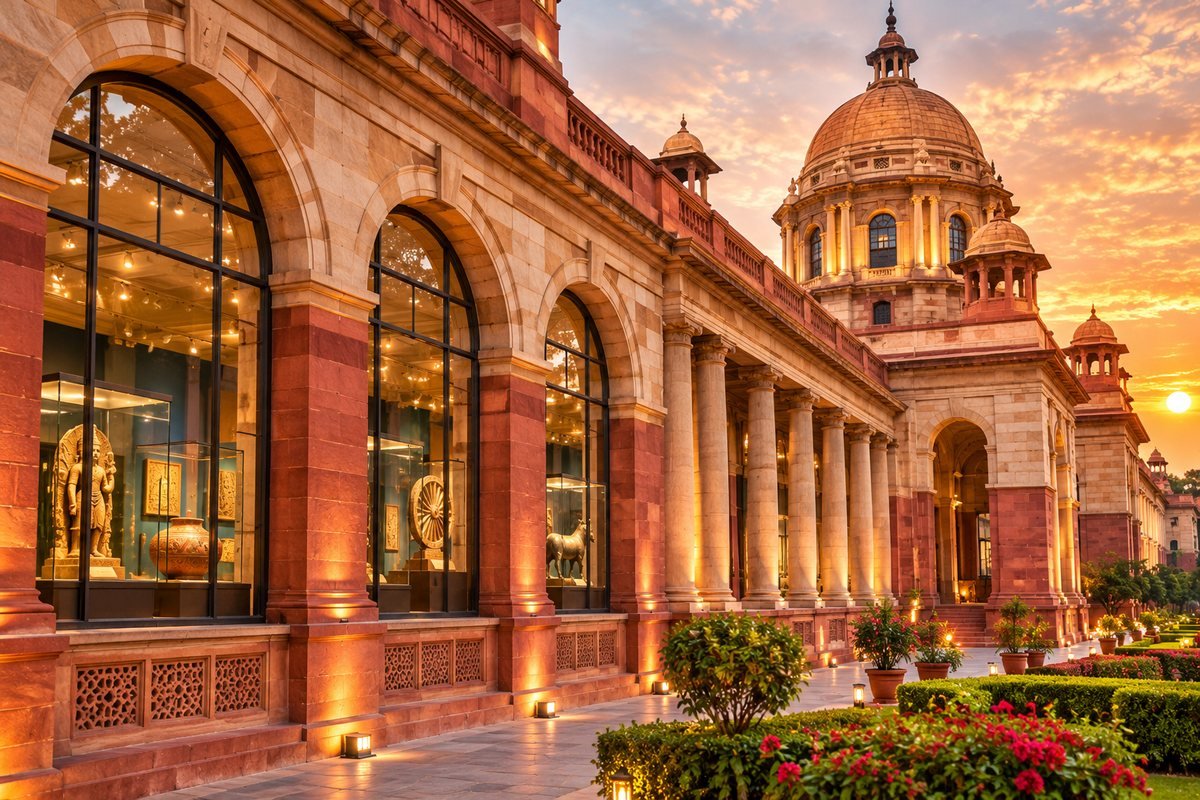
On 11 November 2026, the Cabinet Committee on Economic Affairs approved the Yuge Yugeen Bharat Museum at an estimated cost of Rs 3,230 crore. It will occupy approximately 1,78,509 square metres in the North and South Block complex of New Delhi’s Central Vista. The project will be implemented in phases from FY 2026-27 to FY 2030-31. Its first gallery, on the theme of Adornment, is expected to open in late 2027. Around 1.8 million museum objects have been identified for consideration in the project.
Concept: Adaptive Reuse and Heritage Conservation
Adaptive reuse means giving an existing building a new function while preserving important architectural and historical features. It offers an alternative to demolition or extensive reconstruction. In heritage conservation, the approach can protect historic spaces, reduce construction waste and make previously restricted buildings accessible to the public. Museums complement conservation by preserving, researching and interpreting tangible heritage, such as objects and monuments, alongside intangible heritage, such as traditions and knowledge systems. The proposed museum combines these objectives with digital interpretation, storage facilities, visitor services and thematic exhibitions.
Key facts for Prelims
- Location: North Block and South Block, Central Vista, New Delhi.
- Approved project cost: Rs 3,230 crore.
- Implementing ministry: Ministry of Culture; Cabinet approval through the Cabinet Committee on Economic Affairs.
- Proposed galleries include Adornment, Architecture and Cityscapes, Mathematics and Astronomy, Languages and Scripts, and Faith and Spirituality.
Mains analysis and way forward
Mains analysis
- Cultural preservation: The project could bring collections from multiple institutions into an integrated presentation of India’s civilisational history.
- Public access: Reusing former administrative buildings can transform spaces associated with government into public cultural institutions.
- Conservation challenge: Heritage buildings require sensitive modifications for accessibility, fire safety, climate control and visitor movement.
- Institutional capacity: The project’s success depends on skilled curators, conservation professionals, collection records and sustained operational funding.
Way forward
- Follow internationally recognised conservation practices while protecting the architectural integrity of the buildings.
- Ensure inclusive interpretation of India’s regional, linguistic, religious and artistic diversity.
- Provide accessible exhibitions, multilingual interpretation and digital access to museum collections.
Connect the dots: GS I culture connects with sustainable urban development, heritage tourism, public institutions and technology-enabled conservation.
Sources: The Indian Express, “Cabinet clears Rs 3,230-crore museum with world’s largest display area”, 12 November 2026. Ministry of Culture, PIB, 11 November 2026.
Environment
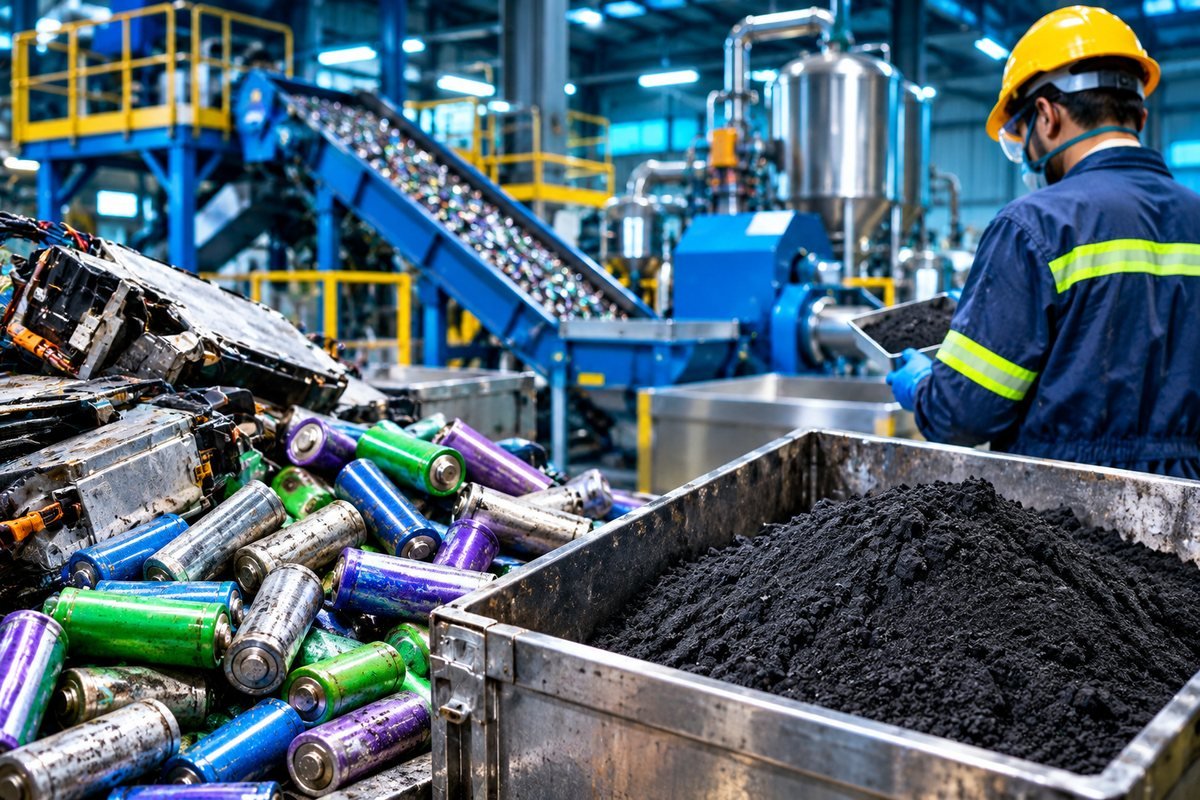
India bans export of lithium-ion battery black mass to build domestic recycling of critical minerals
In short: The government has prohibited exports of specified lithium-ion battery black mass to retain valuable minerals for domestic recovery and reuse.
Why in news
Through Notification No. 49/2026-27 dated 10 November 2026, the Directorate General of Foreign Trade specifically prohibited exports of lithium-ion battery black mass under ITC(HS) Code 85491400. The measure took immediate effect and will continue until further orders, subject to applicable transitional provisions. The government says it will improve domestic access to lithium, cobalt and nickel. The restriction complements the National Critical Mineral Mission and the Rs 1,500 crore critical mineral recycling incentive scheme approved in September 2025.
Concept: Battery Waste Management and Extended Producer Responsibility
Black mass is a powder-like material obtained during the processing of spent lithium-ion batteries. It contains valuable substances that can be recovered through specialised recycling and refining. India’s Battery Waste Management Rules, 2022, apply to electric vehicle, portable, automotive and industrial batteries. They follow Extended Producer Responsibility (EPR), under which producers, including importers, must fulfil prescribed collection, recycling or refurbishment obligations. Registered recyclers generate certificates that help producers meet these obligations. This supports urban mining, which recovers useful materials from discarded products instead of relying entirely on newly mined resources.
Key facts for Prelims
- DGFT is attached to the Ministry of Commerce and Industry.
- The export ban targets lithium-ion battery black mass classified under ITC(HS) Code 85491400. It does not cover every category of battery waste.
- Battery Waste Management Rules, 2022, were notified under the Environment (Protection) Act, 1986.
- The National Critical Mineral Mission supports exploration, processing, recycling and secure supply chains for critical minerals.
Mains analysis and way forward
Mains analysis
- Strategic autonomy: Recovering minerals domestically can reduce dependence on concentrated international supply chains.
- Industrial value addition: Refining black mass in India can support battery manufacturing, electric mobility and energy storage.
- Environmental safeguards: Battery processing involves hazardous substances and requires safe handling, pollution controls and worker protection.
- Implementation challenge: Retaining waste within India will create value only if adequate domestic recycling and refining capacity develops.
Way forward
- Expand technologically capable, environmentally compliant recycling and refining facilities.
- Strengthen traceability through the EPR system and enforce safe collection and disposal practices.
- Support research, skill development and investment in high-purity critical mineral recovery.
Connect the dots: GS III critical minerals connects with energy security, electric vehicles, circular economy, industrial policy and pollution control.
Sources: The Hindu, “Govt. prohibits export of unsorted lithium-ion battery waste, scrap”, 11 November 2026. The Hindu, “Turning battery waste into strategic mineral wealth”, 12 November 2026. Ministry of Commerce and Industry, PIB, 11 November 2026.
Swachh Survekshan 2025-26: Navi Mumbai leads the Super Swachh League
In short: Navi Mumbai led the Super Swachh League, while Visakhapatnam topped the million-plus population category in India’s latest urban cleanliness survey.
Why in news
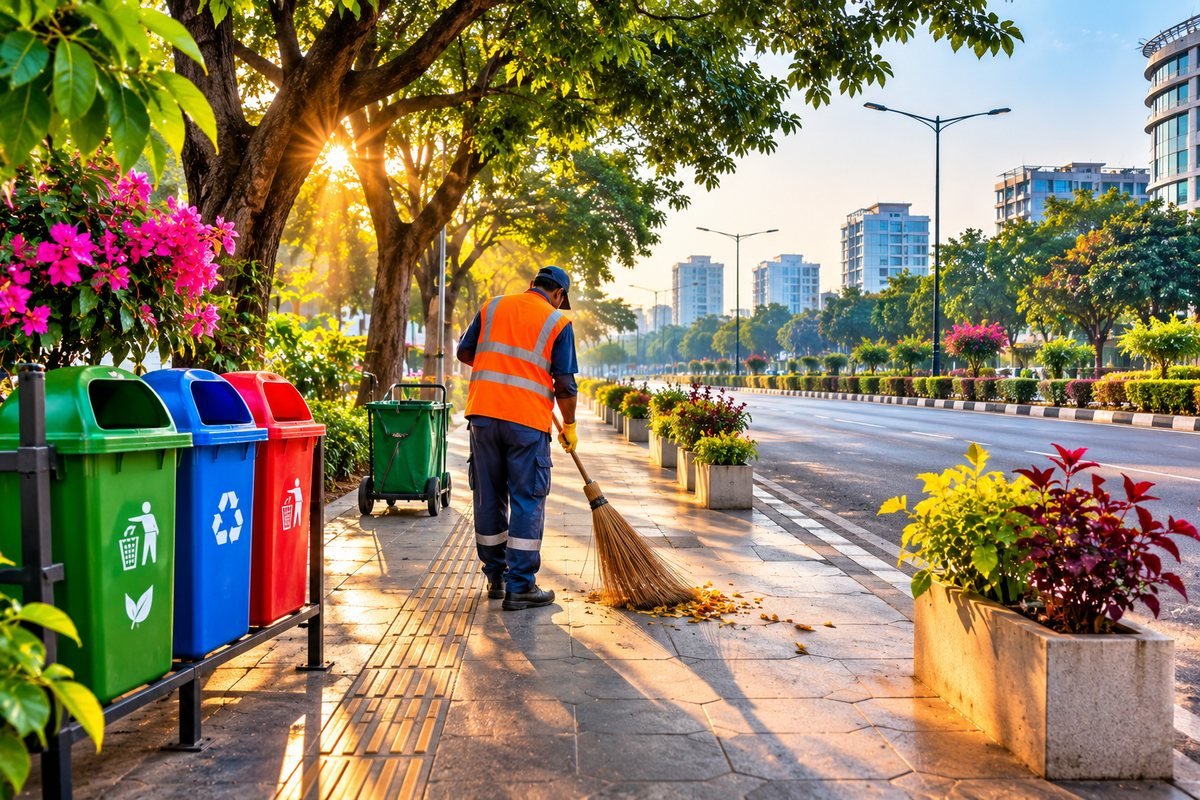
On 11 November 2026, President Droupadi Murmu presented the Swachh Survekshan 2025-26 awards in New Delhi. Navi Mumbai, Surat and Vijayawada occupied the top three positions in the Super Swachh League, a category for established high-performing cities. Visakhapatnam, Jabalpur and Lucknow led the separate million-plus population category. Ujjain topped the category for cities with populations between three and ten lakh. The tenth edition covered 4,751 cities and received feedback from approximately 2.70 crore citizens.
Concept: Swachh Survekshan, Garbage-Free Ratings and ODF++
Swachh Survekshan is the Union government’s annual assessment of urban cleanliness and sanitation performance under Swachh Bharat Mission-Urban. SBM-Urban 2.0, launched in October 2021, emphasises sustainable sanitation, scientific waste processing and garbage-free cities. The Garbage-Free City Star Rating framework evaluates municipal waste management, including collection, segregation, processing and visible cleanliness. ODF++ is a distinct sanitation certification. It requires sustained open-defecation-free conditions, functional public sanitation facilities and safe management of sewage and faecal sludge. City rankings and sanitation certifications measure related but different aspects of urban performance.
Key facts for Prelims
- Super Swachh League top three: Navi Mumbai, Surat and Vijayawada.
- Million-plus cities top three: Visakhapatnam, Jabalpur and Lucknow.
- Special category winners: Rewa, cleanest riverfront town; Puri, cleanest coastal town; Rudrapur, cleanest Himalayan city.
- SBM-Urban 2.0 is administered by the Ministry of Housing and Urban Affairs.
Mains analysis and way forward
Mains analysis
- Competitive federalism: Rankings encourage urban local bodies to improve service delivery and learn from better-performing cities.
- Outcome measurement: Cleanliness must reflect waste processing, safe sanitation and environmental conditions, not only appearance.
- Citizen participation: Household segregation, community monitoring and behavioural change are necessary for lasting improvements.
- Equity: Municipal systems must protect sanitation workers and provide adequate services in informal settlements and underserved neighbourhoods.
Way forward
- Combine cleanliness rankings with independently verified indicators of waste processing, worker safety and environmental quality.
- Strengthen the technical and financial capacity of urban local bodies.
- Institutionalise public participation and sustained monitoring rather than relying on short-term cleanliness campaigns.
Connect the dots: GS II municipal governance connects with GS III waste management, public health, sustainable cities and SDG 11.
Sources: The Hindu, “Navi Mumbai emerges as cleanest city; Surat, Vijayawada runners-up in cleanliness survey”, 11 November 2026. The Indian Express, “Vizag is cleanest city, Puri bags crown among coastal towns in Swachh Survekshan Awards 2025-26”, 12 November 2026. Ministry of Housing and Urban Affairs, PIB, 11 November 2026.
Deadline to clear India’s legacy landfills pushed to December 2027
In short: India has extended its target for remediating legacy urban dumpsites to December 2027, with substantial waste still awaiting treatment.
Why in news
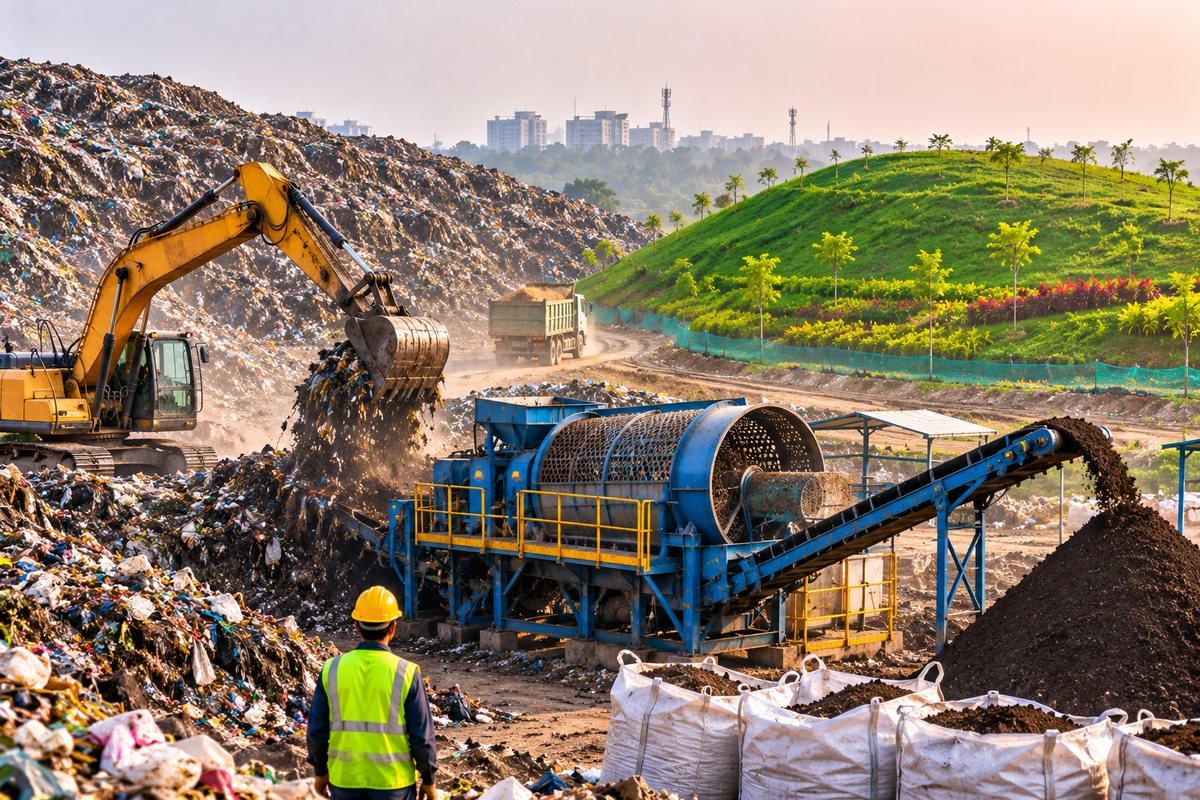
According to an Indian Express report published on 12 November 2026, the Centre’s deadline for remediating all legacy urban landfills has shifted to December 2027. The Swachh Bharat Mission dashboard showed 2,607 dumpsites on 11 November, of which 1,402 were completely remediated, 1,057 were undergoing treatment and 148 showed no progress. Approximately 1,139 lakh tonnes of legacy waste remained across 4,632 acres. Around 64% of the original waste quantity had been remediated, and approximately 70% of the affected land reclaimed.
Concept: Legacy Waste, Biomining and the Solid Waste Management Rules
Legacy waste is accumulated municipal waste deposited at dumpsites over many years, often without adequate segregation or scientific treatment. Biomining uses excavation, screening and mechanical separation to recover recyclable materials, soil-like fractions and combustible material from old waste. Unmanaged dumpsites generate methane through anaerobic decomposition of organic matter, while contaminated liquid runoff, called leachate, can pollute groundwater. India’s Solid Waste Management Rules, 2026, replaced the 2016 rules and took effect on 1 April 2026. They mandate four-stream segregation into wet, dry, sanitary and special-care waste, with defined responsibilities for waste generators and authorities.
Key facts for Prelims
- Revised legacy landfill remediation target: December 2027, as reported by The Indian Express.
- The Dumpsite Remediation Accelerator Programme, launched in 2025, targeted 214 major dumpsites containing about 80% of the legacy waste then awaiting remediation.
- Dumpsites completely remediated as of 11 November: 1,402 out of 2,607.
- Remaining legacy waste: approximately 1,139 lakh tonnes, covering 4,632 acres.
- Solid Waste Management Rules, 2026, were notified under the Environment (Protection) Act, 1986.
Mains analysis and way forward
Mains analysis
- Environmental damage: Dumpsites produce methane, release leachate and create risks of fires and toxic exposure.
- Urban land scarcity: Successful remediation can reclaim valuable land for public infrastructure and green spaces.
- Implementation bottlenecks: Large waste volumes, limited processing capacity, financial constraints and weak contractor performance delay remediation.
- Incomplete solutions: Removing old waste without processing newly generated waste creates the risk of fresh dumpsites.
Way forward
- Accelerate biomining through monitored contracts, dedicated funding and scientific assessment of waste fractions.
- Ensure treatment or environmentally safe disposal of recovered materials and contaminated residues.
- Build adequate capacity for daily municipal waste processing so remediated sites do not become dumps again.
Connect the dots: GS III waste management connects with urban governance, methane reduction, groundwater protection and climate commitments.
Sources: The Indian Express, “Deadline to remediate country’s all legacy landfills pushed to December 2027”, 12 November 2026. MoEFCC, “New Solid Waste Management Rules Notified”, PIB, 28 January 2026.
COP31 leaders urge climate action as the Himalayan agenda faces a setback
In short: COP31 leaders called for sustained climate action. Separate mountain agenda proposals were not adopted, although the COP31 presidency agreed to further consultations on mountain-related issues.

Why in news
COP31 is taking place in Antalya, Türkiye, from 9 to 20 November 2026. During the leaders’ segment on 11 November, Brazil and Türkiye urged countries not to allow wars and trade disputes to weaken climate action. Nepal’s Foreign Minister Shisir Khanal said a proposed Himalayan and mountain agenda lacked sufficient support for formal inclusion. Meanwhile, the Global Carbon Budget 2026 projected total global carbon dioxide emissions rising from 42.8 billion tonnes in 2025 to 43.3 billion tonnes in 2026, despite a projected decline in fossil-fuel emissions.
Concept: COP, Carbon Budgets and the Global Climate Framework
The Conference of the Parties, or COP, is the decision-making forum of countries participating in the United Nations Framework Convention on Climate Change (UNFCCC). The Paris Agreement seeks to hold warming well below 2°C while pursuing efforts to limit it to 1.5°C above pre-industrial levels. A carbon budget estimates the amount of carbon dioxide that can still be emitted while retaining a specified probability of limiting warming. Annual emissions from fossil fuels and land-use change must be distinguished from accumulated atmospheric carbon dioxide. Mountain regions face additional risks from glacier retreat, changing snowfall and glacial lake outburst floods.
Key facts for Prelims
- COP31 venue: Antalya, Türkiye; dates: 9 to 20 November 2026.
- Nepal and Bhutan jointly proposed a mountain agenda item, while Kyrgyzstan submitted a separate proposal. Neither was retained as a separate COP31 agenda item.
- Global Carbon Budget 2026 projects fossil-fuel CO2 emissions of 38.2 billion tonnes, a decline of 0.4% from 2025.
- Total CO2 emissions, including land-use change, are projected to reach 43.3 billion tonnes in 2026.
- The Global Carbon Budget 2026 estimates the remaining carbon budget for limiting warming to 1.5°C at about 150 billion tonnes of CO2, less than four years of emissions at the current rate.
Mains analysis and way forward
Mains analysis
- Climate diplomacy: Geopolitical conflicts can weaken political attention, financial commitments and cooperation on emissions reduction.
- Himalayan vulnerability: Melting glaciers and changing precipitation threaten water supplies, mountain communities and downstream populations.
- Emissions interpretation: A single-year decline in fossil-fuel emissions does not establish a sustained global transition when land-use emissions continue rising.
- India’s challenge: A 12 November Indian Express editorial highlights projected growth of more than 4% in India’s fossil-fuel emissions and argues that inadequate grid infrastructure and energy storage constrain renewable-energy use. This is an editorial assessment, not a government policy statement.
Way forward
- Strengthen formal representation of mountain-specific risks in climate adaptation and financing discussions.
- Accelerate renewable integration through grid modernisation, storage and electricity distribution reforms.
- Pursue sustained emissions reductions alongside stronger protection of forests and other carbon sinks.
Connect the dots: GS III climate change connects with international negotiations, Himalayan geography, energy transition and disaster resilience.
Sources: The Hindu, “War, conflict must not distract from climate action, leaders warn COP31”, 12 November 2026. The Hindu, “Himalayas agenda left off COP31 formal list as major blocs withhold support: Nepal Foreign Minister”, 11 November 2026. The Indian Express, “Sustained decline, not just drop in fossil-fuel emissions is needed”, editorial, 12 November 2026. Global Carbon Project, “Fossil CO2 emissions decrease in 2026”, 10 November 2026.
Economy
Credit Guarantee Fund for Micro Units extended for five years
In short: The Union Cabinet has extended credit guarantee support for micro-enterprise lending through March 2031, with a Rs 5,000 crore corpus.
Why in news
On 11 November 2026, the Union Cabinet approved the continuation of the Credit Guarantee Fund for Micro Units (CGFMU) for five years, until 31 March 2031. The approved corpus is Rs 5,000 crore, intended to facilitate approximately Rs 12.6 lakh crore in MUDRA lending over the period. The scheme provides guarantees to lending institutions through the National Credit Guarantee Trustee Company Limited. The annual guarantee fee for the general eligible portfolio has been reduced from 1% to 0.75%, lowering a cost associated with credit risk coverage.
Concept: Credit Guarantees, MUDRA and Micro-Enterprise Finance
A credit guarantee protects a lender against a specified portion of losses when an eligible borrower defaults. It reduces lending risk and can encourage banks and other institutions to lend to borrowers lacking conventional collateral. Pradhan Mantri MUDRA Yojana (PMMY), launched in 2015, facilitates credit for eligible micro-enterprise activities through lending institutions. CGFMU was launched in January 2016 and provides portfolio-based guarantees administered through NCGTC. It is distinct from the Credit Guarantee Fund Trust for Micro and Small Enterprises (CGTMSE), which was established jointly by the Government of India and SIDBI.
Key facts for Prelims
- CGFMU continuation: FY 2026-27 to FY 2030-31.
- Approved corpus: Rs 5,000 crore; projected facilitated lending: Rs 12.6 lakh crore.
- Coverage includes PMMY loans up to Rs 20 lakh, PMJDY overdrafts up to Rs 10,000 and qualifying SHG loan portfolios of Rs 10 lakh to Rs 20 lakh. The general guarantee fee is 0.75% a year; SHG portfolios pay 0.25% in the first year and 0.50% after that.
- CGFMU is administered through NCGTC, a government-owned credit guarantee institution.
Mains analysis and way forward
Mains analysis
- Financial inclusion: Guarantees can improve formal credit availability for small entrepreneurs who lack assets to pledge.
- Risk sharing: Partial protection against default can encourage lending, particularly to underserved borrowers and enterprises.
- Fiscal responsibility: Guarantees create contingent liabilities, making careful pricing, monitoring and loss management essential.
- Credit quality: The number of loans sanctioned is less meaningful without assessing business survival, repayment and employment generation.
Way forward
- Improve credit appraisal using verified cash flows and appropriate digital transaction records.
- Monitor guarantee claims, default trends and the economic performance of assisted enterprises.
- Combine finance with market access, skill development, mentoring and business support.
Connect the dots: GS III financial inclusion connects with MSME development, employment generation, banking risk and inclusive growth.
Sources: The Hindu, “Government extends micro credit guarantee scheme for five years”, 12 November 2026. Ministry of Finance, “Cabinet approves continuation of Credit Guarantee Fund for Micro Units”, PIB, 11 November 2026.
Moody’s raises India’s FY27 growth forecast to 7%
In short: Moody’s has raised its projection for India’s economic growth in FY 2026-27 from 6.5% to 7%, citing resilient domestic demand.
Why in news
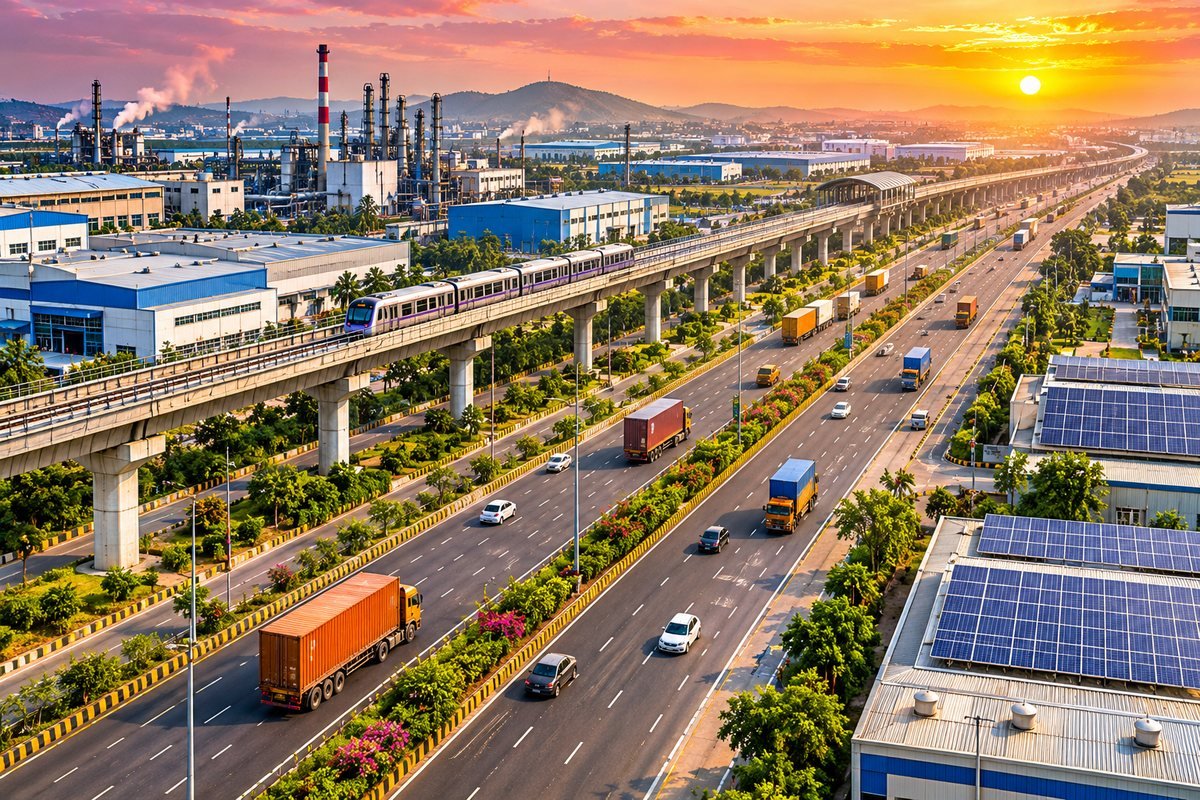
On 11 November 2026, Moody’s Ratings raised India’s real GDP growth forecast for FY 2026-27 to 7%, from its earlier estimate of 6.5%. In its Global Macro Outlook 2027-28, the agency cited strong consumption, improving investment and India’s resilience to higher energy prices. It highlighted capital-goods production, industrial credit growth and capacity utilisation as signs of possible private investment recovery. However, it warned that inflation, a deficient monsoon, El Niño conditions and tighter monetary policy could weaken growth. This is a forecast, not an actual growth figure.
Concept: GDP Forecasts and Sovereign Credit Ratings
Real GDP measures the value of goods and services produced in an economy after adjusting for inflation. A GDP growth forecast estimates future economic expansion using information about consumption, investment, government expenditure, trade and other indicators. Credit rating agencies such as Moody’s, S&P Global Ratings and Fitch Ratings also assess the creditworthiness of governments and companies. A sovereign credit rating evaluates the government’s ability and willingness to repay debt. It considers fiscal strength, institutions, external finances and economic performance. A higher GDP growth forecast does not automatically mean that the country’s sovereign credit rating has improved.
Key facts for Prelims
- Moody’s revised India’s FY27 growth forecast from 6.5% to 7%.
- FY 2026-27 runs from 1 April 2026 to 31 March 2027.
- Moody’s published the projection in its Global Macro Outlook 2027-28.
- India’s official GDP estimates are compiled by the National Statistics Office under the Ministry of Statistics and Programme Implementation.
Mains analysis and way forward
Mains analysis
- Domestic demand: Household consumption and investment are major drivers of economic growth.
- Energy resilience: Diversification of energy supplies and measures cushioning price increases can reduce the immediate impact of external shocks.
- Private investment: Higher capacity utilisation and stronger credit demand may indicate improving business confidence, although investment recovery is not guaranteed.
- Forecast limitations: Assumptions about inflation, weather, interest rates and global conditions can change, making projections inherently uncertain.
Way forward
- Support sustainable private investment through regulatory certainty, infrastructure improvements and efficient credit allocation.
- Strengthen agricultural resilience and inflation management to protect household purchasing power.
- Assess economic performance using actual GDP releases, employment indicators and investment data alongside agency forecasts.
Connect the dots: GS III economic growth connects with monetary policy, inflation, private capital formation, energy security and fiscal sustainability.
Sources: The Hindu, “Moody’s ups India’s FY27 growth estimate to 7% on broad-based momentum”, 11 November 2026. Reuters, “Moody’s lifts India growth forecast, sees economy well positioned to sustain near 7% growth”, 11 November 2026.
International relations, security and health
Saudi-flagged tanker reported hit in the Strait of Hormuz; three Indian seafarers aboard are safe
In short: Three Indian seafarers were reported safe after a Saudi-flagged tanker faced a possible attack while crossing the Strait of Hormuz.

Why in news
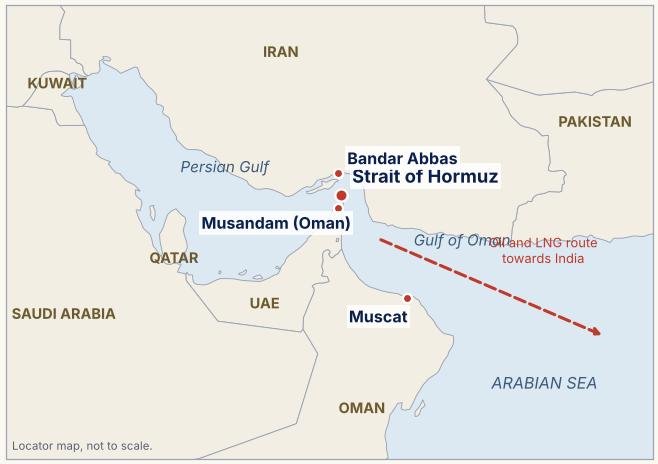
On 11 November 2026, Union Shipping Minister Sarbananda Sonowal reported that the Saudi Arabia-flagged tanker NCC FAJR had been involved in a possible attack while transiting the Strait of Hormuz. Three Indian seafarers were aboard, and the Minister confirmed that they and the remaining crew were safe. The government said it was monitoring the situation and communicating with the vessel’s management company. The incident followed a reported projectile strike on another tanker in the Persian Gulf on 10 November, highlighting risks to commercial shipping.
Concept: Strait of Hormuz and Maritime Energy Security
The Strait of Hormuz is a narrow maritime passage connecting the Persian Gulf with the Gulf of Oman and, through it, the Arabian Sea. At its narrowest point, Iran lies to the north and Oman’s Musandam Peninsula to the south. The United Arab Emirates lies nearby. It is one of the world’s most important oil and gas shipping chokepoints. India’s dependence on imported crude oil makes safe commercial navigation through the region strategically significant. Maritime security involves protecting ships, crews, cargo and sea lanes against threats including armed attacks, mines, piracy and conflict-related disruptions.
Key facts for Prelims
- Strait of Hormuz connects the Persian Gulf and Gulf of Oman.
- Vessel involved on 11 November: NCC FAJR, flying the Saudi Arabian flag.
- Three Indian seafarers were aboard and were reported safe.
- India’s maritime security mechanisms include naval surveillance, coordinated reporting and advisories from the Directorate General of Shipping.
Mains analysis and way forward
Mains analysis
- Energy vulnerability: Threats to shipping can increase freight costs, war-risk insurance premiums and energy supply uncertainty.
- Human security: Indian merchant seafarers require reliable emergency communication, evacuation support and consular assistance.
- Strategic geography: The Strait of Hormuz is vital to West Asian energy trade, making regional instability economically significant beyond the immediate conflict zone.
- Maritime coordination: The Indian Navy’s regional maritime security presence and cooperation with shipping authorities strengthen situational awareness and emergency response.
Way forward
- Maintain continuous communication with Indian seafarers, ship operators and diplomatic missions in high-risk waters.
- Strengthen maritime surveillance, incident reporting and cooperation with regional partners.
- Diversify energy sourcing and improve supply-chain resilience against shipping disruptions.
Connect the dots: GS II West Asia relations connects with GS III maritime security, crude oil dependence, strategic chokepoints and the blue economy.
Sources: The Hindu, “Saudi Arabia-flagged tanker hit in Strait of Hormuz, 3 Indian seafarers aboard: Sonowal”, 11 November 2026. PTI, “Saudi Arabia-flagged tanker hit in Strait of Hormuz, 3 Indian seafarers aboard: Sonowal”, 11 November 2026.
India and France hold dialogues on economic security, technology and space
In short: India and France have expanded their strategic discussions to cover economic security and critical technologies alongside established space cooperation.
Why in news
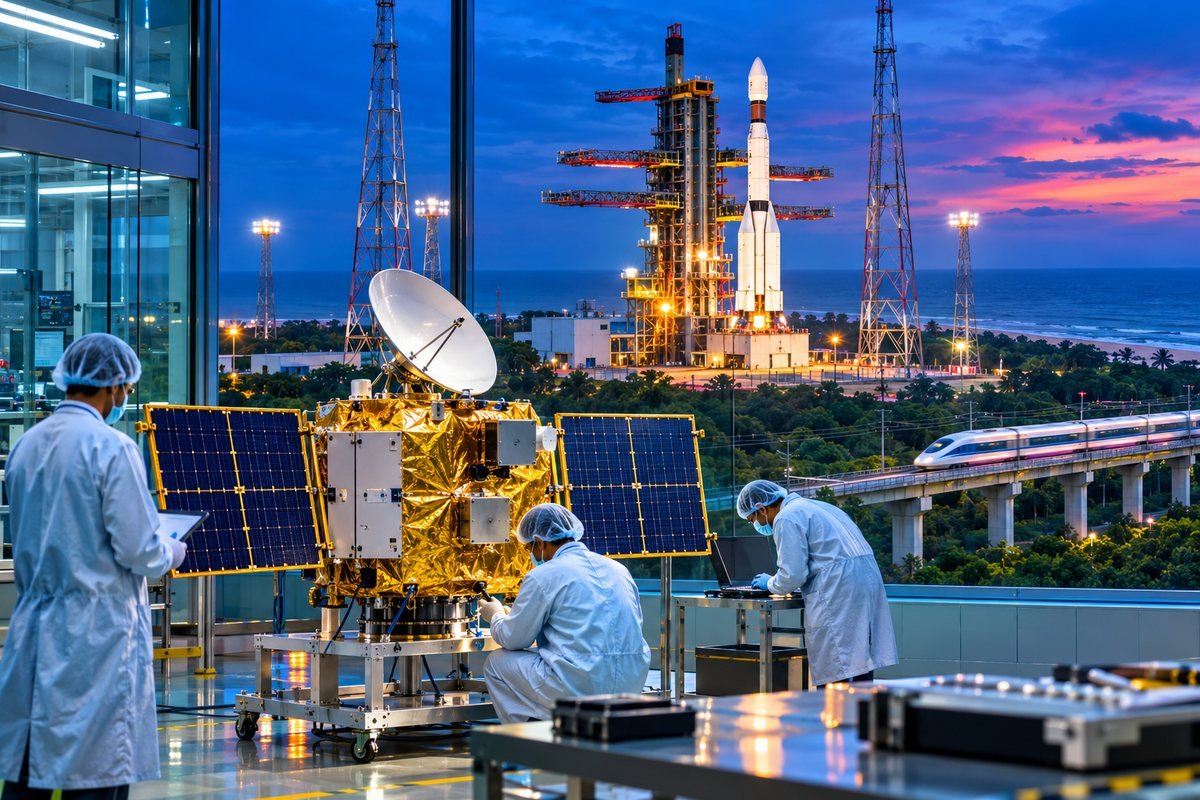
During his visit to Paris on 9 and 10 November 2026, Foreign Secretary Vikram Misri held talks with Martin Briens, Secretary-General of France’s Ministry for Europe and Foreign Affairs. They co-chaired the third India-France Strategic Space Dialogue and the inaugural Economic Security and Critical Technologies Dialogue. Discussions covered cooperation between ISRO and France’s CNES, commercial space partnerships, cybersecurity, supply-chain resilience and industrial cooperation. Both sides also reviewed the implementation of their Horizon 2047 Roadmap and exchanged views on regional and global developments.
Concept: India-France Strategic Partnership and Horizon 2047
India and France established a strategic partnership in 1998, expanding bilateral cooperation in defence, space, civil nuclear energy and international affairs. The Horizon 2047 Roadmap, adopted in July 2023, sets long-term priorities for cooperation up to the centenary of India’s independence. Space cooperation has been an important component of the relationship. The Indian Space Research Organisation (ISRO) works with the French space agency, Centre National d’Études Spatiales (CNES), on scientific research, satellite missions and related technologies. Economic security concerns the resilience of essential supply chains, technologies and industrial capabilities against external disruptions.
Key facts for Prelims
- India-France Strategic Partnership was established in 1998.
- Horizon 2047 was adopted in July 2023.
- The third Strategic Space Dialogue and first Economic Security and Critical Technologies Dialogue were held in Paris on 10 November 2026.
- Megha-Tropiques and SARAL are examples of India-France satellite cooperation.
Mains analysis and way forward
Mains analysis
- Strategic autonomy: Cooperation with France can diversify India’s defence and technology partnerships.
- Supply-chain security: Joint efforts in critical technologies and industrial resilience can reduce exposure to concentrated global supply chains.
- Space diplomacy: Scientific missions, commercial collaboration and satellite technologies offer opportunities for innovation and mutual economic benefit.
- International cooperation: The partnership can support coordination on Indo-Pacific stability, multilateral institutions and emerging technology governance.
Way forward
- Translate dialogue commitments into identifiable projects, investment plans and research partnerships.
- Expand cooperation between Indian and French companies, universities and public research institutions.
- Strengthen technology security and resilient supply chains while preserving legitimate scientific collaboration.
Connect the dots: GS II bilateral relations connects with GS III space technology, cybersecurity, strategic autonomy and global supply-chain resilience.
Sources: The Hindu, “India, France hold dialogues on economic security, space, technology”, 12 November 2026. Press Trust of India, “Foreign Secretary Misri holds talks with his French counterpart”, 10 November 2026.
Karakoram-2026: China-Pakistan army exercise signals deeper military ties
In short: China and Pakistan conducted a joint army exercise in Xinjiang, highlighting growing operational coordination between their regular military formations.
Why in news
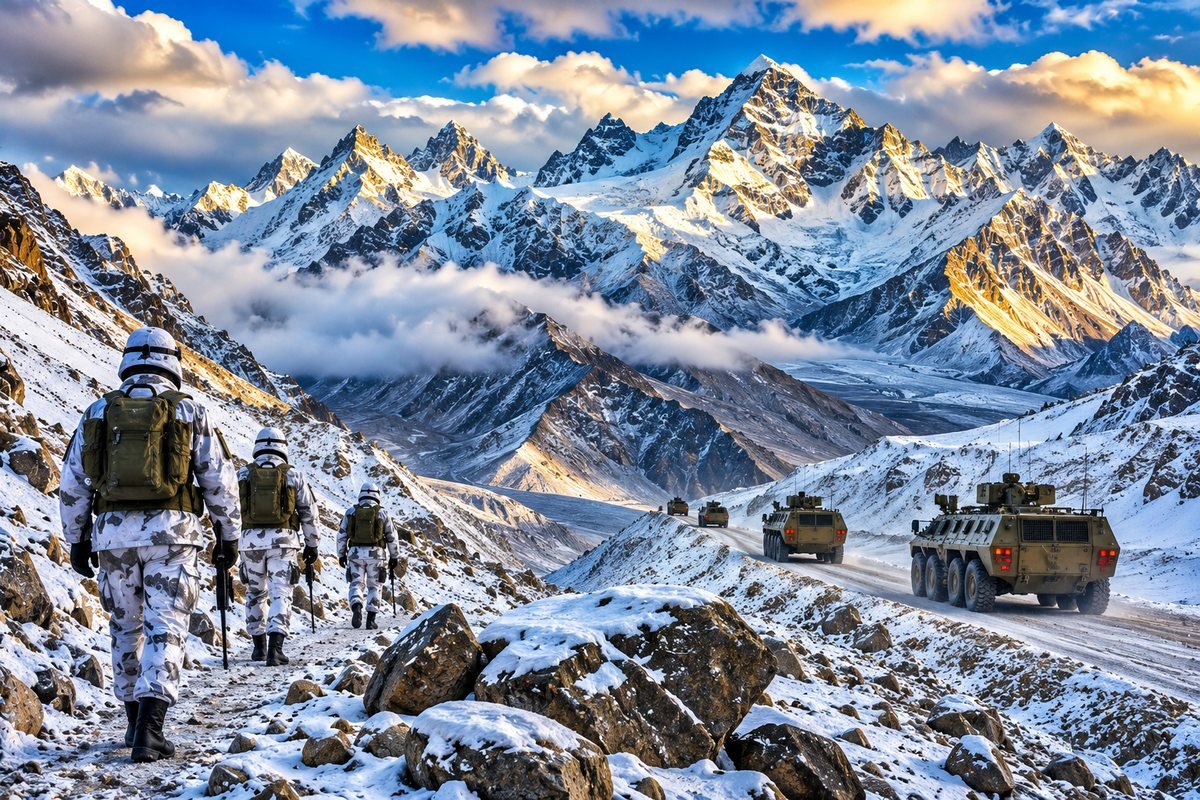
China and Pakistan conducted Karakoram-2026 from 14 to 22 October 2026 in China’s Xinjiang Uyghur Autonomous Region. An analysis published by The Indian Express on 11 November described it as the first joint army-level exercise involving regular formations from both countries. Training included close-quarter combat, drone operations, combined command structures, joint manoeuvres and coordinated firing drills. Retired Major General G.G. Dwivedi argued that the exercise reflects deeper military interoperability and raises planning challenges for India. These strategic implications are the author’s assessment, not a newly announced official Indian threat evaluation.
Concept: Military Interoperability and the Two-Front Security Challenge
Military interoperability is the ability of armed forces from different countries to operate together through compatible procedures, communications, equipment and command arrangements. Joint exercises can improve tactical familiarity, information exchange and coordinated responses. India’s two-front security challenge refers to the possibility of simultaneous or overlapping security pressures involving China and Pakistan. The India-China Line of Actual Control and the India-Pakistan Line of Control are distinct arrangements and should not be confused. Coordinated action between two countries may complicate military planning, but a joint exercise alone does not establish that a combined military operation is planned.
Key facts for Prelims
- Exercise: Karakoram-2026.
- Dates and location: 14 to 22 October 2026, Xinjiang Uyghur Autonomous Region, China.
- Participants: China’s People’s Liberation Army and the Pakistan Army.
- Training included drone operations, close-quarter combat, joint command and coordinated fire drills.
Mains analysis and way forward
Mains analysis
- Operational integration: Joint training can improve communication, tactical coordination and familiarity with each other’s military systems.
- High-altitude relevance: The terrain and operational environment make such exercises important for studying regional military preparedness.
- Two-front planning: India’s defence planning must account for potential coordination between its two neighbours without assuming a conflict is inevitable.
- Strategic assessment: Analysts must distinguish observed exercises and equipment cooperation from unverified claims about future military intentions.
Way forward
- Maintain strong surveillance, intelligence assessment and communication systems along sensitive borders.
- Improve jointness, mobility, logistics and technological readiness within India’s armed forces.
- Sustain diplomatic and military communication channels to reduce miscalculation and manage regional tensions.
Connect the dots: GS III border security connects with India-China relations, India-Pakistan relations, defence technology and military diplomacy.
DR Congo’s Ebola outbreak crosses 11,000 cases
In short: The Democratic Republic of the Congo faces a severe Bundibugyo virus outbreak, with more than 11,000 reported infections and thousands of deaths.
Why in news
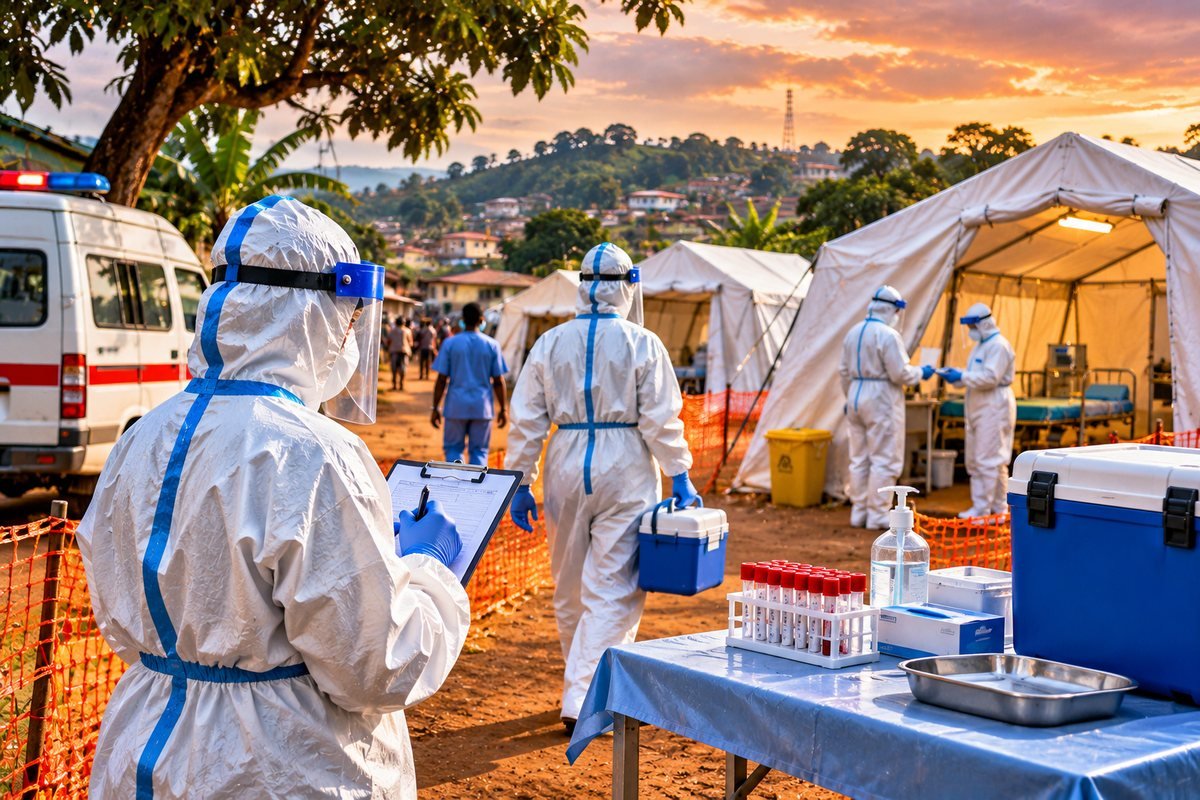
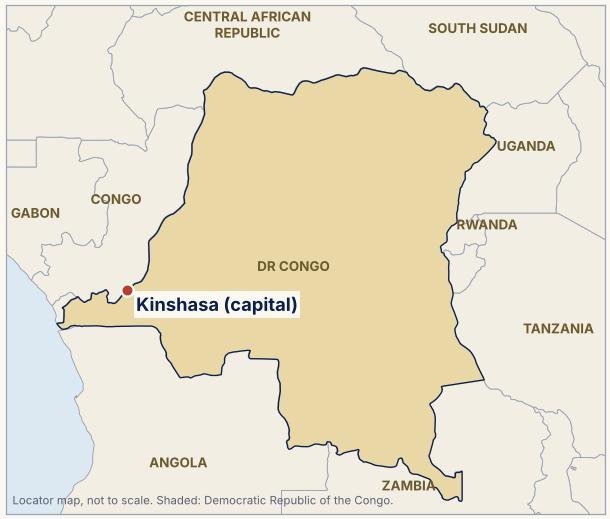
According to the Democratic Republic of the Congo’s public health situation report dated 9 November 2026, the Bundibugyo virus outbreak had reached 11,042 reported cases and 5,387 deaths. The outbreak, declared in May, has spread across eight provinces, with conflict and weak health infrastructure complicating containment. The WHO declared the event a Public Health Emergency of International Concern on 17 May 2026 but did not classify it as a pandemic emergency. WHO guidance dated 9 November confirms that no vaccine is currently licensed specifically against Bundibugyo virus disease.
Concept: Ebola Viruses and Public Health Emergencies of International Concern
Ebola-related diseases are caused by viruses belonging to the Orthoebolavirus group. Different species, including Ebola virus and Bundibugyo virus, can cause severe illness but are not identical. Infection spreads through direct contact with infected bodily fluids or contaminated materials, particularly during symptomatic illness. The incubation period is generally two to 21 days. A Public Health Emergency of International Concern, or PHEIC, is a WHO declaration under the International Health Regulations when an extraordinary event poses international public health risks and may require coordinated action. A PHEIC is not automatically a pandemic declaration.
Key facts for Prelims
- Reported cases: 11,042; reported deaths: 5,387, as of 9 November 2026.
- Outbreak virus: Bundibugyo virus, distinct from the Ebola virus species formerly called Zaire ebolavirus.
- WHO declared a PHEIC on 17 May 2026 but explicitly stated that pandemic-emergency criteria were not met.
- Ervebo is licensed against Ebola virus disease caused by Ebola virus, not specifically against Bundibugyo virus disease.
- The Tumaini Phase 2/3 clinical trial began in the DRC in October 2026 to assess vaccine candidates against Bundibugyo virus disease, including whether Ervebo offers protection.
Mains analysis and way forward
Mains analysis
- Health-system capacity: Weak clinical infrastructure, limited laboratory access and disrupted transport can increase mortality and delay treatment.
- Conflict and outbreaks: Insecurity restricts access for health workers and complicates surveillance, contact tracing and safe burials.
- Vaccine challenges: Protection against one Ebola-related virus cannot automatically be assumed to work against another.
- International preparedness: Rapid reporting, laboratory coordination and cooperation under the International Health Regulations reduce the risk of cross-border spread.
Way forward
- Strengthen early diagnosis, isolation, infection prevention, supportive treatment and safe burial procedures.
- Protect healthcare workers and enable humanitarian access in conflict-affected communities.
- Maintain India’s preparedness through surveillance, laboratory readiness, trained health personnel and risk-based public health communication.
Connect the dots: GS II public health connects with international health governance, disaster preparedness, biotechnology and the security-health nexus.
Sources: The Hindu, “DR Congo Ebola outbreak exceeds 11,000 cases, causes 5,387 deaths”, 12 November 2026. DR Congo National Institute of Public Health, Situation Report No. 179, 9 November 2026. World Health Organization, “Ebola vaccines”, updated 9 November 2026. World Health Organization, IHR Emergency Committee concerning Bundibugyo virus disease.
In brief
- EVs as default for government staff cars: The Finance Ministry’s 10 November 2026 memorandum makes EVs the default for Union government staff-car purchases and maintains EV hiring instructions. The purchase ceiling is Rs 20 lakh for EVs and Rs 10 lakh for petrol, diesel or hybrid cars; exceptions require approval. Source
- UPI merchant discount rate still awaited: NPCI had not announced the revised implementation date for the proposed merchant discount rate on selected UPI merchant transactions as of 11 November. MDR is the fee a merchant pays for processing a digital payment; the proposal should not be confused with a charge on every UPI transaction. Source
- Pravasi Bharatiya Divas 2027 in Kolkata: The biennial 19th Pravasi Bharatiya Divas Convention will take place in Kolkata from 7 to 9 January 2027. Its theme is ‘Return to Roots: Reigniting the Diaspora Connect with Bharat’. Prelims fact: 9 January commemorates Mahatma Gandhi’s return from South Africa in 1915. Source
- Russia-Ukraine prisoner exchange: Russia and Ukraine agreed in principle to a major prisoner-of-war exchange during US-brokered talks in Abu Dhabi on 10 and 11 November. The number of prisoners and implementation details remained to be finalised, and no wider peace agreement was reached. Source
- Relocated tigress recaptured in Buxa: A tigress relocated from Valmiki to Buxa Tiger Reserve suffered injuries during transfer, was recaptured in Assam on 3 November and subsequently miscarried three foetuses. She escaped Buxa’s holding enclosure again on 8 November, raising concerns about translocation planning and monitoring. Prelims fact: Buxa Tiger Reserve lies in Alipurduar district, West Bengal, near the Bhutan border. Source
Prelims practice: 5 questions
Choose an option to see the answer and explanation. Your score appears when all five are answered.
Mains practice
GS II | Cooperatives, regulation and autonomy “State regulation of cooperative societies is necessary for accountability, but excessive intervention can undermine their democratic autonomy.” Discuss in light of the Gokul Dairy controversy, the 97th Constitutional Amendment and the Supreme Court’s interpretation of cooperative federalism.
Show the answer outline
INTRODUCTION
Cooperative societies combine economic activity with democratic member control. Effective regulation must protect financial integrity without displacing the decision-making authority of members.
CONSTITUTIONAL FRAMEWORK
- Article 19(1)(c), following the 97th Constitutional Amendment, expressly recognises the right to form cooperative societies.
- Article 43B directs the State to promote voluntary formation, autonomous functioning, democratic control and professional management.
- Entry 32 of the State List gives States legislative authority over ordinary cooperative societies.
REGULATION VERSUS AUTONOMY
- Governments may regulate audits, financial disclosures, elections and compliance to protect members and public interests.
- However, excessive nomination powers or changes to voting rules may reduce the effectiveness of elected representatives.
- Democratic legitimacy requires transparent elections, predictable procedures and meaningful participation by cooperative members.
THE GOKUL DAIRY CONTROVERSY
- The elected board initially comprised 13 Congress-aligned and 12 Mahayuti-supported directors.
- A subsequent Maharashtra ordinance enabled four nominated directors to vote in office-bearer elections, changing the chairperson election outcome.
- Opponents challenged the measure as interference with the elected mandate; the government defended its regulatory purpose.
- The High Court refused to stay the ordinance and ordered separate voting records. Its final legality remains under judicial consideration.
FEDERALISM AND JUDICIAL SAFEGUARDS
- In Union of India v. Rajendra N. Shah (2021), the Supreme Court restricted Part IXB’s application to State cooperatives because mandatory State ratification was absent.
- The judgment reinforces constitutional federalism while preserving the operative provisions for multi-State cooperatives.
CONCLUSION
Cooperative governance requires a balance between democratic autonomy, professional accountability and proportionate State oversight. Regulation should strengthen members’ institutions rather than substitute government preferences for their choices.
TIP
Distinguish the constitutional status of cooperatives from the validity of a particular State ordinance. Do not present the pending Gokul Dairy legal challenge as already decided.
Practise from your own DAF.
Interview Edge Studio turns your DAF into the questions a Board is likely to ask, with follow-ups and feedback on your answers, in English or Hindi. Read the six free Interview Edge books, then apply for Interview Edge: a one-to-one profile session with Guranchal Ma’am and a mock interview with a panel of seasoned officers and academicians. Complimentary and application-based.
Open Interview Edge Studio Apply for Interview Edge
Six free books · Interview Edge Studio · DAF-II checklist · WhatsApp +91 81220 02172
Current Canvas is prepared by the UPSC Gurus editorial desk. Every fact is checked against official releases and reliable reporting, with sources listed under each story. Editions are compiled each month into Current Canvas Monthly, a free magazine.
About images: photographs and illustrations in Current Canvas are AI-generated for illustration only. They are not news photographs of the events described.
Your first Mentor’s Desk call is free
One free conversation per aspirant about where you are in your preparation, with an honest suggestion of the right next step.
Know more and bookHave a question? Get in touch
For questions about a programme, its fees, batch dates, payment or access. Message us on WhatsApp and our team will reply. Asking a question is not a booking, and you can ask as often as you need.
Get in touch on WhatsApp