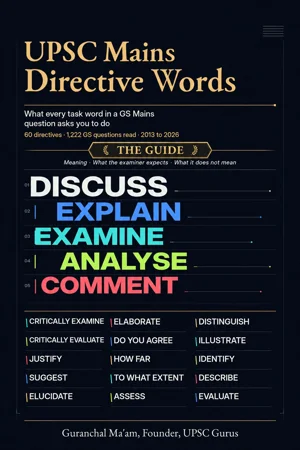
 New this week · Free UG Handout 02UPSC Mains Directive Words: 60 Meanings, Trends and PYQsTwo free PDFs: The Guide and the With PYQs edition.Read and download
Today’s Canvas
- Centre may call a special sitting of Parliament for the delimitation BillGS II
- Draft voter rolls grow by up to 3% across nine States and UTs in the Special Summary RevisionGS II
- Karnataka seeks Ninth Schedule cover for its enhanced SC and ST quota lawGS II
- Supreme Court: no automatic share for a grandson in property his living father inherited individuallyGS II
- Retail inflation crosses the RBI’s 6% upper limit at 6.09% in OctoberGS III
- RBI reportedly weighs a Rs 50 lakh sub-limit on select overseas remittancesGS III
- NITI Aayog: PLI disbursals at 18.51% of outlay six years onGS III
- CAG begins a nationwide audit of 39 power distribution companiesGS II
- WHO TB report: India’s TB mortality rate down 38% since 2015, incidence estimate under reviewGS II
- Central Empowered Committee proposes a three-year phase-out of sand extraction from active river channelsGS III
- PM to attend the ASEAN-India and East Asia Summits in ManilaGS II
- India-Bangladesh consular dialogue postponed amid strained tiesGS II
- Centre sanctions new roads and bridges along the China border in Arunachal PradeshGS III
- IAF officer allegedly shared war plans with a Pakistani operative, police tell courtGS III
Polity and governance
Centre may call a special sitting of Parliament for the delimitation Bill
In short: Reports indicate that the Centre is considering another legislative attempt to advance delimitation and implement women’s reservation before the 2029 elections.

Why in news
Reports published on 12 and 13 November 2026 suggest that the government may convene Parliament before the Winter Session to introduce legislation concerning delimitation and women’s reservation. The Constitution (131st Amendment) Bill, 2026, was introduced in the Lok Sabha on 16 April and defeated on 17 April after failing to secure the required special majority. The associated Delimitation Bill, 2026, and Union Territories Laws (Amendment) Bill, 2026, were consequently not pursued further. The defeated constitutional amendment proposed raising the Lok Sabha’s maximum strength to 850, comprising up to 815 members from States and 35 from Union Territories. Congress leader Jairam Ramesh criticised the government’s renewed effort, while BJP leaders expressed confidence in securing sufficient parliamentary support. No new legislation has yet been passed.
Concept: Delimitation, Articles 82 and 170, and the 106th Amendment
Delimitation means redrawing constituency boundaries to ensure broadly equal population representation. Article 82 concerns readjustment of Lok Sabha constituencies after each Census, while Article 170 contains corresponding provisions for State Legislative Assemblies. The 84th Constitutional Amendment extended the freeze on readjustment of seat allocations until publication of figures from the first Census after 2026. The 106th Constitutional Amendment, 2023, provides approximately one-third reservation for women in the Lok Sabha and relevant Legislative Assemblies. Its implementation is linked to a delimitation exercise following the first Census conducted after the amendment’s commencement, unless the constitutional framework is changed.
Key facts for Prelims
- Article 82: Readjustment of Lok Sabha constituencies; Article 170: composition and readjustment of State Assemblies.
- The 42nd Amendment, 1976, initiated the seat-allocation freeze; the 84th Amendment, 2001, extended it.
- The 106th Constitutional Amendment, 2023, provides approximately 33% reservation for women in specified legislatures.
- The Constitution (131st Amendment) Bill, 2026, was introduced on 16 April and defeated on 17 April 2026.
- Article 368: a constitutional amendment Bill needs a majority of the total membership of each House and two-thirds of members present and voting; there is no joint sitting for constitutional amendments.
Mains analysis and way forward
Mains analysis
- Population-based delimitation raises a federal concern because States that reduced fertility may fear losing relative parliamentary representation.
- Expanding legislative seats could improve representation but requires agreement on how additional seats are distributed among States.
- Linking women’s reservation to delimitation creates uncertainty over implementation despite the constitutional commitment.
- Constitutional amendments require a special majority in each House. Relevant changes affecting federal representation may also require ratification by at least half of State Legislatures.
Way forward
- Build inter-State consensus through transparent population and representation data.
- Ensure that changes to constituency allocation respect the constitutional principles of equality and federalism.
- Establish a clear, legally workable timetable for implementing women’s reservation.
Connect the dots: Delimitation links parliamentary representation, cooperative federalism, demographic transition, gender justice and constitutional amendment procedures.
Sources: The Hindu, “Government planning special session to clear delimitation Bill; Congress calls it a bluster”, 12 November 2026. The Indian Express, “Why Centre may convene special sitting of Parliament before Winter Session”, 13 November 2026. PRS Legislative Research, “The Constitution (131st Amendment) Bill, 2026”.
Draft voter rolls grow by up to 3% across nine States and UTs in the Special Summary Revision
In short: New draft electoral rolls show increased enrolment after earlier intensive revisions, while special camps will help citizens correct or update their entries.
Why in news
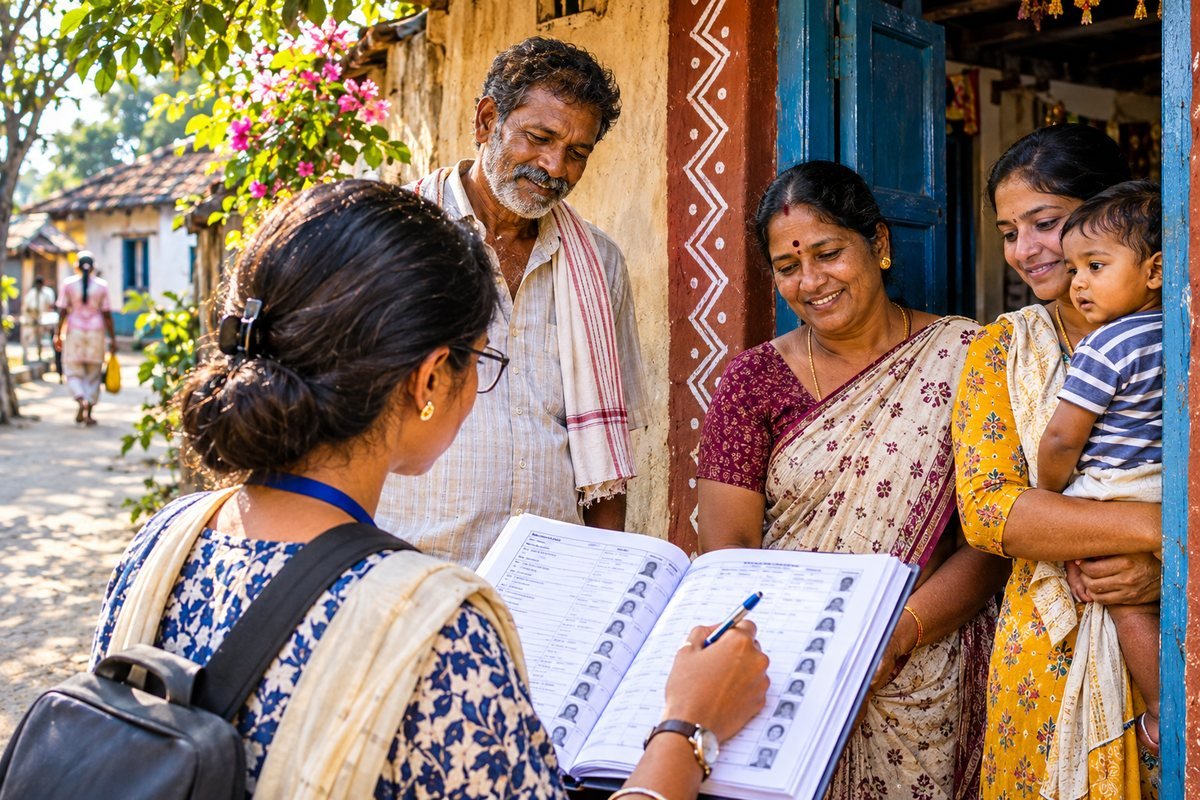
On 12 November 2026, draft electoral rolls published during the Special Summary Revision (SSR) showed increases of 0.1% to 3% across nine States and Union Territories compared with the final rolls following earlier Special Intensive Revisions (SIR). Goa recorded a 3% increase, Rajasthan 2.22%, and Tamil Nadu 1.8%. Tamil Nadu’s draft roll contains approximately 5.77 crore electors. The State’s Chief Electoral Officer announced special camps on 21, 22 and 29 November for enrolment, deletion, correction and shifting of entries. Claims and objections can be submitted from 12 November to 11 December.
Concept: Electoral Rolls and the Election Commission of India
Article 324 gives the Election Commission of India supervisory authority over electoral rolls and elections. Article 326 provides for elections to the Lok Sabha and State Assemblies on the basis of adult suffrage, subject to legal qualifications. The Representation of the People Act, 1950, governs electoral roll preparation, qualifications and revision. Section 21 deals with roll preparation and revision. Electoral Registration Officers supervise constituency rolls, supported by Booth Level Officers who conduct field verification and assist voters. A Special Summary Revision updates existing rolls through published drafts, claims and objections. It is distinct from a Special Intensive Revision.
Key facts for Prelims
- Article 324: Election Commission’s constitutional powers; Article 326: adult suffrage.
- Article 325 provides for one general electoral roll per constituency without exclusion on specified discriminatory grounds.
- Section 21 of the Representation of the People Act, 1950, concerns preparation and revision of rolls.
- Form 6 is used for new enrolment; Form 7 for objections or deletion; Form 8 for correction, shifting and specified updates.
Mains analysis and way forward
Mains analysis
- Accurate rolls support universal adult franchise, electoral integrity and public confidence.
- Increases in enrolment may reflect new eligible voters, corrections and restoration of previously omitted names. They do not independently establish whether earlier exclusions were justified.
- Incorrect deletions can deny eligible citizens effective access to voting, while duplicate or ineligible entries undermine roll accuracy.
- BLO verification, accessible enrolment facilities and transparent claims procedures are especially important for migrants, elderly citizens and vulnerable groups.
Way forward
- Ensure timely publication of draft rolls and accessible claims and objections procedures.
- Strengthen BLO training, field verification and the recording of reasons for deletions.
- Conduct inclusive awareness campaigns and provide effective remedies for eligible citizens whose names are missing.
Connect the dots: Electoral roll revision connects constitutional democracy, administrative accountability, citizen participation and technology-enabled governance.
Sources: The Indian Express, “Voter rolls expand by up to 3% across 9 states, UTs in 1st post-SIR draft”, 13 November 2026. The Hindu, “Special camps for electoral roll revision on November 21, 22 and 29”, 13 November 2026.
Karnataka seeks Ninth Schedule cover for its enhanced SC and ST quota law
In short: Karnataka plans to seek constitutional protection for its enhanced reservation law after the High Court struck down key provisions.

Why in news
Following the Karnataka High Court’s October 2026 judgment against enhanced SC and ST reservation provisions, the State government announced on 12 November that it would write to Prime Minister Narendra Modi seeking inclusion of the law in the Ninth Schedule. The Karnataka Scheduled Castes and Scheduled Tribes (Reservation of Seats in Educational Institutions and of Appointments or Posts in the Services under the State) Act, 2022, raised SC reservation from 15% to 17% and ST reservation from 3% to 7%. With the OBC quota remaining at 32%, aggregate reservation rose from 50% to 56%. On 12 October 2026, the Karnataka High Court struck down Section 3 insofar as it exceeded the 50% ceiling and struck down Section 4 as unconstitutional. The State has also challenged the High Court verdict before the Supreme Court. The Union Government had earlier deferred consideration of Ninth Schedule inclusion while litigation was pending.
Concept: Article 31B, Ninth Schedule and the Basic Structure Doctrine
The Ninth Schedule was added through the First Constitutional Amendment, 1951, alongside Article 31B. Its purpose was to protect specified laws from invalidation on grounds of inconsistency with fundamental rights. However, this protection is not absolute. In I.R. Coelho v. State of Tamil Nadu (2007), the Supreme Court held that laws inserted into the Ninth Schedule after 24 April 1973 can be examined for damage to the Constitution’s basic structure. In Indra Sawhney v. Union of India (1992), the Court articulated the general 50% ceiling for reservations, recognising limited exceptional circumstances.
Key facts for Prelims
- Article 31B and the Ninth Schedule were introduced by the First Constitutional Amendment, 1951.
- I.R. Coelho (2007) confirmed basic structure scrutiny for post-24 April 1973 Ninth Schedule insertions.
- Indra Sawhney (1992) established the general 50% reservation ceiling, subject to exceptional circumstances.
- Karnataka’s 2022 law raised SC reservation to 17% and ST reservation to 7%; total reservation became 56%.
Mains analysis and way forward
Mains analysis
- Reservation aims to secure substantive equality and representation for historically disadvantaged communities.
- The Karnataka case raises questions of constitutional procedure, the evidentiary basis for enhanced quotas and judicial review.
- Ninth Schedule inclusion cannot automatically cure every constitutional defect because basic structure review remains available.
- The dispute reflects the need to reconcile affirmative action, equality before law, institutional safeguards and constitutional limits.
Way forward
- Present a transparent, evidence-based justification for reservation levels and ensure compliance with constitutional procedures.
- Respect the judicial process while considering any proposed constitutional changes.
- Complement reservation with improvements in education, employment opportunities and targeted support for disadvantaged communities.
Connect the dots: Reservation connects Articles 14, 15 and 16 with Article 31B, judicial review, social justice and the basic structure doctrine.
Sources: The Hindu, “Karnataka to write to Prime Minister asking for inclusion of enhanced quota in Ninth Schedule”, 13 November 2026. PIB, “Government Defers Proposal to Include Karnataka Reservation Act, 2022 in Ninth Schedule Pending Court Proceedings”, 25 July 2026. Supreme Court, I.R. Coelho judgment, 11 January 2007.
Supreme Court: no automatic share for a grandson in property his living father inherited individually
In short: The Supreme Court held that a grandson does not automatically acquire ownership rights in property inherited individually by his living father.

Why in news
An Indian Express legal explainer published on 12 November 2026 examined a recent Supreme Court ruling concerning property originally owned by N. Ramakrishnan. Following partition proceedings, his son M. Kumaran received a plot under a February 1994 compromise and sold it in April 1997. Kumaran’s son subsequently claimed a share, arguing that the property was ancestral. The Supreme Court rejected the claim, explaining that property devolving upon Class I heirs under Section 8 of the Hindu Succession Act becomes their individual property in the circumstances of the case.
Concept: Coparcenary, Ancestral Property and the Hindu Succession Act
Under Mitakshara Hindu law, coparcenary refers to joint ownership rights acquired by birth in qualifying ancestral property. Self-acquired or individually inherited property does not automatically acquire that character simply because it once belonged to an ancestor. Section 8 of the Hindu Succession Act, 1956, governs intestate succession to a Hindu male’s property. Section 6 governs Mitakshara coparcenary rights. The 2005 amendment gave daughters equal coparcenary rights by birth. In Vineeta Sharma v. Rakesh Sharma (2020), the Supreme Court clarified that a daughter’s entitlement does not depend on whether her father was alive on 9 September 2005.
Key facts for Prelims
- Hindu Succession Act, 1956, regulates succession among persons covered by the Act.
- Section 6 concerns Mitakshara coparcenary rights; Section 8 concerns intestate succession to a Hindu male’s property.
- The Hindu Succession (Amendment) Act, 2005, recognised daughters as coparceners by birth.
- Vineeta Sharma (2020) affirmed equal coparcenary rights of daughters and sons, subject to statutory protections for earlier transactions.
Mains analysis and way forward
Mains analysis
- The judgment distinguishes property inherited individually under Section 8 from qualifying Mitakshara coparcenary property. Under Section 19, multiple heirs inheriting under the Act take as tenants in common, not automatically as joint tenants. Once the inherited property was partitioned among the heirs, the father’s allotted plot became his separate property, and his living son could not claim an automatic coparcenary share.
- Treating every property received from a grandfather as ancestral can create incorrect claims and prolonged litigation.
- The 2005 amendment and subsequent judgments strengthened gender equality in Hindu succession law.
- Clear property records and legally valid partitions are important for protecting heirs and preventing disputes.
Way forward
- Improve public understanding of succession, inheritance and coparcenary rights.
- Promote accurate land records, properly documented partitions and accessible legal assistance.
- Ensure that property-related disputes are adjudicated according to the applicable statutory provisions and established ownership rights.
Connect the dots: Hindu succession law connects GS II legal reform and gender equality with GS I family structures and changing social institutions.
Sources: The Indian Express, “Can a Hindu man automatically claim share in his grandfather’s property? What SC held”, 12 November 2026. Supreme Court, Vineeta Sharma v. Rakesh Sharma, judgment dated 11 August 2020.
Economy
Retail inflation crosses the RBI’s 6% upper limit at 6.09% in October
In short: India’s retail inflation rose to 6.09% in October 2026, exceeding the RBI’s upper tolerance limit for the first time in two years.

Why in news
The National Statistics Office released October 2026 Consumer Price Index (CPI) data on 12 November. Headline retail inflation increased from 5.54% in September to 6.09% in October, exceeding the Reserve Bank of India’s upper tolerance limit of 6%. Food inflation reached 8.94%, reflecting substantial pressure on household budgets. Rural inflation stood at 6.63%, compared with 5.41% in urban areas. Food inflation was a major source of pressure, reaching 8.94%. Inflation in electricity, gas and other fuels stood at 3.71%, while transport inflation was 5.84%. The figures underline the importance of distinguishing food-price pressures from other components of headline inflation. The figures are provisional.
Concept: Flexible Inflation Targeting and the Monetary Policy Committee
India follows a flexible inflation targeting framework under the Reserve Bank of India Act, 1934, as amended in 2016. The inflation target is 4%, with a tolerance band of 2% to 6%, measured using headline CPI inflation. The Monetary Policy Committee (MPC) has six members: three from the RBI and three appointed by the Central Government. It decides the policy repo rate to maintain price stability while keeping economic growth in mind. Interest rate changes influence borrowing, consumption, investment and aggregate demand, although monetary policy cannot directly increase food production or fuel supplies. The Central Government renewed the 4% target with the 2% to 6% band for 1 April 2026 to 31 March 2031. A single monthly reading above 6% is not, by itself, a formal failure of the target; failure means average inflation stays outside the band for three consecutive quarters.
Key facts for Prelims
- October 2026 headline CPI inflation: 6.09%; September 2026: 5.54%.
- October 2026 Consumer Food Price Index inflation: 8.94%.
- The current CPI series uses 2024 as its base year, with the index set at 100.
- The MPC is chaired by the RBI Governor. Each member has one vote, with the Governor having a casting vote in case of a tie.
Mains analysis and way forward
Mains analysis
- Food inflation disproportionately affects lower-income households, which spend a larger share of their income on essential consumption.
- Monetary tightening can moderate demand and inflation expectations but cannot directly resolve crop shortages, supply disruptions or imported energy-price increases.
- High inflation reduces purchasing power and can discourage savings and long-term investment.
- Persistent inflation above the tolerance ceiling creates a difficult policy balance between price stability and economic growth.
Way forward
- Strengthen agricultural supply chains, storage, market intelligence and timely food-stock management.
- Maintain a credible, data-driven monetary policy response while monitoring underlying inflation and growth.
- Reduce exposure to imported energy shocks through diversification and improvements in energy efficiency.
Connect the dots: Inflation links GS III monetary policy, agricultural markets, external-sector vulnerability and inclusive growth.
Sources: The Hindu, “Retail inflation crosses RBI’s upper limit for first time in two years, comes in at 6.1% in October 2026”, 12 November 2026. MoSPI/PIB, “Press Release of Consumer Price Index on Base 2024=100 for October, 2026”, 12 November 2026.
RBI reportedly weighs a Rs 50 lakh sub-limit on select overseas remittances
In short: Reports suggest the RBI is considering a lower ceiling for certain overseas remittances to moderate foreign exchange outflows and support rupee stability.

Why in news
A 12 November 2026 report in The Hindu examines a reported RBI proposal to the Finance Ministry to introduce a Rs 50 lakh annual sub-limit for selected transactions under the Liberalised Remittance Scheme (LRS). The existing overall limit is USD 250,000 per resident individual per financial year. According to media reports citing the proposed changes, the Rs 50 lakh sub-limit could apply to categories such as business travel and pilgrimage. Education and medical expenditure may be excluded, but the RBI has not notified the final categories or an implementation date. The proposal has not been established as a notified regulatory change. Its final scope and implementation date remain unconfirmed.
Concept: Liberalised Remittance Scheme, FEMA and the Current Account
Introduced by the RBI in February 2004, the LRS allows resident individuals to remit foreign exchange for permitted current-account and capital-account transactions under the Foreign Exchange Management Act, 1999. Current-account transactions generally relate to payments for goods, services and other routine international obligations. Capital-account transactions alter overseas assets or liabilities, such as investments in foreign securities. Overseas remittances create demand for foreign currency and may affect the foreign exchange market. Tax Collected at Source (TCS) applies to specified remittances under income-tax law. TCS is a tax collection mechanism, not an independent RBI remittance ceiling.
Key facts for Prelims
- LRS was introduced on 4 February 2004.
- The overall LRS limit is USD 250,000 per resident individual per financial year.
- FEMA, 1999 provides the principal legal framework for foreign exchange management.
- LRS covers permitted current-account and capital-account transactions; it is not a scheme for unrestricted foreign exchange transfers.
Mains analysis and way forward
Mains analysis
- Limits on selected discretionary remittances could moderate demand for foreign exchange during periods of rupee depreciation.
- Restricting outward remittances may affect legitimate household expenditure and international economic participation.
- Exchange-rate stability also depends on trade flows, capital movements, global interest rates and investor confidence.
- The current account records transactions such as goods, services, primary income and secondary income. Capital and financial flows are recorded separately in the balance of payments.
Way forward
- Clearly identify any categories proposed for restriction and publish the regulatory rationale.
- Protect essential education, healthcare and other legitimate overseas payments while addressing macroeconomic vulnerabilities.
- Strengthen export competitiveness and stable capital inflows rather than relying primarily on administrative limits.
Connect the dots: LRS links FEMA, the balance of payments, exchange-rate management, taxation and capital-account liberalisation.
Sources: The Hindu, “Why RBI wants to cap select overseas remittances at ₹50 lakh to save rupees | Explained”, 12 November 2026. RBI, “Master Direction: Liberalised Remittance Scheme”, updated 6 September 2024.
NITI Aayog: PLI disbursals at 18.51% of outlay six years on
In short: A new assessment finds limited incentive disbursement under PLI schemes, while also reporting investment, production and employment gains.

Why in news
An impact assessment by NITI Aayog and IIM Ahmedabad, reported on 12 November 2026, found that cumulative incentive disbursements under 14 Production Linked Incentive schemes stood at 18.51% of their combined Rs 1.91 lakh crore outlay as of March 2026. Nine schemes had disbursed less than 10% of their respective allocations. The assessment reported cumulative investments of Rs 2.40 lakh crore, production worth Rs 22.66 lakh crore and employment generation exceeding 8.49 lakh. It noted that disbursements depend on meeting specified performance conditions and that some schemes have longer implementation periods.
Concept: Production Linked Incentive Scheme
The Production Linked Incentive (PLI) approach provides financial incentives to eligible manufacturers after they meet specified investment, production, sales or other performance requirements. Unlike an unconditional subsidy, the incentive is linked to measurable outcomes. India’s PLI initiatives cover 14 sectors, including electronics, pharmaceuticals, automobiles, telecommunications, textiles and speciality steel. Their objectives include increasing domestic manufacturing, attracting investment, strengthening supply chains and generating employment. The manufacturing share of GDP is an indicator of industrial development, but higher production alone does not guarantee proportional growth in domestic value addition or employment.
Key facts for Prelims
- India’s PLI initiatives cover 14 identified sectors.
- Total announced outlay covered in the assessment: Rs 1.91 lakh crore.
- Cumulative incentive disbursement as of March 2026: 18.51% of the outlay.
- Reported cumulative investment: Rs 2.40 lakh crore; reported production: Rs 22.66 lakh crore.
Mains analysis and way forward
Mains analysis
- Low disbursement does not automatically indicate programme failure because eligible payments follow verified performance.
- The variation among sectors suggests differences in market demand, investment cycles, technology requirements and implementation capacity.
- Growth in final assembly may not generate equivalent growth in domestic components, research capabilities or employment.
- Long-term industrial success requires measuring domestic value addition, competitiveness, technology absorption and supply-chain depth alongside production.
- The NITI Aayog assessment reported 8,49,069 jobs against an employment target of 30 lakh, about 28% achievement as of March 2026, so investment and production gains must be judged separately from employment outcomes.
Way forward
- Establish sector-specific performance reviews and transparent reporting of incentive eligibility and disbursements.
- Strengthen component ecosystems, research and development, MSME participation and workforce skills.
- Combine supply-side production incentives with measures that support demand, exports and market competitiveness.
Connect the dots: PLI connects GS III industrial policy, employment, technology, MSMEs, exports and Atmanirbhar Bharat.
Sources: The Indian Express, “Disbursals remain under 20% in 6 years since PLI scheme launch: NITI report”, 12 November 2026. NITI Aayog and IIM Ahmedabad, ‘Impact Assessment of PLI Schemes’, released 12 November 2026. PIB, ‘NITI Aayog Launches Report on Impact Assessment of PLI Schemes’, 12 November 2026.
CAG begins a nationwide audit of 39 power distribution companies
In short: A nationwide CAG audit will examine discom finances, service quality and short-term electricity purchases alongside conventional operational indicators.
Why in news
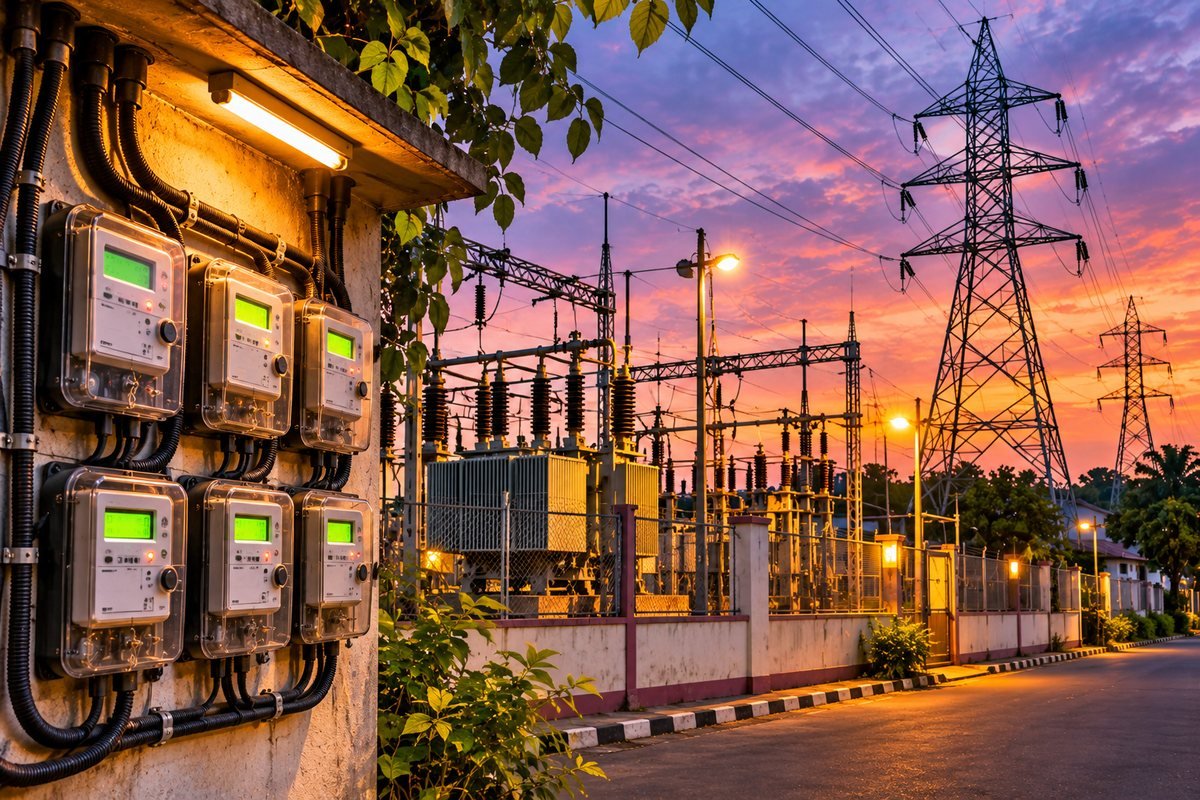
The Comptroller and Auditor General of India has begun an integrated audit covering 39 State-owned electricity distribution companies and five departmental undertakings, according to reports published on 12 and 13 November 2026. The exercise examines operational and financial performance, consumer satisfaction and short-term power procurement. The Indian Express reported that public-sector discoms had accumulated losses of Rs 6.77 lakh crore and borrowings of Rs 7.11 lakh crore. The audit also proposes a consumer satisfaction survey covering approximately 10,000 consumers. Officials expect the exercise to contribute to a broader sector-wide audit covering generation, transmission and distribution.
Concept: CAG, AT&C Losses and the Revamped Distribution Sector Scheme
The CAG is a constitutional authority established under Article 148. Articles 149 to 151 deal with its duties, the form of government accounts and audit reports. In electricity distribution, Aggregate Technical and Commercial (AT&C) losses measure the combined effects of technical energy losses, billing inefficiencies and revenue non-collection. The Revamped Distribution Sector Scheme (RDSS), launched in 2021, supports improvements in discom efficiency, financial sustainability and metering. The Electricity (Rights of Consumers) Rules, 2020, establish standards relating to electricity connections, supply, billing and grievance redressal. Effective distribution management is essential to reliable and affordable electricity.
Key facts for Prelims
- Article 148 establishes the CAG; Article 149 concerns duties and powers; Article 150 deals with the form of accounts; Article 151 concerns audit reports.
- The CAG is appointed by the President and enjoys constitutional safeguards for independence.
- RDSS was launched in July 2021 to improve electricity distribution efficiency and financial sustainability.
- AT&C losses include technical losses, billing inefficiency and failures in revenue collection.
Mains analysis and way forward
Mains analysis
- Financially weak discoms can delay payments, constrain infrastructure investment and reduce service reliability.
- Poor demand forecasting and inefficient short-term power purchases can increase electricity procurement costs.
- Consumer satisfaction is an important governance measure alongside losses, revenue collection and electricity supply.
- Integrated auditing can reveal systemic problems across generation, transmission, procurement and distribution that isolated audits may miss.
- Officials cited in the report say short-term power procurement rose from roughly 7 to 8% of the purchase basket four to five years ago to about 14%, more than 56% of it through power exchanges; the audit will test whether such buying gives value to consumers.
Way forward
- Improve demand forecasting, power-purchase planning and transparent procurement.
- Accelerate loss-reduction measures, accurate metering and effective revenue collection.
- Strengthen consumer grievance redressal, regulatory accountability and disclosure of audit findings.
Connect the dots: Power distribution links constitutional accountability, public-sector reform, infrastructure finance, consumer rights and the energy transition.
Sources: The Hindu, “CAG widens purview of power sector audit, starting with discoms; consumer satisfaction in focus”, 13 November 2026. The Indian Express, “CAG begins nationwide audit of 39 power discoms”, 13 November 2026. CAG, “Constitutional Provisions”.
Health and environment
WHO TB report: India’s TB mortality rate down 38% since 2015, incidence estimate under review
In short: India’s reported TB mortality reduction is an important achievement, but pending incidence estimates underline the need for reliable surveillance and continued disease control.
Why in news
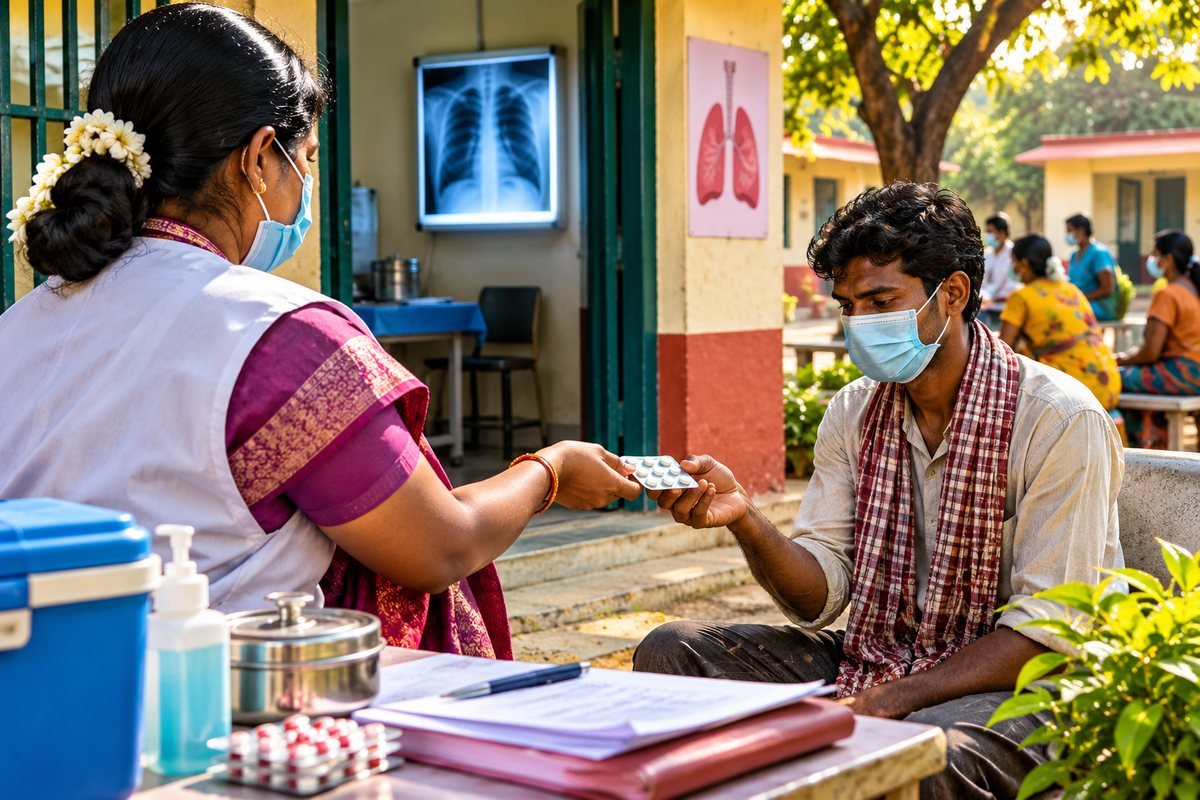
The WHO released its Global Tuberculosis Report 2026 on 12 November. Indian sources cited in news reports stated that TB mortality had declined by 38% since 2015. However, India’s updated estimated TB incidence was absent from the published dataset because analysis of district-level surveillance data remains incomplete. The surveillance covered 50 representative districts in 2025, and revised estimates are expected in early 2027. India reported 25.3 lakh diagnosed TB cases in 2025. Globally, WHO estimated 10.6 million incident cases and 1.13 million TB deaths that year.
Concept: End TB Strategy and India’s National TB Elimination Programme
WHO’s End TB Strategy aims to reduce TB deaths by 90% and incidence by 80% by 2030, relative to 2015. SDG Target 3.3 calls for ending the epidemics of AIDS, tuberculosis, malaria and other communicable diseases by 2030. India’s National TB Elimination Programme (NTEP) coordinates prevention, diagnosis, treatment and patient support. Ni-kshay is the digital platform supporting TB notification and patient management. Ni-kshay Poshan Yojana provides nutritional support, while Ni-kshay Mitras support patients through community participation. TB incidence measures new cases, while prevalence measures all existing cases during a specified period.
Key facts for Prelims
- The Global Tuberculosis Report 2026 was published by WHO on 12 November 2026.
- WHO’s End TB Strategy uses 2015 as its baseline year.
- The 2025 End TB milestones were a 75% reduction in deaths and a 50% reduction in incidence; the 2030 targets are 90% and 80%, respectively.
- Tuberculosis is caused by Mycobacterium tuberculosis and spreads primarily through the air.
Mains analysis and way forward
Mains analysis
- A reported 38% reduction in mortality demonstrates progress but remains below the End TB Strategy’s 2025 mortality milestone.
- Missing updated incidence estimates restrict assessment of new infections, undiagnosed cases and progress towards elimination.
- Malnutrition, overcrowding, poverty and delayed diagnosis create interconnected social and health vulnerabilities.
- Drug-resistant tuberculosis requires early detection, appropriate treatment regimens and strong adherence support.
Way forward
- Finalise and publish transparent, comparable estimates using the district surveillance findings.
- Expand rapid molecular diagnostics, active case finding, contact tracing and preventive treatment.
- Integrate nutritional assistance, private-sector reporting and social protection into TB care.
Connect the dots: Tuberculosis connects GS II public health and SDGs with GS III poverty, technology in diagnostics and human development.
Sources: The Hindu, “India records 38% drop in TB mortality since 2015: WHO report”, 13 November 2026. The Indian Express, “India’s TB incidence missing from WHO’s 2026 global report”, 13 November 2026. WHO, “Global Tuberculosis Report 2026”, 12 November 2026.
Central Empowered Committee proposes a three-year phase-out of sand extraction from active river channels
In short: A court-appointed committee has proposed a three-year transition away from unsustainable active-channel sand extraction, alongside alternative sources and scientific safeguards.

Why in news
The Central Empowered Committee (CEC), which assists the Supreme Court on environmental matters, has recommended a three-year roadmap to phase out unsustainable sand mining from active river channels. Its report, discussed in news coverage on 12 and 13 November 2026, also identifies alternative sources of construction material and the potential for scientifically planned desilting of reservoirs. An Indian Express editorial on 13 November supported stronger river protection while cautioning that sediment removal must be selective and evidence-based. The three-year roadmap is a committee recommendation, not an implemented nationwide ban.
Concept: Sustainable Sand Mining and the MMDR Act
Sand is classified as a minor mineral under the Mines and Minerals (Development and Regulation) Act, 1957. State governments exercise important regulatory powers over minor mineral concessions and associated mining rules. MoEFCC’s Sustainable Sand Mining Management Guidelines, 2016, promote scientific assessment, replenishment studies and protection of river systems. The Enforcement and Monitoring Guidelines for Sand Mining, 2020, strengthen monitoring of extraction, transportation and compliance with environmental clearances. Excessive sand removal can destabilise riverbanks, damage aquatic habitats, lower riverbeds and disrupt sediment movement. Desilting and commercial extraction must therefore be assessed separately.
Key facts for Prelims
- Sand is a minor mineral under the MMDR Act, 1957.
- Sustainable Sand Mining Management Guidelines were issued in 2016.
- Enforcement and Monitoring Guidelines for Sand Mining were issued in 2020.
- The Central Empowered Committee assists the Supreme Court on specified environmental and conservation matters.
Mains analysis and way forward
Mains analysis
- Unregulated sand extraction damages river morphology, aquatic biodiversity and downstream ecological processes.
- Construction-sector demand creates economic incentives for excessive extraction and weak regulatory compliance.
- Scientific desilting may help restore reservoir capacity in appropriate locations, but indiscriminate sediment removal can damage ecosystems.
- Illegal mining also raises questions of local governance, regulatory enforcement, transparency and public accountability.
Way forward
- Prepare scientifically validated district-level sediment budgets and replenishment assessments.
- Promote manufactured sand, recycled construction materials and carefully regulated alternative sources.
- Strengthen environmental monitoring, transport tracking, enforcement and restoration of damaged river stretches.
Connect the dots: Sand mining connects GS III environmental conservation, resource governance, infrastructure demand, disaster risk and sustainable development.
Sources: The Hindu, “Central committee suggests three-year roadmap to phase out unsustainable sand mining from active river channels”, 12 November 2026. The Indian Express, Editorial, “Respect the river, don’t treat it like a quarry”, 13 November 2026. MoEFCC, “Enforcement and Monitoring Guidelines for Sand Mining”, 2020.
International relations and security
PM to attend the ASEAN-India and East Asia Summits in Manila
In short: India’s participation in the Manila summits places maritime cooperation, regional security and economic engagement at the centre of its Act East Policy.

Why in news
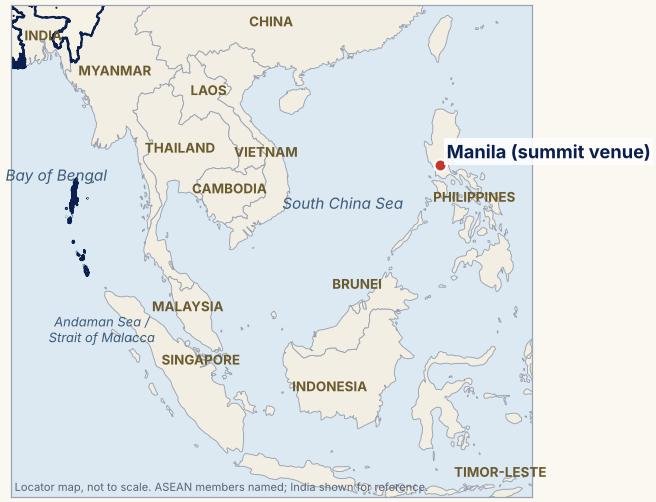
On 12 November 2026, the Ministry of External Affairs announced Prime Minister Narendra Modi’s visit to Manila, Philippines, on 16 and 17 November. He is scheduled to attend the 23rd ASEAN-India Summit and 21st East Asia Summit on 17 November. The Philippines chairs ASEAN in 2026, which is being observed as the ASEAN-India Year of Maritime Cooperation. Discussions are expected to cover maritime security, regional developments and implementation of the ASEAN-India Comprehensive Strategic Partnership. A possible Quad leaders’ meeting on the sidelines has been reported but was not officially confirmed.
Concept: Act East Policy, ASEAN and the East Asia Summit
India’s Act East Policy, announced in 2014, strengthened the earlier Look East Policy by emphasising connectivity, economic integration, strategic cooperation and regional security. ASEAN is a Southeast Asian regional organisation founded in 1967 through the Bangkok Declaration. India and ASEAN elevated their relationship to a Comprehensive Strategic Partnership in 2022. The East Asia Summit is a leaders-led forum for discussing strategic, political and economic issues in the Indo-Pacific. The ASEAN-India Trade in Goods Agreement (AITIGA), signed in 2009 and effective from 2010, is undergoing review to improve trade facilitation and mutual benefits.
Key facts for Prelims
- ASEAN was established on 8 August 1967 through the Bangkok Declaration.
- The ASEAN Secretariat is located in Jakarta, Indonesia.
- The ASEAN-India Comprehensive Strategic Partnership was established in 2022.
- The East Asia Summit began in 2005, with India among its founding participating countries.
- ASEAN now has 11 member States: Timor-Leste became the 11th member on 26 October 2025.
Mains analysis and way forward
Mains analysis
- ASEAN centrality helps India pursue an inclusive Indo-Pacific strategy through established regional institutions.
- The South China Sea is important for maritime commerce, freedom of navigation and the peaceful settlement of disputes under international law.
- Reviewing AITIGA can address market access, trade imbalances, rules of origin and non-tariff barriers.
- India’s strategic engagement with ASEAN complements bilateral partnerships and other regional cooperation arrangements, including the Quad.
Way forward
- Pursue a balanced and commercially meaningful AITIGA review.
- Expand cooperation in maritime domain awareness, disaster response and secure supply chains.
- Improve physical, digital and institutional connectivity between India and Southeast Asia.
Connect the dots: Act East Policy connects GS II regional diplomacy and international law with GS III maritime security, connectivity and trade.
Sources: The Hindu, “Modi to visit Manila for ASEAN Summit; maritime security, trade on agenda”, 12 November 2026. The Indian Express, “PM Modi will attend India-Asean, East Asia summits”, 13 November 2026. Ministry of Commerce and Industry, “ASEAN”, official information on AITIGA.
India-Bangladesh consular dialogue postponed amid strained ties
In short: The postponement of consular talks adds uncertainty to India-Bangladesh engagement on mobility, border management, legal cooperation and water sharing.
Why in news
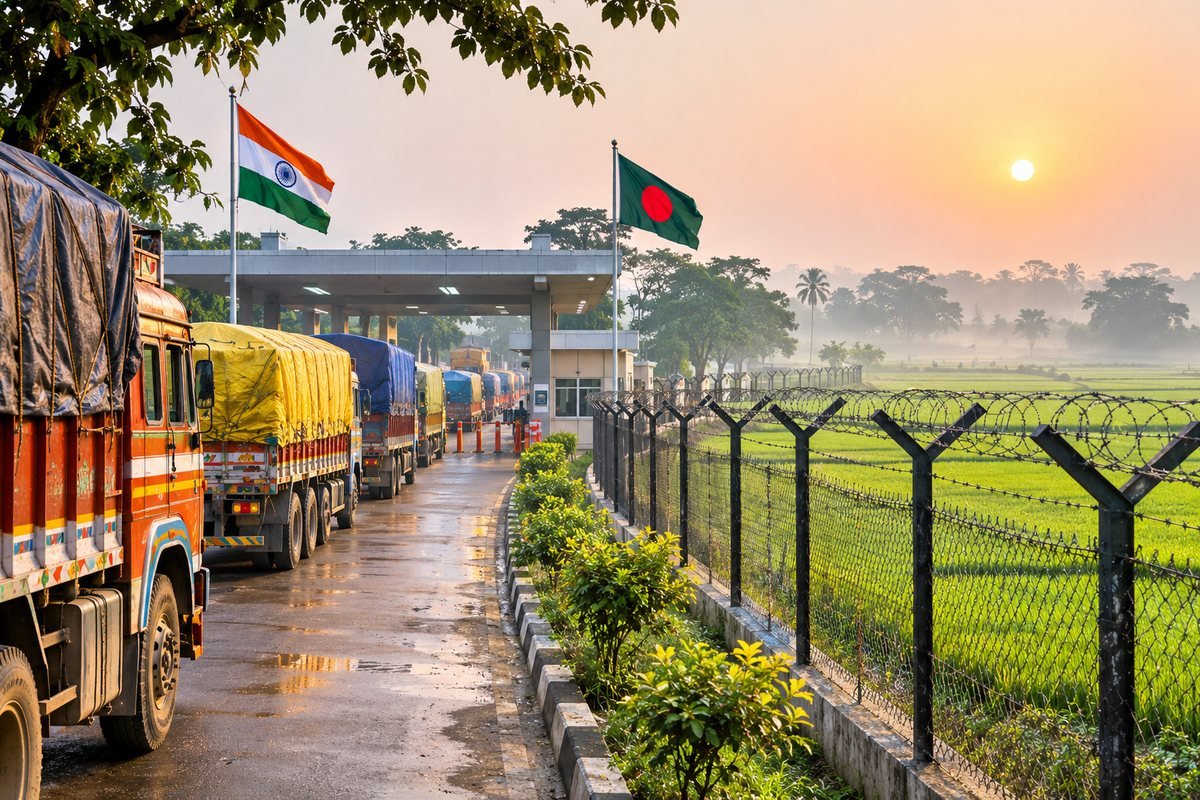
The fifth India-Bangladesh consular dialogue, scheduled for 17 and 18 November 2026 in Dhaka, has been postponed. Officials and diplomatic sources confirmed the development, although accounts of its immediate cause differ. The planned agenda included visa arrangements, border management, repatriation and legal cooperation. Relations have also been affected by disagreements concerning former Prime Minister Sheikh Hasina’s possible return to Bangladesh. A 13 November editorial in The Hindu argued that India should improve relations with Bangladesh while safeguarding Hasina’s welfare. This is the newspaper’s editorial position, not an official government policy.
Concept: India-Bangladesh Relations, Extradition and Water Sharing
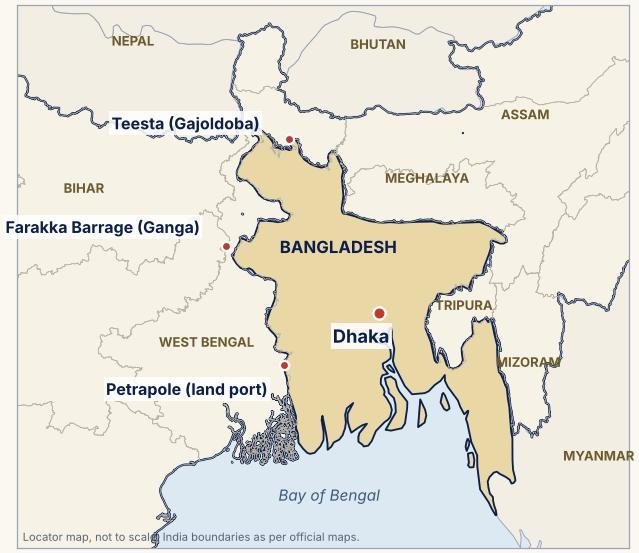
India and Bangladesh cooperate on trade, connectivity, border management, security and transboundary rivers. Their bilateral extradition treaty was signed in 2013 and operates within the legal framework governing extradition, including applicable treaty conditions and domestic law. The 1996 Ganga Water Sharing Treaty regulates dry-season water sharing at Farakka and is due to expire in December 2026, making its renewal an important diplomatic issue. The proposed Teesta water-sharing arrangement remains a separate unresolved matter. Road, rail, inland waterway and energy connections support regional economic integration and India’s Neighbourhood First and Act East policies.
Key facts for Prelims
- India and Bangladesh signed their bilateral Extradition Treaty in 2013.
- The Ganga Water Sharing Treaty was signed on 12 December 1996 for a 30-year period.
- The Ganga treaty concerns water sharing at Farakka during the lean season.
- Teesta water sharing is a separate bilateral issue involving the interests of West Bengal and Bangladesh.
Mains analysis and way forward
Mains analysis
- Political disagreements can affect cooperation in practical areas such as visas, trade and repatriation.
- Extradition requests require attention to treaty provisions, domestic law, due process and bilateral obligations.
- Shared rivers create a continuing need for data exchange, joint institutions and negotiated water-management arrangements.
- Maintaining economic connectivity and people-to-people relations can protect long-term bilateral interests during periods of political uncertainty.
Way forward
- Resume consular dialogue through established diplomatic mechanisms.
- Pursue legal and diplomatic engagement on extradition questions without prejudging individual cases.
- Prioritise negotiations on Ganga water sharing and strengthen cooperation on border management, connectivity and trade.
Connect the dots: India-Bangladesh relations link neighbourhood diplomacy, international law, water security, federalism and regional economic integration.
Sources: The Hindu, “Amidst simmering tensions, India-Bangladesh consular dialogue postponed”, 12 November 2026. The Hindu, Editorial, “In a dilemma: On Sheikh Hasina and India-Bangladesh ties”, 13 November 2026. Ministry of External Affairs, “List of Extradition Treaties/Arrangements”. Ministry of External Affairs, Lok Sabha reply on Ganga Water Sharing Treaty, 13 February 2026.
Centre sanctions new roads and bridges along the China border in Arunachal Pradesh
In short: Reported road and bridge projects along the China frontier highlight the role of connectivity in defence preparedness and border-area development.
Why in news
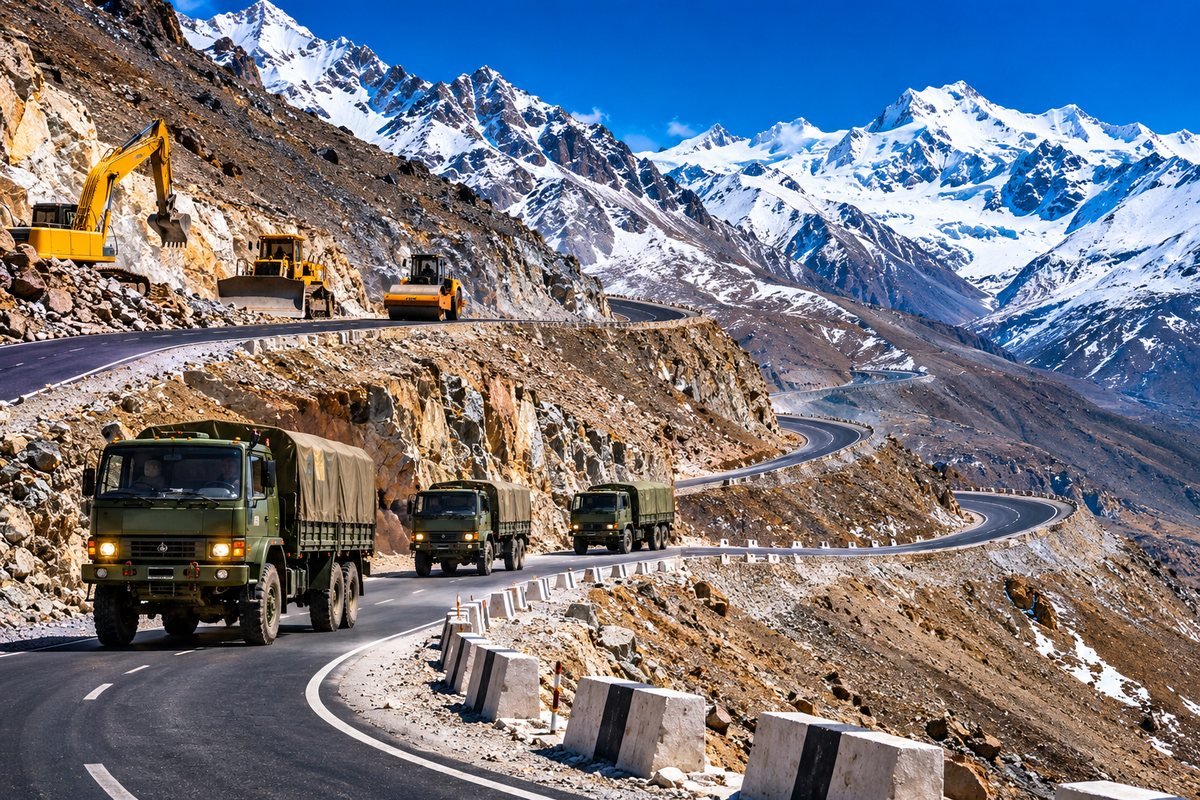
On 12 November 2026, The Hindu reported fresh sanctions for border infrastructure in Arunachal Pradesh amid continuing tensions along the Line of Actual Control (LAC). According to the report, the Indo-Tibetan Border Police sanctioned 15 pedestrian suspension bridges and 18 log bridges. It also reported plans for 26 roads under the third phase of the Indo-China Border Roads project. The Union Government had not publicly released the complete details of the reported third-phase projects. The developments underline the importance of connectivity, logistics and surveillance in difficult Himalayan terrain.
Concept: LAC, Border Roads Organisation and Vibrant Villages Programme
The Line of Actual Control is the de facto boundary separating territories controlled by India and China, but the two countries do not share a mutually agreed understanding of its complete alignment. The Border Roads Organisation (BRO), under the Ministry of Defence, develops and maintains strategic roads and related infrastructure. The Indo-China Border Roads programme is a distinct border-connectivity initiative involving the Ministry of Home Affairs. The Vibrant Villages Programme complements strategic infrastructure through improvements in border settlements, including roads, telecommunications, livelihoods and essential services. Infrastructure development can support both national security and civilian welfare.
Key facts for Prelims
- The Indo-Tibetan Border Police is a Central Armed Police Force under the Ministry of Home Affairs.
- The Border Roads Organisation functions under the Ministry of Defence.
- The Vibrant Villages Programme supports development in strategically important border settlements.
- The LAC is distinct from a mutually agreed and demarcated international boundary.
Mains analysis and way forward
Mains analysis
- Better roads and bridges improve troop mobility, emergency response and the movement of essential supplies.
- Border infrastructure enables access to healthcare, education and markets, reducing isolation of remote communities.
- Harsh climate, difficult terrain, fragile ecosystems and short construction seasons complicate project implementation.
- Military preparedness must be combined with sustained diplomatic engagement and measures to prevent unintended escalation.
Way forward
- Prioritise all-weather connectivity, resilient bridges and reliable telecommunications.
- Integrate military requirements with civilian infrastructure planning and environmental safeguards.
- Maintain diplomatic and military communication mechanisms to manage differences along the LAC.
Connect the dots: Border infrastructure links GS III national security and disaster resilience with GS II India-China relations and inclusive regional development.
Sources: The Hindu, “Centre sanctions new roads, infrastructure along China’s border”, 12 November 2026. PIB, “Vibrant Villages Programme: Strengthening India’s Frontiers Through Inclusive Development”, 6 September 2026.
IAF officer allegedly shared war plans with a Pakistani operative, police tell court
In short: A police chargesheet alleging disclosure of classified military information highlights insider threats and the importance of protecting defence communications.

Why in news
The Indian Express reported on 13 November 2026 that Delhi Police had filed a chargesheet alleging that an Indian Air Force Wing Commander shared classified military information with a suspected Pakistani intelligence operative. According to police, the information included operational plans, drone capabilities and military deployment details. Investigators alleged that communication occurred through WhatsApp between 12 January and 1 April 2026. Police also alleged attempts to compromise electronic devices using malicious software. The officer was arrested and booked under provisions of the Official Secrets Act, 1923. These remain prosecution allegations, not judicial findings of guilt.
Concept: Official Secrets Act, Espionage and Insider Threats
The Official Secrets Act, 1923, provides legal provisions concerning espionage and unauthorised disclosure of specified official information. Section 3 addresses spying, while Section 5 concerns wrongful communication and handling of official information. Espionage may involve obtaining or transmitting sensitive information to unauthorised persons. An insider threat arises when someone with legitimate institutional access compromises information or systems, intentionally or otherwise. Digital communication platforms create additional risks through impersonation, social engineering and malicious software. Counter-intelligence involves identifying and preventing attempts to obtain sensitive information through appropriate security, investigative and preventive measures.
Key facts for Prelims
- The Official Secrets Act was enacted in 1923.
- Section 3 concerns spying; Section 5 deals with wrongful communication and related handling of official information.
- Counter-intelligence concerns the detection and prevention of hostile intelligence activities.
- Cyber espionage involves attempts to obtain sensitive information through digital systems or communications.
Mains analysis and way forward
Mains analysis
- Insider threats can be especially serious because authorised personnel may have legitimate access to sensitive defence systems.
- Social engineering and compromised communication devices can undermine traditional physical-security arrangements.
- Effective counter-intelligence requires institutional oversight, regular risk assessment and secure information-sharing practices.
- Investigations must protect national security while preserving due process, legal safeguards and the presumption of innocence.
Way forward
- Strengthen access controls, cyber-security training and periodic security audits in sensitive establishments.
- Improve mechanisms for reporting suspicious communications and possible compromise of official devices.
- Ensure specialised investigations, lawful evidence handling and accountability through established judicial procedures.
Connect the dots: Espionage connects GS III internal security, cyber security, defence preparedness and GS II rule of law.
Sources: The Indian Express, “IAF officer shared war plans, deployment details with Pak operative: Police to court”, 13 November 2026. India Code, “The Official Secrets Act, 1923”.
In brief
- PSLV third stage passes ground test: On 12 November 2026, ISRO successfully conducted a ground static test of the modified PSLV third-stage solid motor at Sriharikota, following anomalies in earlier missions. Prelims: PSLV has four stages in the sequence solid, liquid, solid, liquid. Source
- New shark species from the Indian Ocean: Scientists from ZSI and ICAR-CMFRI identified Echinorhinus roinee, the Indian Bramble Shark, previously confused with an Atlantic species. Prelims: Specimens were obtained from deep-sea fishing catches at Sakthikulangara, Kollam, Kerala. Source
- Kurumba language and community: The Kurumba Adivasi community of Attappady in Palakkad district, Kerala, speaks a traditionally oral language without a separate script. Prelims: the Kurumbar are one of Kerala’s five Particularly Vulnerable Tribal Groups (PVTGs). Source
- IIT Kharagpur starts PG medical courses: IIT Kharagpur has become the first IIT to introduce National Medical Commission-accredited postgraduate medical degree programmes, with 12 seats across six MD specialisations for 2026-27. Prelims: Admissions will be through NEET-PG counselling. Source
- Record Russian fossil fuel imports: According to the Centre for Research on Energy and Clean Air, India’s Russian fossil fuel imports reached €6.4 billion in October 2026, the highest monthly value in its dataset since January 2022. Crude oil accounted for approximately 91% of the value. Source
- Earthshot Prize awards in Mumbai: Mumbai will host the Earthshot Prize Awards on 17 November 2026. Prelims: Founded by Prince William, the Earthshot Prize recognises environmental innovations and awards £1 million each to five winners. Source
Prelims practice: 5 questions
Choose an option to see the answer and explanation. Your score appears when all five are answered.
Mains practice
GS II | Parliament, delimitation and federalism “Delimitation is not merely an exercise in redrawing electoral constituencies; it also raises fundamental questions of federal balance and democratic representation.” Examine this statement in the context of the proposed delimitation reforms and the implementation of women’s reservation in India.
Show the answer outline
INTRODUCTION
Delimitation seeks to ensure equitable political representation by readjusting constituencies according to population. However, differences in demographic trends among Indian States make the exercise an issue of federal equity as well as electoral representation.
CONSTITUTIONAL FRAMEWORK
- Article 82 provides for readjustment of Lok Sabha constituencies, while Article 170 addresses State Legislative Assemblies.
- The 84th Amendment extended the freeze on seat allocation until the first Census after 2026.
- The 106th Amendment links women’s reservation to a subsequent Census and delimitation exercise.
CHALLENGES TO FEDERAL BALANCE
- States with lower population growth fear a reduction in their relative parliamentary representation.
- Strict population-based allocation may appear to disadvantage States that successfully implemented population stabilisation policies.
- Political disagreements can complicate the constitutional amendment process and consensus-building.
WOMEN’S REPRESENTATION
- Reservation of approximately one-third of seats can improve women’s descriptive representation in legislatures.
- Linking implementation to delimitation delays the practical operation of an already enacted constitutional commitment.
- Effective representation also requires institutional support and greater participation of women in political decision-making.
THE WAY FORWARD
- Adopt transparent principles for allocating and redrawing constituencies.
- Build consensus with States and political parties through transparent population data, published seat-allocation principles and constitutional safeguards for federal representation.
- Establish a clear timetable for implementing women’s reservation while protecting democratic legitimacy.
CONCLUSION
A credible delimitation framework must balance population-based representation, federal fairness and gender justice. Constitutional reform should strengthen both democratic equality and national cohesion.
TIP: Structure the answer around three distinct concerns: population equality, federal balance and women’s representation. Avoid treating delimitation as merely a technical exercise.
Six free books for the interview stage. 336 pages.
The DAF Decoder, Essential Qualities, Your Home State and District, 100 Answers Thought Through, The Interview Mind and From Result to Board, written by Guranchal Ma’am, Founder, UPSC Gurus. Filling DAF-II this month? Start with the free DAF-II checklist. One-time sign-up.
Get the six free books Free DAF-II checklist
Interview Edge Studio · Apply for Interview Edge · WhatsApp +91 81220 02172
Current Canvas is prepared by the UPSC Gurus editorial desk. Every fact is checked against official releases and reliable reporting, with sources listed under each story. Editions are compiled each month into Current Canvas Monthly, a free magazine.
About images: photographs and illustrations in Current Canvas are AI-generated for illustration only. They are not news photographs of the events described.
Your first Mentor’s Desk call is free
One free conversation per aspirant about where you are in your preparation, with an honest suggestion of the right next step.
Know more and bookHave a question? Get in touch
For questions about a programme, its fees, batch dates, payment or access. Message us on WhatsApp and our team will reply. Asking a question is not a booking, and you can ask as often as you need.
Get in touch on WhatsApp