 New this week · Free UG Handout 02UPSC Mains Directive Words: 60 Meanings, Trends and PYQsTwo free PDFs: The Guide and the With PYQs edition.Read and download
Today’s Canvas
- Congress Disclosed Donations Fall Nearly 75% to Rs 130.69 Crore in 2025-26GS II
- FSSAI Seizes 3,279.57 Tonnes of Non-Compliant Food in Nationwide Festive Inspection DriveGS II
- Hospital Fires Raise Questions About Electrical Safety, Building Standards and Emergency PreparednessGS III
- Bastar Visit Puts Left-Wing Extremism, Rehabilitation and Development in FocusGS III
- Rajasthan High Court Upholds UAPA Charges Against Eight Accused in Kanhaiya Lal Murder CaseGS III
- Ten Years After Demonetisation, RBI Data Show Continued Cash Demand and Rising Counterfeit Rs 500 DetectionsGS III
- Indian Oil Plans to Acquire Crude and LPG Carriers Amid West Asia Shipping RisksGS III
- Maharashtra Reports Drought in 305 Talukas and Temporarily Relaxes Borewell RestrictionsGS III
- Bangladesh Says Extradition Request for Sheikh Hasina Has Been Sent to IndiaGS II
- South Africa’s ANC Records Historic Setback in November 2026 Local ElectionsGS II
- India Evacuates 19 Seafarers Stranded in Yemen Amid Renewed Red Sea TensionsGS II
- Three Indian Manuscripts Enter UNESCO’s Memory of the World Asia-Pacific Regional RegisterGS I
Polity and governance
Congress Disclosed Donations Fall Nearly 75% to Rs 130.69 Crore in 2025-26
In short: Congress reported a sharp decline in donations above Rs 20,000, bringing attention to disclosure requirements, electoral trusts and transparency in political financing.

Why in news
On 8 November 2026, an analysis of Congress’s contribution reports filed with the Election Commission of India (ECI) showed that donations exceeding Rs 20,000 fell from Rs 517.39 crore in 2024-25 to Rs 130.69 crore in 2025-26, a decline of approximately 74.7%. Prudent Electoral Trust’s contribution fell from Rs 216.34 crore to Rs 25 crore. The figures exclude smaller donations and other income. Congress’s audited accounts for 2025-26 were not yet available, so the figures cannot establish its total income. Electoral bond receipts were reported separately while that scheme operated, so long-term comparisons need care.
Concept: Section 29C of the Representation of the People Act, 1951
Section 29C requires political parties to report to the ECI contributions exceeding Rs 20,000 from persons and from companies other than government companies. Electoral trusts provide a regulated route for collecting and distributing political donations, with prescribed disclosure requirements. On 15 February 2024, the Supreme Court struck down the Electoral Bonds Scheme, holding that anonymous political funding violated voters’ right to information under Article 19(1)(a). It also invalidated provisions permitting unlimited corporate political contributions. Donation reports, however, are not equivalent to a party’s complete audited financial statements.
Key facts for Prelims
- Section 29C: Representation of the People Act, 1951.
- Disclosure threshold: Contributions exceeding Rs 20,000.
- Section 29C(4): failure to submit the contribution report denies a party tax relief under the Income-tax Act.
- Electoral bonds judgment: Association for Democratic Reforms v. Union of India, 15 February 2024.
- Constitutional provisions: Article 19(1)(a), right to information; Article 14, equality before the law.
- Companies Act, 2013, Section 182: the Supreme Court held that removing the cap on corporate political contributions was arbitrary and violated Article 14.
- Before its 2017 removal, Section 182 capped corporate political donations at 7.5% of average net profits of the preceding three financial years.
Mains analysis and way forward
Mains analysis
- Transparency enables voters to examine possible links between major donations and public policy decisions.
- Funding differences can affect political competition, campaign capacity and opportunities for smaller parties.
- Disclosure of large contributions does not reveal every source of party income, leaving gaps in the overall financial picture.
- Reform must balance voters’ right to information with the legitimate privacy interests of small individual donors.
Way forward
- Provide timely, searchable and comparable public disclosure of party contributions and audited accounts.
- Strengthen independent verification and enforcement of political finance reporting requirements.
- Encourage traceable funding while protecting lawful small-donor participation.
Connect the dots: Electoral funding transparency connects Article 19(1)(a), free and fair elections, political equality and institutional accountability.
Sources: The Hindu, “Congress donations fall nearly 75%, sharpest decline in a decade”, 8 November 2026. Supreme Court of India, Association for Democratic Reforms v. Union of India, 15 February 2024.
FSSAI Seizes 3,279.57 Tonnes of Non-Compliant Food in Nationwide Festive Inspection Drive
In short: A nationwide food safety drive inspected 56,431 establishments, leading to major seizures, licence suspensions and cancellations.
Why in news
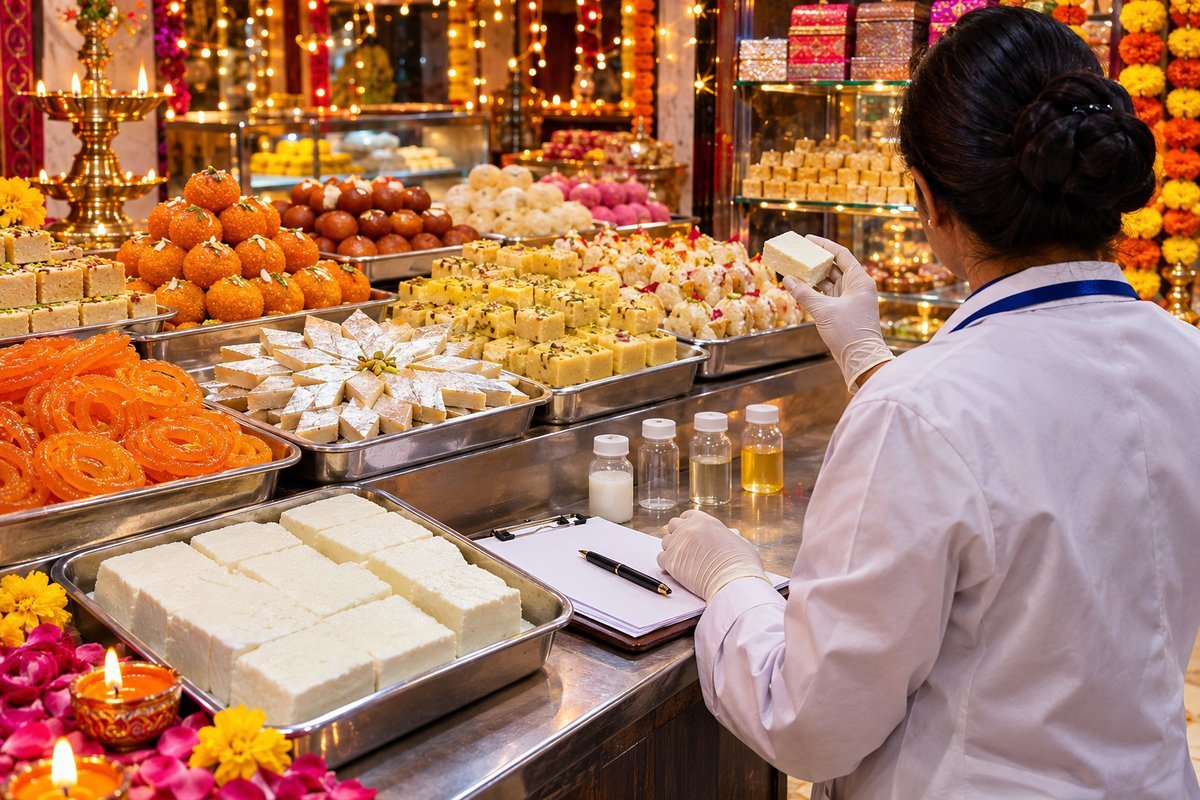
On 7 November 2026, the Food Safety and Standards Authority of India (FSSAI) reported the results of its enforcement drive conducted from 1 September to 5 November across States and Union Territories. Officials inspected 56,431 food establishments and seized 3,279.57 tonnes of food products reported as non-compliant with regulatory requirements valued at approximately Rs 81.80 crore. The regulator reported 52 licence cancellations, 1,133 suspensions, 314 establishments sealed, 10,047 improvement notices and 410 prosecutions. Products included milk, paneer, ghee and sweets. Of 43,939 samples collected, 23,648 had been analysed, with 2,273 found non-compliant.
Concept: Food Safety and Standards Act, 2006
The Food Safety and Standards Act, 2006 established FSSAI as India’s central statutory food safety regulator under the Ministry of Health and Family Welfare. It sets science-based standards for food and regulates manufacturing, storage, distribution, sale and import. Section 31 requires food business operators to obtain registration or a licence, as applicable. State food safety authorities and designated officers implement enforcement. The regulatory framework allows inspections, sampling, improvement notices and legal action. The Food Safety Compliance System (FoSCoS) supports licensing and registration.
Key facts for Prelims
- Parent legislation: Food Safety and Standards Act, 2006.
- Administrative ministry: Ministry of Health and Family Welfare.
- Section 31: Licensing and registration of food businesses.
- Section 32: improvement notices; continued non-compliance can lead to suspension or cancellation. Immediate suspension for public health requires written reasons.
Mains analysis and way forward
Mains analysis
- Festive demand and complex supply chains create additional challenges for food quality monitoring.
- Inspections and seizures demonstrate enforcement activity, but sustained compliance also requires preventive systems.
- Small food businesses may face difficulties understanding technical standards, hygiene requirements and licensing processes.
- Publicly reported inspections, laboratory findings and prosecution outcomes are essential for evaluating regulatory effectiveness.
- Of 43,939 samples collected, 20,291 were still to be analysed, so the 2,273 failures reflect completed tests, not the final outcome.
Way forward
- Adopt risk-based inspections prioritising high-risk products and repeat offenders.
- Strengthen accredited laboratory capacity, traceability and coordination with State authorities.
- Provide practical hygiene training and simpler compliance assistance to smaller operators.
Connect the dots: Food safety links consumer protection, public health, cooperative federalism and regulatory governance.
Sources: The Hindu, “FSSAI seizes 3,280 tonne food items, cancels 52 licences in nationwide inspection drive”, 8 November 2026. FSSAI, Licensing and Registration.
Hospital Fires Raise Questions About Electrical Safety, Building Standards and Emergency Preparedness
In short: Repeated fires in hospitals and other buildings highlight the need to examine electrical systems, fire prevention and emergency evacuation arrangements.
Why in news
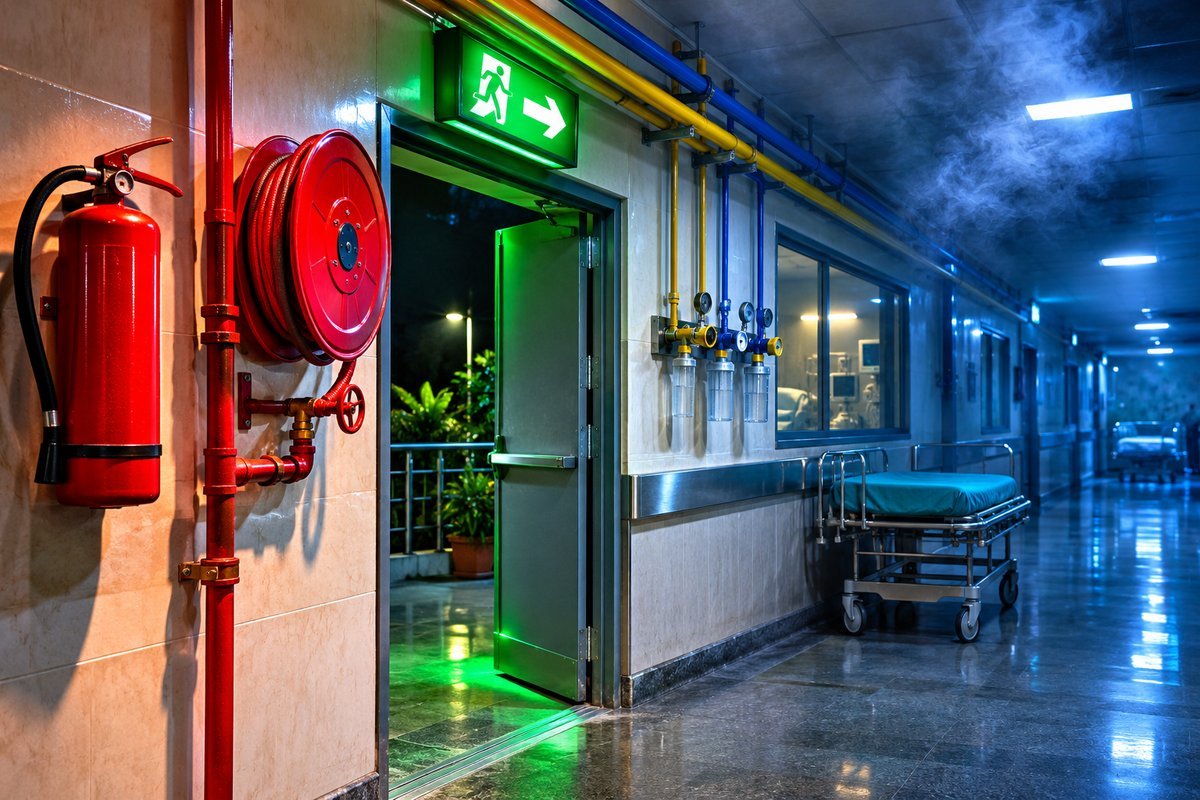
A report published on 8 November 2026 examined electrical fire risks following incidents at Jhansi’s neonatal intensive care unit in November 2024, SCB Medical College’s trauma ICU in Cuttack in March 2026, and a residential building fire in Delhi’s Vivek Vihar in May 2026. The report explored whether electrical harmonics from modern equipment could contribute to overheating. This is a technical concern, not an established explanation for each incident. Hospital risks are particularly serious because patients may be immobile and oxygen-enriched environments can accelerate combustion.
Concept: Fire and Life Safety Under Building Standards
Part 4 of the National Building Code of India, 2016, addressed fire prevention, life safety and fire protection. On 30 April 2026, BIS established SP 7:2026, National Building Construction Standards 2026, replacing the earlier SP 7:2016 code. Building safety requires appropriate electrical design, protected escape routes, fire detection, suppression equipment and maintenance. Electrical harmonics are distortions of current or voltage waveforms that can cause additional heating under certain conditions. Oxygen supports combustion but is not itself a fuel. NBCS 2026 is a voluntary national standard; it becomes binding when adopted through State or local regulations or contracts. The Ministry of Health and Family Welfare has also issued National Guidelines on Fire and Life Safety in Healthcare Facilities, 2026, covering electrical safety, detection, evacuation, audits and staff training.
Key facts for Prelims
- Bureau of Indian Standards: Established in 1987 under the BIS Act, 1986; now governed by the BIS Act, 2016.
- National Building Code, 2016: Part 4 covered Fire and Life Safety; SP 7:2016 was withdrawn on 30 April 2026.
- National Building Construction Standards, 2026: Part F covers Fire and Life Safety, replacing Part 4 of the 2016 code.
- Oxygen is an oxidiser, not a combustible fuel.
- Fire services are a municipal function in the Twelfth Schedule, read with Article 243W; fire safety regulation is mainly a State and local subject.
Mains analysis and way forward
Mains analysis
- Critical-care facilities face greater evacuation difficulties because patients may depend on oxygen, ventilators or life-support equipment.
- Electrical inspections must examine actual connected loads, backup systems, wiring quality and thermal risks.
- Poor maintenance, blocked exits and inadequate staff training can turn a localised fire into a mass-casualty event.
- Technical hypotheses, including harmonic-related overheating, require investigation rather than automatic acceptance as causes.
Way forward
- Conduct independent electrical and fire audits, including checks under peak operating loads.
- Ensure working alarms, compartmentation, unobstructed exits and patient-specific evacuation plans.
- Make drills, corrective-action reports and periodic compliance verification mandatory in high-risk facilities.
Connect the dots: Hospital fire prevention connects disaster risk reduction, urban governance, health infrastructure and engineering regulation.
Sources: The Hindu, “Dangerous harmonies: Is there a hidden villain in India’s devastating electrical fires?”, 8 November 2026. Bureau of Indian Standards, National Building Construction Standards 2026, Part F: Fire and Life Safety.
Internal security
Bastar Visit Puts Left-Wing Extremism, Rehabilitation and Development in Focus
In short: Following the government’s declaration of a Naxalism-free India, attention is shifting towards lasting security, rehabilitation and governance in former conflict areas.
Why in news
During a visit to security personnel in Bastar, Chhattisgarh, on 8 November 2026, Prime Minister Narendra Modi referred to the government’s declaration that its 31 March target had been achieved, with no district classified as LWE-affected. The statement reflects the government’s assessment of its anti-extremism campaign, rather than independent proof that every underlying risk has disappeared. The campaign combined security operations, infrastructure expansion, intelligence coordination and surrender and rehabilitation measures. Continued attention is required to prevent renewed recruitment and address grievances in previously affected communities.
Concept: National Policy and Action Plan to Address Left-Wing Extremism
The Ministry of Home Affairs adopted the National Policy and Action Plan to Address Left-Wing Extremism in 2015. It integrates security measures, development, protection of local rights, governance and rehabilitation. The 2017 SAMADHAN approach highlighted smart leadership, aggressive strategy, motivation and training, actionable intelligence, performance dashboards, technology, theatre-specific action plans and disruption of extremist financing. LWE refers to armed extremism inspired by Maoist ideology. Long-term responses must distinguish violent organisations from legitimate democratic grievances and protect constitutional rights during security operations.
Key facts for Prelims
- Nodal ministry for the central LWE response: Ministry of Home Affairs.
- National Policy and Action Plan: Adopted in 2015.
- SAMADHAN strategy: Presented in 2017.
- Bastar includes Fifth Schedule Scheduled Areas where the PESA Act, 1996, is relevant to tribal self-governance.
- After its March 2026 review, the MHA reported no LWE-affected districts but kept 37 Legacy and Thrust districts and one District of Concern for continued support.
Mains analysis and way forward
Mains analysis
- Coordinated operations and improved roads, communications and state capacity can reduce insurgent operational space.
- Sustainable peace depends on functioning schools, health services, local institutions and access to livelihoods.
- Rehabilitation of surrendered cadres requires monitoring, social acceptance and opportunities for lawful employment.
- Tribal rights, land and forest governance remain relevant to preventing renewed alienation.
Way forward
- Shift progressively from emergency security deployment to reliable civilian administration without prematurely withdrawing essential protection.
- Implement rights-based development and independently assess rehabilitation outcomes.
- Maintain intelligence coordination while ensuring accountability and community trust.
Connect the dots: Counter-insurgency connects internal security, Scheduled Areas governance, tribal rights and inclusive development.
Sources: The Hindu, “‘Dimagi Naxals’ instigating people against Constitution: PM Modi as Maoists eliminated”, 8 November 2026. Ministry of Home Affairs, Left-Wing Extremism policy and strategy.
Rajasthan High Court Upholds UAPA Charges Against Eight Accused in Kanhaiya Lal Murder Case
In short: The High Court allowed UAPA charges to stand, drawing attention to terrorist-act provisions, conspiracy evidence and delays in criminal trials.

Why in news
On 5 November 2026, the Rajasthan High Court dismissed two appeals filed by eight accused challenging charges under the Unlawful Activities (Prevention) Act in the 2022 murder case of Udaipur tailor Kanhaiya Lal. The court held that conspiracy may be inferred from the cumulative circumstances at the charge-framing stage, even without direct evidence of an explicit agreement. The murder occurred on 28 June 2022. A family member expressed concern over delays in the subsequent trial. Upholding charges does not establish the accused persons’ guilt.
Concept: Terrorist Acts and Conspiracy Under UAPA
Section 15 of the Unlawful Activities (Prevention) Act, 1967, defines a terrorist act through specified conduct and the required intention, including threats to India’s unity, integrity, security, economic security or sovereignty, or striking terror among people. Section 18 addresses conspiracy, attempts, advocacy, abetment, advice, incitement or facilitation connected to terrorist acts. At the framing-of-charges stage, a court assesses whether the material shows a prima facie case or grave suspicion; it does not determine guilt beyond reasonable doubt. The National Investigation Agency Act, 2008, provides for designated Special Courts to try scheduled offences.
Key facts for Prelims
- UAPA was enacted in 1967.
- Section 15: Definition of a terrorist act.
- Section 18: Punishment for conspiracy and specified related conduct.
- NIA Act, 2008: Provides a framework for investigating and trying scheduled offences.
- Section 16: punishment for a terrorist act. Section 20: punishment for membership of a terrorist gang or organisation.
Mains analysis and way forward
Mains analysis
- Terrorism prosecutions must establish the statutory elements of the alleged offences, not rely solely on the severity of the underlying crime.
- Conspiracy can be proved through circumstantial evidence, subject to legal safeguards and the standard required at each stage.
- Prolonged proceedings affect victims’ families, accused persons and public confidence in criminal justice.
- Counterterrorism enforcement must respect due process, the presumption of innocence and fair-trial protections.
Way forward
- Improve judicial case management, forensic coordination and timely witness examination.
- Ensure statutory safeguards and rigorous scrutiny of the evidence.
- Strengthen victim support while protecting the accused persons’ rights to a fair trial.
Connect the dots: Counterterrorism law connects internal security, Article 21, evidence, judicial accountability and speedy justice.
Sources: The Indian Express, “A tailor was killed over social media post in 2022. Now, High Court gives hope to Udaipur family”, 8 November 2026. India Code, Unlawful Activities (Prevention) Act, 1967.
Economy and agriculture
Ten Years After Demonetisation, RBI Data Show Continued Cash Demand and Rising Counterfeit Rs 500 Detections
In short: A decade after demonetisation, banknotes in circulation remain substantial while UPI transactions have expanded dramatically.

Why in news
On 8 November 2026, India completed ten years since the withdrawal of the then-existing Rs 500 and Rs 1,000 banknotes. The RBI Annual Report 2025-26 records banknotes in circulation worth Rs 41.24 lakh crore at end-March 2026, up 11.9% from a year earlier. Counterfeit notes of the new Rs 500 series detected in the banking system rose from 1,17,722 to 1,41,907. Meanwhile, UPI transactions reached approximately Rs 314 lakh crore in value during 2025-26. These figures describe different aspects of payment behaviour.
Concept: Currency in Circulation and Digital Payment Value
Currency in circulation measures the stock of physical currency outstanding at a particular point in time. Banknotes in circulation exclude coins, whereas the broader currency measure includes them. The RBI issues banknotes and distributes coins minted by the Central Government, and monitors counterfeit notes detected in the banking system. UPI, operated by the National Payments Corporation of India, enables instant bank-to-bank digital payments. Annual UPI transaction value is a flow, not a money stock. UPI processed approximately Rs 314 lakh crore in payments during 2025-26. This includes transfers between people and must not be confused with GDP, which measures the value of final goods and services produced.
Key facts for Prelims
- Demonetisation announcement: 8 November 2016.
- Banknotes in circulation at end-March 2026: Rs 41,23,995 crore, according to RBI.
- New-series Rs 500 counterfeit detections in 2025-26: 1,41,907 notes, up 20.5%.
- UPI operator: National Payments Corporation of India, an RBI-authorised payment system operator.
- Section 22 of the RBI Act, 1934, gives the RBI the sole right to issue banknotes; the one-rupee note is issued by the Government of India.
Mains analysis and way forward
Mains analysis
- The simultaneous expansion of cash and digital payments shows that the two modes can coexist rather than automatically replace one another.
- Nominal growth in circulating currency must not be confused with unchanged cash intensity relative to GDP.
- Counterfeit detections measure notes identified by banks, not the total stock of counterfeit currency in the economy.
- UPI adoption reflects infrastructure, interoperability, merchant acceptance and convenience; its growth cannot be attributed solely to demonetisation.
Way forward
- Improve currency security features, authentication equipment and public awareness.
- Expand reliable digital payment access while addressing fraud and exclusion.
- Evaluate payment trends using transaction volumes, currency-to-GDP ratios and household behaviour rather than isolated indicators.
Connect the dots: Demonetisation connects monetary management, financial inclusion, digital public infrastructure and evidence-based policy evaluation.
Sources: The Hindu, “10 years since demonetisation: cash usage unchanged, fake notes on the rise”, 8 November 2026. RBI, Annual Report 2025-26, Chapter VIII: Currency Management, 29 May 2026. PIB, UPI transaction statistics for FY 2025-26, 30 April 2026.
Indian Oil Plans to Acquire Crude and LPG Carriers Amid West Asia Shipping Risks
In short: Indian Oil Corporation’s planned fleet acquisition highlights India’s exposure to global freight markets and the importance of maritime capacity.

Why in news
A report published on 8 November 2026 highlighted Indian Oil Corporation’s plans to purchase crude oil and liquefied petroleum gas carriers as West Asia tensions increased shipping and insurance costs. IOC said its board had approved vessel purchases and tenders had already been issued. The company currently had three crude carriers and nine LPG carriers on time charter. These are plans, not completed purchases. Separately, government data placed India’s Indian-flagged fleet at 1,609 ships with 14.33 million gross tonnes of capacity in mid-2026, illustrating the scale of domestic maritime infrastructure.
Concept: Merchant Shipping Capacity and Maritime Development Finance
Energy security includes reliable access to shipping, not only sufficient oil and gas supplies. Indian-owned, Indian-flagged and Indian-chartered vessels are different categories, with distinct operational and regulatory implications. Gross tonnage is a dimensionless index calculated from a ship’s enclosed volume and should not be confused with cargo weight or deadweight tonnage. The government’s Rs 25,000 crore Maritime Development Fund framework aims to improve access to maritime financing, while shipbuilding assistance measures support domestic construction. However, shipyard capacity, technology, financing costs and crew availability also affect fleet expansion. The Bharat Maritime Insurance Pool, launched in May 2026 with a capacity of Rs 13,906.50 crore, provides marine insurance, including war-risk cover, for eligible Indian-linked shipping and cargo.
Key facts for Prelims
- Strait of Hormuz connects the Persian Gulf with the Gulf of Oman.
- Indian-flagged merchant fleet: 1,609 ships and 14.33 million GT as of mid-2026.
- Gross tonnage is a dimensionless measure of ship size based on enclosed volume.
- Deadweight tonnage measures the total weight a ship can safely carry, including cargo, fuel and stores.
- Maritime Development Fund: Rs 25,000 crore, comprising a Rs 20,000 crore Maritime Investment Fund and a Rs 5,000 crore Interest Incentivisation Fund.
Mains analysis and way forward
Mains analysis
- Concentrated dependence on overseas shipping exposes energy imports to freight volatility and disruption of critical maritime routes.
- Owning vessels can improve operational control but entails capital costs, maintenance obligations and market risks.
- Expanding Indian-flagged capacity does not automatically eliminate dependence on foreign shipyards or marine insurance.
- Shipbuilding can support industrial employment, technical skills and strategic logistics resilience.
Way forward
- Combine long-term chartering with selective vessel ownership based on commercial and strategic assessments.
- Expand domestic shipbuilding, repair capability and maritime finance.
- Diversify energy sourcing and improve contingency planning for shipping disruptions.
Connect the dots: Merchant shipping connects energy security, industrial policy, logistics, maritime geography and strategic autonomy.
Sources: The Hindu, “IOC to buy crude, LPG ships as West Asia crisis exposes shipping risks”, 8 November 2026. Press Information Bureau, “Bharat Maritime Insurance Pool”, 27 September 2026.
Maharashtra Reports Drought in 305 Talukas and Temporarily Relaxes Borewell Restrictions
In short: Maharashtra’s drought relief measures seek to protect horticulture while raising questions about groundwater sustainability.
Why in news
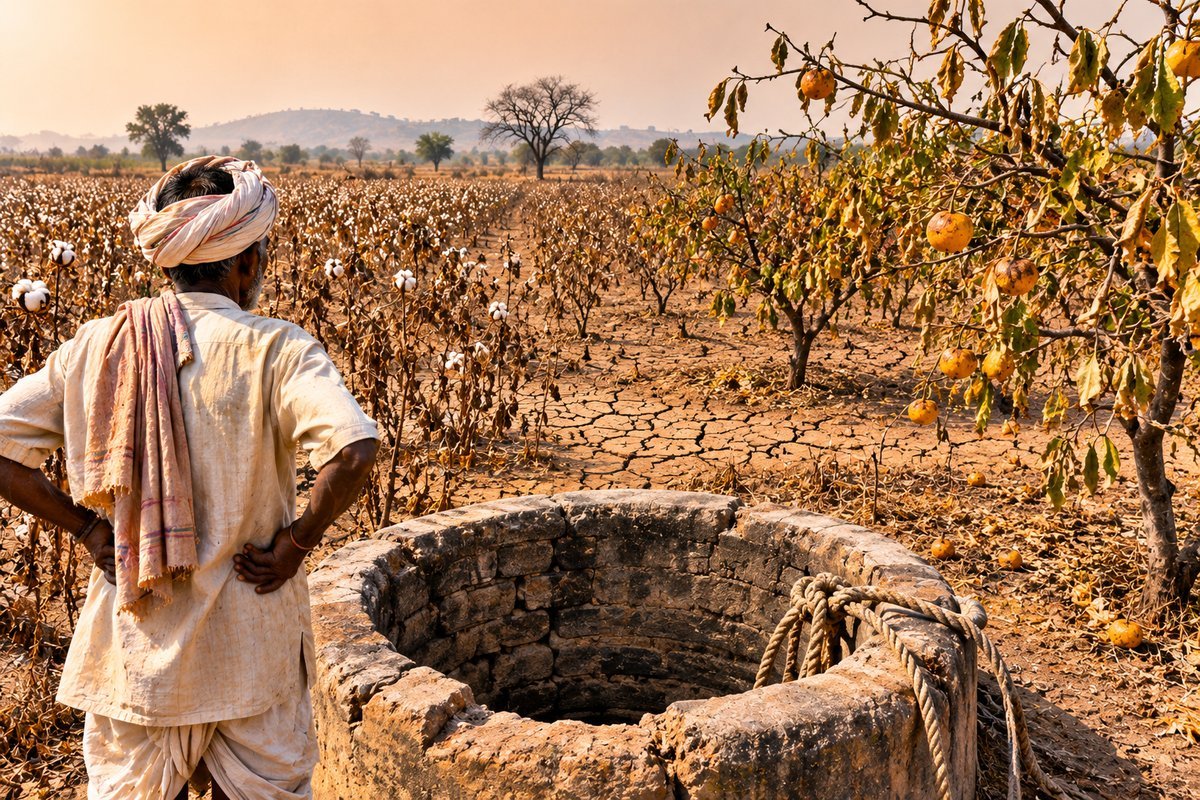
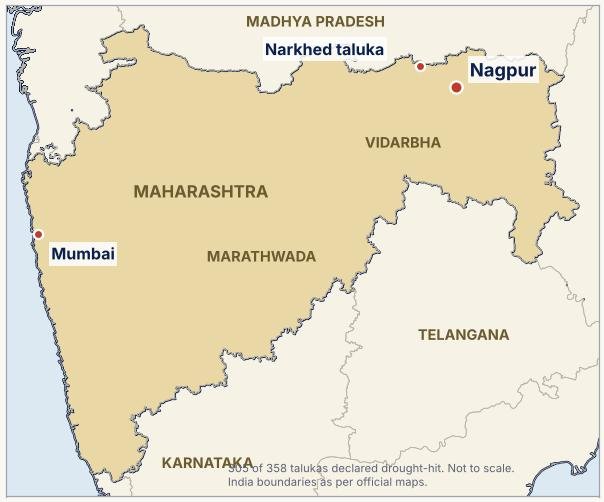
A report published on 9 November 2026 stated that 305 of Maharashtra’s 358 talukas had been declared drought-hit. During a visit to a farmer’s home in the Nagpur district, Chief Minister Devendra Fadnavis announced temporary relaxation of restrictions on borewells for eligible horticulture farmers until 15 December 2026. The measure is intended to support crops affected by water scarcity and remains subject to administrative permission. The announcement raises a wider policy question: how to provide immediate agricultural relief without deepening long-term groundwater depletion.
Concept: Drought Assessment and Disaster Response Financing
The Manual for Drought Management, 2016, provides a framework for assessing drought using indicators such as rainfall deficiency, agricultural activity, vegetation condition and soil moisture. Under the Disaster Management Act, 2005, the State Disaster Response Fund (SDRF) finances immediate relief for notified disasters, including drought, subject to applicable norms. The National Disaster Response Fund (NDRF) provides additional assistance for disasters of a severe nature following prescribed assessment procedures. Relief financing does not automatically authorise unrestricted groundwater extraction. Sustainable drought management requires aquifer recharge, efficient irrigation and watershed conservation.
Key facts for Prelims
- Manual for Drought Management: Issued by the Department of Agriculture, Cooperation and Farmers Welfare in 2016.
- Vegetation condition can be assessed using the Normalised Difference Vegetation Index (NDVI).
- SDRF: Constituted under Section 48(1)(a) of the Disaster Management Act, 2005.
- NDRF: Constituted under Section 46 of the same Act.
- SDRF is shared by the Centre and States 75:25 for general-category States and 90:10 for North-Eastern and Himalayan States.
Mains analysis and way forward
Mains analysis
- Horticultural crops may suffer lasting damage when water is unavailable during critical growth periods.
- Emergency borewell permission can protect farmers in the short term but may accelerate aquifer depletion.
- Drought declarations require evidence-based assessment; rainfall deficiency alone is not a complete measure of agricultural impact.
- Disaster relief must account for unequal access to irrigation, groundwater and financial resources.
Way forward
- Link temporary water-access measures to aquifer monitoring and enforceable extraction safeguards.
- Expand micro-irrigation, drought-resilient crops and watershed development.
- Improve timely relief delivery using transparent vulnerability and damage assessments.
Connect the dots: Drought relief connects climate adaptation, groundwater governance, agricultural livelihoods and fiscal federalism.
Sources: The Indian Express, “CM Devendra Fadnavis spends Diwali with drought-hit farmer, announces relief for borewells”, 9 November 2026. Ministry of Home Affairs, Disaster Response Funds.
International relations
Bangladesh Says Extradition Request for Sheikh Hasina Has Been Sent to India
In short: Bangladesh’s renewed demand concerning Sheikh Hasina brings the bilateral extradition treaty and its legal exceptions into focus.
Why in news
On 8 November 2026, Bangladesh’s Law Minister Md Asaduzzaman reiterated that his government had requested former Prime Minister Sheikh Hasina’s extradition from India under the bilateral treaty. The minister described her as a convicted criminal, referring to a judgment delivered in Bangladesh. Hasina has disputed the proceedings and denied wrongdoing. India had earlier stated that the extradition matter was being examined through established procedures. No fresh Indian decision to grant extradition had been verified at the time of this edition.
Concept: India-Bangladesh Extradition Treaty, 2013
Extradition is the formal process through which one state surrenders a person to another state for prosecution or punishment, subject to applicable law and treaty obligations. The 2013 India-Bangladesh treaty provides a framework for extraditable offences. Article 6 allows refusal for offences of a political character but expressly excludes certain acts, including murder and culpable homicide, from that exception. Other treaty provisions and domestic legal procedures may also be relevant. India’s Extradition Act, 1962, governs the domestic process. An extradition request is not the same as an order authorising surrender.
Key facts for Prelims
- India-Bangladesh Extradition Treaty: Signed in 2013.
- The treaty entered into force on 23 October 2013; a 2016 amendment to Article 10(3) simplified documentary requirements.
- Article 6: Political offence exception, with expressly listed exclusions.
- Murder and culpable homicide are excluded from treatment as political offences under Article 6.
- India’s governing domestic statute: Extradition Act, 1962.
- Article 4 of the treaty: central authorities are India’s Ministry of External Affairs and Bangladesh’s Ministry of Home Affairs.
- Article 2 of the treaty: an extraditable offence generally needs conduct punishable by at least one year’s imprisonment in both countries.
- Article 8 of the treaty: extradition may be refused if surrender would be unjust or oppressive, for example if the accusation was not made in good faith.
- Article 10(4): a request for a person already convicted must include a certificate of conviction and sentence.
Mains analysis and way forward
Mains analysis
- Extradition involves legal obligations as well as diplomatic considerations between neighbouring states.
- The political nature of a dispute does not automatically establish that an alleged offence qualifies for the treaty’s political offence exception.
- Judicial and executive procedures must address the request’s legal basis and applicable safeguards.
- The case also bears on bilateral trust, border cooperation and broader India-Bangladesh relations.
Way forward
- Process the request through the treaty and applicable Indian law, with careful attention to due process.
- Maintain diplomatic communication without prejudging the outcome of legal proceedings.
- Protect wider bilateral cooperation from unnecessary escalation over an individual case.
Connect the dots: Extradition connects treaty law, sovereignty, due process, neighbourhood diplomacy and human rights.
Sources: The Hindu, “Bangladesh Law Minister calls Hasina ‘convicted criminal’, says extradition request sent to India”, 8 November 2026. Ministry of External Affairs, India-Bangladesh Extradition Treaty, 2013.
South Africa’s ANC Records Historic Setback in November 2026 Local Elections
In short: The African National Congress’s reduced municipal vote share signals a more fragmented political landscape and increased coalition bargaining.
Why in news
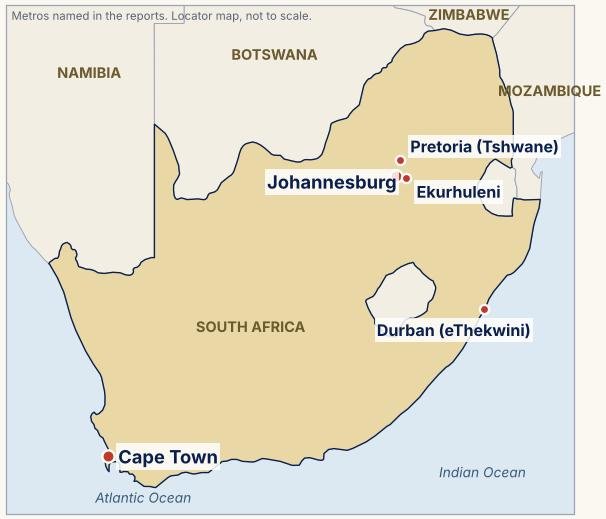
South Africa held local government elections on 4 November 2026, with results announced on 8 November. The African National Congress (ANC) received about 31% of the vote, its worst local election performance since the democratic transition. The Democratic Alliance secured about 25%, while other parties also gained substantial representation. The Electoral Commission reported numerous councils without outright majorities, making coalition negotiations important for forming municipal governments. The result is a local government outcome and should not be confused with a parliamentary election or a direct vote for president.
Concept: South Africa’s Local Electoral System and Coalition Government
South Africa uses a mixed electoral framework for local government. Municipal councils include councillors elected from geographical wards and through proportional representation party lists. District council representation also involves direct and indirect components. A hung council arises when no party controls a majority of seats, requiring cooperation or coalition arrangements to govern effectively. The ANC, associated with the anti-apartheid struggle, has historically dominated post-apartheid politics. India and South Africa cooperate through BRICS and the India-Brazil-South Africa Dialogue Forum (IBSA), established in 2003, alongside bilateral trade and diplomatic relations.
Key facts for Prelims
- South Africa’s first democratic national election was held in 1994.
- Municipal elections combine ward-based and proportional representation elements.
- IBSA comprises India, Brazil and South Africa.
- BRICS and IBSA are distinct groupings; IBSA has three member countries.
- Under Article 86 of South Africa’s Constitution, the National Assembly elects the President from among its members.
Mains analysis and way forward
Mains analysis
- Fragmented electoral mandates increase the importance of compromise, coalition agreements and local governance capacity.
- Coalition instability may complicate service delivery, budget approval and accountability.
- Voter preferences in local elections cannot be directly translated into national parliamentary outcomes.
- India-South Africa cooperation has wider significance for South-South partnerships, trade and multilateral institutional reform.
Way forward
- Establish transparent coalition agreements with clear service-delivery commitments.
- Strengthen municipal financial management and public accountability.
- Sustain bilateral and Global South cooperation across changes in domestic political alignments.
Connect the dots: South African elections connect comparative democracy, coalition politics, local governance and India’s Global South partnerships.
Sources: The Hindu, “South Africa’s ANC suffers worst election result as decline continues”, 8 November 2026. South African Government, Electoral Commission’s Official Declaration of 2026 Local Government Election Results, 8 November 2026.
India Evacuates 19 Seafarers Stranded in Yemen Amid Renewed Red Sea Tensions
In short: India’s evacuation of stranded seafarers highlights the importance of maritime worker protection and diplomatic coordination during regional crises.

Why in news
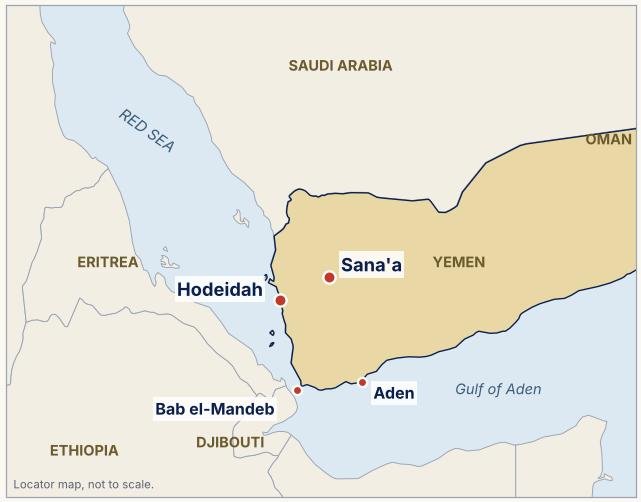
On 8 November 2026, the Indian Embassy in Yemen announced the successful evacuation of 19 Indian seafarers stranded for approximately two weeks in Hodeidah and Sana’a. The embassy said all 19 were safe, in good health and on their way back to India. Their arrival in India had not yet been confirmed. The evacuation came amid renewed regional tensions affecting Yemen and Red Sea maritime security. An earlier report confirmed that 14 Indians aboard a yacht off Yemen were safe. Whether they were among the 19 evacuated remains unclear.
Concept: Maritime Labour Convention and Seafarer Welfare
The International Labour Organization’s Maritime Labour Convention, 2006, establishes minimum standards for seafarers’ working and living conditions. Its provisions cover employment agreements, wages, accommodation, health protection, repatriation and access to complaints procedures. Seafarer welfare also depends on flag-state responsibilities, port-state control, employers and coordination between governments. The Bab el-Mandeb Strait links the Red Sea with the Gulf of Aden and lies along a vital shipping route connecting the Indian Ocean with the Suez Canal. India has previously undertaken overseas evacuation operations, including Operation Rahat in Yemen in 2015.
Key facts for Prelims
- Bab el-Mandeb connects the Red Sea and the Gulf of Aden.
- The Suez Canal connects the Mediterranean Sea with the Red Sea.
- Maritime Labour Convention: Adopted by the ILO in 2006.
- Operation Rahat: India’s evacuation mission from Yemen in 2015.
- India ratified the Maritime Labour Convention, 2006, on 9 October 2015; it entered into force for India on 9 October 2016.
Mains analysis and way forward
Mains analysis
- Conflict in maritime corridors creates risks for crews, cargo movements, insurance and energy supplies.
- Seafarers may be stranded far from their home countries, requiring cooperation among missions, operators and local authorities.
- Maritime labour protection extends beyond workplace safety to repatriation and access to medical care.
- India’s diplomatic evacuation capacity is an important part of protecting nationals abroad.
Way forward
- Strengthen emergency contact and tracking systems for Indian seafarers in high-risk regions.
- Improve coordination among Indian missions, shipping companies and maritime authorities.
- Ensure employers maintain credible emergency, insurance and repatriation arrangements.
Connect the dots: Seafarer evacuation connects diaspora welfare, maritime labour law, consular diplomacy and Indian Ocean security.
Sources: The Hindu, “19 Indian seafarers stranded in Yemen evacuated, Embassy says”, 9 November 2026. The New Indian Express, “19 Indian seafarers stranded in Yemen’s Hodeidah, Sana’a safely evacuated, says Embassy”, 8 November 2026.
Art and culture
Three Indian Manuscripts Enter UNESCO’s Memory of the World Asia-Pacific Regional Register
In short: Manuscripts of the Mahabharata, Arthashastra and Rajatarangini have received regional recognition under UNESCO’s documentary heritage programme.
Why in news
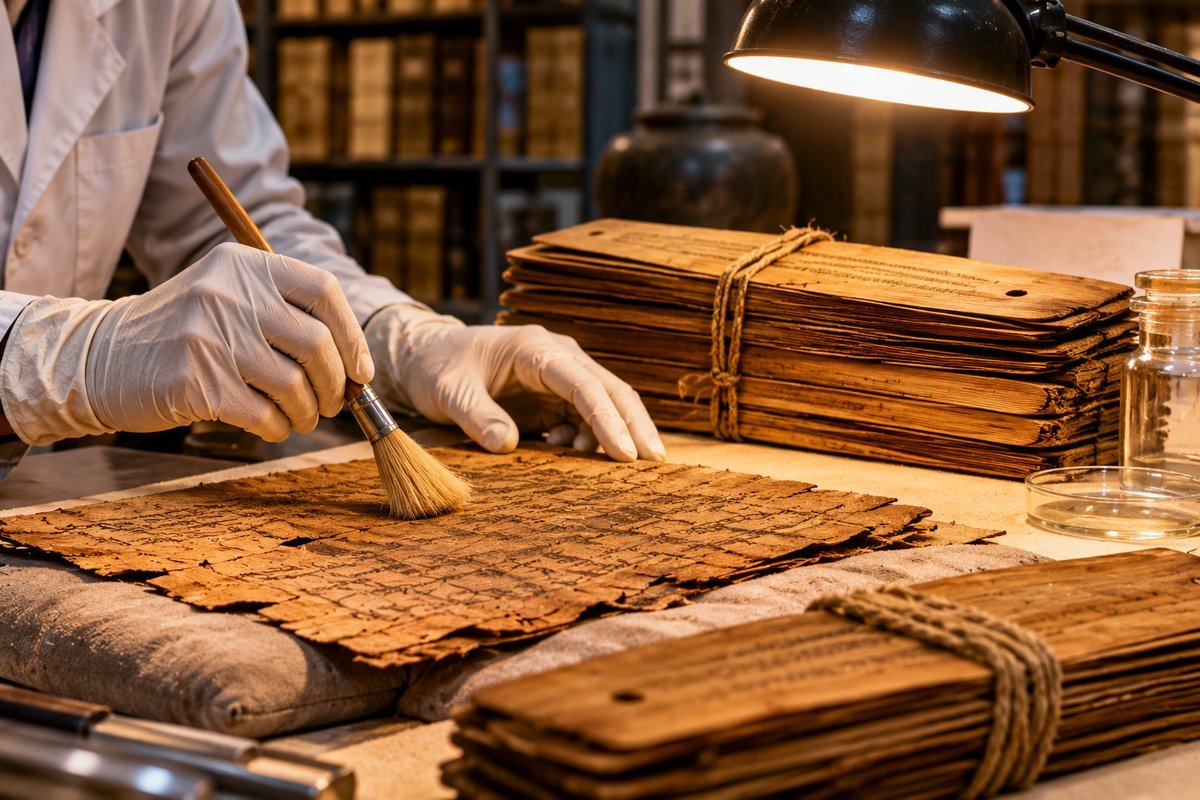
On 5 November 2026, Indian cultural authorities announced the inscription of three manuscripts on UNESCO’s Memory of the World Asia-Pacific Regional Register following its eleventh regional session in Jakarta, Indonesia. The selected items are a Mahabharata manuscript preserved in Pune, an Arthashastra manuscript held in Mysuru and a Rajatarangini manuscript preserved in Srinagar. The inscriptions recognise specific documentary materials rather than the entire literary works in the abstract. This is a regional documentary heritage register, distinct from both UNESCO’s international Memory of the World Register and its World Heritage List.
Concept: UNESCO Memory of the World Programme
UNESCO launched the Memory of the World Programme in 1992 to promote the preservation of and access to important documentary heritage, including manuscripts, archives, audiovisual collections and other records. Recognition can occur at national, regional or international levels. The Memory of the World Committee for Asia and the Pacific (MOWCAP) maintains the regional register. Inscription draws attention to the significance and conservation needs of documentary heritage but does not itself make a manuscript a World Heritage Site. Script, writing material, provenance and custodial institutions are particularly important for understanding manuscript traditions.
Key facts for Prelims
- Mahabharata: Approximately 400-year-old birch-bark manuscript in Sharada script, preserved at Bhandarkar Oriental Research Institute, Pune.
- Arthashastra: Sixteenth-century palm-leaf manuscript in Grantha script, preserved at Oriental Research Institute, Mysuru.
- Rajatarangini: Historical chronicle composed by Kalhana in the twelfth century; the preserved manuscript is in Sharada script at Oriental Research Library, Srinagar.
- Memory of the World Programme: Launched by UNESCO in 1992.
- Three earlier Indian manuscripts entered the Asia-Pacific Regional Register in 2024: Ramcharitmanas, Panchatantra and Sahrdayaloka-Locana. The 2026 additions take India’s regional total to six.
- In 2025, manuscripts of the Bhagavad Gita and Natyashastra entered UNESCO’s international Memory of the World Register, separate from the regional register.
Mains analysis and way forward
Mains analysis
- Manuscripts preserve evidence of intellectual, linguistic and literary traditions beyond the printed versions of texts.
- Fragile writing materials face threats from humidity, handling, biological deterioration and inadequate storage.
- Digitisation can improve access, but long-term preservation also requires conservation of physical originals.
- Recognition provides opportunities for scholarship and collaboration without replacing institutional conservation responsibilities.
Way forward
- Fund scientific conservation, cataloguing and climate-controlled storage.
- Develop accurate digital facsimiles, metadata and responsible public access.
- Support specialist training in historical scripts, manuscriptology and textual research.
Connect the dots: Documentary heritage connects ancient and medieval history, Sanskrit literature, conservation science and cultural diplomacy.
Sources: The Indian Express, “Knowledge Nugget | Mahabharata to Arthashastra: 3 Indian manuscripts earn UNESCO recognition”, 8 November 2026. The New Indian Express, “Mahabharata, Arthashastra, Rajatarangini manuscripts added to UNESCO memory regional register”, 5 November 2026.
In brief
- India gets its 100th chess Grandmaster: Anuj Shrivatri, 22, became India’s 100th chess Grandmaster on 8 November 2026 by winning the 7th ASEAN+ Individual Open Chess Championship in Ozamiz City, the Philippines. He is also Madhya Pradesh’s first Grandmaster. Source
- Delhi air on Deepavali night: PM2.5 at Akshardham reportedly reached 760.99 micrograms per cubic metre at 11 pm on 8 November, according to Delhi Pollution Control Committee data. The WHO’s PM2.5 guideline is 15 micrograms per cubic metre as a 24-hour average, which cannot be directly compared with an hourly reading. Source
- Oil India tank farm fire, Assam: The toll from the 6 November explosion and fire at Oil India Limited’s intermediate tank farm at Tengakhat, Dibrugarh, rose to four. OIL has initiated an inquiry and suspended four personnel who were in charge of the site. Source
- Khor Mor gas field hit in Iraq: Production was halted at the Khor Mor gas field in Iraq’s Kurdistan region on 8 November after a drone attack hit a gas storage facility, security sources said. The field supplies gas for regional power generation. Source
- Turkey and Azerbaijan close ranks: Presidents Erdogan and Aliyev reaffirmed unity on 8 November, Azerbaijan’s Victory Day, marking its 2020 military victory over Armenia, amid tensions over Azerbaijani school dress rules that effectively bar headscarves in classrooms. Erdogan arrived at Fuzuli airport before meeting Aliyev in Shusha. Source
- Prelims line: Nathu La: Defence Minister Rajnath Singh paid homage at the Sherathang War Memorial near Nathu La in East Sikkim on 8 November. Nathu La is a pass on the Sikkim and Tibet border, reopened for border trade in 2006 and a route of the Kailash Mansarovar Yatra. Source
Prelims practice: 5 questions
Choose an option to see the answer and explanation. Your score appears when all five are answered.
Mains practice
GS II | Polity and Governance | Electoral reforms and political funding “Transparency in political funding is necessary for meaningful electoral choice, but disclosure requirements must also account for legitimate donor privacy.” Examine this statement in the light of India’s political finance framework and the Supreme Court’s 2024 electoral bonds judgment.
Show the answer outline
INTRODUCTION
Political finance supports democratic competition, but opaque funding can prevent voters from assessing potential links between financial influence and public decision-making. An effective framework must promote transparency without unnecessarily discouraging lawful participation.
BODY
WHY TRANSPARENCY MATTERS
- Enables voters to examine major political contributions and make informed electoral choices.
- Helps identify possible conflicts of interest and concentrations of financial influence.
- Supports accountability of political parties and donors.
- Strengthens public confidence in electoral institutions.
EXISTING LEGAL AND INSTITUTIONAL FRAMEWORK
- Section 29C of the Representation of the People Act, 1951, requires disclosure of contributions exceeding Rs 20,000.
- Electoral trusts provide a regulated channel for political donations.
- The ECI receives contribution reports, while audited financial statements provide broader information about party finances.
- In February 2024, the Supreme Court struck down the Electoral Bonds Scheme, emphasising voters’ right to information under Article 19(1)(a).
- It also struck down the 2017 removal of the cap on corporate donations under Section 182 of the Companies Act, 2013, holding that unlimited corporate contributions violated Article 14.
PERSISTING CHALLENGES
- Contribution reports do not disclose every source of political income.
- Different reporting instruments can make it difficult to obtain a complete picture of party finances.
- Large donations may create concerns about unequal political influence.
- Excessive public disclosure of small donations may raise legitimate donor privacy concerns.
REFORMS NEEDED
- Publish standardised, searchable and timely political finance disclosures.
- Improve scrutiny of major contributions and audited party accounts.
- Strengthen enforcement against inaccurate or incomplete reporting.
- Design proportionate privacy safeguards for small individual donors without undermining transparency for significant political contributions.
CONCLUSION
Political finance reform should protect both electoral integrity and legitimate civic participation. Transparency, consistent reporting, independent scrutiny and proportionate privacy safeguards can make political competition more accountable.
ANSWER-WRITING TIP
Do not treat transparency and privacy as absolute opposites. Distinguish major financial contributions from small individual donations, and connect the analysis to Article 19(1)(a), electoral equality and practical reporting reforms.
DAF-II opens Wednesday. Prepare before you fill.
The DAF-II window runs from 11 to 25 November 2026. Start with our free checklist, then explore six free Interview Edge books (336 pages), DAF-based AI practice in Interview Edge Studio, and complimentary, application-based profile guidance with Guranchal Ma’am and a panel mock.
Six free Interview Edge books · Interview Edge Studio · Interview Edge (complimentary and application-based) · WhatsApp +91 81220 02172
Current Canvas is prepared by the UPSC Gurus editorial desk. Every fact is checked against official releases and reliable reporting, with sources listed under each story. Editions are compiled each month into Current Canvas Monthly, a free magazine.
About images: photographs and illustrations in Current Canvas are AI-generated for illustration only. They are not news photographs of the events described.
Your first Mentor’s Desk call is free
One free conversation per aspirant about where you are in your preparation, with an honest suggestion of the right next step.
Know more and bookHave a question? Get in touch
For questions about a programme, its fees, batch dates, payment or access. Message us on WhatsApp and our team will reply. Asking a question is not a booking, and you can ask as often as you need.
Get in touch on WhatsApp