 New this week · Free UG Handout 02UPSC Mains Directive Words: 60 Meanings, Trends and PYQsTwo free PDFs: The Guide and the With PYQs edition.Read and download
Today’s Canvas
- Supreme Court clarifies OBC creamy layer ruling will not reopen past appointmentsGS II
- Election Commission gives excluded electors another opportunity during Special Intensive RevisionGS II
- Supreme Court settles BBMB energy dispute: Punjab and Haryana to give Himachal 11,973 MU over 20 yearsGS II
- Sewer-cleaning deaths expose continuing gaps in enforcement of India’s prohibition lawGS II
- Cancer drug margins capped at 30%, but experts ask if lower MRPs mean affordable care; lung cancer rising faster among Karnataka’s womenGS II
- Iran’s Guards say tankers hit mines in the Strait of Hormuz; a seafarer is killed in a separate Gulf attackGS II
- Centre makes rice and paddy stock declarations mandatory amid concern over pricesGS III
- Karnataka says petrol samples had up to 31.2% ethanol against E20; compressed biogas blending at 1.7% in H1GS III
- Mines Ministry launches ninth auction tranche offering 20 critical and strategic mineral blocksGS III
- Agasthyamalai case: Supreme Court says temporary and non-resident silk cotton cultivators are not forest dwellers under FRAGS III
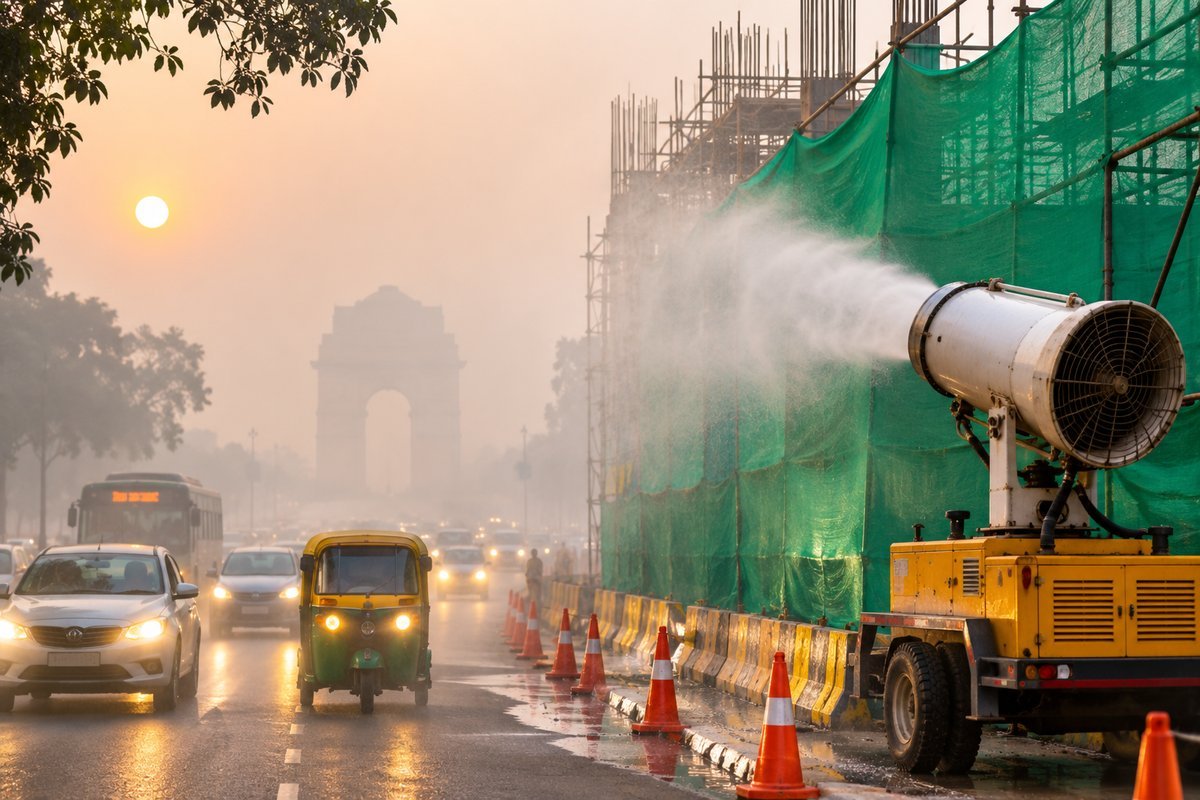
- Supreme Court questions repeated vehicle and construction restrictions as Delhi-NCR air pollution worsensGS III
- CMFRI study finds Keralam’s mangrove cover increased between 2017 and 2026 after decades of lossGS III
Polity, rights and governance
Supreme Court clarifies OBC creamy layer ruling will not reopen past appointments
In short: The Supreme Court protected completed appointments while applying its March 2026 creamy layer ruling to pending CSE 2025 service allocations.

Why in news
On 6 November 2026, a Bench of Justices P.S. Narasimha and R. Mahadevan clarified the reach of the Supreme Court’s 11 March 2026 verdict on the OBC creamy layer. That verdict held that income cannot be the sole criterion, and clarified how the 1993 Office Memorandum applies where equivalence of posts in PSUs and the private sector with government posts has not been established. The Court said the ruling will not, by itself, reopen selections or appointments concluded before 11 March, but will apply to the pending CSE 2025 service allocation. It refused the Centre’s plea for two years to establish equivalence of posts and extended the compliance time by two months.
Concept: Article 16(4) and the OBC creamy layer
Article 16(4) enables the State to provide reservation in public employment for backward classes not adequately represented in State services. In Indra Sawhney v. Union of India (1992), the Supreme Court upheld OBC reservation but required the exclusion of the creamy layer, the socially and economically advanced among OBCs. A Department of Personnel and Training Office Memorandum of September 1993 laid down the criteria, based on parental status and service category, together with an income/wealth test. Under that test, salary and agricultural income are not counted. Where equivalence of posts outside government was not established, income became the deciding factor, which the March 2026 verdict addressed.
Key facts for Prelims
- Article 16(4): enabling provision for reservation in public posts for backward classes.
- Indra Sawhney (1992): upheld 27% OBC reservation with creamy layer exclusion.
- September 1993 Office Memorandum: criteria for identifying the OBC creamy layer.
- Income/wealth test: salary and agricultural income are excluded from the calculation.
Mains analysis and way forward
Mains analysis
- Equality and social justice: The creamy layer principle seeks to direct OBC reservation benefits towards eligible, less advanced members of backward classes.
- Administrative certainty: Protecting concluded appointments prevents settled service positions from being disturbed merely because the legal interpretation has been clarified.
- Substantive fairness: Pending CSE 2025 allocations must follow the law as interpreted by the Supreme Court.
- Policy clarity: The Court distinguished the parental status and employment-category assessment from the separate income and wealth test.
Way forward
- Implement the Court’s directions in pending service allocations without reopening concluded appointments.
- Establish clear equivalence criteria for relevant government, public-sector and private-sector employment categories.
- Provide transparent scrutiny and grievance-redressal procedures for candidates whose OBC non-creamy layer claims have been rejected.
Connect the dots: Article 14 + Article 16(4) + substantive equality + affirmative action + administrative fairness in public recruitment.
Election Commission gives excluded electors another opportunity during Special Intensive Revision
In short: Electors left out of the SIR draft rolls in seven States and UTs can now refile the Enumeration Form to seek inclusion.
Why in news
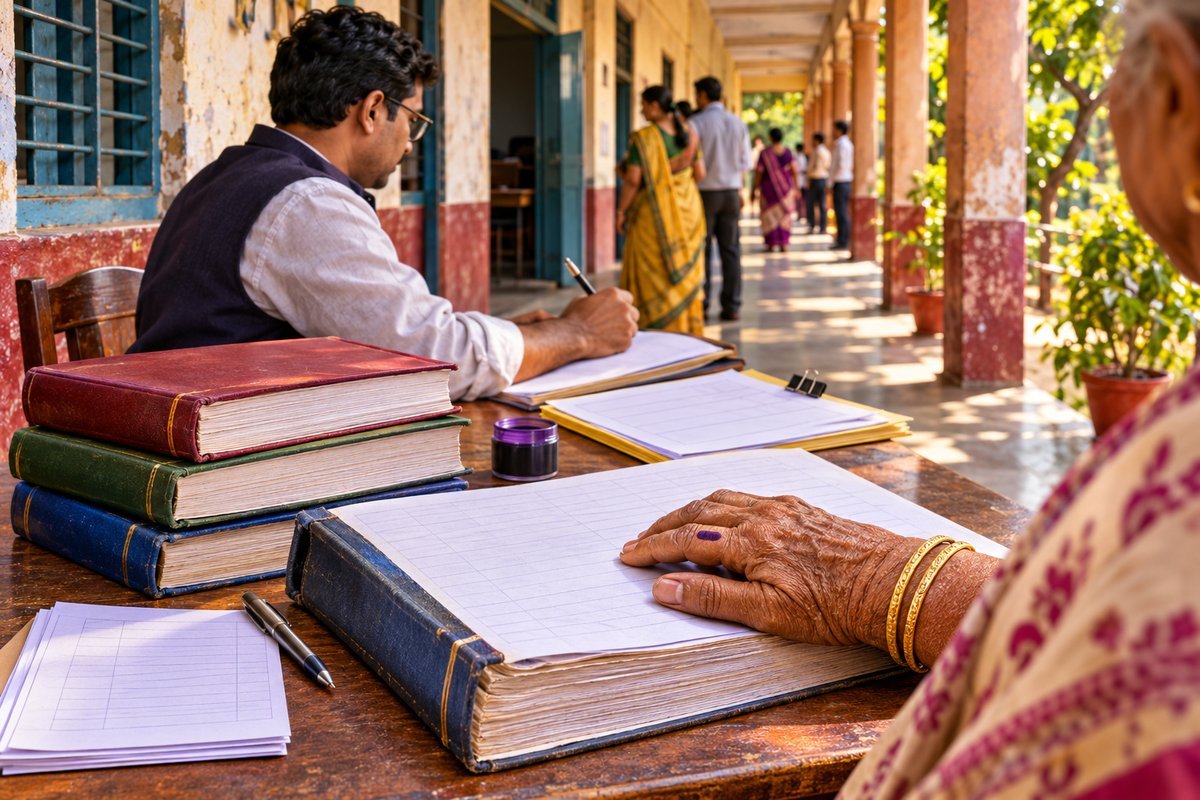
The Election Commission has allowed electors marked Absent, Shifted, Dead or Duplicate (ASDD) during the ongoing Special Intensive Revision (SIR) in seven States and Union Territories to fill the Enumeration Form again to seek inclusion, rather than only through Form 6, the form for new registration. These electors were left out of the draft rolls because Enumeration Forms issued to them were not received back. Refiling allows their cases to be reconsidered; it does not restore names automatically. The Hindu, in an editorial on 7 November, linked accurate rolls to access to welfare.
Concept: Article 324 and electoral roll revision
Article 324 vests the superintendence, direction and control of elections in the Election Commission of India. Article 326 provides for adult suffrage in Lok Sabha and State Assembly elections, subject to the Constitution and applicable law. The Representation of the People Act, 1950 governs electoral registration and the preparation and revision of electoral rolls. Section 21 concerns electoral roll preparation and revision. Electoral Registration Officers and Booth Level Officers perform defined functions in this process. Electoral revision must identify eligible voters, remove legally invalid entries and provide accessible procedures for claims and corrections.
Key facts for Prelims
- Article 324: Constitutional authority of the Election Commission.
- Article 326: Adult suffrage for Lok Sabha and State Legislative Assembly elections.
- Representation of the People Act, 1950: Electoral rolls and registration of electors.
- Form 6: application for inclusion in the electoral roll; ASDD electors can also refile the Enumeration Form.
Mains analysis and way forward
Mains analysis
- Electoral inclusion: Incorrect exclusion of an eligible voter can prevent the exercise of a democratic right.
- Electoral integrity: Duplicate and invalid entries also require appropriate verification.
- Administrative accountability: Enumeration records and reasons for omission must be transparent and capable of correction.
- Digital accessibility: Online procedures can improve convenience, but offline assistance remains important for citizens with limited digital access.
Way forward
- Ensure proactive Booth Level Officer contact and accessible claims procedures.
- Provide clear reasons for omission and practical opportunities for correction.
- Strengthen verification, appeals and monitoring without making procedural requirements disproportionately burdensome.
Connect the dots: Article 324 + universal adult suffrage + electoral integrity + administrative accountability + digital inclusion.
Sources: The Hindu, report on fresh opportunities for electors omitted from SIR draft rolls, 7 November 2026. The Hindu, editorial on electoral rolls and welfare, 7 November 2026.
Supreme Court settles BBMB energy dispute: Punjab and Haryana to give Himachal 11,973 MU over 20 years
In short: The Supreme Court settled the long-standing BBMB electricity dispute through a 20-year power-supply arrangement for Himachal Pradesh.
Why in news
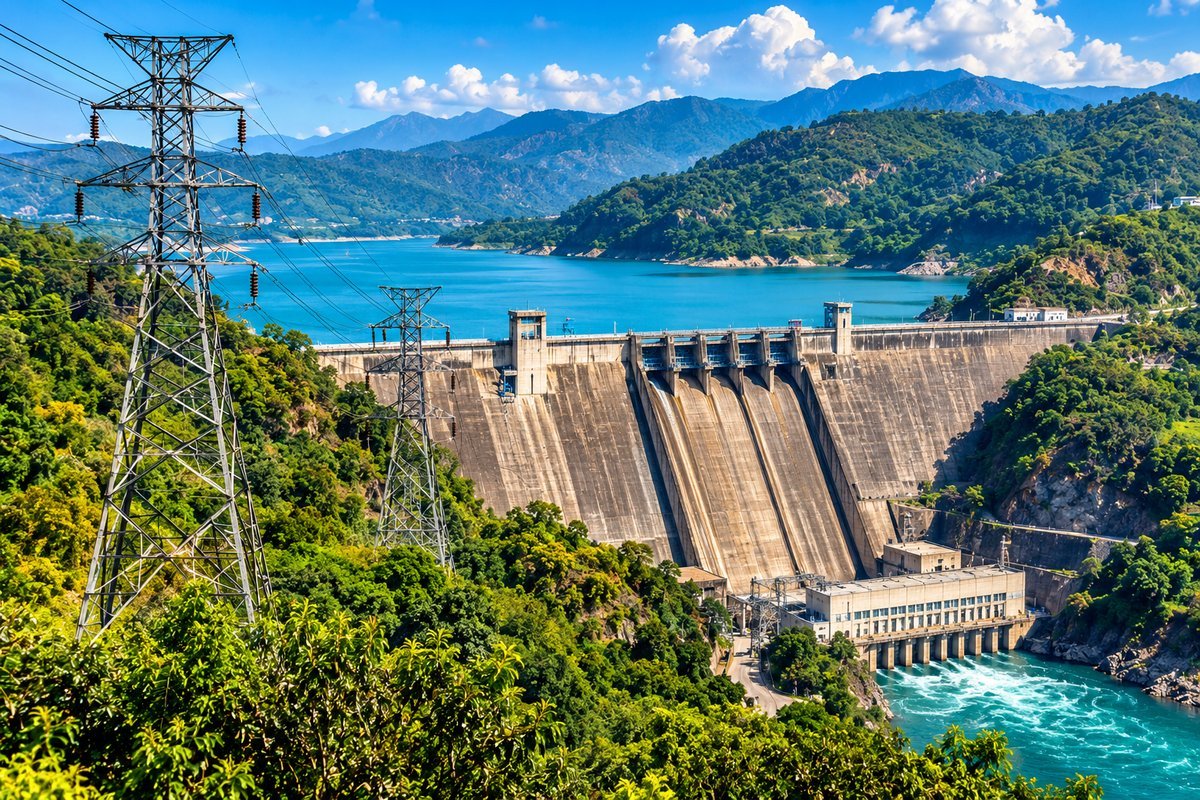
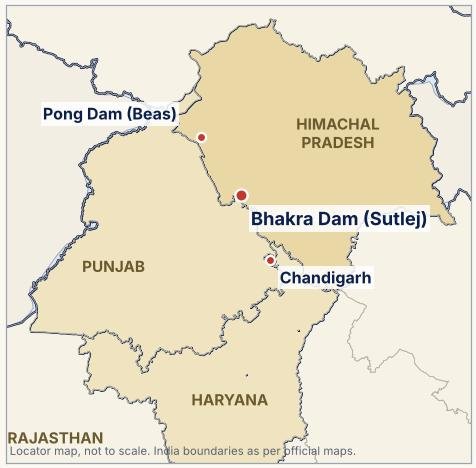
On 6 November 2026, a Bench of Chief Justice Surya Kant and Justices Joymalya Bagchi and V. Mohana ended a decades-old dispute over Himachal Pradesh’s dues from Bhakra Beas Management Board (BBMB) projects since 1966. It accepted the Centre’s cashless proposal: Punjab and Haryana will give Himachal Pradesh 11,973 million units (MU) of electricity over 20 years, about 598 MU a year. The arrangement implements a 2011 Supreme Court verdict that fixed Himachal’s share at 7.19%. Himachal’s liability of about ₹420 crore towards historical capital costs is adjusted in energy terms instead of being paid in cash.
Concept: BBMB and inter-State power-sharing arrangements
The Bhakra Beas Management Board manages major hydroelectric and related infrastructure associated with the Bhakra-Nangal and Beas projects. The Punjab Reorganisation Act, 1966, is important to the institutional and resource-sharing arrangements that followed the reorganisation of Punjab. Electricity generated by shared infrastructure can create disputes over entitlement, costs and distribution. Such disputes may require statutory interpretation, intergovernmental negotiation and judicial enforcement. Article 131 gives the Supreme Court original jurisdiction over specified legal disputes involving the Union and States. It is distinct from Article 262, which specifically addresses inter-State river water disputes.
Key facts for Prelims
- BBMB manages the Bhakra-Nangal and Beas projects; set up under the Punjab Reorganisation Act, 1966.
- Himachal Pradesh’s share fixed by the Supreme Court in 2011: 7.19%.
- Central Electricity Authority’s original entitlement estimate: 13,066 MU.
- Himachal’s share runs from Bhakra (1966), Dehar (1977) and Pong Dam (1978).
Mains analysis and way forward
Mains analysis
- Cooperative federalism: Shared infrastructure requires clear allocation principles and sustained coordination.
- Judicial enforcement: The Court’s order addresses implementation of an entitlement already recognised in earlier proceedings.
- Energy security: Electricity allocation affects planning and supply arrangements across neighbouring States.
- Equitable settlement: Energy-based repayment distributes compliance over time while protecting the beneficiary State’s recognised entitlement.
Way forward
- Develop a transparent implementation schedule with annual verification of electricity supplied.
- Ensure BBMB maintains reliable accounting of energy allocations, charges and outstanding obligations.
- Strengthen inter-State mechanisms for resolving resource-sharing disagreements before prolonged litigation becomes necessary.
Connect the dots: Punjab Reorganisation Act, 1966 + Article 131 + cooperative federalism + hydropower + inter-State resource sharing.
Sources: The Hindu, “Himachal to get 11,973 MU electricity from Punjab, Haryana as SC settles decades-old energy dispute”, 6 November 2026. LiveLaw, “Supreme Court Directs Punjab, Haryana To Supply 11,973 Million Units Of Power Arrears To Himachal Pradesh Over 20 Years”, 6 November 2026.
Social justice and health
Sewer-cleaning deaths expose continuing gaps in enforcement of India’s prohibition law
In short: Official records of hazardous sewer-cleaning deaths underline the importance of enforcing the 2013 law and Supreme Court safety directions.
Why in news
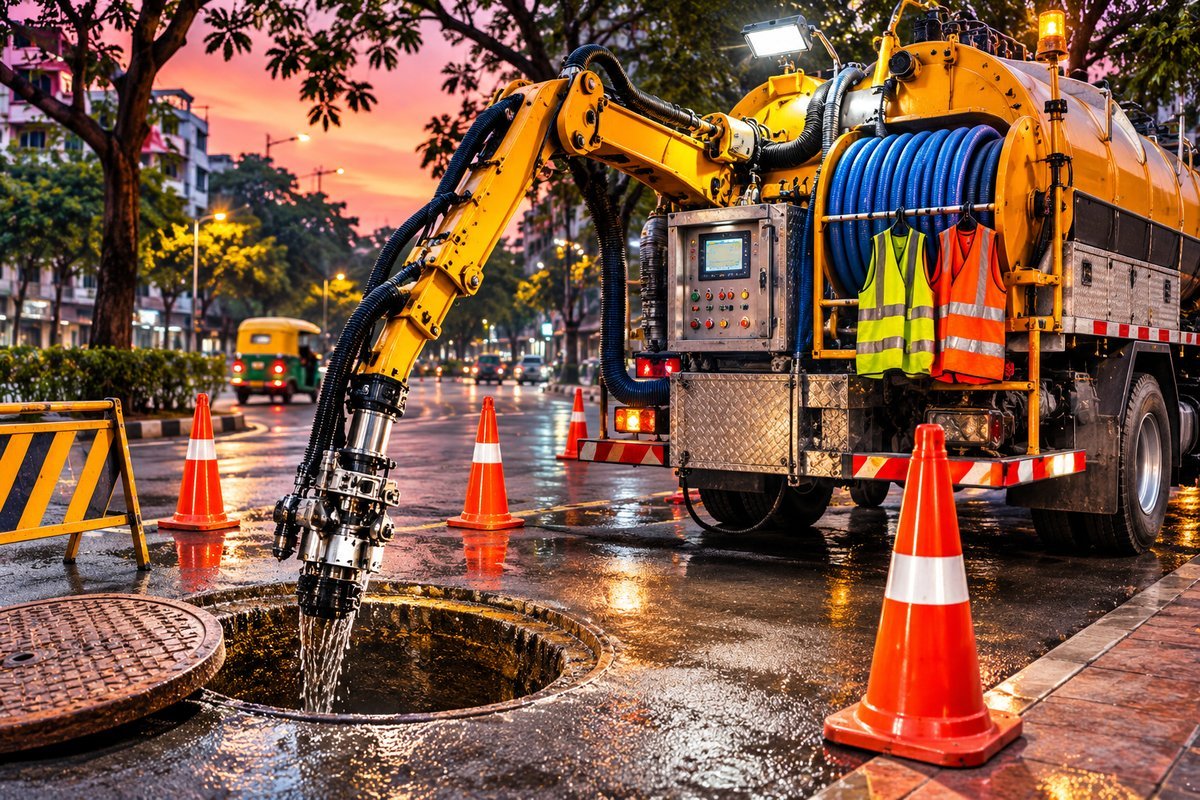
An editorial in The Hindu on 6 November 2026 noted that sanitation workers continue to die in sewers and septic tanks despite the law, Supreme Court orders and mechanised technology. Four workers recently died cleaning a hotel’s food-waste chamber in Ujjain, Madhya Pradesh. Parliament and National Commission for Safai Karamcharis data cited by the paper show 332 deaths across 18 States and UTs in 2021-26, 859 between 2014 and 2025, and 1,350 between 1993 and 2025. In 2023, the Supreme Court raised compensation for each death to ₹30 lakh.
Concept: PEMSR Act, 2013 and the right to dignity
The Prohibition of Employment as Manual Scavengers and their Rehabilitation Act, 2013 bans manual scavenging and the hazardous cleaning of sewers and septic tanks, and since 2013 the law has treated the two separately. Section 7 bars engaging anyone for hazardous sewer cleaning, and Section 33 requires local authorities to use modern technology. In Safai Karamchari Andolan (2014) and Dr. Balram Singh (2023), the Supreme Court ordered compensation, rehabilitation and an end to workers entering sewers through outsourced contracts. The NAMASTE scheme seeks to mechanise sanitation work. Articles 17, 21 and 23 underpin dignity and protection from exploitation.
Key facts for Prelims
- PEMSR Act, 2013: prohibits manual scavenging and hazardous sewer and septic tank cleaning.
- Dr. Balram Singh v. Union of India (2023): ₹30 lakh compensation for each sewer death.
- NAMASTE: National Action for Mechanised Sanitation Ecosystem.
- Data cited: 332 deaths in 18 States and UTs, 2021-26.
Mains analysis and way forward
Mains analysis
- Right to dignity: Hazardous sanitation work raises constitutional questions about equality, occupational safety and social exclusion.
- Enforcement deficit: Reported fatalities demonstrate that legal prohibition alone does not ensure compliance.
- Outsourcing accountability: Municipalities and contracting agencies must not allow unsafe practices to persist through subcontracting.
- Rehabilitation: Compensation addresses consequences, while sustainable livelihoods, skill development and mechanisation address underlying risks.
Way forward
- Replace hazardous manual entry with mechanised cleaning, supported by equipment, trained personnel and emergency protocols.
- Formalise sanitation workers’ employment, register FIRs in every death and pay compensation on time.
- Ensure rehabilitation, alternative livelihoods and independent monitoring of sanitation contractors.
Connect the dots: Article 17 + Article 21 + Article 23 + social exclusion + urban local governance + occupational safety.
Sources: The Hindu, “Danger in the sewer: On India’s sewer-cleaning deaths”, November 2026.
Cancer drug margins capped at 30%, but experts ask if lower MRPs mean affordable care; lung cancer rising faster among Karnataka’s women
In short: Capping trade margins on 137 anti-cancer drugs will lower their prices from 9 November, but medicines are only one part of the cost of cancer care.
Why in news
The National Pharmaceutical Pricing Authority (NPPA) has capped trade margins at 30% for 137 non-scheduled anti-cancer drugs, with revised prices taking effect from 9 November 2026; The Hindu reported cuts of up to 70% to 93% across nearly 900 brands. In a discussion in the paper on 6 November, experts asked whether lower prices alone will make cancer care affordable. Separately, Kidwai Memorial Institute of Oncology data show the average annual age-adjusted rate of lung cancer rising by 4.8% among women in Karnataka, against 1.6% among men, though men still carry a higher overall burden.
Concept: NPPA, DPCO 2013 and trade margin rationalisation
The National Pharmaceutical Pricing Authority, under the Department of Pharmaceuticals, regulates medicine prices through the Drugs (Prices Control) Order, 2013, issued under the Essential Commodities Act, 1955. Scheduled medicines included in the National List of Essential Medicines are subject to notified ceiling prices. Non-scheduled medicines generally face separate price-monitoring rules. Paragraph 19 of DPCO, 2013 enables exceptional price intervention in the public interest. Trade Margin Rationalisation limits the margin retained along the distribution and retail chain. A reduction in Maximum Retail Price lowers the permitted selling price but does not measure the full cost of cancer care.
Key facts for Prelims
- NPPA: under the Department of Pharmaceuticals; enforces the Drugs (Prices Control) Order, 2013.
- DPCO, 2013 is issued under the Essential Commodities Act, 1955.
- Trade margin cap: 30% on 137 non-scheduled anti-cancer drugs.
- Karnataka lung cancer trend (KMIO): +4.8% a year among women, +1.6% among men.
Mains analysis and way forward
Mains analysis
- Medicine affordability: Trade-margin regulation can reduce maximum retail prices, including for certain high-value medicines.
- Total treatment costs: Cancer expenditure also includes diagnostics, surgery, hospitalisation, radiotherapy, travel and follow-up care.
- Equitable access: Affordability depends on treatment availability, financial protection and functioning public health facilities.
- Gender-sensitive cancer care: Cancer registries should examine differences in incidence, diagnosis and outcomes among women and men without assuming a single cause.
Way forward
- Monitor that revised prices actually reach patients at pharmacies and hospitals.
- Strengthen public cancer-care services, standard treatment protocols and financial protection.
- Expand high-quality population-based cancer registries and research into sex-specific lung cancer patterns.
Connect the dots: DPCO 2013 + Essential Commodities Act + universal health coverage + gender-sensitive healthcare + cancer surveillance.
Sources: The Hindu, “Are lower MRPs on cancer drugs translating into affordable care?”, November 2026. The Hindu, “Lung cancer rising faster among women in Karnataka”, 7 November 2026.
International relations
Iran’s Guards say tankers hit mines in the Strait of Hormuz; a seafarer is killed in a separate Gulf attack
In short: Reported maritime incidents near the Strait of Hormuz underline the security importance of a major oil and gas shipping route.

Why in news
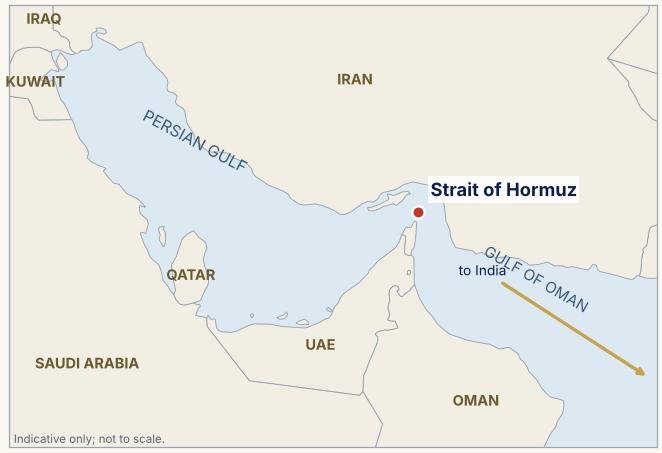
On 6 November 2026, Iran’s Islamic Revolutionary Guard Corps said two oil tankers caught fire after striking mines in and near the Strait of Hormuz while using what it called an unauthorised route, a day after Iranian media reported five tankers and a tugboat on fire. Maritime officials have not confirmed these incidents. Separately, a seafarer was killed when a projectile struck the Greek-owned, Marshall Islands-flagged tanker Velos Sapphire in the Gulf. Since the West Asia war began on 28 February, Iran has sought to limit traffic through the strait.
Concept: Strait of Hormuz and India’s energy security
The Strait of Hormuz connects the Persian Gulf with the Gulf of Oman and the Arabian Sea. It lies between Iran to the north and Oman, including the Musandam Peninsula, to the south. The strait is a major international passage for seaborne crude oil, petroleum products and liquefied natural gas. Its security affects energy-importing economies through shipping availability, freight charges, insurance premiums and international fuel prices. India’s energy security depends on reliable imports, diversified suppliers, functioning maritime routes and domestic measures to manage potential supply interruptions.
Key facts for Prelims
- Strait of Hormuz: links the Persian Gulf with the Gulf of Oman; between Iran and Oman (Musandam).
- Normally carries about one-fifth of global oil consumption.
- IRGC: Islamic Revolutionary Guard Corps, the ideological arm of Iran’s military.
- UKMTO: the British maritime agency that tracks incidents at sea.
Mains analysis and way forward
Mains analysis
- Energy import vulnerability: Disruptions to major shipping routes can affect the cost and reliability of imported fuels.
- Maritime security: Vessel safety depends on navigation coordination, security information and protection of commercial shipping.
- Economic transmission: Shipping risk can increase freight and insurance costs, even without a complete closure of a route.
- Strategic diplomacy: India has an interest in stable relations with energy suppliers and the preservation of international maritime navigation.
Way forward
- Diversify energy suppliers and maintain adequate strategic petroleum reserves.
- Strengthen maritime information-sharing and monitoring of commercial shipping risks.
- Support diplomatic de-escalation and measures to safeguard civilian vessels and seafarers.
Connect the dots: Strait of Hormuz + India’s crude and LNG imports + maritime security + balance of payments + strategic reserves.
Sources: The Hindu, “Iran Guards say two tankers caught fire in Hormuz”, 6-7 November 2026. The Hindu, “Sailor killed in Gulf as Iran says tankers on fire”, 7 November 2026.
Economy, food and energy
Centre makes rice and paddy stock declarations mandatory amid concern over prices
In short: The government has mandated weekly rice and paddy stock disclosure and permitted five southern States to impose stock limits where necessary.
Why in news
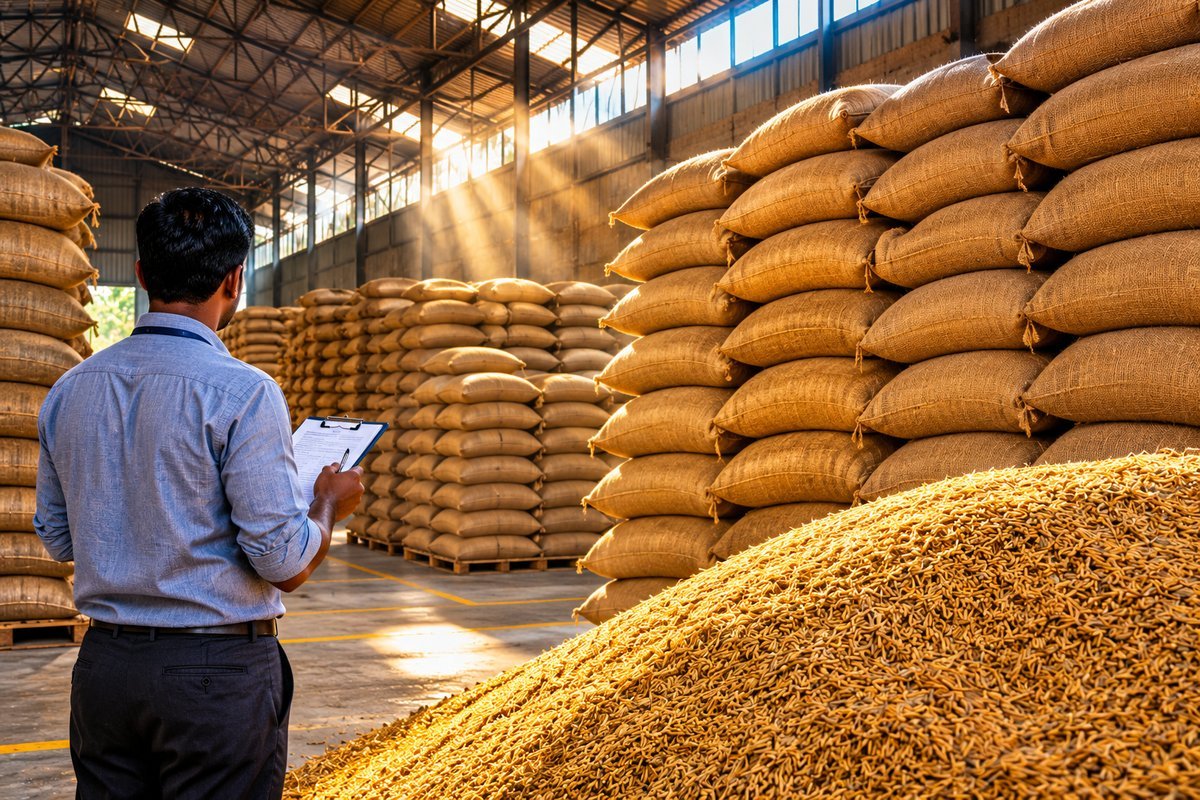
Under an order dated 6 November 2026, all traders, wholesalers, retailers, large retail chains, processors and millers must declare rice and paddy stocks in six categories on the Food Stock Portal every Friday. The Centre also allowed Andhra Pradesh, Karnataka, Kerala, Tamil Nadu and Telangana to impose stock limits until 31 January 2027, and doubled the 2026-27 rice sale target under the Open Market Sale Scheme (Domestic) from 25 lakh to 50 lakh tonnes. Retail rice inflation rose to 8.25% in September from 5.89% in August, after a deficient and uneven monsoon.
Concept: Essential Commodities Act, 1955 and food-price management
The Essential Commodities Act, 1955 empowers the government to regulate the production, supply, distribution and trade of specified essential commodities under legally permitted conditions. Section 3 is central to control orders, while Sections 6 and 7 address enforcement-related consequences and penalties. Stock declarations help authorities assess market availability and identify unusual accumulation. Stock limits, where validly imposed, restrict quantities held by specified entities. The Open Market Sale Scheme allows the Food Corporation of India to release foodgrains into the market through prescribed mechanisms. These instruments supplement procurement, buffer stocks and the Public Distribution System.
Key facts for Prelims
- Essential Commodities Act: 1955; Section 3 concerns the power to control essential commodities.
- Mandatory stock reporting: Every Friday on the Food Stock Portal.
- Six categories: Basmati, non-Basmati premium, non-Basmati, parboiled, broken rice and paddy.
- Revised OMSS rice-sale target for FY 2026-27: 50 lakh metric tonnes.
Mains analysis and way forward
Mains analysis
- Price stability: Stock disclosure can improve information available to regulators during periods of rising prices.
- Food security: Public-market releases may increase grain availability and help moderate local shortages.
- Federal coordination: The Centre’s concurrence allows specified States to consider stock limits according to local circumstances.
- Market efficiency: Excessively restrictive or unpredictable controls could discourage legitimate trade and storage.
Way forward
- Monitor prices, arrivals and stock disclosures using reliable, regularly updated data.
- Apply stock limits transparently, proportionately and only where legally justified.
- Improve storage, transport and distribution networks to reduce regional price differences.
Connect the dots: Essential Commodities Act + FCI + OMSS + inflation management + agricultural markets + cooperative federalism.
Sources: The Hindu, “Amid price rise, Centre mandates rice, paddy stock declaration”, 7 November 2026. Ministry of Consumer Affairs, Food and Public Distribution, PIB, “Government doubles OMSS (D) rice sale target…”, 6 November 2026.
Karnataka says petrol samples had up to 31.2% ethanol against E20; compressed biogas blending at 1.7% in H1
In short: Karnataka reported petrol samples exceeding the E20 blend, while India’s compressed biogas blending remained below its annual target.
Why in news
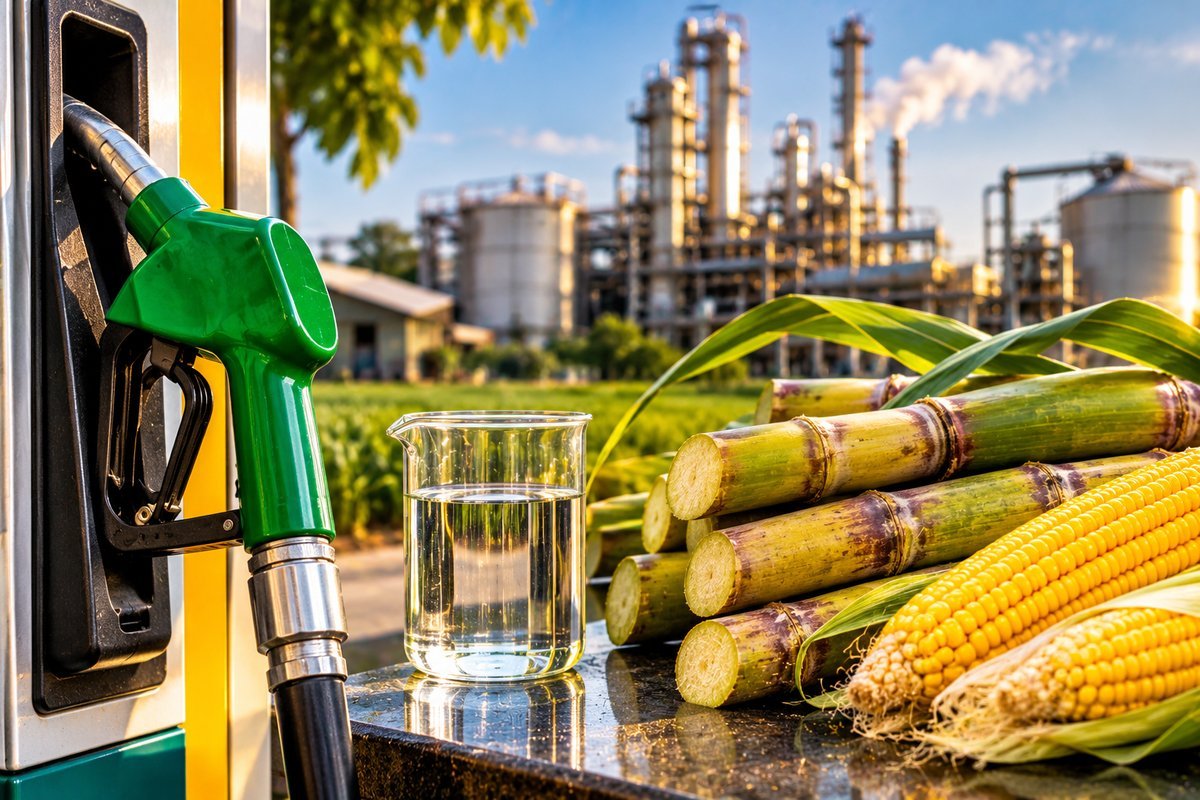
On 6 November 2026, Karnataka’s Food and Civil Supplies Minister said petrol samples taken by the State’s Department of Legal Metrology from districts including Bengaluru Urban, Kolar, Tumakuru and Dakshina Kannada contained ethanol well above the prescribed 20%, as high as 31.2% in some cases. These are the State government’s findings from limited sampling, and public sector oil companies have reportedly disputed the testing method. Separately, the Petroleum and Natural Gas Regulatory Board said compressed biogas (CBG) blending with CNG and piped natural gas reached 1.7% in April-September 2026, against a 3% target for the year.
Concept: E20, National Policy on Biofuels and CBG blending
E20 is petrol containing 20% ethanol by volume, with the remainder primarily petrol. India’s National Policy on Biofuels, 2018, amended in 2022, advanced the national E20 target to Ethanol Supply Year 2025-26. Compressed biogas is produced by purifying biogas generated from organic materials, including agricultural residues, manure and other biodegradable waste. It can substitute for conventional natural gas in suitable applications. The government’s Compressed Biogas Blending Obligation covers CNG for transport and domestic piped natural gas. Blending targets are 3% for FY 2026-27, 4% for FY 2027-28 and 5% from FY 2028-29.
Key facts for Prelims
- E20: petrol with 20% ethanol by volume.
- National Policy on Biofuels, 2018 (amended 2022) advanced the E20 target to 2025-26.
- CBG blending obligation: 3% in 2026-27, 4% in 2027-28, 5% in 2028-29.
- PNGRB: Petroleum and Natural Gas Regulatory Board.
Mains analysis and way forward
Mains analysis
- Energy security: Domestic biofuels can substitute for part of conventional fossil-fuel consumption.
- Fuel standards: Blending programmes require quality control, reliable laboratory testing and compatibility with vehicle specifications.
- Waste-to-energy: CBG offers productive uses for organic waste and agricultural residues.
- Infrastructure constraint: Inadequate pipeline connectivity can reduce the commercial utilisation of CBG plants.
Way forward
- Strengthen independent fuel sampling, quality assurance and transparent enforcement of applicable specifications.
- Improve CBG plant connectivity with city gas distribution networks and support reliable offtake arrangements.
- Assess consumer protection, vehicle compatibility and environmental effects through scientific testing.
Connect the dots: National Policy on Biofuels + E20 + CBG blending + circular economy + energy security + consumer protection.
Sources: The Hindu, report on Karnataka petrol ethanol tests, 6 November 2026. The Hindu, “CBG blending at 1.7% in H1; pipeline connectivity key to achieving 3% target”, November 2026. Ministry of Petroleum and Natural Gas, PIB, National Policy on Biofuels amendment, 18 May 2022. Ministry of Petroleum and Natural Gas, PIB, Compressed Biogas Blending Obligation, 2023.
Mines Ministry launches ninth auction tranche offering 20 critical and strategic mineral blocks
In short: The Centre has put 20 critical and strategic mineral blocks up for auction, along with 11 blocks for exploration licences.

Why in news
On 5 November 2026, the Ministry of Mines launched the ninth tranche of critical and strategic mineral block auctions with 20 blocks, and the third tranche of exploration licence auctions covering 11 blocks. The blocks include deposits of graphite, glauconite, vanadium, gallium, titanium, rare earth elements, tungsten, potash and halite. Critical minerals are needed for batteries, electronics, clean energy and defence, and the auctions aim to raise domestic exploration and supply.
Concept: MMDR Act and critical mineral security
The Mines and Minerals (Development and Regulation) Act, 1957 governs mineral development and mining regulation in India. Amendments in 2023 strengthened the framework for critical and strategic minerals, including Central auctions of specified blocks. Section 10BA provides for exploration licences relating to critical and deep-seated minerals listed in the Seventh Schedule. An exploration licence permits specified exploration activities; it is not the same as a mining lease authorising mineral extraction. Critical minerals are economically or strategically important resources whose supply chains may face concentration or disruption risks. Their availability matters for clean energy, electronics, defence and advanced manufacturing.
Key facts for Prelims
- MMDR Act, 1957: principal law; amended in 2023 for critical minerals.
- Centre auctions blocks of critical and strategic minerals listed in the Act.
- Section 10BA: exploration licences for critical and deep-seated minerals.
- Ninth tranche: 20 blocks; third exploration licence tranche: 11 blocks.
Mains analysis and way forward
Mains analysis
- Strategic autonomy: Greater domestic mineral availability can reduce dependence on concentrated international supply chains.
- Industrial development: Critical minerals support batteries, electronics, specialised alloys, renewable energy and defence manufacturing.
- Exploration constraints: Commercial development requires geological information, technical investment and viable downstream processing.
- Environmental governance: Increased mining activity requires safeguards concerning land, forests, water, communities and ecological restoration.
Way forward
- Strengthen geological exploration and transparent mineral auction procedures.
- Develop domestic processing, recycling and mineral-recovery capabilities.
- Ensure environmental assessment, community safeguards and post-mining restoration.
Connect the dots: MMDR Act + National Critical Mineral Mission + clean-energy transition + industrial policy + resource security.
Sources: The Hindu, “Ninth tranche of mineral block auctions offers 20 blocks”, 6 November 2026.
Environment and ecology
Agasthyamalai case: Supreme Court says temporary and non-resident silk cotton cultivators are not forest dwellers under FRA
In short: The Supreme Court held that cultivating silk cotton inside the Agasthyamalai forest does not, by itself, make a person a forest dweller under the Forest Rights Act.

Why in news
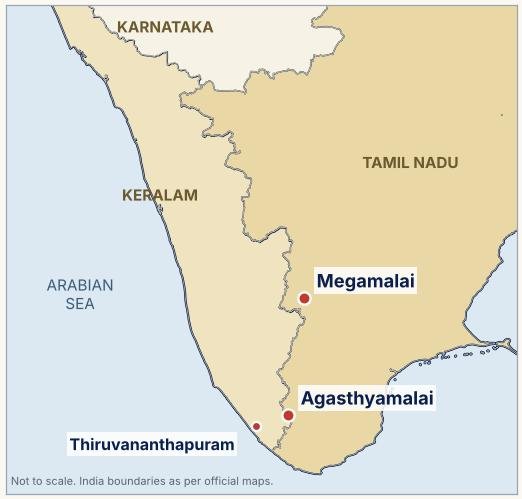
On 6 November 2026, a Bench of Justices Vikram Nath and Sandeep Mehta directed that people with only temporary residence in the forest, and those living entirely outside it, cannot be treated as traditional forest dwellers merely because they cultivate silk cotton inside the forest. The case concerns cultivation in the Megamalai area of Tamil Nadu’s Western Ghats and the wider Agasthyamalai conservation landscape. The two groups, classified as Category II and Category III in an affidavit filed by Tamil Nadu’s Revenue Department on 6 September, were excluded from consideration under the Forest Rights Act, 2006.
Concept: Forest Rights Act, 2006
The Scheduled Tribes and Other Traditional Forest Dwellers (Recognition of Forest Rights) Act, 2006 recognises specified individual and community forest rights. It covers eligible forest-dwelling Scheduled Tribes and other traditional forest dwellers. For the latter, Section 2(o) requires at least three generations, meaning 75 years, of primary residence and forest dependence before 13 December 2005. Section 6 establishes a claims process beginning with the Gram Sabha, followed by Sub-Divisional and District Level Committees. Rights recognition requires statutory verification, not merely proof of current occupation or cultivation.
Key facts for Prelims
- FRA, 2006: nodal ministry is the Ministry of Tribal Affairs.
- Other traditional forest dwellers: three generations (75 years) of residence before 13 December 2005.
- Gram Sabha starts the process of determining forest rights (Section 6).
- Agasthyamalai Biosphere Reserve: southern Western Ghats, Kerala and Tamil Nadu; in UNESCO’s World Network of Biosphere Reserves since 2016.
Mains analysis and way forward
Mains analysis
- Conservation and rights: Forest protection must be reconciled with legally recognised rights of genuine forest-dwelling communities.
- Statutory eligibility: Temporary occupation or cultivation does not automatically establish forest-dweller status.
- Administrative due process: Individual claims require examination through the legally prescribed institutions.
- Biosphere protection: Commercial cultivation inside a biosphere can conflict with conservation goals unless backed by recognised rights.
Way forward
- Complete Gram Sabha formation and decide eligible claims through the prescribed statutory process.
- Use reliable residence, livelihood and historical evidence when examining claims.
- Ensure ecological restoration and action against unlawful encroachments without denying legitimate statutory rights.
Connect the dots: Forest Rights Act + tribal welfare + Gram Sabha institutions + protected forests + environmental justice.
Supreme Court questions repeated vehicle and construction restrictions as Delhi-NCR air pollution worsens
In short: The Supreme Court questioned whether temporary restrictions alone can control Delhi-NCR pollution and highlighted the importance of longer-term solutions.
Why in news
On 6 November 2026, a Bench of Chief Justice Surya Kant and Justices Joymalya Bagchi and V. Mohana called bans on vehicles and construction “old, tried and failed tools” against Delhi’s air pollution, and asked the Centre and the Commission for Air Quality Management (CAQM) for a significant scientific method beyond them. The Court said vehicular pollution is a major contributor and that AQI was touching 400. It suggested economic incentives and practical alternatives for farmers on crop residue. Stage III of the Graded Response Action Plan (GRAP) was imposed across NCR the same day.
Concept: GRAP and the Commission for Air Quality Management
The Graded Response Action Plan is a framework for implementing progressively stronger air-pollution control measures in Delhi-NCR according to air-quality conditions and forecasts. Its implementation is coordinated by the Commission for Air Quality Management in NCR and Adjoining Areas, established under the CAQM Act, 2021. GRAP addresses pollution sources including vehicles, industrial activity, construction dust and road dust. Stage III corresponds to the severe AQI range of 401-450, although preventive invocation can consider forecasts. GRAP is an emergency-response mechanism and does not replace sustained improvements in transport, emissions regulation and urban planning.
Key facts for Prelims
- CAQM: set up under the Commission for Air Quality Management in NCR and Adjoining Areas Act, 2021.
- GRAP has four stages; Stage III applies when AQI is 401 to 450 (severe).
- GRAP Stage III imposed in NCR on 6 November 2026.
- Article 21: right to life includes the right to a clean environment.
Mains analysis and way forward
Mains analysis
- Structural pollution: Vehicle density, industrial emissions, road dust and construction activity require sustained action beyond temporary restrictions.
- Transport policy: Weak public transport alternatives can make travel restrictions socially and economically difficult.
- Livelihood protection: Restrictions on construction and other activities affect daily wage workers and economically vulnerable households.
- Regional governance: Delhi’s pollution requires coordination among the national capital and neighbouring States.
Way forward
- Expand reliable public transport and enforce vehicle emission standards.
- Use seasonal restrictions alongside year-round dust control, cleaner industry and regional pollution planning.
- Evaluate interventions through transparent monitoring and scientific source-apportionment studies.
Connect the dots: Article 21 + CAQM Act + GRAP + sustainable urban transport + cooperative federalism + environmental health.
Sources: The Hindu, “Supreme Court on stopping vehicles, construction to prevent pollution”, 7 November 2026. The Indian Express, “Vehicles major cause of pollution, it’s a free-for-all in Delhi, says Supreme Court”, 7 November 2026.
CMFRI study finds Keralam’s mangrove cover increased between 2017 and 2026 after decades of loss
In short: Satellite images show Keralam’s mangrove cover grew over 2017-2026, a recovery after the State lost nearly 90% of its mangroves over five decades.

Why in news
A study by the ICAR-Central Marine Fisheries Research Institute (CMFRI), presented at an international symposium on fisheries and remote sensing in Kochi, compared satellite images from 2017 and 2026 across Keralam’s coastal districts. It found an overall rise in mangrove cover during this period, even though the State had lost nearly 90% of its mangroves over the previous five decades, CMFRI said on 6 November 2026. The finding is an overall trend; it does not mean every district gained equally.
Concept: Mangrove ecology and blue carbon
Mangroves are salt-tolerant trees and shrubs that grow in intertidal coastal environments, particularly estuaries, sheltered shorelines and deltaic regions. Their specialised adaptations may include aerial roots, salt exclusion or secretion, and viviparous seed development. Mangrove ecosystems protect shorelines from erosion and wave action, support fisheries through nursery habitats and provide shelter for diverse organisms. They also store carbon in vegetation and sediment, contributing to coastal blue-carbon ecosystems. Remote sensing helps measure changes in mangrove extent over time, while field validation is necessary to assess species composition and ecological condition.
Key facts for Prelims
- CMFRI, Kochi: an institute of the Indian Council of Agricultural Research (ICAR).
- Study compared satellite images of 2017 and 2026.
- Some mangroves show vivipary; Avicennia has breathing roots (pneumatophores), Rhizophora has prop roots.
- India State of Forest Report: West Bengal (Sundarbans) has India’s largest mangrove cover.
Mains analysis and way forward
Mains analysis
- Coastal protection: Mangroves can reduce erosion and moderate the impact of waves and storm surges.
- Biodiversity support: Their roots and associated habitats provide breeding and nursery environments for aquatic organisms.
- Climate mitigation: Carbon stored in mangrove biomass and soils contributes to blue-carbon stocks.
- Monitoring limitations: Increased mapped area does not necessarily demonstrate improvements in biodiversity, ecosystem health or long-term survival.
Way forward
- Combine satellite-based monitoring with regular field surveys and ecological assessment.
- Protect existing mangrove habitats from degradation, reclamation and unsustainable land-use change.
- Support scientifically appropriate restoration and community participation in coastal conservation.
Connect the dots: Mangroves + blue carbon + coastal biodiversity + remote sensing + disaster risk reduction + climate adaptation.
In brief
- Paraguay: President impeached over bank collapse: Paraguay’s Senate voted 44 to impeach President Santiago Peña on 6 November over the collapse of Ueno Bank, which left about three million people unable to access their money. (The Hindu, 7 November 2026) Source
- Myanmar: byelections in April 2027: Myanmar’s Union Election Commission announced byelections for 4 April 2027 in 55 constituencies. (Myanmar International TV, 6 November 2026) Source
- Passport and visa exemptions clarified: A November 2026 amendment gives passport and travel-document exemptions to eligible Hindu, Sikh, Buddhist, Jain, Parsi and Christian migrants from Afghanistan, Bangladesh and Pakistan who entered India by 31 December 2024 due to religious persecution or fear of it; a valid visa is still needed for continued stay. (Akashvani News, 6 November 2026) Source
- ADNOC LNG deal with Gujarat Energy: The UAE’s ADNOC agreed to supply India’s Gujarat Energy with up to four million tonnes of LNG over ten years from 2028. (ADNOC, 6 November 2026) Source
- Prelims science: the tokamak: A tokamak uses strong toroidal and poloidal magnetic fields to hold very hot plasma inside a doughnut-shaped chamber for nuclear fusion research; ITER, under construction in France, will be the largest. (IAEA) Source
- CBSE board exams from 16 February 2027: CBSE’s Class 10 and 12 board examinations will begin on 16 February 2027. (Akashvani News, 6 November 2026) Source
Prelims practice: 5 questions
Choose an option to see the answer and explanation. Your score appears when all five are answered.
Mains practice
GS II | Social Justice | Vulnerable sections and governance “Despite a specific statutory prohibition and repeated judicial directions, hazardous sewer cleaning continues to claim lives in India.” Examine the gaps between legal protection and implementation in the prevention of hazardous sewer cleaning. Suggest measures to ensure the safety, dignity and rehabilitation of sanitation workers.
Show the answer outline
INTRODUCTION
The Prohibition of Employment as Manual Scavengers and their Rehabilitation Act, 2013 seeks to eliminate manual scavenging and hazardous sewer cleaning. Yet data cited in Parliament show 332 deaths during hazardous sewer and septic-tank cleaning across 18 States and Union Territories in 2021-26.
BODY 1: CONSTITUTIONAL AND LEGAL FRAMEWORK
- Articles 17, 21 and 23 provide protection against untouchability, threats to dignity and forced labour.
- Section 7 of the 2013 Act prohibits hazardous cleaning of sewers and septic tanks.
- Section 33 requires local authorities and agencies to use appropriate cleaning technology.
- The Supreme Court’s 2023 judgment directed ₹30 lakh compensation for sewer-cleaning deaths.
BODY 2: IMPLEMENTATION GAPS
- Inadequate mechanisation can create dependence on hazardous manual work.
- Contracting and subcontracting complicate accountability.
- Gaps in incident reporting and enforcement can weaken deterrence.
- Workers may lack access to safe employment alternatives.
BODY 3: SOCIAL JUSTICE DIMENSION
- Hazardous sanitation work is linked to long-standing social exclusion and unequal occupational opportunities.
- Safety measures must extend to contract and temporary workers.
- Compensation alone cannot substitute for rehabilitation, livelihood security and educational opportunities.
BODY 4: REFORMS REQUIRED
- Mandate mechanised cleaning and enforce verifiable safety protocols.
- Fix responsibility across municipalities, contractors and supervisory authorities.
- Maintain transparent incident records and ensure timely compensation.
- Expand skill development, rehabilitation and alternative employment pathways.
CONCLUSION
Eliminating hazardous sewer cleaning requires more than a statutory prohibition. Effective enforcement, mechanisation, institutional accountability and dignified livelihood opportunities must operate together to protect sanitation workers.
ONE TIP FOR MAINS
Do not treat manual scavenging and hazardous sewer cleaning as legally identical categories. Explain their distinct definitions under the 2013 Act, then connect both to dignity, safety, rehabilitation and accountability.
Where did my Mains 2026 marks go?
A free, paper-by-paper analysis of all four GS papers of Mains 2026: what each question was really asking, and where marks are usually won or lost. Useful whether you are preparing for the interview or planning your 2027 attempt.
Mains Replay: actual UPSC Mains papers from 2017 to 2026, free · Mains Mastery: answer writing and test series with personal feedback · WhatsApp +91 81220 02172
Current Canvas is prepared by the UPSC Gurus editorial desk. Every fact is checked against official releases and reliable reporting, with sources listed under each story. Editions are compiled each month into Current Canvas Monthly, a free magazine.
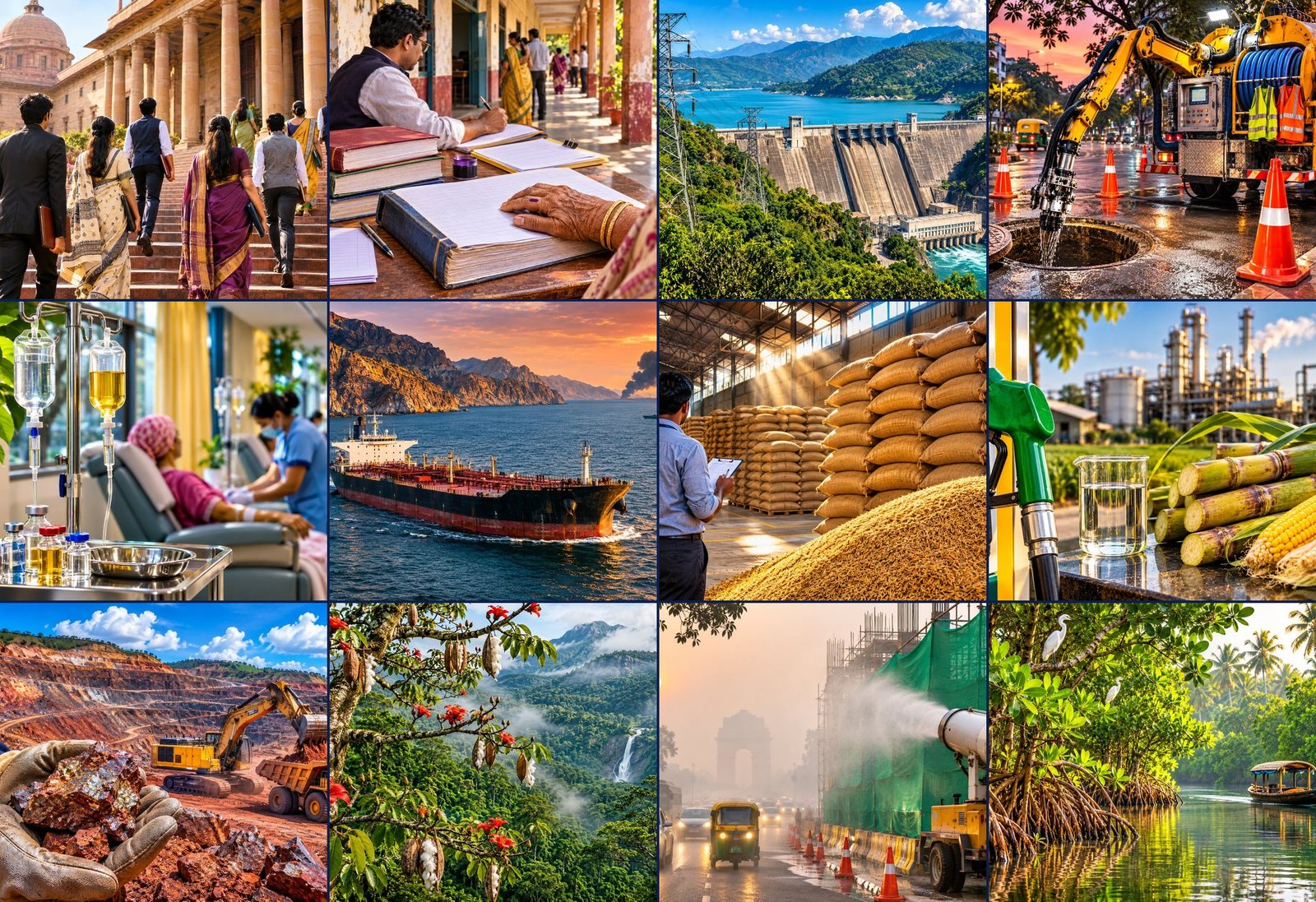
About images: photographs and illustrations in Current Canvas are AI-generated for illustration only. They are not news photographs of the events described.