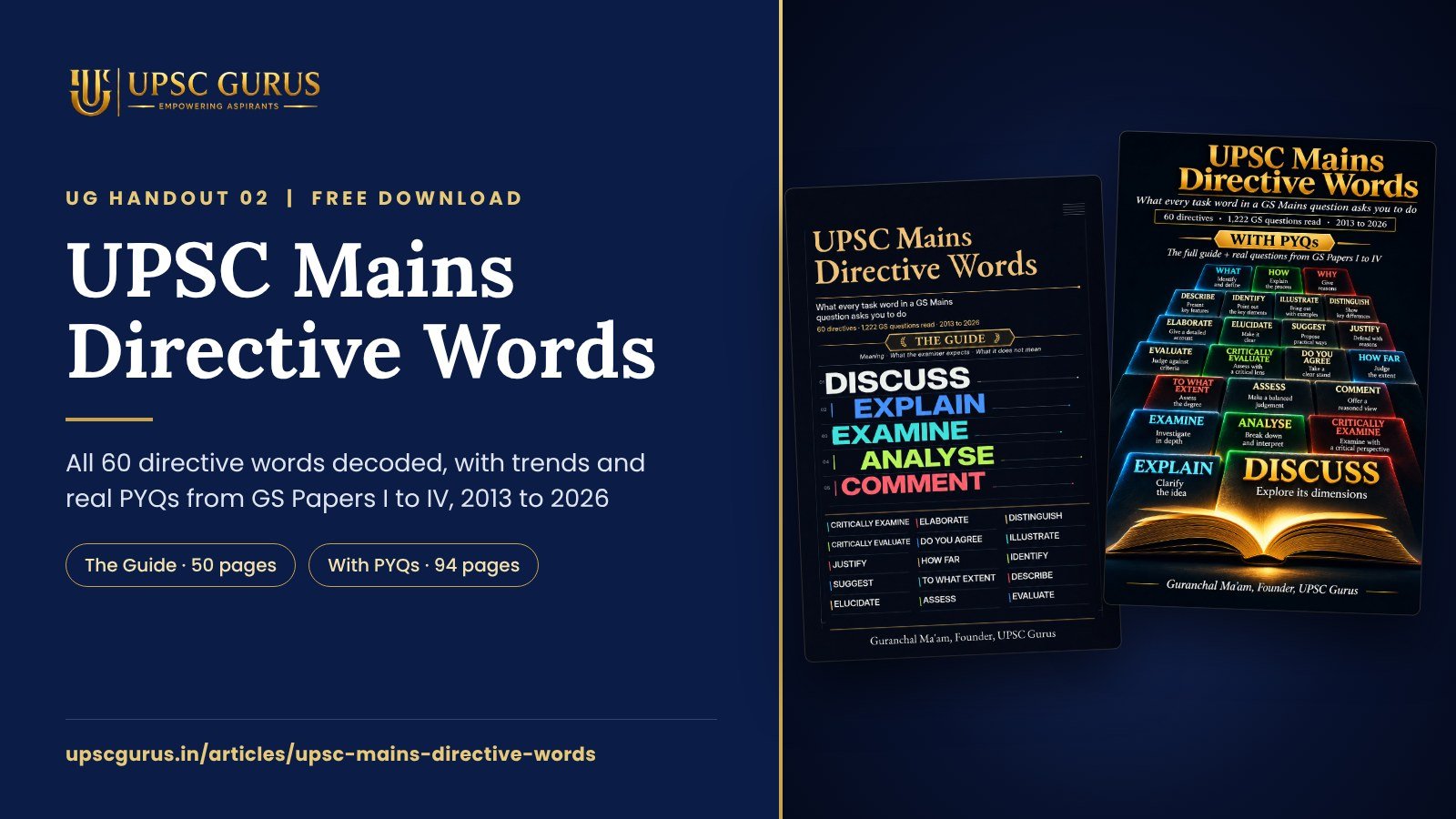
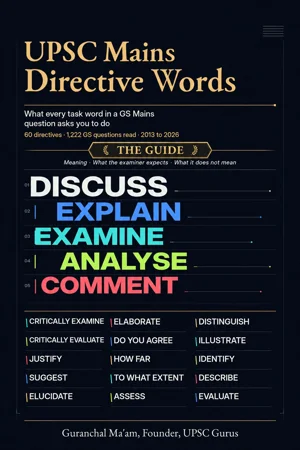
 New this week · Free UG Handout 02UPSC Mains Directive Words: 60 Meanings, Trends and PYQsTwo free PDFs: The Guide and the With PYQs edition.Read and download
Today’s Canvas
- Supreme Court: falling fertility has made two-child penalties outdated; earlier rulings sent to a larger benchGS II
- Supreme Court seeks Centre and Election Commission response on lifelong legal immunity for the CEC and Election CommissionersGS II
- Supreme Court rejects plea for rotation of SC and ST reserved Parliament and Assembly seats: a matter for ParliamentGS II
- Seven-judge bench: a levy computed as a percentage of sales tax stays within the State’s taxing power; 1999 reference now academicGS II
- Centre proposes immediate suspension of manufacturing licences when a drug fails critical quality testsGS II
- Agnipath revised: 75% of Agniveers not retained are offered an optional two-year extension, and a route to regular serviceGS III
- Democrats win control of both Houses of the US Congress in the 2026 midterms; new Congress sits from January 2027GS II
- Foreign Secretary Misri in Kathmandu: Nepal seeks a package of over $2 billion ahead of PM Balendra Shah’s India visitGS II
- Cabinet approves Rs 14,500 crore viability gap funding for 92 GWh of grid-scale energy storageGS III
- Rs 2,814 crore capex support scheme to build India’s first large lithium and nickel processing plantsGS III
- Cabinet approves VISTAR, a Rs 4,371 crore scheme to modernise India’s official statistics and hold the 8th Economic CensusGS III
- Buxa’s first relocated tigress captured in Assam after a 100-km journey and brought back to BengalGS III
- Kedartal trek avalanche in Uttarkashi: four bodies recovered, search on for four missingGS III
Polity, governance and justice
Supreme Court: falling fertility has made two-child penalties outdated; earlier rulings sent to a larger bench
In short: Laws barring people with more than two children from local office have lost their basis, the Court says, asking a larger bench to revisit Javed.
Why in news
On 4 November 2026, a bench of Justices P.S. Narasimha and Alok Aradhe held that laws penalising people for having more than two children have lost their relevance, as the fear of overpopulation behind them no longer holds. The case concerned a former sarpanch of Kakoda Gram Panchayat in Maharashtra disqualified under Section 14(1)(j-1) of the Maharashtra Village Panchayat Act, 1959 after the birth of her third child. The bench referred the precedents upholding the norm, including Javed v. State of Haryana (2003), to a larger bench.
Concept: Disqualification for local body office and reproductive autonomy
Article 243F lets a State legislature prescribe disqualifications for membership of a panchayat, and Article 243V does the same for municipalities; several States used this power from the 1990s to add a two-child condition. In Javed v. State of Haryana (2003), a three-judge bench upheld the Haryana Panchayati Raj Act, 1994 provision, finding a reasonable classification under Article 14 tied to the goal of population control. Since then, the Court has recognised reproductive choice as part of personal liberty under Article 21, notably in Suchita Srivastava v. Chandigarh Administration (2009) and the privacy judgment in K.S. Puttaswamy (2017). Replacement-level fertility is a total fertility rate (TFR) of about 2.1 children per woman: the level at which a population replaces itself over generations.
Key facts for Prelims
- India’s TFR, the Court noted, fell from about 3 in 2003 to 1.9, below the replacement level of 2.1.
- The bench held that the norm forces a choice between having children and taking part in democratic life, which it linked to reproductive autonomy under Article 21.
- As reported, Assam, Goa, Gujarat, Maharashtra, Odisha and Uttarakhand still have some form of two-child rule, while seven States have repealed theirs.
- The Maharashtra disqualification applies to a person who has more than two children, counting births after 13 September 2000.
Mains analysis and way forward
Mains analysis
- The case shows how the reasonableness of a classification under Article 14 can change with facts: a rule justified by demographic conditions in 2003 may become arbitrary when those conditions reverse.
- Disqualifying candidates for family size falls more heavily on women, who often have little say over the number of children, and on poorer households; it narrows political representation at the level of government closest to people.
- Population stabilisation is now driven more by education, health access and women’s agency than by penalties, consistent with the target-free approach of the National Population Policy, 2000.
- With fertility below replacement in most States, the policy question is shifting towards ageing, regional demographic differences and their link to representation and resource sharing.
Way forward
- States that retain the norm can review it against current fertility data rather than wait for litigation.
- Population policy can focus on voluntary family planning, maternal and child health and girls’ education rather than eligibility bars.
- The larger bench can set a clear test for when a demographic rationale ceases to support a restriction on the right to contest.
Connect the dots: GS II: Panchayati Raj (Articles 243F, 243V), Articles 14 and 21, judicial review; GS I: population and associated issues; GS III: demographic dividend.
Sources: The Hindu: Falling fertility rate makes two-child penalties outdated in India, says Supreme Court, 4 Nov 2026; LiveLaw: Laws penalising having more than 2 children have lost relevance due to India’s falling fertility rate, Supreme Court, 4 Nov 2026; LiveLaw: Breaking news alerts, 4 Nov 2026
Supreme Court seeks Centre and Election Commission response on lifelong legal immunity for the CEC and Election Commissioners
In short: Petitions challenge Section 16 of the 2023 appointments law, which bars civil and criminal cases against the CEC and ECs for official acts, even after retirement.
Why in news
On 4 November 2026, a Bench headed by Chief Justice of India Surya Kant issued notice to the Union government and the Election Commission of India on petitions by RJD MP Manoj Jha and advocate Arun Kumar Agrawal. They challenge Section 16 of the Chief Election Commissioner and Other Election Commissioners (Appointment, Conditions of Service and Term of Office) Act, 2023, which, as The Hindu reports, gives the CEC and Election Commissioners blanket protection from legal proceedings that continues after they leave office.
Concept: Article 324, the Anoop Baranwal judgment and the 2023 Act
Article 324 vests the superintendence, direction and control of elections to Parliament, State legislatures and the offices of President and Vice-President in the Election Commission, and leaves the appointment of the CEC and Election Commissioners to be made by the President subject to any law made by Parliament. In Anoop Baranwal v. Union of India (2023), a Constitution Bench held that, until Parliament made such a law, appointments would be made on the advice of a committee of the Prime Minister, the Leader of the Opposition and the Chief Justice of India. Parliament then enacted the 2023 Act, under which a search committee prepares a panel and a selection committee of the Prime Minister, the Leader of the Opposition and a Union Cabinet Minister nominated by the Prime Minister recommends names. The CEC can be removed only like a Supreme Court judge, which protects tenure; immunity from legal proceedings is a separate question of accountability.
Key facts for Prelims
- Section 16 says no court shall entertain or continue civil or criminal proceedings against a person who is or was CEC or an Election Commissioner for acts done or words spoken while discharging official duties.
- The Constitution gives personal immunity from criminal proceedings during the term of office only to the President and Governors (Article 361).
- The 2023 Act replaced the Election Commission (Conditions of Service of Election Commissioners and Transaction of Business) Act, 1991.
- Under Article 324(5), an Election Commissioner can be removed only on the recommendation of the CEC.
Mains analysis and way forward
Mains analysis
- Protection for good-faith official acts helps an election authority take hard decisions without fear of harassing litigation; the question before the Court is whether a lifelong, blanket bar goes beyond what independence needs.
- Accountability and independence are not opposites: both rest on credible appointment, fixed tenure, transparent decisions and the ordinary availability of courts for wrongdoing.
- The case adds to a wider debate on the Election Commission, including the composition of the selection committee under the 2023 Act and trust in electoral roll revision.
Way forward
- A narrower protection limited to acts done in good faith, with prior sanction for prosecution, is the usual model for public servants and can be weighed against a blanket bar.
- Strengthening institutional trust through transparent reasons for major decisions serves independence better than immunity alone.
Connect the dots: GS II: Article 324, Election Commission, constitutional and statutory bodies, separation of powers, judicial review; Essay and GS IV: accountability of public institutions.
Sources: The Hindu: SC seeks Centre, EC response on law giving blanket, lifelong immunity to CEC, Election Commissioners, 4 Nov 2026; PRS Legislative Research: The Chief Election Commissioner and Other Election Commissioners Bill, 2023
Supreme Court rejects plea for rotation of SC and ST reserved Parliament and Assembly seats: a matter for Parliament
In short: Rotating reserved seats is a policy choice for Parliament, not a court direction, the Supreme Court says, leaving Section 9(1)(c) of the Delimitation Act untouched.
Why in news
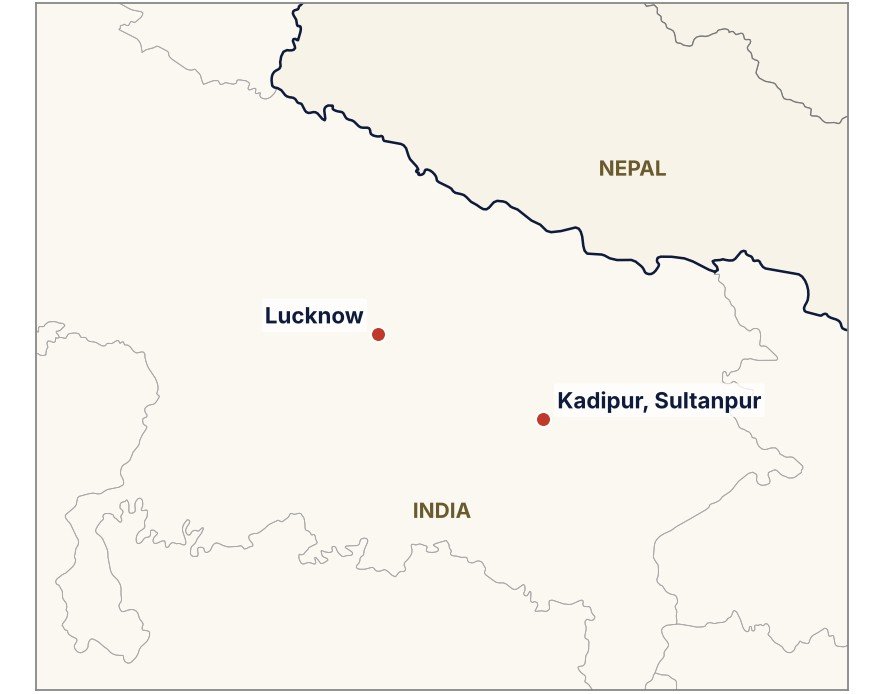
On 4 November 2026, a bench of Chief Justice of India Surya Kant, Justice Joymalya Bagchi and Justice V. Mohana declined to interfere with an Allahabad High Court judgment that had upheld Section 9(1)(c) of the Delimitation Act, 2002. The petitioner, a voter of the Kadipur Assembly constituency in Sultanpur, Uttar Pradesh, argued that the seat had stayed reserved for Scheduled Castes for nearly seven decades. The Court said it could not add a rotation requirement to the Constitution or the statute, and left the petitioner free to seek a change in the law through elected representatives.
Concept: How reserved constituencies are identified for Parliament and Assemblies
Articles 330 and 332 reserve seats for Scheduled Castes and Scheduled Tribes in the Lok Sabha and State Assemblies in proportion to their population, and Article 334 sets a time limit on this reservation, extended to 80 years from the commencement of the Constitution by the 104th Amendment, 2019. The Constitution fixes the number of reserved seats but not which constituencies are reserved; that is left to Parliament, which provides for it in the Delimitation Act, 2002. Under Section 9(1)(c), SC seats are distributed across the State and located, as far as practicable, where the SC share of the population is comparatively large. By contrast, Articles 243D and 243T expressly provide that reserved seats in panchayats and municipalities may be allotted by rotation to different constituencies.
Key facts for Prelims
- The Allahabad High Court bench of Justices Alok Mathur and Amitabh Kumar Rai held that a mandamus cannot direct the legislature to add a rotation clause, while accepting that rotation could advance social justice.
- The 84th Amendment, 2001 froze the inter-State allocation of seats until the first Census after 2026; the 87th Amendment, 2003 allowed constituencies to be redrawn on the 2001 Census.
- The petitioner argued violation of Articles 14, 15 and 19, saying continuous reservation limited voters’ choice and benefited a few families.
Mains analysis and way forward
Mains analysis
- The judgment draws the line between judicial review and legislative policy: courts test whether a law violates the Constitution, not whether a better design exists.
- Fixed reservation builds continuity of representation and lets SC communities in a seat consolidate political voice; rotation spreads opportunity across regions and prevents a seat from being permanently closed to others.
- Rotation also has costs: a legislator who knows the seat will be de-reserved has weaker incentives to nurture a constituency, which is one argument often made against it in legislatures.
- The coming delimitation after the next Census will reopen which seats are reserved, making this an informed debate for Parliament and the Delimitation Commission.
Way forward
- Parliament can examine evidence on the effect of long-term reservation of the same seats before the next delimitation.
- The Delimitation Commission can publish its method for identifying reserved seats transparently and invite public objections, as it does for boundaries.
Connect the dots: GS II: Articles 327, 330, 332, 334, Delimitation Commission, Representation of the People Acts; local government (Articles 243D, 243T); separation of powers.
Sources: Indian Express: Supreme Court rejects plea seeking rotation of reserved Parliament, Assembly seats, 5 Nov 2026; LiveLaw: Supreme Court rejects plea to rotate SC/ST reservations of Assembly, Parliament seats, 4 Nov 2026; Verdictum: Allahabad High Court, Jagdish Singh v. Election Commission of India, 25 Jun 2026
Seven-judge bench: a levy computed as a percentage of sales tax stays within the State’s taxing power; 1999 reference now academic
In short: A 27-year-old reference on additional sales tax ends as academic after GST, but the Court clarifies a surcharge on sales tax remains sales tax.
Why in news
On 4 November 2026, a seven-judge Constitution Bench headed by Chief Justice of India Surya Kant answered a 1999 reference in Arjun Flour Mills v. State of Odisha, on the additional sales tax under Section 5A of the Odisha Sales Tax Act, 1947, as rendered academic by the GST regime. It observed that an additional tax or surcharge computed as a percentage of the sales tax payable is an enhancement of the rate and remains a tax on the sale or purchase of goods under Entry 54 of the State List. Questions on Punjab’s surcharge and cess were left open for a regular bench.
Concept: Division of taxing powers: Seventh Schedule, Article 246A and cesses
The Seventh Schedule gives taxing powers in separate entries: Entry 54 of List II (State List) let States tax the sale or purchase of goods, while Entry 82 of List I gives the Union taxes on income. Since the 101st Amendment, 2016, Entry 54 covers only petroleum crude, high speed diesel, petrol, natural gas, aviation turbine fuel and alcoholic liquor for human consumption, and Article 246A gives both the Union and States concurrent power to levy GST. A levy is classified by its pith and substance: if a charge is really a tax on sale, its measure, such as a percentage of another tax, does not change its nature. Cesses and surcharges levied by the Union are outside the divisible pool under Article 270, which is why their growing share is a recurring issue in fiscal federalism.
Key facts for Prelims
- Odisha’s Section 5A was inserted in 1990, initially imposing a 10% surcharge on sales tax payable by dealers with annual turnover above Rs 10 lakh; a 1997 amendment introduced graded rates of 10% (turnover above Rs 10 lakh up to Rs 1 crore) and 15% (above Rs 1 crore).
- The reference arose from an apparent conflict between S. Kodar (1974) and Hoechst Pharmaceuticals (1983), which upheld such levies, and India Cement (1989), which struck down a cess on mining royalty.
- The bench noted that India Cement’s view that royalty is a tax was overruled by a nine-judge bench in Mineral Area Development Authority (2024).
- Justice K.V. Viswanathan, in a separate opinion, held Kodar correctly decided and traced the additional sales tax to Entry 54.
Mains analysis and way forward
Mains analysis
- The ruling protects a basic federal principle: a State acting within its own entry is not displaced merely because the form of the levy resembles a tax on income.
- Reference cases pending for decades show the cost of delay: the law changed with GST before the Court could answer, leaving only past assessments in dispute.
- After GST, the remaining State taxes on petroleum and alcohol are major sources of own revenue, so clarity on how States may structure additional levies on them still matters.
- The Punjab question of whether cess proceeds can bypass the Consolidated Fund under Article 266 links to accountability of earmarked levies, an issue also raised about Union cesses.
Way forward
- Pending old references can be listed and closed where later law has made them academic, freeing Constitution Bench time.
- States and the Union can report earmarked cess collections and their use transparently to the legislature.
Connect the dots: GS II: Centre-State relations, Seventh Schedule, Articles 246A, 266, 270; GS III: GST, fiscal federalism and mobilisation of resources.
Sources: The Hindu: Cess levied as increment to sales tax remains within State’s scope, says Supreme Court, 4 Nov 2026; LiveLaw: Supreme Court 7-judge bench holds reference on States’ power for additional levy on sales tax academic after GST, 4 Nov 2026; LiveLaw: Breaking news alerts, 4 Nov 2026
Centre proposes immediate suspension of manufacturing licences when a drug fails critical quality tests
In short: Draft amendments to the Drugs Rules, 1945 would require the licensing authority to suspend a manufacturing licence immediately on receiving a Government Analyst’s report declaring the drug Not of Standard Quality.
Why in news
On 4 November 2026 the Union Health Ministry released draft amendments to the Drugs Rules, 1945 under which the licensing authority would immediately suspend the manufacturing licence for the affected drug on receiving a Government Analyst’s report declaring it Not of Standard Quality (NSQ), without waiting for a show-cause process. The draft provides parameter-specific triggers under a proposed Rule 85(2A) and a broader NSQ trigger under a proposed Rule 122O(1A). The suspension would stay until the firm completes a root cause analysis and corrective and preventive action (CAPA) that the licensing authority verifies. The draft is open for objections and suggestions for 30 days.
Concept: How drugs are regulated in India: one Act, two tiers of licensing
The Drugs and Cosmetics Act, 1940 and the Drugs Rules, 1945 govern the import, manufacture, sale and distribution of drugs. Regulation is split: the Central Drugs Standard Control Organisation (CDSCO), headed by the Drugs Controller General of India (DCGI) under the Union Health Ministry, approves new drugs and clinical trials and regulates imports, while State drug licensing authorities issue and police most manufacturing and sale licences. Two statutory bodies under the Act advise on rules and uniform enforcement: the Drugs Technical Advisory Board (DTAB) on technical matters and the Drugs Consultative Committee (DCC) of Central and State regulators. The law separates drugs that are Not of Standard Quality (failing a quality parameter), misbranded, adulterated and spurious (falsely passed off as another product); NSQ is the most common finding in routine testing and the target of this draft.
Key facts for Prelims
- Critical parameters named in the draft: assay (too little or too much active ingredient), dissolution, related substances or impurities, and sterility of injectables, eye drops and other sterile products.
- Form 13, the Government Analyst’s test report, is to be amended so that an NSQ finding goes at the same time to the DCGI, the State or UT licensing authority of the manufacturing site, the manufacturer and the marketer.
- The proposal follows recommendations of the 65th DCC meeting (20 December 2024) and the 92nd DTAB meeting (24 April 2025).
Mains analysis and way forward
Mains analysis
- The present gap between an NSQ declaration and regulatory action lets a batch stay in circulation; an automatic freeze shifts the burden to the manufacturer to prove the fault is fixed.
- Requiring CAPA after root cause analysis links enforcement to good manufacturing practice, aiming at the source of failure rather than one batch.
- Simultaneous reporting to Central and State regulators addresses a long-standing weakness of split jurisdiction, where one regulator may not know what another has found.
- Industry has argued in the past that some NSQ findings are reversed on appeal testing; fairness needs reliable, accredited labs and a quick route to retesting.
Way forward
- Strengthen and accredit State drug testing laboratories so that NSQ reports are fast, consistent and defensible.
- Pair suspension with time-bound inspection and verification so that compliant firms, often small units, are not left in limbo.
- Publish NSQ data and recall outcomes regularly to build trust in Indian medicines at home and abroad.
Connect the dots: Links to GS II (health, regulatory bodies, Centre-State relations) and GS III (pharmaceutical industry, exports).
Sources: Gazette of India: Draft Drugs (Amendment) Rules, 2026, G.S.R. 956(E), 4 Nov 2026; The Hindu: Government proposes immediate suspension of manufacturing licences of substandard drugs, 5 Nov 2026; Business Standard: Govt proposes immediate licence suspension for substandard drugmakers, 5 Nov 2026; ANI: Instant freeze on substandard drugs: Health Ministry moves to immediately suspend manufacturing licences for critical quality failures, 4 Nov 2026
Defence and international relations
Agnipath revised: 75% of Agniveers not retained are offered an optional two-year extension, and a route to regular service
In short: Agniveers not absorbed after four years can now serve two more, then be considered for regular enrolment through objective selection.
Why in news
After a Union Cabinet decision on 4 November 2026, Chief of Defence Staff General N S Raja Subramani announced that the 75% of Agniveers who are not taken into the regular cadre after four years will be offered an additional two-year engagement with enhanced emoluments, subject to their willingness. At the end of six years, those willing will be considered for enrolment in the Armed Forces, subject to objective selection criteria. The change comes as the first batches approach the end of their four-year engagement from late November 2026; over three lakh Agniveers are in service or in training across the three services.
Concept: The Agnipath scheme as designed in 2022
Agnipath was announced on 14 June 2022 as a short-service entry for personnel below officer rank in the Army, Navy and Air Force. Youth aged 17.5 to 21 years are enrolled for four years under the respective Service Acts and are called Agniveers. Up to 25% of each batch may be enrolled in the regular cadre on merit, through centralised and objective criteria. The rest leave with a one-time Seva Nidhi package of about Rs 11.71 lakh, built from 30% of monthly pay matched by an equal government contribution plus interest, and exempt from income tax; there is no pension or gratuity. Agniveers get non-contributory life insurance cover of Rs 48 lakh during the engagement.
Key facts for Prelims
- The CDS said the scheme continues and has not been discontinued; the 25% merit-based retention after four years remains.
- First batches complete four years on 21 November (Navy), 21 December (Air Force) and 31 December 2026 (Army), as reported.
- Selection for permanent enrolment is reported to place a written examination before the physical fitness test, and Agniveers are to receive skill certificates.
- Monthly package: Rs 30,000 in the first year rising to Rs 40,000 in the fourth, of which 70% is paid in hand.
Mains analysis and way forward
Mains analysis
- Retaining trained personnel for six years improves return on training investment and preserves combat experience in units, especially in technical trades.
- The original goal of a younger force profile now sits alongside a longer engagement; the balance between youthfulness and experience is a design choice the services will need to monitor.
- A clearer path to regular service reduces uncertainty for young people and their families, which matters for recruitment from traditional catchment regions.
- Longer engagement and higher emoluments raise the salary bill; the pension saving logic of 2022 has to be reassessed with transparent data.
Way forward
- Publish the objective selection criteria and annual performance review process so that every Agniveer knows the standard in advance.
- Keep strengthening post-service pathways (reservations in Central Armed Police Forces and State police, skill certification, bridge courses) for those who leave.
Connect the dots: Links to GS III: security forces and their mandate, defence reforms, human resource management in the Armed Forces.
Sources: PIB (Ministry of Defence): Cabinet decision on Agniveers, 4 Nov 2026; Indian Express: Big Agnipath change: 2-year extension to 75% Agniveers opens permanent service door to all, 4 Nov 2026; The Hindu: Agnipath review aimed at addressing youth discontent, 4 Nov 2026; The Week: Govt to extend tenure of Agniveers by two years. How will this be implemented?, 4 Nov 2026; India TV News: Agniveers to get two-year extension after 4 years as government announces major Agnipath overhaul, 4 Nov 2026; Daijiworld (IANS): 75% of Agniveers to get two-year service extension: CDS, 4 Nov 2026; PIB: In a transformative reform, Cabinet clears Agnipath scheme for recruitment of youth in the Armed Forces, 14 Jun 2022
Democrats win control of both Houses of the US Congress in the 2026 midterms; new Congress sits from January 2027
In short: A divided government in Washington changes who India must engage on trade, technology and visas, and how far executive promises can travel.
Why in news
In the US midterm elections held on 3 November 2026, the Associated Press projected that Democrats had won control of the Senate and crossed the 218-seat majority mark in the 435-member House of Representatives. Al Jazeera reported Democrats at 54 Senate seats with leads in two more. President Donald Trump has said he will veto legislation he opposes, which points to divided government for the last two years of his term.
Concept: How the US Congress checks the President: powers that matter for foreign partners
The US Constitution gives Congress the power to lay duties and to regulate commerce with foreign nations, so tariff and trade laws ultimately rest with it, even where it has delegated authority to the President. Treaties need the advice and consent of two-thirds of Senators present, and the Senate confirms ambassadors, Cabinet members and federal judges. A presidential veto can be overridden only by a two-thirds vote in both Houses. In a midterm, all House seats (two-year terms) and about one-third of the Senate (six-year terms, three classes) are elected.
Key facts for Prelims
- The new Senate majority takes charge when the new Congress meets on 3 January 2027.
- Notable results reported: James Talarico won the Texas Senate seat, and Abdul El-Sayed held Michigan for Democrats to become the first Muslim US Senator.
- Impeachment is voted by the House; the trial is held in the Senate, where conviction needs a two-thirds majority.
Mains analysis and way forward
Mains analysis
- Committee control lets the opposition hold hearings, issue subpoenas and scrutinise nominations, so foreign policy, including the West Asia conflict, will face more oversight.
- For India, trade arrangements that need legislation, or that rest on tariff authority Congress may revisit, now depend on a wider set of actors in Washington.
- Bipartisan pillars of the partnership (defence cooperation, critical and emerging technologies, the Quad) have historically survived changes in congressional control.
- Issues with strong congressional interest, such as H-1B and immigration rules, human rights reports and Russia-related sanctions, may gain more weight in the conversation.
Way forward
- Broaden engagement beyond the executive to congressional committees, State governments and the Indian-American community across both parties.
- Lock in trade and technology understandings through institutional mechanisms that are less exposed to political cycles.
Connect the dots: Links to GS II: India-US relations, effect of policies and politics of developed countries on India’s interests; comparison of the Indian and US constitutional schemes.
Sources: The Hindu: U.S. midterm results may matter less for India-U.S. ties than for India’s room to manoeuvre in geopolitics, 4 Nov 2026; PBS NewsHour (AP): Democrats take control of the Senate after winning key midterm races, 3 Nov 2026; Al Jazeera: Democrats win Congress: How they did it, and what it means, 4 Nov 2026; Wikipedia: Midterm election (US terms and Senate classes)
Foreign Secretary Misri in Kathmandu: Nepal seeks a package of over $2 billion ahead of PM Balendra Shah’s India visit
In short: Credit for transmission lines, highway and flood-recovery grants, and hydropower are on the table as Nepal’s new government prepares its first visit to Delhi.
Why in news
On 4 November 2026, the first day of his two-day visit, Foreign Secretary Vikram Misri called on Nepal’s Foreign Minister Shisir Khanal and held delegation-level talks with Foreign Secretary Amrit Bahadur Rai, who was to hand over Nepal’s list of priority projects. The Kathmandu Post reported that Nepal expects over $2 billion in loans and grants, including a line of credit of over $1 billion for transmission lines and infrastructure, a $500 million grant for the Siddhartha Highway (Sunauli to Pokhara) and a likely grant of about $500 million for reconstruction after the 26 August Bhote Koshi flood. Prime Minister Shah’s visit is expected around 22 November, though the date is not yet announced.
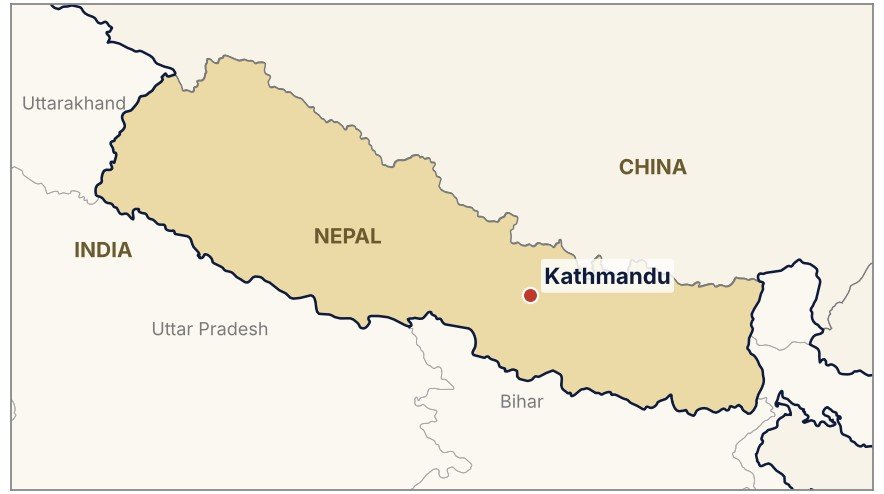
Concept: The 1950 India-Nepal Treaty of Peace and Friendship
The Treaty of Peace and Friendship was signed at Kathmandu on 31 July 1950 and came into force the same day. Article 6 gives each country’s nationals national treatment in industrial and economic development, and Article 7 grants reciprocal privileges of residence, property, trade and movement, the legal base of the open border. Article 5 allows Nepal to import arms for its security from or through Indian territory, with procedures agreed by consultation. Under Article 10 the treaty runs until either side gives one year’s notice. Many in Nepal see it as unequal, and in 2014 the two sides agreed to review and adjust it.
Key facts for Prelims
- India’s new Ambassador to Nepal, Sudhakar Dalela, arrived in Kathmandu on 3 November 2026.
- Projects reported for inauguration or groundbreaking during the visit include integrated check posts at Bhairahawa and Dodhara Chandani, the Lower Arun hydropower project and a Siliguri-Jhapa petroleum pipeline.
- Hydropower projects under consideration with NHPC: West Seti (750 MW), Phukot Karnali (480 MW) and Seti River-6 (450 MW).
- Nepal has said it could not fully use earlier Indian lines of credit (2014 and the 2015 post-earthquake pledge) because of local-content conditions.
Mains analysis and way forward
Mains analysis
- Cross-border transmission lines turn Nepal’s hydropower potential into exports and make energy the strongest shared interest in the relationship.
- Faster disbursement and simpler line-of-credit conditions would do more for India’s image in Nepal than larger announced amounts.
- A new, reform-minded government with a large majority gives both sides a chance to move long-pending items such as Pancheshwar and air-entry routes.
- Sensitive issues, including the boundary and the 1950 treaty, are best handled through institutional dialogue rather than public positioning.
Way forward
- Agree timelines and monitoring for each project announced during the visit, with a joint review mechanism.
- Pair the flood-recovery grant with shared early warning on transboundary rivers such as the Bhote Koshi.
Connect the dots: Links to GS II: India and its neighbourhood, Neighbourhood First policy, development partnership and energy cooperation in South Asia.
Sources: Indian Express: India-Nepal step up engagement ahead of Balen Shah’s maiden visit, 5 Nov 2026; The Kathmandu Post: Kathmandu expects over $2 billion in loans and grants from Delhi, 4 Nov 2026; The Kathmandu Post: Misri meets Khanal, discusses Nepal-India ties, 4 Nov 2026; Wikipedia: 1950 Indo-Nepal Treaty of Peace and Friendship (treaty text summary)
Economy, energy and statistics
Cabinet approves Rs 14,500 crore viability gap funding for 92 GWh of grid-scale energy storage
In short: A Rs 14,500 crore VGF scheme will back 60 GWh of pumped hydro, 30 GWh of batteries and 2 GWh of new technologies by 2030-31.
Why in news
On 4 November 2026, the Union Cabinet chaired by Prime Minister Narendra Modi approved a Rs 14,500 crore Viability Gap Funding (VGF) scheme for 92 GWh of new grid-scale energy storage over 2026-27 to 2030-31. The capacity is split into 60 GWh of hydro pumped storage, 30 GWh of battery energy storage systems (BESS) and 2 GWh of alternative technologies, and is expected to draw about Rs 97,600 crore of investment.
Concept: Why a renewable grid needs storage, and how pumped storage works
Solar and wind power are variable: solar output peaks at midday and vanishes after sunset, just as household demand rises in the evening. Storage shifts energy in time, absorbing surplus power when it is cheap and plentiful and releasing it at peak hours, which also lets existing transmission lines be used more fully. Storage is measured in two units: power (GW, how fast it can deliver) and energy (GWh, how much it holds); a 1 GW system that runs for four hours stores 4 GWh. A pumped storage plant uses two reservoirs at different heights: it pumps water uphill using surplus electricity and lets it flow down through turbines when power is needed, so it works like a large, long-life water battery. Batteries respond within fractions of a second and can be sited almost anywhere, while pumped storage offers longer duration and decades of service but needs suitable terrain and longer construction.
Key facts for Prelims
- The 92 GWh equals 170% of India’s current grid-scale storage capacity; the government estimates a need of 411 GWh by 2031-32.
- Capacity is to be awarded through tariff-based competitive bidding; public and private DISCOMs are eligible for VGF for BESS and pumped storage projects.
- BESS projects under the scheme must meet a minimum Domestic Content Requirement of 40%.
- Viability gap funding: a one-time capital grant that lowers project cost so that an economically useful but commercially unviable project can offer an affordable tariff.
- In September 2023 the Cabinet had approved an earlier VGF scheme of Rs 3,760 crore for 4,000 MWh of battery storage.
Mains analysis and way forward
Mains analysis
- Storage is the missing link in the energy transition: without it, rising solar capacity leads to curtailment at noon and dependence on coal at night.
- Giving pumped storage the largest share uses India’s hilly terrain and avoids heavy import dependence on battery cells and minerals.
- The 40% domestic content rule supports local battery manufacturing, but must be balanced against cost and the pace of deployment.
- Pumped storage projects need land and water, and can raise forest, displacement and community consent issues that must be handled early.
Way forward
- Pair the VGF with market design: time-of-day tariffs and ancillary services markets so that storage earns from the value it provides.
- Prefer off-river and existing-reservoir pumped storage sites to limit ecological impact, with clear forest rights and rehabilitation processes.
Connect the dots: GS III: energy security, renewable integration, infrastructure financing (VGF); links to critical minerals, PLI for ACC batteries and climate commitments.
Sources: The Hindu: Union Cabinet approves Rs 14,500 crore VGF scheme to develop large scale energy storage in India, 4 Nov 2026; PM India (Cabinet decision): Cabinet approves Rs.14,500 crore Viability Gap Funding Scheme for development of 92 GWh Grid-Scale Energy Storage Systems, 4 Nov 2026; DD News: PM Modi hails Cabinet decisions on faster justice, energy storage and critical minerals, 4 Nov 2026; Business Today: Cabinet approves Rs 14,500 cr energy storage scheme, Rs 4,371 cr VISTAR plan; 850 fast track courts cleared, 4 Nov 2026
Rs 2,814 crore capex support scheme to build India’s first large lithium and nickel processing plants
In short: A 30% capital subsidy will back two lithium and two nickel processing plants, chosen by lowest support sought, to cut import dependence on refined materials.
Why in news
On 4 November 2026, the Union Cabinet approved a Capex Support Scheme to Promote Critical Mineral Processing with an outlay of Rs 2,814 crore for 2026-27 to 2030-31. It offers a capital subsidy of 30% of eligible investment, capped at Rs 500 crore per lithium beneficiary and Rs 900 crore per nickel beneficiary, to set up four plants that turn ores or intermediates into high-purity compounds.
Concept: The critical mineral value chain: why processing is the bottleneck
Critical minerals are those essential for economic development and national security whose supply is at risk because reserves or processing are concentrated in a few countries. Their value chain runs in stages: exploration and mining, beneficiation (concentrating the ore), refining or processing into high-purity chemicals, conversion into materials such as battery cathodes, and finally manufacture of cells, magnets or chips. Most value addition and most supply risk sit in the middle stage of refining, which is dominated globally by a few countries; a nation can own mines abroad and still depend on imports of refined material. India’s policy therefore works on several fronts: auctions of critical mineral blocks at home, acquisition of assets abroad, recycling, and now support for domestic processing capacity.
Key facts for Prelims
- Plant targets: two lithium plants of at least 30 kt each and two nickel plants of at least 50 kt each; cobalt is expected as a by-product of nickel processing.
- Selection: technical qualification first, then financial bidding; two beneficiaries per mineral are chosen by least-cost criterion (lowest capex support sought).
- Subsidy is released in three milestone-linked tranches.
- The National Critical Mineral Mission (January 2025) has an outlay of Rs 16,300 crore plus an expected Rs 18,000 crore from PSUs; a Rs 1,500 crore critical mineral recycling incentive scheme followed in September 2025.
Mains analysis and way forward
Mains analysis
- Processing capacity is where strategic autonomy is decided: without it, domestic mining and overseas assets still leave India dependent on imported refined chemicals.
- The scheme serves electric mobility, battery storage, electronics, defence and specialty steel, linking it to Make in India and the energy transition.
- Reverse-bidding for the lowest subsidy protects public money, but feedstock security (domestic ore, imports or recycled material) will decide whether plants run at scale.
- Refining is energy and chemical intensive; environmental clearances, waste handling and water use need strict standards.
Way forward
- Link processing plants to secured feedstock through mineral partnerships abroad and recycling of used batteries at home.
- Build skills and research in hydrometallurgy and refining chemistry so that technology is not only imported with the plant.
Connect the dots: GS III: industrial policy, energy security, resource geography, supply-chain resilience; GS II: mineral diplomacy and partnerships.
Sources: The Hindu: Centre earmarks Rs 2,814 crore to boost lithium, nickel processing, 4 Nov 2026; PM India (Cabinet decision): Cabinet Approves Capex Support Scheme to Promote Critical Mineral Processing with an Outlay of Rs.2,814 Crore for Lithium and Nickel processing, 4 Nov 2026; DD News: Cabinet approves Rs 2,814-crore scheme to boost domestic lithium, nickel processing, 4 Nov 2026; PM India: Cabinet approves National Critical Mineral Mission with an outlay of Rs 34,300 crore over seven years, 29 Jan 2025
Cabinet approves VISTAR, a Rs 4,371 crore scheme to modernise India’s official statistics and hold the 8th Economic Census
In short: VISTAR funds 59 surveys, AI-ready data, State statistical capacity and the 8th Economic Census over 2026-27 to 2030-31.
Why in news
On 4 November 2026, the Union Cabinet approved the Viksit Bharat Initiative for Statistical Transformation, Analytics and Research (VISTAR), a central sector scheme of the Ministry of Statistics and Programme Implementation (MoSPI) with an outlay of Rs 4,371.10 crore for 2026-27 to 2030-31. It covers 59 surveys in the 16th Finance Commission cycle, up from 43 major surveys earlier, and includes the 8th Economic Census.
Concept: How India’s official statistics system is organised
MoSPI is the nodal ministry for official statistics; its National Statistical Office (NSO) was formed in 2019 by merging the Central Statistics Office and the National Sample Survey Office. The National Statistical Commission, created by a 2005 government resolution on the recommendation of the Rangarajan Commission, advises on statistical priorities and standards. Statistics appears in all three lists of the Seventh Schedule, each for its own subjects, so States run their own Directorates of Economics and Statistics, and good national data depends on strong State systems. Key regular surveys include the Periodic Labour Force Survey (PLFS), the Household Consumption Expenditure Survey (HCES) and the Annual Survey of Unincorporated Sector Enterprises (ASUSE). The Economic Census is a complete count of all non-farm establishments, which serves as the frame from which sample surveys of enterprises are drawn.
Key facts for Prelims
- Three components: Comprehensive Statistical Operations and Strengthening of Ecosystem; Support for Statistical Strengthening (SSS 2.0, deliverable-linked funds to States and UTs); and the Economic Census.
- The 8th Economic Census will cover all non-farm establishments down to Gram Panchayat and Ward level and form the baseline for a National Statistical Business Register.
- New indices planned: a Headline Index of Services Production and an Index of Unincorporated Sector Enterprises.
- Alternate data sources named: mobile phone, scanner and e-commerce data, to complement surveys and reduce respondent burden.
- SSS 2.0 supports district-level and million-plus city estimates in PLFS, HCES and ASUSE, and State/District GDP and State-level IIP.
Mains analysis and way forward
Mains analysis
- Granular, frequent data lets policy target districts and cities rather than national averages, which matters for welfare delivery and fiscal transfers.
- A business register drawn from the Economic Census can bring the unorganised sector, where most workers are employed, into clearer view in GDP estimates.
- Alternate data and AI can make statistics faster, but need privacy by design, transparent methods and validation against surveys to keep public trust.
- Deliverable-linked funding for States recognises that national statistics are only as strong as their weakest State system.
Way forward
- Publish methods, metadata and microdata on a fixed calendar so that users can check and reuse official numbers.
- Protect the professional independence of statistical bodies, so that data are trusted across governments and by international users.
Connect the dots: GS III: national income accounting, informal sector, data for planning; GS II: governance, Centre-State cooperation, data protection.
Sources: The Hindu: Union Cabinet approves new VISTAR scheme to overhaul India’s statistical system, 4 Nov 2026; PM India (Cabinet decision): Cabinet approves Viksit Bharat Initiative for Statistical Transformation, Analytics and Research (VISTAR), a central sector scheme for 2026-27 to 2030-31, 4 Nov 2026; Business Today: Cabinet approves Rs 14,500 cr energy storage scheme, Rs 4,371 cr VISTAR plan; 850 fast track courts cleared, 4 Nov 2026
Environment and disaster management
Buxa’s first relocated tigress captured in Assam after a 100-km journey and brought back to Bengal
In short: The radio-collared tigress released in Buxa on 2 October wandered into Kokrajhar; she was tranquilised on 3 November and is under observation in an enclosure.
Why in news
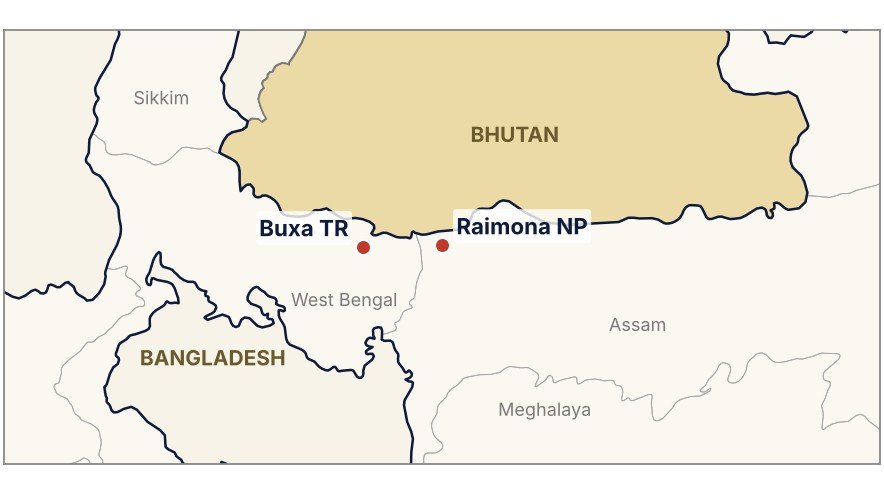
The three-year-old tigress moved from Bihar’s Valmiki Tiger Reserve and released in West Bengal’s Buxa Tiger Reserve on 2 October 2026 was tranquilised on 3 November near Gelaguri village in Assam’s Kokrajhar district, after travelling more than 100 km and reaching Raimona National Park. She was brought back to Buxa early on 4 November and placed in an enclosure for observation. The joint operation of the Assam and West Bengal forest departments had NTCA approval and used two kumki elephants from Buxa.
Concept: Tiger reintroduction: why moved tigers wander
When tigers have disappeared from a reserve, the National Tiger Conservation Authority (NTCA), a statutory body under the Wild Life (Protection) Act, 1972, can approve translocation of animals from a source population; Panna and Sariska are the best known Indian cases. A translocated tiger, especially a young adult, often roams widely while it searches for a territory with enough prey, water and no resident rivals, which is why released animals are radio-collared and, as at Buxa, sometimes held first in a soft-release enclosure to settle. Long movements also reveal how well forests are connected: Buxa in north Bengal is part of a forest landscape that runs east into Assam and north into Bhutan. Success depends less on the release itself than on prey density, protection and the presence of other tigers, so a single tigress is only the first step towards a breeding population.
Key facts for Prelims
- Buxa Tiger Reserve is in Alipurduar district of West Bengal; Raimona National Park is in Kokrajhar district, in Assam’s Bodoland Territorial Region.
- The tigress crossed the Sankosh river into Assam in late October.
- The Kokrajhar district magistrate imposed restrictions under Section 163 of the Bharatiya Nagarik Suraksha Sanhita, with a five-kilometre zone around Gelaguri during the operation.
- Kumki elephants are trained captive elephants used in wildlife capture and conflict operations.
Mains analysis and way forward
Mains analysis
- The episode shows that reintroduction succeeds only if the receiving reserve offers adequate prey and a reason to stay; a tigress that keeps leaving signals gaps in habitat quality or the absence of a mate.
- Interstate coordination (Bihar, West Bengal, Assam) and NTCA oversight show that tiger landscapes cross administrative borders and need landscape-level management.
- A capture near villages carries risks for both people and the animal; prompt, calm operations with legal restrictions on crowding reduced conflict here.
Way forward
- Strengthen prey augmentation and protection in Buxa before more releases, and add tigers of both sexes so that a breeding unit can form.
- Map and secure the Buxa-Raimona-Manas corridor with Assam and Bhutan so that dispersal does not end in conflict.
Connect the dots: Links to GS III (conservation, protected areas, Project Tiger and NTCA) and GS I (geography of the Himalayan foothills and Duars).
Sources: The Hindu: West Bengal’s first relocated tigress captured on sojourn in Assam, returned to Buxa, 3 Nov 2026; Millennium Post: Buxa tigress captured in Assam, being brought back to Bengal, 3 Nov 2026; IANS via Social News XYZ: Buxa tigress captured in Assam brought back to West Bengal after 100-km journey, 4 Nov 2026; ThePrint (PTI): Efforts on to bring back Buxa tiger from Assam: West Bengal Forest Minister, 30 Oct 2026
Kedartal trek avalanche in Uttarkashi: four bodies recovered, search on for four missing
In short: Heavy snow and an avalanche hit a trekking group near Kedar Kharak on 29 October; rescuers have recovered four bodies and four remain missing.
Why in news
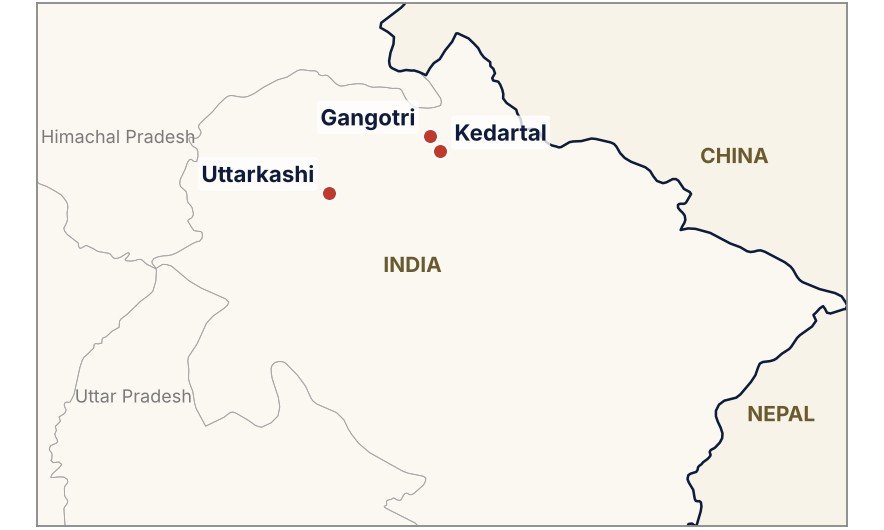
Two more bodies were recovered on 4 November 2026 from the Kedartal trek route in Uttarkashi district, Uttarakhand, taking the toll to four, including two sisters from Lucknow. The trekking group had left Gangotri on 27 October and was caught by heavy snowfall and an avalanche near the Kedar Kharak campsite on 29 October while returning; eight went missing, while three porters and a cook reached Gangotri safely. A joint team of the SDRF and the Nehru Institute of Mountaineering, with the NDRF, police and forest and revenue staff, continues to search for four people.
Concept: What triggers an avalanche
An avalanche is a rapid flow of snow down a slope. Loose-snow avalanches start at a point and fan out; the more dangerous slab avalanches occur when a cohesive layer of snow breaks away from a weaker layer beneath it, often releasing an entire slope at once. Most slab avalanches start on slopes of about 30 to 45 degrees. The usual triggers are heavy fresh snowfall that loads the snowpack faster than it can settle, wind that piles snow on leeward slopes, sudden warming, and the added weight of people or animals. In India, avalanche forecasting for the Himalaya is done by the Defence Geoinformatics Research Establishment of DRDO, while the NDMA frames guidelines for disaster preparedness and the NDRF and State Disaster Response Forces carry out search and rescue.
Key facts for Prelims
- Kedartal is a glacial lake at about 15,485 feet on the Kedartal trek, which starts from Gangotri in Uttarkashi district.
- Bodies are being airlifted to the Matli helipad in Uttarkashi.
- Search operations began on 31 October, two days after the avalanche.
Mains analysis and way forward
Mains analysis
- Post-monsoon and early-winter treks are popular, but early heavy snowfall can turn a moderate route dangerous within hours; trek calendars need to follow weather risk, not only demand.
- Late raising of the alarm costs the most valuable rescue time in an avalanche, where survival chances fall steeply within the first hour of burial.
- Rapid growth of commercial trekking needs regulation of operators: certified guides, equipment standards, satellite communication and registered itineraries.
Way forward
- Make registration, satellite trackers and mandatory weather checks a condition of permits on high-altitude routes, with suspension of treks when snowfall warnings are issued.
- Strengthen avalanche forecasting at the district level and push warnings to trek operators and checkposts in real time.
- Train and equip local guides and porters, the first responders on most trails, in avalanche rescue.
Connect the dots: Links to GS III (disaster management, Himalayan hazards) and GS I (glaciers, snow and mountain geography).
Sources: The Hindu: Kedartal avalanche claims lives of two sisters from Lucknow, 4 Nov 2026; Deccan Chronicle: 4 Bodies Found On Kedartal Trek, 4 Nov 2026; Daily Jagran: Uttarakhand Avalanche: 4 Bodies Recovered From Kedartal Route; Recovered Belongings May Reveal What Went Wrong, 4 Nov 2026; UNI: Trekkers stranded on Kedartal route in Uttarakhand, 31 Oct 2026
In brief
- Swachh Bharat Mission (Grameen) extended to March 2028: The Finance Ministry has extended Phase II of the Swachh Bharat Mission (Grameen) to 31 March 2028, with no further extension, so that the remaining villages reach ODF Plus status; about 5.70 lakh of 5.86 lakh villages have been declared ODF Plus so far (Indian Express, 4 Nov 2026).
- SIR declaration separated from online Form 6: The Election Commission has taken the SIR declaration out of the online Form 6, the form for new voter enrolment, in States where the Special Intensive Revision is still under way, and offers it as a separate form on ECINet; it had withdrawn the declaration in States where the SIR was over in September (The Hindu and Indian Express, 4 Nov 2026).
- Speaker told to decide defection petition in two months: On 4 November 2026, a Supreme Court bench led by Chief Justice of India Surya Kant directed the Madhya Pradesh Assembly Speaker to decide within two months the Tenth Schedule petition, filed in July 2024, against Bina MLA Nirmala Sapre, holding that disqualification petitions must be decided expeditiously even when the Assembly has time left in its term.
- Iran says Indian ships exempt from Hormuz curbs: Amir Hayat-Moghaddam, deputy chairman of the Iranian Parliament’s national security and foreign policy committee, told the ISNA news agency on 3 November 2026 that ships of India, China, Iraq and Qatar pass freely through the Strait of Hormuz, citing Iran’s need to import medicines from India; it was a lawmaker’s statement, not a formal government notification. India has repeatedly called for free and unimpeded navigation in line with international law.
- Services PMI at a four-month high: The HSBC India Services PMI, compiled by S&P Global and released on 4 November 2026, rose to 55.8 in October from 55.2 in September; the composite PMI rose to 56.2, while input cost inflation eased to its lowest since August 2020 (DD News, 4 Nov 2026).
- $400 billion of renewable investment commitments: New and Renewable Energy Minister Pralhad Joshi said on 4 November 2026, during the Bharat Renewable Energy Summit and Expo, that companies have made long-term renewable energy investment commitments of about $400 billion; India’s COP26 pledge is 500 GW of non-fossil capacity by 2030 (Business Standard, 4 Nov 2026).
- Annual Survey of Industries 2024-25: MoSPI’s Annual Survey of Industries results, released on 4 November 2026, show gross value added of the corporate manufacturing sector grew 9.28% in 2024-25, with persons engaged up 7.57%; five States (Maharashtra, Gujarat, Tamil Nadu, Karnataka, Uttar Pradesh) account for over 54% of GVA (DD News, 4 Nov 2026).
Prelims practice: 5 questions
Choose an option to see the answer and explanation. Your score appears when all five are answered.
Mains practice
A classification that was reasonable when a law was made may become arbitrary when the facts behind it change. Examine this statement in the light of the Supreme Court’s observations on two-child norms for local body elections.
Show the answer outline
Introduction (about 30 words)
- Open with the Supreme Court’s observation of 4 November 2026 that laws penalising more than two children have lost their relevance as fertility has fallen below replacement level.
Why the norm was upheld
- Article 243F lets States add disqualifications for panchayat membership; in Javed v. State of Haryana (2003) the Court found the two-child classification reasonable under Article 14, tied to population control.
How changed facts alter the test
- Reasonable classification needs an intelligible differentia and a rational nexus with the object; when the object weakens (TFR about 1.9, below 2.1), the nexus weakens too.
- Constitutional law has also moved: reproductive choice is part of liberty and privacy under Article 21 (Suchita Srivastava, 2009; Puttaswamy, 2017).
Costs of the norm
- Falls harder on women and poorer households; narrows political representation at the tier of government closest to people.
Counter-view and limits
- Legislatures, not courts, usually decide when a policy has outlived its purpose; demographic conditions differ across States, so a uniform conclusion needs care.
Conclusion (about 30 words)
- Laws must be tested against present facts as well as original intent; periodic legislative review, not only litigation, keeps classifications reasonable.
Tip: Use two cases from this edition: the two-child norm, where the Court referred precedent to a larger bench as facts changed, and the reserved-seat rotation plea, where it left policy to Parliament. Together they show both sides of judicial restraint.
Current Canvas is prepared by the UPSC Gurus editorial desk. Every fact is checked against official releases and reliable reporting, with sources listed under each story. Editions are compiled each month into Current Canvas Monthly, a free magazine.
About images: photographs and illustrations in Current Canvas are AI-generated for illustration only. They are not news photographs of the events described.