 New this week · Free UG Handout 02UPSC Mains Directive Words: 60 Meanings, Trends and PYQsTwo free PDFs: The Guide and the With PYQs edition.Read and download
Today’s Canvas
- Severe Cyclonic Storm Murasu begins landfall near Ongole: winds up to 110 kmph as south Andhra bracesGS I / GS III
- ISRO chief: first launch from Kulasekarapattinam, India’s second spaceport, expected in March or April 2027GS III
- Centre notifies VB-G RAM G Grievance Redressal Rules, 2026: enquiry in 7 working days, resolution in 15 daysGS II
- Allahabad High Court awards Rs 1.25 lakh for five days of illegal police detention, calls it “arrogance of authority”GS II
- Andhra Pradesh urban local body polls record 60.96% turnout; re-poll ordered at 12 booths, counting on 3 NovemberGS II
- Tribal healers meet in Hyderabad for a national orientation on public health, part of a drive to train one lakh healersGS II
- NSA Doval in Hanoi: talks with Vietnam’s Defence and Public Security Ministers to deepen the Enhanced Comprehensive Strategic PartnershipGS II
- At the Manama Dialogue, India calls for diplomacy and respect for UNCLOS as the Strait of Hormuz disruption continuesGS II
- Defence Ministry signs Rs 53,866.50 crore contracts with GRSE and Goa Shipyard for eight Next Generation CorvettesGS III
- CBI brings back Mahadev betting app promoter Sourabh Chandrakar from Oman after Interpol Red Notice and extradition requestsGS III
- Manufacturing PMI eases to 54.7 in October, but export orders grow at the fastest pace in six monthsGS III
- UPI crosses 25 billion transactions and Rs 31.5 lakh crore in October; daily value tops Rs 1 lakh crore for the first timeGS III
- Captive and commercial coal output jumps 42% in October; Coal India marks its 51st Foundation Day with record productionGS III
- Supreme Court dismisses Centre’s challenge to enforcement of foreign arbitral awards in Vedanta’s Ravva oilfield disputeGS III
- About 1,100 trees felled for 3,000 MW Karjat pumped-storage project; Katkari families say their forest rights were left outGS III
Disaster management and science
Severe Cyclonic Storm Murasu begins landfall near Ongole: winds up to 110 kmph as south Andhra braces
In short: IMD says Murasu’s landfall process began at 1 am on 3 November near Ongole, a week after Arnab; Andhra, Tamil Nadu and Odisha moved early on evacuation.

Why in news
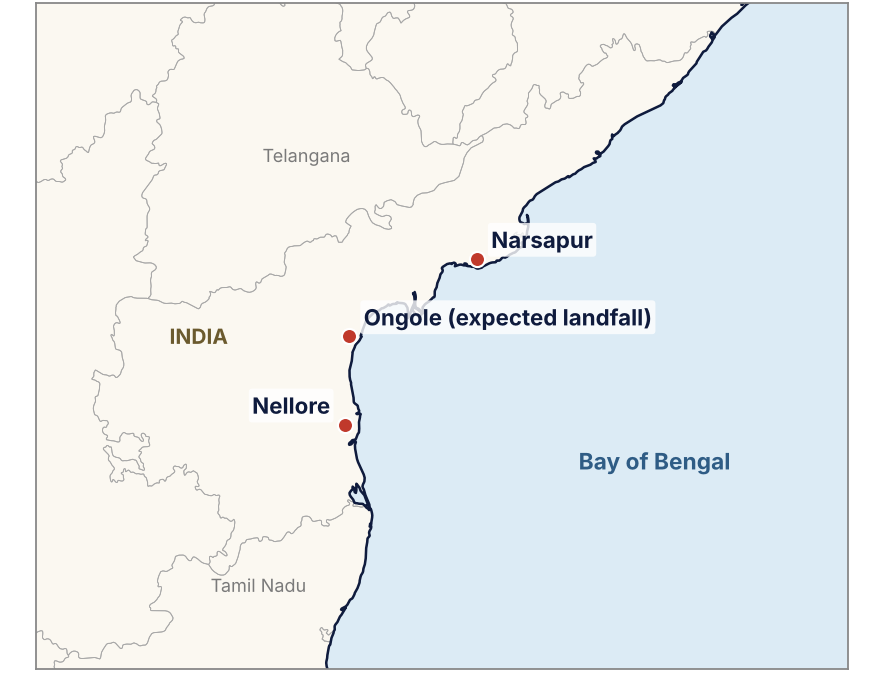
IMD said the landfall process of Severe Cyclonic Storm Murasu commenced at 1 am on 3 November close to Ongole in Prakasam district, on the south Andhra Pradesh coast between Nellore and Narsapur, with gale winds of up to 110 kmph gusting to 120 kmph and heavy rain. On 2 November IMD had forecast the crossing between 11:30 pm and 4 am. The Andhra Pradesh State Disaster Management Authority said about 2,000 people had been evacuated by Monday, with a plan to move about 30,000; six NDRF teams and seven SDRF teams were deployed in advance.
Concept: Storm surge and what a “severe cyclonic storm” means
IMD grades cyclones by sustained wind speed. A severe cyclonic storm has winds of 48 to 63 knots (88 to 117 kmph) and seas rated ‘very high’; a very severe cyclonic storm has 64 to 89 knots (118 to 166 kmph). Storm surge is one of the deadliest cyclone hazards: an abnormal rise of the sea that grows as the cyclone moves over shallower water and peaks near the landfall point, causing sudden coastal flooding. The danger is worst when the surge peak coincides with high tide; as general coastal-risk guidance (not a forecast for Murasu), IMD notes that tides can add up to 4.5 m above mean sea level on parts of the Indian coast. For a severe cyclonic storm, IMD’s suggested actions are to suspend all fishing, move coastal hutment dwellers to safer places and keep people indoors.
Key facts for Prelims
- The name Murasu was given by India and means ‘war drum’.
- IMD position at 5:30 am on 2 November: 13.9 degrees N, 81.8 degrees E, about 260 km south-east of Ongole, moving west-north-west at about 25 kmph.
- Deputy Chief Minister Pawan Kalyan named Nellore, Prakasam, Bapatla and Krishna as the districts likely to face severe impact.
- Three of the NDRF teams came from the 4th Battalion at Nagarikuppam near Arakkonam, Tamil Nadu; Chennai (11) and Vijayawada (10) airports cancelled 21 flights.
Mains analysis and way forward
Mains analysis
- Two cyclones within a week on the same coast compound loss: soil is saturated, embankments are weakened and families are still recovering, so relief must plan for cumulative rather than single-event damage.
- Chief Minister N. Chandrababu Naidu estimated that 6,000 to 8,000 electricity poles could be damaged; power restoration decides how quickly water supply, hospitals and communication recover.
- Early evacuation and pre-positioned NDRF and SDRF teams reflect India’s shift from relief-centred to preparedness-centred cyclone management, a pillar of the Sendai Framework approach.
Way forward
- Impact-based warnings at district level that combine wind, rain and surge, so action is matched to local risk.
- Fast-track restoration of power lines with underground cabling for critical coastal feeders over time.
Connect the dots: GS I cyclones and coastal processes; GS III disaster management (NDMA, NDRF, SDRF, Sendai Framework); naming of cyclones by the WMO/ESCAP Panel.
Sources: ThePrint (PTI): Cyclone Murasu landfall begins; heavy rain, 120 kmph winds batter Andhra coast, 3 Nov 2026; IMD: Coastal bulletin, 2 Nov 2026; Al Jazeera: Thousands evacuated as India braces for second cyclone in a week, 2 Nov 2026; ANI: Cyclone Murasu intensifies into severe cyclonic storm, likely to cross south Andhra Pradesh coast by early November 3, 2 Nov 2026; The Week: Andhra braces for another cyclone within a week as Murasu set to make landfall, 2 Nov 2026; Millennium Post: Cyclone Murasu nears Andhra with 120 kmph gusts; 20+ flights cancelled, 2 Nov 2026; Deccan Chronicle: Cyclone Murasu: NDRF deploys three teams from Tamil Nadu to Andhra Pradesh, 2 Nov 2026; IMD (RSMC New Delhi): Cyclone classification, expected damage and storm surge
ISRO chief: first launch from Kulasekarapattinam, India’s second spaceport, expected in March or April 2027
In short: A southward launch site in Tamil Nadu will let small rockets reach polar orbits directly, saving fuel and freeing Sriharikota for larger missions.

Why in news
Speaking to reporters in Chennai on 1 November, ISRO Chairman V. Narayanan said construction of the new launch site at Kulasekarapattinam in Thoothukudi district, Tamil Nadu, was progressing and that he expected the first rocket to lift off from it in March or April 2027. He also said the NVS-03 navigation satellite, launched on 30 October, was raising its orbit with its own propulsion.
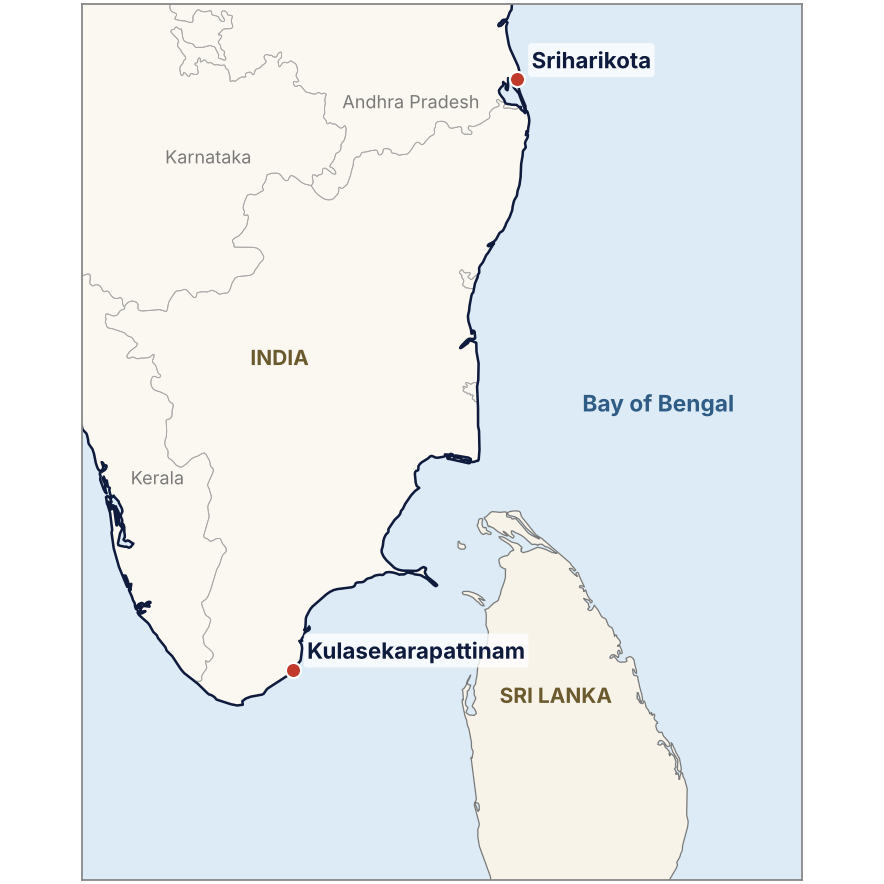
Concept: Why launch-site geography matters: the Sri Lanka dogleg
Satellites for Earth observation usually go into polar or sun-synchronous orbits, which need a launch heading south. From Sriharikota, a rocket cannot fly straight south because its path would pass over Sri Lanka; it first heads south-east and then makes a sharp turn, a ‘dogleg’ manoeuvre, towards the South Pole. Every such turn costs propellant and so reduces the payload a rocket can carry, which matters most for a small vehicle. Kulasekarapattinam, near India’s southern tip, allows a direct southward flight over open sea. The site is therefore planned as a dedicated launch complex for the Small Satellite Launch Vehicle (SSLV) and for launches by non-governmental enterprises.
Key facts for Prelims
- Prime Minister Narendra Modi laid the foundation stone of the SSLV Launch Complex on 28 February 2024; the foundation of its launch pad was laid on 27 August 2025.
- The site covers 2,233 acres across Padukkapathu, Pallakurichi and Mathavankurichi villages; its cost was put at Rs 950 crore when the foundation was laid.
- Tamil Nadu is developing a 2,000-acre Space Industrial and Propellants Park in the same district.
- Sriharikota (Satish Dhawan Space Centre) in Andhra Pradesh remains India’s main spaceport.
Mains analysis and way forward
Mains analysis
- A second spaceport adds launch capacity and redundancy, so one weather event or pad repair does not halt India’s whole launch schedule.
- A dedicated small-launcher site, open to private launches, supports the opening of the space sector and India’s aim of a larger share of the global small-satellite market.
- Clustering a spaceport with a propellants and manufacturing park can build a regional space economy and jobs in southern Tamil Nadu.
Way forward
- Keep the 2027 timeline by synchronising range safety, tracking and launch-pad readiness with SSLV production.
- Publish clear access rules and pricing for private launch providers to use the complex.
Connect the dots: GS III space technology, ISRO launch vehicles (PSLV, GSLV, SSLV), space sector reforms (IN-SPACe, NSIL); GS I location of industries.
Sources: ETV Bharat: First rocket to be launched from Tamil Nadu’s Kulasekharapatnam next year: ISRO Chairman, 1 Nov 2026; ANI: India’s navigation satellite mission a grand success: ISRO chief V Narayanan, 1 Nov 2026; ISRO: Foundation stone laid for launch pad at SSLV Launch Complex, Kulasekarapattinam, 29 Aug 2025; Deccan Herald: PM Modi to lay foundation for ISRO’s second spaceport on February 28, Feb 2024
Polity, governance and social justice
Centre notifies VB-G RAM G Grievance Redressal Rules, 2026: enquiry in 7 working days, resolution in 15 days
In short: New rules turn the rural job guarantee law’s promise of time-bound redress into a working system: any format, any language, tracked digitally and escalated automatically.
Why in news
On 2 November 2026 the Ministry of Rural Development notified the Viksit Bharat – Guarantee for Rozgar and Ajeevika Mission (Gramin): VB-G RAM G – Grievance Redressal Rules, 2026. State Governments will run a multi-tier mechanism at Gram Panchayat, Block and District levels, with designated Grievance Redressal Officers who must complete an enquiry within seven working days and resolve the grievance within 15 days of receipt. No grievance can be refused registration because of its format, language or mode of submission, and every case is tracked on a Digital Public Infrastructure (DPI) platform, with unresolved cases moving automatically to the next level after 15 days.
Concept: Accountability inside the rural job guarantee: social audit, grievance redressal and Ombudsperson
The VB-G RAM G Act, 2025 (Act 36 of 2025) guarantees wage employment to rural households and repeals the Mahatma Gandhi National Rural Employment Guarantee Act, 2005 (Section 37). It builds accountability in three layers. First, social audit: under Section 20 the Gram Sabha monitors all works in its Gram Panchayat and conducts regular social audits, and Schedule I requires every work, expenditure and guarantee to be socially audited at least once every six months. Second, grievance redressal: Section 25 obliges each State to set up a time-bound, multi-tier mechanism for complaints such as denial of work, delayed wages or unemployment allowance, missing worksite facilities and harassment, and Schedule I fixes the timelines (enquiry within seven working days, resolution within 15 days, automatic digital escalation after that). Third, independent and penal checks: Schedule I provides for one Ombudsperson per district who can enquire and pass awards, appeals that must be filed within 45 days and decided within 30, and Section 27 makes any contravention of the Act punishable with a penalty of up to Rs 10,000.
Key facts for Prelims
- The Act guarantees not less than 125 days of wage employment in a financial year to every rural household whose adult members volunteer for unskilled manual work (Section 5); MGNREGA guaranteed 100.
- States can notify up to 60 days in a year, covering peak sowing and harvesting seasons, during which no works are undertaken (Section 6).
- The Act came into force on 1 July 2026; delayed wages attract compensation of 0.05% of unpaid wages for each day of delay beyond the sixteenth day after closure of the muster roll (Schedule II).
- Under the new Rules, a grievance can be filed in person, by speed post, on the Centre’s designated DPI, or by telephone and helplines; paper complaints must be entered on the DPI the same or next working day, and the complainant gets a registration number.
- Appeals against orders under the mechanism follow Schedule I: Gram Panchayat to Programme Officer, then District Programme Coordinator, then the State Grievance Redressal Authority.
Mains analysis and way forward
Mains analysis
- A legal right is only as strong as its remedy: fixed timelines and automatic escalation shift the burden from the worker, who earlier had to chase officials, to the system, which must now explain delay.
- Accepting complaints in any format or language lowers the barrier for the least literate and most marginal workers, the very people a demand-driven employment guarantee is meant to protect.
- Digital tracking creates an audit trail useful for social audits and Ombudspersons, but rural connectivity gaps mean offline channels (in person, post, phone) must remain equally effective.
- Grievance redressal, social audit and the Ombudsperson work best together: the first resolves individual cases, the second exposes patterns at the village level, and the third adds independent oversight.
Way forward
- Train Grievance Redressal Officers and frontline staff, and publish monthly dashboards on pendency and disposal time for each district.
- Link findings of the six-monthly social audits to the grievance system so that recurring complaints trigger corrective action and recovery.
- Ensure that independent Ombudspersons are appointed in every district and that their awards are complied with in time.
Connect the dots: GS II: welfare schemes for vulnerable sections, transparency and accountability, social audit, role of Gram Sabha; GS III: rural employment and inclusive growth.
Sources: PIB: VB-G RAM G Grievance Redressal Rules, 2026 notified, 2 Nov 2026; ANI: Ministry of Rural Development notifies Grievance Redressal Rules, 2026 under VB-G RAM G Act, 2 Nov 2026; India Code: Viksit Bharat – Guarantee for Rozgar and Ajeevika Mission (Gramin): VB-G RAM G Act, 2025 (Act 36 of 2025); PIB: Ministry of Rural Development, VB-G RAM G Grievance Redressal Rules, 2026, 2 Nov 2026 (official release)
Allahabad High Court awards Rs 1.25 lakh for five days of illegal police detention, calls it “arrogance of authority”
In short: Rs 25,000 for each day of unlawful custody, with recovery possible from guilty officers: the order applies the constitutional remedy of compensation for violation of personal liberty.
Why in news
In a habeas corpus order dated 29 October and reported on 1 November 2026 (Gyanti Devi v. State of U.P.), a Bench of Justices Atul Sreedharan and Achal Sachdev held that a young man had been unlawfully detained by Deoria police from 28 August to 2 September 2026, with his arrest shown only on 2 September. A Circle Officer’s inquiry report of 21 October had itself recorded the fabricated arrest. The Court awarded Rs 1,25,000 (Rs 25,000 per day) and ordered his release.
Concept: Compensation for violation of fundamental rights
Article 21 protects life and personal liberty, and Article 22(2) requires that an arrested person be produced before the nearest magistrate within 24 hours (excluding travel time); detention beyond that without a magistrate’s authority is illegal. In Rudul Sah v. State of Bihar (1983), where a man stayed in jail for over 14 years after acquittal, the Supreme Court awarded compensation in a writ petition, saying release alone would strip Article 21 of meaning. Nilabati Behera v. State of Orissa (1993) held that such compensation is a public law remedy based on strict liability, to which sovereign immunity is no defence, and that the State may recover it from the wrongdoer. D.K. Basu v. State of West Bengal (1997) laid down arrest and detention guidelines, such as arrest memos and informing relatives. This public law remedy under Articles 32 and 226 is in addition to a civil suit for damages.
Key facts for Prelims
- The Court said the award does not bar the man from suing the police department in tort for further damages.
- The amount may be recovered from officials found guilty in the departmental inquiry; if the Investigating Officer is found guilty, the harshest punishment should be considered.
- The Court asked the State to record appreciation in the service records of the Circle Officer and the Superintendent of Police for their candid disclosure.
- In Bhim Singh v. State of J&K (1985), the Supreme Court awarded Rs 50,000 to a legislator detained without being produced before a magistrate.
Mains analysis and way forward
Mains analysis
- The Court used a per-day calculation in this case, a reminder that public-law compensation is available for unlawful deprivation of liberty; it is not a nationally prescribed rate.
- Recovery from erring officers adds personal accountability, which deters misuse more effectively than payments from the public exchequer alone.
- The case also shows internal accountability working: a candid inquiry report by senior officers settled the facts and was commended by the Court.
- Illegal detentions often hit those with the least means to seek remedies; habeas corpus is a vital safeguard for vulnerable citizens.
Way forward
- Strict compliance with arrest procedures under the BNSS and D.K. Basu guidelines, backed by working CCTV in police stations, can prevent such cases.
- A statutory framework for compensation in custodial wrongs, as the Supreme Court has urged, would ensure uniform relief.
- Regular training of seasoned officers and investigators on constitutional limits builds a rights-respecting police culture.
Connect the dots: GS II: fundamental rights (Articles 21, 22, 32, 226), police reforms; GS IV: accountability, integrity and the use of authority.
Sources: LiveLaw: “Arrogance of authority”: Allahabad High Court awards Rs 1.25 lakh compensation for 5-day illegal police detention, 1 Nov 2026; CaseMine: Compensatory jurisprudence for illegal detention in India (Rudul Sah, Nilabati Behera, D.K. Basu, Bhim Singh)
Andhra Pradesh urban local body polls record 60.96% turnout; re-poll ordered at 12 booths, counting on 3 November
In short: Polls to Andhra civic bodies went ahead on 1 November after a Supreme Court-directed reopening of nominations; complaints of booth capturing led to re-polls on 2 November.
Why in news
Polling for urban local bodies in Andhra Pradesh was held on Sunday, 1 November 2026: 59,06,255 of 96,89,061 voters (60.96%) cast their ballots across 3,453 wards in 92 urban local bodies. After District Election Officers reported booth capturing and violence in some wards, the State Election Commission (SEC) ordered re-polling at 12 polling stations in 11 wards of six bodies on 2 November. Votes are to be counted on 3 November.
Concept: State Election Commission: the guardian of local democracy
The 73rd and 74th Constitutional Amendments (1992) gave panchayats and municipalities constitutional status and took their elections out of the hands of State governments. Article 243K vests the superintendence, direction and control of the preparation of electoral rolls for, and the conduct of, panchayat elections in a State Election Commission, headed by a State Election Commissioner appointed by the Governor. To protect independence, the Commissioner can be removed only in the manner and on the grounds applicable to a High Court judge, and service conditions cannot be varied to his or her disadvantage after appointment. Article 243ZA extends the same Commission’s control to elections to municipalities. The SEC is separate from the Election Commission of India, which conducts elections to Parliament, State legislatures and the offices of President and Vice-President.
Key facts for Prelims
- The poll process covered 100 urban local bodies (13 municipal corporations and 87 municipalities and nagar panchayats); polling was moved from 28 October to 1 November.
- On 21 October 2026, on a Special Leave Petition by the YSRCP against the High Court’s refusal to extend the nomination deadline (which ended on 19 October), the Supreme Court asked the SEC to examine complaints, including electronic evidence, that candidates were prevented from filing nominations.
- The SEC then reopened nominations on 23 and 24 October in 72 wards of four bodies: Kadapa and Tirupati corporations and Rajampet and Mydukur municipalities.
- Turnout ranged from 46.85% in Tirupati Corporation to 84.36% in Chimakurthy municipality.
Mains analysis and way forward
Mains analysis
- The episode shows the Supreme Court using a light-touch remedy: instead of stopping the election, it asked the constitutional body in charge (the SEC) to weigh evidence and decide, respecting the SEC’s primacy over the poll process.
- Free and fair local elections depend on the nomination stage as much as on polling day; intimidation that keeps candidates off the ballot denies voters a real choice.
- Violence and booth capturing in a few wards point to the need for SECs to have adequate police support and observers, as the Election Commission of India enjoys in general elections.
- Urban local bodies matter for service delivery (water, sanitation, roads); credible elections are the base of their legitimacy and accountability.
Way forward
- States can strengthen SECs with assured budgets, staff and timely access to central or State forces during sensitive phases.
- Online filing of nominations and video recording at nomination centres can reduce disputes over obstruction.
- Timely local polls and early dispute resolution help keep municipal governance continuous and accountable.
Connect the dots: GS II: 74th Amendment, Part IXA (Articles 243P to 243ZG), State Election Commission (Articles 243K and 243ZA), electoral reforms.
Sources: The South First: Andhra municipal elections, 60.96 percent polling recorded, 2 Nov 2026; ETV Bharat: Municipal elections in Andhra Pradesh on November 1; votes to be counted on November 3, Oct 2026; The South First: Andhra local body polls, SEC reopens nominations in 72 wards following Supreme Court order, 22 Oct 2026; ThePrint (PTI): Andhra SEC halts polls in 100 ULBs after SC orders, 22 Oct 2026; Himachal Pradesh State Election Commission: Constitutional provisions (Articles 243K and 243ZA)
Tribal healers meet in Hyderabad for a national orientation on public health, part of a drive to train one lakh healers
In short: The Centre is trying to turn trusted village healers into partners of the public health system, starting with orientation, referral links and better tribal health data.

Why in news
The Ministry of Tribal Affairs, with ICMR-National Institute of Health Research (ICMR-NIHR), Bhubaneswar, under the Janjatiya Health Institutional Transformation (JanHIT) initiative, held the first-of-its-kind National Orientation Programme for Tribal Healers on Public Health at Kanha Shanti Vanam, Hyderabad, on 1 and 2 November 2026, at the start of the Janjatiya Gaurav Pakhwada (1 to 15 November). About 550 tribal healers nominated by nine States and Union Territories attended this first phase, under a wider plan to train and certify one lakh tribal healers.
Concept: Tribal health in India: the Bang Committee and the “triple burden”
Scheduled Tribes make up about 8.6% of India’s population, around 104 million people, many living in remote, forested areas where health workers are scarce. The Expert Committee on Tribal Health, chaired by Dr Abhay Bang, produced India’s first comprehensive report on the subject, Tribal Health in India: Bridging the Gap and a Roadmap for the Future (2018). It found that tribal communities carry a triple burden: malnutrition and communicable diseases such as malaria, a rising load of non-communicable diseases, and mental illness and addiction, along with a lack of reliable tribe-wise data. Among its recommendations were spending equal to 2.5% of per capita GDP on each tribal person’s health, a Tribal Health Council and Directorate at Union and State levels, 70% of tribal health resources for primary care, and training tribal youth and recognising traditional healers because doctors are reluctant to serve in these areas.
Key facts for Prelims
- The nine States and UTs in the first phase: Andhra Pradesh, Goa, Karnataka, Kerala, Maharashtra, Odisha, Tamil Nadu, Telangana, and Dadra and Nagar Haveli (PIB, 2 November 2026).
- The National Sickle Cell Anaemia Elimination Mission was launched at Shahdol, Madhya Pradesh, on 1 July 2023, aiming to eliminate sickle cell disease by 2047 by screening over 7 crore people aged 0 to 40 in 278 districts of 17 States.
- Janjatiya Gaurav Diwas (15 November) marks the birth anniversary of Bhagwan Birsa Munda; it was designated in 2021.
Mains analysis and way forward
Mains analysis
- Traditional healers are often the first point of contact for tribal families; building their capacity to spot danger signs and refer patients can cut delays that cost lives, especially in maternal and child health.
- Integration must respect indigenous knowledge and community trust while drawing a clear line on practices that can cause harm, which requires careful, ethical engagement rather than either blanket rejection or uncritical acceptance.
- Tribe-disaggregated health data, which the Ministry plans to build with ICMR, would address a gap the Bang Committee highlighted: without it, tribal health is hidden inside State or rural averages.
- Healers can complement, not replace, a functioning primary health system; staffing, roads and drug supply in tribal areas remain the base.
Way forward
- Create a clear referral pathway from certified healers to ASHAs, sub-centres and primary health centres, with feedback so healers see outcomes.
- Act on pending Bang Committee recommendations such as a dedicated tribal health budget and governance structure.
- Involve Tribal Research Institutes and communities in documenting medicinal knowledge with fair benefit-sharing.
Connect the dots: GS II: health, vulnerable sections (Scheduled Tribes), government schemes (PM-JANMAN, NSCAEM); GS I: tribal society; Sociology: tribal communities and health.
Sources: PIB: Tribal healers national orientation programme under JanHIT, 2 Nov 2026; PIB: Janjatiya Gaurav Diwas 2026, nationwide tribal pride celebration from 1 to 15 November, 27 Oct 2026; PIB: National Orientation Programme for Tribal Healers on Public Health, Kanha Shanti Vanam, Hyderabad, 2 Nov 2026; PIB: Ministry of Tribal Affairs to organise India’s first National Capacity Building Programme for Tribal Healers, 15 Jan 2026; IDR: India’s first comprehensive tribal health report (Expert Committee on Tribal Health), 14 Nov 2018; Deccan Herald: PM Modi launches sickle cell anaemia eradication mission, 1 Jul 2023
International relations and security
NSA Doval in Hanoi: talks with Vietnam’s Defence and Public Security Ministers to deepen the Enhanced Comprehensive Strategic Partnership
In short: Doval’s two-day visit pairs defence and internal security talks with Vietnam, months after ties were raised to an Enhanced Comprehensive Strategic Partnership.
Why in news
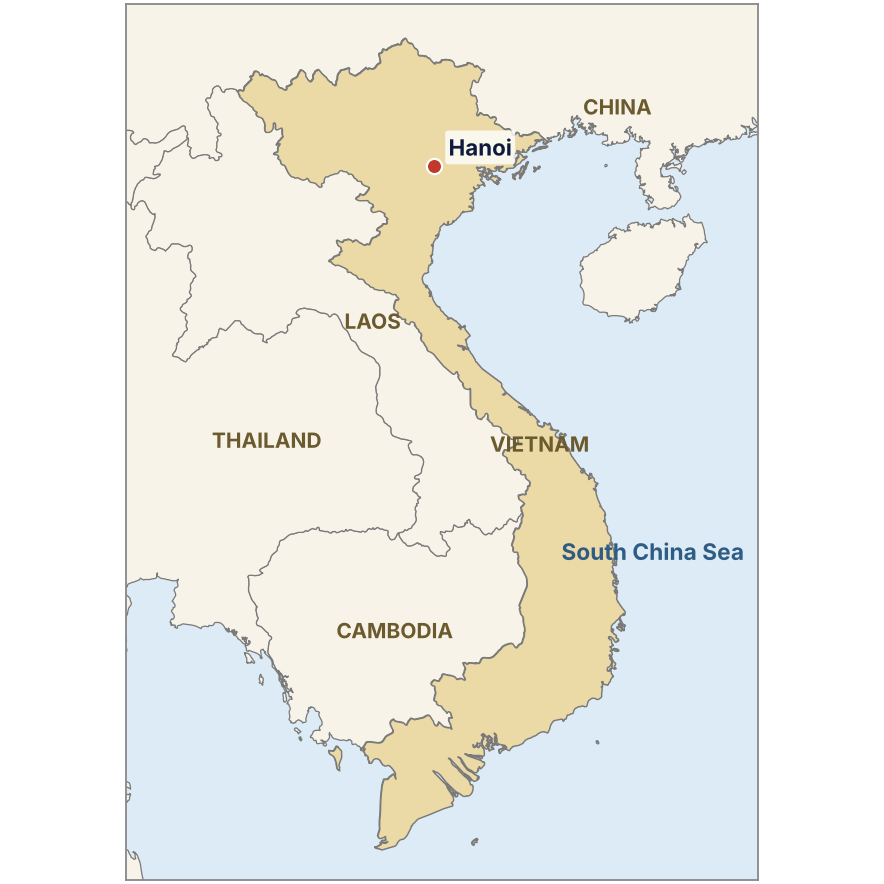
National Security Adviser Ajit Doval arrived in Hanoi on 1 November 2026 for an official visit. On 2 November he met General Phan Van Giang, Deputy Prime Minister and Minister of National Defence, and both sides agreed to deepen defence engagement; he also held delegation-level talks with General Luong Tam Quang, Minister of Public Security, on security cooperation and regional and global developments.
Concept: India-Vietnam: how the partnership was built, step by step
India and Vietnam raised their ties to a Comprehensive Strategic Partnership in 2016, during Prime Minister Modi’s visit to Vietnam. In June 2022, during Defence Minister Rajnath Singh’s visit to Hanoi, the two signed a Joint Vision Statement on the India-Vietnam Defence Partnership towards 2030 and a Memorandum of Understanding on Mutual Logistics Support, reported as Vietnam’s first such agreement with any country. In May 2026, during President To Lam’s visit to India, ties were elevated again to an Enhanced Comprehensive Strategic Partnership, linked to India’s Viksit Bharat 2047 and Vietnam’s Vision 2045 goals. The security track runs alongside: a biennial India-Vietnam Security Dialogue under a 2016 MoU between India’s National Security Council Secretariat and Vietnam’s Ministry of Public Security.
Key facts for Prelims
- The fourth India-Vietnam Security Dialogue was held in New Delhi in October 2026, co-chaired by Deputy NSA Pavan Kapoor and Vietnam’s Deputy Minister of Public Security, Senior Lieutenant General Pham The Tung.
- Topics at that dialogue: counter-terrorism, cybersecurity, maritime engagement, economic security and emerging technologies.
- A USD 500 million Defence Line of Credit to Vietnam was discussed in 2022, when both sides agreed on its early finalisation.
- In May 2026 the leaders agreed to widen defence cooperation to joint research and production of defence technology, naval and air port visits, peacekeeping, maritime security and search and rescue.
Mains analysis and way forward
Mains analysis
- Vietnam sits at the heart of India’s Act East Policy: a littoral state on the South China Sea whose interest in freedom of navigation mirrors India’s.
- Sending the NSA, rather than only the Defence Minister, signals that the partnership now spans internal security (terrorism, cyber, economic security), not only military ties.
- Defence industrial cooperation, including co-production, can help India grow as a defence exporter while building a partner’s capacity.
- The challenge is to turn frameworks (2016, 2022, 2026) into delivered projects, including timely use of credit lines.
Way forward
- Fix timelines for projects under the 2030 Vision Statement and review them at regular senior-level defence talks.
- Expand cooperation on cyber security and maritime domain awareness, where both face similar threats.
- Pair security ties with trade, connectivity and people-to-people links so the partnership has broad public support.
Connect the dots: GS II: Act East Policy, India-ASEAN relations, maritime security in the Indo-Pacific; GS III: defence diplomacy and exports.
Sources: Awaz The Voice (ANI): NSA Doval reviews India-Vietnam defence partnership in Hanoi, 2 Nov 2026; The Tribune: NSA Ajit Doval arrives in Hanoi, will interact with Vietnamese leadership, 1 Nov 2026; Business Standard (PTI): India, Vietnam ink MoU on logistics support as Rajnath Singh holds talks, 8 Jun 2022
At the Manama Dialogue, India calls for diplomacy and respect for UNCLOS as the Strait of Hormuz disruption continues
In short: Foreign Secretary Misri urged dialogue over confrontation and protection of seafarers, as the US warned Iran against using Hormuz shipping as leverage.
Why in news
On 1 November 2026, Foreign Secretary Vikram Misri spoke at the plenary session ‘Maritime Security at an Inflection Point’ of the 22nd IISS Manama Dialogue in Bahrain, stressing diplomacy over conflict, cooperation over confrontation, protection of seafarers and shipping, and respect for international law, especially UNCLOS. At the same forum, US Assistant Secretary of State Donald Blome warned Iran against using disruption of shipping in the Strait of Hormuz as economic leverage.
Concept: Treaty law and customary international law: why Iran’s non-ratification of UNCLOS matters
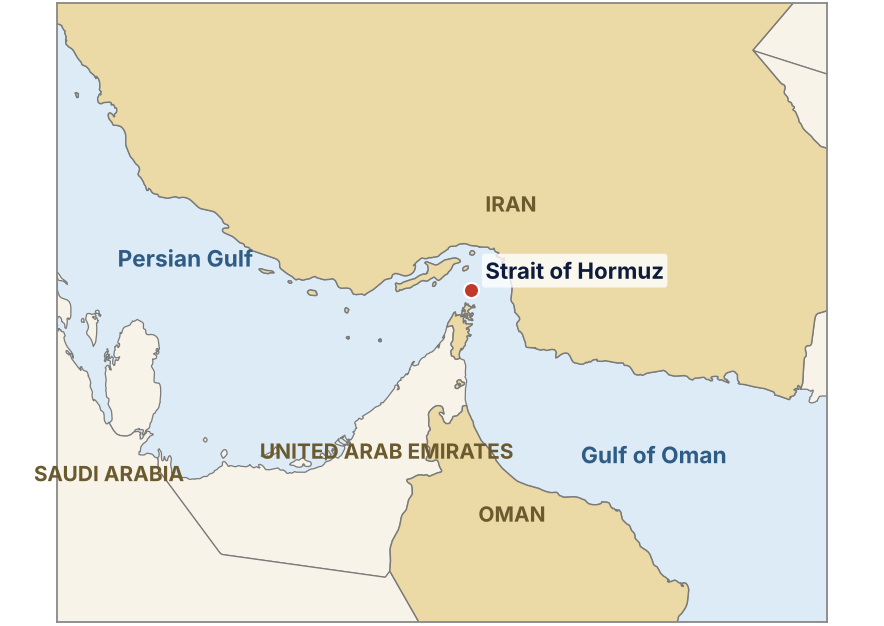
International law has two main sources that matter here: treaties, which bind the States that have consented to be bound by them (through ratification, accession, acceptance or approval), and customary international law, which binds all States because it rests on settled State practice accepted as law. Article 38(1) of the Statute of the International Court of Justice lists both as sources the Court applies. Iran signed UNCLOS in 1982 but has not become a party, while India ratified it in 1995; so the debate over Hormuz turns on whether freedom of passage through international straits is also binding as custom. The Strait of Hormuz lies within the territorial waters of Iran and Oman and carries about a fifth of the world’s oil.
Key facts for Prelims
- The Manama Dialogue is a regional security summit organised by the International Institute for Strategic Studies (IISS) in Bahrain; 2026 is its 22nd edition.
- Iran effectively closed the strait in 2026 after US-Israeli strikes on the country, and demanded the right to collect tolls (Reuters, April 2026).
- Iranian Foreign Minister Abbas Araghchi said Tehran was discussing with Qatari mediators a proposal to reopen the strait within 48 hours, on conditions including recognition of a new route developed with Oman.
- On 31 October 2026, at the G20 Foreign Ministers’ Meeting, External Affairs Minister Jaishankar had also called for freedom of navigation and an end to attacks on civilian shipping.
Mains analysis and way forward
Mains analysis
- For an energy-importing economy like India, a choke point that carries about a fifth of world oil is a direct risk to prices, inflation and the current account.
- Misri’s stress on seafarers puts the human cost first: crews on merchant ships face the most direct risk when a choke point turns into a conflict zone.
- India’s position balances ties with the US, Iran and the Gulf states; it argues for law and dialogue rather than taking sides.
- The dispute tests whether UNCLOS norms hold when a coastal state has not ratified the treaty and a conflict is under way.
Way forward
- Diversify crude sources and build strategic petroleum reserves to soften supply shocks.
- Use naval presence and maritime domain awareness to support the safety of Indian ships and crews in the region.
- Back mediation efforts and multilateral statements that affirm freedom of navigation under international law.
Connect the dots: GS II: UNCLOS, India-West Asia relations, energy diplomacy; GS I: choke points and world straits; GS III: energy security.
Sources: News On AIR: Foreign Secy Vikram Misri stresses diplomacy and cooperation for maritime security, 1 Nov 2026; News On AIR: US warns Iran against using Strait of Hormuz disruptions as economic leverage, 1 Nov 2026; Al-Monitor (Reuters): Explainer: Can Iran legally impose tolls in the Strait of Hormuz?, 16 Apr 2026
Defence Ministry signs Rs 53,866.50 crore contracts with GRSE and Goa Shipyard for eight Next Generation Corvettes
In short: Eight indigenously designed corvettes will be built at two public sector yards, days after the Cabinet Committee on Security cleared the project.

Why in news
On Monday, 2 November 2026, the Ministry of Defence signed contracts worth Rs 53,866.50 crore for eight Next Generation Corvettes for the Indian Navy: five to be built by Garden Reach Shipbuilders and Engineers (GRSE), Kolkata, and three by Goa Shipyard Limited (GSL). The contracts were signed at Kartavya Bhawan-2, New Delhi, in the presence of Defence Secretary Rajesh Kumar Singh. The Cabinet Committee on Security, chaired by the Prime Minister, had cleared the project on 28 October.
Concept: Defence Acquisition Procedure 2020: how India buys Indian
The Defence Acquisition Procedure (DAP) 2020, applicable from 1 October 2020, governs capital procurement by the armed forces. It ranks procurement categories by preference, with Buy (Indian-IDDM), meaning Indigenously Designed, Developed and Manufactured, at the top; this category, along with Make I, Make II and the Strategic Partnership model, is reserved for Indian vendors, whose foreign direct investment is capped at 49%. DAP 2020 raised minimum indigenous content to 50% for Buy (Indian-IDDM), from 40% under DPP 2016, and set it at 50% for Buy (Indian) with indigenous design (60% otherwise). Indigenous content is measured on the base contract price, net of taxes and duties. DAP 2020 also introduced the import embargo list, single-stage Acceptance of Necessity for cases up to Rs 500 crore, and a 10-year Integrated Capability Development Plan in place of the 15-year LTIPP.
Key facts for Prelims
- The Next Generation Corvette is a new in-house design of the Indian Navy; reports of the Cabinet clearance on 28 October said the first ship is expected by 2030.
- The ships are planned for anti-surface and anti-submarine warfare, coastal defence, littoral combat, protection of maritime trade routes, and maritime presence and surveillance.
- The Ministry estimates about 72 lakh person-days of employment in the shipyards and about 460 lakh person-days in ancillary industries and MSMEs over ten years.
- GRSE (Kolkata) and Goa Shipyard Limited are Defence Public Sector Undertakings under the Ministry of Defence.
- PIB: construction is expected to generate about 72 lakh person-days of employment in the shipyards and 460 lakh person-days in ancillary industries and MSMEs over ten years.
Mains analysis and way forward
Mains analysis
- An Indian design built in Indian yards keeps intellectual property, upgrades and lifetime support at home, reducing dependence on foreign suppliers during crises.
- Splitting the order across two yards spreads workload and can shorten delivery, a recurring concern in naval shipbuilding where long build cycles delay fleet renewal.
- Multi-role corvettes add numbers for littoral and coastal tasks, freeing larger frigates and destroyers for distant blue-water missions across the Indian Ocean Region.
- The employment estimate for MSMEs shows how warship orders seed a wider industrial base of steel, electronics, propulsion and weapon-system suppliers.
Way forward
- Fixed milestones, a strong project management unit and timely release of payments can help meet the reported 2030 first-delivery expectation.
- Steadily raising indigenous content in engines, sensors and weapons, not only the hull, will deepen self-reliance.
- Shipyard capacity modernisation and skilled workforce pipelines need parallel investment as order books grow.
Connect the dots: GS III: defence indigenisation, Aatmanirbhar Bharat in defence, DAP 2020, maritime security in the Indian Ocean Region; GS II: SAGAR vision.
Sources: PIB: MoD signs contracts worth Rs 53,866.50 crore for eight Next Generation Corvettes, 2 Nov 2026; Devdiscourse (ANI): Defence Ministry signs Rs 53,866 crore contracts for Indian Navy’s 8 corvettes, 2 Nov 2026; Devdiscourse (ANI): Cabinet approves Rs 40,000 crore project for 8 next-gen corvettes; GRSE and Goa Shipyard to build warships, 30 Oct 2026; Republic World: PM Modi-led CCS clears 8 NGC warships, first delivery expected by 2030, 29 Oct 2026; PIB: Raksha Mantri unveils Defence Acquisition Procedure 2020, 28 Sep 2020
CBI brings back Mahadev betting app promoter Sourabh Chandrakar from Oman after Interpol Red Notice and extradition requests
In short: The extradition shows how Red Notices, treaties and agency coordination work together to return fugitives accused of large-scale financial crime.
Why in news
On 1 November 2026, a CBI team brought Sourabh Chandrakar, promoter of the Mahadev App illegal betting syndicate, back from Oman, where the Royal Oman Police had detained him on the basis of an Interpol Red Notice. He was to be produced before the CBI Special Court in Raipur on 2 November. He faces two CBI cases with chargesheets filed and an Enforcement Directorate (ED) money laundering case; the ED estimates the proceeds of crime at about Rs 6,000 crore.
Concept: How India brings fugitives back: Red Notices, treaties and the FEO Act
Extradition is the formal surrender of an accused or convicted person by one State to another, usually under a bilateral treaty. India has extradition treaties with several dozen countries, and extradition arrangements with others, including treaties with Oman and the UAE (the full list is maintained by the Ministry of External Affairs); the Ministry of External Affairs takes up requests received from Indian agencies. An Interpol Red Notice is a request to law enforcement worldwide to locate and arrest a person; it is not an international arrest warrant, and each country decides what action to take. For those who flee, the Fugitive Economic Offenders Act, 2018 allows a Special Court under the PMLA to declare a person a fugitive economic offender where an arrest warrant exists for a scheduled offence of Rs 100 crore or more, and to confiscate property in India or abroad.
Key facts for Prelims
- CBI chargesheets invoke the Prevention of Corruption Act, 1988, IPC provisions on conspiracy, cheating and forgery, and the Chhattisgarh Gambling (Prohibition) Act; the CBI took up the case at the request of the Chhattisgarh government.
- The syndicate allegedly ran betting on cricket, football and card games through franchised “panels” and “branches”, using mule bank accounts and hawala to move money abroad.
- The ED had also sought to have him declared a fugitive economic offender under the 2018 Act.
- Interpol has 196 member countries; its constitution bars it from activities of a political, military, religious or racial character.
Mains analysis and way forward
Mains analysis
- Illegal online betting combines several threats: money laundering, hawala, cyber-enabled fraud and corruption of public servants.
- The case shows the value of agency coordination (CBI, ED, Interpol National Central Bureau and foreign police) in a borderless crime.
- Extradition is slow and depends on treaty terms, evidence standards and the requested State’s courts; many fugitives remain abroad for years.
- Asset attachment and the FEO Act add pressure where physical return is delayed, but raise fair-trial questions such as the bar on civil claims.
Way forward
- Sign or update extradition and mutual legal assistance treaties with key financial hubs, and train officers in preparing treaty-compliant requests.
- Strengthen financial intelligence and payment-system monitoring to detect mule accounts early.
- Speed up trials after extradition so that the effort leads to timely justice.
Connect the dots: GS III: money laundering, organised crime and cyber crime, role of agencies; GS II: bilateral treaties and international institutions (Interpol).
Sources: News On AIR: CBI secures extradition of Mahadev App promoter Sourabh Chandrakar from Oman, 1 Nov 2026; The Tribune: CBI extradites Mahadev app betting case kingpin Sourabh Chandrakar from Oman, 1 Nov 2026; Inc42: CBI extradites Mahadev betting app promoter Sourabh Chandrakar from Oman, 2 Nov 2026; Ministry of External Affairs: Extradition treaties and arrangements between India and other countries; INTERPOL: Op-ed by Secretary General Juergen Stock on the Red Notice system, 2023; PRS Legislative Research: The Fugitive Economic Offenders Bill, 2018; MEA: List of extradition treaties and arrangements; Interpol: Member countries
Economy
Manufacturing PMI eases to 54.7 in October, but export orders grow at the fastest pace in six months
In short: Factory growth cooled slightly in October, yet export orders hit a six-month high and selling-price inflation was the mildest in nearly four years.
Why in news
The HSBC India Manufacturing PMI, compiled by S&P Global and released on 2 November, fell to 54.7 in October from 55.1 in September, staying well above the 50 mark and its long-run average. New export orders rose at the fastest pace in six months, while input cost inflation slowed to its lowest since February.
Concept: Purchasing Managers’ Index (PMI) and how it differs from the IIP
A PMI is a diffusion index built from a monthly survey of purchasing managers, who report whether output, new orders, employment, stocks, delivery times and prices are higher, lower or unchanged compared with the previous month. A reading above 50 means more firms report improvement than deterioration (expansion); below 50 signals contraction; the distance from 50 shows the breadth of change, not its size. Because it is survey-based and released on the first working day of the next month, the PMI is a quick, forward-looking signal. The Index of Industrial Production (IIP), compiled by the National Statistics Office under MoSPI, instead measures the actual volume of output and is released with a longer lag, so the two can diverge in any single month.
Key facts for Prelims
- Markets named as sources of higher export demand in October included Bangladesh, Canada, Indonesia, Nepal, Oman, Saudi Arabia, Sri Lanka, the UK, the US and the UAE.
- Stocks of finished goods rose at an unprecedented pace, and input inventories at an eight-month high, as firms built buffers against a volatile global environment.
- Selling-price inflation was the weakest in just under four years; employment rose for a second month, but only marginally, and capital goods producers cut staff.
- Business confidence fell and stayed below its long-run average: about 18% of firms expect higher output over the next 12 months.
Mains analysis and way forward
Mains analysis
- Rising export orders alongside slower domestic order growth suggest external demand is now doing more of the lifting, which makes trade access and logistics costs more important for sustaining factory momentum.
- Easing input costs and the mildest selling-price rise in nearly four years point to contained goods inflation, giving room to monetary policy, but thin price increases can also squeeze margins and future investment.
- Precautionary stock-building signals supply-chain anxiety; it lifts current output but can reverse sharply if demand slows, so the PMI should be read together with hard data such as the IIP and core sector output.
- Weak hiring and job cuts in capital goods show that output growth is not yet translating into broad-based employment, a central concern for labour-intensive manufacturing policy.
Way forward
- Use trade agreements and export facilitation to convert the rise in overseas orders into lasting market share, especially for MSMEs.
- Pair production incentives with skilling and labour-intensive sector support so that manufacturing growth creates more jobs.
- Track survey and official data together before drawing policy conclusions from a single month.
Connect the dots: GS III: Indian economy, growth and employment; industrial policy; economic indicators (PMI, IIP, core sector).
Sources: Business Standard: Manufacturing PMI eases to 54.7 in October despite strong export demand, 2 Nov 2026; ANI: India’s manufacturing PMI eases to 54.7 in October, export orders hit six-month high, 2 Nov 2026
UPI crosses 25 billion transactions and Rs 31.5 lakh crore in October; daily value tops Rs 1 lakh crore for the first time
In short: NPCI data show UPI hit new records in October, while the planned merchant discount rate on large merchant payments awaits a fresh date.

Why in news
Data from the National Payments Corporation of India (NPCI) released on 1-2 November show UPI processed 25.47 billion transactions worth Rs 31.53 lakh crore in October, up 23% in volume and 16% in value from a year earlier. The average daily value was about Rs 1,01,707 crore, the first time it has crossed Rs 1 lakh crore.
Concept: Merchant Discount Rate (MDR) and the zero-MDR regime for UPI
The merchant discount rate is the fee a merchant pays to its bank and the payment chain for accepting a digital payment; it pays for the acquiring bank, the issuing bank, the network and the app. Since 1 January 2020, UPI and RuPay debit card payments have carried zero MDR: Section 269SU of the Income-tax Act requires larger businesses to offer prescribed electronic payment modes, and Section 10A of the Payment and Settlement Systems Act, 2007 bars charges on those modes; both were inserted by the Finance (No. 2) Act, 2019. With no fee, the Centre has supported the ecosystem through an incentive scheme for low-value person-to-merchant UPI payments. NPCI, an umbrella body for retail payments promoted by the RBI and the Indian Banks’ Association, runs UPI, which was launched in 2016.
Key facts for Prelims
- October volume rose 5.8% and value 7.4% over September (24.07 billion transactions worth Rs 29.37 lakh crore).
- Average daily volume in October was about 822 million transactions.
- A proposed, category-specific MDR (not yet in force) was to start from 15 October 2026 of 0.4%, capped at Rs 300, on person-to-merchant payments above Rs 2,000 at large merchants, and a flat Rs 5 for some listed categories; it deferred this until after Diwali, with the date to be announced.
- Person-to-person payments and small merchants under the person-to-person merchant (P2PM) model are to stay free of MDR.
Mains analysis and way forward
Mains analysis
- UPI’s growth shows how public digital infrastructure with interoperable, low-cost rails can formalise retail payments at a scale that card networks did not reach.
- Zero MDR spread adoption but left banks and apps without a direct revenue stream, making the system dependent on budget subsidies; a narrow MDR on large merchants is an attempt at financial sustainability.
- The design question is equity: charges confined to large-ticket, large-merchant payments protect small vendors and consumers, but merchants’ concerns about acceptance costs show the need for consultation and phasing.
- Rising concentration of volumes, cyber fraud and system resilience during peak loads are the next governance challenges for a system now central to everyday commerce.
Way forward
- Introduce any MDR in a calibrated, transparent way, with small merchants and person-to-person payments fully protected.
- Invest part of the system’s revenue in fraud prevention, grievance redress and uptime at peak hours.
- Keep supporting UPI’s spread to rural users and cross-border use through linkages with other fast-payment systems.
Connect the dots: GS III: banking and payments, inclusive growth, digital public infrastructure; GS II: e-governance.
Sources: Inc42: UPI transactions rise 5.8% MoM to record 25.47 bn in October, 2 Nov 2026; The Hans India (IANS): NPCI defers UPI MDR rollout until after Diwali, 13 Oct 2026; Business Standard: UPI volume dips 1.8% in September ahead of MDR rollout, 1 Oct 2026
Captive and commercial coal output jumps 42% in October; Coal India marks its 51st Foundation Day with record production
In short: Private captive and commercial mines produced 22.03 MT in October, up 42%, while Coal India posted its highest-ever monthly output of 67.2 MT.
Why in news
The Ministry of Coal said on 2 November that captive and commercial mines produced 22.03 million tonnes (MT) in October 2026, up 42% from 15.49 MT a year earlier, with dispatches up 36% to 21.11 MT. Coal India, which marked its 51st Foundation Day on 1 November, reported its highest monthly production of 67.2 MT and record supply of 70.3 MT.
Concept: Captive and commercial coal mining: how the sector was opened up
Coal was nationalised in the early 1970s, and Coal India Ltd was formed on 1 November 1975. In 2014 the Supreme Court cancelled 204 coal blocks allotted to companies since 1993 for their own use, holding the allocation process arbitrary. Parliament then passed the Coal Mines (Special Provisions) Act, 2015, to reallocate blocks through transparent e-auctions and allotment. Captive mines supply the owner’s own plants, such as power, steel or cement units; commercial mining, opened to private firms through auctions launched in June 2020, lets the winner sell coal in the open market with no end-use restriction.
Key facts for Prelims
- In April-October 2026, captive and commercial production rose 11.3% to 117.23 MT, and dispatches 11.53% to 124.86 MT.
- The Lohari coal mine in Jharkhand received Mine Opening Permission in October, taking the number of operational captive and commercial mines to 87.
- Coal India’s previous monthly production record was 62.47 MT in October 2024; its supply to the power sector hit a record 57.1 MT, all three figures up 19% year on year.
- Coal India produced 768 MT in 2025-26 and has a 2026-27 target of 815 MT; power-sector rake loading reached a record 310 rakes a day.
Mains analysis and way forward
Mains analysis
- Higher domestic output reduces import dependence for thermal coal and gives power plants a cushion ahead of peak demand, an energy-security gain at a time of volatile global fuel markets.
- Captive and commercial mines are now a growing share of supply, which tests whether auctions deliver timely mine opening, a long-standing bottleneck owing to land, forest and environment clearances.
- Rising coal output sits alongside India’s net-zero 2070 goal; the policy challenge is to meet near-term power demand while planning a just transition for coal-dependent districts and workers.
- Record rake loading shows that evacuation, not only mining, decides supply; rail and first-mile connectivity remain critical.
Way forward
- Speed up clearances and land processes for allocated blocks while enforcing mine closure and reclamation norms.
- Use coal revenues and District Mineral Foundation funds to build livelihoods that outlast mining in coal regions.
- Plan coal capacity in step with the growth of renewables and storage to avoid stranded assets.
Connect the dots: GS III: infrastructure (energy, mining), resource mobilisation; GS I: distribution of mineral resources; GS II: Supreme Court and governance.
Sources: Business Standard: Captive, commercial coal production rises 42% to 22.03 MT in October, 2 Nov 2026; Indian Masterminds: Coal India turns 51 with a triple record, October production hits 67.2 MT, 2 Nov 2026
Supreme Court dismisses Centre’s challenge to enforcement of foreign arbitral awards in Vedanta’s Ravva oilfield dispute
In short: A Bench refused to reopen awards dating to 2004 and 2016, a reminder that resisting awards at the enforcement stage hurts India’s standing as an arbitration-friendly place.
Why in news
On Monday, 2 November 2026, a Supreme Court Bench of Justices J.B. Pardiwala and Manmohan dismissed the Union Government’s challenge to a Delhi High Court judgment of 1 July 2026 that allowed Vedanta Limited and Ravva Oil (Singapore) Pte. Ltd. to enforce two foreign arbitral awards of 2004 and 2016, worth about USD 99 million. The Bench found no error in the High Court’s ruling and questioned the Centre for stalling awards at the enforcement stage, observing that such conduct undermines trust in India as an arbitration jurisdiction.
Concept: Enforcing foreign arbitral awards in India: the New York Convention and Part II of the 1996 Act
The New York Convention on the Recognition and Enforcement of Foreign Arbitral Awards (1958) obliges member countries to enforce arbitral awards made in other member countries, with only narrow grounds for refusal. India gives effect to it through Part II, Chapter I (Sections 44 to 52) of the Arbitration and Conciliation Act, 1996: a foreign award must arise from a legal relationship considered commercial under Indian law and be made in a territory the Centre has notified as a reciprocating Convention country. Under Section 48, an Indian court may refuse enforcement only if the resisting party proves grounds such as incapacity, an invalid agreement, lack of proper notice, the tribunal going beyond the reference or an award set aside at the seat, or if the subject is not arbitrable or enforcement is contrary to the public policy of India. Since the 2015 amendment, public policy is confined to fraud or corruption, contravention of the fundamental policy of Indian law, or conflict with the most basic notions of morality or justice, and the court may not review the merits. Once the court is satisfied, the award is deemed a decree of that court (Section 49); Section 50 allows an appeal against an order refusing to refer parties to arbitration (Section 45) or refusing enforcement (Section 48), but not against an order allowing enforcement.
Key facts for Prelims
- The dispute arises from the 1994 production sharing contract for the Ravva oil field in the Krishna-Godavari Basin, over the Government’s share of profit petroleum, including whether payments towards ONGC’s carry obligations could count in calculating the post-tax rate of return.
- The seat of arbitration was Kuala Lumpur; Malaysia’s Federal Court upheld the October 2004 partial award in 2011, and a reconstituted tribunal passed the final award in October 2016.
- The Delhi High Court judgment of 1 July 2026 (Justice Jasmeet Singh) rejected the Centre’s objections on limitation, public policy and the claim that the tribunal had become functus officio, and directed release of bank guarantees.
- In September 2020 the Supreme Court had held that enforcing an earlier Malaysian award in the Ravva dispute was not against Indian public policy.
Mains analysis and way forward
Mains analysis
- Predictable enforcement is central to investor confidence: a dispute rooted in a 1994 contract still being litigated in 2026 shows how delay itself becomes a cost for both investors and the state.
- The pro-enforcement approach of the 2015 amendment narrows public policy to its core, so that courts do not act as appellate forums over foreign tribunals.
- The State as a litigant faces a dilemma: protecting public revenue is legitimate, but repeated challenges on weak grounds raise legal costs, interest liability and reputational damage for the ambition to make India a hub of international arbitration.
- The case is a lesson for contract design in natural resource sectors: clear cost-recovery and profit-sharing formulas reduce the scope for long disputes.
Way forward
- Adopt a government litigation policy that screens appeals against arbitral awards on merit and prospects, as the Bench’s remarks suggest.
- Strengthen institutional arbitration in India and specialist commercial benches so that disputes are resolved in years, not decades.
- Use clearer model contracts in oil, gas and mining that reduce interpretive disputes over cost recovery and profit shares.
Connect the dots: GS III: investment models, ease of doing business, energy sector; GS II: judiciary, dispute resolution mechanisms (ADR), international conventions.
Sources: LiveLaw: Supreme Court refuses to interfere with enforcement of foreign arbitral awards in favour of Vedanta, 2 Nov 2026; Bar and Bench: “Nobody will trust you”: Supreme Court slams Centre for stalling enforcement of 2004, 2016 arbitral awards, 2 Nov 2026; India Code: Arbitration and Conciliation Act, 1996 (Part II, Sections 44 to 52); Bar and Bench: Enforcement of Malaysian arbitral award not against Indian public policy, Supreme Court holds, 16 Sep 2020
Environment
About 1,100 trees felled for 3,000 MW Karjat pumped-storage project; Katkari families say their forest rights were left out
In short: A clean-energy storage project in the Western Ghats tests how India balances grid needs with forests and the rights of forest-dwelling tribal families.

Why in news
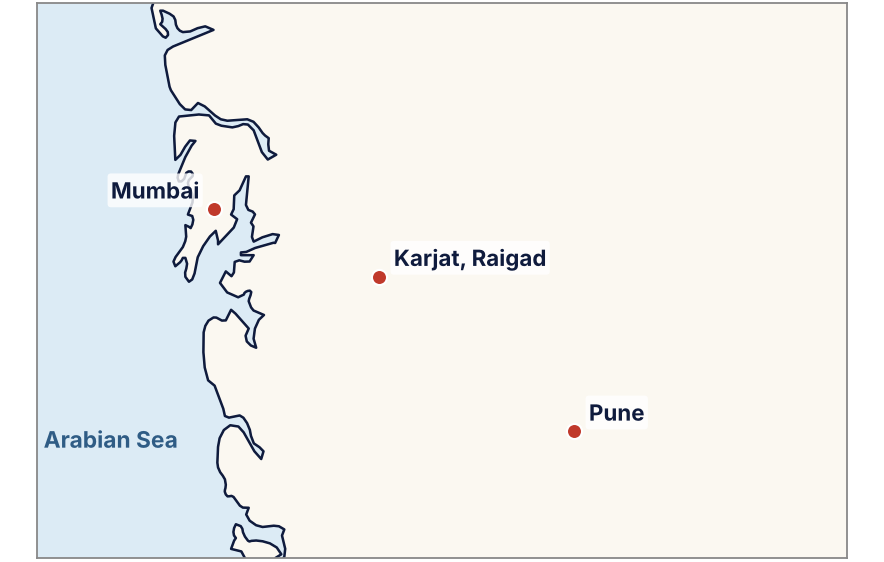
An Indian Express investigation reported on 2 November 2026 that about 1,100 trees have already been felled on Saidongar hill in Karjat, Raigad district, Maharashtra, for Torrent Power’s proposed 3,000 MW pumped-storage project, which needs more than 32,000 trees removed in all. About 150 families, mostly of the Katkari tribal community, live in the six affected hamlets; because the Gram Sabha did not submit records identifying forest-dependent families, no compensation or rehabilitation has been processed, according to the report. The Range Forest Officer said the felling halt is temporary, for law and order.
Concept: Pumped storage hydropower and the forest-rights test
A pumped storage project (PSP) works like a giant water battery: it uses two reservoirs at different heights, pumping water uphill when power is surplus and cheap (for example, solar hours) and releasing it through turbines to generate when demand peaks. Reversible pump turbines do both jobs, so a PSP can balance the variable output of solar and wind. The Ministry of Power reported about 224 GW of identified PSP potential, with 7 GW commissioned and 12 GW under construction (November 2025), and supports PSPs with a 25-year waiver of inter-state transmission charges for projects awarded before 30 June 2028. Forest land for any project needs diversion approval under the forest conservation law; the Forest Conservation Rules, 2022 require the State to ensure settlement of rights under the Forest Rights Act, 2006 before it issues the final diversion order. The Gram Sabha is central to identifying and recognising those individual and community rights.
Key facts for Prelims
- The project (Saidongar-I, by a Torrent Power subsidiary) is estimated at Rs 13,505 crore and covers 377 hectares, of which 233 hectares are forest land; the Maharashtra Forest Department approved felling of 32,490 trees on 14 October 2026.
- The Environment Ministry granted environmental clearance on 12 January 2026; Torrent says the site is about 16 km from Bhimashankar Wildlife Sanctuary and outside its eco-sensitive zone.
- The lower reservoir is planned on the Pej river; the design uses ten reversible pump turbines.
- The Katkari (listed as Katkaria/Kathodi) are among the Particularly Vulnerable Tribal Groups of Maharashtra; India has 75 PVTGs.
- According to the Central Electricity Authority, Maharashtra has the highest exploitable pumped storage potential among States, 42,955 MW (as of June 2024).
Mains analysis and way forward
Mains analysis
- Storage is the missing link of the energy transition: without it, solar power peaks at midday while demand peaks in the evening, so PSPs strengthen the case for renewables.
- Clean energy is not automatically low-impact: siting in ecologically sensitive Western Ghats forests can trade one environmental good (lower emissions) against another (biodiversity and watershed services).
- When rights recognition depends on paperwork that a Gram Sabha never filed, the most vulnerable families, such as PVTG households, can fall through the gap even if procedures are formally followed.
- Compensatory afforestation elsewhere rarely replaces the ecological and cultural value of an old, contiguous forest for the people who depend on it.
Way forward
- Complete FRA claim recognition with active help to Gram Sabhas before felling resumes, and publish the record of families consulted.
- Prefer off-river, closed-loop or brownfield sites (existing reservoirs, mined-out pits) where possible, with cumulative impact studies for the Western Ghats.
- Benefit sharing, local jobs and livelihood plans for affected Katkari families can build trust and reduce conflict.
Connect the dots: GS III: energy storage and renewable integration, Western Ghats ecology, EIA and forest clearance; GS II: Forest Rights Act, PVTGs and tribal welfare.
Sources: The Indian Express: Karjat pumped-storage project, trees felled in the Western Ghats, 2 Nov 2026; Asian News Channel (citing The Indian Express): 1,100 trees felled, 150 tribal families left out, inside Maharashtra’s Rs 13,505-crore hydropower project, 2 Nov 2026; Newslaundry: A pristine forest, wildlife, over 32,000 trees at risk: anger grows over Torrent project in Maharashtra, 28 Oct 2026; ThePrint (PTI): Torrent Power says 3,000-MW Karjat pumped storage project outside Bhimashankar Sanctuary, 25 Oct 2026; Land Conflict Watch: Local resistance to Torrent Power’s pumped storage hydro project in Karjat, Maharashtra; Power Peak Digest: Torrent Power defends Karjat pumped storage project, 26 Oct 2026; NBM&CW: Ministry of Power pushes pumped storage projects; 224 GW potential identified, 18 Nov 2025; Down To Earth: New FCA rules not in compliance with FRA, 29 Jul 2022; Ministry of Tribal Affairs: State-wise list of PVTGs (PM-JANMAN); PIB (CEA annexure): Hydro and pumped storage potential by State, as of 30 Jun 2024
In brief
- Murasu: Odisha, Telangana and Tamil Nadu on alert: On 2 November Odisha pre-positioned more than 300 teams of NDRF, ODRAF and Fire Services, put five southern districts (Ganjam, Gajapati, Rayagada, Koraput, Malkangiri) on high alert and barred fishing from 2 to 4 November; Telangana issued an orange alert for six districts. Schools and colleges in Chennai and Tiruvallur were closed on Monday.
- Kerala High Court at 70: At the Platinum Jubilee on 1 November, the CJI recalled Kerala’s pioneering women judges and urged more transparent, technology-aided listing of urgent cases.
- AUSTRAHIND 2026 concludes: The fifth India-Australia Army exercise shifted to island and coastal operations, with Navy support and civil agencies joining a disaster-relief drill.
- Paddy procurement opens in Uttar Pradesh and Assam: Uttar Pradesh and Assam began buying paddy on 1 November; targets are 65 lakh tonnes and a record 8.49 lakh tonnes.
- New airfare rules under the 2024 aviation law: The Bharatiya Vayuyan Niyam, 2026, published in the Gazette on 31 October and reported on 2 November, replace the Aircraft Rules, 1937 from 1 January 2027; airlines must show a full fare breakdown, and the Centre may issue time-limited directions on fares in extraordinary situations in the public interest.
- Supreme Court on an undertrial not produced for 14 months: In an order reported on 1 November 2026, a Bench of Justices Dipankar Datta and Sheel Nagu granted interim bail to a UAPA accused in Bihar who was not produced before the Gaya trial court for nearly 14 months, and sought reports from the investigating officer and the trial court by 15 November.
- 108 stupas at Gelephu, India represented by Kiren Rijiju: On 1 November 2026, Bhutan’s King Jigme Khesar Namgyel Wangchuk led the consecration of 108 stupas, each 15 metres tall, raised in a single day along an 11.7 km stretch of Gelephu Mindfulness City near the Assam border. Minority Affairs Minister Kiren Rijiju represented India, offered prayers at Stupa No. 76, which the King dedicated to Prime Minister Modi, and reaffirmed India’s support for the project.
- INS Tarkash at Port Louis for Aapravasi Diwas: INS Tarkash, which reached Port Louis on 30 October 2026 on an operational deployment to the southern Indian Ocean, joined events for the 192nd Aapravasi Diwas in Mauritius on 2 November, alongside joint training with the Mauritius Coast Guard. The day recalls the arrival of indentured labourers from India; the Aapravasi Ghat immigration depot in Port Louis, a UNESCO World Heritage Site, is linked to the almost half a million who came to Mauritius between 1834 and 1920.
- Commerce Secretary in Brussels on India-EU FTA implementation: Commerce Secretary Rajesh Agrawal held meetings in Brussels with European Commission directorates for trade, development partnerships and customs on preparations for implementing the India-EU Free Trade Agreement, the Commerce Ministry said on 2 November; engagements on 30 October included Antwerp diamond industry representatives and a BusinessEurope roundtable.
- NVS-03 climbs to its working orbit: NVS-03, launched on GSLV-F18 from Sriharikota on 30 October, was first placed in an elliptical orbit of 170.3 km by 38,080 km; ISRO said its first orbit-raising manoeuvre on 31 October lifted it to 5,477.6 km by 37,833.4 km, raising mainly the perigee, with more manoeuvres to follow towards its working orbit.
- Gaganyaan and Chandrayaan update: On 1 November the ISRO Chairman said about 8,000 tests had been completed for Gaganyaan, with uncrewed flights to precede a crewed mission, and that Chandrayaan-4 is scheduled for 2028 while work on Chandrayaan-5 continues. About 37 terabytes of ISRO science data are publicly available.
- Gujarat mandates mental health safeguards in schools: On 1 November 2026 the Gujarat Government added Regulation 16(A) to the State’s secondary education regulations, requiring every GSHSEB-affiliated school with Classes 9 to 12 to form a School Wellness Team in line with NCERT’s UMMEED (Understand, Motivate, Manage, Empathise, Empower, Develop) guidelines; schools with 100 or more students must appoint a qualified counsellor, smaller schools must arrange referrals (including Tele-MANAS), and all staff must be trained twice a year.
- CISF shifts to sector-based commands: From 1 November 2026, the Central Industrial Security Force has moved from geography-based formations to specialised functional sectors, so that installations with similar risks (power, coal, steel, petroleum and natural gas, government buildings and monuments, metro systems) come under one command; its Western and Southern sectors become West Coast and East Coast Port Sectors, overseeing nearly 250 seaports. The Home Ministry approved the change; the force has about 2.7 lakh personnel.
- Digi Yatra goes international on trial: Trials of Digi Yatra facial-recognition processing for Indian e-passport holders flying abroad with Air India or IndiGo began on 1 November 2026 at Delhi, Mumbai, Bengaluru, Hyderabad, Chennai, Amritsar and Kochi, and run till December 2026; immigration clearance with the physical passport continues as before.
- Record October for vehicles: Domestic passenger vehicle wholesales in October 2026 were estimated at 5.25-5.3 lakh units, up about 13-15% on a high base, as makers stocked dealers ahead of Dhanteras and Diwali in early November, according to company data released on 1 November. Maruti Suzuki sold 2,76,120 vehicles in October 2026, its highest monthly volume, with exports up 59.3% to 49,872 units, the company said on 1 November. Retail sales of electric two-wheelers reached a record 2.23 lakh units in October 2026, up 48% year on year, according to Vahan registration data reported on 1 November; TVS led with a 27% share.
- Personality in the news: Amartya Sen: Economist Amartya Sen, born in Santiniketan on 3 November 1933, turns 93 on 3 November 2026. He received the 1998 Nobel Memorial Prize in Economic Sciences, unshared, “for his contributions to welfare economics”; he was at Trinity College, Cambridge, at the time. His work places human well-being at the centre of how economies are judged, a useful reference for GS and Essay answers on development and welfare.
Prelims practice: 5 questions
Choose an option to see the answer and explanation. Your score appears when all five are answered.
Mains practice
Pumped storage hydropower is central to integrating solar and wind energy, yet projects in ecologically sensitive regions raise concerns. Discuss with reference to the Western Ghats, and suggest how such projects can be balanced with forest rights and conservation.
Show the answer outline
Introduction (about 30 words)
- Begin with the Indian Express investigation of 2 November 2026, which reported that about 1,100 trees had been felled for a proposed 3,000 MW pumped-storage project near Karjat in the Western Ghats, which needs clearance of over 32,000 trees.
Why pumped storage matters
- Works like a water battery: water is pumped uphill when power is surplus and released through turbines at peak demand, smoothing variable solar and wind output.
- The Ministry of Power has identified about 224 GW of potential, with about 7 GW commissioned; Maharashtra has the highest exploitable potential among States (CEA).
Concerns in sensitive regions
- Loss of dense forest and biodiversity in a global biodiversity hotspot; changes to streams and slopes.
- Forest rights: the Forest Conservation Rules, 2022 require settlement of rights under the Forest Rights Act, 2006 before final diversion; Katkari families, a PVTG, say their claims were left out.
- Cumulative impact when several projects cluster in the same watershed.
Balancing the two
- Prefer sites on existing reservoirs, abandoned mines or degraded land (off-river designs).
- Genuine Gram Sabha consent and FRA settlement before felling, with transparent compensatory afforestation.
- Cumulative impact assessment and public disclosure of forest diversion files.
Three separate questions
- Is the storage capacity needed? Is this particular site environmentally appropriate? Were forest-rights procedures followed? Supporting renewable energy does not mean supporting every proposed site.
Conclusion (about 30 words)
- Energy storage and forests are both national assets; siting, consent and transparency decide whether India’s clean-energy transition is also a just one.
Tip: Use the Karjat figures (32,000 trees, 3,000 MW) and the 2022 Forest Conservation Rules requirement to make the answer concrete.
Current Canvas is prepared by the UPSC Gurus editorial desk. Every fact is checked against official releases and reliable reporting, with sources listed under each story. Editions are compiled each month into Current Canvas Monthly, a free magazine.
About images: photographs and illustrations in Current Canvas are AI-generated for illustration only. They are not news photographs of the events described.