 New this week · Free UG Handout 02UPSC Mains Directive Words: 60 Meanings, Trends and PYQsTwo free PDFs: The Guide and the With PYQs edition.Read and download
Today’s Canvas
- Supreme Court: gravity of charges cannot justify prolonged pre-trial detention; bail for two accused in Jal Jeevan Mission tender caseGS II
- Supreme Court explains BNSS Section 175(4): safeguards for public servants before a Magistrate orders an FIRGS II
- Supreme Court: courts can step in when free and fair elections are polluted by illegal means; Andhra urban local body nominationsGS II
- Supreme Court: a road accident victim needing a lifelong attendant may be treated as 100% functionally disabledGS II
- Modi and Tusk agree to double India-Poland trade by 2030 and propose a Defence Industry DialogueGS II
- Goyal begins six-day Germany and Netherlands visit with about 100 businesses, with India-EU FTA in the backgroundGS II / GS III
- India objects at UN General Assembly Third Committee to report calling D-Company an “India-based” groupGS III
- One Indian killed, two injured in attack on Dammam airport in Saudi Arabia, says Indian EmbassyGS II
- Khet Bachao Abhiyan-Rabi 2026 launched from Karnal: soil health campaign runs till 30 NovemberGS III
- India Chem 2026 opens in Mumbai: Nadda says India aims at a USD 1 trillion chemicals market by 2040GS III
- Amit Shah launches Yamuna rejuvenation projects worth over Rs 8,941 crore in DelhiGS III
- GRAP Stage I in force in Delhi; DMRC adds 20 weekday trips and steps up dust control at construction sitesGS III
- UN warns a powerful El Nino could trigger major economic shocks; next two weeks critical for preparednessGS I
- MeitY sets up special team on eMudhra PKI security incident; says Indian DSC and eSign services not affectedGS III
- Kittur Utsav: remembering Rani Chennamma’s October 1824 stand against the East India CompanyGS I
Polity and governance
Supreme Court: gravity of charges cannot justify prolonged pre-trial detention; bail for two accused in Jal Jeevan Mission tender case
In short: The Court held that seriousness of allegations alone cannot justify indefinite custody before trial, citing Article 21 and the likely length of the trial.

Why in news
In a judgment delivered on 16 October and reported on 22 October 2026, a Supreme Court bench of Justice Dipankar Datta and Justice Sheel Nagu granted regular bail to Mahesh Chandra Joshi and Mukesh Pathak, accused in a corruption case over tender irregularities under the Jal Jeevan Mission in Rajasthan. The Court accepted that the allegations are grave but held that pre-trial detention must not degenerate into punishment without trial. It noted that the case has 22 accused, 124 prosecution witnesses and about 20,000 pages of documents, so the trial is likely to be long.
Background
Joshi, about 72, had been in custody since 7 May 2026 and Pathak since 18 February 2026. The investigation was complete and chargesheets were filed, with the evidence mostly documentary and electronic and already in the agency’s custody. Charges had not yet been framed. The Court observed that further custodial interrogation or recovery was not needed and that the risk of tampering with evidence had reduced. Both had already secured bail in connected proceedings. Legitimate concerns of the prosecution, it said, can be met through bail conditions.
Key facts for Prelims
- Article 21 protects life and personal liberty; the right to a speedy trial has been read into it by the Supreme Court.
- Bail is regular bail when granted by a court to an accused already arrested, as distinct from anticipatory bail before arrest.
- Jal Jeevan Mission aims to provide functional tap water connections to rural households.
- The Court listed factors for bail: nature of allegations, need for custodial interrogation, risk of tampering, and likely duration of trial.
- The case involves 22 accused, three chargesheets, 124 prosecution witnesses and 192 documents.
Mains analysis and way forward
Mains analysis
- Seriousness of an offence is a relevant factor in bail, but it cannot be the only one; otherwise detention becomes punishment before conviction, which sits uneasily with the presumption of innocence.
- Long trials in economic and corruption cases, with many accused and voluminous documents, make prolonged custody likely unless courts calibrate bail early.
- Conditions on bail, such as surrender of passport, reporting and bar on contacting witnesses, allow the interests of fair investigation and liberty to be balanced.
- Uniform application of these principles across courts is a continuing challenge, and lower courts often remain cautious in grave economic offences.
Way forward
- Trial courts should frame charges and fix schedules promptly in multi-accused cases so that custody does not outlast the trial’s pace.
- Courts can use targeted bail conditions in place of continued custody once investigation is complete.
- Better prosecution and case management, including digital evidence handling, can shorten trials.
Connect the dots: Polity: Article 21 and Article 22, bail jurisprudence, presumption of innocence. Governance: criminal justice reforms, prison undertrial population.
Supreme Court explains BNSS Section 175(4): safeguards for public servants before a Magistrate orders an FIR
In short: In the Pinarayi Vijayan matter, the Court said the new law lets a public servant be heard, and a superior’s report obtained, before investigation is ordered on a complaint.
Why in news
On 21 October 2026, a bench of Justice Joymalya Bagchi and Justice V Mohana set aside a Kerala High Court Division Bench refusal of leave to appeal and stayed an investigation for seven days in the CMRL-Exalogic matter, so that former Chief Minister Pinarayi Vijayan and others could seek interim relief. In explaining the law, the Court described the safeguards in Section 175(4) of the Bharatiya Nagarik Suraksha Sanhita (BNSS). It said it was citing the provision only to explain the expanded safeguards and did not decide whether it applies to the allegations in this case.
Background
Under Section 156(3) of the old Code of Criminal Procedure, a Magistrate could order a police investigation into a cognisable offence without a report from the public servant’s superior and without hearing the public servant. Under BNSS Section 175(4), where the complaint is against a public servant for acts in discharge of official duties, the Magistrate may order investigation only after receiving a report from the officer superior to that public servant and considering the public servant’s account. BNSS Section 175(3) additionally requires the application to be supported by an affidavit and an inquiry as the Magistrate thinks necessary. The Kerala High Court single judge had directed registration of an FIR and investigation under the Prevention of Corruption Act.
Key facts for Prelims
- BNSS replaced the Code of Criminal Procedure, 1973; the Bharatiya Nyaya Sanhita and Bharatiya Sakshya Adhiniyam replaced the IPC and the Evidence Act.
- Section 156(3) CrPC corresponds to Section 175(3) BNSS: Magistrate’s power to order investigation of a cognisable offence.
- Section 175(4) BNSS: report from the superior officer and the public servant’s version must be considered before ordering investigation on a complaint about official acts.
- A cognisable offence is one in which police may arrest without a warrant and investigate without a Magistrate’s order.
- The Prevention of Corruption Act, 1988 deals with offences by public servants.
Mains analysis and way forward
Mains analysis
- The new provision tries to protect honest public servants from frivolous or motivated complaints, a concern long raised about decision-making paralysis in administration.
- Equally, safeguards must not delay genuine investigation of corruption; the balance between probity and protection is central to the debate.
- The ruling shows courts working out how the new criminal codes differ from the old, which will shape police and magistrate practice.
- Federal dimension: investigation of a former Chief Minister raises questions of political neutrality in policing and judicial oversight.
Way forward
- Magistrates can record reasons showing that the superior’s report and the public servant’s account were considered, to keep the process transparent.
- Time limits for superior officers to send reports would prevent the safeguard from becoming a delay.
- Training of police and judicial officers on the new codes will aid consistent application.
Connect the dots: Polity: criminal law reforms, BNSS, accountability of public servants. Governance: probity, anti-corruption framework.
Supreme Court: courts can step in when free and fair elections are polluted by illegal means; Andhra urban local body nominations
In short: The Court asked the Andhra Pradesh State Election Commission to consider extending the nomination deadline and deferred the final candidate list, while stressing it was not directly running the election.
Why in news
On 21 October 2026, a Supreme Court bench of Justice Joymalya Bagchi and Justice V Mohana heard a plea by the YSRCP, which alleged that more than 63% of its candidates in 19 of the 100 urban local bodies were prevented from filing nominations or had their papers disrupted. The Court said that constitutional courts do not ordinarily interfere in elections but their hands are not tied where free and fair elections are being polluted by unconstitutional or illegal means. It asked the State Election Commission to consider an extension, deferred publication of the final candidate list, and directed police protection and CCTV at nomination centres. Compliance affidavits are due at the next hearing on 27 October.
Background
Nominations ran from 16 to 18 October. The High Court declined relief on 15 October and again refused an extension on 18 October, after which the party moved the Supreme Court. The State and the State Election Commission opposed the plea. The polls, for 13 corporations, 77 municipalities and 10 nagar panchayats, were notified for 28 October. The Court said the Commission could consider an extension of 48 hours from publication of its decision, and noted that the rules could have allowed a longer window. Reports differ on the exact date to which the candidate list was deferred, so only the deferral is stated here.
Key facts for Prelims
- Article 243ZA: superintendence, direction and control of municipal elections vests in the State Election Commission (Article 243K applies to Panchayats).
- Free and fair elections are treated by the Supreme Court as part of the basic structure of the Constitution.
- Urban local bodies: municipal corporations, municipalities and nagar panchayats under Part IXA of the Constitution (74th Amendment).
- Article 226 empowers High Courts, and Article 32 the Supreme Court, to issue writs.
- Next hearing: 27 October 2026; polling: 28 October 2026.
Mains analysis and way forward
Mains analysis
- Courts generally avoid interfering in an ongoing election process, yet a narrow exception exists where the process itself is being vitiated.
- The case highlights the role of State Election Commissions, whose independence and powers differ from those of the Election Commission of India.
- Allegations of obstruction at nomination stage affect the level playing field and the right of candidates and voters to meaningful choice.
- Local government elections are critical for grassroots democracy, and any perception of unfairness affects trust in the institution.
Way forward
- Strengthen the powers and autonomy of State Election Commissions, including clear rules on extending nomination periods when law and order disrupts filing.
- Use video recording and online nomination options as additional safeguards.
- Prompt, reasoned decisions by commissions on representations can reduce recourse to courts.
Connect the dots: Polity: Part IXA, State Election Commission, judicial review in election matters. Governance: grassroots democracy.
Sources: LiveLaw: Courts’ hands aren’t tied when free and fair elections are polluted, Supreme Court, 21 Oct 2026; LiveLaw: AP municipal polls, Supreme Court asks State Election Commission to consider YSRCP plea to extend nomination deadline, 21 Oct 2026
Social justice
Supreme Court: a road accident victim needing a lifelong attendant may be treated as 100% functionally disabled
In short: The Court enhanced compensation to Rs 77.84 lakh, holding that functional disability, not just the medical board’s percentage, decides loss of earning capacity.
Why in news
In a judgment delivered on 15 October and reported on 21 October 2026 (Sunil Kumar v. IFFCO Tokio General Insurance Company Ltd., 2026 INSC 1145), a Supreme Court bench of Justice SVN Bhatti and Justice NV Anjaria assessed the functional disability of motor accident victim Sunil Kumar at 100%, although the Medical Board had certified permanent disability of 75.5%. It enhanced his compensation from Rs 36.22 lakh to Rs 77,84,394, including Rs 25.20 lakh for attendant charges. In a connected appeal it assessed functional disability at 80%, against the board’s 62%, and raised compensation to Rs 69,60,880.
Background
The accident occurred on 22 October 2016 near Paliyekkara toll plaza on the Thrissur-Kodara road in Kerala. Sunil Kumar, a pillion rider, suffered severe head injuries including diffuse axonal injury. The Court reaffirmed the distinction between medical disability and functional disability, relying on Shankar Dutt v. United India Insurance and Jithendran v. New India Assurance. It held that a person dependent on another and needing an attendant for life suffers 100% functional disability. The insurer must deposit the additional amount with interest at 6.5% per annum before the Motor Accident Claims Tribunal within six weeks.
Key facts for Prelims
- Medical disability is the doctor-certified percentage; functional disability is the effect on the person’s ability to earn and live independently.
- Motor Accident Claims Tribunals decide compensation claims under the Motor Vehicles Act, 1988.
- Compensation heads include loss of earning capacity, attendant charges, medical expenses and pain and suffering.
- Interest awarded: 6.5% per annum on the additional amount; deposit within six weeks.
- Section 164A of the Motor Vehicles Act (interim relief scheme) came into force on 1 April 2022 and the Court has been monitoring its implementation.
Mains analysis and way forward
Mains analysis
- The ruling treats disability through a lived-experience lens, which is consistent with the human rights approach of the Rights of Persons with Disabilities framework.
- Compensation based only on medical percentages can under-compensate victims whose injuries destroy independence even when the percentage appears moderate.
- Attendant charges recognise the care economy and the burden on families, especially on women caregivers.
- Delays in claim disposal and low insurance penetration remain obstacles to timely relief.
Way forward
- Tribunals can adopt functional assessment guidelines for brain and spinal injuries.
- Operationalising the interim relief scheme and publicising it would provide early support to victims.
- Strengthening rehabilitation and long-term care services alongside compensation.
Connect the dots: Social Justice: persons with disabilities, vulnerable groups, role of judiciary. Governance: road safety, insurance.
Sources: LiveLaw: Motor accident claims, victim requiring lifelong attendant can be considered 100% functionally disabled, Supreme Court, 21 Oct 2026; LiveLaw: Supreme Court directs Centre to publicise scheme for interim compensation to road accident victims, 20 Oct 2026
International relations and security
Modi and Tusk agree to double India-Poland trade by 2030 and propose a Defence Industry Dialogue
In short: Talks in New Delhi on 22 October 2026 set a 2030 trade-doubling goal and proposed a Defence Industry Dialogue and a counter-terrorism dialogue under the Strategic Partnership.
Why in news
Prime Minister Narendra Modi held talks with Polish Prime Minister Donald Tusk in New Delhi on 22 October 2026 and the two sides issued a joint statement. MEA Secretary (West) Sibi George said both countries agreed to double bilateral trade by 2030 and proposed establishing a Defence Industry Dialogue and beginning a dialogue on counter-terrorism. India welcomed Poland’s announcement that it will join the Coalition for Disaster Resilient Infrastructure.
Background
India and Poland raised ties to a Strategic Partnership during Mr Modi’s visit to Warsaw on 21 and 22 August 2024, with a five-year Joint Action Plan for 2024 to 2028. Mr Tusk is on a three-day visit that began on the evening of 21 October, accompanied by Finance and Economy Minister Andrzej Domanski and a large business delegation; it is his second visit to India as Prime Minister. Poland is described as India’s largest trading and investment partner in Central and Eastern Europe. The 2024 framework already named defence, technology, agriculture, connectivity, mining and energy as priority areas, and the new announcements add institutional channels to them.
Key facts for Prelims
- Strategic Partnership: established in August 2024; Joint Action Plan covers 2024 to 2028.
- Proposed on 22 October 2026: a Defence Industry Dialogue and a counter-terrorism dialogue; goal of doubling trade by 2030.
- Poland has announced that it will join the Coalition for Disaster Resilient Infrastructure (CDRI), an India-led global partnership, which India welcomed.
- The joint statement records cooperation in cybersecurity, critical and emerging technologies, space, semiconductors and recycling of batteries and rare earths; an MoU on geology, mining and critical minerals is under negotiation.
- India invited Poland to join the Indo-Pacific Oceans Initiative.
- The statement condemned terrorism in all forms, including cross-border terrorism, and the Pahalgam attack of April 2025.
Mains analysis and way forward
Mains analysis
- Poland as a gateway to Central and Eastern Europe: manufacturing, defence supply chains and the EU single market complement India’s Make in India and defence export goals.
- A proposed Defence Industry Dialogue would move cooperation from buyer-seller exchanges towards co-development and co-production, which India has been inviting partners to undertake.
- On the war in Ukraine, both leaders expressed concern and called for a just and lasting peace consistent with international law; the exchange shows how India engages front-line European states without altering its stated position.
- Poland’s planned joining of CDRI and the Indo-Pacific Oceans Initiative would link a Baltic-region partner to India’s multilateral initiatives beyond bilateral trade.
Way forward
- Convert the trade-doubling goal into sector roadmaps (machinery, pharmaceuticals, IT services, agri-processing) with periodic review under the Joint Commission.
- Use the proposed Defence Industry Dialogue to identify specific co-production projects and align export-control and offset practices.
- Conclude the critical minerals MoU and link it to wider India-EU trade and supply-chain arrangements.
Connect the dots: Syllabus links: India and its neighbourhood and groupings (GS II), bilateral agreements, India-EU relations, defence indigenisation, disaster-resilience diplomacy.
Sources: News On AIR: PM Modi, Polish PM Donald Tusk hold bilateral talks in New Delhi, 22 Oct 2026; News On AIR: India and Poland agree to double bilateral trade by 2030 and establish Defence Industry Dialogue, says MEA Secretary (West), 22 Oct 2026; News On AIR: India and Poland agree to boost defence, space and nuclear energy cooperation, 22 Oct 2026; PM India: India-Poland Joint Statement, Establishment of Strategic Partnership, 22 Aug 2024
Goyal begins six-day Germany and Netherlands visit with about 100 businesses, with India-EU FTA in the background
In short: The Commerce Minister is in Berlin from 22 October and The Hague from 24 October to deepen trade and investment ties, as the India-EU FTA moves towards signing.
Why in news
Commerce and Industry Minister Piyush Goyal is visiting Germany (22 to 24 October) and the Netherlands (24 to 27 October 2026), accompanied by a delegation of about 100 Indian businesses and startups. In Berlin he is to meet Germany’s Federal Minister for Economic Affairs and Energy and the Chancellery’s economic and financial policy adviser and G7/G20 Sherpa, take part in the Berlin Global Dialogue and an India-Germany Investment Roundtable with Germany Trade and Invest. In the Netherlands he is scheduled to visit the Port of Rotterdam on 25 October and address the India-Netherlands Business Forum in The Hague on 26 October.
Background
The India-EU Free Trade Agreement was announced on 27 January 2026 at a summit in New Delhi; legal vetting, approval by the Council of the EU and consent of the European Parliament must follow before it enters into force. PTI reports that signing is expected in December and that the agreement may take effect in the first quarter of the following year. Germany is India’s largest trading partner in the EU, and the Netherlands is one of India’s leading European export destinations, with merchandise exports of about USD 17.5 billion in FY 2025-26 (Embassy of India, The Hague). According to the figures cited in the PTI report, bilateral trade with Germany in 2025-26 was about USD 31 billion (exports USD 11.52 billion, imports USD 19.5 billion) and with the Netherlands USD 23.26 billion (exports USD 17.5 billion, imports USD 5.76 billion). Focus sectors include advanced engineering, green mobility, clean technology, AI, logistics and pharmaceuticals.
Key facts for Prelims
- The India-EU FTA was announced on 27 January 2026; it still needs EU Council approval, European Parliament consent and Indian Union Cabinet approval before entry into force.
- Under the FTA, the European Commission says tariffs on almost 97% of EU exports to India would be cut or eliminated.
- The Port of Rotterdam, which the delegation visits on 25 October, is a major European logistics gateway.
- Germany Trade and Invest is Germany’s foreign trade and inward investment promotion agency; it co-organises the India-Germany Investment Roundtable.
- The Netherlands is one of India’s leading European export destinations, with merchandise exports of about USD 17.5 billion in FY 2025-26 (Embassy of India, The Hague).
- Commerce and Industry Minister: Piyush Goyal.
Mains analysis and way forward
Mains analysis
- Bilateral visits to the two largest EU trade partners, timed before the FTA is signed, help convert a negotiated text into investment and supply-chain outcomes.
- India runs a trade deficit with Germany (exports USD 11.52 billion against imports USD 19.5 billion) but a surplus with the Netherlands, so the two legs of the visit address different objectives: market access in one, investment and logistics in the other.
- Europe’s emphasis on clean technology, green mobility and resilient supply chains matches India’s manufacturing and energy-transition goals, but compliance with EU standards and carbon-related rules will test exporters.
- Taking about 100 firms along reflects trade diplomacy that links government talks with business-to-business deal making.
Way forward
- Complete the ratification steps on both sides promptly, and publish the final legal text and annexes so that exporters, especially MSMEs, can plan.
- Prepare Indian exporters for EU standards and sustainability rules through testing, certification and finance support.
- Use Rotterdam and other European gateways, and German research partnerships, to anchor longer-term logistics and technology collaboration.
Connect the dots: International Relations: India-EU relations, trade diplomacy. Economy: free trade agreements, balance of trade, FDI, logistics and ports.
Sources: ThePrint (PTI): Goyal to visit Germany, Netherlands from Oct 22-27, 21 Oct 2026; Free Press Journal: Piyush Goyal begins Germany, Netherlands visit with 100 Indian firms, 22 Oct 2026; ChannelIAM: Piyush Goyal leads 100 Indian businesses to Europe, 22 Oct 2026; Wikipedia (corroboration only): India-European Union Free Trade Agreement
India objects at UN General Assembly Third Committee to report calling D-Company an “India-based” group
In short: India told the Third Committee that UN reports must be impartial and accurate, rejecting a Special Rapporteur’s description of Dawood Ibrahim’s network.
Why in news
At a meeting of the UN General Assembly’s Third Committee on Wednesday 21 October 2026 (reported on 22 October), India criticised a report by UN Special Rapporteur Ben Saul on human rights and counter-terrorism for describing D-Company, led by Dawood Ibrahim, as an “India-based” criminal group. First Secretary Raghoo Puri of India’s Permanent Mission said such inaccuracies can mislead member states and weaken the credibility of the UN. India said Dawood and his network have been wanted in connection with terror attacks in India since 1993.
Background
The Third Committee of the General Assembly handles social, humanitarian and cultural questions, including human rights, and receives reports of Special Rapporteurs. India pointed to the UN Security Council’s 1267 sanctions listing, whose summary carries details of the case; the report itself noted that the Council listed Dawood in 2003 for his association with Al-Qaeda. India’s statement is one of its interventions at this year’s General Assembly committees, where it has also spoken on terrorism and human rights. The episode turns on how a UN document characterises the origin and links of a listed individual.
Key facts for Prelims
- Forum: Third Committee (Social, Humanitarian and Cultural) of the UN General Assembly.
- The report in question is by the UN Special Rapporteur on human rights and counter-terrorism, Ben Saul.
- UN Security Council listed Dawood Ibrahim in 2003 under the 1267 sanctions regime, for association with Al-Qaeda.
- India’s statement was delivered by Raghoo Puri, First Secretary, Permanent Mission of India to the UN.
- India said Dawood and his network have been wanted in connection with terror attacks in India since 1993.
Mains analysis and way forward
Mains analysis
- Special Rapporteurs work independently, so member states contest wording through committee statements; India’s intervention shows how states use the Third Committee to correct the record.
- Accurate terminology matters for the global counter-terrorism consensus: loosely worded descriptions can dilute the clarity of sanctions listings that states rely on.
- The episode links to India’s wider effort to secure action against terrorist safe havens, financing and cross-border networks, also reflected in its bilateral joint statements.
Way forward
- Continue to engage mandate holders with documented evidence and factual inputs before reports are finalised, as well as in committee debates.
- Pursue a comprehensive convention on international terrorism and consistent use of the 1267 listings as common reference points.
- Balance respect for the independence of UN experts with clear channels for states to flag factual errors.
Connect the dots: Syllabus links: India and the UN (GS II), terrorism and organised crime (GS III), role of external actors, international institutions and their mandates.
One Indian killed, two injured in attack on Dammam airport in Saudi Arabia, says Indian Embassy
In short: The Indian Embassy in Riyadh confirmed on 22 October 2026 an Indian fatality at Dammam airport, the second Saudi airport hit this month.
Why in news
The Indian Embassy in Riyadh said on 22 October 2026 that one Indian national was killed and two were injured in an attack on Dammam airport the previous night. The embassy said it was gathering further details, was in touch with the affected families and offered condolences. The attackers, motive and nature of the strike were not stated in the report.
Background
King Fahd International Airport at Dammam and King Khalid International Airport at Riyadh were targeted earlier this month. After the Riyadh attack of 10 October, eleven Indians were reported injured and one later died. On 12 October, Yemen’s Houthi group claimed responsibility for four missile and drone operations against Saudi targets including both airports, and warned airlines and travellers against flying to Saudi airports; Saudi authorities did not name an attacker. The Gulf conflict has also affected India through the Hormuz shipping disruption and the safety of its large expatriate community.
Key facts for Prelims
- Airport: King Fahd International Airport, Dammam (Eastern Province, Saudi Arabia); earlier target: King Khalid International Airport, Riyadh.
- The Indian Embassy in Riyadh confirmed one Indian killed and two injured on 22 October 2026.
- Houthis (Ansar Allah) are based in Yemen; the Saudi General Authority of Civil Aviation (GACA) assesses damage at airports.
- Consular protection of nationals abroad is carried out by the MEA through embassies and missions.
Mains analysis and way forward
Mains analysis
- The safety of the Indian diaspora in the Gulf is a core foreign policy and humanitarian concern, as the region hosts a large share of India’s overseas workers and remittance inflows.
- Attacks on civil aviation infrastructure raise risks for air connectivity and for energy and trade routes on which India depends.
- India’s response has combined condemnation, consular support and diplomatic engagement with Gulf partners, in line with its policy of balancing ties across West Asia.
Way forward
- Maintain real-time advisories, helplines and evacuation contingency planning through missions in the Gulf.
- Strengthen diplomatic channels with Saudi Arabia and the UAE, and support de-escalation initiatives that protect civilian infrastructure.
- Use the e-Migrate and welfare mechanisms to track nationals and extend compensation and repatriation assistance to families.
Connect the dots: Syllabus links: Indian diaspora (GS I and II), India and West Asia, effect of policies of other countries on India’s interests, consular role of missions.
Sources: News On AIR: Indian Embassy confirms one Indian killed, two injured in Dammam airport attack in Saudi Arabia, 22 Oct 2026; News On AIR: Riyadh airport hit again, Dammam also targeted; an Indian injured in Saturday’s attack dies, 12 Oct 2026
Economy and agriculture
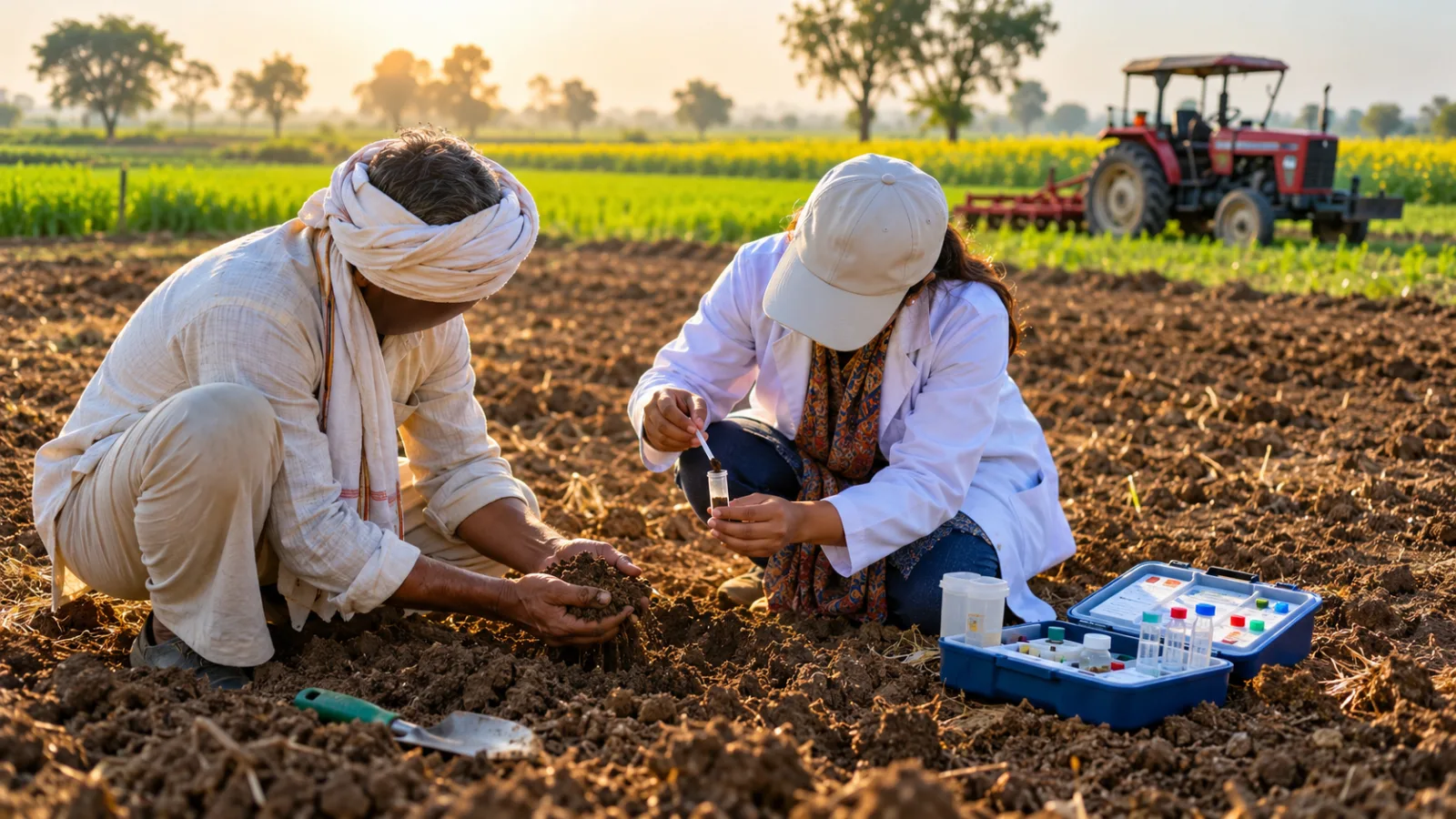
Khet Bachao Abhiyan-Rabi 2026 launched from Karnal: soil health campaign runs till 30 November
In short: A nationwide rabi-season outreach on soil testing, balanced fertiliser use, residue management and natural farming began on 22 October and runs to 30 November 2026.
Why in news
Union Agriculture and Farmers Welfare Minister Shivraj Singh Chouhan launched Khet Bachao Abhiyan-Rabi 2026 from Karnal, Haryana, on 22 October 2026. The campaign runs until 30 November and works through farmers’ conferences, Kisan Chaupals, training and field demonstrations at state, district, block and Gram Panchayat levels. Its themes are soil health, balanced input use based on soil testing, crop diversification and use of post-paddy fallow fields.
Background
This is the second phase of the campaign. The first ran from 1 to 30 June 2026 for the kharif season and was launched from Raisen, Madhya Pradesh. For the rabi phase, the Minister reviewed preparations with States on 18 October, asked for nodal officers at State and district levels and asked District Collectors to ensure smooth implementation. Partners include agriculture departments, Krishi Vigyan Kendras, ICAR institutes and agricultural universities, and outreach uses local-language material, radio, Doordarshan and social media. Rabi sowing follows the paddy harvest in north India, which is why residue management and the use of fallow fields feature in this phase.
Key facts for Prelims
- Khet Bachao Abhiyan-Rabi 2026: 22 October to 30 November 2026, launched at Karnal (Haryana) by the Union Agriculture Minister.
- Earlier phase: 1 to 30 June 2026, launched from Raisen, Madhya Pradesh.
- Themes include balanced fertiliser use through soil testing, crop diversification through oilseed, pulse and horticulture missions, crop residue management and natural farming.
- Delivery partners: Krishi Vigyan Kendras (KVKs), ICAR institutes, State agriculture departments and agricultural universities.
- Soil Health Card scheme was launched in 2015 to give farmers crop-wise nutrient recommendations based on soil tests.
- Rabi crops, such as wheat, mustard and gram, are sown in the cooler months from October onwards.
Mains analysis and way forward
Mains analysis
- Balanced nutrient use protects soil organic carbon and cuts input costs, linking farm incomes with the fertiliser subsidy burden.
- Post-paddy residue management ties soil health to air quality in the Indo-Gangetic plain; advisory campaigns work best alongside machinery access and economic alternatives.
- Awareness drives rely on extension capacity; KVKs, FPOs and local-language media widen reach, but outcomes need to be tracked through soil-test and input-use data.
- Diversification towards pulses and oilseeds can reduce import dependence and ease pressure on water-intensive cropping.
Way forward
- Link soil test results to input advice at the village level so that campaign messages become practical field decisions.
- Publish phase-wise outcome indicators, such as soil-testing coverage and changes in input use, to judge what the campaign achieves.
- Support farmers with residue machinery and assured markets for diversified crops.
Connect the dots: GS III: agriculture inputs and subsidies, soil health, cropping patterns, extension services, natural farming.
Sources: News On AIR: Centre to launch nationwide Khet Bachao Abhiyan-Rabi 2026 from Haryana today, 22 Oct 2026; News On AIR: Chouhan to launch Khet Bachao Abhiyan-Rabi 2026 tomorrow, 21 Oct 2026; News On AIR: Chouhan reviews preparations for Khet Bachao Abhiyan, 18 Oct 2026; Agro Spectrum India: Shivraj Singh Chouhan launches Khet Bachao Abhiyan (June phase)
India Chem 2026 opens in Mumbai: Nadda says India aims at a USD 1 trillion chemicals market by 2040
In short: At the 14th India Chem, ministers pointed to chemical parks under the Bhavya Rasayan scheme and better connectivity as the base for a USD 1 trillion sector by 2040.
Why in news
Union Minister J. P. Nadda said at the 14th edition of India Chem 2026, inaugurated on 22 October in Mumbai, that India aims to build a chemicals market worth one trillion dollars by 2040. The three-day event at the Bombay Exhibition Centre (NESCO) has the theme “Advantage Bharat: An Emerging Global Chemicals Hub”. Nadda said port, rail, air and road connectivity will be central to selecting and running chemical parks.
Background
The Bhavya Rasayan scheme proposes dedicated chemical parks, with the Centre providing a grant of up to Rs 1,000 crore per park, subject to a minimum State contribution of Rs 500 crore. Guidelines have been released, and reports from the scheme’s launch event on 5 October said three large parks are envisaged and States and industry were invited to send proposals. Maharashtra’s Chief Minister Devendra Fadnavis linked the sector to the State’s goal of a one trillion dollar economy and said it employs about 3 lakh people in Maharashtra. Minister of State Anupriya Patel said the Centre will support growth through policy support, simpler regulation and infrastructure. India’s speciality chemicals market was estimated at about USD 67.0 billion in 2025.
Key facts for Prelims
- India Chem 2026: 14th edition, Mumbai, 22 to 24 October; theme “Advantage Bharat: An Emerging Global Chemicals Hub”.
- Target: USD 1 trillion chemicals market by 2040, stated by Union Minister J. P. Nadda.
- Bhavya Rasayan: Centre grant of up to Rs 1,000 crore per chemical park, subject to a minimum State contribution of Rs 500 crore; guidelines released.
- Chemical parks are planned as dedicated zones with shared infrastructure and connectivity.
- Maharashtra’s chemical sector employs about 3 lakh people, per the Chief Minister.
Mains analysis and way forward
Mains analysis
- A USD 1 trillion goal depends on moving from commodity chemicals towards speciality chemicals and cutting import dependence in key inputs.
- Chemical parks aim to lower logistics cost and ease compliance through shared effluent treatment and utilities, a lesson from earlier clusters.
- Cost-sharing between the Centre and States tests cooperative federalism: States with land, ports and power can compete for parks.
- Environmental safeguards, including effluent treatment and industrial safety, must grow alongside capacity.
Way forward
- Choose park sites on connectivity, water and effluent capacity, and put environmental clearance and safety audits in the design stage.
- Support research and skilling so that firms can move up to speciality products.
Connect the dots: GS III: industrial policy, manufacturing, infrastructure and logistics, environmental safeguards; GS II: Centre-State financial cooperation.
Sources: News On AIR: India aims one-trillion-dollar chemicals market by 2040, says Union Minister J. P. Nadda, 22 Oct 2026; Asianet Newsable: Govt’s Bhavya Rasayan scheme to boost India’s chemical sector, 5 Oct 2026
Environment and disaster management
Amit Shah launches Yamuna rejuvenation projects worth over Rs 8,941 crore in Delhi
In short: Sewer expansion, decentralised treatment plants and plant upgrades form the core of Delhi’s Rs 8,941 crore Yamuna package; officials target a cleaner river by May 2029.

Why in news
Union Home and Cooperation Minister Amit Shah inaugurated and laid foundation stones for Yamuna rejuvenation projects worth over Rs 8,941 crore in Delhi on 22 October 2026. The works cover sewer network expansion, drainage improvements, stronger wastewater treatment and better drinking water facilities. The government aims to clean and rejuvenate the Yamuna by May 2029, with coordinated time-bound plans prepared by the Centre and the Delhi, Haryana and Uttar Pradesh governments.
Background
Delhi’s Water Minister Parvesh Verma outlined the package on 19 October. It includes 29 decentralised sewage treatment plants (DSTPs) and pumping stations in outer Delhi serving 358 unauthorised colonies and 113 villages, about 36.29 lakh residents, along with 1,034 km of new sewer lines. A new 124 million gallons per day (MGD) sewage treatment plant is planned at Okhla, and eight existing plants will be upgraded, raising combined capacity from 78.2 MGD to 140.8 MGD. Works are expected to take two to two-and-a-half years, after which untreated wastewater should no longer reach the river through drains. DSTPs are used where space does not permit large plants.
Key facts for Prelims
- Package: over Rs 8,941 crore, inaugurated and foundation laid on 22 October 2026 by the Union Home and Cooperation Minister.
- 29 DSTPs and pumping stations for 358 unauthorised colonies and 113 villages; 1,034 km of new sewer lines (as outlined on 19 October).
- Eight plants to be upgraded from 78.2 MGD to 140.8 MGD; a new 124 MGD plant at Okhla. MGD means million gallons per day.
- Decentralised STPs treat sewage close to its source where land for large plants is scarce.
- The Yamuna rises at Yamunotri and is the largest tributary of the Ganga.
- Target date for a cleaned and rejuvenated Yamuna: May 2029.
Mains analysis and way forward
Mains analysis
- Untreated sewage and unconnected drains, not only industrial effluent, drive urban river pollution; sewer coverage in unauthorised colonies is the missing link.
- The Yamuna flows through several States, so cleaning it needs inter-State coordination on flows and discharge, which the shared action plans attempt.
- Capacity creation is only part of the task; operation, maintenance and monitoring of treated water quality decide outcomes.
- Sewage reuse and decentralised treatment can reduce freshwater demand in a water-stressed capital.
Way forward
- Publish plant-wise performance and river-quality data regularly, so progress can be checked against the 2029 target.
- Connect households to sewers and fund operation and maintenance, not just construction.
- Treat reuse of treated water as a planned outcome, with clear end uses.
Connect the dots: GS III: environmental pollution and conservation; GS II: urban local governance, Centre-State coordination; Geography: river systems.
Sources: News On AIR: HM Amit Shah launches Yamuna rejuvenation projects worth over Rs 8,941 crore in Delhi, 22 Oct 2026; DD India: Amit Shah to launch sewerage infrastructure projects in Delhi on Oct 22, 19 Oct 2026; PIB (Ministry of Home Affairs): Yamuna rejuvenation projects inauguration and foundation stone ceremony, 22 Oct 2026
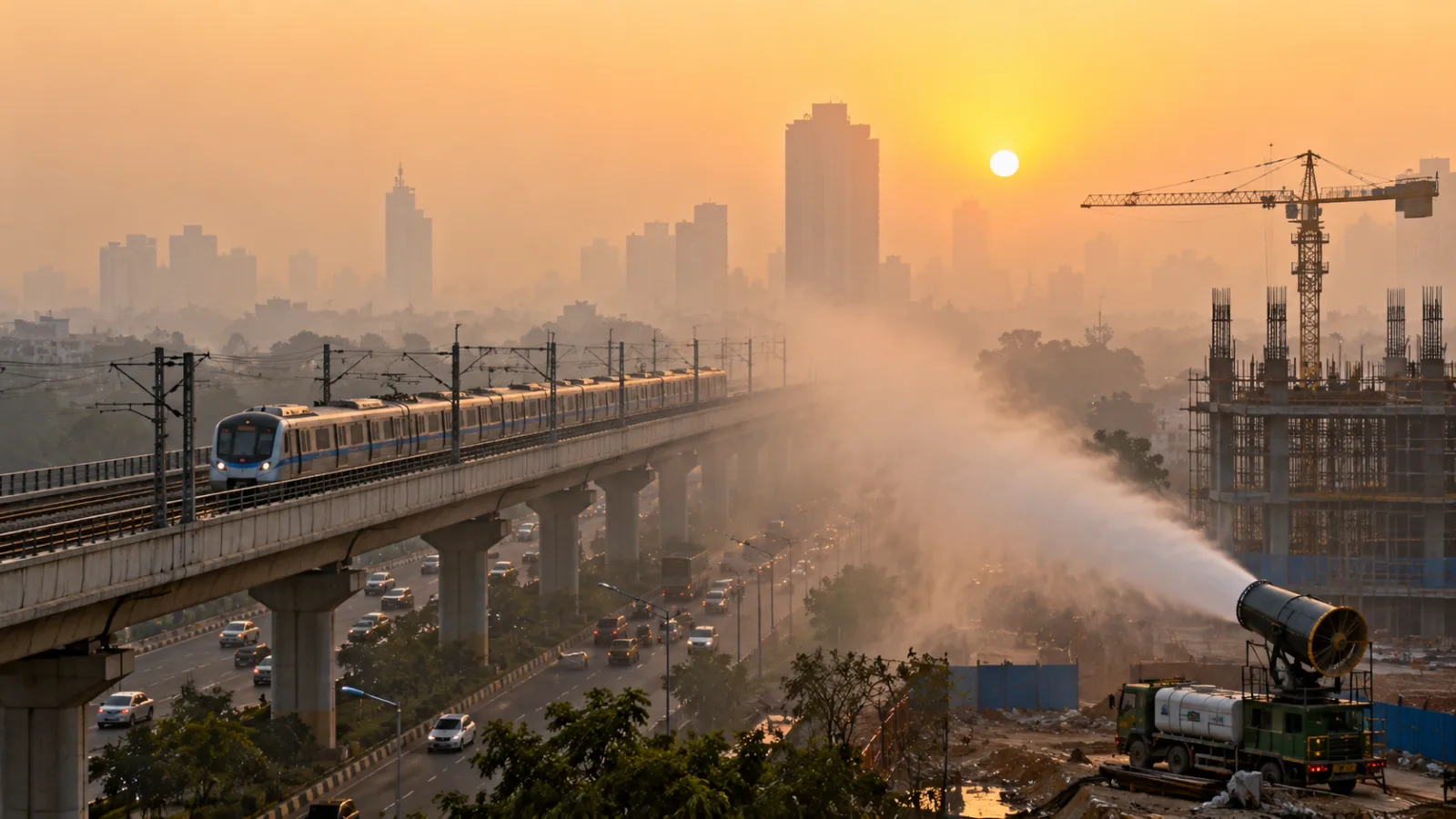
GRAP Stage I in force in Delhi; DMRC adds 20 weekday trips and steps up dust control at construction sites
In short: With Stage I of GRAP in force, DMRC adds trips and expands anti-smog guns, a reminder that Delhi’s winter air plan begins at the Poor category.
Why in news
Stage I of the Graded Response Action Plan (GRAP) is in force in Delhi, and on 22 October 2026 the Delhi Metro Rail Corporation announced steps to support it. DMRC is adding 20 extra train trips on weekdays from that day to encourage public transport, and has installed over 250 anti-smog and mist guns at construction sites, stations and office buildings. Its Environment Department conducts daily inspections to check compliance with environmental norms.
Background
GRAP is the emergency action plan enforced in Delhi-NCR by the Commission for Air Quality Management (CAQM), with measures escalating by air quality category. Stage I applies when the Air Quality Index (AQI) is between 201 and 300, the Poor category. When CAQM invoked Stage I in April 2026, it listed 31 measures, including mechanical road sweeping, anti-smog guns at construction sites, covered transport of construction material, bans on open burning, enforcement of PUC norms, tighter controls on industries and brick kilns, and expanded public transport. A CAQM sub-committee reviews conditions periodically and decides whether to escalate.
Key facts for Prelims
- GRAP: Graded Response Action Plan, enforced in Delhi-NCR by CAQM according to air quality category.
- Stage I applies in the Poor category, AQI 201 to 300.
- CAQM: the Commission for Air Quality Management in National Capital Region and Adjoining Areas, a statutory body under the 2021 Act.
- Stage I measures include mechanical sweeping, anti-smog guns at construction sites, covered transport of construction material and a ban on open burning.
- DMRC on 22 October 2026: 20 extra weekday trips and over 250 anti-smog and mist guns.
Mains analysis and way forward
Mains analysis
- Examine whether graded, trigger-based plans such as GRAP are preventive or merely reactive, and what a year-round approach would add.
- Discuss the role of public transport and construction dust control in urban air quality management.
- Analyse the regional character of the problem, which needs coordination across NCR States.
Way forward
- Move from emergency response to year-round source reduction in transport, dust, industry and biomass burning.
- Use real-time source apportionment and published compliance data to target enforcement.
- Strengthen public transport and last-mile options so that modal shift is a convenient choice.
Connect the dots: GS III: environmental pollution, statutory bodies, urban governance. Link: Article 21 and the right to clean air.
Sources: News On AIR: DMRC steps up anti-pollution measures at construction sites amid GRAP-I, 22 Oct 2026; The Week: Delhi AQI hits Poor, GRAP Stage-I measures, 17 Apr 2026
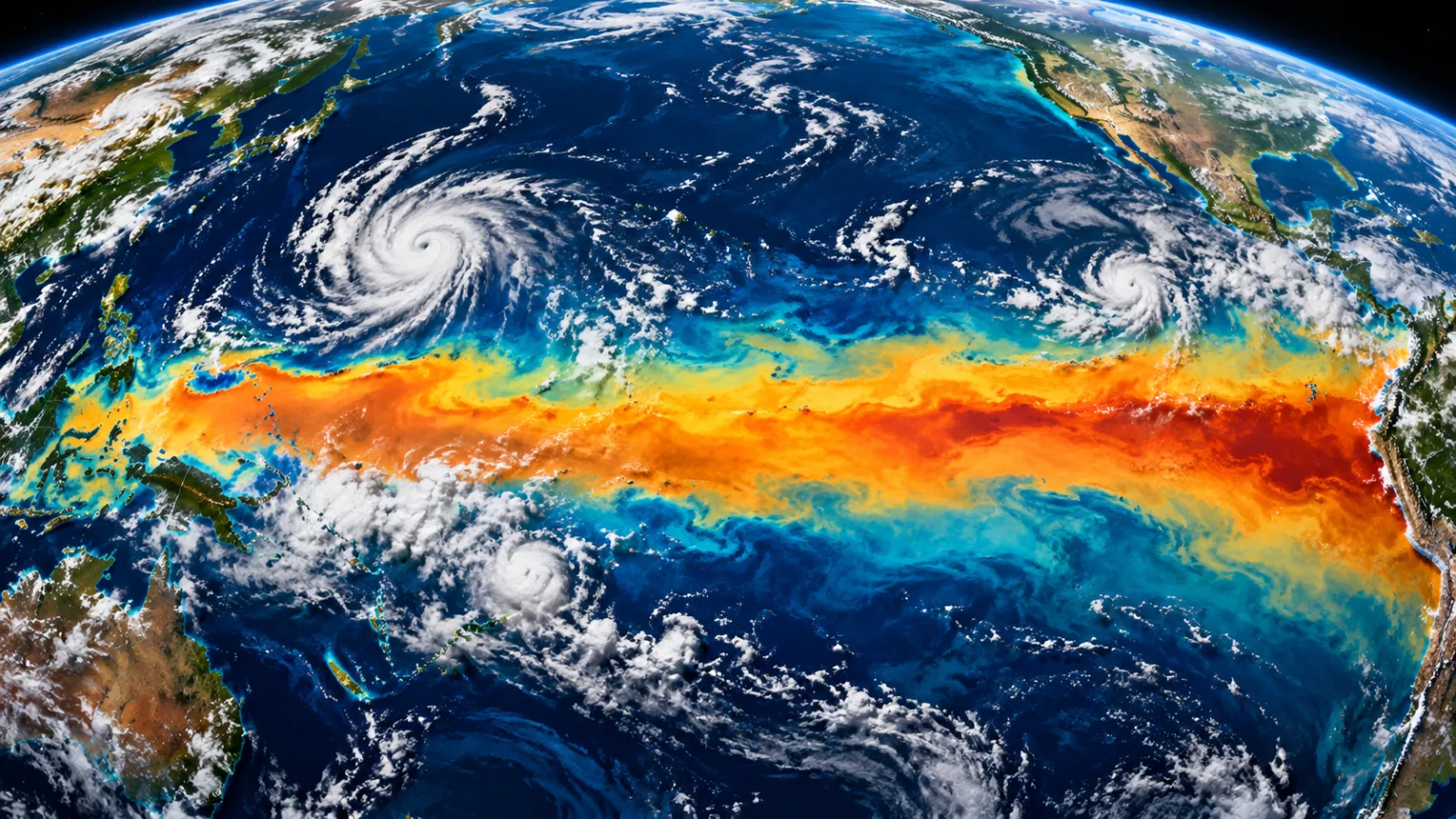
UN warns a powerful El Nino could trigger major economic shocks; next two weeks critical for preparedness
In short: UN relief chief and WMO head urge early preparedness as El Nino may reach unprecedented strength by the end of 2026.
Why in news
Speaking at a joint UN-WMO news conference in Geneva on 21 October 2026, UN Under-Secretary-General Tom Fletcher called El Nino a “wrecking ball” and said the next two weeks are critical for preparedness. WMO Secretary-General Celeste Saulo said the event could reach unprecedented strength towards the end of this year, with effects lasting long afterwards. Governments, businesses and partners were asked to keep disaster response capacities on standby.
Background
El Nino is the warm phase of the El Nino-Southern Oscillation (ENSO), marked by above-average sea surface temperatures in the central and eastern equatorial Pacific. At a WMO press conference on 3 September 2026, El Nino was described as firmly established, with a near-100% likelihood of persisting through February 2027 and a peak towards the end of 2026. The Nino 3.4 anomaly had risen from roughly +1.5 to +2 degrees C in May and July to about +2.6 degrees C in August. For September to November, WMO favoured drier conditions in South and Southeast Asia, Australia and Central America, and wetter conditions over the Greater Horn of Africa. WMO noted that India had held a high-level interministerial review, and that no established link exists between climate change and the frequency or strength of El Nino, though warmer conditions can amplify its heat and moisture effects.
Key facts for Prelims
- El Nino: warming of the central and eastern equatorial Pacific; it is the warm phase of ENSO, whose cool phase is La Nina.
- Nino 3.4 region: the sea surface temperature anomaly index used to monitor ENSO strength.
- World Meteorological Organization (WMO): a specialised agency of the United Nations, headquartered in Geneva.
- WMO outlook (3 September 2026): El Nino likely to persist through February 2027, with a peak toward the end of 2026.
- Southeast Asia was flagged for higher temperatures, reduced rainfall, wildfire and smoke hazards, and stress on agriculture and water.
Mains analysis and way forward
Mains analysis
- Discuss how a strong El Nino can transmit shocks through food, water, energy and migration channels beyond the regions directly affected.
- Examine India’s exposure: monsoon variability, agricultural output, food prices and rural incomes, and the role of early warning.
- Evaluate the shift from reactive relief to anticipatory action in disaster management, using seasonal forecasts to release resources early.
Way forward
- Link seasonal ENSO outlooks to district-level contingency plans, buffer stocks and water management.
- Strengthen climate-resilient agriculture, crop insurance and advisories for rain-fed regions.
- Support anticipatory financing and regional cooperation on forecasting and response.
Connect the dots: GS I Geography: ocean-atmosphere interaction, ENSO and Indian monsoon. GS III: disaster management, early warning, climate and agriculture.
Sources: News On AIR: UN warns powerful El Nino could trigger major economic shocks worldwide, 22 Oct 2026; UN Geneva newsroom: WMO press conference, El Nino update, 3 Sep 2026
Science and technology
MeitY sets up special team on eMudhra PKI security incident; says Indian DSC and eSign services not affected
In short: MeitY says impact on Indian websites was limited and short, and CCA-regulated digital signatures were unaffected; CERT-In has issued an advisory.
Why in news
The Ministry of Electronics and Information Technology (MeitY) constituted a special team to investigate a security incident involving eMudhra’s Public Key Infrastructure (PKI), according to a report of 22 October 2026. The Ministry said the effect on Indian websites and applications was very limited and brief, and that Digital Signature Certificates and eSign services regulated by the Controller of Certifying Authorities (CCA) were not affected. It said the incident relates only to eMudhra’s international function, and CERT-In has issued an advisory with mitigation measures.
Background
Public Key Infrastructure is the system of certificate authorities, keys and certificates that lets browsers and devices trust websites, software and communications. In India, certifying authorities that issue Digital Signature Certificates are licensed and supervised by the CCA under the Information Technology Act, 2000. eMudhra also runs an international function that issues certificates under a global trust framework, trusted by major browsers and operating systems, and subject to independent WebTrust audits by BDO International Limited. MeitY said it is not involved in those audits and is engaging with all stakeholders to resolve the matter early.
Key facts for Prelims
- Public Key Infrastructure (PKI): certificate authorities, keys and certificates that establish trust for websites, software and signatures.
- Controller of Certifying Authorities (CCA): regulates certifying authorities in India under the Information Technology Act, 2000.
- CERT-In: the Indian Computer Emergency Response Team, the national agency for cyber incident response, working under MeitY.
- Digital Signature Certificates and eSign services in India are regulated by the CCA; MeitY said they were not affected.
- WebTrust: an international audit framework for certificate authorities; the international function was audited by BDO International Limited.
Mains analysis and way forward
Mains analysis
- Discuss the systemic risk when a single certificate authority is trusted widely by browsers and operating systems.
- Examine the regulatory split between domestic licensed services under the CCA and international functions under global trust frameworks.
- Assess the role of CERT-In advisories and rapid public communication in sustaining trust in digital public infrastructure.
Way forward
- Publish clear technical disclosures once the investigation concludes, so that users and developers can act with confidence.
- Encourage certificate transparency, monitoring and rapid revocation practices across certificate authorities.
- Build capacity in indigenous trust services while maintaining independent audit and oversight.
Connect the dots: GS III: cyber security, IT Act 2000, digital public infrastructure and e-governance.
Sources: News On AIR: MeitY constitutes special team on eMudhra PKI security incident, 22 Oct 2026
History
Kittur Utsav: remembering Rani Chennamma’s October 1824 stand against the East India Company
In short: Kittur Utsav marks the October 1824 victory of Rani Chennamma over Company forces, an early challenge to British annexation, three decades before 1857.

Why in news
Kittur Utsav in Belagavi district, Karnataka, is held around 23 to 25 October each year to commemorate the victory of Rani Chennamma of Kittur over East India Company forces in October 1824, in which the Company’s Dharwad Collector St John Thackeray was killed on 23 October 1824. It is a state-level event with tributes at her statues, cultural programmes and a heritage focus on Kittur Fort. The Ministry of Culture also marked the bicentenary of the victory with a year-long programme that concluded with a Rs 200 commemorative coin on 24 October 2025. The 2026 Kittur Utsav is scheduled for 23 to 25 October, with cultural, literary, sports and heritage events.
Background
Mallasarja, the ruler of Kittur, died in 1816, and his son died in 1824. Chennamma adopted Shivalingappa as heir, but the Company did not accept the adoption and placed Kittur under the Dharwad collectorate, led by Thackeray, who sought to take control of the territory and treasury. When she shut the fort gates, Thackeray ordered them blown up and was killed in the fighting, and Company troops suffered heavy losses. In a second assault Kittur Fort surrendered on 4 December 1824 and Chennamma was imprisoned at Bailhongal Fort, where she died on 21 February 1829. Her deputy, Sangolli Rayanna, continued guerrilla resistance until he was captured and hanged. Historians see Kittur as a precursor of the Doctrine of Lapse, which Lord Dalhousie introduced from 1848.
Key facts for Prelims
- Kittur is in present-day Belagavi district, Karnataka; Kittur Utsav is held there around 23 to 25 October.
- St John Thackeray, the Company’s Dharwad Collector, was killed at Kittur on 23 October 1824.
- Rani Chennamma died in captivity at Bailhongal Fort on 21 February 1829; her samadhi is at Bailhongal.
- Sangolli Rayanna, her deputy, continued guerrilla resistance and was later hanged.
- The Doctrine of Lapse was introduced by Lord Dalhousie from 1848; Kittur is seen as an early precedent for annexation on grounds of a ruler’s lack of a direct heir.
- A statue of Rani Chennamma was unveiled in the Parliament complex on 11 September 2007 and a Rs 200 commemorative coin was issued on 24 October 2025.
Mains analysis and way forward
Mains analysis
- Kittur shows that armed resistance to Company annexation began well before 1857, which broadens the understanding of the freedom struggle beyond a single year.
- The refusal to recognise an adopted heir foreshadowed the Doctrine of Lapse and shows how Company policy used succession rules to expand territory.
- Her story, with that of Sangolli Rayanna, highlights women’s leadership and regional, local and non-elite participation in early anti-colonial resistance.
- Commemorations such as Kittur Utsav and the bicentenary programme keep regional heroes in national memory and promote heritage tourism.
Way forward
- Documenting regional resistance movements through archives, local histories and museums can broaden school and public understanding.
- Heritage conservation at Kittur Fort and Bailhongal, linked with tourism, can support local livelihoods.
- Balanced, source-based commemoration, noting where accounts differ, strengthens public history.
Connect the dots: History: early revolts against British rule, Doctrine of Lapse, 1857. Art and Culture: regional folk traditions, heritage sites and festivals.
Sources: Karnataka Tourism: Kittur Utsav; Deccan Herald: Kittur Utsav to be celebrated on grand scale, 6 Oct 2025; The Week (PTI): Rs 200 commemorative coin released to mark 200 years of Rani Chennamma’s victory, 24 Oct 2025; Wikipedia (corroboration only): Kittur Chennamma; Wikipedia (corroboration only): St John Thackeray; FIBIS wiki: Kittur Rising
In brief
- Vice President on cooperative federalism and legal reforms: Inaugurating a national conference in New Delhi on 22 October 2026, Vice President C P Radhakrishnan called the replacement of three colonial-era criminal laws a major step in legal reform and urged greater Centre-State consultation. Law Minister Arjun Ram Meghwal said more than 1,700 obsolete laws have been repealed over twelve years.
- Kashi Tamil Sangamam 5.0 registrations open: Education Minister Pralhad Joshi launched the registration portal on 22 October 2026. The fifth edition will be held in Varanasi from 28 November to 12 December on the theme “Thirukkural Payilvom”, with over 1,400 delegates across seven categories.
- ICAR chief seeks reimagined agricultural higher education: Dr M. L. Jat, Secretary of DARE and Director General of ICAR, told a roundtable at the 2026 Norman E. Borlaug International Dialogue on 22 October that agricultural education should adapt to climate change, biodiversity loss and agri-food value chains through global partnerships.
- Poland announces it will join Coalition for Disaster Resilient Infrastructure: During Prime Minister Tusk’s visit to New Delhi on 22 October 2026, Poland announced that it will join the Coalition for Disaster Resilient Infrastructure (CDRI), an India-led partnership; India welcomed the announcement.
- India invites Poland to Indo-Pacific Oceans Initiative: The India-Poland joint statement of 22 October 2026 reaffirms support for a free, open and peaceful Indo-Pacific, and records India’s invitation to Poland to join the Indo-Pacific Oceans Initiative.
- Tusk visit: Rajghat tribute and Bengaluru leg: Polish Prime Minister Donald Tusk paid tribute to Mahatma Gandhi at Rajghat and is scheduled to travel to Bengaluru to meet business stakeholders, including from the IT and space sectors, during his three-day visit that began on 21 October 2026.
- CBD COP17 under way in Yerevan: The 17th Conference of the Parties to the Convention on Biological Diversity runs from 19 to 30 October 2026 in Yerevan, with Armenia’s Environment Minister Hambardzum Matevosyan elected COP17 President at the opening plenary. Resource mobilisation, the Cali Fund for digital sequence information and the first global progress report on the Kunming-Montreal framework are among the main agenda items.
- Delhi draft E-Rickshaw Policy: The Delhi government released a draft E-Rickshaw scheme for public consultation on 18 October 2026, proposing a cap of 2.5 lakh vehicles and inviting feedback for 30 days; implementation is proposed within 90 days of finalisation, according to News On AIR.
- India-Poland space and critical minerals: After talks in New Delhi on 22 October 2026, India and Poland described space cooperation as a key element of their Strategic Partnership and agreed to explore cooperation on critical minerals, battery recycling and rare earth refining, with a critical minerals MoU under negotiation.
Prelims practice: 5 questions
Choose an option to see the answer and explanation. Your score appears when all five are answered.
Mains practice
“Bail is the rule and jail the exception.” In the light of the Supreme Court’s recent observations on prolonged pre-trial detention, examine why undertrials form a large share of India’s prison population and suggest reforms.
Show the answer outline
Introduction (about 30 words)
- Begin with the Supreme Court’s October 2026 observation that the gravity of charges alone cannot justify prolonged custody before trial, linking it to Article 21 and the presumption of innocence.
Why undertrials remain in custody
- Slow trials: judicial vacancies, adjournments and delays in forensic reports and witness examination.
- Bail conditions that poor accused cannot meet, such as sureties and cash bonds.
- Mechanical arrests and stringent special laws with twin conditions for bail.
- Weak access to legal aid and low awareness of statutory default bail.
Reforms
- Use BNSS provisions on release of first-time undertrials after part of the maximum sentence, with active review by undertrial review committees.
- Strengthen legal aid through District Legal Services Authorities and track cases on the e-Courts platform.
- Fill judicial vacancies, set timelines for forensic labs and expand video-conferenced production.
- Calibrate bail conditions to the means of the accused.
Conclusion (about 30 words)
- Speedy trials and humane bail practice protect both liberty and public confidence in criminal justice; custody before conviction should remain the exception it was meant to be.
Tip: Anchor the answer in Article 21, show the causes with balance, and end with practical, institution-level reforms.
Current Canvas is prepared by the UPSC Gurus editorial desk. Every fact is checked against official releases and reliable reporting, with sources listed under each story. Editions are compiled each month into Current Canvas Monthly, a free magazine.
About images: photographs and illustrations in Current Canvas are AI-generated for illustration only. They are not news photographs of the events described.