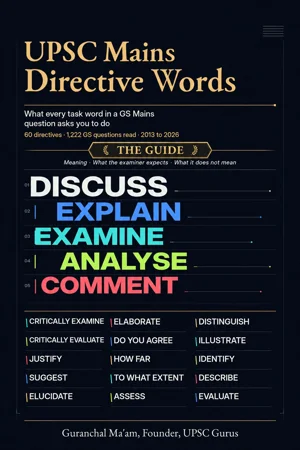
 New this week · Free UG Handout 02UPSC Mains Directive Words: 60 Meanings, Trends and PYQsTwo free PDFs: The Guide and the With PYQs edition.Read and download
Today’s Canvas
This edition moves between the very large and the very small. A new metro stretch and a pulses mission show how infrastructure and farm policy try to reach daily life, while an IIT Madras centre sets out to map the human brain cell by cell. Diplomacy is busy, with Canada’s largest trade mission in decades and a conditional energy-truce offer from Kyiv. Closer to the ground, villagers, farmers and forests remind us that consent and care are part of development too.
About 19 minutes to read the key points; Mains analysis opens under each story.
- PM opens Chennai Metro Poonamallee-Vadapalani stretch, launches projects worth over Rs 13,000 crore in TNGS III
- PM dedicates IIT Madras brain centre to the nation, launches mission to map 100+ human brainsGS III
- Manipur reports fresh violence in three hill districts; Chief Minister discusses restoration of peace with PMGS III
- Ten years of the Juvenile Justice Act: Supreme Court and UNICEF hold national consultation; CJI releases judgments compendiumGS II
- Canada sends its largest trade mission to India in over 30 years, aiming for C$70 billion in trade by 2030GS II
- Zelenskiy offers to halt strikes on Russian refineries if Russia stops attacking Ukraine’s energy gridGS II
- One year of the Mission for Aatmanirbharta in Pulses: targets and early progressGS III
- NBA shares Rs 2.02 crore of seed-sector benefit-sharing money with 27 States and 3 UTsGS III
- CAQM reviews stubble-burning prevention in Punjab hotspot districts Amritsar and Tarn TaranGS III
- India hosts second meeting of UN-backed Global Initiative on AI for Agri-Food SystemsGS III
- INS Trishul reaches Plymouth for India-UK naval Exercise KONKAN-2026GS III
- Indonesia moves eight fire-hit orangutans to a protected forest in BorneoGS III
- Villagers oppose preliminary investigations for proposed nuclear plant in Rewa; administration says approval remains pendingGS III
- The PM launched projects worth over Rs 13,000 crore in Tamil Nadu, including Chennai Metro’s Poonamallee-Vadapalani stretch.
- IIT Madras’s Sudha Gopalakrishnan Brain Centre was dedicated to the nation, with a mission to map 100+ human brains.
- Fresh violence was reported in Manipur’s hill districts; the Chief Minister met the PM on 10 October.
- Canada’s largest trade mission to India in over 30 years runs from 12 to 17 October.
- Ukraine offered to halt strikes on Russian refineries if Russia stops attacking its energy grid; no ceasefire has been agreed.
- The NBA shared Rs 2.02 crore of seed-sector benefit-sharing money with 27 States and 3 UTs.
Economy and infrastructure
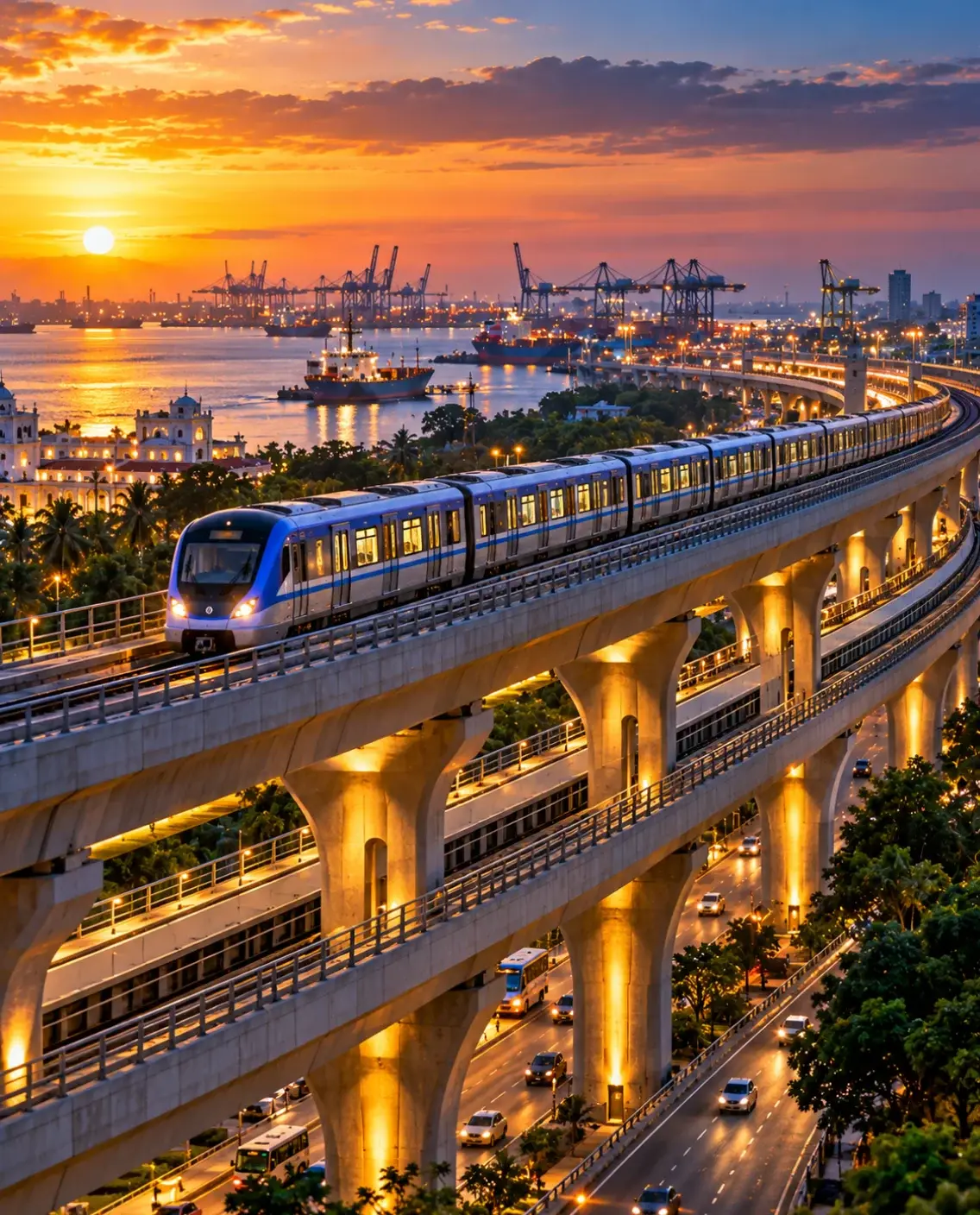
PM opens Chennai Metro Poonamallee-Vadapalani stretch, launches projects worth over Rs 13,000 crore in TN
In short: Metro, highway, rail, port and refinery projects launched in Chennai on 11 October show multimodal infrastructure moving together.
Why in news
On 11 October 2026 in Chennai, Prime Minister Narendra Modi inaugurated, dedicated and laid foundation stones for projects worth over Rs 13,000 crore. The centrepiece was the Poonamallee-Vadapalani stretch of Chennai Metro Phase II, built at about Rs 4,900 crore, which includes a 3.7 km double-decker structure.
Background
Chennai Metro Phase II is a 118.9 km project, and the Poonamallee-Vadapalani stretch is about 14.6 km long, linking western suburbs to the city centre. The stretch uses signalling designed to support unattended train operation in future; initial passenger services run with onboard staff, and 11 of its 17 stations opened at first. The package also covered national highways worth about Rs 3,700 crore, railway works worth over Rs 750 crore, port projects at Chennai, V.O. Chidambaranar and Kamarajar ports, and a lube oil base stock project at the Manali refinery. The Prime Minister also dedicated the Sudha Gopalakrishnan Brain Centre at IIT Madras.
Key facts for Prelims
- Chennai Metro Phase II: 118.9 km; Poonamallee-Vadapalani stretch about 14.6 km, about Rs 4,900 crore, with a 3.7 km double-decker structure.
- Highways: 36 km four-lane Vadugapatti-Therkuvenganallur section of NH-744 and 30 km Madurai Ring Road section of NH-744A inaugurated; Thiruvarur Bypass on NH-83 foundation laid.
- Railways: Karaikal-Peralam line dedicated; five Amrit Stations including Palani, Vellore Cantonment and Namakkal inaugurated.
- Ports: Coal Berth-3 at Kamarajar Port inaugurated; foundation for capital dredging for its Container Terminal Phase-I, Stage-II.
- Petroleum: Group II/III Lube Oil Base Stocks (LOBS) project at CPCL Manali Refinery, about Rs 1,620 crore, 270 thousand tonnes per annum.
Mains analysis and way forward
Mains analysis
- Bundling metro, highway, rail and port projects reflects an integrated, multimodal approach to logistics and urban mobility.
- Double-decker metro-road structures save scarce urban land but demand careful design, cost control and coordination among agencies.
- Port capacity and evacuation links at V.O. Chidambaranar and Kamarajar strengthen Tamil Nadu as a manufacturing and export hub.
- Domestic production of Group II/III base oils supports import substitution in lubricants.
Way forward
- Ensure last-mile feeder connectivity and fare integration so that metro ridership matches capacity.
- Track project outcomes, such as travel time saved and cargo handled, through public dashboards.
Connect the dots: GS III: infrastructure (ports, roads, railways, urban transport); investment models; GS I: urbanisation.
Sources: PM India: PM to visit Chennai on 11 October, 10 Oct 2026; PIB: Text of PM address at launch of development projects in Chennai (Hindi), 11 Oct 2026; The Week: PM Modi in Chennai today, Rs 13,000 crore development projects, 11 Oct 2026; DT Next: PM Modi to inaugurate Poonamallee to Vadapalani metro phase 2, 26 Sep 2026
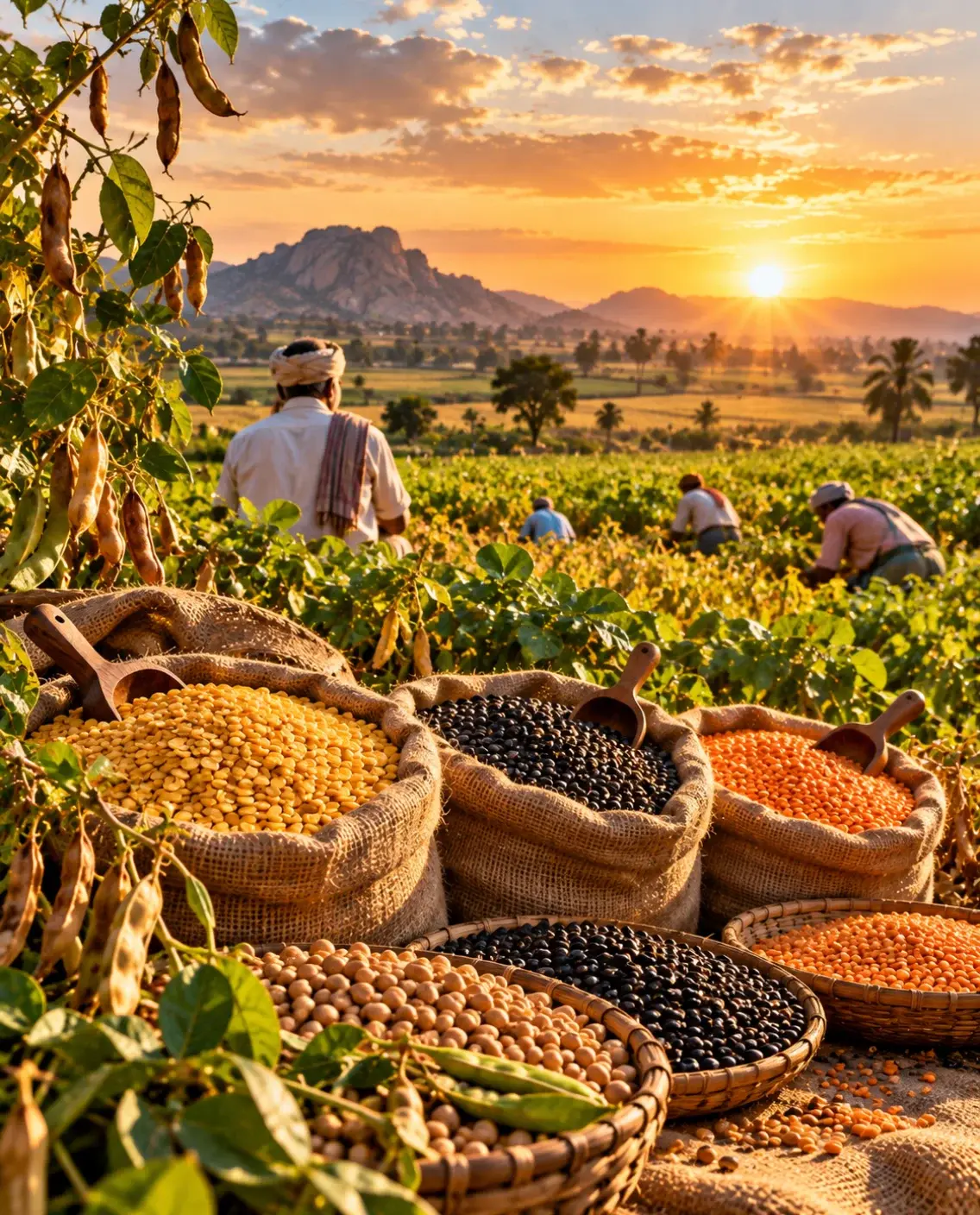
One year of the Mission for Aatmanirbharta in Pulses: targets and early progress
In short: A year after launch, the Rs 11,440 crore pulses mission targets 350 lakh tonnes from 310 lakh hectares by 2030-31.
Why in news
On 11 October 2026, PIB released a backgrounder marking one year of the Mission for Aatmanirbharta in Pulses, launched by the Prime Minister at IARI, New Delhi, on 11 October 2025. The Cabinet approved the centrally sponsored scheme on 1 October 2025 with an outlay of Rs 11,440 crore for 2025-26 to 2030-31.
Background
India is the world’s largest producer, consumer and importer of pulses; production was 252.38 lakh tonnes in 2024-25 (third advance estimates) while imports were 47.38 lakh tonnes in 2023-24. The mission targets 350 lakh tonnes from 310 lakh hectares by 2030-31, an additional 35 lakh hectares, with yield of 1,130 kg per hectare. It promises 100% procurement of tur (arhar), urad and masoor at MSP for four years through NAFED and NCCF under PM-AASHA in participating states, about 88 lakh free seed kits, 126 lakh quintals of certified seed and 1,000 processing units, aiming to benefit nearly 2 crore farmers. According to official updates, 528 processing units were allocated to States in the first phase (allocation, not mills already built), about 9.25 lakh seed kits were distributed in Rabi 2025-26, 489 focus districts were identified, and about 1.5 lakh pulse farmers registered through NAFED and NCCF for procurement.
Key facts for Prelims
- Launched 11 October 2025 at IARI, New Delhi; Cabinet approval 1 October 2025.
- Outlay Rs 11,440 crore; period 2025-26 to 2030-31; centrally sponsored scheme.
- Targets 2030-31: 350 lakh tonnes production, 310 lakh ha area, 1,130 kg/ha yield.
- Assured procurement: tur, urad, masoor at MSP for four years via NAFED and NCCF under PM-AASHA.
- Processing: 1,000 units over the mission (subsidy up to Rs 25 lakh per unit); 528 processing units allocated in the first phase; 489 focus districts.
Mains analysis and way forward
Mains analysis
- Assured procurement reduces price risk, the main reason farmers prefer rice and wheat over pulses.
- Pulses fix nitrogen and need less water, so expansion into rice fallows supports soil health and crop diversification.
- Self-sufficiency would cut import dependence and exposure to supply shocks from a few exporting countries.
- Protein security: pulses are the main affordable protein source for many households, linking the mission to nutrition goals.
Way forward
- Speed up seed replacement with climate-resilient, high-yielding varieties through cluster-based seed hubs.
- Keep trade policy predictable so that import windows do not undercut farm-gate prices at harvest.
- Publish annual outcome data on area, yield and procurement to track progress against 2030-31 targets.
Connect the dots: GS III: major crops and cropping patterns; MSP and procurement; food security; GS II: government schemes.
Sources: PIB: India’s Mission for Aatmanirbharta in Pulses (backgrounder), 11 Oct 2025; PIB: Union Cabinet approves Mission for Aatmanirbharta in Pulses with Rs 11,440 crore outlay, 17 Mar 2026; PIB: Status of Aatmanirbharta Mission in Pulses, 13 Mar 2026; PIB: All releases listing (Hindi), 11 Oct 2026
Villagers oppose preliminary investigations for proposed nuclear plant in Rewa; administration says approval remains pending
In short: Residents of Rewa’s Sirmour area stopped borehole work for a proposed nuclear project; the Collector says any decision will follow rules after consultation.
Why in news
Villagers from Rozhauhi, Sarai Kala and nearby areas in the Sirmour area of Rewa district, Madhya Pradesh, stopped preliminary borehole work on 9 October 2026 for a proposed nuclear power project, local reports said on 10 October. Gram Sabhas reportedly passed resolutions against the project on 3 September and 5 October, and residents have sought a probe into a disputed no-objection certificate. The administration says consent was obtained before the later objections; the dispute has not been settled by any court or inquiry.
Background
The proposal, reported as a Tata Power project of 2 x 220 MW worth about Rs 28,000 crore, is at an early site-study stage and is not an approved plant; the Collector has said no land has been allotted, and geological drilling is not construction approval. Rewa Collector Narendra Suryavanshi has said a decision will be taken as per rules after discussion with local representatives and villagers, whose concerns will be considered. Residents cite farmland, water, possible displacement and long-term safety. The SHANTI Act, 2025 replaced the Atomic Energy Act, 1962 and the Civil Liability for Nuclear Damage Act, 2010, and allows Indian-incorporated private companies to seek licences for civil nuclear projects; it does not by itself authorise any particular plant.
Key facts for Prelims
- SHANTI Act, 2025: Sustainable Harnessing and Advancement of Nuclear Energy for Transforming India Act.
- It repealed the Atomic Energy Act, 1962 and the Civil Liability for Nuclear Damage Act, 2010.
- Gram Sabha: Article 243(b) defines it as the body of all registered voters of a village panchayat area.
- PESA Act, 1996 requires Gram Sabha consultation before land acquisition in Fifth Schedule (Scheduled) Areas; other consultation, environmental and land-acquisition requirements also apply elsewhere.
- Chutka in Mandla district is another proposed nuclear site in Madhya Pradesh that has faced local opposition.
Mains analysis and way forward
Mains analysis
- Nuclear expansion with private participation needs public trust, built through transparent site selection and safety communication.
- Early and genuine consultation with Gram Sabhas reduces later conflict and delay.
- Land, water and livelihood concerns must be weighed against the need for firm low-carbon power.
- Disputed documents, such as the contested NOC, call for quick, impartial verification to preserve credibility.
Way forward
- Share site-study findings and safety information openly in local languages.
- Hold structured public consultations and address compensation and rehabilitation early.
- Resolve the NOC dispute through an independent inquiry.
Connect the dots: Energy security; nuclear policy; local self-government; land acquisition and R and R; participatory democracy.
Sources: Dainik Jagran English: Rewa nuclear project protest: villagers stop borehole work, 10 Oct 2026; Amar Ujala: Villagers intensify protest against proposed nuclear plant in Rewa, 8 Oct 2026; Mondaq: SHANTI Act 2025: key reforms and liability framework
Polity and social justice
Ten years of the Juvenile Justice Act: Supreme Court and UNICEF hold national consultation; CJI releases judgments compendium
In short: At a two-day Supreme Court consultation, the CJI urged trained defence lawyers for children and measuring outcomes, not just case counts.
Why in news
On 10 October 2026, Chief Justice of India Surya Kant inaugurated a two-day National Annual Stakeholders Consultation on ten years of the Juvenile Justice (Care and Protection of Children) Act, 2015, organised by the Supreme Court Juvenile Justice Committee with UNICEF India. He released a compendium of landmark Supreme Court and High Court judgments on the Act covering 2015 to September 2026. The consultation concluded on 11 October.
Background
The theme was “Ten Years of the Juvenile Justice (Care and Protection of Children) Act, 2015: Progress, Challenges and Priorities for the Next Decade”. The committee is chaired by Justice B.V. Nagarathna; Justice J.B. Pardiwala, a committee member, gave the closing remarks and the Secretary of the Ministry of Women and Child Development addressed the valedictory session. The CJI suggested that legal services institutions consider a separate wing of trained defence lawyers who can stay with a child from the police station through the Juvenile Justice Board to rehabilitation, building on NALSA’s Child Friendly Legal Services Scheme, 2024. He also flagged a shortage of probation officers for social investigation reports and called for regular independent evaluation of outcomes. A PRS analysis of 2021 noted that only 32% of 2,162 child care institutions operating in March 2020 were registered, though registration is mandatory under the Act.
Key facts for Prelims
- The JJ Act, 2015 classifies offences by children as petty (imprisonment below three years), serious (three to seven years) and heinous (minimum punishment of seven years).
- Children aged 16 to 18 accused of heinous offences may be tried as adults by the Children’s Court, but only after a preliminary assessment by the Juvenile Justice Board.
- The Act empowers the Central Adoption Resource Authority (CARA) to regulate and promote adoptions in India.
- The 2021 amendment shifted the power to issue adoption orders from civil courts to the District Magistrate (including the Additional DM); appeals lie to the Divisional Commissioner within 30 days.
- The 2021 amendment also widened “serious offences” to include those with a maximum punishment above seven years and no or lower minimum, following the Supreme Court’s 2020 Shilpa Mittal judgment.
Mains analysis and way forward
Mains analysis
- The Act treats every person under 18 as a child and favours restoration over retribution; institutional care is meant to be a last resort, with counselling, community service and probation preferred.
- Gaps lie in capacity: few probation officers, uneven quality of social investigation reports and individual care plans that often remain on paper.
- Preliminary assessment for 16 to 18 year olds is a sensitive judgement that needs trained Board members, psychologists and child-friendly procedures to avoid mechanical transfer to adult trial.
- Reintegration depends on local networks of schools, skilling centres and voluntary organisations, and on protecting children’s privacy, including timely destruction of records.
Way forward
- Create dedicated, trained legal aid for children and joint training of police, probation officers and Board members through judicial and police academies.
- Move from counting cases to tracking outcomes through independent evaluation, while ensuring registration and inspection of all child care institutions.
- Strengthen District Child Protection Units and community-based alternatives such as sponsorship and foster care.
Connect the dots: Links to GS II vulnerable sections (children), statutory bodies (CARA, JJBs, CWCs), role of the judiciary and NALSA, and the restorative justice approach in GS IV.
Sources: Supreme Court of India: Press release on National Consultation on Ten Years of Juvenile Justice Act, 2015, 9 October 2026; LawBeat: JJ Act at 10: CJI Surya Kant calls for separate wing of trained defence lawyers for children, 10 October 2026; LawBeat: Supreme Court to mark 10 years of Juvenile Justice Act with national consultation, October 2026; PRS Legislative Research: The Juvenile Justice (Care and Protection of Children) Amendment Bill, 2021; PRS Legislative Research: Legislative Brief on JJ Amendment Bill, 2021
Science and technology
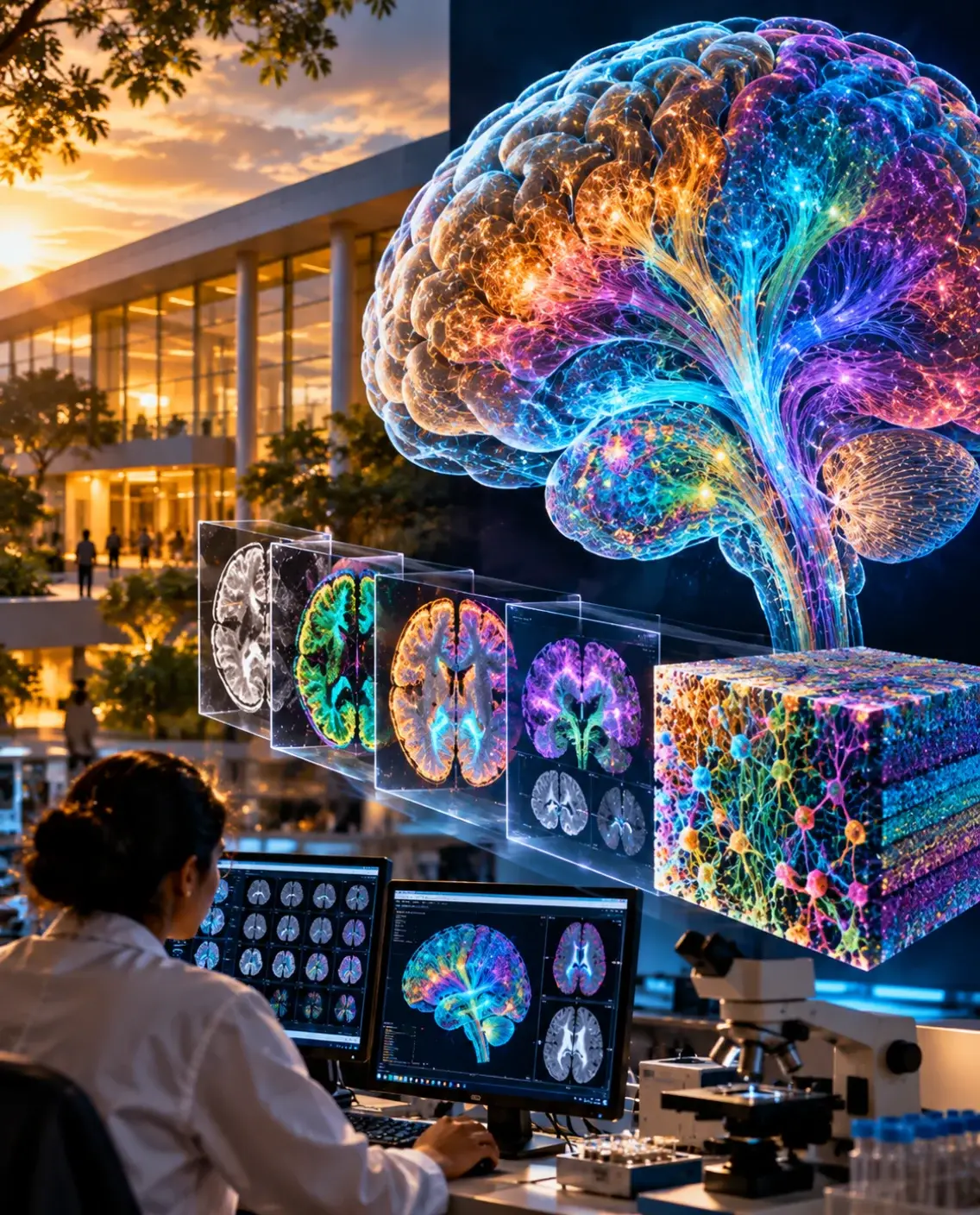
PM dedicates IIT Madras brain centre to the nation, launches mission to map 100+ human brains
In short: India launches a global mission to build cellular-resolution 3D atlases of over 100 human brains and releases the C-STROKE atlas.
Why in news
On 11 October 2026, Prime Minister Narendra Modi dedicated the Sudha Gopalakrishnan Brain Centre (SGBC) at IIT Madras, Chennai, to the nation. He launched a global scientific mission that aims to map more than 100 human brains into 3D atlases at cellular resolution, covering the lifespan from the foetal stage to old age, and released C-STROKE, a human ischaemic stroke atlas.
Background
The SGBC was established in March 2022 with support from Sudha and Kris Gopalakrishnan, combining neuroscience, engineering, advanced imaging and computational science. Its earlier outputs include DHARANI (2024), a 3D atlas of the human foetal brain built from digital images of 5,132 brain sections, and ANCHOR (June 2026), a 3D brainstem atlas mapping more than 200 nuclei and fibre tracts. C-STROKE carries over 1,000 annotated microscopic sections from a stroke-affected brain and is meant to help researchers worldwide identify new therapeutic targets. The visit was part of a Chennai programme of projects worth over Rs 13,000 crore, including the Poonamallee-Vadapalani stretch of Chennai Metro Phase II and the IITM-Maestro Ilaiyaraaja Centre for Music Learning and Research.
Key facts for Prelims
- Sudha Gopalakrishnan Brain Centre: IIT Madras, Chennai; established March 2022.
- Mission goal: 3D atlases of 100+ human brains at cellular resolution, foetal stage to old age.
- C-STROKE: human ischaemic stroke atlas, over 1,000 annotated microscopic sections.
- DHARANI (2024): 3D human foetal brain atlas, 5,132 sections; ANCHOR (June 2026): brainstem atlas, 200+ nuclei and fibre tracts.
- Ischaemic stroke results from blocked blood supply to the brain; haemorrhagic stroke from bleeding.
Mains analysis and way forward
Mains analysis
- Open, cellular-resolution reference atlases make Indian institutions contributors of global public goods in neuroscience, not only users of foreign datasets.
- Lifespan atlases can anchor research on neurodevelopmental and neurodegenerative disorders, relevant to an ageing population.
- A stroke atlas links basic science to a major non-communicable disease burden and to drug-target discovery.
- The philanthropy-academia model shows how private giving can build long-horizon research infrastructure that annual grants find hard to sustain.
Way forward
- Pair the atlases with clear data-sharing, consent and ethics protocols for donated human tissue.
- Link the centre with clinical networks and the Anusandhan National Research Foundation ecosystem so findings move towards diagnostics and therapy.
- Train computational neuroscience talent across institutions to use the datasets widely.
Connect the dots: GS III: achievements of Indians in science and technology; biotechnology; GS II: health; R&D funding models.
Sources: PM India: PM to visit Chennai on 11 October, 10 Oct 2026; DT Next: PM Modi dedicates IIT-Madras brain centre to nation, launches mission to map 100 human brains, 11 Oct 2026; DT Next: PM Modi to inaugurate Ilaiyaraaja music centre at IIT-M on Oct 11, 3 Oct 2026
India hosts second meeting of UN-backed Global Initiative on AI for Agri-Food Systems
In short: DoT and ICAR hosted the second GI-AI4FS meeting in New Delhi, focused on standards and governance for farmer-centred agricultural AI.
Why in news
On 10 October 2026, the concluding day of India Mobile Congress 2026, the Department of Telecommunications (DoT) hosted the second meeting of the Global Initiative on Artificial Intelligence for Agri-Food Systems (GI-AI4FS) in New Delhi. The Telecommunication Engineering Centre (TEC) organised it with ICAR and the Ministry of Agriculture and Farmers Welfare; about 70 delegates attended in person and 25 online.
Background
GI-AI4FS is coordinated by the International Telecommunication Union (ITU) with FAO, IFAD and WFP, and was announced at the AI for Good Global Summit in July 2025. It builds on the ITU-FAO Focus Group on AI and Internet of Things for Digital Agriculture and aims at shared digital infrastructure, pilots and standards. Its first meeting was held on 18 June 2026 at FAO headquarters in Rome. The Delhi meeting discussed sensors, drones, satellites and AI analytics for precision farming, crop disease detection, traceability and post-harvest losses, and governance items such as working-group chairs and priorities. A two-day international hackathon on AI for agri-food systems was held on 8 and 9 October 2026 at the ICAR campus in New Delhi.
Key facts for Prelims
- GI-AI4FS: led by ITU with FAO, IFAD and WFP; announced at AI for Good Global Summit 2025.
- First meeting: 18 June 2026, FAO HQ, Rome; second: New Delhi, 10 October 2026.
- Indian hosts: DoT through the Telecommunication Engineering Centre, with ICAR and the Ministry of Agriculture.
- ITU is the UN specialised agency for ICTs, headquartered in Geneva; FAO, IFAD and WFP are the three Rome-based UN agencies.
Mains analysis and way forward
Mains analysis
- Standards and interoperability decide whether agri-AI pilots scale; India gains by shaping them early in a UN forum.
- Success should be judged by farm incomes, productivity and food security, not technical sophistication, as speakers at the meeting stressed.
- Small and marginal farmers need affordable, local-language, offline-capable tools and protection of their data.
- India can offer its digital public infrastructure experience (for example, Agri Stack) as a model for the Global South.
Way forward
- Co-design tools with farmers and extension workers, with evaluation frameworks for fairness, transparency and robustness.
- Align BIS and TEC standards work with ITU outputs on data quality, privacy and interoperability.
- Move hackathon prototypes into field pilots through ICAR institutes and Krishi Vigyan Kendras.
Connect the dots: GS III: e-technology in aid of farmers; IT and AI; GS II: important international institutions (ITU, FAO, IFAD, WFP).
Sources: OpenGov Asia: India hosts global UN initiative meeting on AI for agri-food systems, 10 Oct 2026; ANI: India Mobile Congress 2026 concludes with focus on agricultural AI, 10 Oct 2026; ITU: Join the global drive to ensure AI supports food security, 17 Jul 2025; Global Donor Platform: First meeting of the Global Initiative on AI for Agri-Food Systems, 18 Jun 2026
Internal security and defence
Manipur reports fresh violence in three hill districts; Chief Minister discusses restoration of peace with PM
In short: Separate violent incidents in Kamjong, Kangpokpi and Ukhrul left at least nine reported dead; the Centre assured all help to restore peace.
Why in news
Clashes on 9 and 10 October 2026 in Kamjong, Kangpokpi and Ukhrul districts left at least nine people dead, according to IANS and The Pioneer on 11 October; tolls reported by different outlets varied and remain provisional. About 14 houses were reported set ablaze, including homes associated with both Naga and Kuki communities. On 10 October, Chief Minister Y. Khemchand Singh met Prime Minister Narendra Modi in New Delhi, who assured the state of all possible assistance to restore peace and normalcy.
Background
The violence comprised separate incidents in villages of the three hill districts, and residents of affected villages were reported to have fled their homes. Central Armed Police Forces and Manipur Police stepped up patrolling and search operations. The Kamjong District Magistrate issued prohibitory orders under Section 163 of the Bharatiya Nagarik Suraksha Sanhita (BNSS). The Chief Minister condemned the killings and urged leaders and civil society to prioritise peace, dialogue and harmony. In Delhi he also raised bus services, highway movement and an upgrade of RIMS, Imphal.
Key facts for Prelims
- Section 163 of the BNSS empowers a District Magistrate to issue urgent prohibitory orders (the earlier Section 144 CrPC power); the Kamjong order bars assemblies of five or more persons.
- Districts in news: Kamjong, Ukhrul and Kangpokpi, all hill districts of Manipur.
- Lifeline highways: NH-37 (Imphal-Silchar) and NH-2 (Imphal-Dimapur); the CM sought free movement of goods trucks on both.
- The CM sought resumption of Imphal-Dimapur-Guwahati bus services and an upgrade of the Regional Institute of Medical Sciences (RIMS), Imphal, to an AIIMS.
- He also asked for some state highways to be upgraded to national highways.
Mains analysis and way forward
Mains analysis
- Restoring trust between communities needs a sustained dialogue process alongside security operations; force alone cannot settle identity-linked disputes.
- Assured connectivity on NH-37 and NH-2 is central to prices, livelihoods and access to health care in a landlocked hill state.
- Border districts face added complexity from cross-border movement and the presence of armed groups, raising the importance of coordinated central and state action.
- Careful, verified public communication helps prevent rumours from triggering retaliatory violence.
Way forward
- Pair security measures with structured talks involving civil society, village authorities and elected representatives of all communities.
- Prioritise relief and safe return of displaced residents, along with time-bound investigation of each killing.
- Fast-track highway security and health infrastructure so that development gains reach every district.
Connect the dots: GS III: role of external state and non-state actors in internal security; security challenges in border areas. GS II: Centre-state relations.
Sources: IANS via SocialNews.XYZ: Tension grips three Manipur hill districts, toll rises to 9, CM appeals for peace, 11 Oct 2026; The Pioneer: Fresh violence in Manipur hill districts, 11 Oct 2026; PTI via ThePrint: Manipur CM meets PM Modi, 10 Oct 2026; The Sangai Express: PM assures help to Manipur peace efforts, 11 Oct 2026; PTI via Deccan Herald: PM Modi assures all possible help to Manipur, 10 Oct 2026

INS Trishul reaches Plymouth for India-UK naval Exercise KONKAN-2026
In short: Indian Navy frigate INS Trishul is in Plymouth for KONKAN-2026 with the Royal Navy, scheduled for 8 to 15 October 2026.
Why in news
The Ministry of Defence announced on 11 October 2026 that INS Trishul, a guided-missile stealth frigate of the Indian Navy, has arrived at Plymouth, UK, to take part in Exercise KONKAN-2026 with the Royal Navy. The exercise is scheduled from 8 to 15 October 2026.
Background
KONKAN is an annual bilateral maritime exercise between India and the UK that has grown in scale and complexity over more than two decades. The harbour phase includes professional interactions, cross-deck visits, sports fixtures and cultural engagements. The sea phase covers air defence exercises, firing serials, anti-submarine drills, seamanship manoeuvres and flying operations including cross-deck landings. The exercise is framed within the India-UK Comprehensive Strategic Partnership and the India-UK Vision 2035, with shared goals of secure, open and free seas.
Key facts for Prelims
- KONKAN: annual bilateral naval exercise, India and the United Kingdom.
- KONKAN-2026: 8 to 15 October 2026; Indian participant INS Trishul at Plymouth, UK.
- INS Trishul: guided-missile stealth frigate of the Indian Navy.
- On the same day, PIB reported INS Sahyadri arriving at Vladivostok for India-Russia exercise INDRA-2026.
Mains analysis and way forward
Mains analysis
- Deployments to European waters show the Indian Navy’s growing reach and its role as a partner beyond the Indian Ocean.
- Anti-submarine and air-defence serials build interoperability that matters for Indo-Pacific maritime security and sea-lane protection.
- The exercise gives practical content to the Comprehensive Strategic Partnership and Vision 2035 alongside trade and technology ties.
- Parallel engagement with the UK and Russia in the same week reflects India’s multi-aligned defence diplomacy.
Way forward
- Extend interoperability to information-sharing, maritime domain awareness and logistics support arrangements.
- Link exercises with defence-industrial cooperation, including naval technology and co-development.
Connect the dots: GS III: security challenges and their management in maritime zones; GS II: India and its neighbourhood and bilateral relations (India-UK).
Sources: RNA Media: Exercise Konkan 2026, INS Trishul arrives in Plymouth for India-UK naval drills, 11 Oct 2026; Social News XYZ (IANS photos): INS Trishul arrives in UK for Exercise KONKAN 2026, 11 Oct 2026; PIB (Hindi): INS Trishul arrives at Plymouth, UK for Exercise Konkan-2026, 11 Oct 2026
International relations
Canada sends its largest trade mission to India in over 30 years, aiming for C$70 billion in trade by 2030
In short: About 300 Canadian delegates visit Mumbai and Bengaluru from 12 to 17 October as both sides work towards a CEPA by end-2026.
Why in news
Canada’s Minister of International Trade, Maninder Sidhu, will lead a Team Canada Trade Mission to Mumbai and Bengaluru from 12 to 17 October 2026, with nearly 300 business delegates. Global Affairs Canada, announcing the mission on 9 October, called it the largest Canadian trade delegation to India in over 30 years, and Sidhu reiterated on 10 October the aim of more than doubling trade with India to 70 billion Canadian dollars by 2030.
Background
Two-way trade between Canada and India reached C$30.4 billion in 2025, according to Global Affairs Canada. Canadian direct investment in India stood at C$11.4 billion and Indian investment in Canada at C$9.7 billion in 2025, while Canadian pension funds and asset managers have about C$108 billion of exposure to India. Ministerial engagement has renewed through 2026, building on Prime Minister Mark Carney’s visit to India, and Canada says it is working to conclude a Comprehensive Economic Partnership Agreement (CEPA) by the end of 2026.
Key facts for Prelims
- Mission dates and cities: 12 to 17 October 2026, Mumbai and Bengaluru; led by Minister of International Trade Maninder Sidhu.
- Priority sectors: aerospace and space, clean technology and energy transition, ICT, life sciences, agri-food.
- Bilateral trade 2025: C$30.4 billion; target: C$70 billion by 2030.
- Canada’s main merchandise imports from India in 2025: precious stones and metals, machinery and pharmaceuticals.
- Canada’s Indo-Pacific Strategy (2022) has five objectives, including trade, security and people-to-people ties.
Mains analysis and way forward
Mains analysis
- Economic complementarity is strong: Canadian critical minerals, energy, pulses and pension capital fit India’s growth, energy-transition and infrastructure needs.
- Services and education dominate the relationship, so mobility and student welfare remain central to trade outcomes.
- Steady business engagement can help stabilise ties that came under strain in recent years.
- A CEPA would give predictability to investors, but sensitive sectors such as agriculture and dairy need careful handling.
Way forward
- Sequence an early-harvest package where convergence exists, while continuing talks on sensitive chapters.
- Institutionalise regular ministerial and CEO-level dialogues so that commercial ties stay insulated from episodic political differences.
Connect the dots: GS II: bilateral relations and agreements involving India; effect of policies of developed countries on India’s interests; diaspora.
Sources: Global Affairs Canada: Minister Sidhu to lead Team Canada Trade Mission to India, 9 Oct 2026; Trade Commissioner Service: Team Canada Trade Mission to India, 2026; ANI: Nearly 300 Canadian business delegates to join trade mission to India, 10 Oct 2026; Global Affairs Canada: Minister Sidhu advances Canada-India CEPA discussions, 2 Mar 2026
Zelenskiy offers to halt strikes on Russian refineries if Russia stops attacking Ukraine’s energy grid
In short: Ukraine proposes a reciprocal energy-strike halt with guarantees; no ceasefire has been agreed and no Russian response was reported.
Why in news
On 11 October 2026, Ukrainian President Volodymyr Zelenskiy said in a Telegram post that Ukraine is ready to halt attacks on Russian oil refineries if Moscow stops striking Ukrainian energy infrastructure, Reuters reported. He said any de-escalation must be mutual and come with real guarantees, and he ruled out a unilateral pause.
Background
The offer came a day after US President Donald Trump publicly pressed Ukraine to stop hitting Russian oil refineries. Zelenskiy said Russia had used about 75 missiles, more than 1,640 attack drones and about 1,450 guided aerial bombs against Ukraine in the previous week. Ukrainian authorities said a Russian strike on Zaporizhzhia on 10 October killed 23 people, including four children. No official Russian response to the proposal had been reported by 11 October.
Key facts for Prelims
- The proposal is limited to energy infrastructure (refineries in Russia, power and energy assets in Ukraine), not a general ceasefire.
- Zaporizhzhia: south-eastern Ukrainian city on the Dnipro river, hit by a heavy strike on 10 October 2026.
- Kyiv is also seeking more air defence packages from European partners.
- Refinery strikes affect fuel exports, so the issue links the conflict to global diesel and crude markets.
Mains analysis and way forward
Mains analysis
- Energy-for-energy reciprocity is a confidence-building measure that could ease civilian hardship ahead of winter.
- Verification and guarantees are the main hurdle, since each side doubts the other’s compliance.
- For India, a lasting de-escalation would ease energy-price volatility and support its call for dialogue and diplomacy.
Way forward
- Explore third-party monitoring of energy-infrastructure commitments as a step towards wider talks.
- Protect civilian infrastructure in line with international humanitarian law while negotiations continue.
Connect the dots: GS II: effect of policies and politics of other countries on India’s interests; GS III: energy security.
Sources: Reuters (syndicated): Ukraine will halt strikes on refineries if Russia stops energy attacks, Zelenskiy says, 11 Oct 2026; UNITED24 Media: Ukraine will stop hitting Russian oil only if Putin ends energy strikes, 11 Oct 2026
Environment and ecology
NBA shares Rs 2.02 crore of seed-sector benefit-sharing money with 27 States and 3 UTs
In short: Benefit-sharing paid by seed firms now flows to State boards for conservation by local communities, taking cumulative NBA disbursement to about Rs 202 crore.
Why in news
On 10 October 2026 the National Biodiversity Authority (NBA) announced the distribution of Rs 2.02 crore in Access and Benefit Sharing (ABS) amounts, paid by seven seed companies, among 27 State Biodiversity Boards and 3 UT Biodiversity Councils. Madhya Pradesh (about Rs 23.8 lakh) and West Bengal (about Rs 23.3 lakh) received the largest shares.
Background
The money came from commercial use of crop resources such as rice, eggplant, cauliflower, cucumber, hot pepper, gourds, tomato and okra. Because the resources were sourced through markets and traders, individual benefit claimers could not be traced; the NBA therefore split the beneficiary share by each State’s cultivation area, using Ministry of Agriculture and Farmers Welfare statistics, as recommended by an expert committee. Transfers to State boards are not the same as money reaching communities; the funds are meant for Biodiversity Management Committees, People’s Biodiversity Registers, traditional crop varieties and habitat restoration. India will take part in COP 17 of the Convention on Biological Diversity in Yerevan, Armenia, from 19 October 2026.
Key facts for Prelims
- National Biodiversity Authority: statutory body set up in 2003 under the Biological Diversity Act, 2002; headquartered in Chennai.
- Three-tier structure: NBA (national), State Biodiversity Boards or UT Biodiversity Councils, and Biodiversity Management Committees at the local body level.
- Biological Diversity (Amendment) Act, 2023 eased compliance for domestic users and decriminalised several offences.
- Nagoya Protocol on ABS: adopted 2010 under the CBD, in force since 2014; India is a Party.
- Kunming-Montreal Global Biodiversity Framework: Target 13 covers benefit-sharing; Target 19 covers resource mobilisation.
- Top recipients: Madhya Pradesh Rs 23,81,072; West Bengal Rs 23,32,913; Odisha Rs 19,75,559.
- Asked before: 2023 Prelims: statements on Biodiversity Management Committees as agents for the Nagoya Protocol and their role in access and benefit sharing, including levying collection fees.
Mains analysis and way forward
Mains analysis
- ABS converts the commercial value of genetic resources into conservation finance, recognising farmers and communities as custodians.
- Where benefit claimers are untraceable, area-based allocation is a practical proxy, though it may not reach the exact communities that conserved the varieties.
- Effective use depends on active Biodiversity Management Committees and updated People’s Biodiversity Registers, which remain uneven across States.
- Steady ABS flows build India’s credibility in global talks on fair benefit-sharing, including digital sequence information.
Way forward
- Publish State-wise utilisation reports so communities can see how ABS money is spent.
- Strengthen BMC capacity and digitise People’s Biodiversity Registers to identify beneficiaries more precisely.
- Keep compliance simple for industry while ensuring timely ABS payment.
Connect the dots: Biodiversity conservation; CBD and Nagoya Protocol; statutory bodies; farmers’ rights and traditional knowledge.
Sources: News Age: ABS funds: NBA disburses Rs 2.02 crore to States, UTs, 10 Oct 2026; India Wildlife News: Seed firms’ Rs 2.02 crore reaches State Biodiversity Boards, 11 Oct 2026
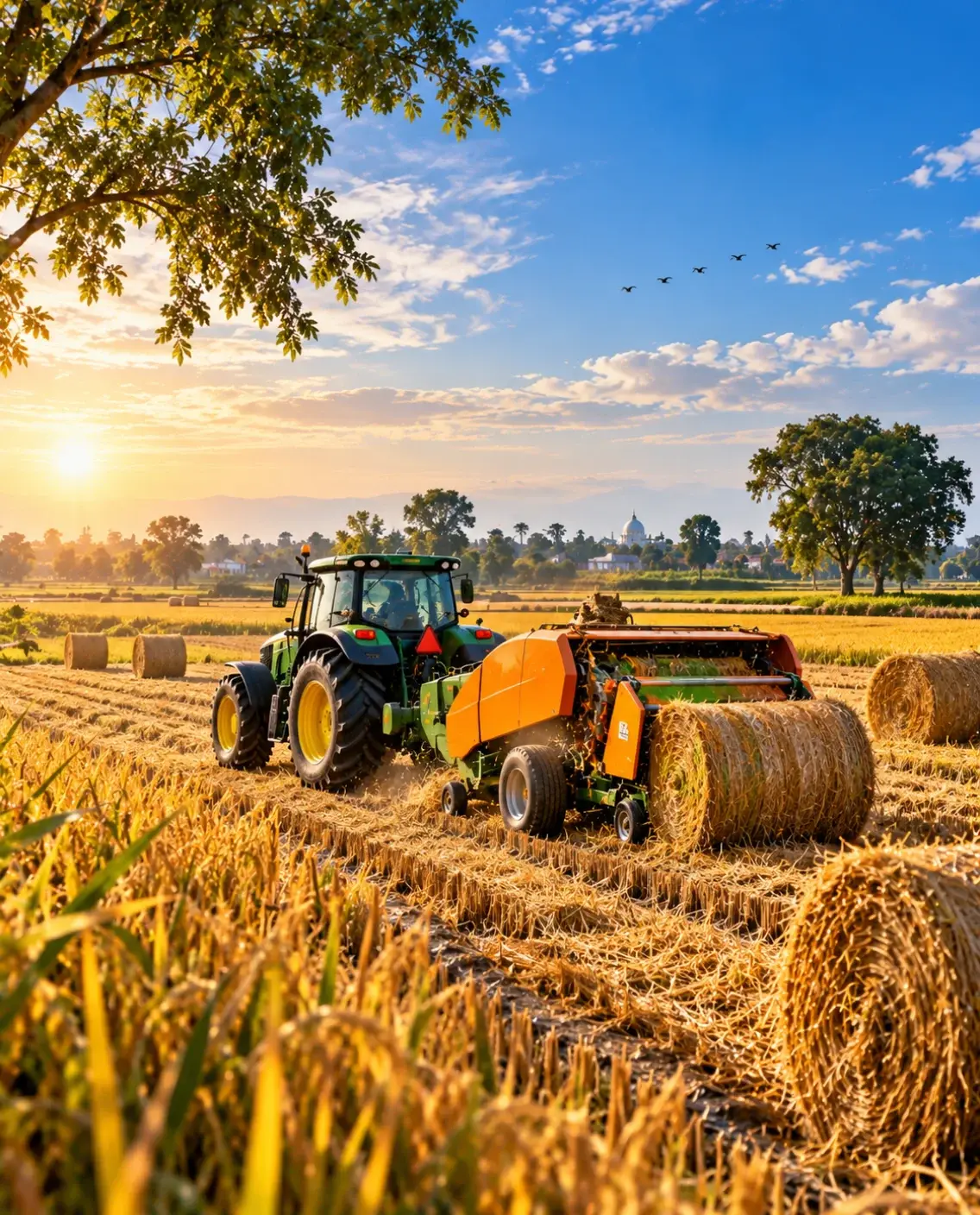
CAQM reviews stubble-burning prevention in Punjab hotspot districts Amritsar and Tarn Taran
In short: CAQM pressed two Punjab hotspot districts to keep CRM machines, baler supply chains and field surveillance running through the paddy harvest.
Why in news
A Commission for Air Quality Management (CAQM) team led by Member (Technical) Dr S D Attri held a review meeting in Amritsar on 10 October 2026, after field visits on 9 and 10 October, with the Deputy Commissioners and officials of Amritsar and Tarn Taran. The Union Environment Ministry has identified both districts as paddy stubble-burning hotspots.
Background
Amritsar has balers from its own and neighbouring districts working, a supply chain linking farmers and aggregators to industries with boilers, and a control room and help desk to match farmers with machines. Tarn Taran has largely met its targets for Crop Residue Management (CRM) machinery and has Nodal and Cluster Officers patrolling fields. CAQM has also deployed flying squads in 18 Punjab districts from 1 October to 30 November. It asked for uninterrupted surveillance, including low-cost sensors, and better use of balers, staff and control rooms.
Key facts for Prelims
- CAQM: statutory body under the Commission for Air Quality Management in National Capital Region and Adjoining Areas Act, 2021.
- In-situ management: residue handled in the field, e.g. Happy Seeder, Super Seeder, mulchers and microbial decomposers.
- Ex-situ management: residue removed as bales for biomass power, industrial boilers, co-firing in thermal plants and compressed biogas.
- CRM machinery is subsidised under the Centre’s crop residue management scheme for Punjab, Haryana, Uttar Pradesh and Delhi.
- Flying squads cover 18 Punjab districts, including Sangrur, Tarn Taran, Firozpur, Amritsar and Bathinda.
Mains analysis and way forward
Mains analysis
- The short window between paddy harvest and wheat sowing pushes farmers towards burning; machines must be available on time, not merely procured.
- Ex-situ use creates income from straw but needs reliable aggregation, storage and assured industrial demand.
- District-level control rooms and help desks show how last-mile administration, not only regulation, shapes outcomes.
- Lasting change requires crop diversification away from water-intensive paddy, alongside enforcement.
Way forward
- Expand custom hiring centres so small farmers can access CRM machines at low cost.
- Build long-term contracts between aggregators and boiler-based industries for straw bales.
- Combine incentives and awareness with fair, consistent enforcement.
Connect the dots: Air pollution; agricultural residue; cropping pattern in Punjab; statutory bodies; cooperative federalism.
Sources: The News Mill: CAQM reviews stubble burning prevention in Amritsar, Tarn Taran, Oct 2026

Indonesia moves eight fire-hit orangutans to a protected forest in Borneo
In short: Eight fire-hit orangutans have been moved to Batu Nyambu protected forest as Indonesia battles its most intense wildfires in 11 years.
Why in news
Reuters reported on 11 October 2026 that Indonesian authorities and the wildlife foundation YIARI moved eight orangutans (three mother-infant pairs and two adolescent males), to the Batu Nyambu protected forest; the animals had been rescued from fires and relocated during August and September. Since August, the West Kalimantan conservation agency and YIARI have rescued 46 fire-affected orangutans.
Background
Indonesia is facing its most intense wildfires in 11 years, mainly on Sumatra and Borneo; Reuters puts the area burned in 2026 at an estimated 800,000 hectares, and the government has warned that fires could continue until November, with El Nino an aggravating factor. Haze has caused about 175,000 respiratory illness cases in Indonesia and Malaysia closed schools in several states on 9 October. Orangutans live in the wild only on Borneo and Sumatra. The IUCN moved the Bornean orangutan from Endangered to Critically Endangered in 2016, citing habitat loss, hunting and recurrent fires in peat forests.
Key facts for Prelims
- Three orangutan species: Bornean (Pongo pygmaeus), Sumatran (Pongo abelii) and Tapanuli (Pongo tapanuliensis); all are Critically Endangered on the IUCN Red List.
- Bornean orangutan was uplisted to Critically Endangered in 2016.
- Orangutans are the only great apes found in Asia; they are largely arboreal.
- Borneo is shared by Indonesia (Kalimantan), Malaysia (Sabah and Sarawak) and Brunei.
- Peatland fires release large amounts of stored carbon and cause transboundary haze.
Mains analysis and way forward
Mains analysis
- Fires, often linked to land clearing for plantations, combine with El Nino dry spells to destroy habitat rapidly.
- Transboundary haze makes forest fires a regional governance issue in Southeast Asia.
- Rescue and relocation help individuals but cannot replace protection of large, connected forest habitat.
- The case offers lessons for India on forest-fire prevention and peatland and wetland protection.
Way forward
- Restore and rewet degraded peatlands and enforce bans on fire-based land clearing.
- Strengthen regional cooperation on haze and early fire warning.
- Secure connected habitat corridors so rescued animals have viable homes.
Connect the dots: Species in news; IUCN Red List; El Nino; forest fires and climate change; transboundary pollution.
Sources: ThePrint (Reuters): Indonesia moves 8 endangered orangutans to safety after Borneo fires, 11 Oct 2026; Earth Journalism Network: Bornean orangutan one step away from extinction, 6 Sep 2016
In brief
- Personality in the news: Jayaprakash Narayan: On 11 October 2026, the Prime Minister paid tribute to Lok Nayak Jayaprakash Narayan on his birth anniversary and recalled his ideals of good governance. Born on 11 October 1902 at Sitab Diara, JP received the Ramon Magsaysay Award in 1965 and the Bharat Ratna posthumously in 1999.
- OPV Shreyas launched: On 10 October 2026, GRSE, Kolkata launched Shreyas, the third of four Next Generation Offshore Patrol Vessels it is building for the Indian Navy. Launching marks the hull entering water; the ship will be commissioned after outfitting and trials.
- ITU-India Robotics for Good Challenge: The Robotics for Good Youth Challenge India 2026-27, held by ITU and DoT at IMC 2026 on 10 October 2026, drew 57 teams with around 300 students and mentors from 14 states on the theme of public health emergency response. Winners Team Singularity (junior) and Ferrum Incubators (senior) will represent India at the Geneva Grand Finale in June 2027.
- Supreme Court special Sunday hearing on Delhi protests: At a special sitting on 11 October 2026, a Bench of Justices Joymalya Bagchi and V. Mohana, hearing allegations of non-compliance with its earlier order, directed that there be no illegal detention, that free movement be allowed subject to traffic rules, that Metro and rail services function normally and that internet remain undisturbed, as per law; the Centre told the court Metro, trains and internet were already restored. The court recorded the complaints without any finding of non-compliance and listed the matter for 13 October.
- INS Sahyadri in Vladivostok for INDRA-2026: Indian Navy stealth frigate INS Sahyadri arrived in Vladivostok on 10 October 2026 for the India-Russia naval exercise INDRA-2026, which is set to open on 13 October with coastal and sea phases in the Sea of Japan.
- Haze from Indonesian fires: Haze from Indonesia’s most intense wildfires in 11 years has caused about 175,000 respiratory illness cases in Indonesia, and Reuters reported on 11 October 2026; Malaysia closed schools in several states on 9 October as air quality worsened.
Prelims practice: 5 questions
Choose an option to see the answer and explanation. Your score appears when all five are answered.
Mains practice
Access and Benefit Sharing is intended to ensure the fair and equitable distribution of benefits arising from the use of biological resources and associated knowledge. Evaluate the effectiveness of India’s ABS framework under the Biological Diversity Act, 2002, and suggest measures to strengthen community participation and conservation outcomes.
Show the answer outline
Introduction (about 30 words)
- Define access and benefit sharing and cite the National Biodiversity Authority’s October 2026 sharing of Rs 2.02 crore from seed firms with 27 States and 3 UTs.
The framework
- Biological Diversity Act, 2002 and its 2023 amendment; three-tier structure of NBA, State Biodiversity Boards and Biodiversity Management Committees.
- Link to the Convention on Biological Diversity and the Nagoya Protocol on ABS.
Achievements
- Cumulative ABS releases of about Rs 202 crore by the NBA, reaching States and local bodies.
- People’s Biodiversity Registers document local knowledge and resources.
- Recognition that seed and plant-based industries owe a share to conserving communities.
Gaps
- Small amounts relative to the commercial value of resources and slow flow of funds to communities.
- Weak capacity of Biodiversity Management Committees and limited awareness among benefit claimers.
- Concerns that the 2023 amendment eased obligations for some users such as AYUSH practitioners.
Way forward
- Transparent, time-bound transfers to Biodiversity Management Committees with public dashboards.
- Digital tracing of resources and simpler but enforceable compliance for industry.
- Use benefit money for local conservation and livelihoods agreed by Gram Sabhas.
Conclusion (about 30 words)
- ABS can turn conservation into a shared stake only if benefits reach the people who protect biodiversity, quickly and visibly.
Tip: Use the seed-sector disbursement as your opening example and add one global link, such as CBD COP 17, to show awareness of the wider negotiations.
Current Canvas is prepared by the UPSC Gurus editorial desk. Every fact is checked against official releases and reliable reporting, with sources listed under each story. Editions are compiled each month into Current Canvas Monthly, a free magazine.
About images: photographs and illustrations in Current Canvas are AI-generated for illustration only. They are not news photographs of the events described.