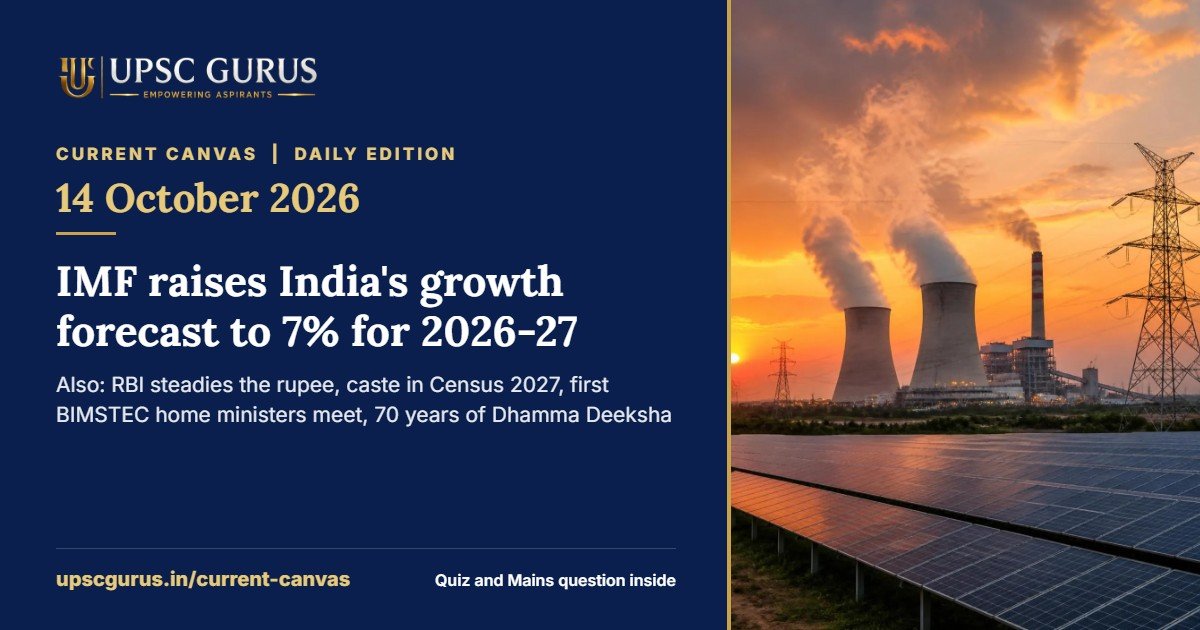
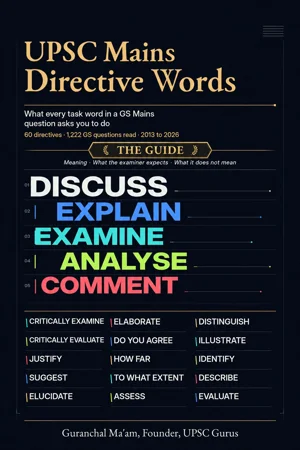
 New this week · Free UG Handout 02UPSC Mains Directive Words: 60 Meanings, Trends and PYQsTwo free PDFs: The Guide and the With PYQs edition.Read and download
Today’s Canvas
Today’s edition opens with the IMF’s brighter view of India’s growth and the steps the Reserve Bank is taking to steady the rupee, alongside a sober look at how much firm power a fast-growing economy needs. The Supreme Court asks how caste will be counted in Census 2027, India hosts the first BIMSTEC home ministers’ meeting, and Canada’s foreign minister arrives as trade talks move ahead. We close with Deekshabhoomi, where seventy years ago Ambedkar chose a path of equality and dignity.
About 23 minutes to read the key points; Mains analysis opens under each story.
- IMF World Economic Outlook raises India’s 2026-27 growth forecast to 7%, global growth seen at 3.1%GS III
- Supreme Court asks Centre for its SOP on caste data in Census 2027 after plea flags self-declaration without checksGS II
- India hosts first BIMSTEC Home Ministers’ Meeting; Amit Shah calls for no safe haven for terror networks in the regionGS III
- RBI extends 20% forex risk reserve to banks’ own rupee hedges and limits offshore NDFs to hedgingGS III
- Canadian Foreign Minister Anita Anand begins India visit as both sides aim to conclude CEPA by end-2026GS II
- At the UN Sixth Committee, India seeks inclusion of terrorist acts in the proposed convention on crimes against humanityGS II
- Madras High Court upholds Speaker’s acceptance of six AIADMK MLAs’ resignations but keeps disqualification cases aliveGS II
- CEA chief says India’s planned coal capacity additions may need to rise to 105 to 150 GW as peak demand surgesGS III
- India’s internet subscriber base crosses 111 crore; tele-density rises to 94.31% at end-June 2026: TRAIGS III
- Supreme Court issues notice on PIL over poor upkeep of accessible airport facilities for persons with disabilitiesGS II
- Supreme Court seeks senior Delhi Police officer’s presence over alleged harassment of women journalists at protestsGS IV
- Seventy years of Dhamma Deeksha: Ambedkar’s conversion to Buddhism at Nagpur on 14 October 1956GS I
- NPCI defers merchant discount rate on high-value UPI merchant payments until after DiwaliGS III
- Delhi adds 13 continuous air quality monitoring stations and five public EV charging stations ahead of winterGS III
- Nepal: 321 rescued after landslide blocks Budhi Gandaki; over 100 foreign trekkers stranded as trails and bridges wash awayGS III
- The IMF raised India’s 2026-27 growth forecast to 7%; it sees global growth at 3.1%.
- RBI extended the 20% forex risk reserve to banks’ own rupee hedges and limited offshore NDFs to hedging.
- The Supreme Court asked the Centre for its SOP on recording caste in Census 2027.
- India hosted the first BIMSTEC Home Ministers’ Meeting in New Delhi on 13 October.
- Canadian Foreign Minister Anita Anand began an India visit; both sides aim to conclude CEPA by end-2026.
- Deekshabhoomi marks 70 years since Ambedkar’s Dhamma Deeksha at Nagpur on 14 October 1956.
Economy and reports
IMF World Economic Outlook raises India’s 2026-27 growth forecast to 7%, global growth seen at 3.1%
In short: The IMF lifted India’s FY27 forecast by 0.6 percentage points to 7%, citing domestic demand and services, while global growth slows amid the energy shock.
Why in news
The International Monetary Fund released its October 2026 World Economic Outlook (WEO) on 13 October 2026 during the IMF-World Bank Annual Meetings in Bangkok. It raised India’s growth forecast for 2026-27 to 7%, up 0.6 percentage points from its July estimate of 6.4%, and raised the 2027-28 projection by 0.3 percentage points to 7%, citing resilient domestic demand and robust services activity.
Background
The IMF projects world growth slowing from 3.5% in 2025 to 3.1% in 2026 before recovering to 3.4% in 2027, and world trade volume growth easing from 5% in 2025 to 4.6% in 2026. Its baseline assumes the Strait of Hormuz reopens to shipping in March 2027 with broadly prewar conditions by October 2027, and energy prices staying above prewar levels; the Middle East and Central Asia region is projected to contract by 0.3% in 2026. India’s upgrade still leaves FY27 growth below the 7.8% recorded in 2025-26, and the IMF linked India’s potential to favourable demographics, a growing domestic market and continued structural reforms. The RBI had earlier raised its own FY27 growth estimate to 7.1%.
Key facts for Prelims
- The World Economic Outlook is a flagship IMF publication released in April and October, with updates in January and July.
- For India, IMF projections are presented on a fiscal-year basis: “2026” in the WEO tables refers to 2026-27 (April to March).
- The 2026 IMF-World Bank Annual Meetings are being held in Bangkok, Thailand; the full October 2026 WEO was released there on 13 October.
- Chapter 3 of the October 2026 WEO, “Intangible Yet Real: Spillovers from Corporate Income Taxation”, examines profit shifting and cross-border tax spillovers.
- Other IMF flagships released at the Annual Meetings include the Global Financial Stability Report and the Fiscal Monitor.
Mains analysis and way forward
Mains analysis
- Domestic demand as an anchor: consumption and services give India a buffer when external demand and energy prices turn adverse.
- Energy import exposure: oil and freight costs linked to the Hormuz disruption can squeeze household incomes, corporate margins and the current account, so the upgrade is conditional.
- Divergence among emerging economies: India is cited as an exception among energy-importing developing economies that face medium-term downgrades.
- Policy consistency: the IMF notes its monetary policy projections are consistent with the RBI meeting its inflation target over the medium term, which supports macroeconomic credibility.
Way forward
- Diversify crude sourcing and strengthen strategic petroleum reserves to reduce exposure to shipping disruptions.
- Sustain public capital expenditure while keeping to the fiscal glide path, so that private investment is crowded in rather than crowded out.
- Use trade agreements and services exports to widen external buffers against volatile commodity prices.
Connect the dots: Links to: growth and its measurement, IMF and Bretton Woods institutions, external sector vulnerability, energy security, fiscal and monetary coordination.
Sources: Business Today: IMF raises India’s growth forecast to 7% for 2026, 13 October 2026; News On AIR: IMF raises India’s GDP growth forecast to 7% for 2026-27, 13 October 2026; The Week: IMF lifts India’s growth outlook to 7%, but shipping risks cloud the upgrade, 13 October 2026; ETV Bharat (IANS): India to grow at 7% in 2026, says IMF; global growth at 3.1%, 13 October 2026; IMF: World Economic Outlook, October 2026 (release page)
RBI extends 20% forex risk reserve to banks’ own rupee hedges and limits offshore NDFs to hedging
In short: A second round of curbs in three days aims to cut speculative dollar demand; the rupee posted its strongest gains in months.
Why in news
On 12 October 2026, the Reserve Bank of India extended the Foreign Exchange Risk Reserve (FERR), a cash deposit of 20% of the rupee value of a contract’s notional amount, to rupee derivative contracts that banks undertake to hedge their own assets and liabilities. It also restricted rupee non-deliverable derivative contracts offered to non-residents by banks with IFSC Banking Units and standalone primary dealers to hedging purposes only.
Background
On 10 October 2026, through A.P. (DIR Series) Circulars No. 25 and 26, the RBI barred rebooking of cancelled rupee derivative contracts, cut the limit for hedging without proof of underlying exposure from USD 100 million to USD 5 million, and introduced the 20% FERR on user contracts above USD 2 million that hedge current account transactions. A special dollar window for Indian Oil, HPCL and BPCL became operational on 12 October. The rupee had fallen more than 6% this year on high oil prices and capital outflows; it closed at 95.78 per dollar on 12 October after a 93-paise gain and touched 95.07 on 13 October. Speaking at the Bloomberg New Economy Forum on 13 October, Finance Minister Nirmala Sitharaman said the RBI will keep acting to curb excessive volatility rather than defend a specific level.
Key facts for Prelims
- The October 2026 circulars were issued under Sections 10(4) and 11(1) of the Foreign Exchange Management Act, 1999 and Section 45W of the RBI Act, 1934.
- FERR: 20% of the rupee equivalent of the notional amount, held as cash with the RBI, maintained daily until the contract ends, and reported through the Centralised Information Management System (CIMS).
- A non-deliverable forward (NDF) is settled in cash, usually in dollars, without exchange of the underlying rupee.
- Authorised Dealers (ADs) are entities licensed by the RBI under FEMA to deal in foreign exchange.
- Splitting transactions across dealers to avoid FERR conditions is treated as a violation of the Directions.
Mains analysis and way forward
Mains analysis
- Speculation versus hedging: the measures raise the cost of positions that add to dollar demand without an underlying trade need, while keeping genuine hedging available.
- Costs to the real economy: a 20% cash deposit locks up liquidity and can raise hedging costs for importers and banks, which is why banks have sought relief or a flat fee.
- Capital flow pressure: record FPI equity outflows and Brent near USD 100 a barrel show that the rupee’s weakness reflects global factors, so administrative curbs buy time rather than resolve fundamentals.
- Credibility and communication: frequent rule changes can confuse markets, as seen in some banks pausing forward quotes; clear guidance helps preserve the depth of the onshore market.
Way forward
- Treat the curbs as temporary and calibrate them against volatility data, with a published review timeline.
- Strengthen structural buffers: export diversification, stable long-term capital through debt index inclusion and FDI, and lower oil intensity.
- Issue FAQs on treatment of pre-existing contracts to avoid disruption for genuine hedgers.
Connect the dots: Links to: exchange rate regimes, FEMA 1999, RBI’s role in forex markets, balance of payments, capital account management.
Sources: Business Standard: RBI extends forex risk reserve requirement to banks’ own hedging contracts, 13 October 2026; Business Standard (Reuters): RBI tightens rupee derivatives rules, widens 20% cash reserve requirement, 13 October 2026; RBI: RBI Announces Regulatory Measures for the Foreign Exchange Market, 10 October 2026; Business Standard: Rupee rises to one-month high after RBI measures, 13 October 2026; Business Standard: RBI will continue to curb rupee volatility, says Sitharaman, 13 October 2026
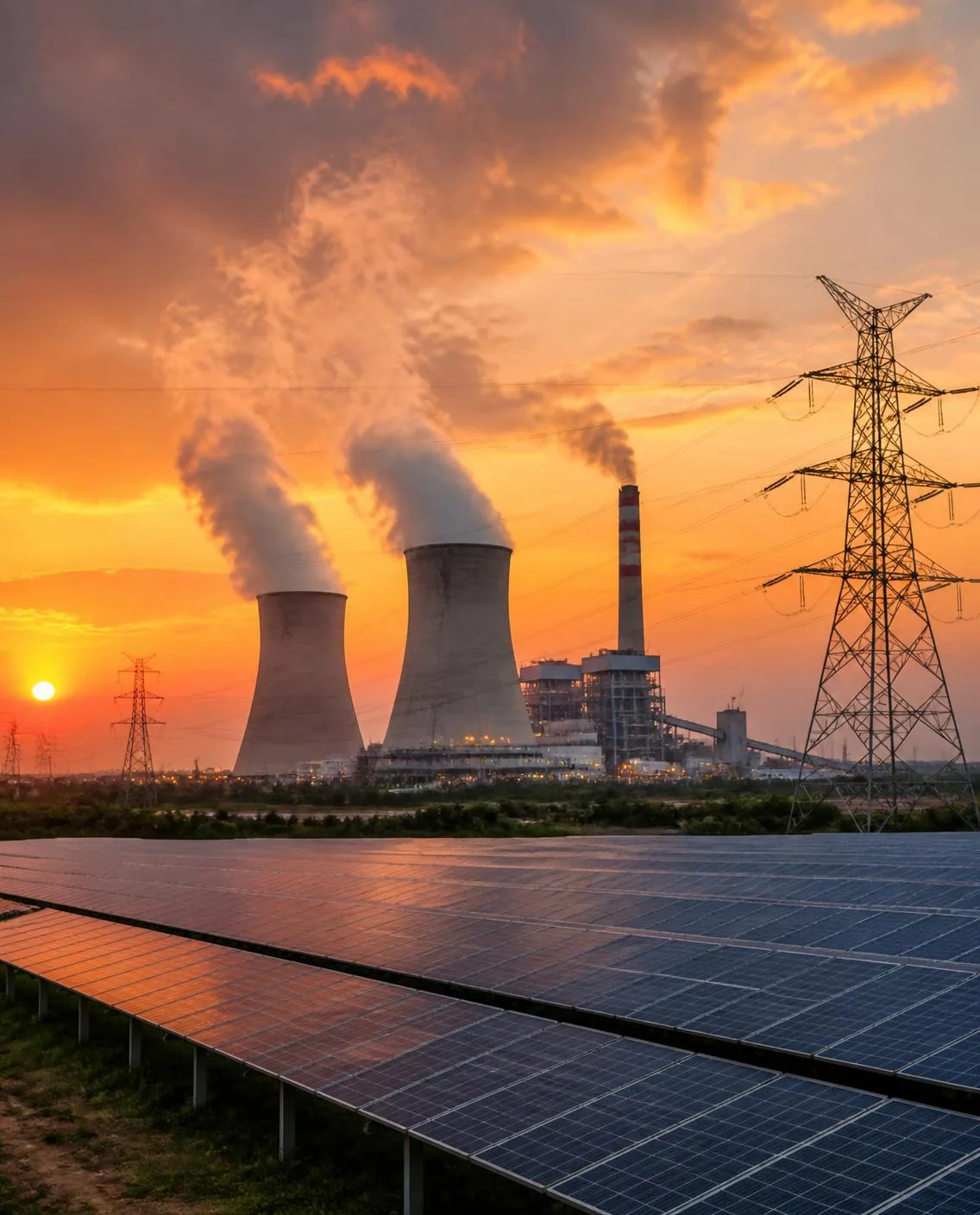
CEA chief says India’s planned coal capacity additions may need to rise to 105 to 150 GW as peak demand surges
In short: Weak hydro output and fast-rising demand pushed September power shortages to a three-year high, prompting a rethink on firm generation capacity.
Why in news
On 13 October 2026, Central Electricity Authority (CEA) Chairperson Ghanshyam Prasad said at an Indian Chamber of Commerce event in New Delhi that India may need to add coal capacity beyond last year’s target, possibly “105 GW or even 150 GW”. He said this does not slow renewable development, and that renewables must be complemented by nuclear and pumped-storage hydropower for grid stability.
Background
India has about 230 GW of coal-based capacity; last year’s plan was to add 97 GW to reach 307 GW by 2035. Daily peak demand this year is running 45 to 50 GW higher than a year earlier. Power shortages reached 560 million kWh in September 2026, the highest since August 2023, as hydropower generation fell 20% year on year after weaker monsoon rains while coal-fired generation rose 13.3%. India added about 50 GW of renewable capacity last year, and non-fossil sources make up 55% of installed electricity capacity.
Key facts for Prelims
- The Central Electricity Authority is a statutory body under the Electricity Act, 2003 and prepares the National Electricity Plan.
- Pumped-storage hydropower stores energy by pumping water to an upper reservoir when power is cheap and releasing it through turbines at peak hours.
- Non-fossil sources account for 55% of India’s installed electricity generation capacity (India’s statement at the UN General Assembly Second Committee, October 2026).
- Coal-fired generation rose 13.3% and hydropower fell 20% year on year in September 2026.
Mains analysis and way forward
Mains analysis
- Firm versus variable power: solar and wind need balancing capacity; coal, nuclear, hydro and storage provide round-the-clock supply as demand peaks shift to evenings.
- Climate trade-off: new coal plants operate for decades, raising the risk of stranded assets and tension with long-term net-zero goals.
- Monsoon dependence: weak rains cut hydro output and raise thermal load, showing how climate variability feeds into energy security.
- Demand drivers such as cooling, electrification and data centres are rising faster than planned, which calls for more responsive capacity planning.
Way forward
- Prioritise storage (pumped hydro and batteries) and flexible operation of existing coal units before locking in large new coal fleets.
- Strengthen inter-regional transmission and demand response to use surplus renewable power across states.
- Revisit the National Electricity Plan with updated demand forecasts and climate-variability scenarios.
Connect the dots: Links to: infrastructure (energy), energy security, climate commitments and NDCs, monsoon variability, regulatory bodies in the power sector.
Sources: Business Standard (Reuters): India may need to raise coal power capacity as demand surges, says CEA chief, 13 October 2026; Business Standard: Indian Railways freight loading grows 6.14% in September 2026, 13 October 2026; News On AIR: India calls for better access to finance, technology transfer for SDGs, 13 October 2026
NPCI defers merchant discount rate on high-value UPI merchant payments until after Diwali
In short: The 0.40% MDR on merchant payments above Rs 2,000, due from 15 October, will now start soon after Diwali; consumers and small merchants stay exempt.
Why in news
On 13 October 2026, the National Payments Corporation of India (NPCI) said its UPI and Services Steering Committee had deferred the merchant discount rate (MDR) on select person-to-merchant (P2M) UPI transactions, keeping the festive season in mind. The levy will now be implemented “immediately post Diwali at a date to be notified separately”, with the structure unchanged.
Background
NPCI announced the framework on 15 September 2026: an MDR of 0.40%, capped at Rs 300, on specified P2M payments above Rs 2,000, and a flat Rs 5 fee in some categories such as fuel. Person-to-person transfers, P2M payments up to Rs 2,000 and small merchants receiving up to Rs 1 lakh a month through UPI QR stay at zero MDR, and consumers pay nothing. NPCI said the revenue would fund payment infrastructure, resilience, cybersecurity and wider merchant acceptance. Since 1 January 2020, UPI and RuPay debit card payments had carried no MDR under Section 269SU of the Income-tax Act and Section 10A of the Payment and Settlement Systems Act, 2007. Traders’ bodies had called a “No UPI Day” for 2 October but withdrew it after meeting the Finance Minister in September.
Key facts for Prelims
- NPCI is an umbrella organisation for retail payments set up by the RBI and the Indian Banks’ Association under the Payment and Settlement Systems Act, 2007.
- Merchant discount rate: the fee a merchant pays to banks and payment providers for accepting a digital payment.
- Zero MDR on UPI and RuPay debit cards applied from 1 January 2020 under Section 269SU of the Income-tax Act, 1961 (inserted by the Finance Act, 2019).
- Planned UPI MDR: 0.40% on P2M payments above Rs 2,000, capped at Rs 300 per transaction; P2P transfers remain free.
Mains analysis and way forward
Mains analysis
- Sustainability of public digital infrastructure: zero MDR spurred adoption but left banks and apps without revenue for security and uptime investments.
- Equity design: exempting small-value payments and small merchants protects financial inclusion, while charging large-ticket merchant payments spreads costs to those better able to bear them.
- Risk of a shift back to cash: merchants may pass on costs or discourage UPI for larger bills, which needs monitoring.
- Policy process: consultation with traders and phased timing help build acceptance for user charges on public platforms.
Way forward
- Publish how MDR revenue is shared and used, including the proposed fund for small-merchant acceptance in smaller towns.
- Track merchant acceptance and cash usage after rollout and recalibrate rates if adoption weakens.
Connect the dots: Links to: digital public infrastructure, financial inclusion, payment systems regulation, cashless economy, user charges.
Sources: Business Standard: UPI MDR deferred until after Diwali, new date to be notified: NPCI, 13 October 2026; Morung Express (IANS): NPCI reveals MDR on UPI payments above Rs 2000 from Oct 15, small merchants continue to benefit, 15 September 2026; Business Today: Refund charges levied on UPI, RuPay transactions since 1 January 2020, CBDT tells banks, 30 August 2020
Polity and governance
Supreme Court asks Centre for its SOP on caste data in Census 2027 after plea flags self-declaration without checks
In short: The Court wants to see how caste status will be declared and verified in Census 2027, since the data may shape reservation and welfare.
Why in news
On 12 October 2026 a Bench of CJI Surya Kant, Justice Joymalya Bagchi and Justice V Mohana asked the Union to place on record the Standard Operating Procedure being followed for caste data in Census 2027 (Aakash Goel v. Union of India). The petition says caste is being recorded only through self-disclosure, without any verification, and asks that such data not become the sole basis of reservation or welfare allocation until a verifiable protocol is placed on affidavit. The Court did not issue notice, but asked the Solicitor General to explain how a person declares OBC or ST status and whether a caste certificate is needed and verified.
Background
Census 2027 is being conducted under the Census Act, 1948 and the Census Rules, 1990, and is described as India’s first census by digital means, with an approved outlay of Rs 11,718.24 crore. The Cabinet Committee on Political Affairs decided on 30 April 2025 to include caste enumeration, which will take place in Phase II (Population Enumeration) in February 2027, with a reference date of 00:00 hours on 1 March 2027 (1 October 2026 for Ladakh and snow-bound areas). On 14 August 2026 the Centre notified 40 questions for the Household Schedule, with Item 10 covering SC/ST/Caste. Until the 2011 Census, only Scheduled Castes and Scheduled Tribes were systematically enumerated. During the hearing the CJI also flagged the problem of fake caste certificates and said verification protects genuine claimants.
Key facts for Prelims
- Census is a Union subject (Entry 69, Union List, Seventh Schedule); it is conducted by the Office of the Registrar General and Census Commissioner, India, under the Ministry of Home Affairs.
- Section 15 of the Census Act, 1948 keeps individual census information confidential; it cannot be used as evidence in court.
- Census 2027 reference date: 00:00 hours, 1 March 2027; for Ladakh and snow-bound areas of J&K, Himachal Pradesh and Uttarakhand, 00:00 hours, 1 October 2026.
- Self-enumeration: an optional online window of 15 days before house-to-house visits in Phase I, available in 16 languages.
- About 31 lakh enumerators and supervisors are involved; caste enumeration is part of Phase II, not the Houselisting phase.
Mains analysis and way forward
Mains analysis
- Data quality versus dignity: self-declaration respects identity and reduces paperwork, but unverified entries can distort the evidence base for reservation and targeted welfare.
- Verification at census scale is hard: linking each entry to a certificate could slow the count, burden citizens without documents and raise privacy concerns.
- Census data enjoy statutory confidentiality, so their use for policy must be through aggregates; individual entitlements still depend on certificates issued by competent authorities.
- Transparency in methodology (questions, codes, caste lists, validation rules) builds public trust and limits litigation after the data are released.
Way forward
- Publish the caste-coding methodology and quality checks in advance, with independent expert review before tabulation.
- Treat census caste counts as one input for policy, alongside commission reports and administrative data, rather than the sole basis for allocation.
- Strengthen digitised, verifiable caste-certificate systems at the State level so that individual benefits rest on checked records.
Connect the dots: Links to: Census Act 1948, Seventh Schedule, Articles 15(4), 16(4) and 340, data governance, evidence-based policymaking.
Sources: LiveLaw: Census 2027, Supreme Court seeks Centre’s response on plea raising concerns over self-declaration of caste status, 12 October 2026; PIB: Census 2027, India’s first digital enumeration exercise; ANI: Census 2027, Centre notifies 40 questions; caste enumeration to take place first time since Independence, 14 August 2026
Madras High Court upholds Speaker’s acceptance of six AIADMK MLAs’ resignations but keeps disqualification cases alive
In short: Resignations accepted as genuine, but quitting does not wipe out earlier conduct: the Speaker must decide the defection petitions within two months.
Why in news
On 13 October 2026 a Division Bench of Chief Justice S.A. Dharmadhikari and Justice G. Arul Murugan of the Madras High Court held that Tamil Nadu Speaker J.C.D. Prabhakar validly accepted the resignations of six AIADMK MLAs who later joined the ruling TVK, and that he did not need a roving inquiry into their reasons. Partly allowing petitions by AIADMK whip Agri S.S. Krishnamurthy, the Court held that acceptance of the resignations does not end the pending Tenth Schedule proceedings, and directed the Speaker to complete them within two months.
Background
After the results of 4 May 2026, TVK won 108 seats, 10 short of a majority of 118, and won the confidence vote on 13 May 2026 with 144 votes; the AIADMK says 25 of its MLAs voted for the government against its whip issued on 11 May. Disqualification proceedings began on 14 May; some were dropped after MLAs apologised. Six MLAs (Maragatham Kumaravel, P. Sathyabhama, Isakki Subbaiah, Jayakumar, M.R. Vijayabhaskar and C. Vijayabhaskar) then resigned and joined TVK. Two of them later won by-elections in Maduranthakam and Dharapuram on the TVK symbol. The Court reasoned that without continuing proceedings, a legislator could defy the whip, resign and return under a new banner.
Key facts for Prelims
- Article 190(3)(b): a State legislator may resign by writing to the Speaker; the Speaker shall not accept it if satisfied that it is not voluntary or genuine (proviso added by the 33rd Amendment, 1974). Article 101(3)(b) is the parallel for Parliament.
- Tenth Schedule (anti-defection law) was added by the 52nd Amendment, 1985; the 91st Amendment, 2003 removed the “split” exception, leaving only merger with two-thirds of the legislature party (Paragraph 4).
- Paragraph 2(1)(b): a member is disqualified for voting or abstaining contrary to the party’s direction without prior permission, unless condoned within 15 days.
- Kihoto Hollohan v. Zachillhu (1992) upheld the Tenth Schedule but held the Speaker’s decision is subject to judicial review.
- Keisham Meghachandra Singh v. Speaker, Manipur (2020) said disqualification petitions should ordinarily be decided within three months.
Mains analysis and way forward
Mains analysis
- Resignation is a legislator’s right, and the Speaker’s check under Article 190(3)(b) is limited to whether it is voluntary and genuine, not to political motives.
- Separating resignation from disqualification closes a loophole: earlier defiance of the whip can still attract consequences, such as the bar under Article 361B on holding remunerative political posts.
- Delay by Speakers in deciding defection petitions has been a recurring concern; court-fixed timelines show the judiciary filling a procedural gap.
- The case revives debate on whether an independent tribunal or the Election Commission, rather than a partisan Speaker, should decide defection cases.
Way forward
- Codify timelines for disqualification petitions in the Tenth Schedule or House rules, as repeatedly suggested by the Supreme Court.
- Consider limiting the anti-defection whip to confidence and money votes, giving legislators more room for conscience on other matters.
- Explore an independent adjudicator for defection cases to strengthen public trust in impartiality.
Connect the dots: Links to: Tenth Schedule, Articles 101, 190, 191 and 361B, office of the Speaker, judicial review, electoral reforms.
Sources: LawBeat: Madras High Court upholds TN Speaker’s decision to accept resignations of AIADMK MLAs who later joined TVK, 13 October 2026; ANI: Madras HC upholds Speaker’s acceptance of resignations of 6 AIADMK MLAs; disqualification proceedings can continue, 13 October 2026; Open: Can MLAs resign their way out of the anti-defection law? Madras HC rules in AIADMK-TVK case, 13 October 2026
International relations
Canadian Foreign Minister Anita Anand begins India visit as both sides aim to conclude CEPA by end-2026
In short: The visit, Anand’s second to India in a year, focuses on trade, energy, security and defence as CEPA talks enter their fifth round.
Why in news
Canadian Foreign Minister Anita Anand began a two-day visit to India on 13 October 2026, part of a tour from 13 to 16 October that also covers the UAE. She is to meet External Affairs Minister S Jaishankar on 14 October to advance “roadmap priorities”, in what reports describe as their 11th meeting since September 2025, and Skill Development Minister Jayant Chaudhary.
Background
The visit follows a year of rebuilding ties: Anand had last visited India in October 2025 to discuss trade, energy and security amid efforts to repair strained relations. The fifth round of negotiations on a Comprehensive Economic Partnership Agreement (CEPA) began in Ottawa earlier in October 2026, and both sides aim to conclude talks by the end of 2026. According to the Canadian government, two-way trade reached C$30.4 billion in 2025, including C$11 billion in goods, and the two sides aim to raise it to C$70 billion by 2030. Trade Minister Maninder Sidhu is leading a Team Canada trade mission of nearly 300 business delegates focused on sectors such as aerospace, agri-food and clean technology.
Key facts for Prelims
- CEPA: Comprehensive Economic Partnership Agreement, under negotiation between India and Canada; fifth round began in Ottawa in October 2026.
- India-Canada two-way trade in 2025: C$30.4 billion (Canadian government figure, Canadian dollars), with a target of C$70 billion by 2030.
- Anand will also join a Bloomberg New Economy Forum panel in New Delhi on middle powers and the changing global order.
- India and Canada have shared nearly 80 years of diplomatic relations.
Mains analysis and way forward
Mains analysis
- Economic complementarity: Canadian energy, critical minerals, aerospace and agri-food fit India’s needs for energy security, supply chains and food processing, while India offers scale and skilled talent.
- A sequenced reset: frequent ministerial contact, a roadmap and trade negotiations show how structured dialogue can rebuild trust after a difficult phase in relations.
- Middle-power alignment: amid tariff uncertainty and strains in global trade, both countries are diversifying partners and stressing plurilateral cooperation.
- Sensitive issues remain, including security concerns linked to extremism and the welfare of a large Indian student and diaspora community, and need steady handling through official channels.
Way forward
- Conclude a balanced CEPA with clear rules on services, mobility and agriculture that protect sensitive sectors.
- Institutionalise security and law-enforcement dialogue alongside trade so that concerns are addressed early.
- Expand cooperation in skills, education and clean energy, where people-to-people links are strongest.
Connect the dots: Links to: India’s trade agreements (CEPA/FTA), diaspora diplomacy, energy and critical minerals security, India and the Indo-Pacific.
Sources: News On AIR: Canadian Foreign Minister Anita Anand to be on two-day visit to India from today, 13 October 2026; ANI: Canadian FM Anita Anand on India visit; to hold talks with EAM Jaishankar on trade, energy, security, defence ties, 13 October 2026; News On AIR: Canadian Foreign Minister Anita Anand to visit India on Oct 12, 11 October 2025
At the UN Sixth Committee, India seeks inclusion of terrorist acts in the proposed convention on crimes against humanity
In short: India wants terrorist acts meeting the threshold of crimes against humanity covered by the planned treaty, with national sovereignty and primary state responsibility respected.
Why in news
Speaking in the Sixth (Legal) Committee of the UN General Assembly (reported on 13 October 2026), R. Mythili, Counsellor at India’s Permanent Mission to the UN, said terrorist acts that meet the threshold of crimes against humanity should be addressed within the framework of the proposed international convention on their prevention and punishment. She added that nations must retain primary responsibility for protecting people, and that preventive and punitive measures must respect national sovereignty and non-interference in internal affairs.
Background
The International Law Commission sent draft articles on the prevention and punishment of crimes against humanity to the General Assembly in 2019 (report of its 71st session, A/74/10). By resolution 79/122 of December 2024, the General Assembly decided to convene a Preparatory Committee (19 to 30 January 2026 and four days in 2027) and a UN Conference of Plenipotentiaries for three weeks each in 2028 and 2029 in New York to conclude a legally binding instrument. States could submit amendments to the draft articles until 30 April 2026, and the second Preparatory Committee session is set for 12 to 15 April 2027. The item is now on the agenda of the 81st session of the General Assembly.
Key facts for Prelims
- The Sixth Committee is the UN General Assembly’s main forum for legal questions.
- The draft articles on prevention and punishment of crimes against humanity were adopted by the International Law Commission (ILC) in 2019 and appear in its report A/74/10.
- UNGA resolution 79/122 (December 2024) set the path: Preparatory Committee in 2026 and 2027, Conference of Plenipotentiaries in 2028 and 2029.
- Second Preparatory Committee session: 12 to 15 April 2027, UN Headquarters, New York.
- States could submit proposed amendments to the draft articles until 30 April 2026.
Mains analysis and way forward
Mains analysis
- Closing a gap: a treaty dedicated to crimes against humanity has been sought for decades, and the new convention could set clear state duties to prevent, criminalise, extradite and cooperate.
- India’s proposal links a long-standing priority, the absence of an agreed global legal framework on terrorism, to a live treaty process, so that mass-casualty terror attacks do not escape accountability.
- The emphasis on sovereignty and primary state responsibility reflects concern that universal jurisdiction and external intervention could be misused, a view shared by many Global South states.
- Definitional difficulty is the main hurdle: any reference to terrorism will face debate on thresholds, state versus non-state actors and the rights of the accused.
Way forward
- Engage in drafting through amendments and coalition-building so that the final text covers organised, widespread attacks on civilians by non-state groups.
- Keep safeguards for fair trial, victims’ interests and national jurisdiction, which India itself stressed.
- Use the momentum to build wider agreement on a global legal framework against terrorism, alongside this treaty track.
Connect the dots: Links to: UN General Assembly committees, International Law Commission, international criminal law, India and global counter-terrorism norms, Article 51 of the Constitution.
Sources: News On AIR: India calls for terrorist acts to be covered under the proposed international convention on crimes against humanity, 13 October 2026; United Nations: Sixth Committee (Legal), 81st session, Conference of Plenipotentiaries on Prevention and Punishment of Crimes against Humanity; University of Nottingham School of Law: First PrepCom on the Crimes against Humanity Convention, 2026
Security
India hosts first BIMSTEC Home Ministers’ Meeting; Amit Shah calls for no safe haven for terror networks in the region
In short: The first home ministers’ meeting of the Bay of Bengal grouping focused on terrorism, drugs, trafficking, illicit finance and cyber threats.
Why in news
On 13 October 2026 India hosted the first-ever BIMSTEC Home Ministers’ Meeting in New Delhi. Union Home Minister Amit Shah reaffirmed India’s “zero tolerance” policy on terrorism and called for collective action so that no terrorist network finds shelter, recruitment, training or financing in the region, along with real-time coordination among intelligence, law enforcement, financial monitoring and border management agencies.
Background
BIMSTEC began in Bangkok in 1997 as BIST-EC (Bangladesh, India, Sri Lanka, Thailand Economic Cooperation); Myanmar joined the same year, and Bhutan and Nepal in 2004. Its Charter was signed in Colombo on 30 March 2022 and entered into force on 20 May 2024; the Secretariat has functioned in Dhaka since September 2014. India leads the Security sector, which covers counter-terrorism and transnational crime, disaster management and energy. The BIMSTEC Secretary General had listed a Home Ministers’ Mechanism among pending security tracks at the sixth Summit in Bangkok on 4 April 2025, where the Bangkok Vision 2030 was taken up. The member states together have over 1.8 billion people, about 22 per cent of the world’s population.
Key facts for Prelims
- BIMSTEC: Bay of Bengal Initiative for Multi-Sectoral Technical and Economic Cooperation; seven members: Bangladesh, Bhutan, India, Myanmar, Nepal, Sri Lanka and Thailand.
- Founded by the Bangkok Declaration, 1997; Secretariat in Dhaka (since 2014); Charter in force since 20 May 2024.
- India is the lead country for Security (counter-terrorism and transnational crime, disaster management, energy); Thailand leads Connectivity and Bangladesh leads Trade, Investment and Development.
- The BIMSTEC Convention on Mutual Legal Assistance in Criminal Matters was adopted at the Colombo Summit (2022).
- Sixth BIMSTEC Summit: Bangkok, 4 April 2025; Bangkok Vision 2030 is the grouping’s first vision document.
Mains analysis and way forward
Mains analysis
- Bay of Bengal security threats are increasingly networked: drug routes, human trafficking, illicit financial flows and cyber fraud cross several borders, so national action alone leaves gaps that a regional platform can close.
- A ministerial home affairs track adds political weight to earlier technical meetings such as those of National Security Chiefs, and can speed extradition, mutual legal assistance and intelligence sharing through designated nodal agencies.
- BIMSTEC offers India a working regional platform linking South and Southeast Asia, consistent with Neighbourhood First and Act East, at a time when other regional formats have been less active.
- Cooperation must respect sovereignty and national laws, as Shah himself noted; differing legal systems, uneven capacity and bilateral sensitivities can slow implementation.
Way forward
- Bring the Mutual Legal Assistance convention into force through early ratification and build secure channels for real-time information exchange.
- Institutionalise annual home ministers’ meetings with joint training for police, customs and financial intelligence units.
- Pair security cooperation with development and connectivity projects so that border communities see shared benefits.
Connect the dots: Links to: regional groupings (BIMSTEC, SAARC), terror financing, narcotics trafficking, Act East and Neighbourhood First policies, cyber security.
Sources: News On AIR: BIMSTEC emerged as important platform for regional integration, economic cooperation and security: HM Amit Shah, 13 October 2026; The Statesman: India hosting first BIMSTEC Home Ministers meeting on Tuesday, 12 October 2026; The Pioneer: India to host first BIMSTEC Home Ministers’ meeting in New Delhi on October 13, 12 October 2026; BIMSTEC Secretariat: Article on BIMSTEC; BIMSTEC Secretariat: Statement by the Secretary General at the 6th BIMSTEC Summit, April 2025
Social justice and ethics
Supreme Court issues notice on PIL over poor upkeep of accessible airport facilities for persons with disabilities
In short: Tactile paths, Braille signage and priority check-in exist on paper; the PIL asks the Court to make airports keep them working and monitored.
Why in news
On 12 October 2026 a Bench of CJI Surya Kant, Justice Joymalya Bagchi and Justice V Mohana issued notice on a PIL (Turab Chimthanawala v. Union of India) alleging a systemic and continuing failure to implement and enforce accessibility standards in civil aviation. Notice went to the Ministry of Civil Aviation, the DGCA, the Airports Authority of India, the CISF and the Digi Yatra Foundation.
Background
The petition seeks proper maintenance of tactile pathways, Braille signage, accessible seating and priority check-in, and says there is no mechanism to monitor compliance. It relies on the Accessibility Standards and Guidelines for Civil Aviation, 2022, Rule 15(1)(f) of the Rights of Persons with Disabilities Rules, 2017 and the DGCA’s Civil Aviation Requirements on carriage of persons with disabilities and reduced mobility, and invokes Articles 14, 19(1)(d) and 21. In Rajive Raturi v. Union of India (November 2024), a three-judge Bench held Rule 15(1) ultra vires to the extent it made standards only recommendatory and directed the Union to frame mandatory accessibility rules under Section 40 of the RPwD Act, 2016 within three months, with the Centre for Disability Studies, NALSAR, involved in the process.
Key facts for Prelims
- Rights of Persons with Disabilities Act, 2016: Section 40 empowers the Centre to frame accessibility standards; Sections 44 to 46 deal with mandatory observance, time limits for existing buildings and services.
- Rule 15 of the RPwD Rules, 2017 notifies sector-wise accessibility standards, including for civil aviation under Rule 15(1)(f).
- Rajive Raturi v. Union of India (2024): the Court stressed universal design and asked the Union to separate non-negotiable rules from aspirational guidelines.
- Accessible India Campaign (Sugamya Bharat Abhiyan) covers built environment, transport and ICT accessibility.
- India ratified the UN Convention on the Rights of Persons with Disabilities (UNCRPD) in 2007; Article 9 of the Convention deals with accessibility.
Mains analysis and way forward
Mains analysis
- Accessibility is a precondition for exercising other rights, including movement (Article 19(1)(d)), livelihood and dignity under Article 21.
- The gap is often maintenance and monitoring rather than design: broken tactile paths or missing signage quietly undo past investment.
- Multiple agencies (operators, security, regulator, digital-boarding providers) share responsibility, which can blur accountability without a single compliance owner.
- Mandatory, enforceable standards with periodic audits shift disability policy from charity to rights, in line with the RPwD Act and UNCRPD.
Way forward
- Periodic third-party accessibility audits of airports with public dashboards and time-bound rectification.
- Train CISF, airline and airport staff on respectful assistance, and involve persons with disabilities in design and audit.
- Build accessibility into Digi Yatra and other digital systems from the start, including screen-reader compatibility.
Connect the dots: Links to: RPwD Act 2016, UNCRPD, Articles 14, 19 and 21, inclusive infrastructure, vulnerable sections.
Sources: LiveLaw: Supreme Court issues notice on PIL seeking proper maintenance of accessible airport infrastructure, 12 October 2026; SCC Online: Union to mandate rules under RPwD Act to ensure accessibility of public places, Supreme Court, 12 November 2024
Supreme Court seeks senior Delhi Police officer’s presence over alleged harassment of women journalists at protests
In short: A plea by women journalists asks for enforceable rules on how police treat the press at protests; the Court wants a senior officer to explain.
Why in news
On 13 October 2026 the Bench of CJI Surya Kant, Justice Joymalya Bagchi and Justice V Mohana sought the presence of a senior Delhi Police officer after Senior Advocate Indira Jaising mentioned a petition by the Network of Women in Media, India (NWMI) alleging that women journalists covering protests were manhandled, detained and prevented from working. The matter is to be heard on 15 October 2026 with connected protest cases, including a contempt plea alleging breach of the Court’s earlier order against harassment of mediapersons.
Background
The petition refers to complaints by three women journalists who accused police personnel of sexual harassment during detention at a protest near Jantar Mantar on 3 October 2026. It seeks enforceable guidelines for police dealing with journalists at protests, protection from assault, intimidation and arbitrary detention, and an independent inquiry. Delhi Police said the complaints were transferred to its Crime Branch for an impartial inquiry, and the National Human Rights Commission has taken suo motu cognisance and sought a report from the Delhi Police Commissioner. The Court had earlier directed that lawyers, journalists and other professionals not be obstructed in their work while it examines allegations of restrictions and detentions.
Key facts for Prelims
- Freedom of the press is part of Article 19(1)(a), subject to reasonable restrictions under Article 19(2).
- NHRC is a statutory body under the Protection of Human Rights Act, 1993, and can take suo motu cognisance of human rights violations.
- Contempt of court: Article 129 makes the Supreme Court a court of record with power to punish for its contempt; the Contempt of Courts Act, 1971 defines civil and criminal contempt.
- Section 163 of the Bharatiya Nagarik Suraksha Sanhita, 2023 replaces Section 144 CrPC for prohibitory orders.
- Model Police Act (2006) and Prakash Singh v. Union of India (2006) proposed Police Complaints Authorities for independent oversight of police misconduct.
Mains analysis and way forward
Mains analysis
- Public service ethics: the use of force by police must meet legality, necessity and proportionality, with special care for those performing a public function such as reporting.
- Gender sensitivity: alleged harassment during detention raises issues of dignity, custodial safeguards and the presence of women officers.
- Accountability architecture: internal inquiries, NHRC scrutiny and judicial oversight work best when they are prompt, transparent and independent.
- A free press at protests serves the public’s right to know and helps keep both protesters and authorities accountable.
Way forward
- Standard operating procedures on press access at protests, including identification, safe zones and no detention for bona fide newsgathering.
- Functional Police Complaints Authorities and body-worn cameras to build trust and evidence.
- Regular training of police in crowd management, gender sensitivity and respect for constitutional freedoms.
Connect the dots: Links to: Article 19, ethics in public administration, police reforms, gender justice, NHRC, rule of law.
Sources: LiveLaw: Supreme Court seeks presence of senior Delhi Police officer to explain alleged assault of women journalists during protest coverage, 13 October 2026; Bar and Bench: Supreme Court seeks senior cop’s presence after plea alleges sexual harassment of women journalists covering Delhi protests, 13 October 2026
Science and technology
India’s internet subscriber base crosses 111 crore; tele-density rises to 94.31% at end-June 2026: TRAI
In short: TRAI data show steady growth in internet and broadband users, with wireless access dominating and tele-density crossing 94%.
Why in news
The Telecom Regulatory Authority of India’s Indian Telecom Services Performance Indicator Report for April to June 2026, released on 12 October 2026, shows that internet subscribers rose to just over 111.41 crore at end-June 2026 from about 109.28 crore at end-March 2026. Overall tele-density rose from 93.26% to 94.31% over the quarter.
Background
Of the internet subscribers, about 106.64 crore are wireless users and more than 4.77 crore are wired users, showing that mobile data remains the main route to the internet in India. Broadband subscriptions grew 2.03% over the quarter while narrowband subscriptions fell 0.89%, a sign of users moving to faster connections. Total telephone subscribers rose from about 133 crore to 134 crore. TRAI publishes these performance indicator reports every quarter.
Key facts for Prelims
- TRAI is a statutory regulator set up under the Telecom Regulatory Authority of India Act, 1997.
- Tele-density is the number of telephone connections per 100 people.
- End-June 2026: internet subscribers about 111.41 crore; wireless about 106.64 crore; wired more than 4.77 crore.
- The Telecommunications Act, 2023 replaced the Indian Telegraph Act, 1885 as the main law for telecom services.
- Broadband grew 2.03% and narrowband fell 0.89% in the April-June 2026 quarter.
Mains analysis and way forward
Mains analysis
- Near-universal mobile access is the base for digital public infrastructure such as Aadhaar-enabled services, UPI and DigiLocker.
- The wired base of under 5 crore points to limited fibre to homes, which matters for high-capacity uses such as telemedicine, online learning and cloud work.
- The move from narrowband to broadband reflects improving quality, but affordability, device costs and digital skills still shape meaningful use.
- Subscription counts are not the same as unique users; gender and rural-urban gaps in actual usage need separate measurement.
Way forward
- Speed up fibre and middle-mile networks such as BharatNet so that wired broadband reaches small towns and villages.
- Pair access with digital literacy and online safety programmes, with a focus on women, older people and rural users.
- Publish usage-based indicators alongside subscriptions to guide policy more precisely.
Connect the dots: Links to: GS III communications infrastructure, Digital India, digital divide, regulatory bodies, inclusive growth.
Sources: News On AIR: India’s internet subscriber base crosses 111 crores, 13 October 2026
Environment and disaster management
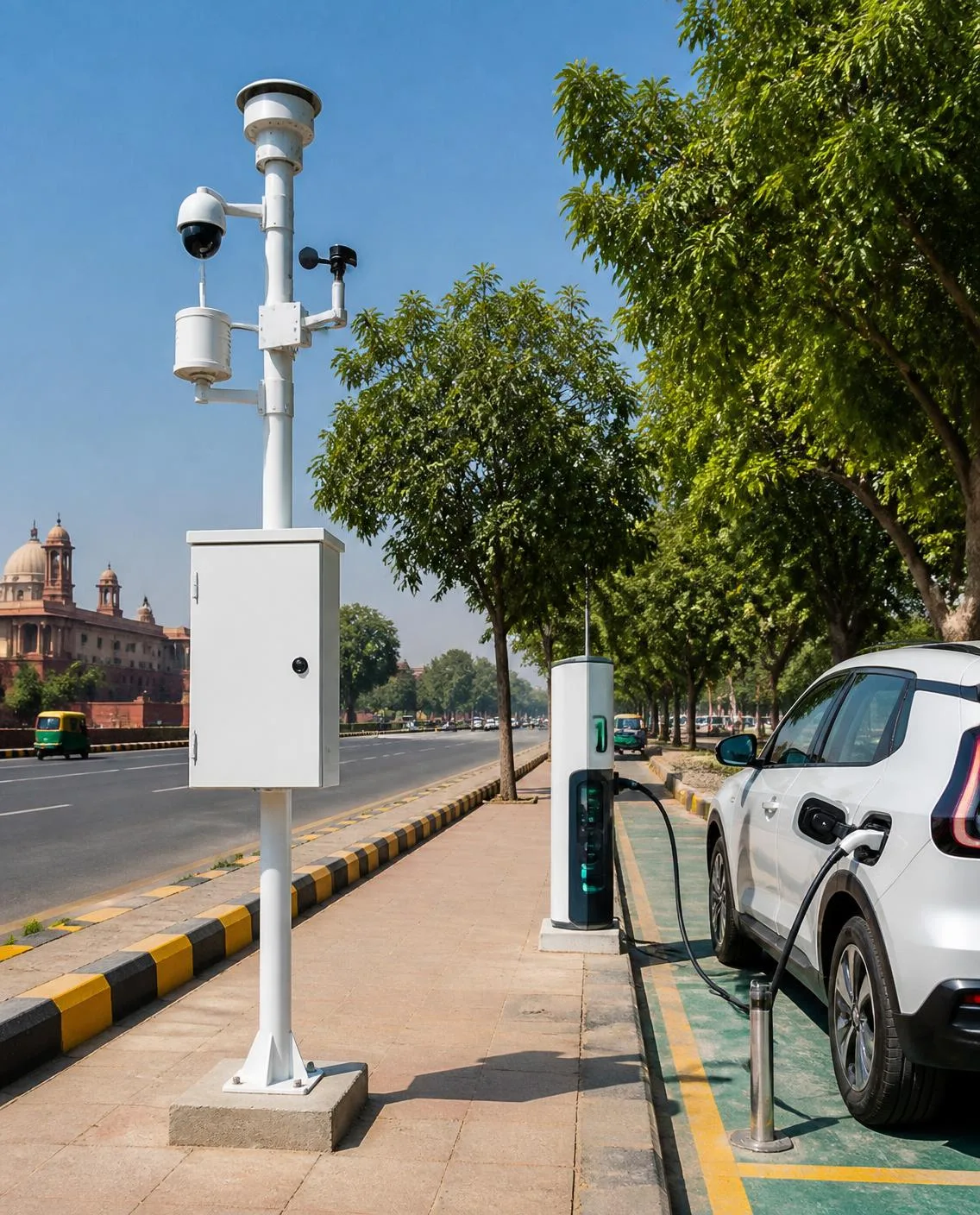
Delhi adds 13 continuous air quality monitoring stations and five public EV charging stations ahead of winter
In short: More real-time monitoring and clean transport infrastructure aim to support targeted action on Delhi’s pollution hotspots.
Why in news
On 13 October 2026, Union Environment Minister Bhupender Yadav and Delhi Chief Minister Rekha Gupta inaugurated 13 new Continuous Ambient Air Quality Monitoring Stations (CAAQMS) and launched five public EV charging stations in New Delhi. The Minister said 11 action points applied at one pollution hotspot brought its AQI down from 430 on 30 August to 92 on the day of the event.
Background
Delhi’s air quality usually worsens from October as winds slow, temperatures fall and emissions from vehicles, dust, industry and crop residue burning in the region build up. Continuous monitoring stations record pollutant levels in real time, helping agencies identify hotspots and respond quickly. The Chief Minister described the new stations as a significant step towards real-time AQI monitoring across the capital. The Minister also noted coordination among the Delhi Traffic Police, the Public Works Department and other agencies.
Key facts for Prelims
- The National Ambient Air Quality Standards (2009) cover 12 pollutants.
- The National Air Quality Index (launched 2014) uses eight pollutants and six categories; 0-50 is Good, 51-100 Satisfactory and 401-500 Severe.
- The National Clean Air Programme (NCAP) was launched in 2019 for non-attainment cities.
- The Commission for Air Quality Management in NCR and Adjoining Areas works under the CAQM Act, 2021.
- The Air (Prevention and Control of Pollution) Act, 1981 is the parent law for air quality regulation.
Mains analysis and way forward
Mains analysis
- Dense, real-time monitoring allows hotspot-level action instead of city-wide averages that can hide local peaks.
- The hotspot example shows that coordinated, multi-agency steps on dust, traffic and waste can deliver quick local gains.
- Clean mobility through EV and CNG fleets addresses a steady, year-round source rather than only seasonal peaks.
- Air pollution is regional; monitoring in Delhi needs matching action across the NCR airshed and neighbouring states.
Way forward
- Make station data openly available and link it to ward-level response plans and public alerts.
- Expand public charging along with bus electrification and last-mile options to shift daily travel.
- Use an airshed approach with neighbouring states under CAQM for consistent winter action.
Connect the dots: Links to: GS III environmental pollution, NCAP, urban governance, clean energy transition, cooperative federalism.
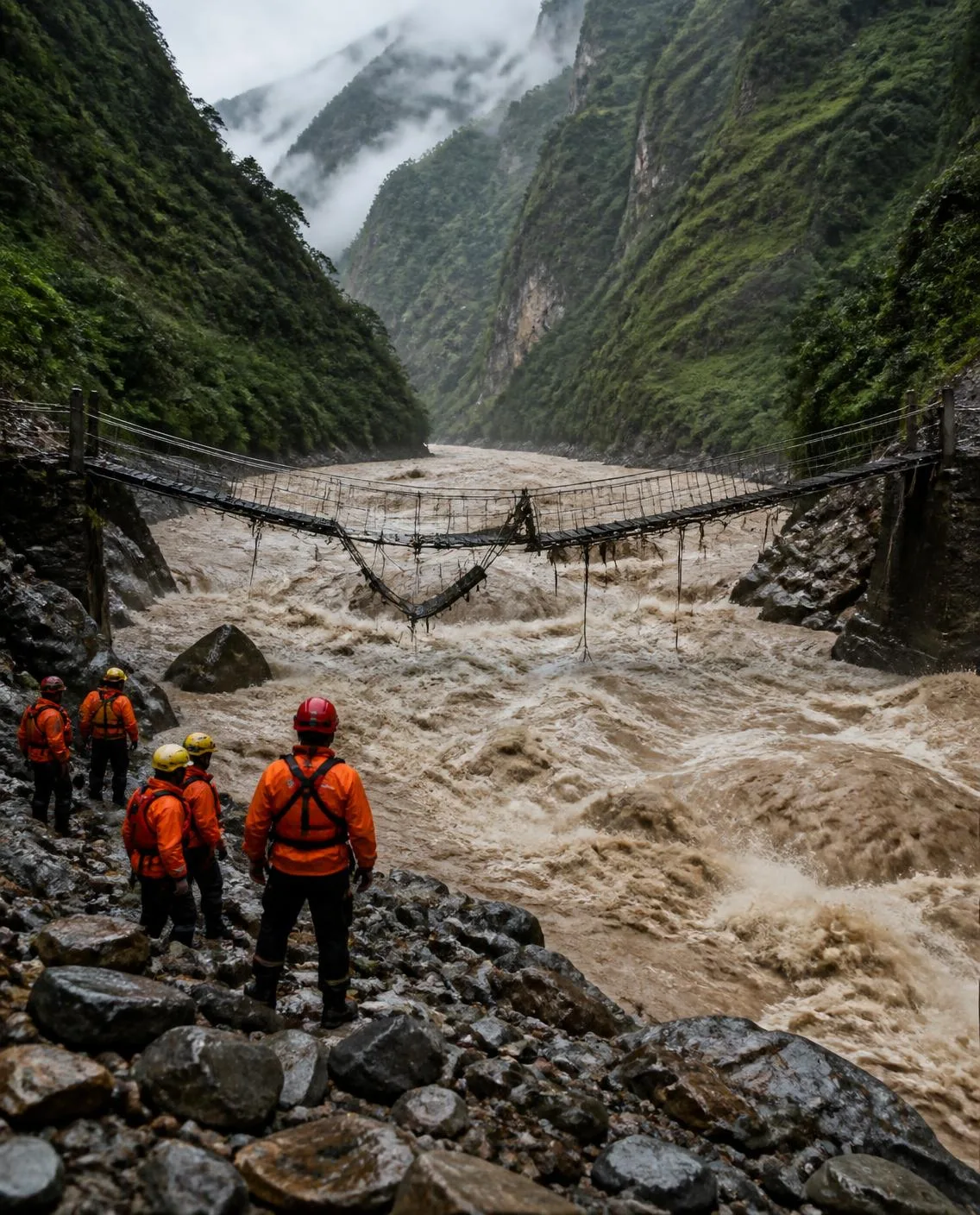
Nepal: 321 rescued after landslide blocks Budhi Gandaki; over 100 foreign trekkers stranded as trails and bridges wash away
In short: A landslide that dammed a Himalayan river shows how cascading hazards can cut off remote valleys within hours.
Why in news
Reported on 13 October 2026, more than 100 foreign trekkers were stranded in central Nepal after weekend floods swept away hiking trails and bridges. A pre-dawn landslide in Gorkha district, about 100 km west of Kathmandu, blocked the Budhi Gandaki river and caused flooding downstream; authorities rescued 321 people, including 12 foreigners, and no deaths were reported in this episode.
Background
This is a new step in the Gorkha flood event briefly noted in the 13 October edition: the scale of rescue and stranding has now become clear. The Budhi Gandaki is a tributary of the Trishuli river, part of the wider Gandaki river system. When a landslide blocks a river, water collects behind the debris and can be released suddenly, a hazard known as a landslide lake outburst. The army said rescue operations would continue even as the river level had dropped.
Key facts for Prelims
- Gorkha district lies in central Nepal, about 100 km west of Kathmandu.
- The Budhi Gandaki is a tributary of the Trishuli, part of the Gandaki (Narayani) system that enters India as the Gandak.
- Landslide dams and glacial lake outburst floods (GLOFs) are recognised Himalayan hazards; NDMA has issued guidelines on GLOF management (2020).
- The Sendai Framework for Disaster Risk Reduction 2015-2030 has four priorities for action and seven global targets.
Mains analysis and way forward
Mains analysis
- Cascading hazards: heavy rain, landslides, temporary dams and outburst floods can follow one another quickly in steep valleys.
- Remote trekking routes depend on footbridges and trails, so a single washout can isolate visitors and local communities.
- Transboundary rivers mean that upstream events in Nepal can affect flows in Indian states such as Bihar, calling for shared early warning.
- Mountain tourism needs disaster-ready planning, including registration of trekkers, communication links and evacuation routes.
Way forward
- Map and monitor landslide-prone river sections with satellite data and community observers to warn of temporary lakes.
- Strengthen India-Nepal flood forecasting and data sharing on the Gandak and Kosi basins.
- Build resilient bridges and trails and train local responders along major trekking routes.
Connect the dots: Links to: GS I physical geography of the Himalaya, GS III disaster management, Sendai Framework, India-Nepal river cooperation.
History
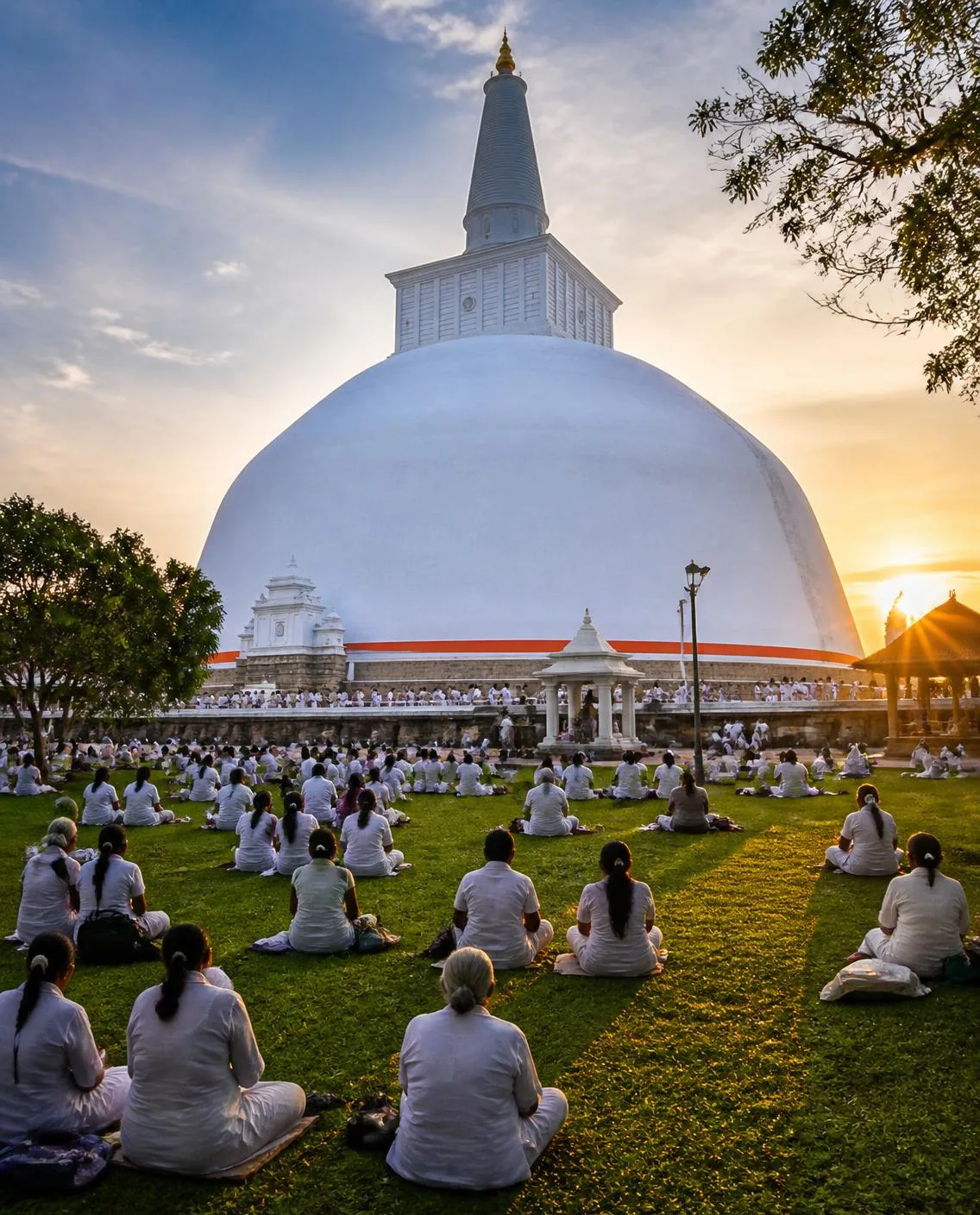
Seventy years of Dhamma Deeksha: Ambedkar’s conversion to Buddhism at Nagpur on 14 October 1956
In short: On 14 October 2026, Deekshabhoomi marks 70 years since Ambedkar and lakhs of followers embraced Buddhism as a path to equality and dignity.
Why in news
14 October 2026 marks the 70th anniversary of the day Dr B.R. Ambedkar embraced Buddhism at Deekshabhoomi, Nagpur, on 14 October 1956, along with lakhs of followers. The day is observed every year as Dhammachakra Pravartan Din, with large gatherings at Deekshabhoomi on 14 October and on Ashoka Vijayadashami.
Background
At the ceremony, Ambedkar and his wife took the Three Jewels and Five Precepts from Mahasthavir Chandramani of Kushinagar, after which Ambedkar administered the oaths, including the 22 vows, to his followers. The date coincided with Ashoka Vijayadashami, linked in tradition to Emperor Ashoka’s embrace of Buddhism. Nearly two months later, Ambedkar passed away on 6 December 1956. A large hollow stupa, designed by architect Sheo Dan Mal, now stands at the site as a memorial.
Key facts for Prelims
- Dhamma Deeksha: 14 October 1956, Deekshabhoomi, Nagpur; historical estimates put the number who joined at several lakh over two days.
- Ambedkar received initiation from Mahasthavir Chandramani of Kushinagar and gave his followers the 22 vows.
- Ambedkar died on 6 December 1956, observed as Mahaparinirvan Diwas; Chaitya Bhoomi in Mumbai is his memorial.
- Deekshabhoomi stupa, a large hollow stupa, was designed by architect Sheo Dan Mal.
- Related milestones: Mahad Satyagraha (1927) and the Yeola declaration of 13 October 1935, where Ambedkar announced he would not die a Hindu.
Mains analysis and way forward
Mains analysis
- The conversion was a collective assertion of dignity and equality, framed by Ambedkar as a rational and ethical path rather than only a change of faith.
- It links to his constitutional vision of liberty, equality and fraternity, and to Articles 15, 17 and 25 on non-discrimination, abolition of untouchability and freedom of religion.
- The 22 vows combined Buddhist ethics with social reform, rejecting caste hierarchy and ritualism.
- Deekshabhoomi shows how heritage sites can carry living memory of social movements, not only of ancient history.
Way forward
- Develop Deekshabhoomi as a heritage and learning site while keeping its original architecture and the community’s role in its upkeep.
- Use the anniversary to read Ambedkar’s own writings on social democracy and constitutional morality.
Connect the dots: Links to: GS I modern Indian history and social reform movements, Buddhism, GS II fundamental rights, GS IV thinkers (Ambedkar on constitutional morality).
Sources: Outlook Traveller: Deekshabhoomi, where Ambedkar embraced Buddhism; The Mooknayak: Ambedkar family heirs urge Nagpur administration on Deekshabhoomi before Dhamma Chakra Pravartan Din, 1 October 2025
In brief
- Personality in the news: Sister Nivedita: Sister Nivedita, born Margaret Elizabeth Noble on 28 October 1867 in Dungannon, Ireland, died in Darjeeling on 13 October 1911; 13 October 2026 marks her 115th death anniversary. A disciple of Swami Vivekananda, who gave her the name Nivedita in March 1898, she opened a girls’ school at Bagbazar, Kolkata in November 1898 and wrote works such as The Web of Indian Life and Kali the Mother.
- Opposition SIR plea awaits listing: The writ petition filed by Rahul Gandhi and ten Opposition leaders against the Election Commission over the Special Intensive Revision was not listed on 13 October 2026 because the Supreme Court registry flagged 14 defects. The plea seeks, among other things, an audit of deletions by a committee headed by a retired Supreme Court judge and no deletion without notice and hearing.
- No ruling yet on new Form 6: On 12 October 2026 the Supreme Court clarified that its May 2026 Bihar SIR judgment did not adjudicate the new Form 6 for voter registration, which did not exist then. It issued notice on a petition (Priya Mishra v. Union of India) questioning the form and alleged lack of collective decision-making in the ECI, listing it for 27 October 2026.
- SIT for lawyers’ assault complaint: On 12 October 2026 the Supreme Court directed the Delhi Police Commissioner to constitute an SIT headed by an officer of at least DCP rank to probe a complaint by lawyers assaulted while protesting at Bar Council of India premises, where no FIR had been registered since August.
- Ad hoc service and seniority: In H. Nagarajan v. State of Tamil Nadu (2026 LiveLaw (SC) 1040, reported 12 October 2026), the Supreme Court held that ad hoc or temporary service can count towards pension but not towards seniority over direct recruits, whose seniority runs from their date of appointment.
- Railway freight up 6.14% in September: Indian Railways loaded 135.5 million tonnes of freight in September 2026, up 6.14% year on year, with freight revenue up 9.3%; foodgrain loading rose 25% and coal 9%, the Ministry of Railways said on 13 October 2026. Cumulative loading for April to September 2026 was 833.7 million tonnes, up 4.1%.
- Record FPI outflows in 2026: Foreign portfolio investors have made net equity outflows of about Rs 3.08 trillion in calendar 2026 up to 12 October, nearly double the Rs 1.66 trillion of 2025, according to NSDL data reported on 13 October 2026; analysts cited US Treasury yields above 5.2%, high crude prices and a weak rupee.
- Northeast Bankers’ Conclave in Aizawl: At the Northeast Bankers’ Conclave 3.0 at Mizoram University, Aizawl, on 13 October 2026, DoNER Minister Jyotiraditya Scindia urged banks to expand services in remote areas, noting that digital transactions make up 90.2% of transactions in the Northeast against 81% nationally.
- India and Czech Republic to widen defence industrial cooperation: On 13 October 2026 Defence Minister Rajnath Singh met Karel Havlicek, Vice Prime Minister and Minister of Industry and Trade of the Czech Republic, in New Delhi; the two sides reviewed defence industrial cooperation and agreed to expand collaboration under the India-Czech Joint Defence Committee.
- Mongolia’s first oil refinery built with Indian credit: On 12 October 2026 Mongolian President Ukhnaagiin Khurelsukh thanked Prime Minister Narendra Modi for India’s support while visiting the site of Mongolia’s first oil refinery at Altanshiree Soum, Dornogobi Province; the 1.5 million tonnes per annum project is funded under a USD 1 billion Indian line of credit announced during the Prime Minister’s 2015 visit.
- Boat tragedy in the Bab el-Mandeb: The International Organization for Migration reported on 12 October 2026 that 139 people, including 15 children, died and 84 were missing after an overcrowded boat with 305 migrants capsized near Obock, Djibouti, while crossing the Bab el-Mandeb Strait towards Yemen; more than 80 Ethiopian survivors were rescued.
Prelims practice: 5 questions
Choose an option to see the answer and explanation. Your score appears when all five are answered.
Mains practice
The anti-defection law was meant to bring stability, yet resignations and delayed disqualification decisions continue to test it. Examine the role of the Speaker under the Tenth Schedule and suggest reforms.
Show the answer outline
Introduction (about 30 words)
- Tenth Schedule added by the 52nd Amendment, 1985 to curb defections; the Speaker is the deciding authority on disqualification.
The Speaker’s role
- Decides disqualification petitions under Paragraph 6; decision subject to judicial review (Kihoto Hollohan, 1992).
- Accepts resignations under Article 190(3)(b) only if voluntary and genuine.
- Example: the Madras High Court upheld acceptance of six AIADMK MLAs’ resignations but kept disqualification cases alive.
Where the law is tested
- Delays in deciding petitions; Keisham Meghachandra Singh (2020) suggested three months.
- Resignation used to avoid disqualification and recontest.
- Perception of partisanship as the Speaker remains a party member.
- Group exits framed as mergers after the 91st Amendment removed the split exception.
Reforms
- Fixed time limit for decisions, as suggested by the Supreme Court.
- An independent tribunal or decision on the advice of the Election Commission, as proposed by the Dinesh Goswami Committee (1990).
- Limit whips to confidence motions and money bills to protect legislators’ freedom of speech.
Conclusion (about 30 words)
- Stability and accountability both matter; a neutral, time-bound process would restore faith in the law while respecting legislators’ freedom of conscience.
Tip: Use the Madras High Court case to show how resignation and disqualification interact, and cite Kihoto Hollohan and Keisham Meghachandra Singh for authority.
Current Canvas is prepared by the UPSC Gurus editorial desk. Every fact is checked against official releases and reliable reporting, with sources listed under each story. Editions are compiled each month into Current Canvas Monthly, a free magazine.
About images: photographs and illustrations in Current Canvas are AI-generated for illustration only. They are not news photographs of the events described.