 New this week · Free UG Handout 02UPSC Mains Directive Words: 60 Meanings, Trends and PYQsTwo free PDFs: The Guide and the With PYQs edition.Read and download
Today’s Canvas
Gandhi Jayanti brought together several threads of public life on 2 October. Over two lakh Gram Sabhas met to plan their villages, the cleanliness fortnight closed, a Mumbai oil terminal went plastic-free and a tigress began a new chapter in Buxa. Four Indian space start-ups put hardware into orbit, Ladakh’s place names were recorded on the official map, and the G7 acted together on fuel. Durable progress rests on participation, institutions and cooperation.
About 15 minutes to read the key points; Mains analysis opens under each story.
- Centre standardises names of 28 places and features in Ladakh on the official Survey of India mapGS I
- Over 2.42 lakh Special Gram Sabhas scheduled as People’s Plan Campaign 2026-27 begins for village development plansGS II
- G7 agrees to speed up a coordinated 100 million barrel emergency oil release through the IEAGS II
- Tigress from Bihar’s Valmiki released into Bengal’s Buxa Tiger Reserve to begin tiger reintroductionGS III
- Four Indian space start-ups contribute satellites and imaging payloads to SpaceX’s Transporter-18GS III
- Swachh Bharat Diwas: Swachhata Hi Seva 2026 concludes as the Swachh Bharat Mission marks 12 yearsGS II
- Mumbai Port declares Jawahar Dweep India’s first plastic-free oil terminalGS III
- APEDA facilitates export of popped makhana from Purnea, Bihar, to GreeceGS III
- 157th Gandhi Jayanti and International Day of Non-Violence marked in India and by missions abroadGS IV
- Lal Bahadur Shastri at 122: tributes recall ‘Jai Jawan, Jai Kisan’ and the push for food securityGS I
- The Home Ministry identified 28 Ladakh places by standard names, including Gogra and Hot Spring, on the Survey of India map.
- Over 2.42 lakh Special Gram Sabhas were scheduled as the People’s Plan Campaign 2026-27 began; the G7 agreed to speed up a 100 million barrel oil release through the IEA.
- Tigress T138 from Valmiki was released in Buxa Tiger Reserve, the first step in reintroducing tigers there.
- SpaceX’s Transporter-18 carried hardware from four Indian space start-ups, including the TAPAS-1 thermal imager and the MOI-1A orbital computing satellite.
- Jawahar Dweep became India’s first plastic-free oil terminal as Swachhata Hi Seva 2026 closed on Swachh Bharat Diwas.
- APEDA backed a makhana export to Greece; India marked Gandhi’s 157th and Shastri’s 122nd birth anniversaries.
Polity and governance
Over 2.42 lakh Special Gram Sabhas scheduled as People’s Plan Campaign 2026-27 begins for village development plans
In short: Gram Sabhas met on Gandhi Jayanti to begin ‘Sabki Yojana, Sabka Vikas’, under which panchayats will prepare development plans for 2027-28.
Why in news
On 2 October 2026, the Ministry of Panchayati Raj reported that more than 2.42 lakh Special Gram Sabhas were scheduled on the GPDP and Panchayat NIRNAY portals, with meetings held across India, as the People’s Plan Campaign 2026-27 began, ‘Sabki Yojana, Sabka Vikas’. The Ministry of Panchayati Raj coordinated the exercise with 21 Union Ministries and Departments. Gram Panchayats will use the campaign to prepare their development plans for 2027-28.
Background
The People’s Plan Campaign, led by the Ministry of Panchayati Raj, has run in all States and Union Territories since 2018, with the Rashtriya Gram Swaraj Abhiyan supporting training and capacity building. Over 2.55 lakh Gram Panchayats prepare Gram Panchayat Development Plans (GPDPs) and upload them on the eGramSwaraj portal, and the Panchayat Advancement Index helps each panchayat assess its progress. This year’s Gram Sabhas discussed schemes on employment, drinking water, sanitation, food security, land records and consumer protection, and could adopt a Sankalp on priority areas. The Sixteenth Finance Commission has recommended Rs 4,35,236 crore for Rural Local Bodies for 2026-31, 84% more than the previous Commission.
Key facts for Prelims
- Article 243A: a Gram Sabha may exercise such powers and perform such functions as the State Legislature provides by law.
- Article 243G lets State laws endow panchayats with powers to prepare plans for economic development and social justice, including on matters in the Eleventh Schedule (29 subjects, added by the 73rd Amendment, 1992).
- Article 280(3)(bb): the Finance Commission recommends measures to augment a State’s Consolidated Fund to supplement the resources of panchayats.
- eGramSwaraj hosts GPDPs; the SAMARTH portal has registered over 57 lakh taxpayers and 15 lakh properties to support panchayats’ own-source revenue.
- SVAMITVA has generated 3.33 crore property cards for 2.06 lakh villages, with about Rs 1,713 crore in loans sanctioned against them.
- The campaign focuses capacity building on nine themes for localising the Sustainable Development Goals.
Mains analysis and way forward
Mains analysis
- Bottom-up planning: Special Gram Sabhas give residents a direct voice in local priorities, giving practical shape to Gram Swaraj and Part IX of the Constitution.
- Convergence: with 21 Ministries involved, employment, water, sanitation, food and land-record schemes can be planned together at the village level, reducing duplication.
- Fiscal backing: higher Finance Commission grants and own-source revenue such as property tax make plans more implementable.
- Persistent gaps: uneven attendance, especially of women and marginalised groups, limited technical capacity of panchayats and incomplete devolution of funds, functions and functionaries in many States.
Way forward
- Hold ward and Mahila Sabhas before the Gram Sabha, and publish participation data by gender and social group.
- Build planning capacity with trained resource persons and evidence from the Panchayat Advancement Index.
- States should complete devolution of funds, functions and functionaries matched to Eleventh Schedule subjects.
Connect the dots: Links to the 73rd Amendment, Part IX, the Eleventh Schedule, the Finance Commission and SDG localisation.
Sources: Odisha Bytes: 2.42 lakh Gram Sabhas mark Gandhi Jayanti with focus on citizen-centric panchayat planning, 3 Oct 2026; The Pioneer: 2.42 lakh Special Gram Sabhas held on Gandhi Jayanti, 3 Oct 2026; Webindia123 (ANI): Special Gram Sabhas on Gandhi Jayanti, 2 Oct 2026; Policy Edge: Gram Sabhas to set village priorities as People’s Plan Campaign begins, 1 Oct 2026; Constitution of India: Article 243G; Constitution of India: Article 280
Geography and borders
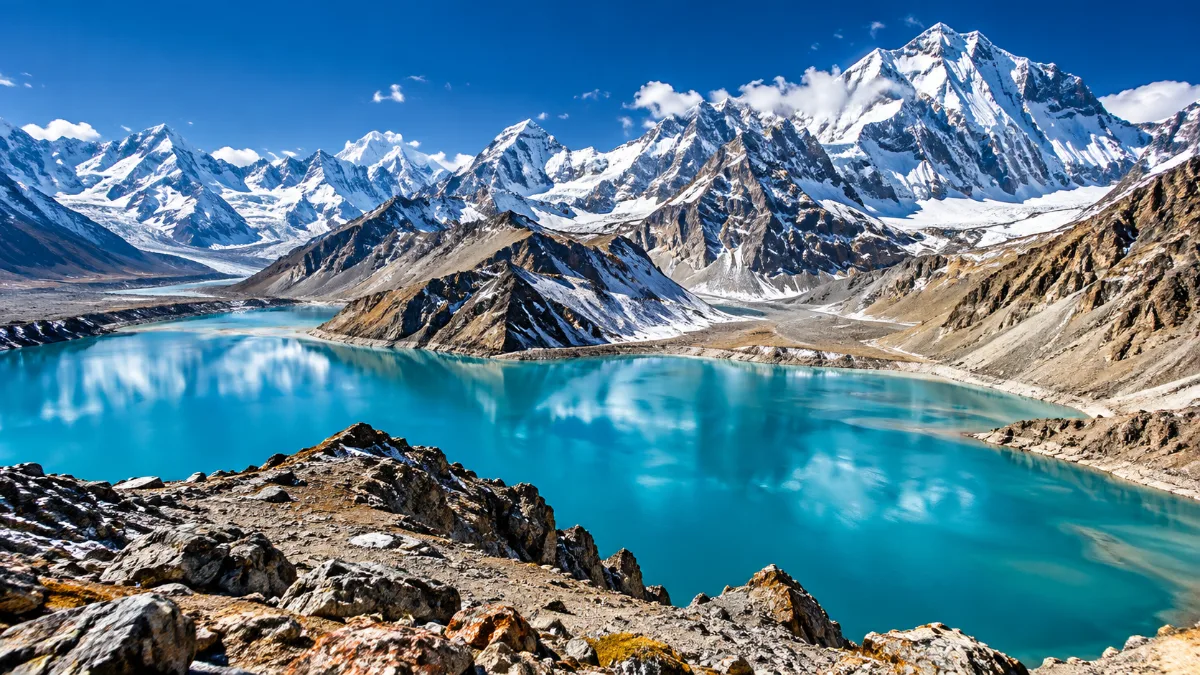
Centre standardises names of 28 places and features in Ladakh on the official Survey of India map
In short: The Home Ministry, with the Ladakh administration, identified 28 places and geographical features, including Gogra, by their standard names on the official Survey of India map.
Why in news
On 2 October 2026, the Ministry of Home Affairs, in consultation with the Union Territory of Ladakh, identified 28 places and features by standard names on the official map of the Survey of India. The Ministry said formal identification would facilitate their accurate recognition and better awareness among the public. The list includes Gogra and Hot Spring, friction areas in the eastern Ladakh standoff that began in 2020.
Background
The 28 features include peaks such as Zorawar Peak, Kanishka Peak, Atisha Giri, Martand Giri, Rinchen Zangpo, Marpa Lotsava Ri and Milarepa Kangri; the Chapchingal and Shachmirk passes; the Parpik and Skamri glaciers; Shkorga Valley, Yangpa River and Guru Rinpoche lake; and land areas such as Gogra, Dehra Compass and Kumarayana Point. Zorawar Peak recalls General Zorawar Singh’s campaigns in Ladakh, and Guru Rinpoche is another name for the Buddhist master Padmasambhava. India and China disengaged from the Gogra area in August 2021 and from Gogra-Hot Springs (Patrolling Point 15) in September 2022. China has issued lists of ‘standardised’ names for places in Arunachal Pradesh since 2017; India has rejected them, holding that assigning invented names does not alter reality.
Key facts for Prelims
- The Survey of India, established in 1767, is the national mapping agency and functions under the Department of Science and Technology.
- Ladakh is a Union Territory without a legislature, created under the Jammu and Kashmir Reorganisation Act, 2019, and administered by a Lieutenant Governor appointed under Article 239.
- The list spans peaks, mountains, passes, glaciers, a valley, a river, a lake, a water body (Hot Spring) and several land areas.
- Gogra and Hot Spring lie along the LAC in eastern Ladakh; disengagement at Patrolling Point 15 was completed in September 2022.
- Names honour Buddhist and Himalayan figures: Atisha, Rinchen Zangpo, Marpa Lotsava, Milarepa and Guru Rinpoche (Padmasambhava), besides the Kushan ruler Kanishka.
- India has no single statute on geographical names; standardisation rests on the Home Ministry’s administrative authority and the Survey of India’s mapping functions.
Mains analysis and way forward
Mains analysis
- Cartographic assertion without escalation: standard names on official maps strengthen India’s administrative record of its territory and answer competing naming exercises through routine governance rather than rhetoric.
- Civilisational memory: names linked to Kanishka, Atisha, Rinchen Zangpo and Padmasambhava highlight Ladakh’s place in trans-Himalayan Buddhist history, an asset for cultural diplomacy.
- Administrative utility: uniform names help border management, defence logistics, disaster response, tourism and record-keeping in a remote, high-altitude region.
- Diplomatic balance: the step follows disengagement at friction points, so the task is to record claims firmly while keeping military and diplomatic dialogue channels working.
Way forward
- Frame a clear national procedure for standardising geographical names, defining the roles of the Home Ministry, External Affairs, Defence and the Survey of India.
- Involve the Ladakh administration and local communities so that local usage and heritage are reflected and widely publicised.
- Carry the standard names into digital maps, school atlases, tourism material and disaster databases.
Connect the dots: Links to Himalayan landforms, India-China boundary issues, the Survey of India, Union Territories (Article 239) and cultural heritage of Ladakh.
Sources: Business Today: Centre officially standardises 28 geographic locations across Ladakh, 2 Oct 2026; Deccan Chronicle: Centre maps 28 Ladakh sites, LAC flashpoints near China border, 2 Oct 2026; Outlook: India formally names 28 Ladakh locations on Survey of India map, 2 Oct 2026; NewKerala (ANI): Centre identifies 28 places, geographical features in Ladakh, 2 Oct 2026; LawStreet Journal: Centre standardises names of 28 geographical features in Ladakh, 3 Oct 2026; Survey of India: Who we are; LiveLaw: Salient features of Jammu and Kashmir Reorganisation Bill, Aug 2019
International relations
G7 agrees to speed up a coordinated 100 million barrel emergency oil release through the IEA
In short: The France-led G7 agreed a four-month release front-loaded with diesel and a pledge against energy export curbs among its members.
Why in news
On 2 October 2026, G7 leaders, at a video conference chaired by French President Emmanuel Macron, agreed to ‘a coordinated release through the IEA of 100 million barrels’ of crude and diesel from emergency reserves, drawing on the IEA members’ existing March commitments rather than adding to them. The release is to begin immediately over four months, with a substantial diesel release within the first 20 days. According to US President Donald Trump, Washington would not impose its threatened diesel export ban.
Background
Fuel prices have climbed amid the war involving Iran and disruption around the Strait of Hormuz; US diesel reached a record USD 6.52 a gallon on 22 September 2026, according to AAA. In March 2026, the IEA’s 32 members agreed to release 400 million barrels, the largest release in its history, and the IEA said about a third had not yet reached the market; the IEA later confirmed the accelerated release stays within that commitment. Eurostat’s flash estimate put eurozone inflation at 3.8% in September (energy inflation 18.8%), its highest in three years, on energy prices. Nearly half of EU jet-fuel imports and almost a fifth of its diesel imports pass through Hormuz.
Key facts for Prelims
- G7 members: the United States, United Kingdom, Canada, France, Germany, Italy and Japan; France holds the 2026 presidency.
- The International Energy Agency (IEA) was founded in 1974 after the oil shock; members must hold emergency oil stocks equal to at least 90 days of net imports.
- India activated IEA Association country status in March 2017; it is not a full member.
- India’s strategic petroleum reserves, run by ISPRL at Visakhapatnam, Mangaluru and Padur, have a capacity of 5.33 million tonnes.
- The Strait of Hormuz links the Persian Gulf with the Gulf of Oman and the Arabian Sea.
- G7 members pledged to ‘refrain from export restrictions on energy and energy products’ among themselves.
Mains analysis and way forward
Mains analysis
- Collective energy security: coordinated stock releases signal supply and calm markets, but they cannot replace open sea lanes or lasting diplomatic settlements.
- Practical limits: crude does not become diesel instantly; refining capacity, logistics and crude quality shape the impact of roughly 830,000 barrels a day if spread evenly, though the release is front-loaded.
- Avoiding energy nationalism: the pledge against export bans shows how unilateral curbs could fragment markets and hurt allies during a crisis.
- India’s stake: as a large net importer, India gains from steadier prices but stays exposed through inflation, the rupee and fiscal pressures from fuel costs.
Way forward
- India can expand strategic reserve capacity and fill it when prices ease.
- Diversify crude suppliers and routes, and deepen engagement with the IEA on emergency coordination.
- Strengthen demand-side resilience through efficiency, electric mobility and biofuels.
Connect the dots: Links to energy security, West Asia, global groupings (G7, IEA), inflation and India’s external sector.
Sources: Kuwait Times (AFP): G7 agrees 100m barrel release, Trump drops diesel ban, 3 Oct 2026; Euronews: G7 agrees 100 million barrel emergency oil release amid US pressure over diesel, 2 Oct 2026; ThePrint: G7 to release 100 mn barrels of diesel, crude from reserves, 2 Oct 2026; WJLA (with AP): G7 nations agree to release 100M barrels of oil, including diesel, 2 Oct 2026; IEA: Oil security and emergency response; CSIS: India joins International Energy Agency as an Association Country, Apr 2017; Business Today: India’s new oil security plan, 3 Aug 2026
Environment and ecology
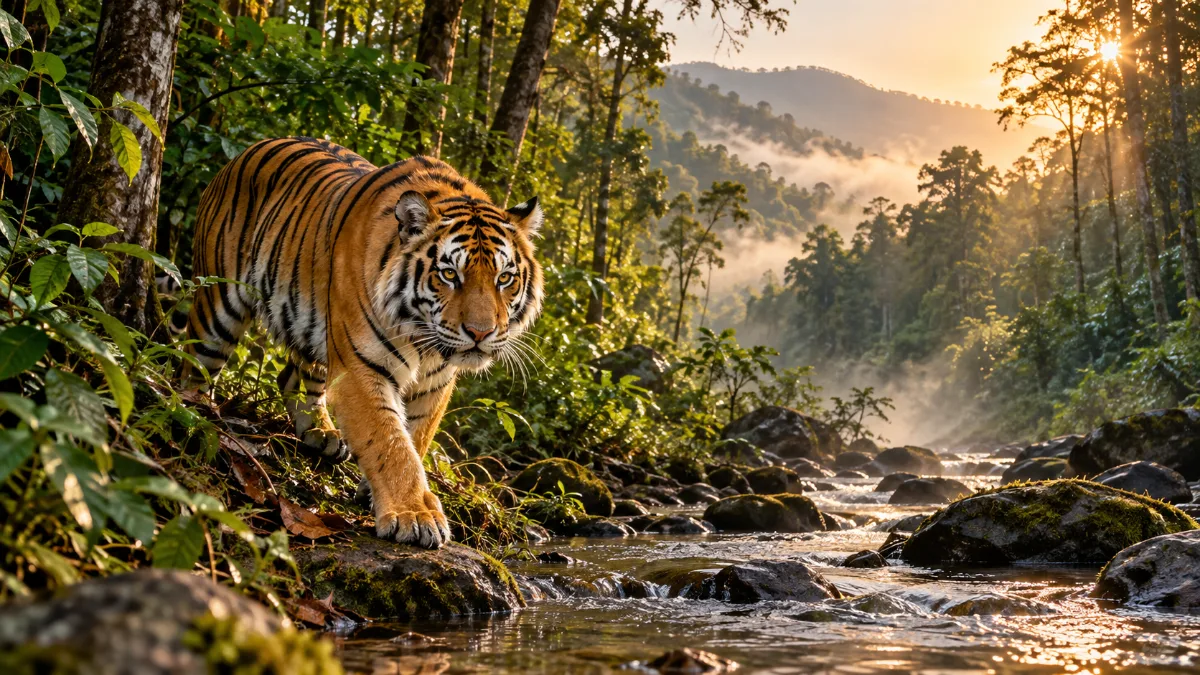
Tigress from Bihar’s Valmiki released into Bengal’s Buxa Tiger Reserve to begin tiger reintroduction
In short: Three-year-old tigress T138 was released in Buxa at the start of Wildlife Week, the first step in rebuilding a resident tiger population.
Why in news
On 2 October 2026, Union Environment Minister Bhupender Yadav released a tigress translocated from Bihar’s Valmiki Tiger Reserve into Buxa Tiger Reserve in Alipurduar district, West Bengal, with Chief Minister Suvendu Adhikari present. The three-year-old tigress, T138, was captured on 29 September and reached Buxa on 30 September. The Chief Minister announced that three more tigers would be released within two months; the Union Ministry says further introductions depend on habitat, prey, monitoring and expert advice.
Background
Buxa was declared a tiger reserve in 1983 and covers nearly 760 sq km, but had experienced a prolonged absence of a stable resident tiger population; camera traps recorded tigers passing through in 2021, 2023 and 2026, believed to come from Assam or Bhutan. The translocation is part of a five-year plan (2023-24 to 2027-28) covering tiger introduction, prey augmentation, habitat development, corridors and reducing human-wildlife conflict. T138 was released into a two-hectare enclosure with a new water body and wears a satellite collar with a VHF link. The Wildlife Institute of India led technical work. Valmiki’s tiger population rose from 8 in 2010 to 54 in the latest census.
Key facts for Prelims
- Buxa Tiger Reserve: Alipurduar district, North Bengal; declared a tiger reserve in 1983; about 760 sq km.
- Valmiki Tiger Reserve is Bihar’s only tiger reserve, in West Champaran district.
- The National Tiger Conservation Authority is a statutory body under section 38L of the Wildlife (Protection) Act, 1972, inserted by the 2006 amendment.
- Project Tiger was launched in April 1973.
- Wildlife Week is observed from 2 to 8 October.
- Soft release: animals are first held in an enclosure in the new habitat before free release, to help them acclimatise.
Mains analysis and way forward
Mains analysis
- Restoring lost populations: reintroduction can revive tiger-empty reserves, as earlier efforts in reserves such as Sariska and Panna showed, provided prey and protection are in place first.
- Landscape connectivity: Buxa’s links with forests in Assam and Bhutan make it a potential stepping stone for tiger movement across the eastern Himalayan foothills.
- Science-led monitoring: satellite collars, camera traps and field teams allow early detection of stress, conflict or dispersal.
- People and conflict: forest villages and tea-garden settlements around Buxa mean that livelihoods, compensation and community trust are as important as ecology.
Way forward
- Strengthen the prey base and anti-poaching protection before each further release.
- Plan voluntary, well-compensated relocation where core-area villages choose it, with community consent.
- Coordinate transboundary corridor management with Assam and Bhutan.
Connect the dots: Links to Project Tiger, NTCA, protected-area management, human-wildlife conflict and biodiversity corridors.
Sources: ThePrint (PTI): Tigress released in Bengal’s Buxa Tiger Reserve, plans afoot for three more, 2 Oct 2026; The Week: A tigress returns to Buxa after decades, 2 Oct 2026; NTCA: About us
Mumbai Port declares Jawahar Dweep India’s first plastic-free oil terminal
In short: On Gandhi Jayanti, the Mumbai Port Authority said its marine oil terminal had eliminated single-use plastics; oil spill response facilities were also dedicated.
Why in news
On 2 October 2026, the Mumbai Port Authority declared its Jawahar Dweep Marine Oil Terminal plastic-free, describing it as India’s first oil terminal to eliminate single-use plastics. The announcement came at a Swachhata Abhiyan 2026 programme, where Union Ports, Shipping and Waterways Minister Sarbananda Sonowal also dedicated the port’s oil spill response facilities to the nation. He said the step showed that ports can grow and stay clean at the same time.
Background
Jawahar Dweep, also called Butcher Island, has five jetties for crude oil and petroleum products and serves refineries of BPCL, HPCL, IOCL and ONGC. Liquid bulk handled at Jawahar Dweep and Pir Pau reached 37.04 million tonnes in FY 2025-26, out of Mumbai Port’s total of 75.15 million tonnes. The port authority had banned single-use plastics across its premises from September 2021 and plans to extend the drive to its docks, residential colonies and coastal areas. According to the Mumbai Port Authority, a proposed (not yet built) sixth berth for Suezmax tankers would add 22 million tonnes a year of crude-handling capacity.
Key facts for Prelims
- Plastic Waste Management Amendment Rules, 2021 (notified August 2021) banned identified single-use plastic items from 1 July 2022.
- MARPOL Annex V, an IMO instrument, has prohibited the discharge of plastics from ships into the sea since 1988.
- Jawahar Dweep (Butcher Island) lies in Mumbai Harbour and handles crude oil and petroleum products.
- Mumbai Port is one of India’s major ports under the Ministry of Ports, Shipping and Waterways.
- Oil spill response capacity covers booms, skimmers and recovery equipment to contain spills at sea.
Mains analysis and way forward
Mains analysis
- Green ports: eliminating single-use plastics at a hazardous-cargo terminal shows that environmental standards and operational safety can go together.
- Marine pollution: ports are entry points for plastic and oil into coastal waters, so port-level rules complement MARPOL and national plastic rules.
- Preparedness: dedicated oil spill response facilities reduce ecological and economic damage from accidents in busy harbours.
- Sustaining the gain: success depends on alternatives for workers and vendors, monitoring and behavioural change, not only declarations.
Way forward
- Extend plastic-free standards to all major and non-major port terminals with third-party audits.
- Pair bans with refill stations, reusable supplies and vendor support.
- Conduct regular joint oil spill drills with the Coast Guard and refineries.
Connect the dots: Links to plastic waste management, marine pollution, MARPOL, port-led development and Swachh Bharat.
Sources: The Week: Jawahar Dweep becomes India’s first plastic-free oil terminal, 2 Oct 2026; Swarajya: Mumbai Port’s Jawahar Dweep becomes India’s first plastic-free oil terminal, 3 Oct 2026; The Tribune: Single-use plastic items to be prohibited from July 1, 2022, 13 Aug 2021; IMO: Marine litter
Science and technology
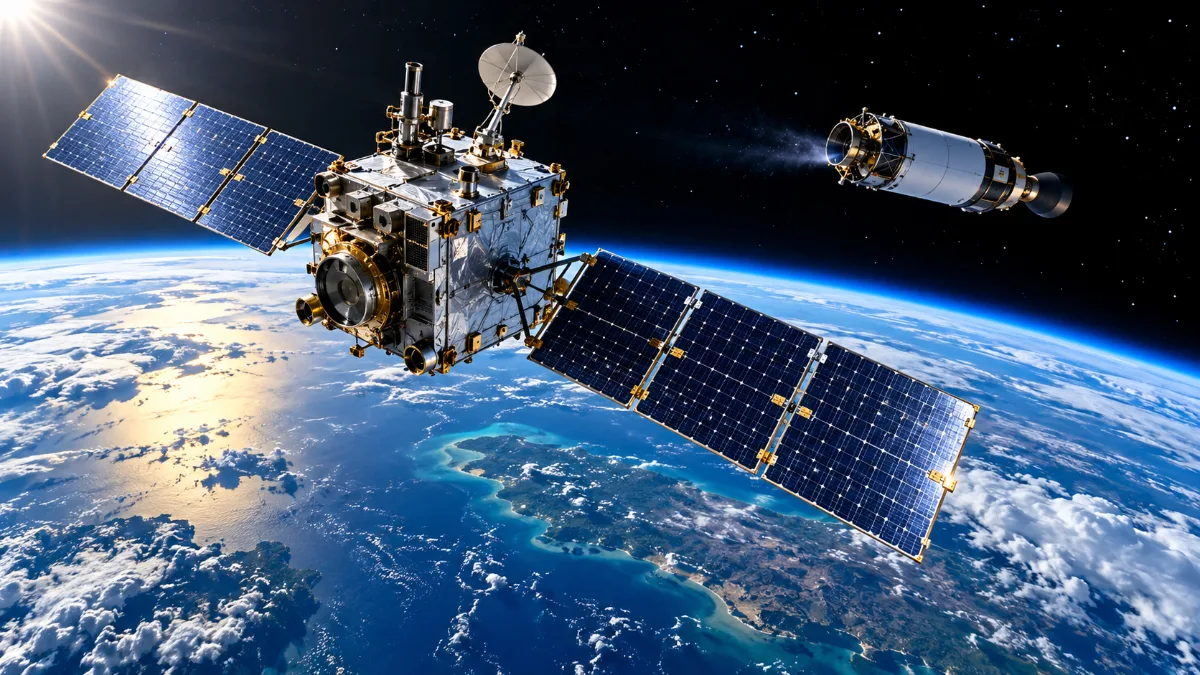
Four Indian space start-ups contribute satellites and imaging payloads to SpaceX’s Transporter-18
In short: TakeMe2Space’s AI-computing satellite MOI-1A, SatLeo Labs’ TAPAS-1 thermal payload and EON Space Labs’ MIRA imager were launched from California.
Why in news
SpaceX’s Falcon 9 Transporter-18 rideshare mission lifted off from California at 11:32 am Pacific Time on 1 October 2026 (12:02 am IST on 2 October), carrying hardware from four Indian start-ups. Two Indian platforms flew: TakeMe2Space’s MOI-1A orbital computing satellite, which hosts EON Space Labs’ MIRA multispectral imager, and Dhruva Space’s LEAP-2 hosted-payload platform, which carries SatLeo Labs’ TAPAS-1 thermal infrared payload and a star tracker from France’s Sodern. The payloads were authorised by IN-SPACe. Its chairman, Pawan Goenka, called it a big day for India’s private space sector.
Background
MOI-1A is designed to run AI models on Earth-observation data in orbit, so that only processed results need to be sent to the ground. TAPAS-1, which SatLeo Labs describes as India’s first privately developed commercial thermal imaging payload, captures land-surface temperature and is hosted on Dhruva Space’s LEAP-2 satellite. MIRA is a compact multispectral imaging payload weighing 502 grams. A successful launch and deployment is a separate milestone from each payload becoming fully operational. SatLeo plans a constellation aiming for twice-daily thermal and visible coverage.
Key facts for Prelims
- IN-SPACe was formed in June 2020 as an autonomous single-window agency under the Department of Space to promote, authorise and supervise non-government space activities.
- Transporter missions are SpaceX rideshare flights carrying many small satellites and payloads to orbit together.
- Thermal infrared sensors measure heat emitted from Earth’s surface, useful for urban heat islands, crop stress, fires and industrial monitoring.
- Hosted payload: an instrument flown on another operator’s satellite bus (here Dhruva Space’s LEAP-2) rather than as a free-flying satellite.
- Edge computing in orbit processes data on board, reducing the volume of data to be downlinked.
Mains analysis and way forward
Mains analysis
- Private-sector growth: authorisation by IN-SPACe and access to global rideshare launches let start-ups move quickly from design to orbit.
- Applications for governance: thermal data can support heat-action plans, irrigation and drought management, and forest-fire response.
- Strategic autonomy: indigenous sensors and onboard AI reduce dependence on foreign imagery, though reliance on foreign launches remains for now.
- Regulation and security: data policy, licensing and space-debris norms must keep pace with the number of private satellites.
Way forward
- Expand domestic small-launch capacity and rideshare options so that start-ups have Indian launch choices.
- Use government procurement as an anchor customer for indigenous Earth-observation data.
- Provide clear, time-bound rules on data sharing, security clearance and end-of-life disposal.
Connect the dots: Links to space technology, Indian Space Policy and the role of IN-SPACe, remote sensing applications and start-up innovation.
Sources: Inc42: TakeMe2Space, SatLeo, EON Space Labs launch payloads aboard SpaceX Falcon 9, 2 Oct 2026; OfficeChai: Three Indian space start-ups ride SpaceX’s Transporter-18, 2 Oct 2026; Wikipedia: Indian National Space Promotion and Authorisation Centre
Social justice and health
Swachh Bharat Diwas: Swachhata Hi Seva 2026 concludes as the Swachh Bharat Mission marks 12 years
In short: The fortnight-long campaign ended on 2 October; the rural sanitation agenda has moved from building toilets to sustaining ODF Plus and managing waste.
Why in news
Swachhata Hi Seva 2026, run from 17 September to 2 October 2026 by the Ministry of Housing and Urban Affairs and the Department of Drinking Water and Sanitation with other ministries, concluded on Swachh Bharat Diwas, 2 October. Its theme was ‘Swachhata Mein Sahbhag, Swachh Bharat, Viksit Bharat’, and it marked 12 years of the Swachh Bharat Mission. Data shared on 2 October show 12.22 crore household toilets built under SBM (Grameen).
Background
The Swachh Bharat Mission was launched on 2 October 2014, and the government declared rural India Open Defecation Free in 2019. The mission’s rural focus has since shifted to ODF Plus: sustaining ODF status and arranging solid and liquid waste management. According to data shared at the Special Gram Sabhas, over 5.25 lakh villages (89.6%) have been declared ODF Plus Model, the highest of the three ODF Plus categories (Aspiring, Rising and Model); about 5.69 lakh villages were ODF Plus in all as of 17 September 2026. Under the Jal Jeevan Mission, rural tap connections rose from 3.23 crore households (17%) to over 16 crore (over 80%). A nationwide shramdaan, ‘Ek Din, Ek Ghanta, Ek Saath’, was held on 1 October as part of the campaign.
Key facts for Prelims
- SBM was launched on 2 October 2014; SBM (Grameen) is run by the Department of Drinking Water and Sanitation (Ministry of Jal Shakti) and SBM (Urban) by MoHUA.
- ODF Plus: a village sustains ODF status and has arrangements for solid and liquid waste management; categories are Aspiring, Rising and Model.
- Swachhata Hi Seva is held each year in the run-up to Swachh Bharat Diwas on 2 October.
- SHS 2026 theme: ‘Swachhata Mein Sahbhag, Swachh Bharat, Viksit Bharat’.
- Jal Jeevan Mission: rural tap connections now exceed 16 crore households (over 80%).
Mains analysis and way forward
Mains analysis
- Public health link: safe sanitation and piped water reduce faecal-oral disease and support nutrition outcomes, especially for children.
- Sustainability: the harder task now is preventing slippage, maintaining toilets and changing behaviour, which depends on continued community engagement.
- Waste frontier: plastic, greywater and faecal sludge management need panchayat capacity, finance and viewing waste as a circular-economy resource.
- Dignity of sanitation workers: Safai Mitras’ safety, equipment and social security are central to a humane cleanliness mission.
Way forward
- Use Finance Commission tied grants for operation and maintenance of sanitation and water assets.
- Link women’s self-help groups and local enterprises to waste collection, recycling and composting.
- Track ODF Plus status through independent verification and social audits by Gram Sabhas.
Connect the dots: Links to public health, Jal Jeevan Mission, local governance (Eleventh Schedule items on sanitation and drinking water) and Gandhian ideas of cleanliness.
Sources: The Pioneer: 2.42 lakh Special Gram Sabhas held on Gandhi Jayanti, 3 Oct 2026; NewKerala: Swachhata Hi Seva 2026 concludes at All India Institute of Ayurveda, 4 Oct 2026; Odisha Bytes: 2.42 lakh Gram Sabhas mark Gandhi Jayanti, 3 Oct 2026
Economy and agriculture
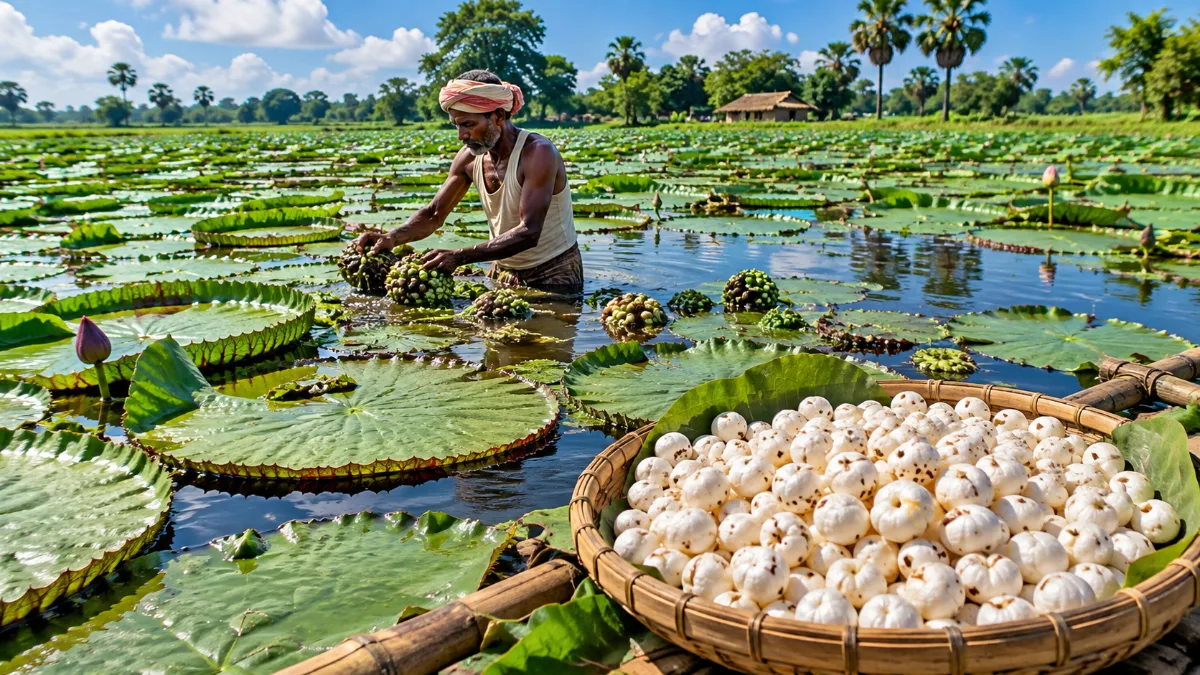
APEDA facilitates export of popped makhana from Purnea, Bihar, to Greece
In short: A 1-tonne consignment of phool makhana was flagged off via Mundra to Piraeus, part of a push to take Bihar’s makhana into European markets.
Why in news
On 2 October 2026, the Ministry of Commerce and Industry said APEDA had facilitated the flag-off of 1 metric tonne of popped (phool) makhana from Purnea, Bihar, for export to Greece. The consignment, sourced by Indo Global Export, Belouri, Purnea, moves from Mundra Port to Piraeus Port. The Ministry said the export fetched a higher price than the prevailing domestic market price.
Background
Bihar produces about 80-85% of India’s makhana, grown over more than 35,000 hectares in 10 districts. According to Bihar Agriculture Minister Vijay Kumar Sinha, India exported over 7,000 tonnes of makhana and value-added makhana products worth USD 22 million in FY 2025-26 to more than 20 destinations. The consignment was exported through S. S Foods Exports Pvt. Ltd., New Delhi. Bihar Agricultural University, Sabour, and the ICAR-National Research Centre for Makhana, Darbhanga, provide technical support. Bihar’s Agriculture Minister Vijay Kumar Sinha called the export an important milestone for the sector.
Key facts for Prelims
- Makhana (fox nut) is the seed of Euryale ferox, an aquatic plant of the water-lily family grown in ponds and wetlands.
- ‘Mithila Makhana’ received a Geographical Indication tag in August 2022.
- APEDA was established under the APEDA Act passed by Parliament in December 1985, which came into effect on 13 February 1986.
- ICAR-National Research Centre for Makhana is located at Darbhanga, Bihar.
- The Union Budget 2025-26 announced a Makhana Board for Bihar.
- Mundra port is in Kutch, Gujarat; Piraeus is Greece’s main port near Athens.
Mains analysis and way forward
Mains analysis
- Value addition: exporting popped and processed makhana captures more value than selling raw seed, raising returns for growers and processors.
- Livelihoods and ecology: makhana supports small farmers and fishing communities in north Bihar’s wetlands, linking income with water-body conservation.
- Market access: Europe offers premium demand, but exporters must meet strict food-safety, residue and labelling standards.
- Constraints: labour-intensive harvesting, limited mechanisation, fragmented supply and distance from ports raise costs.
Way forward
- Promote farmer producer organisations, mechanised harvesting and modern popping units near production clusters.
- Use the GI tag and testing infrastructure to build a premium, traceable Mithila brand abroad.
- Improve logistics links from north Bihar to ports and air cargo hubs.
Connect the dots: Links to agricultural exports, GI tags, food processing, wetland livelihoods and doubling farm incomes.
Sources: NewKerala (ANI): Bihar’s makhana exports expand as APEDA facilitates 1 MT shipment to Greece, 2 Oct 2026; BOOM: Mithila Makhana gets GI tag, 22 Aug 2022; Down To Earth: Budget 2025-26 Makhana Board; APEDA: About APEDA
Society, culture and ethics
157th Gandhi Jayanti and International Day of Non-Violence marked in India and by missions abroad
In short: Tributes recalled truth, non-violence, Antyodaya and service; the day is observed worldwide under a 2007 UN General Assembly resolution.
Why in news
On 2 October 2026, India marked the 157th birth anniversary of Mahatma Gandhi. Prime Minister Narendra Modi said Bapu’s ‘timeless message’ would keep guiding the country ‘towards a better society and a Viksit Bharat’. Indian missions in Australia, Japan, New Zealand, Cambodia and the UAE held tributes, which also marked the International Day of Non-Violence.
Background
Gandhi was born on 2 October 1869 at Porbandar. The UN General Assembly established the International Day of Non-Violence through resolution A/RES/61/271 of 15 June 2007. In Tokyo, Ambassador Nagma Mallick spoke of ‘Gandhi’s talisman’ and principles such as Antyodaya, walking, cleanliness and service; in the UAE, students performed ‘Vaishnav Jan To’ in Arabic and Hindi. Norway’s Ambassador to India, May-Elin Stener, wrote after visiting Sabarmati Ashram that Norway also values truth, non-violence and peace.
Key facts for Prelims
- International Day of Non-Violence: UNGA resolution A/RES/61/271, adopted on 15 June 2007, observed on 2 October.
- Gandhi’s talisman asks the decision-maker to recall the face of the poorest and most helpless person they have seen and ask whether the step contemplated will be of any use to that person.
- ‘Vaishnav Jan To’, Gandhi’s favourite hymn, was composed by the 15th-century bhakti poet Narsinh Mehta.
- Champaran (1917) was Gandhi’s first satyagraha in India.
- The Dandi March began from Sabarmati Ashram, Ahmedabad, on 12 March 1930.
Mains analysis and way forward
Mains analysis
- Means and ends: Gandhi held that good ends cannot be reached through bad means, a guide for public servants under pressure to cut corners.
- The talisman as a decision test: centring the last person aligns administration with Antyodaya and the constitutional promise of justice and dignity.
- Non-violence as a civic virtue: it includes restraint in speech, tolerance of dissent and dialogue, relevant to polarised public and online spaces.
- Soft power: global observances by missions and the diaspora present India as a voice for peace and dialogue.
Way forward
- Embed the talisman in policy appraisal, for example through distributional impact checks in scheme design.
- Use Gandhian case studies on truth, service and simplicity in civil service training.
- Promote peace education and conflict-resolution skills in schools and universities.
Connect the dots: Links to GS IV (moral thinkers and philosophers), GS I (freedom struggle) and GS II (diaspora and soft power).
Sources: NewKerala (ANI): Indian missions worldwide mark Gandhi Jayanti, 2 Oct 2026; DD India: UAE marks Gandhi Jayanti with tributes to the Mahatma, 2 Oct 2026; UNI: PM pays tribute to Mahatma Gandhi, 2 Oct 2026; Mani Bhavan: Gandhi biography; mkgandhi.org: The Gandhi Talisman; mkgandhi.org: Vaishnav Jan
Lal Bahadur Shastri at 122: tributes recall ‘Jai Jawan, Jai Kisan’ and the push for food security
In short: The President and Prime Minister paid homage at Vijay Ghat; Shastri’s 19-month tenure shaped food, dairy and security policy.
Why in news
On 2 October 2026, President Droupadi Murmu and Prime Minister Narendra Modi paid tribute to Lal Bahadur Shastri at Vijay Ghat on his 122nd birth anniversary, with the Prime Minister recalling his ‘simplicity and dedication’. The Lal Bahadur Shastri National Memorial Trust held a Bhajan Sandhya at the Shastri Memorial in New Delhi, where a book titled ‘Jai Jawan Jai Kisan’ by retired IAS officer Sanjeev Chopra was launched.
Background
Shastri was born on 2 October 1904 at Mughalsarai near Varanasi and received the title ‘Shastri’ from Kashi Vidya Peeth. He took part in the Non-Cooperation, Civil Disobedience and Quit India movements. In 1956 he resigned as Railway Minister after a major rail accident, accepting moral responsibility. He became Prime Minister on 9 June 1964, led India through the 1965 war, signed the Tashkent Declaration with Pakistan’s President Ayub Khan on 10 January 1966 and died in Tashkent on 11 January 1966.
Key facts for Prelims
- The Food Corporation of India was set up in 1965 under the Food Corporations Act, 1964.
- The National Dairy Development Board was established in 1965, drawing on the Amul cooperative model.
- ‘Jai Jawan, Jai Kisan’ linked soldiers and farmers during the 1965 war and acute food shortages.
- The Tashkent Declaration was signed on 10 January 1966 in Tashkent, then in the Soviet Union.
- Shastri was awarded the Bharat Ratna posthumously in 1966.
Mains analysis and way forward
Mains analysis
- Ethical leadership: his 1956 resignation remains a reference point for ministerial responsibility and probity in public life.
- Food security institutions: FCI and NDDB, both set up in 1965, helped lay the institutional foundations for procurement, buffer stocks and the later Green and White Revolutions, which many others also shaped.
- Crisis leadership: he steered the country through war and shortages while pursuing a negotiated settlement at Tashkent.
- Policy lesson: pairing national security with farm self-reliance remains relevant in a period of supply shocks.
Way forward
- Use Shastri’s example in ethics training on accountability and simplicity in office.
- Revisit the ‘Jai Kisan’ idea through climate-resilient farming and stable procurement.
- Preserve archives and memorials as public learning resources on post-independence statecraft.
Connect the dots: Links to post-independence consolidation, the 1965 war, food security institutions and ethics of public office.
Sources: Dynamite News: Lal Bahadur Shastri Jayanti 2026, PM Modi, Murmu pay tribute, 2 Oct 2026; UNI: PM pays tribute to Lal Bahadur Shastri, 2 Oct 2026; Indian PSU: Shastri’s 122nd birth anniversary celebrated with Bhajan Sandhya, 2 Oct 2026; Wikipedia (Simple): Lal Bahadur Shastri
In brief
- Personality in the news: Lovlina Borgohain: On 2 October 2026, her 29th birthday, Lovlina Borgohain won her first Asian Games gold, beating China’s Bao Ziyi 5-0 in the women’s 75 kg final at Aichi-Nagoya and upgrading her Hangzhou silver. The boxer from Assam is also a Tokyo Olympics bronze medallist.
- Golden day at the Asian Games: On 2 October 2026, President Droupadi Murmu congratulated the women’s hockey team, Sujeet, Ankush and Parveen on their gold medals at the Aichi-Nagoya Asian Games. By the end of 2 October, India’s tally stood at 76 medals (16 gold, 25 silver, 35 bronze), including a historic gold in women’s recurve team archery.
- VB-G RAM G: first three months: Data shared on 2 October 2026 show the Viksit Bharat Guarantee for Rozgar and Ajeevika Mission (Gramin), in force since 1 July with 125 days of guaranteed wage work a year for eligible rural households, has generated over 31.69 crore person-days for more than 2.81 crore workers. An interim Rs 93,841 crore has been allocated to States and UTs for 2026-27.
- Food security portability: One Nation One Ration Card records approximately 3.27 crore portability transactions a month, and PM Garib Kalyan Anna Yojana, extended until 2028, provides free foodgrains to up to 81.35 crore beneficiaries, according to data shared on 2 October 2026.
- National Consumer Helpline: Available in 17 languages, the helpline received 3,42,371 calls in August 2026 against 78,477 in August 2019 and has facilitated refunds of over Rs 105 crore since April 2025 (data shared on 2 October 2026).
- Land records digitised: Under the Digital India Land Records Modernisation Programme, 99.90% of Records of Rights and 97.4% of cadastral maps are digitised; 31 States and UTs offer online access and 24 allow download of digitally signed records (data shared on 2 October 2026).
- Jal Sanchay Jan Bhagidari: Over 1.55 crore artificial recharge and storage structures have been built, and an impact study estimated 2.43 billion cubic metres of groundwater recharge in the first phase (data shared on 2 October 2026).
- RoDTEP extended to December 2026: The Commerce Ministry said on 2 October 2026 that the Remission of Duties and Taxes on Exported Products (RoDTEP) scheme is extended until 31 December 2026 at existing rates and value caps, covering DTA units, Advance Authorisation holders, SEZ units and EOUs (notification of 30 September).
- Goyal at G20 Trade Ministers’ Meeting: At the G20 Trade Ministers’ Meeting in Milwaukee, Commerce Minister Piyush Goyal called for WTO-compliant solutions to global trade distortions and discussed structural excess capacity, the most-favoured-nation principle and forced labour in supply chains, PIB said on 2 October 2026.
- RELIEF support for exporters extended: The Commerce Ministry extended the RELIEF export-support intervention amid West Asian shipping disruption; its Component II provides 95% export-risk cover through eligible ECGC policies and shields exporters from premium increases beyond pre-disruption levels.
Prelims practice: 5 questions
Choose an option to see the answer and explanation. Your score appears when all five are answered.
Mains practice
Gram Sabhas are envisaged as the foundation of participatory democracy, yet their role in local planning remains uneven across States. In the light of the People’s Plan Campaign 2026-27, examine the constraints on Gram Sabha-led planning and suggest measures to strengthen it.
Show the answer outline
Introduction (about 30 words)
- On 2 October 2026, the Ministry reported over 2.42 lakh Special Gram Sabhas scheduled as the People’s Plan Campaign 2026-27 began to prepare village plans for 2027-28, reaffirming the Gram Sabha’s place in Part IX.
Constitutional and policy basis
- Article 243A (powers of Gram Sabha by State law); Article 243G with the Eleventh Schedule (29 subjects).
- GPDPs on eGramSwaraj since the People’s Plan Campaign, led by the Ministry of Panchayati Raj, began in 2018, with RGSA supporting training and capacity building; Panchayat Advancement Index for self-assessment.
- Sixteenth Finance Commission recommendation (not yet transferred): Rs 4,35,236 crore for Rural Local Bodies, 2026-31.
- Article 243G: State legislatures may endow panchayats with powers; devolution of the 29 subjects is not automatic.
Constraints
- Uneven devolution of funds, functions and functionaries across States.
- Low and unequal participation, especially of women, Scheduled Castes and Tribes and migrants.
- Weak technical capacity, scheme-driven plans and limited own-source revenue.
- Plans often not linked to block and district plans or budgets.
Measures
- Ward and Mahila Sabhas before the Gram Sabha; publish attendance by gender and social group.
- Convergence of 21 Ministries’ schemes in one village plan; use of SAMARTH and SVAMITVA data to support property-tax collection (property records alone do not create a tax liability); link Gram Sabha priorities to approved GPDPs, budgets and outcomes.
- Trained resource persons, SDG-themed planning and social audits of outcomes.
- Time-bound devolution roadmaps by States, monitored through the Panchayat Advancement Index.
Conclusion (about 30 words)
- When Gram Sabhas plan with real funds and broad participation, Gandhi’s Gram Swaraj becomes a working system of accountable, bottom-up development rather than an annual ritual.
Tip: Cite the 2.42 lakh Special Gram Sabhas, the 21-Ministry convergence and the Sixteenth Finance Commission figure as current evidence in any answer on local governance or decentralised planning.
Current Canvas is prepared by the UPSC Gurus editorial desk. Every fact is checked against official releases and reliable reporting, with sources listed under each story. Editions are compiled each month into Current Canvas Monthly, a free magazine.
About images: photographs and illustrations in Current Canvas are AI-generated for illustration only. They are not news photographs of the events described.
Your first Mentor’s Desk call is free
One free conversation per aspirant about where you are in your preparation, with an honest suggestion of the right next step.
Know more and bookHave a question? Get in touch
For questions about a programme, its fees, batch dates, payment or access. Message us on WhatsApp and our team will reply. Asking a question is not a booking, and you can ask as often as you need.
Get in touch on WhatsApp