 New this week · Free UG Handout 02UPSC Mains Directive Words: 60 Meanings, Trends and PYQsTwo free PDFs: The Guide and the With PYQs edition.Read and download
Today’s Canvas
Today’s edition is about resilience: how economies, institutions and citizens prepare for shocks they cannot predict. The Finance Minister calls uncertainty a standing condition and points to private research as a weak link. A Bhopal exhibition explains the new criminal laws, a Hyderabad conference turns to children’s safety online, and Latvia’s voters back a firm security course. Quantum keys sent through open air show what patient research can deliver.
About 15 minutes to read the key points; Mains analysis opens under each story.
- Amit Shah opens criminal-laws exhibition in Bhopal; expects cases to be settled within three years once the new laws are fully implementedGS II
- Kautilya Economic Conclave opens on “Resilience in an Age of Flux”; FM calls uncertainty a standing conditionGS III
- India spends 0.83% of GDP on R&D against 2.7% in the OECD; FM urges private sector to lead researchGS III
- India demonstrates its first 5.56 km free-space quantum key distribution link in GandhinagarGS III
- United List leads Latvia’s election with a record 41 of 100 Saeima seats; coalition talks aheadGS II
- Harivansh leads Indian parliamentary delegation to 153rd IPU Assembly in TanzaniaGS II
- Child safety integral to nation-building: Law MoS Meghwal at NALSA regional conference on online exploitationGS II
- Gau Palak Sammelan in Bhopal: Centre building a full cattle-rearing ecosystem, says Cooperation MinisterGS III
- INS Sahyadri and INS Kulish conclude ASEAN-India Maritime Exercise 2026 in the PhilippinesGS III
- Five Indian seafarers rescued after Kuwait-flagged tanker is struck in the Strait of HormuzGS I
- The 5th Kautilya Economic Conclave opened on “Resilience in an Age of Flux”; the FM said uncertainty is now a standing condition.
- India spends 0.83% of GDP on R&D, against 2.7% in the OECD, and the private sector funds only 36% of it.
- QNu Labs, BISAG-N and IIT Gandhinagar demonstrated India’s first 5.56 km free-space quantum key distribution link.
- Amit Shah said he expects cases to move from FIR to the Supreme Court within three years once the new criminal laws are fully implemented.
- Latvia’s United List won a record 41 of 100 seats, keeping the country on a pro-Ukraine, high-defence course.
- Five Indian seafarers were rescued after a tanker was struck in the Strait of Hormuz.
Polity and governance
Amit Shah opens criminal-laws exhibition in Bhopal; expects cases to be settled within three years once the new laws are fully implemented
In short: Opening a 14-zone exhibition on the new criminal laws, the Home Minister said cases could move from FIR to Supreme Court within three years.
Why in news
On 3 October 2026, Union Home and Cooperation Minister Amit Shah inaugurated a State-level Exhibition on New Criminal Laws at BHEL Dussehra Maidan, Bhopal. He said that once the Bharatiya Nyaya Sanhita is fully implemented, India’s criminal justice system will be the most modern in the world and a case could be disposed of within three years, from FIR to the Supreme Court.
Background
The Bharatiya Nyaya Sanhita (BNS), the Bharatiya Nagarik Suraksha Sanhita (BNSS) and the Bharatiya Sakshya Adhiniyam (BSA), all of 2023, came into force on 1 July 2024 (except BNS Section 106(2) and the matching BNSS schedule entry, which were kept in abeyance), replacing the Indian Penal Code, the Code of Criminal Procedure and the Indian Evidence Act. The five-day Bhopal exhibition walks visitors through the system in 14 zones: Dial-112 and control rooms, crime-scene investigation with a 3D model, police stations, medical evidence, forensic laboratories, prosecution, district courts, e-Prisons, a model of the Madhya Pradesh High Court courtroom in Jabalpur, cyber awareness and social initiatives such as Women Help Desks. Shah described the guiding principle of the laws as “justice, not punishment” and cited 31 December 2029 as the government’s target for a drug-free Madhya Pradesh.
Key facts for Prelims
- BNS replaced the IPC (1860); BNSS replaced the CrPC (1973); BSA replaced the Indian Evidence Act (1872). All three came into force on 1 July 2024, except BNS Section 106(2).
- BNSS Section 176(3): forensic examination at the crime scene is mandatory for offences punishable with seven years’ imprisonment or more, from dates notified by each State within five years.
- Zero FIR allows a complaint to be registered at any police station, regardless of where the offence occurred.
- Bhopal exhibition (3 October 2026): 14 zones, five days, at BHEL Dussehra Maidan.
- Police and public order are State subjects (List II), while criminal law and criminal procedure are in the Concurrent List.
Mains analysis and way forward
Mains analysis
- Speed as a right: timely trial is part of the right to life and personal liberty under Article 21; a three-year horizon from FIR to final appeal would be a major shift for undertrials and victims alike.
- Technology and forensics: mandatory forensics for serious offences, electronic records and digital summons can reduce delay, but they depend on laboratory capacity, trained staff and reliable connectivity.
- Public awareness: exhibitions of this kind translate statutes into a citizen-facing process, which matters because rights such as Zero FIR work only when people know them.
- Capacity constraints: judicial vacancies, prosecution quality and pendency in courts are outside police reform and will decide whether the time targets are met.
Way forward
- Fund forensic laboratories, mobile forensic units and training in step with legal mandates.
- Fill judicial and prosecution vacancies and use case-management data to monitor timelines stage by stage.
- Publish State-wise dashboards on charge-sheet times, trial duration and conviction rates under the new laws.
Connect the dots: Links to GS II: functioning of the judiciary, police reforms, Centre-State relations in criminal justice; Article 21.
Sources: News On AIR: Govt developing entire ecosystem based on cattle farming; Amit Shah on BNS, 3 October 2026; Free Press Journal: From FIR to final justice, Bhopal’s 14-zone exhibition explains India’s new criminal laws, 3 October 2026; News Karnataka: Amit Shah says new laws can deliver justice in 3 years, 4 October 2026
Economy
Kautilya Economic Conclave opens on “Resilience in an Age of Flux”; FM calls uncertainty a standing condition
In short: At the fifth Kautilya Economic Conclave, the Finance Minister said resilience must be built continuously, led by private investment, skills and secure supply chains.
Why in news
The 5th Kautilya Economic Conclave opened in New Delhi on 3 October 2026 (it runs to 5 October) on the theme “Resilience in an Age of Flux”. Vice-President C. P. Radhakrishnan gave the inaugural address, and Finance Minister Nirmala Sitharaman said that “uncertainty is now a standing condition of the global economy, and policy must be designed around it”.
Background
The conclave, organised by the Institute of Economic Growth in partnership with the Ministry of Finance, brings together more than 180 policymakers, economists and experts, including over 80 international participants from about 30 countries. The fourth edition in October 2025 was held on the theme “Seeking Prosperity in Turbulent Times”. The Vice-President argued that economic resilience cannot be separated from social resilience and that no citizen, enterprise or region should be left behind. Principal Secretary to the Prime Minister P. K. Mishra said geography has become an economic variable, since a disruption on one shipping route can move crude prices far away. RBI Governor Sanjay Malhotra said price and financial stability cannot be separated from geo-economic fragmentation, trade restrictions and supply shocks.
Key facts for Prelims
- 5th Kautilya Economic Conclave: New Delhi, 3 to 5 October 2026; theme “Resilience in an Age of Flux”; inaugural address by Vice-President C. P. Radhakrishnan.
- The conclave is named after Kautilya (Chanakya), traditionally credited with the Arthashastra, a classical treatise on statecraft and economic policy.
- Reforms the FM credited for resilience: GST, the Insolvency and Bankruptcy Code, the four labour codes and the Jan Vishwas Acts (decriminalisation of minor offences).
- The FM measured resilience partly by “counterfactuals”: no inflation spiral, no fuel queues, no banking stress and no forced fiscal correction.
- RBI Governor Sanjay Malhotra listed data analytics, technology-enabled surveillance and thematic assessments as tools to spot risks early.
Mains analysis and way forward
Mains analysis
- Resilience as a process: the FM framed resilience as continuous capacity building (“not a one-time exercise”), not a one-off buffer, which shifts focus to institutions, fiscal space and supply chains.
- Supply-chain autonomy: reducing single-source dependence for strategic inputs links macroeconomic policy with industrial policy, critical minerals and energy security.
- Private investment and skills: she called for the private sector to lead the investment cycle, including research, and for industry to design and deliver training for a changing world of work.
- Rules-based trade: she argued for open, predictable and rules-based trade and for settling geopolitical differences through dialogue, reflecting India’s interest as a large, domestic-demand-led economy.
- Inclusion as a pillar: the Vice-President’s emphasis on social resilience reminds policymakers that growth which bypasses regions or groups is itself a source of fragility.
Way forward
- Institutionalise shock-readiness: buffer stocks, strategic reserves and contingency plans reviewed regularly, with transparent triggers for their use.
- Pair investment incentives with skilling partnerships so that capacity added by firms is matched by workers ready to use it.
- Keep trade diplomacy active through FTAs and the WTO so that diversification of supply chains stays within agreed rules.
Connect the dots: Links to GS III: growth and development, inclusive growth, investment models, effects of globalisation; GS II: India and multilateral trade.
Sources: ThePrint (PTI): Global uncertainty now a standing condition, policies should be designed to build resilience: FM, 3 October 2026; Business Today: FM Sitharaman, need to keep building resilience, not a one-time exercise, 3 October 2026; News On AIR: Vice President addresses 5th Kautilya Economic Conclave in New Delhi, 3 October 2026; News On AIR: 5th Kautilya Economic Conclave to begin in New Delhi from Saturday, 1 October 2026
Science and technology
India spends 0.83% of GDP on R&D against 2.7% in the OECD; FM urges private sector to lead research
In short: India’s research spending remains low and mostly public; the FM asked industry to raise its share and use the Rs 1 lakh crore RDI Scheme.
Why in news
Speaking at the Kautilya Economic Conclave on 3 October 2026, Finance Minister Nirmala Sitharaman said, citing the latest available figures, that India’s expenditure on research and development stands at 0.83% of GDP, compared with 2.7% for the OECD, and that the private sector contributes 36% of the total. The reference years and definitions behind these figures can differ, so the comparison is indicative. She said the Rs 1 lakh crore Research, Development and Innovation (RDI) Scheme, which is separate from the Anusandhan National Research Foundation, must boost private-sector innovation.
Background
Gross expenditure on R&D is a standard measure of a country’s innovation effort. In most advanced economies, businesses fund and perform the larger part of research; in India the government and public institutions carry most of it. The FM described the goal as moving from “Made in India” to “Imagined and Made in India”. The RDI Scheme is designed to strengthen India’s capacity to develop new technologies and turn research into economic activity. Her remarks were part of a wider call for private-sector-led investment, including in research, as one of India’s priorities for building resilience.
Key facts for Prelims
- India’s R&D spending: 0.83% of GDP (OECD: 2.7%), as stated by the FM on 3 October 2026.
- Private sector share of India’s total R&D expenditure: 36%.
- Research, Development and Innovation (RDI) Scheme: Rs 1 lakh crore, aimed at private-sector-led research and commercialisation.
- The Anusandhan National Research Foundation (ANRF) was set up under the ANRF Act, 2023 to fund and coordinate research across disciplines.
- Slogan used by the FM: from “Made in India” to “Imagined and Made in India”.
Mains analysis and way forward
Mains analysis
- Low intensity, public dominance: with business funding only about a third of R&D, India’s research base depends heavily on budgets of public agencies and laboratories.
- Why firms under-invest: long gestation, uncertain returns, limited access to patient capital and weak links between universities and industry discourage private research.
- Strategic stakes: semiconductors, clean energy, quantum and defence technologies need sustained domestic research if supply-chain autonomy is to be real rather than nominal.
- Design of incentives: funds such as the RDI Scheme work best when they share risk with firms, reward outcomes and are disbursed through transparent, expert-led processes.
Way forward
- Use the RDI Scheme and ANRF together to co-fund industry-academia projects with clear milestones.
- Ease procurement and IP rules so that public laboratories and start-ups can license and scale technologies faster.
- Track progress with regular, comparable data on business R&D by sector and State.
Connect the dots: Links to GS III: science and technology developments, indigenisation of technology, and industrial policy.
Sources: Business Today: India’s R&D gap, FM Sitharaman says Rs 1 lakh crore scheme must boost private sector innovation, 3 October 2026; ThePrint (PTI): Global uncertainty now a standing condition, 3 October 2026

India demonstrates its first 5.56 km free-space quantum key distribution link in Gandhinagar
In short: A free-space QKD link between BISAG-N and IIT Gandhinagar produced secure keys over 5.56 km, a step towards satellite-based quantum communication.
Why in news
On 3 October 2026, India announced its first free-space Quantum Key Distribution (QKD) link over 5.56 km, between BISAG-N and IIT Gandhinagar. The field trial, run by Bengaluru-based QNu Labs with BISAG-N and IIT Gandhinagar on the night of 27 to 28 September, kept the Quantum Bit Error Rate below 5% and generated secure keys at 230 to 260 bits per second.
Background
In QKD, two parties share encryption keys encoded in quantum states of light; any attempt to intercept them disturbs those states and shows up as a higher error rate. Earlier Indian demonstrations relied largely on optical fibre; free-space links send photons through the air, which is the route needed for ground-to-satellite communication. The trial used QNu Labs’ Armos QKD hardware, a Pointing, Acquisition and Tracking system to keep the laser beams aligned. The keys were fed into BISAG-N’s Vedic Kavach platform, a post-quantum cryptography and quantum random number environment, to encrypt and decrypt test messages end to end.
Key facts for Prelims
- Link: 5.56 km, free space, BISAG-N to IIT Gandhinagar (Gujarat); QBER below 5%; key rate 230 to 260 bps.
- BISAG-N (Bhaskaracharya National Institute for Space Applications and Geo-informatics) is an autonomous scientific society under MeitY.
- Armos: QNu Labs’ QKD device; Vedic Kavach: BISAG-N’s post-quantum cryptography platform; QNu Labs was founded in 2016.
- The trial was a field demonstration, not an operational network; QKD can reveal interception attempts under its security assumptions but does not remove equipment vulnerabilities.
- The National Quantum Mission, approved in April 2023 with an outlay of Rs 6,003.65 crore, includes secure quantum communication among its goals.
Mains analysis and way forward
Mains analysis
- Security for the quantum era: large quantum computers could break today’s public-key encryption; QKD and post-quantum cryptography together offer layered protection for defence, finance and governance data.
- Free space as a bridge to space: line-of-sight links over kilometres test the beam-tracking and error-correction needed for satellite QKD, which can cover distances fibre cannot.
- Indigenous capability: an Indian start-up, a state technology institute and an IIT built and tested the system, showing the value of public-private research partnerships.
- Limits: free-space links are sensitive to fog, dust and turbulence, and key rates remain low, so hybrid designs with post-quantum algorithms are needed for continuity.
Way forward
- Scale trials to longer distances and varied weather, and publish performance data for independent review.
- Develop national standards and certification for QKD and post-quantum products used in critical sectors.
- Plan ground stations and satellite payloads in step, so that terrestrial and space segments can be joined.
Connect the dots: Links to GS III: awareness in IT, space and emerging technologies; cyber security; indigenisation of technology.
Sources: Morung Express (IANS): India showcases its first 5.56 km free-space quantum communication link, 3 October 2026; Quantum Computing Report: QNu Labs, BISAG-N and IIT Gandhinagar demonstrate India’s first 5.56 km free-space QKD link, 5 October 2026
International relations
United List leads Latvia’s election with a record 41 of 100 Saeima seats; coalition talks ahead
In short: Latvia’s ruling United List won the largest victory since 1991, keeping the Baltic state on a pro-Ukraine, high-defence-spending course.
Why in news
In Latvia’s parliamentary election on 3 October 2026, Prime Minister Andris Kulbergs’ United List won 35.29% of the vote and 41 of the 100 seats in the Saeima, according to the Central Election Commission’s results (election-night projections had shown 42). Turnout was 51.79%, down from 59.4% in 2022.
Background
Latvia First, a populist party, won 13.1%, the pro-Russian Sovereign Power 11.7% and the National Alliance 8.9%, according to Reuters. Kulbergs took office in May 2026 after the previous coalition collapsed over its handling of stray Ukrainian military drones that entered Latvia undetected; Latvian officials alleged that Russia had diverted them. He has pledged continued support for Ukraine, more anti-drone capability and defence spending of 5% of GDP. Russian speakers make up about a third of Latvia’s population, and Latvia has been a member of both NATO and the European Union since 2004. Parties need 5% of the vote to enter the Saeima, so a coalition will be needed to govern.
Key facts for Prelims
- Saeima: unicameral parliament of Latvia, 100 seats, four-year term, 5% threshold.
- Result: United List 35.29% (41 seats, Central Election Commission); Latvia First 13.1%; Sovereign Power 11.7%; National Alliance 8.9%.
- Turnout: 51.8% in 2026, against 59.4% in 2022.
- Latvia, a Baltic state, joined NATO and the EU in 2004; it borders Russia and Belarus to the east.
- Riga is the capital; about 1.56 million people were eligible to vote.
Mains analysis and way forward
Mains analysis
- Security-first politics: the record mandate reflects how drone incursions and the war in Ukraine have made defence the central electoral issue on NATO’s eastern flank.
- Hybrid threats: diverted drones show how frontline states face grey-zone pressure that falls below open conflict but tests air defence and political stability.
- Social cohesion: with a large Russian-speaking minority, integration and inclusion policies matter as much as military spending for long-term stability.
- Relevance for India: India engages the Baltic region through the EU, and the conclusion of India-EU trade negotiations on 27 January 2026 (the agreement is not yet in force) widens the scope for cooperation in technology and trade even as India keeps its own ties with Russia.
Way forward
- India can deepen engagement with the Baltic states in digital governance, cyber security and start-ups.
- Continued support for dialogue and diplomacy to end the Ukraine conflict remains consistent with India’s stated position.
- Track how European defence spending and supply-chain shifts create openings for Indian industry.
Connect the dots: Links to GS II: effect of policies and politics of other countries on India’s interests; India-EU relations; Russia-Ukraine conflict.
Sources: The Star (Reuters): Latvian PM on track to lead pro-Ukraine coalition after election win, 4 October 2026; South China Morning Post (Reuters): Latvia’s Andris Kulbergs scores big win in election shadowed by Russia, 4 October 2026; Kuwait Times (AFP): Latvian PM’s party wins record 42 seats in election, 4 October 2026
Harivansh leads Indian parliamentary delegation to 153rd IPU Assembly in Tanzania
In short: A delegation led by the Rajya Sabha Deputy Chairman left for Tanzania for the 153rd Inter-Parliamentary Union Assembly, 5 to 9 October.
Why in news
On 3 October 2026, an Indian parliamentary delegation led by Rajya Sabha Deputy Chairman Harivansh departed for Tanzania to attend the 153rd Assembly of the Inter-Parliamentary Union (IPU) and related meetings, held in Arusha from 5 to 9 October.
Background
Harivansh is to take part in the IPU Governing Council, the General Debate, the debate on the emergency item and the hearing with candidates for the post of IPU President. Members of the delegation are to join discussions and workshops on democracy and human rights, peace and international security, sustainable development, women’s participation, counter-terrorism, mental health, critical minerals, artificial intelligence and the future of work, maritime security, and climate change and the protection of mountain and ocean ecosystems. The IPU, founded in 1889 and headquartered in Geneva, is the global organisation of national parliaments.
Key facts for Prelims
- 153rd IPU Assembly: Arusha, Tanzania, 5 to 9 October 2026; Indian delegation led by Rajya Sabha Deputy Chairman Harivansh.
- IPU: founded in 1889, headquartered in Geneva; it has permanent observer status at the United Nations.
- India participates through the Indian Parliamentary Group, the national group of the IPU, whose President is the Lok Sabha Speaker.
- Arusha, near Mount Kilimanjaro, also hosts the headquarters of the East African Community.
- Agenda items included counter-terrorism, maritime security, critical minerals and AI and the future of work.
Mains analysis and way forward
Mains analysis
- Parliamentary diplomacy: legislators carry national positions to forums where governments are not the only voices, adding democratic legitimacy to India’s foreign policy.
- Global South outreach: an Assembly in Africa lets India reinforce partnerships on development, health and climate with African parliaments.
- Norm-setting: debates on AI, critical minerals and counter-terrorism shape the soft-law language that later informs national legislation.
- Cross-party presence: delegations drawn from both Houses project continuity of India’s positions beyond the government of the day.
Way forward
- Report back outcomes to Parliament and the relevant standing committees so that commitments are followed up.
- Use IPU networks for capacity building in digital parliaments and legislative research with partner countries.
- Coordinate parliamentary and executive diplomacy on priority themes such as terrorism and climate finance.
Connect the dots: Links to GS II: important international institutions, India and its neighbourhood and Africa, Parliament and its functioning.
Sources: News On AIR: Indian Parliamentary Delegation led by Harivansh departs for Tanzania for 153rd IPU Assembly, 3 October 2026; PIB: All press releases, October 2026 (Rajya Sabha Secretariat: 153rd IPU Assembly, Arusha, Tanzania)
Social justice
Child safety integral to nation-building: Law MoS Meghwal at NALSA regional conference on online exploitation
In short: A NALSA conference in Hyderabad focused on online sexual exploitation of children and on making justice easier for children to understand and use.
Why in news
At the NALSA South Zone Regional Conference 2026 in Hyderabad, reported on 3 October 2026, Union Minister of State for Law and Justice Arjun Ram Meghwal said child safety is an integral pillar of nation-building and that legal aid and child protection in cyberspace must be strengthened. The conference theme was preventing online sexual exploitation and strengthening child-friendly justice.
Background
Meghwal listed online grooming, child sexual abuse material, deepfakes and technology-facilitated exploitation as threats to young people. He set out three dimensions of “Ease of Justice” for child protection: ease of understanding, ease of engagement and ease of working, and urged parents and educators to help children report online threats without fear or guilt. He pointed to Child Helpline 1098, NALSA’s Legal Services Units, Tele-Law and Nyaya Bandhu, and to e-Courts Phase III (overall allocation Rs 7,210 crore, not only for child cases), to streamline e-filing and digital evidence for child-sensitive trials under POCSO and the IT Act. He commended the Telangana State Legal Services Authority, which reports helping over 50,000 beneficiaries since 2023.
Key facts for Prelims
- Article 39A (inserted by the 42nd Amendment, 1976): equal justice and free legal aid, a Directive Principle.
- NALSA is constituted under the Legal Services Authorities Act, 1987.
- Child Helpline: 1098; Tele-Law and Nyaya Bandhu are access-to-justice initiatives of the Department of Justice.
- e-Courts Phase III overall allocation: Rs 7,210 crore.
- The POCSO Act, 2012 protects children from sexual offences; publishing or transmitting child sexual abuse material is an offence under Section 67B of the IT Act, 2000.
Mains analysis and way forward
Mains analysis
- A changing threat: abuse has moved online, where offenders can reach children across borders and anonymity and speed make detection harder.
- Child-friendly justice: legal processes designed for adults can re-traumatise children; plain language, support persons and digital evidence handling reduce that burden.
- Role of legal services authorities: NALSA and State bodies can link awareness, legal aid and victim compensation, turning Article 39A into practice.
- Shared responsibility: platforms, schools, parents and police each hold part of the solution, from safety-by-design to quick takedown and reporting.
Way forward
- Train police, prosecutors and judges in handling digital evidence and child witnesses.
- Promote digital literacy and safe reporting channels in schools, in local languages.
- Require platforms to cooperate quickly with law enforcement on takedown and evidence preservation, with safeguards for privacy.
Connect the dots: Links to GS II: mechanisms for protection of vulnerable sections, issues relating to children, access to justice; GS III: cyber security.
Agriculture
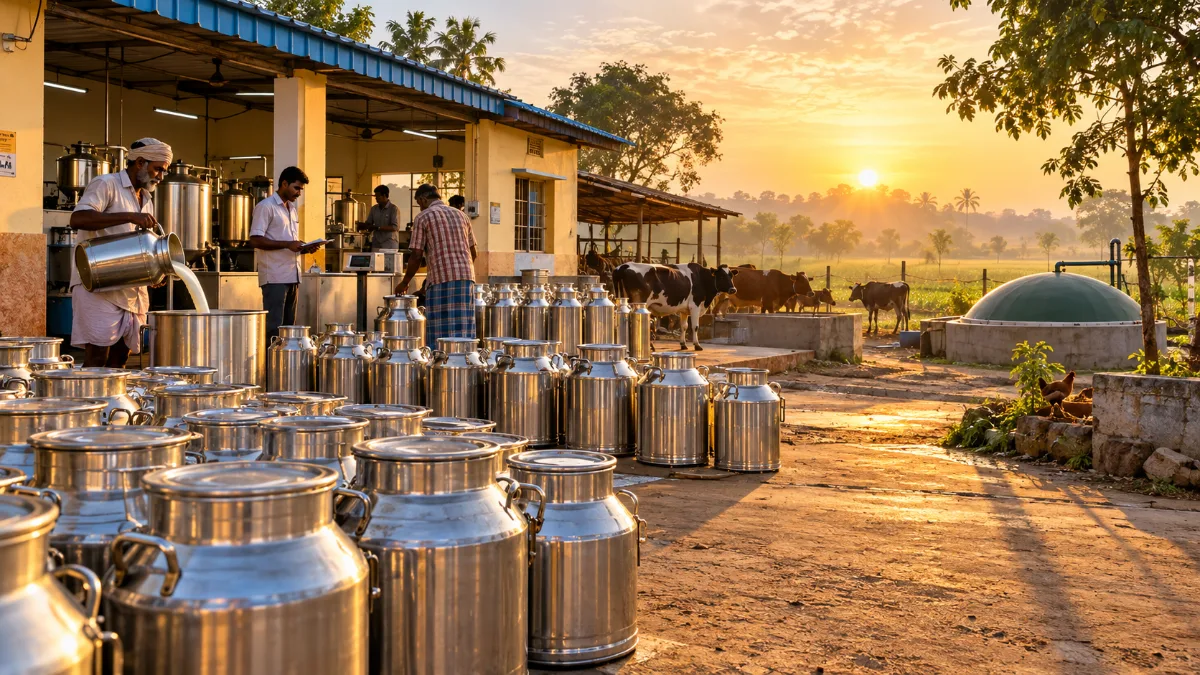
Gau Palak Sammelan in Bhopal: Centre building a full cattle-rearing ecosystem, says Cooperation Minister
In short: From dung-based biogas to dairy processing and market access, the Centre is pitching cattle rearing as an engine of the rural economy through cooperatives.
Why in news
Addressing a State-level Gau Palak Sammelan in Bhopal on 3 October 2026, Union Cooperation Minister Amit Shah said the government is developing a complete ecosystem around cattle rearing: converting cow dung into biogas and organic fertiliser, processing dairy products and providing market access. The foundation stone of a Rs 255 crore milk processing plant in Ujjain, with a capacity of 3 lakh litres a day, was laid at the event.
Background
Shah said cattle rearers would be among the biggest beneficiaries of the creation of the Ministry of Cooperation, which was set up in July 2021. He referred to White Revolution 2.0 and the plan to set up a large number of new cooperative dairies; according to PIB, White Revolution 2.0 targets 75,000 new dairy cooperatives and strengthening 46,000 existing ones. Madhya Pradesh aims to raise daily milk procurement from 12 lakh kg to 52 lakh kg. At the event, a 40,000-litre-per-day dairy products plant in Bhopal and a State-level central laboratory were inaugurated, and KRIBHCO signed an MoU with the Madhya Pradesh State Biodiversity Board for the Morvan Project. The dung-to-biogas income model is a planned ecosystem, not yet universal. India is the world’s largest milk producer, and dairying is a major source of income for small and marginal farmers and landless households. Linking dairy with biogas and organic manure also connects animal husbandry with clean energy and soil health.
Key facts for Prelims
- Event: State-level Gau Palak Sammelan, Bhopal, 3 October 2026.
- Ujjain milk processing plant: Rs 255 crore, 3 lakh litres a day; foundation laid on 3 October 2026.
- Ministry of Cooperation: created in July 2021; motto “Sahkar se Samriddhi”.
- Ecosystem elements named: biogas and organic fertiliser from dung, dairy processing, market access.
- White Revolution 2.0 aims to expand the cooperative dairy network and milk procurement by cooperatives.
Mains analysis and way forward
Mains analysis
- Income diversification: dairy provides regular cash income that cushions crop-income volatility, especially for small and landless households.
- Cooperative model: village-level collection, assured procurement and shared processing give producers bargaining power that individual rearers lack.
- Circular economy: dung-to-biogas and organic manure can reduce fuel costs and chemical fertiliser use, linking livestock policy with energy and soil health.
- Challenges: fodder shortages, animal health, low productivity per animal and stray cattle management need attention alongside processing capacity.
Way forward
- Combine new dairy cooperatives with veterinary services, breed improvement and fodder development.
- Support biogas and manure enterprises through cooperatives so that by-products earn value for members.
- Ensure professional management and audit of cooperatives so that growth in numbers comes with good governance.
Connect the dots: Links to GS III: animal rearing economics, food processing and supply chains; GS II: cooperatives (Part IXB).
Sources: News On AIR: Govt developing entire ecosystem based on cattle farming, giving push to rural economy, says Amit Shah, 3 October 2026; News Karnataka: Amit Shah says new laws can deliver justice in 3 years, 4 October 2026
Security and defence

INS Sahyadri and INS Kulish conclude ASEAN-India Maritime Exercise 2026 in the Philippines
In short: The second ASEAN-India Maritime Exercise ended with drills in disaster relief, boarding operations and replenishment at sea, reinforcing Act East at sea.
Why in news
On 3 October 2026, the Ministry of Defence said Indian Naval Ships Sahyadri and Kulish had concluded their participation in the ASEAN-India Maritime Exercise 2026 (AIME 2026) in the Philippines, held on the theme “Anchored in Trust, United at Sea”.
Background
The harbour phase included the opening ceremony, key leaders’ engagements, subject matter expert exchanges, a table-top exercise and a pre-sail brief. The sea phase covered Humanitarian Assistance and Disaster Relief, Visit-Board-Search-Seizure (VBSS) and underway replenishment drills, along with helicopter cross-deck landings, vertical replenishment and casualty evacuation drills. The Ministry linked the deployment to India’s Act East Policy and the MAHASAGAR vision. The first edition of AIME was held in 2023, co-hosted by the Indian and Singapore navies, with the harbour phase in Singapore and the sea phase in the South China Sea.
Key facts for Prelims
- AIME 2026: second edition; Philippines (Subic Bay); theme “Anchored in Trust, United at Sea”.
- INS Sahyadri is a Shivalik-class stealth frigate; INS Kulish is a Kora-class corvette.
- VBSS: Visit, Board, Search and Seizure, used against smuggling, piracy and illegal fishing.
- MAHASAGAR: Mutual and Holistic Advancement for Security and Growth Across Regions, India’s maritime outlook announced in 2025, building on SAGAR (2015).
- ASEAN has 11 member states since Timor-Leste joined on 26 October 2025; the Philippines is an archipelagic state between the South China Sea and the Philippine Sea.
Mains analysis and way forward
Mains analysis
- Interoperability: common procedures for boarding, replenishment and disaster response let navies work together quickly when cyclones or accidents strike.
- Act East at sea: regular exercises with ASEAN give substance to India’s support for ASEAN centrality and a free, open and rules-based Indo-Pacific.
- Non-traditional security: HADR and VBSS drills address shared threats such as disasters, trafficking and illegal fishing, which matter to all coastal states.
- Balance: engagement in Southeast Asian waters must be steady and inclusive so that it is seen as cooperative rather than directed at any one country.
Way forward
- Institutionalise AIME as a regular exercise with a rotating host and agreed scenarios.
- Expand information sharing through the Information Fusion Centre for the Indian Ocean Region.
- Add coast guard and civilian disaster agencies to future editions to reflect real-world responses.
Connect the dots: Links to GS III: security challenges in border and maritime areas; GS II: India-ASEAN relations, Act East Policy.
Geography
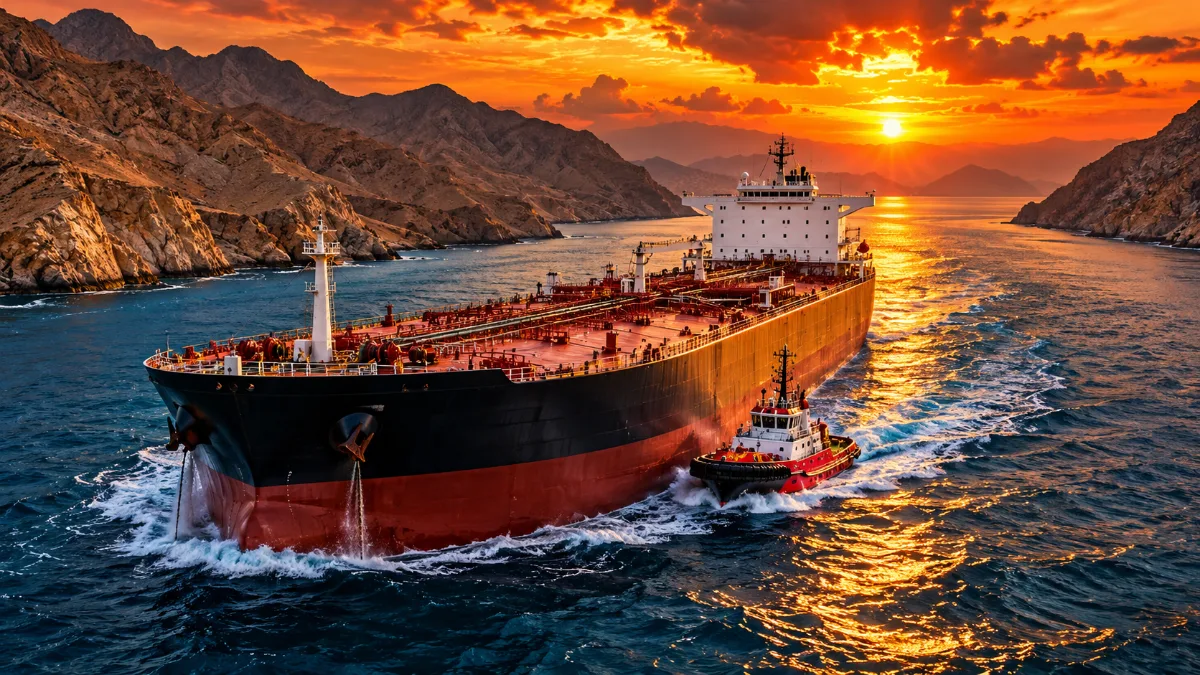
Five Indian seafarers rescued after Kuwait-flagged tanker is struck in the Strait of Hormuz
In short: A projectile strike on the tanker MT Kazimah III again showed how exposed Indian crews and energy supplies are in the Strait of Hormuz.
Why in news
In a rescue announced by India’s Embassy in Oman and reported on 3 October 2026, five Indian nationals were rescued after the Kuwait-flagged tanker MT Kazimah III was struck by a projectile in the Strait of Hormuz on 2 October. The Embassy of India in Oman said it coordinated the rescue and that the five were safely brought ashore, and thanked Omani authorities for their support.
Background
Several commercial vessels carrying Indian seafarers have been attacked amid escalating tensions in West Asia. The Strait of Hormuz is a narrow passage linking the Persian Gulf with the Gulf of Oman and the Arabian Sea, and is a major route for crude oil and LNG shipments to Asia, including India. On 2 October, the G7 agreed to speed up delivery of 100 million barrels from previously committed emergency oil stocks over four months, with the International Energy Agency coordinating implementation, to ease fuel prices. A day earlier, the Shipping Corporation of India marked 65 years; it now operates 58 vessels with 5.26 million deadweight tonnes of capacity.
Key facts for Prelims
- Strait of Hormuz: between Iran to the north and the Musandam peninsula of Oman to the south; links the Persian Gulf to the Gulf of Oman and the Arabian Sea.
- Tanker MT Kazimah III: Kuwait-flagged; five Indian crew rescued with Omani support (3 October 2026).
- International Energy Agency (IEA): coordinates collective releases of emergency oil stocks by member countries.
- Shipping Corporation of India: founded in 1961 with 19 vessels; fleet of 58 vessels and 5.26 million DWT today.
- India maintains Strategic Petroleum Reserves in underground rock caverns at Visakhapatnam, Mangaluru and Padur.
Mains analysis and way forward
Mains analysis
- Chokepoint dependence: a large share of India’s energy imports passes through a few narrow straits, so disruption quickly feeds into prices and inflation.
- Seafarer welfare: Indian crews form a large part of global shipping; consular coordination, evacuation plans and insurance are part of protecting citizens abroad.
- Energy security toolkit: diversifying suppliers and routes, building strategic reserves and a stronger national fleet reduce exposure to any single corridor.
- Diplomacy: working with Gulf partners such as Oman, which helped in this rescue, is as important as naval presence in keeping sea lanes open.
Way forward
- Expand strategic petroleum storage and long-term contracts with suppliers using diverse routes.
- Issue clear advisories and support for Indian seafarers on high-risk routes, with quick consular response.
- Grow the Indian-flagged fleet under the Maritime Amrit Kaal Vision 2047 to reduce dependence on foreign carriers in crises.
Connect the dots: Links to GS I: location of important straits and resources; GS III: energy security; GS II: Indian diaspora and West Asia.
Sources: News On AIR: 5 Indian nationals rescued after Kuwait-flagged tanker struck by projectile in Strait of Hormuz, 3 October 2026; News On AIR: G7 nations agree to release 100 million barrels of oil over 4 months, 3 October 2026; News On AIR: Sonowal calls on SCI to play leading role in making India self-reliant in shipbuilding, 3 October 2026
In brief
- Personality in the news: Andris Kulbergs: The 47-year-old businessman and amateur rally driver, a former manager in the telecoms and automotive sectors, became Latvia’s Prime Minister in May 2026; on 3 October 2026 his United List won 41 of 100 Saeima seats, the largest victory since Latvia regained independence in 1991.
- Mann Ki Baat completes 12 years: The Prime Minister’s monthly radio programme completed 12 years on 3 October 2026; it was first broadcast on 3 October 2014, on Vijayadashami, and its latest episode was the 138th.
- Asian Games: India retain men’s cricket gold: On 3 October 2026 at Nisshin, Japan, India beat Pakistan by 19 runs (211 for 6 against 192 for 6), with Abhishek Sharma scoring 61 off 28 balls; it is India’s second Asian Games men’s cricket gold after the Hangzhou Games.
- Asian Games: first golf gold for an Indian woman: News On AIR reported on 3 October 2026 that Pranavi Urs became the first Indian woman golfer to win a gold medal at the Asian Games.
- Navpreet Singh deported from Turkiye: On 3 October 2026, Home Minister Amit Shah described the deportation from Turkiye of Navpreet Singh, accused of drug trafficking (allegations not yet proven in court), as a historic milestone in the campaign against drug networks.
- India-Russia ties reviewed in Parliament committee: On 3 October 2026, EAM S. Jaishankar chaired a Consultative Committee meeting on India-Russia relations covering trade, investment, energy, connectivity and people-to-people ties, and said India backs dialogue and diplomacy to end the Ukraine conflict.
- FTA network to widen, says Goyal: Speaking in Chicago, as reported on 3 October 2026, Commerce Minister Piyush Goyal said India’s signed and ongoing free trade negotiations could eventually cover 75 to 80% of the world economy, up from FTA partners worth about USD 10 trillion in GDP before 2014.
- Centres of Excellence for five classical languages: On 3 October 2026, the Ministry of Education approved Centres of Excellence for Assamese (Tezpur University), Bengali (Visva-Bharati), Marathi (Deccan College, Pune), Pali (Central University of Odisha) and Prakrit (Central University of Gujarat). These five languages were granted classical status in October 2024.
- NABKISAN lists India’s first WASH social bond: NABKISAN, a NABARD subsidiary, listed India’s first social bond focused on water, sanitation and hygiene (WASH), raising Rs 180 crore at an 8.10% coupon; the issue was subscribed 1.8 times, PIB said on 3 October 2026.
- Jal Arpan under Jal Jeevan Mission: The Jal Shakti Ministry said on 3 October 2026 that more than 1,850 gram panchayats and villages had observed Jal Arpan, formally handing completed rural drinking-water schemes to community institutions for operation and maintenance.
Prelims practice: 5 questions
Choose an option to see the answer and explanation. Your score appears when all five are answered.
Mains practice
Timely justice is an essential part of the right to life and personal liberty. Examine how the new criminal laws seek to reduce delays in the criminal justice system, and discuss what else is required for cases to be decided within a reasonable time without compromising fairness. (15 marks, 250 words)
Show the answer outline
Introduction (about 30 words)
- Begin with Amit Shah’s 3 October 2026 expectation, a policy aspiration rather than a statutory deadline, that after full implementation of the new laws a case could move from FIR to the Supreme Court within three years; link delay to Article 21.
How the new laws aim to reduce delay
- BNS defines offences, BNSS governs procedure and BSA governs evidence; in force since 1 July 2024, replacing colonial-era codes.
- BNSS Section 176(3): mandatory forensic examination for offences punishable with seven years or more, as notified by States.
- BNSS timelines: charges ordinarily framed within 60 days of the first hearing on charge in Sessions cases (Section 251(1)(b)); judgment ordinarily within 30 days of arguments, extendable to 45 with reasons (Section 258(1)).
- Zero FIR and electronic records and summons to cut procedural friction.
- Public awareness efforts such as the 14-zone Bhopal exhibition that explain rights and procedures to citizens.
What else is needed
- Judicial and prosecution vacancies, and infrastructure in courts.
- Forensic laboratory capacity, trained investigators and reliable digital systems such as e-Courts and e-Prisons.
- Police reforms and coordination between Centre and States, since police is a State subject.
- Legal aid under Article 39A so that speed does not come at the cost of fairness.
- Prosecutorial competence, defence rights and witness protection, with safeguards against procedural shortcuts.
Way forward
- Stage-wise timelines with data dashboards; specialised courts for heinous and child-related offences; periodic independent review of outcomes.
Conclusion (about 30 words)
- Laws can set the pace, but institutions deliver it; timely disposal must never compromise natural justice or the rights of victims and the accused.
Tip: Use the Bhopal exhibition, the three-year FIR-to-Supreme-Court target and the e-Courts Phase III programme (Rs 7,210 crore overall) as concrete examples in answers on judicial delay and criminal justice reform.
Current Canvas is prepared by the UPSC Gurus editorial desk. Every fact is checked against official releases and reliable reporting, with sources listed under each story. Editions are compiled each month into Current Canvas Monthly, a free magazine.
About images: photographs and illustrations in Current Canvas are AI-generated for illustration only. They are not news photographs of the events described.
Your first Mentor’s Desk call is free
One free conversation per aspirant about where you are in your preparation, with an honest suggestion of the right next step.
Know more and bookHave a question? Get in touch
For questions about a programme, its fees, batch dates, payment or access. Message us on WhatsApp and our team will reply. Asking a question is not a booking, and you can ask as often as you need.
Get in touch on WhatsApp