 New this week · Free UG Handout 02UPSC Mains Directive Words: 60 Meanings, Trends and PYQsTwo free PDFs: The Guide and the With PYQs edition.Read and download
Today’s Canvas
Sunday’s news was about choices made under pressure. Brazil’s voters split almost evenly and will decide again on 25 October. In New Delhi, India described a more active, practical role on Ukraine, while war returned to Yemen’s Red Sea coast. At home, two captive-bred bustards took their first steps into the Thar, a judge reminded us why the vote matters, and new houses and supercomputers showed what steady public investment can build.
About 14 minutes to read the key points; Mains analysis opens under each story.
- Justice Ujjal Bhuyan: any process that disenfranchises millions is intrinsically arbitraryGS II
- Brazil votes: Flavio Bolsonaro edges Lula in first round; presidential runoff on 25 OctoberGS II
- Jaishankar: India has gone “beyond advocacy” on Ukraine; emerging and middle powers gaining roomGS II
- Yemen’s government launches offensive to retake Houthi-held areas; Red Sea chokepoint in focusGS II
- First captive-bred Great Indian Bustards released into the wild at Desert National Park, JaisalmerGS III
- PMAY-G 2.0: 3 lakh houses worth Rs 3,600 crore for Andhra Pradesh; first instalment released and 3D-printed housing pilot launchedGS II
- National Supercomputing Mission: 40 systems with 68 petaflops deployed, says government updateGS III
- Seven OPEC+ producers keep required production levels for November; separately, Iran sets seven conditions on HormuzGS III
- Kautilya Conclave: financial-sector repair key to India’s resilience; gross NPAs at 1.68% in June 2026GS III
- FPIs pull Rs 35,861 crore out of Indian equities in September after two months of inflowsGS III
- Brazil heads to a 25 October runoff after Flavio Bolsonaro (47.03%) edged Lula (45.16%) in the first round.
- India has moved “beyond advocacy” on Ukraine and is talking to both sides, starting with Black Sea shipping, said the EAM.
- Yemen’s government launched an offensive to retake Houthi-held areas, weeks after Houthi forces captured territory along the approaches to Bab el-Mandeb.
- Two captive-bred male Great Indian Bustards were released at Desert National Park, Jaisalmer.
- Andhra Pradesh received Rs 3,600 crore for 3 lakh PMAY-G houses and a 177-house 3D-printing pilot.
- The National Supercomputing Mission now has 40 systems with 68 petaflops of capacity.
Polity and governance
Justice Ujjal Bhuyan: any process that disenfranchises millions is intrinsically arbitrary
In short: A Supreme Court judge said on 4 October that citizenship and franchise are intertwined and, in his view, the Constitution does not create two classes of citizens.
Why in news
Delivering the valedictory address at the 19th NALSAR-Justice Bodh Raj Sawhney Memorial Moot Court Competition in Hyderabad on 4 October 2026, Supreme Court judge Justice Ujjal Bhuyan said any process that disenfranchises millions of Indian citizens is “intrinsically arbitrary” and that “no amount of whataboutery can justify it”. He said such a process would violate Articles 326 and 14 (PTI).
Background
In his reading, which is an academic speech and not a judgment of the Court, Justice Bhuyan said the Constitution does not provide for two classes of citizens, one with voting rights and one without, and that “citizenship and franchise are intertwined”. The remarks came amid scrutiny of the Special Intensive Revision (SIR) of electoral rolls, after which large numbers of names were reported deleted in several States, figures that are disputed; petitions challenging the process are before a Bench headed by the Chief Justice of India. The remarks were made in an academic setting and not in a judgment.
Key facts for Prelims
- Article 326: elections to the Lok Sabha and State Assemblies are on the basis of adult suffrage; every citizen aged 18 or above who is not otherwise disqualified is entitled to be registered.
- The voting age was lowered from 21 to 18 by the 61st Constitutional Amendment Act, 1988.
- Article 325: no person is to be excluded from the electoral roll on grounds only of religion, race, caste or sex; there is one general roll per constituency.
- Article 324 vests superintendence, direction and control of electoral rolls and elections in the Election Commission.
- Electoral rolls are prepared under the Representation of the People Act, 1950.
Mains analysis and way forward
Mains analysis
- Franchise as foundation: universal adult franchise, adopted at once in 1950, is a core feature of Indian democracy; exclusion at scale affects legitimacy, not just administration.
- Accuracy versus inclusion: clean rolls (removing duplicates and deceased voters) are a legitimate aim, but procedures must protect genuine voters through notice, hearing and easy re-enrolment.
- Burden of proof: requiring documents that the poor, migrants or women may lack can turn a verification drive into exclusion; Article 14 requires that procedures be fair and non-arbitrary.
- Judicial voice outside courtrooms: such speeches add to public debate but the binding view will come from the Court in pending cases.
Way forward
- Publish draft deletions with reasons and give adequate time and simple channels for claims and objections.
- Use door-to-door verification and accept a wide set of documents so that no eligible citizen is left out.
- Track exclusion data by gender, region and community to correct gaps quickly.
Connect the dots: Links to Representation of the People Acts, Election Commission, Fundamental Rights (Article 14) and electoral reforms.
Sources: The Federal (PTI): Amid SIR row, Justice Bhuyan says disenfranchising millions is intrinsically arbitrary, 4 Oct 2026; OdishaBytes: No amount of whataboutery can justify mass disenfranchisement, says Supreme Court judge Ujjal Bhuyan, 4 Oct 2026
International relations
Brazil votes: Flavio Bolsonaro edges Lula in first round; presidential runoff on 25 October
In short: No candidate crossed 50 per cent in Brazil’s 4 October first round, so the incumbent Lula and Flavio Bolsonaro meet again on 25 October.
Why in news
Brazil held its general election on 4 October 2026. In the Superior Electoral Court (TSE) count updated on 5 October with 99.99 per cent of ballot boxes, Flavio Bolsonaro (Liberal Party) had 47.03 per cent of valid votes (5.61 crore votes) and President Luiz Inacio Lula da Silva (Workers’ Party) 45.16 per cent (5.39 crore). As neither won a majority, a runoff is due on 25 October.
Background
Eleven candidates contested the presidency; Ronaldo Caiado, Renan Santos, Augusto Cury and Romeu Zema together polled about 8 per cent. Voters also chose governors, the entire Chamber of Deputies, two-thirds of the Senate and state assemblies. About 124.5 million of 158.7 million eligible voters cast ballots, an abstention of about 21 per cent. Lula, 80, is seeking a non-consecutive fourth term; Flavio’s father, former President Jair Bolsonaro, is serving a sentence of 27 years and three months for attempting a coup after the 2022 election.
Key facts for Prelims
- Brazil uses a two-round system: a presidential candidate needs more than half of valid votes to win outright, otherwise the top two meet in a runoff.
- Runoff date: 25 October 2026. First round: 4 October 2026.
- Electoral authority: Superior Electoral Court (TSE); Brazil votes on electronic voting machines.
- The Senate has 81 seats; two-thirds were up for election in 2026.
- Brazil is a fellow member, with India, of BRICS, the G20 and IBSA (India-Brazil-South Africa).
Mains analysis and way forward
Mains analysis
- Polarised mandate: a two-point gap and a near-even split show a deeply divided electorate, with crime, cost of living and ties with the United States as leading campaign issues (Al Jazeera).
- Institutional resilience: the count was quick and voting saw no major incidents despite storms causing power cuts at some stations, showing the strength of Brazil’s electoral administration.
- Legislative arithmetic: the Liberal Party’s Senate gains mean the next president, whoever wins, will need coalition-building in Congress.
- For India: Brazil is a key Global South partner in BRICS, the G20 and IBSA, and a major source of agricultural trade; continuity in South-South cooperation matters regardless of the result.
Way forward
- India can keep engagement with Brazil issue-based and institutional (BRICS, IBSA, G20) so that cooperation outlasts electoral cycles.
- Deepen trade, energy and agri-technology links so that the partnership rests on economic interdependence rather than political alignment.
Connect the dots: Links to Global South diplomacy, BRICS and IBSA, comparative electoral systems (two-round versus first-past-the-post) and the effect of policies of other countries on India’s interests.
Sources: Courthouse News Service: Lula and Bolsonaro head to Brazil’s presidential runoff, 4 Oct 2026; Al Jazeera: Brazil’s presidential race, three key takeaways from the first round, 5 Oct 2026; MercoPress: Flavio Bolsonaro edges Lula in the first round; both head to an October 25 runoff, 5 Oct 2026
Jaishankar: India has gone “beyond advocacy” on Ukraine; emerging and middle powers gaining room
In short: In New Delhi on 4 October, the External Affairs Minister said India is talking to both Moscow and Kyiv, starting with Black Sea shipping safety.
Why in news
Speaking in New Delhi on 4 October 2026, External Affairs Minister S Jaishankar said India would like to see an end to the Russia-Ukraine conflict through dialogue and diplomacy, and that “in recent months we have got a little bit more involved beyond advocacy”. He said India has conversations with both Russia and Ukraine and is “trying to be helpful, starting with the Black Sea safety of shipping issue” (PTI).
Background
The minister also set out an agenda for Emerging and Middle Powers (EMPs): international peace and security, supply-chain resilience and connectivity. He described a changing landscape marked by the repositioning of the US, the rise of China and greater interdependence, leading to multipolarity, multi-alignment and small groupings, and cited BRICS and the Quad as examples. He held a conversation with Wolfgang Ischinger of the Munich Security Conference and a German State Secretary. On the same day, German Chancellor Friedrich Merz made an unannounced visit to Kyiv and said Ukraine could “fully count on our support”.
Key facts for Prelims
- Connectivity projects cited by the EAM: India-Middle East-Europe Economic Corridor (IMEC), International North-South Transport Corridor (INSTC) and the Northern Sea Route.
- INSTC links India with Russia via Iran (Chabahar/Bandar Abbas) and the Caspian region.
- Black Sea littoral states include Ukraine, Russia, Turkey, Bulgaria, Romania and Georgia; the Bosporus and Dardanelles connect it to the Mediterranean.
- The Munich Security Conference is an annual forum on international security founded in 1963; its leaders’ meetings are held in different capitals.
Mains analysis and way forward
Mains analysis
- From diplomatic advocacy towards practical facilitation: India has long called for dialogue; offering help on narrow, practical issues such as shipping safety reflects a calibrated step up in role.
- Strategic autonomy: the EAM also stressed that Russia stood by India on security and territorial integrity, showing how India balances old partnerships with new ones in Europe and the US.
- Middle-power diplomacy: framing EMPs as spanning both Global North and South signals India’s preference for issue-based coalitions over fixed blocs.
- Limits: mediation needs acceptance by both parties and sustained capacity; outcomes depend on the warring sides and major powers.
Way forward
- Focus on achievable humanitarian and economic tracks (shipping, food, energy) that build trust before larger political questions.
- Coordinate with European partners and Global South voices so that any initiative is seen as balanced and inclusive.
Connect the dots: Links to India’s foreign policy (non-alignment to multi-alignment), India-Russia and India-EU relations, connectivity corridors and global groupings.
Sources: ThePrint (PTI): “Got little bit more involved beyond advocacy”: Jaishankar on India’s peace efforts, 4 Oct 2026; News On AIR: Changing global landscape opens new avenues for cooperation among Emerging and Middle Powers: EAM, 4 Oct 2026; News On AIR: EAM Jaishankar highlights Russia’s role in supporting India during security, territorial challenges, 4 Oct 2026; Ukranews: German Chancellor Merz makes surprise visit to Kyiv, 4 Oct 2026
Yemen’s government launches offensive to retake Houthi-held areas; Red Sea chokepoint in focus
In short: Yemen’s Saudi-backed government on 4 October announced a campaign to recapture all Houthi-held territory, weeks after Houthi forces captured territory along the approaches to the Bab el-Mandeb strait.
Why in news
On 4 October 2026, Rashad al-Alimi, chair of Yemen’s internationally recognised Presidential Leadership Council, announced in a televised address a military campaign to retake all areas held by the Houthis, saying all chances to de-escalate had been exhausted. Saudi Arabia is reported to be expected to lead the air campaign, with Yemeni forces fighting on the ground (Reuters).
Background
The Houthis (Ansar Allah) have held Sanaa and much of north-western Yemen, where most Yemenis live, since 2014. According to Reuters, in September they launched a surprise offensive that captured territory along the approaches to the Bab el-Mandeb strait and about 150 km of Red Sea coast, opening a new front in the wider conflict involving Iran that began in February. The Houthis said they fired missiles and drones at Saudi Aramco sites in Riyadh and Khurais, claims Saudi Arabia had not confirmed. Separately, Egypt, Sudan, Eritrea and Somalia issued the El Alamein Joint Declaration at New Alamein, stating its position that Red Sea governance is the responsibility of littoral states.
Key facts for Prelims
- Bab el-Mandeb links the Red Sea with the Gulf of Aden and the Arabian Sea; it lies between Yemen and Djibouti/Eritrea.
- Yemen’s Presidential Leadership Council is the internationally recognised government; its chair is Rashad al-Alimi.
- Houthis (Ansar Allah) have controlled Sanaa since 2014.
- Red Sea littoral states include Egypt, Sudan, Eritrea, Djibouti, Saudi Arabia and Yemen.
- El Alamein Joint Declaration (Egypt, Sudan, Eritrea, Somalia): rejects recognition of Somaliland and calls for respect for international law on transboundary rivers, including the Nile.
Mains analysis and way forward
Mains analysis
- Chokepoint security: a non-state armed group holding territory along Bab el-Mandeb gives leverage over one of the main sea lanes between Asia and Europe via the Suez Canal.
- Regionalisation of conflict: the Yemen front now links with the wider confrontation involving Iran, with the Strait of Hormuz also disrupted, putting both Gulf chokepoints under stress.
- Humanitarian dimension: renewed ground and air operations in a country where most people live in Houthi-held areas risk worsening an already severe humanitarian situation.
- For India: higher freight and insurance costs, risks to seafarers and energy imports, and the need for naval presence to protect merchant shipping in the western Indian Ocean.
Way forward
- Support UN-led political dialogue among Yemeni parties alongside freedom of navigation under UNCLOS.
- For India: continue anti-piracy and maritime-security deployments, diversify energy supply routes and strengthen crew-welfare and evacuation preparedness.
- Engage Red Sea and Horn of Africa states through IORA and bilateral partnerships for regional maritime governance.
Connect the dots: Links to geography of strategic chokepoints, West Asia policy, maritime security, energy security and the Indian Ocean Region.
Sources: ThePrint (Reuters): Yemeni government launches offensive to seize all areas from Iran-backed Houthis, 4 Oct 2026; News On AIR: Egypt, Sudan, Eritrea, Somalia issue declaration on Red Sea governance, state sovereignty, water rights, 5 Oct 2026
Environment
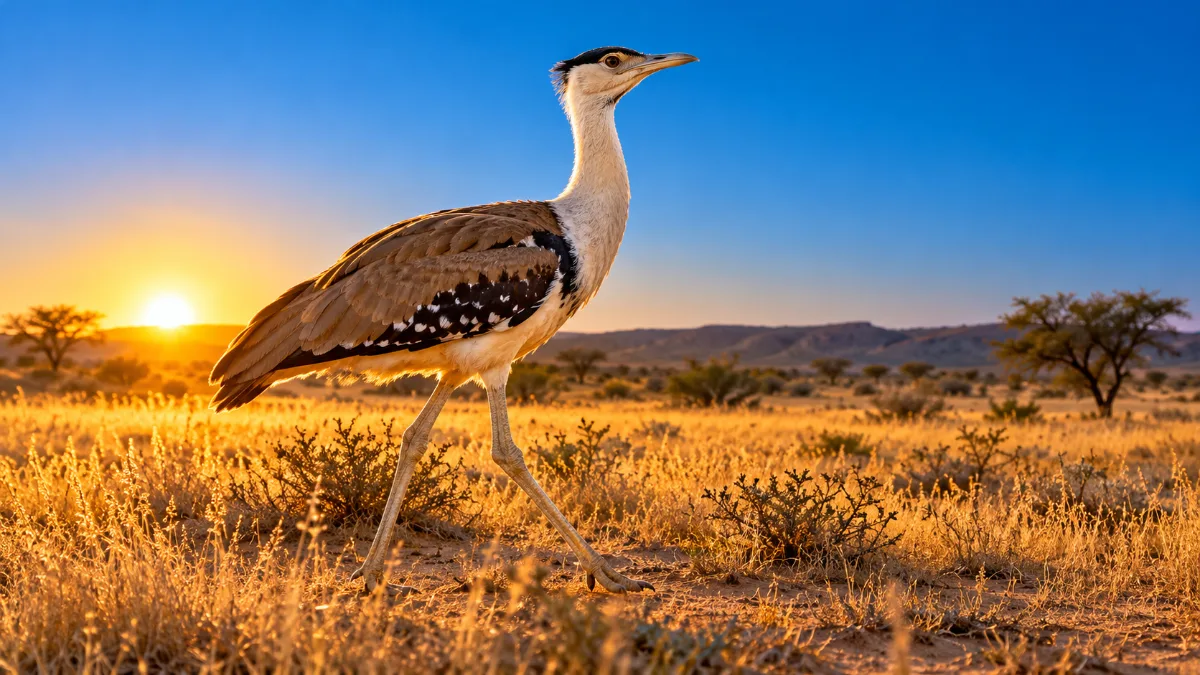
First captive-bred Great Indian Bustards released into the wild at Desert National Park, Jaisalmer
In short: Two captive-bred male Great Indian Bustards were released at Sam on 4 October, moving India’s recovery programme from breeding to rewilding.
Why in news
On 4 October 2026, Union Environment Minister Bhupender Yadav released two male Great Indian Bustards (GIBs) into the wild at Sam in Desert National Park, Jaisalmer, Rajasthan. He credited nearly a decade of work by scientists, researchers and ground staff. The release was carried out with minimal human presence to limit disturbance.
Background
The Sam and Ramdevra facilities now hold 97 GIBs: 40 hatched from wild-laid eggs and 57 bred in captivity. Of these, 86 are kept for captive breeding and 11 are earmarked for release; the two males are the first. The facilities produced 24 live chicks in 2025 and 29 in 2026, using both natural mating and artificial insemination. Partners include the Environment Ministry, the Rajasthan Forest Department and the Wildlife Institute of India, with technical support from the International Fund for Houbara Conservation and funding from National CAMPA. Fewer than 150 GIBs are estimated to survive in the wild, mostly in and around Desert National Park.
Key facts for Prelims
- IUCN status: Critically Endangered. Listed in Schedule I of the Wildlife (Protection) Act, 1972, and Appendix I of CMS.
- The GIB is the state bird of Rajasthan.
- Desert National Park lies in Jaisalmer and Barmer districts of the Thar Desert.
- Main threats: habitat loss, collisions with overhead power lines and hunting.
- Captive population (October 2026): 97 birds at Sam and Ramdevra; 11 earmarked for release.
Mains analysis and way forward
Mains analysis
- From ex situ to in situ: release is the real test of a conservation-breeding programme; survival, movement and behaviour of the first birds will shape protocols for future releases.
- Habitat is the binding constraint: grasslands are often classed as wastelands and diverted; without safe, contiguous grassland, released birds face the same threats that caused the decline.
- Power lines and renewable energy: the Supreme Court has examined the balance between protecting GIB habitat from overhead transmission lines and India’s solar and wind expansion in the same landscape.
- Community stewardship: predator control (for example, dog-free zones around nesting areas) and livelihood-sensitive grazing rules need local support.
Way forward
- Secure and restore priority grasslands, with mitigation such as bird diverters or undergrounding of lines in critical stretches.
- Monitor released birds closely and share findings openly to refine reintroduction science.
- Recognise grasslands as distinct ecosystems in land-use planning rather than as wastelands.
Connect the dots: Links to biodiversity conservation, protected areas, ex situ versus in situ conservation, IUCN categories and environment-development trade-offs.
Sources: News On AIR: Environment Minister Bhupender Yadav releases two male Great Indian Bustards into wild, 4 Oct 2026; Swarajya: India marks major Great Indian Bustard conservation milestone, 4 Oct 2026; Free Press Journal: Great Indian Bustard rewilding begins in Rajasthan after 8-year conservation effort, 4 Oct 2026
Social justice
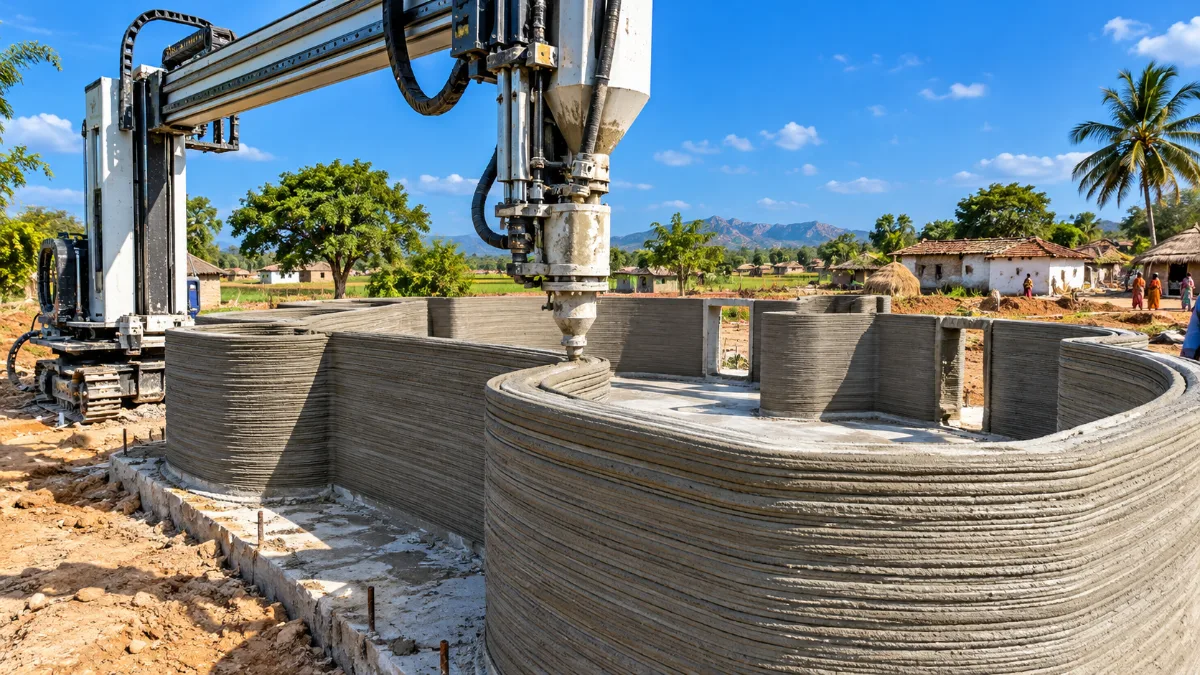
PMAY-G 2.0: 3 lakh houses worth Rs 3,600 crore for Andhra Pradesh; first instalment released and 3D-printed housing pilot launched
In short: The Centre handed over the first instalment for 3 lakh rural houses (housing assistance worth Rs 3,600 crore) in Andhra Pradesh on 4 October and began a 177-house 3D concrete-printing pilot.
Why in news
On 4 October 2026, at Guntur district in Andhra Pradesh, Union Rural Development Minister Shivraj Singh Chouhan handed over the first instalment for 3 lakh houses under PMAY-Gramin 2.0, for which housing assistance is worth Rs 3,600 crore, in the presence of Chief Minister N Chandrababu Naidu. The allocation was raised from an initial 76,000 houses. He also laid the foundation of a pilot of 177 houses built with 3D concrete printing at Burripalem and Obulanaidupalem, costing Rs 14 crore, with a target of completion in six months.
Background
The Union Cabinet on 9 August 2024 approved assistance for 2 crore additional rural houses from 2024-25 to 2028-29, with a total outlay of Rs 3,06,137 crore (Central share Rs 2,05,856 crore; State share Rs 1,00,281 crore). Unit assistance is Rs 1.20 lakh in plain areas and Rs 1.30 lakh in the North Eastern Region and Hill States/UTs. Beneficiaries come from the SECC 2011 Permanent Wait List, the Awaas+ 2018 list and the Awaas+ updating survey of 2024, subject to eligibility verification. The State said it aims to house all homeless poor families before 2029; the Centre will also support roads, drains and drinking water in these colonies.
Key facts for Prelims
- PMAY-G is implemented by the Ministry of Rural Development; it succeeded the Indira Awaas Yojana in 2016.
- PMAY-G phase 2: 2 crore houses, FY 2024-25 to 2028-29; outlay Rs 3,06,137 crore.
- Unit assistance: Rs 1.20 lakh (plains); Rs 1.30 lakh (NER and Hill States/UTs).
- Beneficiary identification: SECC 2011 Permanent Wait List, Awaas+ 2018 and the Awaas+ 2024 updating survey.
- 3D concrete printing builds walls layer by layer from a digital design using a printable concrete mix.
Mains analysis and way forward
Mains analysis
- Housing as a platform: a pucca house anchors access to water, sanitation, electricity and LPG, and improves health, safety and dignity, particularly for women.
- Technology for speed and cost: 3D printing promises shorter construction time and lower labour needs, but must prove durability, local maintainability and affordability at scale.
- Cooperative federalism: higher allocation on the State’s request shows demand-led adjustment within a centrally sponsored scheme.
- Quality and convergence: timely release of instalments, geo-tagged monitoring and convergence with MGNREGS successors and drinking-water schemes decide real outcomes.
Way forward
- Evaluate the pilot independently on cost per square foot, thermal comfort and durability before scaling.
- Train local masons and entrepreneurs so that new technologies create rural jobs rather than displace them.
- Ensure timely instalment release and social audits for transparency.
Connect the dots: Links to welfare schemes for vulnerable sections, centrally sponsored schemes, rural development and technology in governance.
Sources: News On AIR: Union Minister Shivraj Singh Chouhan hands over first instalment for 3 lakh PMAY-G 2.0 houses in Andhra Pradesh, 4 Oct 2026; The South First: 3D-printed homes for the poor, Andhra Pradesh launches project under PMAY-G 2.0, 4 Oct 2026; PM India: Cabinet approves PMAY-G for 2024-25 to 2028-29, 9 Aug 2024
Science and technology
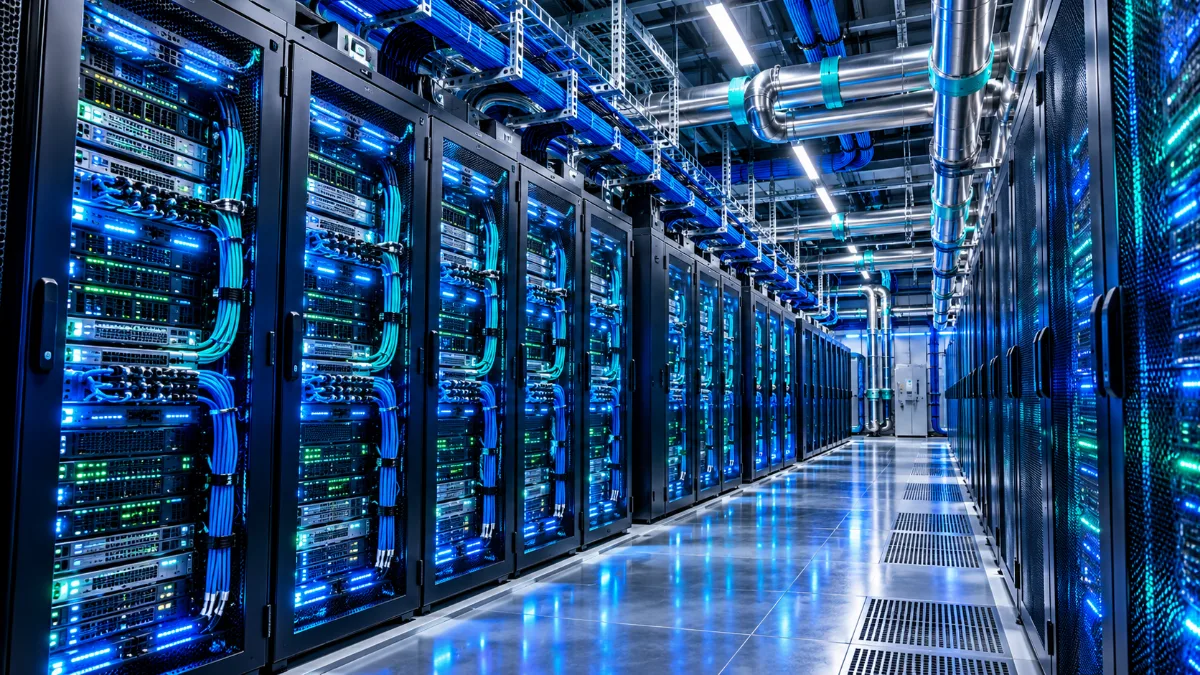
National Supercomputing Mission: 40 systems with 68 petaflops deployed, says government update
In short: A 4 October government update said the supercomputing mission has deployed 40 systems with 68 petaflops, up from 37 systems and 40 petaflops earlier.
Why in news
In an update released on 4 October 2026 (status as of September 2026), a government research note said the National Supercomputing Mission (NSM) had deployed 40 supercomputers with a combined capacity of 68 petaflops as of September 2026. Indigenously developed servers (about 6,000 Rudra servers deployed, with 1,500 more being manufactured), software, cooling systems and networking are now part of the systems, though not every component is made in India. The mission’s target is 50 supercomputers with more than 123 petaflops (PIB).
Background
The NSM was launched in April 2015 with an outlay of about Rs 4,500 crore. It is jointly steered by the Department of Science and Technology and the Ministry of Electronics and Information Technology, and implemented by C-DAC, Pune and IISc, Bengaluru. An earlier Digital India update had reported 37 supercomputers with 40 petaflops. Applications cited include weather and climate modelling, flood forecasting, crop-yield prediction, disease-outbreak tracking, drug discovery, computational biology and astrophysics. India’s supercomputing journey began with the PARAM 8000 in the early 1990s.
Key facts for Prelims
- NSM: launched April 2015; outlay about Rs 4,500 crore; steered by DST and MeitY.
- Implementing agencies: C-DAC (Pune) and IISc (Bengaluru).
- Status (September 2026): 40 supercomputers, 68 petaflops combined.
- One petaflop = 10 to the power 15 floating-point operations per second.
- PARAM 8000 (early 1990s) was India’s first indigenous supercomputer series, built by C-DAC.
Mains analysis and way forward
Mains analysis
- Compute as strategic infrastructure: weather prediction, disaster early warning, genomics and AI all depend on high-performance computing.
- Self-reliance: indigenising servers, interconnects and cooling reduces exposure to export controls and builds a domestic hardware ecosystem.
- Access and utilisation: value lies in how widely academia, start-ups and public agencies can use the capacity, which needs skilled users and software.
- Energy and cost: large systems consume significant power; efficient cooling and green data centres matter.
Way forward
- Link NSM capacity with the IndiaAI Mission and research institutions through simple, shared access.
- Invest in HPC skills and domestic chip and server design for long-term autonomy.
Connect the dots: Links to indigenisation of technology, IT and computers, disaster management (forecasting) and the Digital India programme.
Sources: NewKerala (IANS): India’s supercomputing capabilities expanding, support AI, weather forecasting, 4 Oct 2026; Digital India: 37 supercomputers with a total computing power of 40 petaflops deployed under NSM
Economy
Seven OPEC+ producers keep required production levels for November; separately, Iran sets seven conditions on Hormuz
In short: On 4 October, seven OPEC+ producers held output steady and Iran restated conditions for reopening the Strait of Hormuz, keeping oil supply risks high.
Why in news
Seven OPEC+ countries (Saudi Arabia, Russia, Iraq, Kuwait, Kazakhstan, Algeria and Oman) met virtually on 4 October 2026 and decided to maintain their September 2026 required production levels for November. The same day, Iranian Parliament Speaker Mohammad Baqer Qalibaf said the Strait of Hormuz would remain closed until seven conditions are met; he linked them to a June interim arrangement that Iran calls the Islamabad Memorandum of Understanding, which has not been independently confirmed by both sides.
Background
In a separate meeting, the 68th Joint Ministerial Monitoring Committee (JMMC) of OPEC+ stressed protecting maritime routes and energy infrastructure, warning that attacks or disruptions could increase market volatility. The group meets monthly; the next meeting is set for 1 November. Iran’s Foreign Ministry said its positions had been conveyed to Washington through mediators, while the army spokesperson said Iran would seek longer-range missiles. India imports most of its crude oil, much of it from West Asia through Hormuz.
Key facts for Prelims
- OPEC was founded in 1960 in Baghdad; headquarters in Vienna. OPEC+ adds non-OPEC producers such as Russia and Kazakhstan.
- JMMC: Joint Ministerial Monitoring Committee of OPEC+; its 68th meeting stressed protecting maritime routes and energy infrastructure.
- Strait of Hormuz connects the Persian Gulf with the Gulf of Oman and the Arabian Sea; it lies between Iran and Oman (Musandam).
- India’s Strategic Petroleum Reserves are at Visakhapatnam, Mangaluru and Padur, managed by ISPRL.
Mains analysis and way forward
Mains analysis
- Twin chokepoint risk: disruption at Hormuz together with conflict near Bab el-Mandeb raises freight, insurance and crude prices for importers like India.
- Macro spillovers: higher oil prices feed into inflation, the current account deficit and the rupee, and constrain monetary policy.
- Producer behaviour: holding quotas steady signals caution amid volatility rather than a push to cool prices.
- Diplomacy and energy: diversified suppliers and stable ties with both Gulf producers and Iran give India room to manoeuvre.
Way forward
- Expand strategic reserves and long-term contracts with diverse suppliers, including from the Americas and Africa.
- Accelerate demand-side transition: electric mobility, biofuels, green hydrogen and efficiency.
- Support diplomatic efforts to restore freedom of navigation through Hormuz.
Connect the dots: Links to energy security, international oil markets, West Asia geopolitics and inflation management.
Sources: News On AIR: OPEC+ seven countries decide to maintain September 2026 oil production quotas for November, 4 Oct 2026; News On AIR: Iran says Strait of Hormuz to remain closed until US meets its 7 conditions, 4 Oct 2026
Kautilya Conclave: financial-sector repair key to India’s resilience; gross NPAs at 1.68% in June 2026
In short: At the Kautilya Economic Conclave on 4 October, senior officials linked India’s resilience to clean bank balance sheets, a low CAD and strong growth.
Why in news
Speaking at the Kautilya Economic Conclave 2026 in New Delhi on 4 October 2026, Shaktikanta Das, Principal Secretary-2 to the Prime Minister, said restoring the financial sector’s health is “the defining feature of India’s resilience in recent years”. He said banks’ gross non-performing assets fell to 1.68 per cent in June 2026 and the current account deficit for 2025-26 was 0.6 per cent of GDP.
Background
Das credited the Insolvency and Bankruptcy Code, bank recapitalisation and regulatory oversight, and said export diversification, free trade agreements and a sustained services surplus kept external indicators strong. MoSPI Secretary Saurabh Garg said the economy grew 7.8 per cent in the first quarter of 2026-27, and, according to him, S&P Global Ratings and Fitch Ratings have recently raised India’s growth projections. He said policy measures and household and private-sector responses limited the impact of West Asia tensions and oil price shocks.
Key facts for Prelims
- Gross NPA ratio of scheduled commercial banks: 1.68 per cent (June 2026).
- Current account deficit 2025-26: 0.6 per cent of GDP.
- Real GDP growth, Q1 2026-27: 7.8 per cent.
- Insolvency and Bankruptcy Code enacted in 2016; adjudicated by NCLT.
- An asset becomes non-performing when interest or principal remains overdue for more than 90 days.
Mains analysis and way forward
Mains analysis
- Twin balance-sheet repair: cleaner banks and deleveraged corporates allow credit to flow to investment, which supports growth.
- Buffers against shocks: a low CAD and strong services exports reduce vulnerability to oil price spikes and capital outflows.
- Risks remain: geopolitical tensions, high global yields and crude prices can test stability, as recent portfolio outflows show.
- Institutions matter: credible insolvency resolution and supervision make gains durable rather than cyclical.
Way forward
- Keep supervision forward-looking, especially for unsecured retail credit and new lenders.
- Strengthen IBC timelines and NCLT capacity so that recoveries remain fast and value-preserving.
Connect the dots: Links to banking sector reforms, NPAs, balance of payments and growth and development.
FPIs pull Rs 35,861 crore out of Indian equities in September after two months of inflows
In short: Depository data reported on 4 October showed net FPI equity outflows of Rs 35,861 crore in September, plus Rs 10,431 crore of FAR debt outflows.
Why in news
According to depository data reported on 4 October 2026, foreign portfolio investors (FPIs) withdrew a net Rs 35,861 crore from Indian equities in September 2026, after positive flows in July and August. This net figure already combines exchange selling and primary-market buying. They sold Rs 45,537 crore through stock exchanges while investing Rs 9,676 crore through the primary market.
Background
Geopolitical uncertainty, elevated US bond yields and crude oil prices weighed on risk appetite. In debt, FPIs withdrew Rs 10,431 crore from securities under the Fully Accessible Route (FAR), and there were also outflows through the General Limit route and the Voluntary Retention Route (VRR). Portfolio flows are volatile and respond quickly to global interest rates and risk sentiment, unlike foreign direct investment.
Key facts for Prelims
- FPI: investment by non-residents in listed securities; holdings below 10 per cent of a company’s equity are generally treated as portfolio investment.
- FPIs are regulated by SEBI under the SEBI (Foreign Portfolio Investors) Regulations, 2019.
- Fully Accessible Route (FAR): introduced by RBI in 2020; specified government securities with no investment limits for non-residents.
- Voluntary Retention Route (VRR): RBI route that gives FPIs operational flexibility in exchange for a minimum retention period.
- September 2026: equity outflow Rs 35,861 crore; primary-market investment Rs 9,676 crore.
Mains analysis and way forward
Mains analysis
- Hot money versus patient capital: FPI flows can amplify currency and market swings, which is why stable FDI and domestic savings matter.
- Domestic investors as cushion: growing participation by mutual funds and retail investors has reduced the market impact of FPI selling.
- Global linkages: higher US yields and oil prices reduce the yield gap and raise India’s import bill, both affecting flows.
- Primary-market interest shows that investors still value specific Indian growth opportunities.
Way forward
- Keep macro fundamentals (fiscal path, inflation, CAD) strong to sustain investor confidence.
- Deepen the domestic investor base and bond markets to reduce dependence on volatile flows.
Connect the dots: Links to balance of payments, capital account, exchange-rate management and the role of SEBI and RBI.
Sources: News On AIR: FPIs withdraw Rs 35,861 crore from Indian equities in September, 4 Oct 2026
In brief
- Personality in the news: Shyamji Krishna Varma: Tributes were paid on 4 October 2026, his birth anniversary, to Shyamji Krishna Varma of Mandvi, Gujarat, a lawyer, journalist and Sanskrit scholar. In London in 1905 he founded the Indian Home Rule Society, India House and the monthly The Indian Sociologist; his ashes are enshrined at Kranti Teerth, Mandvi.
- India-Canada CEPA: fifth round: The fifth round of India-Canada Comprehensive Economic Partnership Agreement talks, confirmed in Canada’s 2 October readout, was scheduled to begin in Ottawa on 5 October and run to 9 October; both sides aim to conclude the CEPA by the end of 2026. Bilateral goods trade was USD 8.66 billion in 2024-25.
- Swiss President’s state visit: As announced by the Swiss government on 1 October, Swiss President Guy Parmelin began a three-day state visit to India on 5 October and was to attend the 2nd India-EFTA Prosperity Summit on 7 October, marking one year of the India-EFTA TEPA in force.
- El Alamein Joint Declaration: Egypt, Sudan, Eritrea and Somalia issued a joint declaration at New Alamein, Egypt, on 4 October 2026, backing Sudan’s unity, rejecting recognition of Somaliland and calling for respect for international law on transboundary rivers including the Nile; it states the position that Red Sea governance belongs to littoral states.
- Merz in Kyiv: German Chancellor Friedrich Merz made an unannounced visit to Kyiv on 4 October 2026, accompanied by German defence-industry executives, and said Ukraine could fully count on Germany’s support; Germany announced about 1 billion euros of military assistance and 350 million euros for energy repairs.
- Sekhon IAF Marathon: The second Sekhon Indian Air Force Marathon was held on 4 October 2026 in cities including Delhi, Mumbai, Chandigarh and Guwahati, honouring Flying Officer Nirmal Jit Singh Sekhon, the only Param Vir Chakra recipient from the IAF, who defended Srinagar airfield in the 1971 war.
- Asian Games 2026 conclude: The Aichi-Nagoya Asian Games in Japan concluded on 4 October 2026. According to the Indian Olympic Association, India finished fourth with 85 medals: 21 gold, 27 silver and 37 bronze.
- Bosnia and Herzegovina votes: Bosnia and Herzegovina held general elections on 4 October 2026 for its three-member presidency and legislatures, a test for the power-sharing system set up by the 1995 Dayton Agreement and for its EU accession path. Early results were provisional.
- World Space Week begins: World Space Week, proclaimed by the UN General Assembly in 1999, is observed from 4 to 10 October; the 2026 theme is Rocket Revolution, highlighting reusable launch vehicles and wider access to space. ISRO’s VSSC is holding events across the week.
- Guru Tegh Bahadur 350th martyrdom year: The Ministry of Culture concluded programmes in Punjab and Meghalaya on 4 October 2026 marking the 350th year of the martyrdom of Guru Tegh Bahadur, the ninth Sikh Guru, remembered for defending freedom of faith. He was executed in Delhi in 1675.
Prelims practice: 5 questions
Choose an option to see the answer and explanation. Your score appears when all five are answered.
Mains practice
Examine how India uses strategic autonomy, multi-alignment and issue-based partnerships to pursue its interests in an emerging multipolar order. Illustrate with reference to the Russia-Ukraine conflict and India’s relations with Europe. (15 marks, 250 words)
Show the answer outline
Introduction (about 30 words)
- Open with the EAM’s 4 October 2026 remark, as he put it, that India has moved “beyond advocacy” on Ukraine, talking to both Moscow and Kyiv; this is engagement, not an accepted mediation role.
Context: a multipolar landscape
- Repositioning of the US, the rise of China and greater interdependence.
- Shift to de-risking, diversification and agenda-based cooperation; small groupings such as the Quad and BRICS.
How India practises multi-alignment
- Ukraine: calls for dialogue and diplomacy; practical help on Black Sea shipping safety; channels with both sides.
- Russia: long-standing partner on security, energy, nuclear and space.
- Europe: cooperation on advanced manufacturing, semiconductors, AI and space; the proposed IMEC corridor; and, separately, the India-EFTA TEPA, which is with the EFTA states and not the EU.
Gains and limits
- Gains: strategic autonomy, energy security, technology partnerships and a bridging role for the Global South.
- Strategic autonomy is not equidistance: India can work with different partners while holding independent positions on sovereignty, territorial integrity and international law.
- Limits: mediation depends on the warring parties; pressure from partners on sanctions and energy; capacity constraints.
Conclusion (about 30 words)
- Issue-based coalitions let India protect core interests while contributing to peace; consistency, credibility and economic strength will decide how far this role can go.
Tip: Use the EAM’s 4 October remarks, the connectivity corridors he named and the India-EFTA TEPA as fresh, verifiable examples in IR answers on strategic autonomy.
Current Canvas is prepared by the UPSC Gurus editorial desk. Every fact is checked against official releases and reliable reporting, with sources listed under each story. Editions are compiled each month into Current Canvas Monthly, a free magazine.
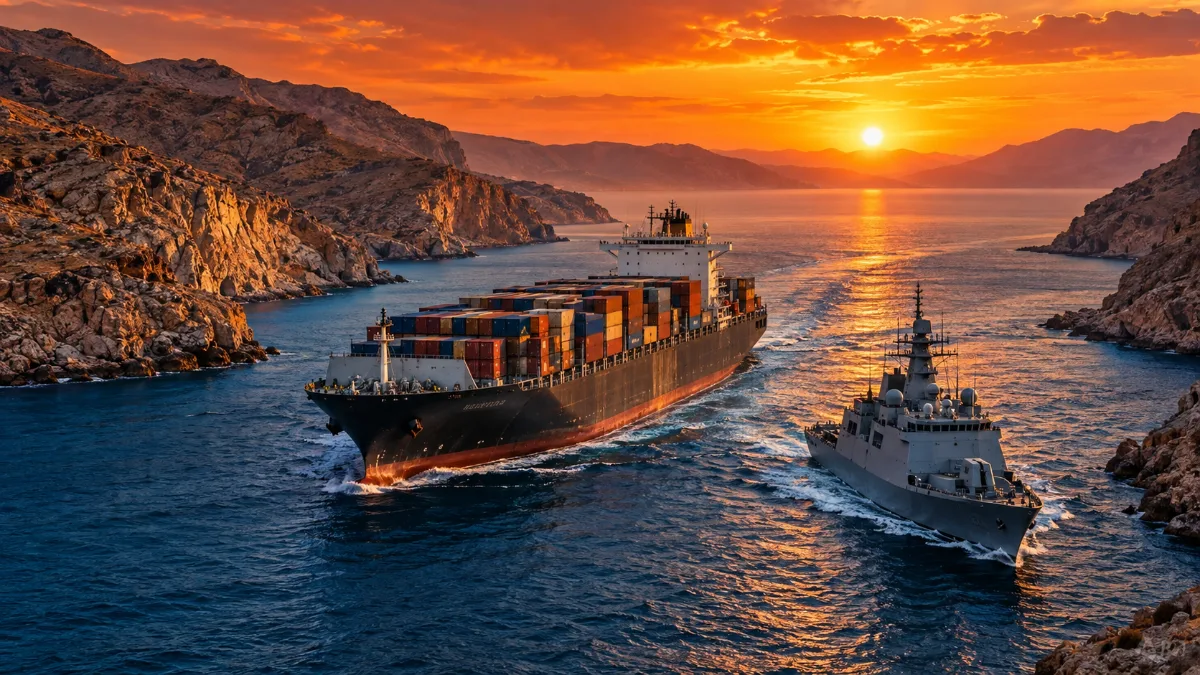
About images: photographs and illustrations in Current Canvas are AI-generated for illustration only. They are not news photographs of the events described.
Your first Mentor’s Desk call is free
One free conversation per aspirant about where you are in your preparation, with an honest suggestion of the right next step.
Know more and bookHave a question? Get in touch
For questions about a programme, its fees, batch dates, payment or access. Message us on WhatsApp and our team will reply. Asking a question is not a booking, and you can ask as often as you need.
Get in touch on WhatsApp