 New this week · Free UG Handout 02UPSC Mains Directive Words: 60 Meanings, Trends and PYQsTwo free PDFs: The Guide and the With PYQs edition.Read and download
Today’s Canvas
- India announces a ₹15,000-crore package for flood-hit Nepal as Prime Minister Balendra Shah visits New DelhiGS II
- International Court of Justice holds Myanmar responsible for genocide against the RohingyaGS II
- Tajikistan begins withdrawing from the International Criminal Court, the fourth since the U.S. called for exitsGS II
- Supreme Court orders West Bengal SIR tribunals to hear excluded voters’ appeals for inclusion firstGS II
- Report claims voters’ Form 6 enrolment data lay exposed on the ECI’s citizen service portal for at least three yearsGS II and GS III
- No Winter Session yet: Parliament has skipped it only four times, each in exceptional circumstancesGS II
- West Bengal to move a resolution to rename the State “Paschim Banga” in English tooGS II
- RBI keeps SBI, HDFC Bank and ICICI Bank as Domestic Systemically Important Banks, with the same capital surchargesGS III
- CAQM report card: three States meet stubble machine targets but lag on other steps; Supreme Court mulls BS-VI-only vehicles in DelhiGS III
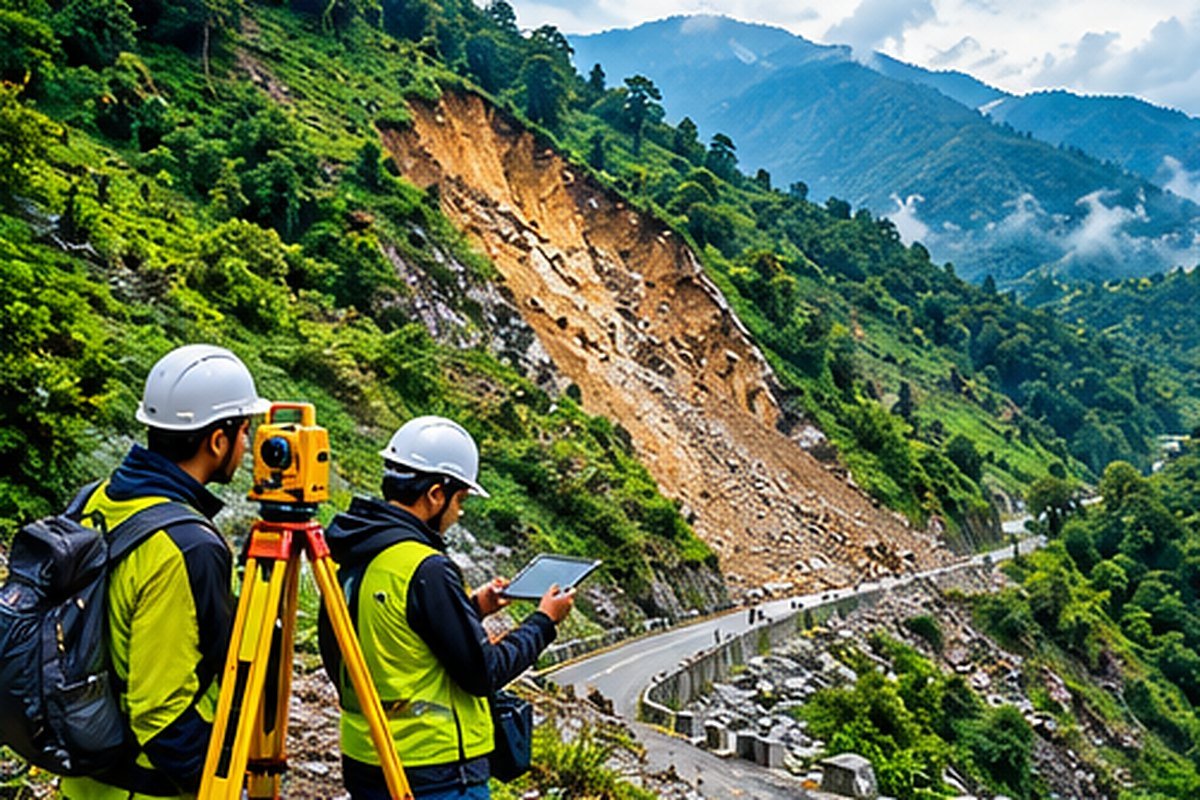
- India completes national landslide susceptibility mapping over 4.3 lakh sq km, shifting from relief to preventionGS III and GS I
- BRO warns Pakistan-based operatives infiltrated defence-linked WhatsApp groups; I4C flags misuse of WhatsApp WebGS III
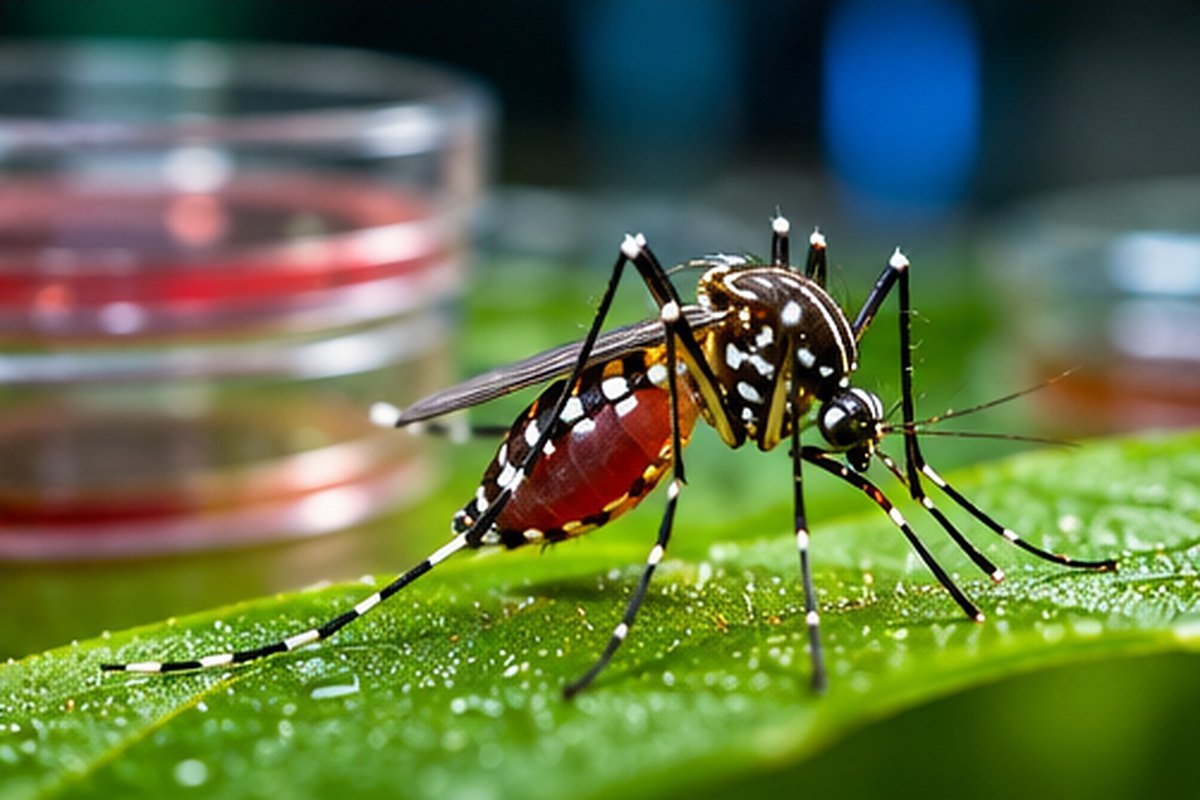
- Brazil study finds Wolbachia-carrying mosquitoes cut dengue and chikungunya infections in children by about 69%GS III and GS II
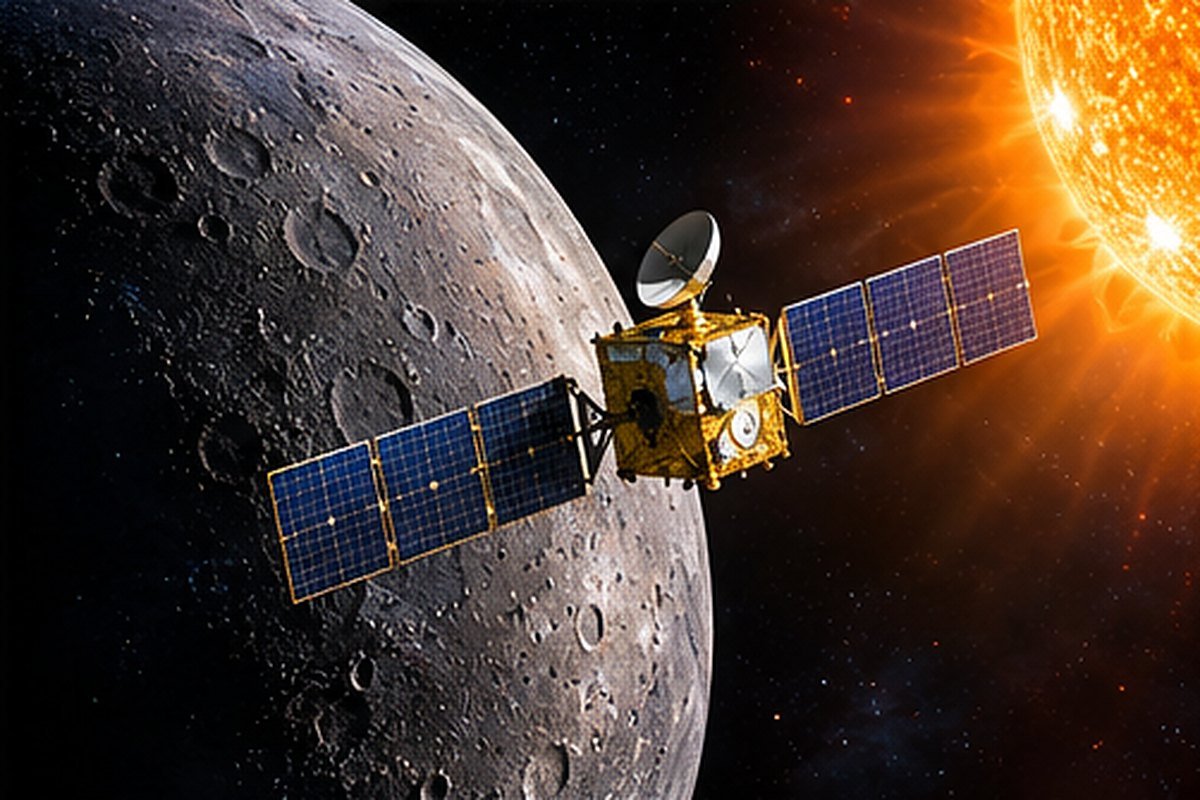
- European-Japanese spacecraft BepiColombo enters orbit around Mercury after an eight-year journeyGS III
International relations
India announces a ₹15,000-crore package for flood-hit Nepal as Prime Minister Balendra Shah visits New Delhi
In short: After talks with Nepal’s Prime Minister on his first official visit, India announced ₹15,000 crore for reconstruction and energy projects, and the two sides asked their Foreign Secretaries to work on outstanding boundary issues.
Why in news
On 23 November 2026, after talks at Hyderabad House with Nepal Prime Minister Balendra Shah on his first official visit to India, Prime Minister Narendra Modi announced a ₹15,000-crore development assistance package to help Nepal recover from the devastating floods of August 2026 and to strengthen its capacity to deal with future disasters. It comprises an ₹11,500-crore rupee-denominated concessional line of credit for energy projects and ₹3,500 crore in grants for post-disaster reconstruction and new infrastructure. The two Prime Ministers instructed their Foreign Secretaries to “work on the outstanding boundary issues”, which include the Kalapani-Limpiyadhura-Lipulekh area, and India reiterated a “forward-looking” approach. Mr. Shah welcomed Indian investment and tourists. Separately, the Indian and Nepali Armies are to hold the 20th edition of their joint exercise Suryakiran.
Concept: The India-Nepal relationship and the boundary question
India and Nepal share an open border of about 1,751 km, touching five Indian States (Uttarakhand, Uttar Pradesh, Bihar, West Bengal and Sikkim). The 1950 Treaty of Peace and Friendship gives citizens of each country reciprocal treatment in residence, property, trade and movement. India is Nepal’s largest trade partner and a major source of investment, and cross-border power trade has grown sharply. The boundary is largely settled, except mainly at Kalapani-Lipulekh-Limpiyadhura (near the India-Nepal-China trijunction) and Susta. In 2020, Nepal issued a new political map showing the Kalapani area as its own, which India rejected. An Eminent Persons Group (EPG), set up in 2016 to review bilateral relations including the 1950 Treaty, prepared its report in 2018, but it has not been jointly accepted or made public. On 23 November 2026, India said a newly agreed bilateral vision would guide future relations and that the earlier EPG report was no longer relevant.
Key facts for Prelims
- India-Nepal border: about 1,751 km, shared by Uttarakhand, Uttar Pradesh, Bihar, West Bengal and Sikkim.
- The India-Nepal Treaty of Peace and Friendship was signed in 1950.
- Kalapani-Lipulekh-Limpiyadhura lies near the India-Nepal-China trijunction in Uttarakhand’s Pithoragarh district.
- Suryakiran is the India-Nepal joint military exercise; the coming edition is the 20th.
- The Mahakali Treaty (1996) covers integrated development of the Mahakali (Sarda) river, including the Pancheshwar project.
Mains analysis and way forward
Mains analysis
- Grants are non-repayable, while a line of credit is a concessional loan that must be repaid; the mix shapes how the aid is perceived.
- Disaster assistance and energy credit build goodwill and tie Nepal’s growth to the Indian grid and market.
- Energy cooperation is mutually beneficial: Nepal earns from hydropower exports, India gains clean power.
- Unresolved boundary issues remain sensitive in Nepal’s domestic politics and need patient, quiet diplomacy.
- Timely delivery of earlier lines of credit is key to India’s credibility as a development partner.
Way forward
- Fast-track grant-funded reconstruction so benefits are visible to people.
- Address boundary issues through the Foreign Secretary mechanism, based on facts and mutual respect.
- Expand connectivity, power trade and people-to-people ties under the Neighbourhood First policy.
Connect the dots: GS II: India and its neighbourhood, bilateral agreements; GS III: disaster management, energy; Prelims: India-Nepal border, Suryakiran.
Sources: The Hindu: India offers ₹15,000 cr. in aid to flood-hit Nepal, 24 November 2026; The Hindu: India, Nepal to hold 20th edition of joint military exercise Suryakiran, 23 November 2026
International Court of Justice holds Myanmar responsible for genocide against the Rohingya
In short: In a first, the ICJ found a State responsible for committing genocide, ruling 9-6 that Myanmar’s 2017 operations against the Rohingya were carried out with intent to destroy the group, but the court cannot enforce its judgment itself.
Why in news
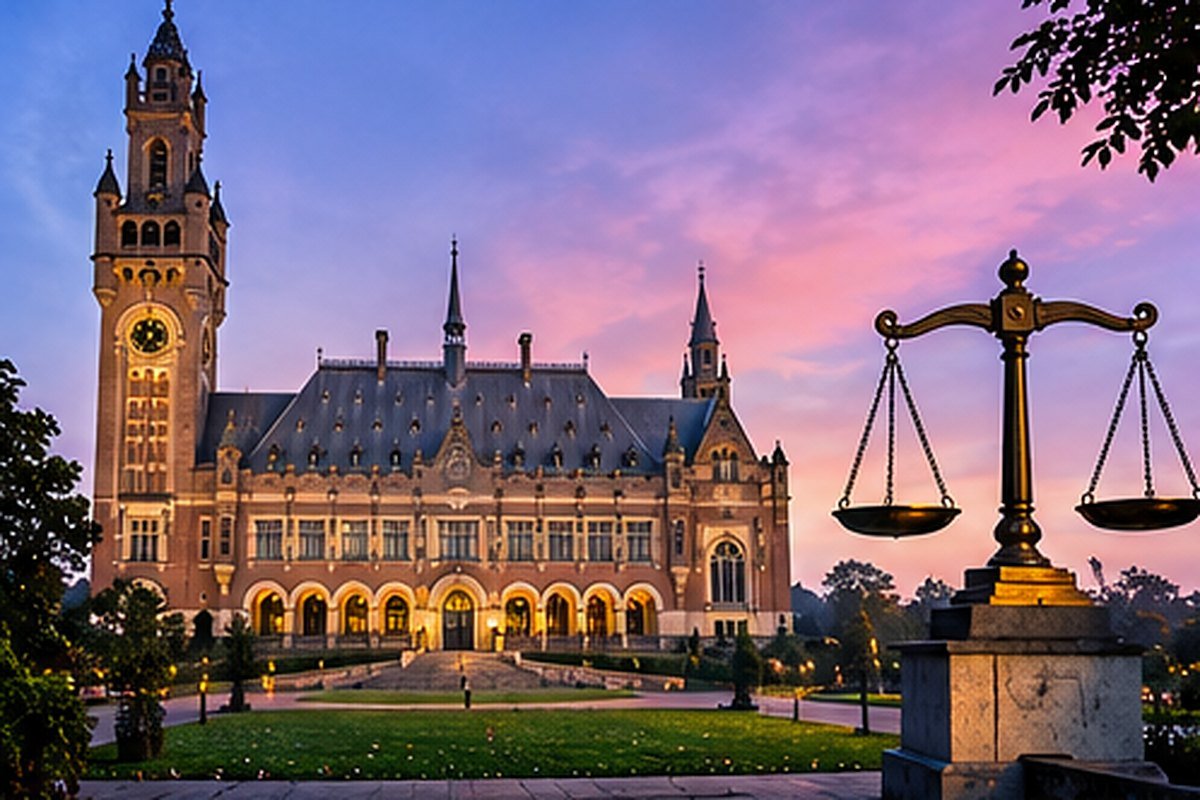
On 19 November 2026, the International Court of Justice (ICJ), by nine votes to six, held that Myanmar committed genocide against the Rohingya. The Hindu’s editorial of 24 November notes it is the first time the court has found a State responsible for the crime. Since genocide requires an intent to destroy a group, the court could infer intent only if it was “the only reasonable inference” from the facts. It accepted that in the army’s 2017 “clearance operations” in northern Rakhine State, at least 10,000 Rohingya were killed, 1,834 raped and 392 villages destroyed, and over 7,00,000 fled to Bangladesh. The Court ordered Myanmar to take measures of restitution, including the safe, voluntary and dignified return of displaced Rohingya, and held that compensation is owed; it reserved the amount and arrangements for a later phase and asked Myanmar to report on implementation within two years. More than 1.2 million Rohingya now live in Bangladesh. The case was brought by The Gambia in 2019 under the Genocide Convention.
Concept: The ICJ and the Genocide Convention
The ICJ, at The Hague, is the principal judicial organ of the UN. It decides disputes between States and gives advisory opinions; it does not try individuals (that is the role of the International Criminal Court). It has 15 judges elected for nine-year terms by the UN General Assembly and Security Council. Its judgments are binding on the parties, but if a party does not comply, the other may approach the UN Security Council (Article 94 of the UN Charter), where a permanent member can use its veto. The Convention on the Prevention and Punishment of the Crime of Genocide (1948) defines genocide as acts committed with intent to destroy, in whole or in part, a national, ethnical, racial or religious group; Article IX lets any party take a dispute to the ICJ, which is how The Gambia, a non-affected State, filed the case (obligations *erga omnes partes*). India ratified the Convention in 1959. Myanmar’s 1982 citizenship law left most Rohingya stateless.
Key facts for Prelims
- The ICJ has 15 judges elected for nine years; it is seated at the Peace Palace, The Hague.
- The ICJ settles disputes between States; the ICC tries individuals.
- The Genocide Convention was adopted in 1948; India ratified it in 1959.
- The Gambia filed the case against Myanmar in 2019 under Article IX of the Genocide Convention.
- Under Article 94 of the UN Charter, non-compliance with an ICJ judgment can be taken to the Security Council.
Mains analysis and way forward
Mains analysis
- The ICJ ruling establishes State responsibility under the Genocide Convention (Article I obliges States to prevent and punish genocide); it does not convict individuals.
- The verdict affirms that any party to the Genocide Convention can act to protect victims, even if not directly affected.
- Enforcement depends on the Security Council, where vetoes can block action, exposing a gap in international law.
- Return of the Rohingya is unlikely while Rakhine remains in civil war and their citizenship is denied.
- For India, the verdict raises questions about engaging Myanmar’s regime while supporting Bangladesh with the refugee burden.
Way forward
- Sustain humanitarian funding for Rohingya in Bangladesh as aid shrinks.
- Link engagement with Myanmar to safe return and restoration of citizenship.
- Strengthen regional diplomacy through ASEAN and neighbours for a political settlement.
Connect the dots: GS II: international institutions, India’s neighbourhood (Myanmar, Bangladesh); GS IV: ethics in international relations.
Sources: The Hindu: Just verdict: on Myanmar and the International Court of Justice, 24 November 2026
Tajikistan begins withdrawing from the International Criminal Court, the fourth since the U.S. called for exits
In short: Tajikistan has formally started the one-year process of leaving the ICC, joining Chad, Venezuela and Naoero (formerly Nauru), after the U.S. began a push in July to “dismantle the court”.
Why in news
The Presidency of the Assembly of States Parties of the International Criminal Court (ICC) said on 23 November 2026 that Tajikistan has formally begun withdrawing from the Court, becoming the fourth country to do so since the United States called on countries to leave the court in July. Chad, Venezuela and Naoero (the Pacific island nation formerly known as Nauru) announced withdrawals earlier; Burkina Faso, Mali and Niger announced their exits the previous year. In March, the Court had criticised Tajikistan for not arresting Russian President Vladimir Putin, wanted by the ICC, during his 2025 visit. The ICC said withdrawal does not release a State from obligations incurred while it was a party. The ICC has 125 member States, including seven that have formally started withdrawing.
Concept: The ICC and the Rome Statute
The ICC, at The Hague, was set up by the Rome Statute (1998), which entered into force on 1 July 2002. It is the first permanent international court to try individuals for genocide, crimes against humanity, war crimes and the crime of aggression. It can exercise jurisdiction where the Statute’s conditions are met: a territorial or nationality link to a State Party, acceptance by a non-party State, or a UN Security Council referral. Under complementarity, it generally acts when national authorities are unwilling or unable genuinely to investigate or prosecute. Proceedings may start through a State Party referral, a Security Council referral or the Prosecutor acting on his own (with judicial approval). Under Article 127, withdrawal takes effect one year after written notification to the UN Secretary-General. The ICC is independent of the UN. India is not a party to the Rome Statute; nor are the U.S., China and Russia.
Key facts for Prelims
- The Rome Statute was adopted in 1998 and entered into force in 2002.
- The ICC tries individuals for genocide, crimes against humanity, war crimes and aggression.
- Complementarity: the ICC generally acts only when national authorities are unwilling or unable genuinely to prosecute.
- Withdrawal from the Rome Statute takes effect one year after notification (Article 127).
- India, the U.S., China and Russia are not parties to the Rome Statute.
Mains analysis and way forward
Mains analysis
- A wave of withdrawals weakens the deterrent effect of international criminal justice.
- Critics call the court selective, which some States cite while leaving.
- Great-power opposition shows how international justice depends on political support.
- India’s position stresses sovereignty and the role of the Security Council in referrals.
Way forward
- Broaden the court’s legitimacy through even-handed case selection.
- Strengthen national laws on international crimes so complementarity works.
Connect the dots: GS II: important international institutions and international criminal law; compare the ICC (individuals) with the ICJ (States) in Story 2.
Polity and governance
Supreme Court orders West Bengal SIR tribunals to hear excluded voters’ appeals for inclusion first
In short: With over 38 lakh appeals pending after West Bengal’s special intensive revision, the Supreme Court told tribunals to decide the appeals of voters left out of the rolls before objections to others’ inclusion, and asked the ECI to add tribunals.
Why in news
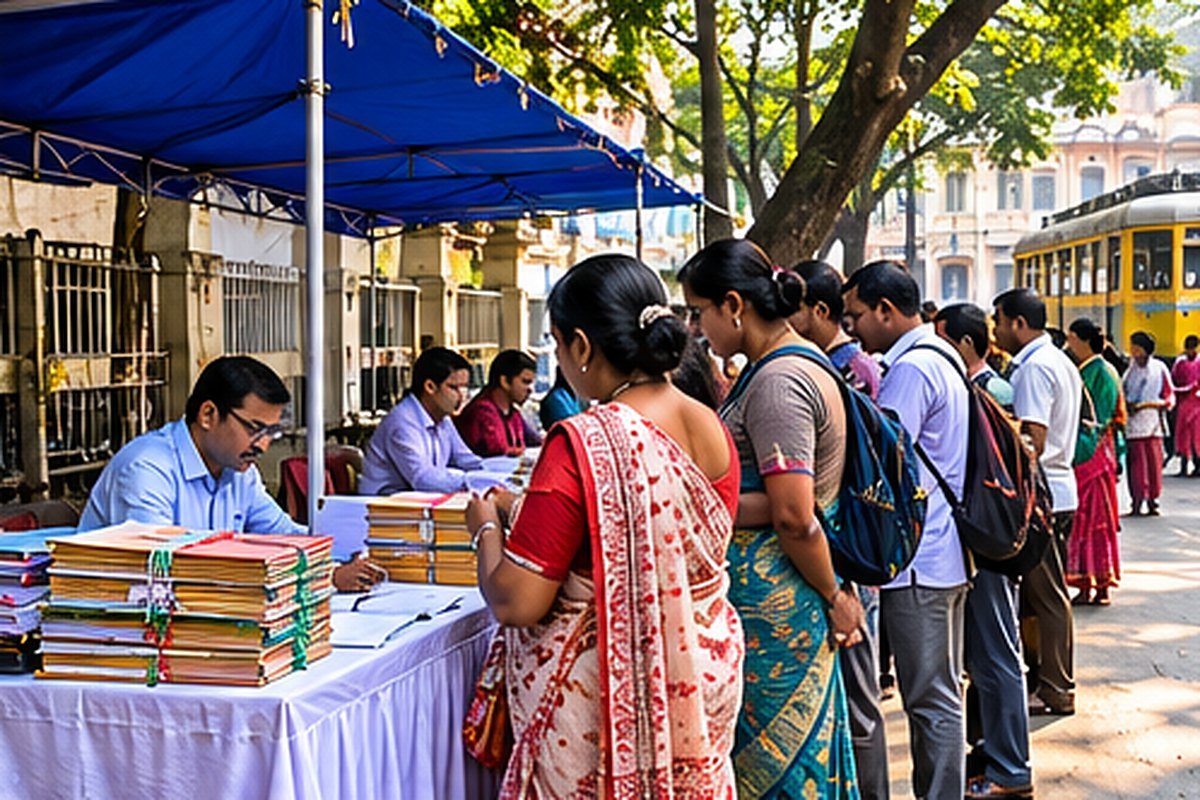
On 23 November 2026, a three-judge Bench headed by Chief Justice of India Surya Kant directed that tribunals hearing appeals arising from the special intensive revision (SIR) of electoral rolls in West Bengal separate the pending appeals into two groups and decide first those filed by excluded voters seeking re-inclusion, keeping objections to the inclusion of other names for later. According to an Election Commission of India (ECI) affidavit, over 38 lakh appeals were filed before 19 tribunals, about 22 lakh of them by excluded voters. The court directed the ECI to increase the number of tribunals in consultation with the Chief Justice of the Calcutta High Court, relocate them to central hubs in Kolkata, and further prioritise, within a week, appeals by excluded voters from the Kolkata Municipal Corporation area. The order came after the State government challenged a Calcutta High Court stay on the Kolkata municipal elections.
Concept: Electoral rolls, the SIR and the right to vote
Under Article 324, the superintendence, direction and control of the preparation of electoral rolls vests in the Election Commission. Article 326 provides for elections on the basis of adult suffrage: every citizen aged 18 or above who is not otherwise disqualified is entitled to be registered. The Representation of the People Act, 1950 governs electoral rolls: Section 21 provides for their preparation and revision (including a special revision ordered by the ECI), Sections 22 and 23 govern corrections and inclusion of names, and Section 24 provides statutory appeals against such orders. The special appellate tribunals hearing the West Bengal SIR disputes work under arrangements directed by the Supreme Court and are distinct from the ordinary Section 24 appeal process. An intensive revision prepares the roll afresh through house-to-house enumeration, while a summary revision updates the existing roll. A wrongly deleted name means a citizen cannot vote, so speedy disposal of inclusion claims is central to electoral fairness.
Key facts for Prelims
- Article 324 vests superintendence, direction and control of electoral rolls in the Election Commission.
- Article 326: elections to the Lok Sabha and State Assemblies are on the basis of adult suffrage (18 years).
- The Representation of the People Act, 1950 deals with preparation of electoral rolls; the 1951 Act deals with conduct of elections.
- Section 24 of the RP Act, 1950 provides statutory appeals against orders on correction or inclusion of names (Sections 22 and 23).
- An intensive revision prepares the roll afresh; a summary revision updates the existing roll.
Mains analysis and way forward
Mains analysis
- Prioritising inclusion appeals recognises that exclusion denies a constitutional entitlement, while wrongful inclusion can be corrected later.
- Large backlogs after a mass revision show the need for capacity planning before such exercises begin.
- Clear timelines, reasons for deletion and accessible appeal forums are essential for trust in the rolls.
- Judicial oversight balances the ECI’s autonomy with the voter’s right to be heard.
Way forward
- Set time-bound disposal of inclusion claims, with tribunals near voters.
- Publish deletion lists with reasons and give notice before removal.
- Use the lessons of West Bengal to frame standard procedures for future intensive revisions.
Connect the dots: GS II: Representation of People’s Act, constitutional bodies (ECI), judiciary; Essay: democracy and inclusion.
Report claims voters’ Form 6 enrolment data lay exposed on the ECI’s citizen service portal for at least three years
In short: A civic-tech investigation alleges that personal information in voter-registration (Form 6) applications was accessible through an Election Commission portal; about seven crore enrolments took place in the period examined, though that is not a count of records verified as exposed.
Why in news
A report by Charchagram, a civic-tech initiative, alleges that personal data submitted by voters through Form 6 on the Election Commission of India’s (ECI) citizen service portal was accessible without adequate protection for at least three years. It said about seven crore enrolments took place in this period, though this does not establish that every such record was exposed. A Form 6 application contains a citizen’s name, gender, contact details, Aadhaar information and an age-proof document, among other details. Charchagram said it verified records going back to 2023 and found nothing to suggest earlier records were protected. The claims are from the report; the ECI’s response was awaited at the time of reporting.
Concept: Form 6 and India’s data protection law
Under the Registration of Electors Rules, 1960, Form 6 is used by eligible new voters seeking inclusion in an electoral roll; existing electors shifting residence, within or outside their constituency, use Form 8 under the forms revised in 2022. Giving the Aadhaar number in the form is voluntary; the ECI told the Supreme Court in 2023 that it is not mandatory. The Digital Personal Data Protection (DPDP) Act, 2023 provides a framework for processing digital personal data, including by government bodies, subject to its exemptions. Its commencement is phased: the provisions setting up the Data Protection Board of India came into force in November 2025, while the main processing obligations, including reasonable security safeguards and notification of personal data breaches under Section 8, are scheduled to commence in May 2027. Until then, other legal and constitutional protections apply. The right to privacy was recognised as a fundamental right in Justice K.S. Puttaswamy v. Union of India (2017).
Key facts for Prelims
- Form 6 is for enrolment of new voters; Form 7 for objection to inclusion or deletion; Form 8 for shifting residence, corrections and related changes.
- Providing Aadhaar in voter enrolment forms is voluntary.
- DPDP Act, 2023: Data Protection Board provisions in force from November 2025; Section 8 security and breach-notification duties from May 2027.
- Privacy was held to be a fundamental right under Article 21 in Puttaswamy (2017).
- CERT-In is the national agency for cyber security incident response under the IT Act, 2000.
Mains analysis and way forward
Mains analysis
- Public portals holding identity documents are high-value targets; a leak enables identity theft and targeted fraud.
- The alleged exposure shows why government bodies must put strong security safeguards in place even before the DPDP Act’s remaining obligations take effect.
- Trust in electoral rolls depends on both accuracy and the security of voters’ data.
- Independent security audits and breach disclosure build accountability.
Way forward
- Independently investigate the alleged exposure, close any verified gaps and inform affected individuals where appropriate.
- Adopt privacy by design: minimise data collected and mask Aadhaar and documents on portals.
- Make the Data Protection Board fully functional and publish breach-handling reports.
Connect the dots: GS II: government policies, transparency and accountability; GS III: cyber security; GS IV: privacy and public trust.
Sources: The Hindu: Voters’ Form 6 data exposed on ECI portal, claims report, 24 November 2026
No Winter Session yet: Parliament has skipped it only four times, each in exceptional circumstances
In short: With no move yet to summon Parliament for its customary winter sitting, records show the Winter Session was skipped only during the Emergency, in 1979, in 1984 and during the COVID-19 pandemic in 2020.
Why in news
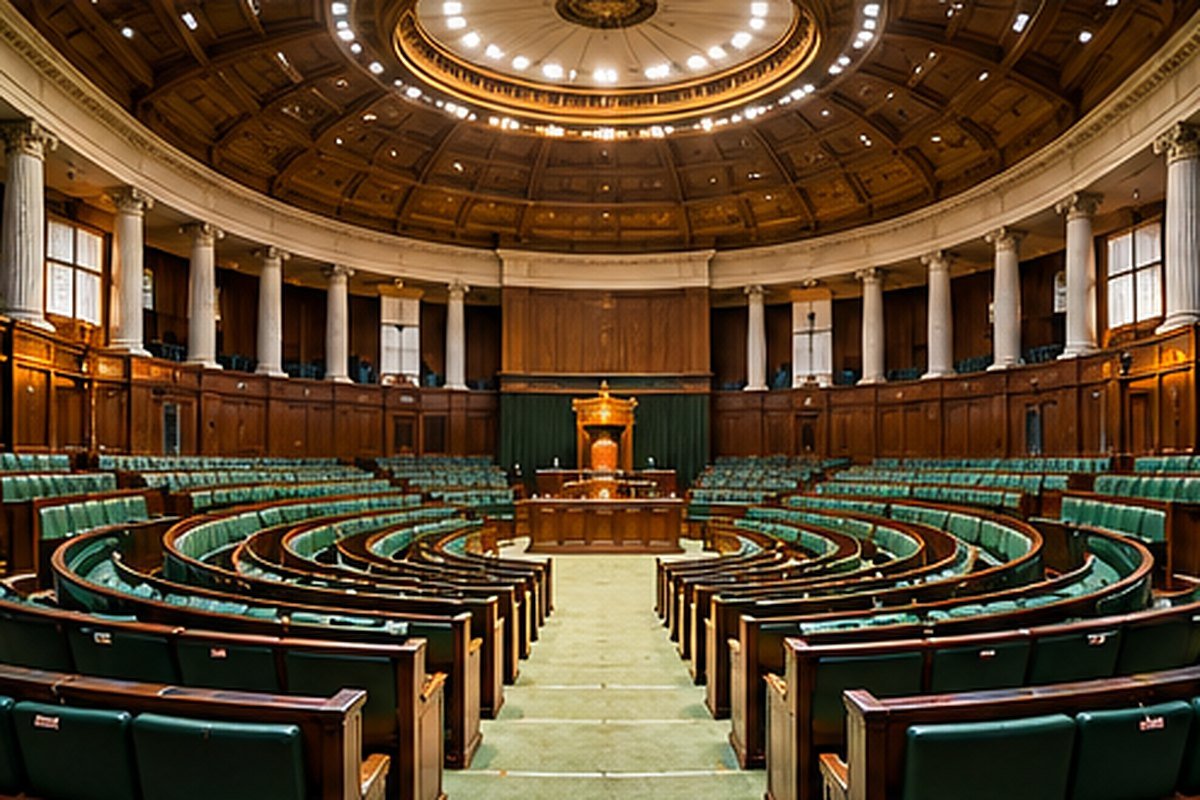
The absence of any move to summon Parliament for its customary Winter Session has prompted discussion on whether it could be skipped. The Hindu’s analysis of 24 November 2026 shows it has been skipped only four times: during the Emergency (the Lok Sabha met from 21 July to 7 August 1975 and next from 5 January 1976), after the premature dissolution of the Sixth Lok Sabha on 22 August 1979, after the assassination of Prime Minister Indira Gandhi on 31 October 1984, and in 2020 due to the COVID-19 pandemic. The Monsoon Session has not been prorogued for a record over 100 days, and there is speculation about a short special session to consider the delimitation Bill. Under the present government, the Winter Session began in November six times and in December five times.
Concept: Article 85: summoning, prorogation and dissolution
Article 85 empowers the President to summon each House of Parliament to meet at such time and place as he thinks fit, provided that six months shall not intervene between its last sitting in one session and the first sitting in the next. The President, acting on the advice of the Union Council of Ministers, can also prorogue the Houses and dissolve the Lok Sabha. The Constitution does not fix the number of sessions; by convention there are three a year: Budget, Monsoon and Winter. Adjournment suspends a sitting until a specified time or date, while adjournment sine die ends a sitting without fixing the next date; both are ordered by the presiding officer. Prorogation, by the President under Article 85, formally ends a session. Dissolution ends the life of the Lok Sabha; the Rajya Sabha is a permanent House. The National Commission to Review the Working of the Constitution (2002) suggested at least 120 sitting days a year for the Lok Sabha and 100 for the Rajya Sabha.
Key facts for Prelims
- Article 85: the gap between two sessions of Parliament cannot exceed six months.
- Summoning and prorogation are done by the President on the advice of the Council of Ministers.
- Adjournment and adjournment sine die are by the presiding officer; prorogation (by the President) ends a session; only the Lok Sabha is dissolved.
- The Winter Session was skipped in 1975, 1979, 1984 and 2020.
- The NCRWC (2002) recommended a minimum of 120 sitting days a year for the Lok Sabha and 100 for the Rajya Sabha.
Mains analysis and way forward
Mains analysis
- Regular sittings are the main way Parliament holds the executive accountable through questions, debates and committees.
- Leaving the timing of sessions entirely to the executive allows sittings to be shortened or delayed.
- Fewer sittings push law-making towards ordinances and reduce scrutiny of Bills.
- A fixed parliamentary calendar, as in several democracies, can strengthen legislative independence.
Way forward
- Adopt an annual parliamentary calendar announced in advance.
- Consider a minimum number of sitting days, as the NCRWC suggested.
- Strengthen committees so scrutiny continues between sessions.
Connect the dots: GS II: Parliament, structure and functioning, executive-legislature relations; Essay: accountability in democracy.
Sources: The Hindu: Winter Session skipped just four times in India’s parliamentary history, 24 November 2026
West Bengal to move a resolution to rename the State “Paschim Banga” in English too
In short: West Bengal’s Cabinet has decided to table a resolution in the Assembly on 9 December to rename the State “Paschim Banga”; the change would then need a law passed by Parliament.
Why in news
West Bengal Chief Minister Suvendu Adhikari said on 23 November 2026 that a proposal to rename the State as “Paschim Banga”, its Bengali name, will be tabled in the State Assembly on 9 December, and that after its passage it will be sent to the Union government “for the necessary parliamentary and legal procedures”. He said the State would be known as “Paschim Banga” in English as well. The State leadership links the name to the history of the State’s creation at Partition, when the eastern part became East Bengal, now Bangladesh. The previous government had passed a resolution in 2018 to rename the State “Bangla”, but the Union government did not act on it.
Concept: How a State is renamed: Article 3
Under Article 3, Parliament may by law alter the name of any State. A Bill for this can be introduced only on the recommendation of the President, and the President must first refer it to the State legislature for its views within a specified period; those views are not binding on Parliament. Such a law is not treated as a constitutional amendment under Article 368 and is passed by a simple majority (Article 4). A State Assembly resolution, such as the one West Bengal plans, is therefore only a request; the Union Home Ministry examines it, usually after seeking inputs from agencies such as the Ministry of External Affairs, the Survey of India and the Registrar General. Past renamings include Madras to Tamil Nadu (1969), Mysore to Karnataka (1973), Uttaranchal to Uttarakhand (2007) and Orissa to Odisha (2011).
Key facts for Prelims
- Article 3: Parliament can alter the name of a State by law.
- Such a Bill needs the President’s recommendation and a reference to the State legislature, whose views are not binding.
- Laws under Articles 2 and 3 are not constitutional amendments under Article 368 (Article 4).
- Orissa was renamed Odisha in 2011; Uttaranchal became Uttarakhand in 2007.
- Madras State was renamed Tamil Nadu in 1969, and Mysore became Karnataka in 1973.
Mains analysis and way forward
Mains analysis
- Names carry identity, history and language, so renaming reflects cultural self-assertion.
- The final power lies with Parliament, which keeps the Union in control of the country’s territorial map.
- Renaming has administrative costs (records, signage, documents) that need to be weighed.
- The fate of the 2018 resolution shows that Union-State relations shape whether a request moves.
Way forward
- Decide State requests within a fixed time, with reasons, to avoid political friction.
- Assess administrative and financial costs openly before change.
Connect the dots: GS II: Indian Constitution (Articles 3 and 4), federalism; GS I: Partition and reorganisation of States.
Sources: The Hindu: West Bengal may become ‘Pashchim Banga’ soon, 24 November 2026
Economy
RBI keeps SBI, HDFC Bank and ICICI Bank as Domestic Systemically Important Banks, with the same capital surcharges
In short: The three banks remain “too big to fail” in the RBI’s 2026 list and must keep extra Common Equity Tier 1 capital of 0.80%, 0.40% and 0.20% of risk-weighted assets.

Why in news
The Reserve Bank of India (RBI) has retained State Bank of India, HDFC Bank and ICICI Bank in its 2026 list of Domestic Systemically Important Banks (D-SIBs), in the same buckets as in 2025. SBI, in Bucket 4, must maintain an additional Common Equity Tier 1 (CET1) capital requirement of 0.80% of its risk-weighted assets (RWAs); HDFC Bank, in Bucket 2, 0.40%; and ICICI Bank, in Bucket 1, 0.20%. The surcharge is over and above the capital conservation buffer.
Concept: Why some banks are “too big to fail”
After the 2008 global financial crisis, the Basel Committee and the Financial Stability Board asked regulators to identify banks whose failure would disrupt the whole financial system because of their size, interconnectedness, substitutability and complexity. The RBI issued its D-SIB framework in 2014 and has published a list every year since 2015 (SBI first; ICICI Bank added in 2016; HDFC Bank in 2017). D-SIBs are placed in buckets 1 to 5, with an additional CET1 requirement from 0.20% to 1.00% of RWAs; higher buckets mean more systemic importance. CET1 is the highest-quality capital (mainly equity and retained earnings). Global Systemically Important Banks (G-SIBs) are identified by the FSB; no Indian bank is on that list.
Key facts for Prelims
- The RBI’s 2026 D-SIB list: SBI (Bucket 4), HDFC Bank (Bucket 2), ICICI Bank (Bucket 1).
- Additional CET1: SBI 0.80%, HDFC Bank 0.40%, ICICI Bank 0.20% of risk-weighted assets.
- The RBI framework for D-SIBs was issued in 2014; the first list came in 2015.
- Criteria: size, interconnectedness, lack of substitutes and complexity.
- G-SIBs are identified by the Financial Stability Board; no Indian bank is a G-SIB.
Mains analysis and way forward
Mains analysis
- Extra capital lowers the chance of failure of banks whose collapse would hurt the whole economy.
- It reduces moral hazard from the implicit expectation of a government bailout.
- Concentration of banking in a few large banks raises systemic risk and needs closer supervision.
Way forward
- Pair capital surcharges with stronger supervision and resolution planning.
- Develop a credible bank resolution framework so large failures can be handled without taxpayer money.
Connect the dots: GS III: Indian economy, banking sector and financial stability; Prelims: Basel III, CET1.
Environment and disaster management
CAQM report card: three States meet stubble machine targets but lag on other steps; Supreme Court mulls BS-VI-only vehicles in Delhi
In short: Haryana, Uttar Pradesh and Rajasthan met targets for crop residue machines but lagged on buses, industry checks and waste management, while the Supreme Court floated allowing only BS-VI vehicles into Delhi.
Why in news
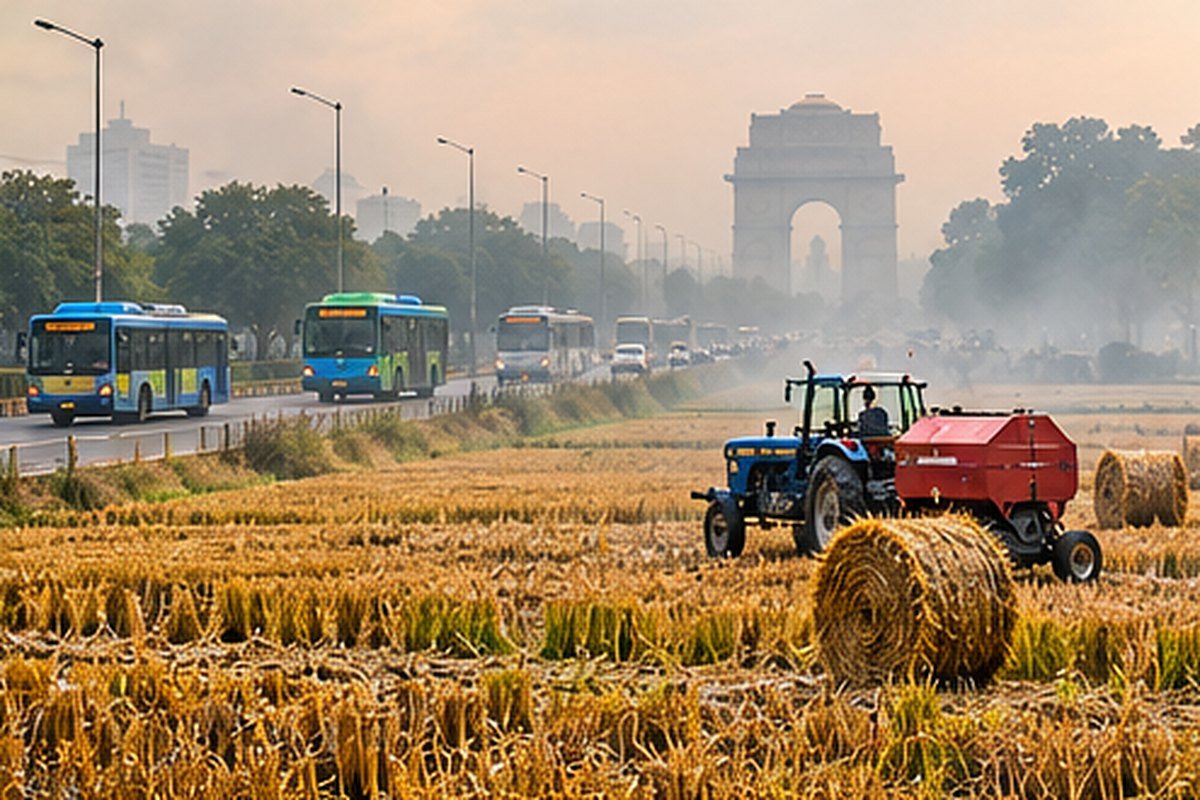
A report by the Commission for Air Quality Management in NCR and Adjoining Areas (CAQM), covering progress up to 31 October 2026, found that Haryana (13,700 machines against a target of 9,000), Uttar Pradesh (234 against 203) and Rajasthan (1,253 against 1,203) met or exceeded targets for crop residue management (CRM) machines, while Punjab reached 88% (19,890 against 22,500). Punjab and Haryana were rated “unsatisfactory” on use of straw. The States lagged on expanding city bus fleets, industrial inspections and municipal solid waste management, and none had installed automatic number plate recognition cameras at petrol pumps or set up green crematoriums. A final report card is due in January 2027. Separately, on 23 November, the Supreme Court orally mooted allowing only BS-VI compliant vehicles into Delhi. Delhi’s average AQI was 250 (“poor”) on Monday morning.
Concept: The CAQM, stubble burning and Bharat Stage norms
The CAQM is a statutory body under the Commission for Air Quality Management in National Capital Region and Adjoining Areas Act, 2021, which replaced the Environment Pollution (Prevention and Control) Authority. It coordinates action across Delhi, Punjab, Haryana, Rajasthan and Uttar Pradesh. Farmers burn paddy stubble because of the short window before wheat sowing; in-situ management (machines like the Happy Seeder and super seeder) and ex-situ use (biomass power, ethanol, pellets) are the alternatives, supported by a central scheme for CRM machinery. Bharat Stage (BS) emission norms are based on European norms; India moved from BS-IV directly to BS-VI on 1 April 2020, which sharply cuts particulate matter and nitrogen oxides. The National Air Quality Index rates AQI 201-300 as “poor”.
Key facts for Prelims
- The CAQM was set up under an Act of 2021 for the NCR and adjoining areas.
- India leapfrogged from BS-IV to BS-VI emission norms on 1 April 2020.
- BS-VI norms are broadly equivalent to Euro 6.
- AQI 201-300 is “poor” and 301-400 “very poor” on the National AQI scale.
- The Graded Response Action Plan (GRAP) lists stage-wise measures as AQI worsens.
Mains analysis and way forward
Mains analysis
- Machines alone do not end stubble burning; straw needs markets and farmers need support for the extra cost.
- Vehicle, industry, dust and waste sources need action all year, not only in winter.
- Restricting older vehicles cuts emissions but affects livelihoods and needs public transport alternatives.
- Report cards that rate States help accountability across jurisdictions.
Way forward
- Create assured demand for paddy straw through biomass co-firing and compressed biogas.
- Expand electric buses and last-mile public transport before restricting private vehicles.
- Enforce year-round dust, waste and industrial controls with public monitoring.
Connect the dots: GS III: environmental pollution, agriculture (crop residue); GS II: federal coordination; Prelims: CAQM, BS-VI.
Sources: The Hindu: 3 States meet stubble targets; gaps in other measures, says report, 24 November 2026; The Hindu: SC moots allowing only BS-VI compliant vehicles into Delhi, 24 November 2026
India completes national landslide susceptibility mapping over 4.3 lakh sq km, shifting from relief to prevention
In short: The Union Science Minister said India has mapped landslide-prone areas across about 4.3 lakh sq km and compiled records of nearly 91,000 past landslides, as it moves from post-disaster relief to risk reduction.
Why in news
Speaking at the 7th World Landslide Forum at Amrita Vishwa Vidyapeetham, Faridabad, on 23 November 2026, Minister of State for Science and Technology Jitendra Singh said India has completed a national landslide susceptibility mapping exercise across about 4.3 lakh sq km, and that the landslide inventory database had compiled information on nearly 91,000 historical landslides by the end of 2025. He said India is shifting its approach from post-disaster relief to prevention, a “major transformation” in disaster management strategy.
Concept: Landslides in India and how they are managed
About 0.42 million sq km, or roughly 12.6% of India’s land area excluding snow-covered areas, is prone to landslides, according to the Geological Survey of India (GSI). The most vulnerable regions are the Himalaya (Uttarakhand, Himachal Pradesh, Jammu and Kashmir, Sikkim and the North-East) and the Western Ghats and Nilgiris (Kerala, Karnataka, Tamil Nadu, Maharashtra, Goa). The GSI, under the Ministry of Mines, is the nodal agency for landslide studies and prepares susceptibility maps; the National Disaster Management Authority (NDMA) issued Landslide Guidelines in 2009 and a National Landslide Risk Management Strategy in 2019. ISRO’s National Remote Sensing Centre released a Landslide Atlas of India in 2023. Causes include heavy rain, earthquakes, steep slopes, deforestation, road cutting and unplanned construction.
Key facts for Prelims
- The Geological Survey of India is the nodal agency for landslide studies in India.
- About 12.6% of India’s land area (excluding snow-covered areas) is landslide-prone (GSI).
- NDMA issued Landslide Guidelines in 2009 and the National Landslide Risk Management Strategy in 2019.
- ISRO’s National Remote Sensing Centre released the Landslide Atlas of India in 2023.
- Susceptibility mapping shows where landslides may occur; early warning tells when.
Mains analysis and way forward
Mains analysis
- Susceptibility maps help zoning, road alignment and building rules in hilly areas.
- Prevention is cheaper than relief: early warning and land-use control save lives.
- Climate change is raising extreme rainfall, which increases landslide risk in the Himalaya and the Western Ghats.
- Maps help only if local bodies use them in planning and enforcement.
Way forward
- Link maps to building bye-laws and infrastructure approvals in hill States.
- Expand rainfall-based early warning systems with community alerts.
- Promote slope stabilisation, drainage and afforestation in high-risk zones.
Connect the dots: GS III: disaster and disaster management; GS I: important geophysical phenomena; Prelims: GSI, NDMA.
Sources: The Hindu: India maps landslide-prone zones across 4.3 lakh sq. km, 24 November 2026
Security
BRO warns Pakistan-based operatives infiltrated defence-linked WhatsApp groups; I4C flags misuse of WhatsApp Web
In short: The Border Roads Organisation alerted its staff that Pakistan-based intelligence operatives had silently joined 11 unofficial WhatsApp groups of defence personnel, and the Home Ministry’s cybercrime centre warned users to log out of WhatsApp Web sessions.
Why in news
The Border Roads Organisation (BRO) issued a cybersecurity alert warning that Pakistan-based intelligence operatives (PIOs) had infiltrated 11 unofficial WhatsApp groups used by defence, paramilitary and civil defence personnel, including groups on transfers and postings. Using spoofed or compromised Indian mobile numbers, they stayed as “silent members” monitoring conversations. The alert cited a case in which a civilian staff member allegedly leaked sensitive information for money to an operative posing as a DRDO scientist. Separately, the Indian Cyber Crime Coordination Centre (I4C) under the Union Home Ministry warned that an active WhatsApp Web session left open on office, shared or public computers can be misused to read messages, impersonate the user and commit fraud; it advised manual log-out after every session and avoiding sensitive information on such devices.
Concept: India’s cyber security institutions
The I4C, set up by the Ministry of Home Affairs and dedicated to the nation in January 2020, coordinates action against cybercrime; it runs the National Cyber Crime Reporting Portal (cybercrime.gov.in) and the helpline 1930 for financial fraud. CERT-In, under the Ministry of Electronics and IT, is the national agency for cyber incident response under Section 70B of the IT Act, 2000, while the National Critical Information Infrastructure Protection Centre (NCIIPC) protects critical systems. The BRO, which builds roads in border areas, works under the Ministry of Defence. Social engineering, in which an adversary poses as a trusted person to extract information, is a common espionage method, and the Official Secrets Act, 1923 penalises sharing information that may be useful to an enemy.
Key facts for Prelims
- The I4C works under the Ministry of Home Affairs; the cybercrime helpline number is 1930.
- CERT-In is the national nodal agency for cyber incident response (Section 70B, IT Act, 2000).
- NCIIPC protects critical information infrastructure.
- The Border Roads Organisation functions under the Ministry of Defence.
- The Official Secrets Act dates from 1923.
Mains analysis and way forward
Mains analysis
- Informal messaging groups mix personal and official information, creating easy targets for espionage.
- Human vulnerabilities (money, trust, impersonation) are often the weakest link, not technology.
- Clear rules on official communication and regular training reduce risk.
- Coordination among I4C, CERT-In and the armed forces is needed against State-backed cyber operations.
Way forward
- Move official coordination to secure, government-controlled platforms.
- Run cyber hygiene training and periodic audits of groups used by personnel.
- Enforce verification of identities before sharing any work-related information.
Connect the dots: GS III: challenges to internal security through communication networks, cyber security; GS IV: integrity.
Sources: The Hindu: Pak. infiltrated defence-linked WhatsApp groups, says BRO, 24 November 2026; The Hindu: Cybercrime centre warns of misuse of WhatsApp Web, 24 November 2026
Science and technology
Brazil study finds Wolbachia-carrying mosquitoes cut dengue and chikungunya infections in children by about 69%
In short: A four-year study in Belo Horizonte found that children in neighbourhoods where Wolbachia mosquitoes were released were far less likely to be infected, strengthening the case for this biological method of disease control.
Why in news
Researchers reported on 21 November 2026, in findings presented at a meeting of the American Society of Tropical Medicine and Hygiene, that a four-year study of more than 5,700 children in Belo Horizonte, Brazil, found about a 69% reduction in dengue and chikungunya infections in neighbourhoods where Wolbachia-carrying mosquitoes were released, compared with similar neighbourhoods. The effect held even during Brazil’s severe 2024 dengue outbreak. Unlike earlier studies based on diagnosed cases, this one tested children’s blood for signs of infection. All neighbourhoods received the same pesticide and other control measures; half were randomly assigned Wolbachia releases. The method has been pioneered by the non-profit World Mosquito Program. The findings were presented at a scientific conference and await full peer-reviewed publication.
Concept: How the Wolbachia method works
Wolbachia is a bacterium found naturally in many insects but not in Aedes aegypti, the main mosquito that spreads dengue, chikungunya, Zika and yellow fever. When Aedes aegypti carry Wolbachia, the bacteria reduce the mosquito’s ability to transmit these viruses. Females pass Wolbachia to their offspring, so after enough releases it spreads and becomes established in the local population, giving long-lasting, self-sustaining protection without killing mosquitoes. This differs from the sterile insect technique or genetically modified mosquitoes, which aim to reduce mosquito numbers. Dengue is caused by a flavivirus with four serotypes; a second infection with a different serotype can be more severe. In India, the ICMR-Vector Control Research Centre in Puducherry has developed Wolbachia-infected Aedes aegypti colonies for research.
Key facts for Prelims
- Aedes aegypti transmits dengue, chikungunya, Zika and yellow fever.
- Wolbachia is a bacterium that reduces Aedes aegypti’s ability to transmit these viruses.
- Wolbachia is passed from female mosquitoes to their offspring, so it self-sustains in the population.
- Dengue virus has four serotypes (DENV-1 to DENV-4).
- The World Mosquito Program pioneered the Wolbachia method.
Mains analysis and way forward
Mains analysis
- A self-sustaining biological control can reduce reliance on insecticides, to which mosquitoes develop resistance.
- Rising temperatures are expanding the range of Aedes mosquitoes, increasing the need for new tools.
- Public acceptance and regulatory approval are essential before releases.
- It complements, not replaces, source reduction, surveillance and vaccines.
Way forward
- Run large Indian field trials with community engagement and independent evaluation.
- Integrate Wolbachia with the National Centre for Vector Borne Diseases Control’s programmes.
- Continue source reduction of breeding sites and surveillance.
Connect the dots: GS III: biotechnology, science in everyday life; GS II: health; Prelims: vectors and diseases.
European-Japanese spacecraft BepiColombo enters orbit around Mercury after an eight-year journey
In short: BepiColombo, a joint mission of ESA and JAXA launched in 2018, has begun orbiting Mercury, becoming only the second spacecraft to orbit the innermost planet, though a software issue cut a thruster burn short.
Why in news
The European Space Agency (ESA) confirmed on 21 November 2026 that BepiColombo had begun orbiting Mercury after an eight-year journey. On 22 November it said that during the manoeuvre “the thruster burn was shorter than planned following a software issue”, but the spacecraft was safe. BepiColombo, launched in 2018, is a joint mission of ESA and the Japan Aerospace Exploration Agency (JAXA), combining ESA’s Mercury Planetary Orbiter and JAXA’s Mercury Magnetospheric Orbiter (Mio), which are due to separate on 9 and 10 December. Routine science operations are due to begin in April 2027. It is only the third spacecraft to visit Mercury and the second to orbit it.
Concept: Mercury and its missions
Mercury is the smallest planet and the closest to the Sun; it has no natural moons and only an extremely thin exosphere rather than a substantial atmosphere, and its diameter (4,880 km) is less than 40% of Earth’s. Despite its closeness to the Sun, water ice survives in permanently shadowed polar craters, and the planet has an internally generated global magnetic field. Earlier missions were NASA’s Mariner 10 (flybys in 1974-75) and MESSENGER, the first to orbit Mercury (2011-2015). BepiColombo is named after Italian scientist Giuseppe “Bepi” Colombo, who helped plan Mariner 10’s orbit. Reaching Mercury is hard because a spacecraft gains speed falling towards the Sun and must shed it; BepiColombo used gravity-assist flybys of Earth, Venus and Mercury and electric propulsion.
Key facts for Prelims
- BepiColombo is a joint mission of ESA and JAXA, launched in 2018.
- Its two orbiters: ESA’s Mercury Planetary Orbiter and JAXA’s Mercury Magnetospheric Orbiter (Mio).
- NASA’s MESSENGER was the first spacecraft to orbit Mercury (2011-2015).
- Mariner 10 made the first flybys of Mercury in 1974-75.
- Mercury has no natural satellite and has a global magnetic field.
Mains analysis and way forward
Mains analysis
- International collaboration shares the high cost and risk of deep-space missions.
- Studying Mercury helps explain how rocky planets near stars form and evolve.
- Gravity assists and electric propulsion show how mission design overcomes energy limits.
Way forward
- India can build on Chandrayaan and Mangalyaan through partnerships for future planetary missions such as the Venus Orbiter Mission.
Connect the dots: GS III: achievements in space technology, awareness in space; Prelims: planetary missions.
In brief
- Armenia drops Karabakh claim in draft constitution: Prime Minister Nikol Pashinyan unveiled a draft constitution on 23 November 2026 that removes the 1990 independence declaration clause on reunification with Nagorno-Karabakh, which Azerbaijan retook in 2023. He said it was needed for a peace treaty with Azerbaijan; the draft goes to a referendum.
- India third in the Asia Power Index 2026: Australia’s Lowy Institute ranks India third in overall power and influence in the Indo-Pacific in its Asia Power Index 2026, after the United States and China.
- One crore HPV vaccine doses: India has given more than one crore doses of the HPV vaccine to 14-year-old girls in under nine months under its national campaign, covering about 87% of the annual target, the Health Ministry said on 21 November 2026. The vaccine, given free as a single dose with parental consent, protects against cervical cancer.
- ASEAN-India Maritime Conclave: The two-day ASEAN-India Maritime Conclave began in Visakhapatnam on 23 November 2026, organised by the India Foundation with the Ministry of External Affairs, focusing on maritime connectivity, maritime domain awareness and the blue economy under India’s Act East Policy.
- Bullet train trial runs in 2027: Trial runs of the indigenously built high-speed train on the Surat-Bilimora section (about 50 km) of the Mumbai-Ahmedabad corridor will begin in April-May 2027, the Railway Minister said.
- No treaty limits the largest nuclear arsenals: With New START (New Strategic Arms Reduction Treaty) having expired in February 2026, no treaty formally restricts the U.S. and Russian nuclear arsenals for the first time since 1972. The U.S., China and Russia reaffirmed in Shenzhen on 19 November that a nuclear war must never be fought.
Prelims practice: 5 questions
Choose an option to see the answer and explanation. Your score appears when all five are answered.
Mains practice
Article 85 limits the maximum interval between parliamentary sessions but does not prescribe a minimum number of annual sitting days. Examine the implications of this arrangement for parliamentary accountability, and suggest reforms to strengthen legislative functioning.
Show the answer outline
Introduction (about 30 words)
- Article 85 requires that six months not intervene between the last sitting of one session and the first sitting of the next; the three-session calendar is a convention, and summoning and prorogation are done by the President on ministerial advice.
Implications for accountability
- The executive effectively decides when Parliament meets; fewer sittings mean fewer Question Hours, debates and scrutiny of Bills.
- Sessions can be delayed or shortened (the 2026 Winter Session has not yet been summoned), while presiding officers control adjournments within a session.
- More reliance on ordinances when Parliament is not in session (Article 123).
- Sitting days have stayed well below the 120 a year suggested by the NCRWC for the Lok Sabha.
Counter-view
- Flexibility helps respond to emergencies, elections and the legislative agenda.
- Committees continue scrutiny between sessions.
Reforms
- An annual parliamentary calendar announced in advance, as in the U.K. and several democracies.
- A minimum number of sitting days (NCRWC: 120 for the Lok Sabha, 100 for the Rajya Sabha).
- Allow a set share of members to requisition a session, as some legislatures do.
- Strengthen department-related standing committees and make referral of Bills routine.
Conclusion (about 30 words)
- A predictable, adequate calendar would make Parliament the centre of national deliberation and strengthen the accountability of the executive, which is the essence of parliamentary democracy.
Tip: Use the four skipped Winter Sessions (1975, 1979, 1984, 2020) and the NCRWC’s 120-day suggestion as precise examples in answers on the functioning of Parliament.
Your next step, whichever stage you are at.
Open Library · All programmes · WhatsApp +91 81220 02172
Current Canvas is prepared by the UPSC Gurus editorial desk. Every fact is checked against official releases and reliable reporting, with sources listed under each story. Editions are compiled each month into Current Canvas Monthly, a free magazine.
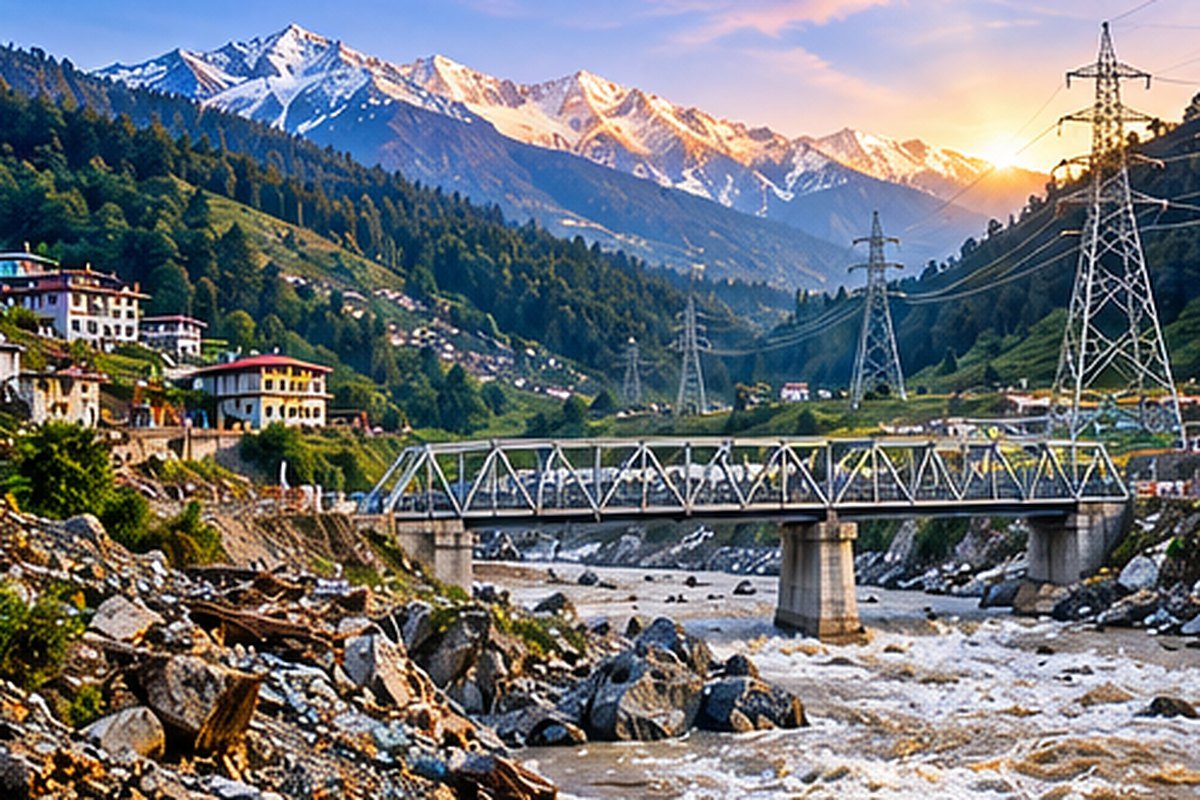
About images: photographs and illustrations in Current Canvas are AI-generated for illustration only. They are not news photographs of the events described.
Your first Mentor’s Desk call is free
One free conversation per aspirant about where you are in your preparation, with an honest suggestion of the right next step.
Know more and bookHave a question? Get in touch
For questions about a programme, its fees, batch dates, payment or access. Message us on WhatsApp and our team will reply. Asking a question is not a booking, and you can ask as often as you need.
Get in touch on WhatsApp