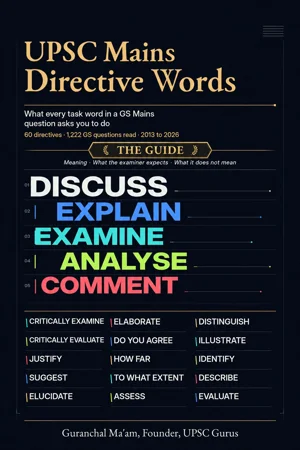
 New this week · Free UG Handout 02UPSC Mains Directive Words: 60 Meanings, Trends and PYQsTwo free PDFs: The Guide and the With PYQs edition.Read and download
Today’s Canvas
Today’s edition opens with a sharp rise in wholesale inflation, driven by fuel and power, and the IMF’s warning that global public debt is heading towards 100% of GDP. Andhra Pradesh goes to the polls for 100 urban local bodies, India sets out its Indo-Pacific vision at the first ASEAN-India Defence Think Tank Forum, and the External Affairs Minister describes India as a power in the middle rather than a middle power. We close with the centenary of the Greater India Society and India’s long cultural conversation with Asia.
About 27 minutes to read the key points; Mains analysis opens under each story.
- Wholesale inflation rises to 11.39% in September 2026 as fuel, food and manufactured prices climbGS III
- Andhra Pradesh notifies urban local body polls: 13 corporations, 77 municipalities, 10 nagar panchayats vote on 28 OctoberGS II
- Karnataka High Court strikes down 2022 law raising SC and ST quotas, as total reservation breaches 50 per cent capGS II
- At first ASEAN-India Defence Think Tank Forum, Rajnath seeks an Indo-Pacific where all nations choose freelyGS II
- Jaishankar: India is not a ‘middle power’ but a ‘power in the middle’ in a world of choke pointsGS II
- Greater India Society centenary: three-day Brihattar Bharat conference on India’s cultural connections opens in New DelhiGS I
- IMF Fiscal Monitor: global public debt at 94% of GDP in 2025, projected to reach 100% by 2029GS III
- Supreme Court directs Railways to extend travel insurance to counter-sold tickets from 27 October, warns Railway BoardGS IV
- President Murmu calls for close cooperation between scientific institutions and armed forces; says decisions cannot be left to AI aloneGS III
- Navy to commission Samarthak, first of four L&T-built Multi-Purpose Vessels, at Karwar on 16 OctoberGS III
- Analysis using WTO trade model estimates India’s free trade agreements could lift GDP by 1.2% to 2.1% by 2035GS III
- Supreme Court gives Centre four weeks to respond on plea for mandatory age checks at liquor outletsGS II
- 13th Sustainable Mountain Development Summit in Srinagar backs a draft mountain policy for Jammu and KashmirGS I
- Supreme Court closes Haren Pandya murder convict’s remission plea after Gujarat rejects it, leaves challenge to High CourtGS II
- CII-ISB study finds two-thirds of surveyed MSMEs use AI tools, but only 21% use business softwareGS III
- Ayush Ministry announces standard treatment guidelines for skin disorders across Ayurveda, Siddha, Unani and HomoeopathyGS II
- WPI inflation rose to 11.39% in September 2026 from 9.92% in August, led by fuel and power.
- The IMF Fiscal Monitor projects global public debt to reach 100% of GDP by 2029.
- Andhra Pradesh will hold polls for 13 corporations, 77 municipalities and 10 nagar panchayats on 28 October.
- Rajnath Singh addressed the first ASEAN-India Defence Think Tank Forum in New Delhi on 14 October.
- The Supreme Court directed the Railways to extend travel insurance to counter-sold tickets from 27 October.
- The Brihattar Bharat conference marks 100 years of the Greater India Society, founded in Calcutta in 1926.
Economy and reports
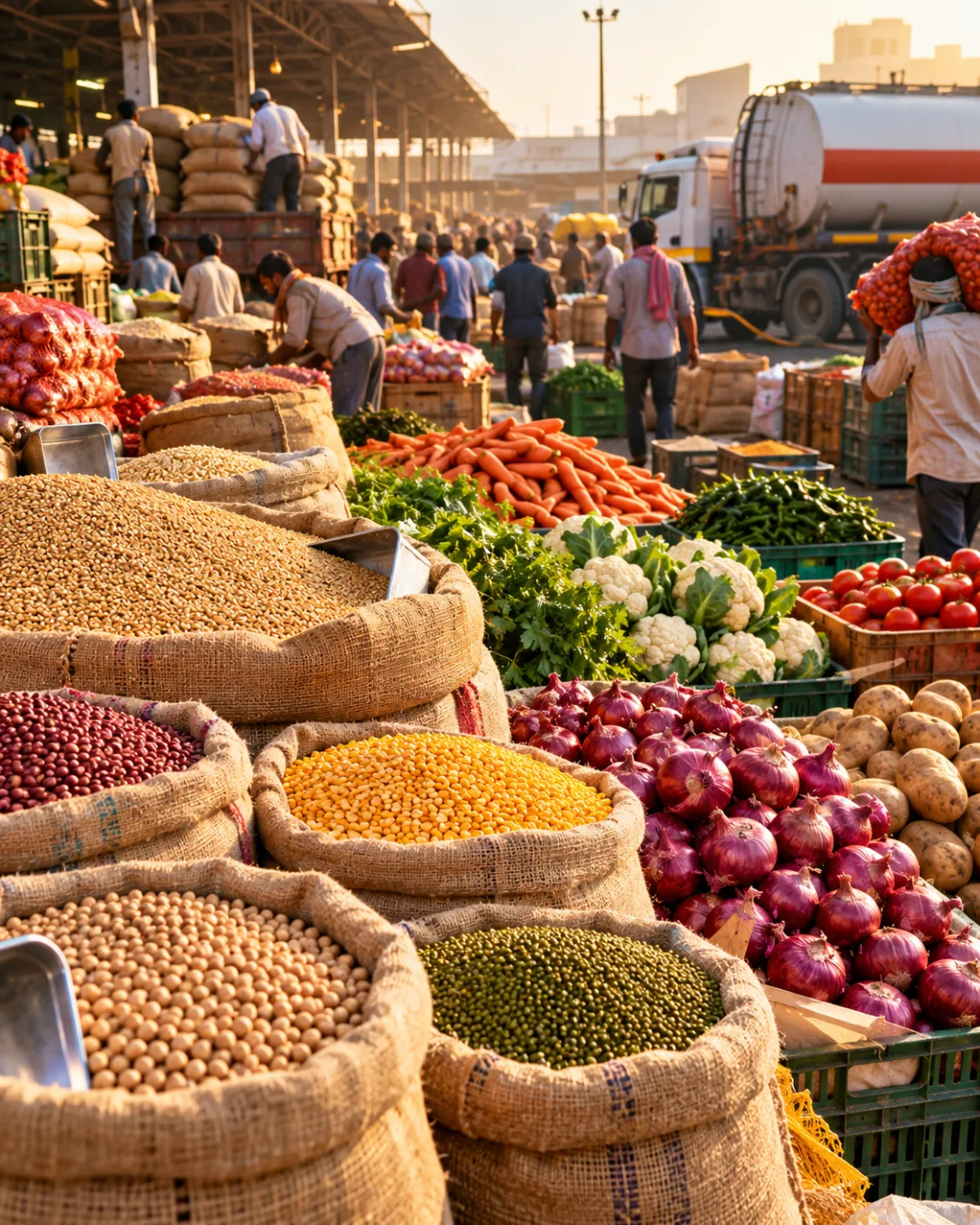
Wholesale inflation rises to 11.39% in September 2026 as fuel, food and manufactured prices climb
In short: WPI inflation rose from 9.92% in August to 11.39% in September, led by a 25.85% jump in fuel and power prices.
Why in news
Provisional data released by the Ministry of Commerce and Industry on 14 October 2026 show annual inflation based on the Wholesale Price Index (WPI) at 11.39% in September 2026, up from 9.92% in August. The rise was broad-based across all three major groups: fuel and power, primary articles and manufactured products.
Background
Fuel and power inflation rose to 25.85% from 22.93%, with crude petroleum and natural gas at 57.32% (34.41% in August), mineral oils at 40.02% and coal and lignite at 9.31%. Food articles inflation rose to 8.14% from 5.67%, and the WPI Food Index to 8.66% from 7.05%. Manufactured products inflation rose to 9.76% from 8.37%, with basic metals at 16.96% and chemicals at 16.74%. For April to September 2026, cumulative WPI inflation was 9.85%, against -0.20% in the same period a year earlier. Retail (CPI) inflation for September, released on 12 October, was 5.54%, so wholesale prices are rising about twice as fast as retail prices.
Key facts for Prelims
- The WPI is compiled and released by the Office of the Economic Adviser, Department for Promotion of Industry and Internal Trade (DPIIT), Ministry of Commerce and Industry.
- The current WPI series uses 2022-23 as its base year; the all-commodities index rose to 112.5 in September from 110.8 in August.
- The new WPI series (base 2022-23) and the Producer Price Indices were launched on 15 June 2026; the WPI will be released for five years alongside the PPI so that users can switch to the PPI.
- The WPI has three major groups: primary articles, fuel and power, and manufactured products; it does not cover services.
- Alongside the WPI, the ministry publishes an Output Producer Price Index (112.5 in September) and a trial Input PPI for manufacturing (106.1 in September).
- September 2026 estimates are provisional, with a weighted response rate of 83.4%; October data are due on 16 November 2026.
Mains analysis and way forward
Mains analysis
- Imported cost push: the steep rise in crude and natural gas prices shows how the global energy shock feeds into domestic input costs well before it reaches retail prices.
- Pass-through risk: a WPI-CPI gap of nearly six percentage points could narrow if firms pass higher input costs to consumers, especially through manufactured goods and transport; this is a possible risk, not a forecast.
- Margin pressure on industry: rising prices of basic metals, chemicals and textiles squeeze manufacturers, particularly MSMEs with weak pricing power.
- Policy relevance: the RBI targets CPI inflation, but WPI trends act as an early signal of pipeline pressure and influence the real cost of borrowing for producers.
Way forward
- Use targeted and temporary relief for the most affected sectors rather than broad subsidies, so that fiscal space is protected.
- Strengthen supply-side measures for food articles, such as buffer stock releases and better storage, to contain the food component.
- Keep diversifying energy sources and suppliers to reduce the economy’s exposure to imported fuel price shocks.
Connect the dots: Links to: inflation and its measurement (WPI, CPI, PPI), cost-push inflation, monetary policy transmission, energy security.
Sources: Business Standard: Wholesale inflation jumps to 11.39% in September as food, fuel costs rise, 14 October 2026; Business Today: Wholesale inflation rises to 11.39% in September from August’s 9.9% on higher fuel, food prices, 14 October 2026; Office of the Economic Adviser, DPIIT: Press release on WPI and PPI for May 2026 (new series), 15 June 2026
IMF Fiscal Monitor: global public debt at 94% of GDP in 2025, projected to reach 100% by 2029
In short: The IMF says the window for orderly fiscal adjustment is narrowing and urges credible consolidation, better tax design and targeted energy support.
Why in news
The International Monetary Fund presented its October 2026 Fiscal Monitor on 14 October 2026 at the IMF-World Bank Annual Meetings in Bangkok. It reported that global public debt rose to 94% of GDP in 2025 and is projected to reach 100% of GDP by 2029, driven mainly by major economies.
Background
The IMF linked the rise to higher spending on social welfare, defence and strategic autonomy, higher interest costs and the fiscal effects of conflicts in the Middle East. Rodrigo Valdes, Director of the IMF’s Fiscal Affairs Department, said economic resilience had not translated into significant fiscal improvement and that the window for orderly adjustment is narrowing as debt is refinanced at higher rates. The report recommends phasing out broad energy subsidies in favour of targeted, temporary support, reforming VAT systems and strengthening tax administration, which has raised revenue by nearly 2% of GDP in some countries. The April 2026 Fiscal Monitor had noted that global interest payments rose from about 2% to nearly 3% of global GDP in four years, and put India’s debt-to-GDP ratio above 84%.
Key facts for Prelims
- The Fiscal Monitor is a flagship IMF publication prepared by its Fiscal Affairs Department and released twice a year, in April and October.
- The other two IMF flagships released at the Annual Meetings are the World Economic Outlook and the Global Financial Stability Report.
- The 2026 IMF-World Bank Annual Meetings are being held in Bangkok, Thailand.
- On 14 October 2026 the IMF and World Bank also launched the “Bangkok Blueprint”, a framework against cyber-enabled financial fraud with 12 key considerations.
- General government debt includes the debt of both the Union and state governments; the Centre is governed by the FRBM Act, 2003 and states by their own fiscal responsibility laws.
Mains analysis and way forward
Mains analysis
- Interest burden: when interest rates exceed growth, debt ratios rise even with a balanced primary budget (the interest-growth differential), reducing space for capital spending and welfare.
- New spending pressures: defence, strategic autonomy and energy shocks are adding to structural spending, making consolidation politically harder.
- Revenue mobilisation: broadening tax bases and cutting inefficient exemptions is more growth-friendly than across-the-board spending cuts.
- Relevance for India: India’s debt remains high by emerging market standards, but a steady deficit glide path and strong nominal growth support a gradual decline.
Way forward
- Anchor consolidation in credible medium-term frameworks such as debt targets, with escape clauses for genuine shocks.
- Replace broad fuel subsidies with targeted, time-bound transfers through direct benefit transfer systems.
- Improve spending efficiency through outcome budgeting and better project appraisal.
Connect the dots: Links to: fiscal policy, public debt and FRBM, IMF and Bretton Woods institutions, subsidies and tax reform.
Sources: The Nation (Thailand): Highlights of the IMF-World Bank Meeting, Oct 14, 2026: Launch of “Bangkok Blueprint” to Combat Global Financial Fraud, 14 October 2026; The News Chronicle: Global Public Debt Hits 94% of GDP, Set to Reach 100% by 2029, IMF, 14 October 2026; Kaohoon International: IMF Warns of Soaring Global Debt, Calls for Urgent Fiscal Consolidation and Tax Policy Reforms, 14 October 2026; Business Today: Global debt to hit 100% of GDP by 2029, warns IMF as war adds fiscal strain, 15 April 2026
Analysis using WTO trade model estimates India’s free trade agreements could lift GDP by 1.2% to 2.1% by 2035
In short: A Bloomberg Economics estimate puts the gain at 1.2% of GDP from deals in force, rising to 1.7% (about USD 140 billion) with the EU and New Zealand.
Why in news
A Bloomberg Economics analysis, published by Business Standard on 13 October 2026, uses a computable general equilibrium model developed by the World Trade Organization to estimate the effect of India’s trade deals. It finds that FTAs already in force raise India’s GDP about 1.2% above the baseline by 2035. This is Bloomberg Economics’ own analysis using a WTO-developed model, not a WTO or government forecast.
Background
The analysis counts agreements with the UAE and Australia (2022) and with EFTA, the UK and Oman (2025-26) as in force. The gain rises to 1.7% of GDP, about USD 140 billion at constant 2025 dollars, if the agreements with the European Union (negotiations concluded) and New Zealand (signed) are implemented from 2027. It reaches about 2.1% (about USD 170 billion) if talks with the Eurasian Economic Union, the Gulf Cooperation Council and Israel also conclude and an interim US deal is added, each adding about 0.2 percentage points. Indian exports could be almost 10% above baseline if all deals are implemented. The authors estimate that higher US tariffs cut Indian goods exports to the US by about one-fifth, but the GDP effect is small because less than 2% of India’s output depends on US markets.
Key facts for Prelims
- A computable general equilibrium (CGE) model simulates how a policy change, such as a tariff cut, ripples through all sectors of an economy and across countries.
- EFTA (European Free Trade Association) members are Switzerland, Norway, Iceland and Liechtenstein; under the India-EFTA TEPA they committed USD 100 billion of investment over 15 years.
- The Gulf Cooperation Council comprises Saudi Arabia, the UAE, Qatar, Kuwait, Oman and Bahrain.
- The Eurasian Economic Union members are Russia, Kazakhstan, Belarus, Armenia and Kyrgyzstan.
- Model assumptions, not commitments: partners remove tariffs on Indian goods, India removes industrial tariffs and halves agricultural tariffs over 10 years, and non-tariff costs fall by 25% over 15 years.
Mains analysis and way forward
Mains analysis
- Diversification of markets: a wider web of FTAs reduces dependence on any single market, which matters when tariff policy in large economies becomes unpredictable.
- Non-tariff measures matter as much as tariffs: standards, testing and services access often decide whether tariff preferences are actually used.
- Structural reform multiplies gains: the analysis finds that moving workers from agriculture into manufacturing and services could add about 2 points to GDP, more than tariff cuts alone.
- Model limits: CGE results depend on assumptions about full implementation and investment flows, so they indicate direction and scale rather than guaranteed outcomes.
Way forward
- Raise FTA utilisation through awareness, simpler rules-of-origin certification and trade facilitation for MSMEs.
- Pair trade opening with domestic reforms in logistics, labour and land so that firms can scale up to use new market access.
- Protect sensitive agricultural and dairy segments through calibrated schedules while seeking services and mobility gains.
Connect the dots: Links to: India’s trade policy, FTAs and regional groupings, WTO, export competitiveness, structural transformation.
CII-ISB study finds two-thirds of surveyed MSMEs use AI tools, but only 21% use business software
In short: MSMEs are adopting AI quickly for communication and content, but deeper digitisation, scheme uptake and certification lag behind.
Why in news
A joint study by the Confederation of Indian Industry (CII) and the Indian School of Business (ISB), “MSMEs in India: Challenges, Opportunities and the Road Ahead”, reported on 13 October 2026, found that 65.8% of surveyed enterprises used AI tools. However, only 21% used enterprise resource planning (ERP) or customised business software.
Background
The study covers an analytical sample of 2,919 MSMEs across all 36 states and Union Territories and 40 sectors; it notes that the survey was voluntary and not probability-weighted, so it is not nationally representative. AI was used mainly for business communication (34.9%), content creation (22.3%) and training (18.9%). While 74.9% of firms knew of at least one government scheme, only 42.6% had used one, and 32% held recognised certifications. MSMEs account for about 31.1% of GDP and 48.58% of exports, and Udyam and Udyam Assist registrations reached 9.77 crore as of 6 October 2026.
Key facts for Prelims
- MSMEs are classified under the MSMED Act, 2006 on composite criteria of investment in plant and machinery and annual turnover.
- Revised limits from 1 April 2025: Micro, investment up to Rs 2.5 crore and turnover up to Rs 10 crore; Small, Rs 25 crore and Rs 100 crore; Medium, Rs 125 crore and Rs 500 crore.
- Udyam Registration is the online registration system for MSMEs; the Udyam Assist Platform brings informal micro enterprises into the formal fold.
- MSMEs account for about 31.1% of GDP and 48.58% of India’s exports (as cited in the CII-ISB study).
- Udyam and Udyam Assist registrations stood at 9.77 crore as of 6 October 2026.
Mains analysis and way forward
Mains analysis
- Shallow versus deep digitisation: free generative AI tools are easy to adopt, but productivity gains come from integrated systems for accounts, inventory and supply chains.
- Awareness-uptake gap: the difference between scheme awareness (74.9%) and use (42.6%) points to complex procedures, documentation and collateral barriers.
- Quality and export readiness: low certification levels limit access to global value chains and large buyers.
- Working capital: delayed payments from buyers remain a chronic constraint; wider use of TReDS, the RBI-regulated platform for discounting MSME receivables, can ease cash flow.
- Data caution: a voluntary, non-weighted survey shows patterns but cannot represent all MSMEs, which strengthens the case for regular official MSME surveys.
Way forward
- Offer subsidised, cluster-based digital and ERP adoption support along with training in data security.
- Simplify scheme access through single-window, Udyam-linked eligibility so that benefits reach firms automatically.
- Support testing, certification and quality upgrading to help MSMEs use new FTA market access.
Connect the dots: Links to: MSME sector, digital economy and AI, formalisation, credit and schemes for small enterprises, export competitiveness.
Sources: YourStory: Revised investment, turnover criteria from April 1 to help MSMEs scale up, April 2025; Business Standard: Two-thirds of MSMEs use AI tools, but only 21% deploy biz software: Study, 13 October 2026
Polity and governance
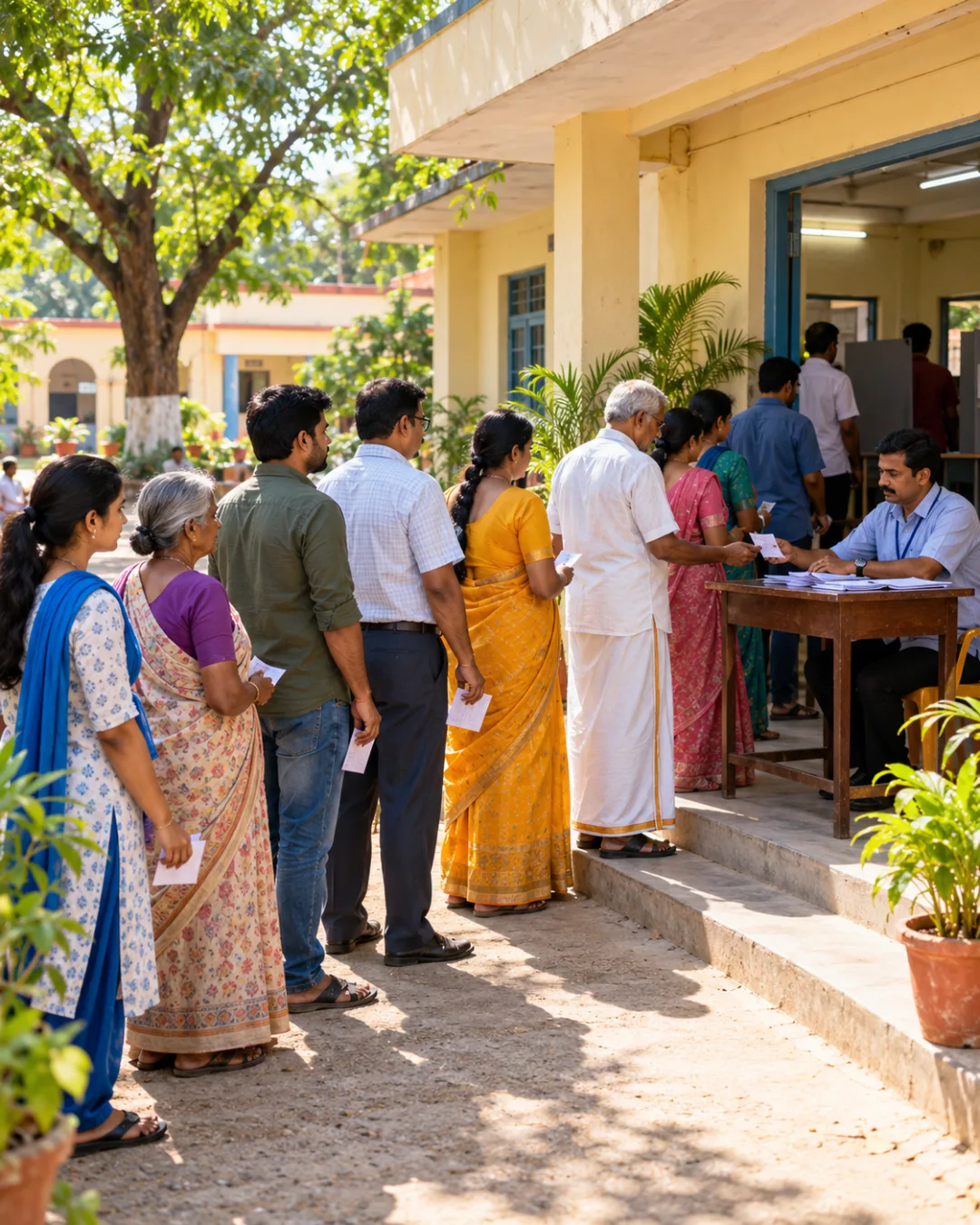
Andhra Pradesh notifies urban local body polls: 13 corporations, 77 municipalities, 10 nagar panchayats vote on 28 October
In short: Days after the Supreme Court cleared the way, Andhra Pradesh’s State Election Commission has set the urban local body polls in motion.
Why in news
On 14 October 2026 State Election Commissioner Anil Chandra Punetha announced the schedule and issued the notification for elections to 13 municipal corporations, 77 municipalities and 10 nagar panchayats in Andhra Pradesh. Polling is on 28 October and results on 30 October 2026; the Model Code of Conduct came into force at once. The local body polls are planned in three phases, with 50 per cent of municipal, corporation and Zilla Parishad seats reserved for women.
Background
On 10 October 2026 the Supreme Court upheld the Andhra Pradesh High Court view that local body elections need not wait for the electoral roll revision or census-related processes, and must use the roll in force on the date of notification. It also declined to interfere with the High Court’s judgment of 1 October 2026, which set aside two government orders providing 34 per cent reservation for Backward Classes in gram panchayat and municipal elections on the ground that total reservation cannot exceed 50 per cent; the State had based the quota on a household survey while a dedicated commission’s report, needed under the triple test, was pending. This is political reservation in local bodies under Articles 243D and 243T, distinct from quotas in jobs and education. As reported before the announcement, the later phases cover 9,983 MPTC and 661 ZPTC seats and 13,185 gram panchayats, with 23 more urban local bodies to follow once ward delimitation is complete. The SEC Commissioner briefed Governor S. Abdul Nazeer on 13 October before the announcement.
Key facts for Prelims
- Part IXA (Articles 243P to 243ZG) on municipalities was added by the 74th Constitutional Amendment Act, 1992; Part IX on panchayats by the 73rd Amendment.
- Article 243ZA vests superintendence, direction and control of municipal elections in the State Election Commission constituted under Article 243K.
- Article 243U: a municipality has a five-year term, and elections must be completed before its expiry or within six months of dissolution.
- Article 243T provides reservation for SCs, STs and not less than one-third of seats for women; it also enables States to reserve seats for backward classes.
- The “triple test” for OBC quotas in local bodies (dedicated commission, quota specified on its findings, overall cap of 50 per cent) was laid down in Vikas Kishanrao Gawali v. State of Maharashtra (2021).
Mains analysis and way forward
Mains analysis
- Timely elections are a constitutional duty, not a matter of administrative convenience; long gaps leave cities run by officials without elected councils.
- The BC quota episode shows why empirical data must come from a dedicated commission: a household survey could not substitute for the triple test.
- Phased polls, with 23 bodies held back for delimitation, reveal how delimitation and reservation rotation often delay urban democracy.
- The State Election Commission’s independence and capacity decide how free and fair grassroots elections are, yet SECs depend on State governments for staff and funds.
Way forward
- Complete dedicated BC commission studies well before terms expire, so that representation and timeliness do not collide.
- Strengthen SECs with assured staff, budgets and rule-making support, so that their independence is real and not only formal.
- Devolve the funds, functions and functionaries listed in the Twelfth Schedule so that elected councils have real powers.
Connect the dots: Links to: 74th Amendment, Part IXA, Articles 243K, 243T, 243U and 243ZA, triple test, State Election Commissions, urban governance.
Sources: The Hans India: AP SEC issues notices for local body elections, polling on 28th, 14 October 2026; 10TV: AP local body elections notification released, 13 corporations, 77 municipalities, polling on 28 October, 14 October 2026; The Hans India: AP SEC likely to release local body poll schedule today, 14 October 2026; Telangana Today: Andhra Pradesh HC sets aside 34 per cent BC quota in local elections, 1 October 2026; ETV Bharat: Supreme Court upholds AP High Court verdict on local body elections, 10 October 2026
Karnataka High Court strikes down 2022 law raising SC and ST quotas, as total reservation breaches 50 per cent cap
In short: The Court held that raising SC and ST quotas took Karnataka’s total reservation to 56 per cent without the extraordinary circumstances that Indra Sawhney requires.
Why in news
On 12 October 2026 a Division Bench of Chief Justice Vibhu Bakhru and Justice K.S. Hemalekha, hearing a PIL led by Mahendra Kumar Mitra, struck down provisions of the Karnataka Scheduled Castes and Scheduled Tribes (Reservation of Seats in Educational Institutions and of Appointments or Posts in the Services under the State) Act, 2022. The Act had raised SC reservation from 15 to 17 per cent and ST reservation from 3 to 7 per cent, taking total reservation, with 32 per cent for OBCs, from 50 to 56 per cent.
Background
The increase followed the recommendations of the Justice Nagamohan Das Committee; the Act received the Governor’s assent on 11 January 2023 and was deemed effective from 1 November 2022. The Court struck down Section 3 insofar as it takes aggregate reservation beyond 50 per cent (Articles 14 and 15) and Section 4 in full (Articles 14 and 16). It held that population share alone cannot justify crossing the ceiling, that the 50 per cent limit applies to reservations under both Articles 15(4) and 16(4), and that the State had not shown extraordinary circumstances. It also noted that the State had not consulted the National Commissions for Scheduled Castes and Scheduled Tribes before enacting the law, as Articles 338(9) and 338A(9) require. Unlike the Andhra Pradesh local body case, which concerns political reservation in panchayats and municipalities, this case concerns quotas in education and public employment.
Key facts for Prelims
- Indra Sawhney v. Union of India (1992): reservation should not normally exceed 50 per cent, except in extraordinary situations such as far-flung areas.
- Article 15(4) enables special provisions, including reservation in education, for SCs, STs and backward classes; Article 16(4) enables reservation in public appointments.
- Tamil Nadu’s 69 per cent reservation law of 1993 was placed in the Ninth Schedule by the 76th Amendment (1994); I.R. Coelho (2007) held that laws added after 24 April 1973 remain open to review on basic structure grounds.
- Articles 338(9) and 338A(9) require the Union and every State to consult the NCSC and NCST on all major policy matters affecting SCs and STs.
- Janhit Abhiyan (2022) upheld the 10 per cent EWS quota under Articles 15(6) and 16(6), with the majority holding that the 50 per cent ceiling applies to backward class reservations.
Mains analysis and way forward
Mains analysis
- Equality and representation: the ceiling balances substantive equality for disadvantaged groups against equality of opportunity for all, a balance the Court said population share alone cannot override.
- Data as foundation: commissions can show backwardness, but exceeding 50 per cent needs proof of exceptional circumstances, a higher threshold than under-representation.
- Federal practice: several States have tried to cross 50 per cent through laws, Ninth Schedule protection or amendments, keeping the issue in constant litigation.
- Institutional consultation: skipping the constitutional duty to consult the NCSC and NCST weakens both the law and the role of these bodies.
Way forward
- Rework quotas within the ceiling, using internal sub-classification, where permitted, to reach the least represented groups.
- Build regularly updated, transparent data on representation through dedicated commissions before any change.
- Combine reservation with scholarships, hostels, skilling and quality schooling so that opportunity widens at the base.
Connect the dots: Links to: Articles 14, 15(4), 16(4), 338 and 338A, Indra Sawhney, Ninth Schedule and basic structure, reservation and social justice.
Sources: LawChakra: Karnataka High Court strikes down SC/ST quota hike law as total reservation breaches 50% ceiling, 12 October 2026; Bar and Bench: Karnataka High Court strikes down law enhancing SC/ST reservation as total quota exceeds 50% cap, 12 October 2026; The Siasat Daily: High Court strikes down Karnataka’s 56 pc quota for SCs, STs, 12 October 2026
Supreme Court closes Haren Pandya murder convict’s remission plea after Gujarat rejects it, leaves challenge to High Court
In short: Remission is first the State government’s decision; the Court said a challenge to that refusal should go to the High Court.
Why in news
On 12 October 2026 a Bench of Justices Vikram Nath and Aparesh Kumar Singh dismissed the plea of Mohammed Asgar Ali, serving a life sentence for the 2003 murder of former Gujarat Home Minister Haren Pandya, after the State of Gujarat told the Court it had rejected his request for premature release. The convict was given liberty to challenge the rejection before the High Court; the Supreme Court did not decide the merits of remission.
Background
Haren Pandya was shot dead on 26 March 2003 near Law Garden in Ahmedabad during a morning walk; the CBI said the murder was meant to avenge the 2002 communal riots. A trial court convicted 12 persons in June 2007, the Gujarat High Court acquitted all of them in 2011, calling the investigation “botched” and “misdirected”, and the Supreme Court restored the convictions and sentences in 2019. In July 2026 the Gujarat High Court had asked the State to decide the remission plea within six months.
Key facts for Prelims
- Constitutional clemency: the President under Article 72 and the Governor under Article 161 can pardon, commute, remit, respite or reprieve sentences.
- Statutory remission: Section 473 of the Bharatiya Nagarik Suraksha Sanhita, 2023 (earlier Section 432 CrPC) lets the appropriate government remit sentences.
- Section 475 BNSS (earlier Section 433A CrPC): a life convict for an offence also punishable with death must serve at least 14 years before release.
- Section 477 BNSS (earlier Section 435 CrPC): where the offence was investigated by an agency under a Central Act, such as the CBI, the State can remit or commute only after concurrence with the Central Government.
- Bilkis Bano v. Union of India (2024): the “appropriate government” for remission is the State where the accused was tried and sentenced.
Mains analysis and way forward
Mains analysis
- Remission balances reform and rehabilitation of the prisoner against the gravity of the crime and the interests of victims and society.
- Decisions must be reasoned and based on a published policy; arbitrary grants or refusals are open to judicial review under Article 14.
- Routing challenges to High Courts respects the hierarchy of remedies: Article 32 is a remedy only for enforcing Fundamental Rights, while Article 226 lets High Courts issue writs for Fundamental Rights and for any other purpose.
- Long delays in deciding remission files keep eligible prisoners in limbo; time-bound consideration is part of fair procedure.
Way forward
- Transparent State remission policies with clear criteria, time limits and reasoned orders.
- Use of prison conduct records, probation reports and victim impact inputs in every decision.
- Regular review boards so that eligible prisoners are considered without having to litigate.
Connect the dots: Links to: Articles 72 and 161, BNSS 2023, prison reforms, rule of law, separation of powers, victims’ rights.
International relations
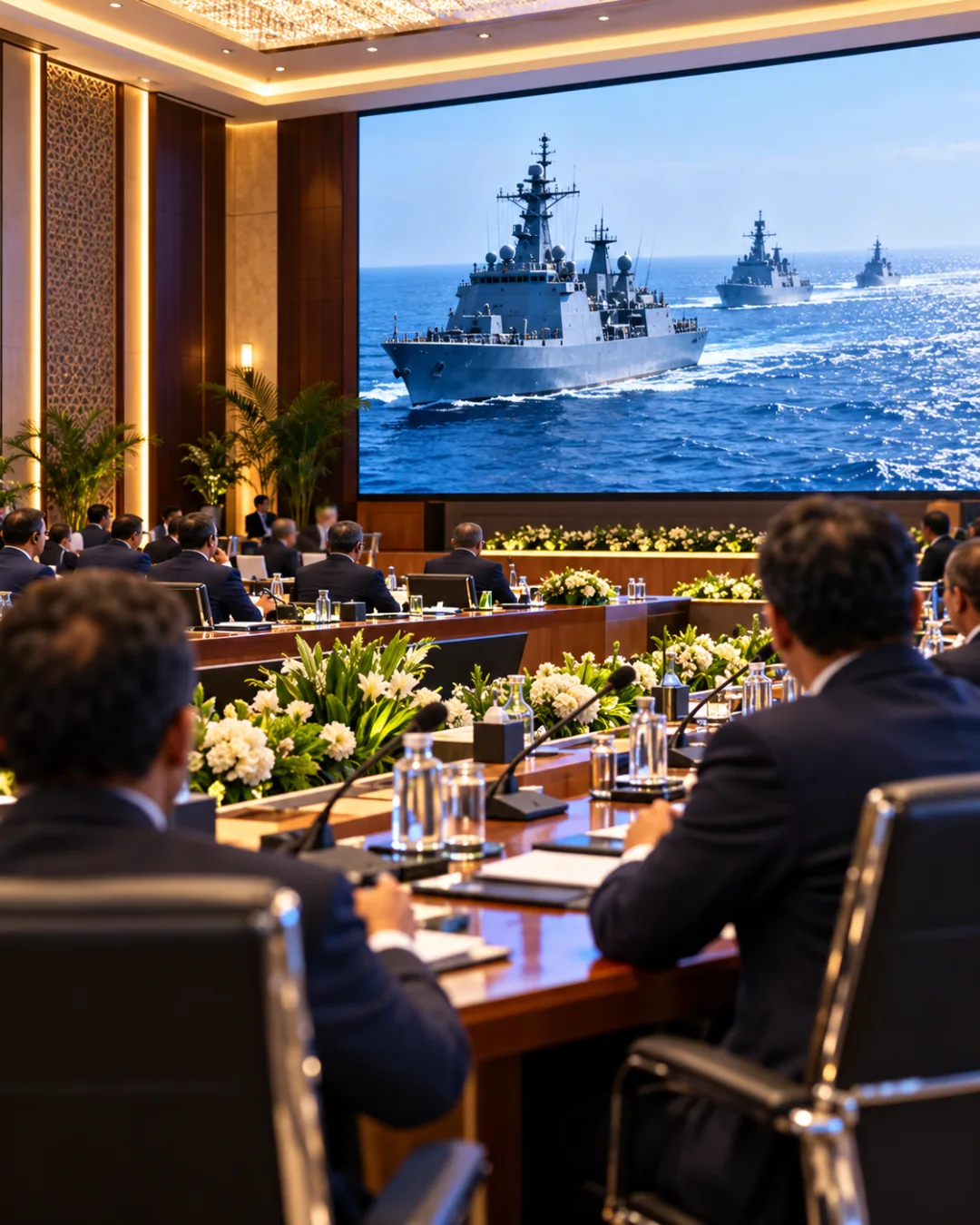
At first ASEAN-India Defence Think Tank Forum, Rajnath seeks an Indo-Pacific where all nations choose freely
In short: At the maiden ASEAN-India defence think tank forum, India stressed sovereignty, early dialogue on differences, maritime cooperation and joint innovation in drones and cyber defence.
Why in news
On 14 October 2026 Defence Minister Rajnath Singh addressed the first ASEAN-India Defence Think Tank Forum in New Delhi. He said India envisions an Indo-Pacific where all countries, regardless of size, can make independent choices, and called for respect for sovereignty, adherence to international law and peaceful discussion of differences before they become disputes. He added that “security is strengthened when countries build capacity together” and that regional forums should cooperate rather than compete.
Background
The forum, organised by the Manohar Parrikar Institute for Defence Studies and Analyses (MP-IDSA) on 14 and 15 October 2026, is a Track-1.5/2.0 platform linking defence policymakers, armed forces and think tanks from all 11 ASEAN member states and India. Singh had proposed it at the second ASEAN-India Defence Ministers’ Informal Meeting in Kuala Lumpur on 31 October 2025, on the sidelines of the 12th ADMM-Plus. Its sessions cover strategic stability, maritime cooperation amid grey-zone challenges, maritime disaster relief and climate, defence technology and defence industry collaboration. Singh noted that 2026 is the ASEAN-India Year of Maritime Cooperation and pointed to iDEX and the Technology Development Fund as models for joint work by innovators on counter-drone systems, cyber defence, maritime surveillance and disaster response.
Key facts for Prelims
- ASEAN now has 11 member states; Timor-Leste was admitted in October 2025.
- ADMM-Plus brings together ASEAN defence ministers and eight dialogue partners, including India; its 12th meeting was held in Kuala Lumpur in 2025.
- 2026 is the ASEAN-India Year of Maritime Cooperation.
- iDEX (Innovations for Defence Excellence) and the Technology Development Fund (executed by DRDO) support start-ups and MSMEs in defence innovation.
- MP-IDSA, New Delhi, is an autonomous think tank funded by the Ministry of Defence.
- Track 1 diplomacy is official government-to-government dialogue; Track 2 brings together non-officials such as scholars and think tanks; Track 1.5 mixes officials, often in a personal capacity, with non-officials.
Mains analysis and way forward
Mains analysis
- Track-1.5 diplomacy: think tank forums let officials and scholars test ideas, such as on grey-zone tactics and maritime rules, before they enter formal negotiation, building trust at low political cost.
- Message on strategic autonomy: stressing that small states must be free to choose, without forced alignment, places India alongside ASEAN centrality and the ASEAN Outlook on the Indo-Pacific rather than bloc politics.
- Maritime focus: information sharing, navy and coast guard cooperation, underwater domain awareness and action against piracy, trafficking and illegal fishing serve both India’s Indian Ocean interests and Southeast Asian concerns in the South China Sea.
- Technology as a leveller: recent conflicts show that low-cost drones can challenge costly systems, so joint innovation and defence industry links can raise capacity and open export opportunities for Indian firms.
Way forward
- Turn the forum into an annual mechanism whose findings feed the ADMM-Plus and the ASEAN-India defence ministers’ track.
- Link it with practical steps such as the ASEAN-India Maritime Exercise, white shipping information exchange and joint disaster response drills.
- Open iDEX-style challenges to ASEAN start-ups to co-develop counter-drone, cyber and surveillance solutions.
Connect the dots: Links to: Act East Policy, ASEAN centrality, ADMM-Plus, Indo-Pacific Oceans Initiative, maritime security and defence exports.
Sources: ThePrint (PTI): All countries regardless of size must make own choices: Rajnath on Indo-Pacific, 14 October 2026; MP-IDSA: ASEAN-India Defence Think Tank Forum, 14-15 October 2026; Possible11: Rajnath Singh pushes India-ASEAN defence think tank forum, 1 November 2025
Jaishankar: India is not a ‘middle power’ but a ‘power in the middle’ in a world of choke points
In short: At the first Bloomberg New Economy Forum in India, Jaishankar described a world of choke points where competition turns on what countries can offer each other.
Why in news
Speaking at the Bloomberg New Economy Forum in New Delhi on 14 October 2026, External Affairs Minister S Jaishankar said India sees itself as a “power in the middle” rather than a middle power, quoting Prime Minister Narendra Modi’s description of such countries as those with “the power to empower”. He described today’s world as “a world of choke points”, citing rare earths, finance and sanctions, and said the present transition is an evolution towards a different kind of order rather than a slide from order to disorder.
Background
The eighth Bloomberg New Economy Forum, held from 13 to 15 October 2026, is the first edition hosted in India and brings together more than 500 public and private sector leaders under the theme “A World in Play: Defining the New Levers of Power”. Jaishankar noted India’s size as the world’s most populous country with a GDP of about USD 4 trillion, and said competition will increasingly turn on what countries can offer each other and the deals they negotiate. He added that middle powers will define their interests, frame independent policies and make arrangements with one another, allowing them a more active role in shaping the emerging order. Canadian Foreign Minister Anita Anand, former Australian Prime Minister Kevin Rudd and former UK Prime Minister Rishi Sunak were among those in the discussion.
Key facts for Prelims
- Bloomberg New Economy Forum 2026: eighth edition, New Delhi, 13 to 15 October 2026, the first held in India.
- Theme: “A World in Play: Defining the New Levers of Power” (technology, energy, critical minerals and financial systems).
- India is the world’s most populous country (UN estimates since 2023).
- Choke points in global supply include rare earth elements and critical minerals, financial messaging and payment systems, and sea lanes such as the Strait of Hormuz.
Mains analysis and way forward
Mains analysis
- Beyond labels (analysis): “power in the middle” can be read as India seeking to bridge the West and the Global South and to set agendas, as in its G20 presidency, rather than accept a ranked slot in someone else’s order.
- Weaponised interdependence: export curbs on rare earths, use of the dollar system and sanctions show that economic links can become levers of pressure, strengthening the case for diversified supply chains and trade settlement options.
- Transactional trade (analysis): if competition turns on what countries can offer each other, as the EAM suggested, states that offer markets, talent and reliability gain, which helps explain India’s push for trade agreements with partners such as Canada and the EU.
- Strategic autonomy in practice: arrangements among middle powers allow India to deepen ties with many partners at once while avoiding dependence on any single power.
Way forward
- Build resilience at choke points through critical mineral partnerships, stockpiles and domestic processing capacity.
- Expand plurilateral groupings with like-minded middle powers on technology, energy and supply chains.
- Pair diplomacy with domestic reform so that India’s offer of scale, skills and stable policy remains credible.
Connect the dots: Links to: strategic autonomy and multi-alignment, multipolarity, critical minerals security, economic statecraft and sanctions, India’s trade agreements.
Sources: WION: India not a ‘middle power’ but a ‘power in the middle’, says EAM Jaishankar, 14 October 2026; exchange4media: Eighth Bloomberg New Economy Forum to convene over 500 global leaders in New Delhi
Security
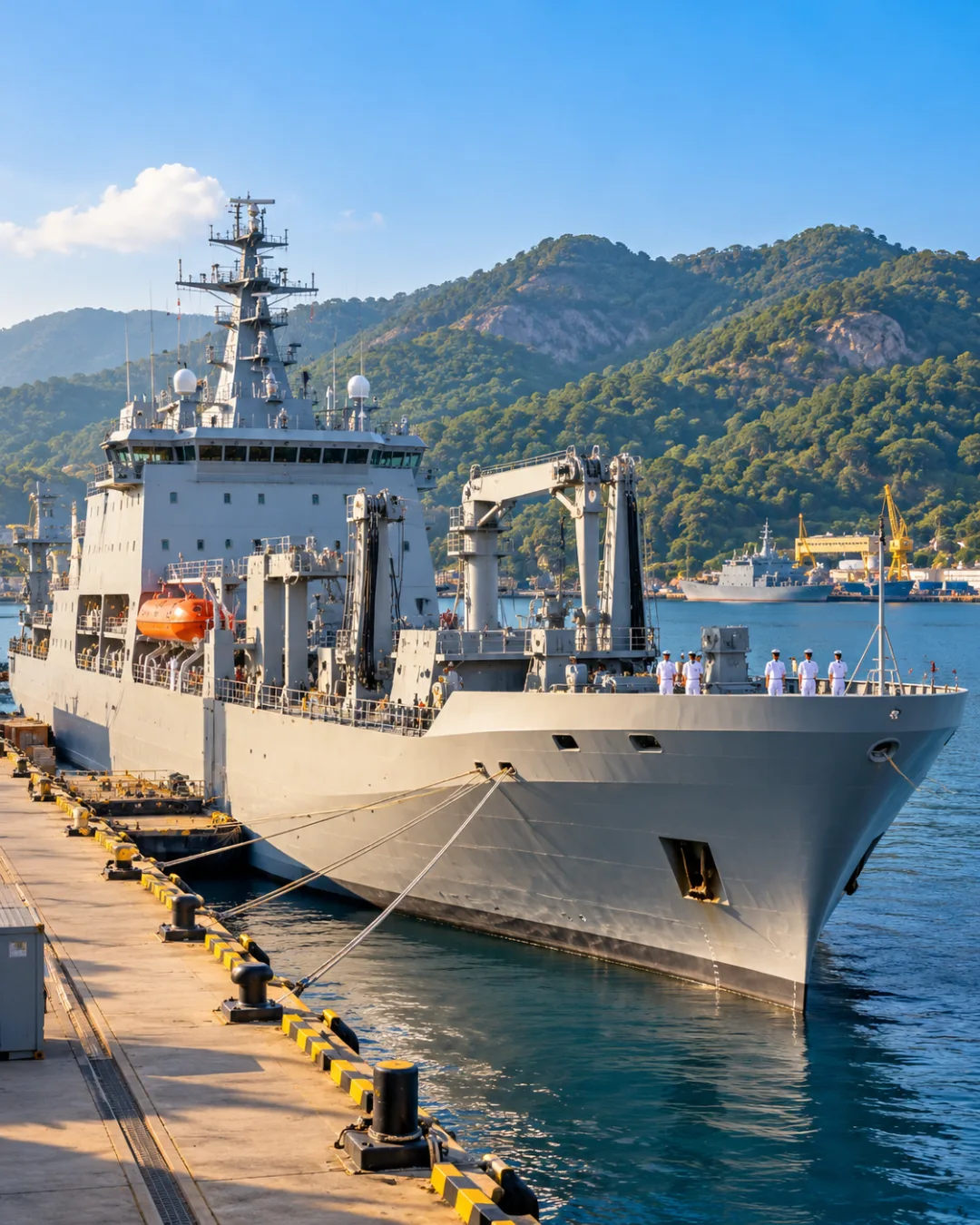
Navy to commission Samarthak, first of four L&T-built Multi-Purpose Vessels, at Karwar on 16 October
In short: Samarthak, built by a private Indian shipyard, will add surveillance, patrol, target-towing, unmanned-systems and disaster relief roles to the Navy’s fleet.
Why in news
The Ministry of Defence announced on 13 October 2026 that the Indian Navy will commission Samarthak, the first of four Multi-Purpose Vessels (MPVs), at Naval Base Karwar on 16 October 2026. Built by Larsen and Toubro under the Make in India initiative, the ship is designed primarily for maritime surveillance and patrol and carries an integrated combat suite of indigenous sensors, weapons and electronic systems.
Background
Samarthak was launched on 14 October 2024 at L&T’s Kattupalli shipyard near Chennai, the first Navy warship built at that yard. The October 2024 launch release described a two-vessel MPV project contracted to L&T on 25 March 2022, while the 13 October 2026 release calls Samarthak the first of four MPVs. The vessel is about 106 metres long and 16.8 metres wide with a top speed of 15 knots. Besides patrol, it can conduct low-intensity maritime operations, deploy targets and serve as a trials platform for weapons and sensors, act as a mothership for unmanned and autonomous systems, support humanitarian assistance and disaster relief, convert into a limited hospital ship and assist in salvage. Its crest shows an Indian elephant rising from the waves, and its motto is “Vijayartham Ekanishtha” (Victory is our sole aim).
Key facts for Prelims
- Samarthak: first of four Multi-Purpose Vessels for the Indian Navy; builder Larsen and Toubro (private sector).
- Commissioning: 16 October 2026 at Naval Base Karwar (Karnataka), the base developed under Project Seabird.
- Launched on 14 October 2024 at L&T Kattupalli shipyard near Chennai.
- Roles include maritime surveillance, Low Intensity Maritime Operations (LIMO), target deployment, unmanned systems mothership, HADR and salvage.
- Length about 106 m, beam 16.8 m, maximum speed 15 knots.
Mains analysis and way forward
Mains analysis
- Private shipyards in naval building: L&T delivering a warship class widens India’s shipbuilding base beyond defence public sector yards and helps reduce delays.
- Force multiplier at low cost: a flexible hull that tows targets, trials new weapons and launches drones frees frontline warships for operational tasks.
- Unmanned future: a mothership for autonomous systems supports the shift to unmanned surface and underwater vehicles for surveillance and mine countermeasures.
- Soft power at sea: HADR and limited hospital capability strengthen the Navy’s role as first responder in the Indian Ocean Region, in line with MAHASAGAR.
Way forward
- Keep the remaining MPVs on schedule and track indigenous content and lifecycle support.
- Use the class as a testbed to fast-track trials of indigenous sensors, weapons and unmanned systems.
- Deepen public-private partnership in shipbuilding through stable orders and design capability.
Connect the dots: Links to: Aatmanirbhar Bharat in defence, indigenisation of warships, Indian Ocean security, HADR, role of the private sector in defence production.
Sources: Raksha Anirveda: Indian Navy set to commission indigenous multi-purpose warship Samarthak, 13 October 2026; Amar Ujala: Samarthak to be commissioned at Karwar naval base, 13 October 2026; Indian Masterminds: Indian Navy set to commission Samarthak at Karwar on October 16, 13 October 2026; Raksha Anirveda: Samarthak, first ship of Multi-Purpose Vessel project launched at L&T Shipyard, Kattupalli, 15 October 2024; WION: Indian Navy to soon induct first homegrown multi-purpose vessel Samarthak, 14 October 2024
Science and technology
President Murmu calls for close cooperation between scientific institutions and armed forces; says decisions cannot be left to AI alone
In short: Addressing the 66th NDC course, the President linked national security to science, innovation and economic resilience, urging balanced use of AI.
Why in news
On 13 October 2026, President Droupadi Murmu told faculty and course members of the 66th National Defence College course at Rashtrapati Bhavan that national security extends beyond military capabilities and needs close cooperation between scientific institutions and the armed forces. She said that while AI use is growing, “decision making cannot be outsourced exclusively to this technology”.
Background
The President noted that modern conflict now extends into cyber security, space technology and biotechnology, and that recent conflicts have highlighted the value of cost-effective technologies that complement advanced defence systems. She highlighted the Research, Development and Innovation (RDI) Scheme as a way to link innovation with national security, and described economic resilience as part of the national security framework. The RDI Scheme, approved by the Union Cabinet on 1 July 2025 with a corpus of Rs 1 lakh crore, provides long-term, low or nil interest financing for private-sector research in sunrise and strategic sectors.
Key facts for Prelims
- RDI Scheme: approved 1 July 2025; corpus Rs 1 lakh crore; Department of Science and Technology is the nodal department.
- Two-tier structure: a Special Purpose Fund within the Anusandhan National Research Foundation (ANRF) allocates money to second-level fund managers, mainly as long-term concessional loans.
- The ANRF Governing Board, chaired by the Prime Minister, gives strategic direction to the RDI Scheme; a Deep-Tech Fund of Funds is among its objectives.
- The National Defence College, New Delhi trains senior officers of the armed forces and civil services in national security and strategy.
Mains analysis and way forward
Mains analysis
- Security now spans cyber, space, biotechnology and economic domains, so research institutions, industry and the armed forces must work as one ecosystem.
- Low-cost technologies such as drones and counter-drone systems show that scale and affordability can matter as much as sophistication.
- AI can speed up analysis, but accountability, ethics and command responsibility require meaningful human judgement in critical decisions.
- Patient, low-cost capital through the RDI Scheme addresses the gap between laboratory research and deployable technology at higher readiness levels.
Way forward
- Create joint research cells and faster procurement routes so that proven civilian technologies reach users quickly.
- Frame clear doctrine and ethical guidelines on human control over AI-enabled systems.
- Track RDI Scheme outcomes by technology readiness level reached, not only by funds disbursed.
Connect the dots: Links to: GS III science and technology in national security, indigenisation of technology, AI governance; GS IV ethics of technology and accountability.
Sources: News On AIR: National security requires close cooperation between scientific institutions and armed forces, says President Murmu, 13 October 2026; PM India: Cabinet approves Research Development and Innovation (RDI) Scheme, 1 July 2025
Social justice and ethics
Supreme Court directs Railways to extend travel insurance to counter-sold tickets from 27 October, warns Railway Board
In short: From 27 October, passengers who buy tickets at the window, often the poorest, must be offered the same insurance cover as online buyers; the Railway Board is answerable.
Why in news
In an order of 6 October 2026, reported on 13 October 2026 (Union of India v. Radha Yadav, 2026 LiveLaw (SC) 1047), a Bench of Justices Ahsanuddin Amanullah and R. Mahadevan directed that all tickets sold over the counter at all railway stations be covered by insurance on the same basis as online tickets, with effect from 27 October 2026, “failing which the responsibility shall be directly upon the Railway Board.” The cover is to be implemented from that date and was not yet available at counters on 14 October; the order makes its availability for counter tickets mandatory, whereas today it is an optional opt-in only for e-ticket buyers. The Chairman and Members of the Railway Board must appear in person on 16 November 2026.
Background
At present the optional travel insurance scheme is open only to passengers who book confirmed or RAC e-tickets on IRCTC and opt in: for a premium of 45 paise it offers up to Rs 10 lakh for death or permanent total disability, up to Rs 7.5 lakh for permanent partial disability, up to Rs 2 lakh for hospitalisation and up to Rs 10,000 for transport of mortal remains. Amicus curiae Senior Advocate Shikhil Suri flagged that the Railways had not responded on extending cover to offline buyers, including people from the lowest strata of society. The Court found no progress since it had given time, observed that assurances had “remained largely on paper”, noted that budgeted safety funds were not fully used, and warned that the Board’s Chairman and Members could be held personally responsible. Chief Commissioner of Railway Safety Janak Kumar Garg appeared before the Court.
Key facts for Prelims
- Optional travel insurance on IRCTC e-tickets: premium 45 paise per passenger; cover up to Rs 10 lakh; children under five and waitlisted tickets are excluded.
- Railways Act, 1989: Section 124 provides compensation for train accidents and Section 124A for “untoward incidents”, on a no-fault basis.
- Railway Claims Tribunal, set up under the Railway Claims Tribunal Act, 1987, adjudicates compensation claims against the Railways.
- The Commission of Railway Safety functions under the Ministry of Civil Aviation, keeping safety oversight independent of the Ministry of Railways.
- An amicus curiae is a “friend of the court” appointed to assist it, often in public interest matters.
Mains analysis and way forward
Mains analysis
- Equity: a safety benefit tied to digital booking quietly excludes those who cannot or do not book online, turning the digital divide into a protection divide.
- Accountability: fixing responsibility on named office holders converts general assurances into personal answerability, a core idea of administrative ethics.
- Integrity of commitments: promises made to a court that remain “on paper” erode trust in institutions; credibility depends on follow-through.
- Compassion and empathy in public service mean designing systems around the most vulnerable user, not the most convenient one.
Way forward
- Build insurance into every ticket at the point of sale, with a simple claims process that does not depend on an online account.
- Publish utilisation of safety budgets and progress on court-monitored commitments to improve transparency.
- Use the Citizen’s Charter and grievance systems to inform counter passengers of their insurance cover in local languages.
Connect the dots: Links to: accountability and ethical governance, Article 14 equality, digital divide, Railways Act 1989, citizen-centric service delivery.
Sources: LiveLaw: Give insurance cover to tickets sold over counter like online tickets, Supreme Court directs Railways, 13 October 2026; Business Today: Indian Railways offers Rs 10 lakh travel insurance for just 45 paise, 8 August 2025; Lok Sabha Unstarred Question No. 2096 on optional travel insurance, answered 12 March 2025
Supreme Court gives Centre four weeks to respond on plea for mandatory age checks at liquor outlets
In short: A plea seeks a uniform age-verification system at liquor shops and bars to curb underage drinking and drunk driving; the Centre must now respond.
Why in news
On 14 October 2026 a Bench of Justices Vikram Nath, R. Mahadevan and Aparesh Kumar Singh, hearing Community Against Drunken Driving (CADD) v. Union of India, noted that no counsel had appeared for the Union despite notice and gave it four weeks to respond. The Court said it would request Solicitor General Tushar Mehta to appear and listed the matter after six weeks. The Court has not ordered age checks; it has only sought the Centre’s response.
Background
CADD, a non-profit, seeks a mandatory age-verification system at liquor shops, bars, pubs and restaurants, arguing that the minimum legal age for buying alcohol differs across States and a uniform protocol is needed. A connected plea seeks limits on selling alcohol in packaging that looks like ordinary drinks, such as tetra packs; the Tetra Pack Manufacturers Association was allowed to join and said alcohol is sold in tetra packs in 10 States and Union Territories. In May 2026 a Bench led by CJI Surya Kant had sought responses on the packaging plea and called such packaging “very deceptive”.
Key facts for Prelims
- “Intoxicating liquors” is Entry 8 of the State List, so licensing, sale and the legal drinking age are set by States.
- Article 47 (Directive Principles) directs the State to endeavour to bring about prohibition of intoxicating drinks injurious to health, except for medicinal purposes.
- Section 77 of the Juvenile Justice (Care and Protection of Children) Act, 2015 penalises giving intoxicating liquor or drugs to a child.
- Section 185 of the Motor Vehicles Act, 1988 penalises driving with more than 30 mg of alcohol per 100 ml of blood.
- Directive Principles are not enforceable in court (Article 37) but are fundamental in governance.
Mains analysis and way forward
Mains analysis
- Child protection and public health converge here: easy access and child-friendly packaging can normalise early drinking.
- Federalism: liquor is a State subject and a major revenue source, so a uniform national protocol needs cooperation rather than imposition.
- Regulatory ethics: the State earns excise revenue from alcohol while being directed by Article 47 to discourage it, a tension that calls for strong safeguards.
- Enforcement gaps, not only law, drive underage access; verification at the counter is simple but rarely audited.
Way forward
- States could agree on a model protocol for ID checks, with penalties for licensees who sell to minors.
- Packaging and labelling norms that clearly separate alcoholic products from soft drinks and juices.
- Pair enforcement with awareness in schools and colleges, and with stricter drunk-driving checks.
Connect the dots: Links to: Article 47, Seventh Schedule, JJ Act 2015, Motor Vehicles Act, vulnerable sections (children), cooperative federalism.
Ayush Ministry announces standard treatment guidelines for skin disorders across Ayurveda, Siddha, Unani and Homoeopathy
In short: New guidelines on dermatological disorders aim to bring uniform, evidence-informed clinical practice across the Ayush systems, including Yoga.
Why in news
In a statement released on 13 October 2026, the Ministry of Ayush announced Standard Treatment Guidelines on “Management of Dermatological Disorders” for Ayurveda, Siddha, Unani and Homoeopathy, including Yoga. The guidelines had been made public on the occasion of the 11th Ayurveda Day (23 September 2026) and were prepared by the Ayush Vertical of the Directorate General of Health Services (DGHS), Ministry of Health and Family Welfare, and cover conditions such as psoriasis, dermatitis, vitiligo, urticaria and dermatophytosis.
Background
The guidelines were developed with technical input from the Ayush Research Councils, senior specialists of the four systems, Yoga experts and modern medicine specialists, through expert consultations, review of classical texts and assessment of current scientific evidence. They were field-tested with Medical Officers in primary and secondary care in partnership with the Directorate of Ayush, Government of NCT of Delhi. Each system-specific document covers prevention, diagnosis, treatment, follow-up and rehabilitation. Ayush Minister Prataprao Jadhav said they would deepen the integration of Ayush systems with the national healthcare framework.
Key facts for Prelims
- Made public on the 11th Ayurveda Day (23 September 2026) and announced in a Ministry statement on 13 October 2026; prepared by the Ayush Vertical of DGHS, Ministry of Health and Family Welfare.
- Systems covered: Ayurveda, Siddha, Unani and Homoeopathy, with Yoga.
- Conditions named: psoriasis, dermatitis, vitiligo, urticaria and dermatophytosis (a fungal skin infection).
- Ayurveda Day is observed on 23 September every year, a date fixed by the Centre in 2025 in place of the earlier practice of observing it on Dhanteras.
- Regulators: the National Commission for Indian System of Medicine and the National Commission for Homoeopathy were set up under Acts of 2020.
Mains analysis and way forward
Mains analysis
- Standard treatment guidelines reduce variation in care, support rational prescribing and make outcomes easier to audit and research.
- Skin conditions are common in primary care and often chronic, so clear protocols for referral and follow-up help patients and doctors alike.
- Involving modern medicine specialists and field validation signals a move towards integrative, evidence-informed practice.
- Challenges remain in generating high-quality clinical trial evidence, ensuring drug quality and training practitioners to use the guidelines consistently.
Way forward
- Train Ayush Medical Officers in health and wellness centres on the guidelines and track their use.
- Fund pragmatic clinical studies on common skin conditions and update the guidelines as evidence grows.
- Strengthen pharmacovigilance and quality standards for Ayush medicines alongside the guidelines.
Connect the dots: Links to: GS II health policy and human resources for health; traditional knowledge systems; GS III research and evidence-based policy.
Sources: The Statesman: Ayush Ministry releases treatment guidelines for skin disorders across four traditional systems, 13 October 2026; News On AIR: Ayush Ministry issues standard treatment guidelines to bring uniformity across all systems, 13 October 2026; Eastern Mirror: Govt unveils standard treatment protocols for dermatological disorders, 14 October 2026; News On AIR: Govt declares 23rd September as Ayurveda Day, 14 May 2025
Geography and environment
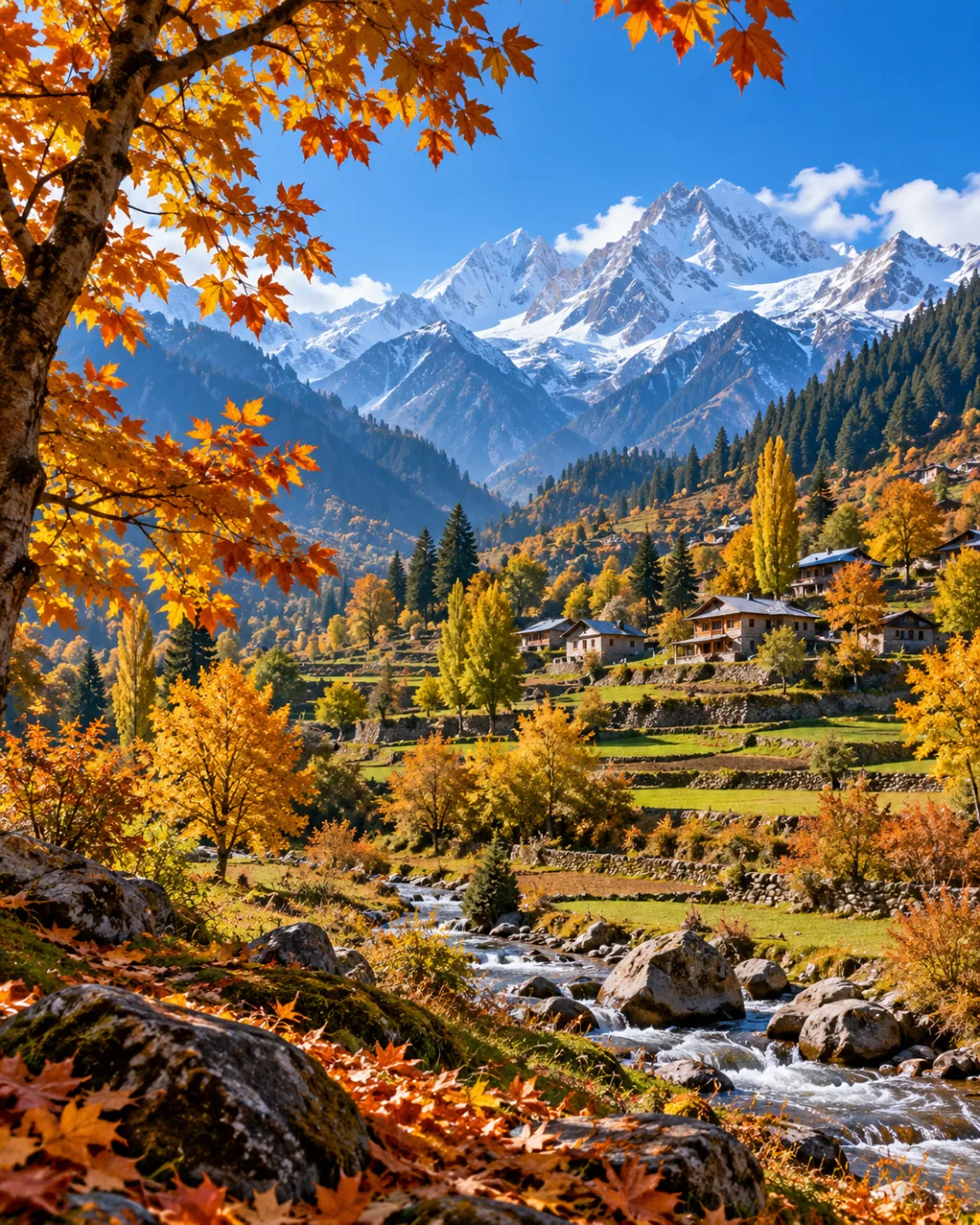
13th Sustainable Mountain Development Summit in Srinagar backs a draft mountain policy for Jammu and Kashmir
In short: Scientists, officials and civil society in Srinagar call for turning Himalayan research into policy on climate risk, farming and infrastructure.
Why in news
On 13 October 2026, the second day of the three-day 13th Sustainable Mountain Development Summit (SMDS), held with the J&K Agriculture Science Congress at SKUAST-Kashmir, Srinagar, Union Minister for Science and Technology and Earth Sciences Dr Jitendra Singh backed the draft Sustainable Mountain Development Policy for Jammu and Kashmir. He said stakeholder consultations could strengthen it and that the Government of India could consider the proposal.
Background
The summit is organised by SKUAST-Kashmir with the Integrated Mountain Initiative (IMI), a civil society platform on Himalayan issues, and the J&K Science, Technology and Innovation Council; SKUAST-K is working with IMI and other institutions on the draft policy. Discussions covered climate resilience, sustainable agriculture and mountain governance. The Minister referred to government work on monitoring climate change, glacier dynamics and glacial lake outburst floods (GLOFs). The Director General of IISD India estimated at the summit that Himalayan catchment systems support nearly 40% of India’s population, while other speakers stressed balancing conservation with sustainable infrastructure.
Key facts for Prelims
- 13th SMDS (2026): SKUAST-Kashmir, Shalimar, Srinagar, with the Integrated Mountain Initiative and the J&K Science, Technology and Innovation Council.
- Himalayan catchments support nearly 40% of India’s population (an estimate cited by a speaker at the summit). The J&K mountain policy is still a draft.
- The National Mission for Sustaining the Himalayan Ecosystem is one of the eight missions under the National Action Plan on Climate Change (2008).
- NDMA issued guidelines on the management of glacial lake outburst floods in 2020.
- International Mountain Day is observed on 11 December.
Mains analysis and way forward
Mains analysis
- The Himalaya is a fragile, young fold mountain system where steep slopes, seismic activity and warming raise the risk of landslides, flash floods and GLOFs.
- A state or UT-level mountain policy can set rules for slope-sensitive construction, carrying capacity for tourism and protection of springs and forests.
- Mountain farming needs region-specific support, such as high-value horticulture, aromatic crops and climate-resilient varieties, rather than plains-based models.
- Converting research into policy needs data sharing, local institutions and community participation, as speakers at the summit noted.
Way forward
- Base the draft policy on hazard and carrying-capacity mapping, with wide public consultation before adoption.
- Integrate glacier and GLOF monitoring with district disaster plans and early warning for downstream communities.
- Use the summit network of universities and civil society for long-term field research and capacity building.
Connect the dots: Links to: GS I physical geography of the Himalaya; GS III climate change, disaster management (GLOFs, landslides), sustainable agriculture; mountain ecosystems.
Sources: Greater Kashmir: Jitendra Singh backs science-led solutions for Himalayan challenges at SKUAST-K summit, 14 October 2026; Kashmir Images: Jitendra Singh backs sustainable mountain policy for Jammu and Kashmir, 14 October 2026
History and culture

Greater India Society centenary: three-day Brihattar Bharat conference on India’s cultural connections opens in New Delhi
In short: A century after the Greater India Society was founded in Calcutta, scholars from about 50 nations revisit India’s shared cultural heritage with Asia.
Why in news
On 14 October 2026, the Indira Gandhi National Centre for the Arts (IGNCA), under the Ministry of Culture, opened “Brihattar Bharat: International Conference on Bharat’s Cultural Connections across the Globe” at Vigyan Bhawan, New Delhi (14-16 October). Delegates, ambassadors and scholars from about 50 nations, including China, Japan, Mongolia, Nepal and Iran, are taking part, and an exhibition titled “Common Cultural Heritage of Asia” is being held alongside.
Background
The conference marks the centenary of the Greater India Society, also called the Brihattar Bharat Parishad, founded in Calcutta on 14 October 1926 with Rabindranath Tagore as its spiritual guide. The historian Kalidas Nag was a co-founder and one of its main driving forces; the Journal of the Greater India Society was published from Calcutta from 1934 to 1946 and resumed in 1955, with U.N. Ghoshal editing most volumes. The conference is organised under the Ministry of Culture’s Brihattar Bharat Scheme (2026-2031), administered by IGNCA, which aims to advance research, documentation, publication, preservation and digitisation of shared heritage. In a message read out at the inaugural session by Culture Secretary Vivek Aggarwal, the Prime Minister said India’s heritage is receiving growing international recognition, pointed to manuscript preservation under the Gyan Bharatam initiative and said the return of antiquities from abroad has gained renewed momentum. News On AIR also reported his remark that Nalanda strengthened the exchange of knowledge between India and other parts of Asia.
Key facts for Prelims
- Greater India Society (Brihattar Bharat Parishad): founded in Calcutta on 14 October 1926; Rabindranath Tagore was its spiritual guide; Kalidas Nag was a co-founder.
- Journal of the Greater India Society: published from Calcutta, 1934-1946, and again from 1955.
- Conference host: Indira Gandhi National Centre for the Arts (IGNCA), Ministry of Culture; venue Vigyan Bhawan, 14-16 October 2026.
- Nalanda Mahavihara in Bihar is a UNESCO World Heritage Site (inscribed 2016).
- Article 49 (Directive Principles) directs the State to protect monuments of national importance; Article 51A(f) makes it a fundamental duty to value and preserve India’s composite culture.
- The Antiquities and Art Treasures Act, 1972 regulates the export of and trade in antiquities.
Mains analysis and way forward
Mains analysis
- India’s historical links with Asia, through Buddhism, trade, scripts, art and epics, give it a civilisational basis for soft power in the Act East and neighbourhood policies.
- The Greater India idea has also been debated by historians, who note that early 20th-century writing could understate the agency of Southeast Asian societies; current framing as “shared” and “common” heritage reflects a more balanced, two-way view of exchange.
- Heritage diplomacy now includes manuscript conservation, repatriation of antiquities, joint restoration projects and academic exchange.
- Institutions such as IGNCA and the revived Nalanda University connect scholarship with cultural diplomacy.
Way forward
- Build joint research, translation and digitisation projects with partner countries so that shared heritage is studied from both sides.
- Link conferences to concrete outcomes such as museum partnerships, student exchanges and heritage circuits.
- Strengthen provenance research and international cooperation to curb illicit trafficking of antiquities.
Connect the dots: Links to: GS I Indian culture and its spread abroad, Buddhism, Indian art; GS II soft power and Act East Policy; GS I modern historiography.
Sources: News On AIR: PM Modi to address Brihattar Bharat International Conference in New Delhi today through video message, 14 October 2026; ThePrint (PTI): India’s cultural heritage receiving growing recognition internationally: PM Modi, 14 October 2026; Ideas of India: Journal of the Greater India Society; ThePrint (PTI): Delhi to host mega conference on India’s wider cultural connections across globe from Oct 14-16, 12 October 2026; Wikipedia: Kalidas Nag (accessed 14 October 2026)
In brief
- Personality in the news: A P J Abdul Kalam: Dr A P J Abdul Kalam, born on 15 October 1931 at Rameswaram, Tamil Nadu, was the 11th President of India (25 July 2002 to 25 July 2007); 15 October 2026 marks his 95th birth anniversary. As project director of SLV-III, which placed the Rohini satellite in near-Earth orbit in July 1980, and later as head of the Integrated Guided Missile Development Programme (Agni, Prithvi), he shaped India’s space and missile programmes; he was Principal Scientific Adviser from November 1999 to November 2001 and received the Bharat Ratna in 1997.
- Lokur panel to hear voters on SIR: An independent panel constituted by the Lawyers’ Association for Constitution, a private lawyers’ association (not an official commission), and chaired by former Supreme Court judge Madan Lokur will begin public hearings on the legality, methodology and impact of the Special Intensive Revision on 15 October 2026 in New Delhi, it announced on 14 October. It has invited the Election Commission to nominate an officer and aims to publish its report by December 2026.
- Delhi SIR: plea against Form 6 route for deleted voters: An application reported on 13 October 2026 asks the Supreme Court to set aside the requirement that electors deleted in Delhi’s SIR file Form 6, which declares first-time enrolment. According to the petition, 47,56,722 electors (32.78 per cent of the pre-SIR roll) were excluded from the draft roll in the Absent, Shifted, Dead or Duplicate category; these are the petitioners’ claims, not findings of the Election Commission.
- Journalists’ union moves Supreme Court: On 13 October 2026 the Delhi unit of the Kerala Union of Working Journalists filed a writ petition under Article 32 alleging that journalists covering student protests on 10 and 11 October were detained and assaulted. It seeks an independent time-bound inquiry, preservation of CCTV and body-camera footage, compensation and binding guidelines to protect journalists.
- 78-day bonus for railway employees: The Union Cabinet on 14 October 2026 approved a performance-linked bonus equal to 78 days’ wages for about 11.41 lakh railway employees, at a cost of about Rs 2,009 crore, Union Minister Ashwini Vaishnaw said.
- Bangkok Blueprint against financial fraud: The IMF and the World Bank launched the “Bangkok Blueprint for Fraud-Resilient Financial Services”, developed with the Bank of Thailand, at the Annual Meetings in Bangkok on 14 October 2026; it sets out 12 key considerations to help countries align policies against cyber-enabled financial fraud.
- Income Tax Department nudges tax auditors: Under its SAKSHAM NUDGE initiative, the Income Tax Department has sent SMSes and emails to about 12,000 tax professionals who had filed fewer than half of last year’s number of tax audit reports, it was reported on 13 October 2026; the deadline for AY 2026-27 audit reports has been extended from 30 September to 21 October, and more than 19.5 lakh reports have been filed so far.
- Modi and Carney agree on concrete outcomes: Prime Minister Narendra Modi and Canadian Prime Minister Mark Carney spoke by phone on the evening of 13 October 2026 and agreed to pursue concrete outcomes in trade, energy, technology, security and people-to-people ties; the same day Commerce Minister Piyush Goyal met Canada’s International Trade Minister Maninder Sidhu to advance the India-Canada CEPA talks.
- Jaishankar and Anand review India-Canada ties: On 14 October 2026 External Affairs Minister S Jaishankar met Canadian Foreign Minister Anita Anand in New Delhi and reviewed trade and investment, education, energy, defence and people-to-people exchanges; the MEA noted it was her third visit to India since June 2025.
- EAM meets Nepal’s Home Minister: External Affairs Minister S Jaishankar met Nepal’s Home Minister Sudhan Gurung in New Delhi on 14 October 2026.
- Ayurveda Day date: The Ayush guidelines announced on 13 October 2026 were made public on the 11th Ayurveda Day, 23 September 2026; since 2025 Ayurveda Day is observed on 23 September every year instead of on Dhanteras, whose date varies between mid-October and mid-November.
Prelims practice: 5 questions
Choose an option to see the answer and explanation. Your score appears when all five are answered.
Mains practice
The 74th Constitutional Amendment made State Election Commissions responsible for municipal elections, yet urban local body polls are often delayed by litigation over reservation. Examine the constitutional position of State Election Commissions and suggest measures to ensure timely municipal elections.
Show the answer outline
Introduction (about 30 words)
- Andhra Pradesh has notified polls to 100 urban local bodies on 28 October 2026, after litigation over Backward Classes reservation; such delays are common across States.
Constitutional position of SECs
- Article 243ZA vests superintendence, direction and control of municipal elections in the State Election Commission.
- Article 243U fixes a five-year term; elections must be completed before expiry, or within six months of dissolution.
- The State Election Commissioner can be removed only like a High Court judge (Article 243K, applied to municipalities by Article 243ZA).
Why polls get delayed
- Reservation disputes and the triple test laid down in K. Krishna Murthy (2010) and Vikas Kishanrao Gawali (2021).
- Delimitation and ward reorganisation controlled by State governments.
- SECs depend on States for staff and funds, limiting their autonomy.
- Administrators run municipalities for long periods, weakening accountability.
Judicial guidance
- Kishansing Tomar (2006): elections must be held on time and States must cooperate with the SEC.
- Suresh Mahajan (2022): elections cannot be postponed indefinitely while reservation data is collected.
Way forward
- Statutory timelines for dedicated commissions to complete the triple test.
- Financial and administrative autonomy for SECs, on the lines of the Election Commission of India.
- Strict limits on administrator rule and on last-minute delimitation changes.
Conclusion (about 30 words)
- Timely municipal elections keep the promise of the 74th Amendment that cities are run by elected representatives, not administrators.
Tip: Anchor the answer in Articles 243U and 243ZA, cite Kishansing Tomar and Suresh Mahajan, and use the Andhra Pradesh polls as a current example.
Current Canvas is prepared by the UPSC Gurus editorial desk. Every fact is checked against official releases and reliable reporting, with sources listed under each story. Editions are compiled each month into Current Canvas Monthly, a free magazine.
About images: photographs and illustrations in Current Canvas are AI-generated for illustration only. They are not news photographs of the events described.