 New this week · Free UG Handout 02UPSC Mains Directive Words: 60 Meanings, Trends and PYQsTwo free PDFs: The Guide and the With PYQs edition.Read and download
Today’s Canvas
- Mekedatu dam row flares again between Karnataka and Tamil NaduGS II
- Former civil servants urge Tamil Nadu to restore its Union-State relations panelGS II
- Hardeep Singh Puri resigns his U.P. Rajya Sabha seat after election from Madhya PradeshGS II
- Inflation crosses 6%: one editorial urges a rate hike, another warns of wider economic risksGS III
- Corporate investment picks up, but weak consumer demand clouds the outlookGS III
- Centre launches a portal for weekly rice and paddy stock declarationsGS III
- Odisha’s iron ore mines run well below cleared capacity as long-term demand risesGS III
- H5N1 bird flu confirmed in Cuddalore: about 35,600 birds reportedly died, 1,550 culledGS III
- Siang Upper Multipurpose Project divides communities in Arunachal PradeshGS III
- Can India refuse to serve U.S. court summons in the Pannun case?GS II
- India rejects USCIRF remarks, saying the panel has no locus standiGS II
- Quad leaders’ summit reportedly set for Manila on 17 NovemberGS II
- Trump to discuss nuclear arms cuts with Putin and Xi after New START expiresGS II
- India to renew its commitment to Italy’s Elettra synchrotronGS III
Polity and governance
Mekedatu dam row flares again between Karnataka and Tamil Nadu
In short: Renewed disagreement over Karnataka’s proposed Mekedatu project highlights the difficulty of balancing upstream development with downstream water-sharing obligations.

Why in news
On 15 November 2026, The Indian Express reported renewed political disagreement over Karnataka’s proposed Mekedatu balancing reservoir on the Cauvery. Karnataka Chief Minister D.K. Shivakumar defended the proposed project and sought the Centre’s help in obtaining approvals. Tamil Nadu Congress president Manickam Tagore criticised the proposal, arguing that it could undermine Tamil Nadu’s water interests and the existing Cauvery-sharing framework. The dispute remains significant because the Supreme Court’s 2018 judgment modified the Cauvery tribunal’s allocation and established binding water-sharing obligations.
Concept: Article 262 and Inter-State River Water Disputes
Article 262 of the Constitution empowers Parliament to provide for adjudication of disputes concerning the use, distribution or control of inter-State river waters. Parliament enacted the Inter-State River Water Disputes Act, 1956, which provides for adjudicatory tribunals. The Cauvery Water Disputes Tribunal delivered its final award in 2007. In February 2018, the Supreme Court modified the allocation and required Karnataka to ensure 177.25 thousand million cubic feet (TMC) of water annually at Billigundulu in a normal year. The Cauvery Water Management Authority and its Regulation Committee support implementation of the sharing arrangement.

Key facts for Prelims
- Article 262: Constitutional provision concerning adjudication of inter-State river water disputes.
- Inter-State River Water Disputes Act, 1956: Provides for tribunals; Section 6A enables schemes for implementing tribunal decisions.
- Cauvery Water Disputes Tribunal: Constituted in 1990; final award delivered in 2007.
- Supreme Court judgment, 16 February 2018: Karnataka’s annual release obligation at Billigundulu was fixed at 177.25 TMC in a normal year.
Mains analysis and way forward
Mains analysis
- Upstream-downstream conflict: Karnataka emphasises drinking-water needs and reservoir management, while Tamil Nadu is concerned about agricultural and downstream flows.
- Legal dimension: Any new project must be examined against applicable statutory approvals, environmental requirements and the binding water-sharing framework.
- Institutional limitations: Even when a legal allocation exists, seasonal shortages, competing political claims and weak inter-State trust complicate implementation.
- Cooperative federalism: Predictable data-sharing, joint planning and constructive dialogue are more sustainable than treating every project as a zero-sum contest.
Way forward
- Ensure transparent examination of project design, hydrological effects and compliance with the Cauvery-sharing framework.
- Strengthen the Cauvery Water Management Authority’s technical monitoring, water-release regulation and compliance mechanisms.
- Promote joint drought planning, transparent reservoir data and water-efficient agriculture in both States.
Connect the dots: Mekedatu connects Article 262, judicial federalism, river-basin governance, agricultural water security and inter-State cooperation.
Sources: The Indian Express, “Cauvery-Mekedatu dam dispute flares again between Tamil Nadu and Karnataka”, 15 November 2026:. Parliament of India, Ministry of Jal Shakti reply concerning Cauvery water sharing:.
Former civil servants urge Tamil Nadu to restore its Union-State relations panel
In short: Former officials have called for restoring a committee on federal relations, reopening debate over constitutional powers and cooperative federalism.
Why in news
On 14 November 2026, The Hindu reported that 72 former civil servants had urged Tamil Nadu Chief Minister C. Joseph Vijay to restore the mandate of the State’s high-level committee on Union-State relations. The committee, chaired by former Supreme Court judge Kurian Joseph, had been constituted in 2025. The State government reportedly discontinued the panel on 6 November and transferred its unfinished work to the State Law Commission. The former officials argued that restoring the committee would preserve an independent examination of federal issues.
Concept: Union-State Relations and Federal Reform Commissions
India’s Constitution distributes legislative powers principally through Article 246 and the Seventh Schedule, which contains the Union, State and Concurrent Lists. Administrative and financial relations are governed by additional constitutional provisions. Federal commissions examine whether this distribution works effectively in practice. Tamil Nadu appointed the Rajamannar Committee in 1969 to review Centre-State relations. The Union government later constituted the Sarkaria Commission in 1983 and the Punchhi Commission in 2007. Their recommendations have influenced debates on gubernatorial powers, fiscal relations, consultation and cooperative federalism, but commission recommendations are not automatically binding law.
Key facts for Prelims
- Rajamannar Committee, 1969: Appointed by the Tamil Nadu government to examine Centre-State relations.
- Sarkaria Commission, 1983: Examined the working of existing arrangements between the Union and States.
- Punchhi Commission, 2007: Revisited Centre-State relations in a changing constitutional and political environment.
- Article 263: Enables the President to establish an Inter-State Council for coordination and discussion of matters of common interest.
Mains analysis and way forward
Mains analysis
- Institutional independence: Special committees may provide focused analysis of federal questions beyond routine departmental review.
- Constitutional balance: Union-State disagreements frequently involve legislative competence, fiscal resources, gubernatorial discretion and administrative coordination.
- Political context: Federal reform discussions can become polarised when framed solely as contests between the Union and particular State governments.
- Reform continuity: Changes in government can affect the functioning of advisory bodies, raising questions about preserving useful institutional work.
Way forward
- Ensure that completed reports and pending research on Union-State relations remain publicly accessible.
- Use constitutional bodies, intergovernmental forums and evidence-based consultation to address federal disagreements.
- Evaluate earlier commission recommendations systematically, distinguishing measures requiring legislation from those possible through administrative cooperation.
Connect the dots: Union-State reform connects constitutional federalism, the Seventh Schedule, the Inter-State Council, fiscal relations and institutional accountability.
Sources: The Hindu, “Former civil servants urge CM Vijay to restore mandate of panel on Union-State relations”, 14 November 2026:. DT Next, “Tamil Nadu govt urged to restore high-level committee on Union-State relations”, 14 November 2026:.
Hardeep Singh Puri resigns his U.P. Rajya Sabha seat after election from Madhya Pradesh
In short: The resignation illustrates the legal requirement to vacate additional seats when a person is elected to multiple seats in the same House.
Why in news
On 14 November 2026, Union Minister Hardeep Singh Puri resigned from his Uttar Pradesh Rajya Sabha seat after being elected unopposed to the Rajya Sabha from Madhya Pradesh on 5 November. His Uttar Pradesh term was scheduled to expire on 25 November. The resignation illustrates the rules governing election to more than one seat in the same House. The Representation of the People Act, 1951, together with the Conduct of Elections Rules, 1961, requires a person elected to multiple such seats to retain only one within the prescribed period.
Concept: Simultaneous Membership and Vacation of Seats
Article 101 of the Constitution regulates vacancies and restrictions on parliamentary membership. Article 101(1) concerns simultaneous membership of both Houses of Parliament, while Article 101(2) concerns membership of Parliament and a State legislature. Separate provisions of the Representation of the People Act, 1951 address overlapping elections. Section 69 applies when an existing member of one House is elected to the other House. Section 70 applies when a person is elected to more than one seat in the same House. Rule 91 of the Conduct of Elections Rules, 1961 prescribes the 14-day period for relinquishing additional seats.
Key facts for Prelims
- Article 101(1): Restricts simultaneous membership of both Houses of Parliament.
- Section 69, Representation of the People Act, 1951: Deals with an existing member of one parliamentary House being elected to the other.
- Section 70: Requires a person elected to multiple seats in the same House to resign all but one within the prescribed period.
- Rule 91, Conduct of Elections Rules, 1961: Prescribes 14 days from the election, or the last election date where dates differ. The separate Prohibition of Simultaneous Membership Rules, 1950 concern Parliament and State legislature membership.
Mains analysis and way forward
Mains analysis
- Representative clarity: One individual should not indefinitely retain multiple constituencies’ seats in the same legislative House.
- Legal certainty: Defined time limits prevent uncertainty over vacancies and representation.
- Institutional responsibility: Resignations must be communicated to the appropriate presiding officer or other prescribed authority.
- Electoral administration: Different situations involving two parliamentary Houses, two seats in one House and Parliament-State membership are governed by distinct provisions.
Way forward
- Improve public awareness of the different legal provisions regulating multiple memberships.
- Ensure prompt notification of accepted resignations and resulting vacancies.
- Maintain accurate parliamentary and Election Commission records to support transparent electoral administration.
Connect the dots: Simultaneous membership links parliamentary procedure, Articles 101 and 102, electoral legislation and representative democracy.
Sources: The Hindu, “Puri resigns from Uttar Pradesh Rajya Sabha seat after being re-elected from MP”, 14 November 2026:. Ministry of Law and Justice, Representation of the People Act, 1951:. Ministry of Law and Justice, Conduct of Elections Rules, 1961:.
Economy
Inflation crosses 6%: one editorial urges a rate hike, another warns of wider economic risks
In short: With inflation exceeding 6%, the RBI faces a choice between raising interest rates to contain prices and protecting economic growth.

Why in news
On 14 November 2026, two editorials examined the monetary policy response to rising inflation. October retail inflation reached 6.09%, exceeding the RBI’s 6% upper tolerance limit. The Indian Express argued that broadening price pressures justify another interest-rate increase. The Hindu emphasised external pressures and the risk that household costs are rising faster than conventional indicators suggest. The RBI had raised its repo rate to 5.50% in October. Its next Monetary Policy Committee meeting is scheduled for 2 to 4 December 2026. No further hike has been announced.
Concept: Flexible Inflation Targeting and the Monetary Policy Committee
India adopted a statutory flexible inflation targeting framework in 2016 through amendments to the RBI Act, 1934. Under Section 45ZA, the Central Government, in consultation with the RBI, determines the inflation target every five years. The target is currently 4%, with a tolerance band of 2% to 6%, retained until March 2031. A six-member Monetary Policy Committee decides the policy repo rate by majority vote. Monetary policy primarily influences demand and inflation expectations. However, interest-rate changes cannot directly increase agricultural production or eliminate global supply disruptions.
Key facts for Prelims
- Section 45ZA: Provides for the inflation target, determined by the Central Government in consultation with the RBI.
- Section 45ZB: Establishes the six-member MPC, comprising three RBI representatives and three external members appointed by the Central Government.
- Section 45ZN: Requires the RBI to report the reasons for failure, proposed corrective action and estimated time for returning to target.
- The October 2026 CPI uses base 2024=100. MoSPI reported provisional headline inflation of 6.09%, food inflation of 8.94%, rural inflation of 6.63% and urban inflation of 5.41%.
- Failure is defined as average CPI inflation remaining above 6% or below 2% for three consecutive quarters. A single monthly breach does not trigger this accountability requirement.
Mains analysis and way forward
Mains analysis
- Case for tightening: Higher repo rates can restrain credit-financed demand, discourage inflationary borrowing and help anchor inflation expectations.
- Case for caution: Food shortages, El Niño-related risks and imported energy costs are supply-side pressures that monetary tightening cannot directly resolve.
- Growth trade-off: More expensive loans can discourage private investment and consumption, even when economic recovery remains uneven.
- Policy coordination: Monetary policy must be supported by food-supply management, timely imports, adequate logistics and credible fiscal policy.
Way forward
- Assess persistent core and broad-based inflation rather than reacting mechanically to one monthly reading.
- Coordinate RBI decisions with calibrated supply-side measures, especially for food and energy.
- Strengthen forecasting, inflation communication and policy transparency to maintain confidence in price stability.
Connect the dots: Inflation targeting connects monetary policy, food security, international commodity markets, household welfare and economic growth.
Sources: The Hindu, “Brace for impact: On rising inflation and external factors”, 14 November 2026:. The Indian Express, “Inflation is settling in. Now for the interest rate hike”, 14 November 2026:. RBI, Monetary Policy Overview:.
Corporate investment picks up, but weak consumer demand clouds the outlook
In short: Investment and asset utilisation improved among the companies studied, but sustained capital expenditure depends on stronger household demand.

Why in news
On 14 November 2026, The Indian Express examined research released by Bank of Baroda on 11 November. Its analysis of 2,010 non-financial companies across 31 sectors found that 22 sectors recorded faster fixed-asset growth in the first half of FY 2026-27. The aggregate asset-turnover ratio improved from 1.14 in September 2025 to 1.30 in September 2026. These findings suggest stronger fixed-asset investment among the companies studied. However, concerns about declining real rural wages, weak informal-sector incomes and weather-related agricultural risks raise questions about whether the recovery can continue.
Concept: Gross Fixed Capital Formation and the Investment Cycle
Gross Fixed Capital Formation (GFCF) measures investment in fixed assets such as machinery, buildings and infrastructure, after accounting for disposals. It is a major component of expenditure-side GDP. Private capital expenditure, or capex, creates productive capacity and can support employment and productivity. Capacity utilisation measures how much of the available production capacity is being used. When demand rises and existing factories approach full capacity, businesses have stronger incentives to invest. However, weak expected sales can discourage expansion even when financing conditions are favourable.
Key facts for Prelims
- GFCF is a component of GDP under the expenditure method, alongside consumption, government expenditure and net exports, with inventory changes and valuables separately accounted for.
- The RBI’s Order Books, Inventories and Capacity Utilisation Survey tracks capacity utilisation in manufacturing.
- Asset-turnover ratio = Sales divided by fixed assets. It is an indirect indicator of asset use, not the same as measured capacity utilisation.
- Gross fixed assets show a firm’s asset stock; GFCF measures acquisitions of fixed assets less disposals during an accounting period.
Mains analysis and way forward
Mains analysis
- Positive investment signal: Rising fixed assets across several sectors suggest stronger investment, but the company data do not directly measure national capital formation.
- Demand-investment link: Businesses expand production capacity when they expect sufficient future sales to justify investment costs.
- Employment connection: Productive investment can generate jobs and incomes, creating a positive cycle of demand and further investment.
- Structural constraint: Weak rural purchasing power, uneven income growth and uncertain agricultural output can interrupt this cycle.
Way forward
- Strengthen household purchasing power through productive employment, real-wage growth and rural income stability.
- Improve infrastructure, financing access and regulatory predictability to reduce the cost of private investment.
- Monitor actual capital formation, sales growth and capacity utilisation together instead of treating investment announcements as completed projects.
Connect the dots: Private investment connects GDP growth, consumption demand, employment generation, infrastructure development and inclusive growth.
Centre launches a portal for weekly rice and paddy stock declarations
In short: Rice traders, retailers and millers must declare their stocks weekly as the Centre strengthens supply monitoring and price-management measures.

Why in news
On 14 November 2026, the Centre announced the operationalisation of its online Food Stock Portal for rice and paddy declarations. An order issued on 6 November requires traders, wholesalers, retailers, large retail chains and processors to update holdings every Friday. The government also doubled its FY 2026-27 rice e-auction target under the Open Market Sale Scheme from 25 lakh tonnes to 50 lakh tonnes. Five southern States received permission to impose stock limits where necessary until 31 January 2027. The measures seek to improve availability and discourage hoarding amid higher rice prices.
Concept: Essential Commodities Act and Food Price Management
The Essential Commodities Act, 1955 enables the government to regulate the production, supply, distribution and trade of specified essential commodities. Stock limits, when validly imposed, can restrict excessive holdings and discourage artificial scarcity. The Food Corporation of India procures foodgrains, maintains central pool stocks and supports public distribution. Through the Open Market Sale Scheme (Domestic), the government releases surplus foodgrains into the market to improve availability and moderate prices. Stock reporting improves visibility of private inventories, while market releases directly augment supplies.
Key facts for Prelims
- Essential Commodities Act, 1955: Section 3 permits control orders; Section 6A covers confiscation, Section 6B covers notice and Section 7 prescribes penalties.
- Six reporting categories: Basmati, premium non-Basmati, other non-Basmati, parboiled, broken rice and paddy.
- Portal: foodstock.dfpd.gov.in; stock declarations must be updated every Friday.
- OMSS (Domestic): FCI releases foodgrains from central pool stocks through prescribed sale mechanisms. The 2026-27 rice e-auction target is 50 lakh tonnes.
Mains analysis and way forward
Mains analysis
- Improved market intelligence: Weekly declarations can identify unusual stock accumulation and regional supply shortages.
- Price stabilisation: OMSS releases and additional Bharat Rice distribution can increase market availability without directly controlling every retail price.
- Implementation challenges: Accurate declarations, inspection capacity and coordination between the Union and States determine effectiveness.
- Regulatory balance: Excessively restrictive stock controls can discourage legitimate storage, disrupt trade and weaken incentives for private warehousing investment.
Way forward
- Use transparent, timely stock information to identify supply bottlenecks before prices escalate.
- Combine calibrated OMSS releases with better storage, transport and distribution infrastructure.
- Apply stock restrictions proportionately, with clear legal authority and predictable review mechanisms.
Connect the dots: Foodgrain stock monitoring connects agricultural markets, inflation control, food security, cooperative federalism and consumer welfare.
Sources: The Hindu, “Centre operationalises portal for online declaration of rice, paddy stock”, 14 November 2026:. PIB, “Government doubles OMSS (D) rice sale target from 25 LMT to 50 LMT for 2026-27”, 6 November 2026:.
Odisha’s iron ore mines run well below cleared capacity as long-term demand rises
In short: Reports of substantial unused mining capacity in major iron ore-producing States highlight the gap between mineral availability and actual production.

Why in news
On 14 November 2026, The Hindu reported concerns about underutilised iron ore mining capacity, particularly in Odisha. According to figures from mining consultancy BigMint cited in the report, Odisha produced approximately 158 million tonnes of iron ore in FY 2025-26 against an environmentally cleared capacity of 278 million tonnes annually, implying utilisation of about 57%. The draft National Steel Policy, Vision 2047, projects India’s iron ore demand at 772 million tonnes by 2047. The Hindu report also highlighted litigation over inactive mining capacity and delays in obtaining forest clearances.
Concept: MMDR Act, Mineral Auctions and the National Steel Policy
The Mines and Minerals (Development and Regulation) Act, 1957 provides the principal legal framework for regulating mineral development in India. The 2015 amendment introduced competitive auctions for granting many mineral concessions, replacing discretionary allocation. Mineral extraction also requires applicable environmental, forest and other statutory approvals. The National Steel Policy, 2017 envisages 300 million tonnes of crude steel production capacity by 2030-31. Steelmaking depends heavily on iron ore, particularly hematite, making efficient mineral extraction, transport connectivity and environmental safeguards central to industrial competitiveness.
Key facts for Prelims
- Major iron ore-producing States include Odisha, Chhattisgarh, Karnataka and Jharkhand.
- Hematite (Fe2O3) and magnetite (Fe3O4) are principal iron ores; magnetite has the higher theoretical iron content.
- MMDR Amendment Act, 2015: Introduced competitive auctions and provided for District Mineral Foundations and the National Mineral Exploration Trust.
- National Steel Policy, 2017: Targets 300 million tonnes of crude steel capacity and 255 million tonnes of production by 2030-31.
Mains analysis and way forward
Mains analysis
- Economic inefficiency: Unused environmentally cleared capacity may constrain mineral supply and revenue, although other approvals may still be pending.
- Clearance challenges: Mining requires balancing timely approvals with forest conservation, biodiversity protection and community rights.
- Federal dimension: States play important roles in granting and administering mineral concessions within the framework of Union legislation.
- Resource security: Improving domestic mineral availability can support steel production, infrastructure creation and industrial supply chains.
- Supreme Court ruling: On 4 November 2026, the Court held that Rule 12(1)(ee) permits, but does not mandate, State mining after lessee default. It directed Odisha to seek optimum mine utilisation.
Way forward
- Improve coordination among mining, forest and environment authorities without weakening statutory safeguards.
- Compare mine output with environmentally cleared capacity and fully approved operating capacity, using transparent State-wise data.
- Strengthen mineral transport infrastructure, scientific mining, beneficiation and rehabilitation of mining-affected communities.
Connect the dots: Mineral resource management connects economic geography, industrial policy, environmental governance, federalism and sustainable development.
Sources: The Hindu, “Iron ore capacity under-utilisation in major-producing states prompt concerns as India sets 2047 target”, 14 November 2026:. Ministry of Steel, National Steel Policy, 2017:.
Environment, health and infrastructure
H5N1 bird flu confirmed in Cuddalore: about 35,600 birds reportedly died, 1,550 culled
In short: Authorities have begun containment measures after laboratory confirmation of avian influenza in poultry, highlighting the importance of animal disease surveillance.
Why in news
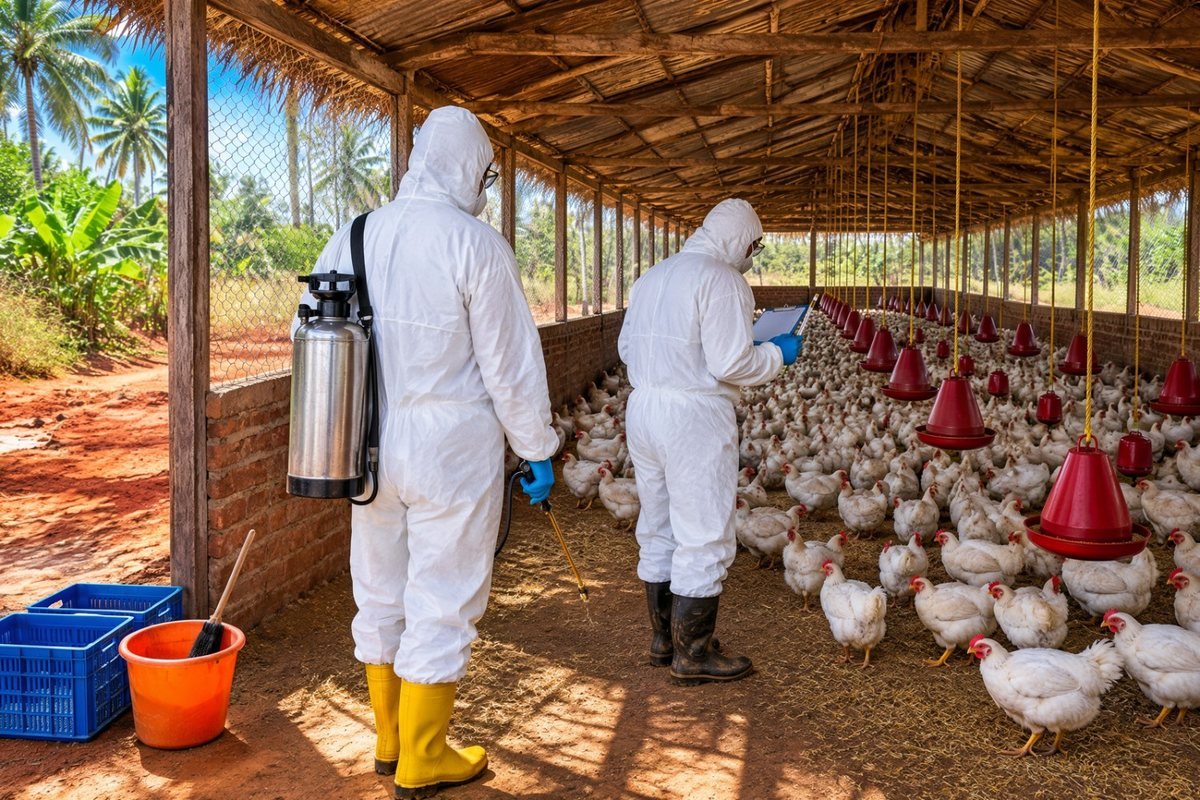
On 14 November 2026, The Hindu reported that avian influenza had been confirmed among poultry in Cuddalore district, Tamil Nadu. Samples collected following poultry deaths in Kattiyankuppam village, Kurinjipadi taluk, were reportedly confirmed as H5N1-positive by the National Institute of High Security Animal Diseases, Bhopal, on 13 November. By 13 November, 35,647 birds had reportedly died in the affected area, while 1,550 birds had been culled during containment. Authorities initiated surveillance, movement restrictions and disinfection.
Concept: Avian Influenza and the One Health Approach
Avian influenza is an infectious disease caused by influenza A viruses that primarily affect birds. H5N1 is one subtype associated with highly pathogenic outbreaks in poultry. Infected birds can spread the virus through respiratory secretions and faeces. Human infections are uncommon but can occur following exposure to infected animals or contaminated environments. The One Health approach recognises that human, animal and environmental health are interconnected. Effective prevention therefore requires coordination among veterinary services, public health authorities, wildlife agencies and local communities.
Key facts for Prelims
- H5N1 denotes influenza A viruses with haemagglutinin subtype H5 and neuraminidase subtype N1.
- The National Institute of High Security Animal Diseases is located in Bhopal and functions under the Indian Council of Agricultural Research.
- India’s revised National Action Plan for Prevention, Control and Containment of Avian Influenza was issued in 2021.
- Under the 2021 action plan, the infected zone generally extends up to 1 km from the outbreak centre, while enhanced surveillance applies in a high-alert zone extending up to 10 km beyond it.
- The action plan provides for surveillance, rapid diagnosis, culling, safe disposal, disinfection and compensation under prescribed conditions.
Mains analysis and way forward
Mains analysis
- Animal-to-human risk: Close interaction among poultry, wild birds and humans creates opportunities for zoonotic infections.
- Economic consequences: Poultry deaths, culling and trade restrictions can cause substantial losses to farmers and related businesses.
- Surveillance challenges: Delayed reporting, inadequate veterinary infrastructure and informal poultry movement can undermine outbreak control.
- Governance requirement: Containment depends on coordination across animal husbandry, health, environment and local administration.
Way forward
- Strengthen early-warning systems, laboratory networks and rapid disease reporting.
- Ensure scientifically guided culling, safe disposal and timely compensation for affected poultry owners.
- Expand One Health surveillance and public communication without creating unnecessary fear about human transmission.
Connect the dots: Avian influenza links zoonotic diseases, One Health, livestock livelihoods, disaster preparedness and public health administration.
Sources: The Hindu, “Avian influenza confirmed in Cuddalore; over 1,500 chickens culled”, 14 November 2026:. Department of Animal Husbandry and Dairying, Revised Action Plan for Prevention, Control and Containment of Avian Influenza, 2021:. WHO, “Influenza (avian and other zoonotic)”:.
Siang Upper Multipurpose Project divides communities in Arunachal Pradesh
In short: The proposed Siang dam has generated competing concerns about strategic water security, environmental impacts and the rights of indigenous communities.

Why in news
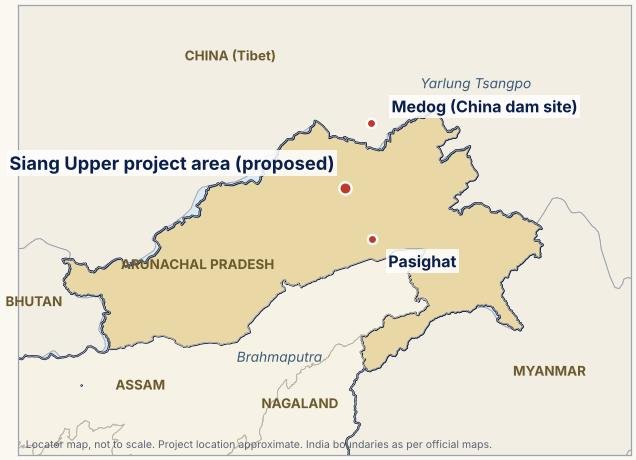
On 15 November 2026, The Indian Express reported deep divisions over the proposed 11,200 MW Siang Upper Multipurpose Project in Arunachal Pradesh. Some residents and Adi community representatives oppose survey activities because of concerns about displacement, farmland and cultural heritage. Project supporters emphasise electricity generation and downstream water management, particularly amid China’s dam-building activities on the upstream Yarlung Tsangpo. Officials have said the project remains at the pre-feasibility stage and has not received final approval. Local tensions have also complicated survey work.
Concept: Transboundary Rivers, Environmental Clearance and Tribal Rights
The Yarlung Tsangpo originates in Tibet, enters Arunachal Pradesh as the Siang and later joins other rivers to form the Brahmaputra in Assam. Large hydropower projects can generate renewable electricity, regulate water flows and support flood management, but may also alter river ecology and displace communities. Under India’s environmental clearance framework, applicable projects require environmental assessment and prescribed consultations before approval. The UN Declaration on the Rights of Indigenous Peoples supports free, prior and informed consent, but does not itself create binding Indian law.
Key facts for Prelims
- Proposed project: Siang Upper Multipurpose Project, with a reported planned capacity of 11,200 MW.
- The Siang is the Indian continuation of the Yarlung Tsangpo before becoming part of the Brahmaputra river system.
- The Adi are an indigenous community of Arunachal Pradesh with strong cultural and livelihood connections to the Siang valley.
- Environmental Impact Assessment Notification, 2006 provides a framework for prior environmental clearance and public consultation for specified projects.
Mains analysis and way forward
Mains analysis
- Strategic argument: Upstream infrastructure in China raises Indian concerns about water-flow information, possible flow alterations and downstream preparedness.
- Ecological concerns: Large dams can affect sediment transport, aquatic biodiversity, river dynamics and downstream ecosystems.
- Social justice dimension: Displacement may affect land, livelihoods, customary institutions and cultural sites, particularly in indigenous territories.
- Governance challenge: Proceeding without credible impact assessments and sustained community engagement can intensify distrust and local conflict.
Way forward
- Complete independent environmental, seismic, hydrological and social-impact studies before any final project decision.
- Conduct meaningful consultations with affected communities and disclose project risks, alternatives and rehabilitation proposals.
- Strengthen transboundary river monitoring and diplomatic engagement while evaluating less disruptive options for regional water security.
Connect the dots: The Siang debate connects India-China relations, Himalayan river systems, renewable energy, tribal rights and environmental governance.
Sources: The Indian Express, “In Arunachal’s Siang, a dam divides a community”, 15 November 2026:. Ministry of Environment, Forest and Climate Change, Environmental Impact Assessment Notification, 2006:.
International relations and security
Can India refuse to serve U.S. court summons in the Pannun case?
In short: A U.S. civil lawsuit has brought attention to international rules governing service of judicial documents and India’s grounds for refusal.

Why in news
On 14 November 2026, The Hindu examined whether India could refuse to facilitate service of summons arising from a U.S. civil lawsuit filed by Gurpatwant Singh Pannun. On 9 November, a U.S. court authorised service on Ajit Doval and Samant Goel through Indian courts, subject to further procedural steps. The issue raises questions about the Hague Service Convention, India’s declared objections and the limits of cross-border judicial cooperation.
Concept: Hague Service Convention and Mutual Legal Assistance
The 1965 Hague Service Convention facilitates the transmission of judicial and extrajudicial documents for service abroad in civil or commercial matters. Contracting States designate Central Authorities to receive requests, subject to the treaty’s conditions. India has objected to all three alternative methods of service under Article 10. Article 13 permits refusal of a compliant request where the requested State considers that execution would infringe its sovereignty or security. Mutual Legal Assistance Treaties, including the India-U.S. MLAT, principally facilitate cooperation in criminal matters.
Key facts for Prelims
- Hague Service Convention, 1965: Applies to service of judicial and extrajudicial documents abroad in civil or commercial matters.
- India designated the Ministry of Law and Justice, Department of Legal Affairs, as its Central Authority.
- Article 10: Covers postal service and direct service through designated persons; India objects to all three methods under clauses (a), (b) and (c).
- Article 13: Provides limited grounds for refusal involving sovereignty or security. Mere disagreement with the merits of a lawsuit is not sufficient.
- Article 19 permits service methods allowed by the receiving State’s internal law. The U.S. court relied on this provision when authorising service through Indian courts in the Pannun case.
Mains analysis and way forward
Mains analysis
- Sovereignty versus cooperation: States must balance respect for foreign judicial processes with protections recognised under international law.
- Treaty-specific obligations: Whether a request must be executed depends on the applicable treaty, reservations and valid service procedure.
- Civil-criminal distinction: A civil summons and a request for criminal evidence assistance follow different legal frameworks.
- Diplomatic implications: Litigation involving public officials can create friction even before a court determines the underlying allegations.
Way forward
- Evaluate foreign service requests strictly under the relevant treaty and domestic procedural law.
- Communicate legal objections through established judicial and diplomatic channels rather than relying on political assertions alone.
- Preserve procedural fairness while distinguishing unproven allegations from established judicial findings.
Connect the dots: Foreign summons connect international law, sovereignty, mutual legal assistance, judicial procedure and India-U.S. relations.
Sources: The Hindu, “Can India refuse to serve summons in the Pannun case?”, 14 November 2026:. Hague Conference on Private International Law, Convention of 15 November 1965 on the Service Abroad of Judicial and Extrajudicial Documents:. Ministry of External Affairs, Service of Summons Abroad:.
India rejects USCIRF remarks, saying the panel has no locus standi
In short: India’s ambassador rejected comments by a U.S. religious-freedom advisory commission, highlighting disagreement over external assessments of domestic legal proceedings.

Why in news
On 14 November 2026, The Hindu reported that India’s Ambassador to the United States, Vinay Mohan Kwatra, had criticised remarks by the U.S. Commission on International Religious Freedom concerning Sharjeel Imam. Kwatra stated that the commission had “no locus standi” to comment on the matter and challenged its characterisation of the case. The episode reflects a recurring disagreement between India and USCIRF over the interpretation of religious-freedom conditions and domestic legal processes.
Concept: USCIRF and Country of Particular Concern Recommendations
The United States Commission on International Religious Freedom is an independent, bipartisan U.S. federal advisory body established under the International Religious Freedom Act of 1998. It monitors religious-freedom conditions abroad and issues an annual report containing findings and policy recommendations. USCIRF can recommend that a country be designated a Country of Particular Concern (CPC). However, it does not itself make binding CPC designations. The U.S. Secretary of State makes such designations through a separate governmental process. USCIRF is also distinct from the U.S. State Department, which publishes its own International Religious Freedom Reports.
Key facts for Prelims
- USCIRF was established under the U.S. International Religious Freedom Act, 1998.
- USCIRF is an independent federal advisory body, not a court or an international treaty organisation.
- USCIRF recommendations for CPC designation are not legally equivalent to an actual designation by the U.S. Secretary of State.
- India has consistently rejected USCIRF assessments that it considers inaccurate or intrusive, while USCIRF maintains its independent assessment role.
- In its 2026 Annual Report, USCIRF recommended that India be designated a Country of Particular Concern. This was a recommendation, not a formal designation by the U.S. Secretary of State.
Mains analysis and way forward
Mains analysis
- Sovereignty and scrutiny: International human rights commentary often produces disagreement over the boundary between legitimate external concern and interference in domestic affairs.
- Institutional distinction: Recommendations by an advisory commission must not be confused with formal U.S. government decisions.
- Diplomatic communication: Strong disagreements can be expressed through official channels without altering the underlying domestic legal process.
- Rule-of-law principle: Allegations, ongoing proceedings, judicial orders and advocacy statements should be clearly distinguished in public discussion.
Way forward
- Base official responses on verifiable facts, legal procedures and transparent explanations.
- Maintain institutional dialogue while clearly distinguishing the positions of USCIRF, the U.S. State Department and the Indian government.
- Protect the credibility of domestic judicial processes through procedural fairness and timely adjudication.
Connect the dots: USCIRF connects bilateral diplomacy, human rights, State sovereignty, international institutions and the rule of law.
Sources: The Hindu, “Indian envoy slams USCIRF over Sharjeel Imam remarks, says panel has no locus standi”, 14 November 2026:. USCIRF, 2026 Recommendations:.
Quad leaders’ summit reportedly set for Manila on 17 November
In short: A possible Quad leaders’ meeting in Manila could advance cooperation on maritime security, resilient supply chains and regional infrastructure.

Why in news
On 14 November 2026, The Hindu reported, citing sources, that a Quad leaders’ summit was likely to be held in Manila on 17 November. The proposed meeting would bring together the leaders of India, Australia, Japan and the United States on the sidelines of regional diplomatic engagements. Reports suggested that economic security, critical minerals, strategic infrastructure and maritime cooperation could feature in discussions.
Concept: Evolution of the Quad and Its Indo-Pacific Role
The Quadrilateral Security Dialogue, or Quad, brings together India, Australia, Japan and the United States. Its origins lie in cooperation following the 2004 Indian Ocean tsunami. The four countries held consultations in 2007, and the grouping was revived in 2017. The first Quad leaders’ summit took place virtually in 2021. The Quad is a diplomatic partnership rather than a formal collective-defence alliance. Its cooperation covers maritime domain awareness, health, infrastructure, emerging technologies and disaster response. India emphasises a free, open, inclusive and rules-based Indo-Pacific while supporting ASEAN centrality.
Key facts for Prelims
- Quad members: India, Australia, Japan and the United States.
- Historical milestones: 2004 tsunami cooperation, 2007 consultations, 2017 revival and first leaders’ summit in 2021.
- Indo-Pacific Partnership for Maritime Domain Awareness (IPMDA): Launched in 2022 to improve maritime awareness using shared information and technology.
- Quad Vaccine Partnership was announced in 2021; the Quad Cancer Moonshot initiative was launched in 2024, initially focusing on cervical cancer.
Mains analysis and way forward
Mains analysis
- Maritime security: Cooperation can improve awareness of illegal fishing, maritime risks and threats to sea lines of communication.
- Economic resilience: Critical-mineral partnerships and diversified supply chains can reduce concentration-related vulnerabilities.
- India’s strategic autonomy: Quad engagement supports Indo-Pacific cooperation without automatically creating mutual-defence obligations.
- Regional legitimacy: Infrastructure and public-goods initiatives strengthen the grouping’s relevance when they respond to partner-country needs.
Way forward
- Prioritise implementable projects in maritime surveillance, resilient infrastructure and critical-mineral value chains.
- Maintain transparency and coordinate with ASEAN-led regional mechanisms.
- Measure cooperation through delivered public goods rather than summit declarations alone.
Connect the dots: Quad cooperation connects India’s foreign policy, maritime security, supply-chain resilience, regional diplomacy and strategic autonomy.
Sources: The Hindu, “Quad summit likely to be held in Manila on November 17, sources say”, 14 November 2026:. Ministry of External Affairs, Quad Brief:. Prime Minister’s Office, Fact Sheet on Quad Cancer Moonshot:.
Trump to discuss nuclear arms cuts with Putin and Xi after New START expires
In short: Planned U.S.-Russia-China discussions could reopen arms-control diplomacy after the expiry of the last bilateral treaty limiting deployed strategic nuclear weapons.
Why in news
On 14 November 2026, The Hindu reported that U.S. President Donald Trump planned to raise nuclear arms reductions with Russian President Vladimir Putin and Chinese President Xi Jinping during meetings scheduled for 19 November in China. Reports also referred to a planned joint meeting alongside the APEC summit. The discussions have not yet taken place. Their importance has increased because the New START treaty between the United States and Russia expired on 5 February 2026 without a replacement.
Concept: Nuclear Arms Control, New START and the NPT
Nuclear arms control seeks to reduce risks by limiting weapons, delivery systems, deployments or destabilising behaviour. New START, signed by the United States and Russia in 2010 and effective from 2011, established limits on deployed strategic nuclear weapons and delivery systems. It expired in February 2026. The Nuclear Non-Proliferation Treaty (NPT), effective since 1970, rests on three broad pillars: non-proliferation, disarmament and peaceful nuclear cooperation. India is not a party to the NPT. Its declared nuclear doctrine is based on credible minimum deterrence and No First Use.
Key facts for Prelims
- New START entered into force on 5 February 2011 and expired on 5 February 2026.
- New START’s central deployed limits included 1,550 strategic nuclear warheads and 700 deployed strategic delivery systems for each party.
- NPT entered into force in 1970; India is not a signatory.
- India’s 2003 nuclear doctrine summary includes credible minimum deterrence and No First Use, subject to the officially stated qualifications.
Mains analysis and way forward
Mains analysis
- Arms-control vacuum: Expiry of legally binding limits increases uncertainty about future U.S. and Russian strategic deployments.
- Emerging multipolarity: China’s growing nuclear capabilities complicate discussions previously centred mainly on Washington and Moscow.
- Verification problem: Durable agreements require credible monitoring, transparency and compliance mechanisms, not merely political commitments.
- Indian perspective: India supports global, verifiable and non-discriminatory nuclear disarmament while maintaining its own deterrence posture.
Way forward
- Encourage renewed verifiable limits and risk-reduction communication among nuclear-armed States.
- Strengthen confidence-building measures, crisis hotlines and safeguards against miscalculation.
- Support inclusive disarmament negotiations that recognise changing strategic realities without weakening non-proliferation norms.
Connect the dots: Nuclear arms control connects international security, deterrence theory, treaty regimes, great-power competition and India’s strategic doctrine.
Sources: The Hindu, “Donald Trump to raise nuclear arms cuts with Putin, Xi on November 19, White House says”, 14 November 2026:. The Hindu, “Trump, Xi and Putin plan an unprecedented joint meeting at APEC summit in China”, 14 November 2026:. United Nations, Secretary-General’s Statement on the Expiry of New START, 5 February 2026:.
Science and technology
India to renew its commitment to Italy’s Elettra synchrotron
In short: India plans further investment in Italy’s Elettra synchrotron facilities, expanding access to advanced research instruments and scientific collaboration.

Why in news
On 14 November 2026, The Hindu reported India’s intention to renew its commitment to the Elettra synchrotron facilities in Trieste, Italy. During a visit on 13 November, Minister of State (Independent Charge) Jitendra Singh announced India’s commitment of over 7 million euros over five years from 2026-27. The collaboration would support Elettra 2.0 and upgrade India-linked experimental capabilities. Indian scientists have participated in research at the facility for more than two decades. The announcement highlights the importance of shared access to expensive scientific infrastructure.
Concept: Synchrotron Radiation and Its Scientific Applications
A synchrotron is a particle accelerator that uses electric fields and magnetic systems to accelerate and guide charged particles, commonly electrons. When high-energy electrons change direction, they emit intense electromagnetic radiation, including X-rays. These beams are directed into specialised experimental stations called beamlines. Scientists use synchrotron radiation to examine crystal structures, chemical composition, materials under pressure and biological molecules. Such facilities support semiconductor research, pharmaceuticals, advanced alloys and life sciences. India operates the Indus-1 and Indus-2 synchrotron radiation sources at the Raja Ramanna Centre for Advanced Technology in Indore.
Key facts for Prelims
- Elettra is a synchrotron light-source facility located in Trieste, Italy.
- India’s Department of Science and Technology supports scientific collaboration with Elettra.
- India-linked XRD2 and XPRESS beamlines will be replaced by micro-XRD and Xpress-SB beamlines under Elettra 2.0.
- Indus-1 and Indus-2 are synchrotron radiation sources operated at RRCAT, Indore, under India’s Department of Atomic Energy.
Mains analysis and way forward
Mains analysis
- Research capability: Access to high-intensity X-ray beams enables experiments beyond the capacity of many university laboratories.
- International cooperation: Shared infrastructure reduces duplication of expensive facilities and connects Indian researchers with global scientific networks.
- Industrial relevance: Structural studies contribute to materials engineering, semiconductor development, pharmaceuticals and biotechnology.
- Domestic capacity: Overseas access should complement, rather than substitute for, investment in advanced Indian scientific facilities and skilled personnel.
Way forward
- Ensure transparent access to international beamline facilities for Indian universities and research institutions.
- Link specialised research capabilities with priority sectors such as advanced materials, healthcare and electronics.
- Strengthen domestic accelerator technology, scientific instrumentation and training programmes.
Connect the dots: Synchrotron research connects international scientific cooperation, innovation infrastructure, industrial competitiveness and advanced materials science.
Sources: The Hindu, “India to renew commitment to Italy’s Elettra facilities”, 14 November 2026:. Press Information Bureau, Department of Science and Technology, India-Elettra Collaboration, November 2026:.
In brief
- NCR air pollution: The Centre directed action to seal 191 industrial units lacking required pollution-control devices and asked CAQM to ensure accountability for enforcement failures. Source
- Janakpur Dham-Ayodhya train: Indian Railways approved a weekly train connecting Janakpur Dham in Nepal with Ayodhya Cantonment in Uttar Pradesh, strengthening religious tourism and cross-border connectivity. Source
- Buddha relics in Namsai: Sacred Buddha relics arrived in Namsai, Arunachal Pradesh, for a public exposition at the Golden Pagoda, highlighting Buddhist heritage and the region’s cultural links. Source
- India’s 100 chess Grandmasters: India’s count of chess Grandmasters has reached 100, as reported, though a few recent titles were still awaiting formal FIDE confirmation. Source
- Starship caught by the launch tower: SpaceX’s Starship spacecraft reportedly returned from orbit and was captured by launch-tower arms for the first time. The development illustrates advances in reusable launch systems, although operational reliability must be demonstrated through repeated missions. Source
- Crewed Moon landing goal by 2040: Group Captain Shubhanshu Shukla highlighted India’s ambition to achieve a crewed Moon landing by 2040. This remains a future goal, alongside the planned Gaganyaan crewed flight and India’s target of establishing the Bharatiya Antariksh Station by 2035. Source
Prelims practice: 5 questions
Choose an option to see the answer and explanation. Your score appears when all five are answered.
Mains practice
GS II | Federalism and inter-State river water disputes Inter-State river water disputes reveal both the strengths and limitations of India’s cooperative federal framework. Examine this statement with reference to the Mekedatu dispute, and suggest institutional reforms to strengthen Union-State and inter-State cooperation.
Show the answer outline
INTRODUCTION
India’s federal system combines constitutional allocation of powers with mechanisms for resolving inter-State disputes. Water-sharing conflicts demonstrate that legal arrangements are necessary but cannot substitute for sustained political and institutional cooperation.
CONSTITUTIONAL AND LEGAL FRAMEWORK
- Article 262 empowers Parliament to provide for adjudication of inter-State river water disputes.
- The Inter-State River Water Disputes Act, 1956 establishes the tribunal framework.
- The Cauvery tribunal award and the Supreme Court’s 2018 judgment provide binding water-sharing obligations.
- The Cauvery Water Management Authority supports implementation and compliance.
MEKEDATU AS A FEDERAL CHALLENGE
- Karnataka supports the proposed project for water management and other developmental objectives.
- Tamil Nadu raises concerns about downstream water availability and compliance with existing obligations.
- Seasonal scarcity, incomplete trust and competing political demands intensify disagreements.
- Project approvals must be assessed against legal obligations, technical evidence and applicable environmental requirements.
INSTITUTIONAL LIMITATIONS
- Tribunal decisions do not automatically eliminate disputes over implementation.
- Fragmented data-sharing and adversarial political communication weaken cooperative decision-making.
- Delays in approvals or dispute resolution can deepen mistrust between States.
- Earlier commissions on Union-State relations have highlighted the importance of consultation and institutional coordination.
REFORM AGENDA
- Strengthen the technical capacity, transparency and monitoring mechanisms of river-water management institutions.
- Develop shared hydrological databases and joint drought-management protocols.
- Institutionalise regular Union-State and inter-State consultations.
- Improve water-use efficiency, basin-level planning and science-based assessment of new projects.
CONCLUSION
Cooperative federalism requires more than a legal allocation of water. Effective institutions, credible data and sustained political dialogue are essential to reconcile development needs with equitable sharing.
TIP
Avoid reducing the answer to the positions of Karnataka and Tamil Nadu. Use Mekedatu as a case study to examine constitutional mechanisms, implementation gaps and reforms for cooperative federalism.
Your next step, whichever stage you are at.
Open Library · All programmes · WhatsApp +91 81220 02172
Current Canvas is prepared by the UPSC Gurus editorial desk. Every fact is checked against official releases and reliable reporting, with sources listed under each story. Editions are compiled each month into Current Canvas Monthly, a free magazine.
About images: photographs and illustrations in Current Canvas are AI-generated for illustration only. They are not news photographs of the events described.
Your first Mentor’s Desk call is free
One free conversation per aspirant about where you are in your preparation, with an honest suggestion of the right next step.
Know more and bookHave a question? Get in touch
For questions about a programme, its fees, batch dates, payment or access. Message us on WhatsApp and our team will reply. Asking a question is not a booking, and you can ask as often as you need.
Get in touch on WhatsApp